Greg Marcus's Blog, page 7
February 14, 2019
What a Millennial Taught Me About Finding Your Meaning and Purpose
 Photo by Frank Mckenna on Unsplash
Recently, a Jewish millennial came up to me when I was signing books after a presentation. He asked how he could find meaning and purpose. I didn’t know how to answer, so I asked a few questions.
Tell me about yourself
I know where I want to be in 40 years, but I don’t know how to get there.
Where do you want to be?
He went on to explain his goals, which were wonderful. He wanted to help Israel from America, and also to help IDF veterans.
Who do you want to be?
He looked at me with a blank stare.
Who do you want to be in 40 years, what kind of person do you want to be?
He explained how he wanted financial stability, to have made enough money so he was taken care of
He looked at me with wide eyes as he told me.
My heart just broke. Not because he said anything wrong, but because no one had told him there are more important things in life. Nowhere did he mention family or character.
And I felt admiration. In his early twenties, he intuitively sensed that just accomplishing things lacked meaning and purpose.
I was much much older when I figured that out.
Meaning and purpose is something we experience in the heart.
What if each of us were put here to perfect ourselves, to heal what needs to be healed inside? When we heal we become whole, and meaning and purpose manifest.
Until we are on a path to wholeness, we will forever be held back in any effort, be it a career, a relationship, or repairing the world.
I say path to wholeness because we are human, and have certain innate drives that we need to channel through ongoing work. Which brings to mind a Mussar practice to help.
*********************Here’s the Mussar Practice********************************************
Take a break from accomplishment on Shabbat, and just be. Whether or not you are Jewish, or practice Shabbat in a traditional way, you are invited to take a day to rest and nurture the soul.
About a year ago, I got serious and stopped working on Shabbat. In particular, I don’t check email.
A few months ago, I stopped checking social media on Shabbat. Both were hard transitions, and both were rewarding in the end.
As Abraham Joshua Heschel wrote in his masterpiece The Sabbath
“There is a realm of time where the goal is not to have but to be, not to own but to give, not to control but to share, not to subdue but to be in accord. Life goes wrong when the control of space, the acquisition of things of space, becomes our sole concern.”
**************************************************************************************
Please join me in this practice. What is one step you can take to make Shabbat a day of joy and rest? Do you see how this can help you find your meaning and purpose?
Please share below. I answer every comment.
Want to give Mussar a try? Start with the Soul Trait Quiz.
The post What a Millennial Taught Me About Finding Your Meaning and Purpose appeared first on American Mussar.


What A Jewish Millennial Knew About Life’s Meaning Before I Did
Photo by Frank Mckenna on UnsplashRecently, a Jewish millennial came up to me when I was signing books after a presentation. He asked how he could find meaning and purpose. I didn’t know how to answer, so I asked a few questions.
Tell me about yourself
I know where I want to be in 40 years, but I don’t know how to get there.
Where do you want to be?
He went on to explain his goals, which were wonderful. He wanted to help Israel from America, and also to help IDF veterans.
Who do you want to be?
He looked at me with a blank stare.
Who do you want to be in 40 years, what kind of person do you want to be?
He explained how he wanted financial stability, to have made enough money so he was taken care of
He looked at me with wide eyes as he told me.
My heart just broke. Not because he said anything wrong, but because no one had told him there are more important things in life. Nowhere did he mention family or character.
And I felt admiration. In his early twenties, he intuitively sensed that just accomplishing things lacked meaning and purpose.
I was much much older when I figured that out.
Meaning and purpose is something we experience in the heart.
What if each of us were put here to perfect ourselves, to heal what needs to be healed inside? When we heal we become whole, and meaning and purpose manifest.
Until we are on a path to wholeness, we will forever be held back in any effort, be it a career, a relationship, or repairing the world.
I say path to wholeness because we are human, and have certain innate drives that we need to channel through ongoing work. Which brings to mind a Mussar practice to help.
*********************Here’s the Mussar Practice********************************************
Take a break from accomplishment on Shabbat, and just be. Whether or not you are Jewish, or practice Shabbat in a traditional way, you are invited to take a day to rest and nurture the soul.
About a year ago, I got serious and stopped working on Shabbat. In particular, I don’t check email.
A few months ago, I stopped checking social media on Shabbat. Both were hard transitions, and both were rewarding in the end.
As Abraham Joshua Heschel wrote in his masterpiece The Sabbath
“There is a realm of time where the goal is not to have but to be, not to own but to give, not to control but to share, not to subdue but to be in accord. Life goes wrong when the control of space, the acquisition of things of space, becomes our sole concern.”
**************************************************************************************
Please join me in this practice. What is one step you can take to make Shabbat a day of joy and rest?
Please share below. I answer every comment.
The post What A Jewish Millennial Knew About Life’s Meaning Before I Did appeared first on American Mussar.
January 17, 2019
Jewish Wisdom Says Find The Good In Anyone. But What About Monsters and Creeps?
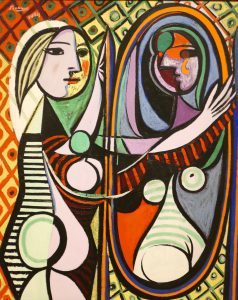 Find the good in anyone, especially yourself
The root cause of many issues in my life goes back to how I relate to others. It show up for me in judging others, respect issues, craving recognition, and just good old fashioned not thinking about the impact of my words and actions on others. In Mussar terms, this means that an Honor imbalance is at the core of my spiritual curriculum.
Before I go on, a side note about Mussar practice. I have been doing this for seven years, and part of the practice is self knowledge without feeling shame. I don’t write the litany above to beat myself up – rather it is a recognition of a reality of tendencies in me. If left unchecked, they would have gotten worse instead of better. More on that later.
So it is interesting, and not a coincidence, that three of my Mussar groups have independently converged on practicing Honor.
In the Mussar For Men men’s group, we discussed the assumption that we all have a Divine Spark occluded by our baggage. If you are unsure of the Divinity, think of it as the core of goodness in everyone, the common spark of humanity that we are all born with, and can never be taken away. The baggage are those hurts and societal influences that make it hard to see our own spark, and the spark of others.
Someone objected, asking “What about horrible people?” Later, the idea of “finding the good in anyone” came up. Here, the objections became even stronger. Someone said, “I need to find the good in a monster who harms children?” And many found it challenging to Honor parents who have been very hurtful in the past or in the present.
If you can’t find the good in someone because they are a horrible person, don’t beat yourself up. The Path of The Just, by Rabbi Moshe Chaim Luzzatto outlines a path towards becoming a saintly person, a mensch among mensches. Finding the good in a child molester, or in someone who has harmed us terribly, may be beyond where we are today.
However, before you jump on this as a means to cop out of looking for the good in a “horrible” person you know, ask yourself why you think they are a horrible person. Is this person horrible because they have hurt children, or because they voted for or against the current President? Did they order genocide, or repeatedly torpedo your ideas at work?
It is critical to focus on a person’s behavior, and not to label them broad brush as a bad person. Most people have some good that we can find. When we do, it changes us. You’ll find your entire energy shifts, towards a calm that lets you choose an appropriate and measured response.
To help you find the good in anyone, I suggest the following Mussar Practice.
***************Here’s The Mussar Practice****************
Praise three people a day. The praise should be heartfelt, and not empty flattery. I learned this practice the first time I was working on Honor, as part of the Everyday Holiness class from the Mussar Institute. As I’ll explain below, it was anything but easy for me.
In fact, I could not do it. I could praise my pets, I could praise people for their clothes, I could thank people, but I could not give praise in any other way. This was true for both strangers, and people in my own home.
It was the first time I came face to face with my spiritual curriculum. I realized that what I though was a Humility issue was actually an Honor issue for me. I felt bad, although more than anything, I felt shock that I just couldn’t do it. If I hadn’t tried it, I would not have known I needed work in this area.
Don’t worry too much about the people at the extremes. Start with people near you, and move towards more difficult people until you find where your limits are today.
******************************************************
If you find it hard to look for the good in a monster, or a parent who has harmed you, that is ok. You may not be ready to go there.
The more important question is where you are today. Seven years ago, I could not Honor regular people by giving heartfelt and deserved praise.
In one of my groups, I shared the story above, and someone suggested I try the practice again. I quaked with terror at the thought, but I never say no to a suggested Mussar practice that fits with the soul trait I’m working on. Especially one that scares or repels me.
Good news: I have tried the practice again this week, and I am better at it!
Yes, we can get better. When you start to walk the path, you’ll be surprised at how far you can go.
I really hope you’ll try this Mussar practice to find the good in anyone . Taking action is the key to changing the heart.
When it comes to Honoring others, what is your biggest challenge?
You can read some excerpts about Honor for free from my book The Spiritual Practice Of Good Actions here.
Image credit: Photo of the original painting by Pablo Picasso: `Girl before a mirror`Zoltan Tarlacz | Dreamstime.com
The post Jewish Wisdom Says Find The Good In Anyone. But What About Monsters and Creeps? appeared first on American Mussar.
December 31, 2018
15 Minutes of Gratitude Could Change Your Life
 Gratitude could change your life
So how was 2018? Was it a good or bad year? How can you tell? For most people, I suspect 2018 had both the good and the bad. Sometimes there were overwhelming moments of joy or sadness that can color our perception of the whole year. Overall, I feel like 2018 was a pretty good year for me, despite many things going on in the world that are pretty sucky. I turned 52 just a few days ago, and felt great about it. I decided to stop trying to fit the year on a scale from good to bad, and instead do a Mussar Gratitude practice. Gratitude can change your life.
Will you join me in taking the 15 minute Gratitude challenge? Carve out 15 minutes for yourself, and sit with a journal or a piece of paper. Start a timer, and write down everything in your life that you are grateful for. I did this a few minutes ago, and it was absolutely transformative. Before I started, I reviewed some key teachings about Gratitude that helped me a great deal.
Mussar teaches that Gratitude is the ability to recognize the good in any situation, and to give thanks. Thus, we are enjoined to be grateful for both good and bad things that happen to us. The latter can be a challenge. For example, when we are in shock over unexpectedly losing our job, and the mortgage payment is coming due, it may be hard to feel grateful. With the fullness of time we may end up with a better job, or being home may allow us to reconnect with our friends and family. Thus, in the moment, we can be grateful that we have an opportunity to spend our time doing other things. In addition, Mussar teaches us to be grateful for inanimate things. For example, right now I am Grateful to the nice lazy boy that supports me in comfort as I write to you. Not only that, I nap regularly in this chair with a cat on my lap.
In the 11th century Mussar classic Duties of the Heart, Rabbi ibn Paquda teaches that there are three things that keep us from being grateful.
We become too occupied with material things. For example, we want the very latest iPhone, and forget how useful the version we already have is.
We take things for granted. Here, we fail to recognize the bounty of everyday blessings, like a comfortable bed, a safe neighborhood, and being alive.
We focus on the negative. We tend to focus on mistakes people make, and the small hurts we receive from loved ones, and don’t notice the positives they do for us.
Before you start, write the three barriers to gratitude at the top of your paper. Then write down the three categories of things we should be grateful for. As a reminder they are:
Good things
Bad things (by finding the good in them)
Inanimate things
Then, start the clock and write your list of things to be grateful for. As you are working on your list, try to overcome each of the objections, and remember to write down things in each of the categories to be grateful for. Don’t stop writing until the timer reaches 15 minutes. Some people find it very hard to write for the entire time. Frankly, this is what I expected to happen to me.
In contrast, I was quite amazed to discover that at 15 minutes, I wasn’t done. I kept writing for another ten minutes! In those final minutes, I started to feel a sense of calm, peace, and fulfillment. I was amazed, because prior the the exercise I was feeling a bit restless and fretful. When I was done, I was filled with energy and confidence. I still feel the residue of the experience a day later.
So has that changed my life? Heck Yah! Even had I only felt those positive feelings for part of a day, that in itself is life changing. Yes, making your today better is life changing. And I have the opportunity to keep making my today better each and every day. Beyond that, I know that I filled almost four pages in my journal of things to be grateful for. When I have such abundance in my life, it is hard to worry about the small things. And when I suffer a setback, I know that I have a wealth of things to be grateful for in other areas, to give me strength and help me through.
So, do you agree that 15 minutes of Gratitude could change your life?
Will you join me? Comment below me and let me know how it goes.
Sincerely,
Greg
PS I am very Grateful to you for being a part of this community. I wish you all the best for 5778.
Ready to start your own Mussar journey? Take the Soul Trait Profile Quiz now.
An earlier version of this post was published in January 2016
Never miss a post
The post 15 Minutes of Gratitude Could Change Your Life appeared first on American Mussar.
December 27, 2018
Did You Lose Patience Over The Holidays?
 Did You Lose Patience Over The Holidays?
I did.
I am throughly enjoying having my daughter home from college. The four of us took a last minute holiday out of town for a night, went to the movies on Christmas, and have enjoyed watching the Marvelous Mrs Maisel Season 2. We have generally enjoyed being together, except for when things got a bit… testy. Two teens and two fifty-somethings with strong opinions – lets just say things got heated a few times. Nothing to send us to family therapy, but …
A few times I got mad at someone else. Sometimes I lost my Patience and said something, which threw gas on the fire. Other times I found my Patience and stayed silent. What did those two situations have in common? I was challenged and upset each time.
There is this misconception that being patient means staying calm. This is not correct. Mussar teaches that when we are calm, we don’t need Patience. We only need Patience when we are challenged; when we are in discomfort of some kind. When we lose Patience, we act out and lose control.
Recently, I was talking to a student, another Mussar father, about what it is like to stay Patient when triggered by a family member. I’ll relate it here.
Imagine you and a family member are both standing in the kitchen. They are saying and doing things that push your buttons. They are not attacking you, just saying and doing things that really bother you. You want to tell them to stop; you want to walk out of the room; to throw up your hands in exasperation; to roll your eyes; to look away; to grimace; to say “what’s the big deal”…
Instead, you stand there, maintaining eye contact and just listen. Your heart is pounding, and you feel a rising panic. Inside, you are saying to yourself:
This sucks. This totally sucks. Don’t leave. Don’t say anything. Just stay quiet. This totally sucks. Just hang in there, it will be over soon. I don’t know how much longer I can take this…
You get the idea. There was no super bliss. In fact, I was suffering more staying silent than I would have been if I had acted out.
Let me be clear: This does not come naturally to me. A few years ago I would have thrown more gas on the fire again and again. The only reason I acted differently this time is my Mussar practice.
The Hebrew word for the soul trait of Patience is Savlanut, which shares a root for the word to “bear a burden.” Patience, then is really about bearing the burden of an uncomfortable situation until it is over. It is bearing with suffering until it passes.
This brings us to a Mussar practice we can try.
*****************Heres the Mussar Practice For When You Lose Patience*******************
Remember that this too shall pass. Each morning, as part of our Mussar practice, we recite a mantra. The mantra I wrote for Patience is “This too shall pass, and I have the strength to get by until it does.”
Rabbi Ira stone teaches a lesson from the mussar master Rabbi Simcha Zissel Ziv: “Bearing the burden of the other” is our primary task as people who practice Mussar.
In the example above, I was bearing the burden of listening, which is the bare minimum way to show up in a menchy way.
I practiced Silence and did not make the situation worse. I could have done better by practicing Compassion, and willingly jumped in with empathy for the pain of the other person. I might better have been able to give comfort and helped them more actively. Then again, trying to solve the problem for the other person isn’t always the right thing to do. It is very hard not to try to fix a relative or loved one. Sometimes we just need to ride it out. And when riding it out, it is super helpful to remember that this too shall pass.”
************************************************************************
Sometimes the holidays bring us together with that relative we just don’t get along with. As much as we wish it were different, the painful interaction just plays out again and again.
This too shall pass. January 2nd will come, and you can get back to the routine of life. Accepting those feelings, and giving yourself a break is important. As the same time, you might want to take action and instead of bearing burden of the situation.
What are some self-care activities you can take to bring yourself some comfort?
Who can you reach out to to bring you some joy?
What can you do other than look at other people’s holiday posts on Facebook? No one posts the moments I write about above. They are part of the picture too.
Maybe you can track down a college friend you haven’t talked to in years, or find a Meetup group to join in January.
Where ever you are is ok. Your Divine spark is still there, ready to shine through when you can peak around your baggage, or slide it out of the way.
If this post resonates with you, check out the Humility and Patience Mussar Workshop that starts in January. This is exactly the type of issue we will be working on. We’ll all be creating spiritual action plans to help us take one small step towards balance. Each of us has the capacity to grow and do better. What would your life be like if you did not lose Patience?
The post Did You Lose Patience Over The Holidays? appeared first on American Mussar.
December 13, 2018
Arrogant Meekness: The Mussar Secret To Good Relationships
 Knowing your place in the universe is the Mussar secret to good relationships
A group of men in the 40s, 50s, and 60s, sitting together in a circle discussing their inner journey. Our cell phones rest in a shoe box under my chair. It was a place of true vulnerability for all of us.
As a man spoke, the rest remained silent. Listening. Witnessing. Then the next man spoke without reference to what the previous man said. There was no posturing, or trying to outdo what the previous person had to say. The tone was quiet and respectful. Such is the magic of Mussar for Men.
Our meetings begin with a sacred listening experience. Each man checks in on where they are with their Mussar practice, sharing an incident from the prior two weeks. While there was a large range in what people had to say, a common theme emerged. Many men talked about relationships, making mindful decisions to make space for others or to holding their own space.
The soul trait of Humility governs how much space we take up in the universe. As Alan Morinis wrote, “No more than my space, no less than my place.” We need to find that middle place between arrogance and meekness to occupy our proper place in the world. When we move to occupy that middle ground, it opens the door to a profound transformation in our relationships.
Whatever your gender, here are a few examples of how to apply this mussar secret to good relationships.
Mussar Secret To Good Relationships Example 1:
Imagine that you don’t get along with your sister in-law and her husband. There is a long history of arguments with your spouse when you visit them. The dynamic is as tired as you feel after these visits. You observe some patterns in their family that seem unhealthy to you. When you bring them up, your partner gets defensive, and you fight.
What if instead, you decided to occupy less space? Instead of imposing your opinion on your spouse, you just observe and stay silent. You might find that your partner fills the space you have opened, and brings up the very things you are observing.
Mussar Secret To Good Relationships Example 2
Imagine that you are mad at one of your teen children. You sit there fuming, too mad to go in the other room and deal with the situation. What if you allowed yourself to bring Loving-Kindness into your awareness? Imagine a softening, a change in perspective, and a path towards change. Now see yourself occupying the parental space to go and deal with the issue from a place of caring instead of anger. The door is open to a real conversation, instead of yelling and door slamming.
Know How Much Space You Are Occupying
The Mussar secret to good relationships is to know where you sit along the spectrum from arrogance to meekness at any given moment. Whether you are dealing with a coworker, your boss, a stranger, or loved one, knowing your place, and how much space to take up requires self discernment and sensitivity to the needs of the other. When something feels off to you, chances are that you can make a shift in your Humility to bring a change to the dynamic.
Each of us has the capability to have healthy relationships in all areas of our life. Think about a relationship you’d like to improve. Where do you sit along the spectrum from arrogance to meekness? What step can you take to change the amount of space you occupy to bring things towards balance?
Want to see your balance in Humility and 12 other soul traits? Take the Soul Trait Quiz.
Image credit: Photo by Michael Mazzone on Unsplash
The post Arrogant Meekness: The Mussar Secret To Good Relationships appeared first on American Mussar.
December 6, 2018
Discover the Mussar Hanukkah Miracle

On the first night of Hanukkah, as I uploaded this picture to Facebook, I was moved to write a short poem.
The next morning, I was surprised to see over 100 likes and 18 shares.
Here’s the poem that emerged:
The Miracle of Hanukkah Night 1: Humility
There is just one light.
Is it enough?
Am I enough?
It is exactly as it should be.
And so am I
The message is simple, and I guess it resonated. After all, does anyone sit there and complain that there is only one candle? One candle is enough.
Yet in other areas of our life, we yearn for more. It can be more material things, like more money, a “better” car, a bigger house… Once we start down that path, however, there is no end. “Whoever loves silver will not be sated with silver.” (Ecclesiastes 5:9).
Or we can yearn for more accomplishments. Recently when I was working on Envy, I noticed how I always reacted to news of other people being asked to speak in public. That reaction was very much related to my feeling of “enoughness.” When I feel like I am enough, I have either happiness or indifference to the accomplishments of others. But if I don’t feel like I am enough, I can long to be in another’s shoes.
When our Humility is out of balance, we focus too much on ourselves. This can come out at arrogance, or as doormatty feelings that the world singles us out for misfortune.
The poem offers an alternative, to practice Trust: All is as it should be, and that we are ok just as we are.
If you can Trust that you are enough (even if you don’t feel like we are enough), you can take action and experience the Hanukkah miracle of enoughness.
*****Here’s The Mussar Practice**********
Fill someone’s cup. As Jews, we are obliged to give Tzedakah, charity, to help those in need. Even those who receive Tzedakah are obliged to give, which highlights a recognition that the act of giving changes the soul. In a similar way, if you are not feeling like you are enough, focus your thoughts on helping someone else.
After all, as Rabbi Ira Stone teaches, the primary challenge of Mussar is the bear the burden of the other. So what better way to re-enforce our own sense of being enough than to give of ourselves?
If however, you are on the part of the spectrum where you are giving and giving and giving, such that you are starting to feel like a dried up twig, be sure to fill your own cup.
*************************************************************
Our history changed the moment that Moses noticed a flame that did not consume. Our history changed again when the oil that should have lasted only one day burned for 8 days. Once again, a flame burned but was not consumed.
You too, contain a Divine flame that burns but does not consume.
The real miracle of Hanukkah is to recognize that you are enough just as you are.
Want to know what parts of the soul influence your sense of enoughness? Take the Soul Trait Quiz Now
The post Discover the Mussar Hanukkah Miracle appeared first on American Mussar.
November 21, 2018
Celebrate Jewish Thanksgiving Like A Mensch
 Jewish Thanksgiving means showing up like a mensch
In a few hours my daughter will be home from college for Thanksgiving. As you read this, you may be at home, on the road, or tucking in a bit of work before you get ready to tuck in some Turkey. If you live in the United States, chances are that you’ll be celebrating Thanksgiving in some way or another. It is a truly secular holiday, such that even most Orthodox Jewish Rabbis say that it is ok to celebrate Jewish Thanksgiving.
Our Jewish Thanksgiving I hope will be relatively drama free, with happy reunions, and time with friends. For some of you, it may come in a time of loss, or bring you together with a relative that you don’t get along with. One of my students told me he was dreading going home, fearing hurtful comments by his father about his weight.
Whatever your external circumstances, a Jewish Thanksgiving offers an opportunity for personal growth. You can show up in a way informed and inspired by Mussar practice. When we show up to a Jewish Thanksgiving, we have options.
Just show up. Community is an inherently Jewish practice. Just being there with others on Thanksgiving is a blessing. As noted above, we don’t naturally connect with everyone, and it is a practice of Honor just to show up and be with other people.
Greet Others with Peace. The traditional Jewish greeting shalom aleichem means peace unto you. And the traditional response is aleichem shalom, unto you peace. Today in America, few of us greet other Jews with a “shalom” and if we do we probably think of it as a hello. However, Thanksgiving offers a wonderful opportunity to offer peace to others we will see, especially if they are normally people we fight with or are hurt by.
Up your gratitude. Some people have a Thanksgiving tradition to go around the table and each person says something they are grateful for. Whether this is part of your tradition or not, really focus on the things you are grateful for in this world. You may even want to take the 15 Minutes of Gratitude Challenge.
All of this leads to a Mussar Practice to help you travel the path of the Mensch.
**************Here’s the Mussar Practice*********************
Nonverbally communicate love, acceptance and gratitude. As you encounter people, focus on sending them the nonverbals, especially if they are people you often argue with.
If grandpa has become grumpy, go into the encounter with a loving vision of your best grandpa. If your parent says things that hurt your feelings every year, arm yourself with loving and connecting memories. As you communicate them non-verbally, you’ll see a change in the other person. Be persistent, even if at first they don’t respond. You’ll be showing up differently. Remember, it is impossible for one person to argue.
And if they go on a rant, tune it out and focus on the non-verbal heart space acceptance of who they are. The connection you have to them that is deeper than politics. As it says in the Torah “Distance yourself from a false matter” (Exodus 23:7). Let them have their truth for this day. You can keep emotional distance.
*****************************************************************
I am so grateful to Brandon Beachum for this Honor practice. I was interviewed by Brandon for his Positive Head Podcast, which will air on December 5th or 12th. As part of our conversation, he shared this practice, which he learned from a former guest. It reminds me of the mantra I wrote for Honor: Find the good in anyone.
Sending nonverbal love, acceptance and gratitude takes “finding the good in anyone” to the next level. Whether you think of this as your Divine Spark connecting to another holy soul, or simply as a recognition that nonverbal communication is real and powerful, this practice can be life changing for you and others.
Each and every one of us has what it takes to be a mensch, all we need is some help. If you’d like to try this practice, but are feeling scared or blocked or cynical, drop me an email and I’ll help you through it.
Photo by Jakob Owens on Unsplash
The post Celebrate Jewish Thanksgiving Like A Mensch appeared first on American Mussar.
November 16, 2018
Try This Mussar Practices To Overcome Elder Care Guilt
 Sometimes we can only look and can’t do more than we can do
This week I’m sharing a letter from someone asking advice, who has given me permission to share the answer in this way.
Dear Greg
I am wracked with guilt. My father is in a nursing home, and has been calling me at night afraid and in pain. He has a condition called “sundowning” where he gets more confused and afraid at night. The next day he is fine. Yet each night he is pushing me to travel there and “straighten things out.” I’ve been there several times this year. There isn’t a lot else I can do that I can’t do on the phone. I spend lots of time talking to his caregivers and honestly don’t think being there in person will change that. I live far away – travel is expensive and time consuming. I know he wants to see me, but I have my own family here I need to take care of too.
I’ve dabbled in Mussar. Can it help me? – JB in Florida, feeling elder care guilt
Dear JB –
I listen with an open heart. I too sometimes get elder care guilt. And I too have a parent in a nursing home. It sounds like you are doing what you can. It is a really difficult situation, and there is no magic bullet that will make it “all better.” That being said, Mussar can help you cope. As Victor Frankl taught, we can’t control the outside world, only how we react to it.
The Torah teaches that we must Honor our parents. And Mussar teaches that too much Honor can lead to a obsequious behavior and a lack of self care. Are you giving your father too much Honor by taking these phone calls at night? Here are two Mussar practices to overcome guilt that you can try.
Reset the boundaries. The soul trait of Strength governs boundaries. Our Rabbis taught: One should always be gentle as the reed and never unyielding as the cedar. (Ta’anit 20a). When it comes to the relationship with our parents, we want to be a reed and not a noodle.
It doesn’t sound like the evening phone calls are helping either one of you. Only you can judge what the correct boundaries are. That being said, you may want to only talk to your father during the day. Does he understand the sundowning that he is going through? Let him know that you are unavailable to talk at night and why. At the same time, use your relationships with the staff to get him some additional support and perhaps medication to help keep him calm and comfortable at night.
See the light and be the light. This situation is making you feel guilty. I know these feelings well. In fact, over the high holidays I resolved to try to grow past inappropriate feelings of guilt. I choose the mantra “See the light. Be the Light” to help me grow out of this. You can too.
You are dealing with a difficult and perhaps tragic situation. And you are going to feel sad about it. The best we can aim for is to feel sad about the situation without feeling bad about ourselves.
Self care and self confidence are keys to help you get through. Ben Zoma said, “Who is strong? One who conquers their impulses.” (Pirkei Avot 4:1). Here, your impulse to guilt and anger is coming from the Evil Inclination. Strengthening the Good Inclination with this mantra will help you reconnect with your divine spark. And use your network to support you in your decisions, and create time just for you.
The late comic book legend Stan Lee said, “I have always been my biggest fan.” The more you can strengthen your self confidence, the less guilt you’ll feel over situations that you can’t control.
Wondering how Mussar might help you with your current challenge? Sign up for a free strategy session and we’ll talk it through.
The post Try This Mussar Practices To Overcome Elder Care Guilt appeared first on American Mussar.
November 7, 2018
Choose The Blessing In Election Results
 Choose the blessing and feel joy
Moses said to the people: “I set before you today a blessing and a curse.” (Deuteronomy 11:26).
There is plenty to be happy about in the election results, and plenty to be sad about. Things could have been better for your side and things could have been worse.
Choose the blessing, the path is before you..
For those races you are sad about, mourn the loss and don’t lose sight of the big picture. You are part of something bigger than yourself. Stay determined and active. Avoid the lure from the Evil Inclination of bitterness, recrimination, and anger. Make the losses a blessing, by showing up in a wholehearted way. Follow the advice of the Good Inclination to strengthen relationships in your life.
For those races you are happy about, celebrate the win and don’t lose sight of the big picture. You are part of something bigger than yourself. Avoid the lure from the Evil Inclination of ego, gloating, and rationalization. Make these wins a blessing by being a gracious winner. Follow the advice of the Good Inclination and keep the door open to conversation and relationships with the other side.
Mussar Can Help You Choose The Blessing
Mussar teaches that each moment of every day we are faced with a choice between the blessing and the curse. It is easy on paper to choose the blessing. But the reality is that we are left with the same divisions we had before the election. This is where our practice can help us.
In Chesbon Ha’Nefesh, Rabbi Menachem Mendel Levin teaches that when we are faced with a challenge, we modify our focus phrase to “make it more stringent” (p 71). For example, a common phrase for Equanimity is “Rise above events that are inconsequential.” Instead, he suggests “Rise above the moods of your animal spirit so they do not destroy your equanimity” (ibid).”
I’ll be honest – this is hard for me. My animal spirit is trying to bring me down. But I can’t help but smile when I look at the joy in these two girls in the picture above. I am working to hold feelings of sadness about our national divide and “what might have been” and the opportunities for joy everyday.
Please share below: How are you trying to choose the blessing?
Having trouble finding the blessing in your life? Send me a message and let me know.
Image credit: Photo by @saucypot from nappy.co
The post Choose The Blessing In Election Results appeared first on American Mussar.