Greg Marcus's Blog, page 4
September 10, 2020
Mussar Practice For Moderating Enthusiasm
 Not every nap is slothful. Some are necessary
I often get signals from the universe when I am embarking on the right soul trait, and the upcoming Enthusiasm practice is no exception. This weekend someone asked a question on the Enthusiasm practice page about the following passage from Proverbs 24:
“A little sleep, a little slumber, a little folding of the hands to rest-and poverty will come on you like a thief and scarcity like an armed man.”
It reminded me of a mantra I created for myself when I was younger: “Too much is never enough.” I liked to live 100% all the time. I was studying, working, dancing,, partying. Something had to be going on all the time. Is it a wonder that I became workaholic? There is never a right time for that mantra – it nearly led to disaster in my life.
As Ben Zoma said in Pirkei Avot 4:1 “Who is wealthy? The one who is happy with their portion.” All this go go go was to distract myself from low self esteem. When I became content with who I was, I recognized the abundance in my life and let go of the “always on” lifestyle.
Today when practicing Enthusiasm, I much prefer the mantra “Run to do good.” Yes, we want to proactively look for ways to make the world a better place. But it does not say “Always run to do good.” There are times when we need to rest and recover.
The Jewish holidays offer a great opportunity to slow down, look within, and allow yourself to recover. With that in mind, I’m going to cancel the Jewish Wisdom For Coping with a Pandemic gatherings on September 17, 24 and October 1st go give myself time for rest, recovery and a little more grief work.
What is it that you will focus on during the High Holidays? Is this a time for you to put some things on pause? Reply below – I’d love to know.
Image by Ralf Designs from Pixabay
The post Mussar Practice For Moderating Enthusiasm appeared first on American Mussar.


August 27, 2020
What Do You Need to Park in Order to be Present?
 Parking my weather app helped me stop obsessing about air quality
What do you need to park right now in order to be present for the next hour?
The question was asked by my new Mussar teacher Rabbi Janet Madden, and it struck my like a lightening bolt. For me the answer was obvious – I need to stop checking the air quality on my phone. Right now those of us living in the Bay Area are surrounded by fires, and depending on the wind the air quality ranges from “not bad” to “totally unhealthy” from the smoke. I have been checking my phone all the time, not just for my town but for various towns around the area. A place 20 miles away can have very different air quality.
And this helps me how? Not at all really. In fact, it had become an obsessive habit, even when I wake up at night. So, I decided then to stop checking my phone, and “park” the need to check it.
“Park” is an interesting word to come up, given that we have been practicing humility, and “Park considerately” was one of our possible actions. The AQI (Air quality index) checking was very much invading my space, and I needed to park it to be in the moment.
Of course it was not so simple. Checking was an obsessive habit, and not checking in the short term caused more stress and distraction. That is where this week’s soul trait was helpful: Patience.
Patience is not about being calm, but rather enduring an uncomfortable situation. I invoked Patience to help me weather the transition from “checking” to “being present.” While I was not completely free from the impulse to check the AQI, it was lessened and overall I could be more present.
What do you need to park in order to be more present? To help you keep it parked, remember the Patience mantra: This too shall pass, and I have the strength to get by until it does.
To your own Patience practice, please join us for Jewish Wisdom For Coping with a Pandemic , which meets every Thursday at 4 Pacific over Zoom. No background is needed for these drop in calls – people of any age, gender and religion welcome.
The post What Do You Need to Park in Order to be Present? appeared first on American Mussar.
August 19, 2020
Mussar Practice For Humility and Boundaries
 It has been just over three months since my mother died. The acute pain has faded, but I find I miss her more every day. This weekend life gave me a few hiccups, small things that has an oversized impact on me. It was a perfect storm of misunderstandings that unsettled me. It was just the kind of thing I could talk to her about without embarrassment, and she would have helped me feel better.
I spoke to a friend recently who told me how they set a boundary which helped them deal with a sticky situation. It made me realize that boundaries were at the crux of the issue that set me off.
And, surprise surprise, boundaries are intimately connected with the soul trait of Humility, the subject of this weeks Jewish Wisdom For Coping with a Pandemic gathering. Which brings us to a Mussar practice you can try:
*********** Here’s the Mussar Practice For Humility ****************
Build or break down a boundary. Humility is about finding one’s proper place in the universe. As Alan Morinis wrote “No more than my space, not less than my place.” I took a risk to allow someone into “my place” that did not work out well. But I also have brought down boundaries that kept me from calling old friends, which has been wonderful. And earlier this year, I constructed boundaries around social media and news that opened the mental space to allow me to grieve and heal.
Building or breaking down a boundary can help you guard your space from people who will drain your energy, or let people in to give you the support you need.
What boundary will you construct, respect or break down?
See the video the from the Jewish Wisdom For Coping with a Pandemic that explored Humility and Boundaries
Photo by Shawnee D on Unsplash
The post Mussar Practice For Humility and Boundaries appeared first on American Mussar.
July 31, 2020
Mussar Awe Practice To Gain Strength in These Times
 Have you ever had something show up in your life at the exact moment when you need it? This happens to me all the time when it comes to the soul trait I am practicing. I must say this happened to me less often the last few months, as I sank into and then emerged from the fog of grief. But I was thrilled to experience it again a few days ago.
I was meeting with my study partner Henri, when out of the blue, the book we are reading started to cover Awe, which is our topic for this Thursday. Duties of the Heart is itself a source of Awe for me. It was written in the 11th century in Judeo-Arabic, hundreds of years before the printing press. Yet we still read this first full book on Mussar today, and it’s lessons are spot on.
ibn Paquda wrote that one who knows how to calculate the cycles of the stars but does not, is like one who drinks and listens to music at a party but does not notice the wonder of creation. This reminds me of the people who are going to bars, or listening to conspiracy theories and ignoring the perils of Covid-19. Most of these people have sufficient education to understand what is happening, yet they choose not to. Which brings us to a Mussar practice.
**********************Here’s the Mussar Awe Practice*******************
What are you missing? The Baal Shem Tov founder of the Chasidic movement taught the following:
The world is full of wonders and miracles, but we take our little hand and we cover our eyes and see nothing
What is it that you are not seeing? Do you see the wonder of Covid? It is horrible, yet as a scientist part of me is fascinated that a virus can jump to humans and then infect all kinds of tissues in the body. Sometimes it kills healthy people, and more often than not our immune system fights it off. (Notice how close Awe and Fear come, as we covered last week.) The world is bigger and more powerful than humankind, and if we keep ignoring the threats of this disease and global warming, we are going to pay for it.
My suggestion is to start with something small. For example, once I was out walking, ruminating on something, and I decided to just stop and take a breath. Suddenly I heard birds singing. They had been singing all along. What is a small miracle that you are missing?
***********************************************************************
Please give this practice a try, and then let me know how it goes. If you do, you’ll have an opportunity to experience how much energy we can gain from experiencing Awe. As always, I answer every email and comment.
This post was a lead in for the July 30th Jewish Wisdom For Coping with a Pandemic gathering on Zoom. You can watch the video here.
The post Mussar Awe Practice To Gain Strength in These Times appeared first on American Mussar.
July 16, 2020
Mussar Lessons From Hadestown
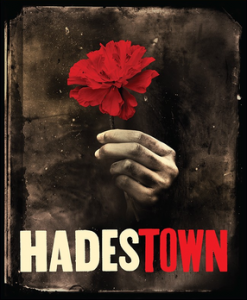 When I finally listened to the Hadestown soundtrack, I didn’t know whether to dance or cry.
Hadestown is a retelling of the story of Orpheus, who walked into the underworld to get back his wife Eurydice. Hades agrees to let her leave with him, as long as she walks behind him on the journey, and he never looks back. Unfortunately, he looked back right at the end, nervous that she wasn’t following him and she slipped back into hell.
The musical really played up the psychological aspects of the journey out of hell. When told they could leave as long as he did not look back, Orpheus says: “It’s not a trick?”
“No, it’s a test,” answers Mr. Hermes. He goes on to explain that we need to dread “the dog that howls inside your head.” The song of the walk is filled with Orpheus’ doubts – who am I to get this deal from Hades? Would he really let us go?”
Does this sound familiar to you? Have you ever had a clear path, littered with obstacles of your own creation?
In the show, Orpheus is depicted as an extraordinary person, who could see the world as it ought to be, not as it is. And, he could make others see it that way as well. Has there ever been a time with a bigger gap between the way the world is, and the way it ought to be? I suspect there has been, but not in my lifetime.
This is what Mussar is all about, looking within to see the way we ought to be, and working to close the gap step by step. And as we come toward wholeness ourselves, we are better positioned to heal the world along the way.
If you haven’t hear it before, give Hadestown a listen. The beauty of the music, and the vision of a world of all of us standing together made me want to dance and cry at the same time. Because now we need beauty, and a vision of what the world could be, even as we keep our eyes open to the world as it is today.
What are the Mussar Lessons From Hadestown that you are walking away with?
This blog post is the lead in for the weekly Jewish Wisdom for Coping with a Pandemic zoom gathering.
The post Mussar Lessons From Hadestown appeared first on American Mussar.
June 2, 2020
Owning My White Privilege: A Silence Mussar Practice
 It was poignant coming out of Shavuot, the holiday that we celebrate the giving of the Torah, to find the world still so incredibly broken. The Torah as so much wisdom for living a moral life, yet we are mired in patterns of white supremacy. The United States has done little to acknowledge of legacy of slavery, lynchings, and discrimination that continues today.
Rabbi Alan Lew taught that in a recurring catastrophe, we ask how we are complicit and accountable. Systematic racism against people of color, aka white supremacy, is absolutely a recurring catastrophe. And now we are a country in crisis.
What is the mussar response? I was asked to address the murder of George Floyd before a previously scheduled Mussar teaching on Sunday morning. I declined, because to do so would have asked each of us to own our white privilege, and how we have contributed to bias against people of color. Why, because Mussar is a practice of personal transformation, guided by Jewish Wisdom. First and foremost, we have to own who we are, and our mistakes.
The next day, after watching the protests, I made a video owning my white privilege. It was scary, and I feel vulnerable putting it out there. But it is what I need to do to take accountability for where we are. But now that I have, I feel a bit better.
Owning My White Privilege covers a lot of ground
I explain that white privilege is as simple as having the privilege of not being afraid of being murdered by the police.
I also share a painful memory, of a time I was biased and hurtful to a black person. It came from a place of irrational fear. I did not call names or the police, but what I did was unacceptable, and I apologize.
And I offer three Mussar practices, following that soul trait of Silence, that we can do if we want to be part of the solution:
 Jewish Women of Color – from Twitter
1. Own your white privilege if you are white presenting
2. Reach out to people of color to ask how they are. And be ok if they don’t want to answer. It is particularly important to recognize and see Jews of Color.
3. Speak out about your own bias. This could be telling a friend, or just writing in a journal, But we all can and must own our own complicity and hurtful actions in the past.
Rabbi Lord Jonathan Sachs taught that Jews cannot solve anti-semitism. We are the victims of anti-semitism. It needs to be solved by the perpetrators of anti-semitism. Similarly, people of color cannot solve white supremacy. It needs to be solved by people with white skin.
The first step is to admit that having white skin gives us a privilege, if only the privilege of not being killed by the police.
The soul trait of Silence governs when we should speak, and when we should not. To learn more, join us for this week’s Jewish Wisdom for Coping in a Pandemic. The free zoom gathering will focus on Silence.
Originally, this post had an image from Wikimedia commons, showing a postcard of the lynching of three black men in Duluth, MN on June 15th, 1920. It captures the horror I feel about what is happening to people of color in the United States.
The post Owning My White Privilege: A Silence Mussar Practice appeared first on American Mussar.
May 27, 2020
This Mussar Practice Can Help With Isolation
 This old school practice can bring joy to you and others
I don’t need Rabbinical school to guessing that the plague has completely disrupted your normal routine. Whether you are still sheltering at home, or are just missing new movies and live sporting events, it seems like nothing is the way it was. And so it is fitting that Order is next up in our rotation of soul traits. (Order is covered in Chapter 13 of The Spiritual Practice of Good Actions.)
The Hebrew word for order is Seder, which you probably recognize from Passover. The Seder is an ordered and organized meal. Order brings with it a sense of stability and predictability, two things sorely lacking in the world right now. When we don’t have them, we feel stress.
Many people, including my family, are using the extra time at home to practice Order by finally cleaning out that overstuffed closed. My wife is organizing our boxes of old photos, which has allowed us to revisit some wonderful memories.
As the same time, we don’t want to try to stuff too much Order into our lives when we are reeling with trauma and stress. You don’t need to be productive – this is not necessarily the time to finally write that novel. We need to get through, which is why I recommend the following Mussar practice that has the right amount of Order. And, this Mussar practice can help with isolation.
*************Here’s the Mussar Practice******************
Schedule times to call other people. Put a time on your calendar every day to reach out to someone else. It can be a short check in, or a long catch up of 15-45 minutes. This will help you feel less isolated. And if you aren’t feeling isolated, it can help someone else feel less isolated.
After all, Mussar is about bearing the burden of the other. Right now, we all need each other to get through this.
*****************************************************************
What can I tell you, I’m an old school guy who misses the spontaneous phone calls of years gone by. It has been really wonderful getting calls from old and new friends, checking in to see how I am. Together, let’s emulate Rabbi Yochanan Ben Zakkai, who made it a practice to greet others in the market before they could greet him (Talmud Berachot 17a). In a similar way, let’s be the ones to proactively reach out and connect to others.
I am going to make my phone calls at 4PM time. How about you? Please leave a comment below. Scheduling a time, and publicly committing to it makes it more likely that you will follow through.
And please join us Thursday at 4 PM Pacific for our weekly Jewish Wisdom For Coping in a Pandemic Zoom call. No prior anything required.
Image by tommyzwartjes from Pixabay
The post This Mussar Practice Can Help With Isolation appeared first on American Mussar.
May 6, 2020
How To Cut Your Hair Like a Mensch In a Pandemic
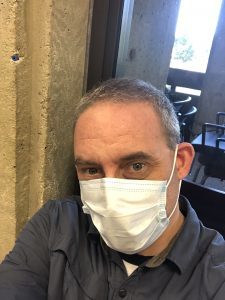 This is the haircut I need today, not the one I had pre-covid.
Would you have gone back to Egypt on the shore of the Red Sea? On a recent Judaism Unbound podcast, Rabbi Amichai Lau-Lavie shared that some Israelites did indeed people wanted to go back to Egypt, to the way things used to be. Others wanted to move forward into a scary unknown, and jumped in the water to cross the sea. He suggested that we are in a similar place now., in a moment of uncertainty. Do we want things to go back to the way things were, or will we exit this crisis looking to make a better world?
My perspective is that things will never go back to the way they were, even in the best of circumstances. Many flaws of the old way are being exposed by this crisis – the lack of healthcare and wages for many, and structural inequalities to name a few. It is my hope and desire to build a better world.
This became apparent to me in a small but real way over the weekend, when I unpacked my hair clipper. For 20 years I’ve gotten the same haircut – a number two clipper on the sides, and cut short to blend it in on the top. (Number two means 1/4 inch in length.) At first, I thought that I could replicate this on my own, by using a combination of a 2 and 3 clipper. But the clipper didn’t have a #2, only a #3 at 3/8 of an inch. And it had some fancy attachments to give a fade on the sides.
Thinking back on what Rabbi Amichai said, I realized that this was not the time to try to go back to a haircut I could not possibly achieve on my own. I realized that what I needed was to make my hair neat and presentable. So, I just cut it with the longest length, and it looks just fine. That is my haircut for the present. In the future, who know’s what I’ll decide to do? So to “cut your hair like a mensch” is to figure out what it is you need, and then to do it.
What is it that you really need right now?
This act of looking at what you need is critical when we then look to the needs of others. This weeks American Mussar Community Gathering will focus on the soul trait of Honor.
The post How To Cut Your Hair Like a Mensch In a Pandemic appeared first on American Mussar.
April 29, 2020
The Surprising Thing About Too Much Truth in the Pandemic
 Covering your eyes from the truth?
Earlier this week Svara’s Queer Talmud Camp was canceled. It is a week long Talmud emersion experience that I’ve wanted to go to for years. When I signed up a few months ago, I know it was at risk, and in recent weeks I’ve been thinking “It will probably be canceled.” Yet when it finally happened, it really got me down.
It made me realize this was the first cancelation in the pandemic that impacted me personally. My kids, my wife, and millions of people have had to stay home and miss life milestone events. While I felt bad for them, somehow the loss of this thing I’d been looking forward to made it that much more real. The Truth of our situation hit home on a new level.
These are tough times for Truth. The Torah tells us to “Distance Ourselves from a false matter” (Exodus 23:7), yet we are bombarded by misinformation from the President, quacks trying to make money with false cures, and friends on Facebook sharing articles they think are helpful with bogus information about Covid.
On the other side of the spectrum, we have news articles and web sites that will describe the pandemic in excruciating detail. As with all soul traits, too much Truth can be as bad as too little. As my example shows, Truth can be painful, and too much Truth can be toxic.
Taking a news and/or social media holiday can be a solution to either of the above problems, to distance ourselves from falsehood and from too much truth. Just as it is permissible to deviate from the truth for peace in the house, we can abstain from “staying informed” for peace of mind.
Another part of the answer lies in seeing the Truth from another’s perspective. These people out there protesting to re-open the country – they are saying what many people have thought, but are going a step further and acting according to those negative impulses. They are in a sense prisoners of their existing world view, which makes me wonder if my worldview is limiting my ability to see something important.
I am still unpacking how best to respond to this challenging reality, and look forward to hearing your insights in this week’s Mussar Community Gathering. Please come with a friend. I’m pondering the following: Rabban Shimon ben Gamliel said, “The world exists [kayam] on three things: justice, truth and peace.” [Pirkei Avot 1:18]
Truth, justice, and peace of mind are all having a tough time in the pandemic. Do you agree?
Photo by Taras Chernus on Unsplash
The post The Surprising Thing About Too Much Truth in the Pandemic appeared first on American Mussar.
April 23, 2020
Balance Survival with Lovingkindness and Mussar
 Wholeness brings together animal instincts with human compassion
Right now many of us are angry and grieving and afraid, doing what we can to get by and are completely done with being at home.
And many of us, by choice or by necessity, are out there in the world risking infection to keep the rest of us fed and safe. Many, from medical professionals to grocery workers to my friend who works in the post office, do not have sufficient protective gear or sick leave.
How do we balance our need for safety with the need to care for others?
The first mission is survival. It is a thought that has gone through my head many times over the years. I imagined saying it to my children as we lived in financial comfort. I wanted them to be prepared for a day when the world could change dramatically, to remember to take care of themselves first.
Here we are today in a world dramatically different, and that part of my brain is saying “See, I told you so.” And while it is correct, in that we need to take steps to stay safe, this view of the world is incomplete. We cannot, for example, resort to hoarding in the name of survival, because…
We also need to “bear the burden of the other,” which according to Rabbi Ira Stone is the primary mission of Mussar. This point of view is equally true, especially now. We need each other to get through this thing. One of the most important soul traits to help support others is Lovingkindness. Pirkei Avot (1:2) teaches us that the world is built on acts of Lovingkindness. (Which inspired Menachem Creditor to write this amazing song). These are acts that go above and beyond to support others, without expecting anything in return.
This brings to mind a Mussar practice to balance Survival with Lovingkindness, because right now we need to do both, survive and support others without expecting anything in return. Each day, try to do one thing mindfully to support your own wellbeing, and one thing to support others.
For yourself, you could
take a bath
watch your favorite tv show
meditate
read for pleasure, spiritual inspiration or personal growth
ask for help
For others, you could:
take the first step to reconcile
Call someone who is isolated or sick
Make a charitable donation
Buy something extra from a local business
offer to help
During this time, many things that we normally do are extra hard. For example, it might take an extra effort to be polite or clean up after yourself. So right now, doing these extra hard things anyway can be considered an act of Lovingkindness because they support others, help create a better world, and are more than the minimum you could be doing.
What are you doing for self care, and to care for others?
This weeks Mussar community gathering will be focusing on Loving-kindness, chapter 9 in The Spiritual Practice of Good Actions. No preparation is necessary – just come! Details and video here.
Photo by Jonas Vincent on Unsplash
The post Balance Survival with Lovingkindness and Mussar appeared first on American Mussar.