Greg Marcus's Blog, page 15
May 4, 2016
Trump’s Biggest Danger: Too Much Truth

It might strike you as strange to think that Donald Trump’s biggest danger is too much truth. After all, The Atlantic just ran a story called “Trump’s War On Truth” that laid out how often Trump deliberately and manipulatively lies in order to smear his opponents. Yes, he tells some whoppers. But why do people believe them? Because he speaks to a deeper, darker truth. Let me explain.
Mussar teaches that too much of a Soul Trait is as bad as not enough. Too little Truth undermines Trust, meaning that you won’t be believed even when you are being honest. Too much Truth can leads to a lack of kindness. You have probably heard the expression, “Truthful to a fault.” Mussar teaches that we should only speak if we can bring good into the world. Just because it is true doesn’t mean that we should say it! I think all kinds of things. They are better left unsaid.
Here’s another Mussar lesson about Truth: There is no absolute Truth, or put put another way, only God knows the full Truth. If you are unsure of the Divinity, think of it this way – our perceptions limit our ability to know exactly what happened. Two people can be in the same room, and walk out with two completely different versions of what happened. They each in a sense have their own Truth. And this is where Trump gets dangerous.
Trump’s biggest danger is not that he promotes lies but that he speaks his Truth out loud. He believes what he says, and broadcasts his beliefs.
Last summer a retired friend in Syracuse told me she was aghast at how many people in her apartment building supported Trump. They all said the same thing: “He says exactly what I’m thinking.” Many people think his candor is a good thing. His success shows us how hungry people are for an authentic politician. For example, when Trump said that Mexican immigrants are criminals and rapists, some people gave him credit for “telling it like it is.” I don’t think Trump was lying – I think he believed what he said. He is a racist. (If you don’t believe that racism is alive and well in America, see this insightful article by Jenee Desmond-Harris in the New York Times.) Donald Trump is the very definition of a racist because no one but a racist would hang on so fiercely to the birther claims about President Obama.
Trump’s blatant racism is a rallying cry for everyone who is consciously or unconsciously unhappy about eight years of a black President. If a significant portion of the American people didn’t resonate with Trump’s racist messages, he would not have the support that he does. This terrible truth is something that we as a country have tried to deny.
Trump’s biggest danger is that he appeals to the Evil Inclination in all of us
As a reminder, Judaism and Mussar teach that the Evil Inclination represents our animal drives, such our fight or flight response, sexual urges, and the fear of the unknown. The Evil Inclination is an essential part of who we are, but it must be guided by our Good Inclination. Trump in many respects appears to be an example of the Evil Inclination run amok. And in a very real, charismatic way, he draws on our Fear of the Other. We just relearned one of the most import lessons in the Torah regarding the Other on Passover:
“You must neither wrong nor oppress a foreigner living among you, for you yourselves were foreigners in the land of Egypt. – Exodus 22:21, CJB”
We repeat this lesson year after year because it is extraordinarily hard to do! If it were easy, we wouldn’t need the lesson. While I hope that few of us are raging racists like the KKK, I believe that all people have unconscious bias. Once when I was in college, I was hanging out in my girlfriend’s sorority. The doorbell rang, and when I answered it, a black student was there. He asked for “Jane.” I was nervous, and had him wait outside. Five minutes later he was in the living room, with Jane sitting on his lap; he was her boyfriend. He just looked at me. I felt like a complete and total asshole. My Evil Inclination got the better of me that day. I could have made a different choice, to overcome my fear and welcome the stranger in. I’ve learned a few things since then, and have not made that particular mistake again. But I have no illusions that I am without bias, and I certainly have an active Evil Inclination.
Our job is not to judge Trump supporters, or let our emotions drive us to disrespectful speech and actions. To do so would be to surrender to the Evil Inclination. If you don’t like Trump, speak out, donate money, or volunteer time to keep Trump from getting the power of the Presidency. But flaming on social media, or remaining silent when rocks are thrown at Trump supporters won’t make the world a better place, and won’t further our spiritual journey. None of us are without bias.
As practitioners of Mussar, our primary mission is to be the best people we can be. We don’t get a free pass to behave badly just because the future of the country is at stake. Anti-Trump people I’m talking to you too.
Imagine what would our nation – and the world – look like if our personal truth acknowledged that each of us is created in the image of the Divine. Use this moment, when Trump is one vote from the Presidency, to look within and find one small step to see the Other with a gentle eye. You’ll be amazed at how transformational small steps can be.
Want to start your own Mussar journey? Take the Soul Trait Profile Quiz to get a first look at areas of your inner world where you are out of balance.
Yes, I want to take the Soul Trait Profile Quiz
to see my balance across 13 Soul Traits
Name:
Email:
We respect your email privacy
Powered by AWeber Email Marketing

Image by Marc Nozell via Flickr CC
The post Trump’s Biggest Danger: Too Much Truth appeared first on American Mussar.


April 23, 2016
Four Tips For a Parent Friendly Seder
 Passover is for the kids, right? Passover IS for the kids, isn’t it? My kids are teenagers, which means that they can shift from the Wise to the Wicked to the Simple to the oblivious child without notice. In fact, sometimes they can play more then one role at any given time. But I remember what it was like when they were younger. It can be a slog. Don’t get me started on the year when we hosted a Seder for ten. Four were under six, and my cousin and I were the only Jews. I was the Wicked Child before that night was over. All of this can be avoided if you make it a parent friendly seder.
Tip 1: Remember that Passover is for everyone, and act accordingly
As parents, we fall into the trap of making everything about the kids. Were we liberated from slavery in Egypt only to fall into bondage to our own children? Find something special for you at the Seder. Put all the kids together at one end of the table, and all the adults at the other to experience some adult time. Or, if you are having a smallish Seder with family members, find a way to Honor your parents or elders. Your kids will be watching how you treat them. Dedicate one of the glasses of wine to your parents, and remember departed relatives who you love. This will help you feel a connection to your own past, which is both comforting and nurturing.
Tip 2: Eat early and often
I’ll put it out there. I am one of those hungry guys who doesn’t do well waiting for food. My father always told me that I had to wait to eat until we got through the Seder. I didn’t like it. Jews love food, but also practice food discipline. Keeping Kosher means many things to many people. To me it is about being mindful of what you put in your body. Passover is a time of joy. Don’t sit there miserable and hungry, counting the pages until you get to the Hillel sandwich. Mindfully nibble on Matzah, and be sure to have a snack 30 minutes before the Seder begins.
Tip 3: Sing Dayenu with gusto
I am not a Dayenu fan. When I was a kid I wasn’t a fan. If you watch the beginning of this Maccabeats video, you’ll see what it was like for me to sing Dayenu. The kids are falling asleep, and the parents are trying to put a good face on it. Yet as the video goes on, this amazing a cappella group does each verse of the song in a radically different music style. The costumes and locations change to match. The message – Dayenu is whatever we make of it. The Soul Trait of Enthusiasm (Zerizut in Hebrew) teaches that we should go about life with energy and focus. There is no point just phoning it in – it is a wasted opportunity to live life to the fullest.
Rabbi Nachman of Breslov said “Get into the habit of singing a tune. It will give you new life and fill you with joy.” Many people feel self conscious about their singing. (Have you ever noticed that this has little to do with how good a voice people have? Some people with terrible voices love to sing out loud, while unrequited opera singers are self conscious). If you have a terrible voice, think of the stories your kids can tell. “My mom has a terrible voice. But every Seder, she sang Dayenu at the top of her lungs.”
And why Dayenu? It is about Gratitude. You may be unsure of the Divinity, and not have any idea what Mana in the desert is all about. However, we all have many wonderful things in our lives that we take for granted. Friends, family, our own bed to sleep in, clean air to breathe. Just once a year, sing Gratitude at the top of your lungs.
Tip 4: Try one parent friendly seder tip that makes you uncomfortable
What do you think if these tips? One or more may put you out of your comfort zone. If that is the case, give it a try anyway. Passover is about spiritual liberation. It wasn’t easy for our ancestors to just pack up and cross the desert. To grow we need to allow ourselves to be vulnerable. Let the joy of the Seder carry you just a bit farther than you would normally go.
You just might find yourself a step closer to the Promised Land.
Like Four Tips for a Parent friendly Seder? You might also like
The Connection Between Prince and Passover You Won’t Believe
The One Thing You Should Know About Passover
The post Four Tips For a Parent Friendly Seder appeared first on American Mussar.
April 22, 2016
The Connection Between Prince and Passover You Won’t Believe
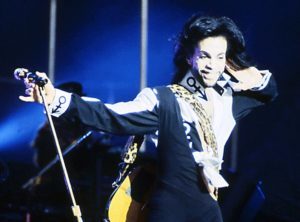 Prince changed his name to a symbol to escape the “narrow place” of his contract
Prince’s death on the eve of Passover has touched a spiritual nerve for me. It took me a while to understand why a felt a connection between Prince and Passover. Then the phrase came to me: Prince was never a slave in Egypt. Let me give you some context.
The Torah refers to Egypt as “the narrow place.” It was a stage in the history of our people when our spirits were oppressed and confined by slavery. Spiritual oppression is severe – it saps the mind of will and the body of strength. We were limited in our choices, and did not feel empowered even to try. The “narrow place” transforms a story of physical freedom into a story of spiritual liberation.
In listening to the story of Prince, I heard a story of the fight for freedom. Remember when Prince changed his name to an unpronounceable symbol? It turns out he did that because he felt oppressed by a recording contract. Warner, which owned the rights to his music, only wanted one album a year. Prince wanted the business to serve his music, not his music to dance to the tune of the business. Unable to get out of his contract Prince changed his name in protest. He even wrote “slave” on his face. (See it here).
For Prince, changing his name, and cranking out a flood of albums to fulfill the contract was liberation, was an escape from his narrow place. If the company owns the name Prince, I’ll change my name so they don’t own me. Rabbi Nachman of Breslov taught that “the Exodus from Egypt occurs in every human being, in every era, in every year, and in every day.” Prince intuitively seemed to understand this. You are either growing and setting yourself free from what is holding you back, or you are still stuck in Egypt, in that narrow place. The connection between Prince and Passover is the story of spiritual liberation.
President Obama reminded us yesterday that Prince once said “A strong spirit transcends rules,” and went on to say that nobody’s spirit was stronger, bolder, or more creative.” Sounds like a freedom we all can aspire to.
Good night sweet Prince.
See also: Four Conversation Starters for your Seder
Want to learn more about Mussar, sign up for the Soul Trait Profile Quiz
Image by Jimi Hughes from Ballymena, Northern Ireland via Wikimedia Commons
The post The Connection Between Prince and Passover You Won’t Believe appeared first on American Mussar.
April 20, 2016
The One Thing You Should Know About Passover
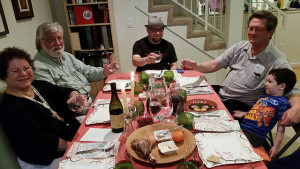 Photo by Richard Rubin via Flickr CC
Passover is a wonderful holiday for getting together with friends and family. In fact, a Passover Seder is probably the most common Jewish practice in America. We like the ceremony, the special foods, and complaining about the Matzah.There is one thing you should know about Passover but probably don’t.
I just learned it, and my view of Passover has changed considerably. For me, Passover moved from being a holiday of Joy to a holiday of Joy AND an opportunity for spiritual growth. The Hebrew word for Egypt is translated as “narrow place.” Slavery in Egypt confined us to a narrow place, with constrictions on our physical, emotional, and spiritual lives. The Exodus is the story of liberation from the things that hold us back.
Rabbi Nachman of Bratzlov (1772-1822) said, “The Exodus from Egypt occurs in every human being, in every era, in every year, and in every day.” I admit it – the quote gives me chills. What an amazing opportunity we have every day – to liberate ourselves from what holds us back. Each Choice Point* we face is an opportunity for liberation.
So the one thing you should know about Passover is that is is an opportunity for spiritual growth. Why not use this Passover as an opportunity to rededicate yourself to your Mussar practice? I suggest restarting with Enthusiasm, which teaches us to focus on proactively doing good things. And, it reminds us to finish the task. What is one small thing you can do to proactively to bring good into the world. And let me know if I can help!
*A Choice Point is the type of decision where we sit on the cusp of following the path of the Good Inclination or the Evil Inclination. See this post for more
If you are new to Mussar, the Four Week Challenge is a great way to get a taste.
The post The One Thing You Should Know About Passover appeared first on American Mussar.