Greg Marcus's Blog, page 14
October 2, 2016
Cherish Your Non-Jewish Partner This Rosh Hashanah
 Rosh Hashanah by Lilach Daniel via Flickr CC
In 2004 Rabbi Janet Marder at Congregation Beth Am in Los Altos sent shockwaves through the Jewish world by blessing the non-Jewish spouses who were members of the congregation on Yom Kippur. The message was clear: Cherish your non-Jewish partner.
Rabbi Marder said, “What we want to thank you for today is your decision to cast your lot with the Jewish people by becoming part of this congregation, and the love and support you give to your Jewish partner.” You can read the entire blessing here.
The blessing took place a few years before my family joined that congregation, and people were still talking about it. At the time, my wife was not Jewish and we picked Beth Am because the website was covered with welcoming messages, and our makeup is diverse – interfaith, same sex, intercultural marriages abound. We felt comfortable and welcomed. But it didn’t mean that there weren’t issues, issues that I was insensitive to.
At the time, my wife was not Jewish and we picked Beth Am because the website was covered with welcoming messages, and our makeup is diverse – interfaith, same sex, intercultural marriages abound. We felt comfortable and welcomed. But it didn’t mean that there weren’t issues, issues that I was insensitive to.
I now understand how much I took my wife’s decision to embrace raising a Jewish family for granted. When I went back and read the blessing today, the following passage really struck me. “You come to services, even when it feels strange and confusing at first. You hum along to those Hebrew songs, and some of you even learn to read that difficult language.”
As I have written before, I am uncomfortable when people use Hebrew phrases that I don’t know. How much more difficult it must be for people who did not grow up Jewish. I’ll be honest, I didn’t really put it together, I did not put myself in her shoes.
Rabbi Marder’s blessing from 12 years ago also reminds me how Mussar can help strengthen relationships, by helping us recognize and cherish the differences in the other. To be clear, I think it is particularly important to cherish the differences, because despite those differences, our partner chooses to be with us.
Mussar, particularly American Mussar, offers an opportunity offers intermarried couples an opportunity to share Jewish values in everyday life without needing to know Hebrew or traditional ritual practice. Being a good person is the essence of being Jewish, and Mussar offers a roadmap to bring our everyday actions into alignment with our aspirational values. Here are three soul traits that can help us cherish our non-Jewish partner.
Honor Rabbi Marder was demonstrating the Soul Trait of Honor, in that she was going out of her way to Honor the Divine spark in others, when they are different from us. We can practice Honor by asking our partner how they are doing, and if they are uncomfortable or struggling with any part of the Rosh Hashanah experience. Work to make them feel more comfortable.
Gratitude – I did not sufficiently appreciate my wife for agreeing to raise a Jewish family. Take my advice, say thank you, and go out of your way to show your Gratitude by being sensitive and inclusive. The person you are with wants to be included, and understandably may be struggling. As Rabbi Marder said, “We know that some of you have paid a significant price for the generous decision you made to raise Jewish children. You have made a painful sacrifice, giving up the joy of sharing your own spiritual beliefs and passing your own religious traditions down to your kids. I hope your children and your spouse tell you often how wonderful you are, and that their love and gratitude, and our love and gratitude, will be some compensation, and will bring you joy.”
Order – Don’t just assume that your non-Jewish partner has to do all the child care or food preparation. When the kids were little, I often left it to my wife to take them out so I didn’t have to miss any of the service. Offer them an opportunity to participate in services and take your turn brining the kids outside if they start to act up. And so some planning, to find an activity that the whole family can do together. For example, after services, plan to get together with a large group of friends.
Moses said, “I place before you today a blessing and a curse.” (Deuteronomy 11:26). This is a choice we all have every day. The reality is that you have someone in your life who care about you, but is really different. It might be an intermarriage, but there are other ways to be different. You might both be Jewish, but one of you is apathetic or unenthusiastic. Or you may share the same religion, but one of you is a vegan, or god forbid, a Trump supporter.
You can choose to ignore the differences, and allow them to be a source of conflict or pain. Or, you can choose to make them a blessing, and go out of your way to connect despite your differences.
On Rosh Hashanah, we are given an opportunity to really look at those relationships, to make amends for our mistakes, and decide to do better in the future.
What relationship are you seeking to nurture this year? Reply or let me know on Facebook.
The post Cherish Your Non-Jewish Partner This Rosh Hashanah appeared first on American Mussar.


September 19, 2016
How To Make Yourself a Mensch
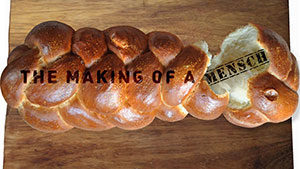
When he was interviewing Tiffany Shlain about her film, “The Making of a Mensch,” radio host, author, and San Francisco State University professor Michael Krasny asked the audience to raise their hands if they thought they were a mensch. Just a few hands went up. A few more reluctantly went up when he asked who had “mensch-like characteristics.”
This reluctance to claim the mantle of a mensch goes back more than a thousand years. The Jewish sage Rava characterized people as wicked, righteous, or average, and said that he and his contemporaries were “among the average.” If a famous sage claims to be average, we should pay attention.
I don’t know how many mensches are out there, or whether you or I deserve that title. However, I do know that we all have what it takes to be a mensch. And, I know that I am more often a mensch since I started practicing Mussar.
There is a process and practice that we can follow, and if we do, we begin to walk the Path of the Mensch. This is the sentiment behind the annual Character Day, the brainchild of Emmy-nominated filmmaker Tiffany Shlain and her non-profit organization Let It Ripple. On Character Day, hundreds of thousands of people around the world will attend events with a common message: You can do better, and here is how.
Character Day has grown from 1,500 events the first year to 5,500 in the second. In this, the third year, over 70,000 events are expected on September 22, 2016. If you are local, I’d love to see you at the event I am hosting.
Character Day events feature up to three short films by Tiffany Shlain. Two, The Adaptable Mind and The Science of Character, champion a growth mindset. No matter where we are, we can change our very brains to become better people. And her third movie, The Making of a Mensch ties character growth to Mussar.
Mussar as an Opportunity to be Your Best Self
Mussar is a 1,000-year-old Jewish spiritual practice that teaches us how to find those things that cause us to get stuck in the same situation again and again, and offers a step-by-step path towards balance and healing through mindful action in everyday life. Yes, there is a solid argument that the Jews invented self-help.
I love the way that Alan Morinis, one of my teachers, emphasizes Mussar as a means to recognize and build on the goodness all around us. Not every Mussar author takes that approach. I’ve been known to skip parts of some of the Mussar classics that get too negative. For example, some books go on and on about how lowly and insignificant humans are when compared to God. I prefer sources that make the point another way – we all have a spark of the Divine, and have an opportunity to live up to our Divine potential in every moment of the day.
Many people are unsure of the Divinity. That is okay; in fact that’s common. If this is you, think of your Divine Spark as your common spark of humanity, the best of who you are that can never be taken away, no matter what you do.
I don’t think that it is an accident that Character Day exploded when it tied into Mussar. On a practical level, many Jewish institutions and luminaries were eager to become a part of the event. When Rabbi Lord Jonathan Sacks participates in Character Day, people pay attention. But it goes beyond that.
Mussar is practical, and draws on 1000 years of Rabbinic wisdom on how to live a good life. They offer practice advice, explaining the role of anger and jealousy in a good life, and the circumstances when too much patience is harmful to the self and others.
Mussar is also magical – it transforms people. I can’t tell you how many people have noticed changes in their lives within a few days of starting to practice Mussar. In a way Mussar is like The Matrix – no one can be told what it is, you need to experience it for yourself.
Want to join me on a Mussar journey? Start by taking a Soul Trait Profile Quiz now.
The post How To Make Yourself a Mensch appeared first on American Mussar.
September 9, 2016
The Spiritual Practice of Star Trek
I can’t believe that I didn’t notice that my book is being published on the 50th anniversary of Star Trek. I have been a Star Trek Fan my whole life. I am an MIT science guy, turned marketer, turned spiritual seeker. I am excited that The Spiritual Practice of Good Actions is for sale on Amazon. But I am GAGA through the roof that the publication date is on Star Trek Day. It is a spiritual convergence. It must be. It’s the Spiritual Practice of Star Trek.
I even wrote about Star Trek in the book to illustrate The Evil Inclination. Here is an excerpt.
In the episode called “The Enemy Within” a transporter accident splits Captain Kirk into the good Kirk and the evil Kirk. The evil Kirk gets into fights, swigs brandy from the bottle, and even tries to assault the beautiful Yeoman Janis Rand. The good Kirk is kind and empathic, but he can no longer make decisions and thus has lost his ability to command. Spock says to McCoy, “And what is it that makes one man an exceptional leader? We see here indications that it’s his negative side which makes him strong, that his evil side, if you will, properly controlled and disciplined, is vital to his strength.
There is a story in the Talmud that follows a similar theme. The Rabbis trapped the Evil Inclination, and initially rejoiced. Soon, however, they noticed that no one did any work and the chickens stopped laying eggs. Just as the Rabbis needed to let the Evil Inclination free into the world once again, the two halves of Captain Kirk needed to be reunited.
The Evil Inclination is a fundamental part of who we are. Our challenge is to guide our Evil Inclination towards positive contributions. For example, ambition is good when it helps you achieve things in the world. Unbridled ambition, however, can lead to unethical and anti-social behavior. – “The Spiritual Practice of Good Actions” Llewellyn p. 35
That is what I love about Mussar – it shows up everywhere. We all have what it takes to be a Mensch, a person of outstanding character. But we have this thing called the Evil Inclination that holds us back. We are faced with choices, and when we practice Mussar, we learn to channel the Evil Inclination to make us outstanding people.
If you have not already done so, please go buy a copy of The Spiritual Practice of Good Actions. People love it, and you will too. If you are a regular visitor to American Mussar, you probably have have some idea of what it is about. You’ve seen snippets – maybe the Soul Trait Profile Quiz, maybe an excerpt, and maybe the American Mussar Sampler. In the book, I bring it all together, using my own story and many stories from friends and students to illustrate how Mussar can change your life.
The post The Spiritual Practice of Star Trek appeared first on American Mussar.
September 6, 2016
What Holds You Back from Repairing the World?
 Cutting down fruit trees in a time of war is forbidden
It would seem like not wasting resources, and preserving the world would be common sense, no brainer, consensus principles. And maybe they are in theory. But in reality, the planet is kind of a mess, and getting worse all the time. While it is tempting to throw up our hands at the scope of the problem, or to blame corporations, Mussar teaches us that we should approach life looking for small actions we can take in everyday life to bring ourselves into balance. After all, there is something inside that holds us back from doing the right thing. So the question is, what holds you back from repairing the world?
The teachings around the Commandment Bal Taschit translated as “do not destroy” are an instructive place to go as we look for soul traits to help us become more environmentally balanced within. Bal Tashchit comes from a principle that in the time of war we are not allowed to cut down fruit trees. You may eat of them, but not cut them down to make siege engines or the like. (Deuteronomy 20:19).
The Book of Education, (Sefer HaChinuch) written in the 13th Century relates this environmental stewardship to the state of the soul. It reads, “Righteous people … do not waste in this world even a mustard seed. They become sorrowful with every wasteful and destructive act that they see, and if they can, they use all their strength to save everything possible from destruction. But the wicked … rejoice in the destruction of the world, just as they destroy themselves.” (Sefer HaChinuch 529; )
If only it were that simple. We could blame the wicked for everything, secure in our knowledge that we are “outraged and sorrowful” with global warming, and the Great Pacific Garbage Patch. But if you are like me, edible food ends up in the compost bin, and a large pile of trash is hauled away from my home every week.
George RR Martin, author of the Game of Thrones books, and Tolkien, author of the Lord of the Rings have different conceptions of evil. For Tolkien, Evil is external, in the form of Sauron, a supernatural being bent on the destruction of all that is good. For Martin, the evil is inside – each of his characters have the capacity for both good and evil. And some of the most interesting characters, like Tyrian Lannister have exhibited both in plenty.
Mussar sides with Martin – we are driven by the conflict between the Good and Evil Inclinations. Rabbi Ira Stone teaches that Mussar offers an opportunity to strengthen the Good Inclination by balancing our Soul Traits, which in turn makes it easier to keep commandments like Bal Tashchit. Here are three Soul Traits we can cultivate to strengthen our ability to protect our planet.
Honor, which reminds us to Honor the Divine spark in others. – People need to eat, and to destroy fruit trees makes it likely that someone will go hungry. In fact, sages of the Talmud generalized this commandment to teach that we should not wantonly spoil opportunities or resources of other people. Rabbi Abraham Isaac Kook taught that the fruit trees are an allegory of human dignity, and we are forbidden from degrading human dignity. Thus, if we focus on the needs of others, bringing our Honor towards balance, we will be less likely to waste resources.
Gratitude reminds us to recognize the good and give thanks. The Book of Education teaches that the purpose of the Commandment “do not waste” is to teach us to “love that which is good and worthwhile and to cling to it, so that good becomes a part of us.” Thus by practicing Bal Tashchit we become more grateful, and conversely, if we practice gratitude, recognizing the good and appreciating what we have, we will be less likely to run out and buy the latest version of the iPhone, even though the phone we have is more than sufficient for what we need.
Awe – to quote Eliza in the musical Hamilton, “Look around, Look around, at how lucky we are to be alive right now.” The Baal Shem Tov said, “The world is full of wonders and miracles, but we take our little hand and we cover our eyes and see nothing.” The world is an amazing place, and if we take some time to appreciate the beauty in the world, we will, as a matter of course, be more mindful of how we use our resources.
Thus by cultivating Honor, Gratitude and Awe, we strengthen our Good Inclination, and can more easily keep the Commandment “Do Not Waste.” What is one small action you can take in your life to cultivate balance in one of these traits?
If you would like to start your own Mussar Journey, take the Soul Trait Profile Quiz right now.
The post What Holds You Back from Repairing the World? appeared first on American Mussar.
August 31, 2016
Understanding Mussar Choice Points

The Choice Point is a fundamental element of Mussar practice. It is the moment when we are balanced between doing the right or the wrong thing. When we are awake, we see the choices in front of us, and are better positioned to exercise our free will. This excerpt, from my book “The Spiritual Practice of Good Actions,” explains the importance of Understanding Mussar Choice Points.
Rabbi Eliyahu Dessler one of the foremost Mussar masters of the early 20th century, describes the struggle between the Good and Evil Inclinations as a battlefront. Behind the front lines, our actions are firmly entrenched such that we act without thinking to follow either the Good or Evil Inclination. When we are at the boundary, however, we are faced with a choice, and feel the pull towards both positive and negative behaviors. Rabbi Dessler called this a choice point. For example, stopping at a red light under ordinary circumstances is in the category of an automatic behavior in the area of the Good Inclination. However, if we are running late, we may be tempted to race through the intersection while the light is changing. Choice points are critical, since that is where we have an opportunity to exercise free will, and decide which way to go. We might make a decision to do right by our Soul, or to follow the Evil Inclination. It is only a choice point if the decision could go either way.
This picture of the confluence of the Rhone and Arve rivers illustrates the metaphor of the battle between the Good and Evil Inclinations. Imagine that you on a boat traveling towards the confluence of the clear and muddy rivers. In some parts of our life, we generally do the right thing and thus are sailing through the clear waters on the left side. In other areas, however, our weakness hold sway, and we are in the habit of following our base instincts in the cloudy water. In the middle, there is a grey area, where our spiritual challenges lie. The boundary is jagged, uneven, and in constant flux. There are places where the good juts out a bit or the Evil Inclination is starting to permeate under the Good Inclination. Each action we take influences our Soul, making it more likely that we will make a similar decision in the future. Thus when we follow the Good Inclination, the boundary is pushed to the right. When we follow the Evil Inclination, the boundary is pushed to the left. Dessler supports this conclusion by citing Ethics of the Fathers, which says “One sin leads to another,” and the Talmud, which teaches, “as soon as one has committed a sin twice, it is no longer a sin for him.” In America, we call this phenomenon the slippery slope.
Rabbi Dessler teaches us that our choice points are a product of our education, environment, and state of spiritual development. Two people with different spiritual curriculums will face very different choice points day to day. For example, lets compare the choice points between two men, one righteous, and the other a thief. For the thief, the choice point is whether to take the television but leave behind the Blu-Ray player. For him, that would represent a great step forward since he did not commit as big a crime as he usually did. The challenge for the righteous person is to give to charity with a feeling of Loving-Kindness instead of out of obligation.
We all have issues. Mussar concerns the point of choice, that moment of conflict when we have to choose between being patient, or yelling at the kids to hurry up and get out the door. Choice? When I start yelling it doesn’t feel like a choice, it just comes out. While this is true, amazingly enough, two weeks after I began to focus on the Soul Trait Patience I experienced a dramatic change in my typical behavior. My kids were slow getting out the door in the morning, and I opened my mouth to yell at them. In that moment, I recognized them as little divine Souls, just playing around and not giving a fig about getting to the car. I closed my mouth and smiled.
In that moment, I chose to sail in clear waters.
“Excerpt from “The Spiritual Practice of Good Actions” by Greg Marcus, PhD © 2016 by Greg Marcus, PhD. Used by permission from Llewellyn Worldwide, Ltd., www.Llewellyn.com.” Order now on Amazon
Image credit: La Jonction used with permission from S. Brandt.
Rabbi E. E. Dessler, Strive for Truth, reprinted on Torah.org, accessed August 7, 2015, http://www.torah.org/features/spirfoc....
Go to http://americanmussar.com/wp-content/... to look at this picture in more detail.
Avot 4:2 and Talmud, Yoma 86b.
Rabbi Eliyahu E. Dessler, Strive for Truth!, trans. Aryeh Carmell (Jerusalem: Feldheim, 1978), 54-55.
Derived from an example from Rabbi E.E. Dessler shared by Morinis in Everyday Holiness, 23.
The post Understanding Mussar Choice Points appeared first on American Mussar.
August 29, 2016
Overcoming a Hopeless Moment the Mussar Way
 My summer vacation is over, and it’s nice to be back in a routine. Actually, I kind of miss vacation, but I don’t miss being sick the entire month of July. Right before I came down with pneumonia, I wrote an article that appeared on Tikkun.org called Join the Mensch Movement. It was after the Democratic sit in in Congress as a protest against inaction on gun violence. I explained that John Lewis is a mensch – he has dedicated his life to fighting injustice. At one point, the Democrats on the floor of Congress started singing “We Shall Overcome.” Believe it or not, I have used that same song to diffuse family situations. It not a go to strategy for overcoming a hopeless moment.
My family was on vacation. It was one of those awful vacation moments when the entire family was bickering. Two teenagers and two strong willed parents can be volatile. Feeling helpless and hopeless, suddenly I started to sing.
We shall overcome.
We shall overcome.
We shall overcome, some day.
Those were the only words that I knew, so I started to sing them again until the stunned silence was replaced by howls of protest.
We shall overcome.
We shall overcome.
We shall overcome, some day.
At the time, I was practicing the soul trait of Patience. Mussar teaches that Patience is a gift, to help bear the burden of an unpleasant situation until it is over. For me, it was a struggle to sing or yell, which would have hurt and upset people who were already frustrated and suffering. People I loved.
I agreed to stop singing if we could stop arguing, and carry on without complaint. It was a compromise, a fragile peace that opened a space for us to be together. It gave us hope.
Did anything change from the Democratic sit in? There was still a recess, and there is still no new gun legislation. But for the men in women in Congress who are part of the Democratic party, they were changed. They had hope. Sometimes we need to act. We can’t just sit there in silence and suffer. Sometimes we need to take action.
So in a hopeless place, sometimes all we can do is sing.
Want to start your own Mussar journey? Click Here to take the Soul Trait Profile Quiz.
The post Overcoming a Hopeless Moment the Mussar Way appeared first on American Mussar.
July 15, 2016
Did Ginsberg Speak Too Much Truth?
 This week I’m practicing the soul trait of Truth. It has been showing up everywhere in my life. For example, I moved a couch, and found a sticky note that said “Fear avoidance leads to deception.”
It was from when I was preparing the outline for my book. Yes, from the chapter on Truth.
But Truth has been no more prominent than in the comments Supreme Court Justice Ruth Bader Ginsberg made about Donald Trump. Initially, she said ““I can’t imagine what this place would be — I can’t imagine what the country would be — with Donald Trump as our president,” She elaborated concerns over the makeup of the supreme court, and went on to criticize the press and Trump himself for not releasing his tax returns.” In this case, did Ginsberg speak too much Truth?
Ginsberg’s remarks were very much in line with Jewish tradition. We are taught to speak out against injustice, and clearly her concern for the country motivated her remarks. Speaking Truth to power is sometimes referred to as the prophetic tradition – like the prophets of old, sometimes we are required to speak uncomfortable truths.
In this case, however, Ginsberg was speaking from a position of power. She was perceived as stepping over the line, and eventually apologized , saying, “On reflection, my recent remarks in response to press inquiries were ill-advised and I regret making them. Judges should avoid commenting on a candidate for public office. In the future I will be more circumspect.”
We see in action an important element of Mussar’s teachings – too much of a soul trait is just as bad as not enough. Perhaps Ginsberg was speaking too much Truth in this case. I say perhaps because it is not for me to judge whether on a spiritual level what she did was too much or the right amount. That is for Justice Ginsberg alone to evaluate. The classic indicator of too much Truth is when we are being unkind; more generally we might say that too much Truth causes more harm than good. Personally, I know that I have a tendency to be Truthful to a fault and on many occasions I’ve caused myself and others unnecessary pain by being too Truthful.
There is another important side of Truth: human perception of Truth is subjective. Ginsberg was telling her truth, reality as she sees it. Have you ever been in a situation when you and someone else have very different perceptions of the same experience? This is common, and part of being human. As a result, we need to be cautious when we start tossing our Truth out into the world.
Food for thought.
 Spectrum of Truth, from too little to too much
Where do you fall on the spectrum from too little to too much Truth?
In these turbulent times, having a firm grasp on our soul trait of Truth is a must.
The post Did Ginsberg Speak Too Much Truth? appeared first on American Mussar.
June 29, 2016
Jewish Checklists For Being a Mensch
It has been a crazy busy month for me, mostly in a good way. Today I sent off the final corrections for The Spiritual Practice of Good Actions, which goes to the printer July 1. September 8th will be here before we know it! This book launch has a lot of meaning for me, and I continue to struggle a bit with concerns about the outcome. I fear success and failure equally. It is a great week for me to be practicing Trust, for Trust reminds us that we cannot control the outcome, and most things work out well.
I was moved to write today after reading a wonderful article by Marjorie Ingall in Tablet Magazine called “How To Be a Better Ally.” It lists 11 ways to be a better ally to the LGBTQ community, inspired by the tragic events of Orlando. It is so cool to see Jewish checklists for being a Mensch.
Many of us are not sure how to be helpful, supportive, or empathetic in the face of tragedy, even more so towards a minority and oppressed community. For example, Ingall suggests that post Orlando, to “call your LGBTQ friends and family.” She quotes someone who explained how surprised she was “how much it has mattered for my straight friends to reach out and see how I’m doing.” As a result, I reached out to a gay couple close to me to check on them, and they were very appreciative.
Ingall’s list reminds me of a list created by the medieval philosopher Maimonides explaining how to visit the sick. Visiting the sick is a commandment, but it isn’t as straightforward as it seems. Lets face it – it is intrinsically uncomfortable for many people to go to a hospital. We do not want to be reminded of our own frailty. And, we often are not sure what to say or do. Maimonides put together this practical list over 800 years ago, explaining the right way to visit a sick person. His suggestions include:
Do not stand over the person – sit on a chair or the floor to try to stay at eye level, but do not sit on the bed
Leave your own issues at the door. Enter the room with a smile. When my family first learned this rule, we translated it into “Don’t Bring Me No Bad News,” a great number from The Wiz.
Be realistic, and don’t be Pollyanna about the person’s condition. Take your clues from them. You are there to bring support and comfort. If someone is on hospice, clearly it is not the time to talk about them getting better.
Bring something if you can
Visiting the sick is a core part of practicing Loving-Kindness. Remember that we practice Loving-Kindness through acts to sustain others without expecting anything in return. Ingall’s list of ways to be an ally also falls into the category of Loving Kindness. For example, she writes “don’t expect a cookie for being an ally.” You are there to support someone else’s humanity. There is risk in being “out” as an ally, which is why it is an act of Lovingkindness.
In summary, we are not born knowing how to act in every situation. The more outside of our experience, and the more intrinsically uncomfortable the situation, the more we can benefit from lessons and guidance on how to act like a Mensch, a person of outstanding character.
I love lists like this. Sometimes if feels like I need to make every socially awkward mistake until I learn. I am very happy to have a checklist with pointers to prevent me from stepping in the dodo.
Know any good checklists for being a Mensch? Please share below or on the American Mussar Facebook Page.
The post Jewish Checklists For Being a Mensch appeared first on American Mussar.
June 6, 2016
Made Myself a Nazi Target
 By changing my name to (((Greg Marcus))), I made myself a Nazi target on Twitter. They have a way of searching for names with the “echo” ((())), in order to bombard the victim with anti-Semitic comments. (Read more here.)
Then over the weekend, I started seeing Jewish names on Twitter with the echo. I was horrified – what are they doing? Then today, I read this article by (((Yair Rosenberg))) in the Tablet, and I started to get it. By placing the echo around our own names, we are co-opting the Nazi process. Nazi’s are great at anonymously berating someone on social media, which is the equivalent of catching you alone in a dark alley. In the dark they’ll gang up on you like nobody’s business. In the light however, they hide.
As I write this, I am tempted to use phrases like “they crawl back under their rocks.” Pithy, feels good, might even get a retweet. Fortunately, I am constrained by my Mussar practice. It pains me to say so, but Nazi’s too, have a Divine Spark. They were born an innocent soul like the rest of us. Part of me does feel compassion that someone could become so broken by life and twisted by hate. There is no cause for me to go out of my way to say personally insulting things. What I am obliged to do, however, is to bring their activities into the light, and to work to keep them out of power.
I admit it – it makes me nervous that I made myself a Nazi target on Twitter. Extremists cannot be reasoned with. Then it occurred to me: I was already a target. The anti-semites are out there. When you are Jewish, and raise your profile on social media, they will find you. I have a relatively small social media footprint, yet early on I reposted the popular “I’m that Jew” video on my Facebook page, and the haters started coming out of the woodwork. All kinds of things, some outright nasty, others tried to educate me that the Jewish people were a myth with no history. So, rather than just take it, I’ll join my fellow brethren in solidarity and co-opt the Nazi echo symbol.
Strangely, this fits with my Humility practice this week. The Mantra is “No more than my space, not less than my place.” In Mussar, we need to unlearn the Western definition of Humility, which means to be self-effacing. Humility is about taking your proper place in the world. Having too much Humility would mean not stepping up to an opportunity to make a difference in the world. For me not to become (((Greg Marcus))) would be to miss an opportunity to step up and make a difference in the world.
For the record, I think these neo-Nazi’s are dangerous. I’m really not happy that I made myself a Nazi target, even if indirectly. But I think it is the right thing to do. We have only survived as a people by standing up for one another.
Many people on Twitter are (((echoing))) their names, and not just Jews. Please join the brigade of mensches of all faiths as we stand shoulder to shoulder, tweaking the noses of the haters. We are many, they are few. By taking this small step now, you just might change things enough to forestall the need to take a large step later.
The post Made Myself a Nazi Target appeared first on American Mussar.
May 18, 2016
Mensch or Jerk is Determined by Small Moments
 At breakfast a few years ago, a friend of mine and I discussed a volunteer meeting we had recently attended. It ran over its allotted time by 45 minutes, until 9:45 at night. My friend was really upset because it interfered with family plans. As one of the leaders of the meeting, I instantly apologized. Interestingly, my friend quickly corrected himself, insisting that it was a small thing, and that he should not have gotten upset.
While my friend seemed suddenly ashamed of his emotional reaction, I reassured him that he was not out of line, explaining that a central teaching of Mussar is that life is lived by small things. Mensch or jerk is determined by how we show up in small moments. How often do we have a really big thing land in our lap? It is these small things – the small moments of life — that make up daily life. And the one thing a Jewish leader should never do is disrespect the people he or she is serving. His candor was actually a gift, reminding me of my sacred duty.
The Soul Trait of Honor reminds us that each person is a Divine Soul, and should be treated accordingly. While it is true that as a leader, I did not do anything egregious – no human rights violations or dehumanizing behavior — what I failed to do was adequately coordinate with the other leaders to ensure that we delivered on our promise of ending the meeting by 9:00. The Soul Trait of Enthusiasm, reminds us that we need to proactively run to do good, as Abraham does in Genesis 18:6-7 when he runs around arranging food for guests a few hours after being circumcised at the age of 99.
As leaders, we should proactively make sure that we are honoring and respecting the time of volunteers, especially in this over-scheduled age. This is a lesson many non-profit organizations would do well to learn.
I remember that day because a few hours later, something amazing happened. I was in the checkout line at the grocery store, reading the New York Times on my phone. I mindlessly stepped forward, as I had already put the groceries on the belt, and the cashier said “Hi.” In a flash, I remembered a recent article I read about how awful it feels to be ignored because the person you are serving has their face in a phone. And I remembered the Mussar teaching for Honor, to greet everyone before they greet you (reference).
So I put down the phone, looked her in the eye, smiled, and said “Hi.” It was like magic. She smiled back, a full face smile and her eyes sparkled.
I felt great. We both did. I kept thinking about it over and over as I walked to my car and started to leave the parking lot. “Wasn’t that great? Who can I tell? Should I include the story in my book….” I started composing in my head.
My happy reverie was suddenly broken as someone yelled loudly as I drove towards the exit.
“Asshole!”
The word rang in my ears. “Was that at me?” I wondered. “What did I do?” Did I cut someone off? Did I just miss a pedestrian? Maybe I was so wrapped up thinking about what a great Mensch I am that I wasn’t paying enough attention to my driving.
Or maybe the irate individual wasn’t even talking to me.
Whatever the case, the incident was a good reminder from the Universe: Life is lived in small moments. There is no room for complacency or patting myself on the back. We do not honor others so we can feel good about ourselves; we do it because it is the right thing to do.
And we move on from one instance of menschiness to the next.
Planning a meeting, going through the check out line, driving in the parking lot: three small opportunities to practice honor in a short span of time. Mensch or jerk? I got it right 1 time out of 3. Hey, in baseball that would put me in the Hall of Fame.
Want to start down the path of menchiness? Click Here to take the Soul Trait Profile Quiz.
Image credit: Smile by Dasha via Flickr CC
The post Mensch or Jerk is Determined by Small Moments appeared first on American Mussar.