Greg Marcus's Blog, page 5
April 14, 2020
Trust in God But Tie Your Camel During the Pandemic
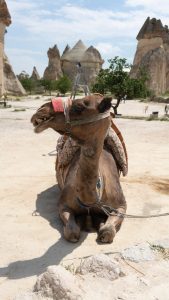 Trust in God but Tie Your Camel
Do you find yourself worrying because of the pandemic? Maybe you are worrying about your health, the health of others, politics, the shape of society in the future… There are a host of things to worry about if we let ourselves. The spiritual challenge is to stay present, not to give in to worry, and to make good decisions.
As it says in the Talmud, Rabbi Eliezer the Elder said, “He who has a loaf of bread in his basket but says, ‘What will I eat tomorrow?’ is lacking in faith.” [Sotah 48b] The passage goes on to say that one should Trust in the Divine that one will have food tomorrow. As one fortunate enough to have enough to eat, this is an important reminder about what is really important, and offers an important tactic to meet the spiritual challenge of these times. This lesson holds even if you are unsure of the Divinity.
In this week’s community gathering, we’ll return to a theme of Trust, following up on our discussion in the first post about the pandemic.
The mantra for trust is “Trust in God but tie your camel.” There is a lot of camel tying to be done these days, but we must not lose sight of Trust, for Trust is a cure for worry and fear.
As Rabbi Israel Salenter reminded us during a cholera epidemic:
At a time like this, our duty is clear: we must not fear [the cholera epidemic]- for what value is the life of a man [in this world] when we consider the overwhelming potential for spiritual failure? Who knows if a person will succeed in his path? Of course, this does not mean that we should fatalistically resign ourselves to dying and do nothing to protect ourselves. Rather, we must follow the regimen that the learned physicians have prescribed, to insure that we maintain our health. It is a Torah directive for us to proceed according to the light of their words, for our duty is to establish life in this world- for the benefit of ourselves, as well as others. – Ohr Yisrael – 23.
Mussar is a spiritual practice – something we do on a regular basis so that in times of crisis it is there for us. If you’ve read even one of my emails, you have taken a step towards this practice. The time of crisis is here, and we cannot allow ourselves to fail spiritually.
What would spiritual failure look like? Despair, selfishness, greed, denial, anger… Ok, I’ve dabbled in all of those, and sometimes I’ve even acted according to my worst nature. But Mussar has helped bring me back time and again. While Rabbi Salanter could get a bit fire and brimstone, we can be much more gentle with ourselves. Mussar is not about perfection. It is about process.
The Weekly Mussar Community Gathering is open to anyone looking for a calming experience, a chance to connect to others 1:1, and to gain insights to cope with the current pandemic. No experience necessary. Just come and give it a try.
Photo by Scott Serhat Duygun on Unsplash
The post Trust in God But Tie Your Camel During the Pandemic appeared first on American Mussar.


April 7, 2020
Practice Enthusiasm To Escape Your Personal Egypt
 Red on the doorpost in remembrance of the first Passover in Egypt
“This Passover is like the very first Passover. Where was it?” asked Ahoova, my Hebrew teacher.
“It was in Egypt! Everyone was in their own home, with just their families, afraid, while the angel of death was outside.”
Wow, this Passover is a lot like the first one. I was inspired to put some red paper below our Mezusah, as a symbol of our isolation, staying inside to avoid death.
While for many, Passover has been a time to get together with family, and along the way we have a seder to remember that once we were slaves in the land of Egypt. And if we are paying attention, maybe later we remember the disadvantaged, because we were once slaves in the land of Egypt.
The Hebrew word for Egypt is Mitzrayim, which means narrow place. The Zohar (the book of Kabbalah) made this connection because the Divine liberated us from a place of constriction, where as slaves we had little control of our movement. Like today. We are constricted in our movement.
Rabbi Nachman of Bratzlov (1772-1822) said, “The Exodus from Egypt occurs in every human being, in every era, in every year, and in every day.” Rabbi Nachman was talking about liberation from constraints we place upon ourselves. Those ideas, baggage, habits that keep us from being fully human, and seeing the humanity in everyone else.
Yes, I wrote “everyone.” That includes the invisible people who have been working in grocery stores keeping us alive, as well as those who hold political beliefs we find repugnant. Until we can put humanity first and foremost, the spiritual sickness that contributed to this calamity will not be cured.
Mussar makes this Passover special because it gives us tools to look inside, and practices to help escape from our own Egypt. This week, focuse on the soul trait of Alacrity/Enthusiasm. During this time of physical isolation, Alacrity can help us get going and face what we need to face, and then GET THE HECK OUT OF OUR OWN PERSONAL EGYPT.
As a mantra, here are a few good ones to consider
If now now, when? – Pirkei Avot 1:14
Be bold as a leopard, light as an eagle, swift as a deer, and strong as a lion – Pirkei Avot 5:23
What is one small action you can take to liberate yourself? For me, I’m going to reach out to someone special to me who is a bit distant from me, to focus on repair.
Mussar makes this Passover special because it gives us tools to change who we are, so we emerge from physical distancing a better version of ourselves. Who do you aspire to be?
The themes of this post were covered in the April 9th Mussar Community Gathering.
If you are not sure what is holding you back, I suggest taking the Soul Trait Quiz again to inspire you.
The post Practice Enthusiasm To Escape Your Personal Egypt appeared first on American Mussar.
Mussar Makes This Passover Special
Red on the doorpost in remembrance of the first Passover in Egypt“This Passover is like the very first Passover. Where was it?” asked Ahoova, my Hebrew teacher.
“It was in Egypt! Everyone was in their own home, with just their families, afraid, while the angel of death was outside.”
Wow, this Passover is a lot like the first one. I was inspired to put some red paper below our Mezusah, as a symbol of our isolation, staying inside to avoid death.
While for many, Passover has been a time to get together with family, and along the way we have a seder to remember that once we were slaves in the land of Egypt. And if we are paying attention, maybe later we remember the disadvantaged, because we were once slaves in the land of Egypt.
The Hebrew word for Egypt is Mitzrayim, which means narrow place. The Zohar (the book of Kabbalah) made this connection because the Divine liberated us from a place of constriction, where as slaves we had little control of our movement. Like today. We are constricted in our movement.
Rabbi Nachman of Bratzlov (1772-1822) said, “The Exodus from Egypt occurs in every human being, in every era, in every year, and in every day.” Rabbi Nachman was talking about liberation from constraints we place upon ourselves. Those ideas, baggage, habits that keep us from being fully human, and seeing the humanity in everyone else.
Yes, I wrote “everyone.” That includes the invisible people who have been working in grocery stores keeping us alive, as well as those who hold political beliefs we find repugnant. Until we can put humanity first and foremost, the spiritual sickness that contributed to this calamity will not be cured.
Mussar makes this Passover special because it gives us tools to look inside, and practices to help escape from our own Egypt. This week, focuse on the soul trait of Alacrity/Enthusiasm. During this time of physical isolation, Alacrity can help us get going and face what we need to face, and then GET THE HECK OUT OF OUR OWN PERSONAL EGYPT.
As a mantra, here are a few good ones to consider
If now now, when? – Pirkei Avot 1:14
Be bold as a leopard, light as an eagle, swift as a deer, and strong as a lion – Pirkei Avot 5:23
What is one small action you can take to liberate yourself? For me, I’m going to reach out to someone special to me who is a bit distant from me, to focus on repair.
Mussar makes this Passover special because it gives us tools to change who we are, so we emerge from physical distancing a better version of ourselves. Who do you aspire to be?
If you are not sure what is holding you back, I suggest taking the Soul Trait Quiz again to inspire you.
The post Mussar Makes This Passover Special appeared first on American Mussar.
March 13, 2020
Some Mussar Responses to the Coronavirus Pandemic
 Hoarding is the worst form of miserliness
All week I have been trying to write about the virus. There have been stops and starts, with complicated arguments with lots of links, fueled by my own anger and confusion and fear. So this time I’ll try to keep it simple and write from the heart.
Here in the SF Bay Area, every day has brought new cancelations, closures, and warnings. As of Monday, all four of us will will be in the house, working remotely. I need to increase our internet bandwidth, and hope we can find a way to make it work in our small house.
What guidance can we take from Mussar to both retain our humanity, and show up as our best selves in this time of trial? Here are a few soul traits to focus on.
1. Trust, as in trust in the Divine. This might seem like a strange place to start, especially if you are unsure of the Divinity. My mussar group met by Zoom this week, just finishing two weeks on Trust. It was amazing that everyone said it was always on their mind, and helped them be thoughtful about what to do and what not to do. There were both canceled trips, and vacations that went forward. By focusing on Trust, people gave a lot of consideration about what they should do.
In addition, remember the Trust mantra: Trust in God but tie your camel. Our government institutions have let us down by not planning an appropriate response, so we need to do more of the camel tying on our own. Important things to do include:
washing your hands
staying home if you are sick
staying home if you are over 60 or at risk medically
staying home if you are in a region with a growing number of cases.
You might have noticed a certain theme in these suggestions: Staying home.
2. Humility. Many of us walk through life with the illusion that we are in control. But we as individuals and are powerless against this epidemic. Humility is about recognizing one’s place in the universe, and taking appropriate actions. As the facilitator of the Mussar group, it was my decision to not meet in person. You need to make informed decisions, about yourself and the groups you may lead.
You might think that it won’t happen to you, or that you are healthy and are likely to survive even if you get it. But what about the people you give it to? Many people are walking around symptom free, which is why staying home is so important. Our contribution makes a difference, to make it less likely that we’ll get sick, AND less likely that we’ll pass it on. Only by working together can we get through this in the best way possible. If we all stay home, for sure the spread of the virus will slow dramatically. If too many people get sick at once, the hospitals get overwhelmed and more people die.
3. Generosity. Are the grocery shelves in your area empty? They are here, and I just discovered that we actually are almost out of toilet paper. Stocking up to minimize leaving home is sensible, but some people are taking it way too far. Buying up more than you need is the worst form of miserliness.
People in service jobs need our Generosity. They are being hurt by people staying home. If you cancel something, pay for it anyway. For example, I didn’t go to my gym, but I paid the trainer anyway. He doesn’t make a lot of money, and I’m sure he will be struggling as people cancel training sessions with him.
The way we will get through this is by pulling together, and helping those in need. Remember Judaism teaches that everyone is required to give Tzedakah (charity) even if they receive Tzedakah themselves. Even if you are financially impacted by the various shut downs, remember that some people are worse off. Find a way to give to others, of time, money, or attention.
It doesn’t feel like a coincidence that I’m reading the books of the Prophets for class this week. They follow a general structure, that includes warnings of impending destruction, followed by a message of hope. After the calamity there will be a rebuilding, and a time of renewal.
Make no mistake, we are facing a time of calamity. Even if the virus is contained, and we don’t see millions getting sick, the economic and social impact will be huge. This is not a punishment; it is a consequence of living in a dangerous world. We will get through this, and afterwards we will rebuild. What kind of world do we want to have?
I invite you to make the most of this opportunity. One of my students said, “I realized that I am not living my life the right way. I need to start doing things differently. I am going to really start to look within.”
I’ve shared with you some Mussar responses to the coronavirus pandemic. I am very much redoubling my efforts to look within, and clean house while I’m inhabiting it.
I hope you’ll join me.
The post Some Mussar Responses to the Coronavirus Pandemic appeared first on American Mussar.
March 5, 2020
Judaism Unbound Listener Survey – A Deep Dive
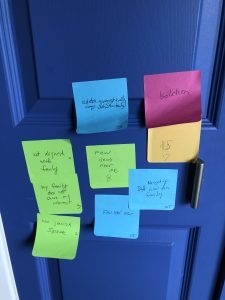 Sticky notes on the way to creating a “bucket”
When it comes to living a meaningful Jewish life, what is the biggest problem, challenge or situation you are facing?
This is the question we asked in the Judaism Unbound Listener Survey in 2018. The results and details of the survey were published recently in an eJewish Philanthropy article, that I co-wrote with Estee Solomon Gray. You can read here.
The Judaism Unbound Listener Survey helped us identify 5 primary challenges that prevent people form living a meaningful Jewish life. In this post, we’ll take a deeper look at the five buckets, categories that together capture over 80% of the challenges shared by the respondents.
As practitioners of Mussar, our job is to, as Rabbi Ira Stone teaches, “bear the burden of the other.” These bucket descriptions do not capture the deep emotionality of the responses. As leaders and humans, we need to do better. For each bucket, there is a suggested Mussar practice to help us do just that.
Judaism Unbound Listener Survey Uncovered 5 Challenges:
1. Institution not working for me: My Jewish institution has a wall of no change, there are few people my age at events, or I am not taken seriously.
While there were people of many ages who fit into this bucket, there were so many people under 40 that we almost wrote “I am not taken seriously by the older generation.” It is not a secret that synagogue membership skews towards an older demographic, many of whom lament that more young people don’t join. The reality is that some younger people are just not connecting with the way things have been done, and when they make suggestions for change, they are not taken seriously.
One Soul Trait we can embrace to overcome this barrier is courage. Change is scary, and we should not let fear drive us to arrogant or dismissive behavior.
2. Minority within a minority: I don’t fit the shared criteria of what being Jewish is because of how I look, my gender identity/Queerness, my views on Israel or US Politics, or I just don’t feel Jewish enough.
There are really two parts to this bucket. Sometimes people feel like a minority because of what they believe, such as being the only Trump supporter in the conversation, or they are the only one who does not support Israel. The other people in this bucket are different because of who they are, a person of color or Queer. Yet the isolation and othering they experience is similar.
The solution to othering is to practice the soul trait of Honor. By focusing on the basic humanity of each individual, we can overcome differences that inhibit connection and community
3. Isolated: I am feeling isolated geographically, within my family, or as an unpartnered Jewish person.
This bucket was a bit of a surprise. Maybe it shouldn’t have, as there is a loneliness epidemic in the US. But because I live in an area with a large Jewish population and in a family where everyone is Jewish, this issue was not on my radar. Lex Rofeberg on the Judaism Unbound podcast is a big champion for people in small communities. For people in this bucket, perhaps the podcast is their biggest connection to other Jews. It has also made me recognize how many people come to the synagogue alone because their spouse or partner is not interested.
Note that the people in this bucket found that the isolation made it hard to live a meaningful Jewish life. As it says in the Torah “it is not good for a [human] to be alone.” (Genesis 2:18). The soul trait we can practice to help overcome this barrier is Generosity, giving our time to build relationships with people who are looking for community.
4. Entering or reentering: I am Jewish-adjacent, converting, or trying to discover what Judaism is about because I had a poor Jewish education.
So many people in this bucket said they did not feel Jewish enough. This is a terrible plague on our community. Another way this can come up is people feeling like they they are a “Bad Jew” because they don’t know something they think they should know, or because they do not participate in a ritual they think they “should” be participating in.
The reality is that Judaism is a practice of lifetime learning. The most learned Rabbi on the planet only knows a small fraction of what there is to know Jewishly.
The soul trait we can practice to overcome this barrier is Compassion. We want to remember what it feels like to be the one who doesn’t know what to ask. And similarly, we need to be compassionate with ourselves if we are concerned that we don’t know enough.
5. Multiple Jewish Spaces: My Jewishness is bigger than any label. I move in multiple Jewish spaces and sometimes feel caught between worlds. Even if I look and sound connected, I feel like I’m muddling along without community.
There are confusing times. Rabbi Benay Lappe teaches that Judaism is undergoing a crash; what has worked for a long time is no longer working. After a crash comes a time of wandering and experimentation. In fact, today is a golden age of Jewish experimentation. Many people are experimenting on the margins; some of whom in 100 years will be towards the center. I for one love to go to different Jewish spaces, but multiple spaces dilutes the opportunity to form deep community bonds at any of them.
The soul trait we can practice to help with this barrier is Gratitude. We can be Grateful for whomever shows up. And if we are lucky enough to have multiple spaces to occupy, we should “recognize the good and give thanks.” Recognizing the good in what we have opens the door to a greater openness to put down roots, even if each place itself is imperfect.
What do you think of the results of the Judaism Unbound listener survey? Which of these buckets resonate with you? What soul trait will you focus on?
Want me to do a survey for your organization? Learn more here.
The post Judaism Unbound Listener Survey – A Deep Dive appeared first on American Mussar.
February 25, 2020
Three Mussar Lessons For Super Tuesday
 Be fearless when you vote!
When I am facilitating a Mussar group, I generally make a rule to leave politics at the door. At the same time, however, Mussar is a practice for living in the real world. We cannot and should not separate our quest to be a Mensch from political action and social justice. Indeed, I can’t imagine a Mensch allowing injustice to flourish unchallenged, or not living up to their duty to vote.
This is especially on my mind as the California primary will take place next week. I realized I could not wait for other states to narrow the field. So, I made time to watch the Nevada debate, and came out very enthusiastic about my top choice – so enthusiastic in fact that I volunteered to canvas for them over the weekend.
An interesting phenomena came up in the training. They warned us that people seemed to be worried about wasting their vote, almost wishing they had fewer choices. Or they liked our candidate, but were worried they might not win in November. Part of our job was to give them permission to pick our person if that is who they liked.
Here are three soul traits, with mussar lessons for super Tuesday and beyond this election season.
1. Humility: Humility is about occupying your proper place in the world. While we only play a small part in the universe, we do have a part to play. If you are a citizen of the United States, your proper place is to vote. I just watched a wonderful mini-series about George Washington, and gained an appreciation of how different our system of self government was from anything that existed prior in the world. This is not the time to get caught up in “my vote doesn’t count,” or go looking for other people to tell us what to do. This is the time to step up, investigate, and make the best decision we can make today.
2. Trust: Trust is a great cure for worry. Don’t worry about making a mistake with your vote, especially this early. As much as everyone want to pick the one who can win, we don’t know who that is. Believe me, the pundits don’t know any more than we do. The one with the best chance to win is the one who gets the most votes during the primaries. Don’t believe me? Look at the 2016 election.
Another important part of Trust is recognizing that you cannot predict the future. Your candidate may not win the primary in your state, but could get enough delegates to fight another day. They might win the state but not get the nomination. They may be fifth, and end up getting picked as the VP. Or they may win the nomination and lose in the general election. Or they may win the whole enchilada. You have no idea what will happen. Your vote makes a statement of your values, which could influence whomever does get the nomination in the end. You are invited to Trust the process, and pick the person who you think can do the best job.
3. Enthusiasm, which covers both starting tasks and finishing tasks. It is also known as Alacrity. As Alan Morinis wrote. Enthusiasm is about “Just Do It.” As much as possible, we want to approach life with energy and focus. And when we don’t feel it, we fake it until we make it. If you are feeling overwhelmed by all of it and everything that is going, find a way to channel that energy into action. Read fewer news articles, and volunteer for a campaign instead. You can write letters, make phone calls from your home, or go door to door.
Finally, I realized that California moved it’s primary earlier so we could have a real say in a parties nominating process. Whether I agree or disagree with this decision is immaterial. That wasn’t my call, so now I need to take the appropriate action to participate as best I can.
Want to see your balance in Humility, Trust, Enthusiasm and 10 other soul traits? Take the Soul Trait Quiz now.
Photo by Sammie Vasquez on Unsplash
The post Three Mussar Lessons For Super Tuesday appeared first on American Mussar.
February 7, 2020
Gratitude Mussar Practice After a Job Setback
 Journaling is a powerful gratitude mussar practice
This month I am consulting for the Judaism Unbound Podcast, helping them raise money through a Kickstarter campaign for their first book. It has been super fun! It is no secret that I am a big fan, (and a former guest) because they bring to the forefront ideas from many Jewish innovators. Unlike other podcasts, they don’t ask how many twitter followers you have when picking a guest – if they like your ideas, you are in. One of the particularly fun things I am doing is interviewing superfans and former guests. I was very moved by my interview with Sarah Lefton, who was the founder and creative director of BimBam, which to discontinue making its educational animations because it could not secure funding to continue.
I asked Sarah how she was post BimBam, and she said “I was sad but things are great in ways I did not expect. I spent a lot of time in 2019 focused on my own art making – mostly ceramics.” She went on to describe how she is reconnecting with her science roots, and is working on two incredible projects she never would have had time for had she continued her work at BimBam. She also offers some great advice for people who may feel embarrassed because they feel they don’t know enough Jewishly. And she closes advising all of us to tell our stories our own way. You can read the whole interview here.
It was a great example of multiple Mussar soul traits in action. Telling your story your way is all about Humility, feeling comfortable in your space, and inviting others to join your worldview. And so many of us have felt less than in Jewish spaces. I know I did when I was younger. The best thing I ever did was seek out opportunities to learn more, even though I was out of my comfort zone. But the Mussar Practice I’m inspired to share is about Gratitude.
************Here’s the Gratitude Mussar Practice**********************
Recognize the Good and give thanks in a negative situation. When things are not going well, the last thing we want to do is look for a positive. Sometimes when we are in truly horrible situations, or in grief, it might be something like an 800 number to find resources, or noticing the friend who sent you a text of support.
What can you be grateful for about something negative? Does that gratitude give you energy to take action in a way that could change thing for the better?
**************************************************************************
The Hebrew word for the soul trait of Gratitude is Hakaret Ha’tov, which means recognize the good (as explained in this BimBam video.) Sometimes it takes time to get the perspective to find something to be grateful for. And certainly there is nothing inherently good about terrible things that happen. Yet gratitude offers a way to cope, and find a path through.
For tips on how to recognize the good and be grateful, check out the 15 minute Gratitude challenge The 15 minute challenge is a great gratitude mussar practice.
image credit:Photo by My Life Journal on Unsplash
The post Gratitude Mussar Practice After a Job Setback appeared first on American Mussar.
December 23, 2019
8 Mussar Miracles for Hanukkah
 Where ever you go, there’s always someone Jewish. Even in orbit!
It is with some irony that Hanukkah, one of the most secular Jewish holidays, is commemorating a miracle. Which miracle depends on who you ask. Like many Jewish ideas, there is more than one right answer. The original Hanukkah miracle was a military victory of Judah Maccabee over the superpower Greeks. Later, the story appeared of the oil that lasted for 8 days.
At this, the darkest time of the year, we all could use some light. Here are eight Mussar Miracles to help inspire us.
Mussar Miracle 1: You are enough. As I wrote last year, that first light reminds us that no matter what has happened, and whatever mistakes we have made, each of us is enough. The light of that first candle is beautiful, as is your inner light when you let it shine through.
Mussar Miracle 2: There is beautify in relationship. Rabbi Mel Gottlieb, Dean at my school AJRCA teaches that the Torah begins with Bet, the second letter because holiness forms in the space between two people. Who is most special to you in your life?
Mussar Miracle 3: Generosity. If you have three, you have more than enough to give one away. Lets remember the terrible loneliness epidemic that is endemic in our country, and reach out to those around us, and be generous with our time, attention, and vulnerability.
Mussar Miracle 4: Curiosity. We are wired to be selfish. We are also wired to care for and nurture other people. Mussar helps us to choose the latter when our survival is not actually at stake. Curiosity, the ability to see and wonder about the world beyond ourselves is where it all begins. If Joseph had not been curious and asked his two fellow prisoners why they were sad (Genesis 40:7), he would never have met Pharaoh and become a powerful man in Egypt. It is only because he had been curious that he was in a position to welcome his brothers into Egypt, which set the stage for the Exodus and the rest of Jewish history.
Mussar Miracle 5: Kindness is a great companion to curiosity. Our curiosity can make us ask “What in the world is that he is wearing?” or it can lead us to care for others as we see in the example of Joseph above. Lets remember how self-absorbed Joseph was at the beginning of the story, doted upon by his father and hated by his brothers for bragging to them. Yet an act of kindness, recognizing someone else’s pain, can overcome it all.
Mussar Miracle 6: Honor. Honor is the soul trait that helps us remember other people exist, and guides us on how to treat them. Rabbi Shlomo Wolbe wrote the following in his masterpiece Alei Shor about Honor:
“The ultimate value you can give a person is to treat a person seriously, to take notice of that person. Even just a hello, I’ve noticed you, shows that person that they are valued.”
I learned this lesson years ago first hand, when a near stranger changed the course of my life by remembering something about me. I was out for a walk, deciding whether or not to give up writing my first book. I ran into another parent from my kids school, who asked about my book! I’d told her about it a year earlier. I was so moved that she remembered that I decided to keep going. You never know the huge impact you may have when you notice someone else.

Mussar Miracle 7: Order. Things work. We live in a world of wonders, and natural laws. Stephan Hawking and other cosmologists made predictions about black holes, and low and behold we finally got to see one in 2019, thanks to the work of Dr. Katie Bouman at MIT. Applying curiosity to the natural world is critically important in an era when our personal choices impact the future of the planet more than ever.
Mussar Miracle 8: Am Yisrael Chai, which means The Jewish people live in Hebrew. There have been many people who have tried to make us go away. I just finished a semester of medieval Jewish history – it is far more harsh than I expected. Yet here we are today, all over the world, and even in orbit. How did we get through all of the hardships over thousands of years? Together.
Whether you are Jewish, Jewish adjacent, or Jewish curious, you are invited to take inspiration from this amazing example of resiliency.
Which of these resonates most with you this year? Which one will you take action on?
Want to begin your own Mussar journey? Take the Soul Trait Quiz here.
The post 8 Mussar Miracles for Hanukkah appeared first on American Mussar.
November 27, 2019
Why Gratitude is Not Enough This Thanksgiving: A Mussar Perspective
 Gratitude helps us recognize abundance, and to be Generous
“My son was volunteering at a homeless shelter. In walked one of his high school classmates. I’m proud that he ran into the kitchen and helped there so his classmate would not see him.”
A friend told me that story, right here in the San Francisco Bay Area, one of the most wealthy areas in the world. Everywhere we see earth shaking companies like Google, Facebook, Twitter and Apple. The downside of this wealth is astronomically high real estate prices. But that alone does not account for the high level of homelessness. People all over the country are struggling with financial and food insecurity, even as some of us become more financially secure.
While Thanksgiving is a holiday that is rightly associated with being grateful, Gratitude is not enough for those who practice Mussar. Gratitude bring confidence and peace of mind. When we recognize the richness of what we have, we have an opportunity to See those with less, and to fully recognize their humanity. It would be a shame if we kept the abundance we are feeling for ourselves.
Rabbi Ira Stone defines Mussar as learning to bear the burden of the other. We don’t do this spiritual practice for ourselves, but to help us show up for other people. Judaism teaches that everyone should give charity (Tzedakah), even those who receive Tzedakah. If giving would endanger one’s life, then we are asked to give words of comfort.
For whatever reason, I don’t volunteer in shelters or soup kitchens, although I always contribute to the food drive. I’m looking for ideas on how else I can be Generous. I’d love to hear from you. What do you do to be Generous?
You might also like my post from last year Celebrate Thanksgiving Like A Mensch. Or if you’d like to rekindle your Gratitude to become more open to Generosity, try the 15 Minute Gratitude Challenge.
Photo by Priscilla Du Preez on Unsplash
The post Why Gratitude is Not Enough This Thanksgiving: A Mussar Perspective appeared first on American Mussar.
November 13, 2019
How To Overcome Fear and Move Forward With Mussar
 A few weeks ago, I started having very intense thoughts and memories of something that happened when I was in grad school 25 years ago. I did an elegant experiment, and got a hint of a major result. If true, it would have been a major find, the kind that can boost a career.
What did I do next? I talked myself out of it. I decided that it was a false positive artifact, based on a follow up experiment. What I remember most was how afraid I was. I was so freaked out that I didn’t push it. In hindsight, I should have grabbed that result with my teeth, and pushed the heck out of it to be absolutely sure it was wrong, before deciding to move on.
It wasn’t wrong. 2 years later, someone else published that major result.
Why did this surface for me now? I think I needed to process the experience. I never admitted that I blew it until now, and by allowing myself to feel a bit of sadness over it, I am healing a wound that I didn’t even know was there. Big opportunities don’t come along very often, and as I begin my journey in Rabbinical school, I don’t want to miss the next one.
And as often happens, the next soul trait for me os just what I needed to work on: Enthusiasm. It brings to mind a Mussar practice we all can try.
***************Here’s The Mussar Practice**************
Don’t let fear delay you. Ask for help.
Enthusiasm is the soul trait that helps us overcome procrastination. And fear is one of the primary things that leads to procrastination. Fear of failure and fear of success are two sides of the same coin. Neither is rational. Enthusiasm can help us overcome fear.
I should have asked for help. My friend Neal was all over the promising result, and would have helped me think it through and figure it out.
While these big opportunities are rare, small opportunities manifest all the time. If you cultivate the habit of getting help, you’ll have both the practice and relationships in place when the big one shows up.
Some may turn to other people for help. Others may turn to the Divine. Wherever you turn, the more help you can get sorting through various challenges, the better you’ll be in the long run.
***********************************************************
My life has been great, despite having missed a chance for a big discovery. But the scientific discovery was delayed a few years. Who knows what might have come of it if we’d made that discovery earlier?
This week in my Torah class, we were writing about the story of the spies in Numbers 13. When the Israelites first reached the promised land, Moses sent 12 spies to check it out. They came back with a report of giants in the land, declaring “we are like grasshoppers in their eyes.” As a result of our fear, we had to wander in the desert 40 years; a dream delayed.
What about you? Have you ever missed a big one because fear held you back? Did you wander more that you would have liked instead of taking the straight path?
Want to know what soul traits might be making hard for you to overcome fear? Take the soul trait quiz.
The post How To Overcome Fear and Move Forward With Mussar appeared first on American Mussar.