
C.P.D. Harris's Blog, page 72
September 1, 2013
Classic Characters: Aragorn, the King in the Cloak
“Suddenly Frodo noticed that a strange-looking weather-beaten man, sitting in the shadows near the wall, was also listening intently to the hobbit-talk. He had a tall tankard in front of him, and was smoking a long-stemmed pipe curiously carved. His legs were stretched out before him, showing high boots of supple leather that fitted him well, but had seen much wear and were now caked with mud. A travel-stained cloak of heavy dark-green cloth was drawn close about him, and in spite of the heat of the room he wore a hood that overshadowed his face; but the gleam of his eyes could be seen as he watched the hobbits.” Lords of the Rings, Fellowship of the Ring.
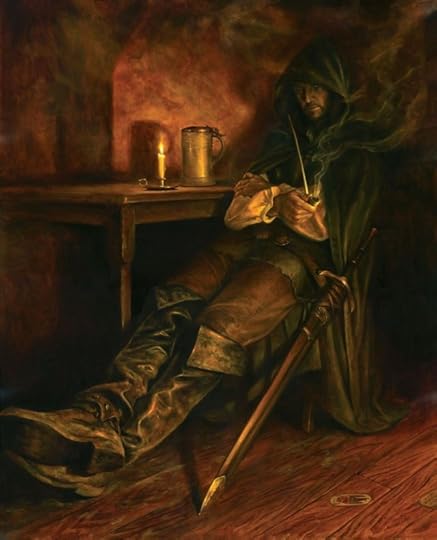
Strider picture by Matthew Stewart.
When criticizing Tolkien, certain critics point to lack of character development as a means of dismissing the books. Another criticism also linked to that is that the characters seem to have too rosy a view of life and aren’t harsh enough to survive serious villainy. My view that Tolkien not only understood that view, but he refuted it with the character of Aragorn. Aragorn begins as Strider, a harsh rogue-like figure of questionable repute who is forced to emerge from the comforts of the shadows to assume a great responsibility in a time of turmoil, becoming the King who leads the united armies on Pellinor Fields.
Strider does not inspire much confidence in the Hobbits when he first appears. He wears the standard gear that I see frequently on the covers of Fantasy novels. Leather, blades, long cloak with a hood hiding his features. In another story he could easily pass for an assassin, a smuggler, or a bandit scoping out prey at the inn. He is, without a doubt, introduced as a rogue (not character class, sheesh). Frodo is nervous about him and Sam feels defensive. On my first reading, to be honest, I was apprehensive about the character when they met him in Butterbur’s Inn. His actions are vague and menacing when first introduced, and while this is easy to overlook after the fact, in any other series most readers would be guessing his allegiance. Interestingly, as part of my research I read a little blurb that Tolkien initially did not know what to do with Strider when he first wrote him.
Even after he is established as trustworthy, Strider is harsh, often criticizing the Hobbits. He seems to find them naive and burdensome, if amusing. His words to Frodo in particular are quite pointed, letting the Hobbit know how much danger his behaviour causes and how foolish his friends act. His only initial praise is reserved for Sam, who shows courage in standing up to him. In fact I would go so far as to say that Strider, early on at least, views the Hobbits with the same disdain that many of Tolkien’s critics do. It takes some time for them to win him over.
It is not until he faces down the ring-wraiths with a burning brand that we get a real glimpse of what is under the hood, so to speak.
After the Fellowship is formed, Strider emerges from the Shadows a little. He is referred to as Aragorn more and more, but the Hobbits still often call him Strider. We learn a bit about his past. He is still overshadowed by others in the Fellowship, and by people they meet like Elrond and Galadriel. He shows himself to be extremely capable, but is never really the “best” at anything in the group. Legolas shoots better and can walk on snow. Gimli is tougher. Boromir is stronger and more warlike. Gandalf is wiser. Frodo is more important. He does not really stand out among the Fellowship. Aragorn is revealed to be of noble lineage, but it is a troubled past. His ancestor, Isuldur, is the one who failed to destroy the ring, and is is significant that Aragorn is not offered a chance to atone for this directly; His lineage is great but tarnished.
And yet, when Gandalf falls in Moria, it is to Aragorn that he passes the mantle of leadership. Here is where the man who once hid his face in hood in Bree, not even revealing his true name, begins to shine. Aragorn shows leadership, keeping the fractured fellowship together as they flee from Moria. Significantly, he refuses the temptation of the ring, which shows him to be wiser than Isuldur. But, ultimately he fails at keeping the fellowship on course: Frodo and Sam part ways and Boromir is killed. Still after this failure, he does what any good leader does and picks up the pieces and moves on. He leads the defence of Helm’s Deep. He reforges the sword of his ancestors into Anduril. He assumes the mantle of Kingship, showing the banner of Gondor, his Kingdom, to the Dead Men of Dunharrow and holding them to their ancient oath. With each test passed he becomes a better and better leader. His final act in the war is to lead his army to the Black Gate to distract Sauron, risking his own life at the height of his power to aid Frodo and Sam in their own task. Interestingly as the bright king, he is using his light to help others find cover in the shadows he once traveled in, a point that deserves deeper analysis.
As Strider, Aragorn begins as an ambiguous figure. He is mysterious, and harsh, acting from the shadows and preferring stealth. He seems pretty grouchy about having to deal with the Hobbits, acting gruff and harsh. He slowly emerges from the shadows over the course of the trilogy. By the time he assumes centre stage in Return of the KIng he has assumed responsibility for not only his own actions but those of his people and his ancestors, calling upon ancient oaths and leading armies and helping right the wrong that Isuldur committed, He emergence from the shadows is based around his assumption of responsibility, in this he is presents a far different idea of the assassin-character or a shadow-knight like Batman who remain in darkness and hide from the consequences of their actions.
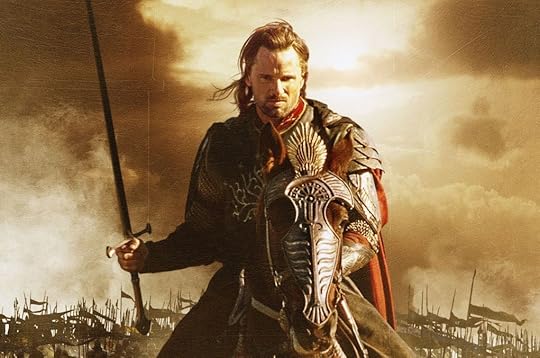
Aragorn, from the movies.


August 29, 2013
World-Building: Magic, Power, and Economics using Magic: The Gathering Lands as an example.
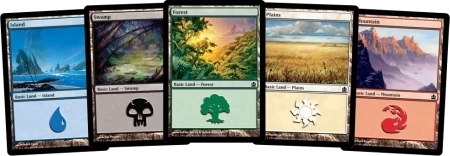
Lands for Magic: the Gatherng
Last week I scribbled about the idea that magic could have a drastic effect on the economics and power structure of a fantasy world. The example I gave were fairly simplistic and I wanted to follow up a longer, more interesting example. I chose the idea of taking power from the land which is well represented in fantasy. Examples include Magic: The Gathering, where players use land cards to generate mana to power their spells and the Fallen Enchantress series where players capture elemental nodes on the landscape to increase their spell power. The basic idea is that the magic user draws the power needed for their magic from the lands they control. Lets say I like this basic idea and want to use it as a magic system in my game world or story. I’ll start by defining the fundamental characteristics of the system and then move on to how I think those will inform basic world building.
Mystic Lands Magic System
It takes time to attune to a land. Only one magic user can attune to a land at a time. Other magic users have a vague sense of who is attuned to a land.
The characteristics of a land make it useful for certain types of magic, Mountains are good for earth and fire magic, swamps are associated with death and decay, while forests are good for healing and growth.
Because the characteristics matter, not just any land will do, areas worth attuning to are relatively rare and require a certain archetypal quality.
A Magic user has some small talent for magic on their own, but to do any complex magic they must have access to the raw power they can channel from their lands. The more powerful the spell the more land they must be attuned to.
Lets assume that mages are common enough to have an impact on politics and economics in our world.
There are a wide variety of spells but most magic-users stick to one or two specialties based on the lands they control.
Since this is inspired by, and not base on Magic: The Gathering, we’ll leave out the MTG fluff like planes-walkers and such.
Our Magic: the Gathering inspired system now has enough characteristics for me to extrapolate some ideas of how it will influence the political and economic environment of standard fantasy world.
Heightened Feudalism: The foundation of feudal power was the ownership of land. If control of land directly increased the magic-users power it becomes even more important to them. We therefore know that control of the land is central to our world, especially to the magic-users. Territorial disputes will be taken very seriously, which will lead to a fair bit of conflict. Mages without access to lands become a sort of magical under-class, unable to fulfill their potential. Ideas of ownership and inheritance of land are central to the laws.
Conservation and Protection: Since the characteristics of a land influence what type of magic can be drawn from it, you can be damned sure the controlling magic-user will be watching over his or her lands and trying to keep them as pure a possible. This might mean that they come into conflict with others who may wish to use the land for more mundane purposes, which would alter their bond to it.
That man reeks of the swamps!: If control of lands is important, it is likely that the magic-user will spend a far bit of time near their power base. People will judge a magic-user base on where they live and develop prejudices and generalizations about those who dwell in certain areas based on the type of magic that can be drawn from them. Mountain fold are more warlike, swamp-dwellers are morbid, and so on.
Land Destruction: Total warfare in such a world would often entail destroying an opponents places of power. (MTG actually delves into this) This sort of nuclear option could have nasty long term consequences with bitter wars between magic users leading to cataclysms as magic-users destroy each others lands. Even common people could wage war against the magic-users in this way,
Mage Lords: Because of their need to control the land magic-users would want to have a fair bit of temporal power as well. After all, an army could really come in useful if a horde of orcs decides to use your forest for firewood. Mages would likely be powerful landowners or warlords in order to keep tight reign over their lands.
Those are nice, simple extrapolations, but delving further into it we can come up with some really juicy ideas.
The Problem with Cities: Urban sprawl and human habitation changes the characteristics of the lands where it occurs. Some mages in the world might be very interested in population control as measure to keep their power base safe, This makes for an interesting tension between the magic-users and those who wish to make different use of the land, The problem could be exacerbated if some new-fangled type of magic-user draws power from urbanized lands or some sort of unknown power starts staining the land.
Concentration of Power: Even if the magic-users avoid confrontation with the mundanes over land use, conflict can arise as more and more land falls becomes concentrated in fewer and fewer hands. Landless mages will always be on the lookout for ways to get their hands on some power while those with great power will have to guard their territories zealously from each other as well as the landless.
Land ho!: Imagine the discovery of a new land-mass, unclaimed by magic-users in this scenario. The land-rush would be intense. Magic-users already have a big incentive to explore, given that undiscovered lands are a ready source of power, Colonization in such a case would take on the worst aspects of imperialism, with the powerful competing with the desperate in a bit to come out on top in the mad rush to gain control of all that land…


August 25, 2013
World-Building: Magic, Power, and Economics (Primer)
“Comfort and habits let us be ready to forgo, but I am not ready for a creed which does not care how much it destroys the liberty and security of daily life, which uses deliberately the weapons of persecution, destruction and international strife. How can I admire a policy which finds a characteristic expression in spending millions to suborn spies in every family and group at home, and to stir up trouble abroad?” John Maynard Keynes from A Short View of Russia (1925). Reads rather like a certain, more modern problem.
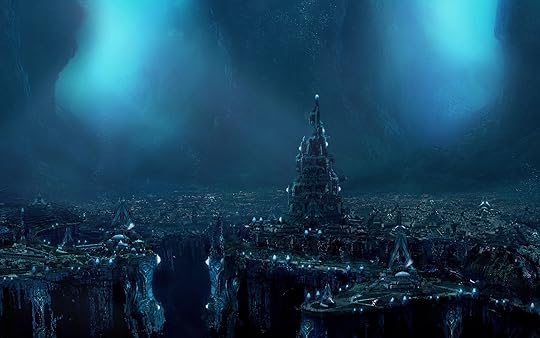
Mo Magic, Mo problems?
For me, magic is the essential element of Fantasy. Magic, even in its subtlest forms, invokes that sense of the Fantastic, clearly showing us that we have passed beyond the looking glass. Fantasy authors and gamers argue endlessly about what makes a good magic system. Many of them make excellent points, and I don’t really feel the need to put forth my own theory of magic system design (yet). The magic in Bloodlust: A Gladiator’s Tale and Bloodlust: Will to power is functional and familiar: I felt that asking readers to accept a long story about Fantasy Gladiators was enough of a departure point for a new author.
Stripping magic down to its bare bones, to the mechanics of the magic system as a gamer would say, leaves us with the following necessary parts.
Internal Consistency: Magic is usually, but not always, supernatural. It does not have to follow the laws of science as we understand them. Because of this, it is doubly important for a writer to be consistent when using magic in their writing. If a reader catches a contradiction in the way magic is used their suspension of disbelief will often fail. Skilled world-builders create rules for their magic systems either beforehand or as they write. The reader does not have to be exposed to these rules, however. As always using folklore and tropes allows a writer to tap into rules that have already been set out in myth and fiction, but make sure to use them consistently.
Fantastic/Supernatural/Miraculous Element: Magic should, on some level, be obviously unreal. It helps acclimatize the reader to the idea that they are reading a story in which the impossible is possible. This does not hold true in all cases however. Some forms of Fantasy make good use of the device that characters and readers are unsure if they are facing mundane or magical challenges.
Definition and System: The Writer should know what the magic is. Is it the language of creation? Is it the magician tapping into the code of the simulation the world resides in? Is it bargains with Eldritch powers? Is it a gift from the gods. ETC ETC. Again the writer needs to knew these, the readers do not. Costs and requirements are important. Who can use magic? How does one learn?
Pretty basic stuff. Keep it in mind as we move to what I really want to write about: the effects of magic on power structures and economics.
Much like how magical elements shift warfare, I find that the impact of magic on the rest of the world is often ill considered in Fantasy Games and novels. Here are a few simple example, purely chaotic.
Resurrection: In Bloodlust the Gladiators can attune to Keystones, powerful constructs that allow them to survive almost any injury. I am very careful to limit what the Keystones can do, however. They must be attuned to beforehand, they are heavy, and they have limited range. Certain spells and abilities can overcome the magic of the stone or inflict injuries beyond its ability to preserve the life force of a Gladiator. Without these restrictions, Keystones would become weapons of war, allowing the Gifted to engage in warfare without almost no risk.
Magical Resources: If magic requires certain resources, then control of those resources becomes a major part of the economy of the world. Even if the resource is relatively common, a monopoly or speculation can create false scarcity. The nature of these resources can add interesting spins to the world as well. Think of how the nature of oil or steel and how it is extracted has changed our world.
Cure Disease: The cure disease spells found in most games are better than modern medicine. If easily available they remove one of the bigger pressures on population growth even in medieval settings.
Magical Crops: Magic is likely useful for more than fighting. A spell that enhances crop yields likely isn’t going to excite readers or game players, but it could certainly vastly increase the population of a kingdom. The same goes for magically enhance methods of gathering or processing other resources, creating a better economic base for a fantasy nation.
Knowledge Economy: If spells are lore-based, like most Tolkien style fantasy, then their is a definite economy in keeping spells secret. A powerful wizard might trade great favours for important lore, or kill for it. Spying becomes part of magic, and protecting one’s research is a full time job. And the poor fool who tries to share all of his lore with the world for free? the others would gang up on that guy.
Light: It is hard to imagine the modern world without a reliable source of light at night. The changes that could be wrought by even this kind of simple magic are profound. Less fires from lanterns and torches, more productive time in the day, and so on.
These are just simple examples. In general every change that magic brings should be thought through. The details make for excellent world-building and will really fire up a readers imagination. I know I am a big fan of Fantasy Authors who delve deep into the changes that magic creates in their world…


August 22, 2013
My Gencon 2013
I am a big fan of Gencon, Gencon is a huge gaming convention that takes place every year, currently situated in Indianapolis, Indiana. It is a great festival with loads of games, vendors, and geek culture. The main exhibit hall can only be described as a shopping mall for gamers and geeks, with half a city block’s worth of goods. It is amazing.
Sadly, I’ve missed out on the last few years while I try to get my life in order (writing these damned books!). This year, however, my girlfriend convinced me me to go. It was her first time (to Gencon, get your mind out of the gutter, Grimdark…) and her enthusiasm was infectious. Since I signed on late, I had to scramble for hotel and badge, but Tommy Gofton, a local gamer and real life fixer in this case, came through for me and made it happen. Here are my impressions of the show.
1) Indianapolis, the host city: The city of Indianapolis continues to impress me as a host city for Gencon. Last time I was there was 2009, and the city is much improved as a host site since then. More of the local restaurants are showing their Gencon Spirit and the city is much more active during all con hours. The food trucks were brilliant. I felt very welcome, even with 40,000 bikers having a get together two blocks away! (I’m not joking, it was cool)
2) Man, that Vendor’s Hall: My Gencon experience centers around the immense vendor’s hall. It takes me several hours to get a feel for everything in the hall, excluding playing demo games and enjoying conversations with enthusiastic vendors and gamers. The vendor’s hall this year was as spectacular as ever. There were fewer “new” releases due to the prevalence of games releases over kickstarter, but the show always tended to overpower smaller releases anyways. The geek accessories were stunning and the booths were amazing. I overspent this year, and could easily have spent orders of magnitude more.
3) What, no Wizards Booth?: Wizards of the Coast did not have a booth in the vendor’s hall. There was a large area reserved for playing D&D in the main gaming hall and magic was, as always, omnipresent, but WoTC declined to put together a vending hall display. Perhaps they are saving up all their mojo for next year for the 5th edition D&D release?
4) The Gamers Movies (Zombie Orpheus Entertainment): So Tommy and his crew, as well as some of the people I drove down with (Todd and Monica) were in a gaming movie, working with Zombie Orpheus. Since I went with them I politely decided to tag along and watch Gamers III, Natural One, and Humans and Households. I wasn’t expecting much, despite having heard good things about The Gamers, Dorkness Rising. I find many shows about Geeks, like The Big Bang Theory, annoy me. The Gamers Movie that I watched (III) was awesome, striking the perfect balance between highlighting the oddities of gaming culture without belittling it, Made with love, I suppose. Even Raw and not fully edited I loved Natural One and Humans and Households. It takes quite a bit to get me to laugh like that, well done!
5) Shadowrun: This being the year of Shadowrun, the venerable RPG came out in its fifth incarnation. I was suitably impressed and decided to make that my big purchase for the con. The Catalyst booth looked as busy as some of the much larger players, like Fantasy Flight and Paizo, which is impressive. This combined with the success of the Shadowrun Returns computer game, really has made this a great year for a much loved series of games.
6) Author Pannels, Where did these come from?: So Gencon is frequented by Fantasy authors, many of whom are gamers and have worked for WoTC, or other game companies. R.A Salvatore, Tracy Hickman, Margaret Weis, and Ed Greenwood are hardly lightweights. But this year I was impressed to see juggernauts like Brandon Sanderson and Patric Rothfuss at the convention (who game, but are not affiliated with game companies). The author pannels were almost as good as the gaming pannels. This is another area that continues to grow and impress. I was particularly taken with Lucy A Snyder at the Dark Fantasy panel, her crisp command of the subject made for an excellent discussion. With a growing spate ofquality author events, I can only see this aspect of the con being more enticing in the future.
7) My Privateer: I went to the convention looking for a Typhon (pictured below) for my Legion army, for Privateer Press’ Hordes game. Man, I have been trying to get my hands on that beast for six months… I was disappointed that they were out at the Privateer Press Booth. However, after a day and a half of searching at the con, I finally found one up for trade! In addition to my hunt for rare models, Privateer also dropped the card game High Command, which I saw everywhere at the show, despite it not being on any hot lists. I played a demo of High Command, which is somewhat similar to deck building games like Ascension and Dominion, and really enjoyed it. I also had lunch at the Ram, which has a Warmachine themed menu during Gencon.
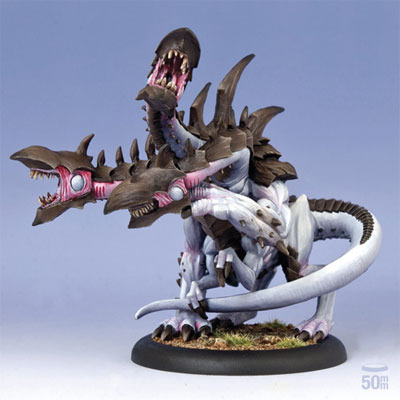
Typhon. Not my paint job…
8) Paizo, Fantasy Flight, and Boardgames: The biggest and most impressive booth seemed to be Fantasy Flight Games. They had lines all the time and several new products including a Star Wars RPG(?). Paizo apparently kicked ass with a thousand person game of Pathfinder and a great new card game. Boardgames were really strong at the con this year.
9) My Indy Pick: I always try to pick up an indy RPG at Gencon, This year it was Dungeon World, a product that was Kickstarted last year. Unlike many games I have picked up (indy and otherwise) this one seems worthy of play and really does live up to the hype of combining old school dunegoneering with some new ideas.
10) Cosplay is King!: The costumes were crazy. Even children were getting in on the action this year, Todd and Monica from our party cosplayed. So many costumes…
![20130816_152414[1]](http://domainsofthechosen.files.wordpress.com/2013/08/20130816_1524141.jpg)
Todd and Monica as Cortana and Fantasy Wolverine
![20130816_175738[1]](http://domainsofthechosen.files.wordpress.com/2013/08/20130816_1757381.jpg)
Awesome Starcraft stuff
![20130816_193211[1]](http://domainsofthechosen.files.wordpress.com/2013/08/20130816_1932111.jpg)
Some Bounty Hunters Cornered me
![20130816_201411[1]](http://domainsofthechosen.files.wordpress.com/2013/08/20130816_2014111.jpg)
An orc gives me a nice snarl
Biggest Dissapointments:
I missed the Evening with Patrick Rothfuss Event. Tickets were sold out

I missed the 1000 person Pathfinder Game. Did not even know til afterwards. Damnit, why?
Took a picture of an awesome Dark Elf Samurai dude and my flash screwed it… I need lessons

Best Game:
I played D&D at the WoTC Candlekeep event. It was my Girlfriend’s first time playing in 20 years or so. We grabbed a table with a father and son team from Saskatchewan and managed to survive the event. It was enjoyable despite a tired GM and a noisy play-space. I played a cleric. 5th edition looks to be shaping up well.


August 14, 2013
Headed to Gencon
I am headed to Gencon, in Indianapolis for the next few days… so, no updates. The convention is full of gaming, geek chic vendors, and all kinds of fantasy and sci-fi fans. It will be fun. Since I feel bad about not updating, I’ll leave this little teaser from my upcoming short story (very rough so far)
Predictably, Harlson strolled into their workshop at shift’s end. The third-quarter shift sub-foreman had it in for Darius ever since he’d intervened to prevent Kaz from being transferred to Harlson’s crews. Darius saw it as a favour to an old friend, Harlson saw it as interference. Now he too every opportunity he could to snipe at them.
The whip-thin man began inspecting their work. He knew what today meant to Darius, and thus took his time inspecting the barrel for flaws. Darius sent the rest of the crew to the showers, but dared not go himself. It would be harder for Harlson to find fault with him here.
The big man suppressed a snarl as Harlson ran his fingers along the barrel with a gloved hand. He felt like a man watching a stranger dance with his wife. He hated Harlson. The man knew how important today was to Darius. How could someone always be so clearn working in a place like this?
Eventually even Harlson had to give up and sign off on the gun.
He looked at Darius as he passed, flashing perfectly white teeth in a vicious approximation of a smile.
“[Blue Gladiator] hit twenty-eight points in singles today.” he drawled. “Think your Reds can take us?”
Darius forced himself to be calm. Harlson was slick, he did not want to be tricked.Twenty-eight points was impressive. “Maybe,” he said, hating how faithless he sounded.
“Care to make a wager?” said Harlson, eyes glinting. “A week’s wage?”
“No,” said Darius. He felt himself deflate. He could not afford a wager like that. He’d saved for two months for the tickets to tonight’s match.
Harlson smirked. “I didn’t think so.” he began to walk away, leaving Darius feeling frustrated and defeated.
“I’ll take that bet, sir,” said Kaz, shocking them both. The orc grinned, as he reached for his cap. “Can’t leave this behind.”
“Your loss workman,” sneered Harlson. “Now if you’ll excuse me ,I have work to do.”
Darius made a point of thanking Kaz in front of the rest of the crew. He felt a little sick inside. Twenty-eight points was a big spread. Even [Red Gladiatrix] would have trouble matching that. He would pass some money to Kaz’s wife if the bet was lost…
Yeah, I’m not entirely sure who I want to use in the fight yet. Oops. The story revolves around Darius taking his daughter to her first arena match, It needs a fair bit of work.

Gencon Woohoo!


August 11, 2013
Public Domain World-Building
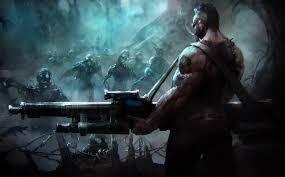
(By Mikhail Rakhmatullin) Zombies for guilt free mayhem.
I was listening to a friend of mine, Eric Lang, chat about certain themes and IPs that seem tremendously resilient in the board-game industry. To loosly paraphrase he was impressed that despite a glut of games with Zombie and Cthluthu themes, new products using these ideas were able to fund and gather fan attention and seemed as popular as ever (if not moreso).
For a writer of genre fiction, especially Fantasy, world-building can be an important part of the process. I can really tell when an authors has invested time in creating a world that has a life beyond the story he or she is telling. A well-crafted world often has a sense of history and a feeling of events unfolding outside the narrative. Often these worlds are original creations of staggering detail, developed over years. The thought and craft that goes into such a world is worthy of a long series of articles. The world-builders reddit and Fantasy-writers reddit are interesting places to check out to get a feel for how some people approach this. Some prominent masters of the genre, Tolkien and Martin leap to mind, are superb world-builders.
However, as Fantasy becomes a more prominent genre with a strong set of popular sub-genres, writers can actually draw upon the tropes of the genre itself, using an element their readers are already familiar with from other places in the genre. In shorter works, where detailed world-building might be unappreciated, using a familiar element can provide the writer with a sort of shortcut to creating a sense of greater detail. This, in itself, is another topic that could lead to a long discussion on jargon, archetypes and tropes, but I will save that for another day. These elements are extremely useful. Some of the most detailed and original seeming IPs out there begin as nothing more than interesting combinations of these familiar elements. A writer, especially a novice like myself, can use these elements to good effect when years of world-building are not in the cards.
Take Dwarves for an example. Dwarves are a fairly common fantasy trope. When I mention Dwarves to a fantasy reader a few images will immediately spring to mind. Short humanoids with elaborate beards, a penchant for mining and metal-craft, and a somewhat xenophobic attitude. By using the archetype I can bring all of these characteristics to mind very quickly and use those details for my own world, and making note of any key differences that might exist in my version. In my Domains of the Chosen series Dwarves follow the standard trope fairly closely. However, the Reckoning (a magical apocalypse) forced the surviving Dwarves to take shelter in the city of Krass and integrate with all of the other races. Thus they are more trusting of outsiders and often live above ground. In the years since the reckoning some Dwarves have made a conscious effort to reclaim their past, but all of that is done from within the framework of the empire. This creates a tension between Dwarven traditionalists and the more modern Dwarves who might appreciate their history just as much but don’t feel the need to go back to it. My Dwarves can also develop the Gift, allowing them to wield magic, which means some will end up as Gladiators.
Here are a few of the more common elements that can be woven in to just about any Fantasy world:
Zombies: I know people think Zombies are overdone, tapped out, etc. Yet, as I write this, World War Z, an adaptation that has many hardcore fans frowning has earned 500 mil at the box office. Zombies come in many flavours from shambling menace to sleek predatory runner to the fungus based “infected” of this years hit game “The Last of Us”. Commercially Zombies continue to grow. Of course, while most authors want a commercially viable product, they want to tell a cool, compelling story even more. Zombies offer a lot of options, here too. They fit in just about any setting, and work for epic stories as well as for small claustrophobic character pieces. Zombies can be used for apocalypses, sinister thrillers, and background window dressing. Being a totally made up it is easy for a writer to put their own twist on this element. I even have them show up in the arena in Bloodlust: A Gladiator’s Tale and later in Bloodlust: Will to Power, where they are seen to have their own set of fans. I have even seen a few comics where the main characters are Zombies,
Vampires & Werewolves: Vampires and to a lesser extent, werewolves are popular elements, and show up in many fantasy settings. They work equally well as villains, heroes, and anti-heroes and have a common set of folklore than can work with most stories. Their respective themes can fit in to most plot-lines.
Steampunk: Steampunk isn’t huge, but it is picking up momentum. As a sub-genre it is diverse and interesting with dedicated fans and a heck of a lot of wicked cosplay. The default Victoriana background adds a nice touch to the early industrial mad science. Steampunk elements, especially the technology work well when incorporated lightly into other settings. World of Warcraft tinkering is a great example of this.
Arthurian Fantasy: Other than mythology, Arthurian Fantasy is perhaps the most enduring of the popular public domain elements in western literature. Before Tolkien it was the default fantasy setting, with many excellent revisions and versions written out over the years. It has everything one could want from pastoral fantasy: huge castles, grim enemies, giants, dragons, fearless knights, quests, religion and magic. It also works quite well for dramatic stories, and even those with a grim, philosophical bent, like the last books of T.H White’s excellent retelling.
Three Kingdoms: A great example of a Public Domain element from outside of the western tradition: the era covered by the Romance of the Kingdoms has spawned numerous games, television series, and movies. A grand drama based of history and deep literary tradition with characters that are as iconic as Arthurian myth, I expect this one to grow more popular in the west as a setting and a style. The combination of war, philosophy, and the epic clash pf personalities is just too good to pass up.
Untapped resources: Here are a few examples of elements that I feel are underused.
Pirates, Musketeers/Duellists, and Vikings: These archetypal elements are all popular and interesting, but not nearly used often enough in modern fantasy. They have a great set of associations and themes. I’d kill to see more new pirate fantasy after The Scar and Red Seas Under Red Skies.
First Nations: This is huge set of untapped myth and legends, as well a cultures and languages. It is rife with the problems of cultural appropriation, but the native peoples of the Americas are a vast untapped well of ideas than could find their way into literature. I personally have a great admiration for the Mohawk, one the last great warrior societies and great defenders of early Canadian sovereignty.
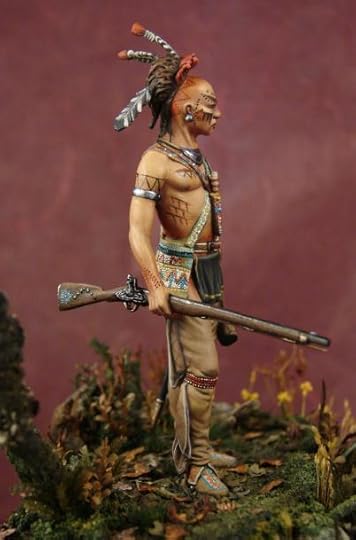
A Mohawk Warrior from a war of 1812 Wargame.


August 9, 2013
James Bond Complex
“nihilists, anarchists, activists, Lulzsec, Anonymous, twentysomethings who haven’t talked to the opposite sex in five or six years.” General Michael Hayden
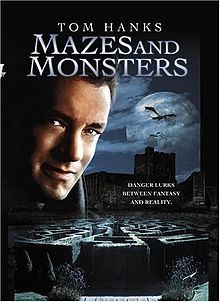
I hated him for this.
When I was a young lad, I discovered Fantasy. Tolkien, Dungeons and Dragons, Terry Brooks, and Willow fell right in line with my early love of history, Rome and the Renaissance. I was not drawn to Fantasy through a need to escape, but rather a desire to explore, to stretch my mind around these unlikely visions.
At school I was often looked down upon for enjoying D&D, reading fantasy, and later on computer games. This is not an isolated phenomena. Gather a group of gamers around a table and one of them is sure to have a story about being accused of practicing devil-worship or witchcraft. D&D has frequently been banned from schools, as a danger to malleable young minds. Someone even made a movie about how gaming could turn teenagers into crazed maniacs; you’d be surprised who it starred. Reading Fantasy was a little more socially acceptable, but still seen as a genre for people who could not get a date or enjoy sports. It always amused myself and my parents that such harmless pastimes could elicit such a negative response, especially from adults. I’m glad the genre is considered a little less weird these days…
This was brought to mind when I was reading an article about a speech given by the former head of the NSA, general Michael Hayden, attacking whistle-blower Edward Snowden. Parts of the speech were remarkably juvenile, characterizing honest opposition to NSA surveillance as the province of fringe elements who were outcast losers and also, at the same time, akin to terrorists. The tone of the speech reminded me of the sort of misguided rhetoric used by the people who used to belittle gaming. As if the entire internet is somehow a fringe element? Politics aside, however, it did get me to thinking about an idea I like to call the James Bond Complex.
My parents are both avid readers, as are my Grandparents. My Father and Grandmother have a deep love for mystery and thrillers. I often wonder how I would have turned out if I gravitated towards the cold war and Robert Ludlum instead of the Punic Wars and Guy Gavriel Kay. Quite likely the only difference would be that I would be writing a different genre of book. However some people do latch on to the ideas presented in a single genre. In fantasy this is relatively harmless. You cannot mistake this reality for Middle-Earth. If you did, you would quite likely be remanded to a mental institution fairly quickly as you started running around the local subway shouting about Balrogs. I suppose it happens now and then, but it is pretty harmless,
But what if you were crazily into James Bond? Or should I say crazy and into James Bond, because most people who like James Bond are harmless, of course. Still it is an interesting thought experiment to wonder what kind of derangement would be caused when the line between cold war era spy fiction and reality becomes blurred to that sort of never-happen-in-real-life extent that we see in mazes in monsters. Let’s use Bond fiction as an example.
See the world as us vs them: In a Bond fantasy it is fairly obvious who the bad guys are. If fact, Bond almost always knows who the enemy is beforehand, and with the exception of the occasional traitor (more on that later) in their own ranks the sides seem to be pretty set. This would lead our crazy person to view everyone who disagreed with them as deranged at best, and likely dangerous. Meanwhile, every action taken by their side would be justified because after all, they are part of the team.
The Grand Struggle: In a Bond Fantasy the villains are everywhere and every single decision is one that is fraught with potential danger and great import. It would be a rather boring movie franchise otherwise. Most enemy plots in Bond movies result in chaos and destruction on an impressive scale. A person who mistook this for reality would place singular importance on the efforts of spy agencies, seeing them as the only thing standing between us and catastrophe, every day.
The Ends Justify The Means: What is a Licence to Kill? With so much at stake (and the enemy so clearly delineated) almost any action is acceptable, no matter how extreme it might seem. After all what are a few stray bullets compared to deadly moon lasers that will cut the earth in half?
Paranoia: Traitors on your team are far more dangerous than the enemy. The worst foe in a Bond movie is usually the traitor within, an agent of friend who betrays James. Someone who takes these things too seriously would be very worried about traitors on their own side. The problem is that people who view the world as us vs them, often see traitors everywhere,
I can see several groups around the world, agencies, institutions, and even corporations who might have a James Bond Complex. Who can say? Good spy fiction is often very realistic, after all.
This is why I prefer Fantasy myself. I expect my fictional realities to be internally consistent, but not realistic. I don’t really believe that people can cast spells or throw buses. Fantasy provides a place for us to examine complex issues or just engage in simple, fun escapism. It is a genre where only a crazy person would mistake what is written for non-fiction.


August 4, 2013
In Process — Bloodlust: The Great Games (Part 1)
I am working on my first short story for the Domains, tentatively titled Bloodlust: The Great Games. I figured some readers might be interested in my process, and perhaps in giving input as to what they might like to see.

The purpose of the short story is to create a work which can act as an appetizer for new readers and a illuminate a small part of the Domains for those who are already familiar with the world. The basic idea for the first short story is a father taking his son to the arena to watch his first Match. On the surface it is a fairly sweet story, akin to taking a lad out to watch his first Hockey game… except of course, that it is Gladiatorial combat.
I actually hate the name, but I’ll figure something out.
Here are some of the points that I want to touch on:
I need to show how an everyday person from the Domains view the arena. Getting the citizens perspective of the arena is interesting for veteran readers, and provides an interesting introduction to the Bloodlust story arc for new readers.
I want to showcase Faction culture from the point of view of a fan. While I touch on this a little bit in Bloodlust: Will to Power, I think I can delve into it a bit more. The sports angle in the arena can be really fascinating.
I think that structuring the short story around the interaction between a Father and son outing adds a sense of the familiar to an otherwise unfamiliar setting. The enthusiastic elder could even add some elements of exposition explaining rules and conventions to the son.
I want to hint at the idea of the testing a Child for magic and the choice they must face if they do have the Gift.
I need a strong action scene that enthralls the reader. The fighting is a key part of the series, and I want to make sure readers, new and old, get a good taste. I think a monster fight would be best so the reader knows who to root for. Monster fights also hint at the theme of imperialism.
I want to show some of the stuff that goes on between the main events in a day at the arena which gives me a chance to show veteran readers just how a show would be put together. Small descriptions of seating, vendors, and between match entertainment excite me. I might even strike out into explanations of how the arena is cleaned between matches (Blood Zamboni? … no… that’s sick) and what sort of viewing aids are available.
So the outline for the story is rather simple. A Father takes his son to watch a favoured Gladiator/Gladiatrix fight. It starts with the Father getting off-work and rushing home. I highlight his character here and have a chance to offer a glimpse into the working life and technology of the Domains while I establish the Father’s character (see below). On his way home the father considers his son. He wants his son to love the arena (and the proper faction!) like he does. he might be nervous about how his buddies in the faction will see him if he has a child who does not love the Great Games. Cut to a scene of the son with his mother, establish character. Father arrives, picks up son to walk to the Grand Arena. Emphasize how awesome it is to be going to THE Grand Arena to watch THIS Gladiator fight. The Father and son will pass a Chosen on the way (the Hall of the Chosen is next to the Grand Arena, so it is pretty damned convenient.) and maybe see a few details. This part of the story likely has to be fairly short and yet has to convey and establish a fair bit of information.
The rest of the story is a back and forth between the action and the father and son. The son struggles to understand the arena. The father is nervous about his son’s reaction and display of proper appreciation for the “one true cultural event” but is also madly excited about the climactic match. Main action sequence, reaction, and wrap-up. It is more of a character piece than a plot-driven story (so far).
The Characters
The Father: I want the father to be a likable person, despite leaning a little too far towards extreme fandom. An average Joe with a good heart, but not someone who is inclined to analyze deeply. It might be a challenge for me to write the character in such a way that he does not come off as stupid or overbearing. Likely a fairly athletic man who would have loved to be a Gladiator himself, Maybe there are amateur leagues or knock-off sports? Needs a huge mustache.
The Son: The son is not inclined towards the arena. Quiet and reserved, but worships his Dad. Likely named after his Grandfather. Very observant. Much of the drama in the story revolves around his takeaway from the experience.
The Gladiator/Gladiatrix: I want to use a character I have already introduced here. I have a few options in mind.
Razorthorn from Book 2: A Gladiatrix with a distinct look that got a good response from readers. I worry that she might be a little too odd for new readers, however. The armour dangling from hooks in her skin might seem overly fetishistic.
Ravius: Ravius has enough personality to shine in a short story and a skirmisher is ideal to for demonstrating some of the arcane aspects of Gladiatorial combat like appealing to crowd and showing off.
Azure Dream: Azure is a good pick for the same reasons as Ravius. Plus locking her into a match like this is not as limiting as it might be with Ravius.
Other options include Green Sting (bk2), Bull Danger (Bk1), Cassius (Bk1) or a new character for future use ( a protege of a familiar character)
The Monsters: The Monster(s) conveys a fair bit about the setting.
I want some familiar monsters like stitched and beastmen, but not for the main event.
A construct might be an interesting opponent.
A tainted creature might be the best option since it allows me to convey how people feel about the Reckoning and the negative aspects of the magic.
Feel free to make suggestions or requests for the story. Cheers.


August 1, 2013
Fantasy Quickstarts: The Fall of the Empire
I am still enjoying Dynasty Warriors 8 while I prepare to write my next book and a short story, Ostensibly the game is about crazy awesome heroes and villains vying for control of ancient China, drawing on the book Romance of the Three Kingdoms (which I really should read, now that I think of it) and historical elements. It is set during and after the fall of the Han Dynasty,
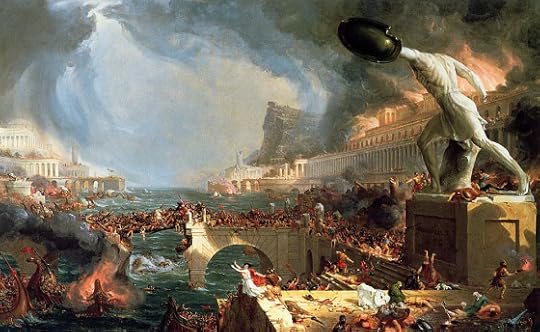
You can’t go back to normal after this…
I love the Fall of Empires in fiction. I often wish that post apocalyptic fiction would start during the event itself. There is something about that chaotic era during and just after a great civilization reaches the tipping point that deeply intrigues me. I do get tired of media analysts and pundits bringing up the fall of Rome in a modern context, but other than that I love the idea as a backdrop for games, literature, and historical discussions. Here are a few of my favorite fictional falling empire stories:
1) Atlantis: The Atlantis Legend is perhaps the most concentrated idea of the Fall of an Empire, a pinnacle civilization brought low. Unlike other accounts of falling civilizations the Atlantis myth often concentrates on the reason(s) behind the fall of the great civilization as a sort of cautionary tale.
2) Arthur as the Last Roman: The idea of King Arthur trying to hold out against the chaos after the Fall of the Roman Empire is a splendid take on Arthurian mythology. This is a relatively new idea (I think), an attempt to bring to bring Camelot into a more historical context. In Mallory Arthur the Roman Empire only shows up as a villain (with war giants). There is even some interesting historical analysis that tries to link the idea of Camelot to the events in Britain after the fall of the Empire. History aside, the idea of Camelot being the last bastion of Rome (civilization) in a world about to plunge into the dark ages is very exciting.
3) Troy: The aftermath of the Trojan war spawns not only the Odyssey, but also the Aeneid. After this great event Troy is destroyed and cast down. The echoes and influences of this are if anything, more interesting than the actual tale of the end of the great city-state. In the Odyssey the Gods get a little bit of retribution against poor Odysseus, while in the Aeneid, the refugees from Troy go on to become the ancestors of Rome (which late conquers Greece, coming full circle I guess).
4) Echoes of the Great Song: David Gemmell writes up a nice portrait of a falling civilization in this often overlooked novel. In this case the civilization in question decides to go out in style, using the last of their power to face down a terrible nemesis and go out with a bang instead of hoarding their resources and descending into decadence. Pure.
5) Elric/Melnibone: The apathetic Melniboneans present an interesting picture of a great power in decline, uninterested in the world around them for the most part and unaware of any changes and challengers scheming to take their place.
What is it about the Fall of Empires that makes for a great story?
1) Epic Scale: The bigger they are the harder they fall. A tale of an Empire crashing to the ground or slowly descending into decadence before abruptly collapsing is always epic almost be definition. The Romance of the Three Kingdoms has a cast of hundreds. The Fall of the Roman Republic has Caesar, Pompey, Mark Antony, Cleopatra, and so on. This kind of collapse is tremendous by definition, and thus good fodder for Epic Fantasy.
2) Unavoidable Tragedy: When an Empire Falls it is rarely without consequence. The borders become lawless, perhaps even succumbing to invasion. The core of the Empire fall into decadence, perhaps succumbing to perverse rites and evil practices in order to ward off the impending tragedy. But once a certain point is reached the fall is inevitable and the story becomes about surviving the consequences. Without tragedy, even a little grimdark, the fall seems bloodless and is wasted as a device.
3) Chaos and Opportunity: As social order breaks down it creates opportunity. Various factions will try to fill the power vacuum left by the collapse of the old order. Some of these might be invaders and marauders, while others will certainly be factions that once worked under the banner of the empire and now find themselves as rivals. The dominant group will see itself as the heir to Empire. Often this process begins long before the old order is actually stripped away. History is full of captive Emperors and cruel regents.
4) Moralization: I swear if I read another bad economic analysis of the fall of the Roman Empire I may choke a Friedmanite. However, that said, the Fall of the Empire is an excellent plot to showcase how human failings can lead to the downfall of great things. Unfortunately most authors are too heavy handed when moralizing, especially in the modern era with our fixation on fairly petty ideologies. Atlas Shrugged is a raging example of this. The best Moralizations about the fall treat the subject with sensitivity and complexity. The end of Camelot in T.H. White is an example of the later.
5) Hubris Rewarded: A truly satisfying story of the fall always contains a few powerful, arrogant people meeting their doom. It is remarkably satisfying to see a well-written chapter or two of the elite fumbling and failing to deal with change. You can’t manage your way out of a crisis…
The Fall of Empire makes for an interesting background for any epic Fantasy. Surviving the collapse and then rebuilding in the aftermath makes for a great set of stories,


July 28, 2013
Battle Tactics: Key Differences Between Duel and Battle
Regard your soldiers as your children, and they will follow you into the deepest valleys; look on them as your own beloved sons, and they will stand by you even unto death. – Sun Tzu
Most of the action in first two books of my Domains of the Chosen series, Bloodlust a Gladiator’s Tale and Bloodlust: Will to Power, took place in many arenas in the empire. The largest number of Gladiators to take the field on any single side during a match was ten, in an epic battle in book one. While the monster fights often involved hordes of creatures facing the Gladiators, few of them were really a close match to the supernaturally powerful and magically gifted Gladiators one on one. The action covered in the books thus far is small unit tactics and dueling, mostly; very different stuff from the massive conflicts in less structured epic fantasy.
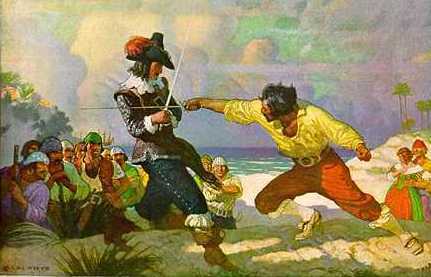
In a duel, dodge and parry are better defences.
As I begin to delve into the third book in the Domains of the Chosen series, Warbound: the Shieldmaiden’s March (working title) I am leaning more towards larger battles. I still need action pieces to spice up my writing and drive certain plot elements, but after writing around seventy-five arena matches I want to try my hand at describing High Fantasy warfare in the Domains (although I do have a few short stories in the arena, and the Great Games will still figure into the books). I suppose the juxtaposition here is that the dueling in the arena is how the Domains deal with the Gifted and internal enemies, while battle is how the expansionist, imperialistic people of the Domains often deal with outside threats. The personal struggles of the arena are very different in character than the large scale conflicts of a battle.
Here are some of the differences:
Armour: Armour is a hot topic in Fantasy, partly because female armour depictions on cover art are often highly sexualized, which dovetails into discussions about sexism and prudishness. Fantasy armour also looks cool these days, be it a plate clad knight or leather and cloak clad assassin.
Duel: In a Duel much of the advantage offered by armour is mitigated by the fact that mobility and endurance can be leveraged as defences. Moving in heavy armour requires more energy and a lightly armoured foe can dodge and stay out of the way in personal combat in a much more reliable fashion than in battle. By most accounts a duelist with a rapier was the doom of a warrior clad in plate in one on one combat, assuming equal skill.
Battle: Armour and shields become vastly more important in formation based warfare. You can’t dodge a volley of arrows, and in the press of melee it is much harder for a combatant to protect themselves from every blow. Many attacks come from unseen vectors and often it can be difficult even to parry when shoulder to shoulder with others. Add to this the idea that advanced formations allow an armoured combatant a chance to rest, In addition to weight the needs of equipping thousands of combatants makes armour less likely to be customized.
Tactics: The ability to anticipate and react to an opponent and awareness of the environment remain important in both duel and battle, however how that information is used is very different.
Duel: In a duel individual skill is king. The duelist fights in small groups where the outcome can be decided by a single well-placed sword stroke. Because of this duels are fought at a faster pace, but do not require much organization.
Battle: Battle requires coordination on a massive scale. Units have to coordinate with their team-mates and other elements in the army. One person reacting properly to an attack is very different than one thousand reacting to the same attack. Everything is more complex at that scale and even simple manoeuvres like turning abruptly require drill to function smoothly. Just imagine a phalanx of pike standing shoulder to shoulder, having to turn suddenly and brace to face a cavalry charge.
Magic: Being able to incinerate someone from the inside out is really impressive. It wins duels. In a battle putting that much effort into killing one person is rarely worth the effort. A priceless magic sword is less of an asset against ten thousand men than a unit of mercenary archers.
Duel: In Bloodlust any spell which increases the prowess of the Gladiator or does damage is a tremendous asset. Any personal advantage, no matter how expensive, is important in the duel. Magic weapons, armour, and so on are important.
Battle: Single target damage spells are less useful in battle, reserved for high value targets like commanders. Spells that effect the weather become incredibly useful: a fog can conceal a unit of archers, heavy rain can create mud which hinders an enemy cavalry charge. Mass damage spells and counterspells remain obviously useful, but must be used with precision to avoid damage to friendly forces. Even a simple communication spell can become incredibly important, giving a strategist better control over the battle as it unfolds.
Monsters (and Warbound): A unit of rabid beastmen might make for good shock troops, but their lack of discipline could backfire much more easily on the battlefield than in the arena.
Duel: Monsters make for interesting foes. Their savagery and viciousness does not need to be controlled in the arena or in combat with a heroic knight.
Battle: Using monsters or supernatural assets like the warbound in battle is an interesting prospect. A giant might make for an exceptional linebreaker (creating gaps in enemy formations) but could be vulnerable to massed projectile or cannon-fire. Monstrous steeds would offer advantages over their mundane counterparts. On the downside monsters might be difficult to control, and dangerous to friendly troops. Would you really like to fight alongside a pack of firespitting drakes that think you look tasty?
These are just some preliminary thoughts. In the end, examining the differences between Warbound (The Gifted who fight with the Legions) and Gladiators will be interesting. Also in book three we will get to see one of the Chosen on the battlefield. The key differences between battle and a duel are based on the risks that must be managed and the tactics that must be used, In a formation based battle, you cannot rely on mobility as a defence and teamwork is often far more important than individual skill at arms. A duel is less complex, but proceeds much faster. Soldiers and Gladiators are both warriors, but the way they fight is as different as the arena is from the the battlefield.
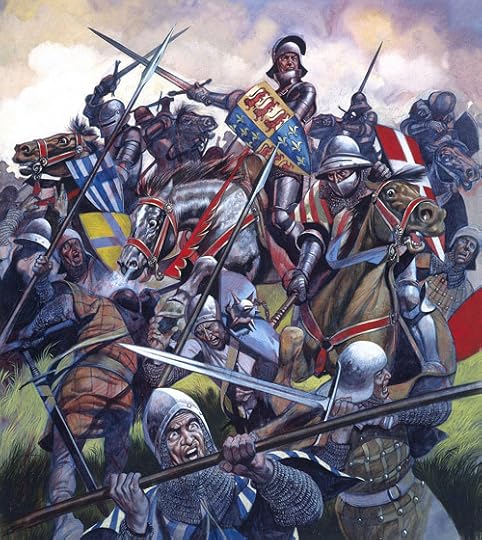
Yeah. Better wear something protective, just to be sure.


