
C.P.D. Harris's Blog, page 70
November 7, 2013
Nomads 4
Last week’s chapter can be found here.
The cryopod was old. There was no window that allowed me to see inside, and I could not even begin to recognize the lettering. My digital familiars, however, had no such trouble. The pod was human in origin with a high probability of originating with another fleet that had passed this way since the diaspora. No doubt they were the ones that had seeded this planet.
I wondered how old the pod was. Cryosleep was still a reality of space travel, even if it was regarded as primitive, even punitive by most of us. Resources could become scarce, space was often at a premium, and some wounds required a lot of effort to heal. Even with digitization, cloning, and lifespan extension Cryosleep never really went away.
“Crazy,” said Shrike. She was shaken. Finding evidence of other human beings out here, let alone a descendant of another fleet, was a dramatic revelation. Added to Jessup’s death, It was taking it’s toll, even on my most reliable operator.
“I know,” I said. “Even Captain Otumo, is going to be surprised about this.”
“Sure,” said Shrike, her voice returning to normal. “But I bet he’ll try to claim he knew it was here all along when he reports to Capital Alpha.”
Otumo was the Captain of the DF7-AF233 Falcon, the long range picket we were assigned to. He was an ambitious man, to say the least, and he had taken several risks that sat poorly with me in the last few months. I frequently butted heads with him when he tried to order members of squad Bright Sword around. We answered to fleet command, regardless of whose ship we might be on. He never pressed those arguments, starting a fight with us was unwise, but he wanted to press the issue, show his dominance.
“He’s going to be happy,” I said. “In a way, I can’t think of a better person for this task. He’ll push and push until fleet command takes notice of this thing, just to make sure he gets his share of the glory. I suppose I should call him.”
While I was speaking, I scanned the tactical maps. Everything that Squad Brightsword, drones included as well as any satellite and ship sensor information was translated into that display. I could see that the squad was in order. A remote coffin had cleaned up Jessup’s remains. Salvagers had taken care of my broken shield drone.
I buzzed the Falcon on coms, using a highsec priority code. Naturally Otumo waited for about a minute before answering, even though we both knew that he was monitoring the mission. Prick. His intense gaze met mine in visual.
“Nomad Raven, I assume you have reason to use this Channel,” he said solemnly. Jessup did a great impression of him. “If this is about Nomad Leopard–”
“No,” I said sharply, cutting him off. I savored the way his nostrils flared. “We’ve found a cryopod. Its old and it appears to be human. Sharing the data now.”
His anger melted as he checked the specs. I’ll give Otumo this: he did not waste time. I could see him directing his men. A dropzone marker became visible on tactical almost immediately.
“This is impressive Raven–” he said.
“There’s more,” I interrupted him again, knowing I could get away with it this time. ”I can’t see inside, but vital signs are showing.”
Otumo paused for a moment.
“I’m sending a pair of shuttles down, with escorts,” he said. The dropzone on tactical adjusted as he spoke. “I want that cryopod loaded immediately. This is far more important than some distress call or a seeded planet.”
“You sure you want to risk it?” I asked. Otumo was loathe to risk his shuttles and assault craft, stingy in my opinion. “The zone is still hot, we have bugs all over the place down here.”
“Secure the dropzone as best you can, Nomad Raven,” said Otumo. “This find is of pivotal importance. Otumo out.”
I waited for a moment before turning to Shrike.
“You were right,” I said. “He’s even sending in some gunships this time…”
I missed Shrike’s response as I noticed something on tactical. A distortion. A ghost of contact from a remote drop sensor, flashing brief, in and out. I willed one of my scanners off towards it. The little drone sped off. I hit team coms.
“Tighten up people,” I said. “We have priority alpha cargo. Falcon is sending dropships down to pick it up. One of our drop sensor’s–”
I stopped as the scanner I’d sent out went offline, scrambled or destroyed. Not a good sign.
“Sunspear. Sensor flare, move,” I ordered. Tactical displays shivered. A column of bugs, like a spear on tactical, was headed right at us. The fact that they had made it this far undetected was a sure sign that they were receiving direction of some sort.
“Pull in to secure positions,” I ordered. Energy from Sunspear’s beamer flashed from the tower, cutting in to the unseen enemy.
Shrike and Triumph had already moved to the gunports on the side of the bunker closest to the enemy. I joined them. Shrike was unlimbering a frag cannon. I moved my drones into position. Contacts on tactical resolved into individual markers as more data became available. Spitters, rippers, and ticks by the dozen. Sunspear’s beamer flashed again, and I heard an explosion as a mortar drone took its toll. Several larger contacts resolved, just as the scourge came into view.
Leading the charge were three Walbreakers, huge spined forms that dominated the landscape around them, By themselves these behemoths were dangerous, requiring a lot of firepower to put down. Their chitin was treated and lacquered, almost laminated. Leading a charge the wallbreakers offered shelter to any bug that was smart enough to keep behind them. There was no way we would drop all three before they got to us.
I aimed and opened fire, setting my blaster drones to fire at will.



November 3, 2013
The Survival Dynamic: Zombies, Shipwrecks, and Magical Apocalypses
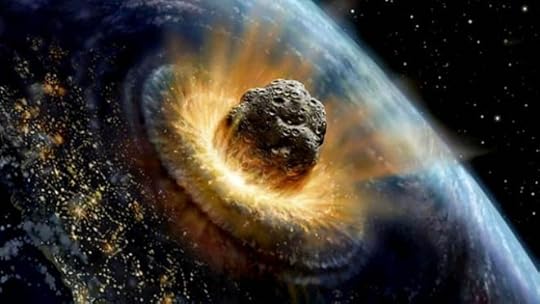
It works just as well for a Fantasy series…
My Domains of the Chosen Series takes place in an Empire that has risen from the ashes after a magical disaster called the Reckoning, caused by the fallout of an all-out war between the world’s greatest magic users, has warped the fabric of the world and reality itself. One of the most common story requests that I receive is for tales that take place during or just after the cataclysm. You see, in my books, while the disaster still effects the psychology of the Domains and taints the land outside of the Domains, it is a settled, historical event. It lacks the survival dynamic of a running apocalypse or sudden catastrophe.
The survival dynamic is a cute shorthand for all of the drama that can occur in disasters, cataclysms and other traumatic upheavals, big and small. The characters are thrown out of their comfort zones as the normal social orders are eroded or outright removed and replaced with more primal concerns like food, shelter, and not being eaten by hungry Zombies. Here a some thoughts on what the survival dynamic can bring to a fantasy story.
1) The simplicity of survival: everyone, instinctively at least, understands survival. People often talk about what they would bring if they were stranded on a desert island, or with shocking frequency these days — what their plan to survive the zombie apocalypse would be. Because we all understand it, or think we do at any rate, survival is an easily accessible hook for almost any genre. It is nearly procedural following the simple needs of safety (getting away from danger), finding food and water, finding shelter, and contacting other survivors. It is a great starting point for many types of stories, and works just as well for a fantasy.
2) Lawlessness: Whether society collapses or the characters are merely temporarily isolated from it, lawlessness is a big part of the survival dynamic. In many kinds of disaster the temporary disruption of the institutions that modern life are built around such as the courts, the police, banks, the power grid, and international trade compound the problem. The whole premise of classic books like Lord of the Flies is built around the reactions of characters who can no longer rely on institutional authority and law, and the pitfalls of creating a new social order. The idea is that that without social norms, some people become monstrous, This has become a rather big theme in zombie games, shows, and movies where the human survivors are more dangerous than the undead. The walking dead tagline “fight the dead, fear the living.” is a good example of this.
3) Moral Dilemma?: The survival dynamic does place characters in interesting dilemmas, pitting morality against the needs of survival. Food and resources are scarce, other survivors may be liabilities that endanger the main character and so on. Personally I feel the negative aspects moral dilemmas of survival are a little overplayed at this point. Generally, only a truly heroic character or a fool will sacrifice themselves for morality and I’m tired of cynical writers hammering this home as if to say we are all bad people at heart. I’d love to see something more uplifting where a grizzled survivor type takes a risk to help others and is actually rewarded instead of doomed by their kind actions. I know, i know… I’m getting soft.
4) Tabula Rasa: Eventually the successful survivors will start again. In small scale disasters they will have to re-adjust to societal norms that may seem wrong to them now. In large scale disasters they may have to start society anew. Removal from society and history as a result of the survival dynamic allows the writer to experiment with what happens when the survivors adjust to the new paradigm and get around to rebuilding. This is a very exciting field of writing, especially if the author follows closely to the logic of the situation. As a reader I just love series where characters cobble together new social norms and grow civilizations from a disaster organically. This goes double if the series starts with the cataclysm and follows through uninterrupted.
5) Scaling, from epic to personal: interestingly, the survival dynamic works just as well in large scale tales like a worldwide zombie apocalypse to smaller, more personal stories like that of shipwrecked pirates on a monster infested island. This scaling allows writers to choose their focus, or even vary it over the course of a series.
So what kinds of survival dynamics can be created in Fantasy? I can think of a few…
1) The usual: Cataclysms, shipwrecks, and Zombie invasions all work just as well in fantasy. The elements of magic and the wondrous do allow the author to tackle it from a different direction. Robinson Crusoe would be way different if the island was home to the ancient elven ruins, and the Walking Dead would have an entirely different feel if necromancy was in the mix…
2) The magical disaster: something changes the way that magic works, and everything gets messed up as a result. In my favourite published RPG, Earthdawn, a rising tide of magic allows monstrous beings called horrors to cross into the world from the astral plane and survive. The people are forced to build magical shelters and try to wait until the magic ebbs enough for most of the horrors to dissipate. In Robert Jordan’s Wheel of Time the male half of the power gets tainted, which drives most male magic users insane.
3) Divine intervention: Several fantasy settings I have enjoyed have involved distasters that were cause by divine wrath or are cause by a war between the gods. The main difference here is the anthropomorphic element of the disaster and the reaction to it. The characters have to factor in the will of the divinity into the disaster to survive and prosper. Love it or hate it, the Left Behind series is a good example of this; the survivors must also deal with the will of God. Variations of this can include the waking of the ancients, dragons razing society, and so on.
4) Revolution: There is even a case for revolution, perhaps the most modern of upheavals, as a survival dynamic. A revolution can be just as destructive as any other form of cataclysm, but is entirely man made… The difficulty is in dealing with the politics of revolution.
However the writer chooses to use the survival dynamic, it is as compelling for Fantasy fans as it is for any other genre. I mean, really look what Zombies have done for westerns…
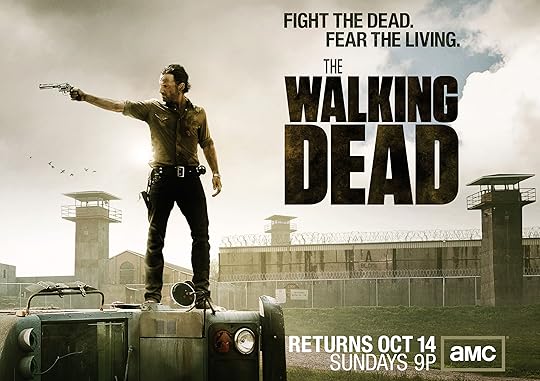
Yeah, I’m saying it is a Western.


October 31, 2013
Nomads 3
“Wow, great job, Raven.” said Sphinx. Although her voice came from a com, my sensors made it seem as if she was speaking to me. I’d even set my visuals to superimpose representations of the heads of my squad over their helmets; it feels more personal to me. Sphinx was a golden haired woman with large, heavy lidded eyes. She was the newest nomad among squad Bright Sword, still careless with her drones, but otherwise flawless. “Killing two stalkers by yourself? wow.”
“Negative, Sphinx,” I said. “These two sacrificed themselves to push me into a trap. It almost worked. If you and Triumph hadn’t chased it off, I might have joined Jessup on the casualty list.”
“Oh,” said Sphinx, her features falling for a moment. I felt like a real bastard for reminding her about Jessup. I could see the effort of will as she put away her grief.
“The last Stalker has gone dark to seekers and scans,” said Triumph. “I’ve marked its last location.”
“Shall we call down a sniffer?” asked Sphinx. Triumph looked at me as she spoke. With his close cropped blonde hair, he almost looked like her brother. I read an urgency in his gaze. Whatever Jessup had found before his mad dash, Triumph and Shrike were worried about it.
“No,” I said. “I don’t think it is wise to expand our mission parameters.”
In truth, I was getting worried. The Stalker attack spooked me. Maybe I just didn’t like the forest, or not having my shield drone up. The uniformity of the trees suggested that they were first generation; this was a recent seed. Yet the ruins were old, very old. I made up my mind. My seekers picked up my mood; the more sensitive models can do that, and began scanning wildly, darting about like a nervous man’s eyes. I reined them in, focusing on the task at hand.
“Sphinx, I want you to help secure the perimeter.” I said. “Triumph, you’re with me. Everyone else, keep to your assigned tasks but be vigilant. Stalkers are a bad sign; I’ll be calling for a dropship soon. Stay paired up, I mean it.”
A quick scan showed me that the remaining members of squad Bright Sword were all accounted for. The only chatter was between Malevolant and Scorch, private coms. They were likely egging each other on, making a game of the battle. I let it pass. Everyone else was quiet, trying to focus on their tasks, pointedly ignoring our dead team-mate and whatever it was he’d found. Looping through Shrike’s visual did nothing for me, she was slowly scanning the street outside the ruined building she was in. I saw a spitter carcass, mostly shredded by a shotgun, but otherwise her area seemed clear.
“You have to see this to believe it, Raven,” said Triumph.
“Any hints?” I asked. The joke sounded leaden. Triumph gave a half smile and a shake of his head, starting off towards the ruined complex. I followed, curiosity growing, wondering if this would make our day worse.
Nomad Triumph wears an Ares class suit, tactical weight. The Ares is one of the suits that springs to mind when an average fleetsperson thinks of a Nomad. Roughly human shaped, but taller and thick with armour, the Ares is a workhorse suit. It can wield a wide variety of weapons and can adapt to nearly any combat situation. Triumph usually runs with a heavy Mag rifle and boosted shields. While it masses high for its class, the Ares is quite swift, especially compared to larger suits like mine. He hopped more than ran, covering great distances with each bound. I had to run hot to keep up with him. I was tempted to tell him to slow down, but let it pass. Part of command is knowing when to let your people lead you.
Triumph slowed as we reached the ruins. I hadn’t really had time to examine the what was left of the complex. It looked like a colony outpost now that I saw it, nice square streets, spaceport and coms towers. Of course many of the buildings were unfamiliar to me, alien architecture despite a possible human origin. We approached the building where Shrike was holding. I glanced a my suit through her visual, it did not look badly damaged. Thank the founders for small miracles. Getting a fatal Scourge bio-infection through a damaged suit was not on my list of way’s I’d like to die.
The building was squat, octagonal, and made out of a tough metallic substance. The windows were thin and well protected; combat grade glass. It was an armoury or a bunker. Looked like a fortune in salvage, but Shrike seemed too jumpy for that. She pointed at the remains of the door,
Scourge aren’t that smart unless they have an overseer. What they lack in intellect, however, they make up for in persistence. I could see the different marks on the tough armoured door. Claws, acid, even projectiles had been used. They’d just attacked the door. It must have taken them quite a bit of energy, just to get through. I stepped inside. The ceiling was high enough for even a large suit like man to strand straight. I looked around.
The floor was littered with the dead. It took me a moment to sort it all out. I saw one of Jessup’s drones, a razor raptor, lying in a pool of dismembered bug corpses. I saw several that had take beamer and blaster hits. Jessup used a blaster. I spotted the wreckage of something that came up on my weapons analysis as a beamer buried under scorched chitin. The bunker had some sort of internal defence system. Nomad leopard must have seen it go off and come to investigate. But why had he left his deadliest drone here while trying to draw the bugs away?
i looked around puzzled. It took me a moment to spot it. Cryopods are easily overlooked when you’ve lived your whole life in the fleet. But when I reached out, interfacing with the pod, my systems reading and translating its data, I noticed that it was occupied and that whatever was in it had steady vital signs.
There was someone inside that pod.


October 27, 2013
On the use of “Red Tape” as an obstacle or enemy.
“Using defensive spells? Why, I can’t imagine any situation arising in my classroom that would require you to use a defensive spell, Miss Granger. You surely aren’t expecting to be attacked during class? I do not wish to criticise the way things have been run in this school, but you have been exposed to some very irresponsible wizards in this class, very irresponsible indeed – not to mention, extremely dangerous half-breeds.“—Dolores Umbridge, teaching defence against the dark arts, from the Harry Potter series by J.K Rowling.
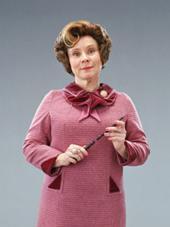
Dolores Umbridge, a great modern villain. She might not be strong, but who needs strength when you have the law on your side?
Often in Fantasy novels and especially in Fantasy games the main characters simply overcome every obstacle they encounter through magic, stealth, or force. It simply makes for an engaging read when characters take direct action against any threats and bumps on the road they might encounter. Expediency is naturally important when the world is in danger.
Red Tape is, by definition, is the enemy of expediency. Excessive bureaucracy, overbearing formal rules, and rigid adherence to “by the book” conduct in the face of extenuating circumstances are all examples of Red Tape. Instead of explaining in detail I will illustrate with a few of my favourite examples.
1) Lord of the Rings – The Entmoot: The Entmoot is a classic example of well meaning adherence to a formal structure as an obstacle. Marry and Pippin want the help of the Ents, or at the very least to be on their way. The Ents need to identify these trespassers on their land and decide what they want to do with them. The Ents are portrayed sleepy, docile creatures who prefer to deliberate very thoroughly before taking action. The problem in this case is that events are moving quickly and their long discussion presents a serious time commitment that the two Hobbits can ill afford. In the end I enjoyed the presentation of the entmoot in the movies, with the Hobbits circumventing the moot’s decision by luring treebeard to a place where Saruman had destroyed part of Fanghorn, confronting him with evidence that the Ents could not ignore.
2) Lord of the Rings – Wormtongue: Wormtongue would not make an interesting combat obstacle. He was never a worthy foe on the field of action. However his plotting and conniving paralyze Rohan, paving the way for Saruman to grow in power and then overcome the Kingdom. Using his position, Wormtongue prevents the horsemen of Rohan from joining the wars against the orcs. He engages in a campaign of denial about the attacks going on throughout the land. He stifles any opposition to Saruman through legal means and gradually separates king Theodan from any useful advisors who might be able to coax him into action. Interestingly, Wormtongue is so effective at this that he is only overcome by the appearance of Gandalf the White, who uses a combination of guile and force to cut through the red tape. Of course, by this time, Wormtongue had nearly crippled the kingdom already.
3) Arthurian Myth – Mordred : Mordred uses the ties of kinship and the laws of hospitality and chilvary to survive and prosper. In particular he uses the affair between Lancelot and Guinevere to cripple the round table. T H White has the best account of this, reasoning that the affair between the two had gone on for years and yet only Mordred’s rigid use of the law forced it to a head, thus sundering the round table. Mordred also uses the laws of chivalry and kinship to survive against his peers, pretty much everyone knows he is bad news in all accounts, but they are never able to pin anything on him because he acts in accordance with the system of laws and kinship that governs them.
4) The Name of the Wind – The University: Patrick Rothfuss uses the rules of the University as a very interesting set of obstacles for K’vothe. The admissions exams are a prime example of this (spoiler alert), with Kvothe being forced to justify his actions and his greatness or have his tuition be set so high that he can no longer attend. In fact, the entire structure of the University acts as an obstacle to K’vothe’s quest to find the Chandrian and gain enough power to challenge them. The University (rightly) desires to keep dangerous knowledge out of the wrong hands. K’vothe is thus forced to spend years navigating the systems and structure of the University to find the knowledge that he is seeking.
5) Harry Potter – Dolores Umbridge: (spoiler alert) Umbridge is perhaps the best example of a person using the rules to crush and abuse her enemies. She never really gets violent in the same way that the Deatheaters do, but instead relies on occupying positions of power where she can use regulations to her advantage. In her own way she is as vile as Voldemort, and provides a villain that is much more realistic to the modern experience than a dark lord: someone whose every act is tinged with viciousness, but whose actions are supported by the law. In a way, our complacency in the face of people like Umbridge, who infiltrate our places of power and turn them to their own ends is the underlying villain of the whole Harry Potter series. Most of the magic community wanted so desperately to denie the return of Voldemort, to the point where they allowed people Umbridge into positions of strength to reinforce that denial. Had they been willing to confront him earlier, the cost would have been far less — a rather profound statement for a “children’s series”.
Armed with these examples, we can see that Red Tape can be a passive obstacle to be overcome, such as the Entmoot or the University in The Name of The Wind or a weapon to be wielded by the likes of Wormtongue, Mordred, and Umbridge. Characters who rely on force, but are essentially good, are constrained by their respect for the law when dealing with this kind of obstacle. A Conan or an Elric would make short work of ol’ grima, but Lancelot cannot simply gut Mordred without upsetting the social order he is trying to defend. (Which gets me thinking… maybe grimdark really isn’t that stifling if it allows us to fantasize about casting off the rules… but that needs more analysis.) In the end the Red Tape challenge is worth including, especially if it is paced well, in any modern tale because all of us have come in conflict with the rules of our workplaces, governments, religions, and so on in our daily lives and can understand how these can be serious obstacles. The key is to make the reader feel the protagonist’s frustration; our instinctive dislike of those who use the rules as weapons against us compels our interests in them as villains.


October 24, 2013
Nomads 2
I shook my head, hoping to clear my mind. The rest of squad Bright Sword was still engaged. Mourning would have to wait.
I wasn’t be sure that the bugs that killed Jessup had cleared the area. Tactical looked good; I could see the rest of the squad holding the ruins. Nomad Malevolant and Nomad Scorch were heavily engaged on the perimeter furthest away from me. They’d set up a impressive Killzone. Target markings indicated that they had taken out a Wallbreaker, one the the larger scourge forms. Nomad Sunspear was supporting them from the distance, I could see from her readings that she and her drones were all up high somewhere, picking off important targets. Shrike was waiting where Jessup had started his doomed run, Nomad Triumph was guarding her back. The rest of the squad was engaged in clearing the ruins. Nomad Sphinx, had lost a couple of drones, but everything else seemed fine.
Most importantly, I saw was no sign of any Scourge intelligence. Most of the time the scourge acted on programming. Bugs aren’t that hard for a Nomad to deal with when they’re dull.
I left the ruins and set out into the forest. The trees looked strangely familiar. Maybe this world was seeded, way back. Possibly by one of the other fleets, maybe even a lost colony. I was remotely curious, but set the feeling aside. My seeker drones, Huginn and Muninn, kept up a steady flow of information, sweeping back and forth. A pair of gun drones watched my flanks and my shield drone hovered behind me.
My Nomad Suit is a heavy, Paladin class.Many Nomad operators look down on the paladin because of it lacks the fire power that they think it should have. I like it because it has thick armour and enough shield generation capacity to rival a gunboat. It is about as agile as a heavy nomad suit can get, which makes it better in close combat than most heavies, although since it isn’t especially fast it needs it. The design incorporates a shock field and shielded power-gauntlets. I rounded out the ensemble with a tri-beam cannon. Jessup once joked that I liked it for the pretty colours.
A shape moved in the woods. My gun drones whirled, tracking the motion. There was no identification on tactical or direct IFF. My seekers read multiple inbound. Scourge forms, big and lean. Stalkers? I activated distress signal, moving toward a more defensible position. I let my gun drones start shooting and the woods came alive with bright blaster fire.
I respect Scourge Stalkers, but do not hate an fear them like most Nomads do. Stalkers are a smarter, more independent form. Their hides baffle most of our detection methods, but we still have good, old fashion, visual and sniffer drones. Their scything blade arms are capable of cutting a light or medium nomad in half, especially if they get close enough to foil the shields. I counted myself lucky to have seem them. The sprinted through the forest behind me, using the trees as cover. Their hide shifted in a chameleonic patters, making them even harder to hit. My gun drones kept firing, patient and steady.
I nearly walked right into their trap. I started to get suspicious, Stalkers, once visible, are relentless. My gun drones might have scared off one, but not two. They weren’t trying to outmaneuver me. They could not chase me at their leisure with my quad no more than two minutes away. Process of elimination dictated that they had other plans. I stopped running. I could see Sphinx and Nomad Triumph moving to intercept me. I marked what I knew on tactical, indicating a trap of some sort between us. The Stalkers fanned out. I brought my gun drones in close.
The first stalker burst through the brush. I Blaster fire greeted it, burning holes it’s carapace. Too many shots missed. It moved with blinding speed, a mess of colours trying to blend in with everything it moved past. I fire my beamer, a line of light raking it across the torso. That slowed it down long enough for the gun drones to slag it,
The second Stalker hit my shield drone just after the first attacked. It made short work of the shield and then ripped the drone apart as I downed the first Stalker. It was on me before I could turn. A Scytheblade sparked off my shield. I dropped my beamer, turning and lunging,
Stalkers are superb combatants, far deadlier than most Scourge forms. This one obviously did not expect a Nomad to tackle it. My gauntlets closed on squirming carapace with a satisfying crunch. A blade cracked off my shield. The servos strain meters lit up with warnings as I wrestled with the beast, but I pinned it long enough for my gun drones to put two blasts in its head.
Before I could get up, something barreled into me. The impact nearly toppled me. Thankfully the Paladin Class incorporates advanced stabilization. I caught a glimpse of a third stalker as it leapt away, knocking one of my gun drones to the ground with a contemptuous swipe before disappearing into the forest. The other two must have been driving me towards it. Triumph and Sphinx appeared a moment later. Sphinx started to pursue.
“Negative Sphinx,” I said on a private com. “You’re down on drones, and there may be more of them out there.”
Sphinx shrugged, but I could tell she was annoyed. Hunting bugs is actually her idea of fun on a good day. Jessup’s death was making her a little wild I guessed.
I turned to Triumph who was examining one of the stalkers while his engineer drone pulled my broken gun drone out of the forest floor, My shield drone was a write off. I felt a moment’s indignation. This was not a good run.


October 20, 2013
Feudalism, Shields, and Why Samurai Are More Popular Than Knights.
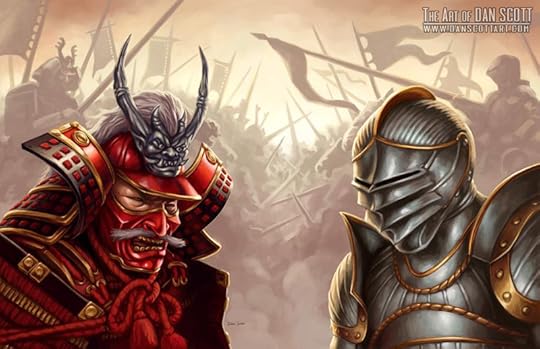
We can all agree that feudal warriors dressed well!
Currently, it seems to me that Samurai are more popular than their Western Counterparts, at least in popular culture. It is an interesting comparison, considering that both are feudal warrior classes, with similar societal roles. It seems to me that aspiring authors and game creators could learn a great deal from the comparison between these two and apply it when creating and writing about their own warrior cultures.
The Archetypal Knight
The Archetypal Knight was a man in very heavy plate armour, wielding a broadsword, and carrying a large shield of some sort.
Knights, when portrayed sympathetically adhere to the code of chivalry. This code is based around the ideas of feudalism, but in popular culture, rightly or wrongly, it has a strong emphasis on romantic life.
Knights might be loyal to their lord, but they are often more loyal to their god. Their is a strong religious association with knights, even in the modern day. This carries over into games and books with the most popular form of the subgroup of knight, the paladin, being a holy warrior.
Knights are often portrayed in a mixed fashion, evil knights are certainly not unknown.
Knights often fought mounted, the lance being portrayed as important for this. (In fact knights were well versed in a variety of weapons, and the arsenal of the late middle ages included some creative and unusual devices.) The Joust is an incredible sports-like activity that has a strong place in knightly fantasy.
Knights engaged in a number of secondary activities, but the only ones that show up in popular culture these days are hunting and falconry.
The Archetypal Samurai
The Samurai, although fully armoured, was not nearly as well protected at the knight. Most importantly they have no tradition of shield use, especially in popular conception.
Although the Samurai (like the knight) used a bewildering variety of weapons, and many preferred the spear in battle, in popular culture the Samurai are famed for their use of the Katana. The Katana is by far and away the favourite sword of current popular culture.
Samurai were also portrayed as a mixed bunch. Some were heroic, others were downright nasty. Because the zenith of the age of the Samurai came long after the end of the Knight, they seem fresher in our imagination.
Samurai also fought mounted. They did not really have a jousting culture, however.
The Samurai followed the Bushido code. The Bushido code is a feudal code that stresses self-perfection/mastery. It is portrayed as being a little more philosophical and contemplative than Chivalry.
Although this is very likely faulty, Samurai are rarely portrayed as exceptionally religious in pop culture. This might have something to do with people not being able to grok shintoism, but could also have to do with time period. Knights were long gone by the time of the industrial revolution and modern religious/political ideas, while Samurai were not. Instead they are seen as loyal to the emperor, which is confused in modern day as being loyal to the state of Japan (when in fact it could be confused with a religious thing)
The Samurai had no compunction about using ranged weapons (except guns), whereas knights were often portrayed as noting that archery in battle was for cowards.
The keys to this analysis are the religion, chivalry, and the shield.
Religion
I suspect that religion played a strong role in the lives of both Knights and Samurai, but while you will often see good Knights in popular fiction beseeching god or evil knights using god to justify their acts, Samurai are more varied.
Knights are associated with Christianity a religion that still has a very string presence in world affairs. Shintoism does not, especially in pop culture. Much of this has to do with popular ignorance of eastern religions though.
More interestingly, I think Samurai are portrayed as less religious because their Zenith and denouement came at a time when Japan was reaching modern statehood. In Europe when Knighthood was at its strongest, the church was the unifying power. In Japan, when Samurai fantasies are at their strongest, we start to see hints of nationalism. Nationalism and patriotism are very modern ideals and currently less contentious than religion, which I think adds to the popularity of the Samurai as more of a patriotic warrior than a religious warrior in popular fantasy.
Chivalry
Somewhere along the lines the code of Chivalry picked up strong associations with romantic love. The knight is often seen as a romantic figure in popular culture, While romance is a massively popular genre, it has a difficult relationship with Fantasy fiction (this will change over time), and the romantic association does not help the knight in popular culture right now. Bushido on the other hand is seen as a strict code, with nasty consequences like seppuku. Bushido also has a strong philosophical component, carried by books like Musashi’s Five Rings, which helps the Samurai come of as a little cooler, at least as a warrior. The philosophical aspects play into the growing influence of geek culture as well.
Shields and Plate Armour vs the Katana
The arms associated with the Knight and Samurai demonstrate a great deal about what we think about how they fought. The arms most strongly associated with the knight are defensive in nature and often portrayed as clumsy and clanking, making the knight more of a medieval tank than a masterful warrior. The shield, especially, is misunderstood. Shields just aren’t sexy you see, and few people outside of the history class, gamers,the sca, or boffer larps seem to understand the offensive capabilities of shields or how to make them seem more interesting.
Plate Armour, as well, gets a bad rap. Despite plenty of evidence to the contrary, plate clad warriors are often portrayed as clumsy and perhaps even cowardly. While this is changing, heavy armour still has a serious image problem. Taken together the armour and the shield make use think that the knight was mostly a defensive warrior, especially when not mounted. The turtle would be an appropriate comparison for the popular view of knightly combat. Malory doesn’t help here with his portrayals of knightly battles lasting days. That sounds boring to modern audiences.
The Katana, on the other hand, is pure pop-culture fodder. It is the deadliest blade around, bar none, in the eyes of movie goers and fan boys. It is swift and lethal. If the Knight is a turtle, the Samurai is a tiger. It helps that the most famous form of Samurai duel in pop culture is the Iajutsu duel, the quickdraw stare-down that is resolved with a single stroke. This form of fighting is seen as more dynamic to modern audiences. If fantasy most protagonists are portrayed as swift and deadly — assassin types, often. The Samurai is much closer to this ideal than the knight (in concept at least).
In conclusion while these two warrior classes were actually similar in many ways, it is easy to see why the Samurai grabs more attention in popular culture than you would expect. The emphasis on quick, graceful fighting, with immediate bloodshed simply makes for a better action scene in the modern view. The same can be said with the Samurai’s code and his emphasis on duty instead of religion, these are simply easier fits with modern audiences. You could argue that the Samurai is more popular in western pop culture because it is exotic — however a good fantasy writer can make anything seem exotic, so I’ll duck that point. Naturally it would be very easy to rehabilitate the image of the knight be emphasizing more modern qualities, but you would be working against Mallory instead of having Musashi in your corner. The key takeaway for designing your own warrior cultures is to make sure sure that you emphasize traits that play well with your audience. For example if you are writing for fans of swift and deadly action you would do well to go for Katanas over shields…


October 17, 2013
Nomads
I use my blog to communicate with fans, work out some theories, and hone my writing. In the spirit of mastering the craft I am going to write a serialized story. I’m aiming to try something a little different so I’ll try first person and go for futuristic bent.
“I’m sorry, Raven, I’m so sorry.”
I just stood there, staring at the bloody mess with the words crashing down upon me. My seekers puttered around at chest height, scanning, but I was oblivious to the streams of data that their analysis called up. Some part of me, I knew from long experience, was already collating and storing that data for later use. The machine part, I hope.
I closed my eyes and took a deep breath. The air smelled like blaster fire, overpowering even the smell of blood and burning flesh. Two bugs, rippers, lay smoldering against the wall. Their thick black carapaces were melted by blaster fire, their insides cooked. They were big, I wasn’t sure if that meant they were old survivors, grown strong off the flesh of their enemies, or if they were from a mature hive. At that moment I didn’t particularly care. A mental command sent one of my seekers forth to check the perimeter. Now would be a bad time to be surprised.
The two rippers were part of a larger pack. I saw evidence of a spitter, a pool of noxious bile, and a lacerator’s bony discs on the killing ground; I did not need seeker analysis to know the signs. Besides, we knew the bugs were coming, that’s why we’d come, after all.
“I’m sorry, Raven, I’m so sorry.”
The other corpse on the ground, further into the room, was one of ours. A Nomad scout suit, Mercury Class. I would recognize the paint job anywhere. Patterned after some ancient animal that probably only existed in databases; a leopard. I used to joke with Jessup that taking a callsign based on what looked like an overgrown housecat suited him. The room blurred. I could almost see his face again. The suit was mangled, twisted and broken. The body inside was worse than that.
Nomad scout suits were built for mobility. They packed a punch, but were at a disadvantage in places where they could not run, jump, and fly. Once the field was breached they had minimal armour. The mercury class was an advanced model, but very few Nomads could go toe to toe with this many Scourge and survive, especially without drone support. I saw the fist spikes had popped on both of Jessup’s arms. Both of them were covered in goo. He probably fired the blaster and then dropped it; It was to heavy for such a small suit to use in close quarters. Screaming and swearing, he would have waded in. At first, the bugs would have trouble catching him — the Mercury was blindingly fast. He would have struck again and again, dancing around them. But despite Jessup’s skill, his end was assured, the bugs were thorough and the terrain was bad. The pack would have close around him like a noose. I forced myself to think: why was he here?
“I’m sorry, Raven, I’m so sorry.”
Our Nomad team was working the DF7-AF233 Falcon, long range picket, when Fleet Command picked up a distress call. The Falcon was the closest ship with an operational squad and craft that could make planetfall. We made landing near the distress signal, but found nothing but old ruins crawling with bugs. I ordered the squad to take up defensive positions. Jessup had been scouting, working the outside, when his seekers had spotted something. I wish I knew what. The scourge might seem like overgrown insects, but they were smart enough to jam a Nomad who strayed too far from his team. Jessup’s drones were strewn out over a kilometer and a half, a trail of metal crumbs leading to the pace where he died.
I looked around. It was a ruin just like any other. Any curiosity I might have about ruins were buried under sorrow. And then it struck me. The planet’s atmosphere wasn’t favourable to human ecology. It never had been. These weren’t just any ruins, they were alien ruins.
Since the Diaspora, Fleet Seven had encountered precious few alien races. The sectors of space that we had wandered through since I was young were ravaged by the scourge. We occasionally found evidence of lost human colonies, but any evidence of non human civilizations was rare. I’d seen a ruined city and this little outpost here already. I looked around. The architecture was strange, squat and bulky.
“I’m sorry, Raven, I’m so sorry.” Jessup’s last words rolled through my head. There had to be a reason he’d run out here. Jessup had a cool head. I looked around. A sudden discovery. A two kilometer chase. A trail of drones. A desperate last stand.
“You were leading them away from something…” I said.
“Boss…?” Shrike only used voice when she was spooked.
“You found Jessup’s missing drone?” I knew the answer already.
“Yes… I… You have to see this,” said Shrike. “Marking the location.”
I took one last look a Jessup. Nomad Leopard. I switched on broad coms.
“Report. This is Nomad Raven, in command of Squad Bright Sword, DF-N665. Nomad Leopard, Jessup Port, has been killed in action against the Scourge. Marking the body. Raven out.”
Notes:
Seeker: A spy drone. Nomad operators have 4-6 drones under their control.
Scourge: A hostile alien race that Fleet Seven has clashed with. Nomads refer to Scourge soldier forms as bugs.


October 15, 2013
Teaser Tuesday
A little teaser for my short story, Bloodlust: The Great Games, due soon.
“AND TONIGHT, FIGHTING FOR THE RED FACTION,” The announcer’s voice echoed in the vast arena, the audience still quiet, waiting breathlessly… “FIONA THE EXECUTIONER.”
As the Gladiatrix’s name sounded, the crowd roared. The door to the Gladiator’s entrance opened. Rose felt as if the wall of sound might pick her up and carry her away, like a tidal wave. She was momentarily nervous, but then she was on her feet beside her dad, screaming “FIONA!” over and over as the Gladiatrix herself marched into the arena.
Tall and athletic, Fiona moved with predatory grace as she strode across the white sand to the middle of the fighting grounds. Red hair, spiked, gave the impression of a phalanx of bloody spears erupting from her head. Pale green eyes raked the crowd as the Gladiatrix’s mouth twisted into a playful snarl. The enchantments on the arena were so powerful that Rose and Darius could make out the freckles on her pale skin.
In one hand, the Executioner bore a large wickedly curved sickle and in other other a full sized headsman’s axe. Darius knew that even a man his size would have likely have trouble wielding such weapons in a fight. Gladiators used the Gift to enhance their bodies, and Fiona’s muscles were like steel cables, far denser and stronger than any normal person could be. Her armaments were made of exotic materials, custom-made by master smiths and enchanted with potent runes and Darius, who admired craftsmanship, took in the details reverently.
I ended up going with an unknown fighter, mostly to give fans a taste of something new. I enjoy creating the image and style for each Gladiator as much as I enjoy describing the fighting and the performances. I like to think of them as part Rockstar, each trying to create a look that will draw fans to them. The “image consultant” scene between Amoura Vogue and Sadira in Bloodlust: A Gladiator’s tale, one of my favourites, was born of that line of thought.


October 13, 2013
Classic Characters: Spartacus
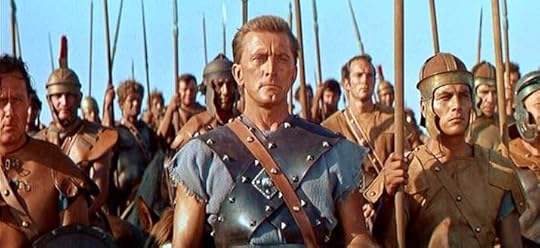
Kirk Douglas in the older Spartacus film
Yeah. I’m surprised I did not hit this one up earlier.
Spartacus (~109 bc to 71 bc) is an interesting historical character. The sources describing his early life are contradictory and incomplete.
He was believed to be a Thracian. (Thrace is an area partly in Greece and partly in Bulgaria, and the Thracian people were well known in antiquity.)
He had some military experience, possibly as a mercenary, possibly as an auxilliary of the Roman legions. His military experience served him well later on.
Captured by the Romans and sold into slavery at some point, he was sent to the arena because his great strength marked him as good material for a gladiator.
He rebelled while training, leading his men to victory in several small skirmishes while escaping.
For about two years Spartacus and his band of slaves and rebels survived, growing. They won two major battles before the senate charged Crassus with hunting them down.
Eventually Crassus drove Spartacus and his army deep into southern Italy and cut off their supply lines. With no chance of escape and Pompey marching to support Crassus, Spartacus rallied his forces, fighting a desperate last stand and was killed in battle.
Six thousand survivors were crucified after the this last battle.
Spartacus’ body was never found.
The actual details are fairly thin. I believe that this has actually worked in Spartacus’ favour, making him far more popular an icon than if more were known about his life. The historical record acts as a compelling framework for an epic tale, while having so many gaps makes it easier for an aspiring writer to fit the records of Spartacus into the type of story he or she wants to tell. A writer could viably work the history of Spartacus into a tragic romance, an epic war story, or a gritty tale of the inevitability of heroism’s failure among others. Numerous examples abound, and I suspect we will see other adaptations shortly.
While ease of adaptation makes the tale of Spartacus tempting for the writer, it is also very compelling to readers, even those who do are not interested in classical history. A set of powerful themes immediately attracts people to the story.
Freedom: Slavery is an unambiguous evil. Being sold into slavery to fight in the arena is a particularly cruel form of that evil. The idea of an a slave fighting their way to freedom, and helping to free others, is tremendously compelling. Here is an evil we can all agree on. Here is a fight that we all consider worthy. The struggle to be free is one everyone can identify with or sympathize with on some level.
Defiance: The Roman Empire was a monumental superpower, the unchallenged hegemony of its day. Regardless of the outcome, their is something worthy of facing off against such overwhelming odds. I have an innate desire to cheer for the underdog, to want to see the losers win, and to bet on long odds in my choice of fiction — I know I’m not the only one. In this case, Crassus, a man known for both his wealth and his cruelty makes an ideal villain, giving face to some of Rome’s worst excesses.
Tragedy: In the end Spartacus was doomed, likely by his own success. Logistics seemed to be his biggest problem: feeding such an army would be a terrible challenge. And Rome could not afford to let him go unpunished — they would not want his defiance to encourage others to rebel, after all. From the moment he escaped Spartacus was a marked man, the enemy of the power that had brought down Carthage. There was nowhere he could run and his last stand was quite likely inevitable.
Leadership: Escaping from slavery is a great story. Leading a whole army of escaped slaves into freedom is an epic. The idea of a former slave teaching his men how to act like an army and leading them successfully into battle against the soldiers of Rome is exciting. The pressures of keeping such a band from dissolving into chaos would have been extraordinary, and would make good fodder for a story even without the rest of it.
Action: The story of Spartacus is infused with bloodshed. He starts off as a Gladiator and ends up dying on the battlefield in a desperate last stand. The reader knows they are going to get action in this story.
The story of Spartacus is fairly easy to adapt to a fantasy story. Evil empires and slavery are fantasy staples, and the idea of an epic or tragic hero leading a slave’s rebellion is pretty easy to adapt to almost any setting. The writer could focus on a single character or a small band of supporting characters who all escape together. For maximum effect it would be best to do what most movies and books about Spartacus do and start before the rebellion, showcasing the brutality of life as a slave and the power and decadence of the Empire.
Having written two novels about magic-wielding Gladiators I can tell you that fitting fantasy elements into the arena is easy enough. Magic can also be used to highlight the evils of slavery with items like pain collars, enslaving spells, and all sorts of nasty new ways of presenting a very old evil.
The character of Spartacus is such that almost any competent, combative protagonist can be cast in his role, which makes it very easy for a fantasy writer to adapt the tale to feature a orcish gladiator or a condemned noblewoman with a talent for bloodshed. The Spartacus story is nearly an archetype in many ways, a ready made plot and character type that can be adapted to almost any background or setting to produce a strong tale of a defiant hero who fights and dies for freedom.


October 10, 2013
Power without Responsibility: a Real World Example
I generally shy away from real world politics on this blog. My fiction writing has a fair chunk of political content, which I live, but modern politics is often too adversarial, extreme, and entrenched in tedious repetitive rhetoric; it is also a bad way to make friends. In American and Canadian terms I would be considered a left wing liberal type, but I tend to get along quite well with most people until the talking points start surfacing.
That said I cannot resist writing about the current US shut down. It is a near perfect illustration of one of my earlier blog post: how nearly everyone in a position of power seems obsessed with avoiding blame.
Many people want power, or at least the perks and benefits that come with being powerful. However, power comes with responsibility. This can be a bit of a bummer if you do something that makes people angry and have to deal with the consequences. Many people in power, when faced with difficult situations will attempt to blame others people, the system, or other external causes when the situation goes south.
The shutdown of the US government is an excellent illustration of this.
The Shutdown started over the implementation of Obamacare. The Republican controlled US House of representatives has refused to fund the Government if Obamacare is implemented.
The Shutdown may run into the debt ceiling negotiations. The fight over Obamacare and the fight over the debt ceiling raise should not be confused despite the fact that they get bundled up in all the deal making.
The Democratic Party and President Obama have repeatedly caved in to the Republicans in this fight, most recently cutting the budget again. This is the first time that they’ve really taken a stand.
Obamacare is a polarizing issue in the US. However, the President did own the Law and in fact ran his last presidential campaign on it and won. Normally that would have been the end of the issue.
The Republican House hates the Obamacare law so much that it has voted to defeat it fourty-one times in since it was passed. (pointlessly)
Having no normal recourse to prevent the law from being implemented the Republican House has decided not fund the government unless a deal is made. They blame President Obama and the Democrats for not wanting to negotiate over Obamacare.
The current offer on the table is to shelve Obamacare for a year. Coincidentally 2014 is a midterm election year.
The Republicans are negotiating from a position of bad faith. Everyone knows that after a one year delay they would just start the fight over again and demand more concessions. This knowledge is based on their past behaviour; the recent and ongoing battles over the debt ceiling and the sequester should be evidence enough of that.
Not supporting Obamacare is a personal preference. Personally I think the US should move to the same sort of single payer coverage that the rest of the civilized world has adopted. While Obamacare might be unpopular with some, it is now law. The voters had their chance to reject the president and his plans in 2012. They chose not to. This is significant. The law even survived a supreme court challenge.
The Republican House, despite losing seats in the 2012 election (a majority of seats are held despite not having a majority of the popular vote), is set against the implementation of Obamacare to such an extraordinary degree that it is unwilling to drop the issue. However, instead of taking up legal recourse against it and fighting it out in an election they have decided to hold the funding of their own government hostage. It is an extraordinary step. Some may think them noble for it, others may see it as quixotic to say the least.
Regardless of your stance on Obamacare and US party politics it is hard to deny that the Republican House is the active party in this action. They picked this fight. They are using their political power, every once of strength and influence at their disposal to roll back and defeat a law that they don’t like. They may even use the debt ceiling again, threatening to default on the US government’s obligations if they don’t get their way.
However, despite their use of power, they refuse to take responsibility for their actions. They blame anyone but themselves for the government shutdown and the potential havoc it might cause. They will certainly claim victory if their political manoeuvre succeeds but they are unwilling to take responsibility for any harm that it causes, hoping that their constituents will blame others instead. This would be like President Obama vetoing every law that congress passes until he gets new regulations on banks, and then blaming congress for getting nothing done because they refuse to negotiate with him on getting new regulations on banks.
As a writer, regardless of how you feel about this situation, it is an excellent example of how rough politics can get, The Republican Party is attempting a risky, crazy political move. It may even work out for them. However, they are also trying to avoid responsibility for their actions if it does fail. This is the scourge of modern power, those who wield it often try to avoid blame for using it wrongly.
Fantasy worlds have their own power structures, from feudal systems to complex empires to fledgling democracies. Regardless of the setting, there will almost always be different factions competing for power in a single nation. The King will fight with the Barons over taxes. The border provinces will set themselves against the capital in the empire. Democracies, of course, are constantly arguing. Even the Sun Court of absolute monarch Louis the XIV had different groups of nobles fighting for the king’s attention. Regardless of the intentions and morality of these groups, some of them are sure to be the type of people who hedge their bets and try to avoid responsibility for negative consequences when they use their power.



