
C.P.D. Harris's Blog, page 73
July 25, 2013
Classic Characters: Lu Bu, warrior without rival, jerk.
Lü Bu possessed the might of a tiger, but he lacked the planning skills of a talented person. He was frivolous and temperamental, and was only concerned about the gains he could make. Throughout history, there had never been such persons like him who did not end up being destroyed Chen Shou Sanguozhi
Why yes, I have been playing Dynasty Warriors (8) in my period of relaxation after releasing Bloodlust: Will to Power, what of it?
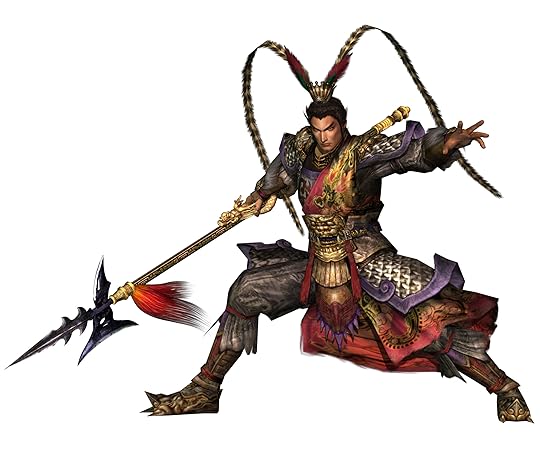
Lu Bu from Dynasty Warriors
Lu Bu is a famous warrior and warlord from the end of the Han Dynasty, a historical personage who is a character portrayed in the much loved Romance of the Three Kingdoms, by Luo Guanzhong, considered one of the four great classical novels of Chinese Literature. The Romance of the Three Kingdoms is well loved, and once I became familiar with it I saw the characters pop up in games, film, anime, even as commentators on the Art of War. Think of it as a body of work that is on par with Arthurian legend in terms of influence, but with a stronger historical basis.
The end of the Han Dynasty was a period of great turmoil, with numerous warlords vying to control the land or put an end to the chaos. It was a time of ripe opportunity for anyone with skill at arms, ambition, or a heroic nature. Many legendary figures arose from this period, including tremendous heroes and daring leaders. Out of all of them Lu Bu is regarded as the mightiest warrior, often noted as being utterly unmatched in personal combat. However, despite his valour and strength he is generally regarded in a negative light, because of his naked ambition and lack of self-control.
In an age famed for the prowess of its warriors, Lu Bu stands out among the best. He is never faulted for his courage or his exemplary personal fighting skills. In this wayhe compares favourably to classical fantasy heroes. He was often compared to a tiger in battle, a great compliment. Essentially he was the Lancelot, El Cid, or Cu Chullain of his period, the one who no one really wanted to face in a one on one confrontation. He is powerful and so fearsome that regular soldiers often refuse to engage him. In the Romance of the Three Kingdoms, only the greatest warriors can stand their ground against him, at least physically. A warrior’s warrior, with few rivals.
Lu Bu is also an excellent horseman and archer. His horse, Red Hare, is said to be the greatest horse of the period.
However, what makes Lu Bu an interesting character is not his unmatched might, but rather how he squanders and wastes it. While he was portrayed as a great warrior, he was noted as being a poor strategist, untrustworthy, and arrogant. Here are some example of his deeds:
A pattern of betrayal: He betrays Ding Yuan, the man who first promoted him, at the urging of Dong Zhuo. He later betrays Dong Zhuo at the urging of some of the tyrant’s ministers. When he takes shelter from the noble-hearted Liu Bei years later, he turns around and usurps Liu Bei’s position. Individually each of these actions furthers Lu Bu’s goals, but they mark him as an unreliable ally.
Lack of Self Control: Lu Bu loses at least one battle because he argues with other commanders. This is regarded as a serious flaw, At his execution he is accused of coveting other men’s wives by at least one commentator. He wins no friends among the people since he seems to enjoy plundering the land wherever he goes. (great hobby)
Arrogance: Lu Bu is a jerk, plain and simple. He mocks his enemies. He annoys his friends. At least two warlords drive him from their service because he keeps making demands and parades around acting like he is better than everyone.
Impulsive: Lu Bu also has a history of changing his mind at the last minute. At one point he allies himself with Yuan Shao and they agree to a marriage alliance via their children. Lu Bu changes his mind, betraying Yuan Shao, after his daughter is already on the road. While the intrigues of the period are often complex, Lu Bu acts like a bull in a china shop, blundering from one moment to the next without a cohesive strategy beyond advancing himself.
Lu Bu rarely finds a stable base of operations due to his inconsistent actions. While his might makes him a valuable military asset, his unreliability assures his doom. Eventually his own men turn against him, turning him over to Cao Cao. Even Cao Cao, who often recruits great warriors who have opposed him, cannot bring himself to trust Lu Bu and executes him, hanging the great warrior.
Lu Bu is an interesting character. In many ways he would seem at home in a Grimdark novel; a flawed brute who cynically seeks his own aggrandizement. However, the tale of Lu Bu offers a rebuke to those who are too cynical. Untrustworthy men are eventually dragged down by their own reputation, no matter how strong. Lu Bu, despite his fame and might, was never able to forge the alliances he would need to survive in the three kingdoms period. There are reasons honour and loyalty, despite being impediments to short term gain, are seen as necessary to a functioning society. Without trust, how can we build stability?
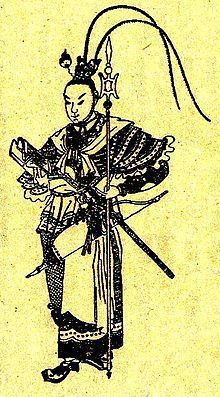
Lu Bu from an old illustration.


July 21, 2013
Strategy and Dirty Deeds: Lessons Learned From My Second Book Release
On July 17th I released my second book – Bloodlust: Will to Power

I was not expecting wonders, it being my second book as a self-published author, but I planned a short, simple campaign to boost initial sales and draw some attention to my work. It consisted of the following steps.
The Campaign
1) Tuesday Teasers: Posting excerpts of Bloodlust: WTP. I started this about ten weeks before release. It is a common idea and one that readers react well to. I frequently posted teasers in raw form and enjoyed listening to suggestions from readers on wording. In general, I found that the Tuesday Teaser is a decent way to get a little attention for a book.
2) Set a Date: Let everyone know when the book is going to be published: I actually had people ask me when book 2 was coming. I set the date and held fast. This is especially important for making sure everyone is ready for a release day push.
3) Release Day: On Release day my plan became more complex. The goal was to get a large number of initial sales to get a nice initial ranking. I’ll break it down even further.
Announce the book on personal social media: Facebook, Author page, Blog, and Twitter: I did not overdo it, never pushed more than twice on any site.
Announce the book on small, friendly forums. I did this partly to avoid trolls that often lurk in bigger forums and also because it is easier to handle questions in smaller forums then point to those threads when I post in a bigger forum. The forums I posted on were initially r/self-publish and r/fantasywriters which are very supportive and friendly. I only posted once in each.
4) Build Momentum: Going into the weekend after release I had additional measures to build momentum. The goal was to take those initial sales from friends, family, and fans building on them to carry the book forward. It consisted of the following strategies.
Use promotion days for Bloodlust: A Gladiator’s Tale. In general, I am skeptical of free promotions, but putting book one up for free is sure to get some attention for book two which at this point would benefit from even a little bit of additional momentum.
Announce the book on larger forums. With a bit of momentum, some questions answered, time off for the weekend, and a solid ranking I could announce to a bigger forum with more confidence. My plan was to announce it in r/fantasy and a few other places. The offering of book 1 for free would enhance this announcement.
How well did it work? Stages 1, 2, and 3 worked very well. With 25 quick sales I was actually poised to hit the top 100 in some of my categories. (Wednesday might be a slow sales day for books, which would work in my favour). A spot in the top 100, however brief, would expose me to another listing and more people. I went to bed giddy on Wednesday night, after a long celebration  hoping that I would be able to capitalize on that momentum and hit the weekend hard. On the day after release, however, things fell apart due to something I had not foreseen.
One Star Driveby
On Thursday I noticed that sales had ground to a halt. Still happy from the previous day, I thought nothing of it. Later, however, when showing the amazon to a friend on my phone I noticed my book was rated 1 star. My heart skipped a beat. At first I thought that this must be one of my fans finishing the book early and accidentally hitting the wrong rating. Then I read the review. I have had a 1 star review before (both on amazon and on goodreads) but this one hit me like a truck. I never would have expected someone to 1-star the second book in a small self-published series the day after release. Here is a link to the review in question. (Please be respectful if you decide to write a response! Amazon has already removed several comments)

For a moment I thought that I had made a grievous error in judgement and released a titanic flop that betrayed the first novel. But then I remembered that I had already received some positive feedback from friends and fans, including fairly critical readers on this very blog. Then I took a deep breath and read the review again. Two lines stood out.
1) “one of the best loss of innocence through conflict books I have ever read” (book 1): The main character kills three beastmen and is seduced in the first chapter. He does not have much innocence left after that. So not quite. A brief skim of book one might give that impression though.
2) “it was written in almost a different style from the first book”: Bloodlust has an unusual structure. Each chapter is set around a match in Gavin’s career. It is almost episodic in some ways. This structure, the most obvious point of style remains exactly intact as do headings, quotes, and even fonts.
That made me (and others) suspicious and so I checked out his review history. My first glance made me even more suspicious.

Three one star reviews on the same day? That set me off. I looks to me like a hack job. I can’t be sure, but that review history is damned suspicious. I immediately reported him to Amazon and started complaining in various places. I checked out the rest of the review history and found a fairly suspicious pattern of 1 and 5 star reviews. Eventually I ran into one of the other authors who he’d smacked with the dread rating on the same day, David. I’ll let David speak for himself, here is his post on the subject.
Regardless of the eventual outcome, this 1 star review (the day after release) destroyed my early momentum and ruined my little campaign. The review is nicely crafted to warn off fans of the first book, at least until I get a few fore reviews in. I’m not sure why he did it, but I am skeptical that he even read the book. Given his history of glowing reviews for books he loved, where is the five star for “the best loss of innocence” story he’d read?
Sadly I can’t prove anything. If he is acting maliciously, he will get away with it, until evidence builds up.
I left off promoting on the bigger forums until I have a more solid review base. While sales have started to recover and a few loyal fans dropped some great reviews, my initial chance at the top 100 died with his review. However, I learned something.
The Lesson
I like to let reviews grow organically. I have always kind of scoff at books that go live with 10 five star reviews from loyal fans. Now I see the reason for that. People shy away from a 1 star rated book, we do this even though we all know the review system is flawed. So in order to avoid that kind of derailment in the future I will have to give out more advanced copies and gather more reviews from fans and readers (although not just five stars — my first book benefits greatly from having some great 3 star reviews, which show up in the critical section). A cushion of legitimate reviews might have kept the momentum going.
Next campaign will be different. Publishing is war. I will not go into battle alone.


July 18, 2013
Pacific Rim, the Avengers, and the Value of Being Entertaining
First off, I put out my second book Bloodlust: Will to Power, yesterday. Yay!
I was not expecting much from Pacific Rim. Giant Robots fighting monsters sounds much better as a game concept than a movie. However, Guillermo Del Toro has a pretty good track record with me, and my friends (Including two kids 7 and 13) really wanted to see it . I went in expecting a silly movie with Giant Robots saving us from Giant monsters. I got exactly that, but I was curiously entertained, even energized by watching the movie.
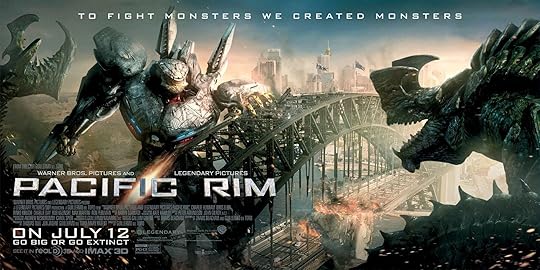
Without delving too deep into spoiler territory, the movie has Godzilla sized monsters spilling out of a dimensional rift in the pacific ocean to rampage across the earth. The attacks gradually get more frequent, with deadlier monsters. The movie does give a reason for these attacks, but it serves the action rather than attempting to weave a deep cohesive narrative. Did I mention the movie was about Giant Robots saving the world from Giant Monsters? People shopping for movies that make sense will likely stop there. The Giant Robots in question are huge bipedal machines that engage in brutal close combat with the Kaiju (the monsters) with the occasional ranged attack thrown in on both sides.
The idea that the robots require two pilots linked together to function properly has nothing to do with science, common sense, or tradition and everything to do with creating a little bit of drama to wash down your meal of crazy, epic robot on monster wrestling matches. The pretty much describes every device used in Pacific Rim, it is there to point you towards the action and provide a little bit of zing to the movie. Del Toro is not drawing on a deep, hidden backstory or creating a meaningful allegory, he is simply putting forth a fun movie that works exactly as advertised.
I often get annoyed at movies and books where the tactics make no sense, nut somehow Pacific rim manages to creep past me in that regard. It may be that being very honest about the value proposition of your movie (Giant Robots vs Giant Monsters) helps audiences come to terms with suspending their various views on story, tactics, and realism an just sit back and enjoy the show. That is a really tough thing to do though.
The film reminded my of last year’s Avengers movie, directed by Joss Whedon. While the Avengers had to be slightly more cohesive since it was realizing years of comic fan expectations, it still somehow managed to be purely entertaining and unpretentious. The lack of pretension may be the most important ingredient in both movies.
The main goal of both movies is to have fun, to satisfy the desire of an audience member to sit back and enjoy some relatively thought free fun and action. Sometimes, we just want to escape from a hot day and watch a movie that leaves everyone feeling satisfied, even if it does not enlighten us. There’s nothing wrong with that. I feel the same way about books, RPGs, and every other form of entertainment I partake of. I don’t mind watching a dumb, fun movie as long as it does not try to disguise the fact that is a dumb, fun movie. (I’m not saying purely entertaining movies can’t hold edifying elements either, it is a matter of focus, really)
The idea occurred to me that sometimes that is all that people want from their media, to be entertained, and that this can be pure and good and should not be looked down upon.
I could stretch out this discussion, but it is hot as heck and I published a book this week (yay), so I’ll say this: if the idea of watching Giant Robots wrestle with Giant Monsters sounds even remotely interesting to you, watch Pacific Rim.


July 17, 2013
Bloodlust: Will to Power Published on Amazon
The second book in the Domains of The Chosen Series is up on Amazon as an eBook.
Everything seems to be good so far.
If anyone needs me I shall be drinking, lots.


July 16, 2013
Teaser Tuesday
This will be the last teaser Tuesday for a while (maybe), since Bloodlust: Will to Power should be available in eBook format very soon. Here is a look at the cover, about 80% finished.

Here is my current text for the marketing blurb on amazon.
THE GRAND CHAMPIONSHIPS APPROACH: WHO WILL THE ULTIMATE PRIZE?
In the Domains of The Chosen, Magic is Power.
As the best Gladiators in the Domains strive to earn their place, with spell and blade, in the greatest tournament of their time, the prize: a place among The Chosen: immortal rulers of the Domains, Gavin, a defender few people think has a shot at the big-time, heads to the Free Leagues, hoping to win fame and status, while seeking to find the path that is right for him. Joining forces with old friends, he soon becomes embroiled in a personal quest for vengeance that will take him to the brutal, bloody heart of the Great Games where he must face his nemesis: Valaran diVolcanus. The implications of that match shake the very foundations of the Great Games, carrying all the way to the Grand Championships, where Sadira, the famed Gladiatrix and Gavin’s soul mate, seeks to make her mark.
Follow the tale of the two Gladiators and their friends, which concludes the first story arc of the “Domains of the Chosen” series.
About Bloodlust and the Domains of the Chosen Series:
Both “Bloodlust: Will to Power” (Book II) and “Bloodlust: A Gladiator’s Tale” (Book I) are about magic-wielding Gladiators fighting great contests in order to win their freedom. The books are set in a fantasy world, which like our own, is beset with love, jealousy, power plays and politics. Each character must choose which direction his life will take, always with far reaching consequences. — Of course, you can feel free to ignore all of that and sit back and enjoy a rousing tale of Gladiators fighting monsters and facing off against their rivals!
The novels are heavily-action oriented; each chapter being structured around an arena match in Gavin’s career.
The two “Bloodlust” novels are the first arc of a larger series of books about the Domains of the Chosen. The next book, “Warbound: The Shieldmaiden’s March” follows the tale of new Chosen and a Lost Legion outside the borders of the Domains, inspired by Xenophon’s Anabasis and other tales.
I am a proudly independent, self-published author.
I am excited and nervous. So many things can go wrong when uploading and converting files, but I am almost ready to launch this beast and then play some of those games I am grabbing off the steam summer sale (which coincides with my birthday this year ).
Bacon for everyone, I’ll post here and on my facebook page when it gets through the submission process.


July 14, 2013
Classic Characters: Robin Hood, the Pastoral Rogue
Robin Hood is a fascinating character that has seen quite a few face-lifts over the years. The basic idea is that Robin and his band of outlaws, the merry men, ambush the wealthy and redistribute their ill-gotten gain to the desperately poor. Any mention of this character in the modern context is sure to excite those who are overly sensitive to the ideas of class warfare. Then again, maybe we are due for a really good Robin Hood movie, especially in the age of giant banks engaged in criminal activities and the NSA spying on the little guy.
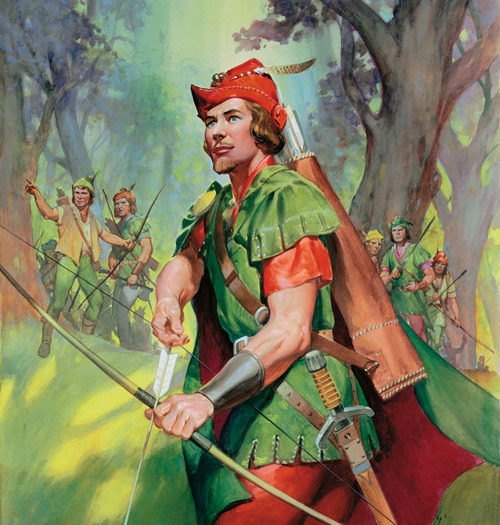
The costume is a little too idealized though…
The early mentions of Robin Hood do not place him in the nobility, but rather have him belonging to the Yeoman class, a ground somewhat above peasants in the medieval order. In these stories Robin does not always give his gains to the poor, but he nonetheless show uncommon compassion for an outlaw. These lines from the Gest of Robyn Hode (~1475) sum it up nicely.
loke ye do no husbonde harme
That tilleth with his ploughe.
No more ye shall no gode yeman
That walketh by gren-wode shawe;
Ne no knyght ne no squyer
That wol be a gode felawe,
he was a good outlawe,
And dyde pore men moch god.
(Basically don’t pick on poor people, including good Knights)
In later tales Robin Hood is often portrayed as a displaced nobleman, and a jovial one at that. Ivanhoe popularizes this view. He is still kind to the poor however, that rarely changes.
The outlaw leader is often portrayed as highly skilled with sword, staff, and wrestling. However his skill with a bow stands out. Very few characters arising from the medival tradition are celebrated for their archery, but Robin stands the test of time as a brilliant marksman, whose feats of skill with arch and arrow rival those of older Heroes like Odysseus and Apollo in some ways. The favoured tale of Robin sneaking into an Archery Contest and splitting an arrow down the centre of the bull’s eye to win leaps to mind.
Robin is also known for his survival and leadership skills. He can coordinate and control his varied band of outlaws, who seem to follow him with the sort of congenial loyalty reserved for the very best leaders. Often they join his band after he beats or engages them in some sort of contest. They live in great comfort in the wilderness, and are often portrayed as living off the land in a comfortable and idyllic fashion. Robin in particular is familiar with the land, very much at home in the wilds, be they idealized or dangerous. Often this gives him a tremendous advantage over his foes.
I feel that Robin Hood, especially early Yeoman Robin Hood, provides an archetype for many rogues in Modern Fantasy. He takes advantage of stealth and trickery, fighting from ambush and employing less than honourable tactics. His motive is not to conquer or do harm, but to profit and live free. If you were to removed Robin from the wilderness and gritty up the Merry Men, you would have a ready made fantasy take about a gang of misfits hunted by the law or a deadly assassin rebelling against the law. I don’t think that this a coincidence at all. The tale resonates especially well with modern audience with so many of the characters achieving greatness despite coming from lowly backgrounds instead of the aristocracy. There is a little bit of Robin Hood in many of the Rogues in Fantasy, these days.
Another rogue-like trait is Robin’s use of cunning to overcome foes with a great advantage in brute power, a trait that is turned against him in the tales of his death when he is betrayed by a corrupt Prioress. The idea of intellect over brawn is a very agreeable notion to most modern readers.
The Aristocratic versions of Robin hood bear a resemblance to Batman. Like Robin Hood, Batman is a tremendously skilled, tactically-minded individual, who often works as an outlaw. Batman defends the people of Gotham, and while he does not rob to the rich to give to the poor his skill set and method of operation are very similar. Robin is portrayed as moving through the trees in a fairly similar fashion to the way Batman gets around the concrete jungle. Both rely on stealth and cunning against foes who are much stronger, and both take on a corrupt social order. Batman is often portrayed as grim, but at some points so was Robin Hood (and Adam West Batman was hardly grim at all.) It is interesting to see close ties between two characters who seem so different and it is worth further consideration…
Finally the most interesting pattern that Robin Hood invokes for Modern Fantasy lies in the idea of Guerrilla Warfare. In many versions of the story Robin and the Merry Men wage war against an illegitimate government. Much like historical Guerrilla Fighters they shelter in the wilderness and seek allies among the common people. On both accounts; the damage they seek to inflict on the enemy is often economic and logistical, humiliating the enemy and causing them to look foolish. Can I picture Robin Hood as a Che Guevara type figure? easily. The comparison is a very easy one to make, and is one of the reason that hackles rise among the local 1% fan club every time a Robin Hood movie comes along.
Robin Hood, leader of the Merry Men of Sherwood forest is an influential character. He provides a clear archetype for many daring and cunning Rogues, even if their adventures take place in cities instead of forests. And if you dig a little deeper you can come with some far more interesting parallels for devices that would be excellent in Modern Fantasy!


July 11, 2013
Totally Not Allegorical: Example of A Corrupted System as a Fantasy Plotpoint
The Kingdom of Aurinfeld is the envy of the known lands. The common people enjoy great freedom and a chance at achieving great wealth if they are brilliant, hard working, or lucky. The King, the Aristocracy, and the Popular Assembly work together to ensure that the affairs of the Kingdom run smoothly and that a careful balance is maintained between the interests of the common people, the aristocratic and other elite, public, and private interests. The College of Mages uses its powers to ensure bountiful harvests and provide a magical edge to all of the Kingdom’s endeavors. The merchants take advantage of a strong infrastructure and plenty of freedom to gain great wealth. The Kingdom is governed on the principles of freedom, equality, and enterprise and is protected by a superb army and watched over by the Homeland Watch.

Revolution Pic from Fable III
Kingdom of Aurenfeld: Balanced
The King: The King is theoretically the most powerful figure in Aurinfeld. He can take command of the Army. He cares about the Kingdom as an idea, but does not really believe in equality. The King does not pay taxes and wants to gain as much control as possible over the Kingdom.
The Aristocracy: The Aristocracy are waning in power. The King has taken much of their ancestral strength and the popular assembly has taken the rest. They still have tremendous wealth in land and some servants, but are not flush with cash. They resent the King and consider themselves above the common people. The love the army but dislike the Watch. They feel they pay too much taxes.
The Popular Assembly: The popular assembly is an elected body that overseas legislation in the Kingdom. It is divided into factions, and everybody with a serious interest tries to control it. It is the tool of the Common People, at least in theory.
The College of Mages: The College of Mages are interested in arcane research. The byproducts of this research have made Aurinfeld strong and powerful. The mages would prefer to be left alone to their arcane study.
The Army: The army is proud and strong. No power can stand against it. It is expensive to maintain. The army tries to stay out of politics.
The Homeland Watch: The Homeland Watch enforce the rules.
The Merchants: The Merchants are interested in making money. Its not their only goal, but it is the only goal that they agree upon. They hate the King and the Popular Assembly, because they feel that too many limitations are put on them. They feel they pay too much taxes and also look down on the common people. They love the Watch.
The Common People: The Common People are content to go about their daily lives. Social mobility means a lot to them. Some aspire to join the army, the Homeland Watch, or the College of Mage. Others aspire to be elected to the popular assembly or to marry into the aristocracy. Most will not reach their full aspirations, but they will live relatively good lives. They admire and resent the other groups and tend to squabble among themselves to the point where the others just ignore them as much as possible.
The Aristocracy and the Merchant class both really hate taxation. Funny how so many conflicts begin with such a simple thing. Taxes have been used to improve the Kingdom’s roads and sewers, help the poor, pay for the immense army and watch, and fund the College of Mages. While the merchants and the aristocracy want to lower taxes they cannot do so without the assistance of the Popular Assembly, which is elected by the common people. So they begin a campaign to educate the Common People about how lowering taxes is good for everyone. It is an easy sell: the common people would love to pay less taxes. This idea seems to work well. The Aristocracy regains a bit of their dignity and power, the merchants gets richer, and the common people enjoy a little more money. So everybody is eager to keep lowering taxes. The problem is at this point there isn’t enough revenue to pay for everything they used to pay for. The first target to get cut is help for the poor. This upsets some of the common people, namely the poor and those who sympathize with the downtrodden. The parties involved blame everything and anything they can, except the tax cuts. The situation progresses. The next funding cuts are to the College of Mages. This forces the Mages to look elsewhere for money for their research. The situation progresses. By now the merchants and the aristocracy realize that they have a pretty good thing going, so they start spending some of the money they save on taxes to support their own candidates for the popular assembly and to create whole schools of thought to support their point of view and present it to the common people. They succeed, but it is getting hard to pay for roads and sewers.
Kingdom of Aurenfeld: Unbalanced
The King: The King fears a resurgent aristocracy. Using some of his personal wealth he hires some former members of the Colleges of Mages and gets them to create an artifact, the Palantir that will let them spy on his enemies.
The Aristocracy: The Aristocracy are mighty. They are secure in the their lands. Some of them begin to to use their land to influence poor commoners who need work and food. Feeding these people creates a sense of obligation. The King does not like this.
The Popular Assembly: The popular assembly is now rife with factionalism. The Merchants and the Aristocracy control what they can, but corruption starts to make even this difficult.
The College of Mages: The College of Mages are still interested in arcane research. Sadly they must now work for individuals instead of the Kingdom as a whole.
The Army: The soldiers begin to wonder what they are fighting for, after all things seem to be getting worse back home.
The Homeland Watch: The Homeland Watch is given more and more power.
The Merchants: The Merchants have tremendous wealth. They begin to act extravagantly.
The Common People: The common people start to notice that they are losing the dream of prosperity and social mobility. They get upset and cast around. At first they elect reformers to the popular assembly, but these are just bought off by the aristocracy or the merchants. They become increasingly frustrated.
Things come to a head when a noble raises a private army from the people he feeds on his land and tries to kill the King over some ancient grievance that everybody knows about but thought was long buried. After a bloody battle in which the King is nearly killed and a small town is destroyed martial law is declared. Many of the common people, desperate for reform and afraid of war, support this step. The aristocracy is forced to submit. The king, now paranoid, directs the Homeland Watch to use the Palantir to spy on everyone, after all many of the fighters in the rebellion were commoners as well. Objections to this are over-ridden in the name of security. The Watch gets more and more powerful. The Aristocracy turn to the army, fearing the power of the King. Civil war looms as a figure emerges among the common people, promising freedom and equality if the government is overthrown. The Watch uses the Palantir to find anyone connected with this figure, leading to mass arrests, which finally antagonizes everyone and all hell breaks loose…


July 9, 2013
Tuesday Teaser
It is still Tuesday somewhere… right?
Eventually it dawned on Gavin that the words he waited for would never come. Nothing he could say would fill the void. He put his hand on Ravius’ shoulder.
Sometimes a conversation can become a chasm. I fear those moments.


July 7, 2013
Modern Fantasy: Speculation without Obsolescence
One of the great difficulties of Science-Fiction is that technology is advancing at an accelerated pace, and often in unexpected directions. World-building technologies that might seem cool and edgy a decade or two ago seem almost charmingly anachronistic now in many cases. Take the Decker in Cyberpunk literature as an example. The idea of the Decker, a kind of covert action hacker, is so brilliant and on the bleeding edge in a world where Anonymous is a real entity that it blows my mind. The core of thought behind the Decker is even more potent in modern day, years after it was first conceived. Unfortunately the technology behind the Decker, the Cyberdeck, seems so dated now that it obscures, rather than, enhances the concept. This sort of conundrum has become a bit of a problem with any Science Fiction that deals directly with technology and does not want to seem dated within a few years.
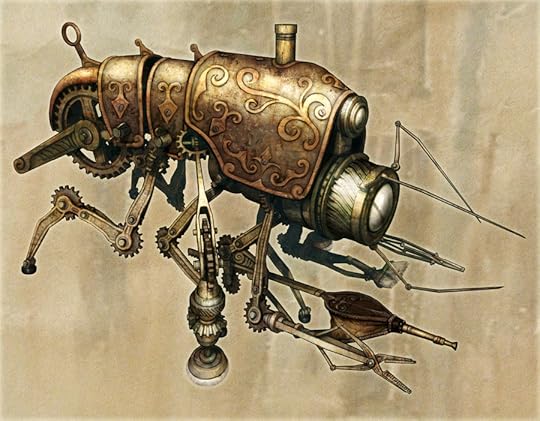
A cool Steampunk drone from Echofour studios
Spook Country, by William Gibson is an even more direct example. Spook Country, the middle book of the awesome Blue Ant trilogy is a direct discussion of the current state of the security and surveillance industry in the post 9/11 world. Now that the whole NSA thing is on the verge of being dragged into the light, it is an immensely relevant book that everyone should read. The problem is that it was written in 2007 and the Technology has moved on. The deep ideas and philosophical discussion of Spook Country is held back, just a little, by the degrees of deviation in gadgets and technology that populate the book. I find it oddly frustrating, but that might be because I did not dive into the the Blue Ant trilogy until 2012.
Fantasy used to be out in the cold on speculation about the nature of technology and objects. Readers were interested in swords and magic, and generally not happy to see even relatively solid technologies like guns show up in their pastoral worlds. Now that Fantasy has grown and diverged sub-genres like Steampunk and flintlock can deal with technology in a recognizable form and actually offer cogent commentary on the gadgets that change our lives with less chance of Obsolescence. I don’t want to read a fictional treatise on how cell-phone culture changes people’s lives featuring clunky 1980s cell tech, especially if it is supposed to be bleeding edge, on the other hand if you dressed that up in Steampunk genre fiction I would be very interested.
Here are a few examples of current hot-topics in current technology and how Fantasy could be used to comment on them.
Attack Drones: Drones allow us to kill at a vast distance, almost disconnecting the person who chooses to destroy from the action itself. Drone attacks are just as brutal from the target’s perspective, but can be very sanitary from the attackers perspective. Drones are fairly apolitical, we know we don’t like them, we also know that they are a reality of certain types of war now.
Steampunk: In a Steampunk setting you could fairly easily come up with an analogy to a drone. Steampunk often has a fair bit of Victoriana woven in, which makes it a great forum for discussing imperialism and war. This seems like a fairly easy conversion. Unleash your steam powered magically controlled drones and explore the idea.
Traditional Fantasy: A golem has some of the functions of a drone. It can certainly kill without exposing the user to danger. To make it an obvious analogy for a Drone might be difficult, but sometimes challenging the reader works well.
NSA Surveillance: The NSA Surveillance scandal is a juicy topic. It has broad societal implications. It involves a system that is unwieldy and most definitely out of control that is based off an ideology that is fundamentally flawed, but very compelling. Unlike Drones the surveillance state is fairly political; people really don’t like being watched constantly and the potential for abuse is such that it will inevitably come crashing down.
Traditional Fantasy: Magic gives an easy out for something like NSA surveillance technology. We are unsure exactly how much we are being watched, and it feeds our sense of Paranoia. Magic really works well with this you could have spells that allow agents of the powers that be to listen in on keywords. In fact this is already a common theme in Fantasy literature and even in mythology where saying certain words immediately attracts baleful attention. The Chandrian in the Name of the Wind, or even the Devil in some legends are attracted by mention of their name. In fact the whole idea of an afterlife where you are judged by your deeds speaks to the idea of surveillance. Perhaps that is why some people are so accepting of it.
Lord of the Rings: The Eye of Sauron is an interesting metaphor for surveillance. Think of Frodo and Sam creeping through Mordor, trying to hide from the eye.
Climate-Change: Climate Change is something most people agree is happening, but aside from adding to our misery the actual outcome is unpredictable and has a way of making fools out of those who try to portray it. This makes speculative fiction about real climate change fairly difficult. It is also a very political topic and one that almost everyone has strong opinions on.
Steampunk: Steampunk offers many direct analogies to climate change. Coal is a very dirty material, especially in its early forms. Really all it takes to deal with issues of climate-change in Steampunk is a willingness to take the political flak that comes with the territory. The sub-genre almost demands dirty, gritty industry and polluted canals, why not throw in some more modern climate change?
Oilpunk?: Warmachine flirts with the idea of a steampunk World War One, why not go a little further and create Fantasy in the automotive age? I suspect this will develop soon, once the style is settled. Hot War the RPG may come close.
Traditional Fantasy: Magic itself could me a metaphor for climate change. Perhaps magic is a naturally occurring resource, either physical or ephemeral, and over-using it or depleting it has real work consequences. The Dark Sun setting for 2nd Edition D&D had a type of magic that allowed the wielder to destroy the world around them to draw on additional power, which led to the world being turned into a bit of a wasteland.


July 4, 2013
Revolution: July 4th and The Essence of Modernity
As my neighbors south of the border celebrated their independence day, revolution was very much on my mind. Not just because to the nature of the revolution that led to American independence, but also due to current events. Over the weekend I was amazed to see pictures of the latest rounds of protests in Egypt, larger and more impressive than ever before. Someone noted that it was the largest revolutionary gathering in history. (The protests in Brazil might give them a run for their money though.) And all this after the traditional media wrote off Egypt with pithy narratives about the inevitable failure of the Arab spring.
Egypt has shown true democratic backbone, and while the outcome is still in doubt I am impressed. We could use a little of that here in Canada, methinks.
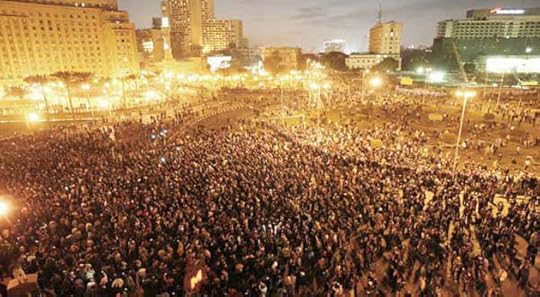
Protests in Egypt
All of this brought revolution to my mind. There are few actions that encompass conflict in the modern day more thoroughly than a revolution. When systems, beliefs, and states fall apart a revolution is the result these days, more often than an invasion. It is a topic that every modern writer should consider.
I often muse that the one truly successful trait of modern Democracy is that it harnesses the forces that give birth to revolutions, giving citizens the chance to oust governments and force change on a regular basis. And while political parties and other groups may exploit and attempt to control the system these efforts can only bottle up the people for so long. All of the clash and rhetoric with less blood, I guess.
Revolutions are great fodder for Modern Fantasy. They have much of the action of a war story, the politics and intrigue of a thriller, high-minded rhetoric, and deep, dark cynicism. A tale of revolution can be one about individuals caught in the tide of change or about those trying to pull the strings or lead from the front. The revolution can be inspiring and heroic, or bloody and ultimately doomed to fail. A revolution can also be an excellent backdrop for a novel, providing the kind of chaos that can act as a catalyst for a story with a more intimate focus.
What are some common scenarios for revolutions in fantasy?
1) Magic for the People!: In pastoral fantasy, especially those set in the middle ages, magic is the province of the learned.What if there was some sort of equivalent to the enlightenment, which began the spread of literacy and reason to all, with magic? The conflict between the common magic-users and the great and mighty aristocrats of sorcery could be very interesting.
2) Vampires, yo: Almost every tale with a Vampire protagonist has some sort of conflict between the younger, more modern Vampires and the older generations leading to a revolution of sorts.
3) Oppressed mages seek freedom: This is a common use, the latest version of which we can see in the Dragon Age series where magic-users are considered dangerous and subject to terribly harsh rules. Robert Jordan’s male power user’s were “gentled” due to the taint on the male side of the power. The idea is that magic-users are restricted and inevitably seek to use their power freely, and thus a revolution is born. Gavin does lean this way in Bloodlust at times.
4) Mages rule, until…: A mystical aristocracy strikes me as an interesting idea. It makes perfect sense if magic-use is inherited and the power structure is feudal. In this case the people find some sort of equalizer that brings them on to equal footing with the mages which slides into revolution. Mages make great villains.
5) Magic versus magic: Maybe some types of magic are banned, while others flourish. This creates a conflict between the various types of magic which can lead to an uprising t against the oppressive force. The side that wins gets to determine what magic is acceptable. I could see a great book in here about advocates of Dark Magic rebelling against the light or vice versa.
6) Class Warfare: Class warfare is the go-to catalyst for revolutions of all types. Fantasy offers plenty of racism, class-hatred, and grit for this sort of scenario. Class warfare in a fantasy environment would likely play out similar to the way it does in the real world.
Regardless of the scenario, revolution offers a writer an exciting backdrop or a great central conflict. However, crafting a believable, interesting revolution for your fantasy world requires a great deal of work. Simple revolutions tend to come off as trite commentary on real world politics. In a Fantasy revolution it is best to ground the act with deep world-building. Here are some things to consider:
1) Revolutions seem to explode suddenly, but often simmer for a s long time. People who are willing to get up and revolt often have a long list of grievances, built up over some time. The revolution often seems sudden because some event triggers it. What is this trigger?
2) Most societies have other ways to address problems, and other avenues to channel anger and desire for change. We have the courts and elections, for example. It would be hard to imagine a full scale revolution while both of those function properly. What mechanisms have broken down in your world? Have the elders been corrupted? Is the oracle broken? Have the the gods abandoned men? Has the King gone mad and started a crazy war?
3) Who tries to take advantage of the Chaos? In almost all revolutions there are self-interested bastards who will try to take advantage. They might use the revolution as cover for dirty deeds or they might try to steer it into placing them into power. Either way figuring these folks out makes the revolution way more interesting for a reader.
4) Who gets screwed? I covered this in a previous blog post, when a system fails people will often search for scapegoats. The same is true in a revolution. Some group will bear the brunt of the anger and will try to deflect blame.
I could go on… Revolutions are a fact of life in the industrial age, and seem to be getting stronger, if less violent (so far), in the information age. I’d love to see more works in the Fantasy Genre that deal with this kind of dramatic and traumatic event!


