
C.P.D. Harris's Blog, page 75
June 9, 2013
Religion in Modern Fantasy
“I like nonsense, it wakes up the brain cells. Fantasy is a necessary ingredient in living, It’s a way of looking at life through the wrong end of a telescope. Which is what I do, And that enables you to laugh at life’s realities.”― Dr. Seuss
This is not meant to be a comment on actual religions, but the rather the role of religion in Fantasy Fiction
Religion can be a touchy subject at the best of times. Fantasy settings provide a relatively safe place to examine the relationship of mortals to the divine, but few writers seem willing to get into theology these days, even though it is a remarkably interesting subject. Gods in Fantasy often seem to be window dressing, and Fantasy religions seem mostly to fade into the background. Even Fantasy setting where there are no gods or religion often do not seem to take that into account. It may be that Modern Fantasy is currently pre-occupied with Grimdark and Urban Fantasy and does not want to tackle the big questions directly. Or it may be that no one wants to court controversy.
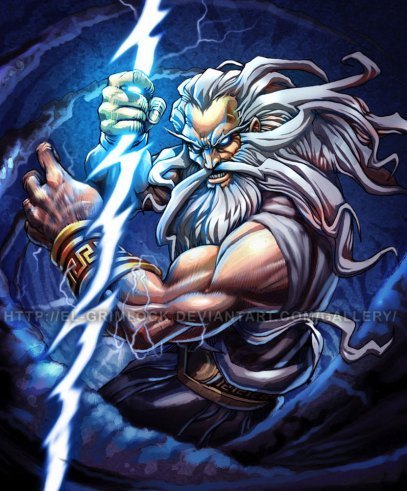
Zeus!
I wonder if there is a difference between the way published and self-published Fantasy authors deal with religion. I would suspect a self-pub does not have to restrain themselves quite as much.
Why does this matter? well, religion is an integral part of society. It is one of the first systems that men create, and hence influences many institutions. To illustrate lets take a standard medieval example. If you remove the Judeo-Christian religions then you remove more than just the church and its direct traditions. The Nobility often leaned on God to provide justification for their regimes. I am astounded how often Fantasy writers who muck around with religion in a medieval society fail to take this into account. The Church often provided an alternate system of arbitration and avenue for ambition for the nobility as well. Noble Families with extra sons would often send them to the clergy. The list of influences goes on. Taking religion into account makes for better world-building, even if your characters are cynical bastards who don’t really care for the spiritual.
And don’t get me started on the time I played an RPG where the Gods literally walked the earth and one of the players decided he would play an atheist 
Here are some of the basic religious characteristics and paradigms that should be considered when making a Fantasy world.
What Are The Gods? (these are just examples)
No One Knows: It is realistic and offers moral ambiguity. Often paired with works in mysterious ways.
True Divinity: In this case the Divine is something special and unique, having a quality that cannot be replicated by mortals. One thing to keep in mind is that this means that the power of the Divine and Magic could be two different things in this case.
Ascendants: In some traditions it is possible for Mortals to become Gods. This makes for interesting settings and seems fairly common in Fantasy literature. Frequently the Gods are just supremely powerful mages.
Social Consciousness Given Form: I once ran a game that I made called Nordan-saga. In this game it was theorized that the Gods were created by a form of cultural mass consciousness given form by magic, in that the Gods were the belief of the people made real. This meant that the faithful and strong willed could call upon the powers of the Gods and that the Gods could walk the earth and so on. It also meant that the Gods were unable to act in places that they had no worshipers and weaker in places where belief was weak. Fun stuff.
How Many Gods Are There? (this list is by no means exhaustive)
Monotheism: There is only one God, or one God who is well above the others. Illuvatar in Tolkien could be fit into this category, along with the Judeo-Christian religions. I see surprisingly few Fantasy tales with a single divine power. Again, I think this is because Fantasy Authors are wary of offending potential readers. Still I think it would be fun to read a Medieval Fantasy or even a Grimdark tale with a serious take on a monotheistic system with an active Deity.
Polytheism: Polytheistic societies worship multiple Gods. These are often grouped into a Pantheon (or family) of Gods. The Ancient Greek Pantheon is the example that still gets quite a bit of use in modern fiction, partly due to the rich tradition of epic storytelling that involved the Greek Gods. Fantasy worlds tend to default to Polytheism because it is familiar, it leaves room for multiple beliefs, and it is simply less controversial than Monotheism in fiction.
Cultural Polytheism: Some Authors take an extremely wide lens view of Polytheism, with each Culture or Racial group having its own Diety or Pantheon. This has the advantage of allowing a great deal of cultural divergence and encompassing a lot of interesting religious traditions.
Animistic Twists: Animistic traditions often posit that natural features, animals, and such can have spirits. Particularly strong spirits can be considered Gods. These could lead to some really interesting religions.
How do the Gods Interact With the World
Works in Mysterious Ways: While Religion is real the Gods do not interact in an obvious fashion with mortals. They could exist or they might not. It almost doesn’t matter in this paradigm. Most Modern Fantasy tends to lean this way since it is realistic. Miracles could be coincidence, and are at least open to interpretation.
God as the Causal Event: I love the portrayal of God as the causal act of kindness in Les Miserables. If someone were to do this in a Fantasy work, I’d read it… just sayin’…
Diminishing Divinities: In this paradigm the Gods grow away from the world over time. People often wonder if they are dead/gone/uncaring while others still hold the faith.
Set the World in Motion and Left: In this paradigm the Gods created the world and have little to do with it afterwards. Simulationism could fit in here.
Limited Interaction but Grants Power to Followers: The followers of the Gods have powers. These could be a form of magic or they could be a true Gift granted to the faithful, but the power itself is undeniable. In this paradigm it would take a very sophisticated critic to doubt the Gods. Power tends to win converts. There is a broad range of interpretation here as well, from occasional small miracles to great power or frequent use. If there are multiple Gods they may grant different powers, if there is a single god, then different sects could get different powers.
Visions: Some followers might get visions. This is a useful way to convey information, but also open to skepticism and fallibility.
Divine Intermediaries: Some gods might send messengers like angels, ghosts, or lesser gods to communicate.
Real But Impersonal: The Gods are real but impossible to comprehend or just plain impersonal. In this case the Gods act more like natural forces than anything else.
The Gods Walk the Earth: In this paradigm the Gods walk the earth, communicate directly with mortals, and go about their business. Their presence should effect the story directly and they could even be characters within it. Steven Erikson offers a good take on this in his Malazan series, while David Eddings offers others. Some stories in Greek Myth show interaction between Gods and mortals.
The Details
Is God Good? (Monotheism) If God is good, then why do bad things happen? This is a fascinating question that has tripped up philosophers and theologians for thousands of years, especially in monotheistic religions where God is posited to be supremely powerful and and benign. As a Fantasy author you could really play with this. Perhaps the Devil Figure is powerful enough to challenge god, creating a dualistic system. Perhaps the God of your world looks upon people like we look upon ants. By Crom, that could lead to some interesting storytelling…
What about the afterlife? Almost every religion deals with what happens after death. This is a good place to start when defining your religions.
Is there as system of reincarnation?
How are the dead Judged?
Taboos and Beliefs: This is the least offensive way to distinguish Fantasy religions regardless of your approach to the actual Divinities. Beliefs can persist long after the rational behind them has disappeared and can justify all kinds of behaviour from clothing, to persecution, to human sacrifice. All of these can have a huge effect on the story, if you want them to. Erikson, Jordan, and Sanderson do a decent job with these.
How does religion relate to magic?
How does religion relate to various races?
What sort of Conflicts exist within a religion? Do different sects compete?
Can the Gods die?
Can Gods Breed? with Humans?
I could go on, but I should get back to writing Bloodlust: Will to Power. Religion is a complex, often irrational system that can really lend depth to Fantasy world building. Religious questions fascinate readers and fiction allows us to examine them on neutral ground (or as close to it as we can come). Instead of having an ambiguous, mysterious God in your Grimdark Fantasy, why not have an uncaring God who watches over the struggles of mortals with amusement. In the end it is another facet of the world to detail, but one that can be very exciting and relevant.



June 7, 2013
Modern Fantasy: Corruption as a Theme (with monsters!)
“…the corruption of the best things gives rise to the worst.” David Hume, Natural History of Religion
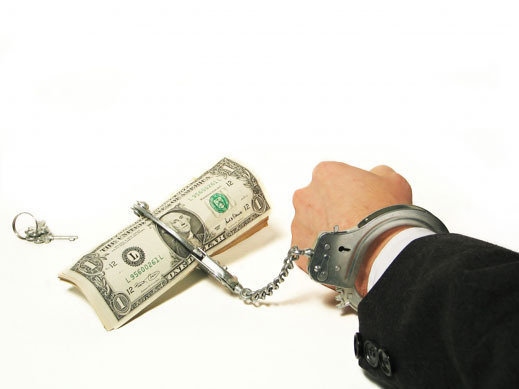
It is really hard to find a good fantasy corruption pic…
Corruption is a keystone topic of a rational society. In the middle ages, I’m sure people noticed corruption, but they were limited in what they could do about it. In the modern day you can get away with saying quite a bit about leaders and powerful people. In a medieval setting even with had proof that someone in a position of power was engaging in abusive practices or downright crazy, one would have to appeal to a higher authority to support any accusation to get anything done. GRR Martin illustrates this rather brilliantly in Game of Thrones. Ned is a naive rationalist, acting much like a modern day detective; he finds the truth he is seeking, but it only brings disaster because in his society power and position mean a great deal more than evidence and reason, especially with no force to back them up.
In more modern societies we can at least complain about, analyze, and attack corruption. It has become something of a pastime in democratic societies, with endless accusations of corruption and fascination with scandal being fundamental characteristics of our society. Our fascination with corruption comes with our ability to analyze, recognize, and act against it. We see it take root in our institutions and want to do something about it, often forming political movements or pressuring our representatives to pass laws. In the middle ages if you encountered corruption you would likely just have to suck it up, unless you were or or had the ear of someone with power. People generally dealt with crazy kings by staying out of their way and either waiting for them to die or another noble to murder them. The right to free association wasn’t exactly a thing back then.
Fantasy Authors have long been fascinated with the idea of corruption, here are a few examples:
1) JRR Tolkien/Middle Earth: The Ring is an obvious metaphor for power, a reference to the Ring of Gyges from Plato, and it corrupts the wearer and even those who look upon it at times. Most Fantasy readers are set, one way or another, in their view of Tolkien and his ring but when you actually sit down and consider what it does, the one ring is a rather sinister piece of jewelry. The relationship of Wormtongue and Theoden is another example of corruption in middle earth. Saruman clouds Theoden’s mind, and uses Wormtongue as his proxy to manipulate the confused king, thus allowing him to hamper the entire nation of Rohan even before he send forth his armies. In Tolkien corruption is the purposeful tool of evil men. (A deeper analysis is possible, but you need to be really familiar with your lore.)
2) JK Rowling/Harry Potter: The use of Corruption in Harry Potter is fascinating. The first glimpse of Lord Voldemort is as he controls someone else and the way certain people are seduced to the Death Eater’s cause is very interesting. Voldemort is presented as a combination of Dark Lord and fascist leader, both modern and fantastica; the end result of unchecked corruption. Dolores Umbridge (book 5) is an example of corruption in progress, a representative of an institution that should be helping, but instead actively makes the situation worse by forcing her ideology onto everyone. The whole use of the ministry of magic in the books is very good for this theme in general, and one of the reasons I really enjoyed Harry Potter. In Rowling corruption is complex, not always part of a sinister plan, although sinister people do make use of it.
3) Robert Jordan/Wheel of Time: Corruption is omnipresent in the Wheel of Time. The male half of the power is tainted and causes madness, to the point that male magic users are seen as anathema. There is a blight in the north that is home to corrupt monstrosities: the trollocs, creatures created for war by evil sciences. The scale of the wheel of time is fairly large and the conflict is often black and white, but the idea that the structure of the world and the cosmos, the largest system of all, is not beyond corruption is a very modern notion.
4) Warhammer 40k: The super-heroic space marines of the Warhammer universe are beset on all sides by terrible aliens, yet the worst threats to the Empire are from within. The traitor marines who have sold their souls to the Chaos Gods, the various mutants, cultists, and rebels that eat at the foundation of the Empire are evidence of one type of corruption. The corruption of the imperial bureaucracy is another constant theme in the lore, a massive uncaring machine with the power to casually consign whole worlds to death, and a dead god-emperor at its heart.
5) Howard/Conan: Conan is the incorruptible savage, immune to the decadence that comes with civilization. The idea that civilization itself is corrupt is a slightly older paradigm that has been rejected because cities are cool, but it is fair to say that if you see a civilized man in Conan, he is likely a bad guy or just useless.
One of the more interesting uses of monsters in Fantasy is as a metaphor for corruption. Jordan’s Trollocs are corrupt science, Monsanto making soldiers. Tolkien’s orcs are actually horribly twisted elves, victims of endless brutalization that turns them into brutes themselves. 40k’s Tyranids could serve as a metaphor for many things with their endless need to consume and absorb everything in their path. Fantasy monsters are ripe for this kind of metaphor since having them be a corrupted version of something else makes them a little more terrifying. Perhaps that’s why we love zombies and vampires.
In the end corruption is a theme that binds modern fantasy together; from a crumbling Wall in Westeros that should get more attention than it does, to a ring that promises power while whispering doom.


June 4, 2013
Teaser Tuesday
Making eye contact with any Chosen, let alone one of Moltar’s reputation, was considered unwise. Only fools draw the attention of the powerful. Gavin met the man’s gaze, unflinching, for just a moment, before purposefully looking down. In truth he was glad to look away, the Chosen’s gaze was fearsome.
“Perceptive,” said the Chosen. “Although you are perhaps overeager to show it. You gain nothing but a moment’s pleasure by showing me that you know…”
This is a sliver of a conversation that takes place in the last half of Bloodlust: Will to Power. Gavin is invited to converse with Chosen Moltar while watching a rabble match at the Killer’s Circle. I’m still not happy with it. Moltar is a character who is quoted a fair bit, but I want the readers to get a better sense of what drives him.
I don’t like the idea of Moltar being a non-causal Villain.

This is a projected cover for Bloodlust: Will to Power

Another potential cover art piece


June 2, 2013
Writer’s Intent, (Non) Causality, and Orson Scott Card
TM: You have written that “good artists do their best to sustain that which is good though their art, and call for the correction of that which is destructive of happiness.” Can you give examples of how your work tries to accomplish that mission?
OSC: I don’t consciously attempt to do any such thing. I’m not prescribing in that statement, I’m merely describing. Without any conscious thought at all, artists select the subject and the medium, the matter and the manner of their art. The very choices they make declare what they value and believe to be important. Artists are at their least effective when they try to make conscious statements through their art (they’re always free to write essays to make their case); the conscious statements are as obvious and empty and ineffective as “Rosebud,” while the unconscious statements are powerful because they are rarely noticed by the audience even as they have their effects. Orson Scott Card, Author of Ender’s Game and famed writing teacher, as interviewed my The Millions. Read the full interview here.
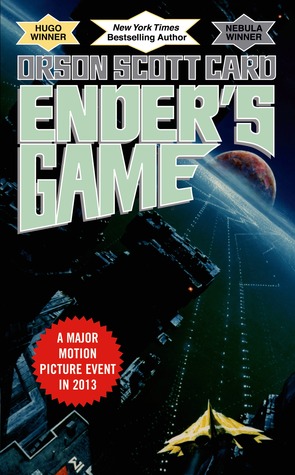
I like this cover best.
Orson Scott Card is an interesting figure. His political views, especially on homosexuality, are very controversial. Despite this his famed work Ender’s Game remains an enduring science-fiction classic. He is also well known for his books on writing and his writer’s boot camps. I first encountered Mr Card’s writing as a young man in this capacity, reading his book, How to Write Science Fiction and Fantasy, as soon as the local library could procure a copy. A few of my favorites among new Fantasy authors have string ties to Mr Card.
I find myself wanting to like him, and yet often annoyed when I read something he writes these days. It reminds me of Frank Miller, actually. I love his stuff, too, but anything he comes up with now seems like a salute to fascism and xenophobia.
The idea that a writer’s culture influences their work is hardly controversial, although it does lead to all sorts of sloppy critique in modern day. The environment that we are raised is responsible for a great deal of our knowledge and language skills. It certainly influences our writing. Every book has some level of unconscious subtext, which can be examined and analyzed for additional insight. In some cases this insight is more interesting than the content of the novel. I do take exception to the idea that an artist is at their least effective when they try to make conscious statements through their art, however.
The modern novel is a child of the Enlightenment. The best and most enduring writers of the western tradition have generally been those who make conscious statements. Dickens is a good example. It seems odd to me to say that the obvious and conscious statements of Oliver Twist and A Christmas Carol are in any way diminished or ineffective, despite being purposeful. A skilled rhetorician might try to argue that Dickens was mostly an inspired product of his culture expressing the zeitgeist of the moment, but this argument seems hollow. Dicken’s novels are very purposeful and the narrative is strongly crafted to purposefully carry his statement to the reader. The structure is the key here: what separates modern novel from the romances of the middle ages, and many novels that are still written following that tradition is the emphasis on causality to deliver a powerful message to the reader.
Take A Christmas Carol as an example. The structure moves from cause to effect. We are introduced to Scrooge, a miserly, but wealthy man. He is puposefully and obviously unlikable to almost every human being I have met, a crafted caricature purposefully created to illustrate a point. Scrooge really isn’t left open to reader interpretation, as one might expect from an unconsciously created character. He is ruthlessly pared down, the form of a miser, given just enough life to seem human and nothing more. Every scene in the book works towards Dicken’s purposeful statements about greed and happiness, his refutation of the culture of poverty that gripped his time. The story is exceptionally structured and consciously so. Scrooge is visited by a succession of Ghosts, starting with his recently deceased partner, followed by the three ghosts of Christmas: Past, Present, and Future in an effort to show him the error of his ways by showing him the outcome of his life’s decisions. Causality rules this tale, which never wavers from its statement.
The success of Dicken’s approach can be measured in how few outlying interpretations of his work exist. Very few readers (some of them purposefully obstinate), deviate from the point that Dickens was trying to get across.
There are some interesting unconscious elements that can be examined, especially in the religious and pagan symbols used, but these are secondary. One can alter the symbols (which is often done in modern day) and the story remains essentially the same and successfully convey’s the authors points as strongly as it did when it was first written.
A more complex example would be Victor Hugo’s Les Miserables. Hugo brilliantly contrasts God as the causal act of Kindness that turned Valjean into a good man with the non-causal ideology of Javert and the broken Justice system that birthed him. Valjean’s story is purely causal. He serves his prison term, and is unable to find work. He steals from the priest because of his anger and desperation. The priest, who believes in redemption and compassion, forgives him and lies to the police to give Valjean as second chance. All of Valjean’s actions in the book stem from this single pivotal moment, from his adoption of Fantine’s daughter to his return to Paris to save the man who is mistaken for him from death. This is a purposeful vehicle for a statement. The causal structure is too tight to be otherwise. The second story in the book, that of Javert, acts as a counterweight to Valjean’s tale. Javert believes in fate, that the end of a man’s tale is determined at the beginning (written in the stars above, by God). Javert’s view of the world is exceptionally ordered, but non-causal. When he is finally, irrefutably confronted with proof of Valjean’s redemption, after Valjean returns to barricades to save him, Javert commits suicide. He cannot reconcile his belief with reality, because his belief is not based on cause and effect, it is based on a broken ideology that has given birth to a grotesque system that requires him to persecute men like Valjean, even after they have been reformed. It is a brilliant juxtaposition of the causal with the fate-driven and it serves the novel too well to be unconscious; it is an obvious statement on the part of Hugo.
These two novels are undeniably effective. You could swap out the characters and the cultural elements in both and they would convey the purposeful elements just as strongly and effectively. The modern novel has a strong history as a vehicle for rational critique that goes far beyond making unconscious statements in the right hands. It seems beyond refute that some writers are consciously able to use a powerful, purposeful, causal structure to make a strong statement that stands the test of time and interpretation.
Still, perhaps in his own case, Orson Scott Card is correct. He lets his unconscious mind dictate the flow of his works. Some authors seem to stumble upon brilliance in this manner. Perhaps Orson Scott Card truly has tapped some deep well of culture. I cannot gainsay this technique in the case of Ender’s Game. I just wonder if that work has a powerful impact because of Mr Scott or in spite of him.
Just because a psychic makes an accurate prediction now and then, doesn’t mean that they can actually see the future…


May 30, 2013
Ideologies as Villains in Fantasy
“Ideology: (plural ideologies) a system of ideas and ideals, especially one which forms the basis of economic or political theory and policy:
the set of beliefs characteristic of a social group or individual” Oxford English Dictionary
“To err is human, to persist in error is diabolical.” Georges Canguilhem, Ideology and Rationality in the History of the Life Sciences
Recently I posted about how systems are an excellent villain for modern works of Fantasy. Just as systems can become corrupt and run down over time, so can the ideologies underpinning them. In fact, the two generally go hand in hand. Today’s blog post is about the idea of using an ideology as a villain in a work of fantasy.
Ideologies have a life cycle. They start as theories, usually a gathering of ideas put together in a scholarly fashion. This theory describes some important part of social, political, or economic reality in a convincing manner. If properly ideological it predicts that following certain patterns and systems prescribed by the theory will result in a great leap forward or even a grand utopia (or the reverse: staving off Armageddon! as is popular with modern ideologies, which like to be all cool and dark). Once the theory reaches a critical point it is disseminated to society as a whole. People encounter and accept the ideology and eventually either comes to power by being popular or appealing to an elite group. The disciples of the ideology then try to apply the ideology to reality.
With most ideologies the initial application results in an improvement in some areas (new ideologies are often adopted as old ones fail, which makes the bar for improvement very low). This encourages the disciples to apply the ideology even more diligently, often in questionable ways. The heady mix of theory and power also starts to corrupt. At this starts running into cases where it is not the best solution. Ideologies are perfect on paper, but few complex prescriptive theories survive full contact with reality: no idea is perfect. These failures frighten certain types of adherents, who seek to blame anything but their beloved ideology for the failure, often lashing out with whatever power they have. Sometimes the ideology gets modified to meet reality, but often more fanatical disciples will prevail and attempt to apply the ideology more rigorously. This doubling down only creates more failures and starts to turn people against the ideology. As the systems that based on a particular ideology distort or fail more and more the underlying ideology suffers from an identity crisis.
Truly drastic measures like The Final Solution, The Three Bitter Years, The Inquisition, and so many others are often enacted as a result of a collapsing ideology. The ends justify the means in desperate times; people tend to be more fanatical about ideas that they have really invested in. These ideologies in winter, with the true believers desperately groping for anything that can keep their beloved theory (and the position they have gained because of it) going, make excellent villains in any story.
I will use a favoured ideology from my own work Bloodlust: A Gladiator’s Tale to illustrate.
The Theory
Descriptive: The Reckoning was a great cataclysm caused by the fallout of a devastating war between powerful magic-users called the Gifted. The Reckoning mucked up the world pretty bad and the remaining Gifted were forced to band together with the last remaining City, Krass, just to survive. The Gifted swore an oath to protect the city in exchange for shelter. When the storms finally broke, the survivors emerged to find a world greatly altered by tainted magic, full of hostility.
Prescriptive: Because magic caused the Reckoning, magic is dangerous. Because magic is dangerous the Gifted must be controlled.
Systems arising from the Theory
The Chosen: The strongest of the Gifted who survived the reckoning were called the Chosen. They were allowed to keep their magic, but had to swear an Oath to Protect the City and Upholds its laws. This was considered an imperfect solution at the time, but beat out mutual destruction. The Chosen were powerful to begin with, but the power of those who survived only grew. The oath still binds them, however.
The Deliberative: The Deliberative is a body that oversees and polices magic in the Domains. Among other things they administer a test to all children, to see if they will develop magic. Those that will are taken away to be trained. They can choose to become Vassals or Gladiators.
The Vassals: Gifted who are sundered from the destructive and dangerous aspects of their magic are called Vassals. They generally serve the State, the Chosen, or the Deliberative for a certain period before they are granted full citizenship in the Domains. This period of service is seen as recompense for their kind causing the Reckoning.
The Gladiators: Some Gifted don’t want to go through the sundering. Early on these were sworn to the legions or as the bodyguards of Chosen at war. Chosen frequently fell in battle and pragmatism dictated replacements were required. Duels were fought over who replaced a Chosen when they fell. These grew into the Gladiatorial games, which were seen as a way to train Gifted to use magic in combat, weed out the weak, and familiarize the people of the Domains with potential new Chosen.
Failures of the Theory
The Chosen are too Powerful: While the Oath binds the Chosen, it is open to interpretation, and creates an odd dynamic among them. The arena system eliminates potential rivals, ensuring the Chosen remain in power. Many Chosen attempt to manipulate the game in order to ensure that their favoured candidates win. The Chosen don’t grow old, so the only way to get rid of them is through violence. Their main rivals are other Chosen, the political institutions that they are sworn to uphold, and outside enemies.
Segregation is bad: Separating the Gifted from the populace keeps them from understanding each other.
Waste of Useful Gifted: The early games were more lethal. The people hated the Gifted. The Chosen were harsher. Few Gladiators survived, which robbed the armies and agencies of the Domains of potential assets.
Heretics: Any Gifted who does not adhere to the ideas of the Domains regarding magic is branded a heretic. The Domains have historically Chosen to shoot first and ask questions later with Heretics. This was not much of a problem in the early, expansionist days of the Empire, but now creates problems when diplomacy is a better solution.
Family problems: Separating Gifted children from their families creates problems. In the days when the Reckoning was still memory and not legend, people saw the need. Now it is seen as cruel, and many rebel hiding their Gifted Children. This creates heretics within the Domains. Since the penalties for this are harsh, these people all become rebels.
Great Games: The Gladiatorial games have taken on a life of their own. Imagine if popular professional sports were to intermingle with politics and tradition. It is now the system that dominates all others in the Domains.
Ideology as an enemy in Bloodlust: A Gladiator’s Tale
Magic is power. Magic must be controlled. The Gift is now a curse of sorts. While the ideology of controlling the Gifted has made the Domains a safer place, the Gifted see it as unfair. The Great Games have become an obsession and have grown to such a stature that they drive the politics and the economy of the Domains in many ways. This is ugly for the Gifted who become Gladiators, but worse for the enemies of the Domains who become fodder for the tests and trials of of the arena. Vested interests make it hard to change the Great Games, and thus hard to re-integrate the Gifted with the people. The Chosen use the games for social control and to battle for influence.
This ideology is a villain in Bloodlust because it forces Gavin down the path of the Gladiator so that he can keep his magic. It prevents him from seeking knowledge and exploring the wider world because he is seen as a danger: a living weapon of mass-destruction and not a human being.


May 28, 2013
Tuesday Teaser
A little teaser… only a handful of Tuesdays left until I am ready to publish Bloodlust: Will to Power (Mid July, barring disaster) …
To join the Death Leagues a Gladiator had to face the supplicant’s test. It was a monster fight, but a difficult one. Just enough of the supplicants were ripped apart to make it interesting to the jaded crowds of Dregs.
A tall, cadaverously thin man, immaculately dressed in worn silks and wearing a half-mask carved from a skull stood up in the announcers box as Gavin finished his salute. Baron Bones, the mascot and announcer of the leagues. He spoke slowly, his voice deep, his diction distinguished and boisterous.
“Good day, gentle folk,” he said. The audience laughed and cheered.
“We have a new supplicant today,” said the Baron, looking at Gavin with a practiced smirk. “A veteran Gladiator come here to face one of our Own. Shall we let him fight one of our Gladiators?”
“Make him bleed,”
“Kill him,”
“Feed him to the worms,”
“Send in the hounds,”
The audience jeered for a few moments, until the Baron cut them off with a wave of his hand. Gavin was impressed at the silence that fell when he commanded it.
“The Death Leagues are the last bastion of the True Games in the Domains. We hold to the old ways, Gladiator. If you want to face one of ours, you will have to prove your worth first. There is no Keystone here. You know you face death. Are you ready, boy?”
To join the Death Leagues a Gladiator had to face the supplicant’s test. It was a monster fight, but a difficult one. Just enough of the supplicants were ripped apart to make it interesting to the jaded crowds of Dregs.
A tall, cadaverously thin man, immaculately dressed in worn silks and wearing a half-mask carved from a skull stood up in the announcers box as Gavin finished his salute. Baron Bones, the mascot and announcer of the leagues. He spoke slowly, his voice deep, his diction distinguished and boisterous.
“Good day, gentle folk,” he said. The audience laughed and cheered.
“We have a new supplicant today,” said the Baron, looking at Gavin with a practiced smirk. “A veteran Gladiator come here to face one of our Own. Shall we let him fight one of our Gladiators?”
“Make him bleed,”
“Kill him,”
“Feed him to the worms,”
“Send in the hounds,”
The audience jeered for a few moments, until the Baron cut them off with a wave of his hand. Gavin was impressed at the silence that fell when he commanded it.
“The Death-Leagues are the last bastion of the True Games in the Domains. We hold to the old ways, Gladiator. If you want to face one of ours, you will have to prove your worth first. There is no Keystone here. You know you face death. Are you ready, boy?”
The Death-Leagues present a very different kind of arena, emphasizing the blood in bloodsports rather than the competition and skill of the sports side. I decided to give both of the Death-Leagues arenas that Gavin visits very distinctive announcers who play with the crowd. It helps personify the league, I think.


May 26, 2013
Classic Characters: The Much Maligned Hobbits (And Why They Still Stand)
“The little hills and woods of that Surrey of the mind, the Shire, are “safe”, but the wild landscapes everywhere beyond the Shire are “dangerous”. Experience of life itself is dangerous. The Lord of the Rings is a pernicious confirmation of the values of a declining nation with a morally bankrupt class whose cowardly self-protection is primarily responsible for the problems England answered with the ruthless logic of Thatcherism. Humanity was derided and marginalised. Sentimentality became the acceptable subsitute. So few people seem to be able to tell the difference.” Michael Moorcock, from page two of his essay Epic Pooh (the Pooh is a reference to Winnie the Pooh… mostly. I include this as an example of the kind of ruthless, and thorough criticism that Tolkien has somehow withstood. Moorcock is best known as the author of the Elric series, another favorite Character of mine.)
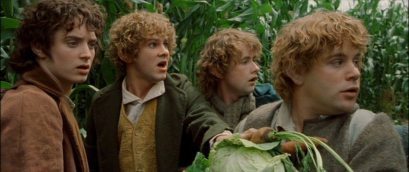
Mmmmm… Carrots.
Ask a Fantasy lover if they like Hobbits. More often than not you will either get a cheerful affirmation of love for Tolkien’s creation or a denunciation of the work. Very rarely will you find a neutral opinion on Hobbits and the Shire among those who are familiar with Lord of the Rings.
This article was brought about by a post I read on Friday (r/Fantasy or r/Fantasywriters I would guess). Someone complained that they felt ganged up on because they didn’t like Lord of The Rings, and every time they noted how bad a writer Tolkien was people would bash them. Not liking Hobbits is one thing. I dislike plenty of things and don’t feel the need to try to convince people that they are bad. I recognize that my tastes are distinct from any level of objective criticism. I might not like squash, but that doesn’t mean squash is bad and that people should stop cooking it. It is entirely a personal matter. Trying to convince others that their favourite author is a terrible writer is more contentious, however.
I don’t like X =/= X is objectively bad.
Moorcock’s case is much stronger than that, including a long discussion of poetry, popularity, and deep analysis of hidden themes within the book. It bites hard, and yet it fails to kill. Other, equally cogent criticisms of Tolkien’s have surfaced over the years and yet The Lord of the Rings remains as loved and as hated as ever.
The Hobbits themselves attract a fair bit of criticism and yet are beloved by fans. It is hard to imagine a group less suited for grand adventures than the Hobbits, either physically or culturally. I’ll break this down in point form:
1) Hobbits are small and not especially strong. This puts them at a distinct disadvantage in physical combat. (Counterpoint: it does make it easier for them to hide, which is their default strategy)
2) Life in the Shire is quiet and insular, a distinctly pastoral landscape that is cut off from the troubles of the world. The state of the shire as an idealized or utopian land is subject to numerous criticisms, but I feel most of them miss the mark. The shire has its problems, and is hardly presented as perfect. Regardless such a land is hardly a likely place for producing adventurers, since it does not produce the world-wise or cynical attitude that we feel is needed for a smart protagonist or put forth the kind of brutal challenges required to create a tough guy or a great fighter. (Counterpoint: plenty of people have risen from humble, bourgeois beginnings to do great things)
3) The Hobbits are too innocent. (Counterpoint: the ring is a metaphor for power, innocence is the best way to resist that)
4) The Hobbits are too cowardly. (An older criticism. Counterpoint: Most people like flawed heroes these days. However fear of physical combat and bravery in the face of danger are two distinct things, which are clearly delineated in the book. The Hobbits would rather avoid conflict, but are brave enough when they have to be. This is a nuanced point and applies to to Tolkien’s view of the essential goodness of man.)
5) The Hobbits are too virtuous, no one is that good. (Counterpoint: The Cynical view of the nature of mankind is not necessarily more realistic than the optimistic view. This is a matter of taste. Also, it is worth noting that the Ring, power itself, does corrupt Frodo in the end)
You get the point. There are plenty of criticisms of the Hobbits and the Shire out there. And yet despite all of this the Hobbits make compelling protagonists. Frodo, Samwise, Merry, and Pippin are all rolly polly young hobbits to begin with, homebodies who get up to a bit of mischief here and there but would likely enjoy simple lives if left to their own devices. They don’t have any obvious heroic qualities, or none of the advantages, skills, or cynical attitude that would avail a decent anti-hero. They are normal, fairly innocent, and interested in their own creature comforts… hardly the sort you would expect to see answer the call to adventure. However, when adventure is forced on them, Frodo takes responsibility for the Ring, Loyal Sam joins him, and Marry and Pippin initially come along out of a sense of fun and friendship. The key here is that adventure is forced upon the Hobbits. Gandalf discovers that Frodo’s old heirloom is the One Ring of Power, a bloody dangerous thing that must be destroyed. Frodo accepts responsibility for the ring. He may want some adventure, but the ring is truly dangerous and a burden of great weight. Interestingly, after the council in Rivendell convenes he has a chance to give up the ring now that he knows that he will be chased by Nazghul, Orcs, and Worse, but Frodo reaffirms his commitment even after he has gained knowledge of the world.
The Hobbits move out of the shire into an increasingly hostile world. They are constantly exposed to danger and while they initially depend on their allies to save them (or just run away and hide), they all eventually grow to deal with danger in their own way. It is an excellent metaphor for growing up, intentional or not. They lose their innocence, but retain their love of peace, good times, and friendship. It may seem corny, but it isn’t exactly wrong. The Hobbits aren’t tough, worldly badasses, or magic-wielding princes. They are the little-guys, literally. They in over their heads but try do their best. They manage to rise to the occasion, stumbling at times, but grow to become worthy of the tale they take part in. They remain popular because that is the way most people view themselves. We know we aren’t perfect, and maybe we’ve eaten too much pie, but if the shit hit the fan we’d like to think we could survive and perhaps even grow enough to help out a little…
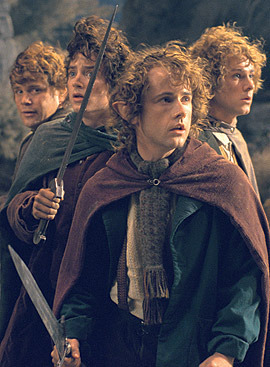
You know, kinda like World War II


May 24, 2013
Battle Tactics: Wargaming, Warbeasts, and Five Simple Considerations
One of the reasons that I turn critical eye towards the battle scenes in Fantasy novels is that I really enjoy wargaming. Wargaming is a tabletop game where each player fields a little army and attempts to overcome the other in battle. My game of choice at the moment is Warmachine/Hordes by privateer press. Hordes is especially fun with the giant warbeasts having this Pokemon meets Heavy Metal Magazine feeling to them. I enjoy painting and assembling the little figures; I find the craft aspect very relaxing. It also takes me away from the computer, which is very important when I am deep in revisions and spend almost all of available time glued to the keyboard.
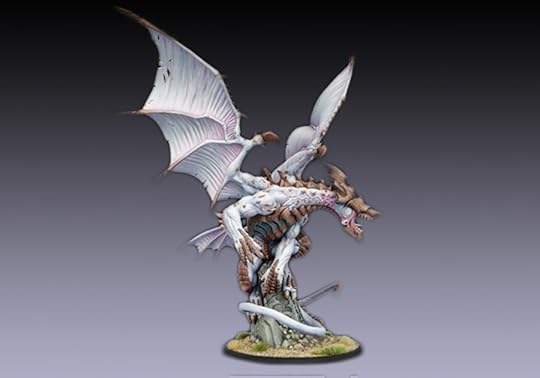
A Draconic Warbeast from Hordes (A wargame from Privateer Press)
Playing wargames gives you a sense of strange and exotic tactics. History and actual military theory give a better understanding of warfare, logistics, and tactics but wargaming puts you in the commanders chair and lets you game the outcome of your choices. It is an interesting experience. I feel it is one of the best ways for a Fantasy writer to experiment with introducing new elements to the battlefields and seeing how they could effect the tactics and outcomes of battles in your written work. Here are a few ways wargaming can help you understand how Fantasy elements can change warfare.
1) Exotic Powers = Exotic Tactics: Each wargame has a set of rules. Players will try to exploit the rules to maximize their advantages, often pulling off strange and amusing manoeuvres to give them an advantage over their opponent. In realistic wargames these exploits are often very close to real tactics. Snipers try to find vantage points that dominate the battle and so on. The moment you add unusual abilities to a wargame you start to see unusual tactics develop around those abilities and how players try to counter them. In Warmachine/Hordes several armies can harvest the souls of dead allies/enemies which can lead to all sorts of strange denial games where a players try to position soul collectors to maximize gain, deny the enemy, and so on. It adds an interesting level of detail, especially watching how others might exploit the element you introduce.
2) Visualization: Setting up a little army and gaming out your new fantasy element, be it a strange spell or wierd creature in the battle helps give you better a sense of the impact it might have.
3) Creating Consistency and Definition: Describing a fantasy element in such a way that the reader is enticed is good. However, it is also important to define how the element works and be consistent in your uses of it. If a magical sword can cut through a steel door in one scene and bounces off a shield in another, you might have some explaining to do. Wargaming forces you to create rules for your creation which will give it more definition in your mind.
If I wanted to see how a giant with an aura that freezes everything around it might effect warfare I would first write up a brief description of this creature and its powers. Then I would check and see if Warmachine/Hordes had a figure with similar powers. It turns out the Trollbloods army has a Winter Troll that has a set of abilities similar to what I’m looking for. Enemies that get too close to or strike the Winter Troll can become frozen. Its a good starting point. Sadly the WinterTroll does not quite seem large or powerful enough to represent a mighty colossus striding the battlefield. So I take the powers of the Frost troll and tack them on to the stats of a bigger, stronger model like Mulg the Ancient, a gigantic troll (removing some of Mulg’s powers as I see fit). I can then fool around with my creation in a game I am familiar with and see how it distorts the battle field and how people react to it.
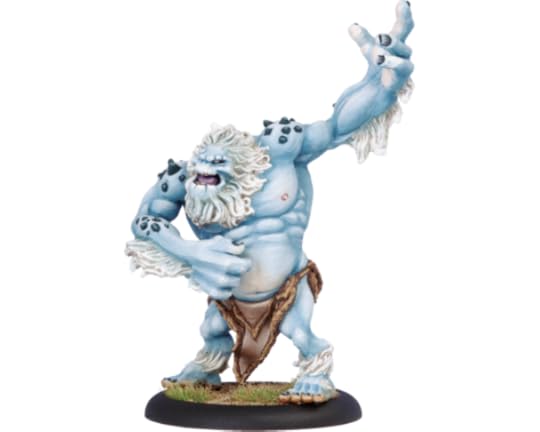
Frost Troll from Hordes Trollblood army
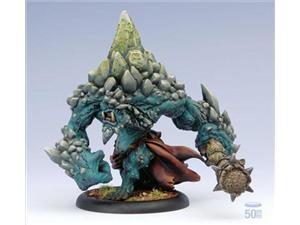
Mulg from Hordes Trollblood army
But I recognize that you might not wargame. In truth I just wanted to chat about one of my hobbies and litter my blog with cool pictures. So here are a simple set of considerations that I use when introducing a Fantasy Element to warfare. I will use Dragons as an example, to illustrate each consideration.
1) Power: how dominant is the element you have introduced. Power is the easiest consideration for a writer. You generally know how powerful you want the element to be or can get an idea of the power by sitting down and dissecting you descriptions of it. Keep in mind that power is relative. The power level of some fantasy elements are subtler than others. Summoning fog might seem like a weak power compare to throwing fireballs, but quite a few battles have been won by armies that use fog to ambush or gain a position advantage over their enemies.
In most fantasy worlds Dragons are extremely powerful. They have fiery breath that can kill many men. They have thick scales that make them hard to hurt. They are huge and strong. They can fly, which gives them a mobility advantage. Yeah, definitely powerful. If introduced to a medieval setting, the Dragon would dominate.
2) Versatility: Versatility is a little trickier than power. Does the element you are introducing offer a wide array of possibilities and advantages?
Dragons are fairly versatile. They offer advantages in mobility as well as brute power. The can act as mounts for other creatures. Most Fantasy dragons are intelligent as well, which is another form of versatility. They offer significant advantages in attack, scouting, transportation, and several options rarely seen in other units in a basic medieval battlefield. Having a wider variety of Dragons or Dragons that can use magic would increase the versatility consideration of this element.
3) Rarity: is it common, unique, or somewhere in between. If an element is rare in your world, people are less likely to be able to identify or react to it, or might just not consider it worthwhile. If an element is rare, it could mean that only one side of a conflict has access to it. If it is common then everyone will know its weaknesses and are more likely to prepare for it.
Dragons are usually fairly rare. I could decide to make them common through breeding programs or even make it so than only one nation controls them. If the were too common then I would have to come up with a reason why they don’t displace all the races in my world with their scaly magnificence.
4) Limitations: Does the element you introduce have any significant weaknesses, drawbacks, vulnerabilities or anything else that might limit it.
Dragons are usually greedy and paranoid, which makes them less likely to band together. If their greed is compulsive, it might make finding allies difficult. They are large, so might have trouble getting into small areas and require lots of food which may lend new significance to supply lines or even create atrocities as they feed on enemy soldiers. A low birthrate might make them paranoid about dying.
5) Reactions: This is the most difficult and most important consideration. How will everyone react to the element? If an element is extremely rare, people might not even bother to prepare for it. However if it is both powerful and fairly common it will warp the battlefield. Things to consider are weapons designed to overcome strengths or exploit weaknesses, how fortifications and supply are effected, and what sort of tactics will take advantage of the element or be used against it.
Since Dragons can fly, missile weapons are a good answer to them. Heavier missile weapons would be required to get through their heavy armour. Wings might be especially vulnerable to ballista shots and such. Since Dragons are huge, breathe fire, and fly Fortifications designed to counter them would have to be stronger, flame resistant, and have some form of aerial defence. Dragons are great at raiding supply lines, but also require a fair bit of food, this could become important elements in your battles.
Bonus: Interactions (Combos!) Consider how will one element change another or enhance another.
Gunpowder is explodes when exposed to fire. Dragons breathe fire. This means that cannons are vulnerable to dragon attacks. It could also lead to all sorts of shennanigans with Dragon riders dropping powder bombs for the Dragons to light up.
These are just some simple guidelines. In the end them important thing is to sit down and consider how each element could change the battlefield and how the principle actors that you have created with act and react in accordance with that.


May 21, 2013
Teaser Tuesday (now on time!)
Teaser Tuesday: On time for once!
The Chosen’s Palace in Brightsand Halls stood atop the centre-most of the city’s nine sheer-sided buttes, stone pillars raised from the rocky desert waste, shaped by both magic and raw physical labour. The palace was imposing, yet open and airy, built mostly in the classical style of Krass, but with some local influences, most obvious in the domes and rounded corners of the buildings. It provided the prototype for the rest of the city, a prominent representative of what was now called the Southern style of architecture. Gavin had seen that this style was in fashion of late, apparent in some of the newer buildings in Krass, a case of influences coming full circle. Such was the way of a healthy federation he mused: each part must learn from the other, hopefully with respect.
This thought brought his mind to Vintia, who would soon be on her way to lost Ithal’duin. He missed her, and was sad that he would not see her again for many years. She’d seemed so excited at the masquerade. He wondered how much of that was a desire for adventure and how much was Chosen Brightloch. Sadira told him that Vintia had fallen for the Chosen’s charms. Gavin thought of Isabella in the armour-shop and how easily he had been seduced, a prisoner of his desires, before he’d found love. Of course, one could argue that love was simply a different cage, after all his need to be near Sadira had kept him from joining the Bright Company himself. It had always been a dream of his to roam distant lands.
An expanded description of Brightsand Halls from Bloodlust: Will to Power. The bit about Vintia is actually part of the lead in to a third book, so don’t worry about it being a spoiler.


May 19, 2013
Intellectual Property and the New Dominion
I don’t consider myself or my friends Disney fans, but they have come to control some of the hottest properties in Geek Culture in the last couple of years. And yet, I watch more of their movies now than when I was a kid. Star Wars, Star Trek, and Marvel all fall under Disney now. They are churning out movies at an extraordinary rate, and while the quality is high, so far, I often wonder if they intend to run these beloved pieces of fiction into the ground or if they will nurture them carefully. It is an academic question I suppose. After all, Star Wars lived on past the second trilogy.
Not sure if I approve, but I can’t deny it makes $
For those who don’t work in a creative industry, intellectual property (IP for short) in fiction can be a difficult concept to grasp. IP in a general sense refers to an idea which is seen as the exclusive creation of a person or company. In Fiction it usually refers to the world along with all the trademarked bits and pieces of it. The actually legalities behind IP are even more complex, with all kinds of strange arrangements which only businessmen and certain kinds of lawyers really care about. The long and the short of this is that whole worlds can be made, rented, and sold. While this matters very little to a proudly independent author engaged in his own world building, beyond avoiding getting sued for using Orks instead of Orcs or Lightsabers and Space Marines at all, it might have a drastic effect on fiction in general very soon. Bear with me here.
Book Publishing Companies are currently going through a bit of a crisis in the face of e-book publishing. It is very, very easy to publish an eBook. Digital formats make sharing quick and easy. The big publishing companies can no longer act as the gate-keepers to the industry and have less and less ability to demand that new authors jump though hoops or deny them access altogether. With an increase in freelance editors and agents willing to take on successful self-published authors publishers have less to offer on the service side as well. This does not really help the authors, who must still struggle to get noticed, but it does give a fair bit of power to the consumer who no longer has to be satisfied with what the big six have to show. It reminds me the fragmentation of the television audience: in a five hundred channel universe the guy with the remote has a lot more say over what gets watched and made than when their were only three networks. Book Publishing Companies will either need to find a new model to maintain profits or, more likely, will start to mine their back catalogs to compete in more and more niche environments.
New Models is where IPs come in. While I don’t see the big book publishers are being fast enough on their feet to get into IPs, I do see IP driven creative companies like Disney (Star Wars, Star Trek, Marvel), Games Workshop (Warhamer 40k aka SPACE MARINES), Warner Brothers (DC), Hasbro (Transformers, GI Joe, Various Dungeons and Dragons Worlds) showing and increasing interest in publishing books. Many of the smaller players with well developed worlds have also thrown in on the game as well. With the low risk of publishing a digital book, it is just too tempting for them not to expand into this area. Let me break it down from the perspective of the Company, the Author, and the Consumer to demonstrate why I think this model is on the rise.
The IP Company: IP companies try to squeeze as much as possible from the worlds they buy up, in general books are one of many avenues for them to exploit. With digital on the rise, it a very low overhead avenue. They already have the world and a book is a great way to promote most brands. The main difficulty is locking an author down and limiting them to the IP, but this is what IP companies do for the most part.
Low Risk, High Potential Reward: Chances are if you read Fantasy you’ve heard of R.A. Salvatore or Drizzt Do’Urden, his most famous creation. With over seventeen million books sold, Mr Salvatore has done very well for himself and his publishers. Interestingly his books are based on the Forgotten Realms IP that originated with TSR and is now owned (ultimately) by Hasbro. With the new low costs of putting out a digital book, smart IP companies are going to be looking for more R.A. Salvatores.
Authors are Cheap and Eager!: If you find a new author who loves your IP they will often work for a relatively small fee. Some of these companies employ creative writers for other purposes already.
Maximum Exploitation: People who love a particular IP are more likely to buy books and other merchandise affiliated with that IP. Having moved aggressively into competitive markets like computer games, board-games, apparel, movies, and so on books are just another area to market in.
IP definition: Books are very good for adding another layer of detail to an existing IP. Fiction authors are superb world-builders and can provide all kinds of lovely development to an existing IP which the company then gets to to keep using for the most part.
Peacocking: Having a best-selling book is a nice feather in the cap for some IPs. Also, having celebrity directors with the new marvel and star trek movies has certainly excited audiences… I wonder what would happen if an IP companies could attract already established authors to its IPs…
The Author: So we can see why the IP companies would want to get into it publishing, but why would an author get involved with an IP company.
The Usual Reason ($): Writing a book is still time consuming. Hooking up with a publisher of any sort can get you some money up front and access to editors and marketing. In my opinion IP companies are much smarter about how they target niche audiences. Unlike Publishing Companies that target one product (books) to a varied audience, IP companies tend to target a range of products to a fairly specific audience for each of their IPs.
The Built-in Audience of a Big IP: This is the big draw. A good IP has an audience that is already eager for your book. The eagerness for books varies by IP, certainly. But a popular IP has an established audience that will help with initial sales.
Peacocking: Having your name on a good book set in your favourite IP… to some authors that would be priceless. I know people who kill for this in games/comics and I expect it to draw some superstar authors to string IPs in the future. Leaving your mark on a popular IP might be worth it.
A Ready Made World: There is some appeal to having a ready made IP to draw on. Some of these worlds have an incredible amount of lore and detail for an author to draw upon which can make an author’s job much easier. Some people might like the break from building their own worlds from scratch.
The Consumer: Consumers hold more power in this equation. With a wider choice in books in the digital age, what brings them to the table?
They Love the IP: Pure and simple, in the age of Geek Chic some fans will buy every product they can about their favorite IP. I’ve seen people by 300$ Tardis models to sit on their shelves just because they love Dr Who, a matching book for 10$ is a real steal — especially since you can get some joy out of reading the book y’know.
Familiarity: When you buy a Warhammer 40k book you know you are getting Grimdark with a side of big guns. When you buy a Hordes book you get badass monsters and warlocks. Star Trek gives you the exotic planets, lightsabers, space battles, and the force. Popular IPs are the comfort food of the creative industry.
The Flip Side: Of course there’s always that one guy. It is worth noting that exceptionally skilled and lucky authors can make a bundle off creating a big IP. Just look at J.K Rowling, Suzeanne Collins, GRR Martin, and Stephanie Meyer. Big IP companies can purchase the rights to these IPs and have a ready made fan base from the ground up. There will always be authors who want to create their own worlds. Many of them are easy marks for smart IP companies who can see the franchise potential in a new world that has not made a ton of money yet. That’s a different post, however.
The IP publishing model strikes me as a great replacement for the old publishing model. New writers are attracted to ready made audiences of a big IP. The companies are attracted to the low costs of digital and the chance to get their IP into new markets or just squeeze the fans for more money. Fans get more of the IP of that they love. Veteran writers get the chance to work on a beloved IP for bragging rights or maybe even create their own and sell the movie rights. Its the circle of life… or something like that.
…
At least until the IP gets overexposed through an endless barrage of new products or altered to the point where fans get tired of it. I’m looking at you Disney. Ease up, ok?


