
James Bond Complex
“nihilists, anarchists, activists, Lulzsec, Anonymous, twentysomethings who haven’t talked to the opposite sex in five or six years.” General Michael Hayden
I hated him for this.
When I was a young lad, I discovered Fantasy. Tolkien, Dungeons and Dragons, Terry Brooks, and Willow fell right in line with my early love of history, Rome and the Renaissance. I was not drawn to Fantasy through a need to escape, but rather a desire to explore, to stretch my mind around these unlikely visions.
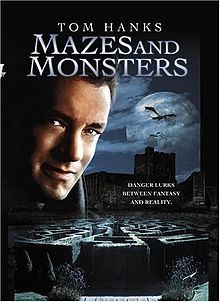
At school I was often looked down upon for enjoying D&D, reading fantasy, and later on computer games. This is not an isolated phenomena. Gather a group of gamers around a table and one of them is sure to have a story about being accused of practicing devil-worship or witchcraft. D&D has frequently been banned from schools, as a danger to malleable young minds. Someone even made a movie about how gaming could turn teenagers into crazed maniacs; you’d be surprised who it starred. Reading Fantasy was a little more socially acceptable, but still seen as a genre for people who could not get a date or enjoy sports. It always amused myself and my parents that such harmless pastimes could elicit such a negative response, especially from adults. I’m glad the genre is considered a little less weird these days…
This was brought to mind when I was reading an article about a speech given by the former head of the NSA, general Michael Hayden, attacking whistle-blower Edward Snowden. Parts of the speech were remarkably juvenile, characterizing honest opposition to NSA surveillance as the province of fringe elements who were outcast losers and also, at the same time, akin to terrorists. The tone of the speech reminded me of the sort of misguided rhetoric used by the people who used to belittle gaming. As if the entire internet is somehow a fringe element? Politics aside, however, it did get me to thinking about an idea I like to call the James Bond Complex.
My parents are both avid readers, as are my Grandparents. My Father and Grandmother have a deep love for mystery and thrillers. I often wonder how I would have turned out if I gravitated towards the cold war and Robert Ludlum instead of the Punic Wars and Guy Gavriel Kay. Quite likely the only difference would be that I would be writing a different genre of book. However some people do latch on to the ideas presented in a single genre. In fantasy this is relatively harmless. You cannot mistake this reality for Middle-Earth. If you did, you would quite likely be remanded to a mental institution fairly quickly as you started running around the local subway shouting about Balrogs. I suppose it happens now and then, but it is pretty harmless,
But what if you were crazily into James Bond? Or should I say crazy and into James Bond, because most people who like James Bond are harmless, of course. Still it is an interesting thought experiment to wonder what kind of derangement would be caused when the line between cold war era spy fiction and reality becomes blurred to that sort of never-happen-in-real-life extent that we see in mazes in monsters. Let’s use Bond fiction as an example.
See the world as us vs them: In a Bond fantasy it is fairly obvious who the bad guys are. If fact, Bond almost always knows who the enemy is beforehand, and with the exception of the occasional traitor (more on that later) in their own ranks the sides seem to be pretty set. This would lead our crazy person to view everyone who disagreed with them as deranged at best, and likely dangerous. Meanwhile, every action taken by their side would be justified because after all, they are part of the team.
The Grand Struggle: In a Bond Fantasy the villains are everywhere and every single decision is one that is fraught with potential danger and great import. It would be a rather boring movie franchise otherwise. Most enemy plots in Bond movies result in chaos and destruction on an impressive scale. A person who mistook this for reality would place singular importance on the efforts of spy agencies, seeing them as the only thing standing between us and catastrophe, every day.
The Ends Justify The Means: What is a Licence to Kill? With so much at stake (and the enemy so clearly delineated) almost any action is acceptable, no matter how extreme it might seem. After all what are a few stray bullets compared to deadly moon lasers that will cut the earth in half?
Paranoia: Traitors on your team are far more dangerous than the enemy. The worst foe in a Bond movie is usually the traitor within, an agent of friend who betrays James. Someone who takes these things too seriously would be very worried about traitors on their own side. The problem is that people who view the world as us vs them, often see traitors everywhere,
I can see several groups around the world, agencies, institutions, and even corporations who might have a James Bond Complex. Who can say? Good spy fiction is often very realistic, after all.
This is why I prefer Fantasy myself. I expect my fictional realities to be internally consistent, but not realistic. I don’t really believe that people can cast spells or throw buses. Fantasy provides a place for us to examine complex issues or just engage in simple, fun escapism. It is a genre where only a crazy person would mistake what is written for non-fiction.


