Lucinda Elliot's Blog, page 28
February 13, 2015
A writer who wrote what she didn’t believe in- and created a genre
 All ‘How To’ books on writing always say that you must write ���What you believe in��� on the grounds that if you don���t believe in the worth of your writing, who will?
This seems to make sense; I need only think of the contrast between the early works by the (now obscure, but once famous) master of dark comedy Patrick Hamilton, to know how much this is true.
The works by the younger Hamilton ��� particularly those in the trilogy, ���Twenty Thousand Streets Under the Sky���, though they have technical faults ironed out by the time of his classics ���Hangover Square��� and ���The Slaves of Solitude��� are full of exuberance, of sheer delight in the ridiculous.
His last works, ���Mr Stimpson and Mr Gorse��� and ���Unknown Assailant��� have lost that joyful quality; his powers failing (though flashes of brilliance still remain) through his increasing despair and alcoholism, Hamilton’s writing has lost all it���s delight in the ridiculous. His characters have become, as his publisher gloomily commented, unsympathetic marionettes displaying contemptible qualities. In ���The Slaves of Solitude��� we may have had the altogether contemptible Nazi sympathizers Mr Thwaites and Vicki Kugelmann, but they were offset by the invariably honourable, if grudge bearing, Miss Roach ��� and the basic decency of the totally unreliable American Lieutenant Pike. In Hangover Square, the tortured amnesic George Harvey Bone, though a double murderer by the end, never loses the reader’s sympathy.
Post Holocaust generations have grown up knowing just what dreadful things people can do. Accordingly, we���re unlikely to find reading about the mean-spirited fraud of Gorse, the anti-hero of Hamilton���s last trilogy, as shocking as his publishers and public seemingly did. Though we might also agree that there are a lack of sympathetic characters in these later stories, I think the main criticism would be the flat quality in the writing. Tragically, it seems likely that Hamilton never believed fully in himself as a man, though he did believe in himself as a writer; finally, he seized to be able to do that either.
Of course, one doesn���t need to have sympathetic characters to write a successful novel; there aren���t a lot in two novels I���ve mentioned several times in recent posts, ���Vanity Fair��� and ���Wuthering Heights���. But there has to be that quality of vigour. The writer has to draw the reader into her world, and keep her so engrossed she doesn���t want to leave it.
Thackeray, too, seems to have suffered a decline in powers in is later novels, though for different reasons. We don���t find the lively social criticism and humour again in his works after ���Vanity Fair���. It���s as if he made his peace with the society that lionized him, and stopped pointing out its flaws.
Dickens isn���t a writer I have ever been able much to appreciate; I���ve only ever read five of his novels and a few of his short stories, and one of these was for an exam. Personally, I find the cardboard souls of his heroes and heroines too great a defect to be able to enjoy the other strengths of his writing, the lively delight in grotesques, the keen eye for social injustice. I gather it���s generally considered that his writing shows no sign of falling off in later years; and he certainly never lost his faith in it (he even extended his faith in his own powers to the point of wishing to continue to write espousing what might be termed ���family values��� in his magazine ���Household Words��� after he had outraged these by deserting his wife and mother of his twelve children for a much younger woman).
A writer who writes what she or he believes in and can transfer that enthusiasm to others can achieve wonderful success, change definitions of genre, and overthrow those dull ���predicted market trends���.
Yet, there are writers who don���t write what they believe in, but who are an outstanding success anyway.
The most obvious example is Sir Arthur Conan Doyle and the Sherlock Holmes stories. I���ve written before of how he never thought that they ���brought out the best in him��� or had any literary merit; he preferred his historical stories, ���Sir Nigel��� ���The White Company��� and so on, which he considered far superior.
He churned out the Sherlock Holmes stories to make money. He is, so far as I know, the only writer who became so hostile to his character that he actually killed him off, and then was forced to bring him back through public demand. Hardly anyone reads those of his works he regarded of major literary importance today, while in an age of ebooks and technical innovation, Sherlock Holmes continues to hold his own.
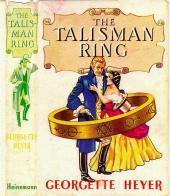
There���s another case of a writer succeeding against the ���write what you believe in��� advice, and that���s one rarely thought of in this sort of context ��� Georgette Heyer, creator of a genre all of her own – the Regency Romance. Slipping into comparative obscurity in the decades following her death in 1974, her work has experienced a strong revival with the development of the web and ebooks. Threads can be found in any readers��� sites eagerly recommending the books and discussing the merits of this or that hero.
Readers of this blog will gather that I���m not exactly a great admirer of traditional historical romances, Heyer���s included. I admire the extent of Heyer���s historical knowledge and the light humour of the stories, but ��� let me just climb onto my soap box ��� I dislike the essentially consensus oriented depiction of late eighteenth century and�� early nineteenth century society (a time actually of social upheaval, when the authorities went in terror of a revolution breaking out in the UK ) and the author���s unquestioning acceptance of rigid sex roles. In fact, I dislike two of her swaggering heroes – one a bully and one stupid ��� so much, that they feature respectively as first and last on my Most Annoying Heroes List.
It would dismay the avid fans of Heyer���s ���Regency World��� to know that the author herself�� despised her historical romances and, by all accounts, her readers (���they always prefer my worst work���). She generally threw fan mail into the waste paper basket, and said of her novel ���Friday���s Child��� (1943): ���Judging from the letters I’ve received from obviously feeble-minded persons who do so wish I would write another These Old Shades, it ought to sell like hot cakes. I think myself I ought to be shot for writing such nonsense, but it’s questionably good escapist literature and I think I should rather like it if I were sitting in an air-raid shelter, or recovering from flu. Its period detail is good; my husband says it’s witty—and without going to these lengths, I will say that it is very good fun.”
She was an intelligent (if politically extremely right-wing) woman, and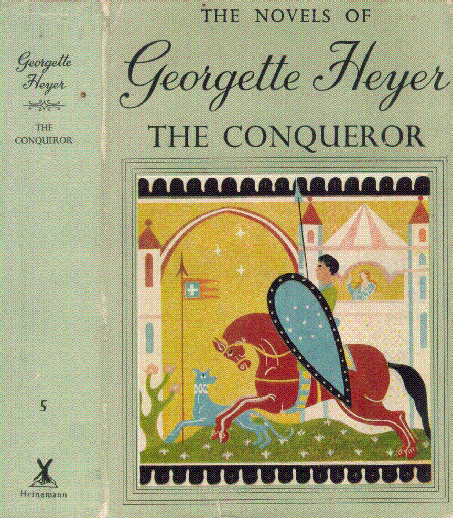 in outlook, wholly unromantic. It seems typical of her that her romances were composed at a desk in a study in a fug of tobacco smoke ��� she was an eighty-a-day woman. Her real aspiration was to write serious historical fiction, and on her death she was still composing her ���magnum opus��� a series of novels on the fortunes of the House of Lancaster.
However,�� circumstances led to her having to support first her younger brother and later, her whole family through her writing. She put her son through public school, and like Conan Doyle with the Sherlock Holmes short stories, felt that she had no choice but to go on with churning out one Regency Romance a year.
Heyer may have despised her readerships��� taste, and as one who takes a dim view of the ���empowering��� aspects of romantic novels, I sometimes find it difficult not to sympathize; but here I think that I should practice a little humility, and think about Laura Sewell Mater���s wise words in her article on the ridiculous sentimental love stories of the Victorian best seller, Charles Garvice : –
���What Moult and the other critics failed to acknowledge, but what Garvice knew and honoured, are the ways so many of us live in emotionally attenuated states, during times of peace as well as war. Stories like the ones Garvice wrote may be low art, or they may not be art at all. They may offer consolation and distraction rather than provocation and insight. But many people find provocation enough in real life, and they read for something else. One cannot have contempt for Garvice without having some level of contempt for common humanity ��� for those readers, not all of whom can be dismissed as simpletons, who may not consciously believe in what they are reading, but who read anyway because they know: a story can be a salve.���


February 3, 2015
Another Sour (Though Hopefully Entertaining) Post : Those Seven Female Counterparts to Those Seven Most Annoying Heroes
Having posted about the seven ���heroes��� I personally find most obnoxious in famous books by deceased authors, it only seems fair to list the seven female leads I thought most annoying, too. 
The problem here, as I said on that earlier post, was that I generally fond these female leads provoking because the woman tended to lose most of her separate identity entirely once she got together with the hero, merging her personality with his and so losing ANY character traits of her own, obnoxious or otherwise. Either that, or she began and ended as a Mary Sue, like Richardson���s Pamela and Fanny Burney���s Evelina.
As an extreme example of a Mary Sue who submerges her identity into that of her man, there���s Lucie from ���A Tale of Two Cities���. I couldn���t dislike her because she doesn���t have any personality at all. She���s just Charles Darnay���s wife and mother to his child. I did however, find the vacuum that she represents dismal.
This being so, it���s difficult to remember all the separate examples of books where thr heroine does this; however, reverting to my previous Annoying Hero list, I try to remember their female counterparts. Were they masochists, Mary Sues, or what?
Number One Annoying Hero on my list was the Marquis Vidal in Georgette Heyer���s ���Devil���s Cub���. Mary Challoner, I seem to remember (but I���m relying on the sad remains of a once good memory here) was quite witty, not at all vain, sensible, practical and resourceful. True, she did have to do daft things to fit in with the mechanisms of the plot, though, such as running off with the rebarbative Vidal to save her sister. Apart from her terrible taste in falling for a would-be rapist bully, she���s very likable. Far-fetched as Heyer���s escapism is, a woman with a lot going for her throwing herself away on an abusive man is true to life, I���m sorry to say���
Number Two of the Annoying Hero���s was Theseus in Mary Renault���s books ���The King Must Die��� and ���The Bull from the Sea���. I said then what I thought of the Apostate Amazon heroine of ���The Bull from the Sea���, Hippoylata, and her extended case of Stockholm Syndrome once she becomes Theseus��� captive and joins him in spreading his patriarchal rule.
The book is, like the first, told from Theseus��� point of view and he sees her as being above criticism. The author who only reveals a character through the eyes of a besotted admirer runs the risk of making that character unsympathetic through such a biased viewpoint; though I suppose it could be done with irony, that wasn���t my impression here. If this story of her betrayal of the Goddess had been told by Hippoylata herself, perhaps she would have come across as more likable, despising herself, perhaps, for her passion for this enemy of female power, but as it is, I found her highly unsympathetic.
Number Three was Heathcliff, whom I���m sure everyone knows from ���Wuthering Heights��� and whom I���m equally sure Emily Bronte didn���t intend as a hero at all, Byronic or otherwise. I didn���t find Cathy wonderfully sympathetic, but she�� clearly was the only woman about seemingly savage and sadistic enough to stand up to Heathcliff���s bullying ways. Sadly, having failed to move either of the two men she wants to accept each other, she sinks into a decline altogether feminine. She is decidedly selfish, but given her dismal background, with her mother dying very early and her father turning against her for her high spirits and her brother Hindley���s wild antics, it���s not surprising that she isn���t exactly gentle. She did seem to feel for Heathcliff when Hindley forced him to be a servant.
I was interested in an article I saw mentioned, written by Patsy Stoneman, about Cathy���s wanting to have a ���non possessive��� relationship of the sort for which Shelley yearned (and which, to be fair to those who advocate a set-up seemingly doomed to failure, probably can���t be properly envisaged or enacted within the narrow confines of our current society, anyway). A friend of mine on Goodreads was trying to trace this article, but hasn���t got back to me, but it does throw an intriguing new light on Cathy and her apparent selfishness in wanting two men at once. To be fair to her, too, she doesn���t show any jealousy when she thinks Heathcliff might desire Isabella, though we might think she is much too blas�� about such a savage man when she says words to the effect�� of; – ���If you like her you shall have her ��� but I���m sure you don���t!���
She comes across as generally insensitive and overbearing, as when she taunts Isabella about her foolish infatuation for Heathcliff, and when she jeers about Edgar���s jealousy over her praise of the returned Heathcliff (she says she isn���t jealous of Edgar���s praise of Isabella’s beauty; but then, that can hardly be intended to be sexual, though in the quasi-incestuous atmosphere that surrounds the story, who knows?). On the whole, if anyone can be said to deserve the fate of being (temporarily) stuck with Heathcliff, she does for valuing the opinion of a man capable of doing such disgusting things. Of course, she���s extremely young; perhaps if she���d lived to maturity, she���d have outlived her strange�� passion for him.
Number Four Annoying Hero for me was James Bond, so the heroines (if they can be called that; they aren���t allowed to take much initiative) are legion, with him being a compulsive Don Juan. Most of them have slipped my memory. As Mari Biella commented on the post, these women were largely lay figures created to be part of Bond���s male fantasy world of effortless conquest and hardly even meant to be anything other than desirable, worshiping conquests.
There was one called Honeychile Ryder in Dr No, whom I quite liked before she surrendered to Bond, an athletic woman who lived alone supporting herself by fishing. As a young girl, she���d been beaten unconscious, raped and her nose broken by a man whom she later killed by putting a scorpion in his bed. I don���t much like saying a kind word about Bond, but I seem to remember he thought her revenge fair enough. There was a Countess known ��� of all names ��� as ���Tracy��� who had emotional problems. Bond was in the process of sorting ���em out after marrying her, but she was murdered. I seem to remember she threw an alarm clock at him once, which I thought a waste of a useful object. I don���t remember much about her personality. There was one called Tatiana Romonova from the USSR who didn���t seem to have any personality at all even before she met him, and then there was one called Pussy Galore who was a lesbian. I do remember Bond���s explanation for lesbianism ��� he put it down to women wearing trousers too often. Presumably if he���d worn a kilt, then the problems of the heroines’ foolish worship would be at an end, and he���d have gone over to men���
Annoying Hero Number Five for me was Charley Kinraid from Elizabeth Gaskell���s ���Sylvia���s Lovers���. I didn���t blame the heroine Sylvia for despising the cousin who tricks her into marriage with him, and I sympathized with her love of being outside and working with animals and her love of the sea and her longing for adventure, so apart for her foolish worship of Kinraid, I found her generally sympathetic. As I said in an article I wrote about the novel for the ���F word���, if Sylvia had been able to go to sea and have adventures herself, her tragedy would never have happened. As one critic, I think Jane Spenser, comments, it is only through her own lack of opportunities for adventure in her dull role as a woman and home-maker that she becomes so wildly infatuated with the superficial Kinraid (who could have adventures). This also encourages her to feel helpless after her father���s hanging and her mother���s insanity, so that she weakens and accepts Hepburn.
Number Six was Heriot Fayne from Charles Garvice���s ���The Outcast of the Family Or a Battle Between Love and Pride���. The heroine, Eva, is a perfect example of a Mary Sue, admired by all. The author instructs the reader to ���fall in love with her at once’ insisting that she is witty and independent minded. Sadly we never see any signs of either quality, as she spends most of the novel fainting, shedding tears over Lord Heriot Fayne for his ���wasted life��� and sacrificing herself for her father or shrinking from the repulsive touch of the duplicitous Stannard Marshbank.
My Number Seven was the secondary hero from Georgette Heyer���s ������The Talisman Ring��� Ludovic Lavenham. He���s remarkably stupid and lacking in common sense. The secondary heroine, Eustacie, is similarly afflicted and undiscerning enough to think him wonderful, and on the whole I found her almost as tiresome as him.
So, there���s my list of the Annoying Heroes��� counterparts, and with a couple of honourable exceptions ��� Sylvia and possibly Cathy, they do seem to surrender their identities readily when they meet the dominant male.
I did actually forget someone who I should have put on my original list, ���Mr B��� from Pamela. This fellow manages to be a rake and would-be rapist (I don���t believe his insistence that it was all a misunderstanding in Pamela In Her Exulted Condition; I think those to be�� retrospective excuses by Richardson) yet later lectures sanctimoniously about proper conduct marriage and a wife���s duties. He gives a long ���What He Expects��� lecture to Pamela: she must always look attractive, she must rise at five every day, she must entertain all his guests graciously etc, etc. This, presumably, was the bourgois coming out in Richardson incongruously through the voice of his supposed rake, but the sanctimonious tone is highly provoking, given his own history.
Pamela herself is also conceded to be annoying as the original Mary Sue, not just by me, but by many critics, and for an author to have made so many people dislike a servant girl imprisoned by a lascivious master is quite an achievement ��� but he succeeds. To be fair to Richardson, novel writing being in its infancy, and Pamela being largely told through her own letters, her apparent vanity in solemnly recounting one compliment after another is probably just clumsiness on the author���s part, but the effect, as in the later Evelina, isn���t attractive.
In fact, I can think of one ���heroine��� ��� more of an anti-heroine ��� who does have a very independent character, and whom I didn���t like much anyway, and that���s Thackeray���s Becky Sharp from Vanity Fair. She is certainly tough, resourceful, dismissive of conventional morality and incapable of forgetting her own self-interest in her relations with men ��� but then, perhaps that���s not so surprising; Vanity Fair being a ���novel without a hero.��� Still, I hardly think she���d do anything but exploit Vidal, Theseus, James Bond, Charley Kinraid, Lord Fayne or Ludovic Lavenham anyway ��� and Heathcliff she would not consider worth noticing, having no wish to live in a draughty farmhouse on the moors.
I can hardly blame her for exploiting the weaknesses of people�� of higher rank, with no talent, but the money and power denied to her by birth, yet I don���t agree with critics like Seymour Betsky that ���part of Becky���s superiority to others lies in the absence of ill-humor, meaness, or savage intensity in her self-interest.��� In her encouraging Rawden Crawley to get the foolish George Osborne to gamble away the few thousand pounds left to him after his father has disinherited him for marrying Amelia, she shows all of these qualities. She has a grudge against him because he prevented her marriage to Amelia���s brother Jos as he didn���t want a low born sister-in-law. You might think as that leads to her getting a baronet���s son for a husband, she might be almost grateful to him, but she does indeed show a good deal of savage vengefulness here. If she ruins George by seducing him to play with the cheating Rawden Crawley, she ruins his wife too, and Amelia has been up to that point her only staunch friend, but Becky doesn���t seem to worry about that. Instead she lures George to the gaming table by making him infatuated with her and so ruining the few weeks that he and Amelia have together before he���s killed at Waterloo.
Years later, she shows Amelia the letter George has written to her asking her to elope with him ��� presumably, she���s unaware that just before the Battle of Waterloo he repents of this and says he hopes if he���s killed Amelia never hears of it, but probablyn she wouldn���t care if she did know that�� ��� and her having kept this note for years, which can hardly do her any good with George dead, seems to indicate a startlingly vindictive streak.
Fate pays Rawden Crawley back for his part in this piece of shabbiness, when he���s in turn betrayed and humiliated by Becky when she tries to get him out of the way so she can have a shockingly private meeting with the Marquis of Steyne. Steyne is�� a man so physically repulsive, with his white face, yellow teeth and dyed red hair,�� that Becky surely deserves an award for being able to endure physical intimacy with him. Well, this being a Victorian novel, we are never quite sure that she is physically intimate with him ��� but his words, ���Every jewel on her body has been paid for by me��� might, if inverted, give the answer.
So, I found Becky Sharp equally, if not more, unsympathetic than some of those Identity Shedding heroines. Amelia Sedley, interestingly, I didn���t dislike, though she is very much a Victorian heroine, and portrayed as such by the author. I didn���t feel impatient with her as I did most of the others, perhaps because the poor girl���s infatuation with George Osborn turns out so dismally for her.
With the exception of Sylvia, Cathy�� and Countess Tracy, all the other heroines, even the idiotic Eustacie in Heyer���s ���The Talisman Ring���, are saved from the consequences their stupid actions by plot devices (and those heroes) but poor Amelia Sedley is made to suffer years of attrition. But then these are a mixed selection of books, with more serious works jostling with light romances, and in Thackeray only the unscrupulous generally thrive in Vanity Fair. We leave Becky flourishing.


January 27, 2015
Serious Comedy and Extending Those Boundaries of Genre Fiction – ‘No Place Like Home’ by Anne R Allen

I was musing in an earlier post about the potential difficulties faced by authors who wish to extend the boundaries of genre fiction. While I thought it a good idea to bring these possible stumbling blocks out into the open, I���d like to stress that while they���re real enough, I���d be dismayed if I gave the impression that I thought that extending the possibilities of what can be gained from an apparently light, enjoyable read doesn���t often lead to an outstandingly worthwhile result, because from much that I���ve seen it does.
The attempt and the creativity alone surely make possibly lower sales than might have been gained from a purely market oriented work and some critical misunderstanding a price worth paying.
I think this is true especially of a work that strives to address serious social issues in the guise of fun. In fact, at the time that I was writing that post I was also reading just such a work.
Interestingly, this book, Anne R Allen���s ���No Place Like Home���, is difficult for me to classify, so it’s a challenge to genre boundaries on that basis alone!�� Probably if I���d ever worked in the trade I���d find it easier; it���s certainly a mystery and comedy, to some extent a spoof, and possibly might be that thing called ���chick lit���. What it certainly is a book that makes you laugh while raising the issue of a serious social problem ��� homelessness.
This is done so smoothly and subtly that the reader never feels that s/he is being forced along into acknowledging this or that premise, or that the characters have been created solely to undergo these experiences or as mouthpieces for the author’s own views.
The story is in fact part of the Camilla Randall comic mystery series, although it can be read as a ���stand alone��� novel. Camilla, the former US society girl and columnist fallen on hard times, is a fully developed character, taking her former ���Manners Guru��� etiquette into the most incongruous settings, and bringing too her Phoenix like optimism about love, which has only been temporarily doused by her previous failed marriage and love affairs. Now poor Camilla has the threat of homelessness hanging over her head once again.�� She���s experienced the real thing before, once being reduced to living in a sort of shanty town like shack in the warehouse of a printing and publishing firm in Lincolnshire, UK.
For the second woman who encounters the horrors of losing everything, Doria Sharkov, the fantastically rich editor of the Home decorating magazine, its a novel experience. Her husband���s sudden and mysterious death in a house fire reveals his financial chicanery and his treachery towards Doria herself and just about all their former friends. Suddenly, Doria is a fugitive wanted for murder, her assets frozen, penniless, jobless and with nowhere to stay. I was delighted by the resourcefulness which she demonstrates when faced with this series of disasters.
Another intriguing aspect of this book is that it���s written from a perspective I���ve never encountered before ��� in a dual combination of the first and third person I���ve come across dual first person narration ��� in fact, that���s what I���m using in the work-in-agonisingly-slow-progress ��� but never this approach. I found it worked surprisingly well. I soon got used to the novelty.
Written without a trace of sentimentality and an underlying tough realism that belies the wonderfully over-the-top nature of some of the characters ��� ie, our old friend Marvin otherwise known as ���Mistress Nightshade��� the cross dressing domina – the humour in this is necessarily dark ��� it would be an insult to the homeless if it wasn���t – but there���s any number of laugh out loud lines in it. Here���s a few followed by my review.
���If Doria had a guardian angel, he seemed to be sleeping on the job.���
���Nobody understands the importance of being non-judgemental like people who sell high-end products.���
���But I was not going to be taken in my adorable. I���d been there before. More than once.���
���Now the FBI keeps files on what sort of handbags people carry? ���One nation: under surveillance.��� That���s what Harry always used to say..���
���Doria realized that she���d tried to get a free cigarette from a homeless person. Right after losing her best friend���s car. Things could have been going better.���
I liked a lot of things about this book, but maybe the thing I liked most was that it was written from a viewpoint I���ve never come across before ��� a combination of first and third.
This is the third in the ���Camilla Randall��� series. The previous ones have always been written in the first person, but this one branches out. Startled at first, I found it a brilliant innovation.
The second thing I liked most about this book was that it���s comedy about a dark enough topic ��� homelessness ��� and it succeeds without ever descending into tasteless insensitivity, or tipping over into sentimentality.
Now I���ll get on my soapbox: homelessness in any affluent country is a disgrace (it���s a disgrace to everyone anywhere, but it���s worse in countries where there is massive consumerism). It���s also a complex problem; sometimes the homeless have drink and drug problems; some have alarming problems with madness and/or violence; however, most homeless people are just unlucky, but often seen as a group of drunken, drug crazed layabouts: many are women, and they all tend to be ashamed of the stigma that hounds them.
All right, sermon over; now on to more about this book, which deals with all of the issues I���ve mentioned above with a consummate ease that never grates or labours the point.
There are two female leads in this book. The first, Camilla Randall, the former debutante and society columnist who, partly due to the machinations of her ex husband and her late mother���s unlucky sixth marriage, has fallen on hard times, followers of the series will know from before. The second, Doria Sharkov is a super rich owner/editor of a home decorating magazine whose husband���s financial chicanery is suddenly revealed by his sudden death as their luxurious home is razed. Suddenly Doria is on the run, wanted for murder.
It all begins for Camilla when she finds herself attracted to a visitor who starts using her bookshop, one Ronzo, or Ronson V Zolek. Wiry, fair haired, incongruous in a suit and ill matched tie, and involved with rock music, but touchingly concerned about the disappearance of the itinerant Tom the Tooth, he���s courteous and beguiling.
Camilla is even prepared to put aside her recent experience with a certain other fair-haired, winsomely charming man with rock connections (Peter Sherwood of Sherwood Ltd) and fall for Ronzo, as he seems so starry eyed about her. Still, he���s far too enigmatic for comfort; at times she��� s prepared to believe he���s a Mafiosa, though some say he works for a law firm���
There are the usual excellent supporting cast of vivid characters such as Marvin (whom followers of the series will have met before) the courageous but unscrupulous cross dresser, Camilla���s close friend Plantagenet Smith and his lover Silas. There���s also a whole new cast including the guitar playing, laid back Joe, who���s working to improve the lot of the people at his camp, who cadges five dollars from Doria and who reminds her of someone in her past.
I thought this was the best story in the series yet and recommend it.
‘No Place Like Home’ by Anne R Allen can be bought at
http://annerallen.blogspot.com/p/books-by-anne-r-allen.html
and on Amzon.com at
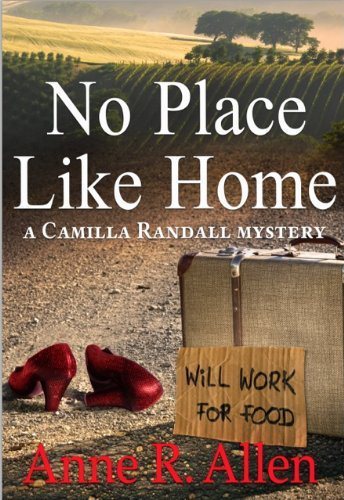
No Place Like Home – A Camilla Randall Mystery (The Camilla Randall Mysteries Book 3)

January 20, 2015
Some Classics That Have Defied Those Hateful Market Trends…
 My last post, which mentions in passing how with a potentially shrinking ebook market, some authors might be tempted to abandon the innovative and write for the market, aiming for what will sell well rather than trying for originality, may have struck some readers as rather dismal in tone.
That wasn���t my intention , though, and I hope that wasn’t the impression I gave.
As Mari Biella commented and as I later amended my post to mention, there are always exceptions ( I stupidly forgot to put in that).
Sometimes an author, in following the well known advice to ���write the best story you know how��� the story that you just have to write, the one which is bursting to come out, in fact –�� crafts a story that breaks all the rules that tedious, unadventurous market research insists on, and gets a commercial success with something that’s original and anything but the sort of thing you’d think would sell well.
This may be by bending the rules of a genre, or through taking up a theme that was done to death eighty years ago and never revisited since, or creating something astonishingly new in the way of a fantasy world, but whatever it is, it���s a reaffirmation that nothing, including the tried and tested rules of writing for publication, ever stays static for long.
I���d be dismayed if my somewhat cynical surmise discouraged anyone, though I don’t flatter myself I’ve got enough people hanging on my every word for that to be the case. I suggested that some authors might well go over to writing the purely commercial in order to keep up their share of a possibly contracted market; after all, generally, more innovative writing does carry the risk of being seen as ���too cross genre’, of critical misunderstanding and sometimes, poor sales.
Of course, there is always that possibility with writing something that breaks the rules. But there���s also the other, very real possibility of recognition, of being the one who stretched further those boringly rigid borders kowtowed to by so many, and of succeeding despite that.
In her comment, Mari Biella mentioned the ���Woolgatherer��� series; I haven���t in fact read it. Classic geek as I am, I may have read obscure novellas by Pushkin, startling ���Penny Dreadfuls��� of the late eighteenth century and many volumes of sententious prose by Richardson, but my knowledge of many areas of modern fiction is as full of holes in as my first attempt at knitting (I���m still bad at knitting, by the way).
So, while I seriously doubt that anyone reading my last post threw down their pen (sorry, keyboard; I���m probably the only writer who first writes first in longhand in a notebook) and slavishly decided to give up on writing something that branches out from the ���Market Requirements��� ( Yuk, Yuk ! how I hate that phrase), I thought in this post I���d mention a few people who wrote stories now world famous classics which broke the rules.
Most ���How To��� books on writing will tell you that you ought to write about ���sympathetic lead characters���. I presume they mean by that, people with whom we can identify; people who may be mistaken in their actions, but who basically are decent human�� beings.
So, a book with a lead male character who broods obsessively about past wrongs and his one failed love affair and who devotes the rest of his life to revenge, who���s stingy, kills a dog for no reason, hits women and bullies children, would seem to fail that test at once. Then, if we add a female lead who has tooth gnashing tantrums and wants to string two men along, the whole project would seem doomed to failure. Though personally, I admit to grudging admiration for such a self-centred Byronic woman, most readers would hardly take to her now, let alone in the England of the nineteenth century.
Of course, I��� m writing about ���Wuthering Heights���. While I detest Heathcliff”s horrible acts and pity the tormented character (as I’ve a;ready said on here more than once) and I don���t find Catherine particularly sympathetic, I���ve always found it a fascinating flawed masterpiece of Gothic. This reaction, typical today, was hardly true of the critics who originally howled it down as the disgusting product of a warped mind. While I agree that Emily Bronte should have made it more clear to the obtuse that she in no way endorsed Heathcliff���s actions (she probably thought that was so obvious it didn���t need emphasizing) her portrayal of these highly unsympathetic characters is far more fascinating than those of many a likable pair.
Of course, it wasn���t an immediate success; if Emily Bronte had lived instead of dying of TB at twenty-nine, she wouldn���t have found her earnings from its sales any good for starting up that school she���d always wanted to open along with her sister Charlotte. But if she���d lived to be old, she���d have seen it start to be acknowledged as an exceptionally strong piece of writing.
Then, on the theme of taking up areas that have fallen out of fashion (as Mari Biella commented that a certain J K Rowling did with the boarding school story) the whole Gothic theme of vampires was seen as hopelessly dated and outmoded, the stuff of silly horror films, when Anne Rice revived them in ���Interview with the Vampire��� and its sequels. An astute publisher saw the potential for that���
Then again, in the years following World War II, a time of only moderately paced technological innovation on all fronts but the one connected with weapons of mass destruction, a dystopia based on mass surveillance might have seemed bound to fail, however prescient it was to our own era ��� yet 1984 has become another classic. This book also, by the way, features some of the most wooden characters I have ever encountered, though part of that may be deliberate ��� people in this age had lost their individuality.
Almost all current ���How to Books��� on writing stress the necessity of an exciting opening chapter for a novel ���it���s meant to be ���your hook��� the thing that draws the reader in. Victorian writers were lucky here; the middle class readership, with long evenings to spend, wanted their money���s worth and a thorough introduction to the characters ��� to be told what they���d be getting, in fact.
Interestingly enough, though, and someone else commented on this, but I can���t remember offhand where , Stephen King���s best selling novels do open in a fairly leisurely way. Whether this is because he became famous in the eighties, to some extent before the infamous modern ���Culture of Hurry��� it���s hard to say, but he continues to do slightly well from the sales point of view.
I do wonder; will some author write a book that starts s-l-o-w-l-y, without a noticeable hook, and yet becomes a success anyway? And will this challenge common assumptions about the desperate necessity for that hook?
And finally, on ���writing for the market���. I don���t mean to give the impression that it���s not possible to do that, and still write something outstanding.
One William Shakespeare did just that���
And he had to write so as to avoid attracting the unfavourable notice of a censorship which was far more savage than the one offered by ���market forces���. His fellow playwright Thomas Kidd,�� found in possession of some ���atheistic literature��� (it may have belonged to Christopher Marlowe) ,was arrested, tortured, and died of the resulting injuries about a year later.
So, on that jolly note, to end this post ��� whatever the situation regarding publishing or the supposed tastes of ���the average reader��� (whoever that mythical beast is) there always will be exciting new works appearing, and some of these may well go on to be popular successes.


January 10, 2015
The shrinking opportunities for self-published authors – and to write for the market or for yourself?
 In the last week or so I’ve read two articles about the current and coming changes to the self publishing market, and their effect on ebook sales. Both, as a matter of fact, are by authors I know and are excellently written. Here’s the links:
http://annerallen.blogspot.co.uk/
https://maribiella.wordpress.com/2015/01/02/happy-new-year-the-partys-over/#more-1064
Excellently written and full of lucid reasoning as these articles are, my reaction was probably typical:
Aagh, just the news I didn’t want to hear! So much for the apparently rosy future that seemed to be opening up two years since. Now, that future seems a lot less full of possibilities of eventual success for the Indie Author, either by developing great sales through staying self published, spurning with a majestic hand the craven approaches of mainstream publishers, or through graciously accepting one…
The first article recommends those whose goal is to break into mainstream publishing not to go down the Indie route, but to pursue that goal single mindedly from the first.
I’m going to be frank and say that I did pursue that goal initially. I came to dread that THUNK! of that SAE with those first three chapters and covering letter on the doormat, with the responses: ‘Not suitable for our reading list’ and ‘Too cross genre’. As for that notorious piece of advice, ‘Get an agent’ – the responses of agents were the same.
So, with the advent of Indie publishing and the coming of the Kindle, like countless other writers, I took that route.
I’ve learnt a lot since I started out, particularly about customers’ tastes and the whole issue of genre, and I have to say that unfortunately, what I most like to write still tends to be too cross genre. It’s often paranormal; it usually has an historical component; I like to write funny scenes, but the humour often tends to be dark. I like to include a love story, but I don’t want to be limited to providing a happy ending. Therefore, it’s hard to classify and runs the risk of attracting dissatisfied readers who expected something else.
You can tell the potential reader that this isn’t a conventional romance, or whatever in the blurb, but I’m sorry to say, one of the things that I have learnt too over the past couple of years is that a sizable number of readers skim read everything, including the blurb, and won’t heed the warning.
I don’t quite know why or when this habit surfaced and how far it concerns lack of concentration and how far we can blame the Internet (it’s apparently responsible for so many undesirable developments that it might as well shoulder part of the blame for one more). I’d certainly say that my bugbear The ‘culture of hurry’ must be involved.
But, there we are; unless we write high faulutin’ literary fiction, we authors should recognise that we are writing for a public who largely have a short concentration span and want a fast beginning, escapism, excitement, a simple plot, a happy resolution of those conflicts that are supposed to drive a plot and generally what’s known as – I don’t like this phrase at all, but can’t think of a suitable alternative today –‘a feel good factor’.
 Obviously the form that this will take will vary according to the genre, but I think that this is roughly true of most popular fiction.
This ‘feel good factor’ particularly applies to the genre of romance, though also to some extent to most genre fiction, which is after all meant to be escapist in tone. I even read an intriguing article recently that, rather abstruse as it was, did raise some important points. One of these was that the Freudian pleasure principle, obviously a factor in the enjoyment of romance reading, requires repetition.

This did intrigue me, as it seems to give the answer to a question that has always puzzled me: how can so many readers of genre – and of romance particularly, be satisfied with continually reading ‘more of the same’? All over the web, you’ll find articles by writers of romance who argue that they don’t write ‘according to format’. But it seems to me that they must when they follow the requirements of a market that demands fairly limited options to the structure of a story including the one that must surely still seem at least questionable to many feminists, whether they admit it or not – that the main business of life for a woman should be the emotional, romantic and domestic.
Meanwhile, writers of adventure fiction aimed at a largely male market continue to strive to portray an environment equally removed form the tedious demands of that emotional sphere.
Both seem to me woefully limited.
I entered self publishing as a novice, eager to try and extend the borders of genre fiction – especially paranormal historical romance – further towards those of literary fiction and adventure. How far I have succeeded in making people question these limits and how far it has inspired anyone else to have a go, I don’t know, and thank goodness it isn’t up to me to say: I’m hardly the first writer to attempt it; Pushkin tried it in his (sadly unfinished) early nineteenth century robber novel ‘Dubrovsky’, as I have said on here before.
I do think, though, that in a future of restricted sales of ebooks there will be more temptation than ever for authors to ‘write what the market demands’ and write to form to draw in those sales.
As for the hazards of writing something unexpected – well, eight months ago I published a spoof of the clichés of historical romance ‘Ravensdale’: in this, the hero is a disgraced Earl turned highwayman who, framed by the machinations of a conniving cousin, seeks to clear his name. Isabella, the gung-ho heroine in the story, is a male chauvinist’s nightmare come true.
Well, many loved it. I got some wonderful reviews and I’d like to thank anyone who gave me one. Many lovers of traditional historical romances said they found it hilarious and enjoyed the outrageously gung-ho heroine.
Still, though my blurb did state that this story was a satire, when I categorized it as ‘Historical Romance- Regency (there isn’t a Georgian sub category)’ and ‘Historical Romance – Comedy’ the backlash from more conservative readers soon came in a rash of furious one and two star reviews.
I don’t see why a morally scrupulous author shouldn’t give the link to these; I hardly think I command an army of devoted followers who will rush to pulverise these readers, nor would I want them to had I such a following – so here they are, both on Amazon.com
and on Amazon.co.uk
http://www.amazon.co.uk/product-reviews/B00JSPXQV8/ref=dp_top_cm_cr_acr_txt?ie=UTF8&showViewpoints=1
My favourite is one of the two star reviews, where I’m accused of giving the reader brain damage: perhaps, like packets of cigarettes, my books should come with government health warnings on them?
A fellow writer of spoofs advised me to change the category to ‘comedy/spoof’ and the backlash has reduced.
In this uncertain future, though, I, along with all other Indie authors, face the same old challenge in a different form: to write for the market – offending nobody and probably inspiring nobody either, but making a fair amount of money if you hit the right note, or to write something you feel makes some telling points but will either not be a commercial success – my cross genre paranormal historical borderline literary ‘Aleks Sager’s Daemon’ has so far been a resounding failure – or like ‘Ravesndale’ will sell well during those magical first six months, but which may well be howled down as an outrage?
A tip for those who want to write something commercially successful: I know writers who are doing very well with BBW romances. I don’t think I could write them straight, though. As a matter of interest, why does nobody write BBM romances? There must be a market for those out there, surely?


January 2, 2015
The Seven Most Annoying Heroes in Famous Novels – Uncharitable New Year’s Rant
Before I get on to being what followers of various forms of New Age Courses on Miracles would call ‘negative’, I’d like to wish everyone a Happy New Year, and especially wish one to my wonderful fellow writers and to my readers. Thank you for all your inspiration and support.
The ‘negativity’? Well, as I was watching a James Bond film (not such a bad one as they go; at least the replacement ‘M’ was a woman and called him a ‘misogynistic dinosaur’) I reflected that he probably was the hero I detest most in books (all right; that particular film doesn’t come from a book; still, the character does) . Then in a truly charitable fashion, I effortlessly remembered another male lead of a book I disliked even more; but then I realised that I detested another hero of a well known book yet more – and before I knew it, I had a virtual shopping list of the Heroes I Detest Most.
As none of these novels were written by currently living authors, I don’t see why I shouldn’t publish this bitter list to give a laugh to those who, like me, feel a bit jaded after over indulging in the recent festivities, so here it is.
I warn readers that the list is based on personal prejudice and some of these heroes probably don’t, as ‘heroes’ go, deserve to be on it at all; there are probably much nastier or annoying male leads out there I have yet to meet and find objectionable.
Oh, and anyone who wants to nominate a vain, annoying, Marty Stu or downright obnoxious male lead in a famous novel by a deceased author is very welcome to do so.
Have I a list of annoying, obnoxious heroines, who may or may not be Mary Sues? Yes, but unfortunately my complaint about all these female leads tends to be the same – that once she gets together with the male lead she loses all her independence of mind and becomes half of a smug couple, or even if she doesn’t, that she loses all critical faculties regarding the man of her dreams. Therefore, my list needs some more work to make it in any way entertaining; but by way of a hint, Hippoylata in Mary Renault’s series on
Theseus, his captive Amazon who fights by his side against her former Amazon subjects and Fanny Burney’s Evelina are both on it.
Number One
Dominic Alistair, Marquis Vidal, the ‘hero’ of Georgette Heyer’s ‘The Devil’s Cub’ is totally obnoxious. Even at fourteen, I cringed when I read this. Oh dear. This fellow’s got problems; in fact, he needs intensive psychiatric treatment and a good kick up the backside (sorry!). He likes killing men who annoy him, and he half throttles the heroine at one time, and at another, tries to rape her. This doesn’t stop her from falling in love with him, though.
To be fair to the heroine, she does have the sense to try and shoot him during the rape attempt, but she’s so sorry to see him in a fever as a result of the wound she’s inflicted that she longs to ‘kiss his bad temper away’.
To be fair to Heyer as well, she never again had a would be rapist as a hero, and it’s unfortunate that the publishers have seen fit to keep this one in print. It still gets glowing five star reviews as a lot of woman readers think that the fact that the woman shoots at him makes things even.
I don’t. If he was shown as at least repenting of it, it might be different, but the whole sorry episode is happily swept under the carpet by heroine and many an avid reader alike.
Number Two
Theseus in Mary Renault’s ‘The King Must Die’ and ‘The Bull from the Sea’ .
By the living lord Zeus, this man annoyed me! OK, so he is meant to be over confident and machismo, and the men of the age didn’t see why women had any problems with being taken as war prizes (of course all Theseus’ war prizes adore him), but I detest him anyway, if only because the reader is expected to cheer him along as he avidly sets about destroying the nasty king-for-a-year sacrificing matriarchies wherever he goes (it’s worth noting here that it’s always on the one day a year that the King is due to be sacrificed that he comes across them). Everyone admires him, which isn’t surprising, as he generally kills off anyone who doesn’t.
I don’t see why the series isn’t called ‘The Queen Must Die’ as that’s what happens to all the women who marry him. He slowly chokes the unfortunate Phaedra to death (why, as an accomplished wrestler, he doesn’t use the quick and more effective strangle isn’t explained).
This fellow deserves to be made to clean the female lavs in Hades for a thousand years.
This series (brilliantly researched and in parts equally well written, by the way) also features the Hippoylata I mention above, who finds Theseus’ charms so irresistible that she joins him in promoting his patriarchal conquests.
Number Three
Heathcliff.
Now, I’ve said several times on the discussion thread on Goodreads that I started that I detest Heathcliff’s actions, not the pathetic character, who is clearly off his head. Also, I don’t believe that Emily Bronte intended him to be viewed as any sort of a hero, Byronic or otherwise. Still, I remain astonished that anyone can possibly find this fellow romantic, with his habit of boxing girls’ ears and bullying children. And then he’s so sorry for himself, and mourns his loss of Cathy for such a ridiculously long time.
I’m sorry to say many woman readers find his despising all women save his idol Cathy romantic. I can’t relate to that. I think too, that if he’d had his dream fulfilled he’d soon have tired of Cathy and started abusing her too. Also, he’s so mean that while he’s making a lot of money out of being a ‘cruel hard landlord’ he still rations the amount of tea the younger Cathy is allowed to offer to guests and has porridge for supper.
Number Four
James Bond. What can I say?
Well, I believe this fellow certainly suffers from serious sexual repressions of some sort as a compulsive Don Juan who goes in for such unimaginative seductions; for instance, why are the erotic episodes described so mechanically? Is it because I’m dyslexic that I particularly notice the way ‘his right hand went to her right breast’ or does this unconsciously betray the political bias of Ian Fleming?
This man deserves to be made to work as a peace campaigner for fifty years (zero hours and no pension).
Number Five
Charley Kinraid in Elizabeth Gaskell’s ‘Sylvia’s Lovers’ is almost an ideal type of a Marty Stu (I dislike the whining Philip Hepburn, the ‘real’ hero of the story, even more, but Charley Knraid is clearly meant to be the romantic interest so he gets the listing). It shows what an excellent writer Gaskell is that despite this, ‘Sylvia’s Lovers’ is still one of my favourite novels. Almost everyone, save the carping, envious Hepburn, admires Kinraid. He’s a brilliant harpooner, handsome, fearless, a good friend, a hard drinker, a bold fighter, irresistible to women and the life and soul of the party. Nobody dances the hornpipe like him.
This opportunist is indestructible and always falls on his feetwith a merry quip.
There’s no pleasing me! Heathcliff exasperated me by mourning his loss of Cathy for twenty years; Kinraid annoyed me by forgetting Sylvia six months after his dramatic parting from her.
He starts off his glittering career as ‘the most daring Specksioneer (chief harpoonist) on the Greenland Seas’ during the French Revolutionary Wars. When on shore, he’s a dedicated flirt and heartbreaker, causing at least one girl to go into a decline when he loses interest in her. At one point he seems to be engaged to both the eponymous heroine and one of her neighbours at the same time (weirdly enough for Gaskell, this ridiculous situation isn’t portrayed humorously).
I disliked him for that, but I did applaud his standing up to a press gang operating illicitly, though I was sorry he shot dead two of its members. With his invariable luck, he escapes hanging for this through being ‘kicked aside for dead’. Later on, however, after he’s press ganged into the Navy, Kinraid goes in for more heroics, though this time on their side, and is promoted to Captain. As all Naval Captains had to rely on press gangs to raise enough men to go to sea, and couldn’t be too scrupulous about the rule of their having to be sailors, he’s obviously happy enough to collude in the press gang’s activities and forget he shot dead two men for doing what he now endorses.
When Kinriad comes back to claim Sylvia, whom he has sworn he’ll marry or remain single, only to find she’s been tricked into marriage by Philip Hepburn, he’s forgotten about her and married to a pretty heiress in no time. This silly girl admires him nearly as much as he admires himself.
Hepburn dies expiating his sins, while Sylvia, overcome with guilt over renouncing Hepburn for his trickery, dies of a broken heart. However. the shallow opportunist Kinraid complacently faces a glowing future in the new century. I found him and his undeservedly good fate supremely annoying.
Number Six
Lord Heriot Fayne in Charles Garvice’s ‘The Outcast of the Family’.
I disliked this hero initially for his habit of threatening to throw Jewish money lenders out of windows. For the rest, for some reason I found this cardboard baddy turned goody totally exasperating in that everyone who meets him feels inexplicably awed by his ‘air of command’. He inspires respect, it seems, even when he’s togged up as ‘Coster Dick’ to get hammered and brawl in a music hall. He’s so macho that when one of his opponents caddishly sneaks up behind and hits him over the head with a cut glass decanter, knocking him out, on coming to, he suffers no sissy symptoms like nausea, but happily lights up a pipe and strolls through the streets, rescuing the odd waif.
He also rescues the heroine when her pony bolts towards a disused quarry (he’s disguised as a tramp at the time). Then he saves a little girl who gets lost in a forest somewhere in South America (he’s gone there as a ranch hand). His reformation is effected by his going round the country as a busker. This course of behavioural modification is seemingly so swift and effective it is obviously to be recommended as a way of taming all young tearaways.
Number Seven
Ludovic Lavenham in Georgette Heyer’s ‘The Talisman Ring’.
This is another Heyer historical romance I read at fourteen when snowed in. I re-read it a year or so ago during several visits to a doctor’s surgery. I found this swaggerer purely infuriating as a teenager, and cringed with embarrassment at the way he flirted with his ‘little cousin’ when lying on his sickbed after being shot by excisemen:
Him: ‘Is that a tear, little cousin? Don’t you like your cousin Ludovic?’
Her: ‘Oh, yes! But I was so scared that you would die.’
After that scene, I’m sorry to say I almost wished he would. Reading the story again all these years later, (this research on romances) I expected to regard him more kindly. I didn’t. To be honest, I don’t know exactly why I find this Heyer hero in particular so annoying. True, he’s stupid and arrogant and full of over-the-top macho posturing, but that does tend to be so of several of Heyer’s young heroes and ‘Sherry’ in ‘Friday’s Child’ is equally idiotic. Ludo Lav is also, like Charley Knraid, really only a secondary hero, the real one being Sir Tristam Shield (get the names) his older and acidic cousin.
So, there’s the list, and probably in the case of the male leads who don’t go in for rape, throttling their wives or at least hanging their spaniels, quite unfair. Charley Kinraid, Heriot Fayne and Ludovic Lavenham are at least portrayed as being fairly gallant, even if they are Marty Stus. I’m sure there are many heroes out there, particularly in classical literature, who are far worse than even Dominic Alastair (the only reason I don’t have Achilles on here is that I unaccountably felt sorry for him as a confused half human, uneasy in the human world).
So, there’s a highly uncharitable post to start the 2015. How jaundiced; I think I’d better go and do some weights or change my resolution to vowing to be kinder about such male lead characters in general…


December 19, 2014
Kenrick’s Christmas in 1794
 Festive wishes to all my many admirers from the dauntless Goronwy Kenrick!
I feel I ought to say as much, but frankly, this festival has never been amongst my most favourite; of course, in my day we didn’t go in for all the excessive present giving in which you moderns indulge – even the peasants – any present giving took place on St Nicholas’ Day, and the Christmas tree was not a current British custom.
My last Christmas on earth, in 1794, was not of the most pleasant; it began with a message from my dear little wife Ceridwen; left at the post office two days before – she couldn’t get away, it seems, from London. Very likely, and I knew why at once – she couldn’t escape the embraces of that fool Captain MacKenzie – Naval hero and murderer. Well, that bothered me not at all, save that she would have had the house more comfortable and somehow overcome the staff shortages. Of course, in those days servants worked on Christmas Day, save for attending church; what else would they do with their time anyway? Get into mischief and think up radical ideas.
I didn’t go to church: I’d never been exactly devout and now couldn’t attend if I would – but for some reason that had nothing to do with religious devotion my man Arthur Williams did, being at that time still human enough to venture into a place of worship.
He told me that that Dubois nephew of the Countess of Ruthin’s had arrived; good, I’d met him in Town and gather that he is a capable mathematician – odd in a low ruffian capable of living for so many years as a common criminal, but then, the complexities of the human mind are manifold – and I had need of a higher level of mathematical understanding than the one I possessed myself for my experiments with time travel.
“He fell asleep with his head on the Dowager’s companion’s shoulder; you know, that little fair haired one,” he said. “The Vicar affected not to notice, and so did his aunt. I near choked trying to keep back my laughter.”
“The Vicar’s sermons are enough to put anyone to sleep,” I remarked. “But having heard of the activities of that libertine in town, I’ll warrant he has lifted the little chit’s skirts before the holiday season is over, though that sort of rake always gives himself airs about leaving alone innocent maidens. Now, order my horse saddled up, fellow, and I’ll take a ride.”
He said something about the heavy snowfall and orders for dinner, which I ignored.
I went out with the sullen groom, also sulking about the lack of festive foods provided in my household – dammit, why should a Man Vampire celebrate Christmas? and who should I see but the party from Plas Uchaf, rushing along in a sleigh, bells jingling merrily.
That insipid Lord Ynyr was driving, fancying that he cut a fine dash at the reins. He was a good looking fellow enough, resembling in colouring his Dubois cousin Reynaud Ravensdale (another ex outlaw member of that family whom I’d met in Town) but lacking that lawless fellow’s dash, somehow. Dubois was not affable, his peculiar green eyes most cold, as if he dared to despise me, a fine thing in one with his history. Neither were either of the ladies, the Dowager’s niece by marriage or her foolish little companion, warm in their greetings. But I invited them back to Plas Cyfeillgar.
Of course, they were skittish about the atmosphere in the hallway, which for sure is charged with menace, and a good thing, too; I want no intruders in my little laboratory. The men formed a sort of protective guard about the silly girls.
I conducted them to the library, but didn’t notice the absence of a fire until I saw how the ladies shivered in their furs. A joke was called for.
“You ladies are like a couple of charming little Baby Buntings in your furs,” I quipped. “Let us be grateful there are no wolves about, sharp teeth at the ready, to snap at your soft flesh.”
To my astonishment, the ladies drew back and the gentlemen took umbrage. Dubois’ eyes flashed savagely, and he was insolent enough to ask me what I meant by that? The wonder is, he didn’t get out his cut-throat’s blade at once.
I laughingly turned the conversation, but annoyed at the lack of response to my summons for service, went out to call again.
One of the lackeys had the insolence to shout back at me. “Do not raise your voice at me, my man!” I was tempted to go down and set about the lout there and then, but reluctant to engage in an undignified brawl before my guests.
No doubt this was all over the lack of a Christmas dinner.
The foolish young men said they would not impose on me further, but must take the ladies home. Looking at the girls’ necks, modestly concealed under their wraps, I swore that I would sink my teeth into both.
I assured them my little wife would soon be up to have the wretched scrubs in order.
It seems that Dubois ruffianly criminal was not yet finished with his notions of gracious conduct; for out in the yard, I was later to find, he removed the little kitchen maid – whom I’d only kept on out of the goodness of my heart and fond memories of my late wife – on the grounds that she had been beaten.
I spent the rest of the day – after my frugal lunch – in my laboratory. I heard the Christmas bells ringing down in Llangynhafal; they made me feel quite ill, so I closed the curtains to shut out the discordant jangling, and went to play cards with Arthur Williams.
Such was my last Christmas on earth; but my next shall be more diverting.


December 12, 2014
A Christmas Message from Ceridwen Kenrick
 Kenrick is taking it upon himself to hold forth recently, threatening revenge on that delightful ruffian Monsieur Gilles (otherwise known as Émile Dubois.
It’s very tiresome of him. But then, Kenrick always was tiresome; I never understood him, and didn’t really care to; I believe a writer called Emily Bronte wrote a novel in an age between mine and yours of an obsessed man called Heathcliff whose whole existence was bound up in mourning the loss of a chit called Catherine who had made a sensible match, and on scheming revenge on those who had cheated him out of her love.
I believe he was at least meant to be tall, dark and handsome; Kenrick was (perhaps I should say, ‘is’ as he schemes to return, but I don’t want to anticipate or as you moderns would say, ‘write a spoiler’) also obsessed with a love he had lost, and could not forget. But he looked sadly unromantic, I fear.
He was heavily built and pasty faced, with a decidedly long nose (we admired an elegant long nose in my era, which we considered a sign of an aristocratic appearance; but his was merely long); also, he was fond of making bad puns, which he considered witty, and besides that, he giggled, and never so much as when he was tormenting someone.
He had a brief passion for me; but his old obsession with that plain late wife of his soon came back; as I’d only married him for reasons of convenience, we soon became estranged; that troubled me not at all as I waited for Kenrick to develop his time travel experiments in that dismal laboratory of his.
Meanwhile, I toyed with one Captain MacKenzie, a dashing young Navy officer, our footman Arthur Williams, and of course, the rascally Émile Dubois.
They were all very well made; I do like a spare, muscular build in a man. Arthur Williams was the sturdiest of the three, fair haired and blue eyed, with a high colour, and the least sophisticated. He was rather sweet and I was quite saddened when Monsieur Dubois and his fellow villain killed him; such a waste of a nice body useful for pleasuring females.
Williams eyes used to goggle at the sight of me in an unpinned morning gown, sipping my chocolate. I’d make him deliver it to me as I lay in my bed (without a canopy; Monsieur Gilles was to discover why I did not have a canopy on my bed), bosom half on display. “Wiliams,” I would sigh, shifting on my pillows, *I had a restless night.”
“Mumble, mumble, Mistress…”
“Williams, I have the hearing of a bat, and yet I cannot catch what you say; speak up. You are shifting uncomfortably, as if your breeches were to tight. But I took good care to make sure your livery fitted well, as I thought, unlike that other lackey, you a fine young man.”
Carelessly, I shifted, so that my nightdress popped open altogether, and one round, rosy nippled breast was revealed. His eyes popped too.
“Oh, lud, how tiresome. Arthur, that pin has gone somewhere on the floor. You must find it for me.”
Wheezing, licking dry lips, he approached the bed.
I prolonged the torment for a little while, scolding him for failing to find the pin.
“It is the fault of these big bubbies of mine; I wish they were half the size…”
His eyes met mine. “I don’t; they’re perfect, Ma’am!” the lout could contain himself no more.
“Insolent lackey! Come here for your punishment.”
But instead I kissed him.
After that, he was quite my slave. MacKenzie became besotted with me too, but Dubois was foolishly in love with that insipid creature he had married, and retained more independence of spirit.
And now, it seems Arthur Williams is with Kenrick in a time warp in the beyond, and making threatening messages about a possible return.
I am tempted to call back, too; I’ve seen my infant daughter, and know her to be very happy; and there are things I might like to do yet on earth…
So, I may return yet; but I make no promises.


December 6, 2014
Pandora Witzmann’s ‘A Wayward Game': Breaking Down the Artificial Barriers Between Popular and Literary Fiction
‘I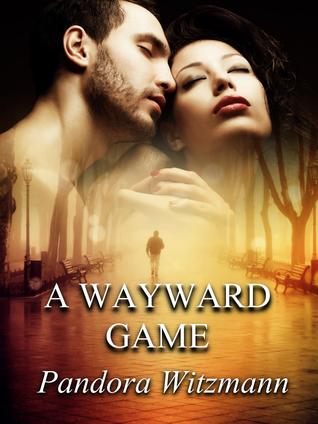 ‘I pull down my corset so that my breasts are exposed, and pushed up by the underwiring. I look at them in the mirror, at the round white globes of flesh surmounted by rosy nipples. They skim the hair on his chest as I move my body closer to his…We kiss: a long, deep, needy kiss. I pull away, feeling a little breathless, and sit down on the edge of the chaise longue, parting my legs.
“Kneel,” I say.’
I loved the imaginative depiction of the sex play between the male and female leads in this story. All sorts of erotic SM scenarios are explored, for the Domina Katherine is highly inventive.
This novel is really exceptional; it actually extends the borders between genre and literary fiction; and that’s no small achievement, particularly regarding erotica.
It was a real delight to read a story with such writing. This also a mystery, so it’s quite cross genre – and it’s all told with brilliant prose and sensitive writing as impressive as anything you’ll find in ‘straight’ literary fiction.
These characters are sympathetic and human, and given that the male lead is a policeman, and I don’t exactly have a glowing view of law upholders generally, this was another indication to me of just how good the writing is.
Quite apart from its Genre Bending, this novel is also original in all sorts of unexpected ways. For instance, here one character is talking to the other: -
‘“You don’t always have to be so cool, you know. Everyone’s allowed a few moments of vulnerability.”
“I can’t afford them.”
“You can.”’
The one who’s cut off so much from showing human weakness is the female lead. A man who asks a woman to open up emotionally, because her previous experiences have left her wishing to appear detached and invulnerable: how often do we come across that in a story? Of course, we come across it repeatedly with the male lead; in fact, fixing the inside of an emotionally challenged man’s head is the only area of mending at which females are conceded to be skilled; I found this role reversal so refreshing.
For adopting a careless, dominant pose is true not only of Katherine’s role in this ‘Wayward Game , of the title, of which the couple play various versions, perceived and otherwise, but of her life in general; Katherine is a woman who in reality has been hurt and shocked by how brutal life can be; disappointed in her personal life and her career, she takes refuge behind an appearance of detached invulnerability.
Katherine’s emotional life is in fact bound up (no pun intended!) with the disappearance of Diane Meath-Jones eight years since, and she devotes a great deal of energy to trying to find new evidence to re-open the police investigation; she suspects the woman’s old lover of murdering her. As an ambitious young journalist, she began the campaign and it threw a shadow over her career prospects; now she runs a website devoted to this case, works as a free lance journalist, and is cut off from her emotions.
It is only when she transforms herself into her Domina persona that she feels truly alive,and powerful.
And, writing of refreshing changes – guess what – the male lead actually dares to have a body that falls short of the ideal, and that IS unusual in erotica: -
‘When he sees himself naked in the mirror, he once told me, he sees only a pale and unprepossessing man with body hair and a slight paunch: a sight vastly removed from the toned, buff bodies held out as the masculine ideal in magazines and on TV programmes.’
The writing is often so evocative and sensitive that I was startled, finding my own thoughts and feelings exactly captured in of all places, a mystery story with a strong erotic element. For instance: -
‘I might be ten years old again, lying in my narrow bed in my parents’ house, listening to the rain beating at the window and the wind screaming down the chimney and knowing that I am safe.’
There a many other examples, but I’m leaving the reader to discover them for herself.
The mystery element is absorbing, too.
My only complaint about this story is that I’d have liked to know a bit more about how the incongruous coupling of the upholder of law and order and the establishment- challenging journalist came about: how did they meet? I also wanted to know more about with how many lovers Katherine had played this game, and how she, once the shyest of young girls, had been drawn into it originally.
However, it may be that the writer intends to supply these details in another story about this couple, and my wanting to know these things is after all, an indication of how lifelike I found the characters; someone once said to me that if you find yourself thinking about an author’s characters as if they were real people with a history after you’ve finished the book, then that shows that they were brilliantly realized.
Altogether, a excellent read. I’m hoping to enjoy more from Pandora Witzmann in the future.
http://www.amazon.co.uk/Wayward-Game-Erotic-Thriller-ebook


November 27, 2014
Interview of Emile Dubois (villainous hero of ‘That Scoundrel Emile Dubois’) by Laura Lee

Here’s an interview with one Émile Dubios…
Laura Lee: Come in. Sit down. Would you like something to drink?
Émile Dubois: Thank you, Madame. The red wine for a certainty. Georges – my right hand man, you know, though some might spread the rumour that he was my companion in crime – organized this interview. You do things very differently to how we went on in the late eighteenth century – and I speak not only of your strange inventions.
Laura Lee: Which is the first region your eyes would wander to if you were to ever see (gf/bf/wife/husband) naked?
Émile Dubois: I confess myself astonished, Madame, by the familiarity of that question, and from a lady, too. Surely, the secrets of the bedchamber –
Georges (springing out from behind a curtain). Hoighty Toighty, Monsieur, as my Agnes would say. I can answer that one; he has ever been enslaved by his wife’s derriere and for sure, it is ample enough to attract attention.
Émile Dubois: (leaping up) Tais toi, you insolent lout, how dare you speak so of my angel?
Georges: I am fond indeed of Madame Dubois too, but facts is facts.
Laura Lee: Have you ever been caught naked by someone?
Émile Dubois: I do not clearly remember, Madame –
Georges: Of course he has. Biggest rake in all London society at one time.
Laura Lee: What is the one word in your vocabulary that you use excessively?
Émile Dubois: You will not be surprised to learn that I use three most often: ‘Tais toi Georges’.
Laura Lee: Personally, do you think size matters in reality?
Georges (sniggers vulgarly): Size of what?
Émile Dubois: If you refer to height and width of the whole body, Madame – and I can scarce credit you refer to anything else, liberal as your age is – then for a man in a mill – that is the term for a fist fight of our age, for sure size does matter. If you speak of the ladies, then our age appreciated female curves as you will see from the paintings. As for a man’s most intimate proportions – I am silent on that point, however nature has endowed me.
Laura Lee: Who is the biggest jerk/bitch you’ve ever come across in your life and why?
Émile Dubois: As a gentleman, Madame, I would not refer to a member of your sex by such a term, whatever the provocation, even That Jade Ceridwen Kenrick.
Georges: You can answer about old Kenrick, though.
Émile Dubois: For sure Goronwy Kenrick qualified as this ‘Jerk’ of whom you speak. A most rebarbative man. He set his siren wife upon me with her hypnotic powers so as to draw me into his schemes for time travel. He tried to sink his disgusting fangs into ma chere Sophie and forced me into co-operating with him by threatening to attack the human members of my household. Besides that, he tortured me by showing me visions of the tragedy that had overtaken my younger siblings. I have never wanted to kill anyone so much.
Georges: Tais toi, Monsieur! Madame will believe the rumours about our violent past to be true.
Émile Dubois: Impossible – the blather about our being Gentlemen of the Road was mere idle chatter.
Laura Lee: Have you ever accidentally and yet intentionally kissed someone or tried kissing someone?
Émile Dubois: Under a trance, yes. Ceridwen Kenrick made me do so. Her beauty was possibly an excuse, but ma pauvre Sophie took a dim view of the business.
Laura Lee: What is your favorite color of socks to wear?
Émile Dubois: Madame, in my age we do not wear these how you say, socks. Stockings, yes.
Laura Lee: Women/Men or Cars?
Émile Dubois: Ah, those horseless carriages that create such disruption? Horses are by far a better mode of transport and a good form of exercise, enfin. As for which of the three I find most interesting, as a young man about town, I was fascinated by your sex for a certainty.
Laura Lee: If you try to fail, and succeed, which have you done?
Émile Dubois: You have stabbed yourself in the foot, perhaps? Your pardon, Madame; in our age we do not go in for what you call introspection. Life is much more comfortable so, especially for a scoundrel such as myself.
Laura Lee: When was the last time you felt possessive?
Émile Dubois: You saw it in me, minutes since, when Georges had the audacity to speak of my wife’s wonderful derriere.
11) What is the most embarrassing moment you’ve experienced in your lifetime?
Georges: (guffaws) I will respond to that on Monsieur’s behalf – it was when, against all advice, he would go to Kenrick’s evil household in search of diversion with Madame Kenrick from his obsession with Sophie. Of course, he was bitten – and in the Most Compromising Circumstances, what we call en flagrant délit, at that. He had to fight his way out of the house besides, and came back in a fever to spew upon the most magnificent pair of boots that ever I owned.
Émile Dubois: (wearily) Georges, would it cause you great anguish firstly, never again to mention those boots and secondly, not to reveal any more of my most humiliating secrets to Madame?
Laura Lee: Thanks for your time today!
Émile Dubois: (rising and bending over her hand to kiss it). Your servant, Madame.
Georges: Had he ever truly been a servant, he would not say he was yours with such a flourish.