Lucinda Elliot's Blog, page 32
March 20, 2014
Combining Popular Taste and Literary Merit

The arrogant Chrysaleon, the anti hero of Renbecca Lochlann’s brilliant series ‘Child of the Erinyes’ is headed for such a fate as this in his defiance of Athene’s curse..
The gifted writer Mari Biella wrote two interesting posts recently about the decline in publishing opportunities for what was once classified as the ‘mid list’ authors and books not easily classifiable.
Here’s the link to the second post:
http://maribiella.wordpress.com/2014/03/14/whatever-happened-to-the-mid-list-part-2/#comment-815
This issue, of course, raises questions about traditional and self publishing that must concern every author.
Here’s the off the top of my head response I posted (ignore the later one where I mixed up Kobo and Smashwords!).
Though I am not as kind as you about traditional publishers – I still think that they don’t deserve to make a profit if they won’t take risks – that being the traditional political economics justification for an entrepreneur’s making money after all – they are only part of the problem as you say.
‘On niche writing particularly, a problem has always been unfortunately that the majority of readers have frankly tacky taste – romantic fantasies for women and He Man Action stuff for men. Escapism always seems to have been the essence of it.
‘As you know, I have been exploring the appalling works of that Victorian best seller of sloppy trash Charles Garvice, who aimed to please a ‘newly literate’ class of readership, servant girls and nursemaids, etc,(though I believe during World War One ordinary soldiers in the trenches started to read his stuff, too). It’s a sorry comment on the continuing sexism and violence of our society that these tastes still should go on today.
There was a time in the eighties (here I go: ‘In my young days we…’) when educated women didn’t admit to reading romance, but now its made a great resurgence, the only difference being it’s more sexually explicit. It can sell very well on Amazon, and in catering to this less than elevated taste, an unknown can make writing profitable. I know intelligent, witty, feminist thinking women writers who write far beneath the level to which they could aspire and never venture outside their chosen genre – because they want their writing to be profitable, and the chances of doing that through producing something outside mainstream taste are dismally slim.
I don’t want to give the impression that I’m in any way condemning authors for making these choices (though for me any female author who panders to regressive rape fantasies is another thing entirely!) Nevertheless it is a shame that the need to conform to public demand reduces these writers’ choice of subject matter, style, portrayal of character, etc.
As far back as 1833 Aleksandr Pushkin saw the problems of the two trends in literature – popular taste and literary merit, and tried to combine popular appeal, with a stirring, romantic storyline with literary merit in ‘Dubrovsky’. (There I go again; I’ll be on to Gaskell’s ‘Sylvia’s Lovers’ next). I thought he did a good job of it, but I’ve only been able to find one piece of literary criticism on it, and the opinion of that author on the romantic aspect of that robber novel was scathing. Combining the two SEEMS to be the obvious solution, but is very difficult.’
This is, of course, only one aspect of a complex problem, but one by which I am particularly fascinated and on which I have posted before (Regular readers can hardly fail to have noticed that I’ve posted a lot on Pushkin’s attempt to combine the popular and a work of literary merit in his robber novel ‘Dubrovsky’, one of my favourite novellas, too!).
Writing work which hopefully has some literary merit but which has a popular appeal remains my ambition. Many insist that you can’t combine the two. I don’t see why; maybe I’m being obtuse (waves long ears and says ‘Hee Haw!’) but I don’t see why this is presupposed at all.
There does seem to be a certain distaste for genre fiction amongst readers and writers of literary fiction – it’s seen as rather tacky, somehow, indicative of bad taste, like preferring tinned peaches to the real thing, say, or being shameless enough to say you think some distorted Hollywood version of a classic work far excells the real thing.
This attitude may be changing, and I hope it is. I admit at once that I haven’t had the time I’d like to have to read up on much recent discussion of the matter on the web.
I have been looking for serious (in so far as I can be serious about anything!) discussion of the feminist issues in historical romance, particularly the most famous authors, ie, Georgette Heyer and Barbara Cartland, and that is quite thin on the ground. I haven’t been able to find any books specifically dealing with it, though I even started a thread on Goodreads asking for recommendations (I still haven’t got any). Germaine Greer’s ‘The Female Eunuch’ does touch upon the matter in one chapter, and her acid ridicule of a couple of Cartland and Heyer’s heroines still outrages historical romance lovers today – but that was four decades ago.
I have heard it claimed that in genre fiction, the plot is everything: in literary fiction style is predominate.
To suggest that they are mutually exclusive seems to me mistaken.
After all, wasn’t there a certain playwright of the late sixteenth and early seventeenth century (they didn’t have novels then) who made quite a thing out of combining popular taste and literary merit?
Shakespeare had to ‘write for the market’. He was in it to make money as well as, no doubt, a desire to write good plays. I don’t think many people would argue that this generally affected the merit of his work.
For sure, he was a genius: but while we almost certainly won’t be able to come near his stature as a writer, that doesn’t mean that we shouldn’t do our level best.
I know of a number of talented women writers who limit their style to that of popular romance. This isn’t because they have limited imaginations, are uncritical of the relations between men and women in our current society, lack wit, or are incapable of appreciating good literature or writing it themselves.
I want to make it clear that I am not attacking these writers, or anyone, for writing for the market .
What I am saying is that it is a shame that many writers give up on the idea of experimentation because it is so difficult to escape what might be called the Genre Trap.
They write genre fiction which tends not to experimental in tone because they want to be successful writers and to make a profit out of writing. In this era, escapist fantasies of various sorts seem to be particularly popular.
There seems to be something about the current decade which encourages escapism – it’s rather as if people have lost faith in the ability of ordinary people to change unpleasant things about our current society, or as if in an atmosphere of economic uncertainty people have lowered their eagerness to experiment and opt for adventure in real life.
Continuing sex role differentiation has led to women reading romantic fantasies and men reading adventure ones (though it’s worth noting that some modern fiction seeks to combine the two for women more than has been the case in the past).
This reading matter being largely escapism, the question is, is it impossible to combine it with literary merit?
Again, why is this so often assumed to be the case?
Think about Mary Shelley’s ‘Frankenstein’ or Emily Bronte’s ‘Wuthering Heights’ (for all it’s faults, undeniably a brilliant work). These classic novels were both written as Gothic entertainment (with a serious underlying purpose).
I have quoted before the scathing remarks by Paul Debreczeny in ‘The Other Pushkin’ on Aleksandr Pushkin’s attempt to combine adventure and romance with fine writing in his robber novella ‘Dubrovsky’.
In this project, Pushkin encountered problems that all ‘serious’ (or comically serious) writers who aspire to produce well written genre material must encounter.
The critic points out, for instance, that while young Dubrovsky is at first introduced with the same ironic distancing used with regard to his father and the tyrannical landlord Trokurov, soon this is abandoned and what follows is ‘the unhumorous stock-in-trade of romantic literature’. The romantic scenes between Dubrovsky and his love interest Maria are ‘thrown in with the utmost crudity’ (of writing style, that is, lol, not sexual explicitness depicted vulgarly: poor Dubrovsky gets no closer to Maria than kissing her hand).
Then, Debreczeny complains that while combining ‘a serious novel of social protest’ with a robber theme could be done, Pushkin fails to make the connections.
That it was rather difficult to write a ‘social protest novel’ that could bypass the censorship of Tsar Nicholas’ notorious Third Section is an additional complication not, thankfully, suffered by most modern authors and which Debreczeny perhaps might have taken more into account; the criticism about an increasing lack of humour in the depiction of the love affair between the young brigand and his enemy’s daughter is valid.
Pushkin was clearly aware of the difficulties of his project and while he could have resolved these by revising the work, instead he seems to have lost his faith in his ability to resolve the contradictions and with numerous excuses, abandoned it never to return to it.
This was a pity, as a successful attempt to combine a novel appealing to popular taste and literary merit was lost.
A lack of ironic distance, of humorous observation, is often a fault of romantic stories generally and I think a quite unnecessary one. Pushkin, unused to writing romantic fiction, fell into the typical style of an uncritical presentation of the handsome, dashing, wronged hero, and it does detract from the style of the later chapters of ‘Dubrovsky’.
This was surely unnecessary; a certain measure of ironic distance from the author needn’t ruin the emotional strength of romantic episodes.
There have been some recent attempts made to bridge the gap between work of the standard of literary fiction and genre fiction, and one excellent example is the brilliant self published author Rebecca Lochlann in her series ‘The Child of the Erinyes’.
I’ve been completely drawn in to these stories, combining the level of research of Mary Renault as they do with a feminist interpretation of history. They are exciting, thought-provoking, expertly written page turners. I can never put them down.
Here’s the link, and I envy you starting on this treat:
http://rebeccalochlann.wordpress.com



March 13, 2014
Fanny Burney’s ‘Evelina’ as an eighteeenth century ideal young woman…


I’ve been reading ‘Evelina’ the first book by Fanny Burney (What a name, eh? It’s obscene in the UK, but I think only means ‘bum’ in the US and Australia) these last couple of weeks when I’m not wondering how to squander the millions I make in royalties, pleading with people not to read my books, etc, etc.
I’m reading this book mainly for the social background, as I think you can get more of the feel for a period through it’s fiction than books about the period.
Well, you get some understanding of the mindset and social mores of the middle and upper classes, that is. For the others, you have to read between the lines as they only appear as housemaids, boys delivering the milk or driving conveyances and so on; sometimes as robbers and rioters…
Of course, most of the population would have been illiterate back in the eighteenth century, and considered unworthy of mention besides, with their history unwritten, or as asides: ‘We went to relieve a family who had suffered great misfortune in the village’ etc.
I always ask myself of heroines of the eighteenth century – Samuel Richardson’s Pamela and Clarissa are prime examples – how did women live with themselves in that period, obliged to deny so many of their most basic feelings, anger, the desire for independence, sexual feelings, and seen as permanent minors as they were?
Was it a case of ‘false consciousness’ and ‘denial’? Did they spend a great deal of time praying and agonising about falling so far beneath the idealized image of womanhood, beset by wicked thoughts as they must have believed themselves to be?
We can dismiss Pamela and Clarissa as a man’s ideal version of womanhood – but what do we make of Fanny Burney’s Evelina?
By modern standards she is not only innocent, but repressed and lacking in any understanding of her own motivation; but you may be sure her worthy guardian has made sure she never read a novel, so her naive and unconscious surrender to romantic love from her first meeting with the hero is fully understandable.
Evelina has been rejected before her birth by her wicked rake of a real father, who cast off her mother, whose tragic fate serves as a sort of dread example and subtext throughout the novel.
She has been brought up by her goody-goody Vicar guardian. This man seems as devoid of humour as he is of vice (that sounds like a phrase from Ms Burney – I wonder if I’m alone in always picking up a bit of an author’s style).
Fanny Burney’s attitude towards woman in a male dominated society was, of course, far more sophisticated than that of the priggish Richardson with his complacent avocation of puritanical, self-serving morality. The structure of the novel, written in the epistolary style like this predecessor, follows on from Richardson, but but like the later Austen, she shows a good deal of sophistication with regard to shades of meaning and the fine shades of distinction between ‘good’ and ‘evil’, between the necessary conflicts and compromises in reconciling the demands of society on women with their individual notions of integrity.
Her heroine is naturally lively and wants fun; she knows she shouldn’t; she should be happy living in retirement with her guardian and only considering worthy applicants of irreproachable morals and equal status for her hand – but she’s depicted as falling guilelessly in love the handsome, charming and gallant Lord Orville, who would be her social superior by far even if her legitimacy isn’t disputed.
In a novel which – intentionally or unintentionally – depicts a series of patriarchs, Lord Orville is one of the most liberal and respectful of the breed and his intentions towards Evelina are always honourable.
By contrast, his friend, Sir Clement Willoughby (one wonders if Jane Austen’s own scoundrel Willoughby in ‘Sense and Sensbility’ was named after him), whilst full of compliments and romantic declarations and while acting as if besotted by the heroine and as her willing slave, in fact seems to have dubious intentions and his lack of true gallantry is shown by his joining with the malicious and ungallant Captain Mirvan in tormenting and insulting Evelina’s foolish and excitable grandmother.
It is a weakness in the novel that Lord Orville is depicted a good deal less clearly than the rascally Sir Clement – and his charm and wit is a far less obvious. Sir Clement Willoughby may be a villlain, but he comes across as fully warm and human – the hero does not.
One assumes that Madame Duval is intended by the author as an example of the sort of older woman not to become. Though she has acquired no dignity, she seems to have a younger lover instead, a Frenchman who has accompanied her to the UK, and at one point Evelina is astounded to surprise him in her grandmother’s bedchamber.
A wish to dance and have fun in late middle age, to try and appear younger through the use of false hair and cosmetics and to enjoy the attentions of younger men makes her an object of savage ridicule from men particularly throughout the book.
An anonymous critical essay on the ‘ENotes’ website on Fanny Burney sums up some of the conflicting themes and tensions in the novel concisely:-
‘Burney portrays the difficult position contemporary women were in—showing young women aggressively pursued as sexual objects and society’s rejection of unmarried older women. Evelina matures through the course of the novel from the isolated innocent safely under Mr. Villars’s care to a more experienced woman who wisely keeps her own counsel and cultivates a sense of honor. She also spends a good portion of the novel in search of her own identity, which can only be realized by gaining legitimacy through her father’s name. Defying social convention, Orville intends to marry Evelina with or without her father’s recognition of her and despite her lack of fortune. Once she is acknowledged as her father’s heir and takes his name, she gives it up and takes Lord Orville’s…’
We may be sure that once safely married to Lord Orville, Evelina gives up most of her spirited commentary, just as in ‘Pride and Prejudice’ Elizabeth Bennet, safely engaged to Mr Darcy, tactfully forgets how he once described her as ‘Tolerable – but not handsome enough to tempt me’ and is shown defending him tearfully from Mr Bennet’s criticism without so much as a trace of her former humour: – ‘He is perfectly amiable…Pray do not pain me by abusing him’…


March 3, 2014
Sophie turns out to be no pushover
Rate This
To continue then, with Sophie; I always see her as being, like Lucie Manette in ‘A Tale of Two Cities’ the embodiment of loving kindness. Unlike Lucie Manette, though, she is a female character whom the author wanted to show developing in independence as the story goes on.
She starts off submissive (as becomes a true Regency heroine) foolishly romantic, beguiled and in awe of her rich relative Émile Dubois, for so long her hero for his determined attempts to save his parents in France.
In true Gothic style, Émile on marrying Sophie takes her off to live with him in an isolated mansion staffed by brigands (in his case, fellow villains from his highwayman days, his fellow highwayman cum valet Georges and their jolly accomplice Mr Kit, plus his redoubtable wife Dolly).
In fact, Plas Planyddwyn is a comparatively modern house and situated just outside the village. I am unable to find a picture of a white plastered house, but perhaps it looked something like this. Monsieur thought it rather cramped, while Sophie finds it perfect.
Sophie found the house Emile rented near Llandyrnog perfect – but he thought it very small.

Sophie found the house Emile rented near Llandyrnog perfect – but he thought it very small.
This is something like my image of Dubois Court, Emile’s own house (then rented out) in North Buckinghamshire…

This is something like my image of Dubois Close, Emile’s own house (then rented out) in North Buckinghamshire…
Even then he is changing, though mostly he is his old, good natured if rascally self, and no doubt he can’t see how convenient it will be for him should he decide that the threat from the Kenrick’s is such that she must live as a virtual prisoner in the house.
As he starts to change, and the threat from the Kenrick household increases, he decides that it really is not safe for Sophie to leave the grounds without being accompanied by himself, or Georges, or Mr Kit…
The sensible thing would be for her to join him. It would not only serve his bloodlust, it would protect her from the Kenrick threat.
Here, to his outrage, he runs up against stubborn resistance.
Sophie has been brought up, like all girls of that era, to believe that a wife should be obedient (at once stage, Émile points out cynically that she has after all, sworn to obey him during the marriage service).
However, Émile forgets that her favourite reading has been Samuel Richardson’s ‘Pamela’ and ‘Clarissa’. In these, the virtuous heroine is compliant towards the dominant male in all things but in the matter of spiritual integrity.
And this is the ideology that gives Sophie the strength to oppose Émile determinedly. She wont’ become a Semi Vampire like him because it would be tantamount to despairing of God’s mercy, and a serious sin…
Besides, she has the support of Agnes, as determined a girl as anyone could meet, who sees Émile’s transformation to a monster as clearly as it is obscured from his own understanding.
Émile has an unexpected fight on his hands…


February 28, 2014
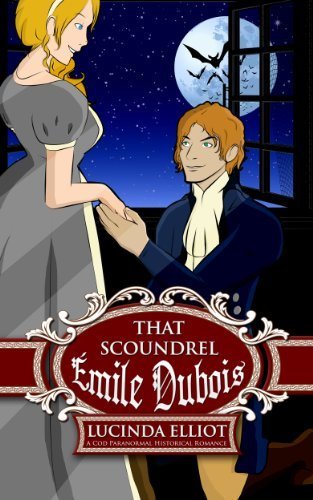
Free on 1 and 2 March 2014 – ‘That Scoundrel Emile Dubois’
On 1 and 2 March you can get this scoundrel for free on amazon.com
and on amazon.co.uk on

February 23, 2014
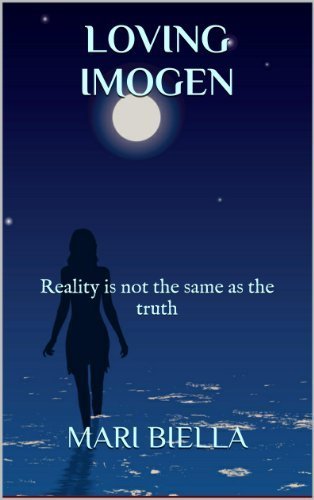
Tales of the Deep and Dark – Sometimes the Unconscious – Review of ‘Loving Imogen’ by Mari Biella
 I am very impressed by Mari Biella’s second book, a collection of stories, one novella and three short stories. Here’s the review I wrote for ‘Goodreads’.
This series of stories is an impressive achievement.
The writing is sensitive, sometimes humorous, lively and peopled with vivid characters.
The title story, ‘Loving Imogen’ deals tastefully, but realistically, with a relationship of a contentious sort – a love affair between a young girl and an older man. Daniel, the melancholy protagonist of this story, is anything but the lecherous stereotype of the middle aged man who becomes involved with a young girl.
There seems to be an echo of ‘Cymbeline’ here – and I’ve only just picked that up! When I was reading it I thought, stupidly, ‘A main female character called ‘Imogen’ and a man who bases all his faith in human nature on her physical fidelity – what does that remind me of? And it took me this long to work it out…Quick on the uptake as ever!
This story depicts a true love relationship, which both the girl and the man know must end unhappily, but find impossible to resist. Daniel, when we first see him in the beginning of the story, is a bitter, lonely man who has been unable to surmount the devastation of his life by this all absorbing passion for the lovable and intelligent, but flawed Imogen.
When Imogen turned unexpectedly up in Daniels’ life twenty years back, along with her taciturn soul mate, her twin brother, who, isolated by his speech defect was soundlessly devoted to his sister, and the twins recounted to Daniel their story of their abuse at the hands of their previous guardians, he was outraged knowing he could never aim such hatred and bitterness at such innocents himself.
Or could he?
‘Most people, Daniel thought: the innumerable hordes who managed expectations, shaped standards, and killed dreams. They seemed to embody everything that he had both yearned for and tried to escape from for his entire life. Had he ever been one of their number, really?’
‘The Song of the Sea’ is a short but fascinating exploration of an age old enemy of mankind, and its effect on the unlucky Jacob: -
‘Twenty years ago, as a young man sound of mind and strong of body, he went out to sea with his brother Isaac, and when he came back again, he was broken up, wild eyed, and deaf and dumb.’
This story touches obliquely on marine conservation issues, and I found myself asking all sorts of questions about it long after I had finished reading.
The third story had me mulling over questions long after I had finished reading it, as well. ‘Summer’ is a humorous study of repressed energy, of social and sexual frustration in the form of the Rectory ghost, who smashes things, plays malicious tricks and writes obscene abuse on walls.
Such goings on don’t fit in with a banker’s notion of reality at all: -
“‘Filthy, cowardly behaviour,” he (Peter) fumed, strutting up and down in front of the cold fireplace with a glass of scotch in his hand…’
But his overbearing ways won’t still the Rectory ghost…
‘Fragile Things’ is another short, but compelling story of another doomed love affair. It also depicts, as does ‘The Song of the Sea’ how a lurid episode lasting no more than minutes can completely change a life – or three…Here, the nature of the horror is prosaic and everyday, but the author’s delicate treatment of this triangle of characters is not: -
‘”People are fragile things’ ‘He (Shankley) once said, sucking on a cigarette. “Even the ones who don’t believe it, and act like they’re made of stone, like they don’t feel a thing. They’re fragile; they don’t last long, and they’re sad.”’
Full of the vivid word pictures that was one of the features that made her previous novel ‘The Quickening’ such a compelling read, Mari Biella has created a selection of fascinating and compelling stories in this selection.
You can buy the novel from Amazon.co.uk on


February 15, 2014
The (Must Have) Devoted Follower in the Classic Robber Novel

 The dashing hero – or anti hero – of classical robber novels has to have a Devoted Follower. It’s a must have accessory.
For instant Rinaldo Rinaldini has the ruffianly Ludovico. Pushkin’s Dubrovsky, by contrast, is spoilt for choice – all his band, who consist of his former serfs, are devoted. Perhaps the former blacksmith Arhip is best fitted for the role.
George Orwell in ‘Homage to Catalonia’ described the sort of man perfectly, I think – ‘The sort of man who would commit murder and die for a friend’. Personally, I have a great deal of sympathy for such an attitude – I find it in some ways far more understandable than cold calculation, a limited loyalty and an aloof moral attitude.
Accordingly, my own characters Émile Dubois and his cousin Reynaud Ravensdale, must have a devoted fellow scoundrel, too.
Georges Durrand is a handsome with his curly black hair, flashing dark eyes, devastating profile and muscular build, and can’t get over it. His self indulgent philandering in the days in Paris when he and Émile are running rival groups of robbers is notorious.
Just as the cynical Émile meets his fate in his ‘Miss Goody Two Shoes’ Sophie de Courcy, so Georges meets Sophie’s pretty, Tarot reading maid. Both of them, however, give in to temptation with another woman and accordingly end up as Man Vampires, and a menace to the women who they love.
I must admit, I thought Georges would have more admirers than he has acquired so far – unless women readers who find him appealing prefer to keep quiet about having a liking for such a ruffian (true, Émile is very violent, too, but his savagery is to some extent diluted by his intellect – Georges might be called an ideal type of a ruffian).
On the same topic, some readers have said how they admire Émile for going in to a fight to the death with Kenrick and his own devoted follower Arthur Williams to protect Sophie and the other women in his household; this when he knows as he does, having lost most of his inhuman strength that he chances are massively against him.
Yet nobody has pointed out that when Georges joins him in that desperate fight, while it’s certainly partly through devotion to his master – and to protect all the women in their house, too – it’s mainly to protect Agnes, who at this point refuses to have anything to do with him.
Poor Georges deserves some credit for unselfish devotion…
While Georges, though no intellectual, is a suitably efficient and unscrupulous partner in crime, fellow bandit and highwayman for Émile, Émile’s cousin Reynaud Ravensdale, another highwayman (the family is rather given to taking up that occupation) is a good deal less lucky in his own Devoted Follower, Jem Higgins, otherwise known as Longface. Longface is ineffectual, and has the most infuriating habit of leading the thief takers and Bow Street Runners directly to his master. Ravensdale longs to get rid of him…



January 31, 2014
A Round Robin from Kenrick

Dracula climbing down the wall of his castle, from a 1916 edition of the work.
 I, Goronwy Kenrick, receive so much of what you moderns call in your rebarbative parlance ‘fan mail’ that I feel I must reply ; yet, having no spare time (and that in itself is ironic, in view of my experiments with time, ha, ha!) I am taking advantage of another vulgar modern idea – the Round Robin. Humph!
I will discount the absurd prejudices of some of my correspondents , who have accepted, unquestioningly, the lurid and prejudiced account of my activities to be found in the guise of sensationalist literature – ‘That Scoundrel Emile Dubois’ by some insolent and frankly immodest female called Lucinda Elliot (really, we kept the matters of the bedroom shrouded in discreet silence in my day).
Yes, if some female readers are so sadly misguided as to regard that French ruffian Dubois as some sort of romantic figure – I have only to say that it was dire necessity alone which compelled me to usher through my front doors a former cut throat from the gutters of Paris.
A disgusting fellow, I assure you, fond of a vulgar brawl and loutishly blunt, accusing me of practicing blackmail upon him – and unable – Heh Heh – as I have had occasion to remark elsewhere, to keep his hands for long either off the public’s pockets or off their wives, either. His boor of a lackey was even worse – my own milling manservant Arthur Williams being an upright citizen in comparison.
What was I saying, my good people? Ah, yes, fan mail. I have just accidentally read a communication that has put me out of temper – an insolent scrawl referring to me, if you please, as ‘creepy’ and ‘flesh crawling’.
It even goes on to suggest that I am ‘dirty minded’.
I, ever the prize romantic ? I would have the writer of that contemptible missive know, that I only ever loved one woman – my wife!
Yes, that parvenu Heathcliff – created, I believe, circa 1848 – cannot compete with me as a Byronic hero. No, indeed. I not only loved one woman, and mourned her death with passionate devotion, but I have tried to subvert time to achieve reunion. Did that vulgar, porridge eating Yorkshire farmer stretch his imagination so far?
Oh yes, it is true, I remarried – but love was never in question in that match. We both wanted the same thing – reunion with a lost loved one; I knew Madam Ceridwen would be useful in furthering my aims. further, I will admit, I do enjoy watching the effect of the second Mrs Kenrick’s beauty on foolish young males (like Dubois, only a month married, dear me!).
Heh, Heh.
Dubois’ little wife was something of a peach – blonde and curvaceous as she was. I cannot imagine what she saw in the ruffian, apart from as a means of escape from her tedious life as a Dowager’s companion.
I once found myself having arrived quite by accident in her bedroom. Well, not quite by accident – I had heard she had a sore throat that day, and I had just remembered an infallible cure for the same – but that foolish Earl Ynyr Llewelyn had made her drink some – some – a drink made of – gar – garlic, that most disgusting of herbs. Weak at the knees, I had to retreat, my handsome face haggard with distress.
I make no doubt even that fleeting glimpse of me, my well modelled mouth ready for a kiss, roused a flutter in her tender bosom, though.
Damn me, I am called away. I must needs ask my many admirers to wait until the next post – Ha! Ha! – to satisfy their longing to hear more from me and to sign off as your own
Goronwy Kenrick
Vampire, Inventor and Mathematical Genius


January 11, 2014
Interview with Emile Dubois…
Here’s an interview with one Émile Dubios…
Laura Lee: Come in. Sit down. Would you like something to drink?
Émile Dubois: Thank you, Madame. The red wine for a certainty. Georges – my right hand man, you know, though some might spread the rumour that he was my companion in crime – organized this interview. You do things very differently to how we went on in the late eighteenth century – and I speak not only of your strange inventions.
Laura Lee: Which is the first region your eyes would wander to if you were to ever see (gf/bf/wife/husband) naked?
Émile Dubois: I confess myself astonished, Madame, by the familiarity of that question, and from a lady, too. Surely, the secrets of the bedchamber –
Georges (springing out from behind a curtain). Hoighty Toighty, Monsieur, as my Agnes would say. I can answer that one; he has ever been enslaved by his wife’s derriere and for sure, it is ample enough to attract attention.
Émile Dubois: (leaping up) Tais toi, you insolent lout, how dare you speak so of my angel?
Georges: I am fond indeed of Madame Dubois too, but facts is facts.
Laura Lee: Have you ever been caught naked by someone?
Émile Dubois: I do not clearly remember, Madame –
Georges: Of course he has. Biggest rake in all London society at one time.
Laura Lee: What is the one word in your vocabulary that you use excessively?
Émile Dubois: You will not be surprised to learn that I use three most often: ‘Tais toi Georges’.
Laura Lee: Personally, do you think size matters in reality?
Georges (sniggers vulgarly): Size of what?
Émile Dubois: If you refer to height and width of the whole body, Madame – and I can scarce credit you refer to anything else, liberal as your age is – then for a man in a mill – that is the term for a fist fight of our age, for sure size does matter. If you speak of the ladies, then our age appreciated female curves as you will see from the paintings. As for a man’s most intimate proportions – I am silent on that point, however nature has endowed me.
Laura Lee: Who is the biggest jerk/bitch you’ve ever come across in your life and why?
Émile Dubois: As a gentleman, Madame, I would not refer to a member of your sex by such a term, whatever the provocation, even That Jade Ceridwen Kenrick.
Georges: You can answer about old Kenrick, though.
Émile Dubois: For sure Goronwy Kenrick qualified as this ‘Jerk’of whom you speak. A most rebarbative man. He set his siren wife upon me with her hypnotic powers so as to draw me into his schemes for time travel. He tried to sink his disgusting fangs into ma chere Sophie and forced me into co-operating with him by threatening to attack the human members of my household. Besides that, he tortured me by showing me visions of the tragedy that had overtaken my younger siblings. I have never wanted to kill anyone so much.
Georges: Tais toi, Monsieur! Madame will believe the rumours about our violent past to be true.
Émile Dubois: Impossible – the blather about our being Gentleman of the Road was mere idle chatter.
Laura Lee: Have you ever accidentally and yet intentionally kissed someone or tried kissing someone?
Émile Dubois: Under a trance, yes. Ceridwen Kenrick made me do so. Her beauty was possibly an excuse, but ma pauvre Sophie took a dim view of the business.
Laura Lee: What is your favorite color of socks to wear?
Émile Dubois: Madame, in my age we do not wear these how you say, socks. Stockings, yes.
Laura Lee: Women/Men or Cars?
Émile Dubois: Ah, those horseless carriages that create such disruption? Horses are by far a better mode of transport and a good form of exercise, enfin. As for which of the three I find most interesting, as a young man about town, I was fascinated by your sex for a certainty.
Laura Lee: If you try to fail, and succeed, which have you done?
Émile Dubois: You have stabbed yourself in the foot, perhaps? Your pardon, Madame; in our age we do not go in for what you call introspection. Life is much more comfortable so, especially for a scoundrel such as myself.
Laura Lee: When was the last time you felt possessive?
Émile Dubois: You saw it in me, minutes since, when Georges had the audacity to speak of my wife’s wonderful derriere.
11) What is the most embarrassing moment you’ve experienced in your lifetime?
Georges: (guffaws) I will respond to that on Monsieur’s behalf – it was when, against all advice, he would go to Kenrick’s evil household in search of diversion with Madame Kenrick from his obsession with Sophie. Of course, he was bitten – and in the Most Compromising Circumstances, what we call en flagrant délit, at that. He had to fight his way out of the house besides, and came back in a fever to spew upon the most magnificent pair of boots that ever I owned.
Émile Dubois: (wearily) Georges, would it cause you great anguish firstly, never again to mention those boots and secondly, not to reveal any more of my most humiliating secrets to Madame?
Laura Lee: Thanks for your time today!
Émile Dubois: (rising and bending over her hand to kiss it). Your servant, Madame.
Georges: Had he ever truly been a servant, he would not say he was yours with such a flourish.
This cross questioning of Monsieur Dubois is all part of a blog tour with My Family’s Heart Book Reviews blog tour, running from 21-28 January.
http://tonyaloveslife.wordpress.com/2013/11/17/blogger-sign-up-that-scoundrel-emily-dubois/
https://www.facebook.com/events/644227585600129/


December 26, 2013
Moral Transformations of Scoundrels Through the Love of a Good Angel
 I was rambling about how the whole thing about reading Vulpius, Gaskell etc and brooding on their revelation of character, especially as regards moral transformation of a ‘bad’ into a ‘good’ person, made me think again about how much revelation of a character’s’ mental life is sufficient to make that character deep and rounded without being as it were, over exposed, how much mystery there should be, how far the narrator should be omniscient in this regard, etc etc.
As I said in my last, too, the depiction by Vulpius of Rinaldo Rinaldini’s mental life and especially his becoming disgusted with his lifeof violence is patchy, so that he certainly doesn’t come across as a rounded character, with human weaknesses (his passion for women hardly counts). If the author had stuck to the goal of writing and exciting story, that would be less of a problem – it is only because of Vulpius’ claim that his novel is ‘moral’ and his hero high minded that the reader is struck by this inadequacy.
Rinaldo is shown gradually becoming disgusted by his life as a ‘Captain of Branditti’. This moral transformation seems to start when he falls in love with the virtuous Aurelia . At first, he appears to delude himself about how he can deceive her about his previous character if he can escape with her.
When he finds out that Aurelia is being sent to a nunnery – whether willingly or not is far from clear – he says he will ‘bring about the contrary’ and lays plans for his men to seize the carriage and bring her to him. This is foiled, however, by an attack on his band by government troops.
As I said in my previous post, his intentions when he and his band attack her wicked husband’s castle are far from clear – whether he intends to abduct her or not – but after her plea to be allowed to join her mother in a nunnery, he escorts her there and his outburst ‘Now I feel what I am!’ is presumably meant to indicate a dawning realisation that no idealistic girl is going to like his chosen career.
It is only towards the end of the novel, when Rinaldo is on the run from both the Old Man of Fronteja and his old associates as well as the government authorities that he seems to be willing to put much effort into breaking away from his fellow bandits – but all his efforts are foiled by the ubiquitous Old Man who insists that it is Rinaldo’s fate to become a military hero. As I have said too, the moral conversion aspect is dealt with rather sketchily.
Dislike Richardson’s Pamela as I do – and the author really has achieved something to make me dislike a young girl powerless and trapped by a lecherous employer and potential rapist – she can’t be accused of not having a vivid mental life, a defect very obvious in Mr B, the anti hero whose moral transformation she achieves.
As I hope to read Fanny Burney and Maria Edgeworth this year, I’m expecting to encounter something on the same lines from them, but hopefully, with more sympathetic heroines. However, as in Richardson, as in Vulpius, a reader should expect the writer’s understanding of the mind to be limited by the understanding of the age in which they lived (the only exception to this limitation appearing to be – of course – Shakespeare).
As for Richardson’s rake who reforms – Mr B – he is always seen ‘from the outside’. We never know what he thinks except in so far as he reveals it through his speeches. These, for the most part, are a lot of self justifying nonsense, so one assumes his thoughts are on the same lines, along with a lot of pornographic visualisation of Pamela’s lovely bosom and ‘sweet shape’.
We see him only through Pamela’s naïve eyes, first as a black hearted wretch and then as her fiancé and ‘Dear Master’. It was fairly astute of Richardson, this not including any confiding letters from Mr B in the novel; if we knew what he was scheming the plot wouldn’t work so well.
Though Mr B accepts that he has been wrong about Pamela, how far this acknowledgement of her virtue and softening towards her is meant to illustrate a general moral change is far from clear.
Usually, Jane Austen’s heroines are charming and a pleasure to read about. It us unfortunate that the most virtuous of them, Fanny Price in Mansfield Park, who is meant to be a personification of kindness and virtue, comes across as priggish and prudish, so horrified by the thought of an elopement that she likes awake shaking with disgust all night.
When the immoral, heartless flirt Henry Crawford (as near a character to a villain as you are likely to meet in Jane Austen) decides to trifle with her feelings, he ends up genuinely falling for her, a delightful touch. She is cold to him throughout, much preferring the virtuous and bland Edmund Bertram.
Yet, Henry Crawford ‘s passion for the strict Ms Price does come across as genuine – as his being persuaded into a lukewarm elopement with the former Maria Bertram does not.
I have to join with Jane Austen’s sister Cassandra in wishing that the author had brought a repentant Henry Crawford to win Fanny Prices’ grudging affection – so unfortunately, I must be something of a romantic.
Henry Crawford’s mental processes are only vaguely touched on by the author. From what one learns of them, one gets the impression she is puzzled by such a superficial man, though heartily disapproving. His basic motivational forces seem to be a combination of vanity, cynicism and laziness.
His attempt at moral conversion seems to have been mainly inspired by a desire to win Fanny Price. We do hear that he loved her ‘deeply as well as passionately’ and that he could have won her love had he been more persistent in his attempt to be virtuous, and this gave me at least a feeling of regret that the story ends as it does.
Henry Crawford, then, is the only character in Jane Austen who comes near to being a villain who attempts a moral transformation, and he fails dismally.
Mr Darcy has a moral transformation – but he is no villain; priggish and ungracious he may be – but he is always a Good Man, though Elizabeth thinks that he is capable of treachery.
The later, infinitely less skilled (though best selling) writer of romances in the late Victorian era, Charles Garvice, portrays his characters’ mental lives almost as sketchily as Vulpius a century earlier. In that strange combination of boys’ adventure story and sentimental romance that makes up ‘The Outcast of the Family Or a Battle Between Love and Pride’ we know very little of the thoughts of Lord Heriot Fayne, the said outcast.
This hero is given a basic motivation for a rebellion which doesn’t seem to be owing to a clash of ideas but rather on a sense of outrage at being neglected by his parents.
As to what goes on his head, perhaps not much does, as we only hear of it in crisis points of the novel; for instance, when falling in love with the heroine Eva he decides that he must reform, and at once. He paces about, thinking so hard that his face becomes haggard with the unaccustomed effort. After some mental and facial contortions, he decides that he must break away from his decadent companions and their habit of drinking hard, brawling in music halls and betting on racecourses and sets off on foot to earn his living for the first time as an itinerant musician.
As I have said in an earlier post, the country air and living with country folk appears to cause a moral change in him – after a few weeks he ‘feels a change’ and stops being bad.
So that’s it – that’s the thing to do with ruffianly young men, then! Set ‘em off on a healthful tramp in the countryside as semi tramps to earn a living as buskers. Well, it makes a change from suggesting a return to the use of national service or flogging.
Leaving aside the absurdities of this peculiar cure, what is interesting here is that this popular author gives us only occasional glimpses into the workings of Heriot Fayne’s brain – and here he may be wise, for the little we do see is hardly riveting. Though the character is described as having an ‘acute gaze’ which can assess the selfishness of Eva’s father in a glance, this strange penetration isn’t accompanied by any originality of thought or moral reflection.
In fact, while Vulpius’ earlier Rinaldo Rinaldini can hold his own when discussing a moral conundrum we may be sure that Garvice’s Heriot Fayne would come out with a lot of clichés in which any idea of questioning accepted conventional moral standards would find no place. Eva is good and pure; Lord Fayne has been a naughty boy and disgraced his family; he can only find moral redemption through reverting to some state of innocence and going in for dramatic episodes of heroic self-sacrifice.
Meanwhile, Eva, though in no need of moral redemption, is also busy sacrificing herself like anything for her selfish father in agreeing to marry a man she doesn’t like, but again we only see the external symptoms of this – her white face, her dropping her head on her arms, her occasional fainting fits. As we are told she is already perfect, there can be no development of her character – except possibly in her understanding of evil in the machinations of the scheming villain which are exposed at the ending.
The moral reformation of villainous characters then, is a complex issue and difficult to portray convincingly. Did their rebellion against moral norms come as part of a general – and very likely, commendable – rebellion against convention and hypocritical moral standards? Is their violence – or their collusion in violence – any worse than that of their respectable peers? If the wicked rogue’s wish to reform is bound up with falling in love with a Conventional Good Angel, surely it must be the beginning of a long and gradual process?
The instant desire for moral transformation of Garvice’s flawed heroes (Heriot Fayne is only one of many) through the love of an innocent girl is highly unconvincing. Mr B’s moral transformation seems to have an equally questionable basis, while Henry Crawford disgraces himself by falling in love with an innocent girl and wanting to change but only making a nominal effort to reform before falling by the wayside. Shame on the cad!
Those, anyway, were some ideas that influenced me when I had my own villainous hero – Émile Dubois, decide that after meeting his ‘Goody Two Shoes’ Sophie de Courcy, he will ‘put his horrible past behind him’.
By the end of the story (after a striking relapse as he briefly turns into a semi monster) he has progressed far enough under the influence of ‘his angel’ Sophie to suggest to his companion in arms Georges that it is ‘High time we reformed – comparatively.’
I am a great believer in the ability of love to transform lives and to transcend social barriers of all sorts – but change for almost everyone is generally a gradual process, however dramatic the moment when a person resolves to make the effort to change.
So, it did seem to me that even in writing a Gothic romance a certain scepticism about how quickly the worship of a Good Angel can reform a scoundrel was in order.
Emile, of course, is only ever ‘seen from the outside’ (I used that ploy to make him the more sinister as a scheming semi monster in the middle of the novel). As a human he is generally truthful – except for to the forces of law and order -
the reader can assume that he usually says what he means and means what he says – and he his quite sincere in wanting his good angel to reform him. Why, as an adolescent in ‘Ravensdale’ (the novel I’m currently writing) he even tells his cousin Reynaud Ravensdale that he intends to allow just such a ‘Miss Goody Two Shoes’ as Sophie to help him to undertake his reform, and in the meanwhile he owes it to this paragon to be as rascally as possible, so that she will be cheated of none of the credit for his transformation…


December 19, 2013
The Inner Life of a Developing Character and His or Her Inner Thoughts – If Any
Reading, and re-reading several books by authors of past times recently, of varying merit – Joseph Conrad – brilliant, though to be judged taking into account some of the awful racist assumptions of his times – Elizabeth Gaskell – generally very good, sometimes brilliant, often uneven, Christian Auguste Vulpius – an early groundbreaking novelist, melodramatic beyond belief, but certainly capable of delivering a stirring read, often of the So Bad It’s Good Variety and lastly Charles Garvice – vastly inferior to them all, generally purely terrible, though occasionally stirred into delivering a decent passage or two – I was thinking about the whole issue of what you might call the mental life of characters. Is this a modern phenomenon?
Gaskell, in fact, remarks in ‘Sylvia’s Lovers’ (Sorry, everyone; here I go again, quoting ‘Sylvia’s Lovers’ ; have I got a share in the royalties or something?) that self awareness, self analysis, is a comparatively modern concept (it is also, of course, to some extent connected with personality; but that is a different matter). She was far closer in time to the era of the French Revolutionary Wars than we are, and she has some memory of the mindset of her previous generations, whose approach to life was so markedly different. Her character Philip Hepburn is self aware – in fact, quite self conscious in the uncomfortable sense of the word – whereas the other characters in the novel are not.
It is an irony that reflective as he is, Philip Hepburn still behaves dishonourably. That compared to modern people of a comparable intelligence he is on the whole less aware of himself and his motivation probably saves him from less stress and moral conflict than a modern thinking person in the same position would suffer.
She saw this lack of reflectiveness as an aspect of this former age, and suggests that our increasing self awareness is not necessarily accompanied by a gain in superior moral insight, though it is accompanied by a general decrease in spontaneity, of exuberance, of vivid existence in the present. Presumably Philip Hepburn is meant to be an indication of this.
This is a fascinating insight. When novels began to be written, as often as not in we did not get much in the way of a character with a mental life from the author. I admit that I haven’t yet read Sterne – but did read somewhere ( as I said earlier, geek or what?) that a lack of consistency of character and internal dialogue are drawbacks to his writing.
For instance, in Vulpius’ sensational story ‘Rinaldo Rinaldini’ (for which he claims a moral basis, which I find questionable or decidedly unexamined) we do not hear much of the hero’s thoughts.
We are told that he is anguished by his having drifted into a life as the ‘Captain’ (that translation does make me laugh; it sounds like the Captain of the First Eleven!) of a robber band, and that he is given to dismal reflection on it, especially after he meets and falls in love with the virtuous Aurelia (and with good reason; when she finds out who he is, she screams and faints).
He does go in for some moral reflection on his situation – but typically, these are expressed externally, as in the dialogue I quoted in my recent blog post on the novel – for instance, he sings a song, accompanying himself by guitar, about this moral quandary (I assume he is meant to have written this to clarify his feelings).
Before going on, I have to give a bit of background and say that one of the inconsistencies of this story is the time frame. From the point of view of Rinaldo and his fellow robbers, only a few days have passed since his finding out that Aurelia’s great uncle, alarmed at her having come to know him, has had her sent on her way to join a convent. Rinaldo positions his men to abduct her, but instead they have to fight off encroaching government troops, who decimate the robber band. Shortly after this he takes up with the devoted gypsy girl Rosalia and meeting with the few survivors of his old band, sets up a new one while protesting that he is determined to escape the country and his way of life.
He then finds Aurelia in a nearby castle (there are lots of convenient co-incidences in this tale) who incongruously has now been unhappily married for some time to the wicked Baron Rozzio. They evidently live in different time schemes, but this doesn’t stop Rinaldo from deciding to free her at once and he sets his men on the castle.
As usual, when the men who have previously treated him with contempt discover who he is, they fall on their knees. Aurelia swoons, and on recovering consciousness, pleads with him to be ‘As kind as you are terrible. Deal with me honourably…Abuse not your power, nor make my yet unspotted name the jest of mankind.’
One assumes from this that she is concerned that Rinaldini might abduct her by force, and one wonders if he did intend that, as his response is to sigh: ‘Now I feel what I am!” Typically, we aren’t told exactly what his plans were, if he, a man of action rather than thought, knows himself.
Anyway, that told him! He does what Aurelia asks and takes her to her mother in a nearby convent. He always declares that he worships Aurelia’s virtue as distinct from his own wickedness, but we wonder at times how far Vulpius intends this declaration to be sincere. Because the character’s inner life, such as it is, is so sketchy, we have no idea. We may assume that the fact that Aurelia’s great uncle the hermit Donato tells Rinaldini, ‘You cannot love her in an honourable way, and your love is a crime…’ is a pointer, but the cursory and uneven portrayal of character in this novel makes it difficult to tell.
He goes off to indulge in his earthy relationship with his willing slave Rosalia, who doesn’t seem all that troubled by loving the chief of a band of brigands except when she finds that she is pregnant (this difficulty is got over by the poor girl’s subsequent miscarriage). She never expects him to marry her and he never offers. Perhaps her status isn’t sufficient to tempt him, though he was originally a goat-herd himself.
This scene is typical both of the melodrama of this novel, and the fact that if indeed it does have a moral purpose the author claims in his preface, it fails. The whole question of Rinaldo Rinaldini’s realisation of his own degradation and brutalisation in his life as a bandit is dealt with too cursorily and as asides, though usually in terms of high drama. For instance: -
‘Even on me the golden sun (said he) bestows his light; on me, as on all men, whether good or bad; on me, to whom his beneficient rays are as a lightning flash, threatening destruction on my guilty conscience.’
This piece of poesy doesn’t prevent him from shortly afterwards holding a pistol to the breast of the unfortunate Marchioness who has suggested, not knowing who she speaks to, that Rinaldini is a coward, and demanding ‘The trifling sum of a hundred sequins’ or from giving Count Rozzio’s unfortunate courtesans as war prizes to his men (we never hear any more about them; we may assume that the author of this moral novel thought that as they were women of easy virtue, it didn’t matter particularly if they were raped).
Rinaldo is increasingly shown as attempting to escape from his life as a bandit – but some chance meeting or co-incidence always brings him back to that course of life.
As this novel progresses, this sabotaging of the brigand hero’s plans for escaping to a new and blameless life becomes almost bathetic. The Old Man of Fronteja comes constantly to pop up as presumably, the physical manifestation of Rinaldo’s conscience. He wants him to fulfil his destiny and become a military hero.
Whether intentionally or not, these recurrent manifestations become ludicrous, and one is put in mind of some pantomime character.
We begin to feel that he is somehow sabotaging himself through unconscious motivation, though of course, such psychologising was completely outside the mindset of early writers of ‘Penny Dreadfuls’. Characters were made to have certain goals but to be pushed in contrary directions by fate (or divine will) or for that matter, the author’s own will, as reflected in the requirements of the plot.
Another lady love of Rinaldo’s, Dianora, screams and faints when she finds out who he is (she has just found out that she is pregnant but like Rosalia, miscarries).
This drama is in fact illustrated by a wonderfully tacky illustration in the book, and as I have said before, I wish I had a scanner to show it in this post).
At once point Rinaldo does have a brief respite in escape to a quiet island where by chance he meets his beloved Dianora (the unfortunate Rosalia is now dead). He becomes able to shed tears and pray, and she is convinced that as he is now becoming ‘a good man’ she should forgive him, but malign fate brings about another attack from government troops. In no time he is loading his pistols again, determined to fight it out from a cave, and finally exasperated at his recidivism, his tormenting mentor and first tutor, The Old Man of Fonteja, tries to stab him to death…
Interestingly, a much earlier novel – Samuel Richardson’s ‘Pamela’ has a far more self conscious and reflective narrative viewpoint, that of the prissy heroine.
I am far from unusual in finding both her moral outlook and that of the author one of self serving hypocrisy – she is quite happy to put herself into the hands of her tormentor and putative seducer the arch rogue Mr B once their relationship is put on a nominally respectable basis – but my point is, that there were some novels with a purported moral lesson which even in this period, did depict moral reflection and also, a self aware protagonist.
Vulpius’ novel is an exciting read (which Pamela, despite Mr B’s habit of springing from closets, is not) but in the absence of the balance of a detached and ironical viewpoint, his aim to stir the reader’s blood detracts from any plausible moral values becoming clear. Even apart from that, Rinaldo is a strangely ambivalent and patchy character, passionate without depth, and
lurid without being vivid – a fascinating example of the blunt techniques of the early novelist.