Lucinda Elliot's Blog, page 31
June 6, 2014
Clarissa -Richardson’s Saintly Heroine – Rounded Heroine Minus Bodily Urges

When it comes to a complicated main character, a character who is according to E M Forster’s categorisation rounded as distinct from flat, I don’t need to look any further than the novel I’ve been reading recently, ‘Clarissa’ by Samuel Richardson..
She is a fascinating creation, in some ways a rounded character, vividly portrayed as loving to feed her poultry and make tea for the family; yet in other ways, she seems oddly incomplete, seen as she is by her creator as almost a ‘creature without a body’
Richardson was of course, a prize- holding, fully-paid-up card-holding patriarch, with an obsession with a woman’s so called purity that seems to teeter on the verge of the ludicrous.
Accordingly, the honour of Clarissa, like her predecessor Pamela, is tested in the area of virginity. This makes for a massive shortcoming in a novel that might otherwise have been a truly riveting drama of a contest between good and evil in the persons of Clarissa and her caddish, charming, handsome and finally brutal violator Lovelace.
This is a shame; and contrived though the situations are, improbable as Lovelaces’s schemes often are too, ridiculous as the value which both Clarissa and Lovelace place on her not surrendering to his whiles is, it still makes for in fascinating read two hundred and fifty years after it was written.
To lose her ‘virtue’ then meant for a respectable, upper middle class girl like Clarissa in that age social ostracism; her not surrendering to Lovelace is more than a pretty girl refusing to let a caddish admirer bed her; Clarissa’s physical virtue means everything to Clarissa and Lovelace; in her, he is putting on trial all women and his lack of faith in them. He holds in debased form exactly the same moral code as she does regarding women’s virtue.
Richardson was an innovator in that he did write about women and their problems, however far fetched his plots and the contrivances of his seducers/potential rapists, and for this he does deserve a round of thanks from all woman writers. He cleared the way through macho unthinking adventure stories to a softer, more reflective approach. His successors were Fanny Burney and later, the incomparable Jane Austen.
Just as in his last novel Sir Charles Grandison Richardson portrayed his ideal man, so Clarissa is his ideal woman, who is, first and last, a ‘lady’.
Now, all women know, and most perceptive men suspect, that those women who wish to be ‘ladies’, even the ones who are downright prissy in male company, are far more outspoken and earthy (and also critical of males) whenever they are alone with other women.
This being true even today, it must have been far more the case in an era when ignoring the coarser aspects of reality was becoming an aspect of gentility.
By and large in the eighteenth century, life was brutal compared to how things are in western society today. Death and dirt and pain were ever present.
Against these background features, throughout the century, there was a move towards ‘gentility’ and increasing polarisation of sex roles, which was finally to lead to what might be called the ‘cult of the lady’ in Victorian times, and the fainting, sheltered heroines of the time.
Richardson’s writing shows a strangely divided psyche over the issue of women. He seems to have honoured ‘the sex’ and valued their contributions to his writing; he even had a group of highly sycophantic female readers and advisors, who gave him feedback on his novels, particularly the issues of delicacy and punctilio in them. However, these his ‘dear sisters’ had to keep to the rules, and to speak as delicate ladies. Richardson admired puritanical morality (and as Fielding makes obvious, this was often synonymous, at least in his first novel Pamela with complacent, self- serving morality).
To most modern readers in the west, and I think especially women, Richardson’s equating a woman’s being sexually untouched ( and also untouched by stirrings of physical desire, certainly outside marriage and quite possibly even within it) with honour must seem absurd.
In Clarissa the heroine takes this to extremes. At the time critics thought she was depicted as over delicate. Even taking into account her fully justified apprehensions of Lovelace as an encroaching seducer, her cold behaviour to him when she believes herself informally engaged to him is such that she is dismayed by so much as a kiss.
After he tricks her into running away with him, and she suspects that he has indeed duped her, she is annoyed with him and remarks at the first guest house (where he insists on staying too): – ‘I find you do not improve on acquaintance, Sir.’
He doesn’t do what she expects him to do, and what, by the code of punctilio he ought to do at once, and propose to her outright, setting a date for the wedding.
Instead he protests that he must adhere to her former conditions. Previously, she said she wouldn’t listen to his proposal until he had begun a reformation and attempted a reconciliation with her family. Now, he uses these conditions once imposed on him against her. Disliking marriage, he hopes to prevail on her to live as his mistress.
And so, the struggle of will and wits between the two begins. Clarissa, though she shows Christian humility, will not take any nonsense from Lovelace, and this is one of her most endearing characteristics: – ‘You are boasting of your merits, Sir: let merit be y our boast: nothing else can attract me. If personal considerations had any weight with me, either in Solmes’ (her rejected suitor) disfavour, or in your favour, I should despise myself: if you value yourself upon them in preference to the person of poor Solmes I shall despise you!’
This is bravely spoken when Lovelace is her only protector now, and the vain schemer and abuser deserves this and the many put-downs to which she subjects him, and far, far worse. Still, there is a problem here.
She does admire Lovelace’s personal attractions; she does admire ‘his person’, and as she is later to find out when he deliberately makes himself ill, she is already slightly in love with him. This attraction isn’t adequately depicted by Richardson , possibly throgh his wish to portray his heroine as above bestial lust.
She wouldn’t be even slightly in love with Lovelace, if she knew his full discreditable history as an accused rapist who despises women. In this, Clarissa is unlike some un-self-critical heroines. Many of these are quite happy to throw their lot in with a rake, believing that his former treatment of other women is largely their own fault and less important than his (current) treatment of the heroine herself.
Clarissa, though naïve, is objective enough to see that Lovelace’s treatment of her soon resembles his devious treatment of her sister when he was officially courting her.
Clarissa is Richardson’s ideal women, and Richardson had highly repressive notions of how a woman – anyway, a lady – should be. Accordingly, this necessitates her denial of her own sexuality. How far this is arguably Richardson’s intention – that Clarissa, who is ‘all mind’ is too blasé about the strength of her unrecognised attraction to Lovelace – is an interesting point. The author’s own language, his way of thinking of Clarissa, his whole perception of her as a semi angelic being precludes any earthiness in her or any clarity on this point.
This can lead to absurdities; later, when a prisoner for debt in the grubby room at the ‘Spunging Hoise’ Clarissa’s ruffles are still snow white. This is obviously meant to show metaphorical spotlessness (to demonstrate the point that despite her rape, Clarissa is still pure) but comes across as rather ludicrous.
She possess some sort of filter by way of an aura, which repels dirt and no doubt flies, but unfortunately fails to repel Lovelace, whom she recognises in her metaphorical story of a ‘lady’ who kept a ‘beast’ as beneath his specious exterior, a brute; as his friend Belford says, ‘as cruel as a panther.’
As she is ‘all mnd’, she eats almost nothing for several months before she is literally dragged away from her family home by Lovelace, so that one wonders she isn’t seriously underweight by that time. She is shown drinking tea with Lovelace, but never shares a hearty dinner with him (too corporal). After she goes into a decline, she wastes away to a lovely skeleton, but no ugly bodily symptoms are allowed to intrude on the reformed rake Belford’s notice during his account of her beautific last hours.
Early in the novel, I was dismayed that Clarissa did seem to indulge in some petty spite by mentioning ‘the poor Bella’ (her sister, the one Lovelace ostensibly first courted) having a ‘high fed face’ and comments on how when delighted at the thought of having such an attractive husband, Bella ‘compliments her own person’. All this seems unworthy of Clarissa, so that one wonders if it is just another failure of ‘the epistolary method’ or if it betrays a covert sexual rivalry over Lovelace that even predates Lovelace’s transferring ‘his addresses’ from her elder sister to Clarissa herself.
In her final letters to her family, and despite their witholding of a final blessing and forgiveness of her for running away with Lovelace until it is to late, Clarissa shows no malice or resentment of their cruel treatment. Now she does strike the reader as truly angelic and quite above petty rivalry or spite. Richardson shows repeatedly that she has lost any interest in Lovelace as a man, having rejected repeated pleas from him to marry him by way of reparation, and she embraces her death as reunion with the divine.
Lovelace and Clarissa are undoubtedly great achievements in depiction of character. It is unfortunate that Richardson’s view of women made it impossible for him to depict a truly rounded heroine in either the self interested Pamela or the far more admirable Clarissa; Except very occasionally, Pamela lacks depth; Clarissa seems to lack any bodily urges.
In the cruel Lovelace, as I have mentioned before, and as I will go into again, Richardson’s achievement is truly magnificent; he has created a truly rounded villain.


May 30, 2014
Characters Both Flat and Round – Charley Kinraid from ‘Sylvia’s Lovers’
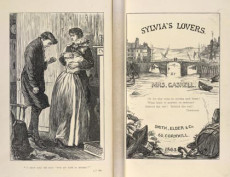
‘O wha’s like my Johnnie,
Sae leish, sae blithe, sae bonnie?
He’s foremost ‘mang the mony
Keel lads o’ coaly Tyne;
He’ll set or row sae tightly
Or, in the dance sae sprightly,
He’ll cut and shuffle slightly,
‘Tis true, were he nae mine.’
‘He wears a blue bonnet,
Blue bonnet, blue bonnet,
He wears a blue bonnet
A dimple in his chin.
And weel may the keel row,
The keel row, the keel row,
And weel may the keel row
That my laddie’s in.’
Curse it, having a lot of trouble trying to enlarge that image. It doesn’t want to co-operate…
I’ve quoted ‘Weel may the Keel Row’ because it serves as a sort of signature tune for the character I want to talk about in the novel through which he swaggers.
I’m really going to enjoy writing this one as I’ve been long intrigued by the character I am going to use as an example of a fictitious character who is a fascinating example of both the round and the flat (to use E M Forster’s terms for depiction of character).
I can think of a number of examples of this, and of flat characters who sometimes stray into the territory of the rounded ones – James Bond’s brief period of humanity is an example in popular fiction – but few who’s ambiguity have so intrigued me; and I have never known whether this was intended by the author or at least partly or a result of conflicts between her views of the people on whom she based this character.
Wait for it – yes, it’s none other than Charley Kinraid from Elizabeth Gaskell’s none too well known historical novel set in Whitby during the French Revolutionary Wars, ‘Sylvia’s Lovers.’.
Well, if this doesn’t inspire a comment from my friend Thomas Cotterill, who completely disagreed with me about the fellow’s moral integrity, nothing will…
To start on a humorous note, someone on Goodreads complained that the title of that story belied the content; well, this is ‘lovers’ in the old sense, no Naughty Naughty Tut Tut stuff would be permitted in the UK during her era, when Zola’s novels were regarded with horror.
However, within the perimeters of Victorian prudery, E Gaskell makes a good job of hinting at the aura of physical attraction and macho appeal exuded by Charley Kinraid, the ‘boldest Speksioneer (Chief Harpooner) in the Greenland Seas’.
When we first meet this character he’s acting as a hero, defending his crew from a press gang acting outside it’s remit (as they invariably did; there was no other way to impress enough men into the navy). He gets into a shoot out with them and is kicked aside (ouch!) and left for dead. However, when they’ve gone, his captain and a surgeon manage to revive him, and this the first of many lucky escapes he has during a rise to top which seems almost as inevitable as a cork rising in water.
The impressionable Sylvia first sees him at the funeral of his friend Darley, who wasn’t so lucky. Kinraid still looks like an animated corpse from blood loss, but so impressed is she with his aura of heroism that she becomes infatuated with him anyway.
At this time he is rumoured to be romantically involved with either one or both of his cousins, the daughters of a neighbouring farm to Sylvia’s own, and a lady killer generally.
During his convalescence, Kinraid takes to calling – supposedly to talk and drink with Sylvia’s father, while he just happens to impress Sylvia with his sailor’s tales of dangerous adventure and strange experiences at sea. He gets back his vigour and good looks, with his flashing dark eyes and dark hair curling in ringlets and goes away with no apparent regrets. Sylvia dreams about his stories, but one gets the impression that she would like to be an adventurer herself as much as she would like to win the love of the man who told her the stories.
Chancing to meet Sylvia at a party over a year later on a visit to those cousins with whom he has done so much flirting– one of whom thinks herself engaged to him – the impulsive Kinraid ‘is enough in love with her beauty and pretty modest ways’ to pay serious court to her.
Kinraid is mostly depicted ‘from the outside’ and we only rarely get access to his mental processes. These don’t, for a man with a gaze ‘penetrating and intelligent’ seem to be remarkable for either depth or originality, no doubt showing that he is a quick witted, bold man of action rather than a deep judge of character or one given to pondering on the human condition.
After Sylvia leaves the party, Kinraid, ‘…Accustomed to prompt decision, resolved that she and no other should be his wife. Accustomed to popularity among women, and well versed in the signs of their incipient liking for him, he anticipated no difficulty in winning her.’
He seems to have no idealistic notions regarding his choice of wife, and for the perceptive reader, this all fits in with the character of the emotionally superficial Lothario given to him by Hepburn’s workmate Coulson, who’s sister supposedly died of a broken heart after being jilted by Kinraid: -
‘He came after my sister for better nor two year…and then my master saw another girl, that he liked better…and tha’ he played the same game wi’, as I’ve heard tell.’
Sylvia’s ready acquiescence in her hero’s wooing of her certainly makes an interesting change from novels where the hero is attracted by the sheer challenge of winning over an indifferent heroine.
Kinraid is perceptive in his dealings with people; when she refuses him a kiss as a forfeit at a party game, and then regrets the snub and sits tearfully by the fireside, he follows her out of the room and soon gets that kiss.
Soon Sylvia and Kinraid are secretly engaged. Sylvia’s interest in Kinraid torments her devoted cousin Philip Hepburn. He is the only person to see Kinraid press ganged on a deserted beach and hears Kinraid’s plea for him to pass on to Sylvia that he will come back to marry her.
Instead, her keeps quiet and marries her himself, and on the consequences of this shabby trick the plot of the novel hinges.
Kinraid is away for three years; first he’s an impressed man, but then, resuming his heroics, he’s promoted to warrant officer, and following a daring raid on a French port, is imprisoned for many months. Finally he escapes to be raised to the rank of Lieutenant at the special recommendation of Sir Sydney Smith.
Hurrying back to renew his court to Sylvia, he finds that having been duped by her cousin about his supposed drowning, she’s married him instead and they now have a baby.
The three meet in a fine piece of melodrama, but Sylvia refuses to leave her baby, and Kinraid leaves in fury.
Before this, however, the author gives him some speeches that
as Graham Handley points out, are trite and more suited to a sailor in an action story than in this complex novel: -
‘Oh, thou false heart!…If ever I trusted woman, I trusted you, Sylvia Robson…Leave that damned fellow to repent of the trick he played an honest sailor…’
His own history of fickle dealings with other woman don’t decrease his outrage at this betrayal, and he leaves in high dudgeon on the mail cart.
However, Sylvia, having renounced Hepburn and mourning her loss of Kinraid, is to hear later that Kinraid is married to another woman within a few months of this dramatic parting from her. Though he had sworn more than once that he would marry her or not at all, he has cheerfully wedded a very eligible, pretty and superficial heiress with the ridiculous name of ‘Clarinda Jackson’ (I borrowed a version for my own Claribelle Johnson in ‘Aleks Sager’s Daemon’), who worships him.
After doing some more heroics at Acre (where by a wild co-incidence he meets Hepburn, who turns hero to and saves his former rival’s life) Kinraid is promoted to Captain and having once again survived serious gunshot wounds without any lingering effects on his health, he again faces a glowing future.
After their passionate parting, and having taken a vow against Hepburn on her former lover’s behalf, the unlucky Sylvia is outraged at ‘The conviction, strengthened by every word that happy, loving wife had uttered that Kinraid’s old, passionate love for herself had faded away and vanished utterly.’
One of the few times when Kinraid’s thoughts are revealed is when he lies wounded at Acre. Here, they are as predictable as those he had at the party, and perhaps this is why Gaskell reveals them so rarely.
Of course, this may be a true depiction of how a wounded soldier’s confused senses may wander, but they seem, in contrast to those of the injured Hepburn on his own deathbed at the end of the story, to have no spiritual component at all (though we know from a throwaway comment of Kinraids’ in the course of his tales at Sylvia’s farm that he is no agnostic). Neither does he go in for any soul searching over what Jane Spencer calls his ‘complacent view of his past’: -
‘(He had) thoughts of other days, of cool Greenland seas…of grassy English homes…the unwonted tears came to his eyes as he thought of the newly-made wife in her English home, whom might never know that he died thinking of her.’
He mourns her loss of such a prize as himself with all sincerity.
Kinraid I found a puzzling character. He appears to be a hero. He certainly looks like one and is physically brave – but the same is true of Heathcliff and Lovelace, two of the worst villains in English Literature . Of course, Kinraid is nothing like as bad as either, but he does , apparently largely unintentionally, cause a fair amount of grief for various people and neither is it easy to see him as a hero except in the military sense.
To me he comes across as a superficial opportunist, with what even Andrew Saunders, a great admirer of his, terms ‘limits to his loyalty’. In some ways his fickle treatment of various love interests indicates this early. He has no scruples about changing allegiances when the old ones are of no further use to him.
Critics who point out his faithfulness to Sylvia during his three years away after his impressment as evidence of loyalty overlook that as an impressed man he would hardly get leave, and as he spent most of his time after his promotion to warrant officer in a French prison, his being faithful to Sylvia during this time wasn’t very difficult. However, once he begins to adjust to his new life as an officer, he aims high above his illiterate farmer’s daughter on the social scale.
As a Captain, of course, just like Horatio Hornblower, Kinraid, who once shot dead two press gang members, would have routinely to use their services to get enough of a crew to sail. It is very ironic that the man who might have been hanged for mutiny as the rebellious Specksioneer – had the navy known of his survival – later finds glory through them and becomes a naval hero.
As Graham Handley remarks in his notes on the book, Kinraid is a puzzle; various accounts of his history conflict, and only so much of the character is revealed. This was a clever achievement of Gaskell, as a partly unknown, ambigous character is fascinating.
In a previous post dealing with the recycling of a character type, I have suggested myself that Gaskell may not have known her own mind about the character and that may be one reason for her leaving the options open about his history. As Jane Spencer points out, about the time that she was writing this novel Gaskell’s daughter broke off a brief engagement with a military man who seems to have been charming but unreliable; this may have been a factor in her creation of this character.
But Kinraid is also a sailor, and Gaskell had an abiding respect for the Royal Navy and a love for sailors as her own beloved, entertaining and yarn spinning lost brother had been one.
He had been a merchant navy officer, supposedly disappeared mysteriously on a trip; I have sometimes wondered if some aspects of this story weren’t concealed by his family, but however this may be, Kinraid and his earlier incarnation, the charming Frederick Hale in ‘North and South’ are both rebels who defy authority and who go on to find success. They also are embodiments of the return of a lost sailor motif which turns up not only in these novels, but also in Cranford. This is easy to define in our own post-Freudian days as wish fulfilled in Gaskell’s writing.
Kinraid gets a better fate than he probably deserves if his apparent opportunism is intended and if only half of the stories about his callous treatment of his former girlfriends are true.
This might be as much in line with Gaskell’s religious conviction that the emotionally superficial and morally unscrupulous flourish in this Vale of Tears, whereas true justice is a matter for divine judgement beyond the grave, as her wish to write a happy ending for her brother’s own tragic story.
What I find undeniable is that a fairly flat character – almost a stereotypical brave, macho, handsome, hard-drinking womanizing hero type is given an extra depth by a certain ambiguity in his portrayal.
In conclusion, for any who might be interested in my take on the treatment of the romantic theme in this novel here’s a link to my own F Word article written a few years ago.
http://www.thefword.org.uk/reviews/2012/02/sylvias_lovers_


May 24, 2014
Flat and Rounded Characters in Fiction: Part One


I believe EM Forster in an article somewhere wrote of ‘flat’ and ‘round’ characters, which is an intriguing definition. I must seek it out (after finishing ‘Clarissa’ and re-reading ‘The Taming of the Shrew’ for the Goodreads discussion and reading Francis Franklin’s ‘Suzi and the Monsters’ and reading up on a bit of literary criticism of ‘King Lear’ that is- oh yes, and doing a bit of writing, almost forgot that bit…).
Presumably both sorts of character have their applications, depending on the genre. Flat characters serve a very useful function in detective stories – for instance, in Poirot and
Sherlock Holmes.
The slightly vain, cold but basically decent, seemingly law-abiding but occasionally law breaking Holmes (who despises the blundering official police force) is in fact, less of a ‘thinking machine’ than his dismissive creator believed – but more of that in a later post.
Here, more or less cardboard characters serve the best function where any individual quirks would clutter up the plot, save where they are useful in adding a useful twist to it or to foreshadow later developments – ie Major Sholto’s phobic terror of men with wooden legs in ‘The Sign of the Four’.
Then, in straight adventure stories, flat characters serve a good purpose, or in short stories- I mean, the really short ones, say 1,500 to 2,000 words – not much room for character development in that word length (still, it would be interesting to have a competition to see if it could be done alongside a separate plot – a huge achievement, surely!).
James Bond is number one of Heroes I Abhor – so it’s hard for me to describe the jerk –sorry, whatever was I thinking – character – with any detachment – but he’s a fairly obvious example of a flat character.
He’s always meant to be heroic and never makes a fool of himself and never has any problems with – ahem his libido – and is an athlete despite his constant drinking and smoking.
To be fair to Ian Fleming – not as if I want to be – James Bond does in fact have a form of nervous breakdown at some point, showing a startling humanity for a brief space.
I’ve forgotten the name of the novel where this occurs, but after he falls in love with and marries the Countess Tracey Something Or Other who gets shot by SMERSH, he takes to drink, so that when he comes the worse for wear to an appointment with M the ever devoted Miss Moneypenny has to straighten his tie.
M promptly sends him off to a health farm, arriving in a taxi driven by an insolent youth with Teddy Boy characteristics – no doubt everything that the author considered bad about the youth of his own particular today.
I don’t remember what happened after that as I stopped reading. I think this was one of the many books I had recourse to (OK – grammatically that should be ‘to which I had recourse’ but I ask you!) during that snowed in period in my teens in an isolated house in North Wales I’ve mentioned before where I read so much more than usual, even venturing into historical novels and nineteenth century romances, ie, ‘The Talisman Ring’ and ‘The Black Moth’ by Georgette Heyer, ‘The Outcast of the Family Or a Battle Between Love and Pride’ by Charles Garvice (1894) and even some Fu Manchu. Perhaps the thaw finally came and I could once more venture out again riding hell for leather on my bicycle, looking for trouble and failing to find it…
In fact, right there are two incredibly successful novelists – Heyer and Garvice – who specialised in flat characters. My recollection of Heyer’s characters – and my acquaintance with her was short – was that she wrote of two sorts of males.
There is the young, hot-headed, wild, but basically good-hearted young buck (sometimes he’s a disgraced Earl) who needs to be civilized by a loving female; he’s usually fairly stupid, though Heyer is very tolerant of these macho young men’s idiocies. Then there’s the cynical, slightly older man who is too calm for the heroine’s liking, and has to be roused to a passion he struggles against.
The heroine is either an ingénue or a slightly older woman who’s got a (not too) independent streak – I think one of these was even rumoured to be a ‘bluestocking’.
In Charles Garvice, the heroes are a nineteenth century version of the same thing – as often as not they’ve squandered away a fortune. Heriot Fayne in ‘The Outcast of the Family’ takes decadence to the point of having a whisky and soda for breakfast (it being a Victorian novel, he has to be alone in bed as he orders this from his man). He is made a good deal less lovable than average by having a liking for threatening to throw Jewish moneylenders out of windows – one can imagine him, thirty years later, joining the Blackshirts – but generally the heroes are honest hearted and rather confused by a conflict between duty –(they’re usually heir to an Earldom) and their natural wildness.
The heroines are a very dull lot. As Laura Sewell Mater comments in her article on this most prolific of late Victorian/Edwardian writers, the only thing that distinguishes one from another is their hair colour, although I do recall that one – I think Margaret in ‘Wild Margaret’ is slightly less of a lay figure – she actually pokes fun at the hero, making him look a fool and bringing about his reformation through acid criticism as much as angelic example.
Most intriguing, I think, are characters who are halfway between the flat and the round; and in my next post I’m going to enjoy writing about a perplexing example of this – none other than Charley Kinraid, the dashing, opportunistic (second?) hero of ‘Sylvia’s Lovers’ by my favourite Victorian writer Elizabeth Gaskell.


May 18, 2014
Extract from ‘Ravensdale’ Spoof Regency Romance $0.99 on Amazon

I want to thank everyone who’s bought ‘Ravensdale’ – it makes me very happy that it’s selling!
For anyone who enjoys the thought of a spoof Regency Romance about highwaymen, spirited runaway heroines, outlawed Earls and underhand cousins with grudges, not to mention the odd ineffectual henchman or so, it’s still $0.99 on Amazon.com and £0.77 on Amazon.co.uk.
Well, it’s obvious I love its selling – I never heard of a writer who published something in the hope that it wouldn’t sell a single copy – though I suppose someone might do that as a sort of psychological experiment.
Anyway, I thought I’d publish an extract here, a comic scene from the book; I can’t give the comic bit of the book I loved writing most, because that comes at the ending, and would be to write a spoiler (of course, as it’s a comedy, everyone knows there’s going to be a very happy ending, but still…).
Reynaud Ravensdale is suffering from an increasing desperate passion for the hodyenish Isabella Murray, who acted so strangely when his band held up her father’s carriage. It manifests as an ache in his insides…
‘In a relatively clean and comfortable inn (which Selina might think sordid), Reynaud Ravensdale, otherwise Mr Fox, wasn’t eating a bowl of turnip soup. The landlord’s pretty wife Kate detested waste and planned to throw it back into the pot when nobody was looking. Opposite Ravensdale, Flashy Jack, who had called over and stayed to eat on his way to town, and Longface had finished theirs. Longface, chewing on a piece of bread with his remaining teeth, gazed mournfully across the table.
Mr Fox threw down his spoon. “Why do you stare at me like a looby? What ails you?”
Longface shook his head silently.
Kate’s younger sister Suki came from the back. Seeing her, Flashy Jack, his bright fair hair disguised under dye, took his porter to the bar. Kate came for the dirty plates. “Soup not to your liking?” she asked Ravensdale, who had gone to stand gazing out of the window, arms folded across his chest.
“It was well enough.”
“Have you got guts ache? You keep on leaving your food.”
The landlord, Tom Watts, so strapping and healthy that he didn’t remember when he had last left his own food, turned, shocked. “You don’t want to get anything like that. I’ve known cases, strong one month, invalids at the fireside the next.”
Mr Fox scowled and said nothing. Longface stared at him even more anxiously.
“Have you got bellyache?” Kate determined to speak plain though the fellow was a real toff, even, some said, none other than the Disgraced Lord Little Dean.
He kept silent, glowering into his porter.
Flashy Jack warmed to his theme: “He’s holding on round the chest. It could be lung trouble. That can be caught early. I knew a man, fading away with it, till his wife had him gargle rum every day. That set him to rights.”
“He ain’t got a cough,” Kate pointed out.
The object of their concern shifted under their gaze, which seemed to penetrate to his innards.
“I hear you don’t until that phlegm sets in. Then, before you know it, you’re spitting blood.”
“Mercy!” Suki joined in. She knew that they would all end on the gallows, but this was immediate.
The Chief Brigand, clearly only silent through reluctance to be ungallant to the women, turned on Jack: “Hold your noise, damn you! My insides are my own affair.”
Kate, undeterred, held up one finger: “I know the very thing, whatever it is. That cure I got from that pedlar works on anything. I’ve even tried it on baby there.” She smiled on her infant, sleeping in his cradle at the side of the bar.
“Well, you shouldn’t give it him, Kate. Those poisoners have surely caused more deaths than any honest rogue.” Mr Fox made for the door and stood outside – still slightly hunched, though now avoiding holding onto his chest – and gazing across the yard to where the hens scrabbled about in the dust.
“There’s no pleasing some folk.” Kate went back to collecting the dishes.
“There ain’t any pleasing him these last couple of weeks.” Jack turned his attention back to Suki….
…Late that night, when all was still in The Huntsman, Reynaud Ravensdale appeared downstairs, light in hand, looking for something. He searched first in the bar, then in the kitchen. At last his eyes fell on the brown bottle of the pedlar’s cure, also known as The Famed and Marvellous Elixir, which stood next to the teapot. Finding a spoon, he poured himself a generous helping, swallowing it in one gulp. Then he stood, eagerly waiting for the result.
This came speedily. His eyes widened, his face drained of colour, his breathing quickened and he swallowed and looked very ill for the next five minutes. Finally, recovering enough to speak, he swore heartily, poured the bottle down the sink, and trudged back to bed.’


May 9, 2014
Lauryn April – YA Fiction that Non YA Readers Can Enjoy
 Sadly for me, I’m a NSYA – Not So Young Adult – but I always look forward to a read by Lauryn April: I know there’ll be a combination of vivid, realistic characterisation and exciting paranormal adventure.
Her latest is no exception: I loved the combination of the vain, superficial Payton and the subtly appealing geek Logan in this intriguing take on the theme of alien invasion.
Logan is clever, sincere, and thought to be totally uncool in high school society (it’s probably Totally Uncool to use that expression these days). Logan can’t believe that she likes him – even when caught up by fears of alien invasion, she can’t stand the thought that her friends will laugh at her about her new found closeness with him.
Here’s my Amazon review: -
Payton Carlson is a social success: she was Junior Prom Queen, is planning to be Senior Prom Queen; she’s planning to go to the Homecoming dance with Ian, her handsome latest crush.She’s the head cheerleader, at the head of the in group at school. She’s got her life exactly as she wants it.
But then, her night terrors begin; the dazzling lights, the floating sensations, the sinister grey figures with the great black eyes – are these nightmare experiences bad dreams, or something worse?
Only one person can advise Payton – serious-minded, unpopular loner Logan Reed, who Payton’s always dismissed as a super nerd.
And she needs his help.
But is Logan what he appears? For that matter, are her best friends Jo and Hailey quite what they appear to be?
As with her former books, author Lauryn April delivers a fast paced, exciting story full of vivid characters with an effortless combination of paranormal elements and day-to-day high school issues.
You can get ‘A Different Kind’ on
http://www.amazon.com/Different-Kind-Lauryn-April-ebook
and on Amazon.co.uk on
http://www.amazon.co.uk/Different-Kind-Lauryn-April-ebook/


May 3, 2014
Samuel Richardson’s ‘Clarissa’ and Complex Villains…
 Complicated characters , whether heroes or villains (I’m applying the terms to both sexes) or a bit of both, are always fascinating.
As I see it, there’s only two problems with complex characters , good and bad: one is that they take so much work to envisage and the other is that, portaying them adequately will necessarily involve a bit more of a word count – and in this age of hurry where every minute is counted, that may be resented by readers.
To name only two examples from classic literature – Shakespeare’s Mark Anthony is intriguing, and so is Pushkin’s Eugene Onegin. Both combine admirable qualities with very inadmirable ones, a capacity for feeling, for magnanimity, mixed with an equal capacity for cold indifference.
I am particularly fascinated by the depiction of the wicked Robert Lovelace by Samuel Richardson. He is meant, of course, to be an arch-villain. I think, like some writers today, Richardson was dismayed, even shocked, when he found that too many readers – particularly women – found Lovelace so charming that they were prepared to fall over backwards and make excuses for the rape and even apportioned some of the blame to Clarissa herself.
I might not agree about many things with Richardson – as much an arch patriarch in his own way as the rakish Lovelace – but I do about this; there’s never any excuse for rape.
Still, I can see how the readership became fascinated by Lovelace. His letters do make fascinating reading; witty and debonair, his fiendish delight in his own machinations is often amusing. Sometimes the reader has to laugh along with him. He manipulates others as if they were, in his own words, ‘just so many puppets dancing on my wires’,
This man is subtle and conniving; he’s got a flashy charm, and he’s clever enough to appear ingenuous; in fact, he’s always declaring how ingenuous he is and how he gets carried away by his natural ‘warmth of temper’ (or words to that effect). After a time, the astute and sharp-tongued Anna Howe begins to see through him; Clarissa, so honourable herself that she finds it hard to discern underhand, manipulative behaviour in others, takes longer. Without Ms Howe’s letters, she would soon be overwhelmed by Lovelace’s connivances and her own over fine moral scruples.


A lot of this is purely calculated; he has anger fits when he wishes to intimidate – he has something of the bully in him, as he can keep the said passions in check as well as anybody when he chooses to.
This is a point that ought to be bourne in mind in view of his later rape of the unlucky Clarissa, who has allowed herself to be drawn in by him and thrown into his protection, believing in his honour: if Lovelace has any honour, he has none towards women. They are to pay forever for his earlier betrayal by his first love. This is insane; Lovelace’s egotism and misogyny often border on the deranged.
This calculating rogue, who defines himself as ‘as michevous as a monkey’ who ‘would have been a rogue, had I been a ploughboy’ loves bribery and corruption; he’s got a conniving tool in the hostile Harlowe’s manservant, his double agent Leman (wonderful name; I think it means ‘lover’ in old English) . He spins a complicated web to surround his victim, because he likes to make a woman fall into his trap, so he can look down at her and say: – ‘Aha, my charmer! How came you there?’ (Lovelace is often rather a stagey sort of villain: I believe he was based n the character Lothario in the play ‘The Fair Penitent’ and he often has the speech patterns and mannerisms of this stage villain).
This is the more fascinating, because the puritanical, diligent Samuel Richardson obviously had hidden depths in his psyche – we all have, of course, but rarely is there such a huge divide between the character depicted and the superficial personality of the writer. Richardson’s imagination must have been incredibly fertile, and I would love to hear what a post Freudian analysis of his psyche would make of his apparent sexual repressions.
Did Richardson’s model hero, Sir Charles Grandison, lock himself in his closet, concoct some noxious brew, and turn into Robert Lovelace on the sly? I wouldn’t put it past him at all. I never trust these too-good-to-be-true types.
Overall, the challenge of a creating a complex character, particularly a complex villain, or a complex anti-hero, is a tempting one for any writer. I’m tempted to delve further into it myself in due course.
My own Émile Dubois is a fairly complex character. He is apparently straightforward, and he doesn’t usually tell people lies (apart from the forces of law and order, that is) . His intentions towards Sophie are honourable and his courtship of her straightforward until he mistakenly believes that she is lying to him.
Still, neither does it always suit him to tell people quite the whole truth. He appears to be open-hearted – but he can outwit both the Committee of Public Safety over in Paris, living under an assumed identity for upwards of three years – and he is fully able to second guess the underhand machinations of Goronwy Kenrick. Bribing Kenrick’s servant comes as second nature to him, just as it does to Kenrick. This was all part of the eighteenth century aristocratic mentality, of course, particularly of those who had been connected with that hotbed of conspiracy Versailles.
This slightly tricky quality, demonstrated by his skill at chess, is lurking in readiness to come to the surface when he starts to turn into a monster. One part of him always remains as a tender lover, but another, the increasingly prominent monstrous side, revels in surrounding Sophie and driving into a corner just as he does in a chess game.
Émile, however, is – as his human self - generally a nice enough scoundrel despite this slight trickiness in his make up; he is extremely gallant to women generally, and has a sense of honour, being almost fanatically loyal to his friends. He is also shown – I’d like to emphasize here - as disgusted by the idea of rape.

Reading Clarissa has certainly tempted me to write about an out-and -out scoundrel without moral scruples – and just like Richardson, I won’t dream of letting him off; he’ll get the come uppance he deserves at the end.


April 27, 2014
Creative Process Blog Tour – You What?!
 I’d like to thank the excellent writer of gritty YA realism Kate Hanney for nominating me for this blog tour. Here’s her link
[[ http://www.katehanney.com/new-teenage-fiction-blog.html%5D%5D
Creative Process? Like Kate Hanney, I don’t think I have such a thing. I had one, but he wheel fell off, as the vulgar saying went in my grandmother’s day. Anyway, I’ll try and ansser the questions, though I’d rather hand over to my characters Emile Dubois, or Geore, or Reynaud Ravensdale, or Isabella, as they are more loquacious than I am.
Q: What are you working on now?
A: As in my previous post, I’ve just released my spoof romantic historical called ‘Ravensdale’ on the hackneyed theme of ‘Wild Young Heir to an Earldom is Accused, through the Machinations of a Conniving Cousin, of Murder, and Judged by His Reputation, Becomes an Outlaw and Highwayman while Seeking to Clear His Name.’
Now, I’m interested in about three projects. One is a sequel to ‘That Scoundrel Emile Dubois’ and ‘Ravensdale’, a paranormal featuring the two cousins together, and maybe a team of monster men directed by possibly Kenrick, who’ll need some clever manipulations of time to return…
I’m also interested in the whole issue of the complicated male villain protagonist, which is why I’m reading ‘Clarissa’ from cover to cover (I admit to only reading extracts before). However, no prizes for guessing in mine he’ll meet his match in his intended female target.
Then, always rumbling at the back of my mind is that dystopian theme I was exploring when I got distracted by ‘Aleks Sager’s Daemon’ of a future where women have lost all their rights.
Q: How is your work different from others in your genre?
A: Well, we all think we’re different – I’m just the same in thinking I’m different; my excuse for that is that I revel in the cliche. I think that as there are only so many plots – depends on your definition as to how many – I wrote about that recently on my blog – and they’ve all been visited before – and many, many times, too- I think it’s time we stopped striving for originality and went back to the good old plots.
Q: Why do you write what you do?
A: That’s what I often ask myself; I honestly don’t know; I just sort of have to. I don’t know where it comes from. I do (adopts a priggish, hectoring tone suddenly) have aspirations regarding combining the literary and genre writing.
Q: How does your writing process work?
A: Maybe it doesn’t?! What I do is get tea in bed from OH, who gets up first. While I’m waiting for that and then drinking it, I churn out about four hundred words in a notebook, which I later type up. That’ s it. When really tired I’ve been known to flake out face down on my notebook I hope that doesn’t show in the quality of the writing…Sometimes I get inspired at other times. Often I mull over plots and so on when doing practical tasks.
I do get inspired by music – in my mind’s eye I saw the whole final scene in Kenrick’s laboratory in ‘That Scoudnrel Emile Dubois’ when listening to the slow movement of Bruch’s violin concerto number one, and I saw the comic sequence in ‘Ravensdale’ when listening to Bryn Terfyl singing ‘Wher’er You Walk’ , rather like watching a film.
Now I hand over to two very different but excellent writers,. The first is the lovely Lauryn April, writer of YA paranormal which I as an NSYA – Not So Young Adult – enjoy because of the strong writing and lively characters, besides the adventure and romance: -

Lauryn April has always been fascinated by the paranormal, picking up a healthy Stephen King habit by the age of thirteen. Her favorite TV show growing up was “Buffy the Vampire Slayer”, and she’s always preferred bands like The Rolling Stones, and The Doors over whatever it is they’re playing on the radio now (However she admits “I Love It” by Icona Pop always puts her in a good mood).
Lauryn has been writing since she was a teenager. In the early years of her career she filled notebooks full of stories sharing them with friends. In college she spent three semesters writing for her school newspaper. Then, when she was nineteen she published her first work, a poem in her school literary magazine. When she wasn’t writing, Lauryn was studying Psychology and Philosophy and will graduate from UW Oshkosh in May of 2014 with a BA in Psychology. She continues to learn and grow as a writer taking every creative writing course available to her, as well as reading everything in sight.
You’ll find Lauryn’s post on : -
http://laurynapril.blogspot.co.uk/
Now there’s the immensely successful – lucky thing – writer Jenn Roseton, who is a talented writer specialising in contemporary sensual romance.

Jenn Roseton believes that romance and happy endings go together. When she’s not writing, she indulges in delicious gourmet chocolate.
Although she’s spent time in Wyoming, unfortunately she didn’t meet a sexy cowboy of her own. You can find out more about her books at www.JennRoseton.com


April 19, 2014
‘Ravensdale’ Now out on Amazon
My new ebook ‘Ravensdale’ – a spoof historical romance - is now out on amazon on
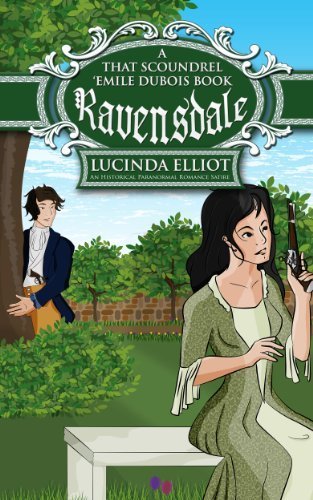

Goodness, some huge pictures have appeared here where I’ve put the links in. I love the cover Streetlight Graphics did, but…
Anyway, it’s out now and I hope readers find it amusing.
I was interested in lampooning a favourite theme of historical novelists – the Wild Young Earl (or heir to an Earldom) is through the machinations of his Conniving Cousin (usually, but other relatives are sometimes used) is Falsely Accused of Murder and turns Outlaw while Seeking to Clear His Name.
This was great fun to write, but I hope, too, I also made the characters in this stereotypical situation come to life enough to involve the reader.
Reynaud Ravensdale is a cousin of Emile Dubois (Emile, of course, isn’t the Conniving Cousin in question; in fact, he’s still living in disguise himself in Revolutionary France through the period in which this story is set, 1792) and Emile makes a guest appearance as a youngster in this story, with later butler and housekeeper, the rascally Mr and Mrs Kit, playing bigger roles in the story.
Here’s the blurb: -
When the group of highwaymen headed by the disgraced Earl of Little Dean, Reynaud Ravensdale holds up the hoydenish Isabella Murray’s coach, she knocks one of them down and lectures them all on following Robin Hood’s example.
The rascally Reynaud Ravensdale – otherwise known as the dashing highwayman Mr Fox – is fascinated at her spirit.
He escaped abroad three years back following his supposedly shooting a friend dead after a quarrel. Rumour has it that his far more respectable cousin was involved. Now, having come back during his father’s last illness, the young Earl is seeking to clear his name.
Isabella’s ambitious parents are eager to marry her off to Reynaud Ravensdale’s cousin, the next in line to his title. The totally unromantic Isabella is even ready to elope with her outlaw admirer to escape this fate – on condition that he teaches her how to be a highwaywoman herself.
This hilarious spoof uses vivid characters and lively comedy to bring new life to a theme traditionally favoured by historical novelists – that of the wild young Earl, who, falsely accused of murder by the machinations of a conniving cousin and prejudged by his reputation, lives as an outlaw whilst seeking to clear his name.
‘Ravensdale’ is a fast paced, funny and romantic read from the writer of ‘That Scoundrel Émile Dubois’ and ‘Aleks Sager’s Daemon’.


April 12, 2014
Samuel Richardson’s ‘Clarissa’ and Forced Marriage in the Eighteenth Century

I’ve been meaning to read Samuel Richardson’s ‘Clarissa’ through for years and years. Unlike Sophie de Courcy, I’ve only read extracts. Now I’m getting down to it.
Yes, well. I don’t expect to enjoy it, exactly; ‘sententious or what’ is my vulgar update on Goodreads – but it’s like climbing Snowdon if you live in Wales – you have to do it sometime.
Richardson says his purpose is: – ‘To warn the inconsiderate and thoughtless of the one sex against the base arts and designs of specious contrivances of the other. To warn parents against the undue exercise of their natural authority over their children in the great article of marriage…’
That’s telling us. More seriously, though, Richardson, writing in an age when young women of middle and upper class families were expected to marry for position, not for personal choice, and one in which a woman’s reputation was so largely –and ludicrously to modern eyes – dependant on her chastity, was addressing serious issues. Richardson’s goal was an admirable one. The more so, because his complex and notoriously engaging villain finally reveals himself as a rapist.
As forced marriage still takes place in some communities today, and as, disgustingly, the number of rapes committed when women have been drugged and rendered half conscious has risen over the past few years – the issues raised in this archaic novel with its implausibly persistent anti-hero/disguised villain are still relevant today.
It was unfortunate that in his previous novel ‘Pamela’ (here’s a bit of arcane information: it was pronounced in those days with the stress on the penultimate syllable) Richardson, in his attack on ‘droit de seigneur’ created not, as he intended, the picture of outraged innocence and a tale of ‘virtue rewarded’ but rather the pairing of a couple of arch hypocrites and a saga of self-serving morality.
I gather that most critics think that ‘Clarissa’ does not share the same faults to anything like the same extent – but DH Lawrence’s comments on the resemblance to pornography of the sexual attempts on the outraged heroines are probably worth bearing in mind. I’ve only read 105 pages out of total of maybe 2,000 so far – so I can’t comment yet. The action hasn’t yet got going properly.
What is apparent to me already is that Richardson, like the later Francis Burney uses the ‘epistolary method’ rather clumsily, so that his heroine comes across as malicious and smug at times, which can hardly have been intended. She complains that her sister, who is determined in forwarding the loveless match proposed for Clarissa with the mean, ‘splay footed’ ‘orange wigged’ Mr Solmes – is acting in an unsisterly way, as she is; but Clarissa’s own apparent lack of sympathy for Bella’s unrequited fancy for the libertine Lovelace is low-minded in a supposedly supremely Christian heroine. The unfeeling gibes about her unrequited desire for him should have been limited to the sharp-tongued Miss Howe.
When he story opens, Clarissa has been manipulated into corresponding with Lovelace on behalf of her family, and is being courted by him and by the unattractive Solmes.
She doesn’t really want to marry either, disgusted with the meanness of the one and the rakish history of the other, but following a duel between her brother and Lovelace, only his declared passion for her keeps him from waging war on all the male members of the household. Previously, her relatives thought of giving Clarissa to Lovelace because of the likelihood of his inheriting a peerage, but when it seems possible that Solmes will be able to buy his way into the aristocracy, keeping in with
Lovelace is no longer necessary to the Harlowes, who put pressure on Clarissa to break of her correspondence with the rake and notorious duelist.
At the same time the heroine’s family are keeping her virtually as a prisoner in their efforts to force her to accept marriage to Solmes, and the groundwork has been laid for Lovelace to be in a position to offer Clarissa his protection, which is of course as benign as that of a lamb given by a wolf.
Forced marriage was a real and hideous possibility to women from the more wealthy sectors of society at that time and features often enough in the novels of the eighteenth century. For instance, it forms part of the plot of Francis Burney’s Evelina, where the heroine’s grandmother plots to marry her off to her loutish and unappealing cousin and heir. In Pride and Prejudice, Mrs Bennet asks Mr Bennet to order Elizabeth to marry Mr Collins, while in Mansfield Park Sir Thomas Bertram puts pressure on Fanny Price to marry the rakish Henry Crawford as being in her own good.
While it was generally assumed when making convenient matches that couples became used to each other and that ‘love grows after marriage’ to force a girl to a life of sexual misery with a man she found physically unappealing seems astoundingly unfeeling.
Clarissa is prepared to allow her parents the right to forbid her to marry a man they consider unsuitable – Lovelace – but isn’t prepared to accede them the right to marry her against her will.
This portrayal of opposition to parental authority in a Christian heroine and dutiful daughter was a revolutionary position for a novelist to take, and perhaps only a writer as sententious and respectable as Richardson could have got away with it and retained popularity.


March 29, 2014
Review of Frances Burney’s ‘Evelina’
 I’ve finally finished this three volume marathon and I wish I could write a more positive review.
I am particularly sorry to write a negative one about a woman who wrote one of the first novels which highlight women’s issues, in however limited a fashion, and who so bravely underwent an amputation of the breast in the days before anaesthetics.
However, I do think that these points I make, which I haven’t found elsewhere, need saying.
I started off with high hopes, and if at first the heroine seemed priggish and smug and the characterization generally seemed flat, then after all, eighteenth century novels often take a long time to get going.
I could see that the author was making a genuine attempt to depict the treatment of women in a society where they had no vote and were openly regarded as second class citizens ( as distinct from having the vote and being seen covertly as second class citizens).
Yes, well. I seem to be in a sour mood today, but I’ve been reading this book for the last few weeks, and whatever my mood, I had strong criticisms of it that unfortunately outweighed my appreciation of the author’s attempt to address problems previously ignored by largely male writers. Probably they shouldn’t have; but they did.
Interestingly, although I’ve only taken a cursory look through the literary criticism of this on the web, I haven’t found the points I thought particularly weak or objectionable mentioned.
I was surprised at the sheer dullness and flat characterization in this classic, which supposedly is written with such brilliant psychological insight, and I had heard, has a likable, human heroine. I found the characters one dimensional and often their actions were frankly unbelievable.
It is certainly true that it does attempt to tackle the problems faced by a sheltered, aristocratic young woman when exposed to the false values and male dominance in wider society, but because Evelina and her mentor and guardian Mr Villars also endorse those same patriarchal values which the rakes and fops hold in debased form, this criticism is toothless and ineffectual.
I have often wondered from where Mary Bennet in ‘Pride and Prejudice’ got her sententious quote about women’s so-called honour being ‘as brittle as it is beautiful’; now I know: it’s straight from the pen of goody-goody Mr Villars.
This is meant to be largely a comic novel with serious purpose and I’m all for that. Yet somehow, I didn’t find it worked for me (it obviously did for Johnson, and may well for many others), because the characters are all like caricatures, which removes any possibility of drawing any serious lesson from them. Again, I usually love knock about humour, but as all this (save the monkey incident) is directed at aging women (in the case of the race, between two women of over eighty) it is painful rather than funny.
I don’t see how Captain Mirvan’s pretending to be a highway robber, dragging Madame Duval from her carriage, shaking her, tearing off her wig, dumping her in a muddy ditch and leaving her tied up is anything but purely ugly. For sure, the heroine protests that it is very bad, but it is clearly intended by the author to be an amusing episode too. Later, Eveline greets the man she knows did this to her grandmother with smiles.
A problem often cited with another epistolary novel, ‘Pamela’ is that because she has to repeat scenes highly flattering to her, she comes across as vain, reveling in Mr B’s obsessive pursuit of her. The same problem arises here. I often wondered just how I could feel so unsympathetic towards a young girl at the mercy of her immoral rape-contemplating master. I found the same problem arose here.
It’s made worse,because unlike in real life, the other women who are rivals for male attention don’t even deny Evelina’s vaunted attractions and appeal for men. They just sulk soundlessly while Evelina solemnly reports every compliment she receives from the immoral rakes to her guardian. We never hear of any spiteful, jealous put downs from her rivals. If women are going to be shown as sexually competitive, the writer should at least be realistic about it, and show the levels of spite to which low minded women can unfortunately descend in such situations.
In recounting scenes meant to show wearisome sexual harassment and even a semi abduction, Evelina comes across as smug and obsessed with her physical assets (presumably, besides the ‘red and white’ complexion so admired then, the long nose and double chin also fashionable).
I know modern writers like myself go in dread of being accused of creating a Mary Sue, and this is a term often used unthinkingly by reviewers over a character they resent, but I think one has to read this to realize just what a real Mary Sue is (or a Marty Stu, in the case of the faultless, handsome and brave Lord Orville).
Everyone either desires, admires, envies or frankly worships Evelina. The qualities of her mind are constantly stressed, though they seemed very unremarkable to my twenty-first century understanding, except in her ability to repress anger against the father who for so long rejects her. Everyone thinks Lord Orville is wonderful, too, except himself and possibly, the villain of the piece Sir Clement Willoughby.
Though supposedly a good Christian, Evelina sits in harsh judgement on all the morally faulty characters – eagerly repeating their misbehaviour in tones of outrage - save for her father Sir John Belmont. This self- satisfied priggishness doesn’t seem to be seen by the author as one of the difficulties in coping with society which she must overcome if she is to be wise and prudent.
As for the hero, he never comes to life at all; the heroine might as well fall in love with a handsome talking statue which utters highly appropriate phrases at times; the villain of the piece, Sir Clement Willoughby, is far more lively and interesting.
There are also a series of highly improbable, even ludicrous, co-incidences in this involving Evelina’s unknown half brother, Mr Macartney (as, incredibly, she never gets round to referring to him by his first name, I don’t know what it is).
On going to Paris, he just happens to meet and fall in love with the woman whom he later finds out is believed to be his half sister, and then on going to London, he just happens to stay in the house belonging to his true half sister Evelina’s relatives. For goodness sake! If this was written as grotesque comedy, it might work, but this part is written as pure tragedy.
I ploughed through it. Of course, one has to take into account that the psychology of the times was rudimentary, and Evelina subjected to modern scrutiny comes across as very different to how she appeared to her creator and the readers of the time, but I certainly can’t recommend it except as a way of gathering background information on society life and the highly repressed sexual nature of respectable women in the second part of the late eighteenth century. Johnson, who so loved Evelina, obviously only approved of females totally cut off from their sexuality. If they weren’t, well: ‘The woman’s a whore and there’s an end of the matter.’