Lucinda Elliot's Blog, page 2
December 5, 2022
‘A Touch of Red’ by Christina Herlyn: A Gripping Dark Version of ‘Red Riding Hood’
In this version, the Big Bad Wolfi is in more danger from Little Red Riding Hood than she is from him…
This is a highly original take on the European mediaeval fairy tale Red Riding Hood.
In this re-telling for adults, the girl is no child on a prosaic errand in Early Mediaeval Europe, walking from the village through a forest to her ailing grandmother’s cottage, where the main danger is straying from the path and to risk being taken by a hungry wolf.
This is altogether on a rather more majestic scale. Pyrrha is as strong a female lead as you could wish for, the daughter of a ruler, a professional fighter riding through the Griseo Woods that divide the magical realms of Fraus and that of Alithia, where her grandmother Queen Gracia lives.
Her main danger is being set on by the robber band or guerrilla group known as The Wolves. Things are made still more hazardous for her as she has many reasons to despise and distrust another violent band, The Hunters, who owe allegiance to her mother. Though ostensibly her allies, she knows that they work against her.
In fact, this Red Riding Hood is more a danger to the wolf than he is to her, for Pyrrha is a mortactio. That is, she can kill with her touch.
This wolf himself is slightly vulpine, as a result of the magic generated by the relationship between the magical forest and ‘The Wolves’, the band of masked guerrilla fighters who live there. Still, he is neither an animal nor a werewolf. In fact, he is a handsome young leader of the robber/guerrilla band, with a carefree charm, a love of joking and an astute mind.
Just as in the original fairy tale, the main focus of attention was the relations – often interpreted as potentially sexual – between the young girl and the predatory wolf, so in this version, the developing feeling between the Red Riding Hood character and the wolf is the lynchpin of the plot.
Far more than they realise, both Pyrrha and Lycos hold the key to each other’s fate in their hands.
Pyrrha hasn’t enjoyed the experience of normal, human touch since she was a small child, when her touch killed her father, the consort of her cold and distant mother, Regent Duri. Pyrrha has long known that her own mother coldly detests her, and assumes that this was the reason.
Since that accidental killing, she has taken other lives. Unreasonably blaming herself for her father’s death, she dedicates herself to a lonely life as the Regent’s chief bodyguard, the ‘Huscarl’. She wears an outfit that protects others from her touch, including a red hood.
When he heard that her beloved grandmother is ill, she sets off with a magic serum on a journey through the highly magical and dagerous Griseo Woods on her way to Alithia.
These woods are not peaceful retreats:
‘Most notable is the flavotenus, a lovely yellow flower that grows in large patches. The flowers connect like crab grass. When an inattentive traveler steps on one flower, the entire network of flavotenus springs from the earth to trap its victim in a yellow net. If there is no one around to help, the prey is slowly consumed by the flavotenus. Their bones eventually sink into the earth beneath a flowery death tribute.’
‘I stop at three skeletons which hang from a large oak tree. As I stare, another gust of wind rattles bones and chatters teeth. Some digits and ribs have dropped to the earth… I suspect these are Wolves, killed by Hunters and hung along the road as a warning. Their distinctive, wolf-head helmets would have been taken for the valuable metal…’
Pyrrha has several violent adventures before she even comes upon The Wolves. She has to endure a demeaning temporary escort of a group of Hunters led by the sadistic Jagar, long her covert enemy.
Then, when she is taken prisoner by the beguiling Lord Lykos, she finds herself torn: to whom does she owe loyalty?
But now she finds that her greatest danger is not her mother’s cold indifference, or any monster or external danger, but her own feelings for Lord Lycos: ‘From now on, I must wear my gloves and hood. They provide more than a physical barrier from my curse. They remind me of what I cannot have, and they guard my heart.’
She can’t allow herself to fall for the Lord of the Wolves, her hereditary enemy; besides, her touch must kill him. Yet, she longs for his touch more than she has longed for that of anyone during her lonely years as a mortactio…
I’ve only one minor complaint. I would like to have learnt a little more about the economic base of this alternative, partly matriarchal, mediaeval world, though there are indications that they clearly rely largely on magic to supply their economic surplus and luxury goods. I realise I am showing my colours as a former economics student here, though. Most readers of fantasy do not want more than a few hints by way of explanation.
As ever with this writer, the story has many touches of irrepressible humour: ‘What was loose and wrist-length on my grandmother strains across his biceps. Ripped seams flap at his elbows. Ruffles frame his handsome face.
“And the nightcap?” I ask.
The Wolf grins. “Authenticity.”
And: ‘People who think their neighbors illegally planted carrots on their property will be the slow death of me.’
A Touch of Red is another fast moving, action packed fantasy that I strongly recommend. As ever the writing is vivid, and there is nothing like torn loyalties for heightening the tension in a story. The characters are vividly brought to life, the action moves fast and there are many memorable encounters with monsters and magic.
The plot develops inexorably to a final, epic and climatic battle where Pyrrha’s courage and loyalties are tested as never before.


November 30, 2022
Free on Amazon on 1 and 2 Deember : Gothic Historical Dark Comedy ‘The Villainous Viscount Or The Curse of the Venns’
 The hooded spectre who is threatening Lord Harley Venn appears at the most awkward moments.
My historical gothic – or gothic romantic dark comedy, The Villainous Vicount Or The Curse of the Venns is free on Amazon on 1 and 2 December.
A darkly humorous take on the cliches of classical gothic, and includes a family curse, an incorrigible rogue anti-hero, a haunted castle, a hooded spectre, an historical crime committed in the Frnace of the ancien regime, bathetic scenes and a strong female lead.
I was naturally happy that it was former Amazon best seller and that it won the BRAG medallion for outstanding self-published fiction.
Just as Lord Venn is making a passionate proposal to the sixth heiress on his list, a hooded spectre appears in a flash of lightning. This hereditary curse is becoming inconvenient – particularly as Venn is next on the list to come to a terrible end.
Clarinda Greendale has other reasons for rejecting Venn besides the curse: – such as his being a wild, brawling social outcast and a fortune hunter.
Harley Venn dismisses the history of the curse as a series of conjuring tricks. Clarinda would like to help Venn fight the curse if she could; only she does not want to marry him and take on his outrageous household in the haunted Stoke Castle.. Meanwhile the curse closes in. Can the drunken charlatan Venn hires to help him prove that it is all a hoax be of any use at all?
A winner of the coveted B.R.A.G medallion for outstanding self-published fiction, this historically accurate and sensual spoof of classic Gothic should delight readers with a lively sense of humour.
Here’s an extract:
‘A flash of lightning outlined the window, where a hooded, cloaked figure appeared, suspended on the air. It extended one skeletal hand as if reaching towards them and vanished even as the thunderclap came. Swearing, Harley Venn dashed to the window.
As the thunder echoed away, Clarinda came up behind him. “We saw that oddity before.” She gazed about the empty street below. “This time it has appeared at a first floor window. That is extraordinary.”
He turned a taut smile on her. “Don’t concern yourself, Ma’am, it was a trumpery conjuring trick by an illusionist or mesmerist.” They looked at each other, he defiant, and she curious rather than frightened. She saw the admiration in his eyes at her strong nerve. “Do not concern yourself about that laughable party trick. I’m not sure how it’s done, but it’s getting to be a cursed nuisance. You have just seen another good reason to reject me. Please accept my wishes for your future health and happiness.”
He said this automatically, bent over her hand, and turned away.
He was at the door when she said softly, “Do wait a moment, Sir.” He paused, eyebrows raised.
She saw that he thought she relented. “I wanted to say, Sir, that I make no doubt the details surrounding my own late relative’s death have become wildly distorted in the telling.”
Venn’s face fell as he realised that this was no attempt to withdraw her rejection.
She went on calmly, “I hope his shocking end can be set aside as irrelevant. Yet, if the story is true, and such a figure as we saw even now appeared to Mr Foyle on his fall to his death, if it was indeed the conjuring trick you say, then it seems to be one with a sinister purpose. Do take care, Lord Venn, especially near stairs.”
He drew himself up. “As to me, Ma’am, I find these parlour tricks laughable. As you have rejected my offer so decidedly, there is surely no need to concern yourself with my welfare.” He paused and then added coldly, “I believe that these illusions are meant for me, and you have only seen them by default. But should you ever feel yourself threatened by such visitations, do let me know of it.” He bowed and flung out of the room.’
You can get it for free starting on 1 December on Amazon.co.uk here
and
on Amazon.com here
November 11, 2022
Review of ‘The Convenenient Marriage’ by Georgette Heyer (1934): Tightly Plotted Escapism.

I was in a mood for some escapism.
I re–read some Sherlock Holmes stories – those are among the few works of fiction that I will re-read any number of times. More on that another time.
Then I remembered how funny I found ‘The Convenient Marriage’ by Georgette Heyer when I was twelve, and my sister read it to me when I was ill in bed.
I read a number of her other works between the ages of 13 and 15, and quite enjoyed them. However, I found ‘The Talisman Ring’ silly without being funny (interestingly, that was a criticism in a fairly sour review aimed of one my own novels, ‘The Villainous Viscount’ ; could that be the workings of karma?). That, combined with increasing impatience with the class assumptions that underpin Heyer’s works — so stereotypically English that they are probably mostly invisible to readers outside the UK, but an intrinsic part of her make-believe Regency world – generally put me off.
Anyway, by 15, I found Georgette Heyer and all historical romances, Totally Uncool, and I stopped reading them.
My teens were sadly, rather a long time ago…
After a gap of several decades, during which the author had drifted out and then into fashion again, I read some more of her other works some years back.
This was partly, I have to admit, to demonstrate that the contention of many of her ardent admirers that those who aren‘t drawn into her stories, and enchanted by that comedic Regency world, have either read none, or only a couple, or needed to try again, is mistaken. I don’t know why they insist that. I love Shakespeare, but I don’t insist that anyone who doesn’t like Shakespeare hasn’t read any, etc…
Interestingly, as an aside, I think that you do only need read a couple of most author’s works to find out if you are drawn into, or totally proof against their particular form of ‘enchantment’. I have only ever read two novels by Mary Stewart, and they were enough to convince me that I am immune to her appeal.
Anyway, to my surprise, I found my reaction to Heyer’s work was much the same as when I was 15. That is odd, as my ideas about most things are a little more sophisticated, but there we are.
For me, unlike with PG Wodehouse, who also invented a comedic fantasy world ostensibly set in a particular historical epoch, the humour wasn’t outstanding enough to compensate for that consensus oriented viewpoint. There were three exceptions: ‘The Grand Sophy’, ‘Cotillion’ and ‘Faro’s Daughter’, which I found hilarious.
Oddly enough, though I read seven more Heyer novels, getting the number up to eighteen, I never got round to re-visiting ‘The Convenient Marriage’.
I admired the tight plotting, as ever. It flows smoothly. The author’s famous light touch is there, and there are many amusing scenes.
But sadly, on re-reading it, I found it didn’t live up to the impression I had at twelve. Then, I had thought, ‘My goodness: how does the author know all these obscure facts about eighteenth century aristocratic customs? How does she make her characters come so vividly to life when this story is set so long ago?’
Now, I thought, ‘Humph: the recondite information about hair and dress styles is a bit overdone. .Ah, here’s the stock character types: the Languid, Suave, World Weary Hero, the Spirited Ingénue, the Golden Haired, Blue Eyed, Reckless, Duelling, Betting, Not Very Bright Young Lord, who’s sometimes a brother, and occasionally, and less successfully, a hero…’
In other words, this is a sour review.
I think the main problem was the characters. I didn’t find them sympathetic, and I thought Horatia, like Eustacie in ‘The Talisman Ring’ ,downright annoying rather than touching and funny. What an idiot. I could never envisage her, either; the only details we have of her appearance, are that she is short, dark, has thunderous lookinhg dark eyebrows, and has inherited the family straight nose.
More than anything, though, I found the idea of a marriage between a seventeen-year-old girl and a man who ‘doesn’t look a day over thirty-five’ pretty distasteful. He comes across as a sort of father figure, in fact, a sugar-daddy. And after all, the heroine has lost her father at an early age (as Heyer lost hers: perhaps she would have liked to be indulged by an older husband, instead of having at one time to support two brothers, her mother and an aunt by her writing).
Of course, works of fiction should be judged as products of the era in which they were written. The Victorian ideal of a man being a good few years older than his wife persisted into the early twentieth century, and probably influenced Heyer.
Add to these characters a cardboard, bodice ripping villain, a scheming mistress who joins forces with him to ruin the heroine in a way worthy of Charles Garvice (the best selling writer of late Victorian and Edwardian romances, for those who haven’t enjoyed the lurid pleasures of his writings), wildly improbable plot twists, such as the heroine not recognising her husband during a card game, and I just couldn’t be drawn in.
Well, I’m sure that Pelham Winwood was delighted to be reincarnated as an incongruous type of younger hero in ‘The Talisman Ring’ and ‘Friday’s Child’. Charles Garvice, who accumulated a fortune writing about spendthrift young lords addicted to gambling, might have written a sequel about how he was saved from himself through falling in love with another ingénue – just like Lord Fayne in ‘The Outcast of the Family’ (1894).
September 30, 2022
Cross Genre Novels and the Problem of Choosing Categories: and Two Authors who Created a New Genre for Popular Fiction

A lot of promotional advice for authors emphasizes the importance of placing your books in the right category in order to maximise sales.
These categories always strike me as being unnecessarily rigid, though I believe they follow conventional bibliographic categorising. They would seem rigid to me, as I write cross genre stuff. Typical of me to cause myself problems.
With the exception of my last but one book ‘The Peterloo Affair’ – again, trust me to have exceptions – my books are generally a mixture of historical, dark comedy, and gothic. They also have a spoof like element. This makes for problems about how to categorise them, according to the currently available system.
They generally contain a love story, and they usually end on an upbeat note. That would seem to make them fit into the broader definitions of historical romance.
Unfortunately, readers tend to grumble if they’re placed there. They don’t like the satirical tone. I do send up tropes of historical romance and gothic, though gently, and that doesn’t go down too well.
Besides, there is too much emphasis on other aspects of the plot to satisfy the requirements of the ‘average romance reader’ (whoever that is). Stories which spend a fair proportion of time on such extraneous details don’t satisfy many romance readers’ expectations. I gather that is one reason why ‘Gone with the Wind’ or ‘Jamaica Inn’ don’t count as romances, even leaving aside the downbeat ending of the former.
Also, my own novels do often address social issues of class inequalities, etc, and it seems these are generally not themes which readers of historical romance want to hear about when they read an historical romance.
Besides, my books also have – ironically for stories with an occult aspect – a realistic component. I gather most romance readers don’t want to learn, for instance, what a dirty, violent place the London of the late eighteenth century was – for all classes – and that any heroine who trips and falls in the gutter would come into substances far worse than mud there.
On the other hand, they’re not written primarily as dark comedy, either. There’s a humorous approach, but they’re not strictly comedy. Things too dark for any but the darkest comedy tend to happen in them.
Definitely they are historical. In fact, I pride myself on historically accuracy. Still, apart from with their gothic element, they seem incongruous next to the novels written as factual historical novels.
So, I end up placing them as ‘historical gothic’ as a first category, and using another like ‘occult’ or some such. It’s unsatisfactory.
I am intrigued about popular writers of the past who, by the popularity of their books, created a category. In some cases, it seems to have been almost accidental. The most obvious being Georgette Heyer.
Her books are normally described as historical romances, but in fact, to my mind they have too much extraneous plot detail for that to be an accurate description. Intriguingly, in her case, historical romance readers don’t seem to object.
Though Heyer is credited with creating the ‘Regency Romance’ genre, she herself never described her books as romances. They are often more like ‘historical romps’ or mystery stories, sometimes ‘comedies of manners’, and the romantic scenes between male and female leads are often short, taking place mostly during the last few pages to provide the happy ending. This is certainly the case with ‘Friday’s Child’, ‘The Convenient Marriage’, ‘The Reluctant Widow’, ‘The Talisman Ring’, ‘The Grand Sophy’ and ‘Faroe’s Daughter’, to name just a few.
Of course, Heyer was greatly influenced by Jane Austen, whose own work is generally accepted as romance, though again, a fair amount of the story is taken up by other aspects of the plot.
She was also influenced by Thackeray (he uses the term ‘chit’ and various other slang terms beloved by Heyer in Vanity Fair’) and drew heavily on the use of slang and the customs depicted in an 1821 work by Pierce Egan, ‘Life in London; or, The Day and Night Scenes of Jerry Hawthorn, Esq., and his elegant friend, Corinthian Tom, accompanied by Bob Logic, the Oxonian, in their Rambles and Sprees through the Metropolis’.
I read that work with difficulty, myself. The florid, wordy style, apparently fashionable in the early nineteenth century, is frankly appalling. Also, Corinthian Tom and his ‘coz’ Jerry are so emotionally frozen that it makes for a bleak read for a woman.
Still, I found it intriguing to see how Heyer used this book, wholly designed for a male audience, combined with Jane Austen and Thackeray, to create a new genre, largely aimed at a female audience (I always maintain she was slightly influenced by the best selling writer of late Victorian and Edwardian romantic melodrama, Charles Garvice, as well: he was given to writing about wild young aristocrats).
Heyer began writing very early; although she wrote several historical romances set in the Georgian age, many of which feature her hallmark style, beginning with ‘The Black Moth’ in 1918, it was only in 1935 that she published ‘Regency Buck’, her first romance set in the Regency era.
Intriguingly, despite her massive success, she always yearned to be taken seriously as an historical writer. This was what she hoped to achieve with her last, unfinished novel, ‘My Lord John’ (1975).
…And that was an ambition she shared with Arthur Conan-Doyle, who in his Sherlock Holmes stories made the detective genre originally created by Edgar Allan Poe into popular fiction. He regarded these stories as vastly inferior to his historical works, such as ‘The White Company’ (1891).
Ironically, neither of the ‘serious’ historical novels by either of these writers are anything like as well known as their popular ‘genre creating’ works. There must be a moral there, somewhere…
September 14, 2022
More on the Mary-Sue and the Marty-Stu and How Not to Create One
 IX: Pamela is Married 1743-4 Joseph Highmore 1692-1780 Purchased 1921 http://www.tate.org.uk/art/work/N03575
I have been reading some more about Mary-Sues and Marty-Stu’s (or Gary-Stu’s) recently. A lot of writers hate this term, and it is certainly true that the term Mary-Sue is bandied about so routinely that writers go in dread of being accused of creating one, well aware that the description is often applied loosely to female or – less often – male leads whom a reader dislikes.
Precise definitions of what comprises one of these dismal creations vary, though there is some general agreement.
There’s a couple of really funny articles about this.
https://tvtropes.org/pmwiki/pmwiki.php/Main/BlackHoleSue
‘The very laws of the universe bend to accommodate her. If there’s only one in a million chance she could succeed at something, she’ll accomplish it with flying colors. If the logical outcome of the story would end in her failure, a Deus ex Machina will ensure her victory. Nothing is too implausible for her to accomplish, whether it be going from Rags to Royalty, killing an Eldritch Abomination, or bringing about world peace. Even the most disdainful and unmoving characters will be Easily Impressed with her. Is there some great deity of unimaginable power in the setting? Expect her to have them astounded by her abilities…’
and for the Marty-Stu’s:
https://tvtropes.org/pmwiki/pmwiki.php/Main/MartyStu
His gravity is so great, he draws all the attention and causes other characters (and, often, reality itself) to bend and contort in order to accommodate him and elevate him above all other characters. Characters don’t act naturally around him – guys wish to emulate him and all the girls flock to him regardless of circumstances. They serve as plot enablers for him to display his powers or abilities, with dialogue that only acts as set-ups for his response. He dominates every scene he is in, with most scenes without him serving only to give the characters a chance to “talk freely” about him – this usually translates to unambiguous praise and exposition about how great he is. Most people don’t oppose him and anybody who does will either realize their fault in doing so or just prove easy to overcome. Often a combination of the above Stu archetypes.
These are of course, extremes. It is generally agreed that the Marty-Stu’s or Mary-Sue’s can be placed on a spectrum, with some characters – uusually ‘wish-fulfilment inserts’ making up the most blatant examples (for instance, Heather Simmonds in Kathleen E Woodweiss’ 1974 historical romance ‘The Flame and the Flower’ , and Ian Fleming’s James Bond) with others towards the middle of the spectrum, and yet others on the edge.
My own definition is that if everyone admires a character, save those who are motivated by jealousy, and s/he never looks less than perfect – even when very ill, and s/he never makes a fool of herself/himself, then the chances are high that character is a fully-paid-up, card-holding Mary-Sue or Marty Stu. Writers may hate the term, but there is a lot of truth in many of the accusations as well as some injustice in others.
Ones in classic novels include Samuel Richardson’s mid eighteenth century best seller Pamela, who has no faults save a feminine timidity the reader was clearly meant to find adorable. Nobody – ever – finds any fault with her appearance or character. She has endless skills, including how to carve a joint of meat to perfection and how to look embroider waistcoats well enough to make an impression at court.
Defenders of Richardson argue that as he was an early novelist, his falling into this error in trying to depict an admirable heroine is understandable. They also excuse her constantly repeating compliments as a fault due to his using the ‘epistolary method’ (ie, telling a story through a series of letters and diary entries, largely from the heroine herself). The end result is, however, pretty unsympathetic to modern taste, and it is always with astonishment that I read how contemporary female readers adored Pamela.
It is interesting, as a matter of fact, that we are never told exactly what she looks like, or even her hair or eye colour, although we learn that she has a tiny waist and ‘a baby face’. Presumably, this was because the reader was expected to imagine an ideal looking young girl. This, presumably, would be according to eighteenth century notions of female beauty, including a pale skin, high colouring, longish nose, round face, etc.
Whether or not the male lead Mr B can be called a ‘Marty-Stu’ is debatable. He is certainly given the faults of excessive pride, but he is still depicted as the most rich, powerful, handsome, charming man in his circle, and he comes across as largely a cardboard character. His other fault, hypocrisy, which is one of the traits he certainly shares with Pamela, is clearly one that Samuel Richardson was unable to see.
Fanny Burney’s Evelina is another Mary-Sue for the same reasons. Her only fault is innocence of society’s rules. She is so wonderful that even her jealous rivals cannot seemingly criticise anything about her appearance or character (this is, of course, ridiculous: a low minded competitor will say all sorts of insulting things about a favoured rival’s outside and inside, wholly untroubled as to how true they might be).
If an author is fretting about having created a Mary-Sue or Marty-Stu, then the chances are probably that she or he hasn’t. The attitude of a writer who has created a Mary-Sue is generally one of uncritical indulgence, like a bad parent. That type of unreflective writer can’t see why anyone could fail to admire his/her marvellous character. After all, s/he’s been given any number of outstanding traits, hasn’t s/he? She or he has been given all sorts of opportunities to glow (but has s/he been given any opportunities to grow?).
Of course, it has been argued that the idea of the Mary-Sue came about through an element of sexism. Readers and viewers are less likely to resent a male character who is ‘the specially chosen one’, with special skills and outstandingly good looks and who is admired by all.
This is certainly to some extent true. James Bond’s impossible level of fitness and his outstanding attraction for women – despite his smoking about eighty a day – went seemingly unchallenged until the term ‘Marty-Stu’ was invented some time after the idea of the original Mary-Sue was first aired. I remember reading an article which suggested that a good test as to whether or not a talented, attractive female character is a Mary-Sue is to ask, ‘Would I be so irritated by these characteristics if they belonged to a male character?’
There are, besides so many traits that can be a sign of a Mary-Sue or Marty-Stu that avoiding them all can be difficult. It wouldn’t do to become morbidly obsessed with not creating a Mary-Sue or Marty-Stu that one goes to the opposite extreme, and creates an unattractive bore. Besides, even this character trope has been listed among the Sue’s and Stus. Here it is:
https://tvtropes.org/pmwiki/pmwiki.php/Main/AntiSue
Unfortunately, simply inverting the Common Mary Sue Traits does not prevent a character from being a Mary Sue. When other characters still worship them and the plot still bends over backwards to facilitate them they’re still a Mary Sue, despite now being described as an unspeakably ugly and incredibly pathetic loser. This can actually be even more annoying than a vanilla Mary Sue — at least it makes some sort of sense for characters to worship a beautiful, friendly, hypercompetent Mary Sue, but when they’re physically ugly with an unpleasant personality and can barely tie their own shoes (much less solve other people’s problems) and everyone still treats them like the greatest thing since sliced bread, Willing Suspension of Disbelief gets smashed into tiny little pieces. (And yet, this is sometimes Oscar Bait for movies about the Inspirationally Disadvantaged.)
Of course, there is an opposite effect. Rather than admiration, some Anti-Sues instead have their peers’ intense hatred and dislike of them be what overrides any other plot in the story — that is, they’ll drop everything they’re doing just to make the Anti-Sue’s life that much more miserable and keep them around solely for that purpose, as if they were a walking Jerkass Ball. ..
There are a good few articles that give good advice about how to avoid making your character come across as one of these dreaded Mary-Sue’s or Marty-Stu’s. These include some excellent tips which, while aimed at novice writers, give some hints that would benefit experienced ones:
https://artofnarrative.com/2019/09/18/how-to-fix-a-mary-sue-character/and
https://writingquestionsanswered.tumblr.com/post/669939419488354304/greetings-how-do-i-avoid-writing-mary-sueI believe that one of the best ways you can ensure that a character is not perceived as a Marty-Stu or Mary-Sue is to have him or her fail.
It is for others to say whether I succeeded or not, but that is what I did with Émile in ‘That Scoundrel Émile Dubois’. Clever as he is, his best efforts fail to save his family members all being killed, directly or indirectly, by the Terror.
On a lighter note, that is also what I did with Harley Venn in ‘The Villainous Viscount’. It might be thought that a handsome, athletic young viscount would have little difficulty in finding a bride, when he decides to fulfil the terms of his late uncle’s will by getting married. In fact, he is rejected for one reason or another by three on his list of eligible heiresses, and when he moves on to a girl fairly low on his list (the female lead) she turns him down as well...
[image error][image error][image error][image error][image error][image error][image error]September 12, 2022
Getting From the Middle to the End of Your Story: The Main Characters’ Darkest Hours…

YUK. I wrote a couple of weeks ago about the sagging middle, and how I was fighting my way through that in my latest, the sequel to ‘That Scoundrel Émile Dubois’.
By the way, this one has the interim title: ‘Villains and Vampires’. However, as my last began with the words, ‘The Villainous Viscount’ I am not sure that this new title is sufficiently different. A potential reader, skim reading, might say; ‘The V….V…’ that rings a bell; I must have read that…’ So I’m in two minds.
I have written a bit more of that middle – but guess what: I wrote a pivotal part about which I wasn’t quite sure. Then this way led somehow to all the characters getting towards the end from the middle too quickly.
I didn’t feel that the main characters’ feelings of desperation during the darkest moments were sufficiently extended or bleak. It was more, ‘Oh dear. This is bad. Oh dear, THIS IS BAD! Oh, what’s that? Ah, there may be a light at the end of the tunnel yet…’
I felt that I was pulling too many irons out of the fire before they were red hot, or as if I had lit the fuse too soon. A couple of the sub plots seemed to fizzle out.
And that isn’t good enough. That’s second rate at best – probably third rate. The only writers who can only get away with writing a middle like that are ones with a massive fan base, most of whom are so addicted that they will somehow miss the unsatisfactory nature of that move to the resolution, and give a five star review to anything connected with that writer’s name – even reissued juvenelia.
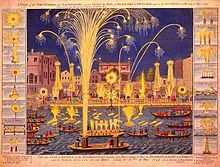
So, in that last display of fireworks, you want them all to go off so that the reader says at the end ‘Wow! Just – Wow!’ I hope I’m not normally given to fatuous observations (some might dispute that ) but while I hate that expression ‘Wow’, that is exactly what I did say at the end of, for instance, Rebecca Lochlann’s ‘In the Moon of Asterion’, the concluding part of the Greek section of her ‘Child of the Erinyes’ series. The way everything came together was brilliant.
By the way, at the moment,the first novel from that series, ‘The Year God’s Daughter’ is permanently free on Amazon.here
That being so, all I could do was jettison those 15,000 words and go back. It made me feel quite dismal for a day or so, but still, I wrote ‘That Scoundrel Émile Dubois’ three times.
I found the following information from this website very useful https://www.theguardian.com/books/2012/oct/19/evolving-your-story
…13 Downtime begins
The last section of the middle portion of the story begins with the downtime, which precedes the black moment. Your characters are coming to feel they have nothing left to hold on to. Detail these feelings.
14 Characters revise old or design new short-term goals
Your characters are going to make their next decisions out of sheer desperation. From this point on, they seem to lose much of their confidence – or, worse, they’re feeling a reckless sense of bravado that may have tragic consequences. What are their new goals and how do they plan to reach them?
15 The quest to reach the story goal continues, but instability abounds
Though your characters are ploughing ahead bravely, each step is taken with deep uncertainty. How does this action unfold?
16 The black moment begins
The worst possible failure has now come to pass. The short-term goals made in desperation are thwarted, and the stakes are raised to fever pitch as the worst of all possible conflicts is unveiled. Describe it in detail.
17 The characters react to the black moment
Characters react to this major conflict with a sense of finality. Never will there be a moment when the outcome is more in question than in this concluding section of the middle of the book.
The end…At the end of a book, all plots, subplots and conflicts are resolved. In the last few chapters, the characters are finally given a well-deserved break from their recent crisis.
On the juvenilia I mentioned earlier – I am sure there will be no takers for anyone wanting to read my first satire, which I wrote in cartoon form aged nine? Entitled ‘Wendy Goes To Town’ it was about an officious little girl who – surprise, surprise, went to stay in a local town with her uncle. She discovered that a gang of altruistic local villains from the local rough estate were stealing from the rich to give to the poor, and spied on them, using newly acquired detective skills acquired from a book. The story ended with Wendy driven off by her proud parents, wearing a medal awarded by the local magistrate, who had given all the menaces to society six months…
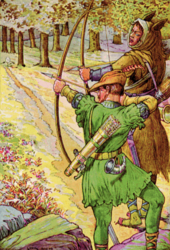
I remember that I had recently read a version of the ‘Robin Hood’ legends, which had a great affect on me; any readers of this blog or my writing will know, of course, that it lingers still. I hope I can write slightly better than I did at nine, though…
August 23, 2022
Nine of the Most Annoying Heroes in Classic Popular Novels: an Uncharitable Rant…
As none of the following novels were written by authors still alive, I don’t see why I shouldn’t publish this uncharitable list to give a laugh to those who, like me, feel in the mood for a bit of good old intolerance, so here it is.
I warn readers that the list is based on personal prejudice. Some of these heroes don’t, as ‘heroes’ go, deserve to be on it at all; there are certainly much nastier or annoying male leads from classic popular novels out there I have yet to meet and find objectionable.
Oh, and anyone who wants to nominate a vain, annoying, Marty Stu or downright obnoxious male lead in a famous novel by a deceased author is very welcome to do so.
Have I a list of annoying, obnoxious heroines, who may or may not be Mary Sues? Yes, but unfortunately my complaint about all these female leads tends to be the same. This is that once she gets together with the male lead she loses all her independence of mind and becomes half of a smug couple, or even if she doesn’t, that she loses all critical faculties regarding the man of her dreams. Therefore, my list needs some more work to make it in any way entertaining; but by way of a hint, Hippoylata in Mary Renault’s series on
Theseus, his captive Amazon who fights by his side against her former Amazon subjects, and Fanny Burney’s Evelina are both on it.
Number One
Dominic Alistair, Marquis Vidal, the ‘hero’ of Georgette Heyer’s ‘The Devil’s Cub’ is totally obnoxious. Even at fourteen, I cringed when I read this. Oh dear. This fellow’s got problems; in fact, he needs intensive psychiatric treatment and a good kick up the backside (sorry!). He likes killing men who annoy him, and he half throttles the heroine at one time, and at another, tries to rape her. This doesn’t stop her from falling in love with him, though.
To be fair to the heroine, she does have the sense to try and shoot him during the rape attempt, but she’s so sorry to see him in a fever as a result of the wound she’s inflicted that she longs to ‘kiss his bad temper away’.
To be fair to Heyer as well, she never again had a would be rapist as a hero. It still gets glowing five star reviews as a lot of woman readers think that the fact that the woman shoots at him makes things even.
I don’t. If he was shown as at least repenting of it, it might be different, but the whole sorry episode is happily swept under the carpet by both the heroine and many an avid reader alike.
Number Two
Theseus in Mary Renault’s ‘The King Must Die’ and ‘The Bull from the Sea’ .
By the living lord Zeus, this man annoyed me! OK, so he is meant to be over confident and machismo, and the men of the age didn’t see why women had any problems with being taken as war prizes (of course all Theseus’ war prizes adore him), but I detest him anyway, if only because the reader is expected to cheer him along as he avidly sets about destroying the nasty king-for-a-year sacrificing matriarchies wherever he goes (it’s worth noting here that it’s always on the one day a year that the King is due to be sacrificed that he comes across them). Everyone admires him, which isn’t surprising, as he generally kills off anyone who doesn’t.
I don’t see why the series isn’t called ‘The Queen Must Die’ as that’s what happens to all the women who marry him. He slowly chokes the unfortunate Phaedra to death (why, as an accomplished wrestler, he doesn’t use the quick and more effective strangle isn’t explained).
This fellow deserves to be made to clean the female lavs in Hades for a thousand years.
This series (brilliantly researched and in parts equally well written, by the way) also features the Hippoylata I mention above, who finds Theseus’ charms so irresistible that she joins him in fighting her old subjects.
Number Three
Heathcliff.
Now, I’ve said several times on the discussion thread on Goodreads that I started that I detest Heathcliff’s actions, not the sad character, who is clearly off his head. Also, I don’t believe that Emily Bronte intended him to be viewed as any sort of a hero, Byronic or otherwise.
Still, I remain astonished that anyone can possibly find this fellow romantic, with his habit of boxing girls’ ears and bullying children. Besides, he’s so ridiculously sorry for himself, and mourns his loss of Cathy for such a long time. I’m sorry to say many woman readers find his despising all women save his idol Cathy romantic. I can’t relate to that. I think too, that if he’d had his dream fulfilled he’d soon have tired of Cathy and started abusing her too. Also, he’s so mean that while he’s making a lot of money out of being a ‘cruel hard landlord’ he still rations the amount of tea the younger Cathy is allowed to offer to guests and has porridge for supper.
Number Four
Mr B.
I forgot about the hero of Samuel Richardson’s 1847 best seller ‘Pamela’, when I first thought up this list. I can’t imagine why. Squire B is as annoying a male lead as can be imagined. Not only does he make various rape attempts, but he manages to be self-righteous about a servant speaking insolently to him as she rejects his advances. Ridiculously, Pamela keeps on working for him, though the woman who used her services as lady’s maid, Mr B’s mother, is dead. Despite his attempts on her, she stays on to finish embroidering a waistcoat for him.
After he tires of bungled rape attempts, such s jumping out of wardrobes at her, or ambusing her disguised as the kitchen maid Nan in a nightdress and nightcap, thrusting his hand in her bosom whenever he possibly can, Mr B decides that Pamela’s determined resistance means that she is good enough for him to marry, for all her low status.
After that, he gets a lot of fun out of travelling about the locality with her, lecturing the neighbours about the pleasures of a virtuous life. Pamela has no qualms about forgiving him once their relationship is put on a nominally respectable basis, and the critic Kincaid-Weekes was shocked that many other critics comment that she is a hypocrite for bartering her virginity in return for a respectable offer of marriage.
Number Five:
Brandon Birmingham from ‘The Flame and the Flower’ by Kathleen E Woodweiss (1974). This novel is a classic in the sense that it set the fashion for the many rapist male leads of historical romance of the 1970’s. The hero, who seems to be a cross between Dominic Alistair and Rhett Butler, is supposed to be wonderful. Evreyone on his plantation worships him, and all know that he is a massive catch. Unlike Mr B, his rape attempts aren’t bungled and the heroine doesn’t think to put him off by having a dramatic fit of the vapours. Like him, however, he is self-righteous. After their marriage, when she comments (fondly) on this rape, he responds, ‘Saucy wench.’ Also, the dress she was wearing during this is treasured by them both as ‘our dress’. Yes, well…
Number Six: James Bond.
What can I say?
Unusually, I believe this fellow certainly suffers from serious sexual repressions of some sort as a compulsive Don Juan who goes in for such unimaginative seductions; for instance, why are the erotic episodes described so mechanically? Is it because I’m dyslexic that I particularly notice the way ‘his right hand went to her right breast’? And why are the (temporary) female leads always called ‘the girl’ almost as if Bond – or his creator – has temporarily forgotten their names? After all, it’s not as if they don’t have memorable ones: Honeychile Rider or Pussy Galore, anyone?
Number Seven
Charley Kinraid in Elizabeth Gaskell’s ‘Sylvia’s Lovers’ is almost an ideal type of a Marty Stu (I dislike the whining Philip Hepburn, the ‘real’ hero of the story, even more, but Charley Knraid is clearly meant to be the romantic interest so he gets the listing). It shows what an excellent writer Gaskell is that despite this, ‘Sylvia’s Lovers’ is still one of my favourite novels. Almost everyone, save the carping, envious Hepburn, admires Kinraid. He’s a brilliant harpooner, handsome, fearless, a good friend, a hard drinker, a bold fighter, irresistible to women and the life and soul of the party. Nobody dances the hornpipe like him.
This opportunist is indestructible and always falls on his feet with a merry quip.
There’s no pleasing me! Heathcliff exasperated me by mourning his loss of Cathy for twenty years; Kinraid annoyed me by forgetting Sylvia six months after his dramatic parting from her.
He starts off his glittering career as ‘the most daring Specksioneer (chief harpoonist) on the Greenland Seas’ during the French Revolutionary Wars. When on shore, he’s a dedicated flirt and heartbreaker, causing at least one girl to go into a decline when he loses interest in her. At one point he seems to be engaged to both the eponymous heroine and one of her neighbours at the same time (weirdly enough for Gaskell, this ridiculous situation isn’t portrayed humorously).
I disliked him for that, but I did applaud his standing up to a press gang operating illicitly, though I was sorry he shot dead two of its members. With his invariable luck, he escapes hanging for this through being ‘kicked aside for dead’. Later on, however, after he’s press ganged into the Navy, Kinraid goes in for more heroics, though this time on their side, and is promoted to Captain. As all Naval Captains had to rely on press gangs to raise enough men to go to sea, and couldn’t be too scrupulous about the rule of their having to be sailors, he’s obviously happy enough to collude in the press gang’s activities and forget he shot dead two men for doing what he now endorses.
When Kinriad comes back to claim Sylvia, whom he has sworn he’ll marry or remain single, only to find she’s been tricked into marriage by Philip Hepburn, he’s forgotten about her and married to a pretty heiress in no time. This silly girl admires him nearly as much as he admires himself.
Hepburn dies expiating his sins, while Sylvia, overcome with guilt over renouncing Hepburn for his trickery, dies of a broken heart. However. the shallow opportunist Kinraid complacently faces a glowing future in the new century. I found him and his undeservedly good fate supremely annoying.
Number Eight
Lord Heriot Fayne in Charles Garvice’s ‘The Outcast of the Family’.
I disliked this hero initially for his habit of threatening to throw Jewish money lenders out of windows. For the rest, for some reason I found this cardboard baddy turned goody totally exasperating in that everyone who meets him feels inexplicably awed by his ‘air of command’. He inspires respect, it seems, even when he’s togged up as ‘Coster Dick’ to get hammered and brawl in a music hall. He’s so macho that when one of his opponents caddishly sneaks up behind and hits him over the head with a cut glass decanter, knocking him out, on coming to, he suffers no sissy symptoms like nausea, but happily lights up a pipe and strolls through the streets, rescuing the odd waif.
He also rescues the heroine when her pony bolts towards a disused quarry (he’s disguised as a tramp at the time). Then he saves a little girl who gets lost in a forest somewhere in South America (he’s gone there as a ranch hand). His reformation is effected by his going round the country as a busker. This course of behavioural modification is seemingly so swift and effective it is obviously to be recommended as a way of taming all young tearaways.
Number Nine
Ludovic Lavenham in Georgette Heyer’s ‘The Talisman Ring’.
To be fair, this fellow, who serves as a sort of ‘secondary hero’ , probably doesn’t deserve to be on here.
This is another Heyer historical romance I read at fourteen when snowed in. I re-read it a year or so ago during several visits to a doctor’s surgery. I found this swaggerer purely infuriating as a teenager, and cringed with embarrassment at the way he flirted with his ‘little cousin’ when lying on his sickbed after being shot by excisemen:
Him: ‘Is that a tear, little cousin? Don’t you like your cousin Ludovic?’
Her: ‘Oh, yes! But I was so scared that you would die.’
After that scene, I’m sorry to say I almost wished he would. Reading the story again all these years later, (this research on romances) I expected to regard him more kindly. I didn’t. To be honest, I don’t know exactly why I find this Heyer hero in particular so annoying. True, he’s stupid and arrogant and full of over-the-top macho posturing, but that does tend to be so of several of Heyer’s young heroes and ‘Sherry’ in ‘Friday’s Child’ is equally idiotic. Ludo Lav is also, like Charley Knraid, really only a secondary hero, the real one being Sir Tristam Shield (get the names) his older and acidic cousin.
So, there’s the list, and probably in the case of the male leads who don’t go in for rape, throttling their wives or at least hanging their spaniels, quite unfair. Charley Kinraid, Heriot Fayne and Ludovic Lavenham are at least portrayed as being fairly gallant, even if they deserve to be called Marty Stu’s. I’m sure there are many heroes out there, particularly in classical literature, who are far worse than even Dominic Alastair.
So, there’s a highly uncharitable post . How jaundiced; I think I’d better go and do some weights or make a resolution to be kinder about such male lead characters in general…
August 10, 2022
Review of ‘My Lady Ludlow’ by Elizabeth Gaskell.

‘My Lady Ludlow’ could be classed among Elizabeth Gaskell’s novels, being over 60,000 words long. Still, it’s a good deal shorter than the three volumes that were considered a respectable length for a novel by Victorians, and is included among her shorter and more minor works.
Besides, the structure is frankly faulty; or anyway, the structure as she uses it – a story within a story – comes out as faulty. That method can work: it certainly does, in ‘Wuthering Heights’. It seems ineffective much of the time, here. There are parts, as in the melodramatic episode set in Revolutionary France, where it becomes a story within a story within a story within a story, and that makes for too much distancing.
The tale of the eponymous Lady Ludlow is one of the tales told ‘Round the Sofa’ of the invalid society hostess Margaret Dawson, and recounted by the young narrator. She is also suffering from health problems, but fortunately, temporary in her case. All of the guests are required to relate a story, and the first is the recollections of their hostess of Lady Ludlow.
Margaret Dawson was for years one of the fearsome Georgian aristocrat’s retinue of well born but indigent young ladies.
I didn’t have high hopes of it when I first started reading it, partly because as I gathered the theme is about a benevolent despot type of country aristocrat who tyrannised in rural England up until the first world war. This one, holding sway in the early nineteenth century, in an unnamed county somewhere in the North of England, even opposes education for the masses as encouraging them to think too much and come by subversive ideas – a bit like Cassius and Brutus, only plebeian – and the story is about her gradual conversion to more democratic views over that.
In fact, I didn’t find the eponymous dame as unsympathetic as I thought . You could see that her particular religious convictions led to a sincere, if mistaken, belief that people are called to fulfil a particular role in life, and that education interfered with their humble submission to the divine will that placed them there.
Of course, Elizabeth Gaskell as a the wife of a Unitarian parson, inevitably takes an opposing view. The fact that she could make a sympathetic character out of this traditional, rigid autocrat, who mourns the passing of the Ancien Regime in France, was a sort of literary triumph. That also perfectly illustrates the broad scope of Elizabeth Gaskell’s own Christian charity and refusal to judge others.
Lady Ludlow insists on her aristocratic rights – she even will inform the vicar at times that ‘no sermon is required today’. Still, she applies the same rigid notions of duty to herself that she demands of others, and so is no hypocrite, as is so often the case with those who stand on their dignity and arbitary authority.
She may initially strongly oppose the new vicar, Mr Gray, in his desire to found a village school, but she is generous to her tenants in other ways. Comparatively impoverished through having to pay off a mortgage imposed on the estate by her late husband, she refuses to relinquish any of her duties to her tenants.
After Margaret Dawson’s health declines, the charitable if narrow old-school aristocrat keeps her on, as she does any ailing and aging servant, so that half of her staff are incapable of performing any useful duties.
I found the story generally dull, though there was some comedy provided by the eccentric Miss Galindo, a relative of Lady Ludlow who has gone down in the world and has to support herself by sewing, and various other characters. Miss Galindo is a ‘Cranford-esque’ type of eccentric. She appears later in the novel, and seems to have been put in to provide a bit of light relief. In fact, though her history is to some extent tragic, she is largely a comic character, and one or two of her unguarded and illogical remarks did make me laugh out loud.
‘But are you sure he has a wooden leg?’ asked I. ‘I heard Lady Ludlow ask Mr Smithson about him, and he only said that he was wounded.’
‘Well, sailors are always wounded in the leg, aren’t they?’
The French episode involves a fatal adventure of one of the friends of her late son’s (she has lost eight children, which would be unusual for an aristocratic parent even in the late eighteenth century).
The critic J G Sharps in ‘Mrs Gaskell’s Observation and Invention’ suggests that it was put in as padding, and that seems as good an explanation as any for a melodramatic story which has very little to do with the rest of the story.
The excuse given for its inclusion is that the episode convinced Lady Ludlow of the evil of common people being educated above their station. In it, a boy, Pierre, is sent to spy on the suspiciously genteel young lady Virginie, who is in hiding after the arrest of her father as a supposed enemy of the people. If he had not been able to read letters he intercepted, he would never have been able to discover the identity of an unknown visitor whom he suspect is scheming to help her to escape from France.
This is of course Clément, former friend of Lady Ludlow’s late son, who has gone over to France to try and rescue Virginie. He had always been in love with her, though she had rejected him as one of a parasitic class…
It all ends tragically, with the two reunited lovers executed, betrayed to the authorities by the coarse and jealous rival suitor Morin, who shoots himself. Dramatic stuff, it is wedged incongruously in the middle of the quiet manoeuveres between the forces of reaction and progress in an English country village.
It may well be intended as a hint from Elizabeth Gaskell of where depriving the majority of the population of the means to improve their situation can lead. If so, then perhaps the hint is a little too subtle, and some reflection on this by Margaret Dawson or someone else might bring the point home better. Anyway, Lady Ludlow sees the temptations faced by the boy Pierre as typical of the horrors that will follow from any commoner learning to read.
Perhaps, also, it was written to give a touch of romance to the story.
In the end, the earnest preacher Mr Grey, representing the forces of progress, has his way. The villagers are to learn to read (though the girls have to learn to spin and embroider first) and the illegitimate daughter of Miss Galindo’s old admirer becomes their teacher in the village school.
It takes Lady Ludlow a long time to acknowledge this girl, as she apparently has always thought is the proper thing to ignore the existence of those born outside wedlock.
Such views were of course, widespread in that era, and babies in ‘foundling hospitals’ faced a grim future. How Christians reconciled their beliefs with blaming someone for the circumstances of their birth, has always puzzled me. However, lots of things puzzle me, and that’s irrelevant here.
Anyway, Lady Ludlow does support the founding of the village school, acknowledge Miss Bessy, and mellow in her views. At about this time, Margaret Dawson’s brother offers for her to live with him, and so the story, which she admits has ‘neither beginning, nor middle, nor end’ does come to a conclusion.
I wouldn’t exactly recommend reading it for the plot. Like Samuel Richardson’s novels, or for that matter, Fanny Burney’s, I found it useful as a source of background information on life in Georgian England. Elizabeth Gaskell, after all, was born into the Regency age, and had many family anecdotes about everyday English life in those times, besides her own experiences.
July 31, 2022
Review of ‘How Woke Won: The Elitist Movement That Threatens Democracy, Tolerance and Reason’ by Joanna Williams (2022)

This isn’t going to be a popular post. It will be a highly contentious one. In fact, I’m expecting to lose a good few followers by publishing it. But people should speak out about the threat to free speech and democracy created identity politics and woke cancel culture.
I was dismayed to find that I agreed with almost everything in this book. I would much rather have believed that ‘woke ideology’ is fired by over enthusiasm, simplistic ideas about history and culture, the nature of oppression, and the naive belief that if you savage opposing beliefs enough, people will humbly come round to your point of view.
No doubt some of it is; but I do have to agree with the author that it has other, more sinister aspects.
The sad thing is, that I’d rather disagree with the arguments and conclusions in this book. I can’t; they are presented too thoroughly and convincingly.
I found it a fine explanation of the development and approach of the current woke ideology. In particular, it explained why its proponents, if challenged, go in for a spot of good old gaslighting: ‘Woke? Culture wars? I don’t see a thing; must’ve gone the other way. You don’t believe that right wing conspiracy theory, do you?’
I would like to emphasize, though, that when I write about ‘those who further the woke side in the culture wars, I am not writing about those who subscribe to some of these views, but who take the view that everyone has the right to their own ideas on the matter, or some such moderate position. I mean those who have a focused, exclusive, commited approach towards identity politics, who take part in cancel culture while denying its existence.
For a few years now, I have had growing concerns about the rise of ‘woke’ ideology and censorship to the status of the dominant viewpoint throughout so many public institutions and private companies.
For one thing, it isn’t exactly good for free speech – something which we should protect at all costs – even at the expense of causing offence and hurt feelings.
Also, a lot of people are too alarmed to speak out, either at work or in their communities or on social media. They are scared of being labelled a TERF if they object to the term ‘woman’ gradually being eradicated, or a racist if they object to Muslim extremists trying to impose Sharia law in the UK.
The rise of ‘woke’ ideology is of course, an import from the US, like chewing gum and rock and roll, only less enjoyable. I make no claim to have more than a vague idea of how it took off in the US. I do have general understanding of its historical development in Britain.
This is much the same as Joanna Williams’ account, that its roots date from the ‘politically correct’ orthodoxy of those who regarded themselves as the enlightened left of centre in the 1970’s and 1980’s. As the author says, there was:
‘A growing sense that words mattered, and that policing behaviour in the name of social justice came to dominate mainstream left-wing politics. On university campuses, the students’ union policy of ‘No Platform for Fascists’ began to be extended to other groups, such as anti-abortion activists.’
Gradually, this ‘no platforming’ approach was extended to all those expressing views that might ‘offend’ ‘vulnerable groups’. Soon enough the ability of these groups to take offence made the late Mary Whitehouse look broad minded.
All this coincided with the gradual estrangement of the working class from the Labour Party with its move to appeal to ‘Middle England’ under Tony Blair. This led to the Labour and Liberal Parties’ adoption of the identity politics and woke thinking of the young recruits who had come from the massively expanded university sector.
Most had no connection with the socially conservative and economically liberal views of traditional Labour supporters. Instead, they had been influenced by the new seemingly radical orthodoxy permeating the universities.
Joanna Williams suggests this unquestioning acceptance by so many institutions of this new ‘radical’ orthodoxy seeping out from the universities was due to a lack of sense of direction, combined with a collective sense of guilt about the shadier episodes of the history of the British Empire. This made them incapable of defending the massive intellectual accomplishments of Western culture.
Accordingly, the universities and public institutions rolled over in submission like a dog in old days trained to, ‘Die for your country’ (Well, I suppose these days, the liberal elite train their pets to act out dying for the European Union).
Virtue signalling and woke policies have now been adopted by the private sector. There’s nothing surprising about capitalistic virtue signalling,, as Joanna Williams indicates. Profit making companies are very eager to distract attention from their often grotesquely unscrupulous practices and inflated profits. If claiming to be ‘inclusive’ and offering courses on ‘microaggressions’ and making up posts championing ‘Diversity and Inclusion’ does that, then they’re happy to oblige.
It is, of course, quite difficult to define exactly what constitute ‘woke’ views. The author does an excellent job of defining these and how they have been uncritically assumed by so many who see themselves as radical.
‘This might include the belief that racism, sexism, homophobia and transphobia are structurally endemic; that white people are inherently privileged and are racist if they deny this; that gender identity is more important to a person’s sense of themselves than their sex; that Britain’s past is a source of shame; that national borders are an oppressive construct; that community and tradition are regressive fictions; that masculinity is toxic; and that most people are mentally vulnerable.
‘Most fundamentally, the cultural elite shares an assumption that we all have historically based, historically accumulated privileges and disadvantages. We must all learn where to position ourselves and others within an intersectional hierarchy of privilege and oppression, and performatively support those less privileged than ourselves. The new elite’s authority comes from acting on behalf of the oppressed. …(These assumptions) are often presented as value- neutral …’
One of the notable things about the new, woke conformity is that it plays down, or even denies the importance of social class or wealth. Compared to race or sexuality or belonging to some cultural group, it is seen as a being of little importance regarding life chances and power.
According to this frankly extraordinary way of defining ‘victim status’, a multi-millionaire footballer of mixed race is more ‘oppressed’ and ‘vulnerable’ than any low paid white person living in bad housing and having no influence. The later has ‘white privilege’, after all…
Though some of woke’s militant proponents claim to be ‘left wing’ they have, in fact, generally very little sympathy for the ideas and goals of ordinary working people. This came out clearly at the time of the EU referendum, when one Labour or Liberal MP after another insisted that people ‘Hadn’t known what they were voting for.’
It is no co-incidence that it was about this time of bitter divisions that have persisted to the present day, that the word ‘woke’ started to be used in the UK.
Another irony is brought out succinctly by Joanna Williams: ‘Opposing woke does not necessarily make people right wing. Opposing woke does not mean racism, sexism, homopbobia, or other forms of bigotry and discrimination. Those pushing back against the rise of woke today are most often echoing views which were, not that long ago, considered radically progressive. They are concerned about a shift in left-wing politics that risks pitching groups against each other according to race, gender and sexuality. Many of woke’s critics are concerned about a growing hostility to the liberal values of free speech, tolerance, civil rights and democracy. They are concerned about the inflationary rhetoric that brands those not completely on board with woke thinking ‘homophobes’ ‘transphobes’ or ‘fascists’…critics of woke are trying to resist bigotry rather than uphold it.’
One of the problems in dealing with the proponents of woke seems to be that they either refuse to discuss the arguments of their opponents, or make a practice of wilfully misunderstanding them. The demonization of and attempt to ‘cancel’ J K Rowling for stating the indisputable biological fact that, ‘Only women menstruate’ is a chilling example of this.
‘Critics argue that woke ideology deals in euphemism. Code words such as ‘equity’, ‘social justice’, ‘diversity and inclusion’ and ‘culturally responsive teaching’ are supposed to sound non-threatening. They are chosen because they are easily confused with more accepted principles, but hide an altogether different agenda.’
For example, students taking a compulsory induction module at St Andrews are told that to hold that equality means treating everyone the same is wrong – it really means treating some people differently.
The author is not depicting the spread of woke as a conspiracy, though it certainly can seem like one, when:
‘Woke, the cultural elite tell us, is just a made up, right wing conspiracy theory. What they really mean is, ‘shut up’. Look the other way when we remove statues and clear books from library shelves without your permission. Don’t ask questions when we teach children that there are hundreds of different genders…Denying the existence of a culture war makes challenging its impact all the more difficult.’
In previous decades, radicals wanted open discussion. They could never get enough of it. People used to hurry away in the opposite direction, muttering excuses.
The opposite is true now: supporters of the woke agenda won’t engage in any sort of debate at all. They refuse to accept that any opposition to these ideas can be valid or worthy of discussion. There is a refusal to engage in rational argument. While this seems partly to be based on a contempt for traditional reasoning (after all, this is a process inherited from a white, male dominated Western tradition) it is also, partly due to their refusal to admit that there is any such thing as a woke ideology.
This is sinister, not in the sense of there being any general conspiracy of the woke to take over western society, but rather, because the new liberal elite would rather act through obscure committees and pressure groups than engage in open debate to defend the values they uphold: –
‘Woke emboldens a cultural elite that lacks the legitimacy of mass appeal by providing it with a sense of purpose…Woke hijacks progressive rhetoric…woke now provides the basis for contemporary forms of discrimination…workplace trainers and social-media activists, who order us to judge people by the colour of their skin and tell us women must give way to males who identify as women…’
Yet, as the author points out, ‘If the cultural elite were truly confident about its beliefs, it would not need to deny them all the time. Indeed, it would welcome public scrutiny, safe in the knowledge that its arguments would win out. Instead, woke activists continually fight shy of democracy.’
Rather, the author points out, the woke cultural elite and their followers have come to see this ideology as common sense, as self -evident fact. Their attitude is that nobody who is capable of reason could possibly oppose these views. Above everything, this new ideology is seen as a moral cause. That, rather than a dogged intent to take over the institutions after the manner of Gramsci, is what underlines their addiction to woke ideas. They are convinced that they are championing the oppressed, the ‘most vulnerable’, not sowing social division and resentments and shutting down free expression.
Because they believe in the indisputable moral rightness of their cause they,rather like a less lethal version the Committee of Public Safety in the France of the early 1790’s, feel that they are justified in being merciless to their opponents. They, after all, are the champions of the helpless, the oppressed, the ‘most disadvantaged’.
Woke, in fact, might – this is my own suggestion – serve as a new, secular religion, filling the spiritual void left by the decline of orthodox Christianity in the last century. It seems to me that the zeal with which it is preached and the outrage that its proponents feel at examples of hetrodoxy, indicate that for them, it is an ideology with all the hallmarks of a quasi religion.
‘Such is the authority gained from acting on behalf of victims that it appears to excuse otherwise morally reprehensible behaviour. The label ‘TERF’ – applied to gender-critical feminists by trans gender activits – seems to justify the most atrocious treatment.’
This elevation of the victim to an enviable status is another distinguishing aspect of woke: ‘A culture of victimhood suggests that some groups are more deserving of moral authority and legal protections than others, and that the majority’s rights to freedom of speech, freedom of association and freedom of conscience must be curtailed in order to protect minorities…Wokeness, with its veneer of egalitarianism and moral righteousness, lends credence to what are often authoritarian and deeply divisive policies.’
To encourage in certain minority groups – and in a whole generation of young people – the view that they are ‘vulnerable’, ‘disadvantaged’ and therefore, have ‘protected characteristics’ meriting special treatment under the law, is the exact opposite of encouraging self determination and resiliance. Victims by nature need others – those in influential positions, in fact – to act on their behalf. That is the very opposite of democratic action, and it fits nicely with the aims of the woke elite and their followers.
The old radicals used to campaign for freedom from state interference in their personal lives and censorship. Woke campaigners – who see themselves as radicals, though their views are in fact endemic throughout the new establishment – demand more state interference and censorship. They want social justice to be handed down from above. That is a massive and disturbing difference.
The book made depressing reading, in that it confirmed my worst fears about the all pervasive influence of woke ideology and identity politics following its march through our institutions. Nobody likes having their worst fears confirmed (well, possibly my grandfather was the exception: he seemed to enjoy having his gloomy predictions come true).
However, it is always better to know the ‘’orrible truth’ in full detail, rather than have vague misgivings about it.
My main criticism of it is that the author does not devote enough space to the growing resistance now against woke and identity politics.
The author does give some encouraging examples, such as the creation of the Free Speech Union, and the groups of parents who are opposing the contents of classes for pupils being kept secret from parents. However, there have been many, and it would have been encouraging, after reading of just how much woke ideology has taken over our public institutions, to have encountered more.
Generally,for all this minor critic ism, this is an excellent book. It is well written, excellently researched, and reasoned in tone. I recommend it to everyone, and especially those who hate the idea of the issues it raises, or those who would rather believe that the culture wars don’t exist.
I wish that the culture wars didn’t exist, myself; but it is too obvious to me that they do; and if they do, then the threat to democracy and free speech is too significant for me to be comfortable in keeping quiet about it.
July 24, 2022
Review of ‘Comin’ Thro’ the Rye’ by Helen Mathers (1875): Victorian Melodrama with an Horrific Victorian Patriarch
 I can’t find the edition I read, which is certainly at least 120…
I’ve written before about how my parents renovated rambling country houses, and the problem of the bookshelves my mother filled up with bargain job lots from auctions, which often consisted of late Victorian and early Edwardian popular fiction.
That was how I encountered the uniquely bad writing of the best selling romantic novelist of late nineteenth century Charles Garvice. I always found it odd that Rachel Anderson left him out of her book on the history of the romantic novel, ‘The Purple Heart Throbs’. I find it equally odd that there is no mention of the writer Helen Mathers (Ellen Buckingham Matthews, 1849-1920), who wrote at least one best seller herself in ‘Comin’ Thro’ the Rye’ (1875).
Incredibly, this lurid and improbable tale is supposedly based on the author’s own romantic experiences. As it involves an improbable femme fatale antagonist and a man who, while engaged to the heroine, marries her ‘by accident’, those romantic experiences must truly have been the stuff of melodrama.
The title is, of course, taken from a poem, later song of that tiltle, by Robert Burns:
‘Gin a body meet a body
Comin thro’ the rye
An a body kiss a body,
Need a body cry? ‘
The book is typically Victorian in that melodramaa, while remaining sentimental in tone. There is also quite a bit of humour in it, but apart from domestic issues, the dramatic high points are never treated as dark humour. Of course, the novel wouldn’t count as a romance by today’s standards, because there is anything but a Happy Ever After ending. In fact, the heroine Nell at the end is longing to go to Heaven to join her lost lover and the small boy he had by the woman he insists tricked him into marrying her.
This tricking of a male or female lead into agreeing to a marriage was also a favourite plot device of Charles Garvice. Wiith that author the marriage is prevented if it is the heroine, so that she can still be virginal, while if it is the hero, the guilty and unloved wife considerately and appropriately dies of some heart condition.
I was recommended to read this novel by an older female relative, who said that it was ‘heart breaking’. I can’t say I thought so, either when I first read it or later, when I came across the same battered copy from the bookshelves to re-read it. It’s frankly too badly written to have that effect on me. The characters aren’t sympathetic enough, particularly the hero, and the melodrama often descends into bathos.
It does, however, have a certain compulsive quality. That, of course, is the quality which any novel needs beyond anything else to be a success.
The heroine, Helen Adair, is believable enough. She is depicted as a mid-Victorian ‘hoyden’ who grows up into a girl who by the standards of the time, is probably seen by the author as spirited and independent minded. She comes from a background where the Victorian patriarch is not only tyrannical, but mentally unbalanced. He seems to blame his children for being born and causing him expense, and thrashes his sons mercilessly. In fact, this ‘light novel’ does treat the issue of parental abuse with humorous, but grim accuracy.
The father merely swears at the girls, and calls them names. It seems their mother married him very early, which could be the only excuse for marrying such a man. Perhaps, though, like some abusers, he never showed his sinister side at that time. None of the children blame her for their domestic miseries, adoring her as much as they abhor him. Being unable to respect their father must have been an appalling situation for Victorian children, and it must have taken some courage for the author to write the story.
‘We all look upon the governor as a kind of bombshell, or volcano, or loaded gun, that may blow up at any moment and will infallibly destroy whatever is nearest to him..’
The earlier bit of the novel is largely about the heroine’s childhood scrapes and this grim family background. It is lucky that the children are generally too high spirited to be made chronically miserable by their abusive father, and they have a lot of fun in between his outbursts. I can see why the author felt that she must write this condemnation of the power of the upper middle class Victorian domestic tyrant, but it seems to have very little to do with the development of the later plot, which only really starts when Nell is sent away to school.
It is here, that having already met a boy who will soon fall hopelessly in love with her, George Tempest, she first meets the older Paul Vasher and Silvia Fleming. They have just broken off an engagement. In Victorian times, it was considered a dastardly thing for a man to break off an engagement, so how Paul Vasher has managed to do it and still be thought a gentleman, I don’t know. Perhaps he can because it hasn’t been publicly announced yet.
It is here that the increasing descent into melodrama starts. For instance:
‘…As we stood together, your lover came towards us and looked, first on one, then on another, and went away. You never said, ‘ That is my betrothed husband, whom I have kissed and betrayed, as I will kiss and betray you if I have the chance.’ Whenhe rode that steeplechase next mornmg so madly, so recklessly, that all saw the goal he strove to reach was death, and a quarter of an hour later was carried back to his mother’s carriage dead did you feel no remorse—no sorrow? You gave no sign. You were shocked ; but he might have been a common acquaintance, no more…’
Four years later, Nell has agreed to marry the handsome George Tempest, though she only likes him, if she doesn’t meet anyone else she prefers. But then Paul Vasher literally bumps into her when she is dashing through the field of rye, singing the title song, and that is the end of George’s plans…
But, when they become engaged, Sylvia Fleming finds out and has some plans of her own. She confronts Nell: ‘Let me tell you this, Helen Adair, that you will never be Paul Vasher’s wife, never! “
Needless to say, she is right…
Intriguingly, my older relative recommended it to me as much for the description of a very hot train journey, as anything, which she said was vividly and evocatively described. I could only find one sentence about this:
‘The train comes snorting in—how sickeningly hot it looks !—and somehow I am bundled into it.’
She must have imagined herself the rest of that vivid description of the heat of a long train journey in the Victorian railway carriage. That is an intriguing example of someone who ought to have taken to writing fan fiction.
What struck me personally, besides the awful behaviour of the father, was the ending, both melancholy and devout:
‘WIll they find each other up above, I wonder, my lost lover and my Httle lost angel ? And since I shall go to them, but they will not return to me, I pant, I weary, I burn for the moment when death, ” like a friend’s voice from a distant field,” shall call to me, and, taking my hand in his, lead me to the plains and fields that girdle round the shining city . . . where shall I not see my darlings stepping to meet me through the unfading, incorruptible splendour of ” God’s rye?’