Lucinda Elliot's Blog, page 9
September 11, 2020
Georgian Romance Revolt by Lucinda Elliot Out on 17 September
Following on from my last post about servant lead characters, my own dark comedy ‘Georgian Romance Revolt’ is out on 17 September and is available for pre-order here .
Without wanting to write a spoiler, one of the lead characters is incongruous in his role as a servant…
The story follows the adventures Elaine Young, a young woman living in near the future, who goes on a ‘Cyber Escape Break’ into the early Georgian world of her favourite novel by the renowned historical romance writer Charlotte Cray, only to find it alarmingly warped.
For a start, her coachman Johnnie – certainly a minor character in the original novel – is exactly like one of Charlotte Cray’s ‘Golden and Reckless’ hero types.
Then, the anti-hero -the disgraced earl turned highwayman known as Erl Lawless, and wholly a Dark, Mean and Moody Type of male lead – steals Elaie’s escape device in the form of her engagement ring, trapping her in this cyber world adventure.
…Or is this a cyber world?
Erl Lawless keeps on talking about a ‘scribbling dame’ who has somehow gained control of his actions. Meanwhile, the characters begin commenting upon their own roles in the most alarming way.
Tired of being taken for granted by a part time boyfriend, Elaine only wanted to enjoy a trip to Charlotte Cray’s version of early Georgian England. Now, trapped in this unpredictable world, she is desperate to escape back to mundane reality…


August 31, 2020
Servant Heroes in Historical Romance: A Rarity Compared to Servant Heroines
It is interesting that one of the unwritten rules of historical romance is that the hero must never be a working class man, let alone a manservant.
This is the more intriguing, because a fair amount of heroines are maidservants. Of course, in that, they follow the steps of the heroine of one of the first romantic novels – Samuel Richardson’s 1748 Pamela.
As a matter of fact, this heroine spends almost no time in doing what a lady’s maid normally did, which was to sew and run errands for her mistress, for the simple fact that her mistress dies in the first paragraph. Instead she spends most of her time winning debates about sexual morality with her arch hypocrite of a master, being abducted, fending off his attempts by fainting, or solemnly writing down the compliments she receives.
However, her status is that of a servant, and that is the point. It is a version of the Cinderella motif, where a powerful man is won over by the physical and moral attributes of a fair damsel of lower social status, and ultimately marries her.
This reward of the virtuous drudge rewarded by a grand marriage was an old theme even in the eighteenth century – but Richardson’s heroine was a new version in that she really was born into the servant class, not a well born girl reduced to being used as one by a wicked stepmother, or whatever.
It is very relevant here to note that in Richardson’s time, a woman took on the status of the man she married: he was her ‘head’. Therefore, a man who married a low born woman elevated her in status. The reverse was not true, however much money the woman might have. In the eyes of the eighteenth century, where women had no separate legal identity after marriage, a woman could not elevate a low born man by marrying him. She would in fact lose her previous status in society’s view, even if she was originally from the gentry.
This is the – probably not generally understood – reason why there cannot be a male Cinderella equivalent in English novels. There can be no fairytale ending with one. A low born hero could work his way up in the world, of course, and such a man might rise from being of the servant class, and even eventually crown his rise in status by marriage to a woman of ‘genteel birth’, but he must put in the effort himself.
There is another aspect, of course: while all romantic heroes do not have to be Alapha males, they do have to have some element of power about them. Working men were historically cut off from power throughout the world. In Britain, where so much of historical romance is set, they did not have the vote until 1870.
This makes for difficulties, at least with the Alpha type of male lead. A romantic hero is supposed to be impressive, to dazzle the heroine not only with this looks and charm, but also with his influence, his status among his peers and all the rest of it. That is rather easier to do if he can fill her with awe as the titled owner of a rambling mansion with a team of devoted servants, with attractive and eligible women throwing themselves at him and a thousand connections…
…Whereas, if he can only offer her a broken chair by a smoky fireplace in a leaky cottage and a nice slice of pease pudding, it becomes a little harder to dazzle…
The working class hero, then, is that much harder to depict as a romantic figure. It can be done, but it takes more work, and it does frankly lead to a level of realism in the story that that many romance readers might find offputting.
When I wrote The Peterloo Affair, my main interest was in recreating the historical injustice of the Peterloo Massacre of 1819. However, I hoped to show as well that romantic love is not incompatible with poverty.
For those interested, you can buy the novel here https://www.amazon.com/dp/B07JPFWHTT
[image error]
A manservant is even more of a difficult subject for a hero , because of the indignity of serving a master. Heroes are not meant to kowtow to anyone. A footman, for instance, was employed to make life easy for his masters, to wear a fine uniform and wait at table, to bring up the coals, and solemnly to deliver the mail to the master or mistress on an ornamental tray. This is hardly work of the sort that is generally seen as fitting for hero material.
It might be easier to make a hero out of one of the footmen of the first part of the eighteenth century, when they were in fact ‘running footmen’ and a sort of professional athlete. In this era of terribly maintained or non-existent roads, they were hired to run errands at great speed, and at other times, to run in front of the master’s carriage to clear the way. Gentlemen staged races between their footmen, with high stakes placed on them.
It remains true a background of poverty and overcrowding ( even Richardson is realistic to make Pamela usually share a bed – though not willingly with Mr. B) hardly fits in with the fantasy aspect of the story demanded by romance readers.
The Cinderella motif remains perennially popular. From the wildly improbable trials of Pamela at the hands of the would-be rapist Mr. B , on through the haughty but decidedly non-rapist Mr. Darcy’s humbling by the spirited and vulgarly connected Elizabeth Bennett in Pride and Prejudice onwards, the theme of the socially inferior heroine being courted by a wealthy, aristocratic and hopelessly besotted man is a staple theme in romance.
There are, of course, exceptions. There is, of course, the excellently written former bestseller, Jo Baker’s 2013 varient on Pride and Prejudice, Longbourn.
I haven’t read the criticism, so I couldn’t say how far that is accepted as an historical romance as such. In so far as it is a love story with an upbeat ending, I believe it qualifies as one according to one of the ‘official’ definitions. Still, it is decidedly lacking in the form of romantic gloss, the escapism so beloved of readers of ‘Regency Historical Romance’.
There have been many variants of Pride and Prejudice, invariably from the point of view of characters belonging to the gentry. Longbourn shows the point of view of the servants. As I have noted elsewhere, unlovely realistic details abound. The female lead’s hands are reddened and coarsened by cleaning and by washing soiled laundry. When she first sees the male lead, who is taken on as a general servant, he is wearing a pair of broken shoes with ludicrously flapping soles.
All Pride and Prejudice readers know that Lizzie’s petticoat was ‘three inches deep in mud’ when she went on her hike over the fields to look after Jane at Bingley’s house three miles away –but few have probably bothered thinking about the person who had to launder it. In Longbourn, this is Sarah: ‘If Elizabeth Bennett had the washing of her own petticoats, Sarah thought, ‘she would be more careful not to tramp through muddy fields.’
And I suspect this brings out the whole problem, presumably, about romance writers centring their novels about servants. A servant performed squalid tasks, and had little privacy and less leisure in which to pursue romantic entanglements. Should s/he be sexually6 approached by the mistress or master, it was not usually through true love…
Clearly, a servant’s situation varied between households and between posts. Higher servants in wealthy households led a very different life from that of lower housemaid’s in ones of limited means. Eighteenth century commentary is full of resigned references to insolent, underworked footmen.
Exaggerated as these no doubt were, as so often, male servants were still usually better off than the women, if only because they earned more money and did not have to do the washing. A footman who had the luck to be tall and strapping could demand a better wage.
In fact, some young, handsome footmen could live almost as a sort of part time gigolo rather than a menial, if the reminiscences of this vain man are to be believed, as reported in The Life and times of John MacDonald (1790), which is, so far as I know, the only autobiography published by a manservant.
Which brings me round full circle to the love lives of manservants…
While there are far more dukes than drudges featuring as romantic leads in historical romance – a comment on the escapist nature of the genre, given that excluding royals, there were only about 28 dukes in Great Britain in 1790 out of a population of about 10,000,000 – there are exceptions to this.
I did come across this list of romantic novels featuring servants on Goodeads. However, as it includes maidservants as well as manservants , I am not sure how many actually feature a servant as the male lead. There is also a fair sprinkling of governesses, which is odd, as governesses were never classified as servants, though they were hirelings. https://www.goodreads.com/list/show/17945.Servant_Heroes_Heroines_In_Rmance
Of course, a certain best selling romance writer of the late Victorian and Edwardian era, a writer of contemporary rather than historical romance – one Charles Garvice –did write about servant heroes in several of his novels. These stalwart, muscular, stoic young men with a reckless gleam in the eye in due course either turn out to be a man of title or heir to one.
That is certainly true of Love, the Tryant (1900), where the heroine Esther Vancourt engages her distant relative, the disguised Sir John Vancourt, as a foreman on the home farm of Vancourt Towers – which is of course, part of his estate. It is also true of Wicked Sir Dare (1917), where the hero disguises himself as a gamekeeper in order to be nearer to his estranged bride. Neither of these, of course, demeans himself by taking on a post that requires servile courtesy. Both work outside, as befits their hale, hearty temperaments.
And on my earlier comments on the social fate of the upper class woman who married a man from the servant class, there is in the classic love story by DH Lawrence, Lady Chatterley’s Lover, the fate of Mellors, who having seduced and impregnated Lady Chatterley, is left at the end training to be a farmer, a rise in social status for him, and a decided drop for Connie.
August 20, 2020
What Makes a Reader Empathise with a Lead Character is Often an Indefinable Combination of Things
[image error]Re-reading my favourite novel by Margaret Atwood, ‘Bodily Harm’, made me wonder, as I have done before, whether or not you have to identify strongly with the lead character to be really drawn in by a novel.
I like the main character, Renny Wilford, well enough – I like her courage, and her detached, cool humour. She is not an enthusiast (to use a wonderful eighteenth century term) about anything, but that is part of her appeal. Even in her relationship with her live in lover, Jake – who in fact stops either loving her or living with her as the back story progresses – there is this lack of intense commitment.
Still, like this lead character as I did, I didn’t strongly identify with her. I didn’t feel for her as I did for various other characters going through dramas far removed from my own experiences. Perhaps this was the author’s intention, that Renny, being detached herself, does not inspire strong identification in the reader?
For instance, I really felt for the female lead of Patrick Hamilton’s ‘The Slaves of Solitude’, the honourable Miss Roach, persecuted by a pair of closet Nazis in an English boarding house in the middle of World War II. I empathized with Amelia, besotted wife of the insensitive George Osborn in ‘Vanity Fair’, for all her sillness. Now I am re-reading ‘Ariadne’ by June Rachuy Brindle, and as before, I find myself wholly identified with the last matriarchal Queen of Ancient Crete in her struggle against the invasion of the patriarchs.
That last might be said to be wholly unsurprising – I am, after all, attracted by the matriarchal thesis and have never considered that it has been sufficiently disapproved, even if I have sadly never been a matriarchal queen. My sympathy with Miss Roach’s mental torture in the boarding house similarly may well come from my own experience of encounters with malevolent people with fascist sympathies, and foolish as Amelia may be, I did in fact elope myself as a teenager with my other half…
That must be a part of it. I don’t consider that this has anything to do with the vividness of the portrayal of the main character. Margaret Atwood’s portrayal of character is always superb, and Renny is more clearly drawn than many with whom I have identified far more intensely.
I tend to think that unfortunately for writers, it is largely a matter of chance whether or not a reader can strongly identify with a main, or indded, any character.
A writer can do his/her best to make a character sympathetic and interesting. The writer can give that character strong motivations, sympathetic weaknesses combined with admirable strengths, trying circumstances, not too much of a surfeit of admiration, etc – objectively, according to the ‘How To’ writing books, that should result in a highly appealing character.
Still, finally, whether or no sh/e evokes empathy ino a reader depends on a whole lot of factors out of a writer’s control.
These include the reader’s frame of mind at the time of reading, his or her past experiences, his or her goals, attitudes, expectations, sense of humour, prejudices of all sorts, and a myriad of other factors; all these will define how s/he relates to that painstackingly defined lead character.
That is at once both an encouraging and discouraging thought.
Still, if you are like me, you don’t necessarily have to identify strongly with the lead character – or in fact, any of them – to enjoy a well written and skillfully executed story.
And while what constitutes a well crafted and skillfully executed story is also partly a matter of taste, perhaps it is less so than is the question of finding deep empathy with characters.
August 9, 2020
The Brilliant ‘Bodily Harm’ by Margaret Atwood Revisited
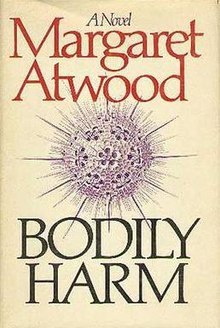 Recently, I broke off from my ongoing good old independent research into women’s escapism (and if anyone reading this has read anything recent and not partisian on the topic of women’s escapism and reading romances, do let me know). Finding Margaret Atwood’s Bodily Harm on the shelves of someone I was visiting, I pounced on it and re-read it in a couple of days.
Now, I’m going to indulge myself and write a review of it.
It’s a funny thing; it’s much easier to write a review of a book of which you have some criticisms – but one which you regard as astoundingly well crafted leaves you almost wordless, or it does with me, anyway.
At the end, I just put the book down and used an expression I hate and despise: I said, ‘Wow!’
Of course, it does happen to be a book raising themes about which I obsess – political corruption on a global scale, lives spent in vapid preoccupation with superficial concerns and consumerism, and how the sexual abuse of women fits into these areas.
That all sounds very high falutin’. But in fact, these weighty issues are introduced
with so skilful and light a touch that you are hardly aware of their intrusion as the scene is set out, until you see the protagonist, the young Canadian‘lifestyle’ journalist Rennie Wilford suspected by the CIA of being involved in a failed coup on a little known Carribean island Here, she is served salted tea and made to defecate n a bucket while her fellow prisoner allowing herself to be sexually abused by the guards in returns for news of her lover.
I was puzzled, the first time, why the story begins with the words: – ‘This is how I got here, says Rennie. Then the account starts: It was the day after Jake left…’
Rennie returns home to find the police in the flat where she has lived alone since the break up with her lover (he’s been unable to cope with her loss of part of her breast through a cancer operation). A man has broken in, and sat drinking ovaltine while waiting with a rope. He escaped the police, who warn Rennie about bringing men back and closing the curtains when she undresses, etc.
The horror of what might have happened – Rennie thinks of it in terms of a game of Cludo, not remembering if you use the killer or the victim’s name in that: – Miss Wilford, in the bedroom, with a rope. This drives her to ask the magazine she works for a travel assignment somewhere abroad.
Rennie doesn’t want to face her pain; she’s lost part of her breast, her lover, and her confidence that she can lead a life apart from responsibility and suffering; these were the defining features of her unlucky mother’s wasted life spent in a narrow, grimly religious but uncharitable, gossipy small town in Ontario, deserted by her husband and caring for a mother suffering from early onset dementia.
She avoids deep feelings:- ‘Falling in love was a bit like running barefoot down a street covered with broken bottles’ and it is partly this which she finds so appealing in a love affair with the attractive, sophisticated successful young entrepreneur Jake, who will not tell her what’s going on in his head, but who worships her bottom. They don’t talk of love, but they fall in love anyway.
She was warned about him on the day she met him by a jaded photographer: – ‘A prick…There’s only two kinds of guys, a prick and not a prick…You’re just jealous, Rennie said. You wish you had teeth like that. He’s good at what he does.’
Jake calls Rennie his ‘golden shiska’ but once she has part of her breast removed, he becomes impotent and she can’t bear to be touched. Yet she feels a desperate longing for the unglamorous doctor who did the operation, who won’t have a physical relationship with her either, in his case through scruples about his married status.
Yet, Rennie and Jake’s sexual problems pre-date this; Jake likes to act out rape scenarios, leaping on Rennie from behind doors when she comes into the flat. Rennie goes along with these as harmless fantasies by which a sophisticated woman need not be troubled. Then, when as part of an assignment on pornography as art she has to view a collection of pornographic articles and films seized by the police, she becomes uneasy.
I wondered, as I read through this book, whether the unknown intruder was in fact Jake; Rennie never suspects him, and we are never told; but with typical Atwood understatement, the idea lurks unexpressed in the background of the story.
On the island of St Antoine (the name, of course, of one of the most militant sectors of Paris during the French Revolution) Rennie meets another reserved and ungiving man, Paul, enigmatic and with the shadiest connections and addicted to danger, with whom she starts a ‘holiday affair’.
Don’t expect too much, he tells her.
Strangely enough, Paul, who seems unlikely to give Rennie anything but the ability to enjoy her body again (which is after all, not such a little thing) gives her the ultimate gift; he dies in trying to rescue her from hostile forces in the web of insurrection and intrigue into which she has been pulled:- ‘She can hear the sound of the motor launch receding, no more significant than the drone of a summer insect. Then there’s another sound, too loud, like a television with a cop show on it heard through a hotel wall. Rennie puts her hands over her ears…’
Paul’s attempt to get Rennie to safety has failed; along with the girlfriend of the leader of the doomed and naive insurrection, she’s arrested, suspected of gun running. In the filthy conditions of the prison, she and Lora begin to talk, and this is why the novel is told in retrospective accounts by Rennie, who is talking to stave off her terror, her fear that she will never get out.
She tells Lora of the break-in by the pervert. Lora’s response shocks her: ‘I’d rather be plain old raped; as long as there’s nothing violent.’ She comes from a background of sexual abuse and places no value on giving her body to men. She disgusts Rennie by allowing the guards sex in the hope of getting news of her lover, the leader of this hopeless insurrection, that has been monitored by the CIA from the beginning.
On finding out that the guards have been lying to her, and that ‘The Prince of Peace’ is already dead, Lora attacks the guards in hysterical fury, threatening to denounce them for their own corruption. They beat her to death: – After the first minute, she’s silent, more or less, the two of them are silent as well, they don’t say anything at all. They go for the breasts and the buttocks, the stomach, the crotch, the head, jumping, my God, Morton’s got the gun out and he’s hitting her with it, he’ll break her so that she never makes another sound. Lora still twists on the floor of the corridor, surely she can’t feel it any more but she still twists, like a worm that’s been cut in half, trying to avoid the feet, they have shoes on, there’s nothing she can avoid.’
When they’ve finished, when Lora is no longer moving, they push open the grated door and heave her in. Rennie backs out of the way, into a dry corner…There’s a smell of shit, it’s on the skirt too, that’s what you do…The older one throws something over her, through the bars, from the red plastic bucket. She dirt herself, he says, possibly to Rennie, possibly to no-one. That clean her off. They both laugh.’
Hands, and their uses, play a large part of the imagery in this book. Rennie’s confused grandmother feared that she’d lost her hands somewhere. The surgeon Daniel brought her back to consciousness after her surgery by holding her own. Now, in this climax of the novel, the once detached writer of articles on fashion and furniture, almost as bemused by horror as her grandmother once was by brain deterioration, believes she can use hers to bring Lora back to life: –
‘She’s holding Lora’s left hand, between both of her own, perfectly still, nothing is moving, and yet she knows she is pulling on the hand, as hard as she can, there’s an invisible hole in the air, Lora is on the other side of it, and she has to pull her through…’
Rennie is released. A man from the Canadian embassy has negotiated her release. He asks her not to write anything about her experiences on the island or in the prison as the situation on the island, which is ‘still volatile’.
Rennie agrees; now she sits on the plane going home. A middle-aged man tries to pick her up, asking her about her holiday, commenting on her lack of a suntan. She tells him nothing, of course: –
‘She knows when she will not be believed. In any case, she is a subversive. She was not one once, but now she is. A reporter; she will pick her time; then she will report.
For the first time in her life, she can’t think of a title.’
Now Rennie knows that she both has been rescued, and never will be. She will no longer try and believe that she is exempt from life’s pain; instead she sees herself as lucky and buoyed up with this new luck.
I may have written a complete spoiler in trying to depict the brilliance of the powerful writing in this disturbing, bitterly funny, expertly crafted and terribly believable novel. However, as it was first published in 1981, it surely counts among Margaret Atwood’s collection of classics.
I deliberately didn’t read any of the literary criticism or general reviews on it while writing this post, but now I’ve glanced at some of the reviews on Amazon. They average at 3.2 stars, with more purchasers awarding a one star review than those giving a five star.
I had very little respect for Amazon’s star rating system for books before; now I don’t have any.
However, the comment of the woman to whom I gave the book as a present when I first read it, is unfortunately instructive ‘Too stark’.
Realism doesn’t generally make for a popular read. Well, back to my research on women’s escapism…
August 1, 2020
Elizabeth Taylor’s ‘Mrs Palfrey at the Clairmont’: Darkest Humour
I suppose there are books which have a more darkly comic theme than ‘Mrs Palrey at the Claremont’ – Martin Amis’ ‘LondonFields’, for instance, and a few others, including a book I really enjoyed when I was twenty ‘Safe Behind Bars’ by Andrew Hall; generally, though, I would calll it humour of the darkest type.
Oddly enough, it was recommended to me by an older relative, then in her eighties. She said then that it was funny. I thought parts of it were, and parts of it made painful reading. She is now in her nineties, and when I mentioned re-reading it, she claimed she only recommended it to me ‘Because you like reading grim things like that.’
As a matter of fact, my grandmother and mother knew Elizabeth Taylor: I am not doing a bit of name dropping, but because the impression I had of her from their accounts – producing a version of ‘Six Men of Dorset’, tempting the child actors in the opening scene (my mother was one) with new potatoes in a potato eating scene, seems to have been of a cheerful, exuberant person.
Perhaps that follows; maybe we can only face writing about the grimmer aspects of life, when we are by nature optimistic. The topic of ‘Mrs Palfrey at the Claremont’ is about the upper middle class Mrs Palrey, recently widowed, and eager to avoid living with her insensitive daughter in Sctoland, who goes to live at the Claremont Hotel in the Cromwell Road, South Kensington, as one of the regular boarders who receive reduced rates. These are generally old people who are spending their declining years in affluent surroundings. The blurb of my Virago Modern Classics version sums it up well: ‘Together, upper lips stiffened, they fight of their twin enemies; boredom and the Grim Reaper’.
It is hard to tell how old they are, because with the developments in medicine, life expectancy has increased massively since this era. They are perhaps in their late seventies, which would have been regarded as very old back in 1971 when the book was published. Mrs Palfrey, whose husband was in the colonial service, has spent some happy years of retirement in Rottingdean, a coastal village in Sussex.
hey lived in a rented house, so perhaps house prices were as comparatively expensive there then as they are now. Mrs Palfrey’s strict code of behaviour includes the injunction ‘never touch capital’ , so perhaps actually buying the house when coming back to the UK after a life spent in the colonies was seen by herself and her husband as that. I mention this, as perhaps Mrs Palfrey might never have thought of moving out, had they owned the house, and so come to her melancholy feeling of rootlessness in London. But perhaps she would, for Mrs Palfrey now finds domestic chores and the administrative tasks of running house to be beyond her.
Interestingly, there is a pub there called ‘Ye Olde Black Horse’ rather appropriate ot Mrs Palfrey; perhaps that inspired Elizabeth Taylor to write of her. One of her fellow lodgers later thinks of Mrs Palfrey as ‘a dark horse’…
Remembering this life later, Mrs Palrey thinks: ‘After their hard, often uncomfortable, sometimes dangerous married life, that retirement – the furnished house in Rottingdean – had, simply, been bliss.’
Mrs Palrey is no delicate flower -in fact, she is described as looking, in evening dress, like a man in drag- but suffering from heart problems, varicose veins and increasing stiffness, she becomes alarmngly aware of her failing health and increasing loneliness, for she makes no real friends among her fellow residents at the Claremont.
Mrs Palrey is no delicate flower -in fact, she is described as looking, in evening dress, like a man in drag- but suffering from heart problems, varicose veins and increasing stiffness, she becomes alarmngly aware of her failing health and increasing loneliness, for she makes no real friends among her fellow residents at the Claremont.
There was at this time an exclusive club called the Claremont not so far away in Mayfair, where Lord Lucan used to gamble every day before he fled the country in 1974 as the prime suspect in the attempted murder of his wife. Perhaps Elizabeth Taylor was thinking of this upper class estabishment when she named her hotel, though one of the guests at her Claremont, Lady Swayle, who only visits London once a year, describes it as ‘cheap and cheerful’ and no doubt to her, it is.
These days you would need to be a multi-millionare to live in a hotel in South Kensington, but obviously at the time of the story, presumably around 1968 – the union jack shopping bags and student demonstratons I remember from my childhood are mentioned – it was just affordable for those with a middling sort of income. In fact, Ludovic Meyers, the writer who rescues and befriends Mrs Palfrey when she falls in the street, has inherited a sum of money from his recently deceased grandmother and is able to afford to live a spartan existence in a basement flat somewhere in South Kensington. To save on heating in the winter, he goes to write every day in the then open Harrods banking hall.
What he is writing before he comes to Mrs Palfrey’s rescue when she slips and falls outside his basment flat is far from clear – though he does seem to be fascinated by the twilight years – but afterwards it is ‘We’re Not Allowed To Die Here’.
Jolly stuff. Actually, like Elizabeth Taylor herself as recalled by my older relatives, the writer himself is seemingly an optimist by nature with an acute sense of humour.
We learn about Mrs Palfrey’s fellow permanent residents. There is Mr Osborne, who tells dirty jokes to the Italian waiter and the doorman Summers, and is a dirty old man, though one who wants a replacement wife to regard as ‘above all that’. There is Mrs Arbuthnot, debilitated by arthritis, who is the first to make a friendly overture to Mrs Palfrey, but who, as her arthritis becomes worse, takes to taunting her about the lack of visits from Mrs Palfrey’s grandson Desmond, whom Mrs Palfrey is disappointed to find is not tempted to visit her at the hotel by the good dinners. There is the scatty, hopelessy out of touch Mrs Post, and the jolly, drunken Mrs Burton, whom I rather liked.
Later on, Mrs Arbuthnot has to move into a home, and is replaced by a Colonel Mildmay, a polite, distant man who intends to make countless visits to the nearby museums. Mrs Palfrey herself replaced one Mrs Benson, who went into hospital, never to come out…
Another, younger widow briefly joins them, Mrs de Salis, whom I rather liked. The author comments that ‘Like quite a few show-off people, she sometimes kept her word’ and she does about the party she promises the Claremont residents, when she moves into a flat of her own.
his dreadful party is a highlight – or lowlight, depending on how you look at it – of the grmily comic atmosphere in the book. There is a retired actress who once played Mrs Darling in ‘Peter Pan’ called Fay Sylvester; there is Mrs de Salis’ adorable Willie, now middle aged; there is ‘plenty of plonk for everyone’, there is Mrs de Salis’ sister known as ‘Aunt Bunty’ (wonderful name; I think Elizabeth Taylor has as much as a weakness for ridiculous names as I do), and after the guests have gone, Mrs de Salis says, ‘I was only trying to be kind, as is my wont. I did the best I could, as that ghastly old bishopno doubt said to the actress…’
Mrs Palfrey’s humiliation over the none appearance of her grandson Desmond, about which the increasingly agonised Mrs Arbuthnot taunts her, leads to her initiating a deception. This is the first real lie she has ever told in a straightforward, naively honourable life spent as a colonial administrator’s wife (memsahib?)
In one of her lonely walks about the bleak West London landscape, leaning on her walking stick, escaping from the claustrophobic atmosphere of the Claremont, and looking for signs of spring, she slips, and the aspring writer Ludovic Meyers comes to her aid.
Mrs Palfrey decides to thank him by offering him a dinner at the Claremont, and on impulse, passes him off as her grandson, come to visit her at last. This, naturally, leads to complications…
I did find Ludovic a dull character, somehow not fully realised. I’m not sure exactly how this was because we are given access to his thoughts and vulnerabilitis. For instance, he has a selfish and feckless mother who treats him unfeelingly, and his distant and unimpressed girlfriend Rosie (and extraordinary old fashioned name in that era) does too. Despite having worked in the theatre before becoming a solitary writer, he has few friends.
Mrs Palfrey certanly thinks he is charming, and I supose that the reader is meant to as well, but I have come across several characters called Ludovic who are meant to be beguiling in books, and nHis name, anyway, is presumably meant to be as ridiculous as poor Mrs Palfrey’s:
‘”My name’s Ludovic: Ludo.”
“You have to be joking”…’ever thought any of them was.
That isn’t Mrs Palfrey, of course; she would never be so rude; that Rosie, who seems to spend most of her life putting everyone down, from customers in a boutique where she works as one of her jobs, to visitors to an art gallery where she later works at another.
‘Ludo’: remember that game, anyone? Is it even about any more?
Though Ludovic is meant to be interesting, as a struggling writer s, he is somehow not fully realised and never came properly to life for me. This was true even in his hopeless infatuation.
Selfish and unfeeling, neglecting to visit her until forced to do so, Desmond when he does eventually turn up suffers the humiliation he deserves, I suppose. Yet I felt that Mrs Palfrey had always found him a disappointment, and when you don’t think much of people, they have an uncanny way of discernng it, however much you may try and hide it…
Her fellow ‘guests’ are all depicted with unsparingly keen vision, but also, thankfully, with compassion. Without being informed by compassion, this book would be almost unbearable to read.
In old age, there is loss of so many things. If people live to be very old, it is a commonplace that they lose all of their own generation, while the world in which they felt comfortable, that of their youth and early maturity, has long since vanished. Faculties disappear.
As a trade union representative in my twenties, I could remember all my appointments without keeping a diary, and a string of phone numbers. These days I need that appointments diary. The other day, I sent a card on impulse to that very old relative who recommend this book to me, and realised that I couldn’t remember the post code…
Grim humour written with unsparing clarity of vision by a brilliant writer, ‘Mrs Palfrey at the Claremont’ is for those who can endure it. I will definitely be reading some more of Elizabeth Taylor. I liked her short story ‘Poor Girl’ when I read it decades ago, but somehow never got round to sampling more of her work.
July 15, 2020
Plasticity,Recycled Characters and Beloved Brothers: Part One: Elizabeth Gaskell

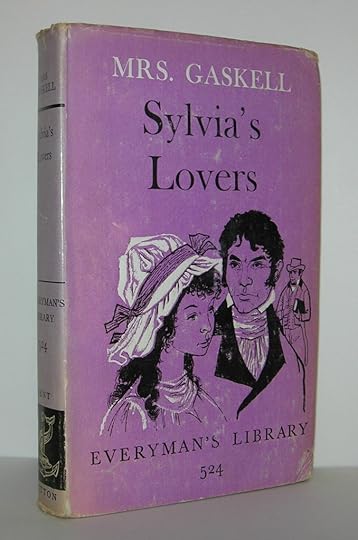
In an earlier post, I discussed how Elizabeth Gaskell used a particular character type – suely largely based on her lost and beloved brother – the charming, brave, dashing and handsome sailor, three times, in slightly different variations.
She used this character type possibly for times, if I count the returned sailor ‘Poor Peter’ in ‘Cranford’ ( I have yet to read that).
This reuse of a character type, is in fact, is contrary to the cliam which WA Craik makes of the author n her 1970 work ‘Elizabeth Gaskell and the English Provincial Novel’, that this author never revisits character types or situations. This is so untrue, that I was startled by it. It seems to show a startling lack of perception on the part of that biographer.
Having read some biographies of Elizbeth Gaskell, I am always struck by the fact that she never properly got over the…
View original post 1,834 more words
July 4, 2020
Reblogged from my Archieves: The Gary-Stu or Marty-Stu; Neglected Compared to the Mary-Sue.
I wrote a longish post about research for historical novels and changing opinions on ‘facts’ in history, and guess what – my PC has eaten it. It is ‘irretrievable’. Ironically, part of the post metioned the frustration of wasting hours carrying out fruitless research on topics where nobody can give you anything but the vaguest of answers. Well, I wasted a number writing that post, that is for sure.
Seeing that I have resolved to write a blog post every ten days or so in 2020, I am going to cheat and reblog this post that I have already reblogged once, as it still seems to get a fair amount of reads. It is about the male equivalent of the Mary- Sue.
I’ve been looking for discussions about the male equivalent of characters defined as Mary-Sue’s online, and what interests me is how few posts there are about Gary-Stus and Marty-Stus,and how few male characters are defined in this way.
In fact, I read a blog which, while admitting that there are few Gary Stu discussions compared to all those Mary-Sue accusations flying about, didn’t explore this, going on instead to list various heroines perceived by the author as Mary Sues. I was surprised to find Elizabeth Bennet on this blogger’s list; but more on that later.
Goodreads has a ‘Listopia’ list of Gary-Stus. As I am not a great reader of current fantasy, and most of the male leads named came from this genre, I didn’t know enough about the characters to comment. Even I, however, knew the male leads from the top two. First on the list was Edward Cullen from ‘Twilight’ by Stephanie Myer, and second was Jace from ‘City of Bones’ by Cassandra Clare.
Well, I think I said in my last post that the fact that many readers define the heroes and heroines of these books as Marty-Stus or Gary-Stus seems to have done little to detract from their bestselling status and continuing popularity.
I did let out a hoot of laughter at seeing that Frances Hodgeson-Burnett’s tiresome ‘Little Lord Fauntleroy’ featured on this list, that infamous young Cedric of the sailor suits and suave compliments.
[image error]I added the hero of Fanny Burney’s ‘Evelina’ to this list. Lord Orville is, surely, the original Marty-Stu, perfectly matched to the heroine who competes with Pamela for the title of the original Mary-Sue.
Lord Orville is handsome, witty, suave, gallant, and unlike his roguish rival, Sir Clement Willoughby, tenderly respectful of the heroine’s innocence (this is off topic; but did Jane Austen borrow Clement Willoughby’s name for her own rogue in ‘Sense and Sensibility’?).
I also added the secondary hero of Elizabeth Gaskell’s ‘Sylvia’s Lovers’ to the list. Charley Kinraid ‘the boldest Specksioneeer on the Greenland Seas’ is handsome, fearless, irresistible to women, can drink endlessly and never fall down, is a brilliant raconteur, beguiling and the life and soul of the party. Just about the only person who doesn’t admire him in the book is his jealous rival Phillip Hepburn.
Not only that, but he has so much good luck that he is virtually indestructable. He survives two serious gunshot attacks without seemingly lasting ill effects. A woman is rumoured to have died of a broken heart after he finished with her.
The only bad luck he has is falling victim to a press gang, and the Royal Navy officers quickly take to him and realizing his exceptional abilities, promote him so that within a few years, he is able to marry an heiress. Then, further promoted to Captain, he is able to send out press gangs of his own…
As the term ‘Mary-Sue’ (later mutated to ‘Marty-Stu’ or ‘Gary-Sue’ to accommodate male characters) originated in fantasy fan fiction, I suppose it isn’t surprising that most of these online discussions are about this genre.
I did find a very witty catalogue of types of Marty-Stu on this link. Unfortunately, it’s about those on television rather than in books. It is excellent, and the types are easily recognizable in novels as well as television series and films:
http://tvtropes.org/pmwiki/pmwiki.php/Main/MartyStu
This biting paragraph is particularly apt:
‘Dark Hole Stu: His gravity is so great, he draws all the attention and causes other characters (and, often, reality itself) to bend and contort in order to accommodate him and elevate him above all other characters. Characters don’t act naturally around him – guys wish to emulate him and all the girls flock to him regardless of circumstances. They serve as plot enablers for him to display his powers or abilities, with dialogue that only acts as set-ups for his response. He dominates every scene he is in, with most scenes without him serving only to give the characters a chance to “talk freely” about him – this usually translates to unambiguous praise and exposition about how great he is. Most people don’t oppose him and anybody who does will quickly realise their fault in doing so or just prove easy to overcome. ..’
Nevertheless, looking about for Marty-Stu or Gary-Stu discussions, I am a bit perturbed. There was seemingly so much more talk of Mary-Sues on the web compared to that centering on their male equivalents.
This seems accurately to reflect the different standards and expectations applied to male and female characters. There does appear to be a good deal less resentment of male characters presented as admirable, handsome, unflappable, invincible in fights, and invariably attractive to most women.
A male character is permitted to have glaring character flaws and still be presented as generally heroic. He is also allowed to be sexually adventurous and even promiscuous; a female character so free with her favours would be defined as ‘slutty’ and lose the sympathy of many female, as well as male, readers.
In fact, being emotionally challenged is often seen as a desirable attribute in these stereoptypical male leads. It is only rarely one with female leads. This has led me to wonder how readers would react, say, to a female version of the Byronic male?
This strikes me at least as being unfair.
I also note, that for some reviewers, the term ‘Mary- Sue’ is applied rather loosely, being leveled at almost any female character whom they for whatever reason, resent.
This leads me back to the term being applied by one blogger to Elizabeth Bennett. She doesn’t seem to me at all to qualify.
Yes, she is lucky to attract the hero’s admiration, but she does that through wit rather than her looks, which as everyone knows, originally elicited that ‘not handsome enough to tempt me’ remark from him. It is true that her mother doesn’t appreciate her, and a virtual requirement for Mary-Sues is not to be appreciated by her family – but she is her father’s favourite daughter.
Apart from wit and dancing, she has no particular skills apart from perception. In the book (as distinct from the film versions) she is depicted as a mediocre singer and pianist; her sister Mary in fact described as more skilled, but with an affected style, so that people find her performances tiresome.
I suspect that the blogger disliked the character of Elizabeth Bennett, but not because she is a Mary-Sue. Possibly, the blogger disliked her because she is generally such a favourite among Jane Austen lovers that the chorus of praise from them becomes boring.
Therefore, it would be good if readers applied that suggestion I found on a fan fiction website about Mary-Sues: ‘Would I find these characteristics so annoying if she was male?’
Finally, a highly perceptive remark from a male poster called Tim Kitchin on Gary Stu’s:
https://www.quora.com/Who-are-the-most-notable-Mary-Sue-characters-in-books-and-literature
‘Jason Bourne, Tintin, James Bond, Ethan Hunt would all ‘fit the description’. The absurdity of these Gary Stus doesn’t go unremarked by fans, but it doesn’t seem to evoke the same cultural baggage and resentment as many Mary Sue characters – for one thing because the intrinsic role-conflict (for which read ‘socially conditioned expectation’) inside male character leads is less complex…and for another because we are so used to them..
June 16, 2020
Character Development: Some Classic Best Sellers Without Much of It…
[image error]No giant insect visible….
A couple of years ago, the latest thing in discussing novels online or leaving reviews seemed to be a lot of talk about ‘character development’. I haven’t heard so much about it of late- maybe I haven’t been looking – but back then it seemed as if you couldn’t read a single review without that dreaded ‘character development’ coming into it , and no, it didn’t mean the hero’s chest and waist measurement.
Authors got paranoid about it. ‘Does my character develop enough’ was becoming the greatest fear. I saw reviews from that time where bestselling authors were slated because their characters didn’t undergo an obvious change by chapter two.
In a way, all this seems the more unfair, when one considers how many classical authors wholly neglected this aspect of writing.
Well, Kafka at least would have been all right regarding an early depiction of character development in his 1915 novel ‘ Metamorphoses’, as Gregor Samsa undergoes a rather ‘life changing’ alteration in the first sentence. After that, though, he doesn’t seem to do a whole lot else except be ill treated and fed on rotten food for the rest of the novel.
Interestingly, and I’ve touched on this before – there are any number of classic books where the characters remain static. Dickens didn’t bother about it generally for his heroes and heroines. In ‘A Tale of Two Cities’ Lucie Manette and Charles Darnay at the end are just the same as they were at the beginning, only a bit older.
With regard to the secondary characters, Sidney Carton the inert cynic, falls passionately in love with Lucie, and remains hopelessly in love with her for about ten years, and it is that which leads him to replace Charles Darnay as he awaits execution at the end, but that is about all the changing he does. He starts off a hopeless drunken loser and remains one. Does Dr Manette undergo any particular changes during the novel? Not so you’d notice; he gets addicted to making shoes in his long stint in gaol, so perhaps that counts a bit.
[image error]
There are exceptions in Dickens, to be fair. There are those characters who undergo a massive moral reformation, like Ebenezer Scrooge, or less dramatically, Pip in ‘Great Expectations’. Still, overall, good old character development wasn’t Dickens’ forte, and his sales were never seemingly affected by the lack of it. Maybe readers of the mid Victorian era didn’t like it very much. In fact, a good many of Dicken’s minor character characters, traditionally celebrated as ‘great characters’ are in fact stereotypes.
Of course, the whole issue of how far secondary characters are to be depicted as changing in a novel, and how much attention is to be devoted to this, and how much space is to be devoted to them anyway, is all highly debatable to this day. More on that in my next post.
P G Wodehouse- of course – made a fortune in writing about stereoptypes and static characters. We leave Bertie Wooster and Jeeves (does anyone know his first name? Does he know it himself?) exactly as they were when we met them. Bingham Little gets married, of course, to the romance writer Rosie M Banks, but that doesn’t seem to change his lifestyle much.
I was about twelve when I first read those, and I hoped that Bertie Wooster would end up getting married himself, but no such thing. In fact, in one story, one of his friends or relatives remarks that Jeeves will never allow that, and I never enjoyed the stories so much after that: it made Jeeves seem positively sinister. Perhaps he is a control freak? A Freudian study of that relationship might prove most rewarding.
I have to say, I never noticed any particular alterations in the characters of the heroines or the heroes of the couple of the 1950’s Mary Stewart novels I read, either. I personally don’t enjoy her writing, but she is highly regarded as the inventor of romantic suspense and a fine writer besides. Still, it was a long time ago that I did read them, and I may have missed something.
Going back a good bit, there’s the question of how much character development there is in Jane Austen. Obviously, her most famous novel, ‘Pride and Prejudice’ is centred about a couple who do change throughout the course of the novel, and we know which qualities they are going to change from the title, but how about the other characters?
They are wholly believable, but they all – Mr and Mrs Bennett, Jane, Bingley, Lydia, Wickham, Mr Collins and so on, seem to leave the novel pretty much as they entered it.
They were well drawn and convincing at the beginning, and they are well drawn and convincing at the end, but they seem to remain static. Well, come to think of it, maybe Mary and Kitty do develop a bit. Mary is happier, because we learn that she is no longer mortified by being compared to her prettiest sisters, while Kitty, we read, becomes ‘less insipid’.
Quite often in love stories, in fact, all the transformation that seems to be required of a character is for him or her to transfer his or her love from one character to another – that would appear to be all the change that Edmund Bertram undergoes in ‘Mansfield Park’. The heroine Fanny Bertram does develop; she changes from a shy girl into a poised and efficient parson’s wife for Edmund, but she remains, I am sorry to say, priggish and humourless from beginning to end of the story.
Marianne Dashwood in ‘Sense and Sensibility’, of course, does indeed have an alteration in character. I have often said that I found the subduing of her passionate and rebellious spirit one of the most depressing parts of Jane Austen’s writing.
To my shame, I must admit that I have only read two of Thackeray’s novels, ‘Vanity Fair’ and ‘The Luck of Barry Lyndon’. He troubled about this modern bugbear of character development not at all. The villainous Barry Lyndon’s luck may change, but he remains the same faithless, fickle scoundrel at the end of his memoirs, save he is now living (attended by his mother, and in a good deal of comfort) in a debtor’s prison.
The same is nearly as true of another con-artist in classical literature, Becky Sharp in ‘Vanity Fair’. This enduringly successful novel has very little in the way of changing characters, a bit of moral repentance from secondary characters aside, and Becky is too villainous to go into any of that.
She is shown as becoming more conniving, it is true. At the beginning of the story she is openly rebellious. When the carriage she shares with Amelia Sedley leaves the boarding school where she has been employed as a drudge she shouts, ‘Vive Boneparte.’
At first, her lying and scheming is a bit blatant – she makes the mistake of claiming to love children to Amelia Sedley, and even the often undiscerning Amelia could not fail to see how much she had disliked the small girls at school. Within a chapter or so, however, she becomes a consummate hypocrite, and an arch manipulator, and stays that way from then on.
The character of Rawdon Crawley, Becky’s husband and for years her dupe and partner in crime, does have a moral reformation, apparently caused by fatherhood, though we are not given any access to his mental processes. His admiration for his sister-in-law Lady Jane appears to play a part in this.
He is even shown as feeling some shame about having cheated George Osborne out of his inheritance at gambling – when he meets the old Mr Sedley and he mentions him, Thackeray says Rawdon ‘flushes up red’ – and ‘blackleg’ (ie, card cheat in Regency slang) and Becky’s dupe though he has been, he is outraged when he learns that he is viewed as a ‘complacent husband’. He knocks down Lord Steyne when he finds him alone with Becky, and wishes to challange him to a duel, but he aging libertine sneaks out of it.
Amelia Sedley doesn’t change, but is of those characters whose love is transferred from one character to another. She ceases to worship the memory of the late George Osborne, apparently believing all Becky’s harsh words about him – and begins to worship the dull but worthy Dobbin, giant feet and all.
So, we may well envy those earlier writers for the easy time they had regarding depiction of character.
Still,now there is a wealth of online advice for authors about how to pursue character development on line. Here, for instance, are just two of many excellent articles.
here
and
That is actually by the Reader’s Digest – not the sort of publication I like to recommend – but it is very good.
here
Perhaps, if Fanny Burney had read these, she might have thought, ‘Hmm. It might be better if in my novel, there is just one person who doesn’t admire or envy Evelina…’
Maybe Charles Dickens might even have thought: ‘I suppose it wouldn’t hurt to make Charles Darnay a little more interesting…’
June 3, 2020
Patrick Hamilton’s Dark Humour: ‘The Slaves of Solitude’.
[image error]I was delighted to discover recently that the works of Patrick Hamilton, one of my long favourite writers, have come back into fashion. In fact, my favourite work by him ‘The Slaves of Solitude’ – generally regarded as one of his masterpieces – is currently ranking at 70,000 in the Kindle store.
How far this is due to an revival of interest in fiction related to World War II, and the recent (‘socially distanced’) celebration of VE Day, I don’t know. Anwyway, I was very pleased. I feared that his style, relying as it does on eleborate detail and the gradual building of tension, might seem too old fashioned for modern readers ever to develop a taste for it.
He infuenced my own style of writing, particularly in his darkly comic approach. I have imitated him in sometimes using the facetious use of capitals to emphasize certain phrases. I am sure other writers have used versions of it .
I remember reading ‘The Slaves of Solitude’ (not quite such early reading for me as ‘The Queen of Spades’ or ‘Carmela’ but in my teens, anyway) and being delighted by the dark humour that pervades that story.
Patrick Hamilton’s own life was to some extent tragic, though he achieved so much as a writer.
Born into an upper middle class background with an overbearing father who took out his frustrated authoritarian tendencies on his wife and family, Patrick and his beloved brother Bruce retained scars from their childhood all their lives. Patrick slipped early into alcoholism, tormented by and a horror of life, which he feared was meaningless.
His success came early, in his twenties, and he went on to write the fascinating trilogy depicting isolation in the London of the late nineteen twenties ‘Twenty Thousand Streets Under the Sky’.
His masterpieces, however, are ‘Hangover Square’ (from the preface to which I learned the poem ‘The Light of Other Days’) and ‘The Slaves of Solitude’.
Looking for a creed in which to believe, he became a communist. Bitterly disillusioned by the degeneration of the buoyant hopes of a better world that supported so many through terrible war against Nazism into a society based on consumerism, he became a sad and backward looking figure. For the last few years of his life he was hardly able to write at all.
That wonderful sense of the darkly comic aspects of life, of the delightful absurdities to be encountered every day, of the pathos and bathos of life are unique.
I’d like to quote from ‘The Slaves of Solitude’ here, where the dreadful boarding house bully, Mr Thwaites, is ridiculously drunk following Christmas dinner in the local pub (the date is 1942).
‘”Methinks it Behoveth me’, said Mr Thwaites, ‘To taketh me unto my mansion. Doth it not? Peradventure? Perchance?”
“Yes,” said the Lieutenant. “Come along the. Get a move on.”…
“Come along Mr Thwaites.” said Vicki (the vulgar, Hitler admierer who coquettishly who encourages his advances).
“Ah, the Beauteous Dame.” said Mr Thwaites. “The beauteous damsel that keepeth me on tenterhooks.”
“Come on then,” said the Lieutenant. “Take my arm.”
“Hooks. Tenter One.” said Mr Thwaites. “See Inventory.”
“Aw, come on, will you?” said the Lieutenant.
“Damsel, Beauteous, One.” said Mr Thwaites.”Hooks, Tenter, Two. Yea, Verily.”…
“April, too.” said Mr Thawaites. “Thirty days hath November.”
At this he lurched forward, and the Lieutenant caught him…”‘
This book, which deals with a microcosm of the menace of fascism during the huge theatre of World War Two, tells the story of the lonely Miss Roach, an unmarried woman in early middle age living in an era when to be a ‘spinster’ was regarded as a grim and lonely fate. Miss Roach is in her late thirties, and many of the young men in her generation were killed of in World War I. The is set in late 1943 in World War II, men of her own age and younger are being killed off.
Bomb ed out of her London flat, she still works in London but commutes from Berkshire and a genteel boarding house in ‘Thames Lockdon’ (based on Henley-on-Thames). In this boarding house, known by the absurd name of ‘The Rosamund Tea Rooms’, she has become the target of an idiotic but sinister elderly man named Thwaites, whose hobbies are bullying and boring people with his snobbish and absurd views.
Miss Roach does a seemingly lonely German woman friend a favour in introducing her into the Rosamnund Tea Rooms. As a German, Vicki Kugelmannn has been singled out for social ostracism in the town, and is exploited at her curerent lodgings. She is also single, about Miss Roach’s age, and Miss Roach hopes to find a good friend in her and possibly even a source of moral support against the overbearing Mr Thwaites.
However, Vicki soon reveals that far from being grateful to Miss Roach, she is eager to steal from her a generous but drunken American lieutenant who has been taking Miss Roach out. Now, despite her ver ordinary appearance, she is shown as being insanely vain, and to regard herself as a sort of femme fatale. Worse, she gangs up with Mr Thawaites against Miss Roach, and both of them gradually reveal their Nazi symapthies…
A psychological thriller, the novel depicts a struggle against the power of evil which reflects world events.
Intriguingly, the novel ends with what I consider a truly inspired phrase from this most irreligious of writers: ‘God help us, God help all of us, Every one, all of us.’
May 19, 2020
More Comedy for Testing Times: An Extract from ‘Ravensdale’ (Now Free on Amazon ): Morpeth the Thief Taker, on the Trail of Reynaud Ravensdale, Calls in to Question the Landlord of the ‘The Huntsman’.
[image error]
“If this ain’t a Bow Street Runner or some other thief taker, then I’m a Dutchwoman,” Kate told Suki, as they watched the short, stocky, dapper man came up to the Inn door. “Good morning, Sir. What will you have?”
They knew he was staying with their rivals in The King’s Justice up the road. The landlord there prided himself on running a respectable house. The tenants of The Huntsman knew he was jealous, because he didn’t have such open-handed customers. The man was even applying for a licence to have his premises made into a gaol, possible future lodgings for some of the regulars at The Huntsman.
The customer glanced about with hard pale grey eyes, fixing them on the baby, who let out a wail.
Kate picked him up. “Serve the gentleman, Suki.”
“A tankard of porter. A fine infant; is he your only one?”
“Seeing as I was only married fifteen months come Saturday, yes, Sir.” The man wetted his moustache. “Has Reynaud Ravensdale been in lately?”
“Ravensdale?” Kate laughed. “You can’t mean that Lord? The gentleman has high notions of our patrons, Suki. Yes, Sir, him and the Prince of Wales, they came in together.”
The man’s eyes hardened still more. “Exercise your wit, Mistress, if you will, but Lord or no, now he’s an outlaw, and lower than the merest farm hand, a wanted murderer with a price on his head for highway robbery. I hear tell he’s been seen hereabouts.”
“By who?” Kate looked outraged. “That old harridan over the way, I’ll be bound. There’s so many sightings of that Ravensdale in different places, he must have a better horse than Turpin’s Black Bess to get about the way he does, is all I can say. What did they say he looked like?”
The man took some swallows of his drink before he pulled out a printed bill. “Here’s the official description, and not so helpful, with him having medium colouring, and no distinguishing features, save it does say, ‘noticeable eyes’ whatever that means. Tall, it says, and spare though strongly made, and he has a fair trick in disguise. When he stayed with you, I think his hair was dyed and unpowdered and it was described as brown.”
“Could be anyone,” Kate gazed at him with her jaw slightly dropped. “Does he have the trick of adding pock marks to his face, makes him look fair ugly? Remember, Suki? There was a man stayed who looked like that, brown hair and so on, said he was going Reading way.”
“Or maybe,” Suki looked struck, “It could’ve been that stout man that would never take off his coat? He could have stuffed in pillows underneath his waistcoat. I remember thinking his thinnish face went ill with his body. I mind he rode a dun coloured horse and went up north.”
The man snorted: “Do you take me for a fool? Have a care, mistress; the magistrates don’t like to renew licences for those who harbour known highway robbers. Where’s the master of the house?”
“This is a respectable house, and I’ll give my mind to anyone who says different,” Kate said angrily, while Suki tossed the bright blue ribbons Flashy Jack had given her in defiance. “The master’s away on business; he ain’t due back till tomorrow at the earliest.” Kate looked squarely into those judgmental eyes, which seemed to know the purpose of that trip.
The baby let out a furious wail.
“Now see what you’ve done! They understand more than you think, and he don’t like you coming in here making out we ain’t fit to run a decent establishment.”
Suki clicked her tongue.
The man actually looked abashed, before draining his porter with a business-like slurp. “I play my part in keeping the world safe from marauding thieves and murderers like His Lordship Reynaud Ravensdale, and if you’ve nought to hide you won’t mind my questions, nor your baby neither.”
They all turned about at a crash. The one time librarian at Wisteria House tottered into the yard to collapse on the bench.
The thief taker nodded to the women. “I may call in again.”
“Do, Sir, and we promise to keep a sharp look out for His Lordship.”
The man paused in the door, saying to Suki, “Look out for his fellow robber John Gilroy too: tall, fair hair, quite the swell and a ladies’ man. He’d have an eye for a pretty wench like you, miss; you and half the girls in London if I hear right.”
He must have been disappointed at her indifferent shrug. Kate snorted: “Be serious, Sir! As if we don’t get young men in here all the time, making up to her, and half of them called Jack or John.”
‘Ravensdale’ is free on Amazon.com here
and on Amazon.co.uk here
and on Kobo here