Lucinda Elliot's Blog, page 8
December 19, 2020
A Tale of Terror for Christmas: The Terrible Vision in the Attic at Number 50 Berkeley Square
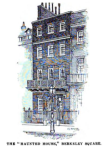
Berkeley Square is prestigious address, which from the 1930’s until recent years was the premises of the antiquarian booksellers ‘Maggs Brothers’. Back in the Victorain era, however, it had the reputation as the most sinister house in London.
The story stared when a jilted elderly man who lived there became increasingly deranged. Reputedly, he did not go out during the day, though the house was lit up at night, with extaordinary noises coming from it.
After his death, the house was taken by a fashionable family for the London season. One of the daughters was engaged, and the fiance was inited to stay.
Reportedly, a maid went up to prepare the his room on the upper floor. Suddenly, the household was roused by terrified screams and they rushed upstairs to find the maid had been driven mad by somehting, now standng, staring wildly at the corner. She was taken to St Georges’ Hospital, but later died. She was reputedly unable to describe what she had seen, save saying that it was too horrible for words
The finace did not stay in the room. Still, refusing to believe in the ghost, he is related to have taken up a vigil there to see what might happen. The family agreed, on condition that he ring if he saw anything alarming, and stay there only until midnight. He too, rang the bell violently at midnight.
The family on rushing up, found him stretched upon the floor in convulsions. He survived, but would not talk of what he had seen.
There is also a story that another man set up watch in the attic and fired when he saw an alarming vision.
Supposedly, also, a couple of sailors from HMS Penelope spent the night in the house after it had stood empty for some years. One fell to his death, becoming impaled on the front railings of the house when trying to escape from an apparition, said to be the threatening ghost of Mr. Myers. The other supposedly was insane from then on.
There are varients on these accounts. Another is of a mysterious tenant who used to visit the house and was noted by its caretakers to stay in the locked attic room for hours at a time.
How far all, or any of these tragic stories is based on fact, is hard to ascertain. There seems to be little concrete evidence for much of it, as various researchers have decided.
There are certainly many questions that are not answered in these stories dating back over a hundred years. For instance, even given the lesser medical knowledge ofthe Victorian era, how was the death of the unlucky maidservant recorded? What was the name of the fiance? Why, in a sizable house, was he only offered accomodation on the attic floor (traditionally used to house the staff). Then again, are there any existing statements about these events surviving from before? Has it been verified that the HMS Penelope had recently docked in London at the time that one sailor fell to his death? Where the names of these sailors ever ascertained? And so on.
Those seeking to for this sort of evidence seem to have come by no hard facts.
In her 1905 biography, Lady Dorothy Nevill related that the mad Mr Myers was a relative of hers whose odd behaviour had given rise to ghost stories. A 2010 investigation by the writer Steve Roud in his work ‘London Lore: the Legends and Traditions of the World’s Most Vibrant City’ concluded that the story of the two sailors was made up by the author of supernatural tales Elliott O’Donnell (it is certainly a good one!).
Overall this a disappointing conclusion to a spine chilling story, the more alarming for being vague.
However, the writer Alan Baker in his book ‘True Life Encounters’ (1998) argues that it is possible that the strange tenant who used to visit the attic room might have created a sinister thought form – what the Buddhist monks call a ‘tulpa’ -to guard the room.
Also, after my own experience of living in a haunted house, I would not care to spend the night in that attic alone.
Finally, in this post, I would like to wish all readers Season’s Greetings and a Happy Christmas. Anyway, I wish all readers as good a one as can be enjoyed in the current pandemic.



December 11, 2020
Interview of Harley Venn, Anti-Hero of ‘The Villainous Viscount’ by a Modern Interviewer…
Interviewer (trying hard not to stare at the anti-hero’s startling golden and athletic looks): Lord Venn – that is the correct form of address for a viscount, I believe – it is a pleasure to meet you.
Harley Venn (stooping to kiss her hand): Charmed, Ma’am. You may call me anything you like, and I’d forgive you. The pleasure is entirely mine, I assure you. ..Then, in your age, delicate females are allowed to interview such abandoned rascals as myself? That is careless of your male relatives: I’m of a mind to warn them.
Interviewer [repressing a smile]: There is no need to go to that trouble. I wouldn’t let my male relatives interfere in my work as a journalist.
Harley Venn): I wouldn’t let any sister of mine go and talk alone with a fellow with my reputation – or lack of it. But no more of that: — to the interview, then, Ma’am: I am obliged to meet Jack Molyneux and some fellow pugilists for a bout at midday.
[The interviewer starts, and they both glance round at a clap of thunder and a flash of lightning).
Harley Venn: Don’t trouble about that: it’s only the family curse, and don’t affect you. But come closer anyway, Ma’am, so I can protect you from that damned Hooded Skeleton- beg pardon: you can see I’m not used to respectable female company. – You see, I thought I caught a glimpse of the filthy thing over there by the window. It is a mass hallucination merely, but it might scare you.
Interviewer (smiling wryly): That is kind of you, Lord Venn, but I’ll stay over here…Rumour has it that there is a curse on the males of the Venn family: that must be alarming.
Harley Venn: Not just us, at that. My friend Molyneux’s old governor, who was a great friend of my Uncle Toby, came to a sticky end besides, and then my uncle’s former steward was squashed flat as a pancake when lightning struck a wall next to him. Soon after that, young Carstair’s great-uncle was found dead hanging by the heels from the eaves of his country house.
Interviewer: Oh dear.
Harley Venn: But I still hold that it is all a series of conjuring tricks, myself, and maybe a touch of mass mesmerism, or some such tomfoolery.
Interviewer: Mesmerism? ah, of course: hypnosis.
Harley Venn [laughs carelessly]: But don’t you know I’ve enlisted the aid of a Professor of Magic, Marksmanship, Swordmanship, Languages and Subtle Influences to sort matters out? I don’t credit the tricky rogue will solve anything, but Molyneux and young Carstairs were set on hiring the fellow. [More seriously] Besides, I need to protect my betrothed.
Interviewer: Ah, yes, I hear your lordship is recently engaged to the niece of your late uncle’s steward, the man who was killed by that lightning strike.
Harley Venn: ‘Venn’ will do: charming creatures such as yourself don’t need to address me formally…Yes, I am recently engaged to Miss Clarinda Greendale. She’s a fine girl. You probably heard she didn’t have much choice in the matter, being comprised by me. Taradiddles, of course. The fact is, the poor girl got tangled up in it when old enemy of mine set some hired bravoes on me. She helped see ‘em off, using her parasol. But then she was caught out alone in the house with me, and that was it for her fair fame, no matter if I was half conscious.
Interviewer [sternly]: You were rumoured to have a list of heiresses as prospective brides.
Harley Venn [winks): Was I, Ma’am? True enough, Miss Greendale turned me down before, giving me some hard words while she was about it, but no matter, that is in the past.
Interviewer: Perhaps she had some doubts about your character?
Harley Venn [grins]: No, Ma’am, she had no doubts about my character at all, knowing me to be a good-for-nothing, brawling, drinking, gambling, wenching racal.
Interviewer [feebly] Well, I wish you both very happy.
Harley Venn: I thank you. She’s a fine girl, as I say, and she’s got nerves of iron. There’s no doubt there’s no doubt she can keep her head. Those old fellows who let a series of theatrical tricks put ‘em in their graves couldn’t. We’ll see off this so-called family curse together.
[With a brisk tapping, O’Hare, Harley Venn’s rascally manservant, opens the door.]
O’Hare: Them dunns is back again.
Interviewer: Dunns? Oh yes, debt collectors.
Harley Venn: Don’t trouble me with such minor matters, O’Hare. Can’t you see I am giving an interview to publicise the book about me? You know what to do: have your brats give ‘em the welcome we always save for fellows whining about payment.
O’Hare: And I cannot for the life of me get credit anywhere in the neighbourhood for the wine, neither.
Harley Venn: Then go outside the neighbourhood: say I sent you.
O’Hare: They say all over Town that your sending me is why they won’t give me credit.
Harley Venn: Insolent rogues! I’d best search about for some spare tin about the house. Be off with you, O’Hare, you rascal, and look for some yourself…My apologies, Ma’am, for involving you in this domestic trivia. I hoped to offer you a glass of wine at least, and it turns out we can‘t get a drop. Some coffee, perhaps? Or someone left some cordial somewhere, from when I was getting the better of that beating.
Interviewer [rises]: No, really, Lord Venn, don’t trouble, I must be on my way. –- Thank you for doing this interview with me, and I wish you every success with doing away with the Curse of the Venns.
O’Hare [to himself as he goes out] He’ll need it.
November 27, 2020
A Spoof Gothic Historical Romance Episode
[image error]
Now for some comic relief. Who’s for a Gothic historical romance, full of anachronisms (which the re-cycled characters know too well).
Scene: A castle in the wilds of Yorkshire, UK, on the moors. Date – Regency
[ A darkly handsome and brooding man appears at the bolt studded door holding a modern electric torch. Although it is October and there is a force eight gale blowing, he wears breeches but no shirt.]
Dastardly Duke: Damn me! Where is the chit? She’s late.
[A footman appears. He, too, is dark and handsome. On seeing him, the Duke starts.]
Dastardly Duke: Devil take me, not you!
Footman: It ain’t my fault. I’ve been demoted from being hero, see, for refusing to chase after the heroine after I packed her off, so there wasn’t a Happy Ever After. The punishment was to be a wretched servant. So you’ve been promoted from Dashing Villain to hero? Well, in this story, there ain’t much difference. It’s not fair. I’m better looking than you, too.
Dastardly Duke: I can soon remedy that, you whoreson. I always hated your damned smug face and uneering aim with your flintlocks when you were the Earl of Darlington. [Makes to seize him, but a sudden flash and jolt makes him drop the torch; the bulb goes out. He lets out a terrible oath] Ouch!
Footman: [Addressing the sky) Is that the best he can do for foul
language? That’s the punishment for an anachronism in Historical Romances, Your Grace. New rules.
Dastardly Duke: Go down to the wine cellar and fetch me some strong
liquor, curse you for a miserable, low born rogue.[image error]
Footman: We’re out of tallow candles.
Dastardly Duke: Then you’ll have to go down in the dark, and if you happen to slip in the dark and break your low born neck, what care I!
Footman: Come to think of it, I don’t care either. The sooner I get to the end of this one, the better. Maybe by the next story, I’ll be allowed to be the Heroine’s Hopeless Admirer or her rakish brother instead of a mere commoner…[Goes off]
Dastardly Duke: Do I hear horses hooves? Yes, it’s the Heroine
arriving at last. Hmm. I wonder who they’ve sent me? To tell the truth, ha, ha!
I’d like a voluptuous doormat by way of a change from these sharp tongued hoydenish redheads who’re the fashion these days. I haven’t had a Doormat Heroine in years, and that sort was such fun for a sadist like me. [Looks about almost nervously] Well, the term hasn’t been invented when this story’s set, even if old de Sade had been at it, but I’m talking off camera, or microphone, as it were…And yes, I know they hadn’t been invented either.
[The Ducal carriage appears, accompanied by a roll of distant thunder. The Duke moves, with lithe, almost feline grace down the steps to hand down the heroine when the footman opens the door.]
Spirited Heroine: Hello, there! Sorry, anachronism. Good morrow, Your Grace. I fear you must have interrupted your toilette, to be gracious enough to greet me, for you wear no shirt.Unless you’ve lost it from your back through desperate gambling.
Dastardly Duke: [ Sourly] No. I’m never gracious. That was just for the cover. Do you think I enjoy standing about half naked in this cursed climate? [Lets out another terrible oath as he takes a closer look at her.] Don’t say it is that awful six foot redhead with the smart repartee? Hell and damnation, it is.
Spirited Heroine: Well, I can’t say I’m exactly ecstatic to see you, either. No matter; we’ll be falling in love before we are halfway through the book [here they are interrupted by one of the horses speaking before they are taken on to the stables].
Horse: Can’t I have a foaming jug of ale?
Spirited Heroine Lud!
Dastardly Duke; &*^&&^(!!!!!!
Coachman: He’s been doing that all the way from the coaching
house, Your Grace. It seems he was one of those
abusive heroes with the –ahem – I don’t like to say
in front of the young lady – ‘bruising kisses’ and
worse, back in the 1970’s, and so he’s been paying
his debt to the Romance Society ever since they went
out of fashion.[image error]
Spirited Heroine: Is that so? [Rushes forward} The swine! Give me that whip!
Dastardly Duke: [Catches her arm] No, Miss Er, I can’t allow you to flog a dumb animal.
Horse: We Alphas must stick together. Anyway, who’s a dumb animal? [Neighs piteously at a sudden flash and jolt] Ow! That hurt! That’s so unkind. Abusers need love, too…[The coachman cracks his whip and sets them off towards the stables].
Dastardly Duke: Well, shall we get on with it? So, you are the new governess. I hope you won’t find it too lonely in this isolated spot, with only a grim widower for company, and a few retainers.
Spirited Heroine: [Helping him on with his shirt] Not at all, Your Grace. I like the country. Besides, the handsome renumeration you offer, merely for the coaching of two small daughters …
[More distant thunder]
More Next Week…
November 20, 2020
Planning Your Novel for ‘Pansters’
Since I published ‘Georgian Romance Revolt’ in September, I’ve been suffering from intermittent writer’s block.
It isn’t the first time I’ve suffered from this. I managed to write my way through it the last time when I had it for as long, which was back in 2016 when I was writing ‘The Villainous Viscount Or The Curse of The Venns’ – and it resolved itself then. I managed to write my way through it.
I have written two short stories in the last few weeks, so the writer’s block isn’t total –but when it comes to working out what major project I want to write next – it’s definitely there.
I started writing a novel, but about 10,000 words into it (yes, another wasted 10,000 words: I’ve written before of all the thousands of words I have wasted over the years through never only ever knowing the beginnng and end of my novel ) I saw what faults there were with the plot, the motivations of the characters, and all the rest of it.
I am currently trying to work out a plan to remedy these.
I can see that part of the problem is being what is known as a ‘pantser’: that is, someone who writes without a plan.
But not knowing where you are going at all, is a bit different from having your actions to circumscribed. I’ve been exploring the internet for various discussions about this, and have come by some fascinating insights and good advice.
I was particularly impessed with these suggerstions on the website Now Novel which suggests how minimal plotting can circumvent panster’s writer’s block :
Here’s an interesting suggestion on plotting using a long synopsis:
One here from NatNoWRiMo on the five story plot points and minimal planning for pansters.
NoNoWriMo #26: The Panster’s Solution to Story Planning
and here’s some on specically writer’s block
Here
This writer in fact argues that if you use the process suggested here
Here
then you can usually avoid writer’s block altogether…
…And as I would like to avoid it in the future, I am seriously thinking aout applying at least some of those suggestions.
November 7, 2020
Escapism for Troubled Times: Bargain ebooks ‘That Scoundrel Émile Dubois’ on sale for 0.99 on Amazon from 7 November 2020
My novel, ‘That Scoundrel Émile Dubois’ , is on sale for 0.99 on Amazon here.
From Kobo From here
From Nookbooks From here
You can get it with Reader sets price from Smashwords From here
When writing this, I thought: ‘Why ever not have a vampire love story full of humour, and why not have a vampire whose wicked disposition is jolly, rather than mean and moody?
That’s the eponymous anti-hero, of course. Goronwy Kenrick is certainly mean and moody, but he has only ever had one fan (and I think he was joking)…
November 4, 2020
Review of ‘Evolutionary Magic’ by Christina Herlyn
On Smashwords Here
I was immediately drawn into this story of Andee’s struggle against the merciless Corporation which controls this futuristic, monster ridden dystopia.
The vivid word pictures brought this horrific society, with its hideous combination of centralised power, environmental disaster and monster ridden industrial decay, vividly to life. I could see it as a evolving series of pictures in my mind’s eye.
As an Evolutionary, it is Andee’s job to protect the Normals by killing any of the horrific monsters who emerge, and if she gets killed herself, then that’s just too bad, and part of the role.
Brave and self-sufficient, Andee is one of the best of the team. When her fellow warriors start to disappear and she begins to suspect the conspiracy, she shows her invariable intrepid spirit in vowing to fight it – and if her supervisor Josiah Hightower, who unluckily makes her insides warm and quiver, is a part of it – then she must fight him too, and her own feelings for him.
Certainly, Josiah is not what he seems. Andee cannot accept that he is Normal. For one thing, he can scent her entering a building from thirty storeys up, and although she is lugging an odiferous dead monster in a bin bag, she finds that rather a startling talent.
I particularly liked the descriptions of the beguiling and playful, but tightly controlled and coolly professional Doyon Josiah Hightower:
‘His head,with its slightly spiked, midnight black hair stayed bent as he pretended to read the book in his lap. Even seated and disinterested, Josiah looked hard. His intense, blue-gray eyes and almost sharp cheekbones implied a face of granite. The only trait that marred the effect was the wide, soft mouth.’
There are a cast of vivid characters in this story besides the likable Andee.
There is Thomas Waya, her fellow fighter – vain and arrogant, who has always had the must humiliating affect on Andee’s passions and challenges her integrity in a different way than her intestine warming weakness for Josh.
Andee has no respect for Waya, who as an Enforcer, is prepared to hand in fellow Evolutionaries who break the rules. But her body has its own ideas:
‘Just looking at that lean body,wrapped with corded muscle barely disguised by a tight black t -shirt and jeans, caused palpitations. My mind suspected Waya could show me a good time, and my body knew it. The no-fraternization rule was the most frequently broken at M-kes. Unfortunately, Waya never had fun with the same woman twice. I refused to be his toy.’
Josiah, when he was Andee’s supervisior, would never let her go out to fight with Waya, and in fact, never lets any woman partner him. It is as if he is aware of the sinister compulsive attraction that he exudes…
There is the cold and quietly sadistic Sophia Bennett, maker of monsters. Andee is sullenly suspicious that she might be carrying on with Josiah:
‘Men found Sophia desirable with her snug lab coat, too-short skirts, and too-high heels. I thought of her as a reject for a porno called ‘Sexy Scientist.’’
Provost Allen is inscrutable, Andee’s opinionated horse Pegasus is ludicrous, and Mac the scientist is avuncular.
There is a wonderful vein of humour running through this, which even extends to the fights, and I will finish by quoting few of these : –
‘I hated clichés. A 5’10”, sword-toting, monster killer with fangs shouldn’t be clad in leather.“
‘A dirty loincloth hid whatever tissue connected the legs to the humanoid torso. For the sake of my gag reflex, I appreciated the attire, though it struck me as pathetic.
‘I’d never been fought over by two men. Considering they both ignored me and neither was younger than fifty, the effect wasn’t quite the stuff of dreams.’
‘I pushed him away. If he placed any more nastiness into his words, I’d need a shower.’
‘Allen surveyed me from a distance, then gave a satisfied nod. “You refrained from ravishing her. Excellent work.” And people accused me of reading bad romance.’
Leaving that wonderful humour behind , I’d like to say that as a tea addict, this reflection of Andee’s that shocked me more than any of the monster strewn violence of this dystopia:
‘I hadn’t had tea since visiting my grandmother two years earlier. Even before Atlas’ arrival, she grew Camellia bushes to make her own tea.’
I am giving this book four and a half stars (which will show up as four) because I was a disappointed that there wasn’t more of Andee and that beguiling Josiah Hightower together. I do like him. Maybe that’s not fair: there’s a good amount, but I wanted even more…
October 31, 2020
The Music Room Ghost by Lucinda Elliot: A Short Story for Halloween
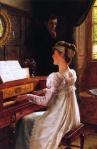

Lottie didn’t know when she first sensed the ghost’s presence in the music room at her aunt and uncle’s hotel. It must have been long before she saw her.
Of course, neither Lottie nor Magda believed in ghosts . Great Aunt Pauline did, but she went to a spiritualist church and generally had crazy ideas.
Lottie had always thought that ghosts must be bores, obsessed for centuries with some wrong done to them or that they had done to someone else. Then there was the ham acting, with their dragging about chains, or patrolling down corridors groaning, head under one arm like a fashion accessory.
There was the pure silliness of that stereotypical White Lady of Somewhere Hall who appeared at the stroke of midnight with the bodice of her gown soaked with blood where she’d been stabbed in the heart by her wicked husband who’d discovered her ‘in the arms of her lover’.
“En flagrante,” Magda had suggested. She had to explain the meaning to Lottie, who’d wrinkled her nose at the idea, supposing she’d got that term from those Charlotte Cray historical romances she’d got Lottie reading.
They’d agreed that a bloodstained white dress could be adopted by the ghost, to disguise that she’d been stark naked at the time she was caught.
On this dark late October afternoon, with the wind rising over the bay outside, Lottie repeated “En flagrante,” absently as, having finished those set exercises, she tinkled on the keyboard. For all the ghostly atmosphere – that sense that someone was watching her – Lottie still liked to sit here on the piano stool, doing a bit of half hearted practice. It got her off helping her aunt and Magda and the staff with the endless cooking and housework .
The hotel brochure might boast of ‘the experienced and friendly staff’ who helped Aunt Amanda run the hotel, but when she invited Magda and Lottie over‘for a break’ they ended up helping out every day.
Lottie could hear voices talking, quick footsteps and doors opening and closing in the kitchen quarters where the evening meal was being prepared. When her hour was up, they’d be yelling up at her to come down and find some extra plates, to dash out into the storm to pick some herbs from the herb garden, or to stir the sauce. Although Lottie had just turned sixteen, her aunt still tended to treat her as if she was an eager twelve- year- old.
From here, with the land between the front of the hotel and the cliff edge out of sight, you had the illusion that you were hovering between a sky and sea, azure on summer days, chill grey in winter. The waves below were flattened by distance, the yachts and boats the size of toys, while the clouds above the swooping gulls seemed within touching distance.
Lottie got up to move over to the great Regency windows. Now the remains of the meadow and the view of the bay with the rival hotels came into view, and down below the beach. On a wet and a windy autumn day like today, there were only a couple of people braving the weather. A youngish looking couple walked their dog and some old school fisherman sat obliviously on an upturned rowing boat, doing something to a net. He seemed oddly ageless.
A female voice said suddenly, “’En flagrante?’ Well, really! It scarcely becomes a schoolroom miss to be so precociously knowledgeable.” That voice would have been attractive had it not sounded so irritable.
Lottie jumped, but said at once, “It’s just my imagination.”
“I am so weary of hearing that,” the voice went on, speaking in the clearest of elocution mistress like voices. “The most unimaginative people claim that is what my voice must be. A vulgar, affluent travelling salesman said it, a while since. This the most unimaginative person you could meet, with a dreadful hail fellow well meet air. How it was I was visible to him, I cannot imagine..”
Lottie gawped. She thought about running, but decided against it. After all, she had known for a long time now that this room was haunted.
At first, the ghost had moved things. She would put down something, say her book of piano exercises, on the left of one of the side tables, turn about, and find that it had been moved over to the right. Sometimes a door would softly open and close. Lottie had rationalised that as changes in air pressure when a door being opened or shut somewhere else in the house. She had told herself that the pacing footsteps she so often heard in this part of the house were echoes. Still, there was that unaccountable scent of roses throughout the year.
After a while, the ghostly presence had started to sigh heavily now and then. Doggedly, Lottie told herself that was the wind.
Now, her voice wobbled as she tried to sound casual. “A travelling salesman? That must have been ages ago. They’ve died out.” She added helpfully, “I know one of my great-uncles was one.” She realised that she was gabbling irrelevantly.
She was staring about for the source of the voice, which remained hidden. Why was this? She’d heard somewhere of ghostly voices speaking with no sign of a body.
“Are you a ghost?” Realising that to the formal manners of a former age her question might sound what Aunt Amanda would call ‘brusque,’ she added, “Please.”
The voice made a noise which sounded like ‘Pshaw!’ and she felt a stir of chilly air at her elbow. “I prefer the term ‘spirit’. I suppose that is what I am.” The precise voice with the over-the-top received pronunciation sounded strained and impatient.
“Are you stuck here?” Lottie had never understood why anybody would choose to be a ghost. It sounded a boring existence to her. That was assuming an element of choice must come into it. She vaguely recalled Great-Aunt Pauline talking about spirits getting stuck between two worlds. She hadn’t taken much notice about how that came about.
The spirit said, “Do you mean by that, am I earthbound? Well, I suppose I am. I have been trying for a long while to unburden myself. I want people to know the truth about the scoundrel I married, but no-one will listen.”
“Oh.” Lottie was proud of her adult tact in keeping to herself her disappointment that marital squabbles seemed to dominate a female spectre’s afterlife. She knew too well how Aunt Amanda felt about Uncle Simon’s main contribution towards running the hotel being his socialising with the customers in the bar.
“Like the White Lady…” she realised something. “When did you die?”
She voice sounded offended. “My soul was separated from my body in 1809.”
“Six years before the Battle of Waterloo. ” Lottie felt proud of her grasp of history. “Have you been hanging about ever since then?”
She was still trying to catch sight of the ghost, who seemed to be moving about the room. She thought she saw a vague stir, like a slightly denser shadow, near the table with the antique violin case on it which was kept locked, the violin in it having a damaged bridge.
“Really, you have the most indelicate way of speaking for a young lady. And yet, you do not appear to be wholly insensitive, or you would be unable to realise my presence at all…Yes, since leaving that life I have been trying to summon people’s attention. Unfortunately, after the last heir was killed in some war with the Germans, the house stood empty for years.”
“Do you mean World War One?” wondered Lottie. “There was a worse war than that afterwards, the one my travelling salesman great- uncle was killed in.”
The voice sounded bored. “How unfortunate… Anyway, to return to my purpose: I want you to hear my story.”
Lottie generally liked hearing stories – as long as they weren’t dirty ones told by chortling boys at school –but realised how much she didn’t want to hear one from a ghost.
‘This shouldn’t be happening,” whined the rational part of her mind.
Downstairs, brisk footsteps sounded, and a voice called something, only to be cut off by a door slamming. Lottie suddenly realised how chill the room now felt and how much she wished that she was back in everyday, prosaic reality.
She glanced longingly at the music room door four metres away, thinking of making a dash for it. Absurdly, it was her upbringing – that upbringing that scorned the idea of ghosts – which stopped her from cutting off one of her elders in mid speech. After all, though the voice was that of a young woman, her ghost must be well over two hundred – far older than any of the old ladies here who demanded respect on account of their age.
Besides, if she gabbled some excuse and started to run, this ghost might turn nasty. It was hardly being good natured as it was. It might seize her with icy fingers, or perhaps cause the door to lock so that Lottie was trapped her with it. The very thought of that made her legs feel weak.
She mumbled, “It would be best if you talked to my uncle or aunt.” This was what she had always said to guests who asked her do things like turn up the heating, her aunt being oblivious to the icy draughts that found their way through the period windows in winter.
Lottie immediately saw how incongruous that idea was. Her aunt would be too busy thinking about the accounts or in planning next weeks’ menu to give a thought to spectral voices, while her uncle’s senses were usually blunted by a few whiskies by late afternoon.
The disembodied voice – now nearer to the window – sounded even more irritable. “You surely see the absurdity of my attempting to talk to either.”
Lottie – astonished at her own courage – fell back on a get out that she hadn’t demeaned herself by using in years. “But they are adults.”
She was disgusted by her whinging tone, but to her surprise, the ghostly voice softened, becoming almost coaxing. “It is indeed, unfair that you should be burdened with this at so young an age. Regrettably, I have little choice. I must relieve my mind by speaking out while I have the chance, or am I to be trapped here for ever?”
The question seemed to be rhetorical, thought it sent a nasty thrill through Lottie, who had a sudden dread that she might somehow become trapped likewise. No, she refused to believe that. For one thing, she wasn’t dead, or anyway, had shown no sign of dying when she was doing her piano practise a few minutes earlier.
Still, she saw that for now there was no escape. Shivering in the chill air, she tried to return to her blasé approach, which had been easier when it wasn’t so cold. “I suppose I have to listen like the wedding guest in that daft poem about the Ancient Mariner we did at school. At least if my aunt moans about my not doing my piano practice, I’ll have an original excuse: ‘A ghost stopped me.’”
The only response the spectre made to that was a chilly silence, though perhaps that was the temperature in the room. Seeing a throw draped over the sofa across the room, Lottie stumbled on shaking legs to seize it and drape it about herself. “Ah, that’s better.”
The voice followed her across the room as it scolded. This was so unpleasant that Lottie sat down quickly on the couch, resolving not to get up again.
“Kindly refrain from fidgeting about in that tiresome way.” It didn’t seem to occur to the ghost that it had been doing exactly that itself ever since it had made its presence known. Lottie thought that it was like other adults in that.
“OK, I won’t move again,” promised Lottie. In fact, she was far from sure that she could stand hearing the ghost out. From here on the sofa, she could see the prosaic car park round to the side of the house, and a couple of guests getting out of their car. The sight was both comforting and an unnerving reminder of how cut off from normality she was here.
“Though my family came from trade, I was given the best of educations,” began the voice. “I was also thought quite a beauty, and given my enviable dowry, I had dozens of suitors.”
Suddenly, Lottie remembered that the small portrait of ‘a Mrs. Georgiana Westleigh’ that hung among the larger ones in the front hallway might well be one of this ghost. If so, the face that it depicted, plump, with a button mouth and vacant, round eyes, had always struck her as insipid.
She remembered descriptions of ‘the season’ in those Charlotte Cray novels. “Ah. Were you presented at court?”
“No, my parents did not have quite such grand connections, being in trade. But I did very well without attending the most exclusive events. It was at a rather fine ball that I first met Mr. Westleigh.”
“He was just the sort of dashing young man who would appeal to an impressionable girl just out of the schoolroom. He was wild enough, but not so bad that he didn’t seem redeemable, and always lead the fashion among his set. His wavy dark hair was styled in careful disorder. He was always full of high spirits and lively talk, ever the life of the party.”
“This, together with his considerable fortune, made him much sought out socially and a great success with the young ladies, but until he met me, he was in no hurry to settle down . I had a considerable dowry, but despite his wildness, he could certainly have married someone regarded as a far greater catch. However, he set his heart on me.”
“He was besotted from the first, and paid passionate court to me, pursuing me determinedly, and indifferent to the taunts of his friends that they had never thought to see the day when he fell in love. I was equally besotted, though of course, I did not show it. He a young man of the world, seven years older than me, and everything that I was looking for in a suitor. He was handsome, dashing and wild, something of a gamester, a fine shot and sportsman with a taste for pugilism, a lively wit and a two bottle a day man.”
“Two bottles of what?” Lottie cut in. Her uncle was thought to drink too much whisky, and he insisted that he never drank more than half a bottle a day.
“Why, fine wines, of course,” the voice replied irritably.
“You are not heeding properly to my story, and I have little enough time in which to relate it.”
Lottie pulled a face. She thought that her question had shown what her teachers called ‘intelligent interest’ , while a ghost that was bossy and snappy was somehow not playing by the rules.
She interrupted again, “Doing all that stuff, and being half off his face from all that wine, I wonder he had the time to chase after you.”
“Off his face?” The ghost seemed confused before resuming n a gloating tone, “Of course, he had time to chase after me. He was besotted, as I said, and I was as bad, though I hid it as best I could.
“I feared my parents would oppose my marrying a man with so wild a reputation, but my stepmother said, ‘Marriage will like enough steady him’. She encouraged the match, and it never occurred to my guileless self that she was eager to marry me off, so that my comparatively plain stepsisters might have a chance in attracting suitable husbands.”
The spirit breathed heavily as it went on,”My father said, ‘A young man has to sow his wild oats’. Westleigh’s own father, who’d been a city merchant, had died two years before. His mother doted on her son and could never refuse anything that he asked. Accordingly, she put up no opposition to the match, particularly when she found out about my fortune.”
This time, the voice came from further down the room to the right. Lottie could now definitely see a shadow moving about. Now and then, she caught the bright glimpse of the upper of an embroidered slipper, a flash of the moving white hem of a dress. Increasingly, she could hear the ghost’s soft footfalls and the swish of her gown or petticoats.
In other words, the spirit was materialising. Perhaps Lottie ought to make a dash for it, at that. The idea came and went in a moment. Now she wanted to hear the end of the story, which was obviously going to end badly. Her fear seemed to retreat into the distance. The objective side of her mind saw that this must be caused by some sort of trance, but for some reason that didn’t seem to matter, either.
Besides, now she remembered how Great Aunt Pauline said that ghosts were generally powerless to do people any harm beyond giving them a fright. What damaged people during an encounter with one was their own panic, in hurling themselves from windows, tripping and falling down the stairs, or in having heart attacks.
The voice moved again as the ghost resumed her pacing. “Edward Westleigh said that now that he had met me, he was a changed man, and would put aside his riotous ways, and I had no better sense than to believe him.”
Here, the spirit gave what one of those Charlotte Cray historical romances Lottie had read had called ‘a mirthless laugh’. This was unnerving in a ghost. Then she resumed pacing and talking.
“A friend of mine – a better friend than I then credited – tried to warn me against marrying Mr. Westleigh in haste. You see, he insisted on my marrying him as soon as was decently possible. At the time, I thought it was passion that drove him. I later realised that he was anxious to secure me before I learned enough about his former conduct to break off the engagement.”
“Well, I suppose he must have been dead keen on you, then,” Lottie said kindly, though with an effort, for talking about love with real people was still embarrassing to her, though she had enjoyed love stories in films and books.
Still, a ghost wasn’t exactly a real person.
“Oh yes, Edward Westleigh was besotted, in his own selfish way. Then, he wanted to be reformed without any effort on his part, you understand, and thought that I would be the perfect young woman for that task. I suppose my angelic appearance convinced him as much as anything.”
Lottie thought again of the portrait. Georgiana Westleigh had indeed looked angelic, she supposed – if one thought of celestial beings as looking insipid– with those great eyes, pearly complexion suitably tinged with pink and those dark gold curls spilling over her shoulders. She was a bit too well covered to fit modern notions of the ethereal, of course, but that era didn’t admire athletic figures inwomen.
She would have liked to tell the spirit that she couldn’t imagine why this Edward Westleigh had made the mistake of considering her angelic, given her snappy temper and overbearing ways. Still, perhaps she had only got like that through being married to him.
Perhaps she had got even more bad tempered from trying for so long to communicate with people who ignored her. That was surely enough to sour anybody’s temper. For all that, Lottie found it hard to sympathise with this spirit. She should have moved on to higher things, as Great Aunt Pauline said decent people did, rather than hanging about for a couple of centuries, trying to get people to hear all about how wicked her husband had been.
As if guessing her thoughts, the ghost showed sudden and surprising objectivity by adding , “Perhaps it is easy to seem sweet tempered when you are courted and admired from morning to night.”
Lottie realised that that she hadn’t heard any of the busy sounds of dinner on the go from downstairs for some minutes. It was as if a thick fog of timelessness encased the room. That was eerie. Lottie was still fearful of getting trapped in it.
Summoning up Great -Aunt Pauline’s reassuring words, she couldn’t believe that she would, though that was just the sort of inexplicable and downright unfair thing that happened to people in horror films.
“I’ve seen the miniature of you in the library downstairs,” Lottie said, proud of her own tact in not giving her own opinion of it. “Is there one of Mr. Westleigh?”
“There was one, but very likely it has gone missing.” The ghost’s tone was indifferent. “In any case, I do not see the house as you do, except in flashes. Thank goodness for that, as I dislike seeing it turned into a commonplace hotel.”
Lottie pulled a face at this rude description of Aunt Amanda’s ‘exclusive period residential hotel’, but said nothing as the spirit went on.
“To resume my story after your latest interruption. – I weakened under my betrothed’s constant, tender urging, and we were married within three months.”
“Uh-huh,” said Lottie.
“At the wedding breakfast, I overheard his closest friend, one of the worst of his circle of wild young bucks, who had stood best man, remarking on a bet which his friends had amongst themselves as to how long he would take to relapse into his old ways. He himself said a year. It seemed, some of the other members of the group put their money on six months.”
The shadow – it was a distinct one now – gave another mirthless laugh. That sent a shiver down Lottie’s spine.
“At first, we were charmed by each other. Edward Westleigh was the most beguiling man in the world – when it suited his convenience. He was so occupied in delighting and impressing me, and in showing me off to his acquaintance, and buying me trinkets, and revelling in the novel ty of those quiet evenings spent at home, and settling me in the rented Town house and the country estate in Bedfordshire, that the days flew by, turning into weeks and months.
“Still he continued to assure me that he was so in thrall to his domestic angel that he felt not the slightest temptation to return to his old haunts in the company of that pack of hellhounds.
“For my own part, I had no great difficulty in living happily with a handsome, dashing, witty man who showered me with attentions and compliments .
“In the event, it was eighteen months before he returned to his old way of life.” The ghost paused dramatically, and Lottie, sensing that it was looking at her, pulled a solemn face.
“ Our son and heir had just turned six months when he began to return to his former ways. Firstly, he drifted back to drinking and the gaming tables. From that followed his return to his old, riotous behaviour and soon after that the philandering. I relate this with due consideration for your age. I will only say that he conceived a fascination with the most tawdry of actresses, who was something of a toper herself.”
The ghost paused. Lottie supposed that it wanted sympathy. “Not good,” she murmured.
The spectre resumed, “The rumours soon enough reached me – we were staying in the rented Town house at that time – and I remonstrated with him. He blustered, lied, and refused to discuss it. I lost my temper, and threw a costly vase at him. Regrettably, it missed and smashed a window, smashing on the road below at the feet of a passing street vendor. He swore coarsely, while Westleigh was over come with laughter.”
Lottie managed to keep her face straight.
“Over the next couple of days, the scoundrel attempted to win me over to accepting his liaison. He said that I was his domestic goddess, while any this other woman was only a passing fancy – as would be the ones in the future whom he was too much a creature of the earth to resist. Waxing sententious, he urged that I should view his lapses as only part of a man’s nature, and strive to win back his wandering fancy with tender embraces and ready forgiveness.”
Lottie wondered what ‘sententious’ meant. It sounded annoying, anyway.
“On that occasion, he did win me over,” Georgiana Westleigh’s spirit went on. “That liaison was short lived, but Mr. Westleigh made no attempt to curb his heavy drinking, betting and other excesses. He made it clear that he expected me somehow to wean him from them.”
“At first, I tried. I reproached him, gently, as that seemed the approach most likely to win him over, however distasteful it was to my pride. He agreed with whatever I said, promised to reform and went on exactly as before.
“Soon, he took up with an opera girl. Again I remonstrated with him. Again, he refused to discuss the matter, except to say that I must use my sweet influence to win him back. I tried this for some months, while he went on with his excesses. Then I reproached him a good deal less gently. He retorted that if I had any sense, I would not scold like harridan, but continue to lure him back with angelic kindness. He also added that he had been beguiled by my sweet nature when we met, but now, he found I was turning into a sourpuss. We quarrelled. This led to a longer coolness between us.”
“I was too proud to unburden myself to his doting mother, who had some influence with him. She would certainly have quoted the conventional wisdom that if I was incapable of making our home so comfortable that Mr. Westleigh had no desire to stray away from it, then I had nobody but myself to blame. That was easy enough for her to say, when Mr. Westleigh’s late father’s chief passion had been for the Stock Exchange.”
“Reluctantly, I confided in my father and stepmother. they insisted that they had warned me against marrying so rakish a man in haste.”
There was a sharp tapping noise, as if the spirit had stamped her foot. Then the spirit went on in deliberately measured tones, “I saw that if my husband chose to behave unreasonably, then I was powerless to do anything about it, being my his possession. Too late I understood why so much emphasis was placed on a woman’s choosing a man of good moral character to marry. Only a wife who could prove that she was savagely beaten stood a chance of obtaining a separation. One who left her husband was regarded with contempt, much like a soldier who has deserted his post. Most chose to stay and endure it. It was seen as part of her Christian duty. Sensible wives looked the other way over adultery, drunkenness and every sort of neglect .
“At about this time, Mr. Westleigh suddenly discovered that living in Town was bad for our baby’s health, and that he needed sea air. Accordingly, he ordered me to bring him here to this distant Welsh property belonging to the family. I was happy enough to escape his company, though I would miss my friends in Town. In the couple of years since we had married, I had frankly become disillusioned with him.”
Lottie wasn’t entirely surprised.
“Llandudno was then a cut- off community, hardly more than a village, with very little in the way of social diversions, particularly in the autumn and winter. The population was small, and local society even smaller. I lived with a small staff in this sizeable house, in which most of the rooms were shut up. I was sure I had no idea how to spend my empty hours, and I could not see any of my friends or relatives wishing to stay for any length of time in so out of the way a place.”
She ghostly voice grumbled, “ No doubt, had I been the earthly angel whom Mr. Westleigh still half believed me to be – but more on that later – I would have devoted my life to good works. I did have a generous allowance, as my father had at least insisted on that as part of my marriage settlement, and I did give generously to the unfortunate when approached,” the ghostly voice sounded defensive here, as if she had been reproached on that subject. “Still, I had no real independence, for the greater part of my fortune had gone over to Mr. Westleigh.
I struck up an acquaintance with a respectable widow, a Mrs. Price. She had fallen on hard times, and was happy to become my companion. She had been a governess before her marriage, and was fluent in French, having lived in that country for some years before the outbreak of that shocking revolution. French had been one of my favourite subjects when I was in the schoolroom, and with her encouragement I returned to it.
“Sometimes I would play and sing a few pieces after dinner – those few pieces which had been so lavishly praised by my London admirers not so long ago . Mrs. Price commented on my talent for the piano, and when I confided to her how I had always meant to improve my play, she recommended to me a young male cousin who taught music. I engaged him for some lessons.”
The spirit paused.
“Uh-huh,” Lottie said again.
The shadow turned on her an irritable look. “I found him not only highly respectful and encouraging, but rather charming for a hireling. I soon became enthusiastic about taking up those musical skills I had abandoned on my marriage to Mr. Westleigh.”
Lottie saw what was coming through an indefinable change of the spirit’s tone when she mentioned this music master. She wriggled in sudden distaste at the coming confession of unfaithfulness, though she would never have thought of herself as a romantic.
“I suppose this musician fell for you, too. ” She couldn’t bring herself to use the term ‘fell in love’: that was just too sentimental.
As she spoke, Lottie caught a momentary glimpse of the ghost’s form at her most solid yet, flowing robe streaming about her, face semi- transparent, oddly colourless and looking offended either at Lottie’s suggestion or her way of putting things.
“Your candour is to the point,” the spirit returned coldly. Here, as so often during this talk, Lottie thought how having read ‘Pride and Prejudice’ in English at school was proving as invaluable in following the spirit’s speech. So were those Charlotte Cray novels.
Now Lottie translated that the ghost was saying again that she was too blunt. She supposed someone from Mrs. Westleigh’s own circle would have talked about the music tutor’s ‘high regard’ or some such phrase.
“Of course, he was not presumptuous enough to speak out.” The spirit resumed her pacing. “Yet, of course, a female always knows. His whole attitude was one of languishing devotion.”
Lottie felt a pang of envy. She could not imagine any of the males she knew, of whatever age, suffering from ‘languishing devotion’.
Perhaps a complete nerd might, but the boys she knew were too busy playing the latest online game or working out the gym, while lots of them exchanged pornographic footage on their mobiles. She didn’t see how they could change enough to go from that to romantic longings even in ten years.
“I suppose he gave you lessons in here?” Lottie glanced about in alarm as the curtains shifted in the gathering wind. However, there was nothing more to be seen.
“Yes, and of all the rooms, this is the one that is least changed, with none of the hideous appurtenances of your own age. It is easier to make my presence felt here. But people on the earthly plane always react disagreeably.”
The ghost paced again. “One stout matron a while ago, dozing in a chair, was undismayed. However, she pestered me with tedious questions about her dear late Henry, and whether I had any message from him. Others ask in shaking voices if I have come to warn them of their approaching deaths. I cannot imagine why they think that I would be interested in their tedious lives. People are really very selfish.”
Lottie kept her tone solemn. “What will happen, now that you have found someone who will listen?”
“You hardly make the best of listeners yourself, with these constant interruptions,” Mrs. Westleigh’s spirit pointed out.
The sheer ingratitude of this provoked Lottie into muttering, “Well, I’m all you’ve got.’
The spirit either did not hear, or pretended not to. She went on, “The music and French lessons made a pleasant diversion from my lonely existence. Oh, yes, I know! No doubt I should have made the best of things, and while I waited for my errant husband to decide that our son had taken in enough sea air, or to tire of his latest mistress, cultivated such dull society as there was locally, invited my step sisters to stay, and devoted most of my time to our son. But really, that was asking too much of a social butterfly of twenty.”
Lottie, having no opinion on the matter, and so could make no reply. The ghost resumed her tale. “Yes, that is what my renegade husband doubtless expected me to do, and doubtless so, it was what I ought to have done, but I really did not feel equal to it. Instead I devoted myself to my French and music, and in walking by the storm tossed sea, fretting over my hard lot.
“My so-called friends wrote now and then from Town, eager to keep me informed of Mr. Westleigh’s drunken sprees, brawls, losses at the gaming tables and infidelities. Mr. Westleigh himself wrote now and then in a careless scrawl, chiefly to ask after the baby. He also rebuked me for failing to charm him from his life of debauchery in the time that we had been married and demanded why I was incapable of writing a letter which could lure him from the arms of the women of the Town. I finally became so provoked that I had not the patience to write in return at all.”
There was another noise like the muffled stamping of a foot.
Lottie started as another gust of wind set the curtains rattling. Some gulls darted across the sky, their calls drowned out by the noise of the rising wind and sea.
The pacing began again. “However, I found increasing solace in the music room. Mr. Jones’ attitude of doting reverence was a balm to my bruised feelings. Of course, he was never presumptuous enough to declare his own. but his looks gave him away. I began to see, that though not my social equal, he had a certain charm. While he lacked the flashy good looks of Edward Westleigh, he was rather good looking. It pleased me to have a hopeless, languishing admirer. ”
Lottie wondered at Mrs. Westleigh’s luck in meeting these besotted good looking men. In her own experience, there was one who might be called good looking for every nine that weren’t .
The spirit went on, “He had an excellent profile, with the straightest of noses, and a thick mane of dark hair that fell over his forehead in rather an engaging manner. I did enjoy looking at it as he played.
“Of course, everything was entirely proper. Mr. Jones’ cousin, Mrs. Price, acted as our chaperone throughout, sitting in that antechamber and knitting. Her respectability was above question. Indeed, she was quite devout, attending church twice every Sun day, where her bonnet was always the best starched. I went with her once or twice. I fear I obtained little solace. I found the vicar’s affected voice distracting.”
There was a pause. Lottie realised that the ghost had said nothing about spiritual matters, although she had always heard that people in that age had been very religious. Perhaps the fact that according to most established religions, ghosts weren’t meant to exist might have something to do with it.
The room darkened and rising wind moaned louder. Lottie was sure that this had nothing to do with the ghost, given the storm had been building all afternoon. Still, she wished that the gusts wouldn’t make that wailing noise. She shivered, and bundling some more of the throw about her, suggested, “I suppose Mr. Westleigh came to hear of it, and objected.”
The ghostly figure resumed pacing and speaking. “One day, after I had been in Llandudno for some months, he suddenly appeared at the house.
“On hearing from the footmen that I was having a music lesson, he strode into the room without warning. Mrs. Price had dozed off over her book of sermons. I had just managed to play a piece that I had always found tricky, and Mr. Jones and I were so absorbed in our music that we heard nothing of my husband’s arrival. When I finished, we were so delighted by my achievement that we exchanged smiles. Then, in his enthusiasm, Mr. Jones seized my hand and bowed over it, kissing it passionately. Unluckily, at that very moment, Mr. Westleigh strode in.”
Like any good story teller, the spirit paused here. Lottie said, “Oh, dear.”
“There followed a hideous scene which was greatly enjoyed by the staff in the hall below. ” Mrs. Westleigh’s spirit’s went on, speaking flatly. “Mr. Westleigh seized the slighter man by his collar, roaring threats and abuse at us both. It was dreadfully humiliating. He must have been audible a mile away. Mr. Jones somehow managed to struggle from his grasp, and opening the window, leaped out onto the roofs, while Mr. Westleigh threw his violin out after him, suggesting at the top of his voice that he come back for the thrashing he deserved, as he was too low a fellow for Mr. Westleigh to demand from him the satisfaction of a gentleman. ”
Lottie knew from Jane Austen and Charlotte Cray that meant that Mr. Westleigh couldn’t challenge him to a duel.
“Did he fall to his death?” she wondered breathlessly, as the spectre paused again.
“No,” the ghost’s tone was almost regretful. “He fractured his ankle in jumping down from the kitchen quarters. He hobbled away, leaving me to face the wrath of Mr. Westleigh. His female cousin showed more courage; she at least joined me in trying to soothe my errant spouse, who accused me of sordid adultery in the crudest terms, shouting into my face, and seemingly about to slap me.”
Lottie felt a stab of alarm as the ghost was suddenly more visible. Now she could make out its blurred form in the distinctive, high-waisted gown of the time, and much of the face, the small mouth and round eyes she remembered from the portrait downstairs, the long neck and the distinctive hairstyle gathered up into a knot on top and falling down in curls about that elegant neck.
Learning the meaning of ‘lips feeling numb’ – apart from after a visit to a dentist –Lottie got out, “He didn’t kill you, did he?”
“Well, no, but he as good as killed me, if only indirectly, ” the ghost returned grudgingly. She sighed gustily, though Lottie assumed that it was the rising wind that stirred the curtains.
“On that day, I was betrayed by the second man whom I had begun to believe, truly honoured me as I deserved. I had come to view Mr. Jones as the true gentleman that Mr. Westleigh, the nominal gentleman, was not.”
She snorted. “The wretch made no effort to contact me again. Through some relative who worked in the law, he tried to sue Mr. Westleigh for damages for his injury and his broken violin. He even demanded payment for the last weeks’ lessons. “
Lottie gazed at the violin case, wondering if this was the violin in question, but knowing that she would be rebuked if she asked.
“All this showed such a venal streak that I was wholly disillusioned. I heard that shortly afterwards, he married a wealthy, older widow whose daughter he had been tutoring, and moved from the area.”
“Did Mr. Westleigh pay up?” wondered Lottie.
It seemed that again she had offended the ghost, who drew back . “He insisted that he had only arrived in time to prevent the fellow from making an outright attempt on his wife,” she said. “ However, he did indeed, as you crudely put it ‘pay up’. His own actions had caused much talk, he did not wish there to be any more than there already was.”
There was another pause. Lottie risked interrupting again. “Did he believe you about the music master? Not as if he would be in any position to complain if there’d been anything in it.”
She was proud of putting things so delicately. She thought
that Mr. Jones must have been a bit of a creep. Mr. Westleigh sounded like the sort of wicked rake of olden times that Magda and others swooned over in historical romances, but who would be a pain in the behind in reality, with that belief in the good old double standard of sexual morality, and his ridiculous demands that his wife must save him from himself.
The spirit said reproachfully, “I understand that there is a good deal more freedom given to the sexes in your age. the spirit replied. “I catch glimpses of you, lounging in that outrageous clothing, and doubtless your precocity and assurance are another part of it…
“To answer to your latest forward question, Mr. Westleigh would not listen to my protestations of innocence, and was unmoved by the good character of my companion Mrs. Price. He told me that I had fallen from my pedestal, and now he could see that I was no better than the rest of my sex. He insisted that I had destroyed his faith in human nature, and he had now no reason not to go to the devil at speed. He said had travelled up to North Wales, not only to delight me with his company, but to urge me to save him from himself. He returned to that theme incessantly over the next few weeks.”
The spirit stalked about again, with the swish of her garments – very likely silk petticoats – loud in Lottie’s ears despite the noise of the growing storm outside.
“Of course, he brutally berated Mrs. Price, turning her out and having her baggage thrown outside the gates. From that time forwards, Mr. Westleigh ensured that I was a glorified prisoner. He hired a new companion for me – clearly his informant – and I was not allowed out without her. She was supposedly expert in teaching music and French, but knew little about either. Mr. Westleigh stayed some weeks. Before he left, he ensured that I was again to be a mother.”
Lottie grimaced. She hoped that Mrs. Westleigh’s ghost kept her earlier promise and spared her the details about that, as the term ‘nom-consensual’ sprang to mind.
It seemed that she would. Accompanied by a violent rattling of the window panes, the spirit went on. “He left behind another guard and spy in the form of a manservant. These the two hirelings kept a constant guard upon me. I led a lonely, isolated and miserable existence, cut off from all society. After our second son was born, I suffered from sleeplessness.”
Lottie, who had always heard that sleeplessness and new babies went together, and was proud of her own tact in not saying so. Still, Mrs. Westleigh must have had nursemaids, and no doubt her infants lived in the old nursery over the kitchen quarters, well out of earshot of the grand rooms in the front.
“The doctors spoke of an imbalance of the humours, but I would call it rather, bitterness of spirit. Mr. Westleigh continued to insist that even if I told the truth, and nothing more than that hand kissing had taken place, my encouraging that low fellow was bad enough to disgust him with me.”
The ghost halted in front of Lottie. “However, I saw little enough of him, for he stayed mostly down in London, leaving me here. I got into the habit of taking doses of Laudanum to help me to sleep, and then I became unable to sleep without it. One night, a year later, I accidentally took two doses. My body was discovered the next morning.”
Lottie muttered, “Oh dear. And you left babies behind.”
The ghost gestured impatiently. “They were well enough. They preferred their nursemaids, anyway, and their villain of a father, on the occasions when they saw him. After my death, Mr. Westleigh sent them to live with their paternal grandmother, and I gather they were very happy with her.”
Lottie was dismayed by this indifference. “Was Mr. Westleigh sorry about how he’d acted?”
“At my funeral – which obviously, I attended myself – he wept bitterly, declaring his heart was dead. I also noted that Mr. Jones stood outside the churchyard wall, shrouded in a heavy cloak. I was able to see through his disguise, being no longer of the flesh.”
There was a long pause. If this was the end to the ghost’s story, it seemed inconclusive to Lottie. Suddenly anxious that Mrs. Westleigh would disappear before she properly finished her tale, she spoke up again. “Haven’t you seen him in the next world?”
She thought it rather awful if they had never made up. She must be getting used to speaking to a ghost, as it never struck her as odd to ask that question.
The spirit said haughtily, “We cannot reveal details of the next world to mortals.” As Lottie pulled a face, she added in rather a small voice, “Besides, I am earthbound…”
Suddenly, Lottie was sorry for her. “But surely, you don’t have to be earthbound, now that you’ve told someone your story?”
The spirit said gloomily, “I had thought unburdening myself would ease my mind and lessen my resentment. It has not.”
“Great -Aunt Pauline!” Lottie suddenly exclaimed.
The ghost actually turned her head anxiously, as if thinking one of Lottie’s relatives had come through the door.
“You could speak to her,” Lottie urged.
“If she is anything like your Aunt Amanda, I most certainly could not.”
“Nothing like,” Lottie assured her. “She belongs to a spiritualist church, and I’m sure she can help. After all, you don’t want to hang about here for another two hundred years, or until this building slips into the sea.”
“Two hundred years?” For the first time, Lottie felt she had the spirit’s full attention. “I had no idea it had been so long. For me, there is no time as such.”
“Yes, it’s the twenty-first century now. Fancy me being the first person you’ve been able to talk to in all that time. I wonder, why me?”
If Lottie had vaguely been expecting a compliment, the spirit had no interest in any special abilities that she might possess. “I could not say. From my own dismal experience some people seem to sense my presence, but most cannot. ..You speak of a ‘spiritualist church’, whatever that might be. Surely you do not expect me to attend some vulgar service for disembodied spirits who have not been able to pass on?”
Now, as abruptly as the sounds when some electronic device was switched on, Lottie could hear the sounds from the rest of the house. The murmur of voices from the bar on the ground floor became audible as someone opened the door.
Now she learnt the meaning of sighing with relief, suspecting that this ghostly interlude was almost at an end.
“No, Great-Aunt Pauline’s visiting in a couple of weeks. She’s been meaning to, ever since she came back from living abroad. I can tell her what you’ve said.”
In a flash of inspiration she added, “She always sides with women, so she’ll be no fan of this Mr. Westleigh- that is – she’ll have a dim view of him.”
“I hope she will not be able to see whatever he is about, for you may be sure that it is something low…Do you know, to add insult to injury – he remarried only a year after my tragic death ,actually succeeding in drawing in another foolish young heiress who thought him quite wonderful.”
Suddenly, Aunt Amanda effortlessly projected her voice up three flights of stairs. “Lottie! You’re needed!”
The spirit’s form wobbled. Before it vanished, Lottie caught a glimpse of her, as solidly present as a living woman.
She wore a sheer, flowing white gown gathered under her full breasts. Her dark blonde hair was twisted into a knot and falling in ringlets about her shoulders. This was definitely the plump faced, button mouthed woman in the portrait. Her round eyes were of the clearest blue, and if Lottie thought that she wore rogue, her skin was as delicately fair as in her image.
She looked sullen rather than tragic, and even more so as she winced at Aunt Amanda’s voice.
Then she startled Lotttie by saying musingly, “I may consent to speak to this relative of yours, if only to escape from the distressing glimpses I have of this house turned into a common hotel.”
“Good,” Lottie said heartily.
“ Farewell, Miss Lottie. I hope when you come to marry, you choose more wisely than I.“
Lottie thought that would hardly be difficult – not as if she intended to get married .She smiled politely. “Great-Aunt Pauline always says, ‘After all, everybody makes mistakes in life: the thing is to learn from them for the next.’”
Before it vanished, Mrs. Westleigh’s spirit even added as an afterthought, “Thank you.”
October 14, 2020
Titles From Victorian Romantic Melodramas to Make You Smile
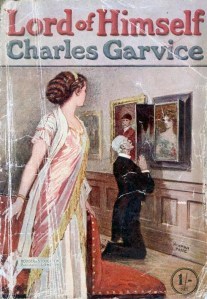
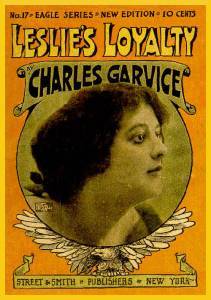
The news generally being fairly grim – again – and there being nothing like a laugh to raise the spirits, I thought I’d write some more about looking through the titles of best sellers of the Victorian and Edwardian era.
And what better way than to begin with some of those by the subject of my last blog post, the writer of Victorian romantic melodramas, Charles Garvice. His titles can raise a smile, at least.
For instance, there is one of his earlier listed novels, the 1887, ‘Twixt Smile and Tear’, and the 1893 tile, ‘’’Twas Love’s Fault’. Then there is ‘The Ashes of Love, Or Fickle Fortune’ (1901?) ‘So Fair, So False’ (1902), and ‘Wicked Sir Dare’ (1911). There is the best seller that led to his worldwide success, ‘Just a Girl Or The Strange Duchess’ (1898).
His 1908 novel, ‘In Wolf’s Clothing’ (1908) is sadly, almost certainly not a werewolf romance. He did, however, seemingly write at least one historical romance, by the title of ‘The Call of the Heart: A Tale Of Eighty Years Since’ (1914). That, presumably, would be right at the end of the Regency era, and might even feature a Regency version of his usual Victorian Wild Young Earl (Or Earl’s Heir) Hero…
Astonishingly, given Garvice’s ‘traditional’ – not to say regressive — views on women’s role, there is one actually called ‘The Female Editor of the Manchester Trumpet’. I can’t find the date for that one at the moment, but I have a ludicrous vision of some official mistaking that last word for the old term ‘strumpet’ .
‘Mr. Garvice: I always understood that your books maintain an irreproachable moral standard, and are distributed as Sunday School prizes. This one sounds –well, I hesitate to say ‘improper’, but…’
Another best selling author of the late Victorian era who lived into the 1920’’s was Marie Corelli. The sales of her novels exceeded those of HG Wells, Arthur Conan Doyle and Rudyard Kipling combined. These days, like Garvice, she is largely forgotten.
She thought up some rather fine titles. ‘The Sorrows of Satan’ (1895) perhaps being the best. This, of course, was made into a film in 1925, and reflected her interest in spiritual matters. Another is, ‘Innocent: Her Fancy and His Fact’ (1914). These stories seem to be as melodramatic as Garvice’s –and unlike his, sometimes having a supernatural theme.
While they are concerned with love affairs, they would not pass the definition of a romantic novel these days, not generally having ‘upbeat’ endings. In fact, ‘The Sorrows of Satan’ has a Faustian theme.
It is an intriguing fact that the Victorian precursor of the modern romance novel was not required to have a happy ending at all – in fact, as they often dealt with (delicately portrayed) ‘irregular’ relationships, the censorship would have demanded an unhappy outcome for many of the ill starred lovers.
Other wonderful titles I have found with a cursory glance over the introductory pages of Garvice novels include: ‘Love at the Loom’ by Geraldine Fleming; ‘A Woman Without Mercy, Or A Heart of Stone’ by Mary Agnes Fleming and ‘Maid, Wife or Widow?’ by Mrs. Alexander.
Intriguing, that particular writer being only known by her husband’s surname. I think that indicated that she was a widow. Respectable married women of this era were expected to subsume their whole identity into that of their husband, to the point of being known by his first name as well as his surname.
I have commented before how my mother used to buy job lots of assorted books at auctions to fill the bookshelves in the houses in which we lived, which is how I came across Charles Garvice in the first place. She came by books by Mrs. Humphrey Ward and Mrs. Henry Wood in this way, and I used to wonder why these women had male names…
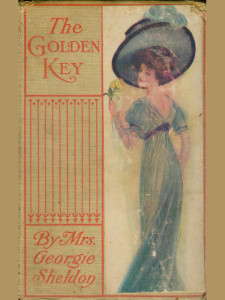
Mrs Georgie Sheldon was another writer of the same era. Her titles include, ‘Thrice Wed: Only Once a Wife’ and ‘Earl Wayne’s Nobility’. I can’t date these, as one of the problems with much publishing at the time was that the publisher often did not trouble to state the date of publication.
Helen Mathers, whom I know from my mother’s bookshelves as well, wrote a melodramatic tale called ‘Comin’ Thru’ the Rye’ (the title being based on the song by Robert Burns). This is reputedly based on fact. I assume that it is loosely based on fact, the villainess Sylvia being an impossible character.
She also wrote, “Sam’s Sweetheart: in Three Volumes’ . This seems an odd subtitle to me. I thought that Victorian novels were always published in the three volume format, so that readers would be satisfied that they were getting their money’s worth.
Another title of hers based on a traditional song is ‘T’Other Dear Charmer’ (from MacHeath’s song of that name in ‘The Beggar’s Opera’). ‘A Wastrel Redeemed’ sounds as if it is intended to be uplifting maerial, while, ‘Found Out’ seems a title guaranteed to stir feelings of anxiety in those up to no good on the sly.
Finally, ‘The Unseen Bridegroom’ by Mary Agnes Fleming and ‘The Fatal Wooing’ by Laura Jean Lippey sound like wonderful pieces of melodrama.
Books in the late Victorian era, even the mass market ones, were very well made. My 1900 copy of the Charles Garvice novel ‘The Outcast of the Family’ (1894) has no loose pages and intact covers, I suppose because they were stitched rather than glued. The price of this particular edition was three shillings and sixpence – fifteen and a half new pence, only we don’t have half pences any more.
That would have been quite expensive for someone on the low wages of that time to buy. Most people who weren’t living in downright poverty no doubt found it worthwhile to join one of the ‘subscribing libraries’ which lent out books for sixpence (two and a half new pence).
This book has another intriguing detail. It has a stamped detail on it, stating that it was awarded as a Sunday School prize in January 1901 by St Dennis’ to Arthur Buldrick. It would hardly be likely to appeal to a boy. I wonder if he ever read it through?
October 3, 2020
Re-Reading ‘The Go Between’ by LP Hartley
I have just started re-reading ‘The Go Between’ by L P Hartley. I last read it longer ago than I care to admit – in my early twenties.
It made a big impression on me then. I was struck by the vivid writing, brilliant use of a string of connected images and the striking ability of the author to relate to the mindset of early youth. Above everything, the symbolism of the rising heat in the Victorian country house party, leading to a last explosion of feeling like a clap of lightning.
Though the book is written in the first person, depicting the experiences of a boy who, as a product of his times, unthinkingly subscribesto elitist and patriarchal notions, his experiences and the general atmosphere of those hot summer days at the Norfolk country house party are recounted so vividly that I found it easy to enter into the mindset of his world. I have only read a couple of chapters so far, but already, I am impressed all over again.
Again, I am struck by the linked skein of allusions and symbols that made the book so vivid to me when first I read it long ago. The symbolical signs of the Zodiac, the Maiden and the Lion, in Leo’s abandoned diary; the paintings famously on display in the Norfolk mansion; the swimming parties in the lake; the Deadly Nightshade plant, which Leo comes upon, flourishing in a derelict, roofless outbuilding, and countless others, including Marcus’ affection for conversing in French, symbolic of the ‘foreign language’ of the code which the adults use, and with which Leo has no understanding.
Set in the school holidays of 1900, the story is about the loss of childish innocence and self-belief of the ‘nearly thirteen’ year old protagonist Leo during his stay at a lavish country house with his friend Marcus Maudsley. Marcus comes from a higher social background than Leo, and unlike him, is precociously socially sophisticated, knowing all the things that are ‘done’ or ‘only done by cads’ (ie, those not gentlemen).
The summer of 1900 apparently started off unseasonably cool, but there was a heat wave in July. The temperature is described as being mostly ‘in the eighties’. I believe
The protagonist Leo Coulson, has recently gone to a public school (note to none English readers: in the UK ‘a public school’ is not a school funded by the state. It is in fact, an exclusive boarding school charging high fees and providing an elite education). The expense of this is steep enough for Leo’s recently widowed mother to have to economise elsewhere. One of the things that she economises over are sets of clothes – well made ones being then, even more than now, expensive. The summer having been cool so far, and the rapidly growing Leo not having any lightweight clothes that fit, they decide that he will do well enough with his winter ones – his thick Norfolk jacket and woolen stockings, etc.
When the heatwave starts, he is teased by the family and their guests about keeping to warm clothing: unexpectedly, the stunning looking Marian, Marcus’ older sister, comes to Leo’s aid, offering to take him on a trip to Norwich to buy some summer clothes as a birthday present. This starts off his infatuation with her, and his role as the eponymous Go Between for Marian and the farmer Ted Burgess as they defy conventional morality in a passionate love affair.
He is to pay a terrible and wholly undeserved price for his innocent involvement…
September 20, 2020
‘The Marquis’ by Charles Garvice: ‘incredibly, almost unbelievably, bad’ writing.
[image error]A few years ago, I posted about having found the worst written novel I have ever come across. This was ‘The Outcast of the Family’ by Charles Garvice, a romantic novel published in 1894.
I had first read it at fifteen, when bored by being snowed in at the Vale of Clwyd in North Wales. My mother had come by this as part of a job lot of Victorian articles in an auction, along with other books, some of rather more value, for instance, she also got a complete set of the first edition of Scott’s ‘Waverley Novels’.
The writing style in this book was so purely terrible that it startled me at the time. I had recently read Sax Rohmer’s ‘The Drums of Fu Machu’ with its flat characters, excessive use of exclamation marks, etc, and this struck me as being even worse.
When I re-read it a few years ago, I found it as fascinatingly bad as I had remembered. The plot, which revolves around a wild young viscount who drinks, brawls and dresses as a costermonger, was so purely risible that I borrowed these details, including his talent for music, for my Gothic satire ‘The Villainous Viscount Or The Curse Of The Venns’.
In ‘The Outcast of the Family’ Lord Fayne is cured of being bad by two conversations with the innocent heroine Eva, who looks upon him and his ‘wasted life ‘ with tenderly compassionate eyes.
Why she does not turn such a gaze upon the villain of the piece, Stannard Marshbank – who is even worse- is not explained. Perhaps it is because he has pale eyes and a furtive manner, unlike Lord Fayne, who is built like a Greek god and with the profile of one, and who saves her life in passing when, dressed as a tramp, he stops her bolting horse.
Having declared his love for her, Lord Fayne empties his glass of brandy onto the fire, sells his racehorses, discards his costermonger garb and takes up busking on the country roads as a form of rehabilitation. Apparently after a few weeks ‘he feels a change’ inspired by the country air and the company of ‘simple country folk’.
This is only part of the plot, which involves a murder, for which Lord Fayne is unfairly accused, and the seduction of an innocent, for which he is also wrongly blamed, Lord Fayne’s short career working on a ranch in Uruguay, and his return, ravaged by malaria, to confront Stannard Marshbank – who has meanwhile forced the heroine Eva to agree to marry him .
When I had read the last page of this melodrama, and stopped laughing, I marvelled at what sort of author could have written such a story in all seriousness. I investigated Charles Garvice, partly through an article on Wickpedia, and partly through one kindly supplied to me by Laura Sewell Matter, in her delightfully humorous ‘Pursuing the Great Bad Novelist’ (2007). She too, marvelled at his ‘incredibly, almost unbelievably bad’ writing style.
He was the best selling writer of the late Victorian and Edwardian era, writing over 150 books and by 1913 selling over 1.75 million annually.
I have since read several of his other books, and find them all as lurid, as devoted to purple prose and as full of ludicrous melodrama as his critics asserted. However, none of them to my mind was as appalling as ‘The Outcast of the Family’. I thought that stood alone: but now I have found a rival for it.
‘The Marquis’ was in fact, published by Garvice in 1895, a year after ‘The Outcast of the Family’. That it is about a wild, careless aristocrat who becomes a solid citizen through the love of a virtuous young girl is not surprising, as more or less all of his stories are about that. However, the Marquis , who is decidedly mature for a Garvice hero, being about 35, has taken his wildness to an unusual level, and has lived not only as an outcast, like Lord Fayne, but as an outlaw.
In fact, over in Australia, as ‘Gentleman Jack’ he has been the leader of a group of bushrangers, whom it is hinted he joined not in order to make money – as a marquis he hardly needed to – but to keep from their worst violence. Like Valentine in ‘The Two Gentleman of Verona’, he imposes on them a moral code, and the exploits of Gentleman Jack become well known throughout Australia.
In one of their last raids before he stops being their leader, he calls on the isolated dwelling of Professor Graham who lives with his daughter Constance, who has violet eyes and is ‘as graceful as a fawn’ in a glorified hut in the outback. A near neighbour is a man called Rawson Fenton, instantly recognisable as the villain by his evasive glance and the coldness with which Constance treats him. We may be sure that, like all of Charles Garvice’s villains, he kicks dogs as a hobby.
Professor Graham has bought a piece of land on which there are many precious gems, surrounded by rock. He has been seeking of a way of making money by freeing the jewels of the stone, becoming meanwhile deranged and fanatical about the topic. Unknown to Constance, he finds it – and the success drives him mad – just before the bushrangers arrive on a raid. Naturally, their leader, who seems a ‘superior’ sort of man, arranges for the grieving Constance to be escorted to the nearest town. The sneaking Rawson Fenton remains behind. Finding a written copy of the formula, and understanding its meaning, he pockets it. He also finds a ring with a family crest that the lead outlaw has dropped, which he pockets also.
Professor Graham considerately dies some months afterwards. Constance returns to the UK to take up work as a governess. Naturally, Charles Garvice being wholly addicted to improbable co-incidences (or synchronicity, if one wants to judge his use of them generously) she is offered post as governess to the Marquis’ young nephew at Breakspeare Castle in Buckinghamshire. Of course, he returns on the very day she takes up her new post, having wearied both of wandering about the globe and life as an outlaw.
Despite the Marquis and Constance having met before and not needing glasses, neither recognises the other. To be fair to Constance, she does think, when being shown his portrait earlier by the Marchioness, that his handsome face, with its ‘audacity and recklnessness, an air of ‘devilry’ and wildness’ is familiar. But she has no idea from where.
Naturally, they fall in love. But a sly cousin who stays at the house, Lady Ruth, has her own plans for the Marquis – who incidentally is called the astounding name of Wolf Breakspeare – and joins forces with Rawson Fenton, now returned to the UK to foil matters. Soon, one of Gentleman Jack’s old gang members named Long Ned turns up, too, singularly hard up – but unlike Constance, capable of recognising the Marquis as Gentleman Jack — and given to saying such things as ‘Lor bless you, guv’nor.’ Will he descend to blackmail?
There is a good deal more in the way of a plot, but it really is too ridiculous to repeat, save to say that Rawson Fenton finds out the Marquis’ dark secret and blackmails Constrance into agreeing to accept his proposal.
During the course of the 350 odd pages, Constance ‘reddens and then turns pale’ on more or less on every other one; Ruth constantly looks and speaks sharply; the Marquis is repeatedly masterful and sometimes a dark look passes across his handsome face as he regrets his past ; Rawson Fenton’s face writhes with passion; everyone admires both Constance (save Lady Ruth) and the Marquis (save Rawson Fenton), and the Marchioness constantly ‘speaks placidly’.
This book also contains a cringe making love declaration, in which I reproduce the punctuation exactly :
‘But for you I should have dared that man (Long Ned) to do his worst! But for you, I should have left this house never to return! But I could not –Girl” his hand clutched as if in a wild rage at some weakness that mastered him – “girl, what have you done to me? Ever since I saw you, the night that I returned, you have exerted an influence over me. You have robbed me of my strength of will, the strength I gloried in – the strength which, once gone, renders me weak and helpless! Constance” and he used her hand to draw her to him, “what have you done to me? What is it? Constance, I cannot get you out of my thoughts day and night. Is it that I love you?”
Oh dear: purple prose, anybody? This book truly has to take equal first place with ‘The Outcast of the Family’ as the worst that I have ever read.
Fascinatingly, the hard backed copy that I read, which was a cheap book in the days before paperbacks, has been so well bound, using the old sewing methods, that it has held this dreadful piece of writing together for 124 years.
[image error]