Lucinda Elliot's Blog, page 24
February 7, 2016
Spoof Sequel to Wuthering Heights; Heathcliff, Huntingdon, and Gambling for Grassdale Manor
 Setting: Wuthering Heights, the dining room . The table is laid for three. Joseph clumps about in his heavy boots, slopping unappetising looking porridge into bowls.
Arthur: Silence, fellow! Last night’s excess has overwrought my steely nerves. I can no more take that appalling din, than I endure to eat any of this filthy slop. Make me some coffee and be quick about it. Milk indeed; are we infants?
Joseph: [only daring to speak to himself under his breath] Are things come to this, that I, fifty years in this house, mun take orders from such a nought? [Aloud] Maister Heathcliff, am I to endure this?
Heathcliff: [even more darkly brooding than usual this morning] Quiet, or I’ll kick you out. Make some coffee and I’ll have some too. Be quick about it, or i’ll use your good books to stoke the fire.
Jospeh: Ah, wicked furren ways. Hareton, lad, sup thy milk in blessed innocence.
Hareton: I’ll have some too. [Jospeh goes out, lamenting ]
[Some minutes pass in grim silence]
Hareton,[to Heathcliff Did I hear knocking last night?
Heathcliff: Tha’ did, lad. A lass knocked on the door, and I sent her away into the wind and the rain. You know what I always say: ‘Let the worms writhe, I have no mercy’.
Arthur: [to himself] Just the sort of quip to set the table on a roar; this fellow’s a social lion.
Hareton: Nay, it weren’t right, if it were a lassie.
Arthur: You’re right, young sir. I should have spoken up for the wench, plain-looking though she was, but I was a trifle elevated. Here’s that old Pharisee with the coffee at last
[Enter Joseph] They drank all the wine and brandy I keep for t’good of my health and my old bones last night, and now they’re at my coffee. Sinful. Someone knocks. Mayhap, the devil himself.
Heathcliff; Just so long as its no more trespassers from other novels.
 Hareton: If it’s that poor lass Jane Eyre, let her in this time.
Huntingdon: Damn me, I can’t stand this biblical cant over breakfast, when I’ve got to surmount last night’s excesses. My wife was bad enough for that, but at least she had didn’t have a face like that. I’ve seen happier looking ghouls. Young sir, what’s the best way to Wildfell Hall?
Hareton: I’ll put you on your way, Mr Huntingdon.
[Joseph returns] Maister Heathcliff, there’s two boxes of books out there, wi’ fair shocking covers, wi’ wenches a-flaunting their bosoms in indecent low gowns, wi’ their cheeks and lips looking fair painted, and t’wind a blowin’ their skirts above their ankles, and you with your shirt off, and a snarlin’ like our house dogs, and all called ‘Wuthering Heights. T’shame of it! That folks should credit such things go on here!
Hareton [hurries out] I must see this!
Huntingdon: A shame I’ve seen no such fine wenches here. Why anyone would choose to write about this damned sorry place, is beyond me. Now I’ll take my leave. I thank you for your hospitality. I believe I lost tuppence over the cards last night? As a debt of honour, I must pay that. [throws down coin]
Heathclif: [hurls his marked cards down on the table in a rage] And I was dreaming of getting my hands on that Grassdale Manor of yours!
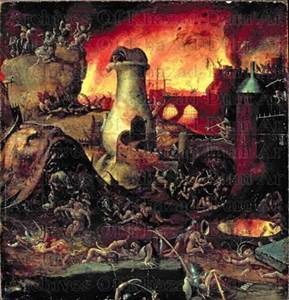
Huntingdon: Never mind, at least you have some reading matter more agreeable than ‘Torments in the Pitt (Extended Edition, with Lurid Illustrations by Hironymous Bosche)’ and ‘One Thousand Reflections for a Sinner’. [Exit]


January 19, 2016
Heathcliff Meets Huntingdon and Jane Eyre: Wuthering Heights Spoof Sequel Part Two
 Setting: Wuthering Heights: Heathcliff and Arthur Huntingdon now sit at the table in the great room with the ‘houseplace’ and the great fire, decidedly the worse for drink. Both clutch a pack of marked cards.
Joseph and Hareton go along the passageway outside, making for the stairs.
Joseph: ‘Tis fair shocking. I’m afeered t’upstart maister is behaving as he did in t’auld days when he strived to take this house from its rightful maister. Worse. For I’ve heard him laugh out loud. A fair sin and a shame I call it. I’m to my bed in t’attic with my bedtime reading: ‘The Hideous Sufferings of the Damned in The Lake of Burning Fire, and How the Elect Chuckle to See It’. That day can’t coom soon enough, I reckon, for t’gentry in there.
Hareton: Well, I’ll not join ‘em; I’ve got a full days’ work tomorrow. I’ll smoke my pipe in bed (starts upstairs; pauses:) Joseph?
Joseph: What, lad?
Hareton: Dust eever think that there might be more to life than this?
Joseph: Why, nay lad; never. What more could theere be?
Hareton: (casts around in his mind) Well…
Joseph: You see; idle nowts of fancies put in thy mind by the fiend himself. Beware! You’ll be thinking o’ nasty flauntin’ queens next.
(They are halfway up the stairs before Hareton suddenly stops) Fun!
Joseph (drawing back) What?!
Hareton: Fun. I vaguely mind me we had some o’ that now and ageen, in t’auld days. 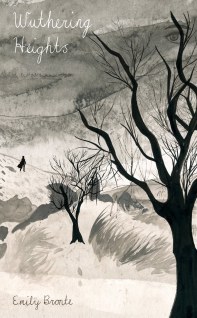
Joseph: Don’t be daft, lad. I’ve never had any fun in night on seventy year, and its never done me any harm.
(Hareton remains silent: Joseph sighs and groans about idle thoughts as they clump up to bed.)
Huntingdon: (aside) This sneaking fellow may well scheme to get his hands on my property with his pack of marked cards, having used that trick before. But he shan’t fool me as he did that pathetic fool, Hindley Earnshaw. I’ve got my own pack of marked cards, and few have a more seasoned head than I.
Heathcliff: (slurring) Don’t tell me you usuhally drink like thish. You musht be a confirmed drunkard. Maybe worshe than Hindley.
Huntingdon: No, I’m a gentleman, and believe in good living. Damn me, d’you usually take your meals with that sour faced old bible spouter? No wonder you’ve got no joie de vivre. If I was you, I’d throw him out, closely followed by his good books.
Heathcliff: She and I did that onshe, wit’ his blashted good booksh, and laughed ourshelves sick. (struck) Can’t remember when lasht I laughed.
Huntingdon (appalled) What type of melancholy excuse for an existence is thish? (aside) This wine is getting even to my seasoned head. I’m starting to slur like him.
(The wind howls eerily about the isolated farmhouse. A tap on the window)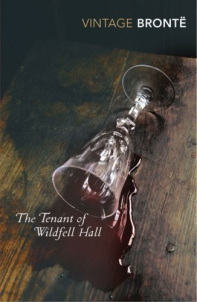
Heathcliff: Damn! Whosh there? (Another tap)
Heathcliff: Can it be Her at last?
(A wailing sound)
Huntingdon (uses many maledictions) Seeing you won’t see who it is, I suppose I must. (goes to the window and flings back the curtain) There’s nobody there.
A female voice: Oh yes, there is!
Huntingdon: (peers downwards through the darkness) Damn me, it’s some plain faced woman no bigger than a well grown child. Wait a minute, I’ve heard of you! You’ve lost your way; you belong in another novel.
Jane Ere’s voice: Ah, I have been forced to flee my master, who offered me a bigamous marriage and wicked temptations. But I feel no temptation to stay in the company of either of you. I must go on to the River’s household.
Heathcliff (rushes to the window with terrible imprecations) What d’you mean by raising my hopes, you miserable slut? Get out of it, before I set the dogs on you! You’re the sixth character from another novel come here in a week!
Huntingdon: (returning to the table and removing a couple of cards from his sleeve): Anyway, she isn’t handsome enough to tempt me.
Heathcliff: (visibly paling) Silence! You know who said that! The last thing we want is Mr Darcy calling in!
The credits roll up. Voiceover: What will happen next? Don’t miss the next installment of ‘Huntingdon Meets Heathcliff’.


Heathcliff Meets Huntingdon and Jane Eyre. Wuthering Heights Spoof Sequel Two
Setting: Wuthering Heights: Heathcliff and Arthur Huntingdon now sit at the table in the great room with the ‘houseplace’ and the great fire, decidedly the worse for drink. Both clutch a pack of marked cards.
Joseph and Hareton go along the passageway outside, making for the stairs.
Joseph: ‘Tis fair shocking. I’m afeered t’upstart maister is behaving as he did in t’auld days when he strived to take this house from its rightful maister. Worse. For I’ve heard him laugh out loud. A fair sin and a shame I call it. I’m to my bed in t’attic with my bedtime reading: ‘The Hideous Sufferings of the Damned in The Lake of Burning Fire, and How the Elect Chuckle to See It’. That day can’t coom soon enough, I reckon, for t’gentry in there.
Hareton: Well, I’ll not join ‘em; I’ve got a full days’ work tomorrow. I’ll smoke my pipe in bed (starts upstairs; paused) Joseph?
Joseph: What, lad?
Hareton: Dust eever think that there might be more to life than this?
Joseph: Why, nay lad; never. What more could theere be?
Hareton: (casts around in his mind) Well…
Joseph: You see; idle nowts of fancies put in thy mind by the fiend himself. Beware! You’ll be thinking o’ nasty flauntin’ queens next.
(They are halfway up the stairs before Hareton suddenly stops) Fun!
Joseph (drawing back) What?!
Hareton: Fun. I vaguely mind me we had some o’ that now and ageen.
Joseph: Don’t be daft, lad. I’ve never had any fun in night on seventy year, and its never done me any harm.
(Hareton remains silent: Joseph sighs and groans about idle thoughts as they clump up to bed)
Huntingdon: (aside) This sneaking fellow may well scheme to get his hands on my property with his pack of marked cards, having used that trick before. But he shan’t fool me as he did that pathetic fool, Hindley Earnshaw. I’ve got my own pack of marked cards, and few have a more seasoned head than I.
Heathcliff: (slurring) Don’t tell me you usuhally drink like thish. You musht be a confirmed drunkard. Maybe worshe than Hindley.
Huntingdon: No, I’m a gentleman, and believe in good living. Damn me, d’you usually take your meals with that sour faced old bible spouter? No wonder you’ve got no joie de vivre. If I was you, I’d throw him out, closely followed by his good books.
Heathcliff: She and I did that onshe, wit’ his blashted good booksh, and laughed ourshelves sick. (struck) Can’t remember when lasht I laughed.
Huntingdon (appalled) What type of melancholy excuse for an existence is thish? (aside) This wine is getting even to my seasoned head. I’m starting to slur like him.
(The wind howls eerily about the isolated farmhouse. A tap on the window)
Heathcliff: Damn! Whosh there? (Another tap)
Heathcliff: Can it be Her at last?
(A wailing sound)
Huntingdon (uses many maledictions) Seeing you won’t see who it is, I suppose I must. (goes to the window and flings back the curtain) There’s nobody there.
A female voice: Oh yes, there is!
Huntingdon: (peers downwards through the darkness) Damn me, it’s some plain faced woman no bigger than a well grown child. Wait a minute, I’ve heard of you! You’ve lost your way; you belong in another novel.
Jane Ere’s voice: Ah, I have been forced to flee my master, who offered me a bigamous marriage and wicked temptations. But I feel no temptation to stay in the company of either of you. I must go on to the River’s household.
Heathcliff (rushes to the window with terrible imprecations) What d’you mean by raising my hopes, you miserable slut? Get out of it, before I set the dogs on you! You’re the sixth character from another novel come here in a week!
Huntingdon: (returning to the table and removing a couple of cards from his sleeve): Anyway, she isn’t handsome enough to tempt me.
Heathcliff: (visibly paling) Silence! You know who said that! The last thing we want is Mr Darcy calling in!
The credits roll up. Voiceover: What will happen next? Don’t miss the next instalment of ‘Huntingdon Meets Heathcliff’.
January 4, 2016
Wuthering Heights Spoof Sequel: Heathcliff meets Arthur Huntingdon for a Belated New Year’s Celebration
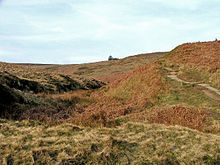
[Setting: Wuthering Heights, in the great oak lined ‘house place’. The wind moans eerily outside, bending the tormented trees into ever more distorted shapes (symbolic, or what?).]
Heathcliff: Curse it, that festive season only heightens my anguish of despair. Above fifteen years, torn apart from my heart and soul. Reunion with her forever in front of my eyes, and ever denied me – my only distraction to bring sorrow and anguish onto that cursed Edgar Linton and his descendants. (adds in a mutter) I hope he despaired over his Christmas feast, sitting opposite that hateful brat Cathy, that living proof that he usurped my place in her mother’s bed. That’s it! That’s my New Year’s resolution; this year, I will draw her into my web of deceit and devilish cunning.
[Enter Joseph, face even more sour than usual] Ha! Tis another year of sin and greetin’ ahead in this house. Nought will go wheel until the rightful heir takes his place. And I still say t’ auld maister Hindley did not die a natural death.
Heathcliff: Quiet, or I’ll put you in the coal hole.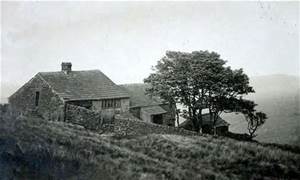
Joseph: [tottering towards the great stove] I would be no blacker theere than your soul. Where’s the oats for t’porridge for t’dinner? Well, that be one good thing. There’s nought in the way of sinful celebration and a feastin’ and a merry makin’ in t’house these days… There’s a stranger to see you. A stranger to these parts. A worthless looking fellow belonging to t’gentry with fine clothes which do nothing to hide t’ fact that he is noo member of t’elect.
Heathcliff: Visitor? Why didn’t you say before, you old fool? What does he want?
Joseph: I couldna say. Perhaps he came for t’pleasure of your company. [totters out]
[Zillah the housekeeper enters with Arhtur Huntingdon. With his merry blue eyes and abundant chestnut curls, his thick red whiskers, sensual mouth and high spirits, he is a startling contrast to the dark, morose Heathcliff. ]
Huntingdon: Halloo, old fellow! Damn me, but that’s a weary journey, and a God forsaken place the alight in at the end of it. So this is Wuthering Heights?
Heathcliff: If you don’t like it, I don’t suppose anyone will care if you turn about and go back where you came from.
Huntingdon: Well, that might be a bit difficult in way, as that’s in another book. ‘The Tenant of Wildfell Hall’ don’t you know; I’m the villain in that.
Heathcliff: [grunts] I’ve heard of you. Anyway, you’re an arriviste. It’s not as if you belong in the Gondal saga. I date my genesis from there, even if I don’t have a surname. My author’s sister wrote you as a warning to foolish young girls not to marry charming rakes, and least of all ones with a drinking problem.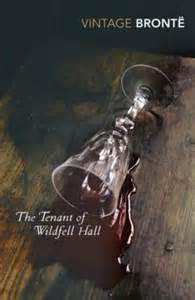
Huntingdon: Devil take me, I could do with a drink! I had one in that dismal tavern on the way up. Not a serving wench worth bedding in the place.
Heathcliff [makes a coarse and misogynistic remark about looking at fireplaces and the use of pokers which I will spare the reader’s feelings by not relating].
Huntingdon: Ah, ha, caught you out! So much for your talk of never sparing a look for another woman but Catherine Earnshaw.
Heathcliff: I just said I didn’t look at them, didn’t I? [recollects himself] What am I doing, wasting my time in idle chatter with a fickle trifler like you? Why are you here? [looks alarmed] Don’t tell me some fool of an aspiring author wrote one of these appalling ‘sequels’ to our author’s books in which we meet?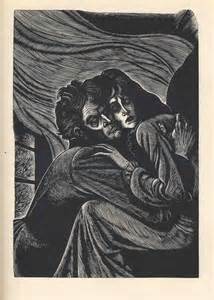
Huntingdon: That’s about it, old fellow, so you might offer me a glass of wine.
Heathcliff: I’ll offer you the door.
Huntingdon: Cursed sanguinary fellow that you are, I’ll buy one and then be on my way to Wildfell Hall.
Heathcliff: Buy one? Fair enough! [bawls] Joseph! Fetch a glass of Zillah’s home made wine, and no whittering about alcohol being the invention of the devil.
Huntingdon: If Benson or any of my staff dared to say as much to me, I’d box their ears.
Heathcliff: He might leave, and I can’t keep any staff as it is. [suddenly struck]. Did you say Wlldfell Hall? Now, that makes sense. It’s an old house and estate, probably Jacobean, but it suddenly appeared there not long since, and some reclusive woman lives there. That’s the sort of neighbour I like. Come to think of it, her name is ‘Huntingdon’ too. Supposed to be main and handsome, but I have no eyes for any style of beauty but that of my lost Catherine.
Hutingdon: That’s my wife! Helen Huntingdon, I mean, not your Catherine. The jade deserted me, taking off our son. By hell, I’ve tracked her down at last! [mutters some more maledictions].
Heathcliff: Ah, did yours run off, too? Isabella did as much to me, curse her for a writhing worm, and I want custody of my son, too. We might have more in common than first I realised!
[Burst of dramatic music; the credits begin to roll up]
Voiceover: Will Huntingdon seize young Arthur from poor Helen Huntingdon? Will he and Heathcliff come to some villainous understanding? Find out in next week’s exciting second instalment of ‘Heathcliff and Huntingdon (and Hareton, Hattersley and sundry other H’s).


December 23, 2015
That Dreaded Manuscript in Your Drawer: join Jane Austen and Pushkin in having a Manuscript in That Drawer of Doom
 First of all, I’d like to wish everyone Season’s Greetings.
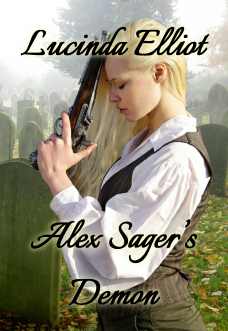
Then I’d like to thank Robert Wingfield of INCA for designing for me such a wonderful new cover for ‘Alex Sager’s Demon’. Here it is, above. You can get it on:
http://www.amazon.com/dp/B00FDWD7BY?ref_=pe_2427780_160035660
http:/’www.amazon.com/Alex-Sagers-Demon-Push...
or
http://www.amazon.co.uk/Alex-Sagers-Demon-Pushkins-Nemesis-ebook
I wanted to write a skit for a Christmas post, perhaps something on the lines of ‘Christmas at Castle Dracula’ or even ‘Heathcliff meets Arthur Huntingdon for Christmas cheer at Wuthering Heights’ or some such, but what with one thing and another I have run out of time. Typical bad time management from me.
So instead, I will write about The Dreaded Manuscript in the Drawer.
I was thinking that for me, 2015 was the ‘Manuscript in the Drawer’ year. I put two of ’em in there. One 50,000 words, one 22,000 words. How’s that for wasted effort? And all done first thing in the morning before a cup of tea.
I’ve also got the opening chapters of a dystopia in there.
I’m halfway through writing the sequel to ‘That Scoundrel Émile Dubois’ and I have re-written the beginnings of ‘That Scoundrel Émile Dubois’ and of ‘Ravensdale’ and ‘Alex Sager’s Demon’, it’s true, so it hasn’t all been Writers’ Block and Consigning to Drawer of Doom for me. Still, I did write about a third each of two versions of the same Gothic story, and both led to prolonged writer’s block and finally were sucked into that Drawer of Doom, which is too often like a black hole for manuscripts.
Once through that good old event horizon and they are usually fated not to escape; too much heavy matter in there.
There was a purely comic and a darker version, and I think one of my resolutions for 2016 must be to draw one of them out, and bring it to completion.
This must be so common a fate for so many initially promising manuscripts. I’m sure many other authors have that manuscript in the drawer that they intend to get round to drawing out from the dustbin of history (perhaps these days, more take the form of abandoned files on the pc which are never printed out and don’t even get to the Shoved Into A Drawer’ stage. No doubt many are eventually deleted, accidentally on purpose).
It would be interesting if we all were to pull them out of drawers or locate those forsaken files in 2016, and see if we can overcome the problems that led us to abandon them.
I can’t help pleading on behalf of these unfortunate manuscripts, you know; after all, the problems that caused their creator to consign them to limbo may not have been insurmountable. Perhaps it was a case of that famous ‘wrong timing’ (Gets carried away) . Perhaps a little give and take,an acceptance that there were faults on both sides (and other cliches) might be the best approach to adopt to resolve the conflict, and the best way to a creative solution? (Pulls herself together) What’s the matter with me? I’m talking about words, not people, even if those characters did seem vivid!
I’m always morbidly fascinated by the whole dismal matter of the Drawer of Doom. All famous classic authors seem to have them; Pushkin relegated that unfinished robber novella ‘Dubrovsky’ to his, so that it was only published after his death, complete with the unabridged and convoluted legal document that comes in the middle.
I think it is a shame he abandoned it, as unlike some harsh critics, I loved it when I read it. He was attempting to produce a work of literary merit which also had popular appeal, and that’s as laudable an aim as can be for an author; after all, it’s trying to emulate Shakespeare in a way. He wrote plays with an eye to popular success, though he just happened to be a genius.
Emily Bronte and Anne Bronte don’t have any unfinished manuscripts, for the simple reason that they urged their sister Charlotte to destroy their unpublished manuscripts after their deaths.
Jane Austen had three unfinished short novels, ‘Lady Susan’ ‘Sanditon’ and ‘The Watsons’. I am sure I am fairly typical of Jane Austen admirers in that I think that none of them deserved to go into that drawer, or anyway, to stay in it. I was particularly interested in ‘The Watsons’ when I read it, and wondered how the plot and sub plots would have worked out.
I am intrigued about some more deceased prolific authors, who were, shall we say, less perfectionist in their attitude to their work. For instance, Charles Garvice, who wrote 150 romantic novels during his writing career, or Barbara Cartland, who easily beat him with a total of 700 (but she did live until she was nearly ninety compared to his seventy).
Did they have their Manuscripts in the Drawer?
Perhaps, though, the Christmas and New Year round over, 2016 will be the year when through a strange process of synchronicity,writers all about the world will draw out those neglected manuscripts from drawers and open those long neglected files on the pic. I will certainly try and do something with mine; that’s my writing New Year’s resolution. That, and finishing the sequel to ‘Scoundrel’.
Oh yes, and another one about time management.


That Dreaded0Manuscript in Your Drawer: join Jane Austen and Pushkin in having a Manuscript in That Drawer of Doom
First of all, I’d like to wish everyone Season’s Greetings.
Then I’d like to thank Robert Wingfield of INCA for designing for me such a wonderful new cover for ‘Alex Sager’s Demon’. Here it is, above. You can get it on:
http://www.amazon.com/dp/B00FDWD7BY?ref_=pe_2427780_160035660
http:/’www.amazon.com/Alex-Sagers-Demon-Push...
or
http://www.amazon.co.uk/Alex-Sagers-Demon-Pushkins-Nemesis-ebook
I wanted to write a skit for a Christmas post, perhaps something on the lines of ‘Christmas at Castle Dracula’ or even ‘Heathcliff meets Arthur Huntingdon for Christmas cheer at Wuthering Heights’ or some such, but what with one thing and another I have run out of time. Typical bad time management from me.
So instead, I will write about The Dreaded Manuscript in the Drawer.
I was thinking that for me, 2015 was the ‘Manuscript in the Drawer’ year. I put two of ’em in there. One 50,000 words, one 22,000 words. How’s that for wasted effort? And all done first thing in the morning before a cup of tea.
I’ve also got the opening chapters of a dystopia in there.
I’m halfway through writing the sequel to ‘That Scoundrel Émile Dubois’ and I have re-written the beginnings of ‘That Scoundrel Émile Dubois’ and of ‘Ravensdale’ and ‘Alex Sager’s Demon’, it’s true, so it hasn’t all been Writers’ Block and Consigning to Drawer of Doom for me. Still, I did write about a third each of two versions of the same Gothic story, and both led to prolonged writer’s block and finally were sucked into that Drawer of Doom, which is too often like a black hole for manuscripts.
Once through that good old event horizon and they are usually fated not to escape; too much heavy matter in there.
There was a purely comic and a darker version, and I think one of my resolutions for 2016 must be to draw one of them out, and bring it to completion.
This must be so common a fate for so many initially promising manuscripts. I’m sure many other authors have that manuscript in the drawer that they intend to get round to drawing out from the dustbin of history (perhaps these days, more take the form of abandoned files on the pc which are never printed out and don’t even get to the Shoved Into A Drawer’ stage. No doubt many are eventually deleted, accidentally on purpose).
It would be interesting if we all were to pull them out of drawers or locate those forsaken files in 2016, and see if we can overcome the problems that led us to abandon them.
I can’t help pleading on behalf of these unfortunate manuscripts, you know; after all, the problems that caused their creator to consign them to limbo may not have been insurmountable. Perhaps it was a case of that famous ‘wrong timing’ (Gets carried away) . Perhaps a little give and take,an acceptance that there were faults on both sides (and other cliches) might be the best approach to adopt to resolve the conflict, and the best way to a creative solution? (Pulls herself together) What’s the matter with me? I’m talking about words, not people, even if those characters did seem vivid!
I’m always morbidly fascinated by the whole dismal matter of the Drawer of Doom. All famous classic authors seem to have them; Pushkin relegated that unfinished robber novella ‘Dubrovsky’ to his, so that it was only published after his death, complete with the unabridged and convoluted legal document that comes in the middle.
I think it is a shame he abandoned it, as unlike some harsh critics, I loved it when I read it. He was attempting to produce a work of literary merit which also had popular appeal, and that’s as laudable an aim as can be for an author; after all, it’s trying to emulate Shakespeare in a way. He wrote plays with an eye to popular success, though he just happened to be a genius.
Emily Bronte and Anne Bronte don’t have any unfinished manuscripts, for the simple reason that they urged their sister Charlotte to destroy their unpublished manuscripts after their deaths.
Jane Austen had three unfinished short novels, ‘Lady Susan’ ‘Sanditon’ and ‘The Watsons’. I am sure I am fairly typical of Jane Austen admirers in that I think that none of them deserved to go into that drawer, or anyway, to stay in it. I was particularly interested in ‘The Watsons’ when I read it, and wondered how the plot and sub plots would have worked out.
I am intrigued about some more deceased prolific authors, who were, shall we say, less perfectionist in their attitude to their work. For instance, Charles Garvice, who wrote 150 romantic novels during his writing career, or Barbara Cartland, who easily beat him with a total of 700 (but she did live until she was nearly ninety compared to his seventy).
Did they have their Manuscripts in the Drawer?
Perhaps, though, the Christmas and New Year round over, 2016 will be the year when through a strange process of synchronicity,writers all about the world will draw out those neglected manuscripts from drawers and open those long neglected files on the pic. I will certainly try and do something with mine; that’s my writing New Year’s resolution. That, and finishing the sequel to ‘Scoundrel’.
Oh yes, and another one about time management.
The Manuscript in the Drawer: join Jane Austen and Pushkin
First of all, I’d like to wish everyone Season’s Greetings.
Then I’d like to thank Robert Wingfield of INCA for designing for me such a wonderful new cover for ‘Alex Sager’s Demon’. Here it is, above. You can get it on:
http://www.amazon.com/dp/B00FDWD7BY?ref_=pe_2427780_160035660
http:/’www.amazon.com/Alex-Sagers-Demon-Push...
or
http://www.amazon.co.uk/Alex-Sagers-Demon-Pushkins-Nemesis-ebook
I wanted to write a skit for a Christmas post, perhaps something on the lines of ‘Christmas at Castle Dracula’ or even ‘Heathcliff meets Arthur Huntingdon for Christmas cheer at Wuthering Heights’ or some such, but what with one thing and another I have run out of time. Typical bad time management from me.
So instead, I will write about The Dreaded Manuscript in the Drawer.
I was thinking that for me, 2015 was the ‘Manuscript in the Drawer’ year. I put two of ’em in there. One 50,000 words, one 22,000 words. How’s that for wasted effort? And all done first thing in the morning before a cup of tea.
I’ve also got the opening chapters of a dystopia in there.
I’m halfway through writing the sequel to ‘That Scoundrel Émile Dubois’ and I have re-written the beginnings of ‘That Scoundrel Émile Dubois’ and of ‘Ravensdale’ and ‘Alex Sager’s Demon’, it’s true, so it hasn’t all been Writers’ Block and Consigning to Drawer of Doom for me. Still, I did write about a third each of two versions of the same Gothic story, and both led to prolonged writer’s block and finally were sucked into that Drawer of Doom, which is too often like a black hole for manuscripts.
Once through that good old event horizon and they are usually fated not to escape; too much heavy matter in there.
There was a purely comic and a darker version, and I think one of my resolutions for 2016 must be to draw one of them out, and bring it to completion.
This must be so common a fate for so many initially promising manuscripts. I’m sure many other authors have that manuscript in the drawer that they intend to get round to drawing out from the dustbin of history (perhaps these days, more take the form of abandoned files on the pc which are never printed out and don’t even get to the Shoved Into A Drawer’ stage; no doubt many are eventually deleted, accidentally on purpose).
It would be interesting if we all were to draw them out of drawers or locate those forsaken files in 2016, and see if we can overcome the problems that led us to abandon them. I can’t help pleading on behalf of these unfortunate manuscripts, you know; after all, the problems that caused their creator to consign them to limbo may not have been insurmountable. Perhaps it was a case of that famous ‘wrong timing’ (Gets carried away) . Perhaps a little give and take,an acceptance that there were faults on both sides (and other cliches) might be the best approach to adopt to resolve the conflict, and the best way to a creative solution? (Pulls herself together) What’s the matter with me? I’m talking about words, not people, even if those characters did seem vivid!
I’m always morbidly fascinated by the whole dismal matter of the Drawer of Doom. All famous classic authors seem to have them; Pushkin relegated that unfinished robber novella ‘Dubrovsky’ to his, so that it was only published after his death, complete with the unabridged and convoluted legal document that comes in the middle.
Emily Bronte and Anne Bronte don’t have any, for the simple reason that they urged their sister Charlotte to destroy their unpublished manuscripts after their deaths.
Jane Austen had three unfinished short novels, ‘Lady Susan’ ‘Sanditon’ and ‘The Watsons’. I am sure I am fairly typical of Jane Austen admirers in that I think that none of them deserved to go into that drawer, or anyway, to stay in it. I was particularly interested in ‘The Watsons’ when I read it, and wondered how the plot and sub plots would have worked out.
I wonder about some more deceased prolific authors, who were, shall we say, less perfectionist in their attitude to their work. For instance, Charles Garvice, who wrote 150 romantic novels during his writing career, or Barbara Cartland, who easily beat him with a total of 700 (but she did live until she was nearly ninety compared to his seventy). Did they have their Manuscripts in the Drawer?
Perhaps, though, the Christmas and New Year round over, 2016 will be the year when through a strange process of synchronicity,writers all about the world will draw out those neglected manuscripts from drawers and open those long neglected files on the pic. I will certainly try and do something with mine; that’s my writing New Year’s resolution. That, and finishing the sequel to ‘Scoundrel’.
Oh yes, and another one about time management.
December 14, 2015
‘Wintergreen’ by Mari Biella; Interview with the protagonist, Cat Armistead
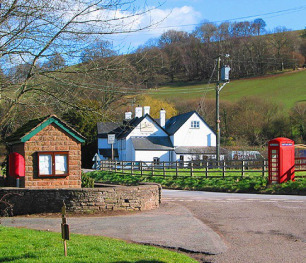
 The idlyllic English village below, complete with old fashioned telephone box , is unfortunately the location of a current murder investigation. The dead body of a local businessman, estate agent and wealthy landlord, Hugo Montbray, was recently discovered a local woods.
I’ve bene lucky enough to be able to interview somebody actually staying in the area (aside: she also happens to be a journalist, and may be no easy subject, but here goes…).
Lucinda Elliot; Cat, I believe you are currently involved in quite a ‘Hound of the Baskervilles’ type adventure down in the cosy English village of Wintergreen. A family curse, no less. That is a bit spine chilling.
Cat:
Well, I wouldn’t say I was involved, exactly. I mean, I just happen to be staying in a cottage not very far from where someone was found dead in suspicious circumstances. And yes, it would seem that there is a local legend involving a curse, but hey, I’m just a passive observer. It’s not my business to get involved, even if [she tries to look nonchalant as she flicks through a notebook] I’m a journalist and I’m always on the trail of an interesting story.
Lucinda Elliot:
Hmm. I suppose the local detective, Jake Fernsby, isn’t it, has told you to be noncommittal about it. Or maybe as a professional journalist, you are a little reluctant to give anyone else a story? Well, I’m not a journalist; I’m a part time blogger and writer of gothic. But perhaps, these days it amounts to the same thing in a way.
But to revert to my previous line of questioning – sorry, I mean, friendly chat, trying to put characters at their ease the way I notoriously do – I do know that there is a legend about a family curse on the male line of the Montbrays, because in the bad old days of the squirearchy one of them seduced and abandoned one local girl too many, and she put a curse on him.
Hey, that’s a great story for Christmas! I want to read all about it.
Cat:
All of that may be true, Lucinda. I couldn’t possibly comment about the status of the police investigation, not least because DI Fernsby is indeed playing his cards close to his chest. Besides, as you know, I’m off-duty at the moment and enjoying a quiet Christmas break with my family. I’m not planning to write a story about it, not even for the Festive season. [Looks thoughtful.] Unless, that is, it turns out to be a truly spectacular story of the type that I simply can’t ignore…
Anyway, the Montbray curse is well-known in the local area, so I won’t be treading on too many toes if I confirm that there is indeed such a legend. The Montbrays were always a colourful lot and, according to local gossip, if they weren’t cheating you, fighting you or stealing your money they were busy trying to sleep with you. Legend also has it that one of their many victims, a servant girl called Patience, invoked a terrifying curse upon the male Montbrays as revenge just before she hanged herself.
You’ve probably heard something like this before, which wouldn’t surprise me. Britain is full of these little myths, and few of them have any basis in historical fact. Interestingly, though, one Hugo Montbray recently met a sticky end, which some might take as evidence that the curse is still in effect.
Not that it’s any of my business, of course. As I said, I’m just here to enjoy a quiet Christmas…
Lucinda Elliot:
Oh, come on. That cliché about the leopard is applicable here. No doubt Jake Fernsby was off duty when I saw him talking to you. The two of you seem to be getting quite close, one way and another.
Cat:
[Blushing furiously] A policeman and a journalist? Are you serious? That would be a marriage made in Hell. And by the way, he wasn’t talking to me in any normal sense of the word. He was keeping tabs on me, just like policemen always do.
Lucinda Elliot:
[Under her breath] You’re a fine one to talk…
Cat:
Sorry, I didn’t quite hear that.
Lucinda Elliot:
Nothing. Just clearing my throat.
Cat:
Well, it’s true that I’ve met him on occasion. It’s impossible not to in a little village like Wintergreen, especially when he’s a world-class busybody.
Lucinda Elliot:
[Sniggers.] It seems to me that journalists don’t like being interviewed themselves. [Returns to the attack] But you are, after all, actually staying in Stable Cottage, and while you can’t accuse your landlady Lita McQuoid of being the over imaginative type, rumours circulate that it is the very place where the tragic girl hanged herself so long ago, now prosaically converted into a holiday cottage.
Of course, you never know with these business people. Lita may have spread that rumour about herself, to attract custom from bold, adventurous types.
Cat:
I’m not sure that Lita cares what kind of person stays there, as long as they pay the rent. Luckily, I’m not the superstitious type, so rumours about long-ago suicides don’t trouble me too much. I belong in a newsroom, not a gothic novel.
Lucinda Elliot:
It is never safe for a character to say that; after all, your fate depends on your author, and I see that you may be even be involved in a series.
Cat:
What?!
Lucinda Elliott:
What, you weren’t aware that Mari Biella was writing your story as an exciting seasonal mystery novella available on Amazon at a highly reasonable price?
Ah, she’s terminated the interview. ..But you can get this excellent Christmas read on:
and


December 2, 2015
New, Updated Version of ”That Scoundrel Émile Dubois ‘ Free 4-6 December and a Message from Kenrick to His Readers
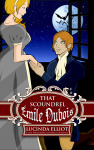 A new and updated version of my first book, ‘That Scoundrel Émile Dubois ‘ is available on amazon now and will be free from Friday 4 December until Monday 7 September.
This version, in line with various criticisms from readers and fellow writers, introduces the occult elements of the story more quickly. That, and a few clarifications here and there, are the main differences from the first version, while the story remains essentially the same. I have also allowed Sophie to express some more annoyance with Emile’s impossible ways as he turns into a predatory, vulpine man vampire.
It’s available from amazon on: –
http://www.amazon.com/That-Scoundrel-%C3mile-Dubois-ebook/dp/B00AOA4FN4/
and
http://www.amazon.co.uk/That-Scoundrel-Émile-Dubois-Light-ebook/dp/B00AOA4FN4/
There is debate amongst authors about whether or not one ought to release amended versions of published works. There are those whose integrity I admire, who suggest it should be avoided. I personally take the line that it is best avoided, but sometimes is a good idea.
My approach is somewhat pragmatic; I want people to enjoy my stories; if a leisurely beginning detracts from that for a sizable number, and the quality of the piece won’t be
reduced by a faster start, then it seemed a good idea for me to re-write it in line with various criticisms regarding the first three chapters.
For previous purchasers who miss this promotion and would like a free copy of the updated version, please apply to me on this website, and I will be happy to send one.
Now, last week –
I have just been rudely interrupted by a glassy eyed, long toothed man who has appeared in m y mirror.
Kenrick: I can’t have heard that description correctly.
I want to say here, that I hope that nobody takes such a biased account about my adventures as you will find in ‘That Scoundrel Émile Dubois’ to be in any way fair or objective.
The handsome, charming Goronwy Kenrick – ‘florid’ ‘glassy eyed’ and ‘giggling’?
My risqué humour is depicted as purile; my overwhelming passion as a mania.
I should like to know why I, who am motivated by one desire, and that purely romantic – reunion with my lost and beloved first wife- have such pejorative descriptions applied to me?
At least I was never a cut throat in the gutters of Paris.
Fortunately, I have some well wishers. To those, I wish to do what I almost never do, and make an apology.
I must express my regret at the delay in my return.
Last year, I reassured my anxious well wishers that I intended to return betimes. So I do, and so I will, but firstly, I must overcome the various factors that have brought about my delay, including my need to invent a reliable number of – shall we say, ‘artificial men’ as a group of devoted retainers.
I did not expect these to melt away into puddles of tepid rubber, as happened with my first attempts. It was discouraging. But now I have a team of knights, whom I name after those the round table of old. Sir Kay, and Galahad, no less, and others to come. At present I labour upon Lancelot, and have based his appearance on that comely rogue Arthur Williams.
You may recall that we ‘disappeared’ together. Yes, he is my companion here, and an increasingly grudging one, unfortunately. It’s dull for him, poor fellow. But he remains loyal to me.
For some reason, while back on the earthly plane, I always had problems with recruiting and retaining any sort of a household of servants, let alone a loyal one. I never understood it; I can only ascribe it to the spread of nonsensical ideas about equality, liberty and fraternity since the disgraceful uprising in France.
But I digress, and anyhow, I avoid thinking of anything French because it reminds me of that disgusting couple of French assassins, Dubois and that brutal fellow ruffian of his, who attacked poor Arthur even as the bandit chief made his murderous assault on me.

This is something like my image of Dubois Close, Emile’s own house (then rented out) in North Buckinghamshire…
Thus, I must return; and again, I will need Dubois, I fear.
I have been able to overlook him several times in his country seat to the north of the country of Buckinghamshire in England. I even penetrated to Madame Dubois’ bedroom.
There I heard through the insipid little thing’s prayers, for me amongst others. Meanwhile, I tried to draw her into this time warp; just a trial run, you understand… I lost contact as Monsieur entered.
If looks could kill, I thought as I saw him. But then I realised how lucky it is that mine could not, as I will have need of him – again. How unpleasant working with him shall be.
I wlll be re-united with my wife. Not in the next world, mind you, no. She spoke – well, no more of that. I will not hazard my fate on faith of that sort, and I refuse to swerve from my course, though those who go in dread of some sort of judgement after the death of the body would insist that I continuing on my course, I ensure that our parting will be permanent, or at least very long.
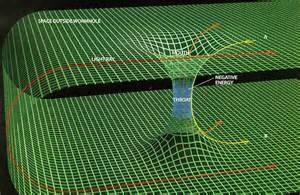
I have no such superstitious fears; it must be very unpleasant to have them, like that fine fellow Arthur. He still fears that we must be in a form of purgatory.
‘No, my fine fellow,’ I reassure him, ‘We are in a section of the time displacement; view it if you like, as a sort of mirror image of the material plane.’
He marched about, kicking out at things, which only dissolved as his foot met them. ‘But there’s only a few rooms here, and that bloody mist outside. There’s nothing to do, nobody to talk to…’
Actually, between you and I, there is much more; but I have my reasons for concealing it from him. One reason, is that I know that tiresome Captain Mackznie is out there somewhere, and I think, very possibly – but this is just between you and I — that late husband of my naughty little second wife Ceridwen.
Yes, nobody knows the story of that disgusting libertine’s disappearance but the two of us…
I am called away, the material for the second stage of my work upon Sir Lancelot is ready. Ha,Ha. It is so funny, how like to Arthur I have made him.
Wish me luck on my return journey. It will be painful, as we will return to the injuries which those ruffians inflicted on us. But with a nice nourishing source of blood drawn in nearby, recovery will be speedy enough.
I will send Arthur first.


November 22, 2015
Anne Bronte’s ‘The Tenant of Wildfell Hall’; Arthur Huntingdon as Gothic Antagonist
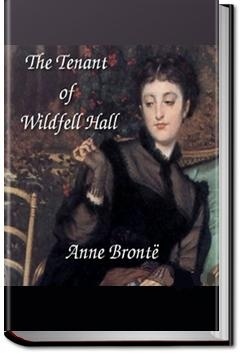 I finished re-reading Anne Bronte’s ‘The Tenant of Wildfell Hall’ yesterday.
My impressions of it hadn’t radically changed that much since I first read it in my early twenties. The fact that they hadn’t, startled me; it is disappointing when you re-read something, and find that your viewpoint is the same; you even begin to wonder if your thinking became ossified in your twenties.
I still thought that Anne Bronte as a novelist was underestimated, and I could see how much she had in common with Emily Bronte as a writer of the gothic. As before, I thought she was prepared to defy convention in her writing far more than her sister Charlotte. I thought, again as before, that Arthur Huntingdon was easily as effective, as a Gothic antagonist, virile in a distorted way, as is Heathcliff, but in an entirely different way. As the editor Josephine Macdonaugh says in her introduction to the Oxford World’s Classics edition, both are extremely influential in the course of their short lives, but after their premature deaths, normality is restored and a younger generation turn their back on the miseries of the past.
As before, I had to smile the grotesquely comic scenes where Arthur Huntingdon and his rakish guests disgrace themselves in drunken excess.
Again, as when I read it the first time, I thought that the creation of the character of Arthur Huntingdon was brilliant, a Gothic Villain of the Piece who is anything but brooding and Byronic . He is truly a smiling villain, and once more I thought how much more believable he was than Heathcliff, whom Charlotte Bronte remarks is too inhuman in his in his all-absorbing passions to seem like a man.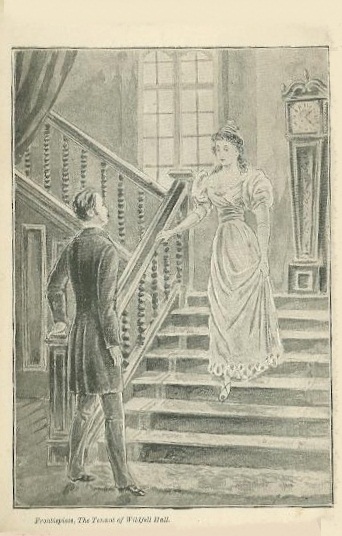
Some readers state that they find Anne Bronte’s view of humanity ‘misogynistic’, but on neither of my readings did I find it so (some might say that is because my own view of so-called ‘human nature’ in general at least under our present social order is not extremely high (there are many honourable exceptions).
Anne Bronte is after all writing about an innocent girl’s disillusionment with her attempt to turn a drunken libertine from his destructive descent into a brutalised, prematurely aged roué. His choice of friends is based on those who share his passions for hunting, riding, drinking and debauchery; accordingly, the men, and most of the women, featured in this novel will not have a high moral code. One of these men, Grimsby, is clearly a women hater; still, the fact that two of Huntingdon’s previous four boon companions, Lord Loughborough (whose wife he seduces) and the loutish and insensitive but warm-hearted Hattersley do reform, hardly shows an especially grim view of human nature on the author’s part. Helen also, if rather too aesthetic for modern taste, shows herself to be impervious to Arthur’s bad influence. In a way, in the moral struggle between them, she is the victor after all.
The fourth friend becomes obsessed by the heroine Helen, and works assiduously to seduce her in turn. Invariably repulsed, he equally invariably returns to passionate declarations of passionate devotion. I found his constant attempts rather unbelievable in a selfish, superficial man, and this is certainly a fault in characterisation. So is the fact that Arthur, who is never meant to read anything but hunting journals and newspapers, and to take no notice of sermons, quotes Shakespeare and the bible rather accurately. I doubt even a wasted good education could account for that.
In fact, I noticed more this time just how the style of the narrators, Gilbert Markham in his direct account and Helen Huntingdon in the story of her disastrous marriage contained in her journal, is frequently too similar.
I did feel far more sorry for Arthur Huntingdon this time round – I thought of him as a silly young man who has a roguish charm which, in fact – and I was unable to work out whether the author intended this – he never entirely loses, even in his later degradation.
When he notes that due to his debauchery, he is ‘not so handsome a fellow as he was’ that he has silver hairs in his ‘beloved chestnut curls’ and worries that he is becoming frankly ‘too corpulent’ I felt unaccountably sorry for him again, for over the course of half a dozen years he ruins his good looks entirely. In the end, even his sensuality is drowned in his obsession with drink.
His behaviour is always outrageously selfish, and his treatment of the infatuated Helen is from the start unthinkingly cruel. Though he certainly marries her for love, he is incapable of treating her fairly as a rational human being, His vanity and self-indulgence always motivates his behaviour; when he discovers before their engagement, that as an artist she has made various sketches and paintings of him, he teases her about it unmercifully. When she tears one of these up, he punishes her by flirting with the heartless heiress Annabella Wilmot for days. Finally, discovering Helen in tears, he condescends to propose.
He amuses himself, while Helen is still a starry-eyed bride, with recounting his sexual conquests – not only of experienced matrons – which one might expect in a rake, though most would surely avoid boasting of it to their wife in the interests of marital harmony – but also of ‘confiding girls’.
This latter is a shocking breach of even a rake’s code of conduct. The poor girl realises that in mistaking his light-hearted charm and playful manners for genuine warmth of heart, she has committed herself to a man motivated largely by unfeeling vanity.
Her joyless aunt wanted her to marry a dull, equally insensitive but conventionally ‘good’ man, appropriately called ‘Boreham’ from whose dull clutches the rascally Arthur frequently rescues her during her introduction to society. Her aunt has been married to a rake herself, and thinks any marital fate preferable. Her very opposition to Arthur’s courtship of Helen encourages her niece’s passionate belief in his natural goodness.
By the time they have been married ten months, and Helen is heavily pregnant, Arthur begins to flirt outrageously again with Annabella, now married to his friend Lord Loughborough. When their baby young Arthur is born, he is pleased to have an heir, but is even jealous of Helen’s devotion. All this adds to her gradual disillusionment with him. Bored during the summer, when he cannot hunt (note his name; a telling comment on his own pursuit of Helen, as is noted by the editor Josephine Macdonough), Arthur takes to spending whole summer seasons on wild drinking and general debauchery in London.
A note of grim humour is added to the novel by the account of the drinking sessions enjoyed by himself and his male guests:
‘Arthur seated himself beside poor Millicent, confidentially pushing his head into her face, and drawing closer to her as she shrank away from him. He was not so noisy about Hattersley, but his face was exceedingly flushed…’
‘Hattersley tried cursing and swearing, but it would not do; he then took a number of books from the table beside him, and threw them, one by one, at the object of his wrath, but Arthur only laughed the more…At last he came( upstairs to bed), slowly and stumblingly, he ascended the stairs, supported by Grimsby and Hattersley, who neither of them walked quite steadily themselves….he himself was not laughing now, but sick and stupid..’
When Helen discovers Arthur’s adultery with Loughborough’s wife, she takes a surprisingly hard line for a Victorian wife. She refuses to ‘live with him as his wife’ from then onwards until he sees how much in the wrong he is. As he never does, that is the end of marital closeness between them.
Interestingly in a Gothic Villain of the Piece, Arthur’s behaviour towards Helen remains ostensibly ‘gentlemanly’. He never uses violence against her as he oppresses her. When he starts to encourage his small son to swear and drink alcohol, Helen decides to leave him. When he reads in her journal over her shoulder (motivated, she supposes, by ‘base curiosity’), he remarks as he snatches the book, ‘It seems very interesting, love; but it’s rather long. I’ll look at it another time…’
Realising that she intends to finance her escape by her paintings, he destroys all these and her equipment. However, she enlists the help of her brother and escapes to live in isolation at Wildfell Hall, where the narrator and hero, Gilbert Markham, meets her.
However, at the end, Helen does forgive Arthur Huntingdon. When about a year later she hears that he is dangerously ill and deserted by all, Helen returns to nurse him. In a sentimental novel, he would at once be both repentant and grateful. In this Gothic novel, he is at first incredulous and suggests she does it to flaunt her superior moral stature. At length, however, he comes to realise he genuine desire to help him and to prevent him from dying unrepentant.
He does die unable to feel remorse for anything but his bad treatment of Helen – but – and this is what I liked most about this novel, in both my readings – neither Anne Bronte nor her creation Helen Huntingdon believe in eternal damnation.
She believes, rather, that a different interpretation of the meaning of the Greek phrases mean that nobody – even far worse people than Arthur Huntingon – will be sent to eternal perdition, but only for a period of atonement to fit them for a better world: – ‘How could I bear to think that that poor, trembling soul was hurried away to everlasting torment? It would drive me mad.’
Helen finds happiness with Gilbert Markham, whom she understandably initially despises for his own vanity, but who has been able to transcend it in a genuine love for her.
This novel, for all its weaknesses in characterisation at various points, and for all it’s length – the story itself can’t be far short of 200,000 words – is both intriguing and original and although it is often melancholy in tone, the overall effect is not one of despair or cynicism.
It is about a failure of an idealistic and devout girl to reclaim a wicked young rake from drink and debauchery. She finds herself paying bitterly for her blithe assumption that she can reform him without too much pain to either of them.
Then, and later in the nineteenth century, romantic novels by such writers as Charles Garvice give ludicrously sentimental and unlikely accounts of the reform of such young men through exchanging just a few sentences with just such an innocent girl. One can see that if Anne Bronte declared that she wrote ‘The Tenant of Wildfell Hall’ as a warning to young female readers, it was needed to counteract the influlence of such tales.