Lucinda Elliot's Blog, page 23
June 13, 2016
Borrowing from the Great Bad Writer of Victorian Romances
 I hope to bring out my next novel, ‘The Villainous Viscount Or The Curse of the Venns’ within weeks. There’s been a long delay – over two years – between this and my last ‘Ravensdale’. That was only partly because I’ve written half of the sequel to ‘That Scoundrel Émile Dubois as well.
This is the third version of this book I’ve worked on. I began to write this novel as comedy, and I wasn’t satisfied with that after 28,000 words. Cue, writers block…
Then I began to write it as tragedy, and I wasn’t satisfied with that after 56,000 words. Cue, worse writers block…Yuk, Yuk, Yuk. I became horribly familiar with that.
So then I wrote it as Gothic dark comedy with a tragic back story not written as comedy, and – No serious writer’s block to speak of (I always get it for a few days near the end; that’ s nothing).
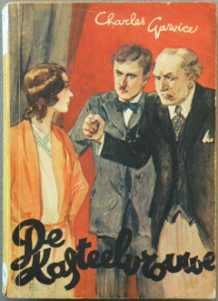
I wrote that first comic version partly as a spoof of the style of novel by the Victorian and Edwardian writer of romantic melodrama, Charles Garvice called ‘The Outcast of the Family Or a Battle Between Love and Pride’ (1894).
In this, there is a wild viscount called Heriot Fayne who goes in drunkenness and pugilism and goes about dressed as a costermonger. He is also a talented musician. When he falls for an innocent girl, he vows to reform, and escapes the corrupting air of the city to go about as a sort of country busker.
This sounds like the stuff of comedy, but sadly the story is written with deadly seriousness. Charles Garvice’s sense of the absurd in his novels can only be detected with a microscope.
However, I thought the idea of a pugilistic, drunken, musical social outcast of a viscount who sometimes went about dressed as a member of ‘the lower orders’ a purely brilliant idea. I was disappointed at how little Garvice explores the possibilities of this, and how flat a character he made Heriot Fayne, given his outrageous habits.
Intrigued by these contradictory features, I have borrowed them for my own version of this individual in Harley Venn, also a viscount and a social outcast. Harley Venn, however, has more problems than Heriot Fayne. He is plagued by a family curse, and threatening visits by a cloaked and hooded and skeletal being,
In a previous post, I wrote about how I first came by the novels of Charles Garvice, this Victorian writer of bestselling romantic melodrama, so my apologies for anyone who remembers that, if I go into it again.
My parents used to renovate isolated country mansions before it became fashionable. To furnish these ludicrously outsized dwellings they used to go to auctions, and the job lots often contained crates of old books, ideal for filling up empty shelves.
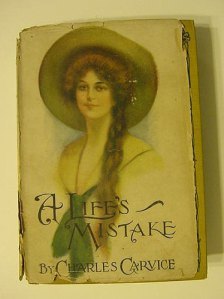
As I have said before, I first read this book , hooting with derisive laughter as teenagers do, when snowed up in the Clwyd Valley at the age of fourteen – raiding my mother’s Bristol Cream at the same time.
I came across all sorts of books through these job lots, many of them, in those pre-internet days, long out of print. There were b ooks by Mrs Humphrey Ward and Helen Mathers, memoirs of nineteenth century rural vicars and collections of sermons packed in with some of Shakespeare’s plays and copies of 1950’s science fiction and fantasy magazines. Books on pig keeping, gardening, and engineering mingled with stories by Enid Blyton with appallingly racist titles, works by Arhtur Conan Doyle, a strange encyclopaedia like tome called ‘Everything Within’, paperback versions of Georgette Heyer and Mary Stuart and hardbacks of PG Wodehouse, and this one book by Charles Garvice.

I re-read ‘ a couple of years ago. An online friend named Thomas Coterrall tracked it down for me. Thanks, Thomas!
Given that I took inspiration from a theme of Charles Garvice, it sounds highly ungracious if I say that when I re-read it, if anything, it struck me as being even more outrageously bad then when I read it the first time.
Still, I would be dishonest if I said anything else. There are a couple of good paragraphs, where Garvice lapses into good writing. Generally, however, with regard to Garvice’s love of wildly improbable co-incidences, lurid melodrama and purple prose, I have to agree with Laura Sewell Mater, on her article ‘Pursuing the Great Bad Novelist:
‘…I recognised, almost from the moment that I started reading, that I had found something amazingly, almost unbelievably, bad.’
Yet, I have remained fascinated by the fascinating badness of Garvice’s novels. ‘The Outcast of the Family’ has remained my favourite, perhaps because it is the one I enjoyed first. I still maintain that it is probably his worst. I have read several others, including ‘A Life’s Mistake Or Love’s Forgiveness’ ‘The Marquis’ , ‘Wild Margaret, Or His Guardian Angel’, ‘The Woman’s Way’ ‘Just A Girl’ ‘Wicked Sir Dare’ and ‘The Story of a Passion’. Yes, I’ve read all those, but they were rather a disappointment after the first. They didn’t provide the same amount of unintentional comedy.
I feel the same fascinated affection for the first Charles Garvice novel I read (despite the scene where the hero shows rebarbative anti-Semitism) as Laura Sewell Matter felt about ‘The Verdict of the Heart’ . This was a Charles Garvice book which she tracked down after becoming fascinated by the lurid text in the pages she found washed up on a beach in Iceland.
Ms Matter says of Charles Garvice in her article ‘Pursuing the Great Bad Novelist’: –
‘The critics were merciless. His work was routinely dismissed by such highbrow publications such as The Athenaeum, which snidely acknowledged Garvice’s success: ‘The very thickness with which the colours are laid on will make the novels popular in circles which know nothing of artistry.
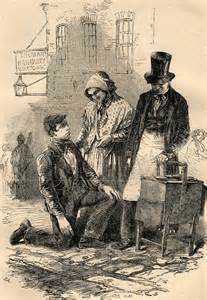
‘The question which concerned the critics was not whether Garvice’s work was high art – it patently was not – but whether he was a calculating businessman who condescended to write for the newly literate female masses, or a simpleton who believed in the sort of twaddle he peddled. A fool or a cormorant. Either way, he was damned.’
However, in my first post on Charles Garvice, I quoted a very telling point that Ms Matter makes towards the end of her article: –
‘ What Moult and the other critics failed to acknowledge, but what Garvice knew and honoured, are the ways in which so many of us live in emotionally attenuated states, during times of peace as well as war (during the First World War, Garvice’s novels had been favourite reading material for soldiers in the trenches). Stories like the ones that Garvice wrote may be low art, or they may not be art at all. They may offer consolation and distraction rather than provocation and insight. But many people find provocation enough in real life, and so they read for something else. One cannot have contempt for Garvice without also having some level of contempt for common humanity, for those readers – not all of whom can be dismissed as simpletons –who may not consciously believe in what they are reading, but who read anyway because they know: a story can be a salve’.



June 3, 2016
Mary Stewart, Romantic Suspense, and Her Quote on ‘The anti-brigade, the dirt brigade, the sicks and the beats’.
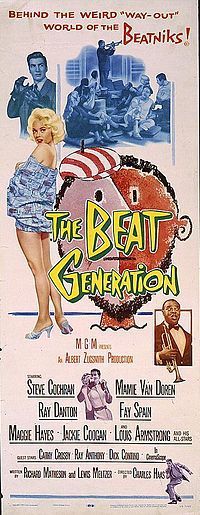
“I don’t want any one made troubled or unhappy by anything I’ve written; perhaps ‘depressed’ and ‘hurt’ are better words.” She expressed her disgust with the “anti” trend of the 1950s, “all the ‘anti’ brigade, the dirt brigade, the sicks and the beats.”
This is a quote (or rant) from a writer who created a genre – what I believe is known as ‘romantic mystery’ and who I gather has, like Georgette Heyer, come back into fashion recently.
I read a couple of her books longer ago than I care to admit, when I was fourteen. I didn’t take to them, though I could see that they were well written with complex literary allusions. Like Heyer, they have many admirers and also like Heyer’s, they struck me as being written very much from a conservative, conventional sort of perspective that drove me wild as a rebellious fourteen year old. Mary Stewart may have imagined her books offended nobody – but here’s at least one exception.
Mary Stewart in the above quote seems to be disgusted with people who are ‘dirty’ and while that would include the whole human race in the eighteenth century, and all the underprivileged in the nineteenth and early twentieth centuries, I assume from her phraseology she means the people of the mid twenties century who were supposedly infamous for dirt of body and mind – the dreaded ‘Beatniks’.
I have only ever met one elderly person who admitted to having been a ‘Beat’ in that era. I don’t know what happened to the rest of them – whether they vanished from the face of the earth, or were perhaps indistinguishable from the aging hippies I used to see about.
The elderly man I met was not impressive, though for a member of ‘the dirt brigade’ his personal hygiene was unremarkable – he wore an old sheepskin coat and went about with a copy of ‘The Lord of The Rings’ in his pocket. He also sometimes carried about a guitar that I suspected he couldn’t play (I am not making any of this up). He didn’t seem to do anything much but smoke dope. I suppose he read that book now and then.
So, I have no reason to have any particular fondness for what I have heard of ‘The Beat Movement’. But I have to admit, I have only regarded them up to now as an aspect of social history and the protest movement of the young in the affluent, Cold War dominated nineteen-fifties and sixties.
Nevertheless, when I came on this quote recently, it ruffled me. It took me a minute or two to work out why (quick on the uptake, eh?)
I don’t like the assumption that any social protest movement is by definition merely ‘anti’. If you are ‘anti’ something, you are generally pro something else. It may be something bizarre or unpopular; it may even be nonsensical; but I have yet to encounter any human being who is only motivated by antipathetic motives. People almost by definition see themselves as being ‘for’ something. And if you are for something, you will tend to be, however fair-minded you try to be, against something else.
So, what do I know about the Beatniks before I go and look on Wickipedia?
I believe that Bob Dylan and Joan Baez and other famous folk singers who were part of the peace movement were connected with Beats.
The look the Beatniks cultivated, I gather, long hair and beards, was based on the look of Fidel Castro, Che Guevera, and the other guerrillas who had recently won their guerrilla war in Cuba, and whose hair had grown long in the Sierra Maestra. They were obviously icons of complete rebellion, and that look soon enough became fashionable. If anyone was anti establishment and terrifying to middle class, middle-aged respectable people, it was Fidel Castro and Che Guevera. Therefore, for a man to grow long hair and a beard was to align yourself against the establishment.

Like them, too, I believe they challenged conventional materialistic values based on property ownership– though from a different ideological perspective. And while the ‘Beat Movement’ of that time may have attracted many individuals like the man in the sheepskin coat, some of the beliefs listed by their proponents seem to me entirely commendable. This is what Wickipedia has to say about some of their ideology: –
‘The Beat philosophy was generally countercultural and anti-materialistic and it stressed the importance of bettering one’s inner self over and above material possessions. Some Beat writers, such as Kerouac, began to delve into Eastern religions such as Taoism or Buddhism. Politics tended to be liberal, with support for causes such as desegregation…’ Now, for instance, virtually everyone these days not a fascist would believe that segregation was an excellent thing about which to be highly ‘anti’ .
‘Many scholars speculate that a reason that many Beat writers were interested in and wrote about Eastern religions was because they wanted to encourage young people to practice spiritual and sociopolitical action. As a result, these progressive thoughts originating from East Asian religions, influenced the youth culture to challenge capitalist domination and break the dogmas of their generation. The Buddhist idea of achieving inner freedom was popular among the Beatniks. As a result, it motivated this movement to reject traditional gender and racial rules.’
From this, I suspect that Ms Stewart, who assumed that they were ‘anti everything’ only meant that they were anti the sort of standards which she upheld. Now, as I say I haven’t read any of her novels since I was fourteen. I found them too conventional, full of nice girls who hand over the steering wheel to a man and don’t do any Naughty Naughty Tut Tut stuff before marriage.
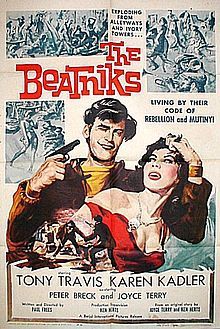
Perhaps she had read, and believed, all the bad press Beatniks had.
Some of it is quite fascinatingly lurid; for instance, that gun waving grinning lunatic depicted in the film poster above.
I find this quote, and the bugbear of fear of Beatniks, fascinating. It is obvious that Mary Stewart had a blind spot; she could not see that her notions of the ‘decency’ she goes on to mention in that interview were not the only ones, and that it was permissible to challenge these without being some sort of rebarbative ‘sick’ with twisted ideas.
At least, I hope it is…
It’s instructive, because I sometimes can be in danger of falling into the same trap myself, from a wholly different social and political, literary and historical perspective.
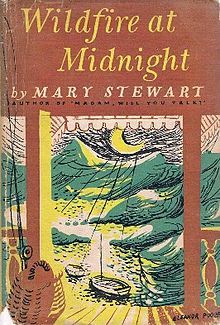
Last of all, here’s a cover from one of Mary Stewart’s works.


May 23, 2016
Samuel Richardson’s Pamela, Calico Purity and Underclothes Excitement, Purelity and Mr B’s Supposed Reform
 Samuel Richardson’s reputation, for so long as bad as it could be among critics, has in recent decades had something of a revival. This is generally among literary scholars, as the length of his works is enough to put off all but the most geekish or courageous of readers (count me among the said geeks). These days, the subtlety of his characterisation, and the complex significance of his use of incident, are now discussed as avidly as once were the scorn and disgust aroused in readers by his self serving Puritanical morality.
Typically awkward, I think this is a loss, because I fully agree with Coleridge’s conclusion about Richardson’s work:
‘I confess it has cost, and still costs, my philosophy some exertion not to be vexed that I must admire, aye, greatly admire, Richardson. His mind is so very vile, a mind so oozy, so hypocritical, praise mad, canting, envious, concupiscent.’
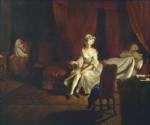 Richardson writing has a compulsion which one feels has got little to do with literary value, or the creation of sympathetic characters, believable situations, or strong writing.
In fact, after ploughing through ‘Pamela’ ‘Pamela in Her Exalted Condition’ ‘Clarissa’ and part of ‘The History of Sir Charles Grandison’ I can safely state that Richardson is devoted to purple prose.
Unfortunately, this may be why – with his favourite theme being that of female virtue besieged – in an age discovering ‘sensibility’, so many of his inner circle of toadying admirers and literary advisors were women. They wished to explore the ‘female sphere’ of the emotive that this male writer was prepared to take seriously in his writing, and in their enthusiasm for this they seem to have blinded themselves both to the inadequacies of his verbose, florid style and the dismal limitations of the sort of respect for women offered by his Puritanism.
 It is intriguing that in their discussions, they often employed much the same arguments that are used today in defences on the literary value of the romance novel. In fact, current writers on the value of the romance novel take a stand against the ‘anti-Pamela-ists’ precisely because they define ‘Pamela’ as the first romantic novel.
Richardson wrote two hundred years before Freud’s discoveries of sexuality and the unconscious laid bare the source of his appeal, already hinted at in the satires of Henry Fielding and Eliza Heywood. In D H Lawrence’s words, he offered voyeuristic ‘Calico purity and underclothes excitement…Boccacio at his hottest seems to me less pornographic than ‘Pamela’ or ‘Clarissa’.
If this seems wonderfully biting, then the critic V S Pritchard in ‘The Living Novel’ goes further:
 ‘Prurient, and obsessed by sex, the prim Richardson creeps on tiptoe nearer and nearer, inch by inch…he beckons us on, pausing to make every sort of pious protestation, and then nearer and nearer he creeps again…’
This is hilarious, and very apt.
Another critic, Frank Bradbrook in his essay on Richardson in ‘The Pelican Guide to English Literature’ remarks trenchantly: ‘Pamela is sentimental and obscene; its obscenity is a direct result of its sentimentality.’
I have to agree with these criticisms, which makes me into an ‘anti Pamela-ist’. But I am even more of an ‘Anti Mr B-ist’ I don’t think Richardson’s heroine is alone in being a hypocrite. Mr B is even more of one than Pamela herself.
Regarding Pamela’s hypocrisy, as soon as her master offers to marry her, he ceases to be a villain in her eyes, and she never asks for an explanation or apology for his abusive treatment of her until his sister insists on his making one. In elevating her to his own status, Squire B has put his late mother’s lady’s maid under such a sense of obligation that he can only be her ‘beloved Master’ even if he did attempt to rape her at least once, and sexually assaulted her on numerous occasions.
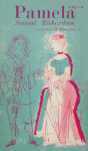 As for M B’s hypocrisy, apart from his absurd earlier outrage that she has dared to defy him and write accounts of his attempts on her, there is his later astounding self complacency. He is supposed to have undergone a moral metamorphosis triggered by reading her journal. One might think that this would have made him a little confused and diffident about himself, and the value of his opinions. Far from it. As soon as he gives up his attempts on her and decides to marry her, he suddenly shows an incongruous tendency to express pompous views about marriage and a wife’s duty.
Here he is clearly Richardson’s mouthpiece. Still, the contrast between this new persona, and his former behaviour as a self confessed rake, are purely ludicrous.
The revival of Richardson’s reputation seems to have been partly promoted by the writings of the US academic Mark Kinkead Weekes, and in particular his 1973 book ‘Samuel Richardson: Dramatic Novelist’.
I recently read this, having ploughed through ‘Pamela’ (read and detested in 1991; re-read and detested even more recently); ‘Pamela in Her Exalted Condition’ (hooted over in 1993; skim read again recently) and ‘Clarissa’ (ploughed through, and to some extent, grudgingly admired, two years ago).
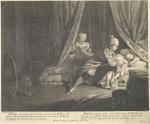 I found Kinkead Weekes’ book intriguing, though I disagree with his conclusions, while I found the parts which defend both heroine and the anti hero Mr B in ‘Pamela’, not only unconvincing but downright offensive to women readers.
It has to be said in Kinkead Weekes’ defence, that this book was written in 1973, when the views about the depiction of sexual violence against women in novels was very different.
It is an intriguing thing that Kinkead Weekes considers the scheming unrepentant Lovelace – the rapist anti-hero of ‘Clarissa’ – as a very evil man. But Mr B, by dint of his facile reform is another case altogether.
 In ‘Pamela in her Exalted Condition’ Richardson was later to have Mr B deny that his first seeming attempt on Pamela, where he leaps out of a closet, climbs into bed with her and the housekeeper and thrusts a hand down her bosom was an atempted rape, and indeed, it is hard to see how he would have contemplated carrying one out in front of Mrs Jervis. However, that piece of punishment through sexual assault is ugly enough, and later in the novel, he does carry out a genuine rape attempt.
Kinkead Weekes goes on to say of Mr B’s second attempt (also made in the presence of another woman, this time the wicked housekeeper Mrs Jewkers: she holds Pamela down, as do the prostitutes in ‘Clarissa’; Richardson did seem to have a rather odd thing about exhibitionist rapes)
‘The final attempt does begin with the intention of rape, though for revenge and subjugation, not desire- but it continues in stubborn pride, unwilling to give in to fear of wrongdoing, and trying hopelessly to salvage something. …It is the last kick of B’s pride, brought remorselessly to face its consequences in the ‘death’ (Pamela has a fit)
of the girl he loves. The result is tenderness, and there is no need for B’s subsequent change to seem surprising.’
 IX: Pamela is Married 1743-4 Joseph Highmore
I see; readers have been told that they are not ‘reading carefully’ if they find Mr B’s subsequent reformation abrupt and unconvincing. We are also told repeatedly that Pamela is not a hypocrite for accepting such a man when he changes to making ‘respectable’ offers of marriage.
‘It is open to the critic to say that it is immoral to love a man who has behaved like B, even if he seems to have made a break with his past, and that it is immoral to be able to blot out that past in a forgiveness excessive enough to rank repentant sinners ‘in the rank of the most virtuous’. Only, if that is what we want to say, let us say it clearly, in awareness of what saying it implies. Let us not, on the other hand, talk too much about the jewel market.’
I see. What I would say in response to that, is of course, Pamela should have forgiven such a man as Mr B. But she should not have married him.
Strangely enough, Kinkaed Weekes thoroughly endorses Clarissa’s combining forgiveness of Lovelace with an absolute refusal to marry him. While it might be argued that this is because Lovelace never really repents, he says he does. He is willing to marry Clarissa, believing that will put matters right.
I see very little moral difference between the two rapist anti heroes, save that the first is less of a compulsive schemer, and more of a hypocrite, who decides he will obtain more pleasure in joining Pamela in ‘innocent pleasures’ with her as his servile worshipper, and in going about with her giving the neighbours tedious moral lectures, than in jumping out at her from closets and thrusting his hand down her bosom.
Tastes change, I suppose…


May 12, 2016
Review of ‘Birdwoman; The Memoirs of A Lovesick Siren’ by Anne Carlisle
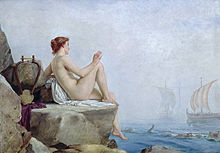
This is an outstandingly original story, which draws the reader in at once into the fascinating world of the siren. It’s exciting, well paced, funny, sad, outrageous and startlingly believable all at once. The writing is vivid, evocative, bawdy, witty and sometimes poetic.
I took at once to the heroine, Destiny, who is born, along with a twin brother of considerably less power – though with an equally strong will – to a mother who comes from a long heritage of sirens.
While Destiny is a siren, her brother is a demon. She loves him, though she knows too well that while she is motivated by a genuine desire for good – along with a fairly healthy ego, that is, and a strong sex drive, that is – Dustin is motivated by a will to destroy.
This evil in Dustin is made worse by the fact that he feels unloved –his mother is disappointed in him, for as a boy he shows no particular talents and an unappealing streak of malevolence – while she is justly proud of her daughter. Not only that, but the siren family has a secret enemy in a disinherited part demon who covertly strives to undermine them through his influence on the boy; and the bitter, rebellious Dustin, an under- achieving male in a dynasty of clever strong females, makes for an apt pupil.
Destined, as her name indicates, to be one of the strongest of the sirens of her family, the heroine is as strong and independent as befits a girl growing up in the early twentieth-first century; she is also both kind and family oriented. She is quite simply great hearted.
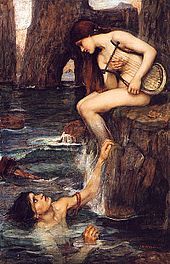
This is a heroine who, besides her occult powers, is lovely, an outstanding scholar, aided by her eidetic memory, a gifted musician, witty, sensual, cultured and morally aware – but never for one second does she come across as a ‘Mary Sue’. She faces all the feelings of angst, and loneliness and is as tormented by the family conflict by which she is surrounded as any human girl. Her older relatives scold her and take her for granted.
Worse, Destiny seems unable to find true love. She can have any man she likes – that is one of the powers of the siren – but there is a caveat: ‘as long as she likes him dead’.
Destiny dreads this generational curse; she knows that even her devout Grandmother, rebel against her sirenhood –has caused deaths; love, sex and reproduction for the siren must not be mixed: reproduction itself is hazardous, for a male siren is never strong and admirable.
When Destiny does find true love – after many hilarious sexual adventures – this problem becomes truly urgent for her.
Meanwhile, the story moves through the battle between the twins over the fate of the family’s property empire – is it to be used for good or evil? The tensions mount as the story moves to its inexorable climax of violence and sorrow.
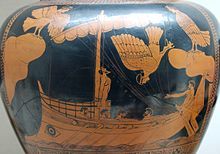
Here are a few of my favourite quotes: –
‘ “Death has no impact on character. I’m still insanely jealous, although I’m no longer vain…”Well, at least the afterlife produced some degree of self-awareness.”’
‘Both evil and its antidote reside in the human heart. The best part is, the antidote can be presented as a gift’
‘I wish there was a book I could refer him to, with a title like ‘Emotional Intellgience for Paranormals’.
‘Grammie used to punish Mama with the silent treatment, and once an entire year had gone by without their speaking to each other…’
There are many more excellent quotes. I recommend this book to all fantasy lovers who want a strong heroine and love a laugh. I’m looking forward to the sequel.


May 3, 2016
That Scoundrel Emile Dubois and the Sequel
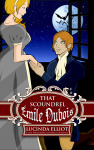
Émile Dubois: [lounging in his rich crimson dressing robe] Georges, I have news of the most tireesome. And by-the- by, mon ami, we are not alone. We are looked upon – even as we speak, so be discreet.
Georges: [clenching his fists] Merde! Do you mean, them Bow Street Runners has finally guessed who Monsieur Gilles and his Gentlemen of the Road really was and is spying on us? The sneaking bastards! If not, never say that pig Kenrick is back yet again, and now he’s about it. [expresses himself even more coarsely].
Émile Dubois: I have yet to learn of either of those two misfortunes. No, by news of the most tiresome, I mean that our biographer delays in recounting our adventures, in favour of one Lord Harley Venn thirty years hence. We are watched in that we form part of what is know as a ‘webblog post’. That is why we’re speaking English, with just a few French expressions thrown in. That being so, mind your maledictions.
Georges: Merde! What’s maledictions?
Émile Dubois: How you and I normally speak, when we are alone.
Georges [bristling] What does this Viscount fellow have, that we ain’t? And he lives in 1821? Le diable, by then we may well have gone to our final account. [uneasily] I hope Madame Sophie still prays for us every day?
Émile Dubois: Every day, and twice on Sundays. It don’t seem to be doing a whole lot of good, though we try. After all, we haven’t ridden out to rob since we met les femmes. This Viscount is a wicked fellow too, it seems, though highway robbery is out of fashion by his day.
 Georges: Do they have all them ebooks and weblogs in 1821?
Émile: Non, pas tout à fait exact. But this Viscount and his lady are new characters, which we ain’t. I hear that there’s a generational curse, and a Hooded Spectre, and it all takes place in an isolated château. Adventures most Gothic, enfin.
Georges: Sad stuff compared to our fight with them green blooded monsters and both Kenrick and that Arhtur Williams coming back through that time displacement, and drawing in that pretty Éloise chit. So much for your talk, that she would only take her cross off for you.
Émile: As for Éloise, I must take part of the blame. if I had not bitten her first, back when you and I were blood sucking monsters ourselves, she would never have agreed to be breakfast for Williams.
 Georges: [strides indignantly about] It were a fine adventure, and it ain’t good enough, Monsieur Gilles. What it amounts to, is them blue stocking writer females can’t be relied on.
Émile Dubois: I was unaware that you ever placed an iota of faith in any blue stocking female, Georges. [solemnly] You could, come to think on it, start to pen those memoirs yourself.
Georges: [struts over to the mirror, and regards himself complacently as he rearranges his neckcloth] I would write a fine tale, but I can’t write in that uncivilized tongue, l’Anglais. But you can.
Émile Dubois: Vraiment, but could my limited turn of phrase in my second language do justice to your heroics in that adventure, Georges?
Georges: [much struck]. I think you speak true! You know, in that first history, I don’t think the female biographer spent enough time emphasizing quite how fine looking a man I am.
Émile Dubois: Perhaps she thought emphasis of your handsome looks might pain me, by contrast with my own. Alors, you rascal, would you like to say more of that adventure, as we are speaking to your admirers?
Georges: No. I am a modest man, and I do not care to seem boastful…
[A scratching at the door: Georges opens it. Sophie stands without, highly excited].
Sophie: Émile, that baby is so clever. Only guess what he just said –Gaa-Gaa.
Émile: A most profound observation, ma chère…


April 21, 2016
Five Star Ratings on Amazon and Sales
k: #17,397 Paid in Kindle Store (See Top 100 Paid in Kindle Store)
#837 in Kindle Store > Kindle eBooks > Literature & Fiction > Contemporary Fiction > Romance
#3303 in Kindle Store > Kindle eBooks > Romance > Contemporary
#3623 in Books > Romance > Contemporary
The other day a writer associate of mine (a very clever and sophisticated writer) commented that her publishers state that it is all important to have an unbroken number of five star reviews up for a books’ first few weeks. Even one four star review will be fatal for a book’s sales.
Hmm. I respect this writer’s opinions, and these publishers presumably have a great deal more experience of the publishing world than I; but somehow, this doesn’t add up to me. I don’t see how anyone can guarantee getting an unbroken record of five star reviews, ‘verified purchases’ or of the ‘I Was Given a Free Copy in Exchange for an Honest Review’ sort.
Even if a writer was to request that all those writing reviews of this type withhold reviews, if not able to proffer a five star rating – then what of the slight problem of the other readers, who must be the great majority? What is to prevent them from giving the rating that they think fit?
Tastes vary. Even an intelligent, fair-minded, thoughtful reader who wouldn’t dream of giving a low star reading off the top of her head (very like the average Amazon reader, in fact) might not rate a writer’s labour of love at five stars, for any number of reasons.
 She might decide that the setting is too realistic, or not realistic enough; that the story moves too slowly, or that it’s rushed, and not enough background information is given. The characters may seem to her unconvincing, and the relationships between them improbable. She might even hate them (That, by the way, is to my mind a great compliment. If a reader hates a writer’s characters, then they must be lifelike; readers don’t generally dislike cardboard characters).
The book may disappoint her expectations; it might be too long; it might be part of a series, and the inconclusive ending may frustrate her. The subject matter might be contentious –and to my mind, if you steer clear of controversial subject matter, why bother writing at all? (But that’s just me, I’m awkward.)
 So, not to labour the point any further, even if a writer follows these guidelines and starts off with a series of these five star reviews, which supposedly may increase the possibility of spiralling sales – I see no way that this situation could be maintained for any length of time.
Intrigued by this, I looked at a best seller on amazon.com. I haven’t read it; I have no great wish to; but surely one of the best selling works of the last decade must be ‘Fifty Shades of Grey’.
What are the star ratings for this? Fifty-three per cent of five star ratings and twelve per cent of four star ratings; nine per cent of three star ratings, seven per cent of two star ratings – but, wait for it – nineteen per cent of one star ratings!
I don’t know if these current figures reflect how it was rated when it ‘took off’ but from the controversy surrounding it then, I would have thought so. Yet that didn’t seem to slow sales.
As I say, I haven’t read the book; I don’t like the sound of the plot or the hero and don’t feel inclined to pursue it; but as one of its ‘non readers’ I am in no position to comment on its literary value.
Of course, most works, either published through a publisher or self published, are not going to make even a fraction of those sales or stimulate that amount of controversy. Yet, if that book is in any way indicative, I don’t think that authors need worry too much about low star ratings affecting sales.
 For myself, I have to say, if I see an unblemished row of five star reviews, I can’t help thinking that this shows at least a limited target readership who aren’t genuinely objectively critical. When looking for something to read, I like to see an assortment of star ratings, those who love it, those who hate it, and some in the middle range. In fact, before now, savage one star reviews of some book have so intrigued me (can it really be that bad?)that I have gone ahead and bought it.
That may, of course, again just be me.
I have to say, I never leave one star reviews myself, unless I have the misfortune to come on a story that romanticizes rape, and thank goodness, those stories are out of fashion. I even left a two and a half star (which showed up as a three) rating for the worst book I have ever read, which I have mentioned before, ‘The Outcast of the Family Or A Battle Between Love and Pride’ by Charles Garvice.


April 11, 2016
Number Four in ‘The Child of the Erinyes’ Series Is Just as Breathtaking as the Others

Ruins in the cleared landscape of Tusdale, once nicknamed The capital of Skye”.
As one of a growing number of fans, I loved the initial, Bronze Age section of Rebecca Lochlann’s ‘Child of the Erinyes’ series, and the subsequent novella, ‘The Moon Casts a Spell’.
I have been looking forward to the issue of this continuation of the epic, and am happy to say I was in not disappointed by this, the sixth life of the three main characters.
In the first novels, we met the lithe and enticing, brave and generous, but in some ways tragically deluded Queen of ancient Crete, Aridela.
We encountered Menoetius, the great warrior illegitimate son of the King of Mycanae, who unwittingly betrays her trust, and pays an appalling penalty of physical and mental suffering.
We met too, the always riveting and bold, but arrogant and misogynistic, Lion of Mycane Chrysaleon, the King of Mycanae’s legitimate heir, who is sent over to win the throne of matriarchal Crete, and whose bondsman Alexaire braves the wrath of Athene to forward his master’s aims.
Finally, we met one of the characters I enjoy most out of a whole, memorable set, and that is the appalling one time practitioner of the black arts Harpalycus.
This villain swaps from body to body, and life to life, avoiding the rebirths that are the lot of the other three, and gleefully causing them as much misery as he possibly can, for he remains a dedicated torturer and sadist. Throughout the series, he provides moments of grim humour of the darkest kind: only Chrysaleon retains enough memories of his former lives to know his enemy:
“Aodhan had never learned Harpalycus’ secret for sensing them and finding them. But find them he did, and it always meant chaos and death.’
The great irony is that in this current novel, this women hater has no choice but to take on the form of the sex he despises…
The events that were set in motion, partly through the actions and reactions of these four and their devoted followers, have largely changed the history of the world. Through their mistaken choices then, Chrysaleon and Alexaire have set themselves up as Athene’s opponents on earth, condemned to find love and happiness elusive.
The former Aridela is through Athene’s will, blind to her past, those of her two lovers, and the destiny of them all.
The novella, ‘The Moon Casts a Spell’ relates a subsequent life of these three on the lonely Scottish island of Barra in the mid tnineteenth century, about the time of the infamous Highland Clearances. Two of the members of this life triangle came to premature ends (I won’t say more for fear of making a spoiler for those readers who haven’t yet read it).
Now in ‘The Sixth Labyrinth’ some twenty years later, Aridela is reborn as Morrigan, the inn keeper’s daughter and survivor of the clearances. She falls for and marries Curran Ramsay, the reincarnation of Menoetius, now a golden and handsome young Highland laird, while Chrysaleon is the poor fisherman Aodhan Mackinnon.
Once again they are reunited, and after more than three thousand years, their adventures come to a climax.
Chrysaleon in particular senses this: He is weary from his endless, desperate fight against Athene’s power; he believes that he must win.
‘Curran would fail. Athene would fail. A bit more time – that’s all he needed. Athene would diminish. At some point, she wouldn’t have enough power to bring back Menoetius or those other sycophants – Selene and Themiste…Then he would drink sweet revenge, as sweet as the old god’s necar.’
There are stirring characters in this, larger than life but fully believable, and intense passion; loyalty and betrayal, hatred and cruelty, horror and abuse, humour and tragedy. As ever, I was deeply impressed by the strength of the writing and the depths of the historical research, which is ever present, but never laboured.
Here is an example of the vividness of the word pictures that even brings the palace of Knossos to life: Here is a distant memory of the former Chrysaleon (the only one of the triad who retains his memories): –
‘Flanked by a wary Menoetius, he stepped into the palace courtyard at Labrynthos. Sunlight beat against the paving. He could feel the blinding heat richoting from those stones. Sensations and images blinded him, of carved pillars supporting gigantic stone awnings, of vibant frescoes displaying black bulls and blue, flittering birds. He’d heard of Crete’s magnificent architecture, but the reality left him awe struck…’
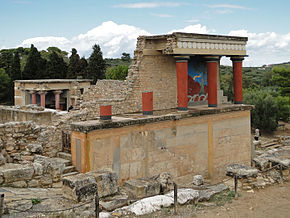
Knossos
But now the former Aridela is the new wife of the beguiling laird to his empoverished, dour and middle aged fisherman. How can he win her?
Yet he will try, just as he knows that the now Morrigan, though drawn to him, will strain her utmost to be loyal to her handsome new husband, and that Menoetius’ love for her is more loyal and less selfish than his own. Harpalycus will discover them, and wreak havoc. It is the nature of them all.
This book is long, but it’s a page turner, so that it doesn’t seem so. I read it through at record speed, and recommend it as a fascinating, engrossing story from an epic series to be enjoyed on many levels.
One of the smoothly interlocking themes of this great novel is the tragic depiction of the abuse of woman, and in particular, it’s destructive effect on the feelings of self worth of the woman who is subject to it. Morrigan has scars on her psyche, the result of the abuse of her bitter father,who has always doubted her paternity. I don’t want to write a spoiler; but it is this sense of not feeling good enough for happiness and the love of a truly admirable man, which greatly contributes to some of Morrigan’s mistaken decisions in the book.
The former Chrysaleon remembers her in her incarnation as the fearless Aridela, and this is the supreme irony of his thousands of years’ long crusade against female power. In attacking it, he has brought about a change he hates to see in the one woman he loves and respects as an equal: –
‘Had he fought all these centuries only to lose her to this world’s joyless new order – the world he had helped to create when he caused the destruction of Crete and the last stronghold that honoured women?’
But Aridela has more strength than he knows: and Athene’s eclipse from the face of the earth and modern understanding may be part of the Great Mother’s plan…
I can’t wait for the next in the series!
‘The Sixth Labyrinth’ is available on amazon.com at
http://www.amazon.co.uk/Sixth-Labyrinth-Child-Erinyes-Book-ebook
and on amazon.co.uk on
http://www.amazon.co.uk/Sixth-Labyrinth-Child-Erinyes-Book-ebook


March 31, 2016
An Original, Witty and Spine Chilling Fantasy: Review of ‘Reqium for a Forgotten Path’ by Robert Greenfield
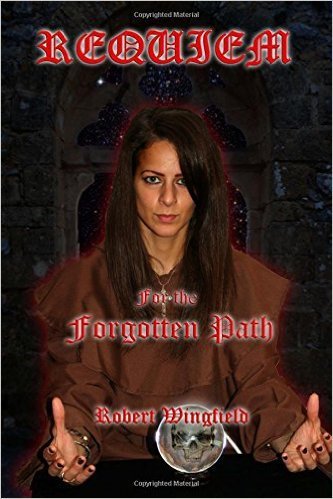 These last couple of weeks I’ve been enjoying reading an excellent fantasy with a strong, independent minded heroine. This is ‘Requim for a Forgotten Path’ by Robert Greendale.
This is a funny, spine chilling, evocative continuation of the adventures of Ankarita, the eponymous heroine of the first in this series.
I really like this heroine. She is brave, determined, resourceful, loyal, generous, and – decidedly bossy. After all, she’s been around for five hundred years, has been a murderer (of her abusive husband) cursed, drugged, buried alive,become the thief of someone else’s body, then befriended, enslaved, idolised, exploited, and relentlessly hunted down by the sinister Fantasia and her company of thugs . People who have been about for a few decades must seem novices at life to her.
If this young woman ended up as a beaten wife in the early sixteenth century, as we know she did from volume one, then there would have been no hope for the rest of us…
The tale is fast moving and runs smoothly, through every sort of adventure, mundane and arcarne. The writing is full of vivid word pictures but – and this isn’t the contradiction it might appear to be – I was particularly drawn in by the concise, matter-of- fact style. I think, like me, many people will find themselves fully believing in these wild, Gothic adventures through different dimensions and time. Through this combination of humour and readable but sophisticated approach, I really was drawn in and carried along by the tale.
Besides this, I was kept grinning broadly and sometimes laughing out loud by the humour. This is a compliment from me, because often I can read a whole comedy book, and only smile.
The plot took a lot of unexpected twists and turns, and this was an unusual treat for me, because I do find a lot of conventional fiction rather predictable, especially in the way it depicts relationships,and those between men and women in particular. Here, you really don’t know what is going to happen.
Finally, some quotes:
””Farewell, my beautiful darling,” he said sadly, and placed a kiss on her cold lips. “If only..”
The eyes flicked open as he lingered. “If only what, thou odiferous shardborne piglet?”Her cold hand lashed out, and hit him firmly across the
cheek.’
“It’s a parking ticket. You have to like pay a fine.”
“Ah,” said Ankarita,”A pox upon that…”
”The journey became an ordeal. The old man gave off a dim glow which led them down a labyrinth of passages. Jo tried to continue marking,
the walls as they continued to keep up, but the old man was moving too swiftly. They went up sloping passages and down spiral stairways and along twisting tunnels. There were many branches that showed up n the glow of the old man’s ghost light, too many even to try to remember a route. There would be no going back…’
A great read and recommended for all who like a strong, independent heroine and an original, spine chilling and witty fantasy.
Available at: –
amazon.co.uk on
http://www.amazon.co.uk/Requiem-Forgotten-Path-Summoning-Ankerita-ebook/
and amazon.com on
http://www.amazon.com/Requiem-Forgotten-Path-Summoning-Ankerita-ebook/


March 4, 2016
When the Ghostly Meets the Absurd
 Some months ago, I wrote a post about the thin line between horror and comedy; and on how one can so often lead into the other. It can be so difficult to get the balance right. After all, at times even the masters of terror, like Stephen King and Bram Stocker, can mistakenly stray over into the ludicrous.
That is one comfort about writing spoof Gothic. Here, the relationship between the two is out in the open. If the reader laughs a bit where the writer is aiming for pure terror, or is appalled by a bit which on the contrary is intended as one of the comic episodes, then it really doesn’t matter.
I mentioned in that post, how I let out a hoot of laughter when reading one of HP Lovecraft’s short stories, which unluckily, was not meant to be comic at all.
In it, a monster, born of an unnatural mating between a creature from outer space and a woman, was trying to obtain a copy of ‘The Necromican’, apparently so that the other members of the race to which his father belonged could come to earth. Well, it’s nice that he was a fond son, anyway…
There being no Internet and no Amazon in those days, and seemingly no public libraries willing to loan a copy of this book of magical rites (even if he had to read it in the reading room, as in the British Library), he broke into a private library to steal a copy.
Here, a watchdog attacked him, tearing his trousers and revealing that his body below the waist was ‘the stuff of fantasy’ (and certainly not of the sort found in the ‘Romance/Erotia’ section in Amazon, either).
The unlucky miscreant soon began to melt into a pool of goo. I was worried that the dog might have been poisoned by tearing at his flesh, but we didn’t hear that it suffered any ill effects.
There was another, which involved a man whose body had been stolen by these same aliens, and who came back to life in the coffin of one of their dead human accomplices (I forget why). He somehow got out, and made a series of warning phone calls, but as his vocal cords had begun to disintegrate, the recipients only heard, ‘Obscene gurgling noises’. Again, I collapsed into laughter. 
It’s decades since I read those short stories, and I can’t, unfortunately, remember the names, though I do remember I read them as part of an anthology of possibly, ‘The Fontana Book of Great Ghost Stories’ or ‘Tales of Terror’ or some such thing. When I’ve mentioned them, people have been eager to read them too, so that’s a shame (that’s the annoying thing about short stories, they are so hard to track down).
Recently, however, I read the most absurd ghost story I have yet read, and I am sorry to say that it was chosen for ‘The Virago Book of Ghost Stories’. I do remember the title of this. ‘The Haunted Saucepan’ by one Margery Lawrence.
This choice is the more extraordinary, as I gather that this largely forgotten writer was fully capable of writing genuine tales of terror. I can’t imagine what made the editor choose this, apart from the fact that it does stray repeatedly over into the ludicrous, and this, seemingly, by accident.
I did wonder if it is meant as a spoof, though this is not mentioned in the write up. Rather, I think, the combination of the dated, class-based assumptions of the characters, and their strangely cardboard nature, combine with a not sufficiently alarming ghostly presence to make for an unintentional comic effect.
By contrast, ‘Juggarnaut’ in the same volume, by D K Broster, a tale about a haunted ‘bath chair’, written about the same time (1926) with the same dated assumptions, is clearly meant to be ludicrous as well as horrific, and is highly entertaining.
The Haunted Saucepan’ comes from a book of collected stories by the author called ‘Nights of the Round Table’. In it, the hero, Conner, is an engineer come back to the UK along with his devoted manservant who is positively grovelling in his subservience towards the hero – and called the incongruous name of Strutt ; he is looking for affordable accommodation in Mayfair, near St James Park. 
Unable to find any, he fears – horrors – that he would be reduced to living in a hotel, or else, his club (it isn’t clear where he would have placed Strutt; presumably in the attics) . This is hardship indeed, as he says he needs to live near his business interests. Then he comes on a fully furnished flat to let at a startlingly low rent. The agent tells Connor that the owner is abroad, having left abruptly for unspecified reasons.
The devoted Strutt has even been approached by a cook, an elderly woman who turns up, offering her services. He says to his master, ‘I took the liberty of exercising my own judgement…I hope I did right, Sir?’
The woman is an excellent cook. After his first dinner, Connor concedes; ‘Tell her I’m pleased.’ (What, no tip? Well, you mustn’t indulge staff too much; they’re bound to take advantage.)
Naturally, we have guessed at once that the flat is haunted. The mystery is in what form this haunting is going to take. The object of terror is in fact, a saucepan, which bubbles in a sinister way when the stove isn’t alight. Not only that, but if anyone eats anything cooked in it, he or she suffers from terrible agonies. This happens to Connor, after the delightful meal, for Strutt heated him some coffee in that saucepan.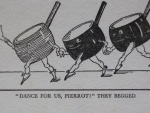
Connor, reading late on that first night, finds that Strutt has failed to supply him with fresh soda for the siphon, and he has to go along to the kitchen to get it. Here on the stove:
‘One, a little saucepan, had it’s lid not quite on – not fitted on levelly, I mean –and it had the oddest look for a moment, just as if it had cocked its lid up to take a sly look at me!’
Later in the night, Connor awakes: ‘Shaking and gasping, my hands alternately grasping my throat and stomach as most awful griping agonies seized me, throwing me into convulsive writhings…’
Strutt to the rescue: ‘My God, Sir, what’s the matter? You waked me coughing! Wait a second, Sir, I’ll get you a drop of brandy…If you’ll take my advice you’ll change those damp things and let me rub you down…’
The next day Connor feels fine, and his doctor says there’s nothing wrong with him.
But then, Connor is dismayed when he and his friend Trevanion, who’s come to dine, hear an odd bubbling noise coming from the kitchen, but a visit their reveals nothing:
‘Trevanion’s cheery laugh died away down the street…The kitchen door stood ajar…craning forward, I peeped round the door…The little saucepan stood where I had put it, on the stove, still cold and unlit – but it was boiling! The lid was rakishly aslant, and tilted a shade every second or so as the liquid, whatever it was, bubbled inside, and gusts of steam came out as I gasped, dumbfounded –somehow as I listened, the noise of the bubbling shaped itself into a devilish little song, almost as if the thing was singing to itself, secretly and abominably, chortling to itself in a disgusting sort of hidden way….’
This was the point at which I began to chortle to myself in a disgusting sort of hidden way at Connor and Strutt’s terrors, and the general Boys’ Own way in which the hero and his friend Trevanian set out to resolve the mystery.
After the servile Strutt taken ill, too, after boiling himself an egg in the murderous saucepan (Connor is so astonished that his man is late wth his early morning tea that he goes to investigate), Trevanian callously decides to engage in some animal experiments. He borrows a dog, boils up some bones in the pan, and gives them to the unfortunate animal, which is seized by the symptoms of poison also:
‘Poor old brute! Never mind; he’ll be all right in a jiff.”
Then, the two friends decide to wait in the kitchen –along with the unlucky dog – in an attempt, it seems, to see the ghost:
‘We had brought cushions and rugs with us, and threw them in a corner, the furthest away from the stove…from where we could watch both door – and stove – and saucepan…Settling ourselves down, I rummaged in my pocket for my pipe.’
 I’ve read a number of descriptions of such night vigils in the Sherlock Holmes stories, but Conan Doyle can make the situation full of alarming suspense rather than absurdity. He achieves this in ‘The Speckled Band’, for all the baboon which runs across the garden, and the cheetah that snuffles at the window.
With this story, by contrast, I began to snigger heartlessly again. Then I came to the climax of the vigil: –
‘A faint movement in the passage at the further end – on tiptoe for greater stealth, something stole towards the kitchen door…the Thing in the passage trailed nearer and nearer…a faint footstep accompanied by a soft rustle like a trailing skirt. At this moment, I became aware of another phenomenon –there grew a heavy scent on the air, like patchouli, I think…our throats dry with fright, we shrank closer to each other, staring at the dog as he moaned and whimpered, and the steps drew nearer, and paused outside the kitchen door, as if Whoever walked that night paused to peer at us through the crack in the kitchen door, and laughed at us through the chink!
‘For sheer terror, that beat all that I have ever known, yet still the spell held us both motionless…the dog’s eyes fixed about five foot from the floor, followed – Someone – who entered…suddenly upon the silence broke a sinister little sound – the clink of a saucepan lid lifted…with a yell of mortal fear I threw aside the rugs, and bolted past that horrible stove like a maniac, Trevanion close at my heels, blundering madly over poor old Ben as he ran.’
At this, I laughed so much that I thought the story deserved a place in the collection for its sheer entertainment value. If it was written tongue in cheek, which I doubt, as it seems the author had little sense of the ridiculous, it is a masterpiece of understated satire.
None of the comedy of these two he man types running in terror from the apparition of a living and lovely young woman (for the murderer who owns the flat and who killed her husband with poisoned meals prepared in the saucepan still lives abroad with her male accomplice) is indicated as the story draws to a close.
Connor and Trevanion take Strutt into their confidence. He is all gratitude, and says he threw the dread saucepan out, but it turned up in the kitchen again. On no account is his beloved master to touch it.
The cook is called. Trevanion seizes her, and Strutt, rather like a school sneak, informs them that she laughed when Connor was taken ill, and threatens to make her eat something cooked out of the saucepan.
After this ungallant treatment, she crumbles and tells all of her former mistress, her lovers, and the elderly husband subject to painful attacks of acid indigestion , and the wife carefully cooking him invalid’s meals in the dread saucepan, laced with a strange white powder from her doctor lover. For all this deviotion, he faded slowly away. Then the doctor married the siren and they went abroad…
After that, the wicked old woman used the saucepan now and then to scare away tenants, as she wished to keep her caretaking job (it’s never explained why, with her skills as a chef, she didn’t take up work as a cook; but perhaps it was harder work). Connor sternly dismisses her:
‘The door closed on her dismissed figure, and Trevenion’s eyes met mine. With one accord we said, ‘My God, what a horrible yarn!’ That is redolent of Rinaldo Rinaldini, where his men are forever speaking in chorus.
It is left to Strutt to throw away the saucepan. The environmentally unfriendly Connor suggests he tie a stone to it, and sinks it in the Thames (but might it not poison the whole river?)
I was disappointed to come to the end of the tale; it had given me a wonderful laugh.
I hasten to add that there are far more spine chilling ghost stories in ‘The Virago Book of Ghost Stories’ – ‘Miss de Mannering of Asham’ by F M Mayor, for instance, is brilliant and touching, and ‘The Eyes’ by Edith Wharton is truly alarming, and has a wonderful psychological slant that in no way detracts from the ghostliness.
It is also only fair to add, that I lived in a reputedly haunted house myself for several years, and I found listening to the sound of disembodied footsteps decidedly unpleasant myself (though their owner was almost certainly dead). I also found the inexplicable mechanical clicking noises which passed up one of the long corridors at dead of night disturbing, neither of which sounds frightening when recounted in the light of day (though I often heard them in the light of day, though more often at twilight, including the last time that I heard them, about which I will write next Halloween).
The problem, then, is less with the prosaic nature of a ghostly saucepan than the whole Boy’s Own Adventure Story atmosphere which surrounds this 1920’s ghostly tale. However, as laughter is the best tonic, I strongly recommend it.


February 18, 2016
Strong and Sentimental Writing.
I’ll take some time off from writing comedy to put up a slightly less facetious post than my recent spoofs.
Surprisingly, a couple of years ago a teenager asked me to recommend some ‘strong writing’ (She even read them too, but that’s irrelevant here).
I assumed she meant writing that grips, and doesn’t pull punches, because come to think of it, I wasn’t quite sure what is meant by ‘strong writing’ – like intelligence, I only recognize it when I come across it.
I recommended two classics – ‘The Heart of Darkness’ by Joseph Conrad and the long short stories by Laurens Van Der Post collected under the title ’The Seed and the Sower (probably better known as the film ‘Merry Christmas Mr Laurens’).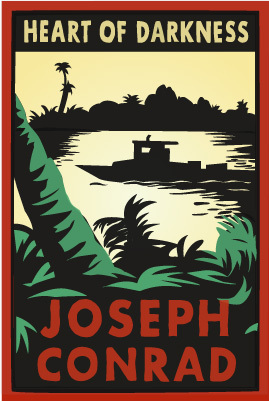
Then, I realized that I had been guilty of unconsciously going along with sexist standards, and hadn’t recommended a women writer, and I added that by way of gothic melodrama with a truly foul male protagonist, ‘Wuthering Heights’ is brilliantly done for all its flaws. Then, there’s Margaret Atwood’s ‘The Handmaid’s Tale’.
But it’s interesting – while there are some books that maintain strong writing throughout, most books rise to it now and then,even ones that are sentimental in tone. You can find it now and then in works promoting an ‘All’s Right in a Pretty World’ approach (at least for the important characters, anyway, and that’s all that matters really).
I have even found this to be true in places in the writing of that most sentimental and embarrassingly emotional of all writers, the late Victorian and Edwardian novelist Charles Garvice.
Here we are with a paragraph where he stops telling us that his hero Lord Fayne has admirable traits, and just shows them.
This protagonist, a wild young Viscount who has gone to bad, and devotes his time assiduously to causing disgrace to his stately family by dressing as a costermonger, squandering the fortune he inherited from a relative in getting hammered and brawling in music halls. is meant to have many sterling traits nevertheless, including a native sense of honour and a disgust with petty minded spite and cowardice or underhand behaviour in general.
This will all make him, of course, a perfect future Earl once he stops dressing as a member of the lower orders and associating with shameless floozies at the Frivolity Music Hall.
Here he hears that the woman he worships from afar (not, of course, one who would set foot in a music hall) is engaged to his cousin and rival, who is called the wonderful name of Marshbank, which sums up his slippery nature –
‘”Yes,” he said, “He is a favourite of fortune. He has stepped into my place, he has got my father’s goodwill –that’s all right enough. And now he has won you! Oh yes, it’s all right! I’m paying the penalty; I’m reaping the harvest that I have sown. But oh God! It’s hard to hear.”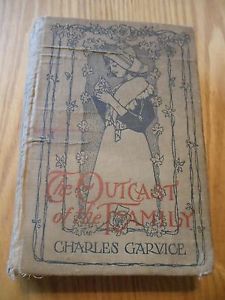
Despite the melodramatic language, I found that there was something moving about this, though I remained unmoved through pages of purple prose depicting this character’s desperate love of his Eva, his reformation and the opening of his heart to the ways of the simple country folk amongst whom he wanders as a sort of nineteenth century minstrel or busker, his tenderness to a little girl etc.
By contrast, here we have Lord Fayne declaring his love for Eva: –
‘”Forgive me, forgive me!” He whispered, brokenly, hoarsely. “I did not know what I was doing. I –“ he stopped, his dark eyes fixed on her imploringly, as a man pleading for his life might look. If she had met his eyes with a cold, angry stare, all might have been well; but there was something in her gazed which seemed to woo his next words, to draw them out of his heart: “I love you!”.
Eva drew a long breath, and sat like a statue…He stood looking at her in awe and fear..They neared Endell Square, then he spoke. “I will not ask you to forgive me (I thought he already had) he said, hoarsely, ‘I do not deserve it. What can I say? Only this; that – that you shall not see me again…”
She does, of course; he turns up to speak to her at least three times at dramatic points in the novel, including the last, where he proposes to her and then sits down to have her serve him lunch. But that’s after he’s become Good, which comes over him a while after he stops being Bad, a moral metamorphosis brought about by fresh country air.
Lord Fayne finishes:
“…Perhaps – perhaps some day, if I win the fight,; if I am less unworthy to be near you, I may come – to ask your forgiveness for – for – what I have said today…”
Yes, well…Lord Fayne rides off to be a Better Man, leaving Eva in a dream of virginal shock and romance: – “…Was it real, or only a dream? The world seemed slipping away from under her feet.”’
Then again, Mrs Humphrey Ward in ‘Marcella’ (written, it seems, as an anti-socialist tract on how women shouldn’t meddle in politics; Mary Ward was a strong supporter of the Anti Suffrage League) is unsparing in some of her details of the suffering of a wretched poacher’s family in a Buckinghamshire village. For instance:-
‘The cottage was thick with smoke. The chimney only drew when the door was left open. But the wind today was so bitter that mother and children preferred the smoke to the draught. Marcella soon made out the poor little bronchitic boy, sitting coughing by the fire….”Hmm! Give him two months or thereabouts,’ thought Wharton. ‘What a beastly hole! –on e room up, and one down, like the other, only a shade larger. Damp, insanitary, cold – bad water, bad drainage, I’ll be bound – bad everything…’
This is excellently and effortlessly done. But sentimentality will out in Mrs Humphrey Ward. Wharton, the liberal politician and rival for the rebellious Marcella’s hand to the sterling Tory candidate Mr Aldous Raeburn, eventually reveals himself to be a cad by stealing a kiss from Marcella and engaging in financial chicanery over his newspaper, and all ends as it should: –
‘’Forgive?’ he (Aldous Raeburn) said to her, scorning her for the first and only time n their history. “Does a man forgive the hand that sets him free, the voice that recreates him? Choose some better word – my wife!”
I would someone had given Mrs Humphrey ward the same advice about the above paragraph.
Of course, in line with the sentimental tone of the novel, Henry Wharton(no relative of Harry Wharton in Billy Bunter, I assume) is forced to recoup his fiannces by marrying an opportunistic woman – shockingly – ten years older than himself, and notoriously cruel to her servants.
I think that these brief extracts from a couple of late Victorian writers of popular fiction is fascinating evidence that even writers who choose to go in for melodrama and to pander to superficial emotions can write strongly enough when they choose – they just choose not to.