Lucinda Elliot's Blog, page 22
October 21, 2016
Genre Fiction, Romantic Novels and Escapism
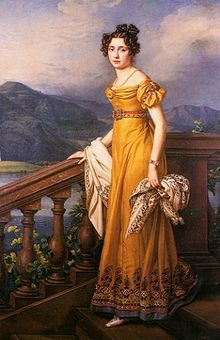 One of the complaints often aired by romance readers is that the genre is despised as escapism, and yet this insult is not so often aimed at other forms of genre fiction.
There is some justice in this complaint. Yes, there are highly escapist elements to romantic novels – but often they are ones which they only share with other fiction written as light relief.
For instance, if there are a disproportionately high number of fearless, ripped macho types featuring as heroes in romantic novels, then the same could be said of the heroes of action/ adventure stories aimed at a male readership .
Neither are the adventures of the characters in these stories any more probable, though they tend to concentrate on macho adventures to the exclusion of the emotional side of life. In this way, these two forms of fiction – romance and the sort of action/adventure novels that attract a largely male readership might be said to represent two opposite ends of a spectrum.
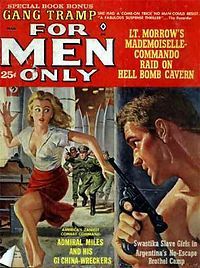
I may not be fair in showing these two covers as they come from long defunct magazines of the nineteen-fifties. But I thought I would put them in by way of entertainment. I’d like to acknowledge that the adaption of the first was by Shunk, by the way…
Then there is fantasy, a genre about as unrelated to prosaic reality as you can get. (This is also straying from the point; I seem to be doing a lot of that in this article, but I read a blog about writing fantasy which said of dagger wielding leather clad female warriors: ‘Enough…I mean we’re here, right?’ That’s rather a pity: that is a sort of female stereotype I rather enjoy).
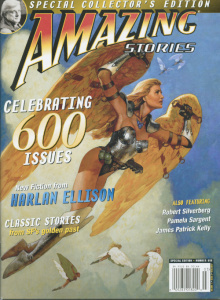
But there is certainly some justification to the charge of romance being unrealistic, even apart from the preponderance of billionaires in contemporary romances and dukes in Regency romances (there have only ever been about twenty-five non-royal dukedoms in the UK) and the often, wildly improbable HEAs.
One aspect I have noticed is the lack of sordid details in the stories. I have commented before on how there seems to be an agreement that heroes should never vomit, even when suffering from concussion, and that the women never need to evacuate when held captive. There may well be exceptions, and I’d like to hear of them.
This particularly applies to historical romance. There seems to be a tendency to write stories where, for instance, the characters inhabit a Georgian or Regency London wholly devoid of the filthy streets or ragged beggars.
While the Mayfair aristocracy may have avoided walking through the sordid muck which littered the streets through going everywhere by carriage (and employing a footman to run ahead to clear the way of pedestrians, at least), they could hardly avoid being exposed to general dirt and squalor.
That was why in cities and in London in particular, the reception rooms were on the first floor. That way, the evil smells of the street outside were less likely to penetrate.
Of course, by modern standards, even people from the leisured classes would have been fairly grubby themselves. Bathing too often was seen as bad for the health. 
It’s understandable that stories which aim to provide the reader with light entertainment are going to pass over these sordid facts.
However, I do think that this concentration on the upper class in historical romance, and limiting the working -class characters to obliging servants and inn-keepers. can lead to the consensus oriented, a-political view of society which is often presented in historical romances. It is too easy for that approach to ally the readers of historical romanced with a sentimental and even a reactionary view of history. That only can be a bad thing.



October 4, 2016
The Romantic Novel, The Happy For Now And The Traditional Happy Ever After
 I saw some posts on Facebook recently on romantic novels and the HEA (for anyone uninitiated, that notorious Happy Ever After).
The posters said that there had been some romantic novels released recently without the obligatory HEA, and because of that, some Indie Authors of romantic fiction had included the assurance that ‘this novel has an HEA’.
Romantic novels, of course, are notorious as a genre where the readers insist on a happy ending. That is why, I gather, ‘Gone With The Wind’ and ‘Rebecca’ are often precluded from them – one has the hero leaving the heroine, and it seems in the second the hero makes no explicit love declaration (I seem somehow to have missed that omission).
For my own part, I have long argued that this insistence on the HEA is one of the reasons that romances are not generally taken seriously as literature, that and the tendency to leave ugly details out of the stories.
This if often defined as a necessary part of writing a genre which is by definition escapist.
Personally, I have never seen why a conditional happy ending or what it seems is known as the ‘HFN’ – Happy For Now – is often regarded as unacceptable.
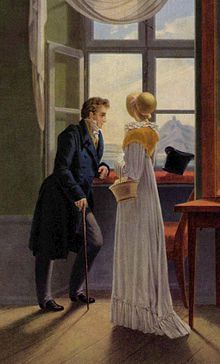 After all, even in a Heats and Rainbows traditional happy endng it is impossible to depict a limitless timing. One assumes that generally (not inevitably) the hero and heroine are meant to be mortal; therefore, they will in the future either die early, or age. Either way, they must eventually shuffle off this mortal coil. Presumably, the average reader would rather not envisage the hero and heroine in their declining years, with if the hero, perhaps, forced to bolster up his wild curly black locks with a toupe, and the heroine sneaking on ‘controlling’ underwear to give the illusion of a sylph like figure..
Joking apart, what actually strikes me most about the Happy Ever After is that it only has to apply to the hero and the heroine. That might seem a comment on the obvious; but in a way, perhaps it reflects the ideology of our era?
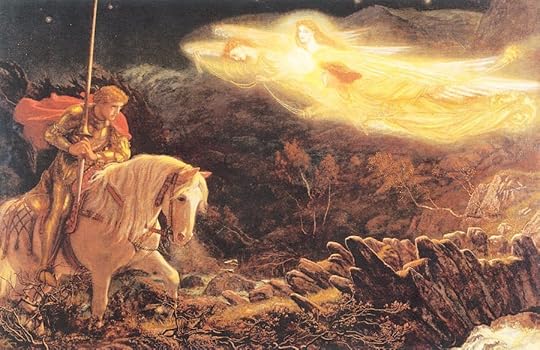 Just as the Grail legends reflect the frames of reference of the medieval mind, the ideology that underpinned feudalism – perhaps the Happy Ever After for an individual couple in romantic fiction is an indication of the ideology of capitalism – individualism – and therefore is equally a finite form of literature, at least in its present form?
It is no accident, surely, that the first romantic novel – ‘Pamela’ by Samuel Richardson – was written during the era of the rise of the manufacturing class as the dominant force in society.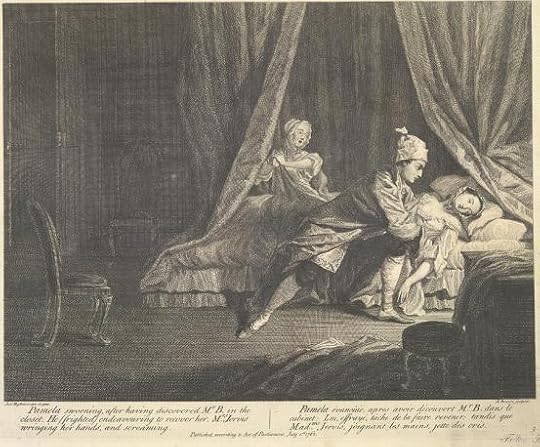
Love stories, of course, go back to ancient times and hopefully will still be about far in the future; but as society evolves, how long the modern romance will continue in its present form is an intriguing question.
At the moment, it certainly is the most popular form of fiction, accounting for something like fifty per cent of the sales of ebooks on Amazon. But what have often been seen as the rigid boundaries surrounding the genre may be changing, as is mentioned in this article: –
This is embarrassing! I have just tried to get that link to come out six times, and I think I’m going to have to admit defeat and ask anyone interested to paste it into the search bar…


September 21, 2016
Miss de Mannering of Asham by F M Mayor: A Short Story of Love, Betrayal and Haunting
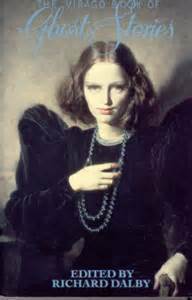 A few months ago, I wrote a post about how one of the stories in ‘The Virago Book of Ghost Stories’, namely, Margery Lawrence’s ‘The Haunted Saucepan’ veered over the line thin between the ludicrous and the ghostly, so that it made me snort with laughter.
To be fair to Margery Lawrence, I believe she wrote some stories generally considered terrifying. Also, part of the problem was the dated ambiance of the story – the plight of the hero, ‘needing’ to live in Mayfair and accordingly forced to choose between living in his club, or ‘the discomfort of hotels’ is not one to arouse much sympathy among many modern readers.
It is interesting, therefore, that a story from the same era – and written from the same perspective of dated assumptions – is to my mind wholly successful as a ghost story, and having written about how one story in this collection fails in its purpose to terrify (though it gave me a wonderful laugh), it seems only fair to write about how to my mind ‘Miss de Mannering of Asham’ (amongst others) strikingly succeeds.
This story, by F M Mayor, was presumably written at some time in the 1920’s (the author died in 1932). It seems ‘the woman alone’ was one of her favourite themes, and this is certainly that of this short story. The atmosphere summed up in her story is tragic, and strangely believable. Also, there is an underlying compassionate attitude towards suffering humanity in the story, which elevates the tale beyond the level of a typical ghost story and leaves a lasting impression on the reader (anyway, it did with me).
The story begins with a couple of school teachers going on holiday to a resort in an unspecified area on the north east coast of England. They stay in an inn, hire a donkey and trap, and set out to explore the area. Duly coming to a great house set in extensive parkland, they enter (in those days, asking to see round stately homes was commonplace).
The day is overcast (as are so many humid summer days in England. As they drive through the parkland, they find it oppressive, particularly an avenue of laurels. Many of the trees in this park have been struck by lightning, and the protagonist Margaret feels a sense of pity for them, and discovers a general claustrophobic dislike of parkland she never realised she had before.
Kate is affected too, and so is the donkey. They come to the Jacobean mansion, and a young manservant greets them, one of a number left there by its current owner, who almost never visits. He hints at a ghostly atmosphere and a shut up room. Kate goes to visit the old church, and comes back pale and uncommunicative.
That night Margaret amd Kate suffer from nervous fears and they share a bed (this was written in the days when no possible sexual connotation regarding this would be made by the readership). The next morning, at breakfast, Kate reads about Asham Hall in her guide book, and suggests they return to look at the tombs. This time they go by bicycle, but Margaret becomes too affected by the atmosphere to go into the churchyard. She stays behind, and sees a woman in the churchyard, who walks down the path, passing Kate. Kate is aware of her approach, but does not see her.
Later a great aunt of their landlady at the inn tells them how her mother worked as a young woman at Asham Hall for the then aging Miss de Mannering, who treated her kindly, particularly when she was upset at being let down by a young man. On Miss de Mannering’s death, she bought some of her personal things so that they would not go to strangers, including, ‘a lot of writing’ and a portrait of Miss de Mannering.
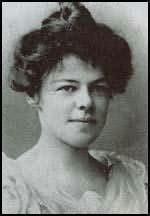
 The woman shows both it to the teachers, to whom she has taken a great liking. The portrait is dated ‘Bath 1805’ and Margaret thinks, ‘I should have been afraid of Miss de Mannering from her mouth and the turn of her head, they were so proud and aristocratic, but I loved her for the sad, timid eyes, which seemed to be appealing for kindness and protection.’
The writing – a story within a story, a device I have always found fascinating – relates the story of Miss de Mannering, an isolated, plain and lonely girl living alone with an elderly, ill tempered father, obsessed by money problems. At the age of twenty-five, she is sent by him to Bath to stay with her aunt and cousin and find a husband.
Her aunt and cousin treat her kindly, but she is not a success at Bath. However, her cousin tells her that a man called Captain Phillimore admires her ‘countenance’. ‘I congratulate you with all my heart.’
Miss de Mannering relates, ‘Captain Phillimore sought me out again and again’. Though reputedly wild and extravagant, he proposes to her, but insists that he has reasons why their coming marriage should be kept secret. Meanwhile, he asks her to consummate their coming marriage in the summerhouse, dismissing the marriage ceremony, ‘Using the ‘wicked sophistries of the infidel philosophers of France…But alas, there was no need of sophistries. I loved him as no weak mortal should be loved…’
Miss de Mannering returns to Asham, and eagerly awaits Captain Phillimore’s arrival to ask for her. But ‘Certainty was succeeded by hope, hope by doubt, doubt by dread’. She discovers that she is pregnant. She confides in her old nurse, who advises her how best to conceal her changing shape, and arranges for her to go to an associate elsewhere to give birth.
Meanwhile, lonely and forsaken, Miss de Mannering is tormented by the stormy weather, with violent thunderstorms, and the oppressive skies of August. In November, some women she met in Bath come to visit. To her horror, they talk of how Captain Phillimore betted with his friends that he would seduce the three most innocent maids in Bath.
‘My love was dead, but I could not, could not, hate him.’ She sends for her old nurse, but snow is falling fast, and before she can arrive, Miss de Mannering goes into premature labour. The baby only lives for hours. Miss de Mannering would have buried him herself in the churchyard, but the ground is frozen. She burns the body on the fire. Subsequently, she goes into a fever lasting many weeks.
When she comes to herself, the doctor gently reveals to her that he knows her full story, but ‘A physician may sometimes give his humble aid to the soul as well as to the body. Let me recall to your suffering soul that all of us sinners are promised mercy through our Redeemer. I entreat you not to lose heart.’ The compassionate doctor arranges for her to go on holiday with his sister.
Miss de Mannering returns to Asham with her health restored. ‘I learnt to forgive him.’
Kate and Margaret also find a letter from Captain Phillimore to Miss de Mannering, dated 1810 and sent from ‘Hen and Chicken Court. Clerkenwell ‘ (then a decidedly rough area in London):
‘Standing as I do on the confines of eternity, I venture to address you. Long have I desired to implore your forgiveness, but have not presumed so far. I entreat you not to spurn my letter…my vows were false, but even at the time I faltered, as I encountered your trusting and affectionate gaze…Had I embraced the opportunity offered me by Destiny to link my happiness with one as innocent and confiding as yourself, I might have been spared the wretchedness which has been my portion…’
The letter is stained with tears, which Kate finds incomprehensible over ‘That skunk’. But Margaret guesses far better, ‘All that letter, with it’s stilted, old-fashioned style, which makes it hard for us to believe that the writer was in earnest, would have meant to Miss de Mannering.’
 My short quotations can do little justice to the atmosphere of the story, and the strong, yet understated, style in which it is written. The tale of the innocent young woman wronged and seduced would have been written countless times even in the 1920’s, yet this ghost story relates it with a freshness and a verve that brings its poignancy to life all over again.
I found it very moving, particularly the ending, and Captain Phillimore’s repentance. I was interested to read online that interest in the writing of this author, neglected for decades, has recently revived.


August 24, 2016
The Villainous Viscount Or The Curse Of The Venns Now Out on Amazon…

Having worked on this for quite a while on and off, I’ve got quite attached to the characters. I think if an author is with them for more than six months, h/she is sorry to let them go.
No wonder so many authors write series.
As I said in a previous post, first I wrote it was a pure comedy – that seemed in bad taste given the tragic background story in France of the Ancien Regime. After 28,000 words, Writer’s Block settled in, horribly…
Then I wrote it mainly as tragedy – that didn’t suit the frequent bathetic happenings of the main story. The absurd goings on in Venn’s London house alone, with the awful valet O’Hare and his ungovernable children, the shameless maid Betsy and the life beseiged by creditors was far too ludicrous. Then, how could I bear to write out Ludovico Sharman, the Professor of Magic, Markmanship, Swordsmamship, Languages and Subtle Influence?
In the last eight months, I’ve been re-writing it as dark humour, and that went far better. I was so happy it didn’t end up as ‘The Manuscript in the Drawer.’
Now, I must get on with the ‘sequel to ‘That Scoundrel Emile Dubois’, which is half done.
Here are the links:
https://www.amazon.com/Villainous-Viscount-Curse-Venns-ebook/dp/B01KXU8QUC
https://www.amazon.co.uk/Villainous-Viscount-Curse-Venns-ebook/dp/B01KXU8QUC


August 8, 2016
Episode from A Spoof Gothic Regency Romance: The Proposal
 The Dastardly Duke approaches the Spirited Heroine as she walks in the castle grounds with her charges.
SH: Ho Hum! He’s got no shirt on. This means a passionate scene. This is the cover.
DD: Run and play, youngsters.
SH: Well, at least he doesn’t call them brats any more.
First Charge: I hope you are not dismissing her, Papa? [Second charge
starts sobbing]
DD: Only as governess. I will offer her a position far worthier of her talents. No questions. Run along.
Charges: Oh good! We can go to being spoilt brats instead of neglected treasures. [They run off.}
[Now sounds a burst of organ music ]
DD: Eh, what’s that? Oh, it’s my late wife making her presence known. [shouts] I hope that’s OK with you, dearest? Damn, anachronism, I know. Give me the electric shock and get it over with. [refuses to wince as he takes his punishment]
SH: Whatever can Your Grace mean?
DD: [attempts to smile, but is too used to giving bitter grimaces to pull it off]
SH: Heavens! I hope you are not taken ill, Sir?
DD: My dear one: you cannot be unaware of the reason why I have changed form a morose, monosyllabic misanthrope to a man who sees a purpose in life.
SH: [twinkling] At least in the Regency era, it won’t be because he has been reading Hay House tripe. I know, anachronism: ouch!
DD: This is very hard for me; it goes against my nature, to admit what I have come to feel…
SH: [encouragingly] Whatever can Your Grace mean? You spoke of promoting me?
[ Crash of lightning. Enter the footman]
Footman: [who is, of course, a demoted ex-hero] Stop! I won’t have it! She’s my heroine, not yours, you beetle browed brute!
DD: Go to the devil, you low born cur.
Footman: I cannot stand quietly by and see a delightful maiden duped. This man is a whatchacallit- you know, the name for people who murder their wives –
DD: [with a bitter smile] Murderer will do, fellow.
[Wraith of late wife, arriving with a flash of lightning] Oh no, he isn’t!
Footman: Oh yes, he is!
DD: Please, my dearest, stop! You fellow, silence! I refuse to have my Proposal Scene descend into vulgar pantomime.
Footman: [brandishes sword] I’ll kill you first!
[Wraith, gliding between them] Oh, no!
DD: You and whose army? I know, anachronism. [refuses to wince as he suffers the inevitable electric shock] Anyway, I didn’t kill my beloved Matilda, for all that we quarreled bitterly. She slipped on the stairs. And that sword’s an anachronism, how come you’re being let off?
Footman: I took it from one of the suits of armour.
SH: Oh, do go away, dear. I’ll marry you immediately you get promoted again. That’s probably only three books from now. Authors do like to use your type.
DD: There will always be a demand for the Mean and Moody emotionally challenged type as long as so many women readers have bad taste.
SH: Well, I don’t. So let’s make this a wrap. I know, anachronism! Ouch.
[Footman Ex hero goes off] Oh, very well.
DD: [shouts after him] Go and clean the closets, scrub! [Drops down on his knees] Ah, will you be mine, dearest? I count your connections with trade as a mere nothing to your charm and liveliness, my dearest, sweetest –
[Wraith of ex wife] I give you my blessing. [vanishes]
DD: She releases me. Will you marry me?
SH: I will.
[DD jumps up and they kiss]
Author: The End.
DD: What? That’s it?
SH: That’s it. This is a ‘sweet’ romance. No naughtiness beyond a chaste kiss.
DD: Well, damn me! Getting my hands on you was the only thing that kept me going.
Author: Now, what for my next? I know! A Dastardly Duke who courts a Spirited Heroine! And I’ll set it in Regency England!
[DD seizes SH’s hand and they begin to run]
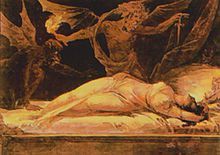 DD: Not me! I’m booked to be an alluring demon in a futuristic fantasy!
SH: Not me either. I’m having a go at being a female detective for my next!
Horse [who is, of course, an ex hero of the 1970 Vintage Rapist variety, demoted as he deserves) How about me?
Author: [turning up her nose] In your dreams, Dobbin! [Footman approaches] Oh, all right, you then…


July 25, 2016
Scene: The Dastardly Duke and the Spirited Heroine (in t...
Scene: The Dastardly Duke and the Spirited Heroine (in the role of governess) now take dinner together, in the great hall of his castle somewhere on the Yorkshire Moors. The great hall is, of course, full of sinister shadows cast by the flickering candles. The Spirited Heroine does not, of course, occupy the chair at the foot of the table, which is drawn back invitingly.
DD: Damn me! This sinister flickering gets on my nerves of an evening. I know I’m meant to be sinister and brooding, with surroundings to match, but I sometimes wish electricity was invented (A warning jolt from the censor) – Ouch! Apart from the censor giving me shocks for anachronisms, that is.
SH: [The glow of her reddish hair, and the pearly tinge to her skin lit up by the candlelight] Well, they use it for those grotesque experiments with galvanism, of course, where they bring a newly hanged criminal back to life.
DD: What? If only I’d known – when – when…[Grimaces and hastily refills his glass of wine]. No matter. Do I live, or do I grind out an existence of dust and ashes. No smile of mine has illuminated this gloomy castle these ten years, because no smile of hers… No matter. What were we speaking of? [Savagely] And I don’t care if that’s ungrammatical.
SH: [Kindly changing the subject, though burning with curiosity] Your Grace, I am honoured that you stoop to eat with a hireling. Why, in my last post, I had to take my dinner from a tray served in the schoolroom. Still, at least I could read and eat. At least I could put my elbows on the table, and read.
DD: [Savagely addressing the footman] The main course, you damned low born cur!
Footman: [Aside] This is so demeaning, in front of one of my former heroines. I was a fool to risk demotion in putting off recalling her to my arms in our last, even if she was tiresome! The number of times I’ve beaten this wretch with the flat of my sword when he was the villain! Still, from the way he’s carrying on this time, he’ll soon be demoted again. [bows and clumps out].
SH: [Aside] Such savagery! I must get to the bottom of this Intriguing Mystery surrounding the isolation of this wickedly handsome and embittered man. [aside] Thank goodness I’ve got that line out with a straight face. Now it will be a plain sailing through the Gothic bits.
DD: You may wonder at it, my good young lady. But I sometimes weary of my own company, and I saw you were a female of spirit. I am surprised, almost sorry, to think of your charms wilting in a schoolroom, under the care of tiresome brats.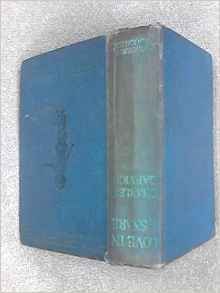
SH: Really, Sir, surely you do not see your own daughters in such a light? I haven’t met my sweet pupils yet.
DD: You won’t find them so. And why shouldn’t I see ‘em as brats? I care for nobody and nothing since the death of my first wife. I didn’t give a hang for the second.
SH: You have been unlucky, Sir, twice widowed, and yet still in your prime.
[Enter footman, lugging a heavy silver tray]
Footman: I wish there was a service lift in this place – I know, anachronism, Ouch! [Sets down the dish on the table]. Do you wish me to carve, Your Grace?
DD: No, get out of it. I’ll serve us both. [Carves the joint savagely. A sudden flash of lightning illuminates the chair at the foot of the table, and in its light, a ghostly figure is visible there.]
SH: [Continues to eat a moment, as if reluctant to leave her dinner. Then drops her knife and fork]. My goodness, I thought I saw –
DD: [With set, ghastly look] Then you saw it too? Can I credit my eyes after all?
Footman: [Coming back in] And here’s the rest of the courses.
DD: Curse you, fellow, I haven’t rang – [He breaks off at another flash of lightning. Now the ghostly figure is clearly visible in the chair] It is She!
SH: Oh dear, there is never an uninterrupted meal in these Gothics.
Footman: [To spectre, gabbling hysterically] Some nice beef, Your Grace?
Spectre: Why not? [smiles round generally], then vanishes.
DD: She smiled so, on all…[quotes brokenly] ‘Then smiles stopped altogether…’ Ouch! What was that for, you cursed censor?
Footman: Anachronism! Robert Browning’s poem ‘My Last Duchess’ was not written until 1840. This is 1812, and you’re not the sixteenth century Duke of Ferrara, who in the poem had his wife killed for arousing his insane jealousy, you’re the Duke of Somewhere Made Up in the Yokrshire Moors, and it is only rumoured that your beloved late wife died at your hands, though your mad possessiveness was legendery throughout the moors.
DD: Leave me, you literary minded low born cur!
Footman: Only too happy, you Miserable Murderer!
DD: You lie, you damned insolent dog! [Leaps up and chases him from the dining hall. The sounds of a violent dispute and blows exchanged drift back through the open doors]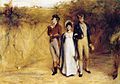
SH: I’m glad he’s fighting back. He’s quite sweet, really. I much prefer him to this current hero.
[The spectre of the Duchess re-appears, smiling again]
SH: Your Grace, you seem very friendly. Shall we have some girl talk? [wearily] Yes, I know, anachronism…
Authors Note; The full text of Robert Browning’s fascinating and brilliant dramatic poem can be found on:
https://en.wikipedia.org/wiki/My_Last_Duchess


July 11, 2016
A Spoof Gothic Historical Romance Episode
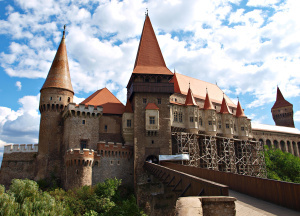
Now for some comic relief. Who’s for a Gothic historical romance, full of anachronisms (which the re-cycled characters know too well).
Scene: A castle in the wilds of Yorkshire, UK, on the moors. Date – Regency
[ A darkly handsome and brooding man appears at the bolt studded door holding a modern electric torch. Although it is October and there is a force eight gale blowing, he wears breeches but no shirt.]
Dastardly Duke: Damn me! Where is the chit? She’s late.
[A footman appears. He, too, is dark and handsome. On seeing him, the Duke starts.]
Dastardly Duke: Devil take me, not you!
Footman: It ain’t my fault. I’ve been demoted from being hero, see, for refusing to chase after the heroine after I packed her off, so there wasn’t a Happy Ever After. The punishment was to be a wretched servant. So you’ve been promoted from Dashing Villain to hero? Well, in this story, there ain’t much difference. It’s not fair. I’m better looking than you, too.
Dastardly Duke: I can soon remedy that, you whoreson. I always hated your damned smug face and uneering aim with your flintlocks when you were the Earl of Darlington. [Makes to seize him, but a sudden flash and jolt makes him drop the torch; the bulb goes out. He lets out a terrible oath] Ouch!
Footman: [Addressing the sky) Is that the best he can do for foul
language? That’s the punishment for an anachronism in Historical Romances, Your Grace. New rules.
Dastardly Duke: Go down to the wine cellar and fetch me some strong
liquor, curse you for a miserable, low born rogue.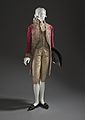
Footman: We’re out of tallow candles.
Dastardly Duke: Then you’ll have to go down in the dark, and if you happen to slip in the dark and break your low born neck, what care I!
Footman: Come to think of it, I don’t care either. The sooner I get to the end of this one, the better. Maybe by the next story, I’ll be allowed to be the Heroine’s Hopeless Admirer or her rakish brother instead of a mere commoner…[Goes off]
Dastardly Duke: Do I hear horses hooves? Yes, it’s the Heroine
arriving at last. Hmm. I wonder who they’ve sent me? To tell the truth, ha, ha!
I’d like a voluptuous doormat by way of a change from these sharp tongued hoydenish redheads who’re the fashion these days. I haven’t had a Doormat Heroine in years, and that sort was such fun for a sadist like me. [Looks about almost nervously] Well, the term hasn’t been invented when this story’s set, even if old de Sade had been at it, but I’m talking off camera, or microphone, as it were…And yes, I know they hadn’t been invented either.
[The Ducal carriage appears, accompanied by a roll of distant thunder. The Duke moves, with lithe, almost feline grace down the steps to hand down the heroine when the footman opens the door.]
Spirited Heroine: Hello, there! Sorry, anachronism. Good morrow, Your Grace. I fear you must have interrupted your toilette, to be gracious enough to greet me, for you wear no shirt.Unless you’ve lost it from your back through desperate gambling.
Dastardly Duke: [ Sourly] No. I’m never gracious. That was just for the cover. Do you think I enjoy standing about half naked in this cursed climate? [Lets out another terrible oath as he takes a closer look at her.] Don’t say it is that awful six foot redhead with the smart repartee? Hell and damnation, it is.
Spirited Heroine: Well, I can’t say I’m exactly ecstatic to see you, either. No matter; we’ll be falling in love before we are halfway through the book [here they are interrupted by one of the horses speaking before they are taken on to the stables].
Horse: Can’t I have a foaming jug of ale?
Spirited Heroine Lud!
Dastardly Duke; &*^&&^(!!!!!!
Coachman: He’s been doing that all the way from the coaching
house, Your Grace. It seems he was one of those
abusive heroes with the –ahem – I don’t like to say
in front of the young lady – ‘bruising kisses’ and
worse, back in the 1970’s, and so he’s been paying
his debt to the Romance Society ever since they went
out of fashion.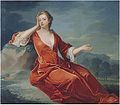
Spirited Heroine: Is that so? [Rushes forward} The swine! Give me that whip!
Dastardly Duke: [Catches her arm] No, Miss Er, I can’t allow you to flog a dumb animal.
Horse: We Alphas must stick together. Anyway, who’s a dumb animal? [Neighs piteously at a sudden flash and jolt] Ow! That hurt! That’s so unkind. Abusers need love, too…[The coachman cracks his whip and sets them off towards the stables].
Dastardly Duke: Well, shall we get on with it? So, you are the new governess. I hope you won’t find it too lonely in this isolated spot, with only a grim widower for company, and a few retainers.
Spirited Heroine: [Helping him on with his shirt] Not at all, Your Grace. I like the country. Besides, the handsome renumeration you offer, merely for the coaching of two small daughters …
[More distant thunder]
More Next Week…


A Spoof Gothic Historical Romance Extract
Now for some comic relief. Who’s for a Gothic historical romance, full of anachronisms (which the re-cycled characters know too well).
Scene: A castle in the wilds of Yorkshire, UK, on the moors. Date – Regency
[ A darkly handsome and brooding man appears the bolt studded door holding a modern electric torch. Although it is October and there is a force eight gale blowing, he wears breeches but no shirt.]
Dastardly Duke: Damn me! Where is the chit? She’s late.
[A footman appears. He, too, is dark and handsome. On seeing him, the Duke starts.]
Dastardly Duke: Devil take me, not you!
Footman: It ain’t my fault. I’ve been demoted from being hero, see, for refusing to chase after the heroine after I packed her off, so there wasn’t a Happy Ever After. The punishment was to be a wretched servant. So you’ve been promoted from Dashing Villain to hero? Well, in this story, there ain’t much difference. It’s not fair. I’m better looking than you, too.
Dastardly Duke: I can soon remedy that, you whoreson. I always hated your damned smug face and uneering aim with your flintlocks when you were the Earl of Darlington. [Makes to seize him, but a sudden flash and jolt makes him drop the torch; the bulb goes out. He lets out a terrible oath] Ouch!
Footman: [Addressing the sky) Is that the best he can do for foul
language? That’s the punishment for an anachronism in Historical Romances, Your Grace. New rules.
Dastardly Duke: Go down to the wine cellar and fetch me some strong
liquor, curse you for a miserable, low born rogue.
Footman: We’re out of tallow candles.
Dastardly Duke: Then you’ll have to go down in the dark, and if you happen to slip in the dark and break your low born neck, what care I!
Footman: Come to think of it, I don’t care either. The sooner I get to the end of this one, the better. Maybe by the next story, I’ll be allowed to be the Heroine’s Hopeless Admirer or her rakish brother instead of a mere commoner…[Goes off]
Dastardly Duke: Do I hear horses hooves? Yes, it’s the Heroine
arriving at last. Hmm. I wonder who they’ve sent me? Tell the truth, ha, ha!
I’d like a voluptuous doormat by way of a change from these sharp tongued hoydenish redheads who’re the fashion these days. I haven’t had a Doormat Heroine in years, and that sort was such fun for a sadist like me. [Looks about almost nervously] Well, the term hasn’t been invented when this story’s set, but I’m talking off camera, or microphone, as it were…And yes, I know they hadn’t been invented either.
[The Ducal carriage appears, accompanied by a roll of distant thunder. The Duke moves, with lithe, almost feline grace down the steps to hand down the heroine when the footman opens the door.]
Spirited Heroine: Hello, there! Sorry, anachronism. Good morrow, Your Grace. I fear you must have interrupted your toilette, to be gracious enough to greet me, as you wear no shirt.
Dastardly Duke: [ Sourly] No. I’m never gracious. That was just for the cover. Do you think I enjoy standing about half naked in this cursed climate? [Lets out another terrible oath, taking a closer look at her.] Don’t say it is that awful six foot redhead with the smart repartee? Hell and damnation, it is.
Spirited Heroine: Well, I can’t say I’m exactly ecstatic to see you, either. No matter; we’ll be falling in love before we are halfway through the book [here they are interrupted by one of the horses speaking before they are taken on to the stables].
Horse: Can’t I have a foaming jug of ale?
Spirited Heroine Lud!
Dastardly Duke; &*^&&^(!!!!!!
Coachman: He’s been doing that all the way from the coaching
house, Your Grace. It seems he was one of those
abusive heroes with the –ahem – I don’t like to say
in front of the young lady – ‘bruising kisses’ and
worse, back in the 1970’s, and so he’s been paying
his debt to the Romance Society ever since they went
out of fashion.
Spirited Heroine: Is that so? [Rushes forward} The swine! Give me that whip!
DastardlyDumb: [Catches her arm] No, Miss Er, I can’t allow you to flog a dumb animal.
Horse: We Alphas must stick together. Anyway, who’s a dumb animal? [Neighs piteously at a sudden flash and jolt] Ow! That hurt! That’s so mean…[The coachman cracks his whip and sets them off towards the stables].
Dastardly Duke: Well, shall we get on with it? So, you are the new governess. I hope you won’t find it too lonely in this isolated spot, with only a grim widower for company, and a few retainers.
Spirited Heroine: [Helping him on with his shirt] Not at all, Your Grace. I like the country. Besides, the handsome renumeration you offer, merely for the coaching of two small daughters …
[More distant thunder]
More Next Week…
July 2, 2016
Those Anachronisms: We All Dread Making Them
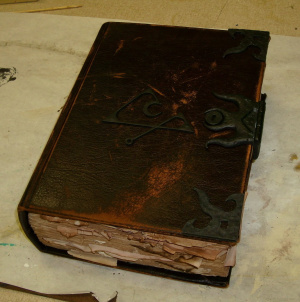
Those of us who write historical fiction go in dread of committing the blunder of an anachronism; a real historical howler.
I’ve been double checking the research for my latest. Research is so tedious, and I fully understand how some writers must become so weary of it that they take a risk, and neglect checking on some tedious fact or other.
Of course, that will inevitably be the one fact that is glaringly, ludicrously inaccurate…
I envy rich and famous writers their research assistants. It must be wonderful to have one, so that they can do all the donkey work, while the writer hands over a pay check and takes all the credit.
Of course, the internet does make it easier; there’s always Wickipedia for a rough guide. Still, if you wish to look up something more obscure, for instance, some detail about the sort of streets the nameless middle class occupied in the early nineteenth century, then it can be horribly frustrating. There is any amount of information on Mayfair and the squares favoured by upper class, and some on the ‘rookeries’ at the other end of the social scale, but when it comes to those in between areas, a complete paucity of information. Often you have to fall back on the fiction written at the time, or of people writing soon afterwards, to come by information at all.
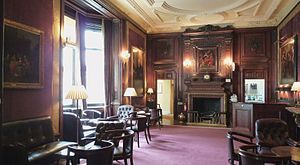 About bourgeois streets, In the end, I had to fall back on ‘Vanity Fair’ for an address for a socially aspiring nouveau riche family who would certainly turn their noses up at Mr Gardiner’s Gracechurch Street address in ‘Pride and Prejudice’. Thank you, Mr Thackeray…
Prize fighting features in my story. I had to do research on whether kicking and throwing was still permitted under the Broughton Rules. Also, I wanted to check when prize fighting was made illegal (intriguingly, it seems arguable it has never really been made legal in the UK, even after the introduction of the Queensbury Rules). Not as if the anti hero of the novel would be likely to trouble about that, but if a meeting was in danger of being broken up by the authorities, I’d have to stage it some way outside the metropolis.
All this made me think of that excellent post written a year or so ago by Mari Biella about these dreaded historical howlers.
As she says, we all go in dread of being pulled up over them, and facts can be hard to ascertain.
For instance, from my own experience, there seems to be disagreement about whether or not the kiss featured as part of the Georgian marriage ceremony. I myself tend to think that it did, as it seems to have been an old tradition long before that age, and I have included it in weddings in my stories. Still, I may yet be proved wrong.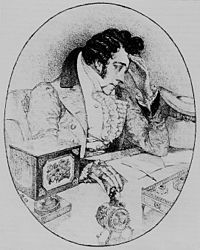
It’s so easy to make these mistakes. There are so many factors that have to be taken into account; besides clothes and language, diet, and daily life including travel and leisure, there are current affairs. When I began writing ‘The Villainous Viscount’ , set in the spring and summer of 1821, I assumed that George IV must have been duly crowned by then. It was only when I checked on the date of the coronation, just to make sure, that I found out that because of the delays caused by his attempt to divorce Queen Caroline in the ‘Pains and Penalties Bill’ , he was not officially crowned until July 1821.
For those interested, she was kept out of the ceremony…
Nobody wants to be approached by a reader saying, ‘I hate to point it out, but…’
Of course, a writer can be approached by people insisting on very odd facts. A reader from Canada contacted me once about ‘That Scoundrel Émile Dubois’ assuring me that there are no mosquitoes in Europe or the UK, and never have been.
The grounds for this assertion seemed to be that she was not bitten by one during the course of her holiday in Scotland. To be fair to her, she seemed to think that I am from the US and had never been in Europe, despite my spelling. I can only say that she was a good deal luckier than I am; I am sitting here in Wales trying not to scratch two such bites.
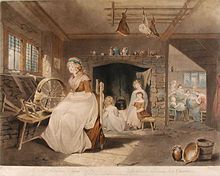 Another reader asked if I was unaware that I had made Émile’s former partner in crime and later valet, Georges, and Sophie’s maid Agnes speak using grammatical errors…
Language generally in historical novels is another pitfall. A writer who tries to reproduce the style of speech of the period too exactly will probably end up annoying people. In the first edition of ‘That Scoundrel…’ I put a fair bit of the inverted verb and pronoun frequently to be met with in Jane Austen. However, some readers found this hard going, and objected. I avoided doing the same thing in ‘Ravensdale’.
Then again, on slang; with racy, fashionable types, to add a period flavour it is surely a good idea to put in a certain amount: but too much of it is downright tiresome. Recondite references to fashions, customs and landmarks of the era can become ostentatious and wearisome.
There is the whole use of the word ‘in’t’ or ‘aint’ in the later eighteenth and early nineteenth century, which was often used instead of ‘isn’t’. It is rendered as ‘in’t’ in Fanny Burney and as ‘ain’t’ in some translations of ‘Pamela’. It seems to have been used in racy, careless or colloquial speech than writing; but it didn’t become a ‘vulgarism’ until sometime in the Victorian era.
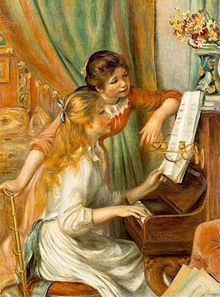 All this wearisome research made me think with envy of those traditionally published writers of historical fiction who publish through companies which are supposed to check for anachronisms.
That may sound a sorry admission for a self published writer to make. I note that unfortunately this expert help does not seem entirely reliable.
For instance, while I believe traditional publishing houses such as those of mass market romance (both US and UK based) are meant to check for historical accuracy in their historicals, here I am frankly puzzled. I have come across works published by Harlequin set in a Regency England plentifully supplied with duvets and larger, a parliament without two chambers, with the Speaker of the House of Commons apparently situated in the House of Lords, Duke’s addressed as ‘Mr Duke’, and heroines given to saying ‘humungous’ .
All this is rather unfortunate for the reputation of historical romance generally. There are obviously, many writers who are scrupulous about historical research; sadly, this could be more widespread.
I came across an article which suggested that: ‘Don’t know much about history? Read an historical romance’.  A number of book covers by well known writers of Regency Romances were featured in this article, which it said all had reputations for carrying out scrupulous historical research – well and good.
However, prominent among them was a cover of a Regency Romance featuring a man wearing a modern suit and tie.
I thought the kindest thing to do in the circumstances was discreetly to contact the writer of the article via ‘contact us’ , pointing this out, before someone else did the same thing openly and derisively on the comments section. However, I received no acknowledgement, and the article remains as it is…
I was dismayed to learn from a friend that writers of children’s stories set in the eleventh and twelfth century UK are encouraged to pretend that the language gap between the Norman French speaking nobility and the Anglo Saxon speaking majority of the population frankly didn’t exist, ostensibly because ‘It makes for too many difficulties’.
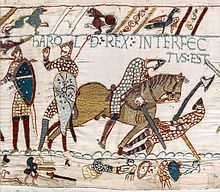
Quite; being invaded by the Normans did make for a few difficulties for the dispossessed Anglo Saxons.
In fact, the first King to speak English after the Norman conquest in 1066 was Edward III (reigned 1327 to 1377), and this approach seems to me to encourage an a-historical approach,and to make for a far more bland and consensus driven presentation of historical reality than in fact existed.
Rant over, on that issue of Norman French speaking nobles (looks about nervously, wondering what she has forgotten to double-check).


June 21, 2016
Writing, Real Life Events, and the Works of Charles Dickens, Elizabeth Gaskell, Georgette Heyer and Louisa M Alcott
 Writers, of course, would not be human if many of the circumstances of their lives did not affect their fiction. Even writers of the fantastic must combine these impressions with the imaginative creations in their books.
The authors world of fantasy is to some extent part of his or her particular ‘take’ on reality, his or her attempt, often, to make sense of it.
This connection between real life events and themes in a writer’s fiction is often obvious when reading a little of the biography.
This is so, for instance, the writing of Louisa May Allcott, writer of ‘Little Woman’ and the rest (and also of some lesser known and wonderfully lurid gothic pieces such as ‘A Fatal Love Chase’). She went through the tragedy of losing a younger sister to a long and painful decline – how she reconciled that, and the other suffering and injustice she saw all about her, with her faith in a God of mercy was clearly to some extent one of the themes of ‘Little Women’.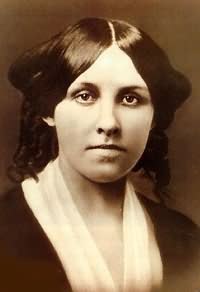
Outrage at witnessing the suffering and injustice all about was, of course, one of the motivating factors of Victorian writer Charles Dickens. It is well known that his miserable personal experience of being confined to a debtor’s prison on his father’s bankruptcy, and being forced to work in a blacking warehouse at the age of twelve, forever shaped his attitude towards the dispossessed, inspiring such works as ‘Oliver Twist’ ‘Hard Times’ and ‘The Old Curiosity Shop’.
It is lesser known – though still fairly well known – that in middle age he outraged the family values he notoriously voiced in his magazine ‘Household Words’ by separating the wife by whom he had fathered ten children due to his obsession with the eighteen year old actress Ellen Ternan.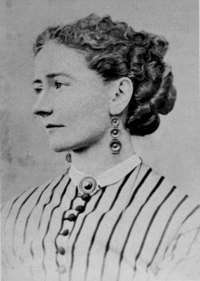
The character of Lucie Manette in ‘A Tale of Two Cities’ and of Estella in ‘Great Expectations’ are reputedly based on Dickens’ perception of Ellen Ternan. This is intriguing, as while Lucie Manette has in common with her husband Charles Darney a good deal of insipidity – Estella certainly has not. She is cold and heartless, brainwashed by the embittered and jilted Miss Havisham into being a man hater.
Though then, and for some time afterwards, Dickens insisted that Ms Ternan was as ‘innocent as one of my own daughters’ – his unfeeling treatment of his wife appalled many fellow literary figures, including WM Thackeray, who remarked tersely, ‘Poor matron’ and the devout Elizabeth Gaskell, who regarded him very coldly thereafter.
Elizabeth Gaskell was always admired as – unlike her contempary George Elliot – a wholly respectable, devout and exemplary female author.
I have always thought this was to underestimate her subtlety and her irony – ‘Mrs Gaskell’ was a sharp commentator on and social and moral issues. Her novels ‘Mary Barton’ on the industrial poor of Manchester and ‘Ruth’ on a seduced seamstress aroused some outrage among contemparies.
Calm as Elizabeth Gaskell’s domestic life was, her biographer Winifred Gerin notes a connection between her personal life and her writing, and it is an intriguing one for a Gaskell Geek like myself.
In 1857 the daughter with whom she was closest, Meta, had become engaged to a charming and dashing Captain Hill of the Madras Engineers. Some months later, she came by information that made her question his character, and as he made no attempt to defend himself against the charges, while his sisters were forced to concede that the stories were true, Meta broke off the engagement.
The Gaskells never revealed to anyone else what these charges were. Perhaps they were womanising, for the romantic interest in Elizabeth Gaskell’s next novel ‘Sylvia’s Lovers’ is certainly a Lothario. Winifred Gerin suggests that in ‘The first long novel that she wrote after the event, “Sylvia’s Lovers”, the plot is deeply and sustainedly concerned with the subject of the suffering and perils of ill-judged love’ while she writes of ‘The extrovert Kinraid, whose rattling talk and easy manners with women is both entertaining and convincing, while most subtly conveying the hollow core within. Could Kinraid have been based on Captain Hill?’
Meta, while maintaining a cheerful and busy appearance, long mourned the loss of an admired love object in Captain Hill, so that her health eventually suffered a prolonged lapse. Elizabeth Gaskell’s novella ‘Cousin Phyllis’ also concerns the love of an deeply feeling young girl for a charming and emotionally shallow young man.
On a lighter note – both literary and emotional – a couple of years ago, I was amused to read in Jennifer Kloester’s biography of the novelist Georgette Heyer that she was largely ignorant of what was then termed ‘homosexuality’, even overt, let alone repressed.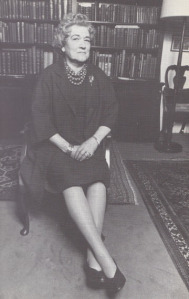
This seems astonishing to modern understanding, but Heyer seems, for a twentieth century author, rather out of touch from modern thought about sexuality and the unconscious. Of course, according to the description of her son, using the jargon of the time, she was ‘Not so much square as cubed’.
By the account of her younger brother, she was so appalled when she realised in the 1950’s that one of her novels, ‘The Great Roxhythe’, was being interpreted as portraying the romantic love of the male narrator for the hero Roxhythe that she withdrew the book. It may also account for why, in her novels, there is a strong gay seeming relationship between some of the male characters. I have commented in another post,for instance, on the emotionally intense relationship between the hero Sir Tristram Shield and the secondary hero, his rebellious much younger cousin Ludovic Lavenham in ‘The Talisman Ring’.
I was also amused to read in this biography that the ‘straight’ in all senses of the word Heyer routinely dosed herself with a combination of dexedrine and gin, so that she could write through the night. This, apparently, was part of the secret of her remarkable productivity.
Intriguingly, one of the well known side effects of the amphetamine dexedrine (besides increased alertness and performance) are mild hallucinations – and isn’t that just, if we are honest, what authors may well need?
That was in the days when drugs now perceived as potentially hazardous, and only available on prescription or on the street were easily obtainable from a chemists.
I quite envy her constitution in being able to do that routinely without a terrible headache…