
Lynne M. Spreen's Blog, page 28
October 11, 2013
I Love / I Hate “Progress”
Today I read that the entire amount of knowledge we accumulated in history doubled in the last two years. I can believe it, because recently, I bought a new DVD player.
I was unhappy with the old one because the colors were distorted. It looked like somebody threw a red shirt into a load of whites. Pink clouds, pink walls, pink socks. Bleah. So I bought a simple model from Target. Plugged it in, but it looked like we were watching the movie through a window screen. Took that back, too. Decided I was going to have to spend more than thirty bucks.
For eighty, at Best Buy, I got a sleek model with Internet capability. I asked the clerk why I needed Internet on my DVD. She said it would download automatic updates, and we could also watch YouTube and Netflix instant streaming.
I like Netflix, so I bought it and tried to connect it, only to discover I’d selected the wired model when in fact I needed wireless. Took it back and exchanged it for a more expensive model. At that point, I was in it for several hours, a hundred dollars and lots of driving.
I now have a TV with a DVD player that’s actually a kind of secondary modem that interfaces with the Verizon modem in my office. It connects with Netflix, YouTube and Pandora Radio, but nothing else. So now I’m thinking, why not the whole Internet? And can my wireless keyboard interface with it? How about phone calls? Texting? Voice recognition? Come on, Sanyo, don’t leave me hanging.
All this to watch frickin’ TV. Life is so complicated now. Don’t even ask me about my car. It’s like a rolling iPod or iPad or something. The other day I was trying to show my son a video on my smart phone. We were standing in the driveway next to my car, which was running. Because my phone and my car are connected by Bluetooth, the car overrode the phone and we couldn’t hear any sound. The car had turned my phone’s audio off. I had to turn off the car to restore the audio!
This is life in 2013. I shudder to think what it’ll be like in another two years. I’ll probably need a master’s degree to flush the toilet.



October 4, 2013
Goodies for You
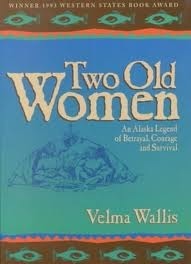 I just discovered a wonderfully gratifying work of fiction, Two Old Women by Velma Wallis. It’s a life-affirming story about how older and younger people do much better when they pool their talents. I cried with joy when I got to the end. My friend Jan Moorehouse found it while traveling in Alaska, and liked it so much she recommended it for my Midlife Fiction page on Facebook.

At radio station KNSJ 89.1 FM San Diego
Last Monday, I had the fun of doing my very first radio interview, at KNSJ 89.1 FM San Diego. I’m happy to say I didn’t embarrass myself, thanks to host Reina Menasche and Eddie, the sound engineer. I’ll post a link when it’s available.
Last weekend, I gave away my novel, Dakota Blues, in the ebook format, and so many people wanted it that it hit #3 on the Amazon Bestseller list. Which could have made me $65,000. But it was free. Hey, I’m just glad it’s out there, serving humanity.
Time Magazine confirmed some great stuff about getting older. I’d link to the article but it’s subscriber-only. No problem, because I blogged about the same stuff a year ago. Here it is:
Myelination doesn’t peak until your sixties. Myelin is a substance that coats the brain circuits and, in my simple way of understanding it, enhances the reception or bandwidth in your brain. I wrote about that here. Time also said when you use your brain a lot, later in life, you’re forcing it to repair itself. Good deal.
Positivity increases later in life, and you have greater control over your emotions – even though older people feel emotions more strongly! That’s in the same blog post, linked above.
Bilateralization occurs later in life. It means you use both halves of your brain instead of just the right brain for art, left brain for analysis. This adds up to deeper, more creative, more out-of-the-box thinking. Who knew? More here.
Another reason you’re more creative in older age: you’ve resolved earlier conundrums. You don’t have to spend the same amount of energy worrying, or figuring things out, or even working to feed yourself. Or raise kids. That frees up a heck of a lot of energy for creative pursuit. Combine that with bilateralization and you’re plain awesome.
Finally, to celebrate life itself because I’m so grateful for my blessings, here are a couple stories for you. They’ll be part of my new book, Boomer Love: Short Stories about Midlife and Beyond, to be published next Spring, but here’s an early glimpse.
Have a beautiful weekend.


October 2, 2013
Joyful Book about the Power of Age
 Two Old Women: An Alaska Legend of Betrayal, Courage and Survival by Velma Wallis
My rating: 5 of 5 stars
I loved this book. I can't wait to give it to my 88-year-old mother to read. It's such an affirmation of the dignity and wisdom of older age. My review may spoil the story for you so proceed cautiously from here.
Two Old Women is based on an Athabascan Indian legend. A starving tribe of Alaskan natives leaves two old women alone in the freezing cold to die, because every mouthful of food is precious, and these two are unhelpful. They don't contribute to the tribe; they take from it. People have to help them. They complain constantly.
Once the tribe leaves them, though, they must decide whether to accept the death sentence or not. The younger woman, 75, says we might die anyway, but if that is so, let's at least die trying to live. So they adopt that motto. At least let's die trying. They manage to avert death by recalling long-unused knowledge of survival skills. In spite of their old, achy bodies, they thrive and bond with each other, but they are lonely and sad.
Eventually, there's a happy ending, which I'll let you discover for yourself. If you're like me, you'll reread it, crying with joy each time.
But the message of this book is multi-faceted. Elders can and should continue to contribute until the end. Youth should respect the elders for their valuable knowledge. All people benefit from this synergy.
Two Old Women is a short book. I read it in one evening. I heartily recommend it, particularly to those who are older and feeling ignored, useless, or confused. This book will get you up and moving, and it will make you happy.
View all my reviews
September 28, 2013
Treat Yourself!
Free! Dakota Blues Download
Great Saturday morning to you! If you haven’t seen the news, I’m offering a free download of my award-winning novel, Dakota Blues, today through Monday (9/28-9/30/13). If you don’t have a Kindle you can read it on your computer – or most other readers have a Kindle app. Rock out, my friends! I’m doing this in honor of my sweet grandbaby’s birthday. Since midnight 225 895 almost 14,000 people have taken advantage of this gift. I hope you do, too. Enjoy!
Click on the image BELOW to go to the free download page.


September 27, 2013
The New Work of Age: Deep Thinking

Dorothy Sander
Good Friday morning, everyone. My friend Dorothy Sander wrote today’s post. Dorothy blogs for the Huffington Post, and her blog, Aging Abundantly, is another joyful resource for those of us in the second half.
This is her response to “I Don’t Want to Live Forever”. I felt empowered by Dorothy’s words. Hope you do, too.
How very sad that advancing years seems to spawn despair and a sense of hopelessness and fear. About ten years ago, in my early 50′s I watched my parents journey through their last days, one dying at 89, the other at 97 and the thing that struck me then was exactly that. They couldn’t figure out how to live without “doing” something. I vowed then, that I would try to figure out a better way to die so that I don’t have to die in despair.
I have been wrestling with my own version of this issue and at sixty two I now see things very differently. I have never felt more at peace with life than I do now, and while the numbers say otherwise I feel like my life is just beginning. I’ve begun to think of the first half of life as “boot camp” for the good stuff. What we are missing in our western culture and perspective is the big picture. Is life really about “doing”? Is it about thinking, planning, executing?
For me, I now see it as a process of being and becoming, of transformation and personal and spiritual growth which is more of an inward journey than an outward one. Sure, we will live in the world, enjoying all that it has to offer until we can no longer do so, but perhaps what we are meant to do in our last years, no matter how long they last, is to do exactly what people like Erikson, Kubler-Ross, Dr. Estes and others have been saying for years, go inward. Aging is a transformative process that, when we choose to embrace, rather than fear, deny or avoid it, we are gifted with the ability to offer wisdom and perspective to a world that has grown mad with doing.
No one looks forward to living in pain and losing one’s faculties, but it’s just another change that we can choose to embrace or fear. I want to live in this place of transformative aging until I die and I want to resist falling into the trap of fear or despair to the best of my ability. If it is 70 years or 170, I don’t think I will have learned or experienced everything there is to learn or experience and I will be sorry to see this journey end, but I plan to leap, to the best of my ability, into the next world, whatever it is.
Lynne again. I’ve written before about how we might need courage in the second half to allow ourselves to ratchet down a bit, sit quietly and think hard of a day, and that may be one measure of productivity. In this TedX video, geriatrician Dr. Bill Thomas talks about how we judge older people according to how closely they imitate the physicality of youth. And in this post, I talk about how a group of retired/retiring psychologists and therapists, all female, all feminists, all with the ability to think deeply, appear stuck on the productivity standard.
As my Dad used to tell me, “Use your thinker.”
FREE DOWNLOAD OF MY AWARD-WINNING NOVEL, DAKOTA BLUES, TOMORROW (Saturday Sept. 28) through MONDAY (Sept. 30). Click here to buy the Kindle book for FREE!


September 23, 2013
Review of Home by Marilynne Robinson
 Home by Marilynne Robinson
My rating: 4 of 5 stars
I loved Gilead by Marilynne Robinson so much. The review is here: http://www.goodreads.com/review/show/....
But with Home, I had a different experience. I wasn't compelled through most of the book. At about the three-quarter mark, things started to happen and I felt my interest quicken. But here's a summary of my impressions, and my apologies to those who loved it so much they recommended it to me:
1. I was disappointed to see this other, peevish, nasty side of Rev. Ames.
2. I didn't like the Rev. Boughton very much at all.
3. Jack is tedious and pathetic.
4. Glory almost breaks free but then doesn't.
Robinson really makes me wait for it, building my conflict between compassion and resentment for Jack. And just when I lose faith in him, there's a scene where the old misogynist/bigot Rev. Boughton asks to see Jack and his brother together in his room, and Jack insists Glory be included. As if he sees her as an equal to the men, rather than just the servant her father expects.
In this, I felt Jack himself was a Rorschach test for the reader, in that while he seems almost feral, a man born without skin with which to hide himself from the world, easily wounded and always untrusting, you want to abandon him, but can you? If so, who are you? What are your values - what are your limits?
So now Glory has decided to stop being codependent with her "fiancé", and switch her ministrations and self-sacrifice to her dying father and her feral brother. This is an arc? This is growth? What is Robinson's meaning, at the end of the story, when Glory decides to stay in a town she has said she hates, in a house she agrees to preserve as a monument/mausoleum to the family? It can only be read as failure to respect oneself in favor of service to others! This troubles me deeply.
I apologize for the length of this next excerpt, but I have to reproduce it, because it's so telling:
"(Glory) had tried to take care of (Jack), to help him, and from time to time he had let her believe she did. That old habit of hers, of making a kind of happiness for herself out of the thought that she could be his rescuer, when there was seldom much reason to believe that rescue would have any particular attraction for him. That old illusion that she could help her father with the grief Jack caused, the grief Jack was, when it was as far beyond her power to soothe or mitigate as the betrayal of Judas Iscariot. She had been alone with her parents when Jack left, and she had been alone with her father when he returned. There was a symmetry in that that might have seemed like design to her and beguiled her with the implication that their fates were indeed intertwined. Or returning herself to that silent house might simply have returned her to a s state of mind more appropriate to her adolescence. A lonely schoolgirl at thirty-eight. Now, there was a painful thought.
"She recalled certain moments in which she could see that Jack had withdrawn from her and was looking through or beyond her, making some new appraisal of her trustworthiness, perhaps, or her usefulness, or simply and abruptly losing interest in her together with whatever else happened just then...She found no consistency in these moments, nothing she could interpret. He was himself. That is what their father had always said, and by it he had meant that Jack was jostled along in the stream of (the family's) vigor and purpose and their good intentions, their habits and certitudes, and was never really a part of any of it. He had eaten their food and slept beneath their roof, wearing the clothes and speaking the dialect of their slightly self-enamored and distinctly clerical family..."
God! Who hasn't known people like this - men like this, children like this - who take and take and take from an ever-hopeful spouse or family and yet never seem quite able to be satisfied, or fulfilled, or happy! When all the sacrificial loving family member ever wants is for that feral person to be happy. Or at least safe.
Like I said, Rorschach.
And in this, I have to admit, Robinson delivers again, most profoundly, in pulling back the curtains and showing us, right down to the faint beat of a pulse along a pale wrist, the impact on a family of such a lone wolf. Not that the wolf doesn't suffer. Not that we don't all feel empathy as we struggle to surface from this mire, gulping and gasping air, sorry for Glory who remains below, yet intent on saving ourselves.
View all my reviews
September 20, 2013
You Are More Powerful than You Think
Sometimes we perpetuate our own victimization. Cultures promulgate Big Lies. We tell each other a certain thing, repeat it endlessly and it becomes true. We don’t even hear our words anymore.
Let me provide an illustration. It’s extreme, but it makes the point about culture – in this case, thankfully, not ours.
These are pictures of Afghanistan in the 1960s:

American International School of Kabul, Senior English Class

Afghan girls coming home from school

Hotel Inter-Continental, Kabul
.

Students at the Higher Teachers College of Kabul

Paghman Gardens, which was destroyed before 2001
Now here is present-day Afghanistan:


The people who live in Afghanistan today believe that the bottom three pictures represent reality, the natural way of things, but do they know any different? Some women are probably alive who remember the days when they could put on a skirt and heels and head out for university to continue studying to be a doctor. I fear that the majority believe the converse: that women are ignorant beasts suitable only for breeding and domestic labor.
Like I said, it’s an extreme example. Here in America, we have in the past chosen to put youth on a pedestal. We chose to imitate them, and we chose to say things like “senior moment,” “60 is the new 30,” and use the word “old ” as a description of something bad, negative, unworthy. We did this voluntarily. Nobody held a gun to our heads. We were so far into the Kool-Aid we were in danger of drowning.
But that’s changing. Judging from your comments, you’re as sick of it as I am, and you’re mad as hell and not going to take it anymore. You’re standing up for yourselves, refusing to spend the next thirty years of your life bowing, scraping, and apologizing for being old. You’re not as willing to emulate the young. You’re incensed by the ageism that’s so acceptable today, refusing to ignore the profound cruelty in what ignoramuses consider humor.
We have begun to celebrate the glory of the second half, and we’re excited about our potential. For an uplifting view of turning eighty, check out this essay by famed neurologist Oliver Sacks. And notice the title: “The Joy of Old Age (No Kidding)” – as if you have to be KIDDING to think there’s anything good about old age. Good article, stupid subtitle.
I beg you: don’t accept a low ceiling. With our numbers, we can make headway on this. I hope you will continue to spread the word about empowerment after age 50. We are free thinkers, we’re experienced, and we are deeper than we’ve ever been. We have to talk about it, with joy or anger. Too many of us are on the verge of myopic despair when we could be on the verge of enlightenment.
So keep talking. Keep asking why we use the word “old” as a pejorative. Because old is one of the most lovely things I’ve been.
Late add: It’s 7 a.m. and I’m happily reading your comments when this appears in my inbox from Huffington Post: 7 Easy Ways to Avoid Looking Old. *sigh*


September 13, 2013
Amour, the Movie
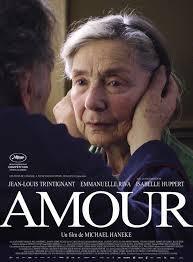 Amour is a difficult film to watch, but worth it. If you’re feeling discouraged about mortality, Amour will put things in perspective.
It’s a stunning film, one that stays with you. Depressing? Actually, it didn’t hit me that way, maybe because I was a bit confused about the ending, so went online to gain clarity. There I found an essay asserting this isn’t the way most of us will end our days, and the film is ageist in painting elderhood with such despair. I hope so.
The rest of this post contains some spoilage, so you might choose to stop reading here.
Anne and Georges love each other deeply and in spite of their advanced age enjoy a rich life. Then she has a stroke, at which time both of them reveal their strength and in his case, heroism.
After the first stroke, Anne reveals to Georges that she would prefer to die. She tries and fails to refuse food and liquids. Then she has a second stroke and loses the ability to enforce her decision. This is one of the main aspects of the film that resonates with me, what most of us fear – that we’ll wait too long to make the choice, or that we’ll have no choice and will have to live out our final days (years?) regardless of the impact on our loved ones.
The upside of Amour was that it put things in perspective. My aches and pains seemed laughable and my existential fears no more than childish superstitions compared to the reality portrayed in this movie. I was also left with the determination, should I ever be struck by a horrible terminal affliction, to move immediately to a state that permits me to end my life when I chose.
Did you see Amour? What did you think, and/or how did it make you feel? If you haven’t seen the trailer, here it is.
POLL RESULTS: If you’re interested in the poll results from earlier this week, click here. Thanks again for your input.


September 10, 2013
Quick Question for You
Sometimes I have a hard time reading all the blog posts arriving in my inbox every day. Some bloggers post several times a week or even several times a day. It’s a challenge to keep up, and I worry that I’m missing something.
Some bloggers are even doing newsletters now! Thus instead of one post in my inbox, they’re sending me a collection of six or seven articles at a time. Holy cow.
On the other hand, a few of the longer-winded bloggers are cutting back, worried they’re overloading their readers. That’s why I’m thinking of switching to every other Friday to make your life a little less cluttered. I’d like to do what works for you. So spill it, good buddy, and we’ll go with the majority. Let me know what you’d prefer, and thanks.



