
Lynne M. Spreen's Blog, page 25
April 7, 2014
Birthday Reinvention!
For my sixtieth birthday I’m celebrating by giving my blog a facelift! It may be off-air for a week or two, but after that it’ll be better than ever, with a sharper look and more features. In addition to blogging about the amazing second half of life, with all the wonder and weirdness of middle-age and beyond, I’ll be posting book reviews, and talking about the writing and marketing process. My goal is to make the website easier to see and more enjoyable to navigate. So don’t be concerned if AnyShinyThing.com goes dark for a few days or weeks. This is the season of resurrection, after all.
I wish you the most joyous Easter and Springtime. Here’s an uplifting video from Laura Carstensen, a social scientist who spoke at TedX Women, for your viewing pleasure. See you soon! XOXOXO



March 28, 2014
Review of Eventide by Kent Haruf
 Eventide by Kent Haruf
My rating: 5 of 5 stars
I sat down with Eventide yesterday, read 3/4 of it before my eyes started burning from overuse. Went to bed, thought about it all day. Finally had time to get back to it and savored the last 1/4, rereading the ending 3 times.
Eventide, the sequel to Plainsong, is compelling, like everything Haruf writes. In this novel, he captures with simple, clean writing the full range of human behavior, from beautiful to ugly, but the novel is not dark and he does not leave the reader unhappy. Far from it. At one point I laughed out loud, as Victoria's skinny new boyfriend, Del Gutierrez, is described after dressing for the cold morning work of feeding range cattle. The first speaker is the old man, Raymond, who just lost his brother Harold. The second speaker is Del.
--You have any warm clothes?
--I brought a jacket.
--You’ll want something warmer than that. Raymond handed him his brother’s lined canvas chore jacket from the peg by the door. There’s gloves in the side pocket. You got a hat?
--I don’t usually wear one.
--Here, wear this. He handed the boy Harold’s old red wool cap. I don’t want to think what Victoria would say if I got your ears froze off the first day you got here.
--The boy pulled on the old cap. In his wire glasses and with the earflaps hanging loose beside his head, he looked to be some manner of nearsighted immigrant farmhand from an era much earlier.
I kept reading sections to my husband, and it was hard not to get choked up as I read, not from the drama and emotion, but from the plainness and profound simplicity with which Haruf delivers the lines. By saying so much with so few words, the effect is more impactful, and grabs you by the heart.
I doubt Kent Haruf could write anything I didn't enjoy.
View all my reviews
March 12, 2014
Review of Once Upon a Mulberry Field by C.L. Hoang
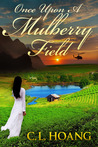 Once upon a Mulberry Field by C.L. Hoang
My rating: 5 of 5 stars
This book moved me on two levels. One, I felt myself falling backwards through time as I read the familiar terms: Cam-Ranh Bay. Long Binh. Sh*t hooks (Chinooks), slicks, Puff, and Warthogs. Charlie. Khmer Rouge. And the worst of all: Tet.
In 1967, when this story really begins, I was a carefree seventh-grader in southern California. In a few years I would enter high school, and begin to learn of brothers and sweethearts engaged in a war on the other side of the world. I would send care packages to a friend's sweetheart; see the grief in the eyes of a teacher whose husband was deployed; and marry first one Viet Nam vet, and then another. I would learn of their nightmares, hear of soldiers sleeping in mud paddies and removing leeches from their skin in the morning. I heard of a denied request for a hardship leave when a solder's sister, living stateside, barely survived a suicide attempt. I will never forget the stories of Kent State, the People's Park in San Francisco, or of desperate people climbing a Saigon rooftop, atop which fluttered a helicopter to freedom.
So, on one level, this story of Roger Connors takes me back to those days. I was riveted by the account of this young American landing in country and finding his way amid bombings and bloodshed, but also, friendship. Learning to love the local people; one, especially. Finding out what life was really like, there on the ground in South Viet Nam. I was disturbed to be reminded of how, upon their return to the USA, our young men were punished for their involuntary participation in an unpopular war. ("Support Our Troops" is now a given, but it was a policy born of remorse for that misplaced hatred.) I was equally disturbed by Roger's personification of a Vet with PTSD after his return. How confusing to come back to one's former beloved country, still caught up in the turmoil of combat, grieving for friends still in harm's way.
But on another level, this is the story of a love affair, and I cried my eyes out toward the end. What a skillful portrayal of the human condition. We're all just fighting to create a good life for ourselves and our loved ones. How wonderful if it all works out, and how bittersweet, if not. The author, C.L. Hoang, a native of Viet Nam who moved to America in his youth, manages to craft a tale that portrays the unacknowledged commonalities between warring cultures.
This is a beautifully-wrought story, made richer by the fact that the author began it only as a way of recording his father's history. As he wrote and researched, he began to interact with veterans, who told him their stories. Roger Connors is an amalgam of those veterans, and the book bears heartbreaking witness to the struggles of those on both sides. C.L. Hoang has written a first class debut novel. I hope there will be many more.
View all my reviews
March 7, 2014
How Have Women Managed Without This?
For almost half a century now, I’ve had the hardest time trying to write with a pen, and now I know why. Brace yourself. All pens are actually made for men! Yeah, I know! Wow, right?
But fortunately, that situation is changing. Thank God for progress. I’ll let’s let Ellen tell it:
But maybe you’re not really sure what to do. In that case, reviews are unbeatable in helping you make a decision. There are a slew of them on Amazon. Here’s an example:
Someone has answered my gentle prayers and FINALLY designed a pen that I can use all month long! I use it when I’m swimming, riding a horse, walking on the beach and doing yoga. It’s comfortable, leak-proof, non-slip and it makes me feel so feminine and pretty! Since I’ve begun using these pens, men have found me more attractive and approchable. It has given me soft skin and manageable hair and it has really given me the self-esteem I needed to start a book club and flirt with the bag-boy at my local market. My drawings of kittens and ponies have improved, and now that I’m writing my last name hyphenated with the Robert Pattinson’s last name, I really believe he may some day marry me! I’m positively giddy. Those smart men in marketing have come up with a pen that my lady parts can really identify with.
You can read more reviews here.


February 21, 2014
I Dare You Not to Cry
Every night of the All State Choir conference at about 11pm, everyone comes out to the balconies of the 18 story Hyatt hotel to sing the National Anthem
© 2013 Ben Vivona


February 17, 2014
Review of Americanah by Chimamanda Ngozi Adichie
 Americanah by Chimamanda Ngozi Adichie
My rating: 4 of 5 stars
Americanah gripped me from the start, and although it could have been shortened without losing anything, I found it enjoyable throughout. Even though the main character, Ifemelu, a young middle-class Nigerian woman, is somewhat unlikable, she's bracing. For most of the story, she's strong, although often misguided. When she emigrates to America, she is at first broken by poverty and depression, but then rallies. Like a chameleon, she changes and adapts, and as the main character, she is a model of adaptation all through the story. For example, she creates a lucrative blog whose passionate topic is racism, even though as another character notes, Ifemelu grew up without it. The distinction between American Blacks and Non-American Blacks (she calls them ABs and NABs) is the topic of most of her snarky, pissed-off blog posts, which are interesting the first few times they appear, but begin to interrupt the flow of the story. By blogging about race, Ifemelu is adapting no less capably than her childhood friends back home in Nigeria, who are for the most part finding commercial success through corruption (men) or marrying well (women).
Also interesting was the depiction of life in Nigeria, and the immigrant experience in England and America. I felt Adichie did a good job of portraying the main characters as multi-dimensional, but even the lesser characters were visual to me. I felt like a fly on the wall at Shan's salons, for example; it was fun to see who attended, and how they reacted to her. Shan was a chameleon, too, pretending to be strong yet brittle as thin ice, but in the meantime commanding all around her. And Shan was a minor character. Her brother, Blaine, a major love interest in the story, was a suave master of pretense. He pretended so well that he even fooled himself. Curt, the rich and privileged-from-birth white guy, was one-dimensional, but I think Adichie did that on purpose to portray a certain kind of American.
This frank novel, whether or not the author intended it, is a character study depicting the ways in which people come to terms with, or find peace with, the circumstances of their lives. Every character - that is, the more notable ones; there are so many - demonstrates different coping behavior. They compromise themselves to survive, with varying degrees of self-awareness. Some are more successful than others, and the path they choose isn't always admirable. Nevertheless, from the standpoint of a study in human behavior, it was interesting as I read it and becoming more compelling in retrospect. I recommend it.
View all my reviews
February 11, 2014
Tommy Hilfiger Sounds Ageist
In this week’s Time Magazine, designer Tommy Hilfiger says he doesn’t like to see people wearing floral prints.
I think they really don’t have great taste. Why would you want to wear a print you see on a bedspread or wallpaper in an older person’s home?

Tommy, Tommy, Tommy. Why would you disrespect a whole group of people based on nothing but age? That’s textbook ageism, my friend, and at sixty-one you should know better. Think I’m overreacting? Try this: why don’t you repeat that sentence but instead of older, use the adjective black. How does that look?
If it’s not okay the one way, it’s not okay the other, Tommy. I will assume you’re a nice guy and didn’t mean it, and if so, that makes my point: we’re so comfortable insulting people based on age that we don’t hear ourselves. It’s not intentional or conscious, just an easy stereotype to slip into. So next time, try to be a little more careful, won’t you? Maybe, in so doing, you can set an example for the rest of the world.


February 8, 2014
Enjoy Your New Perspective
Have you ever had the experience of feeling your perspective change, in almost a visceral way? After watching this video, I’m a changed person. You might end up that way, too.
As you watch The Overview Effect, you’ll see glorious, fragile Earth from the International Space Station, with a narration by some of the astronauts who filmed it. At about the four-minute mark, you’ll see thunderstorms, and then the aurora borealis. At about 6:30 you’ll hear that the astronauts, while not working, tend to lose themselves in “earthgazing.” At 11:10, astronaut Edgar Mitchell says he was both excited and troubled by a certain effect he’d experienced in space, and upon his return, asked a local university if they could find a name for it. They did. It’s called salva corpus amanti, which, in this context means, “You see things…with your eyes but you experience them emotionally and viscerally with ecstasy and a sense of totally unity and oneness.”
This morning on my way to an appointment, the fog was breaking up, still drifting over newly-green fields in our rural area. Sun began to come through, as well as a bit of blue sky. I watched the cars in front of me rolling along, and I marveled that they stuck to the road instead of floating off into space. I considered my priorities for the day and realized how unimportant they are, and I am. We little ant-people, bustling about on our lovely blue planet, rarely stop to realize how small it all is. This is the after-effect of the video, for me. As I watched the film and heard the transcendent music, I felt tenderness and gratitude for Earth’s generosity, and fear for her vulnerability. I’m sure that my being almost sixty adds depth to my appreciation. Enjoy.


January 31, 2014
Review of The Woman Upstairs by Claire Messud
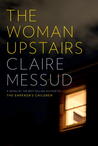 The Woman Upstairs by Claire Messud
My rating: 4 of 5 stars
At first, I adored this book. Here is an excerpt from the first page; the main character, 40-year-old Nora, says, "It was supposed to say 'Great Artist' on my tombstone, but if I died right now it would say, 'such a good teacher/daughter/friend' instead; and what I really want to shout, and in big letters on that grave, too, is F--- YOU ALL."
I was hooked! I even wrote about the same thing into my own novel, Dakota Blues, wherein my protag laments that her headstone would say, "She was a good girl." Aren't we women afraid of this, and don't you suspect it's hugely disproportionate to men feeling the same way?
At the beginning, I was entranced by Claire Messud's writing ability, and as I settled in, I was sure I would be profoundly moved by the storytelling. Some of Nora's thoughts are recognizable in the gut, in a way that is almost impossible to describe. For example, I know EXACTLY what she means when she compares life to a Fun House, but not in a good way, ending with, "I've finally come to understand that life itself is the Fun House. All you want is that door marked EXIT, the escape to a place where Real Life will be; and you can never find it."
Unfortunately, the book didn't turn out to be as compelling as I'd hoped, because it is, unfortunately, somewhat tedious. But it was a worthwhile read nonetheless, and here's why: the entire story is about perception; how people interpret life experiences differently. Warning: spoilers ahead.
Profoundly affected by the perception that her embittered mother had been deprived of the chance to realize her dreams, Nora deludes herself that she is living an independent life, free and unfettered by family, love, or passion. However, we see she's deluded, when her father informs her that her mother (now dead) had been a virtual tyrant, doing exactly what she pleased and directing every aspect of his life. Nora refuses to believe this. When her father laments Nora's solitary lifestyle, Nora thinks he is "unable to see, as my mother would have, that I had almost fulfilled her dream of independence..."
In truth, Nora lives an impoverished life where in the pursuit of such "independence," she avoids attachments of any kind. When in middle-age she learns that her father saw her mother as a benevolent dictator/bully, Nora rejects that depiction as her dad's delusion. But is it? Who is right? And that is a recurring theme throughout this book. What is reality? Who is to say?
Because the unwitting Nora is so hungry, she is drawn into the lives of the aptly named Sirena and her family. Through them she can trick herself into thinking she has love, motherhood, and family. Sirena is an artist, and Nora gives herself over to helping Sirena create her magnum opus. However, she is being used under the guise of friendship. At the end of the story, Nora finally sees with shattering clarity that she is nothing but a useful servant, and the book ends with Nora boiling with rage, determined to finally live.
In this sense it's a satisfying character arc. However, the stream-of-consciousness writing and belaboring of specific points makes it a somewhat tedious read. For example, I believe the main purpose for the character of Skandar, Sirena's husband, (Nora's frustrated sexuality aside), is to make the point that reality can be distorted and perceptions unreliable. Fine. However, Skandar goes on at extreme length, lecturing Nora. Here's an example:
"So if you're me, how you deal with that is, I'll look at how we talk about (history). I'll study the history of history, the ways that we tell the stories, and don't tell other stories, and I'll try to understand what it says about us, to tell one story rather than another, to tell it one way rather than another. I'll ask the questions about what is ethical, about who decides what is ethical, I'll ask whether it is possible, really, to have an ethics in the matter of history."
This is only about one-fifth of the discussion. It's difficult to maintain one's attention throughout, especially when I wanted to yell at Nora, "freakin' DO something, Nora, you doormat!" But the story is about a woman living an oblivious life, her perceptions distorted by her mother's influence. Nora sleepwalks through her life, finally realizing in her early forties that she has been played, and her rage is so great I'd hold out little hope that the second half of her life could be healthy, satisfying or normal to any degree.
One side-issue: some disgruntled reviewers have commented on Nora's unlikeability. Could anything be less important? This is a character study. Nora is interesting in that she represents the shriveled husk of an unlived life. Liking her is beside the point.
In summary, I'm fascinated by the idea of women sleepwalking through their lives, and then realizing sometime in the second half the error they've made, and correcting it. This book appealed to me in that sense, but I think it was too long, too self-indulgent, thus Messud risked losing the attention and dedication of the reader.
View all my reviews
The Biological Advantage of Awe
An article in the Utne Reader this week said, “According to a study by Harvard psychology students, experiencing a sense of awe can offset stress, sleep disorders, diminished satisfaction with life, and other adverse effects that often accompany the feeling of having too much to do and not enough time.”
Well, sign me up for some awe, then, baby.
In this video, filmmaker Jason Silva elicits the awe that is so vital to the human experience. Yes, he’s a little too breathless, but forgive him; he’s young. And the pictures are mindblowing.


