
Lynne M. Spreen's Blog, page 21
October 31, 2014
A Dream Fulfilled – Seeing Gloria Steinem
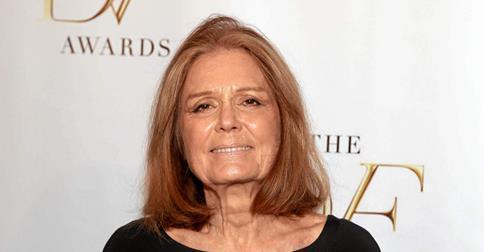 You probably have your own dream celebrity, someone you’d like to have lunch with and chat. One of mine is Gloria Steinem. What a treat to hear her speak at the University of Redlands last week. The talk was held in a building called The Chapel, which seated 1500, and it was packed. Bill came with me. I’d bought two tickets, expecting a gal pal to join me, but he wanted to see Gloria. I love that guy.
Before the festivities began, I handed the event’s organizer, Denise Davis (thank you, Denise!), a gift-wrapped package for Gloria: a copy of each of my books, as well as a letter of gratitude, which contained an offer to buy her lunch if she’s ever in town again. Even if that never happens, wouldn’t it be a thrill if she visited our website and said hello? My letter included a printout of the front page of AnyShinyThing.com, which as you know, features her quote about aging.
To be defiant about age may be better than despair – it’s energizing – but it is not progress. Actually, after fifty, aging can become an exciting new period; it is another country.”
Gloria is charming to listen to. She’s funny, self-deprecating, wry, and joyful. In fact, she said we’re making significant progress, but, regrettably, we’re only halfway through the struggle for equality, and it would take another fifty years. She said the same people who, 40 years ago, were saying feminism wasn’t necessary are saying it now. She said “Gender is made up. Race is made up. We’re beginning to see beyond it. It’s very exciting.” No offense, but she called religion (as opposed to spirituality), “politics in the sky.” She also told us a grave statistic about domestic violence:
Since the attacks of Sept. 11, 2001, more American women have been killed by their husbands or boyfriends than all of the Americans who died in the terrorist attacks and in the wars in Afghanistan and Iraq.”
If I ever got to speak to her in person, here are some of the questions I’d like to ask:
From your vantage point, at your age and having traveled extensively both geographically and across the human landscape, what bit of wisdom do you now know that might change our thinking about humanity? (I know; I don’t ask for much, do I? But she has to have been sitting alone in her hotel room some evening, staring out the window and thinking, “Jesus, I just never knew. And probably nobody else does, either.”)
Who in your everyday life inspires you to get out of bed and keep going?
Do you ever just want to hang it up and sit on the patio, reading trashy paperbacks? Maybe invite Hillary to come over for popcorn, wine, and the BHG channel?
Bill and I left the talk when the Q&A started. As we walked outside and passed an open door with a view of the stage, I stopped. “Look, Bill. Can you believe it? There she is.” Gloria Steinem, 80 years old, leaning into the podium, lit to gold by her beautiful surroundings and the joyful reception of the crowd, still entranced by her presence. I wanted to take a picture, but that would never have captured the emotions I was feeling. They almost overwhelmed me: affection for her; nostalgia for my youth and the sixties; remembering those sometimes heady, sometimes awkward, but always earnest early days of the Movement; and heartache for the time when I, a sad teenager, felt a little more hopeful about my future, thanks to Gloria Steinem and feminism. All of that was projected onto this slight figure at the podium. I hope I never forget that moment, standing there in the dark of a warm summer night, watching a legendary heroine hold forth.
To read more about Gloria’s talk, click here.


October 24, 2014
You Can Take the Day Off
You’ve been reading some very heavy posts lately, and I don’t want to wear out my welcome. So I’m giving you the day off. Thanks for visiting with me every Friday. I love our discussions, but now it’s time to take a break.
Before you go, though, here are some suggestions from Dr. Daniel Amen (Change Your Brain, Change Your Life). These are excerpted from “A Summary of Ways to Optimize Brain Function and Break Bad Brain Habits.”
Spend time with positive uplifting people. Spend time with people you want to be like. (We tend to become like the people with whom we hang out.)
Surround yourself with delightful fragrances and aromas. (The sense of smell bypasses analysis by the cerebral cortex and goes directly to the deep limbic area of the brain, producing feelings and emotions.)
Exercise, learn diaphragmatic breathing, and meditate on a daily basis (to calm the anxiety centers of the brain).
Develop clear goals for your life and reaffirm them every day.
Sing, hum, listen to uplifting music, and move in rhythm as often as possible.
Now, go play. See you next Friday.

By Chris McClave, via Wikimedia Commons
October 17, 2014
Learning to Live Retired
This is a bonus post, in addition to the one about surviving domestic abuse as a child. I wake up every morning feeling lucky, now that I’m retired. Well, actually, I’m fully engaged in my Now-Career, which involves writing, speaking, blogging and teaching, but it’s a choice rather than a necessity, and I can make my own hours. So I still call myself retired. But anyway…
Because of certain aspects of my history, and certain health issues, such as a cyst on my eye, I am forced to meditate and relax on a regular basis. One way to do this is to swim. Another is to put a warm compress on my eye and lie on the sofa for ten minutes, twice daily. It’s actually quite restful.
I think we are now doing repair after having been middle-aged and working so hard. Our tendency is to continue this pace due to habit and maybe even guilt. My friends and I tend to fill up our time but there isn’t any need, so why not rethink that? Although I happen to believe that pursuing a dream, which for me is writing, falls under the heading of damage repair or resting.
Just remember, if you have money or time, you tend to spend it all. In my humble opinion. So be on guard against that.
And now, to prove I do have a domestic side, here is my recipe for Gazpacho Soup. A great way to use up leftover veggies. The secret is to add catsup, and if it seems a bit bland after completion, that’s by design, because you never know how the veggies will flavor it. So thrown in some more garlic salt, or Lawry’s Seasoning Salt, or whatever you think it needs.

Silver Lining: Recovering from Abuse
For the past two Fridays, I’ve been telling you about my abusive childhood and how that caused me to develop, and hang onto, certain behaviors. It’s time for them to go! I want to get rid of, for example, hypervigilance, super-responsibility, extreme anxiety, and workaholism. But how?

Maui beach
A fantastic book on the subject, Change Your Brain, Change Your Life by Dr. David Amen, not only explains how one’s brain changes due to abuse, but also how you might go about fixing at least some of it. Within these pages are many ideas based in science. A neurologist and psychiatrist, Dr. Amen’s humor and kindness shine through as he describes certain offsetting practices aimed at reclaiming your good health. Here are a few:
Make a list of happy memories and thoughts to offset the Automatic Negative Thoughts (“kill the ANTS”). I made a list, and it was hard to stop at a dozen things. It was fun to sit quietly one evening and write down memories like special moments with Bill or the kids. Or my roadtrip with Mom through the Dakotas a few years ago.
Learn to do simple relaxation and visualization activities.
Exercise. Yes, dammit, there it is again. In addition to all the other things you already knew it was good for, here is something else: it helps normalize melatonin production which enhances the sleep cycle. Exercise also helps tryptophan, an amino acid, to enter the brain, enhancing mood. Tryptophan is the precursor to the neurotransmitter serotonin, which helps offset depression.
Repeat this often: “Feelings sometimes lie to you. Feelings are not always about truth…” Don’t just believe your negative feelings. They may be based in something that no longer makes sense. As a kid I gained a sense of control by not believing good things would happen. As an adult, that negativity is irrelevant.

Ventana overlook, Big Sur
Sometimes we’re unaware of our old behaviors, and that they can drag us down. In one short phone call yesterday, a family member brought up Ebola, Syria, Ferguson, enterovirus68, the risk of a devastating earthquake in our area, and the poor health of three people we know. I wanted to throw the phone against the wall and see it shatter. But then I remembered where she was coming from and why my buttons were being pushed. After saying goodbye, I engaged in:
5. Gratitude:
For my own tenacity. A month ago, I got a feeling – a bad, familiar feeling, and since it was so clear, I decided that THIS time, I would follow up on it. In spite of not having a word for it, or knowing if I were overthinking, overworrying, or just being my old hypochondriac, neurotic, compulsive self, I pursued it. I looked on the Internet and found a word: enmeshment. I found a reason: domestic abuse.
For a wonderful therapist, who is giving me resources for self-study and serving as a counselor and coach.
For my husband, who listens and listens and listens.
For my mom and dad, who I love and appreciate. So shoot me.

Winery patio, central valley, California
What is your takeaway? Let me suggest this: believe in yourself. If you’re unhappy and sense there’s something going on, pursue it. Get help. Take the time to listen to your body. Slow down and notice what your mind is doing. Nurture yourself more. And perhaps take a look at Dr. Amen’s book, and also The Family by John Bradshaw.
It’s your life. You should be happy in it.

Rooftop hot tub overlooking Monterey Bay
And know that you are not alone. I just read a compelling memoir, Not My Father’s Son by Alan Cumming (he plays Eli Gold on The Good Wife). I also recommend Ever Faithful to His Lead by Kathleen Pooler; and Two Hearts: An Adoptee’s Journey Through Grief to Gratitude by Linda Hoye. Many of us have traveled the same path, and have finally reached a place where we feel safe. Now we are enjoying life. I wish you the greatest happiness.
October 10, 2014
Love Hurts: Domestic Abuse Part 2
Twenty years ago, Bill and I were about to be engaged, but I asked him to meet my therapist first. After a half-hour chat, Dr. N turned to me and said, “He’s got a job. What the hell do you see in him?” We all laughed, but it underscored my poor marital record.
With husband #1, I felt as if we were family on our very first date, when he made fun of my appearance. A few years after we married, he quit work and retired to the sofa. I wrote in my diary that if I were happy 10% of the time, that should be enough. I left him after the second time he beat me.
Five years after that divorce, I was very lonely. I almost didn’t care that husband-to-be #2, in his mid-thirties, lived with his sister and drove a car that barely ran. A recovered drug addict, he owned nothing in the world. But he was so smart, so artistic, and so compellingly broken. After we married, he quit working, but he never beat me, so I counted myself happy. I gave him a roof over his head and health insurance. He gave me astronomy, geology, history, music, and when he relapsed, drugs.
Ah, love.
Why would I, a smart, hardworking honor student, grow up and choose such men?
Because they were familiar.
Because I didn’t know how to tell good people from bad. After all, I’d been taught that my father could break my eardrum or give me a bloody nose and still deserve my love and loyalty.
Because my religion taught me to turn the other cheek, and love the sinner.
As a result, I didn’t know what to do with bad people. Their pain was like a claim ticket. All they had to do was show it to me and I was obligated to cash it.

My dad and his mother. The grief and pain go way back.
And what was “bad,” anyway? When I consider what my dad went through as a little kid, I could cry. I love and miss him to this day. That’s messed up, right? To feel so much empathy that you bond for life with an abuser?
Well, it’s textbook codependency. You feel your fate is tied to theirs. You only exist insofar as you are useful to others. You don’t know what to do with yourself if you don’t have a purpose that somehow serves humanity. You’re a people-pleaser, hypervigilant, and/or you have a relentless sense of responsibility for everybody and everything. Maybe you’re addicted to alcohol, food, drugs, sex, or overwork.
As I learn about myself under the guidance of a trusted therapist (a guy who usually works with soldiers who have PTSD), I’m undergoing mood swings, foggy brain, confusion, depression, anger, bad dreams, grief, and various physical reactions.
But there’s a silver lining: my behaviors, developed appropriately as a child and continued inappropriately into my seventh decade, can now stop. Now that I know they were textbook protective reactions, I can choose how to react, how to behave, and even how to feel.
A few days ago, we babysat our grandkids for a few hours. When their daddy, my son, came home, he insisted we stay and visit a while, and we had a great conversation. When mommy came home, it continued. What a warm, close feeling I had, sharing their lives. But then after we left, I felt that familiar sense of loss, of disconnection. Of being separated from the whole.
Newly informed, however, I reminded myself that no matter how real it felt, it was an illusion; nothing more than learned behavior, nothing more than the fossilized remains of childhood trauma.
If you are in an abusive situation, understand this: abusive behavior is generational. Please get help – if not for yourself (Janay Rice), then for your child, who will in ten or twelve years go looking for a man to knock her out cold in an elevator.
October 5, 2014
Sorry About That!
If you’re getting blitzed with emails from AnyShinyThing.com, I apologize. I thought I’d spend a few hours tinkering with my site. Did not realize my pages would be sent to you as updates! Please ignore and delete – again, my apologies.
October 3, 2014
Domestic Abuse is a Life Sentence for the Victims
My earliest memory precedes language. I was about 18 months old when I heard my mother crying for the first time. My therapist says we don’t usually remember things from that young unless we have post-traumatic stress disorder.
So that’s a bummer.
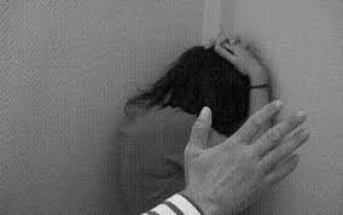
I am going to share something very personal with you today, in spite of the voice in my head telling me not to. As I considered deleting this post, October was designated Domestic Abuse Awareness month. What a coinkydink. The cosmic message has been delivered. I have to share my story, because it will help others. Maybe even you.
In this, my sixtieth year, I have embarked on a quest to find out the answer to a very scary question: why am I afraid to be alone? I don’t mean temporarily. I’m an introvert and love solitude. I’m referring to something other than loneliness. If you ever read Lonely by Emily White, you know what I mean. I am afraid to live by myself. The sight of a rural home out in the middle of rolling miles makes me shudder. I even started a blog, some years ago, devoted entirely to this fear of ongoing aloneness. You might say why worry, since I’m not alone now and may never be. Because it’s a dark place in my understanding of myself. Pretending it isn’t real doesn’t work for me. I would rather understand and attack it.
I tried, from time to time over the years, to explain it to friends, but never got much farther than sounding like I’m not complete without a man. Eventually, I stopped talking about it, tried to put it out of my mind, and hoped I would mature out of it somehow. Meanwhile, I made sure Bill got plenty of exercise, vitamins and sleep so he would live a long time!
But one day, I found myself back on the case. I was reading Dean Ornish’s book Love and Survival, and was surprised to learn he had been almost suicidal as a teenager. He says, “Like many people, I grew up in a loving family without many personal or emotional boundaries – what I affectionately call ‘The Ornish Blob.’ In every family there is a process of how each person individuates and separates from the rest of the family…I did not have a very well-formed sense of having a separate self…(this) can be terrifying, for it can feel like nonexistence or death.”
That was me. Finally, someone had described it correctly. I read more, and discovered the concept of enmeshment. As in, what happens when you’re raised in a dysfunctional family.
Remember the Borg on Star Trek? Resistance is futile. You will be assimilated.
I was. As a youngster growing up with a violent father, I lost myself. I became part of the dysfunction, giving up my self to preserve the whole. Kids who live with violence can become enmeshed with the rest of the family, such that none of you have a sense of yourself except as a part of the whole. You don’t learn who you are or what you need because survival depends on other things, like how quickly you sense the abuser getting cranky. And you know when he gets cranky the belt will whip through the air. Things will break, glass will fly, blood will flow. Survival may require knowing that this is coming.
“Try to be good,” my mother would implore us kids. Even at a very young age, I understood that our job was to make sure HE wasn’t stressed out.
But we grow up and become independent, right? We leave those behaviors behind, right? Wrong. 110% wrong. If, like me, you grew up in such a household – and you probably did, because 1 in 4 women are victims of domestic abuse – you will develop certain behaviors that can rob you of a fully-realized life. Behaviors like people-pleasing, hypervigilance, an excessive sense of responsibility, and addictions like workaholism. Unless you understand this, you will behave like a tool until your death, and your kids, having learned tool-behavior, will continue the legacy of abuse for generations to come.
Not me. Not anymore. I feel stronger, freer and more empowered than ever before in my life. More next Friday.
September 26, 2014
Are You Following Your Dreams?
Writing was my dream, but I had to delay it for almost forty years as I worked and raised a family. Even though I was too tired every day to write, I kept the dream alive. I read short stories and novels, studied articles and books on craft, attended classes and workshops, and asked writers why and how they did things. Often, I spoke my ideas and thoughts into a voice recorder during the one-hour commute up and down the Cajon Pass.

Alone at La Quinta Resort, Coachella Valley
When I began writing my first book, I worried that it wasn’t good enough. I’m self-taught. My degree was in business, not writing. I had learned to write memos, not fiction.

Treebones Resort in Big Sur
But then I saw this: a recent review on Goodreads (for somebody else’s book, not mine) said, “The writing and characters were not high quality fancyass literature. And there were some glaring holes in the plot. And sometimes I got the characters confused now who was related to who. But by GOD this one kept me enthralled and spellbound from the first to the very last page.” The reviewer gave the book 5 stars.

Plane over Discovery Passage, Campbell River, BC
The review filled me with inspiration and motivation. I felt sure, maybe for the first time, that my creative writing degree from Self-Taught University was good enough. I would tell the best story I could, and maybe the reader would feel the connection. Maybe even love my stories.

Singer Island, West Palm Beach, Florida
So that’s what I did, and based on the reviews, it seems like the right choice. I’ve had some success now with my two books. After postponing my dream for four decades, it feels good. Real good. I am finally living the dream, one I intend to pursue for the rest of my life.

Sydney Harbor at night. We took the picture as we set out for open waters on a cruise ship.
So here’s the takeaway, readers. If you are old enough to finally pursue your dream, are you doing so? If not, is it because you’re afraid of being exposed as imperfect? In that case, remember that life is unpredictable, and get moving. Don’t let the perfect, as they say, be the enemy of the good.
And if you’re a younger person, still churning away in the white-hot middle years, caring for everybody other than yourself and not a spare energy molecule to expend on your dream, at least do this: start a folder or binder or box, into which you can toss or write down anything you want pertaining to your dream. Inspirations, notes, magazine articles, pictures, people who’re doing it, possible approaches, what you expect to enjoy when you finally get to focus on it – anything that will keep the dream alive. Because you want to remember, later, what it was your heart pined for when you were younger. So you can follow that melody some day.
What is your dream, and are you chasing after it now? If not, do you have a strategy? Let me know in the comments below.
September 19, 2014
Boomers and Separate Bedrooms
 Remember these two? There was a time when TV censors wouldn’t let you portray a married couple sleeping in the same bed. That was around the time we Baby Boomers were children.
Then we grew up and boy, how things changed. Sex, drugs, rock and roll, baby.
But now we’re getting older, and things are changing again, particularly in the bedroom. There’s a lot more snoring going on, from both sides of the bed. More tossing and turning. More sensitivity to temperature, noise and movement. More aches and pains everywhere. Sleep is becoming more elusive.
Well, that’s okay, we used to think, because older people don’t need as much sleep. Right?
No. We now know that isn’t true. Older people need the same eight hours as any adult. It’s just harder for us to get it, largely because we produce less melatonin and whatever else it is that brings on sleep. And that’s a problem, because we’re learning that sleep is more important than we’d ever realized.
For example, did you know that your brain cleanses itself during certain sleep cycles? Not having a lymphatic system to carry out the trash, our brains shrink during the night, allowing spinal fluid to wash the area and remove the detritus of the day. When we don’t sleep well, this process, one of many, doesn’t run optimally.
And getting up in the morning after an unrestful night is depressing. Nobody wants to do that. As a result, in a highly scientific survey consisting of asking myself and several friends, I’m learning that some of us are moving away from the customary one bed/two people construct. For example, my friend and her husband agreed to have separate bedrooms. She even went out and bought herself a brand new bedroom set. He got her old one. Hey, he’s happy. He still has visitor privileges.
Mom and Dad moved into separate bedrooms, when Dad began tossing and turning and snoring and getting up to use the restroom a hundred times a night. Mom’s a light sleeper, and she had trouble going back to sleep once she was awake, so that solution worked for them.
Then there’s the option of changing rooms in the middle of the night. I do that sometimes if I get restless or achey. I’ll go sleep in the guest room just for a different mattress. It’s wonderful. I’m trying to make sure I get as close to eight hours of sleep each night as possible, and it’s a joy to wake up and see the clock reading six a.m. What a luxury! I couldn’t do that as a younger person, and if you’re still raising kids or working fulltime, I feel for you.
For more information on the power and necessity of sleep, click here.
September 12, 2014
Tell the Truth: Aging is Pretty Cool
We Boomers are a monster demographic. When I was in elementary school at St. Gregory’s, the nuns struggled to teach as many as sixty kids in a class. We’ve already changed the culture of this country. We can do that simply by our sheer size. There are so many of us, no matter what we do, a little bit goes a long way. Good or bad, yes, admittedly.
You’re old enough to remember the theory of The Big Lie; that is, if you say a thing long enough and loudly enough, people will start to believe it. Let’s try a few:
Smoking is harmless.
Cars will never get more than 20 miles per gallon.
Saddam Hussein, yellowcake, WMD.
Well, how about we employ the Big Lie strategy to the promotion of this Big Truth:
It’s Good To Get Old.
You don’t have to think very hard to come up with benefits of aging. Sure, there’s all that stuff about having a more positive outlook and not panicking so easily, and having better control of your emotions and – oh, yeah! Bilateralization. That’s a biggie. (Last winter, I wrote four posts about the positive changes to the aging brain. You can start with the first one and scroll through.)
But on a simpler level, how about the fact that many of us get to cut back or stop working? My brother-in-law just turned 66 a week ago. Instead of full-on retirement, he now works a few days a week. If he feels like it. As a trucker, he’s had to be at work by 4 a.m. for years. Now, he can go in late and leave early, and the boss is grateful.
At midlife and older, many of us start small businesses, particularly women. Some of us are able to volunteer, helping out with causes we believe in. Or maybe we just do more for our families. It’s no biggie. As a grandmother, the little guys wear me out but I get to go home and sleep through the night.
At this age, my siblings, friends and I talk about what we’re going to do with our free time. It’s like graduating from high school. Back then, we were exuberant to think we could chart our own course, no teachers or bell schedule to answer to. I feel the same way now, a sense of rising excitement. Sometimes I work on my next novel, but other times, maybe I’ll go to a movie in the middle of a weekday. Even running boring errands is more enjoyable when everybody else is at work and you have the place to yourself. On the weekends, Bill and I tend to stick around home. We don’t want to fight the crowds.
And the other bennies: I keep going through my closet, weeding out the career outfits I no longer use, especially the heels. Even if they’re low; I don’t care for them. And if I don’t care for something, I can usually avoid it. I have that freedom now.
In spite of the physical stuff, old can be pretty cool. Unless you’re a slave to youth culture, which by now you should have the confidence to rise above. So, given that it’s true, not even a lie, how about we start talking about it? Just try not to gloat around the younger people. We don’t want them to feel bad about their age.

Mom enjoying Carlsbad with my sister. In midweek. We had the place to ourselves.


