
Lynne M. Spreen's Blog, page 29
September 6, 2013
Old Age Better Than I Ever Expected
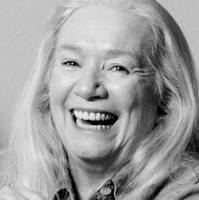
Ronni Bennett
I never expected to feel as alive and vibrant and spirited and vital as I do at this time of my life.
These are the words with which my friend, elder blogger Ronni Bennett of Time Goes By, began a recent post. It seemed so powerful I asked if I could reproduce it for Any Shiny Thing. The following words are Ronni’s. Enjoy.
“There is little if anything in our culture that would lead me to believe I would feel this good about being an old woman. The media relate to old age almost entirely via health, poor health – and mostly about dementia.
“There are more news and feature stories about Alzheimer’s, for which no prevention or treatment exists, than reports on all other elder health issues combined.
“The New York Times publishes what is now a long-standing, daily blog about and for elders titled The New Old Age. Day in and day out over several years now, it is exclusively about being sick or frail or demented or all three at once as though there are no other states of health in “the new old age.”
“Someone ought to tell The Times that 80 percent of old people live independently until they die.
“Then there are the politicians. Elders are a big topic for them because we are more frequent voters than younger people and our numbers are ballooning.
“But the pols see us exclusively in economic terms, wringing their hands over how expensive we are, a bunch of greedy geezers who they would rather starve than allow a Social Security cost-of-living increase.
“Is it any wonder nobody likes old people?
“The only positive words about us involve freaks who jump out of airplanes at age 85, reported by the media either as a joke or as an object lesson to all other old folks to get off our duffs and climb Mt. Everest.
“As regular readers know, I think about these things a lot and frequently rail against them…
But that doesn’t stop me from being amazed at how good old age feels. This is the most interesting time of life I have known.
“It seems to happen when I’m not paying attention that a lot of former imperatives fall away, making life easier and far less fraught with shoulds.
I am done improving myself. Self-help be damned. I am what I am and so I shall remain.
“My ambitions these days are about how I might be able to contribute to my community and not the next better, higher-paying job. I’m not competing for work or recognition or awards anymore and that takes off a load.
“My concern about myself has shrunk to little more than a daily mental checklist on well-being rather than how I compare with others. I have less to prove to them and to myself.
“I’ve almost learned that there are good days and bad days, good and bad moods, and that’s all right. Each is as much a part of living as the other.
“And, as I’ve mentioned here before, I have lost my younger sense of urgency, the need to do, do, do. I still find it odd that as my days dwindle down, I more frequently say, “I’ll get to it tomorrow.”
“I still don’t understand that but it sure feels good and for a bonus, I suspect it helps keep my blood pressure in check.
“There is time now, finally, to be. Time to follow my interests and instincts, to investigate those avenues – internal and external – I was too busy for in the past. Or not. I get to choose and the freedom I’ve arrived at to do so thrills me.
“Whatever the rest of the world thinks about being old, from my vantage point of 72, it is unexpectedly better and more exciting than I ever guessed it could be.”
Lynne again: Are you surprised to find yourself happy at an age when we expected to be bummed out?



September 3, 2013
Style for Over 50 – Ladies’ Edition
No, it’s not Friday; don’t get excited. It’s just that lately, I’ve had so many ideas for topics that I decided to do two this week. Enjoy, ladies.
I’m 59 years old. I’m 5’8″ and I weigh about 160. I want clothes that are comfortable and look good, but I’m not interested in losing weight. I’m fit and healthy, and life is too short to forego wine and chocolate. Or pizza. Or Date Night at Some Fancy Restaurant. What’s a gal to do?
Well, I found some solutions. I’m no photographer but I figured out how to set my camera to 10-second-delay, then I ran around in front of it and posed. If you click on the pix, they’ll enlarge.
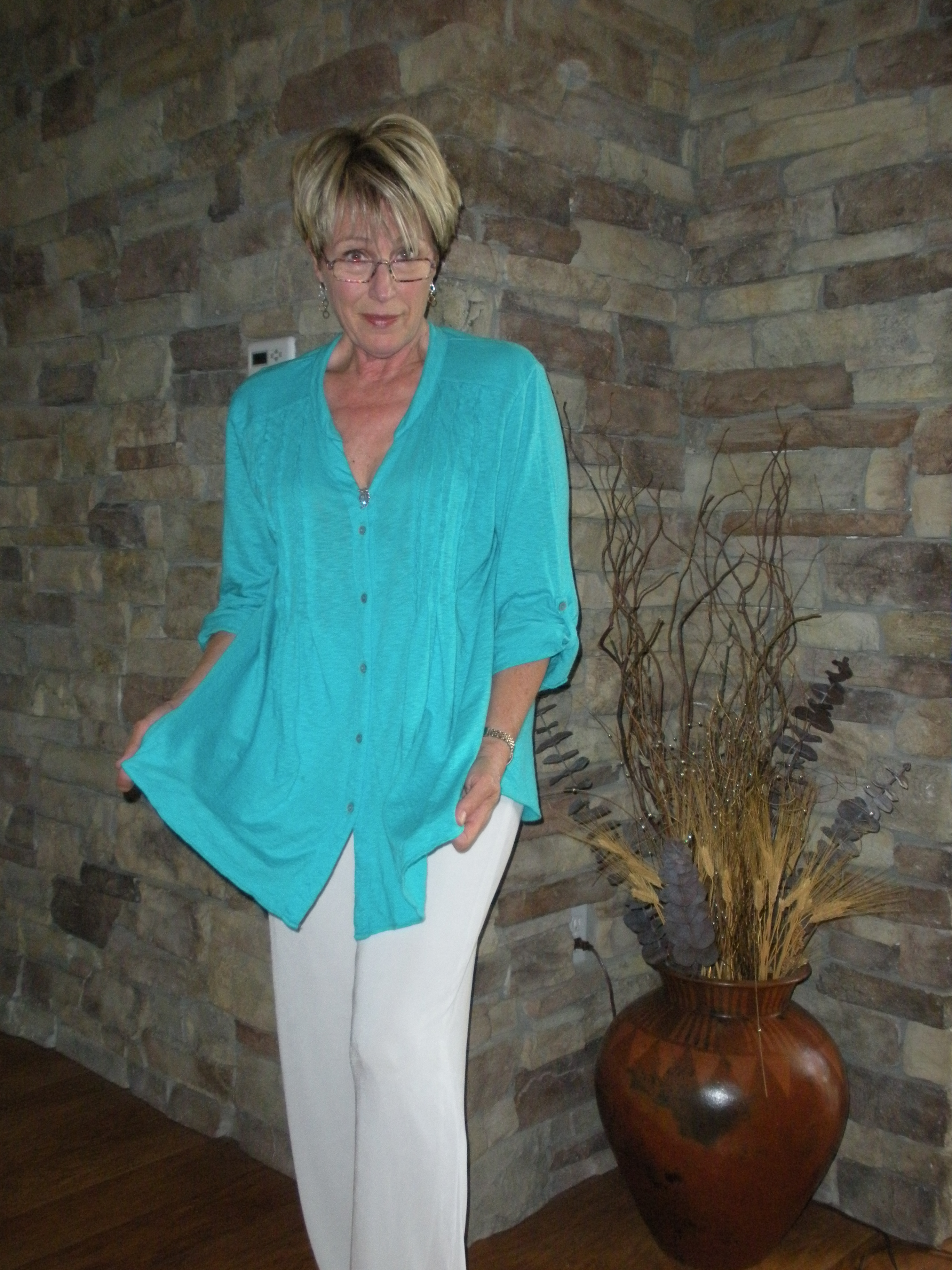
Top from FreshProduceClothes.com. Pants from Travelsmith.
a
This top was a little too low-cut so I closed it with a safety pin and stuck a clip-on earring over that. Voila. Cleavage jewelry.

Top from FreshProduceClothing.com. Slacks are NYDJ (with lovely Spandex).
a
a
a
a
a
a
Like I said, I like to be comfortable.
a
a
a
a
a
a

Top from FreshProduceClothes.com. Pants from Travelsmith.
a
a
a
This periwinkle top is the same model as the beige-and-white design above. Both are 100% cotton (as is the green top) and all three are 100% cotton and made in the USA.
a
a
a
a

Dress and tee from FreshProduceClothing.com. 100% cotton and made in USA.
a
a
a
The dress is really cool, being all cotton, and it has pockets. Yes, it is the same pattern as the beige and white top but I never wear them together so unless you memorized my closet, who would know? Or care?
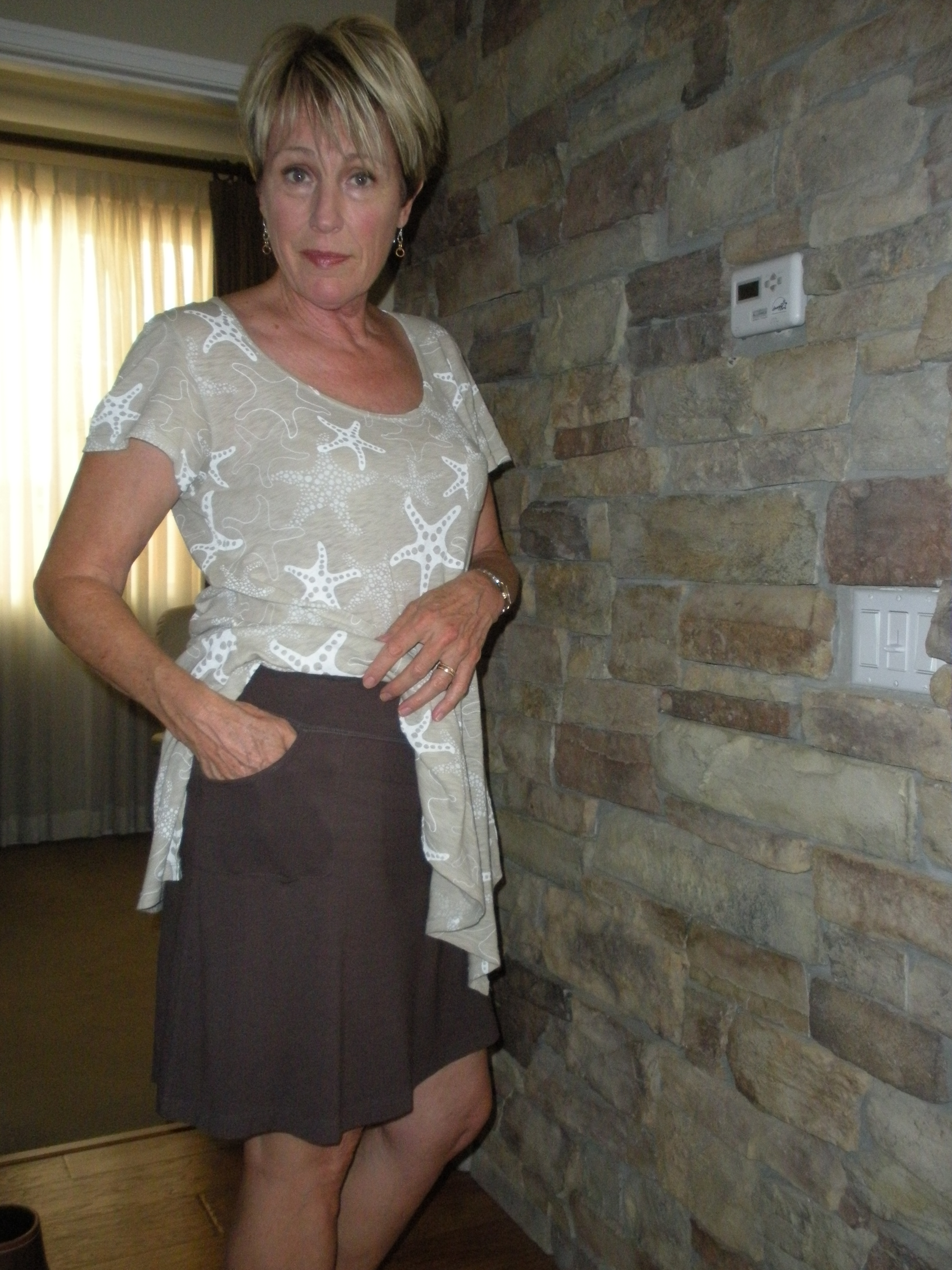
Bamboo squort by FreshProduceClothing.com.
a
a
a
a
And finally, did you know somebody is still making squorts? Check this baby out: no closure, just pull ‘em up. And they have pockets! This is a product made of bamboo. It’s soft and drapey.

a
a
a
a
Here’s a closeup of the squort.
a
a
a
a
a
a
If it seems like I’m pushing Fresh Produce, I’m not, but I DID recently fall in love with their clothes. Most of them are made in America, and they’re heavy on the cotton so they breathe. I also like Chico’s (they’re more for the cooler months as their clothes are made of petroleum products) and Not Your Daughter’s Jeans for all the stretch.
Have you made a recent clothing discovery? Spill it, girlfriend.


August 30, 2013
Miley Cyrus: Ink Blot
Miley Cyrus, former Disney child star, turned in a shockingly slutty performance a few days ago at the Video Music Awards on MTV. Talk shows and cable news responded immediately. Some people are calling for censorship. Parents are outraged. Feminists are baffled. Celebrities are laughing.
Anaïs Nin once said, “We don’t see things as they are. We see things as we are.” That video is like a Rorschach test for America. If you didn’t see it, here’s a glimpse of the talent.
Here’s Miley advancing her career at the recent VMA Awards.

Here’s another shot for the family album:

On the Today show, Matt Lauer and Star Jones were trying to tell Mika Brzezinski that this is what girls think they have to do to make money and have a high celebrity profile, and that’s the saddest part of the whole thing. Mika, whom I like, was too busy ranting to hear that message, wanting only to have the performance banned or censored – I am not really sure of her point, she was so upset and everybody was yelling. I mean, it’s MTV. What did she expect?
Anderson Cooper posted a smirky essay about how boring Miley’s performance was, in that there was nothing new and she’s banal. Which is true but also kind of scary. What’s a girl singer going to have to do to get attention in the future? Film at the zoo?
Some were angry that nobody’s angry at Robin Thicke, that we’re all a little too quick to criticize Miley and not him. Okay, I’ll start.
What’s with the outfit, Robin? Channeling Beetlejuice?

Some people have expressed compassion for Miley, because she apparently was raised by wolves and doesn’t know any better. I was surprised to find many erotic photos of her on the web, going back a few years. Well, very few; she’s only twenty. But anyway, you’d think she was a porn star, not a little girl who sings.
Some have mentioned there’s a feminist aspect to this. That Miley is a grown woman, and she should be able to do what she wants with her body, even if what she does sets us back a million years. But then if we’re going for equality, I say Robin Thicke should be wearing a g-string instead of assuming the power position while Miley approximates Downward Dog.
In my opinion, which matters only to me, they’re both kind of trashy, but it’s what the public pays to see. I’m trying to think of what to tell my granddaughters. “Yes it’s true that in 2013, Miley Cyrus had a net worth of $150 million. She has yachts, houses, cars, and the very best in health care, but nobody respects her, and she is really a very sad person.”
I don’t want my granddaughters to grow up thinking society only values them for their girly parts, but if they manage to overcome that in this sick culture, it’ll be a miracle of good parenting.
As an Adult American, how do you see this? What do you think?


August 25, 2013
Review of Wish You Were Here by Stewart O'Nan
 Wish You Were Here by Stewart O'Nan
My rating: 2 of 5 stars
I'm on page 221 out of 517 and I can't finish this book.
I loved Emily, Alone, but this book is not grabbing me, and I can't spend any more time on it. Let me illustrate some of my concerns:
I couldn't follow the writer's thoughts at times. Here's an example, of an adult son (Ken) thinking about his childhood and his now-deceased father:
"Ken had never heard him seriously complain about anything...as if a Zenlike acceptance was proof of his wisdom. But to a child his self-possession could seem an illusion, the usual adult insistence on infallibility. For years he seemed backwards to Ken, out of touch, but later his calm seemed ideal, his silence not empty but dignified. Ken still could not figure him out."
And I still cannot figure out what that passage means. To a child, such calm and wisdom would NOT seem like an illusion. A child would take it as true. As an adult, that child might look back and consider it might have been an illusion. This passage is an example of some of the writing in this book, wherein I think O'Nan goes so into his own thoughts that he didn't edit severely enough, or objectively consider how his words might sound from outside his head.
Another aspect I didn't appreciate was the one-dimensional portrayal of Emily. Halfway through the book she's still a fairly narcissistic, superficial character. I anticipate this may change later in the book, but I don't have another several evenings to pursue it.
Finally, there are too many indistinct children's voices in this story. The book may have benefited from pruning back to where the only characters we'd follow would be the five (!) adults, but with the addition of four kids (!) there is too much going on. Of the children, the two girls are both elder sisters to a younger brother. I don't see why that configuration was so interesting it needed to be repeated, or in a broader sense, what all those kids' voices added to this story.
There is too much going on in this book, and none of it very compelling. I appreciate the author's efforts, but this book lacked dramatic tension, had too many points of view, and many of the characters were insufficiently developed.
View all my reviews
August 23, 2013
How Ashton and Jay Z Made Me Happy
I used to look at Ashton Kutcher and think pretty boy tech geek who got lucky when he caught the eye of Demi Moore. And that’s true, but it’s not the whole story.
When I saw this video of Kutcher, I fell in like with the guy. (Skip the first minute.) He tells his teenaged audience three important things, all of which I agree with:
Opportunity looks a lot like hard work. He’s been a roofer, a custodian, a sandwich maker, and a sweeper. “I’ve never had a job in my life that I was better than. I’ve always just been lucky to have a job. Every job was a stepping stone to the next job, and I never quit my job until I had the next job.”
Being sexy: “The sexiest thing in the entire world is being really smart. And being thoughtful. And being generous. Everything else is crap, I promise you. It’s just crap that people try to sell to you, to make you feel like less. So don’t buy it.”
Living life: “Build a life. Don’t live one. Build one.”
I think it’s reassuring to feel a sense of commonality with younger people. it’s nice to think we’re in it together, because otherwise, we divide up into tribes, which is a bummer, and a waste of potential synergy. Life is hard for everybody. We’ve got our old problems, and they’ve got their young problems.
Jay Z made me happy, too, with the way he related so generously to people who are talents in their own right. In this video, he gets out of the stadium and does an interactive gig with about 50 people.

Jay Z and Marina Abromovic eye to eye
In the video, “Picasso, Baby,” Jay Z performs for artists, dancers, and other creative types, who in turn perform for him, and I dare you not to dance. I especially liked when a stylish woman in her late 70s, early 80s? sits down in front of him and he forgets his lines, like he’s blown away by her fabulousness. She throws back her head and laughs.
One of the ways we create tribes is through our music. I wonder if there’s not something about the way our brains form when we’re young that causes us to imprint a certain kind of rhythm and sound. For example, I love the music of my era, the 60s and 70s (Led Zepp, Dylan, Fleetwood Mac, Turtles, Beach Boys; you get the idea). I don’t cotton to hip hop or rap. But then along come Jay Z and his friends, and suddenly I’m dancing to hip hop. That made me happy.
In earlier times, tribalism kept us safe. But now the challenge is to break out and see if you can share a feeling with someone not of your tribe – in this case, the tribe of age. I loved what Ashton Kutcher had to say, and I danced my @$$ off to Jay Z’s video. I felt happy and safe, thinking I’m not alone, that I’m part of their tribe and they of mine. Life is sweet.

On another subject, when I was in Rushville, Indiana last month, I went for a walk every morning in the neighborhood around my hotel. It was pretty enough, in an old-home American flag way, that it choked me up. I was listening to a particular song one day on my iPod, and I thought, dang, I have to make a video of what I’m seeing, and set it to just that music, so you can experience my heart land. So here it is, my love letter to Rushville, accompanied by Gregory Alan Isakov’s The Stable Song.
Click on picture to see video


August 21, 2013
Review of Lean In by Sheryl Sandberg
 Lean In: Women, Work, and the Will to Lead by Sheryl Sandberg
My rating: 5 of 5 stars
As I read Lean In, I was intrigued at being able to get inside the head of a dynamic, smart woman who is one generation younger than me, and see the corporate world through her eyes. One of the cultural questions she answered for me was this: why are younger women so averse to the terms "feminist" and "feminism"? Apparently, Sheryl Sanders and her contemporaries believe(d) the following:
1. Equality having arrived, there's no need for feminism anymore
2. Feminists are man-haters who resist makeup and the shaving of one's legs
Okay, #2 was a bit tongue-in-cheek. However, having observed conditions in the real world for a few years now, Sanders has come to see that the playing field is not and will not be level until more women occupy positions of power in the corporate hierarchy. She doesn't suggest that this is due to any malicious intent on the part of men, but rather it's simply a matter of ignorance.
To illustrate, she describes having to park far away from her office door when hugely and uncomfortably pregnant. When she designated preferred parking spots to accommodate pregnant workers, no one complained. It was seen as logical. But prior to her taking her place in the C-suite, the issue hadn't been raised.
Sanders talks about not slowing down out of consideration for what might happen in the nebulous future. The example she gives, now famous, is of a young woman confiding her fears of not wanting to accept a job with a lot of responsibility due to the impact it might have on her family. The woman was planning ahead - she didn't even have a boyfriend yet.
With this example, Sanders makes the point that women, having been highly trained and educated, are waving off promotional opportunities. The jury is still out as to why, but she suggests, and I agree, that part of the reason is this: in corporate America, a woman's decision to go through pregnancy, childbirth, lactation, and child-rearing is viewed as a private matter that should not impact her ability to work long hours and irregular schedules, including lengthy and frequent travel as needed. Rightly fearing this may drive her insane, a woman who wants a family may leap off the corporate ladder at a very early stage.
Sanders argues that if a young woman stayed on it long enough to secure a more powerful position, she would be able to exert more control over her work life (a perspective the young woman must trust will happen, since at her current low place on the corporate ladder she can only see her lack of power and control.) After a few promotions, she will be able to delegate some of her work to subordinates, afford more help at home, and influence workplace policies that unfairly impact women and families. Who can find fault with this argument?
Sanders is honest about her own mistakes, and I found that charming. For example, I was amazed that, for all her intelligence and education, she didn't originally intend to negotiate her starting salary with Facebook. Luckily a nice man (her husband) set her straight, and she made a counter offer to Zuckerberg. Reams of guidance have been written about how this error could have impeded her in later years, both at Facebook and with future employers, yet she didn't know. For other women who have not yet made this horrifying discovery, please read Ask for It by Babcock and Laschever (http://www.amazon.com/Ask-Women-Power...) which in addition to being enlightening and entertaining, offers tons of strategies for preparing yourself to negotiate. And not just for salaries. After reading that book I saved $100 on furniture I was going to buy anyway, by asking one question.
But back to Lean In.
I was also surprised that she wasn't well informed about how women can sabotage other women in the workplace, particularly women in power. This is an unfortunate truth with roots in biology, and is brilliantly explained in the amazing book, In the Company of Women by Heim and Murphy (http://www.amazon.com/Company-Women-I...) which I reviewed here:
http://www.goodreads.com/review/show/... This also suggests the reasons Sanders was hit with such a backlash for the well-intentioned Lean In.
There is so much more to say about Lean In, but let me close with this: I enjoyed learning how this stellar corporate executive struggled, made mistakes, and ultimately learned some strategies that will enable her, her family, and the women (and men) in her corporation to thrive. It's not perfect, and sometimes it's not even pretty, but part of the lesson is to let go of the need for perfection.
The other message, younger women, is to get as far and as fast as you can before starting your families. Don't opt out just because it looks too hard from where you're sitting now. The view improves with each rung on the ladder.
View all my reviews
August 20, 2013
My Review of Cleaver by Tim Parks
 Cleaver by Tim Parks
My rating: 4 of 5 stars
This is a challenging book because it's written in stream of consciousness style, which might be off-putting to some. However, I found that aspect amusing because Cleaver's over-active squirrel brain reminds me of my own, leaping from subject to subject, as I find myself standing on the patio deep in thought about Barack Obama with a phone book in one hand and a pressure gauge in the other.
But the story is a good one wherein a decent man is played and manipulated throughout his life - although he does a fair bit of the same, achieving great heights of celebrity and accomplishment. But at about age 60 (sorry, can't remember specifically), grief-stricken and at the end of his rope, he takes his overweight and out of shape body and his tech-addicted, co-dependent mind off on a crazy quest to find some kind of peace and independence, some place in the world where he can either end it all or find himself.
He rents a very rustic cabin on the edge of the wilderness where he doesn't speak the language of the locals and thus is misunderstood, mistrusted, and insulated from humanity until the end of the book. (One of the interesting aspects of the story is the immersion in rural German culture.) Cleaver is also completely unprepared for the harshness of the winter in this mountain setting and almost dies as a result. The story is resolved when he demonstrates his core decency, stands up for himself, feels he is of value, and rejects the manipulating nastiness of those who should love him - his family. In a sense, he finds a new family in a very different place.
I could only give this book 4 stars because there were a couple of errors of logic in it which revealed a need for a bit more editing - and the book is confusing enough with its switches between tense and point of view - but I frankly couldn't put it down, and I still, ten days later, think of the protagonist as a real person. I'm glad I read it, and I heartily recommend it, but it's a challenging read. Bottom line: if you're middle-aged and you're interested in seeing a character bust loose from convention and finally, at midlife, find his own way, this is a fantastic story.
View all my reviews
August 16, 2013
I Don’t Want to Live Forever
So now there’s a chance we can extend longevity to 120. Yay, right? Not necessarily. Many midlife people, myself included, don’t want to see that happen. I think it would make an elder person go nuts. It would me, anyway.
Let’s consider the challenge of keeping up with your profession. How much information can you learn, discard, learn, discard, learn, discard in middle-age and beyond? And even if you can learn it, after fifteen or twenty new campaigns, do you even care to? You’ve seen change after change in your corporate setting, much of it brought about by new people refusing to learn from history. If your brain absorbs sixty, seventy years of information, might there be a point where, like an old draft horse, you simply refuse to haul that load one more step?
What about technology? Born in a time of party lines and carbon paper, you’ve mastered the tech revolution, with all your new passwords and tech support and wireless and ether and RAM. Do you really want to be around when they start doing microchip implants under the skin? I don’t want to be sitting out on the patio of an evening, wondering if I just slapped a mosquito or a miniaturized drone.
Now consider the emotional challenges we face during a long lifetime.

What if you started out here?
When I was researching Dakota Blues, I drove around rural North Dakota and saw many crumbling homesteads from a time when there were no roads, stores, or neighbors within miles. The parents would produce a dozen kids, because half of them would die before adulthood. Drought killed crops. Locusts ate the paint off farm tools. Cattle starved. I imagined the woman of the house looking up from her labors and thinking of her family still in Germany, whom she would probably never see again. Then I pictured her, years later, as a very old woman standing by a grave in ND, and I wondered how she handled being the only one who remembered sailing from a dock in Hamburg. Assuming this woman was born in 1900, do you really see her thriving through 2020?
When you look at it organically, death might be as much a relief at the end of a life as sleep is at the end of a day.
My Mom sometimes laments being “so old” (she’s 88), and I try to cheer her up with some positives: after many years of seeing your kids slaving away at careers, they’re enjoying retirement – and you’re getting more visits than ever. Your grandkids are having adorable babies which you can cuddle and hug. A great-grandson just graduated from Marine Corps boot camp. Life is long. That’s a privilege.
But there’s a price. You may be the oldest person around. Nobody remembers what it was like back then. You’ve been widowed for how many years? You miss your parents, who’ve been gone half your life.
For all the good, longevity comes with an accumulation of sorrow. You might manage it for thirty, forty years. Then what? You can rejuvenate your face and maybe even, eventually, your blood cells, but what of your heart and soul?


August 11, 2013
Smart Young ‘Uns
We talk about the wisdom that comes with age, but sometimes the wisest thing we could do is allow ourselves to be mentored by younger people.


August 9, 2013
A Sweet, Funny, Rich Story about Family
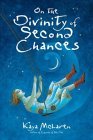 On the Divinity of Second Chances by Kaya McLaren
My rating: 5 of 5 stars
This is a book club pick, and I have enjoyed it so much, I read each short chapter as if it were a dessert in itself. The story follows the members of a family, each of whom I found enjoyable and worth rooting for. I loved the feminine wisdom, the organic richness (literally; some of the characters live in farming country), the POV of a husband and wife at midlife who have fallen out of love, the POV of a daughter who knows she's been here before, and the POV of a wise grandmother, and this is just a start.
I let my sis borrow this book, but I told her, I want it back. It's a keeper!
View all my reviews


