
Lynne M. Spreen's Blog, page 23
July 22, 2014
Review of The Signature of All Things by Elizabeth Gilbert
 The Signature of All Things by Elizabeth Gilbert
My rating: 5 of 5 stars
This book is well-written and extremely interesting. The story begins in the late 1700s with the first twenty years of Henry Whittaker's life, as well as the entire eighty years of his daughter, the main character, Alma. They are fascinating people, and the times as well as the settings are wrought in expert detail. I was astonished at the effort Gilbert put into it.
The subtext (if not the theme) of the book is evolution, both biological and sociological, and I think the reason Gilbert went into so much detail, however well-crafted and entertaining, was to demonstrate various aspects of evolution - or the resolute lack thereof - in of each of her characters. Thus we follow the lives of Alma, her father, her mother, Prudence, the insane friend, the insane husband, the Tahitian missionary, the Tahitian missionary's son, et. al. And I'm just getting started. Even Roger the dog evolves in order to triumph at life. Okay, I'm kidding about him. Sort of.
I'm not going to describe the entire book. Plenty of other readers will do that. However, I will say that there is a transcendent scene toward the end, when Alma and another scientist/big thinker debate the evolutionary logic of altruism. I was entranced by this unanswerable question and their discussion of it. However, that was just the icing on the cake. The main takeaway of the story, for me, was that we all have a chance to live our biggest life possible, if only we try as hard as we can and never, never let ourselves weaken. It's an empowering theme. I recommend this book, with the caveat that the evolved reader manage its length by discreetly skimming, thus saving her energy for the rest of life's battles.
View all my reviews


July 18, 2014
Is Reinvention Elitist?
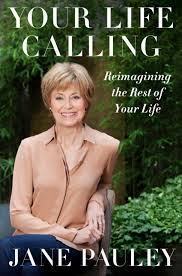 I just finished Your Life Calling by Jane Pauley. The objective of this book, according to the author, is “to inspire people…to imagine their own future in powerful and positive ways.” Pauley weaves her story into the telling of those anecdotes. She’s cheerful and self-effacing, and uses her broadcaster cadence in the narration. Unfortunately, the result is a kind of tonal flatness, no controversy or gravitas, no real highs or lows. This is probably because the book is an advertisement for her show and she wants to attract the largest audience possible.
So that’s the downside, yet there was enough in it for me to feel it was worth reading. I enjoyed the anecdotes of the many fine people who are following their passions and doing good in the world by bringing fresh water to Africa or school books to the inner cities. And Pauley offers snippets of wisdom, her own or gleaned from interviews with reinventors. For example:
*The concept of “packing for your future.” What might you take with you into very old age, that you can look back upon and think, “I’m glad I did that. I’m at peace because I did that.”
*Instead of empty nest syndrome, one woman viewed the newly available time as “a gift box that I could fill somehow.”
*Being willing to give up on some things, like running a marathon or learning a foreign language. (This is the basis of the popular “F*** It List,” a topic previously explored here.)
*”Self-discovery is not a prerequisite for reinvention. It’s the payoff.”
I like the idea of reinvention, but there’s something about it that bugs me, and that’s the only real knock on this book. It’s the largely-unacknowledged truth that only a certain economic group will ever be able to indulge in unpaid dream-chasing. This is especially true in the aftermath of the Great Recession, in which many older people decided they would never retire, and it’s not because they love their jobs. If you’ve got a nice pension or enough Social Security to support your wanderings, or your kids are cool with you living in a trailer in their back yard, you might be able to quit working and follow your interests. However, many people will never have that luxury, and I think we should recognize that. Otherwise, it’s tone-deaf of us to pretend reinvention is universally accessible.
Now, if somebody would come along and write a book about “How I Reinvented Myself While Working Three Minimum Wage Jobs and Enduring Chronic Illness,” that would be noteworthy. What do you think? Am I being too cynical?
July 16, 2014
Review of Your Life Calling by Jane Pauley
 Your Life Calling: Reimagining the Rest of Your Life by Jane Pauley
My rating: 3 of 5 stars
The objective of this book, according to the author, is "to inspire people through storytelling to imagine their own future in powerful and positive ways." Pauley weaves her story into the telling of those anecdotes, so there's a nice rhythm. She's relentlessly cheerful and self-effacing, and uses her broadcaster cadence in telling each story. The result is a kind of tonal flatness, no real highs or lows. Yet there is still enough in this book for me to feel it was worth reading.
Here are some takeaways:
*instead of empty nest syndrome, one reinventor saw the newly available time as "a gift box that I could fill somehow." That was a refreshingly take.
*the idea of "packing for your future." What might you take with you into very old age, that you can look back upon and think, "I'm glad I did that. I'm at peace because I did that." Also, to be willing to happily give up on some things, like running a marathon or learning a foreign language.
*the idea that "self-discovery is not a prerequisite for reinvention. It's the payoff."
The only knock on this book is broader than one book or Jane Pauley herself: it's a lack of candor about the fact that only a certain economic group can indulge in unpaid dream-chasing. A good number of older people will never have that luxury, and I think we should acknowledge that. Now, if somebody would come along and write a book about "How I Reinvented Myself While Enduring Chronic Illness and Simultaneously Working Three Minimum Wage Jobs," that would be noteworthy.
View all my reviews
July 13, 2014
Review of The Painter by Peter Heller
 The Painter by Peter Heller
My rating: 5 of 5 stars
*Moderate spoiler alert* I enjoyed this book very much. It's the story of a powerful man evolving out of the destructive grief following his daughter's death. It's well written, lush, with unbelievably great descriptions of settings. As I write this review, the story is provocative in retrospect. There are soaring positives and aggravating negatives.
Positives: Great narrative voice, reminded me of Kent Haruf's, but edgier. The descriptions of the landscape and settings, of the art of fishing and the art of art, the richly drawn characters, and the non-tedious weaving in of backstory enticed me. Heller's way of portraying the characters is spare but rich.
There's a plot twist that sets the story on a new path at about the 25% mark, and it was here that my high opinion of the main character, Jim Stegner, began to falter. At the time, his actions seemed gratuitous, but it's the pivot for the plot, and does a good job with that.
I very much enjoyed the descriptions of fly-fishing and painting, how an artist works and sees things. Made me want to go to a gallery and see what happens. However, much of Stegner's internal monologue as he reflects on his work (e.g. "Crow and Horse" was engaging but went on too long) could sometimes be as perplexing and open to interpretation as an abstract painting. Which is pretty cool, but also somewhat exhausting. To do this book justice, you'd need to hash it out with friends over a couple days.
There are some really good things going on with this novel. Stegner had such compassion for his victims, even though they were monsters. And he's self-immolating with guilt, which will need resolution. The twists and turns of the plot are original and compelling. Lastly, everybody seems to know he's guilty, and he almost wants to turn himself in to end the perverse circus his illegal actions have created (the value of his art goes through the roof and he becomes even a bigger celebrity). I was intrigued, sensing his character arc would involve coming to grips with his violent narcissism.
Negatives:
What was at first a charming affectation - the plainspoken use of the word "Well" as a complete sentence - became overused and tedious. Also, the device of ending a sentence before it's complete. Let me show you what I. Well. Both began to take me out of the story to wonder why Heller did it.
And why, of all the surnames he could have given the main character, did Heller choose Stegner? Was he trying to put us in mind of Wallace Stegner, the great author who also wrote about that locale and in a similar style? Again, it took me out of the story to wonder about Heller's intentions.
I was underwhelmed with Heller's use of women characters. Of the main three, one is dead. The other two are in the story to heal and inspire Stegner, largely with their sexuality. I guess I should have seen it coming. Stegner is a man's man. In an early description, he thinks:
"Now as I drive by, Bob looks up from the tire he is changing, waves. Sometimes I think that's all you need. A good man with a fishing tip, a wave. A woman once in a while. Some work to do that might mean something. A truck that runs..."
"A woman once in a while?" Why not just use your hand?
Revealing: After a devastating party, Stegner escapes to a stream on the way home to fish all night (he always carries his gear with him), leaving his still-dressed-to-the-nines model/muse/girlfriend to sleep in his truck like a faithful hound.
Maybe a guy would enjoy this character more. He's very masculine. Clutching a lit cheroot in his teeth during a back-country car chase? Very early Clint Eastwood.
Stegner's self-indulgent personality was, for me, the weak point of this story. I should have been moved by the extremely well-crafted ending, but I didn't care enough about Jim Stegner to feel the emotion the author intended. (I was more moved by Jason, his judge.) It's not fatal; there's enough in this good story to make it well worth the read anyway. In fact, just the lushness of his descriptions made me slow down and sink into them. Like a painting that arrests you unexpectedly, that makes you feel you can smell the sage and feel the late afternoon sun in your face, his descriptions are art. And much like abstract art, my interpretation of this work is my own individual reaction. Yours may vary.
View all my reviews
July 11, 2014
The Human Experience
July is a poignant month for my family. My dad died in July, 2008. He and mom had just celebrated their 59th anniversary, on July 17. Three years after he died, Mom broke her leg and, in July, had to move from their beloved home in the high desert of Hesperia, California. That was in 2011. She just celebrated her 89th birthday last month. In spite of leg pain and other challenges, she’s doing great (I know many of you will remember my posts about her resisting the move.)
Just before she moved, three years ago, I wrote a post that reflects our aging experience: us, and caring for our elders, and the drive to be independent. I’m reposting it here in honor of my family. I hope you enjoy it.
I spent several hours at Mom’s house today. I alternate weekends with my SoCal sister. We get Mom’s mail, water her plants, check her phone messages, and just generally make sure all is well while she’s in the rehab hospital.

The sky really was that blue today
Yes, it’s inconvenient (it’s a 90-minute drive), but it’s short-term because she has agreed to sell her house, and this time I believe she will follow through. I’m glad, but also heartbroken. To think of them – them! but it isn’t “them” anymore, is it? It’s just her – not living up there ever again. Well, I’ve held off the tears all day but I guess I can’t forever. Time moves on, and we all get old and die.
I feel conflicted. I want her to move down by me (“up” and “down” relate to land elevation) for all the logical reasons, and then all of a sudden, like right now, I don’t want her to move at all. I want her to risk it, to inconvenience and vex and terrify us with her dogged determination to stay as long as she can in the house that she and Dad built. For me to yank her away from that – and then add in the heartbreaking, elegiac, mind-numbing beauty of the high desert – I can hardly bear the thought.

Poppies grow wild in her yard
It’s an end. I’d like to think it’s a beginning, too, but who can say? Mom is healthy and vibrant for almost-86, there’s no reason she can’t have a great ten more years. But will she have the courage to start over, to walk away from that place?
It hurts to think of losing it, because for ten years, Hesperia was my home, too. It was a difficult time, when I worked harder than any human should have to, and delayed my dreams, and saved everybody.
The memories are good and bad.
As a young single mother, I took my son Danny (now 33) on his paper route some weekend mornings when the snow made it impossible for him to ride his bike. One morning I ran over his foot, but the deep sand saved him and after we got over the shock, we laughed. And then newspapers stopped hiring kids and kids stopped getting up early and riding bikes and getting their first paychecks.
On the negative end, my previous marriage ended there. And Dad died up there! I wouldn’t live there now. Couldn’t. But I miss it.

When Dad and Mom build the house in the ’80s, they preserved the native juniper trees
But I digress. Today I worked my butt off, getting Mom’s house all spiffed-up for Amber to look at next Saturday. Amber might buy it. That would be nice, to know it’s still in the family. Amber is a dear friend of my step-daughter. So we would know the house that Dad and Mom built in the ’80s would be well cared for.
It was so beautiful up there today! I swear, when you live in such a place as the high desert, and especially on a spring day like today, you feel a sense of hope and optimism about rearing kids, growing your own food, having quiet and privacy and clean air and astounding skyscapes. You can pretend that you’re living life on your own terms. I imagine this is what people seek when they move to Idaho or Montana or the Dakotas.

This picture hints at the mountains they can see out the back AND the front of the house
Mom’s coming home to my house tomorrow. I started out being excited, and I still am, but we’ve had a couple of conversations since the hospital said they’d cut her loose, and I realize I’m a bloomin’ amateur. I see that Mom’s looking for ways (already) to cut corners and speed things up; and now I understand it’s not about reveling in the relative luxury of my house as compared to a rehab hospital. It’s about my house as stepping stone to – you guessed it – her house. I think she’s just biding her time until she can go home, and once she’s there, who knows? And my other sister, the one who hasn’t yet adapted to her new home near Canada, would do almost anything, including promising to take care of Mom, to be able to come south and thaw out for a couple of months.
So I rearrange furniture at my house to make Mom comfortable, to encourage her to stay, but like an inadequately compelling acquaintance, I know I don’t have much pull. Because I suspect she’s going home for good, even if she doesn’t yet say it. And the tears and frustration and anger of her children and grandchildren are nothing compared to the incense of creosote and sage calling to her from the high desert.
Turn up the volume and you’ll hear the wind chimes in her back yard.
July 4, 2014
Sting is Jazzed to be Old
 He had a serious case of writers’ block. For the past dozen years, Sting, aka Gordon Sumner, lost his creative mojo.
“I had no interest in tailoring songs for Top 40 radio, for 14-year-old girls or boys. I’m a 62-year-old man. Where is the arena to present my work?” he asked in an interview with Time Magazine (June 30, 2014).
This talented boomer was facing a challenge so many of us are going through right now. What had seemed relevant, interesting, or motivating in years past does not capture us now. Have we become jaded or less easily moved?
Actually, I think it’s neither. Per Barbara Strauch, who wrote The Secret Life of the Grown-Up Brain,
As we age, our emotions not only remain largely intact but are also considerably more robust than our abilities in other areas…”
So, what was Sting’s problem? I think I know.
We’ve been taught, raised, brainwashed, had it shoved down our throats that old age is irrelevant. It’s boring, stupid, a wasteland. Once you’re old, and you’ve moved out of interesting, vibrant, relevant youth, there’s nothing much else left to discover about humankind. We might as well shoot ourselves, we’re so pointless.
However, Sting, creative genius that he is, ignored the cultural mandate to disappear. Instead, he found another gear. He wrote a Broadway musical based on his birthplace of Wallsend, a port town in northeastern England. Entitled The Last Ship, it’s the story of a “self-exiled” man who returns home and finds his community about to vanish. They will build one last ship to show the world what they do and who they are.
Engaged in the project, his writers’ block vanished. Sting says 40-50 songs “just poured out of me fully formed.”
I think this is what he discovered: the new relevance of age. Sting found a whole new creative place from which to mine his art, and – good for marketing – a gigantic audience of passionately curious older minds that are fully equipped with deep emotional capacity.
When I published my novel, Dakota Blues, I anticipated that there would be a market for midlife art, because there’s so much material in the second half of life. My God, the things we go through, and the way we react and adapt, are so interesting. Not that the kids don’t have their own fascinating developments, but everybody’s writing about them. I’m only suggesting we older peeps shift our focus. Let’s dig down and find out what’s going on with our age group. Here are some of the issues that engage me:
How are you different from when you were younger, and is that a good or a bad thing?
What would you still like to learn?
What ass-kicking talent or strength have you finally mastered?
Is there anything you’ve given up on achieving? What made you decide that, and are you okay with it?
Have you discovered anything about your life that you were doing wrong for, oh, say the last 30 years, and now that you know, you’ve decided to change it?
When Sting began to look back on his life and his aging hometown, he found a wealth of material that galvanized him. By all accounts, he’s electrifying audiences again. I would theorize that there’s an untapped well in the experiences of the second half. For artists, this is exciting news. For audiences, you may soon be entertained at a whole new level.
Open your minds, folks. Find another gear.
June 27, 2014
Review of Under One Roof by Barry Martin
 Under One Roof: Lessons I Learned from a Tough Old Woman in a Little Old House by Barry Martin
My rating: 5 of 5 stars
I loved this book. Could not put it down. It's a memoir, the story of an unlikely friendship between the superintendent of a massive construction project and the old woman who refused to sell her tiny house that sat in the way of the project. The superintendent, Barry, a likable man of fifty, meets the old lady (she's in her early 80s) when he begins the project. On his first day, he goes around (what remains of) the neighborhood, introducing himself to the people who'll be impacted by the dust and noise. One day she calls his cell to say she needs a ride to her hairdresser, and Barry obliges. Over the next three years, as she declines, he steps in, doing more and more for her (this is made at least somewhat more manageable by the fact that his office trailer is thirty feet from her door.) From making her breakfast and taking her to doctor appointments, he progresses to cooking all her meals and cleaning up after her when she falls and has accidents. Finally, he ends up shepherding her through her last days, fulfilling his promise to help her die at home rather than in "a facility," as she calls it.
There's so much in this story to love. Edith herself in her youth was an almost mythically heroic figure, and even now she's fiercely independent and a handful; Barry is the kind of guy you'd want for a son, dad, brother, but at times he blows his top trying to care for her; and his family and coworkers are all stand-up people. There are lessons aplenty in this book, which is well-written, well-paced, and well-edited. If you'll bear with me, I'd enjoy sharing a couple of passages with you.
On old people needing some autonomy and independence as they wane: When Edith finally allowed her condition to be diagnosed, although it was dire, she seemed happier, and Barry realized it was because "...now she was the boss again. Chemo? Radiation? Surgery? If nothing else, she got to make the decisions, the big, big decisions. That is the one thing that diminishes as you get older - and the one thing that those of us who help out need to remember. They've spent their lives making enormous decisions about their own destiny, and the destinies of others...So to be given, one last time, the power over life and death...must be a very deeply reassuring feeling. More reassuring than life itself, I guess."
On the need to stand up to doctors and the health care industry: Barry says, "I handed the prescription to the girl behind the counter with a little sense of pride, like I was showing off a report card full of A's...I guess I've always been a little feisty when it comes to doctors, but I'd never had a real reason to confront one before. What do people do when there's no one to be an advocate for them?...It's not enough (when you're a caregiver) just to show up. You have to show up ready to fight."
I cried plenty toward the end of this book, which, although it's non-fiction, has a beautiful character arc. Barry learns about how to work with and respect the independence of older people just in time to help his own dad deal with impending Alzheimer's, and for this, he is so grateful to Edith. And for this book, I am grateful to the author.
View all my reviews
Web-Addicted Boomer Goes Offline for One Day and Lives
Like all baby boomers, I grew up in the days of carbon paper and white-out. So it’s funny to find myself, at this age, more or less addicted to the Internet. I spend way too many hours online. Maybe you do, too.
How many is too many?
It’s too many if you have a hard time breaking eye-lock from the small screen long enough to pay attention to the people you love and/or live with, if you’re late to everything, and if your to-do list chronically goes unfinished. I am guilty of all this and more.
I love the Internet. It’s so much a part of my life, for information and community. I wouldn’t truly say I’m addicted, but I am habituated. I’m on two computers and a smartphone all day long, checking email or social media, handling little tasks or answering a million questions. Like:
when is Jersey Boys going to be at my local theater?
where is my new doctor’s office?
how hot is it going to be today?
can Elon Musk invent a way to stop wasting flared gas? (I tweeted him)
must compliment my local paper on new Home section
must share this/that/the other article with my networks
must entertain resulting comments from said sharing
how many tablespoons in 1/4 cup?
how long have the Sunnis and Shi’ites been fighting?
ideas for new blog posts!
must order that from Amazon
must see what Goodreads friends say about this book
etc. blah blah blah
Once in pursuit of the above, I fall down the rabbit hole, chasing other pretty stuff. Although it’s fun, the time expands as I read one thing after another, commenting and/or sharing, and hurrying, always hurrying. Because I’m aware of time slipping away, I’m anxious to get off the computer and go do what I do in real life. (Sound familiar?)
But that’s the problem. This is real life. Used to be we would separate Online Life from Real Life, but no more. Online is our Barbershop, our Cheers. We all know each others’ names.
As enjoyable as it is, I really need to work on my next novel (and pay some attention to my sweet hubby), so on Sunday, I decided to stay offline and see how it felt. To prepare for this foray into unknown territory, I made a list of offline things I could do. I’m so unused to going natural that I wasn’t sure I would know how to act.
 So, that was last weekend. How did it go?
Fantastic! I worked on the yard; organized a bunch of recipes; read in a leisurely way; sat on the patio and listened to birdsong; with my darling honeybun, watched Michelle Wie finally win a major; meditated; and wrote in my journal (with fountain pen, in cursive, on paper).
The main difference between a regular online day and Sunday – the Lord’s Day, the day of rest – was that I did feel more rested, grateful, present, and in control of my time. Reading was especially rich, being able to savor the meaning and depth of the writing, whether fiction or non-. I liked it very much, and felt more at peace. Strangely, time seemed to expand and last longer, but I was never bored.
It was beautiful. I’m thinking of making it a twice-a-week thing, at least.
Do you ever feel like you’re online too much?
June 20, 2014
Boomers Aren’t Old, Right? Right?
Remember Gloria Steinem’s quote on my home page?
To be defiant about age may be better than despair – it’s energizing – but it is not progress. Actually, after fifty, aging can become an exciting new period; it is another country.
Many of us boomers don’t like thinking of ourselves as old. Nope, we’re in midlife (guilty – see website subhead). Age is just a number, because we “still” (fill in the blank). I mean, you can’t be old if you went hang-gliding last weekend. But if you face the reality, you’ll be happier, says Ronni Bennett of Time Goes By:

Ronni Bennett, blogger and wise woman
On blogs, forums, commercial websites, health-related sites and more, it is amazing how many people debate this question.
Invariably, someone will say he or she (usually she) or a friend looks and acts younger than they are (whatever that means). Or someone drags out that hoary old aphorism, you’re only as old as you feel… And the all-time favorite of everyone who refuses to acknowledge the passing years – age is only a number.
The 66-year-old writing that essay refuses to accept herself as a senior because, she reports, she and her friends are active, some “still” work, others exercise, read, play with the grandchildren and volunteer. But the people at the home where the writer volunteers “are seniors for sure,” she says with some certainty, because they are “limited in what they can do.” She doesn’t say what the limitations are but it’s not hard to guess.
What she is trying to do with that statement is separate herself, as too many healthy elders do, from people of the same age who are disabled, infirm, demented or even just a little addled, never considering that there but for the grace of God…
This defensiveness is, we know, the result of fear. Fear of aging which, if you take a step back for a longer look, is just a smoke screen for fear of dying. I understand that (but)… perhaps think awhile on how much time and effort it takes to pretend you’re not old. Surely you must be exhausted from it. Surely you can imagine what a relief it would be to just – well, be.
Me? It took me years of trying to arrive at liking my old age, liking myself as an old woman but I arrived and nowadays I look forward to enjoying that achievement for many more years…
Right now, I want you to know that it’s worth the effort to shed the pretense of youth. Shed the mistaken idea of the woman above who apparently believes being old doesn’t happen until you can’t work, cook, play tennis, volunteer, exercise or play with grandchildren any longer.
But she is wrong to define old age only as the arrival of infirmity. If we are willing to be honest, old age is the natural progression of life from childhood to adolescence to adulthood and, now, elderhood.
Why waste these years trying to be something else? Do you really believe you can rid yourself of wrinkles, gray hair, a poochy belly, mashed potato thighs, saggy skin and all the other physical manifestations old age with drug store potions and wishing? You don’t need to be a Buddhist to appreciate this next thought from Buddhist writer and teacher Lewis Richmond, from his book, Aging as a Spiritual Practice.

Lewis Richmond
“As long as we keep comparing ourselves to a younger, better self (who may have been better only in hindsight), we shortchange the possibilities for becoming an older, wiser one. The wisdom of adaptation begins in the willingness to let go of who we used to be and embrace who we are now.”
Lynne here. Thank you, Ronni and Lewis, for showing us a way forward into a more peaceful, powerful mindset. This last third of our lives can be more satisfying and gratifying than we ever imagined.
June 17, 2014
Linda Ronstadt Tribute
Last April, Linda Ronstadt was inducted – finally! – into the Rock and Roll Hall of Fame. You probably know she is ill, and as a result, doesn’t sing anymore, and couldn’t attend. So her friends did it for her. I was moved by this sweet rendition of Different Drum, sung by Carrie Underwood. It touched me to see this talented singer from a younger generation doing such a good job of the song, and brought back memories of my own youth.
And her other friends – what stellar girlfriends to stand up for you, and what histories they have themselves.
If you’d like to know what a superlative talent Linda was, listen to this tribute by Don Henley, which really puts her greatness into perspective:
My personal favorite was Canciones de Mi Padre which, as Henley says in the above clip, went double platinum in one day. I hope you enjoy the memories. This is a link to the entire one-hour program, which was featured on Great Performances in 1989. Enjoy.
My very best to Linda Ronstadt.


