
Lynne M. Spreen's Blog, page 19
February 20, 2015
Sharper Than We Look

I’m a little behind this week, partly because Mom had a medical issue that caused her to spend the night in the hospital for tests. She’s fine, just exhausted and a little down. Of course, the experience prompted a lot of discussion of age and mortality.
One thing that was sort of funny was the ER doc asking about Mom’s medications. He’d look at the computer screen and say the name of one to me, and I’d look at Mom, and she’d answer. But she wouldn’t just answer. She’d give the ten-syllable generic name and the number of milligrams involved. After a couple times of that, the doctor realized he was dealing with a sharp cookie, and stopped looking to me to interpret.
Mom and I had a good laugh over that. My brother says she’s a lab rat. By that he means there aren’t very many people in her demographic who act like her. The doctors are learning, though. There are more of those sharp old people around, and it’s going to change how we see aging.
That was the fun stuff. Less fun was that her age, 89, is no joke. You can’t wish her younger with some breezy line about 90 being the new 70. Age takes a toll. When she broke her leg 3 years ago, it was incredible how slowly her bones regrew. I swear, they almost seemed to have stopped. You lose out on a lot when you’re older. She expressed dismay about how her brain processes language sometimes. “Have you noticed?” she asked.
I said, “By this point you should have figured out how to fake it.”
Get old, lose some things, gain others. Lose bone growth, gain facility with coping. This is what it is. You’re alive. It beats the alternative.
Related articles across the web
 USGA Adds Senior Open for Women to Its 2018 Schedule
 Feeling Exercise-Guilt?
 Relax & Sleep Better Using These 5 Simple Meditations
 Forever young: Meditation might slow the age-related loss of gray matter in the brain


February 13, 2015
Retirement is Changing
 As a writer, I occasionally come out of my cave to interact with actual live people. That’s partly why I attend the monthly meetings at the Palm Springs Writers’ Guild. Last Saturday was especially enjoyable. We had a great speaker: Angela Bole, the Executive Director of the Independent Book Publishers Association. But also, a half-dozen people came up and told me they read this blog.
I hadn’t known! What a compliment. But we barely had time to discuss it, since people were yakking about their books and poetry and contests and book fairs. I tell you, it’s invigorating and inspiring to be there. The Guild has been expanding for several years now, adding more members and more activities. They have dozens of sub-groups, one of the most recent being for screenwriters.
A couple years ago, I’d been feeling a little guilty not doing anything to keep the momentum going, aside from paying my dues. So I began leading roundtable discussions before the meetings. People could drop in and learn from each other about writing, publishing, and marketing. And I taught a class. Then I joined the Board of Directors.
 We have fun in our board meetings, and it’s exciting to feel the energy and creativity there. Recently, we went around the table and shared our reasons for being on the board. Maybe a friend asked us to, or we wanted to offset that writer reclusiveness, or to give back, or to heighten our visibility. To have it on our resume or to make sure we stay sharp. Secretly, I enjoy saying “I’m on the board of directors for the Guild.” Also I hope to meet somebody famous! Chances are good. As Doctor Phil likes to say, we’re in a target-rich environment.
So this is a shout out to the PSWG. But also, a thought about continuing to do something after you reach “a certain age.” I hesitate to use the word “retire” because what does that even mean anymore?
According to the Kiplinger Report: “One growing sector in the U.S. job market is baby boomer entrepreneurs. By 2020, those at or near retirement will launch 25 percent of businesses.” Isn’t that amazing?
You might decide to start a sideline for the fun or the money. After all, once the kids leave, you might have as many productive years left as it took to raise them. You might decide to return to work, on your own terms, doing something you like. Did you know there’s a labor shortage looming? In the paper this morning it said Home Depot alone was looking to hire 80,000 part-time workers. After so many years being kicked around, employees will finally be in the drivers’ seat. (My son reminded me recently that I’d been predicting a Baby Boomer-related labor shortage since he was a teenager. He’s 37 now. I was right, but I didn’t anticipate the Great Recession.)
So “retirement” as a concept will have to change, because older people are changing, and if seventy million people do something at the same time, it’s going to have an effect. Once again we’re doing things our own special way, Boomers. Rock on.

Related articles across the web
Senior Tech Helps Baby Boomers Come of Digital Age Millennials will overtake Baby Boomers
 X, with an xo.
 A Seniors first Year of Retirement and the Financial Reality.
February 6, 2015
Boomer Lifestyle is about Freedom
 I love reading about Boomers who retire to a houseboat or a yurt or some other oddball place that will give them a shot at fulfilling the dream. Now that the kids are gone and they have a measure of freedom, options begin to emerge.
Bill and I go back and forth, not sure what we want. Sometimes he’ll start a sentence with “In about five years, when we move…” and I’ll say, “When did we decide that? I like this house, and I don’t want to move. Maybe ever.”
But we might. Bill has been warning the kids for years that, at some point, we’ll stop doing holiday parties and expect to come to their (big, grandchildren-filled) houses for the holidays. Parties are a lot of work. Might be smarter to have a small home unsuitable for big parties. Young people feel sorry for what they see as shrinking lives, but older peeps cry crocodile tears. We get all the partying with none of the cleanup, and if we want to go somewhere, we just lock the doors and head out.
In fact, we both have a fantasy of living way up in a Florida high-rise overlooking the ocean, with a balcony/patio to serve as all the yard we need. The only problem is that my family doesn’t live in Florida, so that’s never going to happen. But we might do a couple months’ lease one of these years, just to pretend.
Bill has a fantasy of renting a nothingburger two-bedroom apartment somewhere and using that as our home base while we travel around the country, staying several months at a time at each of our kids’ locales: Atlanta, Oregon, and southern California. He would either rent a place in each city or own an RV.
Frankly, he’d have to be a widower to enjoy that particular daydream.
I guess, at 60, I’m starting to dig in. Just to make it fun for our adult kids, who at some point in my widowed, elderly future will have to use dynamite to get me out of here.
Related articles across the web
Special Report Personal Finance: Home as a Piggy Bank? Not Everywhere
Millennials To Outnumber Baby Boomers In 2015
Years Of Baby Boomer Generation Tiny Houses: Small Space, Huge Potential (30 Images)
January 30, 2015
Have You Written Your Life List?
I’m fascinated by the idea that older people make lists of things they’ve learned from life. It’s a way to quantify our knowledge and share helpful tips with those who follow our path.
A few years ago, a fifty-year-old writer/journalist named Regina Brett did a column in the Cleveland Plain Dealer newspaper and it has been widely circulated. (If you’ve seen this, and you thought she was 90, no. To jazz it up, the Internet added 40 years to her age. I guess she seemed more credible that way. Which is a nice change.) Anyway, Brett wrote this:

Regina Brett, Author and Journalist
To celebrate growing older, I once wrote the 45 lessons life taught me. It is the most-requested column I’ve ever written. My odometer rolls over to 50 this week, so here’s an update:
1. Life isn’t fair, but it’s still good.
2. When in doubt, just take the next small step.
3. Life is too short to waste time hating anyone.
4. Don’t take yourself so seriously. No one else does.
5. Pay off your credit cards every month.
6. You don’t have to win every argument. Agree to disagree.
7. Cry with someone. It’s more healing than crying alone.
8. It’s OK to get angry with God. He can take it.
9. Save for retirement starting with your first paycheck.
10. When it comes to chocolate, resistance is futile.
11. Make peace with your past so it won’t screw up the present.
12. It’s OK to let your children see you cry.
13. Don’t compare your life to others’. You have no idea what their journey is all about.
14. If a relationship has to be a secret, you shouldn’t be in it.
15. Everything can change in the blink of an eye. But don’t worry; God never blinks.
16. Life is too short for long pity parties. Get busy living, or get busy dying.
17. You can get through anything if you stay put in today.
18. A writer writes. If you want to be a writer, write.
19. It’s never too late to have a happy childhood. But the second one is up to you and no one else.
20. When it comes to going after what you love in life, don’t take no for an answer.
21. Burn the candles, use the nice sheets, wear the fancy lingerie. Don’t save it for a special occasion. Today is special.
22. Overprepare, then go with the flow.
23. Be eccentric now. Don’t wait for old age to wear purple.
24. The most important sex organ is the brain.
25. No one is in charge of your happiness except you.
26. Frame every so-called disaster with these words: “In five years, will this matter?”
27. Always choose life.
28. Forgive everyone everything.
29. What other people think of you is none of your business.
30. Time heals almost everything. Give time time.
31. However good or bad a situation is, it will change.
32. Your job won’t take care of you when you are sick. Your friends will. Stay in touch.
33. Believe in miracles.
34. God loves you because of who God is, not because of anything you did or didn’t do.
35. Whatever doesn’t kill you really does make you stronger.
36. Growing old beats the alternative – dying young.
37. Your children get only one childhood. Make it memorable.
38. Read the Psalms. They cover every human emotion.
39. Get outside every day. Miracles are waiting everywhere.
40. If we all threw our problems in a pile and saw everyone else’s, we’d grab ours back.
41. Don’t audit life. Show up and make the most of it now.
42. Get rid of anything that isn’t useful, beautiful or joyful.
43. All that truly matters in the end is that you loved.
44. Envy is a waste of time. You already have all you need.
45. The best is yet to come.
46. No matter how you feel, get up, dress up and show up.
47. Take a deep breath. It calms the mind.
48. If you don’t ask, you don’t get.
49. Yield.
50. Life isn’t tied with a bow, but it’s still a gift.
Thanks to Mark Anderson, my website designer, for telling me about Regina Brett and her Life List. Here’s one more thing to consider, from Dr. Rachel Naomi Remen, author of Kitchen Table Wisdom:
“One of the blessings of growing older is the discovery that many of the things I once believed to be my shortcomings have turned out in the long run to be my strengths, and other things of which I was unduly proud have revealed themselves in the end to be among my shortcomings. Things that I have hidden from others for years turn out to be the anchor and enrichment of my middle age. What a blessing it is to outlive your self-judgments and harvest your failures.”
Very best wishes for a lovely weekend, my friends.
January 23, 2015
You Still Get to Choose

Yes, this post is all a little dark, but there’s a silver lining at the end, so stay with me.
All through life, regardless of age, you wonder how to live your life. Should you be more understanding, patient, and loving, or less? What is your duty to others, as opposed to yourself? Should you take that job overseas and break your mother’s heart, or stay in your hometown close to the relatives? Is it okay to stop attending Mass? When the heck are you going to get serious about exercise/diet/meditation/pursuing your dream? Are you too busy? Could you be more organized?
Are you wasting your life in one way or another? Are you following your passion, or is that just for people in magazine articles? Should you be doing more? Less? Are you ethical? Compulsive? A doormat, a boor? Do you drink too much?
Oh, honey, you are so lucky to be able to agonize over it.

Bill’s sister passed away suddenly and unexpectedly a couple days before Christmas. She was reclusive, and we only saw her once or twice a year. We suspected that health issues were causing her to avoid us even more than usual, and then, a few days before Christmas, she had a health emergency. She refused medical treatment – consistent with a lifetime aversion to doctors – and died at 3 a.m. She was only 66.
As I pondered her death, the suddenness of it began to sink in. To shock me, how arbitrary and final it was. One minute you’re grinding your teeth over all those questions, and in the next second: You. Are. Gone.
My friend and I were commiserating recently about our clueless husbands, and if either she or I were to die, our guys would be screwed. In my case, I’m Tech Support at our house. In her case, she’s the bookkeeper. She cannot make her husband do the bills, focus on their assets, or care about their balance sheet. She was complaining to me, and then she burst out laughing. “I’m worrying about my mortgage payment being late when I’m dead.” We laughed so hard we cried, but it makes my point. We just don’t get how final and intransigent is death.
It’s not that weighing and worrying over the issues and situations of life don’t matter, but I never realized how much of a luxury it is to be able to worry an issue to death, as I tend to do. I keep thinking of my sister-in-law, sitting out on her patio on a spring morning, thinking about her questions. What to have for dinner, should she cancel her paper, what the hell is wrong with her hearing aid?
And then, in a millisecond, boom – no more questions.
You, dear reader, and I, still get to think, weigh, consider, and choose. Isn’t that a gift? We can do almost whatever we want.
So go ahead, juggle those oranges or plates or chainsaws. You are alive. Enjoy the choosing. Appreciate this fully. This is the silver lining.
January 16, 2015
Don’t You Love Being 60?
 I used to think it was a big deal, turning 50. Age-related surgeries and hormonal events were a challenge (to say the least). Also, I changed careers and tried to rediscover myself. You, too? And then there was all that learning, all that post-menopausal thinking. Like so many older peeps, I learned new truths about myself and about life in general.
But life isn’t static, and now I’m 60. The mysteries of menopause don’t thrill me anymore. Now I’m going somewhere new again, and it’s exciting and a little frightening.
Here’s what’s new about me. See if any of this resonates for you:
I treasure unfettered time. Whenever I start to feel guilty about having a day in which I have nothing planned, I think about all the young women (and parents generally) who would kill for a little free time. I think of my younger self, who was about ready to have a nervous breakdown due to too much responsibility and too little rest. I actually had a couple of panic attacks that were terrifying. The pressure never let up, and not just for me. In my 40s, I worked with a gal whose hair was falling out. Her doctor attributed it to stress and she needed to take more time for herself. Like she had a choice. Well, now I have a choice.
My body is weaker, although still strong. I run sometimes on the treadmill, for a minute or so. Just to remind my body how to do it, but not enough to mess up anything. I ran – well, trotted – the other day when golfing. I told Bill to go on in the cart and I’d catch up. Figured it was a good opportunity to up the RPMs. I was careful, but it felt really good.
I forget words. This is SO frustrating, because you wonder if it’s the first sign of dementia and that makes you worry, which affects your ability to recall stuff…a downward spiral. Instead, now, I’m learning to hurry past the gap with a breezy synonym. Listeners never know I panicked for a split-second. (By the time I’m in my 70s, this will be boring, but for now, it’s new and fascinating.)
I am more loving. Especially with Bill. I feel like I’m falling in love with him all over again. (Salespeople call this the “takeaway close.”)
I am more fearful.
I am more patient (Well, this is iffy. I sometimes feel self-righteous anger boiling inside. Dr. Christiane Northrup and other sages have said it’s a kind of age-related intolerance of injustice and stupidity. And we don’t care if people think we’re behaving or not.)
You know from past columns that I went into counseling a few months ago to, as Jane Fonda calls it, embark on a Life Review (Watch her inspiring TEDx talk here, and if you don’t have eleven minutes, skip directly to the six minute mark.) I think this might be a good thing to do on every Big Birthday.
I recently read The Female Brain by Dr. Louann Brizendine. Fabulous book, except it ends with the menopausal transformation. I was kind of annoyed about that, but today I’m having second thoughts. What if the years after menopause are the only time where hormones don’t mess up our brains? A nice long stretch of peacefulness, when our thinking is no longer affected by the ebb and flow of reproductive chemicals?
It remains to be seen. Neurological imaging is pretty new, and info about older peeps will be slow in coming. Personally, I can only imagine where I’ll be at 70, 80, 90. Still blogging and writing, I hope, and I expect it to be an interesting ride. What about you? How do you see your post-sixty years?
January 9, 2015
A Visit with Author Jim Misko
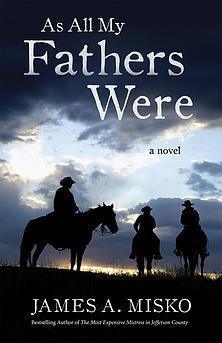 What if you faced the choice between losing your inheritance or saddling up for a journey of hundreds of miles on horseback – and you’re in your sixties?
That’s the premise for As All My Fathers Were, the latest novel by my friend Jim Misko. We sat down recently to talk about the book and the writing life.
As All My Fathers Were is about two brothers trekking hundreds of miles up and down the Platte River, first by horseback and then canoe, to fulfill the demands of their mother’s will and inherit their family farm. The brothers could have been almost any age, but you wrote them as men in their 60s. Why?
I wanted it to be tough on them. For them to experience discomfort every night when they got off the horses or out of the canoe and when they got up in the morning from sleeping on the ground. It would have been a lark for a young person, camping out and riding horses. No–it had to be tough and something they didn’t expect to have to do.
How did you research the horseback part of the trip? I mean what to bring, how to manage the horses, how to deal with bad weather on horseback, etc.
I have been on many a horseback trip in all weather and all seasons. They are lovely creatures but big and strong and simple minded. I’ve bred and raised horses, used them for pleasure and work, and been thrown in some tough places.
You’ve said you enjoy asking authors why they wrote a particular book, so I’ll ask you the same question. Why did you write this book?
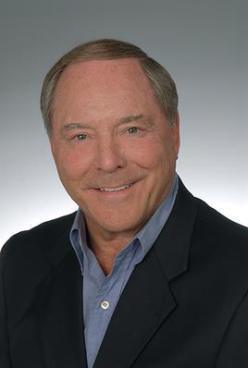
Jim Misko, Author
I have six to 10 books laid out with an idea about each of them and generally, a title for them. Then the itch starts and since I am a writer, I have to write. I pick the one that pushes on me the most, the one that will best tell a story that entertains, educates, and inspires a reader. This one reached that point and got to first place in the line.
This book’s plot centers around the environment, and suggests that modern-day farmers will need to make changes toward sustainable practices. What motivated the issue of environment?
While I was writing the story, an Indiana author, James Alexander Thom, suggested that they meet an environmental activist along the way, so I added the character of Martha. However, the 90-year-old man, Filoh, came along with the original characters. What was good for one farmer (the chemicals) has now gotten good for almost all of them and the river can’t handle all of them.
I really enjoyed the repartee between the brothers. They’re both kind of smart-alecky, but there’s a groundedness about them. Kind of like you, Jim. Who was the toughest character in the book to write, and why?
I believe it was the sheriff. His mixed motives were an anathema to me. I could understand the lawyer and the wealthy rancher, but the sheriff was tough for me to get into my head. I don’t like people in authority who choose to ride roughshod over citizens. I apologized before the book came out to the sheriff of the county the book is sited in; sent him an advance readers copy and apologized again but I never heard from him. The local editor said he was a neat guy and would not take it personally. Hope he didn’t because it sure wasn’t him.
You recently went on a long book tour in Nebraska, which is not only the locale for the book, but also the state of your birth. It must have been good to go home. What do you miss about it?
I miss the plainness and the slowness and the we-get-by attitude of many of the people outside the metropolitan areas like Lincoln and Omaha. I don’t miss the wind. But I do miss jumping on the back of a horse and riding across those forever hills with little ponds every so often. I would have loved to see it when Buffalo Bill was there. A person generally has a warm feeling for their home place unless it was pure agony and it was not for me. I miss the personal relationships that you can establish in those small town of 200 to 3,000 people where the people in the stores and banks and professions are there for their entire working lives.
Writers are urged to “write what you know.” What was the weirdest or least-known thing you had to learn in order to write this book?
I didn’t know much about the use of herbicides, fungicides, pesticides, and chemical fertilizers or how the farmers were using things like Round-Up and not plowing the land deep anymore. And how the river reacted to what was put in it. I got ahold of a wonderful author, Lisa Knopp, who had written a book entitled, What the River Carries , that spelled out how the river moved the pollutants along. I talked with an organic farmer who led me through the trials and tribulations of adjusting to sustainable agriculture vs. industrial farming.
Most of us writers wish we were more disciplined. You’ve written four novels and three non-fiction books. Have you mastered a writing routine, and if so, please share it with us.
A writer, to be called a writer, has to write. I like to write from nine or ten in the morning to about 2:00 pm. Then I break for lunch, read a little, and try to get some exercise in every other day. When I’m nearing the end of the first draft I often stick to it longer just to get it finished. Pretty soon I know I’ll come to hate the manuscript, am convinced no one will like it and neither will I. Then I can do other stuff until it starts to talk to me again–two weeks to a month–and I get the feeling that it just might make a decent read, then I can tackle it again. That’s when I copy each paragraph and paste it on a blank page and work it over until it says exactly what I want it to say. Then I copy it and paste it back into the novel, removing the old paragraph. After that is done for the entire novel I read it aloud to myself making corrections as I go. then read it aloud again. After that it goes to at least two editors, sometimes three.
Do you have any words of encouragement for other writers?
Persistence is the main quality. You can be a talented writer but without persistence you won’t get far. I can quote numerous writers who have had manuscript after manuscript rejected, or self-published a book and it ended there. There are five necessary steps to getting a book out to readers. (1) Write a good novel (2) Hire a good editor. (3) Hire a good agent. (4) Associate with a good publisher. (5) Gear up to do a lot of marketing. Books don’t sell books; authors sell books. The author can’t butt out on any of these steps. After all, it isn’t a hobby, it’s a career.
What writers inspire you and why?
James Alexander Thom, Kent Haruf, Howard Frank Mosher, Pat Conroy, John Graves, Nick Jans, Lynn Schooler, Herman Wouk, Richard Russo, Dick Couch, Andrew Neiderman, Alan Russell. Two passed away this last year before I got to know them well. They all love to write and they write hard and well, and they write what they like. What more can you ask of an inspirer?
What’s next?
I’ve just about chosen my next novel. I was waiting for one of the titles to jump up and smack me in the face and I do believe it is bending to the task this very day.
Any final thoughts you’d like to share?
Writing is such a personal thing. Every author I know approaches it from his own angle. Some outline, some don’t. Some know the story before they start to write, some don’t. Some work ten to twelve hours a day, some work three or four. The thing is to write, edit, revise, and keep presenting it to an agent or publisher or self-publish, but don’t leave your unborn child sitting in a drawer. Make it work.
Thanks, Jim. I read As All My Fathers Were and I loved it. I particularly enjoyed the can-do attitudes of the two brothers and their sister, who manages the farm in their absence. The story awakens the wanderlust in all of us, but more than that, it is a true midlife journey in which the characters consider where they are in life and where they want to be. I highly recommend it.
December 31, 2014
A Story of Reinvention
Excerpted from Middle-Aged Crazy: Short Stories of Midlife and Beyond –
The Complete Collection
by Lynne M. Spreen
In the blue cold of late afternoon, Rita set out a row of traffic cones around the eighteen-wheeler to warn oncoming drivers, but of course there were none. Travelers had been advised not to attempt Donner Summit for at least another day. Record snow blanketed the Sierras from Grass Valley all the way to Reno, and the forecast called for more. Even CalTrans workers had locked up their snowplows and gone home. The next twenty-four hours along I-80 would be a trial for anyone foolish enough to be out here.
Bracing against the wind and sleet, she climbed up on the back of the rumbling semi. The wind shook the rig, and she remembered a recent overturn in which a coworker had died.
She removed the padlock from the twin sets of steel chains, and heaved each set to the blacktop. She wasn’t built for this kind of work. Her hands were too small, her body too light, and in her late fifties, she was too old. Still, it was better than going hungry.
Rita climbed down off the rig, slipping on the icy pavement. With the dark of afternoon, any moisture on the road was quickly turning to ice on the steep grade.
In the brief intervals between gusts, the forest echoed with chill quiet. Then the wind would come howling through the pines and up the slope, rocking the Peterbilt and forcing the mercury even lower. Rita picked up one set of chains and draped them over her shoulder, wincing at the twinge in her lower back.
Rounding the front of the tractor, she slowed to absorb the comforting warmth of the big Cat-15 engine. Together they’d racked up a hundred thousand miles crossing the U.S., through rain and snow and along the outer edge of some bad tornadoes. On just this trip, she’d barely escaped a white-out coming over the Continental Divide from Denver. The previous owner swore the rig was a reliable workhorse. Rita shrugged the chains to the ground. She had no choice but to trust it to carry her down the mountain and into Sacramento by tomorrow morning. Otherwise, the load would be late, and Rita’s well-meaning but strict supervisor would knock her back to hauling livestock.
Now, in the silence of the High Sierra, she shivered. Earlier in the day, the dispatcher told her the Pass would be open, at least until early afternoon. The forecast called for a second storm, a bad one, but not until later –midnight at the soonest. Rita had to take the run. The payment on the rig was due, and she didn’t make any money sitting in the yard. And no matter how unappealing the job, it still beat teaching remedial reading to juvenile delinquents.
She’d spent a career at the court schools, and not much surprised her in the way of bad behavior, but this time, it was different. The attack had finished her. His tattoo – a knife superimposed over a naked, bleeding woman – would forever be burned into her mind. Even now, she saw it when trying to sleep.
“Remember the rule?” she had said to her students, all teenaged boys. “The ‘e’ at the end changes the vowel sound.” She looked up. At the back of the room, this new inmate was smiling at her, his incisors peeking out from under thin lips. The kid was a man; he should have been in an adult facility.
Right after that, she had him moved from her class, and in the days and weeks that followed, she never went anywhere around the facility alone. One day, everybody was busy, and she had to pee. He followed her, locked the restroom door, and punched her in the mouth. Shoved her into the sink and took her from behind, yanking on her hair so she had to watch in the mirror. She remembered that tattoo on his forearm, the arm that wrapped around her neck and cut off her breathing. When she came to, her cheek was pressed against the filth of the restroom floor, and she was spitting out teeth and leaking his fluids.
That was three years ago. Her attacker was in prison now, locked up tight, for a few years anyway. Rita, slowly recovering, was driving a truck – hers; she had bought it last January – from coast to coast and back again, concerning herself only with the vagaries of weather, other drivers, and the logistics of getting her loads to their destination without mishap.
Now, kneeling on the pavement in the approaching storm, the cold steel chains felt like they were going to burn through her gloves. Rita crouched by the wheel on the passenger side where only a guardrail protected vehicles from a sheer drop of thousands of feet. The road on which she parked the rig angled upward toward the summit, and the incline called for her to chock the wheels, but she was freezing, so she skipped that step, working fast, trying not to remember.
After the attack, she couldn’t work. Couldn’t be in the same place where it had happened; couldn’t be anywhere else either, it seemed. She was afraid all the time, and took to carrying pepper spray and a knife, and a gun in her car. At home, a run-down rental in San Bernardino, she kept the doors locked and the shades drawn, and watched the Nature Channel all day.
She managed to hide until her disability pay ran out and she was forced to find a job. A temp agency sent her out on office work, but Rita couldn’t take the constant noise and light. She tried night janitorial and delivering newspapers, but her attendance was spotty and the paychecks miniscule. When she couldn’t pay her rent, she moved into her brother’s house. At first she tried to earn her keep, doing light housework and putting something into the crockpot in the morning, but most days, she took the anxiety pills the doctor prescribed and slept until nightfall. As the sun was going down, she’d eat toast and drink a glass of water, then watch TV until dawn. That went on for months. Finally, she couldn’t stand herself.
One afternoon, she handed Ernesto a beer and flopped on the sofa next to him. “Teach me to drive your truck.”
He almost spewed. “What the hell you talking about?”
“How hard can it be?”
“Stick to secretarial, mija.”
“Fuck you.”
“No, listen, I’m serious.” Ernesto cocked his head toward the rig, out in their driveway. “You know how long the front of the house is? That’s how long the load is. And it’s heavy. You could be pulling forty tons, easy. You think you can just whip around in that thing? Telling you, the four-wheelers’ll get you killed; they’re like bees sometimes, swarming all in front of you and you have to brake fast without jackknifing. Whatchu gonna do if some little asshole cuts in front of you?”
“Whatever it is you do, I would do.”
“Then under the hood you have seven hundred horses, with ten forward gears and two reverse. And that’s just the rig. That’s not the road hazards or the weather. And it’s physically hard. There’s not that many women doing it. The other drivers are mostly men. You won’t have any friends out there. I say, forget it.”
Rita grabbed his beer and drained it, but his skepticism was justified. She was probably too old to learn anything this daunting and dangerous. And what about her mentals? Hell, she couldn’t handle running an industrial floor buffer, let alone a tractor-trailer rig. She’d probably crash and die in a freeway fireball.
“I need a shower.” Ernesto took the empty can and tossed it in recycling.
Rita watched it land. At this point, she was so pathetic, she was trading in aluminum cans. But the money wasn’t the only thing. Until the kid at Juvie, she’d been a proud, highly functioning member of society.
So: operating a rig? Driving from point A to B and collecting a paycheck still sounded better than cleaning toilets on the night shift at the Holiday Inn, afraid of every shadow, every approaching voice.
At least with the truck, she could lock the doors. Her mouth went dry and her stomach rolled over in a nauseating flip.
The shower stopped. Ernesto went into his room. Five minutes later, he came out, dressed in Levis and a tee shirt. “Let’s go.”
“Now?”
“Yes, now. I have to work tomorrow.”
She ran into her bedroom, threw on some clothes, found some sunglasses under a pile of crap on the dresser, and dashed outside where he was warming up the tractor. The passenger seat seemed airborne, it was so high off the ground. Ernesto put the truck in reverse, and with a great burst of exhaust, the truck began backing out, its twin smokestacks jerking from side to side as the big duelies rolled over the lip of the driveway and into the street.
Rita craned to look out the back window. With no trailer, at this high perch, she could see a good distance. At least she had that.
Ernesto drove to a deserted road near the old cement plant, talking all the way there about the importance of patience and respecting the rules. He stopped in the middle of the street and they changed places. When Rita slid behind the wheel, her arms shook and she couldn’t feel her fingers, but with Ernesto’s guidance, she got it in gear and puttered down the road into the sun. When he instructed her to make a U-turn, she felt the roll of nausea again, but completed the turn without mishap. Going the other direction, east now, working up through the gears to forty miles per hour, the sun behind her, she glanced in the mirror and grinned.
“Yeah, look at you,” Ernesto said.
 After that first experience, she went along on short runs, driving whenever they were away from traffic. Twice, Ernesto allowed her to come along on longer runs, and she even parked the fully-loaded rig a few times. At first she was speechless with fear, but then something else sparked in her, a tiny flame that flickered and grew as she turned the wheel, as she felt the motor obey the commands from her foot on the pedals and her hand on the gearshift.
It wasn’t just the power and independence of driving. Rita loved the solitude. After a few more runs with Ernesto, Rita enrolled in trucking school, earned her license, and landed a job with an outfit in Los Angeles.
Once on the road solo, she used her CB and discovered a community of fellow truckers to answer questions and teach her about life on the road. From them, she learned to use her seatbelts at night to secure the doors, that fuel could freeze, and that drivers can be poisoned by carbon monoxide, so she bought a detector for the cab. The other drivers teased her once they found out the greenhorn was in her fifties, but out on the road they waved as they passed. One day at a truck stop, an old guy saw her struggling with her tandems. He came over with a hammer and delivered a well-placed whack to the locking pin, solving the problem and teaching her something about machinery. He never said who he was and took off before she could buy him a cup of coffee.
Aside from days like this, when her hands were numb and her bones ached from the cold, Rita loved long-haul trucking. There was so much beauty out on the road, from rain squalls across the Arizona desert, to sunrise in the Florida Keys. One hot day coming down off the Carrizo Plain in California, she thought she spotted a pair of condors circling overhead. Since it was almost noon, Rita pulled over and shut the rig down. She grabbed her binoculars and watched the birds ride thermals above the Central Valley. When they’d become tiny specks in the distant sky, she opened her doors and let the breezes rustle through the cab while she made a sandwich in the back. Placing a lawn chair in the shade cast by the cargo container, she enjoyed her lunch, the silence broken only by the ticking of the cooling motor and the dried grasses undulating in golden waves.
Now, the cold wind howled through the forest, and Rita braced herself against the blast. A few snowflakes landed, and she wondered if she had waited too long to chain up. Her instructor, a man with bleached hair, tattoos and pieces of metal in his earlobes, liked to say that some things could only be learned through experience, and he hoped she would live long enough to learn them.
Kneeling next to the outside drive wheel, Rita spread the links of chain. Nearby, a paw print in the snow spoke of recent visitors. The print bore no claw marks, and it was too big for a bobcat according to what she remembered from teaching science class.
So then it was probably lion.
Her gloves prevented frostbite in the relentless wind, but the chill penetrated through her heavy parka. Wind swirled wet brown leaves around the heavy tires. Downslope, tall pines bent and moaned in the face of the second front. The diesel rumbled, waiting, its power vibrating through the blacktop.
Finishing with the first set, Rita stood and rubbed her lower back. She longed for a hot shower and warm bed. There was a travel center outside Roseville where she could park for the night, get a shower and do a load of laundry. Then she would lock herself in the sleeper cab, fix dinner in the microwave and open a bottle of Riesling from the fridge. Secure in her little nest, she’d check her email and perhaps watch Dancing with the Stars on satellite TV. Night would be spent in the safety of numbers, trucks lined up shoulder to shoulder in the vast parking lot. Sometimes the lot lizards banged on the door of her cab, hoping to ply their trade within. When they saw the driver was a woman, they’d slink away. If the girl looked pitiful enough, Rita would slip her a few bucks through a barely-cracked window.
The gathering gloom told her it was well past three. She returned to the driver’s side and knelt next to the wheels. Between gusts, the forest fell silent. Not even a raven showed up to squawk insults at her from the high branches. All the other creatures were smart enough to be out of the weather.
Rita’s fingers stopped and she turned her head, the better to listen. Another truck? No, the sound wasn’t coming from the road. It was coming from below, the sound of wind roaring through the pines and up the slope toward her. Before she could react, the massive squall slammed broadside into the eighteen wheeler, rocking the rig and knocking Rita under the trailer. Cursing the storm, she reached for an overhead crossbar with which to pull herself back up. But the crossbar had slipped out of reach.
The rig moved six inches.
And then it moved again.
Rita squirreled out from underneath and scrambled to her feet. Eighty thousand pounds of brand-new medical equipment had begun inching away on the icy highway. One foot, two – the rig was sliding backwards on the slick grade, on its way to the edge of the road and the deep canyon beyond.
With a mighty heave and a shriek worthy of Serena Williams, Rita hurled a set of chains toward the truck. The chains arced through the air and landed in a heap behind the sliding drive wheels. The tractor thundered up onto the links, mashing steel into the blacktop as the giant duelies fought for purchase. With one last, great tremor, the rig shuddered to a stop, idling patiently now as snow began to fall in earnest.
Gaping, incredulous, Rita felt her gorge rise. She bent over and threw up.
Hands shaking, she climbed up into the cab and eased the rig forward and off the chains. Then she set the brake, chocked the tires and knelt back down to finish the work, humbled by the fact that negligence could have cost her the load, and probably her life, too, considering that nobody would have come to rescue her. She finished chaining up, retrieved the chocks, and climbed back in the cab.
Thirty minutes later, she took the eighteen-wheeler over the summit’s crest and down toward the city. Sacramento was only a couple hours away. The worst part of the storm was behind her, and the road ahead looked clear.
Rita turned on the CB, found a channel, and listened to the chatter, reassured by the easy banter and non-stop smart-mouthing. If she ever got up the nerve to tell about it, what a story this would make. Wouldn’t the other drivers love it? They would laugh and make fun of the old lady schoolteacher who almost lost her load, but then they would offer to buy her a beer because they had their stories, too.
For the complete collection of short stories, click here to access Amazon.com.
December 25, 2014
A Christmas Goodie for You
Merry Christmas, my loves, and happy new year! Here’s a goodie for you. See you in oh-fifteen!
aaaaaaaaaaaaaa
December 19, 2014
Dang Independent Old People

Mom in North Dakota, Sept. 2010
Mom’s almost 90. She’s bright, independent and social. She’s also frail and tiny. On the rare occasion she goes out in the evening, she lets me know ahead of time. This is because everyone, from local family to relatives from back east, will call me worrying if they can’t reach her after dark.
So when I called around five on Sunday night and she didn’t answer, I figured she was indisposed and would call back. She didn’t. An hour later, she didn’t answer either her cell or landline, so I drove over to her house (four blocks away). Her windows were dark but the porch light was on. I figured she went somewhere with her friends and forgot to tip us off.
Over the next couple hours, I phoned a few more times, and then let my sister know. Karen was concerned. “Have you gone inside her house?” she asked. Feeling like a jerk, I let myself in and checked every room and closet. The car was home, so I checked inside that, too. Looking out the patio slider, I was grateful to note she was not lying in a crumpled heap outside, and in fact, the door was locked, further evidence she’d gone out. As I drove back home, I noted a Christmas program going on at the Lodge, which is the clubhouse for our 55+ community. We assumed she was there.
But it was so unlike Mom not to tell us! She is very responsible and thoughtful. Over the next few hours, Karen and I called and left a few more messages. Nothing.
Pretty soon it was 9:30, and I called Karen back. “What are we going to do if she hasn’t turned up by 10 when the Lodge closes?” I asked. Karen said, “Why don’t you go inside and see if she’s there?” Smart, but risky: if I showed up at the ballroom, Mom would think something horrible had happened to a family member. Then, when told I came looking for her, she’d be embarrassed in front of her friends.
But maybe I could sneak in, see if she was there, and split, undetected. I put my bra back on, as well as some decent slacks and a dab of lipstick. It was now 9:45. At the Lodge, I parked in front and headed toward the ballroom.
Great timing. The party was ending and a crowd flowed toward me. There she was: the shortest person in a sea of elders, her auburn hair barely visible over someone’s shoulder. I fled to the car, leapt in, and drove down one of the parking aisles, where I shut off the lights and waited to make sure it was her. It was dark, but her walk is distinctive after that broken leg of three years ago, and she has a slight hunch from osteoporosis. Then I saw the glint of her cane, and knew I could relax.
I called Karen. “Found her!” I said, laughing at my sneakiness, all for the purpose of ensuring Mom’s safety without her feeling impeded. Karen asked, “What is she doing now?” Suddenly angry, I said, “She’s crossing the parking lot with her old biddy friends!” I was mad with relief. Then I got the idea to race over to her house and watch to make sure she got in okay. I parked on her street, stalking her again, feeling like an inept spy.
She never showed.
I drove around back, thinking she might have gone in through the garage. Nope. I circled her neighborhood for a few fruitless minutes, but assumed she went over to a friend’s house for a snack. I drove home, mumbling and cursing to myself. And there she was, in the back seat of her friend’s little car. They were on my street, looking at Christmas lights. I managed to get inside my garage undetected.
It was almost ten. I went to bed. “She okay?” mumbled Bill from under the covers. “Fine. She’s out partying.” It was, after all, my fault and my success that Mom had come to this. I was the one who lobbied hard for her to move to my community. “You’ll have friends,” I’d said. “There are always activities at the Lodge. You’ll never be bored or lonely.” Now, three years after moving away from her beloved home in the high desert, she was thriving, independent, and social.
And her kids were freaking out, acting like they were the parents.
The next day, she was slightly defensive. “I figured you wouldn’t call,” was her argument, but we both know that’s a load of hooey. I said I was glad she had friends and a social life, and that we kids put her through more than this when we were teenagers. We laughed and changed the subject. She’ll never know how upset I was. If my elderly, fragile mother is capable of independence and self-determination, and has all her marbles, I’ll stay out of her way.
Even if she does drive me apeshit.


