
Lynne M. Spreen's Blog, page 34
December 7, 2012
Your Middle Age Brain: Brilliant and Ridiculous All At Once

I’m looking for my glasses, but I can’t find them because they’re on my head. So I find my backups and try to put them on, but discover I’m already wearing a pair.
I would feel stupid except at times, I feel downright brilliant. This has probably happened to you, too. Maybe you’re listening to a younger person explain a problem at work or you’re reading an article in the news, and suddenly all the facts connect and you come up with such an awesome solution you want to call the Nobel commission.
Except you don’t quite trust what happened, because only yesterday you came home from the grocery store and put the bananas in the hamper. Maybe what you’re having is some kind of brain flair before the cells die. You never shine so brightly as just before, you know - pffffft.
Stop worrying. Both things really are happening. New research confirms that you’re both more addled and more brilliant than ever before in your life.
If you’re a typical middle-aged* person, the glasses and bananas are real, and so is the intellect.
The science of the aging brain is quite new; conclusions being drawn just in the past few years prove that we have more to be excited about than ever. For example, it wasn’t that long ago that we were told brain cells only died; none were regenerated. However, that has now been proven false. The brain DOES produce new cells, primarily in the area relative to memory.
But I’m getting ahead of myself.
In a great new book, The Secret Life of the Grown-Up Brain, author (and science editor for the NY Times) Barbara Strauch produces tons of evidence that, while our older brains definitely have some weaknesses, they also develop amazing, surprising, even beautiful workarounds. In fact, the older brain is gearing up, not slowing down. All during December I’ll be telling you what I learned, and – plagiarism alert! – excerpting heavily from her book. That’s because I can’t say it any better than Barbara did.
Here’s some good news: in older age, you’re smarter. This is because you’ve accumulated such a wealth of data, and the human brain has a special talent: deduction. Per Ms. Strauch:
The brain builds strength (over a lifetime) by building up millions upon millions of patterns, allowing us to “recognize even vaguely similar patterns and draw appropriate conclusions.”
One researcher, E. Goldberg, calls it “mental magic.”
“Frequently,” says Goldberg, “when I am faced with what would appear from the outside to be a challenging problem, the grinding mental computation is somehow circumvented, rendered, as if by magic, unnecessary. The solution comes effortlessly, seemingly by itself…I seem to have gained in my capacity for instantaneous, almost unfairly easy insight…”
According to Barbara Strauch, when faced with new information, the older brain might take longer to assimilate and use it. But faced “with information that in some way – even a very small way-relates to what’s already known, the middle-aged brain works quicker and smarter, discerning patterns and jumping to the logical endpoint.”
This is an evolutionary triumph. We’re not called homo sapiens – thinking man – for nothing.
Of course, there’s no getting around the fact that we’re more easily distracted and more likely to lose focus as we age. This is because as you get older, new information comes into the part of your brain that’s good at daydreaming. So when you’re trying to read a newspaper in Starbucks and somebody’s jabbering loudly on his cellphone and you can’t concentrate, it’s because the daydreaming mechanism is doing a crappy job of managing the new info.
You can mitigate this with discipline and practice, but you have to work on it. Personally, I think daydreaming is a treat, and I’m not sure I want to curtail it.
Remember how I said your brain gears up rather than slowing down, later in life? I can’t wait to tell you more about it but I’m already up to eight hundred words and I don’t want you to lose focus. Thus I’ll save bilateralization for next Friday. Now go have a nice daydream.
*Definition of middle age, per Barbara Strauch, is that long period between youth and old age. I like it. I like it a whole lot better than assuming you’re at the halfway point. Because as vibrant and kick-ass as I am, I’m sure as hell not going to make it to 116.



November 30, 2012
Oprah to Boomers: Drop Dead
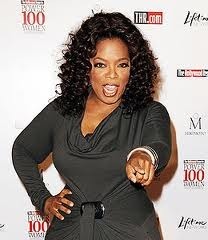 Stop the presses! Did Oprah really say she would pursue a younger demographic because after forty, women have things figured out? Nothing more to teach us older broads?
Apparently it’s true. To shore up her biz, Ms. Winfrey said she would like to attract women
in their 30s or perhaps their 20s, to be able to reach people when they are looking to fulfill their destiny.” She added, “By the time you’re 40, 42, you should have kind of figured it out already.
Yah, us over 40s have that destiny thing all out of the way. No sense talking to us anymore.
Okay, it makes sense that she’d want to augment her customer base by adding younger people, but I get the impression she wants to distance herself from the demographic whose undying loyalty made her a billionaire, and that rankles.
Even though I fell out of love with All Things Oprah a couple of years back, I’ve always thought she was one smart cookie, but that comment about having things figured out is ridiculous and self-serving. I mean, look at all the heavy shit we still have to face! Deaths of loved ones, illness and surgeries, loss of jobs, financial challenges, helping our aging parents and/or the younger generations while still trying to carve out some happiness for ourselves, following our dreams even late in life…
Does Oprah really think we have it all figured out?
What a failure of imagination.
I understand commerce. Business is business, and she must do what is necessary to keep her financials healthy. So why would she ignore women in the second half of life? It’s a common mistake – I guess some folks just can’t accept that we older women have discretionary income and we’re not afraid to use it. You’d think that would weigh into her biz calcs.
A minor oversight!
Sometimes when you become too rich and powerful, your minions only tell you what you want to hear. Maybe that’s what’s happened to Ms. Winfrey. However, she might want to sneak off to a broom closet with her personal laptop and check out She-Conomy by Stephanie Holland to get all kinds of late-breaking info about who has the bucks in this country. Or maybe catch some of the great wisdom about marketing to women by Marti Barletta. Maybe even invite Stephanie and Marti to present. Hell, Oprah could do a gigantic segment on women entrepreneurs in the second half, from starting-out-on-a-shoestring to Fortune 500 CEOs (all 20 of them).
Oprah seems to be assuming women our age (ahem – her age) aren’t still on a path to conquer old demons and new worlds. But maybe I’m reading her wrong, and what she really meant to say was this:
By the time you’re 40, 42, let alone 60, 70, 80, and up, you’re so completely awesome that I can’t think of anything else I can tell you.
Or this:
I’m only 58. I need to restart my own growth curve and I haven’t quite figured out how to do that. Any ideas?
Yes, Oprah. Start hanging out around Any Shiny Thing, where we could illuminate a small planet with all the wisdom, friendship and warmth we generate! Ladies and gents of AST, what would you advise Miss Oprah to do, personally or regarding her business? Any ideas? And keep it friendly.
Thanks to my friend Sarah Stockton for alerting me to this intriguing article in the first place. It appeared in the NY Times on November 29.


November 23, 2012
Thankful I’m Old(ish)
 On this Thanksgiving, I pondered the fact that I’m grateful for you, my friends at Any Shiny Thing (sometimes I type it wrong and it comes out Any Whiny Thing, and that’s good, too).
But I appreciate you. For sharing your experiences, for holding my hand when I’m scared or bummed out, and for your contributions to our mental health (did you know commiserating with each other generates oxytocin, the love chemical, and defeats cortisol, the stress chemical?)
I am grateful for the fact that we can gather together around this electronic campfire and howl at the moon about being in the second half of life.
I started Any Shiny Thing because I think we’re more powerful at this age, but that’s not the common perspective and I want to change that. I reject the premise that everything young is good, and everything old is bad. I agree with Barbara Strauch, who defines middle age as that vast range between young and old. I believe older people have the joyful responsibility for sending back messages from the front, and their younger sisters and brothers should pay attention.
I’ve been gathering some great information about the benefits of “middle age,” and all through December I’m going to talk about the amazing, awesome gifts we receive from being older. This isn’t just anecdotal.
Brand new research, based on brain imaging, has led to new discoveries about the way the brain ages, and these discoveries will shock and delight you.
Here are some examples:
As we age, our brains don’t slow down. They power up, rerouting information over new roadways, actually increasing brain function.
The older you get, the calmer and more positive you become.
The older brain is adept at cutting through the BS and arriving at solutions to complex problems in less time than our younger peers.
There is so much more, and I can’t wait to tell you about it, but I’m visiting with my family in Atlanta and want to get back to them. So we’ll talk next week. Enjoy your mad, crazy post-Thanksgiving weekend.


November 16, 2012
Who Decides Your Life Course?
 Recently, Oprah said most people, especially women, lead their lives following a course that is not their own.
No kidding.
I mean, you’ve noticed, right? How a woman will partner up with a guy, and pretty soon she sounds like him. Maybe even looks like him, body-wise. She used to be thin, now she’s not. She used to be debt-free, now she’s a spendthrift. Used to be politically apathetic, but now she’s a passionate partisan.
This phenomenon fascinates me. I want to write a book about it, a novel of four women who, over the course of a summer all realize they’ve fallen victim to this. I don’t really want to write about a younger woman – I figure we all did it when in our teens and twenties, but then you start to figure out who you are and what you need, and theoretically, you don’t become the clone anymore. No, the people who interest me are the older women who are still stuck in this mire, whether they know it or not, and whether they change or not.
Of course, this is only a problem if it’s a problem. Sometimes people influence each other for the better. In some ways, I’m my husband’s mini-me, but that’s more a case of God shaking her head in despair and sending me a car salesman, due to the fact that I desperately needed somebody to show me how not to be such a doormat and martyr. But I’m not talking about the good influencers, and neither was Oprah. She said,
Unless you find a course that is truly your own, you betray yourself, and then you’re no different than the person who betrayed or hurt you.
Sometimes pain is sweet. The fact that we’re not “allowed” to clean up the garage, because he insists on things being a certain way, means we get license to complain without actually having to do anything about it. Not taking the reins is a relief, sometimes. So is the feeling of being limited by somebody else – it’s how a lot of us were raised, right? We’re told to be obedient, follow the rules, let the other person go first, give up our seat, be flexible. It becomes a habit. Pretty soon you’re afraid to take the reins, but it’s okay – you’re comfortable with it. Resentful, but comfortable.
Let me ask you this: What if you had no limitations? What if you could do, create, live, or be exactly what you wanted in the days, weeks, months, years to come? What goals would be on your list, and how fantastic would it be to realize those goals? Now, ask yourself what is standing in your way, and what can you do, if anything, to get around it? If you’re tempted to shrug and say, “Nothing,” I have a titillating question for you: are you happier with that answer than with the alternative?


November 9, 2012
No Picnic for Young People, Either
My son walked in the door one evening after the daily commute with his 2-year-old daughter, who attends day care near his job. Their arrival signaled the end of my ten-hour shift, and as I prepared to hand off my 7-month-old grandson, I watched my son shift gears, from tired elementary school teacher to tired dad.
Getting in my car and driving away felt good, in that I was free to go back to my “retiree” life, but this babysitting gig reminds me how how hard it is to raise kids. When we’re young we think it’s never going to end, and then when we’re old and it’s over, we wonder where the time went, and I think our perspective gets rosier in the rear view mirror. Maybe too rosy.
The adult kids suffer. They’re sleep-deprived, and they don’t have the sanguine approach to life and career that you earn with age. Everything is harder for them, and in spite of my own problems, if I had to do what they’re doing, it’d kill me. Like the “It Gets Better” campaign, I want my kids and all young parents to know it really will even out. And at the risk of pissing them off, here are some coping strategies I’ve learned over the years that might help them feel less pressure and stress:
After a long commute, you shuffle in the door after dealing with tailgaters and other assholes, and for about the first ten minutes you’re in no mood for civil conversation. So Bill and I have learned to tell each other, “I’m still on the freeway,” which is code for leave me the hell alone until I have the energy to behave normally again. If you have little kids, focus on them. They’re entertaining. Leave the big stuff for later.
You’re more in control of your feelings than you think. If you put on a show for your conscious mind, your subconscious will go along with it. So if somebody asks you, “how was your day?” you answer, “pretty good,” even when you want to say, “IT SUCKED LIKE HELL AND I HATE ALL HUMANITY!!” And not only will your subconscious start to lift your spirits, you won’t have a depressed/pissed off spouse to deal with. (I learned this the hard way, and not until I was about 40.)
Correlation to the above: music can and will change your mood, for the better or worse, so choose accordingly.
Fatigue and alcohol will get you in arguments in which you believe, at the time, the Authentic You is speaking. But the next morning, when you feel like a jackass, you realize it was the tired or buzzed you. And now look at the mess you have to clean up.
Don’t get too hungry. It messes with your head. Have a snack when you start dragging. See Authentic You, above.
To be fair, retirees with lots of free time sometimes develop amnesia about What It Feels Like To Work Fulltime and Have No Life. Working people – young or old – must hate hearing us geezers yabber on about finding ourselves, since they barely have time to find a clean pair of socks. So if we forget, and wonder about our true purpose, know that you, Young Person, will get your chance. Along with thinning hair and involuntary farting.
What about you, Older Person? Any tips for the kids?


November 2, 2012
Aging with Grace
 I asked my friend Nanci, at long last retired from her career in K-12 education (as a teacher and principal) how she is adjusting to all her free time. Nanci, in her early sixties, has a brilliant, introspective, ethical and spiritual mind. You might remember her from these skydiving pictures. She’s no wuss. Here’s what she wrote recently, and I think it exemplifies transitioning with grace as we age:
a
Last week I went to a kayak class in our local Ocean Kayak Clinic. It offers lots of classes from kayak surfing, rolling, expeditions, crabbing and rescues. My neighbor, Roy, and I thought that we might take rescue together, since we often kayak and it would be good to be able to help each other and ourselves should we capsize. I had taken the same class 8 years ago and felt that it was a good class to have and to repeat.
a
It was a cold, rainy day… there were eight of us in the class. I was one of two women and the oldest in the class. I feel that I am a pretty accomplished kayaker, but in this class I was terrible. I was able to help others, but every time it was my turn in the water I could not get back into my boat, except with a ton of help. I remember being in classes with other “lame” (IMO) people and was embarrassed for them and wondered why they were even in the classes.
a
Eventually the class ended and I took my very chilled and soggy body home. I then ruminated on what exactly this means for me. Should I work to regain upper body strength (although I do yoga regularly and it’s not usually a problem for me) or should I just not do any hard kayaking where I might get in trouble or perhaps there may be some other ways to think about the experience.
a
I hosted a Tapas Party a few days later with a bunch of “foodie” friends, including my wonderful yoga teacher. During the conversation, someone asked me about my class…I laughed and said, “True confessions”, and told the group of my struggle.
a
Laura, my teacher, said, “Well, Nanci, what I hear is benevolence of spirit.” And she was right…and this is my real learning from this experience. Because for most of my life I would have been totally humiliated and would have slithered home and berated myself for days. I would never have shared my experience for the sheer embarrassment of it. For once, I had accepted and loved myself enough to be able to just contemplate what this meant in the realm of my life, without severe judgement. And it felt good. I’m not sure if this is a gift of age, or if it is a late learning for me. It is something I wish I could pass on to young people who live in the shame and embarrassment that I have carried with me all these years. Imagine what we could accomplish as humans if we could be self loving. Benevolence of spirit, what a wonderful term and a life expanding concept!
Nanci, I’m inspired by your words, and happy you’ve found that sweet place of self-appreciation. Unfortunately, it probably is something the kids will have to wait and work for, because I think it mainly comes with age. Thanks for letting me share your story.


October 26, 2012
Should You Quit Blogging?
If you came of age when I did, in the time of carbon paper and WhiteOut, you’re probably as enthralled as I am about all the possibilities available to us now through technology. One is the ability to start a blog, and a lot of my friends have done that. But lately, some of them are discouraged.
It’s time to rethink blogging – what it is, and isn’t. What it can give you, and what it can take away.
Let me start with a story.
I happened to notice that a popular blogger stopped posting. After a month I emailed her. I mean, sure, it’s cyberspace, but how would we, her subscribers, know if she were lying dead in a ditch or something? Turns out, she was fine, but since I was the only person who checked on her, my inquiry started a discussion about why we blog, and whether it’s really worth it. She said:
When my business was way down last year and I had time on my hands, I began to expand my blogging network. I spent hours each day reading other people’s blogs, commenting, etc. After awhile, I felt like I was a member of a fun club…I got so caught up in it all, I lost sight of the fact that, for me, most of the posts weren’t even worth the time it took to read them…When all was said and done, there were maybe five bloggers who I felt had something to say (you are one), beyond just being clever.
I kept asking myself what the point of it was, and I couldn’t come up with a good answer. Tossing off blog posts is fun, and getting comments is fun as well. But, honestly, I’ve never felt as though what I was doing was important in the big picture. It all seemed like simply a more respectable and creative version of Facebook.
I love to speak to women and to conduct workshops. That is what juices me and allows me to believe that I’m having an impact on women’s lives. And in some perfect world, I would love to write regularly for a publication, which would do the same thing for me. But I know that won’t happen.”
In response, I said:
Blogging is a mixed bag. I love it and I don’t love it. It’s an awesome way to create a community, and some of the comments really lift me up. But it’s probably not contributing to sales, and even if it is, the ROI isn’t enough to justify it.
She and I agreed we were on to something, and after our conversation, I wanted to think about it. Here’s what I decided: there are only three reasons to have a blog:
It’s an enjoyable hobby. You blog when you feel like it, and if nobody responds, big deal. Seeing your work in print is its own reward. Maybe you’ll do more with it someday, but until then, you count it as experience.
You’re trying to sell something, whether it’s paid speaking engagements, book sales, advertising on your site, or a widget of some kind. You work your ass off blogging because you desire success. (Note to authors: if this is your plan, stop now. Convert your blog to a static website and apply all your resulting free time to networking on Facebook, Twitter, LinkedIn, Goodreads, etc.)
You’re passionate about an idea or theme, and you need to talk about it constantly. You get a charge from the sense of community arising from your visitors and their comments and emotions. You don’t care if you go hungry.
I’m number 3. I need to figure out the second half of life. I love the community that blooms when we all ponder this together. That’s why I blog, and write books, and interact on social networks. Everything I produce is about one thing: the second half of life, and living it mindfully and powerfully.
I love my Any Shiny Thing website, because it’s like being a media mogul. With a website/blog, you’re the head of a TV station, deciding what videos to post or link to. You’re the radio station owner, deciding which podcasts to produce. And you’re the newspaper owner, publishing your own little paper every week. You’re the boss, but like most self-employed people, you work for a hard-driving bitch. It takes time, energy and creativity, and you don’t get time off.
Except for the bitch part, I’d tell my friend that she actually does work for a publication that can impact women’s lives, but unfortunately, the work is unpaid (in terms of dollars. In terms of oxytocin, the chemical women experience as a result of bonding, there’s a pretty big payout! But you can’t write a check with it.)
So here’s my bottom line: as a boomer, I’m thrilled with technology, and I hope to use it to build on my topic for everybody’s benefit. But frankly, blogging can take a lot of your time for no result. It’s really important to be clear about what you’re trying to accomplish, and how much you’re willing to put into it. Because life is short, and you don’t want to burn time or energy on the wrong thing. Isn’t that one of the tenets of our discussions? One of the most important rules we all agree on, now that we’re old enough to know better?
What about you? Why are you blogging? What do you get from it?


October 19, 2012
Boomers Renegotiate Old Ties
Recently, I was shocked when my sister insisted I address her by her formal name – something I’ve rarely done. She said the family nickname has been “galling” her for fifty-six years. My first reaction was to feel kind of pissy about it, even though of course I knew she had the right. Then I thought, hey, pretty cool. She’s at That Age. No more compromising on this point. She’s renegotiating her relationship with the family.
I checked with my friends at Kevorkian Estates, and this renegotiating thing seems to be going around. “I never really got along with my brother,” said my friend Joan. “For years we avoided each other because we have nothing in common and frankly, we grate on each other. But I’m older now. We’re family, and I miss that. I’m willing to make some concessions.”
It’s not just distant siblings who are renegotiating long-time relationships. Wives are throwing down the gauntlet.
“We either change or I’m out of here,” Maureen told her husband. Now that they were retired, he was getting super-clingy. She loved him, but needed more space. After some heated discussions and a bit of cold shoulder, they thawed out enough to agree that she would take a few solo weekend vacations every year, and he wouldn’t get mad or feel unloved. It wasn’t perfect, but it works for them.
Some of my buddies said they feel more whole within themselves, or more confident; they no longer need the affirmation of others, or compliance from others, to feel respected. But there was no solid agreement! For example, Kathy said, “I’m sixty-six and I’m more mellow. My friends don’t have to be 100% in tune with me. Now, I can settle for less and be cool with it.” Her friend Sandra stared at her, indignant. “I’m too old to pretend. If they can’t handle me, the hell with them.”
Sometimes an issue might be a deal-breaker, causing a long-time relationship to fade away. That happened with me, and I’ll never stop missing my dear friend, but as we matured, I got frustrated with her heroic resignation to martyrdom. She’s “happy” and it’s her life, but I can’t hang with her now. I get frustrated. I keep wanting to fix her! So now we live separate lives. I’m sad about it, but we both have the power to choose.
But in regard to my sister, her demand for authenticity sparked my own. What might I ask of her? Is there something I’ve been soft-pedaling that I might be able to come clean about and ask her to respect now? For example, I might ask her to stifle the politics, since we’re polar opposites on that score. She might agree, and then we can move forward, respecting each other’s choices.
Have you renegotiated an old relationship? How’d that go for you?


October 12, 2012
Second Adulthood Rocks!
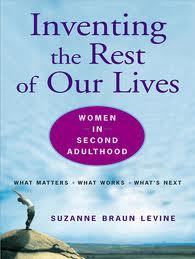 I’m reading a great book. Inventing the Rest of Our Lives – Women in Second Adulthood by Suzanne Braun Levine is like a guidebook for the journey most of us are on. It’s well-written and informative, and as I read it, I felt as if I were sitting down and yakking about life with a bunch of girlfriends.
Suzanne says second adulthood (I love the term) is characterized at first by uncertainty. This is because we have no cultural expectations of ourselves at this age, except that we retire and relax. (The Great Recession may have put the brakes on those plans, however.) Assuming we’re able, we might plan to travel, play with our grandbabies, golf, putter around in our gardens, and read. For some, this scenario would be a great relief; a reward for a lifetime of hard work. But for others, it’s not enough and we don’t know why. Worse, we may feel it’s wrong to want more.
I’m starting a second career as a writer, for example, and some days I think I’m an idiot to put myself through this much effort. I also wonder if I’m throwing a great gift – that of leisure – back at the Benevolent Cosmos. Will I be punished for my ingratitude? Am I expecting too much? Is it ridiculous to run around with your hair on fire after fifty? How are we to think of ourselves at this age? What are we supposed to do now?
Years ago, Betty Friedan coined the expression, “The Problem That Has No Name.” It alluded to, per Wikipedia, “the widespread unhappiness of women in the 1950s and early 1960s…despite living in material comfort and being happily married with fine children.” We used to wonder what more a woman could want (the selfish thing!) Now we understand.
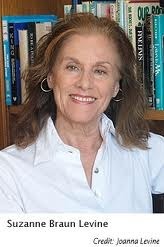 In the same sense, Levine is calling this midlife angst “The Question That Has Many Answers.” Second Adulthood is a journey each of us embarks on, but it is also a stage that our generation is in the process of defining as we live it. Levine says:
There is great promise in Second Adulthood, but there is also an inescapable downside to getting older…Some of this bad news we have to accept, but every day we encounter situations that can be turned around. As we zero in on what really matters in our lives now, we become better able to recognize – and make peace with – circumstances we cannot change and we become more experienced in taking charge of those we can and want to change.”
One of the beautiful things about getting older is the accumulation of wisdom. We older people are better at deciding which battles to fight and which to walk away from. I think we have more insight into what it means to be human, and therefore, more compassion and patience.
As I read “Inventing…” I felt better about wrestling with how to balance my life and work, the needs of my family and my own. I am old enough to accept that I can’t do everything, and I’m okay with that. I’m also wise enough to take stock of what I have, what I am, and what I’ve accomplished, and feel that quiet joy of having made it to this sublime age, mostly intact, and with beautiful dreams about the future.


October 5, 2012
Happy Friday
It finally happened. After hundreds of posts, one every Friday (and then some) for the past few years, I missed a deadline. You can blame my boss. Here he is:

I think you’ll agree, this dude’s fearsome. You can’t slack off for a second or you’re out the door. So I apologize, but my drafts are still drafty. I got nuthin’.
Have a great week, my friends.



