
Lynne M. Spreen's Blog, page 17
May 5, 2015
Too Old for Makeup?

Not Mom.
When Mom reached her seventies, she’d ask me to do her eye makeup for her if she was going anywhere fancy. Now at 89, she doesn’t wear it. The skin around her eyes is too delicate to hold it.
Does anybody care or notice?
Mom misses it, but it’s like the least important thing she’s had to give up. And in a weird way, I think she’s kind of lucky.
I’ve been crowing about letting my natural gray or white (I don’t even know) hair color come out, but today as I applied my almost-daily eye makeup, the notion occurred that the real courage would come from stopping that. From throwing out everything but powder and lipstick.
Man, would that be fun!
I’ve been playing with eyeliner, shadow, blush, and lipstick since I was in 8th grade. Always loved it. For years I’d take advantage of those offers at department store cosmetic counters where you buy something and they’d gift you a set of something else. I had a ton of it in a box under the bathroom sink. Makeup was my thing.
Now? Free time is my thing. Rebellion is my thing. Breaking rules, thumbing my nose – my sixty-one-year-old thing.
Honestly, it’s not like I have a lengthy or tedious routine, but I’m curious what it would be like to stop even that 5-10 minute expenditure. There’s no risk, other than ego. Bill says he’s okay with it, and nobody else matters. Absent the occasional public appearance, why do it?
I think I’m going through a stage. First the gray hair, now the makeup. I’m like a guy who gets tired of shaving. Time to grow that beard. Ready to deal with the itch.
This is an amazing time of life. As one of my teachers, Jane Friedman, says, “there are no rules.”
After so many years, we might be hypnotized by habit, but that can change.
If I don’t want to wear makeup, I won’t. And I suspect many of you have gone there before me. Yes? Let me hear from you.
PS This afternoon, I’ll be visiting my hair salon for just a cut, no color. First time in thirty years I’ve only done half the process. Half the time, half the cost. Holy crap, I’m so excited! More later. In the meantime, here’s something fun and on point:
Related articles across the web
 How to Dress a Boomer
 Does your hair really define you…….?
 10 elder fashion icons who prove style is timeless
 Amy Schumer’s ‘Girl You Don’t Need Makeup’ Parodies Pop Songs — And Starts A Movement


May 1, 2015
Revisiting the F*** It List
 At the White House Correspondents’ Dinner, also called the Nerd Prom, President Obama finally caught up. He’s tuned into an idea I blogged about several years ago. It’s so handy for combating stress. I want to thank him for giving me an excuse to talk about the benefits of this useful tool: the “F*** It” List.
The F*** It List is a thing of beauty. It’s the opposite of a Bucket List, and on it you put all the things you’ve been planning to do but now realize you probably won’t and that’s okay. For example, on my list is learning to play the piano or speak Spanish. Although both would be nice, they are never gonna happen. F*** it.
Here’s another example: I was cleaning out my inbox, and I had all these marketing ideas I was planning to try. But they were a monkey on my back; the pile kept growing in inverse proportion to the possibility of me ever trying one. Remembering my new philosophy, I wadded ’em up and tossed them in the trash. Could’ve sworn my shoulder muscles loosened up right then. Almost as good as a massage.
F*** it!
Another example: I’d been trying to finish Imagine by Jonah Lehrer. Don’t remember why exactly – it was so tedious I doubted my local library would even want it as a donation. I kept feeling like I had to read the rest of it, but I had so many other books waiting, and all that life to live. One day I walked past it, remembered my new philosophy, and tossed that sucker, with my notes, right into the recycling.
Man, that felt good! Better even than finishing the actual book!
A really neat aspect of this list is that it frees you from the pressure you – insight! – put on yourself.
You learn to let things go. You don’t even have to put them on the list. Once you get in the habit, adding things to the list will become second nature. You might even stop before you add them to your to-do list in the first place.
Clothing in your closet you’re hoping to fit into one day? Eff It!
Recipes to try in a neat stack by the phone? Eff It!
Magazines stacking up under your coffee table so you can check them one last time before being absolutely sure you’re not missing anything? You know what to do!
I’m clowning around here, but there’s a deeper theme going on: you don’t have to do everything. Some of the pressure we feel is self-imposed. If we stop and think about it, the tasks we add to our To-Do list might not really be mandatory. Switch it over to your Eff It list and feel happy, powerful, and free. Kinda like Obama on 1/21/16.
Related articles across the web
 Top 10 Stress Reliever Hobbies
 Motivation Mondays: MINDFULNESS
 Well that happened…..
 A Celebration for a Mission Well Accomplished
April 28, 2015
Going Gray is Personal Freedom
 When I showed my DIL my gray roots, now about two inches, she thought I was brave. She said, a bit wistfully, that her mother still colored her hair, and I thought about the going-gray-divide.
Coloring or not coloring is personal, and there is no one right decision.
For me, it’s a social experiment. For example, I’ve heard that this whole issue of invisibility comes screaming to the fore when one goes gray. I’m curious to see if that happens, and if so, if I can offset it with a counter-strategy. If any good stories result, I’ll share them with you.
It’s also rebellion. I don’t enjoy sitting in a chair for an hour and a half while my hair is colored, over some vague idea about societal expectations, like wearing a bra in public. “They” kind of expected it, and I complied.
But I’m old enough now that society is telling me I’m not worth a shit anyway, so going gray is a matter of personal freedom. I am pushing back. I am making a statement.
I don’t care what or IF you think of me.
Yeah, I’m calling my own bluff. Luckily, there’s nothing to risk but ego. I don’t have to look good for a living.
So I started the process:
 It’ll be fun to see how it ends up. I don’t even know what my “real” hair looks like!
Going natural is a way of reasserting my belief that “old” is fine.
This blog, my novel, and my book of short stories are all about aging powerfully and optimistically. I believe getting older should be a nice easy cruise. With all the challenges of aging, you shouldn’t have to worry that you’re not good enough. That you don’t measure up because of one thing: your age.
My hair will be a gray flag. It will attract a certain kind of bull.
Opinions on graying vary. I see it as passage into new country, or volunteering to run a gauntlet. To willingly take that path, for personal satisfaction in spite of the cost.
On the other hand, when I held up a picture of my mother, who is at 89 a gentle auburn, another person said, “She still colors her hair? Good for her!” I then saw the other point of view: Mom still caring enough to make the necessary sacrifices to improve her appearance. Still a fighter. Still powerful.
There’s no right or wrong stance on going gray. It’s personal.
For me, aging has just opened an exciting new avenue to freedom. I’ll report back periodically and let you know how the transition goes.
By the way, if you have curiosity about life after 70, or if you’re there and you want to interact with people your own age, check out 70Candles.com. The good stuff is in the right-hand margin. Click on any month, any blog post, and indulge.
Related articles across the web
 Here Is Every Little Detail On How To Dye Your Hair Gray
 Your first grey hair shocks. Your first grey pubic hair makes you feel close to death
 Worldly wisdom from the over-70s on new website Bolder
 Physicians Withdrawing, Withholding Treatment From Elderly Patients Say It’s Not Ageism
April 24, 2015
Life Lessons for Those Over 50
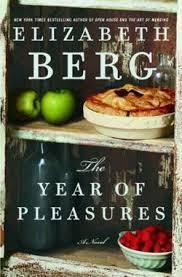 When I read a novel, I want to gain some tidbit about how to live, and especially in the second half of life. Currently I’m under the influence of a wonderful novel, The Year of Pleasures by Elizabeth Berg. It’s about a recently widowed 55-year-old woman, and there’s so much wisdom in the story.
Here’s one: about halfway through, one of the characters tells the widow to try to do one thing every day just for her own enjoyment. The widow says, “Every night I count my blessings.” The friend says, “I’m not talking about things that happen to you. I’m talking about things you make happen. I’m talking about purposefully doing one thing that brings you happiness every single day, in a very conscious way. It builds up your arsenal…”
Isn’t that a smart piece of advice for life in general? Here are some more. Most of them are related to grieving a significant loss, but consider them metaphorically if you must:
“I saw in a way I never had before the beauty and diversity of our earnest labor on the earth, and also our ultimate separateness. This helped my pain metamorphose into something less personal and more universal and natural…”
“Still, every now and then a quick thrill raced up my spine in the form of a thought: I am my own again. Sorrow that lay pooled inside me gave over to a kind of exhilaration in those moments; the relief was stunning.”
“You think you get used to death in the dying. But after the dying is done, you see how the end is the beginning.”
“Perhaps my ‘job’ now was to learn what I needed to learn. John (her late husband) and I had often talked about how focused our culture was on distraction, about how ill suited we were to staying with things, following them through in a respectful and thorough way…”
“It came to me how necessary the near presence of others was in keeping me civilized and sane; I could see how quickly I might become a woman gnawing a chicken leg over the kitchen sink for her dinner.”
“But did you ever notice how after you look at art for a long time you come out onto the street and see only art?” (an argument for making more time for galleries and art museums).
“He’d appreciated…manual labor, saying he like to do work that was outside his head, for a change.”
And lastly:
“It’s true that when someone you love dies, part of you dies, too. And then you must be reborn. And many people were reborn; they suffered through their pain and emerged victorious: their love for the lost one revered but put away, their lives now open to a separate course.”
This is a great read because it’s empowering. The underlying message is one of hope; although the main character is flattened by grief (and she describes existential loneliness so well), she decides to value her life and keep going.
It’s not perfect–she dropped a couple of story lines and there are some implausible aspects to it, but still, it’s great. I made so many highlights I bought the paperback so I could keep it on my bookshelf forever. I definitely recommend it. Now go play. Happy Friday!
April 21, 2015
Free Electricity!
 Mother Nature can make you feel very small and vulnerable. You are reminded of this whenever she flexes her muscles and whaps you. Last summer, we had an epic windstorm with winds over 70 mph (112 kph). Tree limbs broke, 18-wheelers blew over, and the sky was filled with debris. In some parts of our county, roofs were ripped off and trees fell onto houses and roadways. On our patio, dirt piled up around our sliding doors like tiny sand dunes.
Our power went out for eight hours. Luckily, this was during the day so we were able to function almost normally. We figured it was good practice for The Big One, and put a smiley face on it. This was an opportunity to unplug and live organically for a while. We read, did little chores, and tried to stay out of the refrigerator.
Unfortunately, we were housebound, as the world outside was too hazardous (to breathe, or to drive a car), and we couldn’t use our computers (the modem was offline). Also unfortunately, my cellphone was running out of juice, so I couldn’t use it.
Even though it had perfect reception (cell towers were working.)
Even though the power outage was limited to a very small area, and our family and friends were unaffected.
In spite of all that nice solar electricity outside, I was unable to get online and access the world. As I sat there with a dying phone in my hand and stared at all the lovely sunshine pouring onto my house (between gusts of dirt and sand), I realized my mistake.

I could have had free electricity! Tons of juice, and for nothing – well, you have to buy the equipment, but still – if I had only thought ahead! Living in southern California, we are blessed with sun. Almost too much.
I could’ve been charging up all manner of devices, if I’d only had the sense to own solar chargers. So right after the power returned, I went on Amazon.com and ordered up.
 Backpackers have a ton of cool solar equipment. I found this fold-up, canvas-covered model designed to hang off one’s pack while hiking. I keep it in my car, since in SoCal we drive the freeways a lot and all it would take is one wreck to force an overnight stay.
Folded, it’s the size of a computer tablet. This is what it looks like opened up.

For home, I bought two chargers and a bunch of batteries. The charger on the left has all kinds of connectors so I can charge up my phone, tablets, or computers. The one on the right is for four different sizes of rechargeable batteries. I bought batteries, plus a couple of lanterns they will power. BTW, my friend Indy Quillen blogs about self-reliance, including emergency preparedness, at this website.

All in all, this wind-induced power outage was a good reminder of all that we take for granted. I suppose you could read that metaphorically as well.
Every night when I go to bed, I think of five things I’m grateful for that happened that day. I rarely think to be grateful for the comfortable circumstances of my modern life (thank you for clean running water, Lord) but maybe I/we should.
Related articles across the web
 Off-Grid Charging System For AA-AAA Batteries, Plus USB
 Earthquakes Hit Missouri
 Oklahoma shaken by 4.3-magnitude earthquake
 Researchers test smartphones for earthquake warning
April 17, 2015
Coping Skills Improve with Age
 Reporters love to interview old people and ask how they reached such an advanced age. In theory this will be helpful. It never is.
The elder person is either spinning the story or forgetting the details, so their advice is fanciful, at best. However, there’s more here than meets the eye. Forgetting and spinning are psychological coping skills we perfect in old age.
We sometimes change our view of history to be able to live with ourselves.
For example, some of the elders in the study* who were beaten and starved during childhood reached a place of forgiveness in old age, and now viewed their parents as tough but loving. Some of the brilliant women, who were denied careers and high wages due to discrimination and the sexism of the time, adopted a sunnier retrospective on this injustice. These coping mechanisms were discovered because the researchers had recorded what actually happened and what was actually said, back when study participants were kids, young adults, middle-aged, older, and old. The foregoing are two examples of sublimation.
Sublimation, in my words, is putting the best spin on something you can’t fix, and really being okay with that. This is a capability that’s beyond the reach of younger people. In Dr. Vaillant’s words, “Such maturation requires emotional development, years of experience…and the continued biologic evolution of our brains, whose connecting pathways–especially those integrating desire and reason–continue to mature past age 40.”
As one elderly member of the study put it:
Contrary to all expectations, I seem to grow happier as I grow older. I think that America has been sold on the theory that youth is marvelous but old age is a terror. On the contrary, it’s taken me sixty years to learn how to live reasonably well, to do my work, and cope with my inadequacies.
The other three main coping strategies that we develop with maturity are:
humor (the ability to laugh at what can’t be changed, and while laughing, not cause others to suffer)
altruism (getting pleasure from giving to others what we would like to receive)
suppression (in my words, this is the ability to stifle yourself in unpleasant circumstances, and still be happy. It’s not denial; it involves being fully aware of the cause and outcome, but it’s done for the greater good. Think of keeping your mouth shut when the drama kicks in at, say, a holiday dinner.)
One of the most surprising things I learned was that an unhappy childhood is probably the least important predictor of happiness in old age. Per Dr. V., “…unhappy childhoods became less important with time…a bleak childhood did not condemn (them) to misery.” When a study subject reached his/her seventies, the difficult childhoods (and I mean difficult even to the point of malnutrition and abandonment) did not correlate with poor mental or physical health.
Here is one description of healthy aging from another elderly participant:
Old age is knowing what I’m doing, the respect of others, a relatively sane financial base, a loving wife, and the realization that what I can’t beat I can endure.
As a side note, that bit about a loving wife irked me a little. See, back in the early part of the last century, when these studies began, they mostly included men. Dr. Vaillant apologizes for that, and tried to balance things out by including data from female participants of the The Terman Study, but he mentions at the start of the book that there wasn’t much going on 80 years ago that focused on other than white males, so he did the best he could. But it frustrated me in the extreme that men would be interviewed about their views on aging, and one of the things they’d say was that they had great wives that they were crazy about. And I’d picture the woman smiling and gritting her teeth through the interview, and wishing I could ask her, what was it like giving up your dreams to help this man be successful? And how are you aging now? How did your experience of aging alongside this happy man compare to his? For example, the wonderful coping mechanism of suppression: I’d bet money that women learn it early and deeply, and what if it isn’t good for them? Furthermore, I’d bet money that women actually STOP suppressing as they age, as opposed to the men. But we’ll never know. Not that I’m bitter. 
Next Friday, I’ll wrap up the Aging Well series by sharing Dr. Vaillant’s findings that will help you create a better old age for yourself.
*the book Aging Well by Dr. George E. Vaillant is based on the analysis of three longevity studies spanning, in some cases, almost eighty years. During this time, the researchers interviewed individuals from childhood through old age and recorded their observations.
Related articles across the web
 Chronic loneliness in older adults leads to more doctors’ office visits, study finds
 How Do YOU Feel About Getting Older?
 Leafy Greens and Your Brain
 Older Really Can Mean Wiser
April 14, 2015
They Love Older Age

Michael and Debbie Campbell
Today I’m sharing inspiring stories about people who are thrilled about the second half of life.
You’ve heard the term “aging in place”? Michael and Debbie Campbell, both retired, reject such a concept. Instead, they put their own home up for rent on AirBnB.com, and travel around the world, staying in rental homes for extended periods, purely to enjoy learning about a different part of the world. If you want to read more about them, click here.
 This born inventor was told that engineering schools didn’t allow females to enroll. Eighty years later, Barbara Beskind landed her dream job: technology designer in Silicon Valley. Now she spends every day working with young people and inventing to her heart’s content. You can read her story here. There’s more about Barbara in an interview with National Public Radio here.
.

Chris Farrell
Chris Farrell is senior economics contributor at Marketplace for American Public Media. He’s also economics commentator for Minnesota Public Radio. In his new book, Unretirement: How Baby Boomers Are Changing the Way We Think About Work, Community and the Good Life, Farrell says that what scares people the most about getting older isn’t aging – it’s retirement. These days, people are asking, “What does retirement mean? What does my last third of life mean?” He says, “The most valuable asset an older person has is their network. The people that they’ve known over the years. Tap into that and start exploring, ‘What can I do next?’” You can read the interview here.

Geri Shapiro
Geri Shapiro, aide to New York Senator Kirsten Gillibrand, works every day in the thick of politics. She’s getting her second wind at 70-something, and says one of the best things about being older is “That it is really OK for a woman to be Type A., ambitious and competitive; I am finally there!!” You can read more about this human fireball here.
.
 LATE ADDITION: This morning I’m featured on Seniorpreneur, a blog in the United Kingdom that focuses on encore careers. I hope you’ll stop by and say hello! Click here.
On Friday, we’ll talk more about the six stages of adult development. Have a great week!
April 10, 2015
The 6 Stages of Successful Adulthood
 I have always doubted that “adulthood” is one amorphous blob of a stage. How could I be identical to my 30-something kids? Haven’t I moved further along in my development? Aren’t those miles worth something?
Turns out, the answer is yes.
A hundred years ago, children were considered miniature adults. It was only with the arrival of pediatrics that childhood was understood to have distinct and necessary stages. Parents were now able to anticipate the stages, and work better with their kids to help them become max functional adults.
Well, guess what?
Science now tells us that adulthood contains its own developmental stages.
Adult development as a subject for scientific study is a very new field, and the research is intriguing. We’re learning that, just as successful childhood involves developmental tasks like independence and individuation, successful adulthood appears to involve six developmental stages.
In a fascinating book called Aging Well, George E. Vaillant, M.D. and his team studied three groups of men and women over sixty to eighty years to learn how they were developing. The data were analyzed and recorded.
Researchers discovered:
The stages of adult development.
The factors that predicted whether a person will age well or badly over a lifetime.
The coping mechanisms that we develop as adults; these mechanisms are usually beyond the reach of younger people.
This study data is groundbreaking, because it’s gathered over decades. In contrast, our usual way of finding out how to age successfully is to ask very old people how they did it. “I drink a shot of whiskey every day,” says the beaming centenarian, but this isn’t helpful.
Truth is, the elder doesn’t know. Whether due to denial or failure of memory or who knows what, the only way to know the answer is to track a bunch of people over many years, control for variations, and look for commonalities. Which Vaillant did.
By tracking these people from childhood (including observations of their home environment and family life), interviewing people who knew them well, and scrupulously adjusting for bias, researchers unearthed patterns. That information has profound implications for you and me – not just what stages to expect, but what factors predicted a long and happy old age, and what (surprisingly) didn’t.
There’s so much more to this that I’d like to post more in upcoming days, but without further ado, here are the six stages. They typically happen sequentially but may not.
Identity – a sense of one’s own self separate from family of origin
Intimacy – the task of living with another person in an interdependent, reciprocal, committed, and contented fashion for a decade or more.
Career Consolidation – expanding one’s personal identity to assume a social identity within the world of work (this includes homemaking)
Generativity – demonstrating a capacity to unselfishly guide the next generation (without parenting them; involves giving up control of outcomes) Personal note: Bill and I are here.
Keeper of the Meaning – similar to Generativity but less related to individuals and more to broader society. Focus is on conserving and preserving “the collective products of mankind – the culture in which one lives and its institutions.” Concern for a social radius extending beyond one’s immediate community.
Integrity – acceptance of oneself in existence; wisdom of one’s place in the larger scheme of things, of one’s uniqueness, of where one fits in the cosmic order; acceptance of mortality (my words).
As I said, there’s so much more, which I’ll share in upcoming posts. For example, adults tend to develop mature coping mechanisms, which are interesting when you notice yourself engaging in one! And also, there are elements of healthy aging that you may want to focus more on. We’ll continue the discussion next Friday, but for now, I hope this gives you a feeling of comfort about your own development.
Related articles across the web
Older Really Can Mean Wiser The New Adulthood
 Don’t worry about getting older: new research shows our brains actually improve with age
How Do YOU Feel About Getting Older?
Chronic loneliness in older adults leads to more doctors’ office visits, study finds
Don’t worry about getting older: new research shows our brains actually improve with age
How Do YOU Feel About Getting Older?
Chronic loneliness in older adults leads to more doctors’ office visits, study finds
April 7, 2015
Blah Tech for Older People

There’s yet another big announcement in the news about “tech for Baby Boomers” and surprise, it’s all about tracking meds, exercise, and doctors. They even call it “Silver Tech,” but the main goal is, I guess, to keep you chained to the medical-industrial complex.
Listen, app-developer-people, there is more to us older folks than how many pills we swallow or steps we take every day.
Not that exercise isn’t important, but how many different kinds of super-tracking pedometer devices do we need? And once we get ourselves to peak health, what do we do with that miraculous gift?
I think the developers see us as free-range patients. It’s only a matter of time until we’re placed into a care facility, and until then, we need to be medically monitored, nudged, reminded, and tracked. How very Soylent Green.
However, I assume these inventors are smart and well-intended, so in the interests of intergenerational partnership, let’s educate them. Let’s tell them what we really need. For example, how about an app that finds new artistic endeavors or volunteer activities? Or one that offers insights as to the maturing mind? Or even one that contemplates the meaning of the second half of life? Can you do that, kids? Thanks.
Anyway, here’s the big story if you’re interested. Meanwhile, if you find any tech for older people that doesn’t involve reminding us when we left the front door standing open, let me know.
April 3, 2015
Happy Easter

May you find peace and inspiration in the season.


