
Lynne M. Spreen's Blog, page 14
September 22, 2015
Writing a Good Sex Scene
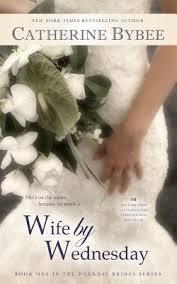 As you know, I’m embarrassed to write sex scenes. But as a writer, I have to keep up with the insatiable demands of my readers, who want me to turn up the heat a bit. Also, my critique group thinks I’m a candy-ass, as I wrote here. So last weekend, at a writers conference in Palm Springs, I attended a workshop called, “Let’s Talk About Sex.”

Me with Catherine Bybee, famous author. I hope it rubs off.
The two presenters, Catherine Bybee and Danyelle Ferguson are both prolific and award-winning romance writers. Catherine is a New York Times and USA Today Bestselling Author, and a former ER nurse. She’s extroverted and funny, and there was a lot of ribald laughter in our workshop. But after we all stopped blushing, we learned a lot about how and where to put it. (The sex scene.) Here are some tips.
Context matters. Don’t throw in a gratuitous sex scene because you think you have to.
If you built your characters into interesting people, and they, in turn, have built toward the sex scene, it will flow. Be true to your characters. If she doesn’t swear like a late-night comic, don’t have her do it in the bedroom. Don’t have your hunkalicious cowboy turn into a sweet and sensitive poet.
Every scene should move the story and the character arc forward. Does your main character grow and change as a result of the love scene?
Sex can make the character arc sweeter and richer.
Go online and read about how to write erotic scenes.
Read some books to see how they do it. Note your own reaction. Are you drawn to it or repulsed by their depiction of lovemaking, and why? Do certain words or phrases have that effect?
Catherine suggests doing a writing exercise to get comfortable with sexy. Give yourself a word limit, make it mandatory that the character grow or change as a result of the love scene, and write several different versions of the same scene, from sweet to sweaty.
She says we authors tend to stop doing writing exercises after we’re published, but that’s a mistake. We need to keep practicing.
Danyelle writes “sweet romances” which don’t go beyond kissing, but to hear her tell it, a kiss can be way more than a kiss if you do it right. That would include character development, emotions, passion, heat, and anything else that doesn’t involve the tearing off of clothing.

On a serious note, we are sad to note the passing of Jackie Collins, celebrity writer, who died on Saturday at the age of seventy-seven, of breast cancer. Per the NY Times,
“Long before the emergence of the ‘Fifty Shades of Grey’ franchise, Ms. Collins dominated the publishing industry’s more lascivious corners. She wrote more than thirty books, many of them filled with explicit, unrestrained sexuality…”
For her amazing productivity, and for doing things her own way, laughing all the way to the bank, I salute Ms. Jackie Collins. Rest in peace.
Let’s end on a happy note. Here is erotic romance writer Desiree Holt, discussing her writing with CBS Sunday Morning host Bill Geist:


September 18, 2015
Will Purpose Help You Age Happily?
 Last week we wondered if positive aging depended on having a sense of purpose. One elder said, “After decades of being extremely busy with children and then a career, retirement makes me ask ‘If you don’t have obligations, what is the point?'”
Maybe that’s why retirees are so busy: to feel as if life has a point.
Retirement and older age can be a rough time. I joined a discussion of old age malaise, and one of the saddest things I heard was this: “There is no one left in my life to share the ups and downs of normal everyday things. Dozens of friendly acquaintances can’t make up for that.”
What would you tell an old friend who said such a thing? Some answers began to emerge, and they seemed to center on having a purpose.
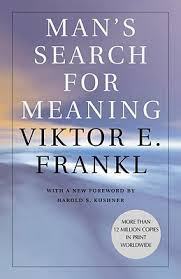 I read Man’s Search for Meaning by Viktor Frankl, who said we can get through just about anything if we can articulate a purpose (“If man has a why, he can put up with almost any how.”) If you wonder how to keep going in older age, when your body is breaking down, society discounts you, and your energy level is dropping, I recommend it. My review is here.
A discussion participant said, “Without a purpose to our lives…can seem like we are just taking up space and resources I believe we need to serve. Otherwise, we might as well be rocks.”
So the key is to be of service?
One person found happiness by focusing more on her values, making the world a better place, and caring for her loved ones. There’s something called the Grandmother Hypothesis, which suggests the presence of caring elders in a tribe can enhance the longevity of its members.

Mom at 90 with great-granddaughter
But what if you’re tired of working for the good of mankind, and just want to chill? Can one serve oneself, after a lifetime of serving others? Does that count? What if you just want to finally take the time to meditate, read, do yoga, watch movies, interact online, get into a hobby, and feed your creative brain?
I like the idea of bucking our Puritan productivity ethic.
One person said if we give to others, what we get back is a sense of purpose, a sense that there’s a point to our existence. Another finds meaning in serving as “a correspondent from an earlier generation.” Younger people might want to know what’s coming.
Wouldn’t it be smart to think about this when you’re younger, so you can be prepared?
Now that we have Internet and community forums, older peeps can tear the lid off aging and show the kids it ain’t so bad. They can be more prepared for it, so they’re happier when they get old. Developing a non-work hobby or interest might be the key. For me, it was writing.
As one woman said, “We spend our lives training for a job, and when that job ends, we may feel our lives have ended too. Maybe our roles are too limited. Earning a living seems to be what it’s all about. Isn’t there more to life? I’m past 90 now, and I’m happier as an old person than I was when young. Now I can do what I want, not what I’m assigned to do by others. It’s great!”
What about you? Do you have a purpose that fires you up?
September 15, 2015
The Best Platform-Building Book I Ever Read
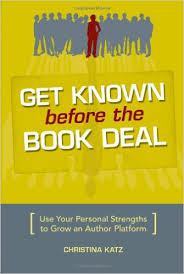 In 2009, when I was just starting to build my platform, I read a stellar guide by Christina Katz, Get Known Before the Book Deal. I still have it, bookmarked and dog-eared, in my bookcase. Here is the single most important thing I learned from the book, a truth that continued to resonate throughout the years:
If you’re passionate about something, a book is only one means for expressing that passion.
Christina taught me that a book, a speech, a blog, a workshop, and my body of comments and posts on social media were all methods of promoting my topic (positive aging.) Each one had the effect of sprinkling a few crumbs back to my sales page, whether this website or my author page on Amazon. And based on her guidance, I crafted two “speaking products,” one on positive aging and one on The Writing Life.
You should develop your own speaking products. Here’s why.
When you prepare a speech, it’s a lot like a short story, with a beginning (alerting people to the issue), a middle (delivering the solution), and an ending (closure). You don’t want to have to invent it from scratch for every speaking engagement. Build one around your topic, and update it to reflect new information and the needs of each specific audience.
Christina set me on a strong trajectory for the future. I recommend the book, and you should follow her blog.

Jane Friedman, Publishing Expert
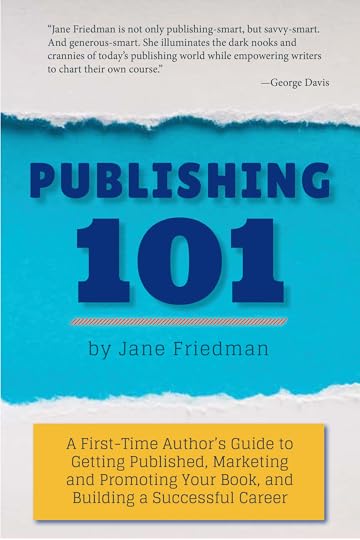
Also, I recommend following Jane Friedman. Jane is a former editor of Writer’s Digest magazine. She is brilliant, and she keeps a sharp eye on developments in the publishing world. She’s practical, and won’t encourage you to waste time chasing fads. I met her at a WD conference in Ohio in 2009 (yes, it was a busy year), and I’ve been a fan ever since. Right now, if you subscribe to her wonderfully encouraging and informative blog, she’ll let you download this ebook, free:
Lastly, I want to tell you about a resource that you might want to read or share with a friend. Writing coach Alan Gelb was at a funeral and it bugged him that the minister’s eulogy seemed to have nothing to do with the deceased. Gelb didn’t want that to happen to him, or to you, so he wrote a book about it.
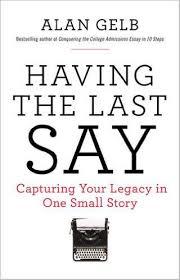
Having the Last Say: Capturing Your Legacy in One Small Story is meant to encourage all of us to write a beautiful anecdote that will capture our voice, share our values, and leave our loved ones with a last gift. The book can serve as a memoir-writing “how-to”, and is a nice starter guide to writing in general. It’s a handy all-around writing reference to have on the shelf. Here’s my review on Goodreads.
Part of being a successful writer is trying new things, sharpening your skills, and keeping up with the business end of things. I hope these resources help and delight you. See you next Tuesday.
September 11, 2015
Will You Withdraw as You Age?
 When you hit seventy, the state of California says you get an automatic pass on jury duty. Either they think you’ve earned the right to say no, or you’re too stupid to participate. Some of us consider it a relief, although to me, it would be an insult. And I wondered.
Do you look forward to withdrawing from civic obligation, social interaction, family, and/or life in general, as you age?
Disengagement can mean anything from no longer having the big holiday parties, to staying home on Sunday and watching the Mass on TV. I recently participated in a discussion of elder social withdrawal, and everybody had a different point of view as to whether, and why, it might happen. There are probably as many opinions as there are elders.
Some felt it was due to lifelong introversion/extroversion, a pessimistic or optimistic personality, or the degree of resilience in the face of change. “If the elder is able to adapt to changing circumstances…s/he will maintain a healthy attitude right up to the end.”
These were only opinions, not scientific fact, but they resonated with all of us.
Resilience as to change is the scariest thing to me. When stupid-heads talk about extending the human lifespan, I wonder what they’re going to do to keep us from going crazy from all the change. Over my sixty-one years, I’ve seen everything from party lines to drones to home appliances that communicate via satellite. A couple days ago, I called my friend by accident from my computer. I hit a hyperlink and all of a sudden Mary Jane was saying hello from somewhere inside my laptop.
And that’s just psychology. What about the physiology of age? What if you couldn’t hear, see, or think well enough to understand the world around you?
One elder said we disengage as we age, whether intentionally or not.
I hate to think that’s true, but it wasn’t necessarily a bad thing in all cases. I’m withdrawing, if you want to call it that. I don’t think I’ll ever go to Disneyland again, and I’m much more picky about saying yes to commitments, because I have less energy. But that’s withdrawal at age sixty-one. It’ll get worse. My mom, 90, wants to do more but she is slower. I think it’s partly because she is so curious that she’s easily distracted, but it may be more than that. Sometimes she skips events and gatherings because she doesn’t have the energy anymore. It’s just too difficult.
An elderly woman said, “Disengagement with this life may be in preparation for the next.”
Well, disengagement for its own sake isn’t that productive. If you were preparing for the next, wouldn’t you have to do something proactively, like read and learn and talk about it with others?

“It used to frighten me a little to notice that I seem to be disengaging, but no longer. Somehow I see it as nature’s way of gently leading me (toward my future).”
The ability to withdraw for periods of time might be a gift. One person said she was unexpectedly caught without anything to read at her doctor’s office, and “sat there for 25 minutes without anything but my inner life, and it was OK!” Maybe that’s another thing we get in old age: the ability to be comfortable with stillness.
“I’m not really unhappy,” said a lifelong introvert. “Just concerned sometimes that I’m abnormally withdrawn. But maybe it’s not so abnormal after all.”
Another chooses to fight: “This discussion has made me aware that I must make more effort to get involved or I AM going to just slowly fade away and I don’t like that idea.”
How does one fight old-age disengagement? The best way: having a purpose. More on that soon.

September 8, 2015
Slow Down and Do It Write
 Self-publishing gets a bad name when indie authors fail to do the work. I received an email from a colleague announcing publication of a new book, available to buy. Here’s the excited headline:
BEWTEEN NEWSETTERS ANNOUNCEMENTS
Two misspellings in the heading of the announcement. I assume this person was excited, and/or in a hurry. Should I ignore the typos in the press release headline and buy the book anyway? Does it matter that much?
Yeah, sorry, it does. If I’m interviewing you for a job, and you show up with lettuce in your teeth, I’m going to notice. It’s the same with writing.
Unfortunately, there’s so much competition out there. To be noticed, and read, you have to make sure you take the time to make your work, or the publicity announcements, as pristine and compelling as possible. Many publicists ask me to read and review books, and I get them for free. Plus I have my own reading and writing to do, groceries to buy, a life to maintain. Like you, I have to make decisions about how to spend my time and mental energy.
There’s only so much. A debut book is iffy anyway. A debut book with questionable publicity is even less likely to win a spot on my reading list.
You know how sometimes you’ll bring a well-polished chapter to your critique group, and you think the critique is going to go smoothly because the chapter’s so ace? And then you get there and your colleagues find a bunch of mistakes? You know what happened: the writer became wordblind. Just like the guy who’s been out in the snow too long without his Polarized shades, we get to a point with our own writing that we don’t see it anymore.

Don’t let this happen to you. Take an extra 30 minutes and have a friend check your eblast before you hit “send.”
Have you ever been humbled by wordblindness? Are there any in this post I should know about?
September 4, 2015
Sacrificing Your Dreams for Family
 What would you do if you had to choose between your family and one last shot at following your dreams? As parents, we often say that we would lay down our lives for our kids, and as a grandparent, I know it’s literally true. But there’s a more common version of that all-or-nothing decision.
It’s the choice between pursuing a goal, or giving it up for the good of your family.
Some choices are just that hard. You can’t do both. Difficult enough to decide when you’re young. It’s worse when you’re older.
My niece, a new mother, was recently offered a promotion. It was big money, but this management job would have required her to work random hours, travel, and be on call 24/7 (for retail! Get real, corporate egomaniacs. It’s not like she’s a first-responder.)
She said thanks but no, and will stay with her lower level position. She wants to have another child, and she doesn’t intend to complicate her life with that promotion.
My niece can afford to make this decision, timewise. She’s only thirty-one.
 On the other hand, Joe Biden is seventy-seven. It’s said that he’s looking at a run for the presidency, but he’s torn. Biden and his family are reeling from the recent death of his son, Beau. A presidential campaign would make their lives much more difficult. Nobody knows for sure what he’s going to do, not even his closest friends.
I suspect Biden doesn’t know, either. The stakes are very high. He is a man who is dedicated to family, but if he waits for the next election, he’ll be eighty-two on Inauguration Day. It’s now or never.
If he chooses to sit it out, I’m sure he’ll be okay. Most older people have been through so much, they’re sanguine about sacrifice. Biden has accomplished enough in his long life to settle back and relax, and if he made that choice, he’d have the satisfaction of knowing he put his family first.
Sometimes I stop in the middle of my hellbent drive for business success, thinking, “Why am I working so hard? Maybe I should give it up and spend more time with Bill, my mom, my siblings, and my friends.” But if decide later to go back to it, I might never be able to regain this level of momentum. Things are changing so fast. If you don’t run hard, you might not be able to keep up, especially with technology.
Should I keep running or give up forever? Am I, at sixty-one, doing the right thing?
Do you ever feel this way, like you have to decide pretty soon whether to make one last run at your dreams, or shut it down and go fishing? If you have already grappled with this, would you mind telling us how it went for you?

September 1, 2015
Don’t Be a Lazy Writer

Are you a lazy writer? Do you bore your reader? Yeah, I’m callin’ you out.
At my last critique group, somebody read a chapter about a young woman’s first morning on a cruise ship. The girl is “stunned” by the spread at the breakfast banquet. She and her friend have coffee, then breakfast, then walk a couple of laps around the ship. When they come back to their room to find housekeeping has “worked magic,” by cleaning the place, they’re enthralled.
The critique group wasn’t.
Because there was nothing noteworthy about it. If you’ve ever been to Vegas, you’ve seen buffets the size of a football field. If you’ve ever stayed in a hotel, you’ve experienced the joy of coming back to a clean room. Those things aren’t stunning or magical.
The writer described what happened on her last cruise. That’s what she knew, so that’s what she wrote. Sure, it was pleasant and maybe even wonderful. However, the reader, having paid actual cash money for this book, will expect to be entertained. Better to describe something less common, like the sky walk on the Royal Princess.
Listen, you can’t dazzle the reader with the regular things she does already. Unless there’s a metaphor buried somewhere within an everyday setting, cut it. Nobody wants to read, “She got out of her car and approached the steps. Her fingers turned the key, and the lock clicked. The door opened. She stepped inside. It was good to be home after a long day at work.”
Write what isn’t commonplace. Write what hasn’t happened to you. Write what you don’t know.
Write about being sixty years old and mad enough at your ex-husband to try climbing that fricken rock wall of the ship. About trying the surf simulator. About hanging from a zip line. If you’ve never done it, don’t worry. Somebody has, and they put it on YouTube.
Make your character bad, badder than yourself. Don’t make her act like you — polite, rules-following, tax-paying you — make her act in a way that thrills you and the reader. Have her take a risk, or make an unethical decision, something you wouldn’t do in real life. People don’t buy books to get a replay of their own mundane normalcy. Readers want to live in an alternate universe, where the bad guy not only gets punched, but the reader gets to feel her fist break his nose.
As a writer, you get to live vicariously through your characters. Do you want to populate your stories with your plain old everyday self? Instead, make it you, only better/badder: a bit larcenous, less tactful, more sexy. It’s more fun to write, and it’s what readers want. Not a chick who swoons at the sight of the Horizon Buffet.
So go ahead. Have your gal take that sky walk on the Royal Princess. Without panties. I dare you.

August 28, 2015
Even John Oliver Does It

Ronni Bennett, of Time Goes By blog
Until two days ago, influential elderblogger Ronni Bennett may have been John Oliver’s biggest fan.
Ronni is a radio and television broadcasting veteran who produced shows like 20/20 and The Barbara Walters Specials on ABC. She also produced programs for Lifetime, NBC, PBS and CBS, and was the first managing editor of CBSNews.com.
Ronni, who now publishes a thoughtful blog about aging, was pissed off and saddened recently when Oliver made a feeble stab at humor at the expense of old people. As Ronni says, elderhood is the last safe place to discriminate, and the reason it continues is that we don’t complain enough. She’s hoping we’ll change that.
I’m helping by posting her column, and complaining at the links given below. After reading this, I hope you will, too. Let’s make some noise, people.
EVEN JOHN OLIVER DOES IT
Last Sunday on his HBO program, Last Week Tonight, John Oliver opened his feature essay with this:
“Progress,” he said. “It’s the reason your grandparents’ views are better not spoken in public. ‘Why did I bring you to Straight Out of Compton, Papa?’ This is partly on me.”
Apparently, neither Oliver nor any of his writers, researchers and producers, nor the 10 or 12 well-known websites I’ve read praising and promoting this video see the irony in exposing discrimination against the LGBT community while bashing old people.
Imagine if Oliver had opened the show with any one of these:
“Progress. It’s the reason black people’s views are better not spoken in public.”
Or
“Progress. It’s the reason women’s views are better not spoken in public.”
Or
“Progress. It’s the reason Muslims’ views are better not spoken in public.”
Shall I go on? You can imagine for yourself the backlash if Oliver had used any of those references instead of elders.
When a man who builds his television career on pointing out the large variety of inequities in American culture and brilliantly defending the rights of every oppressed group you can think of (and some you haven’t) engages in this kind kneejerk ageism for a cheap laugh, it is indisputable that old people are the last acceptable prejudice.
On Monday I wrote about ageist language in No Cute Old People and normally I would not repeat a topic so soon. But I saw this video, as I usually do with Oliver, first thing in the morning and nearly spit out my coffee.
It’s not like Oliver’s words are new to me. Ageist attitudes and speech have so thoroughly permeated our culture for so long that people who would blanch at being accused of racism or sexism see nothing wrong with stereotyping old people.
And Oliver, like his mentor, Jon Stewart, is not new to this. They both, when a reference to old age is called for in their performance, always go straight to derogatory, demeaning and dismissive.
Don’t think this stuff doesn’t matter. Every time such as statement as Oliver’s is made, (thousands of times a day), it helps make it okay to fire a perfectly competent old person, allows certain kinds of politicians to believe they can eliminate Social Security and Medicare and as Yale professor Becca Levy discovered in her research, can negatively affect longevity by up to seven-and-a-half years. And that is just for starters.
One reason elder bashing continues and continues to be acceptable is that old people don’t complain enough.
Mostly we mutter among ourselves, whether it is as public as Oliver’s offhand disrespect on television or one-on-one in our daily lives (“and how are you today, young lady”).
Let’s change that this time and I’ll make it easy for you. Link to this post or repost it on your blog or Facebook page. I don’t care. And take it a step further.
Below are a variety of web addresses for Oliver’s program, Last Week Tonight, for John Oliver himself, for one of the show’s executive producers and for HBO.
Pick one or two or more and send a note letting them know that it’s hard to take Oliver seriously about LGBT discrimination while in the same breath he dismisses elders with an offensive stereotype.
Be polite – trolling gets everyone less than nothing. But be clear, be firm and if you think it’s helpful, include the URL to this post: http://www.timegoesby.net/weblog/2015/08/even-john-oliver-does-it.html
Here are the addresses:
LAST WEEK TONIGHT
Facebook page
Twitter: @LastWeekTonight
EXECUTIVE PRODUCER TIM CARVELL
Twitter: @timcarvell
JOHN OLIVER
Facebook page
Twitter: @iamjohnoliver
HBO
Facebook page
HBO online message form
What makes this lapse worse coming from John Oliver than it might from some people is that he is otherwise a force for good in the world, an agent of change that Time magazine earlier this year named among the 100 most influential people.
What a good thing it would be for him to influence others by taking a patented Oliver look at the widespread gratuitous ageism in the culture.
Except for that dismissive lead paragraph, Oliver’s Sunday essay on LGBT discrimination is as funny, spot on and important as all his weekly videos are. Here it is the full segment:
Don’t forget to follow up on letting HBO, John Oliver and his executive producer know what you think about elder bashing while defending LGBT people from discrimination.
August 25, 2015
Do You Hate Your Critique Group? A Compendium
 Writing critique groups can be an intense bummer, yet they’re critical to writing success. How to balance the good and the bad?
Years ago, I began writing seriously, so I joined a critique group. I didn’t know what to expect.
This group was so mean, I almost stopped writing. Forever.
After a while, though, I learned to (a) write better, and (b) stand up for myself. Plus I found a group I liked.
So now, I’m a crusty old professional. Somebody messes with me, I mess right back. But the new people, or the writers who aren’t as sure of themselves, make me sad.
I hear the sound of frustration and discouragement around our table sometimes. The writer doesn’t know much about writing, or about what SHE wants to say, and as a result, the other members run over her. She runs back to her little dungeon to continue writing all by her lonesome.

I put together a three-part series about writing groups a few years ago, and the info still holds. Here’s the first one, and at the bottom of each is a link to the next. I hope you find them helpful.
On the plus side, though, I have to say this: my current critique group, to which I’ve belonged for maybe five years, has become more than a writing group. They’re my friends. Hell, they’re my family. I don’t know what I’d do without them. So it’s worthwhile to give it time, and find the group that’s right for you.
Are you in a critique group? How’s that working for you? Do you have a problem with it that maybe we can fix? Or just enjoy reading about? You know, writers love to see other peoples’ problems. It makes for such great material.
August 21, 2015
Staying Married After 60
 Baby boomers are divorce-prone. Many of us have already gone through one, if not more, and it continues in older age.
Baby Boomers are the only age group in which divorce rates are rising. One reason is that Boomer women tend to be more financially independent. They’re saying, “I’m not putting up with this anymore. I only have one life. I want to be free.”
Why not? The kids are raised. It’s just her and the old man. Why stay in an unsatisfying marriage?

Because.
Speaking as a 61-year-old twice-divorced person, I think it’s different now that we’re older. (Of course, my first two marriages were to an unemployed violent person, and a drug addict, respectively. So maybe you should stop reading, since obviously I don’t have any sense.) Unless you’re dealing with domestic abuse or some other non-negotiable failing, consider these realities:
Reality Check #1: Life is hard. Being half of a team can make old age easier.
Reality Check #2: Your spouse has failings. Who doesn’t? Unless you’re planning to go looking for a 30-year-old, they all do, and at this point, change isn’t likely.
Money: We used to stay together “for the sake of the children.” Now, it’s finances. Trading in the home you love, all the memories, and a neighborhood full of friends for a one-bedroom apartment somewhere–is that absolutely necessary?
Compassion. Think about how your spouse will do on his own. Good? Not good? Part of the deciding.
Broken connections: Do you want to divide up family and friends at this age? Or lose contact with people you love or like a whole lot?
New connections: Do you want to learn the names and personalities of all the people in your new guy’s life? And hear about times gone by in which you played no part? Call me cynical, but–no.
A couple of my friends are dealing with serious problems within their marriages, and they’ve decided to stay, for now anyway. Their adult kids would prefer otherwise. It’s complicated. Stay or go, there’s loss. My friends are motivated by love, financial considerations, and personal matters. We’re quick to cry “codependency!” but it may not be that. At their age, it’s probably better to assume they’re being logical rather than pathological. It doesn’t mean they’re weak or stupid. Maybe they’re stronger than anybody can imagine.
In my own case, Bill and I have been together twenty years, and recently we’ve been doing some recalibrating. It started with a fight that lasted a month. Believe me, we considered all options.
However, as Rahm Emanuel famously said, “Never let a good crisis go to waste.”
A good crisis makes people uncomfortable enough to try alternatives. If you’re fighting a lot, and you’re ready for serious, even painful, change, how about using the new instability to fashion a happier life without divorce?
One of the nice things about getting older is seeing things in new ways. For example, if you were going to get divorced, but due to finances you knew you’d need a roommate, how about the guy you already live with? You could divide up the rooms. It’s kind of a silly example, but practical.

Bill and I changed some routines and understandings to allow more independence within our relationship. (No, not that kind of independence.) It’s pretty exciting, and it beats starting over alone.
Who do you want to become in the years ahead? Is it possible to do that within a partnership? Nothing’s perfect, but staying together might just provide the foundation you need for finding yourself at this new age.


