
Lynne M. Spreen's Blog, page 26
January 26, 2014



January 11, 2014
Hack Your Bad Habits
Happy New Year! I’ve been off in the dungeon, working away at my new book. It’s a sequel to Dakota Blues, because you’ve been hounding me for same, and hey, I aim to please.
Remember I promised to get back to you on forming new habits in 2014? Good news: I think I found something. According to The Power of Habit by Charles Duhigg, you can’t expect to completely erase old habits. Give up on that, because they are hard-wired into your brain. Habits are developed as an evolutionary tool to conserve brain energy. Once you learn to do something on cue, you don’t have to think. In survival terms, that’s good, because it allows you to then focus on other things, like not getting devoured by a sabertooth.
That’s why habits, once established, are darn hard to break. Duhigg says it’s smarter to let the habit continue, but just replace certain harmful elements with good ones. Here’s the habit chain: you perceive a cue, which sets up a craving, which results in you following a routine that leads to a reward. The only part of this chain you can change is the routine. If you replace an old routine with a new one, you’re golden. Your brain is fooled, it’s happy, and the habit will stick.
To use myself as an example, remember I said I crave a glass of wine in midafternoon? At about two o’clock, my energy flags. After working all day (I start early) in the dungeon, I also feel a little guilty about ignoring Bill. I want to party, but it sets up a cascade of bad effects. After a short burst of wine-induced energy, I feel lazy and my inhibitions are lowered, so I snack and drink more, and for rest of the evening, accomplish less.
I know. Loser. That’s how it makes me feel.
But using Duhigg’s work-around, I think I’m on track to overcome my problem. Here’s the old routine.
Cue: 2:00 pm (party time)
Routine: wine and snacks on the patio with my honey
Reward: sociability, relaxation, a buzz
Here’s the new routine:
Cue: 2:00 pm (party time)
Routine: caffeinated tea and snacks on the patio with my honey
Reward: sociability, relaxation, a buzz
For almost two weeks I’ve substituted tea for wine, and it seems to be working. By the time the tea is gone, so is the craving. Bonus: the buzz I’m feeling is about caffeine-induced real energy, so I get more done in the evenings. I think this “replace the routine” idea has legs. How cool to think we might be able to overcome our old bad habits by simply out-thinking them.
So consider trying it. You can also find out more at Duhigg’s website, The Power of Habit.
Enjoy your weekend!


January 1, 2014
Review of Silent Bird by Reina L. Menasche
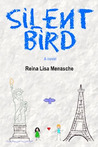 Silent Bird by Reina Lisa Menasche
My rating: 5 of 5 stars
From the beginning, I was entranced by the voice of this narrator. It's warm, as if she's speaking just to you. Next, the experience of moving to France, which appears to be temporary. The street scenes, the texture of the buildings, the colors, the light, the warmth - Reina Menasche is a gifted writer who can make you feel as if you are in the place she describes. It's a delight.
Yet, there is a hint, just a whiff of something awful going on underneath the surface of young Pilar's life, and this issue takes shape as the story unfolds. It's horrific, and must be dealt with in order for her to heal and move forward.
This effort is complicated by the fact that humans are not one-dimensional! We hate them, we love them. How does one decide? How does Pilar - how do we - learn to navigate if our guides, for example, our parents, are somewhere between flawed and criminal? This story is heartbreaking in places. Thus, I was a little frustrated by the fact that Pilar was weak in the face of abuse by the many jerks and pigs she encountered in this story, but that's part of the story. Me, I would have at least slapped somebody in the face until my hand stung. But perhaps she's more civilized than I.
This is a powerful, nuanced, and rich coming-of-age story about a young woman developing individuality and strength, and in the process, strengthening the man she loves, and ultimately creating something beautiful. I was touched by the story, and delighted by the talent of the author. She's really good. I recommend this novel wholeheartedly.
View all my reviews
December 27, 2013
Review of Naked by David Sedaris
 Naked by David Sedaris
My rating: 3 of 5 stars
Reading this book was like visiting a less funny, darker, sadder version of the Bundy family. There were a couple places where I laughed out loud (horseback riding at a nudist colony? After a chili cookoff?) but mostly I was saddened by the incompetence of the parents, the challenges to this kid, and his endless pessimism. His low view of the human race is pretty much justified by every character in the book, although at the end of the chapter QUAD he does move me with a compassionate insight.
He seeks out sordid, dangerous situations almost as if he has a death wish. When he returns again and again to these horrible situations (going home with scary people, putting himself in danger), it's almost as if he lives in a cloud of malaise. He refuses to learn, to grow, to anything. It's repetitious and frustrating. As a snapshot of a loser, it may have been interesting, but to me it was depressing.
At times I wondered why I was still reading, but somehow, I couldn't stop. I have to credit Sedaris' writing, in that I needed to know what happened. I was rewarded a little by the chapter about the wedding and his mother's decline, in the sense that there was finally, finally, some actual compassion and sensitivity for each other. But then he looks up at his mother, standing alone on her hotel balcony, and he and his asshole siblings are drunk and stoned in the cemetery across the street, leaving her alone on the last night of her life that they could ever again be together as a family. He considers this, but then - no, nothing.
And yet, she raised him. Had he overcome his loser status and forced himself to do one nice thing for one other person, crossed the lawn, gone up the stairs, knocked on her door and offered her a hug, she would have been disgusted or slammed the door on his face. That's just the kind of people these were, and it saddened me to read it.
View all my reviews
No More Sleepwalking
One of my greatest fears is that I will sleepwalk through my life, only to figure out at the end of my days that I did it wrong. I wasted an opportunity. Maybe I’ll realize I played by the wrong rules, worked hard to get to pointless places, or simply failed to fully appreciate the gifts that were showered on me: the people who love me, the quiet of my patio, the chance to have a picnic in the nearby mountains, time out for music. A slow read of a good book. A movie, designed to inspire. A gallery, just an hour away, that I’ve been telling people about for ten years, and have probably not visited in the same amount of time. A walk through the oasis that is The Indian Canyons.
I’ve been remiss. The new year brings a desire for change, a resolve to do better. I’m not sure how, but I’m taking the first step: my eyes are open now.
I’m reminded of a passage from Gilead by Marilynne Robinson:
This is an interesting planet. It deserves all the attention you can give it,” says the character John Ames. “I know this is all apparition compared to what awaits us, but it is only lovelier for that. There is a human beauty in it…I don’t imagine any reality putting this one in the shade entirely…”
Happy New Year, my friends.


December 26, 2013
Review of Wish You Were Here by Stewart O'Nan
 Wish You Were Here by Stewart O'Nan
My rating: 2 of 5 stars
I'm on page 221 out of 517 and I can't finish this book.
I loved Emily, Alone, but this book is not grabbing me, and I can't spend any more time on it. Let me illustrate some of my concerns:
I couldn't follow the writer's thoughts at times. Here's an example, of an adult son (Ken) thinking about his childhood and his now-deceased father:
"Ken had never heard him seriously complain about anything...as if a Zenlike acceptance was proof of his wisdom. But to a child his self-possession could seem an illusion, the usual adult insistence on infallibility. For years he seemed backwards to Ken, out of touch, but later his calm seemed ideal, his silence not empty but dignified. Ken still could not figure him out."
And I still cannot figure out what that passage means. To a child, such calm and wisdom would NOT seem like an illusion. A child would take it as true. As an adult, that child might look back and consider it might have been an illusion. This passage is an example of some of the writing in this book, wherein I think O'Nan goes so into his own thoughts that he didn't edit severely enough, or objectively consider how his words might sound from outside his head.
Another aspect I didn't appreciate was the one-dimensional portrayal of Emily. Halfway through the book she's still a fairly narcissistic, superficial character. I anticipate this may change later in the book, but I don't have another several evenings to pursue it.
Finally, there are too many indistinct children's voices in this story. The book may have benefited from pruning back to where the only characters we'd follow would be the five (!) adults, but with the addition of four kids (!) there is too much going on. Of the children, the two girls are both elder sisters to a younger brother. I don't see why that configuration was so interesting it needed to be repeated, or in a broader sense, what all those kids' voices added to this story.
There is too much going on in this book, and none of it very compelling. I appreciate the author's efforts, but this book lacked dramatic tension, had too many points of view, and many of the characters were insufficiently developed.
View all my reviews
Review of The Circle by Dave Eggers
 The Circle by Dave Eggers
My rating: 5 of 5 stars
The Circle isn't a perfectly well-written story, but its message is so important I have to give it top ratings.
The main character, May, is superficial and not introspective. Unfortunately, the reader can then dismiss the point of the story by thinking it'll never happen to most people, because most people are smarter and more wary than May. There are scenes where even an immature person of average intellect would stop and say, "Wait a minute! Is it right to let my employer put cameras in every corner of my parents' house?" or "Hey, is my dad dying or something?" Yet, May doesn't.
For example, May goes out kayaking in the dark one evening. She's finally off the grid, and wonders if the unmonitored, unphotographed, unvideoed seals splashing around her realize how good they have it. Yet she never compares that to her own situation, or sees parallels. Superficial May never seems to learn from anything.
There's a nasty reminder in The Circle about the built-in ageism in the IT industry. In one passage, May is aghast at the amount of money her employer is planning to spend on health care for May's parents. Her employer explains. "Because Circlers are generally young and healthy , our health care costs are a fraction of those at a similar-sized company—one without the same kind of foresight.”
Foresight, in this context, is code for age discrimination, which is illegal in the United States. I assume Eggers wrote this scene on purpose to make that point, and I thank him for it.
Here's another. Annie, one of the Circle's top execs, is grilling May about a mysterious beau. May alludes to the fact that the beau is older. Here's Annie's reaction:
“And you’re sure he wasn’t some old man? Like some old man you found on the street?”
“No.”
“Were you roaming the streets, Mae? Are you into that particular smell of an older man? A much older man? It’s musty. Like a wet cardboard box. You like that?...he must be so grateful for any affection at all.…"
If Dave Eggers is making the point that this is the kind of person running the biggest IT companies of today, I'm sickened.
In one important scene, one of the three founders of The Circle is interviewing May onstage in front of thousands of employees. May is confessing to having indulged in the private kayaking experience.
Bailey: “We were talking about what you saw as the impulse to keep things to yourself.”
May: “Well, it’s not something I’m proud of, and I don’t think it rises above the level of simple selfishness. Now I really understand that. I understand that we’re obligated, as humans, to share what we see and know. And that all knowledge must be democratically accessible.”
Bailey: “It’s the natural state of information to be free. We all have a right to know everything we can. We all collectively own the accumulated knowledge of the world...Privacy is theft.”
May nods and agrees, and the audience thunders its applause. This scene reminds me of such other futuristic dystopian stories, such as 1984, Animal Farm, and Atlas Shrugged. And I think in that context, this book deserves tons of attention and discussion.
In spite of its literary flaws, the book is valuable. I can't get it out of my head. It has changed the way I look at social media.
And that's my biggest takeaway from The Circle. Although I do believe social media is authentic extension of the human experience, there are times since reading this book I feel have a new perspective. How much of what we do online is valuable, and what is knee-jerk, thoughtless response? I've decided that some of my SM activities aren't much more than hamster-wheel activity. More importantly, I have begun to see the Circle looming everywhere, and I'm more cynical and guarded about my online activities now. So I thank Dave Eggers for that. I recommend the book, because it'll make you think harder about this new unmarked territory we live in today.
View all my reviews
December 25, 2013
Review of Still Here Thinking of You
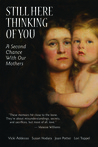 Still Here Thinking of You: A Second Chance With Our Mothers by Vicki Addesso
My rating: 5 of 5 stars
What a moving collection of memoirs. I can't say enough about this book. I read it in one day, unable to stop. It's thoughtful without being self-pitying, yet managed to wreck me again and again with its poignancy. Each of the four authors delivers a nuanced, multidimensional reflection on who their mothers were, what shaped them, and whether the direction their mothers took in rearing them was as bad as it seemed, or better now in retrospect.
In fact, this was one of the compelling aspects of the portrayals: as the writers matured, as the years passed, their perspectives of their mothers changed. In one instance, one of the authors as a very young girl is left alone to empty and reorganize a cabinet drawer in the middle of the night, even though the mother had to know of the activity. The girl, now an adult, muses to a friend (I'm paraphrasing), "How could she have left me alone in the dark hallway that night, not checking on me, not wondering why I felt compelled to do this?" and the friend answers, "if it had been my mother, she would never have had the restraint to let me work through it. She would have stopped me." So which view is right? Who can say? And isn't that the most freeing, forgiving way to reflect on how we were parented (within normal bounds, of course).
I identified with these families, as many readers will. I'm lucky to still have my mother - she's almost 90 - and I'm still learning from her. The innate narcissism of the child may never fade; she may be my mother but she's still an individual human being, and to what extent am I willing to accept that? I think this is the question the book suggests.
To be sure there is neglect, as in the horrendous ignorance of one of the mothers. Uncomfortable with dark thoughts or deep introspection, and preferring a bootstraps approach to problems, she shames and scoffs at her adult daughter who is in the throes of postpartum depression. Eventually the daughter recovers (she is one of the authors of this book), but her experience portrays a complicated relationship. Who is to blame? Is anyone? It was an earlier time, when PPD wasn't widely known, but was that any excuse? And what do you do if you can't answer that question?
I highly recommend this thoughtful, entertaining, introspective book. My thanks and best wishes to the authors: Vicki Addesso, Susan Hodara, Joan Potter, and Lori Toppel.
View all my reviews
December 20, 2013
Is Feminism a Bad Word?
There it was again, in an interview in Parade magazine last Sunday, with Emma Thompson and Dotson Rader:
Rader: When you were at Cambridge, you became a feminist. I don’t mean that in a negative sense.
Thompson: No, it’s not a negative word.
Well, Emma, it wasn’t originally, but now I think it is. Younger women start their sentences with, “I’m not a feminist, but...” In Lean In, Sheryl Sandberg writes,
We accepted the negative caricature of a bra-burning, humorless, man-hating feminist. She was not someone we wanted to emulate…In our defense, my friends and I truly, if naïvely, believed that the world did not need feminists anymore. We mistakenly thought that there was nothing left to fight for.
Feminism has fallen out of favor. This is partly because it has been taken over by extremists. Lately, for example, it’s considered bad feminist form to diet, lest one be perceived as selling one’s soul in compliance with cultural norms of beauty. (Dang, right after I started back on Weight Watchers!) According to an article in Elle Magazine this month, Marisa Meltzer says,
There’s a thread of old-school feminist thought that says taking pleasure in being admired for our looks is participating in our own oppression…

Daughter, please. There’s also a thread of feminist thought that says make up your own mind about what you want to take pleasure in. Just don’t let anybody limit you based on gender.
The feminist movement (a) made some mistakes and (b) got co-opted by the forces of capitalism. Unfortunately, the message of feminism was perverted from “you can be whatever you want to be” to “you must be a spectacular over-achiever.” Women are expected to be perfect mothers and partners while running corporations, and they’re freaking out and opting out.
Although we’ve opened up classrooms and board rooms, allowing women to go where only men have gone before, we’ve ignored the fact that women have wombs, ovaries and breasts, plus the talent for perpetuating the human race. This requires a little more effort and time, which they’re not getting. They’re expected to pop out babies on their lunch hours and get right back to work, pumping breast milk in the ladies’ room while wolfing a sandwich at their desks.
It’s horrendous. A nightmare. I’d be pissed, too. But instead of competing with each other for the title of Superwoman, we should recognize that women face similar difficulties and challenges in work and life. That used to be the basis for feminism. Our common difficulties impelled us to band together and fix things. We rejoiced in our collective power to shape a society that for too long had taken our contributions for granted while barring us from real power.
Back in the day, we wanted to be liberated from stereotypes that said we couldn’t be astronauts or fire fighters, and from rules that we should act or look a certain way to keep society from feeling threatened. Yes, some of us took it too far. Some of us became narcissistic assholes. If you were raised by one, I apologize.
But here’s one of the coolest, most empowering things I, as an old broad, can share with you. If you don’t like something? Change it, alone or collectively. Remember, there is more power in numbers, so you might get a couple hundred thousand sisters to join you in your mission. Call it whatever you want, but do something. Make yourself proud.
You can wallow in the nastiness of what is, or stand up, hose off the mud, and create a better world for yourself and other humans. If not for yourself, for your daughters and sons. At least, please try.


December 13, 2013
A Great Tool for the New Year
I always feel energized by the arrival of a new year. It’s like a clean slate, twelve sprawling months ahead for reaching my dreams. Do you feel that way, too?
If so, maybe I can help by sharing my own plans and a great book recommendation. My goals are to lose weight and become a best-selling author in 2014, which is the year I turn sixty.
Hey, a girl can dream.

Re: the weight loss, I’m a recidivist Lifetime member of Weight Watchers. I like the program because they taught me how to eat during the craziness of menopause. But I’m not plugging them – any program you stick to will work. So, how do you do that?
To prepare myself, I picked up a great book, The Power of Habit by Charles Duhigg. In it, I learned:
Habit is more powerful than addiction
Your brain resorts to habit because it conserves energy, which is then freed up for survival
Scientists now agree on proven strategies for developing new habits or changing old ones.
To change an old habit, Duhigg reports, you learn to recognize the cue that triggers the routine that leads to the reward. Then you leave the cue and reward alone, and change the routine. In other words, you don’t try to rewire your brain not to want what it wants – you just go about getting to the reward a different way.
This intrigues me. To test the theory (so you don’t have to), I’m going to work on one of my worst habits: I crave a glass of wine around 3 p.m., which usually leads to a cascade of consequences like eating too much for dinner, etc. That’s an old habit I need to change.
On the other hand, creating a new habit, Duhigg says, requires a slightly different approach. You create a cue and reward (which must be cultivated into a craving). Then the routine connecting the cue and reward is the desired practice, like exercise or meditation. In other words, in order to create a new habit of meditating, I’ll have to invent a cue and reward that make me want to repeat the routine.
I know this is vague but why load you up with details before I test drive the theories? But if they work, how cool if you could develop a foolproof strategy for making yourself into the person you’ve always wanted to be? The future would be unlimited!
So here’s my plan: I’m going to get started, and right around the first of January, I’ll report back to you about my degree of initial success, so you can decide whether Duhigg’s methods hold promise for you.
As for the best-selling author plan, I’ll be working on some strategies (like better time management, and daily meditation to enhance my creativity). One thing I’m not very good at is asking for help, so here goes:
If you read Dakota Blues, and liked it, would you mind telling a friend? And if you haven’t yet tried it, I’m getting really good reviews on Amazon, so you might want to check it out. People say it’s empowering, inspiring, and joyful. Also, it contains tips, strategies and wisdom, delivered in story form, for living your best life after fifty. Here’s the link, and I hope you love it.
What are you planning for 2014? Why don’t you share your aspirations in the comments below?


