
Michael Matthews's Blog, page 133
January 16, 2014
5 Healthy Dessert Recipes That You Have to Try
Who says us fitness folks can’t enjoy our desserts?
If you’re a regular reader of this blog, you know that proper dieting boils down to simple numbers, and thus, you can always make some room for little indulgences. In fact I like to do this even when I’m cutting simply because it makes it more enjoyable.
That said, I tend to stick to healthier, lower-calorie options because the real indulgent stuff is just too laden with calories (and fats particularly). Healthy doesn’t have to mean boring, though!
Here are 5 recipes I’ve run across recently and liked. Give them a try and let me know what you think!
Tea-Scented Mandarin Slices
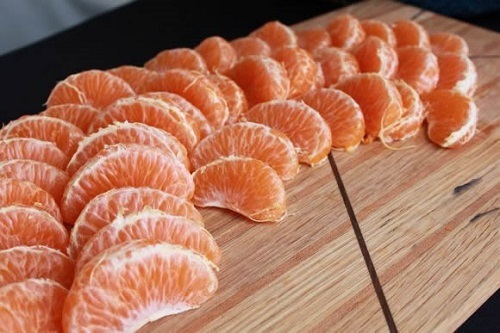
Tired of snacking on plain ol’ fruit? Infuse mandarin slices with depth of flavor in just 10 minutes.
Instructions
To start, brew one black tea bag. As it steeps, segment two large oranges, placing the pieces in a small bowl. Pour 1/2 cup tea over the top, drizzle with 2 Tbsp. honey, and top with a sprinkle of ground cardamom and cinnamon. Serves four.
Nutrition Facts
Calories: 87
Protein: 0.5 grams
Carbs: 21 grams
Fat: 0 grams
Black Forest Banana Split

Can a twist on a traditional sundae still be delicious without the ice cream? By caramelizing the natural sugar in the banana, this fruit and cheese plate will be a satisfying single-serving dessert.
Instructions
Preheat oven to 400°F.
Slice a banana in half lengthwise, sprinkle with cinnamon and a dash of dark rum, and bake in a lightly buttered dish for about 12 minutes. Remove from oven and let cool for 3 to 5 minutes. Top with 1/2 cup lowfat ricotta, 2 Tbsp. crushed walnuts, 1 tsp. cocoa powder, and 3 diced black cherries (or 2 tsp. dark cherry syrup).
For more temperature contrast, freeze the ricotta beforehand and thaw for 15 to 20 minutes before serving.
Nutrition Facts
Calories: 363
Protein: 15 grams
Carbs: 45 grams
Fat: 15 grams
No-Bake Peanut Butter Chocolate Protein Bites

According to my taste buds, anything with chocolate and peanut butter is probably going to be good. And these little guys are no exception.
Instructions
In a small bowl, mix together 1 scoop chocolate whey protein powder, 1/4 cup milled flax seed, and 2/3 cup peanut butter. Once combined, add 1 Tbsp. honey or agave nectar.
Use your hands to mix in 2 Tbsp. semisweet chocolate chips, and then roll into 1” balls.
Place in the fridge to harden for a half hour minimum, or store refrigerated or frozen until snack time. Makes 14 servings.
Nutrition Facts (Per Serving)
Calories: 108
Protein: 6 grams
Carbs: 5 grams
Fat: 8 grams
Cheesecake Tiramisu Protein Pudding

Picture courtesy of The Shiksa in the Kitchen
Instructions
First, make the coffee by dissolving 1/2 tsp. instant coffee granules into 1 tsp. hot water (or use 1 tsp. espresso, preferably cold-brewed).
Then mix 1 scoop unflavored whey protein, 1/3 cup plain nonfat Greek yogurt, 1/4 cup lowfat ricotta, 1/2 tsp. vanilla extract or rum, and prepared coffee until well combined. Add about 1 tsp. of stevia powder or a 0-calorie sweetener of your choice.
Spoon into a dessert dish, and garnish with 1 tsp. dusted cocoa powder and 1/4 cup sliced almonds. Serves one.
Nutrition Facts
Calories: 340
Protein: 33 grams
Carbs: 18 grams
Fat: 32 grams
Mudslide Cookies
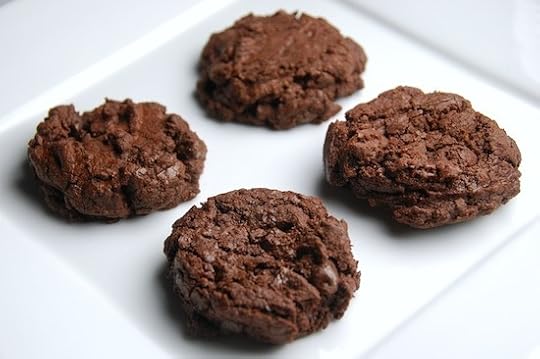
Picture courtesy of Stylish Cuisine
These are still cookies – so know that there’s a lot of sugar in every bite – but the amount of chocolate, eggs, and butter is cut down for a lighter cookie with less fat that’s still rich enough to be a hit at parties.
Instructions
Melt together 1 1/2 Tbsp. butter, 2 oz. bittersweet chocolate, and 2 oz. unsweetened chocolate until smooth. In a small cup, mix together 1 Tbsp. each instant coffee powder and hot water. Add the prepared coffee and 1 tsp. vanilla extract to the chocolate.
In a medium bowl, add 1 1/2 cups whole wheat pastry flour, 1/2 cup unsweetened cocoa powder, 2 tsp. baking powder, and a pinch of salt. Whisk until combined. In a large bowl, beat together 2 large eggs, 1/2 cup egg substitute, and 2 1/2 cups sugar until it is smooth and lightens in color.
Preheat oven to 350°F. Add egg mixture to chocolate mixture in thirds. Once thoroughly combined, slowly stir in the flour mixture, 1/2 cup chopped walnuts, and 1/4 cup mini chocolate chips. Using a tablespoon, drop dough onto cookie sheets lined with parchment paper, and with wet hands press each ball down until 1/4-inch thick.
Bake for 15 minutes. One minute after removing from oven, transfer to wire racks to cool completely.
Nutrition Facts (Per Cookie)
Calories: 142
Protein: 3 grams
Carbs: 25 grams
Fat: 5 grams
What did you think of these healthy dessert recipes? Have anything else you’d like to share? Let me know in the comments below!
Want more delicious, easy-to-make recipes like these?If you like these recipes, then you’ll love my bestselling cookbook The Shredded Chef!
In this book you’ll find 120 healthy, flavorful recipes specifically designed for athletes that want to build muscle or lose fat. Regardless of your fitness goals, this book has got you covered.
Buy this book now to forever escape the dreadful experience of “dieting” and learn how to cook nutritious, delicious meals that make building muscle and burning fat easy and enjoyable!
Buy now
AmazonAmazon UKAmazon AUAmazon CABNiBooksKoboGoogle Play
Vegan and vegetarian dishes are great sources of micronutrients, and even if you’re a meat eater, they’re great for changing things up in your meal plan.
And in my cookbook, Eat Green Get Lean, you’ll find 100 of my favorite vegetarian and vegan dishes, carefully balanced for our high-protein, healthy needs!
Buy this book now to forever escape the dreadful experience of “dieting” and learn how to cook nutritious, delicious vegetarian and vegan meals that make building muscle and burning fat easy and enjoyable!
Buy now
AmazonAmazon UKAmazon AUAmazon CABNiBooksKoboGoogle Play



January 15, 2014
How to Speed Up Your Metabolism for Easier Weight Loss
When people want to lose weight, the advice they’ll often get is to simply “eat less and move more.” It’s just calories in vs. calories out, they’ll be told.
But how does that explain the women that come to me at 140, 150, or 160+ pounds, eating 1,300 calories per day, exercising 6 – 7 hours per week…without losing weight? According to standard calculations, such women should be burning upwards of 2,000 calories per day.
How the hell can they be eating so little without losing fat? And what should they do? Should they suck it up and eat even less? Push through another hour or two of grueling exercise each week? Or is something else needed?
Well, in this article I’m going to break it all down and show you why preserving your metabolic health is the key to consistent, pain-free weight loss.
So let’s start at the beginning: what the hell does metabolism even mean?
The Metabolism Made Simple
The dictionary defines metabolism in the following way:
The chemical processes that occur within a living organism in order to maintain life.
Two kinds of metabolism are often distinguished: constructive metabolism, or anabolism, the synthesis of the proteins, carbohydrates, and fats that form tissue and store energy, and destructive metabolism, or catabolism, the breakdown of complex substances and the consequent production of energy and waste matter.
In short, when we speak of the metabolism, we speak of the body’s ability to use various chemical processes to produce, maintain, and break down various substances, and to make energy available for cells to use.
As you can imagine, this is an incredibly complex subject as it encompasses the entire set of processes whereby life is sustained, so let’s hone in on the aspect of it most relevant to this article: metabolic speed.
Now, what does it mean to have a “slow” or “fast” metabolism?
Well, such distinctions are referring to what is known as the body’s metabolic rate, which is simply the amount of energy the body uses to perform the many functions involved in metabolism.
Basal metabolic rate excludes physical activity, and we often measure it in terms of calories. (One calorie, or kilocalorie as it’s technically known, is the amount of heat required to heat one kilogram of water one degree Celsius)
The faster one’s metabolism is, the more energy the body burns in performing the many tasks related to staying alive. The slower it is, the less energy it burns performing these tasks.
In a funny sense, a slower metabolism is actually more “efficient” than a faster one because it requires less energy to maintain life. (This doesn’t mean a slow metabolism is good.)
Now, the body’s metabolic rate is influenced by various factors such as age, fat mass, fat-free mass, and thyroid hormone circulation, but some people’s bodies also naturally just burn more energy than others’.
For instance, one study reported basal metabolic rates from as low as 1,027 calories per day to as high as 2,499 calories per day, with a mean BMR of 1,500 calories per day. Much of this variance was due to different levels of fat-free mass and fat mass, age, and experimental error, but a significant portion (about 27%) of the variance was unexplained.
Another study demonstrated that basal metabolic rates can vary between people with nearly identical levels of lean mass and fat mass. Researchers found that despite their subjects all having comparable body compositions, the top 5% BMRs metabolized energy about 30% faster than the lowest 5%.
Alright, so that’s what the metabolism is and how it works. Let’s relate it to weight loss.
How Your Metabolism Affects Your Ability to Lose Weight
As you probably know, you lose fat by feeding your body less energy than it burns every day. Your body deals with this energy deficit, or calorie deficit, by tapping into fat stores to get the energy it needs (that it isn’t getting from the food you eat).
From where are most of these energy demands coming from, though? That’s right, the metabolism.
For instance, a 180-pound man with 10% body fat and a healthy metabolism has a basal metabolic rate of about 2,000 calories per day. Through regular exercise and other activity, total daily energy expenditure could increase to about 2,800 calories per day.
Well, as we can see, about 70% of an in-shape, active man’s total daily energy expenditure still comes from the metabolism.
This is why preserving metabolic health is so important when it comes to weight loss. When you reduce your calorie intake to induce weight loss, you’re counting mainly on your metabolism to keep humming along, pulling from fat stores. Sure, you use exercise to increase overall energy demands and thus fat loss, but your metabolism is a major player in the game.
The slower your metabolism is, the less food you’ll have to eat and the more exercise you’ll have to do to lose weight effectively. The faster it is, the more you’ll be able to eat and the less you’ll have to exercise.
The Surefire Way to Slow Your Metabolism to a Crawl and Get Fat
Most people know that losing weight requires eating less food than they’re currently eating and moving more, and most people want to lose weight as quickly as possible.
What do many people do, then? Well, they dramatically reduce calorie intake and dramatically increase energy output (through many hours of exercise each week). And while this approach will induce weight loss for a bit, it will ultimately fail. Why?
Because your metabolism adapts to the amount of energy you feed your body. Its goal is to balance energy intake with output–to maintain homeostasis.
When you restrict your calories and feed your body less energy than it burns, your metabolism naturally begins slowing down (burning less energy). The more you restrict your calories, the faster and greater the down-regulation.
The opposite is true as well, by the way. As you feed your body more, your metabolism will naturally speed up (burn more energy).
Now, when someone dramatically decreases calorie intake and their metabolism finally slows down enough to match intake with output, weight loss stalls. This is usually met with further calorie reduction or more exercise, which only results in more metabolic slowdown, and thus a vicious cycle begins.
In most cases, the dieter finally can’t take the misery anymore, and goes in the other direction, dramatically increasing calorie intake (bingeing and gorging on everything in sight for days or weeks). This, in turn, has been shown to result in rapid fat storage, often beyond the pre-diet body fat levels (people end up fatter than when they started dieting in the first place).
What’s going on here is very simple: these people have systematically crashed their metabolic rates and then overloaded their bodies with way more calories than they needed, and the body’s response to this is to store much of the excess energy as fat.
Ultimately what happens is the person winds up fatter than they started, and with a slower metabolism. If they repeat this cycle a few times, they can find themselves in a really bad place metabolically: eating very little food to maintain a high body fat percentage.
This process of dramatically and chronically slowing the metabolic rate down is often referred to as “metabolic damage,” and fortunately, it can be resolved. (Click here to tweet this!)
How to Speed Up Your Metabolism for Easier Weight Loss
Your metabolic health is going to determine how effectively you can lose weight, so here’s the bottom line:
If you want smooth and consistent weight loss, you want your metabolism to be running quickly before you start. (Click here to tweet this!)
As the metabolism adapts to food intake, you want your weight to be stable with a high amount of daily calories before you start restricting them for weight loss purposes.
Ideally, you should be eating at least your total daily energy expenditure (TDEE) without gaining weight before you start a weight loss routine. (Click here to tweet this!)
If you’re not currently there–if you’re eating quite a bit less than your TDEE and your weight is not moving, you need to improve your metabolism before you attempt a weight loss routine.
Fortunately, this is easy to do if you remain patient. Here’s how it’s done:
1. Engage in heavy resistance training (weightlifting, ideally) 3 – 5 times per week.
This has two big benefits for your metabolic rate: it speeds it up in the short term, burning a significant amount of post-workout calories; and it builds muscle, which speeds up your metabolic rate in the long term.
My Bigger Leaner Stronger and Thinner Leaner Stronger programs are built around heavy, compound weightlifting, and are perfect for repairing metabolic health.
2. Slowly increase your calories each week until you’ve reached your target intake (your TDEE).
In the bodybuilding world, this is known as “reverse dieting,” and it’s a very simple but effective way to speed up your metabolism.
Instead of dramatically increasing your calorie intake, you want to work it up slowly, allowing your metabolism to keep up and match output with intake (resulting in little-to-no fat storage).
I like to increase in increments of about 100 – 150 calories per day with 7 – 10-day intervals. That is, you increase your intake by 100 – 150 calories per day and maintain that new level of intake for 7 – 10 days. You then do it again and again and again until you’ve reached your TDEE.
3. Eat plenty of protein.
A high-protein diet is important because it will promote muscle growth, which is what we want to achieve with step #1.
I recommend that you eat 1 gram of protein per pound of body weight when you’re working on speeding up your metabolism.
4. Eat a moderate amount of dietary fat.
While I’m generally not a fan of high-fat dieting for athletes (and I explain why here), I do recommend eating a fair amount of dietary fat every day when you’re working on improving metabolic health.
The reason why is it boosts testosterone production (albeit slightly), which in turn speeds up metabolic rate. It’s a relatively minor point, but every little bit helps.
I recommend that you get 30 – 35% of your daily calories from dietary fat when you’re working on speeding up your metabolism.
A Healthy Metabolism Allows for Healthy Weight Loss
When your metabolism is healthy–when you’re able to eat plenty of food every day without gaining weight–weight loss is very easy.
As discussed in my article on meal planning, you will simply utilize about a 20% calorie deficit with 4 – 6 hours of exercise per week (a combination of weightlifting and high-intensity interval cardio works best), and it will be easy, effective, and enjoyable.
Yes, your metabolism will slow down, but not by much. This approach will give you at least a good 2 – 3 month window in which you can lose plenty of fat while potentially even building muscle.
And if, over time, your metabolism slows down too much but you haven’t hit your body fat percentage goal yet, you simply take the above steps to speed your metabolism back up, and then move back to weight loss.
What did you think of this article on how to speed up your metabolism? Have anything else you’d like to share? Let me know in the comments below!
How to get lean and build serious muscle and strength, faster than you ever thought possible…
Depending on how you eat, train, and rest, building muscle and losing fat can be incredibly easy or incredibly hard. Unfortunately, most people make many different mistakes that leave them stuck in a rut.
And that’s why I wrote Bigger Leaner Stronger for men, and Thinner Leaner Stronger for women: they lay out EVERYTHING you need to know about diet and training to build muscle and lose fat effectively…
Buy now
AmazonAmazon UKAmazon AUAmazon CAAudible AudiobookBNiBooksiBooks AudiobookKobo
Buy now
AmazonAmazon UKAmazon AUAmazon CAAudible AudiobookBNiBooksiBooks AudiobookKobo
January 14, 2014
Why Managing Time Isn’t the Ultimate Key to Productivity
Most people would answer “time”…and they’re wrong.
The most important commodity you have and must manage in order to maintain high productivity is energy, not time. (Click here to tweet this!)
Why? Well think about it for a second.
Let’s say you managed your schedule meticulously and planned every second of every day, but when it came time to DO something in each slot you had low physical energy levels, you were anxious and stressed, and you couldn’t focus on your work and were unmotivated. How much do you think you’ll actually get done? Not very much.
Well, this is where many people sit: they think that buying a time planner and working out a rigorous schedule is the key to unlocking sky-high productivity levels. And it’s never that simple.
Instead, they should be focusing FIRST on properly managing energy levels and THEN managing their time.
This subject is much too vast to cover in one blog post, but I want to briefly look at four distinct areas of energy that you must control to achieve “superhuman” levels of productivity.
Physical Energy and Productivity
Not taking care of our bodies affects our work more than we think.
When we eat poorly, sleep too little, crash our adrenals with stimulants, rely on sugar highs to feel energy, etc., we are contributing to long-term degradation of our physical capacities.
The fact is, when you feel lethargic, tired, physically uncomfortable, etc., it has a HUGE effect on your productivity levels. It’s very distracting and hard to mentally push through. On the flip side, when your body feels healthy, rested, energetic and refreshed, it makes can make production a breeze.
Our physical energy capacity is defined by quantity. It is measured in these terms (high to low).
Mental Energy and Productivity
Our ability to focus on what we’re doing when we’re doing it is paramount in our ability to be effective workers. (Click here to tweet this!)
If our minds are cloudy, distracted and “weighed down,” and we are unable to really focus in that moment, our productivity levels suffer immensely. When our attention is fixed on internal struggles and problems, it becomes very hard to stick to the task at hand. Our “noisy heads” can waste HUGE amounts of our time.
Our mental energy capacity is defined by focus. It is measured in accuracy (specific or scattered) and location (external or internal).
Emotional Energy and Productivity
Our feeling of positive or negative emotions affects how we view everything around us and thus affects our ability to produce.
If we are angry, anxious, worried, stressed, etc., we simply will not be as effective than when we are uplifted, challenged and positive in our outlook.
Our emotional energy is defined by quality. It is measured in terms of pleasant (positive) to unpleasant (negative).
Spiritual Energy and Productivity
Though this sounds kind of “new agey,” it’s actually pretty simple. The “spiritual energy” you bring to a project is your sense of purpose and motivation for completing the project.
If you could care less about the work, you obviously haven’t connected it to any strong purpose of yours and you’ll bring little internal motivation to it. This can be a huge barrier when you’re trying to push through obstacles and get things done.
Our “spiritual energy” is defined by force. It is measured in terms of strength of purpose (weak to strong).
How to Quickly and Easily Improve Productivity
Books have been written on correctly aligning these vectors, but it’s easy to get our wheels turning with just the following:
1. Work out how you can raise your physical energy levels.
What works best for me is eating plenty of healthy foods, exercising regularly, and getting enough sleep.
2. Work out how you can remove distractions in order to better focus on the tasks at hand.
I’m a Nazi about doing what I’m doing when I’m doing it. When I’m working, my email is closed, I’m not available on any instant messengers, I ignore my cell phones, I don’t have something going in the background that pulls attention like a TV or radio, and I listen to music that helps me focus (classical and movie scores, mainly).
If there are personal issues, I simply shove them aside and refuse to dwell on them. They can be addressed in their own time. Stewing over them when I’m trying to work accomplishes nothing.
The Pomodoro Technique is a good way to learn to really focus on what you’re doing.
3. Work out how you can lower your stress levels and be more positive in your work.
Regular exercise and getting enough sleep are big parts of this. Listening to music can help a lot too. Sometimes simply deciding to be in a better mood, despite reasons not to, even works. Remember…

(I actually have this hanging up in my office.)
4. Work out how can you ensure your work connects with a deeply-held purpose or desirable goal of yours.
I talk about this in more detail in my article on the value of a purpose-driven life, and think it’s an incredibly important aspect of long-term productivity and fulfillment.
What do you think of these productivity tips? Have anything else you’d like to share? Let me know in the comments below!
January 13, 2014
The Definitive Guide to Effective Meal Planning
Whether you’re looking to lose weight or build muscle, your meal planning is going to be a major factor in whether you achieve your goals or not.
There are quite a few downsides to improper meal planning, such as…
You fail to lose or gain weight as desired.
You gain weight too quickly, or lose weight too quickly, resulting in either excessive fat storage or muscle loss.
You get sick of bland foods, making compliance harder and harder as time goes on.
You have to battle hunger and cravings.
You have trouble following a prescribed pattern of meal frequency.
You fail to use nutrient timing to your advantage.
And more…
The bottom line is a poor meal plan will stick you in a frustrating rut, and keep you spinning your wheels until you finally give up.
On the other hand, effective meal planning makes building muscle or losing fat consistently enjoyable, and more importantly, sustainable. That is, you’re able to make a true long-term lifestyle change, not a burdensome quick fix that will lead to yo-yo dieting and other aggravations.
In this article, I’m going to share with you various meal planning tips that have served me well in my own meal planning as well as the custom meal plans me and my team make for others.
Meal Planning Made Easy Tip #1:
Calculate Your Daily Calorie Intake Correctly
If you get this wrong, nothing else matters. You will not lose weight or build muscle effectively.
And unfortunately, thanks to all kinds of bad advice out there, many people find this vital first step confusing. But it doesn’t have to be.
Total Calorie Intake and Weight Loss
If you want to focus on losing fat, you need to feed your body less energy (via food) than it burns every day, as measured in calories (which represent the energy potential of food).
This is known is creating a “calorie deficit,” and when you do this, your body will dip into its fat stores to obtain the extra energy it needs.
Maintaining a daily or weekly calorie deficit will, over time, result in an overall reduction of body fat percentage, and is the only way to do this. (Click here to tweet this!)
Now, you may be wondering how large this deficit should be. How much less energy should you be feeding your body compared to what it needs?
Well, while many weight loss diets rely on large calorie restrictions (eating very little every day), this is not the smart way to go about it. Such an approach has quite a few negative side effects, such as metabolic damage, excessive muscle loss, extreme irritableness, and more.
Instead, you want to put your body in a mild calorie deficit.
Specifically, you want to feed your body about 20% less calories than it burns every day. If you do this, you will lose 1 – 2 pounds per week, every week, while preserving your metabolic health, energy levels, mental balance, and mood.
Calculating Daily Calorie Intake for Weight Loss
The first step of calculating your calorie needs for weight loss is determining, with some accuracy, how much energy you’re burning every day.
Some methods of doing this involve tracking and inputting types of physical activity ranging from sitting idle to intense exercise. While this works, I’ve found it unnecessarily complicated.
Instead, I recommend you use a simple, three-step method:
1. Use the Katch McArdle formula to determine how much energy your body burns every day excluding physical activity.
This is known as your basal metabolic rate or BMR.
2. Multiply that number as follows:
By 1.2 if you exercise 1-3 hours per week.
By 1.35 if you exercise 4-6 hours per week.
By 1.5 if you exercise 6+ hours per week.
The resulting number will be a fairly accurate measurement of the total amount of energy your body is burning every day, generally known as your total daily energy expenditure or TDEE.
Oh and in case your’e wondering why those multipliers are lower than the standard Katch McArdle multipliers and other similar models elsewhere on the Net, it’s simply because the standard Katch McArdle multipliers are too high.
Unless you have an abnormally fast metabolism, your TDEE will come out high using the standard multipliers and you’ll wonder why you can’t lose weight.
3. Multiply your TDEE by .8 to create a 20% calorie deficit.
By eating 80% of your TDEE, you are creating the mild calorie deficit required for consistent, healthy weight loss.
Total Calorie Intake and Building Muscle
Many people don’t know that total calorie intake has just as much to do with building muscle as losing fat.
How many calories you eat every day has a profound effect on your body’s ability to build muscle efficiently. (Click here to tweet this!)
You see, the biological factor known as “energy balance” is vitally important to the physiological processes that result in muscle growth.
When your body is in a “negative energy balance,” this means you’re feeding it less energy than it burns. This results in weight loss. But it also impairs the body’s ability to synthesize muscle proteins.
The body simply can’t build muscle efficiently when it’s in a calorie deficit, and this is why it’s commonly accepted that you can’t build muscle and lose fat. (Although under the right circumstances, some people can.)
Now, when you want to focus on building muscle, the first rule you must obey is you can’t be in a calorie deficit. (Click here to tweet this!)You want your body in a slight calorie surplus, or in a state of “positive energy balance.”
This is true regardless of the dietary protocol you use. If you’re in a calorie deficit several days per week, you will build little-to-no muscle unless you’re brand new to weightlifting.
Calculating Daily Calorie Intake for Building Muscle
As you’ve probably guessed, this a simple matter of multiplying your TDEE by a number greater than 1 to create a slight calorie surplus.
This is known as “bulking,” and while many calculation methods prescribe sky-high intake numbers, I don’t recommend this.
Large calorie surpluses will not help you build muscle faster–they will simply make you fatter faster. (Click here to tweet this!)
This additional fat storage is not only sore to eyes, it will mean slower muscle growth while bulking, and and ultimately more time spent cutting, which further slows down total muscle growth over time.
Instead, I recommend you start with a slight surplus and see how your body responds (tip #5). You can always adjust upward if necessary.
Meal Planning Made Easy Tip #2:
Calculate Your Macronutrient Ratios Correctly
Once you’ve got your total calorie needs worked out, the next thing to look at is macronutrient ratios.
The reason why is while calories eaten vs. calories burned is the fundamental rule of weight loss or weight gain, how you get those calories is very important as well.
First, let’s look at the definition of macronutrient, or “macro” as it’s often called:
A macronutrient is any of the nutritional components of the diet that are required in relatively large amounts: protein, carbohydrate, fat, and minerals such as calcium, zinc, iron, magnesium, and phosphorous.
The macronutrients we’re concerned with in particular here are protein, carbohydrate, and fat.
One gram of protein and one gram of carbohydrate contain about 4 calories, and one gram of fat contains about 9, and you must use these numbers to turn your daily calorie target into daily macronutrient targets.
There are way too many theories on optimal macronutrient ratios out there, so let’s stick to clinical research. Here are the facts:
A high-protein diet is extremely effective for maintaining muscle while in a calorie deficit and maximizing muscle growth while in a calorie surplus.
This shouldn’t come as any big surprise. As you’ll see, however, you don’t necessarily need to eat as much protein as some people think.
Carbohydrates don’t make you fat–they too help you preserve and build muscle.
Whether you want to lose or gain weight, carbohydrates are your friend. Why? There are two reasons:
The first reason relates to a substance known as glycogen, which is a form of energy our body produces from carbohydrate, and which is stored primarily in the liver and muscles.
Weightlifting rapidly drains your muscles’ glycogen stores, and replenishing those stores to ensure your muscles remain “full” of glycogen improves performance and reduces exercise-induced muscle breakdown.
The second reason relates to the hormone insulin, which is released by the pancreas when you eat food, and which shuttles nutrients from your blood to your cells.
When you eat a good portion of carbs, this stimulates a relatively long and sustained release of insulin. Insulin doesn’t directly induce protein synthesis like amino acids do, it does have anti-catabolic properties.
What that means is it decreases the rate of protein breakdown, which creates a more anabolic environment in which muscle can grow faster.
This isn’t just theory–it’s been proven in clinical research. One study, conducted by McMaster University, compared high- and low-carbohydrate dieting with subjects engaging in regular exercise. The result? Subjects following the low-carb diet experienced increased protein breakdown rates and reduced protein synthesis rates, resulting in less overall muscle growth.
Eat enough dietary fat to support basic health, but high-fat dieting isn’t the way of the future.
This probably warrants its own article, but I’ll keep it brief here.
Your body needs a certain amount of dietary fat to support various physiological processes related to cell maintenance, hormone production, insulin sensitivity, and more.
According to the Institute of Medicine, adults should get 20 – 35% of their daily calories from dietary fat.
That said, these recommendations are based on the calorie needs of the average, sedentary person. Regular exercise can allow you to eat a lot more than the average person without gaining fat. Furthermore, if you’re increasing your calories for muscle-building purposes,you’re going to be eating far more than the numbers assumed for the IOM’s recommendations.
The point this is: your body only needs so many grams of fats per day, and based on the research I’ve seen, if you exercise regularly, dietary fat can comprise 20 – 35% of your BMR calories and you’ll be fine.
Now, let’s talk a moment about high-fat dieting. (By the way, a diet that has you getting 20% or less of your daily calories from fat is a low-fat diet, and a diet that has you getting 30% or more is a high-fat diet.)
Many high-fat advocates will say that it provides significant hormonal benefits which in turn help you build muscle faster, but this isn’t exactly true.
Yes, research has shown that switching from a low-fat diet to a high-fat diet can increase anabolic hormone levels…but not by much.
For example, one study showed that men getting 41% of daily calories from fat had 13% more free testosterone than man getting just 18% of daily calories from fat. The findings were similar to those of another study conducted a decade earlier.
But wait, you might be thinking…more testosterone means more muscle growth, right? Ironically the answer is no.
Research has shown that small fluctuations of testosterone within physiological normal ranges doesn’t help or hinder your gains in the gym. Increasing your testosterone above the ranges of physiological normal definitely does accelerate muscle and strength growth, however (this is what certain steroids accomplish).
So, with that now under our belts, let’s look at what you’re losing when you increase fat intake to 30%+ of your daily calories: carbohydrate. You have to reduce your carbohydrate intake to make room for those fats. And you have to reduce it quite a bit because, as you know, a gram of fat contains over double the calories of a gram of carbohydrate.
For example, if you’re eating 2,500 calories per day with 30% of calories from protein, 50% from carbohydrate, and 20% from fat, that looks like this (approximately):
190 grams of protein
310 grams of carbohydrate
55 grams of fat
If you switched to 30% of calories from protein, 40% from fat, and 30% from carbohydrate, it would look like this:
190 grams of protein
190 grams of carbohydrate
110 grams of fat
I can guarantee you that you will feel stronger in and have more energy for your workouts on the first, higher-carb diet. This, in turn, means you will be able to push more weight in those workouts, and thus build more muscle and strength (which is exactly what the study I cited earlier by McMaster University found).
On the other hand, all the high-fat diet would get you in a small increase in testosterone, which you may slightly feel in terms of vitality and sex drive, but which will most definitely not benefit your training.
Calculating Proper Macronutrient Ratios
Alright then, let’s get to the goods: how should you set up your macronturient ratios in your meal planning? My recommendations are very simple.
When you’re in a calorie deficit, get 40% of daily calories from protein, 40% from carbohydrate, and 20% from fat.
This gives you the benefits of a high-protein diet, it gives you plenty of carbs to help maintain your strength, and enough dietary fat to support basic physiological needs.
When you’re in a calorie surplus, limit your protein intake to 1 gram per pound of body weight, get 20% of your daily calories from fat, and get the rest from carbohydrate.
This provides plenty of protein for muscle growth, more than enough fat for basic physiological needs, and a lot of carbs to help you push heavy weights and stimulate growth.
Meal Planning Made Easy Tip #3:
Eat Foods You Like
There are far too many myths regarding foods you “can and can’t” eat when you’re trying to lose or gain weight. Instead of trying to address them one by one, I’m going to keep it simple for you:
When it comes to gaining or losing weight, HOW MUCH you eat is what matters most–not WHAT. (Click here to tweet this!)
So long as you stick to your daily macronutrient targets, regardless of the foods you eat to get there, your body will respond by gaining or losing weight accordingly.
Now, that isn’t to say that you should try to eat as much junk food as possible. Remember that our bodies don’t need food just for protein, carbohydrate, and fat–food also provides vital micronutrients that keep us healthy, vital, and disease-free.
For instance, the majority of my calories come from nutrient-dense foods, like the following:
Avocados
Greens (chard, collard greens, kale, mustard greens, spinach)
Bell peppers
Brussels sprouts
Mushrooms
Baked potatoes
Sweet potatoes
Berries
Low-fat yogurt
Eggs
Seeds (flax, pumpkin, sesame, and sunflower)
Beans (garbanzo, kidney, navy, pinto)
Lentils, peas
Almonds, cashews, peanuts
Barley, oats, quinoa, brown rice
Salmon, halibut, cod, scallops, shrimp, tuna
Lean beef, lamb, venison
Chicken, turkey
As you can see, that’s a lot of yummy options. I’m not trying to suffer through 5 servings of boiled chicken and steamed broccoli every day.
So, do yourself a favor when you’re creating your meal plan and stick to healthy foods you actually like to eat. Use a website like CalorieKing to research their macronutrient profiles, and piece your meal plan together meal by meal.
And don’t be afraid to include little indulgences–they’re just calories you work in. For instance, I really like chocolate, so I often include about 100 – 150 calories’ worth of it as a dinner dessert.
Meal Planning Made Easy Tip #4:
Meal Scheduling 101
I have good news for you:
You don’t have to eat meals on any set schedule to lose weight or build muscle efficiently. A proper meal schedule is one that fits your schedule. (Click here to tweet this!)
You see, meal frequency has little relevance on actual results. You can eat 3 meals per day or 9 and achieve the same thing if you’re doing everything else right in terms of your calorie intake, macronutrient ratios, and exercise regimen.
That said, unless you definitely prefer fewer meals, or must eat fewer due to your schedule/lifestyle, I actually do recommend you plan to eat every 3 – 4 hours. Why? Because in my experience, most people find this easiest in terms of overall enjoyment, and staving off hunger when cutting and getting in enough food when bulking.
In terms of meal timing, there are only two meals I recommend you “time”:
Unless you’re training fasted, have 30 grams of protein and 30 – 50 grams of carbohydrate before your weightlifting. This will not only give you a nice boost of energy for your workouts, it can help you build more muscle over time. You don’t necessarily need food before cardio, but 20 grams of protein isn’t a bad idea as it will help minimize muscle loss.
Have 30 – 50 grams of protein and about 30% of your daily carbs in your post-workout meal. This will help your body replenish depleted glycogen stores and can also help you build more muscle over time.
That’s it. The rest of your meals can be timed however you please, so just work it around your preferences and schedule. Again, you will probably find a smaller meal every few hours most enjoyable, but feel free to experiment.
You can also play with when you start eating for the day.If you like eating breakfast, eat one. If you don’t, and would prefer to wait until lunch before you start eating, you can do that too. Sometimes skipping that first meal (which will not “make you fat,” like some people claim) helps with overall compliance as it allows you to eat larger meals and still stick to your numbers.
Meal Planning Made Easy Tip #5:
Adjust Based on Your Results
The bottom line of meal planning is this: is your body responding as you desire or not?
To be specific, here is what you want to see:
If you’re dieting to lose weight, you want to lose 1 – 2 pounds per week. Unless you’re very overweight, consistently losing more than this every week means you’re probably losing muscle too.
If you’re dieting to build muscle, you want to gain .5 – 1 pounds per week. If you’re consistently gaining more than this every week, you’re gaining more fat than is necessary.
One thing you should know with weight measurements, however, is they can fluctuate on a daily basis, mainly due to water retention. This is more of an issue for women, but your body can retain or shed quite a bit of water throughout the day, and this can sometimes obscure your fat loss or exaggerate your weight gain.
One way around this is to weigh yourself every day, and then average it once every 7 – 10 days (total your weights for those days and divide by the number of days).
What you see in the mirror will also tell you if you’re making progress, but this can be deceptive as you tend to miss the small changes in your body when you look at yourself every day. Weekly pictures are more reliable.
Yet another way to check progress is to take key measurements.
When it comes to weight loss, the waist measurement (around the navel) is most important and indicative of progress.
When it comes to muscle building, there are several measurements you can take, which are explained in my article on how to build the ideal male body.
Now, if your body is progressing as desired, you keep doing what you’re doing. If, however, your weight is stuck or going up too quickly, you need to make a change.
If you’re not losing weight, and you’ve taken measures to ensure it’s not an issue of water retention, then you have to move more or eat less.
The most exercise I recommend when dieting for weight loss is about 5 hours of weightlifting and 2 – 3 hours of cardio per week. You can increase activity to this level, but if you’re already there, you need to shave off some calories.
I like to do this in 100 – 150-calorie increments. That is, I increase or decrease my daily calorie intake by 100 – 150, and see how my body responds over the next 7 – 10 days. If that corrects the problem, great; if it doesn’t, I increase or decrease again until I’ve got it.
If you’re not gaining weight, and you’re training properly (focusing on heavy, compound weightlifting), then you need to eat more food.
It’s really that simple. And I recommend you increase your calories in the same 100 – 150-calorie increments until you find your body’s “sweet spot” that allows for .5 – 1 pounds gained per week.
Remember that part of this game is learning your body, and your metabolism in particular. Some people need to eat quite a bit more or less food than others to gain muscle or lose fat consistently.
Examples of Good Meal Planning
If your head is hurting at this point and you want to see what a good meal plan looks like, I’ve got you covered.
Here are a few examples of meal plans we make for people. They should help you:
https://docs.google.com/file/d/0B4Jm09OF3tkYNjQwaTJTUTQ1NUU/edit?usp=sharing
Making your own meal plan make take a little time at first, but once you get the hang of it, it gets very easy and is something you can even learn to do on the fly using an application like My Fitness Pal.
Would You Rather Have a Meal Plan Made For You?
If you’d rather just have a perfect meal plan made for you–one that will help you build muscle or lose fat while actually enjoying the foods you eat–then I and my team can help.

We’ve done hundreds of meal plans for people all over the world, and make them completely custom to you and your preferences, schedule, and lifestyle (no copy and paste junk plans here).
What did you think of this guide on meal planning? Have anything else you’d like to add? Let me know in the comments below!
How to get lean and build serious muscle and strength, faster than you ever thought possible…
Depending on how you eat, train, and rest, building muscle and losing fat can be incredibly easy or incredibly hard. Unfortunately, most people make many different mistakes that leave them stuck in a rut.
And that’s why I wrote Bigger Leaner Stronger for men, and Thinner Leaner Stronger for women: they lay out EVERYTHING you need to know about diet and training to build muscle and lose fat effectively…
Buy now
AmazonAmazon UKAmazon AUAmazon CAAudible AudiobookBNiBooksiBooks AudiobookKobo
Buy now
AmazonAmazon UKAmazon AUAmazon CAAudible AudiobookBNiBooksiBooks AudiobookKobo
January 12, 2014
MFL Podcast #6: Best rep ranges for muscle growth, boosting testosterone naturally, and more…
In this podcast I talk about rep ranges and how they correlate to muscle growth and strength, why testosterone levels aren’t as important as some point think and how to boost them naturally, lessons from success from the Kardashians (har har har), and more…
Want to listen to this in iTunes?

Articles & supplements I reference in the video:
The Definitive Guide to Muscle Hypertrophy (Muscle Growth)
6 Ways to Naturally Boost Your Testosterone Production
The Kardashian School of Getting Rich
Cardio and Muscle Growth: Friends or Foes?
The Definitive Guide to Post-Workout Nutrition
The Definitive Guide to Vitamins and Minerals
What did you think of the podcast? Have any requests or suggestions? Let me know in the comments below!
January 11, 2014
Recipe of the Week: Quick Bean & Squash Stew
Stews are great because they’re easy to make, they store well (I think they improve in taste as they sit), and they’re portable (perfect for on-the-run eating).
This stew recipe is from my cookbook Eat Green Get Lean and it’s one I come back to again and again. I love the classic combination of beans, butternut squash, tomatoes, peppers, and garlic.
My “protein of choice” to add to this recipe is extra-lean ground turkey, which I sauté separately. Enjoy!
Servings
4
Calories Per Serving
303
Protein Per Serving
15 grams
Carbohydrates Per Serving
62 grams
Fat Per Serving
1 gram
Ingredients
1 1/2 cups onion, chopped
1 1/2 cups green bell pepper, chopped
2 teaspoons minced garlic
1 tablespoon whole grain flour
2 cups butternut squash, peeled and cubed
2 (16 ounce) cans low-sodium diced tomatoes, with liquid
1 (15 ounce) can red kidney beans, drained and rinsed
1 (13 ounce) can baby lima beans, drained and rinsed
salt and ground black pepper, to taste
Instructions
Coat a large saucepan in cooking spray and place over medium heat.
Add the onion, bell pepper, and garlic and sauté until tender, about 7 minutes. Stir in the flour and cook for 1 minute.
Add the remaining ingredients and bring to a boil. Reduce heat and simmer 10 – 15 minutes, or until beans are tender.
What You Get to Eat

What did you think of this week’s recipe? Let me know in the comments below!
Want more delicious, easy-to-make recipes like this?If you like this recipe, then you’ll love the bestselling cookbook it came from: my own Eat Green Get Lean! It contains 100 vegetarian and vegan recipes specifically designed for high-protein, healthy dieting.
And even if you’re not a vegetarian or vegan eater, you will find plenty of delicious “add-on” dishes, as well as breakfast, lunch, and dinner recipes that you can easily add meat or other forms of protein to.
Buy this book now to forever escape the dreadful experience of “dieting” and learn how to cook nutritious, delicious vegetarian and vegan meals that make building muscle and burning fat easy and enjoyable!
Buy now
AmazonAmazon UKAmazon AUAmazon CABNiBooksKoboGoogle Play
You might also like my other bestselling cookbook, The Shredded Chef.
In this book you’ll find 120 healthy, flavorful recipes specifically designed for athletes that want to build muscle or lose fat. Regardless of your fitness goals, this book has got you covered.
Buy now
AmazonAmazon UKAmazon AUAmazon CABNiBooksKoboGoogle Play
January 10, 2014
Cool Stuff of the Week: Equus Bass 770, iRobot Braava, Timebound, and More…
I’m not ashamed to admit that I’m kind of a sucker for cool stuff. I like nifty gadgets, quirky decoration pieces, nice clothes (and shoes!), good books, and fun games.
In this series of weekly posts, I share whatever currently has my fancy. Maybe some of it will catch yours as well!
VIDEO OF THE WEEK:
ANCIENTS
Stop whatever you’re doing, turn up your speakers, and full screen this video… Enjoy.
EQUUS BASS 770

Holy crap this is a beautiful car. And you can have for a cool $250,000.
I’m not even a big muscle car fan, but this is just an stunning mashup of all the best parts of the Mustang, Challenger, and Charger. Each Equus Bass is built from scratch and powered by a 640-horsepower supercharged V8, giving it the type of performance you’d expect for a mere quarter million dollars.
SNOW WOLF SNOW SHOVEL
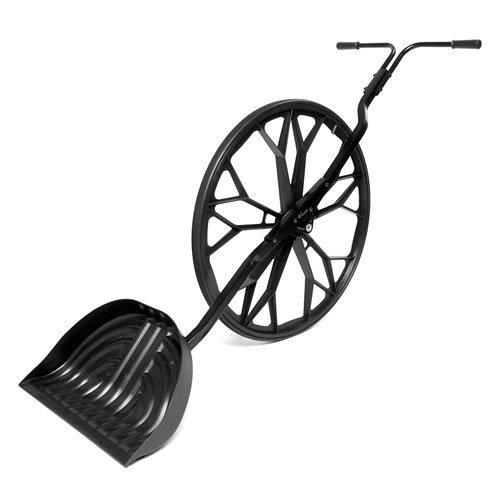
This is for all my snowbound readers. Shovel 2 – 3x faster and say goodbye to back pain because this innovative snow shovel moves heavy loads of snow without twisting or lifting, making clearing large areas a breeze.
The Snow Wolf also stores compactly by folding down flat.
Buy now
AmazonAmazon UK
IROBOT BRAAVA
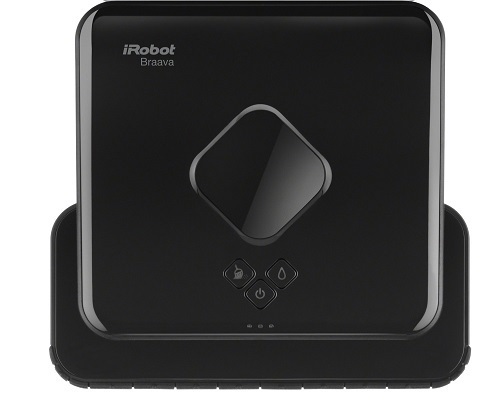
I was always skeptical of these cleaning robots, but they actually do a good job. Yes, you still have to occasionally clean your floors by hand if you want them spotless, but the iRobot Braava makes these cleanings less frequent and keeps your floors cleaner in the interim.
The rechargeable batter lets it dry sweep for up to 3 hours per charge or mop for up to 2; its sensors make sure it avoids carpets, raised surfaces, and rugs; and its edges design allows it to travel right up against walls, furniture, and other obstacles.
Buy now
AmazonAmazon UK
COBRA IRAD 900 RADAR DETECTOR

The Cobra iRadar is an innovative little piece.
In addition to warning you of radar and laser traps and upcoming red light and speed cameras, the device connects to your smartphone and gives you access to the iRadar Community. The Community allows users to report and warn other users of live police, caution areas, and photo enforcement areas, and when your device detects a radar or laser, it automatically shares this data with the rest of the Community.
Buy now
Amazon
BOOK OF THE WEEK:
TIMEBOUND

The young adult genre really isn’t my thing, but there’s a reason Timebound won Amazon’s Breakthrough Novel Award–it’s really good.
The story introduces you to Kate Pierce-Heller, a 16-year old girl attending a private high school in D.C. Before long, she discovers that her grandma is a time-traveling historian from the future, and that Kate too has the ability to time travel using a medallion gifted to her by her grandma. That’s when the fun begins.
Kate’s charged with the task of traveling back to the late 1800s to stop her grandfather, who’s also from the future, from altering history with the creation of a new religion. This book has a bit of everything–mystery, drama, history, romance, politics, and religion. There’s a lot going on, so sometimes you have to slow down and think back on details, but I prefer these types of stories.
Kate’s adventures bring her into contact with past and future versions of people in her life, which can be a bit confusing at points, but it’s not hard to keep the “suspension of disbelief” because, well, it’s just fun. For the requisite romance subplot, Kate falls in love with a boy from the past and fears he will be gone after all her time meddling.
Like many other readers have noted, Kate does act a bit beyond her age and adapts to her adventure a bit too quickly (a la Hunger Games)
Buy now
AmazonAmazon UK
What do you think of this week’s picks? Have anything you’d like to share? Let me know in the comments below!
January 8, 2014
The Ultimate Back Workout: The Best Back Exercises for a Thick, Wide Back
Although many guys focus on building the “beach muscles” (every day is Chest Day), I think a big, thick, wide back is awesome.
It doesn’t come easily though. It takes a lot of proper training to really make it stand out.
In this article, I’m going to share with you my favorite back exercises and how I like to program my back workouts. If you follow my advice, and eat properly, your back will grow in both size and strength.
So, let’s first look at the anatomy of the back so we can better understand what we’re trying to achieve with our training.
The Back Muscles We Want to Focus on Building
The four muscles that make up the bulk of the back, and that need to be well developed, are the trapezius, rhomboids, latissimus dorsi, and erector spinae. Here’s how they look:
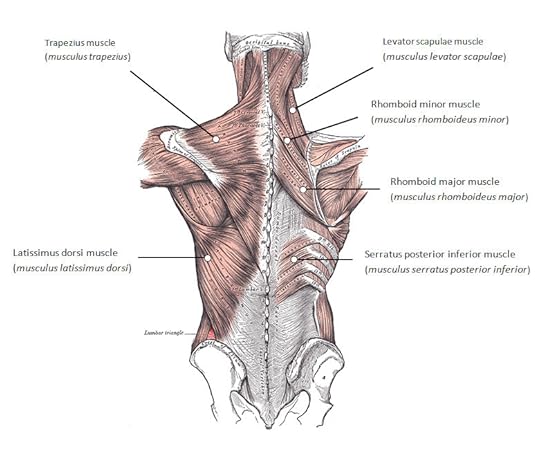
(The erector spinae aren’t shown on the above chart, but they are the lower back muscles that occupy the gray area at the bottom.)
There are a few smaller bundles of muscle that matter as well, such as the teres major and minor, and the infraspinatus. You can see them here:
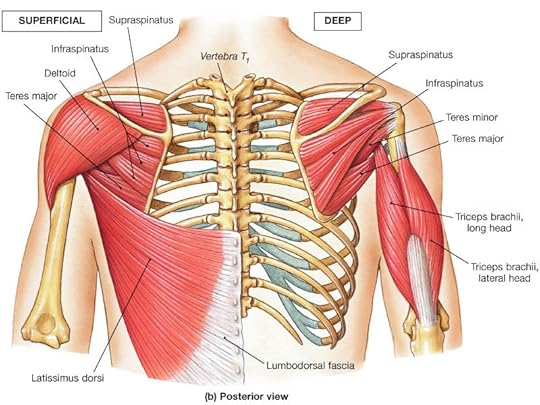
Now, here’s the goal in terms of overall back development:
Large, but not overdeveloped, traps that establish the upper back
Wide lats that extend low down the torso, creating that pleasing V-taper
Bulky rhomboids that create “valleys” when flexed
Clear development and separation in the teres muscles and infraspinatus
A thick, “Christmas tree” structure in the lower back
My back is a work in progress, but here’s what I’ve been able to achieve so far:

Unfortunately I don’t have any older “before” shots of my back (every day was Chest Day), but my back has come come very far in the last few years. The breakthrough occurred when I changed my workouts to what I’m going to share with you in this article.
So, let’s start with some basic principles of back training, and then we’ll get to the best back exercises and a sample back workout.
Back Training 101
Here are the two most common back training mistakes that I see:
Focusing on the wrong exercises (usually boiling down to focusing too much on the lats)
Focusing too much on high-rep training
The result is a weak-looking back that has a V-taper but nothing else–nothing to show for in the middle, and small erector spinae. Here’s a good example of this type of back:

Crappy looking, but I bet he can do a lot of standing lat pushdowns.
A proper back workout trains the lats, but blasts the other major muscles. And fortunately the best back exercises do both–they build depth, thickness, and width.
There’s another very important point that needs to be made regarding back training:
Like all major muscle groups in the body, the back responds best to heavy, compound weightlifting. (Click here to tweet this!)
You need to pack on quite a bit of size to develop a great back, and when you want to maximize muscle growth, you need to focus on lifting heavy free weights.
What do I mean by this, exactly?
Your workouts should be comprised mainly of sets performed in the 4 – 6 or 5 – 7 rep range (80 – 85% of your one-rep max). You’re not going to build a big, strong back by drop- and super-setting the pulldown machine.
Training volume and frequency is also important.
Like “ideal” rep ranges, optimal training frequency is a hotly debated subject. The bottom line is it boils down to workout intensity and volume.
The lighter the weights and fewer the sets, the more often you can train the muscle group. And, as a corollary, the heavier the weights and greater the sets, the less often you can train the muscle group.
I’ve tried many different splits and frequency schemes, and what I’ve found works best is in line with an extensive review on the subject conducted by researchers at Goteborg University:
When training with the proper intensity (focusing on lifting heavy weights), optimal frequency seems to be about 60 reps performed every 5 – 7 days. (Click here to tweet this!)
This not only applies to the back but to every other major muscle group as well. If you’re an advanced weightlifter (3+ years of proper training under your belt), you can probably push this up to the 70 – 80 rep range, but any more than that and you will be risking overtraining.
So, we have our marching orders for building a big, strong back:
Focus on heavy, compound weightlifting.
Perform about 60 reps every 5 – 7 days.
Let’s now move on to the best back exercises for rapid muscle growth and strength gains.
The Best Back Exercises for Muscle Growth
My list of the best back exercises is short and sweet. Here it is:
1. Deadlift
The deadlift is the core of any great back program. My back sucked in both strength and size until I started really working on my deadlift, and I’ve never looked back.
Many people are afraid of the deadlift because they think it’s inherently bad for your lower back or dangerous. This is incorrect. When performed with good form, the deadlift is actually a fantastic way to build lower back strength and prevent injury.
That said, if you have sustained a lower back injury or have a disease affecting the area, you will not want to perform deadlifts. Proper rehab can include deadlifting, but it’s done with light weights and lower workout volumes.
Here’s what proper form on a deadlift looks like:
Two Useful Variations of the Deadlift: The Sumo Deadlift and Hex Bar Deadlift
The sumo deadlift uses a wide stance (1.5-2 times the width of your shoulders) to shorten the range of motion and shearing force on the lower back. It also can feel more comfortable in the hips than a conventional deadlift, depending on your biomechanics (if you walk with your toes pointed out, the sumo may be better for you).
Here’s a good explanation of the Sumo Deadlift:
The downside of the sumo deadlift is the reduced range of motion, which results in less work done, which means less muscle development. Nevertheless, give this variation a try if you lack the flexibility to do a conventional deadlift, if it just feels very uncomfortable (certain people’s bodies are better suited to the sumo deadlift), or if it’s causing low-back pain.
The hex bar—or trap bar—deadlift is a great way to learn to deadlift, because it doesn’t require as much hip and ankle mobility to get to the bar, and it puts less shearing stress on the spine. It also allows you to lift more weight than the conventional deadlift, which may make it a more effective exercise for developing overall lower body power.
Here’s how the Hex Bar Deadlift looks:
One last thing of note is that the conventional deadlift is more effective in strengthening the erector spinae muscles and hip muscles, because the hex-bar deadlift is more like a squat due to the increased load it places on the quadriceps.
2. Barbell Row
The barbell row is a staple in my back workouts because it works everything from the erector spinae to the traps.
In terms of form, I prefer something closer to a Pendlay Row than a Yates Row. Here’s the Pendlay Row:
And here’s the Yates Row:
I prefer keeping my torso close to parallel to the ground because it allows you to work the rhomboids through a fuller range of motion than the more upright, Yates position.
And in case you’re worried about your lower back, the reality is if you’re keeping your form in, and deadlifting every week, you’ll never be rowing enough weight to cause an issue.
3. Dumbbell Row
Like the Barbell Row, the Dumbbell Row is an exercise I do regularly. It allows you to really overload your upper back, and your lats in particular. The form is very simple:
4. T-Bar Row
The T-Bar Row is another great row variation, and like the Barbell Row, it not only strengthens the erector spinae, it’s particularly useful for targeting the middle of the back. Here’s how it works:
5. Chin-Up and Wide-Grip Pullup
While many people swear by chin-ups alone, I think they should be used as a stepping stone to doing proper, wide-grip pullups, which are incredibly good for building upper back thickness.
Here’s a chin-up:
And here’s a wide-grip pullup:
Something to pay attention to is the fact that the bottom of his chin rises just above the bars. This is a full range of motion. Don’t stop halfway.
As you get stronger, you will eventually be able to add weight to your pullups using a dip belt.
6. Lat Pulldown (Wide- and Close-Grip)
The lat pulldown is simply a machine variant of the pullup, and it’s worth including in your back workouts. I like both the wide- and close-grip variants.
Here’s a video that shows proper form on both:
As you can see, the close-grip variation is performed with the V-bar attachment.
7. Seated Cable Row (Wide- and Close-Grip)
Last but not least is the Seated Cable Row, which is yet another row variant that focuses on building the upper portion of your back. Here’s how you do it:
In the video, Ronnie is doing a close-grip row using the V-bar attachment. The wide-grip variant is performed with the same type of bar as the lat pulldown, and with the same grip setup (overhand grip, hands about shoulder-width apart).
Remember–Progression is the Key to Muscle Growth
That’s it on the exercises.
The key, however, isn’t just doing the above exercises. It’s progressing on them. That is, increasing the amount of weight you can push over time.
If you don’t get stronger, you won’t get bigger. But if you do work on building your strength on these 7 exercises, and you eat enough food to grow, your back will get bigger and stronger.
The Ultimate Back Workout
While I go over everything you need to program your own workouts in Bigger Leaner Stronger (and provide you with an entire year’s worth of workouts that can, when combined with proper nutrition, help you put on 20 – 25 pounds of muscle in your first year of weightlifting), I want to leave you with a back workout that will prove the effectiveness of what I’ve discussed in this article.
What I want you to do over the next 8 weeks is perform the following back workout once every 5 – 7 days:
Deadlift: Warm up and 3 sets of 4 – 6 reps
Barbell Row: 3 sets of 4 – 6 reps
Chin-Ups or Wide-Grip Pullups: 3 sets of 4 – 6 reps (add weight if possible)
Optional (if you feel like you have some juice left): One-Arm Dumbbell Rows 3 sets of 4 – 6 reps
That’s it–just 9 – 12 heavy sets for your entire workout.
If you’re an advanced lifter, or you feel you have more in you at the end of the workout, you can do the final 3 sets, but don’t do more than that or you will likely wind up overtrained at some point.
Once you hit the top of your rep range for one set, you move up in weight. For instance, if you get on the incline bench and push out 6 reps on your first set, you add 5 pounds to each side of the bar for your next set and work with that weight until you can press it for 6 reps, and so forth.
I guarantee you that if you combine that back workout with a proper nutrition plan, you will be very happy with how your back responds.
This type of training is the core of my Bigger Leaner Stronger program, and I’ve had hundreds and hundreds of guys email me, ecstatic that they were finally breaking through 1+ year plateaus with ease, gaining strength and size every week.
What do you think of my choices for back exercises? What are your favorite back workouts? Let me know in the comments below!
How to get lean and build serious muscle and strength, faster than you ever thought possible…
Depending on how you eat, train, and rest, building muscle and losing fat can be incredibly easy or incredibly hard. Unfortunately, most people make many different mistakes that leave them stuck in a rut.
And that’s why I wrote Bigger Leaner Stronger for men, and Thinner Leaner Stronger for women: they lay out EVERYTHING you need to know about diet and training to build muscle and lose fat effectively…
Buy now
AmazonAmazon UKAmazon AUAmazon CAAudible AudiobookBNiBooksiBooks AudiobookKobo
Buy now
AmazonAmazon UKAmazon AUAmazon CAAudible AudiobookBNiBooksiBooks AudiobookKobo
January 7, 2014
3 Business Strategies We Can Learn From Fifty Shades of Grey
Fifty Shades of Grey is a true phenomenon.
It’s Amazon’s biggest-selling book of all time, selling 4 million copies in 4 months, and it’s full of stuff like this:
“My inner goddess jumps up and down with cheer-leading pom-poms shouting yes at me.”
“I want you to become well acquainted, on first name terms if you will, with my favorite and most cherished part of my body. I’m very attached to this.”
“He then starts on my right foot, repeating the whole, seductive, mind-blowing process. He’s going to kiss me there! I know it. And part of me is glowing in the anticipation.”
Some dismiss its meteoric success as a one-in-a-million fluke and its content as crude pandering, and while there’s truth in both of those statements, a cursory review of what drove the book to the top of the charts reveals that there’s much more to the story than luck and depravity.
Believe it or not, we can learn some pretty important business and marketing strategies from the rise of this “mommy porn.” (And it doesn’t involve whips, chains, handcuffs, toys, or other implements that will go unnamed…)
Let’s get to it.
Successful Business Strategy #1:
Learn to Love the “Minimum Viable Product”
How did Fifty Shades get its start?
Was E.L. James a big-name author? Nope. She was an executive at BBC that started writing erotica to deal with her “midlife crisis.”
Did she have a secret back door into the New York publishing scene? Nope. She didn’t get approached by the “big boys” until Fifty Shades was blowing up as a self-published book.
Is she just an outstanding writer whose time finally came? Hardly. Fifty Shades was her first go at writing, and in her own words, “I don’t think I’m a great writer by any means. But I can tell a story.”
Her book’s beginnings couldn’t have been more humble: after reading hundreds of romance novels, James decided to write some fan fiction based on the Twilight series under the pen name “Snowqueens Icedragon.”
She posted her work online for free, not expecting anyone to really care. But they did. People read her story, liked it, and shared it with others. A lot. A word-of-mouth frenzy ensued and readers demanded more. James was flattered, obliged her new fans, and Fifty Shades began to take form.
James said she went into this gig with “no plan,” but she handled one of the biggest business hurdles absolutely brilliantly: the initial stages of any endeavor where you have to find out, as quickly as possible, if anyone actually gives a shit. That is, will your product or service actually sell, or does it need to be radically rejiggered?
In short, James created a minimum viable product, and got into the hands of “early adopters” that were likely to be forgiving of its shortcomings, provide invaluable feedback, and share insights on how it can be marketed.
With that base as a springboard, she was able to carefully craft the exactly product her readers wanted. And they repaid her in a way she never expected.
You see, one of the worst mistakes you can make in starting a business is creating something that very few people actually want, or something that is valuable in concept, but that fails to hit the mark in terms of all the little details: design, features, user experience, and so forth.
Instead of spending a year in an ivory tower creating what you think is a masterpiece, it’s much smarter–and safer–to create it one piece at a time, with user feedback guiding you every step of the way. If James would have tried to write Fifty Shades without the comments, criticisms, and advices of her “Snowdragon” readers, it would’ve been a very different–and less successful–book.
We see savvy marketers embracing this concept more and more. Before certain products are developed, full websites are created to “sell” them and advertising is purchased, and when customers try to sign up or buy, they’re thanked for their interest and put on a list. That list is then tapped for the entire cycle of product design and marketing.
Successful Business Strategy #2:
“Good Artists Copy, and Great Artists Steal”
James’ first tale that eventually grew into Fifty Shades was little more than a fantasy of hers involving Twilight’s Edward and Bella.
Once James discovered she had struck a nerve with other romance addicts, however, she started looking at how she could build and strengthen her story. She looked to juggernauts of her genre–stories like Pretty Woman and Jane Eyre–to find tried-and-true characters and plot elements that she could borrow. It worked. Incredibly well.
The lesson here is simple. Great success doesn’t require that you re-invent the wheel. You don’t have to be the first to be the best–you just have to take what’s working and put a unique, valuable spin on it. (Click here to tweet this!)
For example, Domino’s Pizza was barely edible in its formative years. But they knew their customers–mostly college kids–very well. Often finding themselves starving at odd hours, the pizza-seekers valued speed of delivery most, and Domino’s 30-minute delivery guarantee launched its profits into the stratosphere. Eventually they got around to making better pizza.
So if you’re struggling with creating a product or service, don’t try to do it in a vacuum. Look at what others are doing successfully and see if you can combine features or services in ways they don’t, or add in one unique angle that tips the scales in your favor.
Successful Business Strategy #3:
There’s a Point Where You Have to Shut Up and Ship It
Although I haven’t read Fifty Shades, I read the first few pages for this article, and, well, James really is a bad writer. Really.
But while the literary community is fuming about the upstart and her “undeserved” millions, they’re missing a valuable lesson.
James didn’t wait for her writing to be “perfect.” She didn’t sit on her product for months and months, fiddling with minutia. She wrote something that she felt was good enough, threw it up online, and saw what happened.
In short, she didn’t fall victim to the “fear of shipping,” as Godin puts it:
Shipping is fraught with risk and danger.
Every time you raise your hand, send an email, launch a product or make a suggestion, you’re exposing yourself to criticism. Not just criticism, but the negative consequences that come with wasting money, annoying someone in power or making a fool of yourself.
It’s no wonder we’re afraid to ship.
It’s not clear you have much choice, though. A life spent curled in a ball, hiding in the corner might seem less risky, but in fact it’s certain to lead to ennui and eventually failure.
Since you’re going to ship anyway, then, the question is: why bother indulging your fear?
In a long distance race, everyone gets tired. The winner is the runner who figures out where to put the tired, figures out how to store it away until after the race is over. Sure, he’s tired. Everyone is. That’s not the point. The point is to run.
Same thing is true for shipping, I think. Everyone is afraid. Where do you put the fear?
This is also what I did with my first book, Bigger Leaner Stronger. I wrote what I felt was the best book I could produce at the time, and put it up to see what would happen. You can read the rest of the story here.
The point is this: no matter what type of work you do, there’s a point where it needs to leap off the cliff and see if it can fly. (Click here to tweet this!)
Sure, plan your attack. Work smart. But don’t get so lost into doubts, “what ifs,” and “almost theres” that you fail to ship. If shipping fast and early means your software will have a few bugs, so be it. If it means that the product won’t be everything you envisioned, you can still work toward that.
James shipped some poorly written Twilight fan fiction that was criticized just as much as it was praised, and she molded it into a veritable giant of pop culture.
What do you think about these 3 business strategies? Have anything else you’d like to share? Let me know in the comments below!
January 6, 2014
The Simple Science of Losing Belly Fat…For Good
If we could magically zap fat in just one area of our bodies, most of us would probably pick the stomach. Belly fat is just universally reviled.
And it’s hated not only for its ugliness, but for its stubbornness. Trying to lose it can be really frustrating if you don’t understand what you’re actually dealing with, and how to tackle it correctly.
Well, in this article, I’m going to break it all down for you and give you a simple belly fat loss routine that works every time, for everyone.
First, let’s talk a little about the science of belly fat. What makes it so hard to lose?
Why Belly Fat is Hard to Lose
To better understand why belly fat hangs on so tenaciously, I want to quickly review how your body actually “burns” fat.
“Burning fat” is really a two-part process: releasing energy from fat stores into the blood (lipolysis) and cells taking those molecules in and utilizing them (oxidation).
This first step, lipolysis, is triggered by chemicals known as “catecholamines.” Adrenaline is a catecholamine, for example, and once these chemicals are in your blood, they attach to “receptors” (attachment sites) on fat cells, which causes them to release some of their energy stores.
These molecules so released (free fatty acids) are then used as fuel (burned or “oxidized”) by various types of cells in the body. Well-trained muscle is particularly good at oxidizing fats, by the way, which is why it’s easier to lose fat when you have a good amount of muscle.
Now, here’s where we get to the difference between belly fat cells and fat cells that are easier to lose.
Fat cells have a certain number of receptor sites for catecholamines, but they aren’t all the same. One type of receptor is known as an “alpha-2″ receptor, and another is a “beta-2″ receptor. The physiology gets pretty complicated, but here’s the bottom line: beta-2 receptors accelerate lipolysis, and alpha-2 receptors hinder it.
What this means is fat cells that have more beta-2 receptors than alpha-2s are relatively easy to mobilize, whereas fat cells that have more alpha-2 receptors than beta-2s are harder to mobilize.
This is the problem with belly fat, and all other forms of “stubborn fat“: the ratio between beta-2 and alpha-2 receptors is heavily weighted toward alpha-2 receptors (it has many more alpha-2 receptors than beta-2).
Thus, when you’re losing fat, you immediately start seeing reductions in fat masses with high amounts of beta-2 receptors, but the masses with amounts of alpha-2 receptors are slow to respond.
For most of us, this means rapid reductions in places like our arms, shoulders, chest, face, and legs, and slower reductions in our stomachs, hips, lower back, and thighs. These latter areas are always the last to really get lean, because they contain the most fat cells high in alpha-2 receptors.
So, if that’s the science of belly fat, how do we get rid of it?
How to Lose Belly Fat Without Losing Your Sanity
I have good news for you: losing belly fat is really quite easy.
You don’t have to severely restrict your calories and starve yourself.
You don’t have to severely restrict the foods you eat (you can eat plenty of carbs, have a nice cheat meal every week, etc.).
You don’t have to do hours and hours of cardio every week.
You don’t have to do special ab exercises.
Effectively losing belly fat requires only two things:
Gradually reducing your overall body fat percentage.
Utilizing certain training and supplementation strategies that help your body mobilize stubborn fat cells.
By way of example, here are results from a recent cut of mine. I started around 10% body fat:

As you can see, I was holding noticeable fat in my obliques and lower abs. And 8 weeks later, here’s how I looked at 6-7% body fat:

I am clearly all-around leaner, but the most noticeable change is the reduction of belly fat.
So, let’s look at these two points of reducing body fat percentage and accelerating belly fat loss separately.
Reduce Your Body Fat Percentage and You Will Lose Belly Fat
This is the first thing I always tell people that are frustrated with belly fat: your primary goal is to reduce your body fat percentage.
If you’re a guy and you’re over 10% body fat, you’re going to have belly fat to deal with. If you’re a girl and you’re over 20%, the same is true for you.
In the end, completely getting rid of belly fat requires that you get very lean–6-7% for guys, and 16-17% for girls. There’s just no way around this fact.
As you probably know, the key to reducing body fat percentage is proper dieting, but if you want to know more about how to lose fat effectively, check out my article on how to build muscle and lose fat at the same time.
Now, that said, losing belly fat can be slow-going even when you’re doing everything right (utilizing a mild calorie deficit and a proper macronutrient ratio, and exercising regularly). This is why it frustrates people to no end.
Fortunately, there are some simple exercise and supplementation strategies that will help you lose belly fat faster.
6 Strategies for Losing Belly Fat Faster
1. Fasted Training
People usually think “fasted training” means “training on an empty stomach,” but it’s a bit different.
Fasted training means training in a “fasted state,” and this has to do with insulin levels in your blood. You see, when you eat food, it gets broken down into various molecules that your cells can use, and these molecules are released into your blood. Insulin is released as well, and its job is to shuttle these molecules into cells.
Now, depending on how much you eat, your plasma (blood) insulin levels can remain elevated for several hours (anywhere from 3 – 6+). Why is this important? Because insulin blocks lipolysis (fat “mobilization’).
When your body is in this “fed” state–when its insulin levels are elevated and its absorbing nutrients you’ve eaten–little-to-no fat burning occurs.
Your body enters a “fasted” state when it has finished absorbing all nutrients from the food you’ve eaten and insulin levels return to their normal, low “baseline” levels. When you exercise your body in this state, fat loss is accelerated (and weighlifting in a fasted state is particularly effective).
So, as you can see, just feeling like you have an “empty stomach” doesn’t necessarily mean your insulin levels have returned to baseline.
The easiest way to work fasted training into your routine is to work out first thing in the morning, before you eat breakfast. This has an added benefit, as well: fasting for longer than 6 hours increases your body’s ability to burn fat.
There is a downside to fasted training, however. When you exercise in a fasted state, muscle breakdown is dramatically increased. Preventing this is simple, though. All you have to do is take 10 grams of BCAAs, or 3-5 grams of leucine (warning: it tastes really bad) 10 – 15 minutes before training, This suppresses muscle breakdown during your workout.
2. High-Intensity Interval Cardio
In case you’re not familiar with “high-intensity interval training” or “HIIT,” it’s very simple: you start your workout with a warm-up, and then alternate between bouts of all-out exertion and low-intensity “cooldown.”
For example, you might warm up and then do 30 seconds of sprinting on a bicycle, followed by 45 – 60 seconds of slower pedaling, and you would repeat these intervals for 20 – 25 minutes.
Now, why do this form of cardio instead of the traditional steady-state type?
Well, studies such as those conducted by Laval University, East Tennessee State University, Baylor College of Medicine, and the University of New South Wales have conclusively proven that shorter sessions of high-intensity cardio result in greater fat loss over time than longer, low-intensity sessions.
In fact, a study conducted by The University of Western Ontario showed that doing just 4 – 6 30-second sprints burns more fat over time than 60 minutes of incline treadmill walking (one of the staples of “bodybuilding cardio”).
Furthermore, keeping your cardio sessions shorter means you better preserve your muscle and strength, which is vitally important when it comes to building a physique.
My Favorite Type of HIIT Cardio
I do all of my HIIT cardio on the recumbent bike for several reasons.
I like the stable position, which allows me to bring my iPad and read or watch a movie or show, but cycling also has particular benefits to usweightlifters.
You see, a study conducted by Stephen F Austin State University showed that different types of cardio affect your ability to build muscle and strength differently. The study subjects that ran and walked gained significantly less strength and size than those that cycled.
Why is this?
Well, the researchers believed that the main benefit of cycling was that the movement itself imitates weightlifting exercises that grow your legs, like squats and lunges. So if you can, hop on the bike for your HIIT cardio sessions.
Will HIIT Cardio Place Too Much Stress on the Body?
The idea that doing HIIT while dieting for weight loss is a bad idea because it places too much stress on the body has been kicking around for years. But it’s completely anecdotal–I’ve yet to see any clinical research that supports such a position.
I’ve worked with hundreds and hundreds of people of all ages and fitness levels, and I can’t actually think of one person that burned out on 3 – 5 weightlifting sesions and 3 – 4 HIIT sessions per week (which is what I recommend in my books).
That said, if you do start to feel overtrained within a week weeks of following my recommendations, start replacing HIIT cardio sessions with LISS (low-intensity steady-state) and see if that helps.
Start by replacing one HIIT session with LISS and see how you feel that week. If you’re still having issues, replace another and see if that does it. Continue this until you’re feeling better or all HIIT sessions are now LISS.
3. Heavy Weightlifting
The common recommendation to really “shred up” is to pump light weights for high amounts of reps…but this is the exact opposite of what you want to actually be doing.
You see, when you restrict your calories to induce fat loss, your body becomes “primed” for muscle loss due to the calorie deficit. When your body is in this state and you focus on muscle endurance in your workouts (by working in higher rep ranges), you set yourself up for rapid strength loss, which comes with muscle loss as well.
Thus, what you want to focus on is preserving your strength, and you do this by lifting heavy weights, and by continuing to progressively overload your muscles. While you may not be able to build muscle while losing fat (you can if you’re overweight and new to a proper weightlifting routine, however), you can most definitely maintain your strength and lose little-to-no muscle.
There’s another reason why you want to lift heavy weights while dieting to lose fat, and it relates to your metabolic rate (how many calories your body burns every day).
Research has shown that training with heavy weights (80-85% of 1RM) increases metabolic rates over the following several days, burning hundreds more calories over this time than workouts performed with lighter weights (45-65% of 1RM).
Furthermore, compound lifts like squats and deadlifts are especially effective in this regard because these types of lifts burn the most post-workout calories.
4. Caffeine
As weight loss boils down to energy consumed vs. energy expended, caffeine helps you lose fat by increasing your body’s daily energy expenditure.
Caffeine also improves strength, muscle endurance, and anaerobic performance, and also reverses the “morning weakness” experienced by many weightlifters.
I like to get my caffeine in the “anhydrous” (dehydrated and concentrated) form because research has shown that his form is actually more effective for improving performance than what is naturally found in beverages like coffee.
Part of maximizing the fat loss benefits of caffeine is preventing your body from building up too much of a tolerance. The best way to do this is to limit intake, of course. Here’s what I recommend:
Before training, supplement with 3 – 6 mg caffeine per kg of body weight. If you’re not sure of your caffeine sensitivity, start with 3 mg/kg and work up from there.
Keep your daily. intake at or below 6 mg per kg of body weight. Don’t have 6 mg/kg before training and then drink a couple of coffees throughout the day.
Do 1 – 2 low-caffeine days per week, and 1 no-caffeine day per week. A low day should be half your normal intake, and a no day means less than 50 mg of caffeine (you can have a cup or two of tea, but no coffee, caffeine pills, etc.).
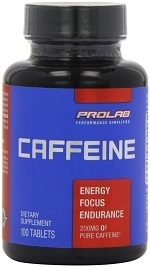
Buy now
AmazonAmazon UK
5. Green Tea Extract
Green tea extract is an herbal product derived from green tea leaves, and it contains high concentrations of substances known as “catechins.”
Catechins are responsible for many of tea’s health benefits, and they also help accelerate exercise-induced fat loss by degrading an enzyme that breaks down catecholamines. The longer the catecholamines are in your blood, the more fat cells they can mobilize.
Furthermore, research has shown help reduce abdominal fat, in particular, so it’s great for when you’re looking to get rid of those last bits of belly fat.
Based on the studies cited above, you want to take 600 – 900 mg of catechins per day to realize their weight loss benefits. The average GTE product contains about 150 mg of catechins per pill. Here’s the product I use and recommend.
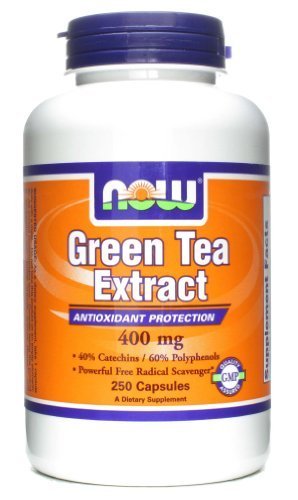
Buy now
AmazonAmazon UKBodybuilding.com
6. Yohimbine
Yohimbine is a substance that comes from the Pausinystalia yohimbe plant, and it blocks the activity of alpha-2 fat receptors (the ones that prevent lipolysis). This, in turn, allows fat cells–and stubborn fat cells with large amounts of alpha-2 receptors in particular–to be mobilized easier.
There’s a catch, though: post-meal elevations in insulin completely negate yohimbine’s effects, so it should only be used in a fasted state.
In terms of how to properly use yohimbine, research has shown that .2 mg per kg of body weight is sufficient for weight loss purposes.
Some people get jittery when they take yohimbine. If that happens to you, simply reduce the dosage or stop using it altogether. Furthermore, research has shown that yohimbine can raise blood pressure, so if you have high blood pressure, I don’t recommend you use it.
Buy now
AmazonAmazon UK
The Ultimate Belly Fat Loss Routine
Before I sign off, I want to quickly show you how to put these strategies together to make a powerful belly fat loss regimen. This is exactly what I do when I’m cutting, and it works like a charm.
If you want optimal results, you’ll lift weights 5 times per week, and do HIIT cardio 3 – 4 times per week, for about 25 minutes per session.
Here’s how training and supplementation break down:
After Waking:
I wake up, drink some water, and get ready to go to the gym. It’s about a 15-minute drive, so before leaving, I take the following:
10 grams BCAAs or 3-5 grams leucine
300 mg caffeine OR 3 pills VPX Meltdown OR 2 pills VPX Meltdown and 1 scoop LEGION Pulse
2 pills green tea extract
(NOTE: GTE on an empty stomach can make some people nauseous. If that happens to you, reduce to 200 mg. If that still does, reduce to 100 mg, and if it’s still an issue, cut it out altogether and split the daily dosage between lunch and dinner, taken with food.)
.2 mg per kg of yohimbine (that’s 15 mg for me)
I then go lift for 45-60 minutes, and my post-workout meal is the first of the day.
With Lunch:
2 pills green tea extract
About 4 Hours After a Light Dinner of Protein and Veggies, If Doing Cardio That Day:
The purpose of eating a light dinner is to minimize the insulin response, so it can return to a baseline level before you do your cardio. About 15 minutes before doing your cardio, I take the following:
10 grams BCAAs or 3-5 grams leucine
100 mg caffeine
2 pills green tea extract
.2 mg per kg of yohimbine
I then do 25 minutes of HIIT cardio on the recumbent bike.
If you’re not doing cardio that day, you can still take the GTE and caffeine, but you don’t need to take the BCAAs or leucine, or yohimbine.
And that’s it. If you combine the above routine with a proper weight loss diet, you will lose belly fat rapidly.
What do you think of these belly fat loss strategies? Have anything else you’d like to share? Let me know in the comments below!
How to get lean and build serious muscle and strength, faster than you ever thought possible…
Depending on how you eat, train, and rest, building muscle and losing fat can be incredibly easy or incredibly hard. Unfortunately, most people make many different mistakes that leave them stuck in a rut.
The truth is if you know how to train, eat, and rest properly, then you can build muscle and lose fat every week…and actually see the changes in the mirror.
And that’s why I wrote Bigger Leaner Stronger for men, and Thinner Leaner Stronger for women: they lay out EVERYTHING you need to know about diet and training to build muscle and lose fat effectively…
Buy now
AmazonAmazon UKAmazon AUAmazon CAAudible AudiobookBNiBooksiBooks AudiobookKobo
Buy now
AmazonAmazon UKAmazon AUAmazon CAAudible AudiobookBNiBooksiBooks AudiobookKobo


