
The Simple Science of Losing Belly Fat…For Good
If we could magically zap fat in just one area of our bodies, most of us would probably pick the stomach. Belly fat is just universally reviled.
And it’s hated not only for its ugliness, but for its stubbornness. Trying to lose it can be really frustrating if you don’t understand what you’re actually dealing with, and how to tackle it correctly.
Well, in this article, I’m going to break it all down for you and give you a simple belly fat loss routine that works every time, for everyone.
First, let’s talk a little about the science of belly fat. What makes it so hard to lose?
Why Belly Fat is Hard to Lose
To better understand why belly fat hangs on so tenaciously, I want to quickly review how your body actually “burns” fat.
“Burning fat” is really a two-part process: releasing energy from fat stores into the blood (lipolysis) and cells taking those molecules in and utilizing them (oxidation).
This first step, lipolysis, is triggered by chemicals known as “catecholamines.” Adrenaline is a catecholamine, for example, and once these chemicals are in your blood, they attach to “receptors” (attachment sites) on fat cells, which causes them to release some of their energy stores.
These molecules so released (free fatty acids) are then used as fuel (burned or “oxidized”) by various types of cells in the body. Well-trained muscle is particularly good at oxidizing fats, by the way, which is why it’s easier to lose fat when you have a good amount of muscle.
Now, here’s where we get to the difference between belly fat cells and fat cells that are easier to lose.
Fat cells have a certain number of receptor sites for catecholamines, but they aren’t all the same. One type of receptor is known as an “alpha-2″ receptor, and another is a “beta-2″ receptor. The physiology gets pretty complicated, but here’s the bottom line: beta-2 receptors accelerate lipolysis, and alpha-2 receptors hinder it.
What this means is fat cells that have more beta-2 receptors than alpha-2s are relatively easy to mobilize, whereas fat cells that have more alpha-2 receptors than beta-2s are harder to mobilize.
This is the problem with belly fat, and all other forms of “stubborn fat“: the ratio between beta-2 and alpha-2 receptors is heavily weighted toward alpha-2 receptors (it has many more alpha-2 receptors than beta-2).
Thus, when you’re losing fat, you immediately start seeing reductions in fat masses with high amounts of beta-2 receptors, but the masses with amounts of alpha-2 receptors are slow to respond.
For most of us, this means rapid reductions in places like our arms, shoulders, chest, face, and legs, and slower reductions in our stomachs, hips, lower back, and thighs. These latter areas are always the last to really get lean, because they contain the most fat cells high in alpha-2 receptors.
So, if that’s the science of belly fat, how do we get rid of it?
How to Lose Belly Fat Without Losing Your Sanity
I have good news for you: losing belly fat is really quite easy.
You don’t have to severely restrict your calories and starve yourself.
You don’t have to severely restrict the foods you eat (you can eat plenty of carbs, have a nice cheat meal every week, etc.).
You don’t have to do hours and hours of cardio every week.
You don’t have to do special ab exercises.
Effectively losing belly fat requires only two things:
Gradually reducing your overall body fat percentage.
Utilizing certain training and supplementation strategies that help your body mobilize stubborn fat cells.
By way of example, here are results from a recent cut of mine. I started around 10% body fat:

As you can see, I was holding noticeable fat in my obliques and lower abs. And 8 weeks later, here’s how I looked at 6-7% body fat:

I am clearly all-around leaner, but the most noticeable change is the reduction of belly fat.
So, let’s look at these two points of reducing body fat percentage and accelerating belly fat loss separately.
Reduce Your Body Fat Percentage and You Will Lose Belly Fat
This is the first thing I always tell people that are frustrated with belly fat: your primary goal is to reduce your body fat percentage.
If you’re a guy and you’re over 10% body fat, you’re going to have belly fat to deal with. If you’re a girl and you’re over 20%, the same is true for you.
In the end, completely getting rid of belly fat requires that you get very lean–6-7% for guys, and 16-17% for girls. There’s just no way around this fact.
As you probably know, the key to reducing body fat percentage is proper dieting, but if you want to know more about how to lose fat effectively, check out my article on how to build muscle and lose fat at the same time.
Now, that said, losing belly fat can be slow-going even when you’re doing everything right (utilizing a mild calorie deficit and a proper macronutrient ratio, and exercising regularly). This is why it frustrates people to no end.
Fortunately, there are some simple exercise and supplementation strategies that will help you lose belly fat faster.
6 Strategies for Losing Belly Fat Faster
1. Fasted Training
People usually think “fasted training” means “training on an empty stomach,” but it’s a bit different.
Fasted training means training in a “fasted state,” and this has to do with insulin levels in your blood. You see, when you eat food, it gets broken down into various molecules that your cells can use, and these molecules are released into your blood. Insulin is released as well, and its job is to shuttle these molecules into cells.
Now, depending on how much you eat, your plasma (blood) insulin levels can remain elevated for several hours (anywhere from 3 – 6+). Why is this important? Because insulin blocks lipolysis (fat “mobilization’).
When your body is in this “fed” state–when its insulin levels are elevated and its absorbing nutrients you’ve eaten–little-to-no fat burning occurs.
Your body enters a “fasted” state when it has finished absorbing all nutrients from the food you’ve eaten and insulin levels return to their normal, low “baseline” levels. When you exercise your body in this state, fat loss is accelerated (and weighlifting in a fasted state is particularly effective).
So, as you can see, just feeling like you have an “empty stomach” doesn’t necessarily mean your insulin levels have returned to baseline.
The easiest way to work fasted training into your routine is to work out first thing in the morning, before you eat breakfast. This has an added benefit, as well: fasting for longer than 6 hours increases your body’s ability to burn fat.
There is a downside to fasted training, however. When you exercise in a fasted state, muscle breakdown is dramatically increased. Preventing this is simple, though. All you have to do is take 10 grams of BCAAs, or 3-5 grams of leucine (warning: it tastes really bad) 10 – 15 minutes before training, This suppresses muscle breakdown during your workout.
2. High-Intensity Interval Cardio
In case you’re not familiar with “high-intensity interval training” or “HIIT,” it’s very simple: you start your workout with a warm-up, and then alternate between bouts of all-out exertion and low-intensity “cooldown.”
For example, you might warm up and then do 30 seconds of sprinting on a bicycle, followed by 45 – 60 seconds of slower pedaling, and you would repeat these intervals for 20 – 25 minutes.
Now, why do this form of cardio instead of the traditional steady-state type?
Well, studies such as those conducted by Laval University, East Tennessee State University, Baylor College of Medicine, and the University of New South Wales have conclusively proven that shorter sessions of high-intensity cardio result in greater fat loss over time than longer, low-intensity sessions.
In fact, a study conducted by The University of Western Ontario showed that doing just 4 – 6 30-second sprints burns more fat over time than 60 minutes of incline treadmill walking (one of the staples of “bodybuilding cardio”).
Furthermore, keeping your cardio sessions shorter means you better preserve your muscle and strength, which is vitally important when it comes to building a physique.
My Favorite Type of HIIT Cardio
I do all of my HIIT cardio on the recumbent bike for several reasons.
I like the stable position, which allows me to bring my iPad and read or watch a movie or show, but cycling also has particular benefits to usweightlifters.
You see, a study conducted by Stephen F Austin State University showed that different types of cardio affect your ability to build muscle and strength differently. The study subjects that ran and walked gained significantly less strength and size than those that cycled.
Why is this?
Well, the researchers believed that the main benefit of cycling was that the movement itself imitates weightlifting exercises that grow your legs, like squats and lunges. So if you can, hop on the bike for your HIIT cardio sessions.
Will HIIT Cardio Place Too Much Stress on the Body?
The idea that doing HIIT while dieting for weight loss is a bad idea because it places too much stress on the body has been kicking around for years. But it’s completely anecdotal–I’ve yet to see any clinical research that supports such a position.
I’ve worked with hundreds and hundreds of people of all ages and fitness levels, and I can’t actually think of one person that burned out on 3 – 5 weightlifting sesions and 3 – 4 HIIT sessions per week (which is what I recommend in my books).
That said, if you do start to feel overtrained within a week weeks of following my recommendations, start replacing HIIT cardio sessions with LISS (low-intensity steady-state) and see if that helps.
Start by replacing one HIIT session with LISS and see how you feel that week. If you’re still having issues, replace another and see if that does it. Continue this until you’re feeling better or all HIIT sessions are now LISS.
3. Heavy Weightlifting
The common recommendation to really “shred up” is to pump light weights for high amounts of reps…but this is the exact opposite of what you want to actually be doing.
You see, when you restrict your calories to induce fat loss, your body becomes “primed” for muscle loss due to the calorie deficit. When your body is in this state and you focus on muscle endurance in your workouts (by working in higher rep ranges), you set yourself up for rapid strength loss, which comes with muscle loss as well.
Thus, what you want to focus on is preserving your strength, and you do this by lifting heavy weights, and by continuing to progressively overload your muscles. While you may not be able to build muscle while losing fat (you can if you’re overweight and new to a proper weightlifting routine, however), you can most definitely maintain your strength and lose little-to-no muscle.
There’s another reason why you want to lift heavy weights while dieting to lose fat, and it relates to your metabolic rate (how many calories your body burns every day).
Research has shown that training with heavy weights (80-85% of 1RM) increases metabolic rates over the following several days, burning hundreds more calories over this time than workouts performed with lighter weights (45-65% of 1RM).
Furthermore, compound lifts like squats and deadlifts are especially effective in this regard because these types of lifts burn the most post-workout calories.
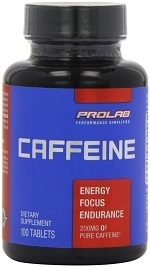
4. Caffeine
As weight loss boils down to energy consumed vs. energy expended, caffeine helps you lose fat by increasing your body’s daily energy expenditure.
Caffeine also improves strength, muscle endurance, and anaerobic performance, and also reverses the “morning weakness” experienced by many weightlifters.
I like to get my caffeine in the “anhydrous” (dehydrated and concentrated) form because research has shown that his form is actually more effective for improving performance than what is naturally found in beverages like coffee.
Part of maximizing the fat loss benefits of caffeine is preventing your body from building up too much of a tolerance. The best way to do this is to limit intake, of course. Here’s what I recommend:
Before training, supplement with 3 – 6 mg caffeine per kg of body weight. If you’re not sure of your caffeine sensitivity, start with 3 mg/kg and work up from there.
Keep your daily. intake at or below 6 mg per kg of body weight. Don’t have 6 mg/kg before training and then drink a couple of coffees throughout the day.
Do 1 – 2 low-caffeine days per week, and 1 no-caffeine day per week. A low day should be half your normal intake, and a no day means less than 50 mg of caffeine (you can have a cup or two of tea, but no coffee, caffeine pills, etc.).
Buy now
AmazonAmazon UK
5. Green Tea Extract
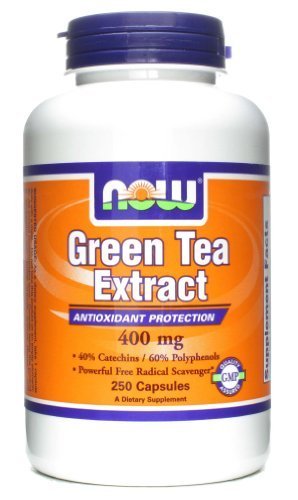
Green tea extract is an herbal product derived from green tea leaves, and it contains high concentrations of substances known as “catechins.”
Catechins are responsible for many of tea’s health benefits, and they also help accelerate exercise-induced fat loss by degrading an enzyme that breaks down catecholamines. The longer the catecholamines are in your blood, the more fat cells they can mobilize.
Furthermore, research has shown help reduce abdominal fat, in particular, so it’s great for when you’re looking to get rid of those last bits of belly fat.
Based on the studies cited above, you want to take 600 – 900 mg of catechins per day to realize their weight loss benefits. The average GTE product contains about 150 mg of catechins per pill. Here’s the product I use and recommend.
Buy now
AmazonAmazon UKBodybuilding.com
6. Yohimbine
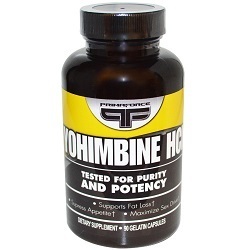
Yohimbine is a substance that comes from the Pausinystalia yohimbe plant, and it blocks the activity of alpha-2 fat receptors (the ones that prevent lipolysis). This, in turn, allows fat cells–and stubborn fat cells with large amounts of alpha-2 receptors in particular–to be mobilized easier.
There’s a catch, though: post-meal elevations in insulin completely negate yohimbine’s effects, so it should only be used in a fasted state.
In terms of how to properly use yohimbine, research has shown that .2 mg per kg of body weight is sufficient for weight loss purposes.
Some people get jittery when they take yohimbine. If that happens to you, simply reduce the dosage or stop using it altogether. Furthermore, research has shown that yohimbine can raise blood pressure, so if you have high blood pressure, I don’t recommend you use it.
Buy now
AmazonAmazon UK
The Ultimate Belly Fat Loss Routine
Before I sign off, I want to quickly show you how to put these strategies together to make a powerful belly fat loss regimen. This is exactly what I do when I’m cutting, and it works like a charm.
If you want optimal results, you’ll lift weights 5 times per week, and do HIIT cardio 3 – 4 times per week, for about 25 minutes per session.
Here’s how training and supplementation break down:
After Waking:
I wake up, drink some water, and get ready to go to the gym. It’s about a 15-minute drive, so before leaving, I take the following:
10 grams BCAAs or 3-5 grams leucine
300 mg caffeine OR 3 pills VPX Meltdown OR 2 pills VPX Meltdown and 1 scoop LEGION Pulse
2 pills green tea extract
(NOTE: GTE on an empty stomach can make some people nauseous. If that happens to you, reduce to 200 mg. If that still does, reduce to 100 mg, and if it’s still an issue, cut it out altogether and split the daily dosage between lunch and dinner, taken with food.)
.2 mg per kg of yohimbine (that’s 15 mg for me)
I then go lift for 45-60 minutes, and my post-workout meal is the first of the day.
With Lunch:
2 pills green tea extract
About 4 Hours After a Light Dinner of Protein and Veggies, If Doing Cardio That Day:
The purpose of eating a light dinner is to minimize the insulin response, so it can return to a baseline level before you do your cardio. About 15 minutes before doing your cardio, I take the following:
10 grams BCAAs or 3-5 grams leucine
100 mg caffeine
2 pills green tea extract
.2 mg per kg of yohimbine
I then do 25 minutes of HIIT cardio on the recumbent bike.
If you’re not doing cardio that day, you can still take the GTE and caffeine, but you don’t need to take the BCAAs or leucine, or yohimbine.
And that’s it. If you combine the above routine with a proper weight loss diet, you will lose belly fat rapidly.
What do you think of these belly fat loss strategies? Have anything else you’d like to share? Let me know in the comments below!
How to get lean and build serious muscle and strength, faster than you ever thought possible…
Depending on how you eat, train, and rest, building muscle and losing fat can be incredibly easy or incredibly hard. Unfortunately, most people make many different mistakes that leave them stuck in a rut.
The truth is if you know how to train, eat, and rest properly, then you can build muscle and lose fat every week…and actually see the changes in the mirror.
And that’s why I wrote Bigger Leaner Stronger for men, and Thinner Leaner Stronger for women: they lay out EVERYTHING you need to know about diet and training to build muscle and lose fat effectively…
Buy now
AmazonAmazon UKAmazon AUAmazon CAAudible AudiobookBNiBooksiBooks AudiobookKobo
Buy now
AmazonAmazon UKAmazon AUAmazon CAAudible AudiobookBNiBooksiBooks AudiobookKobo


