
Michael Matthews's Blog, page 131
February 8, 2014
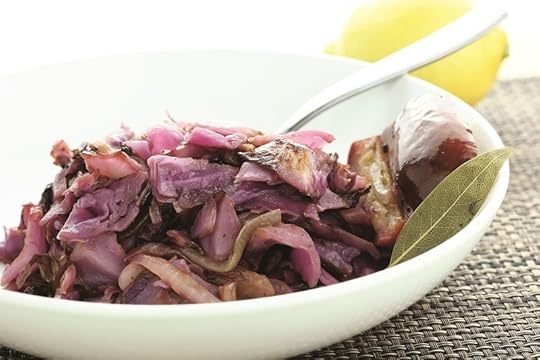
Recipe of the Week: Spiced Red Cabbage
My wife is German and thanks to her grandma’s cooking, I’ve come to love good red cabbage dishes. They’re a delicious, low-calorie way to spice up just about any meal.
This recipe is very similar to grandma’s, and it’s from my cookbook Eat Green Get Lean. I love the combination of sweet and sour, and the subtle flavoring added by the apple. Enjoy!
Servings
6
Calories Per Serving
63
Protein Per Serving
2 grams
Carbohydrates Per Serving
11 grams
Fat Per Serving
3 grams
Ingredients
1/2 medium head red cabbage, diced
1 tablespoon canola oil
1/2 cup onion, chopped
1 medium apple, quartered
3 tablespoons tarragon vinegar
1 teaspoon stevia or other natural sweetener
1 bay leaf
1 teaspoon salt
1/4 teaspoon ground black pepper
1/8 teaspoon ground cloves
Instructions
Add 1 inch of water to a large saucepan and place over medium-high heat. Add the cabbage and bring to a boil. Reduce heat, cover and simmer for 4 – 5 minutes, until crisp.
Drain. Return to pan, add the remaining ingredients and mix well. Cover and simmer for 1 hour or until cabbage is tender.
Remove bay leaf before serving.
What You Get to Eat
What did you think of this week’s recipe? Let me know in the comments below!
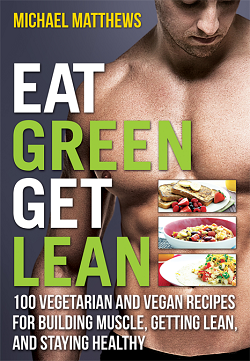
Want more delicious, easy-to-make recipes like this?If you like this recipe, then you’ll love the bestselling cookbook it came from: my own Eat Green Get Lean! It contains 100 vegetarian and vegan recipes specifically designed for high-protein, healthy dieting.
And even if you’re not a vegetarian or vegan eater, you will find plenty of delicious “add-on” dishes, as well as breakfast, lunch, and dinner recipes that you can easily add meat or other forms of protein to.
Buy this book now to forever escape the dreadful experience of “dieting” and learn how to cook nutritious, delicious vegetarian and vegan meals that make building muscle and burning fat easy and enjoyable!
Buy now
AmazonAmazon UKAmazon AUAmazon CABNiBooksKoboGoogle Play
You might also like my other bestselling cookbook, The Shredded Chef.
In this book you’ll find 120 healthy, flavorful recipes specifically designed for athletes that want to build muscle or lose fat. Regardless of your fitness goals, this book has got you covered.
Buy now
AmazonAmazon UKAmazon AUAmazon CABNiBooksKoboGoogle Play


February 7, 2014
Cool Stuff of the Week: Killerspin Revolution SVR, Aeropress Coffee Maker, VeggieChop Food Chopper, and More…
I’m not ashamed to admit that I’m kind of a sucker for cool stuff. I like nifty gadgets, quirky decoration pieces, nice clothes (and shoes!), good books, and fun games.
In this series of weekly posts, I share whatever currently has my fancy. Maybe some of it will catch yours as well!
VIDEO OF THE WEEK:
BEST OF THE WEB 4
What an awesome collection of exhilarating, nail-biting, and hilarious video clips that will get your heart pumping and mouth smiling. Makes me want to get out and live life! 
KILLERSPIN REVOLUTION SVR

If you’re into table tennis, you’ll appreciate the beauty of the Killerspin Revolution SVR table.
It’s not only looks awesome, it offers tournament-level performance: the playing surface is specially engineered for a consistent bounce, it’s coated with a chemical that reduces glare, and the heavy-duty net apparatus keeps the net taut and level.
If you’re building the ultimate man cave and have money to blow, this is for you.
Buy now
Amazon
LEGO LORD OF THE RINGS TOWER OF ORTHANC

If you’re into Lego and Lord of the Rings and you have a lot of time on your hands plus a few feet of space to devote to a Lego tower…then you’re going to want the Lego Lord of the Rings Tower of Orthanc.
This bad boy weighs in at nearly 8 pounds, measures over 2 feet tall, and is built with over 2,500 pieces. It has you build all 6 floors filled with fascinating movie-related details including the attic, library, alchemy room, Saruman’s throne room, entrance hall and dungeon. It also comes with a Great Eagle, buildable Ent figure and 5 minifigures with weapons: Saruman, Grima Wormtongue, Gandalf the Grey, an Uruk-hai, and the Orc Pitmaster.
Buy now
AmazonAmazon UK
AEROBIE AEROPRESS COFFEE AND ESPRESSO MAKER
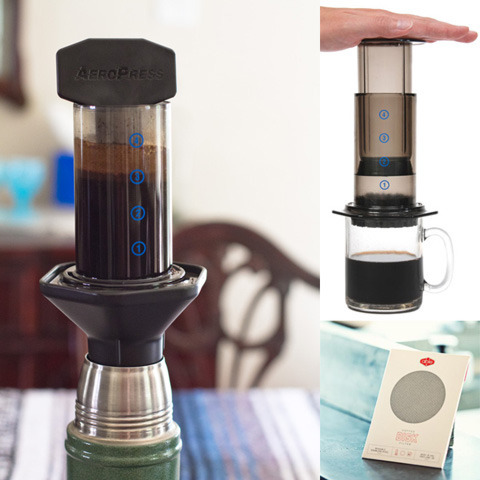
The Aerobie Aeropress is an innovative coffee maker that is perfect for brewing 1 – 4 cups of coffee or espresso. It uses the ideal water temperature and gentle air pressure brewing to produce coffee and espresso that has rich flavor with lower acidity and without bitterness.
With the Aeropress, you can brew a delicious cup of coffee or espresso in about one minute, and cleanup couldn’t be easier. Check it out:
CHEF’N VEGGIECHOP HAND-POWERED FOOD CHOPPER
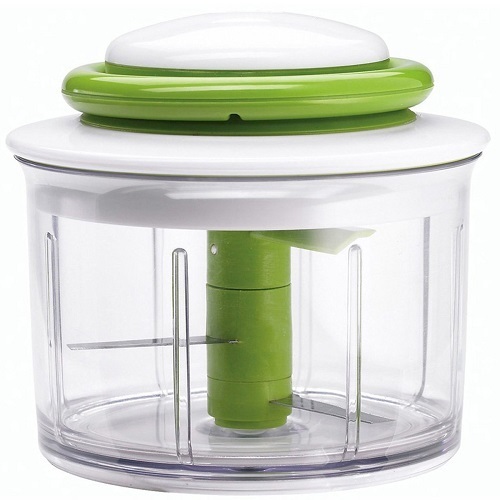
I’ve been using the Chef’n VeggieChop for about a month now and am really liking it. With just a few pulls of the handle, it chops and minces just about anything that you would normally have to do by hand–veggies, fruit, herbs, nuts, and so forth. Here’s how it works:
It’s cheap, simple, effective, and easy to clean. Highly recommended.
BOOK OF THE WEEK:
STORY

All great stories seem effortless when read or viewed, but they were, one-for-one, painstakingly crafted by someone who knew exactly what he or she was doing with every character and every element of the plot, from a mere beat to the scene it builds to an entire act.
Stories that suck you in, move you, and leave you breathless and discussing them for days to come are NEVER products of accidental genius. There’s the creative inspiration that gives rise to a unique, enthralling idea or premise, and then there’s the craft of turning that spark of imagination into a proper story. This book deals with both of these elements of storytelling.
As you move through this book, you’ll recognize the validity of McKee’s teachings by simply looking back over stories that you’ve loved. Nearly invariably, they will include many of the elements described in this book, and follow the formulas given. Don’t be afraid of the word “formula,” either–there is room for endless creativity with what McKee teachers. He simply shows you the blueprint of storytelling and shows you what is needed for what and why. Just as all houses must have a foundation, walls, a roof, and so forth to stand correctly, all stories must have certain elements to capture a person’s interest and cause him or her to care. The style of houses and stories that can be built are endless, however.
I loved that the information in this book was incredibly PRACTICAL. Some writing teachers plunge into the abstract and abstruse, leaving you to figure out how to use their advice to write a better story. Not so in STORY. McKee shares nothing but clean, clear concepts that mean exactly what he says, and that are immediately applicable and observable in other stories you’ve seen or read. He also shares quite a few examples of his own throughout the book.
What do you think of this week’s picks? Have anything you’d like to share? Let me know in the comments below!
February 5, 2014
The Ultimate Arms Workout: The Best Arm Exercises for Big Guns
There’s a reason why so many guys are obsessed with arm training: along with a big chest, big arms are one of the most prominent parts of the body. If you’re going to get a compliment from a stranger, it’s probably going to be on your arms.
While I think arms get a bit too much attention in the overall scheme of things, I definitely agree that a physique isn’t complete without big, developed arms. And in this article, I’m going to show you how to get there.
Let’s start with the arm anatomy, and then we’ll talk arm training.
The Major Arm Muscles in Detail
As you probably know, the largest arm muscles are the biceps and triceps, but let’s look at them in a little more detail, as well as the forearms, so we know exactly what we’re training.
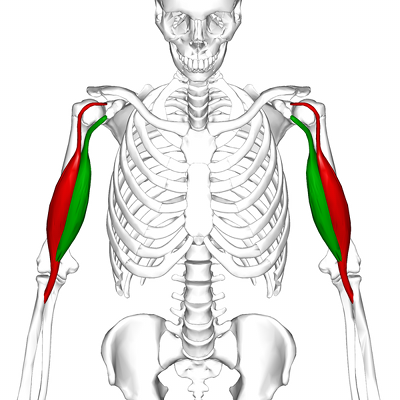
The biceps (or, formally, biceps brachii) is a two-headed muscle that looks like this:
Another important muscle is the biceps brachialis, which lies beneath the biceps brachii:
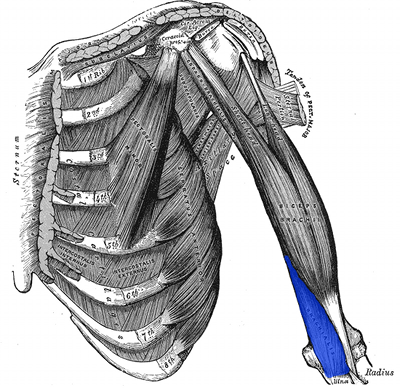
While this muscle isn’t nearly as prominent as the biceps brachii when developed, it plays an important role in the overall look of your arms. It looks like a mere “bump” in between the biceps brachii and triceps, but its level of development impacts the amount of “peak” your biceps appear to have (ultimately peak is mostly determined by genetics but increasing the size of the brachialis can give the appearance of a better peak).
I think the following picture of me from a recent photo shoot shows how a well-developed biceps brachialis cleanly separates the biceps brachii from the triceps and adds to the overall aesthetics of the arms:

So, when we get to the training portion of this article, we will be including some work to target the brachialis.
The next muscle group to talk about is the triceps, or triceps brachii, which has three heads:

As you can see, the three heads combine to form the distinctive “horseshoe” that can become quite pronounced, when properly developed.
While the biceps are usually the focus of arms workouts, many people don’t realize that the triceps account for a lot more of your arm’s size. Small triceps mean small, disproportionate arms, regardless of the size of the biceps.
Last but not least is the forearms, which are comprised of several smaller muscles:
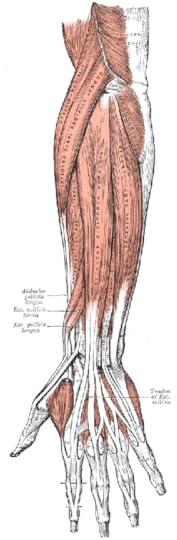
Forearms are like the calves of the arms–they aren’t the immediate focus, but if they’re underdeveloped, it’s sorely obvious. Thanks to following the advice I’m going to give in this article, my forearms have made quite a bit of progress over the last few years, and I think it shows:

Alright, so now that we know what we’re going for, let’s talk about the general dos and don’ts of arm training.
Arm Training 101
There are a lot of theories out there about how to best train arms.
Some people say you have to focus on high-rep training and really feel the burn. Others say the key is training them several times per week. Others still say you don’t have to directly train them at all and should focus on major compound movements instead.
Well, I’ve tried all the above and more, and I’ve concluded that the most workable truth is a synthesis of the many theories out there. That is, building big arms requires that you perform heavy compound lifts and directly train your major arm muscles. (Click here to tweet this!)
While that probably doesn’t surprise you, many people are surprised to learn that the focus of my arms workout is heavy weightlifting (80 – 85% of my 1RM).
I used to do a ton of high-rep training (drop sets, supersets, giant sets, etc.), and while I did make gains, they were pitiful compared to the progress I’ve made in both strength and size focusing on lower rep ranges (mainly 4 – 6, as espoused in my Bigger Leaner Stronger program).
Exercise choice is also a very important part of proper arm training. Like any other muscle group, the primary goal is to overload the arm muscles (not get a pump), and some exercises are just better than others for this.
And last but not least is training volume and frequency. Like “ideal” rep ranges, optimal training frequency is a hotly debated subject. The bottom line is it boils down to workout intensity and volume.
Generally speaking, the lighter the weights and fewer the sets per workout, the more often you can train the muscle group. And, as a corollary, the heavier the weights and greater the sets per workout, the less often you can train the muscle group.
When it comes to training major muscle groups in the body, I’ve found what works best is in line with an extensive review on the subject conducted by researchers at Goteborg University:
When training with the proper intensity (focusing on lifting heavy weights), optimal frequency seems to be about 60 – 70 reps performed every 5 – 7 days.
Arms are a bit different though because when you’re performing heavy compound movements every week like the Deadlift, Bench Press, and Military Press, they are getting trained.
Thus, I’ve found that heavy, compound lifting in your back workouts, shoulder workouts, and chest workouts plus 30 – 40 reps of direct training for both the biceps and triceps in your arms workouts, performed every 5 – 7 days, seems to be an optimal frequency and volume.
Alright, let’s now look at the best arm exercises for muscle growth.
The Best Arm Exercises
We’ll start with the biceps first and then move to triceps and forearms.
The Best Biceps Exercises
Like with other muscle groups, you get the most growth out of the biceps by focusing on free weights, not machines, and by sticking to compound (esque) movements.
1. Barbell Bicep Curl
This is one of the best biceps builders, and has been a staple in my arms workouts for several years now.
2. E-Z Bar Bicep Curl
I will switch to the E-Z Bar variant from time to time to give my wrists and elbows a break from the stress placed on them by the Straight Bar Curl.
3. Alternating Dumbbell Curl
Like the Barbell Curl, this is a tried-and-true biceps builder.
4. Hammer Dumbbell Curl
The Hammer Curl is particularly useful for building up the biceps brachialis (the smaller muscle that helps give your biceps a visual “boost”).
5. Chin-Up
The Chin-Up a great “functional” movement that targets the biceps. You can add weight with a dip belt or weighted vest as you get stronger, which ensures you can keep progressively overloading the muscles.
The Best Triceps Exercises
1. Close-Grip Bench Press
Like the Barbell Curl for the biceps, the Close-Grip Bench Press is one of the best triceps exercises. It’s a compound movement that allows you to safely push heavy weight, and it also gives a little boost to your chest development.
2. Dumbbell Overhead Triceps Press
This is one of my favorite triceps exercises because, like the Close-Grip Bench Press, you’re able to move heavy weights without overly stressing anything. Chances are your elbows will ache for the first few weeks of performing it, but this should go away as the connective tissues adapt.
3. Lying Triceps Press
This is basically a lying, barbell variant of the Dumbbell Overhead Press, and it works well.
4. Triceps Pushdown
I view the Triceps Pushdown as more of a finishing movement, as I like to start my arm workouts with compound movements. I like the V-bar and straight bar attachments more than the rope.
5. Dip
The Dip is a fantastic exercise for building up your triceps, chest, and shoulders.
Forearm Training
I’ll often get asked what I do for my forearms, and people are surprised to learn that I do no direct forearm training. All development has been a result of heavy back, chest, and arm training.
I’m not a fan of directly training forearms for two reasons:
It can lead to elbow tightness and pain, which hinders your triceps training.
It’s just not necessary if you’re sticking to heavy, compound lifting for your back, chest, and arms.
If you really want to train them, however, you can do 2 – 3 sets of Reverse Curls at the end of your workout.
Remember–Progression is the Key to Muscle Growth
That’s it for the best arm exercises. The key, however, isn’t just doing the exercises. It’s progressing on them. That is, increasing the amount of weight you can move over time.
If you don’t get stronger, you won’t get bigger. But if you do work on building your strength on these exercises, and you eat enough food to grow, your arms will get bigger and stronger.
The Ultimate Arms Workout
A good arms workout trains both the biceps and triceps and, indirectly, the forearms, and focuses on heavy weights. Just like any other muscle group, arms can benefit from higher rep work, but you have to emphasize the heavy weightlifting if you want them to grow.
While I go over everything you need to program your own leg workouts in Bigger Leaner Stronger and Thinner Leaner Stronger (and provide you with an entire year’s worth of workouts that can, when combined with proper nutrition, help you put on 20 – 25 pounds of muscle in your first year of weightlifting), I want to leave you with an arms workout that will prove the effectiveness of what I’ve discussed in this article.
What I want you to do over the next 8 weeks is perform the following arms workout once every 5 – 7 days:
Barbell Curl: Warm up and 3 sets of 4 – 6 reps
Close-Grip Bench Press: Warm up and 3 sets of 4 – 6 reps
Dumbbell Hammer Curl: 3 sets of 4 – 6 reps
Dips (Weighted if possible): 3 sets of 4 – 6 reps
Optional (if you have more juice left): Dumbbell Curl: 2 sets of 6 – 8 reps
Optional (if you have more juice left): Dumbbell Overhead Press: 2 sets of 6 – 8 reps
That’s it–just 12 – 16 heavy sets for your entire workout. If you do this type of arm training plus this back workout and chest workout every week, your arms will get bigger and stronger fast.
Once you hit the top of your rep range for one set, you move up in weight. For instance, if do 6 reps on your first set of Barbell Curls, you add 5 pounds to each side of the bar for your next set and work with that weight until you can curl it for 6 reps, and so forth.
I like to alternate between biceps and triceps sets to save time. I don’t superset the exercises, but instead I do it like this: biceps exercise 1 set 1, rest 60 seconds, triceps exercise 1 set , rest 60 seconds, biceps exercise 1 set 2, rest 60 seconds, triceps exercise set 2, rest 60 seconds, and so forth.
This type of training is the core of my Bigger Leaner Stronger and Thinner Leaner Stronger programs, and I’ve received hundreds and hundreds emails from readers ecstatic that they were finally breaking through 1+ year plateaus with ease, gaining strength and size every week.
What do you think of this arms workout? Have anything else to share? Let me know in the comments below!
Want more ultimate workouts? Check out the following:
The Ultimate Chest Workout
The Ultimate Back Workout
The Ultimate Shoulder Workout
The Ultimate Legs Workout
How to get lean and build serious muscle and strength, faster than you ever thought possible…
Depending on how you eat, train, and rest, building muscle and losing fat can be incredibly easy or incredibly hard. Unfortunately, most people make many different mistakes that leave them stuck in a rut.
And that’s why I wrote Bigger Leaner Stronger for men, and Thinner Leaner Stronger for women: they lay out EVERYTHING you need to know about diet and training to build muscle and lose fat effectively…
Buy now
AmazonAmazon UKAmazon AUAmazon CAAudible AudiobookBNiBooksiBooks AudiobookKoboGoogle Play
Buy now
AmazonAmazon UKAmazon AUAmazon CAAudible AudiobookBNiBooksiBooks AudiobookKoboGoogle Play
February 4, 2014
Why You Should Fire Bullets Before Cannonballs
You know what sucks?
It sucks when you’ve poured your heart into creating a wonderful product or service but aren’t getting any sales.
The truth is just about every business comes down with the “No-Sales Syndrome” every so often, but there’s a cure.
I recently read Jim Collins’ fantastic book, Great by Choice, and in it he discussed the key differences between companies that thrive in tough times and companies that fail. And he found that it wasn’t innovation, fat VC checks, or dumb luck. Companies that survived tough times were sometimes less innovative than competitors that failed, and in some cases had some pretty bad luck.
While the book is full of useful insights, I want to hone in on one specific piece of advice that I thought was most important and immediately applicable to businesses of any size. Here’s a quote from Great by Choice:
“Picture yourself at sea, a hostile ship bearing down on you. You have a limited amount of gunpowder. You take all your gunpowder and use it to fire a big cannonball. The cannonball flies out over the ocean … and misses the target, off by 40 degrees. You turn to your stockpile and discover that you’re out of gunpowder. You die.”
Many companies both large and small make this mistake: They stake everything on one big gamble; one big, risky project or idea.
In fact, I think this is why the average person thinks starting his or her own business is so risky. A common belief is that you have to be bold to the point of recklessness to succeed. But that isn’t true.
The smarter option—the one that Collins found built much stronger businesses—is to fire some bullets first.
Fire off some rounds, see where they land, and then adjust your aim. Use your light ammunition to dial in your target and figure out how to hit it. Then you load the cannons and unleash everything you’ve got.
What this means in business is you don’t embark on a large, risky project until you’ve proven that you can hit the target with smaller, less risky projects that let you figure out what works and what doesn’t.
I’m very much a believer in the “Minimum Viable Product” concept, which is just that: create a bullet that is sturdy enough to penetrate and fire it off. If it makes a dent, build a cannonball.
For example, my career as a fitness author began with just one book: Bigger Leaner Stronger. I had a full-time job and wrote it on my free time, and I self-published it in 2012 for about $1,000 (editing and cover design). And I then waited to see if anyone would care.
It sold around 20 copies in the first month. And about double that the next month. And then double that the next month. I started receiving emails from readers, enthusiastic that they were finally making gains in the gym, and I realized that my “bullet” had actually hit a mark.
I then loaded my gun with more “bullets” (books) as quickly as possible, and fired those off as well. Sales continued to grow, and in the end of 2012, I began building my first cannonball: I quit my job, convinced my best friend to start working with me, and started building Muscle for Life.
Muscle for Life launched in March 2013 and thanks to the support of readers like you, it didn’t just hit the bulls-eye–it obliterated the entire target, receiving over 1.3 million visits by the end of last year. That, then, gave me the platform on which I could start building Legion Athletics. Here’s how I went about it:
As you’ve probably noticed, I recommend various products that I’ve used and like, and I participate in Amazon’s affiliate program (Amazon Associates). While this makes me some money, that isn’t its real value. It’s real value is the insights it has given me into what people are actually buying. It took the guesswork out of what products Legion should produce and sell, and how much they should be sold for.
So, armed with actual consumer data, I chose 4 “bullets”: 4 products that were not only worthwhile (most supplements are a waste of money, and I wasn’t willing to go down that road even if people were buying them), but that I knew would sell based on affiliate sales. Those were a whey protein, creatine, pre-workout drink, and recovery supplement.
It took about 7 months to go from idea to launch, which was in November last year. Sales have significantly exceeded my expectations, and we’re now perfecting our bullets based on customer feedback (tweaking taste, mainly). We’ve also begun building the cannonball: more products (supplements, merchandise, and gear), an extensive Internet marketing campaign, an affiliate program, retail distribution, international distribution, and more.
So, how can you apply this concept to your business or business idea? Well, this about this for a minute: What is the smallest possible product that you could build IN ONE WEEK that will deliver some kind of benefit to your customers that you know they desire?
If you created this product and put it out for sale next week, you could gather priceless intelligence about what works and doesn’t with your customers. Don’t drag this out for months and sink into paralysis by analysis—just do it and get it out and see what happens. Don’t worry if it isn’t perfect yet—let your customers know it’s a beta version and you’re offering it at a great price.
This is a bullet and now you get to see what it can do. You’ll learn more by doing this simple little exercise than poring over hundreds of pages of market research. And you’ll probably make a few bucks.
If the number of sales catches your attention, then you can get feedback, improve the product, and get ready to fire the next bullet (the improved version of the product).
If you don’t make a single sale, that’s valuable data too. What’s the problem? Are you trying to solve something your customers don’t care about? Do your customers not want to spend money on something like what you offered? Was your sales pitch too weak?
If you’re willing to dig in and not back off due to a setback, you can revamp your approach, fire off another bullet and watch.
And once you’ve fired a few bullets that hit their targets, you can start in with the cannonballs. Don’t do it until the bullets have hit though.
What’s your take on the bullet and cannonball metaphor for success? Have anything else to add? Let me know in the comments below!
If you liked this article, then you’ll love this book…If you’d like to know what some of history’s greatest thinkers and achievers can teach you about awakening your inner genius, and how to find, follow, and fulfill your journey to greatness, then you want to read this book today.
(I wrote this book under a pen name simply because I want to keep it, and future books of mine that will have nothing to do with health and fitness, completely separate from my main line of work. But I can still promote it! )
Read this book today and discover what it really takes to find and follow your bliss, and how to use the lessons passed down to us by some of history’s greatest geniuses to systematically rise to top of your fields, activities, and endeavors.
Buy now
AmazonAmazon UKAmazon AUAmazon CAAudible AudiobookBNiBooksiBooks AudiobookKoboGoogle Play
February 3, 2014
9 Supplements That Suck and What to Take Instead
If you’re familiar with my work, you know what I think of the supplement industry: it’s under-regulated and overflowing with worthless garbage or worse, and should be viewed with a very skeptical eye and tight-fisted budget.
And although certain supplements can help you achieve your health and fitness goals, they are by no means necessary. They can only supplement your progress at best, not dramatically affect it.
So, in this article, I’m going to talk about 9 popular supplements that actually suck, and what you can take instead to achieve the desired effects.
Supplement That Sucks #1:
Hoodia Gordonii
Hoodia is a small plant that looks like a cactus, and has long been used by South African bushmen to suppress the appetite.
The gordonii species is a garden plant and is sold as a weight loss aid, but research has shown that it is ineffective as an appetite suppressant and may be toxic in dosages often recommended.
What Supplement to Take Instead
Many people like to include an appetite suppressant when dieting to lose weight because it helps with compliance.
Before you do this, however, I would recommend you make sure you’re not restricting your calories too heavily and that you utilize other dietary strategies to reduce hunger. These methods are often effective enough to prevent the need for any supplements.
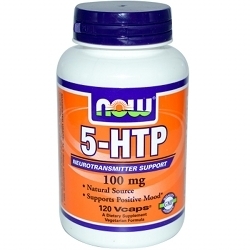
That said, if you’re keeping yourself in a mild calorie deficit and doing everything you can to minimize hunger through your diet and meal planning, then you can take a supplement called 5-HTP.
5-HTP is a precursor to serotonin, which is a neurotransmitter that induces feelings of happiness, and which has been proven to increase satiety (fullness) when ingested with meals.
Typical dosages are 300 – 500 mg per day, and should be taken with meals. Don’t supplement with 5-HTP if you’re taking any drugs for depression or cognitive performance, as the interaction can be dangerous (especially true in the case of SSRIs).
Buy now
AmazonAmazon UK
Supplement That Sucks #2:
Deer Velvet Antler
Deer velvet antler is crushed deer antlers (not just the velvety material that grows on them), and it’s used in Traditional Chinese Medicine for various preventative health purposes.
It’s also sold as a bodybuilding supplement with claims of increasing testosterone and growth hormone levels and improving physical performance, but the research says otherwise:
Deer velvet antler doesn’t increase testosterone levels
Nor does it increase growth hormone levels
Nor does it increase muscle strength or growth
What Supplements to Take Instead
Let’s address each of the deer velvet antler’s selling points separately, starting with increasing testosterone levels.
The Truth About Testosterone Supplements
While there are things you can do to naturally increase testosterone levels, if you’re trying to increase muscle size or strength, you’ll be disappointed.
As I discuss in this article, fluctuations of testosterone levels within normal physiological ranges, up or down, doesn’t much affect how much muscle and strength you gain from weightlifting.
To really notice a difference, testosterone levels must exceed normal physiological ranges and no dietary methods or supplements will accomplish this (only steroids can).
That said, research has shown that varying levels of testosterone within physiological normal ranges does have significant effects on body fat percentage.
Although the exact mechanisms behind this aren’t fully understood just yet, research has show that testosterone directly inhibits the creation of fat cells and that low testosterone is a contributing factor to obesity.
Furthermore, natural-level variations in testosterone can also affect the libido in men.
So, if you’re looking to raise testosterone levels to build more muscle, natural methods won’t help you. But if you’re looking to stay leaner and improve your libido, you have natural options.
First, I would recommend you utilize the simple strategies I give in my article on naturally increasing testosterone levels.
Second, while most testosterone boosters are a waste of money, there is one supplement that actually has some valid science on its side: D-aspartic acid.
D-aspatic acid is an amino acid that regulates testosterone synthesis in the body, and research has shown that supplementation with it can temporarily increase testosterone levels and increase fertility.
Typical dosages are 2 – 3 grams per day, and cycling is probably unnecessary (one study showed that continual use for 3 months was safe and beneficial to fertility). Here’s a pure D-aspartic acid product that I’ve used and recommend:
Buy now
AmazonAmazon UK
The Truth About Human Growth Hormone Supplements
Like testosterone boosters, there are all kinds of products out there that claim to be able to boost growth hormone levels, but they’re completely bogus.
They usually include a variety of amino acids that have never been proven to increase growth hormone levels, along with other strange-sounding ingredients that have absolutely no human research behind them whatsoever.
One very common ingredient that deserves a quick blurbis gamma aminobutyric acid, or GABA. Research has shown that supplementation with GABA elevates resting and postexercise growth hormone levels, but the forms of growth hormone increased have not been proven to contribute to muscle growth (there are over 100 forms of growth hormone in your body, and all perform different functions).
The bottom line is as of now, there are no natural substances known to significantly increase growth hormone levels, so save your money by avoiding these types of products.
The Truth About Muscle Building Supplements
When it comes down to it, there really is only one supplement that can reliably accelerate your muscle growth: creatine.
Creatine is an amino-acid-like substance found in foods like red meat, and hundreds of clinical studies have definitively proven its effectiveness as a muscle-building supplement.
Supplementation with creatine can help you build muscle and improve strength, improve anaerobic endurance, and reduce muscle damage and soreness from exercise.
There are many forms of creatine available, however, such as monohydrate, citrate, ethyl ester, nitrate, and others. Which is best?
Well, as I discuss in my article on which form of creatine is most effective, good old monohydrate is all you need, and 5 grams per day is enough to reap its benefits. Here’s my creatine product from my line of workout supplements:
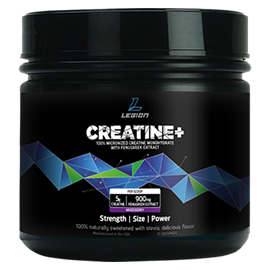
CREATINE+ gives you the proven strength, size, and recovery benefits of creatine monohydrate plus the absorption, metabolic, and hormonal benefits of fenugreek extract.
Each serving of CREATINE+ contains:
5 grams of creatine monohydrate.
900 milligrams of fenugreek extract.
Furthermore, CREATINE+ is naturally sweetened with stevia, and naturally flavored, and it contains no junk fillers or artificial food dyes.
Buy now
LEGION (SAVE 10%!)Amazon
Supplement That Sucks #3:
Chitosan
Chitosan is derived from chitin, a substance obtained by treating the shells of shellfish such as shrimp, lobster, and crabs.
As the story goes, chitosan helps you lose weight by blocking the absorption of dietary fats, thus effectively reducing the total amount of calories available for use by the body.
What does the research say, though? Well, I’ll just quote the conclusion of this 2008 meta-analysis of 15 chitosan clinical trials of chitoson:
“Results obtained from high quality trials indicate that the effect of chitosan on body weight is minimal and unlikely to be of clinical significance.”
That is, it doesn’t work. Don’t bother with it.
What Supplements to Take Instead
I’ve never liked the idea of taking something that blocks the absorption of nutrients because it’s much easier to just create and follow a proper meal plan and exercise routine, and utilize clinically effective weight loss supplements like caffeine, yohimbine, and green tea extract.
Supplement That Sucks #4:
HMB
HMB (beta-Hydroxy beta-methylbutyric acid–a mouthful indeed) is a metabolite of the amino acid leucine, and it has been growing in popularity thanks to a handful of studies that indicate it helps with strength and muscle growth, such as this and this.
These studies are controversial, however, because they were conducted by Steven Nissen, the inventor of HMB and owner of the patent.
When you look at unbiased research on HMB, which has also been conducted with resistance-trained men and not the elderly, it’s much less effective than Nissen has reported. For instance:
A study conducted by Massey University found that HMB supplementation improved lower-body strength, but had negligible effects on body composition in resistance trained men.
A study conducted by the Singapore Sports Council found that HMB supplementation had no effect on strength or body composition in resistance trained men.
A study conducted by the University of Memphis found that HMB supplementation did not reduce catabolism or affect training-induced changes in body composition and strength in experienced resistance-trained males.
Researchers from Massey University also conducted a literature review on the subject of HMB supplementation, and their conclusion was very simple (emphasis added):
“Supplementation with HMB during resistance training incurs small but clear overall and leg strength gains in previously untrained men, but effects in trained lifters are trivial.The HMB effect on body composition is inconsequential.”
Save your money.
What Supplement to Take Instead
Again, creatine is the only supplement that can reliably deliver the types of results that HMB marketers claim.
Supplement That Sucks #6:
Tribulus Terrestris
Tribulus terrestris is an herb commonly sold as a supplement for enhancing the libido and boosting testosterone levels. Check any testosterone supplement on the market and chances are it will contain Tribulus terrestris.
While it appears to improve libido and fertility, multiple studies have proven that supplementation with Tribulus terrestris has no effect ontestosterone levels, body composition, or exercise performance.
What Supplement to Take Instead
As discussed earlier, if you’re looking to increase testosterone levels, one supplement that can actually help is D-aspartic acid.
Supplement That Sucks #7:
ZMA
ZMA is a combination of zinc, magnesium, and vitamin B6, and it’s often sold as a testosterone booster and recovery agent.
Research has shown that a zinc deficiency can lower testosterone levels, and thus supplementation can help under these circumstances. If you’re not deficient, however, ZMA won’t boost your testosterone levels.
What Supplement to Take Instead
Supplementing with zinc is a good idea if you’re deficient, but you have to determine that first. An easy way to do this is the zinc taste test. It works like this:
Get a good liquid zinc supplement, like this. Keep it in the fridge.
Remove it from the fridge and let sit for two hours at room temperature.
Refrain from eating or smoking for an hour, and then take a sip of it (5 – 10 ml) and swirl it around in your mouth for 10 seconds.
Assess your zinc levels as follows:
Very Deficient: If it tastes like plain water for all 10 seconds, you’re severely deficient and should supplement with about 150 mg of zinc per day to correct, and retest after a week.
Quite Deficient: If it first tastes like water and then, within the ten seconds of the test, it tastes dry or metallic, this indicates a moderate deficiency. Supplement with about 100 mg of zinc per day to correct, and retest after a week.
Slightly Deficient: If you immediately notice a slight dry, metallic taste, and it increases with time over the ten second period, this indicates a minor deficiency. Supplement with about 50 mg per day to correct, and retest after a week.
Adequate: If the dry, metallic taste is immediate, strong, and unpleasant, this indicates no deficiency is present. It’s likely that your diet is providing sufficient zinc. You can retest every couple of weeks to ensure you haven’t developed a deficiency.
If you do the above test and discover you’re deficient in zinc, I recommend you pick up some zinc gluconate and supplement accordingly.
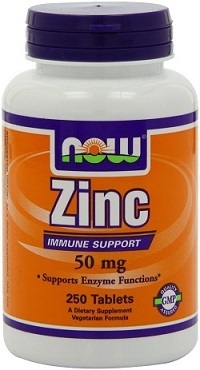
Buy now
AmazonAmazon UK
If you find and handle a deficiency, you can prevent it from recurring by getting anywhere from 15 – 150 mg of zinc per day, based on your body’s needs. You can obtain this through food or supplementation.
Supplement That Sucks #8:
Garcinia Cambogia
Garcinia cambogia is a small fruit often used in Indian and Asian cuisine to impart a sour flavor. It’s a good natural source of hydroxycitric acid, and has received a lot of media attention recently as a weight loss aid.
These claims are unfounded, however. Like many fad supplements, garcinia cambogia has some animal research on its side, but human research is contradictory and hard to interpret.
A couple rat studies, such as this one, have demonstrated that garcinia cambogia can reduce weight gain during a period of overfeeding. The mechanism by which it accomplished this is the suppression of fatty acid synthesis in the liver (it reduced the amount of fat the body could make from the excess calories).
The human research bursts that bubble, though. A meta analysis of 12 randomized clinical trials of garcinia cambogia found the following:
Three studies with small sample sizes reported statistically significant, albeit small, decreases in fat mass over the placebo groups.
(In case you were wondering, the best result was 1.3 kg more weight lost than placebo group over a 3-month period.)
Two studies found no difference in weight loss between the garcinia cambogia and placebo groups, including the largest and most rigorous study reviewed.
The results of the remaining studies reviewed were marred by serious design and/or execution flaws.
The research currently available says that garcinia cambogia probably won’t help you lose weight, but if it did, the best you could hope for is a very small boost.
What Supplements to Take Instead
As discussed in the chitoson section, healthy weight loss requires proper meal planning and workouts, but there are a few supplements that speed up the weight loss process. Namely caffeine, yohimbine, and green tea extract.
Supplement That Sucks #9:
Raspberry Ketones
Raspberry ketones are the primary aroma compound of the red raspberry (it gives the raspberry its smell), and it’s also found in other fruits like the blackberry and cranberry.
How did such a seemingly random compound find its way into weight loss products? Well, it started with a couple animal studies. One demonstrated that raspberry ketone supplementation prevented weight gain by increasing lipolysis and fat oxidation, and the other backed up this mechanism.
That might be promising if it weren’t for a few little details:
Animal research can not be used as proof of human effectiveness. The human and rat body just isn’t similar enough, and this is especially true when talking about metabolic functions.
One of the rat studies was in vitro research. This means parts of living rats were removed to be studied in isolation, as opposed to research done with living, intact organisms (in vivoresearch).
In vitro research is less definitive than in vivo because living organisms are incredibly complex, and sometimes in vitro findings just don’t pan out in vivo.
The in vivo rat study that demonstrated weight gain prevention used an absolutelymassive oral dose: up to 20 g/kg of body weight, or 4761 times greater than the average human intake.
There is one human trial I know of that is commonly cited as evidence of raspberry ketone’s effectiveness for weight loss.
The problem with this study, however, is the compound was paired with caffeine, capsaicin, garlic, ginger, and citrus aurantium as a source of synephrine. It’s impossible to know if the raspberry ketone did anything or not.
The bottom line is there’s just insufficient evidence to support the use of low oral doses of raspberry ketone for weight loss purposes. Stick with caffeine, yohimbine, and green tea extract.
What do you think about these supplements? Have anything else to add? Let me know in the comments below!
February 1, 2014
Recipe of the Week: Asparagus & Goat Cheese Pasta
Delicious pasta is one of my favorite types of food indulgences, and thus I try a lot of recipes. While I’m always up for a good traditional dish like a bologenese or pesto, I love how versatile sauces can be.
This recipe is from my bestselling cookbook The Shredded Chef, and if you like goat cheese, you’re going to love it. The chicken broth and lemon add nice subtleties of taste but don’t overwhelm the cheese, and it all goes very nicely with the asparagus.
Servings
4
Calories Per Serving
389
Protein Per Serving
20 grams
Carbohydrates Per Serving
50 grams
Fat Per Serving
13 grams
Ingredients
8 ounces whole grain thin spaghetti
1 pound asparagus, with bottoms cut off
1 tablespoon unsalted butter
2 tablespoons all-purpose flour
1 can (14 ounce) low-sodium chicken broth
4 ounces goat cheese
1 teaspoon lemon zest
pinch of ground black pepper
1/2 cup Parmesan cheese, grated
Instructions
Bring a large pot of lightly salted water to a boil and add the noodles, cook to package instructions.
Meanwhile, heat a large pan of lightly salted water to boiling over high heat. Add the asparagus and blanch in the boiling water for 3 minutes, or until they turn bright green. Remove and rinse under cold water to stop the cooking.
Heat a saucepan over medium-high heat, add the butter. Once the butter is melted whisk in the flour. Add the broth and cook for 2 minutes, stirring constantly, until the sauce thickens. Mix in the goat cheese and lemon zest.
Add the spaghetti and asparagus to the pan and toss, covering the pasta in sauce. Serve with pepper and the Parmesan
What You Get to Eat
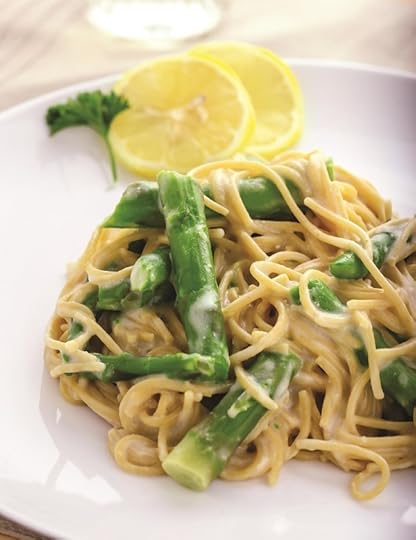
What did you think of this week’s recipe? Let me know in the comments below!
Want more delicious, easy-to-make recipes like this?If you like this recipe, then you’ll love the bestselling cookbook it came from! My own The Shredded Chef!
In this book you’ll find 120 healthy, flavorful recipes specifically designed for athletes that want to build muscle or lose fat. Regardless of your fitness goals, this book has got you covered.
Buy this book now to forever escape the dreadful experience of “dieting” and learn how to cook nutritious, delicious meals that make building muscle and burning fat easy and enjoyable!
Buy now
AmazonAmazon UKAmazon AUAmazon CABNiBooksKoboGoogle Play
Vegan and vegetarian dishes are great sources of micronutrients, and even if you’re a meat eater, they’re great for changing things up in your meal plan.
And in my cookbook, Eat Green Get Lean, you’ll find 100 of my favorite vegetarian and vegan dishes, carefully balanced for our high-protein, healthy needs!
Buy this book now to forever escape the dreadful experience of “dieting” and learn how to cook nutritious, delicious vegetarian and vegan meals that make building muscle and burning fat easy and enjoyable!
Buy now
AmazonAmazon UKAmazon AUAmazon CABNiBooksKoboGoogle Play
January 31, 2014
Cool Stuff of the Week: Ryno Microcycle, Old School Fightwear, Corsair Voyager Air, and More…
I’m not ashamed to admit that I’m kind of a sucker for cool stuff. I like nifty gadgets, quirky decoration pieces, nice clothes (and shoes!), good books, and fun games.
In this series of weekly posts, I share whatever currently has my fancy. Maybe some of it will catch yours as well!
VIDEO OF THE WEEK:
OSCAR WINNERS FOR BEST VISUAL EFFECTS
Beginning in 1977 — largely in part to this hit movie called Star Wars — the Academy reintroduced a Academy Award category for visual effects with the new and current name, “Best Visual Effects.” Here’s a compilation with a clip from every winner since, from Superman to Life of Pi.
RYNO MICROCYCLE
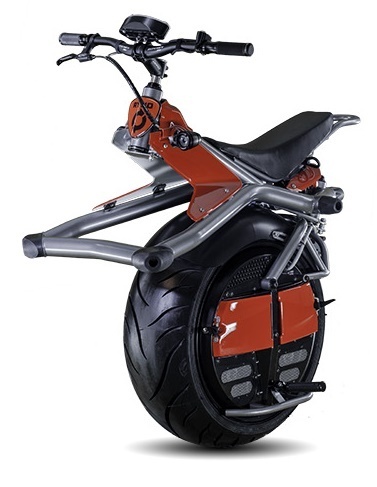
Yes, you read that right–microcycle. And a “microcycle” is a motorcycle with one wheel. Although it seems like a veritable death trap, it actually looks pretty fun:
As you can see, you control the Ryno’s electric motors by leaning forward to accelerate and back to slow down. The microcycle has a range of 10 miles and top speed of 10 mph, so you won’t be doing any touring or racing with it, but it’s still pretty cool nonetheless.
UNDER ARMOUR ROOTS OF FIGHT COLLECTION
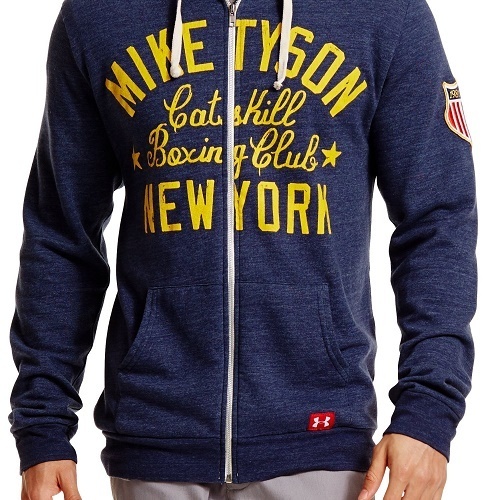
Show your love for some of boxing’s greatest with Under Armour’s Roots of Fight Collection.
It’s comprised of an assortment of tees, sweatshirts, and hoodies that celebrate legends like Boom Boom Mancini, Jack Johnson, Lennox Lewis, Joe Frazier, and of course Mike Tyson, both as “Kid Dynamite” and “Iron Mike.”
Buy now
CORSAIR VOYAGER AIR
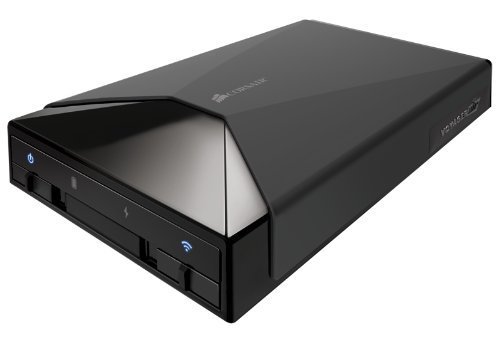
The Corsair Voyager Air is a highly portable, battery-powered 1 TB (terabyte) media storage device, perfect for extending the storage capacity of your mobile devices. Thanks to its WiFi capability, you connect it to your home network and move files to and from it as a network drive. It’s also can wirelessly stream HD content to up to 8 devices (including smart TVs), and relay Internet access to other devices.
LIFESTRAW PERSONAL WATER FILTER
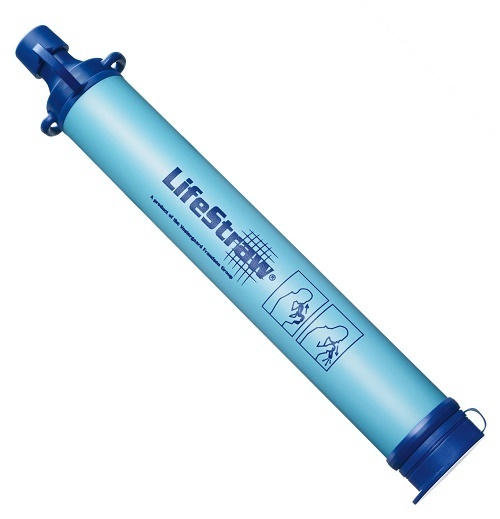
If you’re an outdoors person, you know that finding fresh drinking water in the wilderness is a chore (purification packets, boiling and cooling, etc.).
The LifeStraw completely changes this. Designed for the harsh conditions of Africa, this little sucker (har har) is ingeniously simple: all you do is suck water through it and the filter removes 99.9% of bacteria and nearly all waterborne parasites (it provides five times more filtration than the EPA standard). It also lasts for about 1,000 liters, at which point water will no longer pass through it (preventing overuse).
BOOK OF THE WEEK:
GOOD TO GREAT
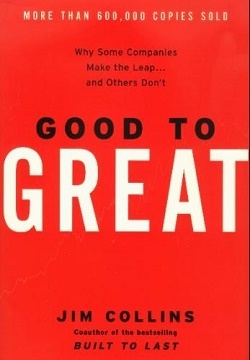
The premise for Collins’ now-seminal work was simple, but daunting: Start with 1,435 good companies. Examine their performance over 40 years. Find the companies that became great, and find out why.
Well, this book is the result of five years of research by Collins and his team (and hundreds of thousands of dollars spent in the process), and it’s absolutely mandatory reading if you want to get better at business.
Inside, you’ll find a powerful collection of characteristics that great companies have in common–characteristics that you can replicate in your own business or career. Things like…
CEOs that display “personal humility and professional will.”
A disciplined culture that weeds out the weak, bolsters the strong, and demands high levels of production.
Maintaining an uncompromising view of the company’s situation, and using the facts to focus on improving performance.
The use of technology to accelerate the growth process.
Leveraging the momentum that comes with success.
And more…
Think of this book as a road map to business excellence. It doesn’t show you how to overcome every obstacle, but it shows you where you need to go and where the major pitfalls lie.
Buy now
AmazonAmazon UK
What do you think of this week’s picks? Have anything you’d like to share? Let me know in the comments below!
January 30, 2014
5 Healthy Pasta Recipes That Will Blow Your Taste Buds Away
Healthy pasta recipes are one of my favorite food indulgences. You get a ton of taste that is actually pretty easy to fit into any type of meal plan (you generally have more room for carbs than fats).
I also love how versatile pasta dishes are. While you can’t go wrong with staples like bolognese, pesto, and vodka sauce dishes, you can get quite creative with combinations of ingredients and tastes.
In this article, I share 5 fantastically different, high-protein pasta dishes that will make your mouth water. Enjoy!
Love-Your-Veggies Pasta

Picture courtesy of TheKitchn
Vegetables are as filling as pasta yet provide more nutritional value, making this recipe is a great way to satisfy hunger without going overboard on calories.
Directions
Put a large pot of water on the stove to boil.
Start the sauce by heating 1 Tbsp. olive oil in a skillet over medium-low. Cook 1 Tbsp. minced garlic for one minute, and then add 2 cans of seasoned diced tomatoes (about 30 oz.), 1 Tbsp. balsamic vinegar, 1 tsp. dried basil, and a pinch of crushed red pepper. Let the sauce simmer for about 15 minutes while preparing pasta, and stir frequently.
Add one box (12 oz.) of rigatoni to the pot of boiling water. Five minutes later, add 1 cup frozen peas and 1 lb. fresh broccoli florets, and then cook together with pasta for about 3 minutes, or until pasta is finished.
In a large bowl, mix sauce, pasta, and veggies together, and top with 1/3 cup reduced fat feta.
Nutrition Facts (Per Serving)
Serves 4
Calories: 429
Protein: 21 grams
Carbs: 85 grams
Fat: 7 grams
Linguine with Squash, Bacon & Goat Cheese
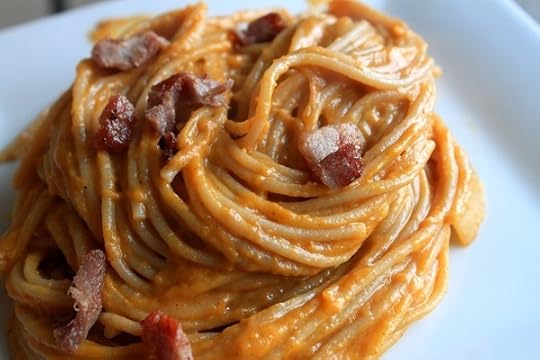
Picture courtesy of GreensNChocolate
One bite of this pasta dish will trick you into thinking you’re eating a gut-busting meal. With the rich flavors of bacon, goat cheese, and butternut squash, this tastes indulgent yet won’t wreck your balanced diet.
Directions
Begin by cooking 6 slices of bacon in a skillet for about 5 minutes on medium heat. Transfer bacon to a paper towel to remove excess grease, and crumble into sizeable pieces. Drain the bacon fat out of the pan, leaving 2 Tbsp. in the skillet.
In the bacon fat, cook 4 to 5 cups of peeled and diced butternut squash and 2 cloves minced garlic, sautéing for 3 to 5 minutes over medium heat. Add 1 1/2 cups chicken broth and 1 tsp. salt, cover to simmer, and stir regularly. The squash will take about 20 to 25 minutes to become tender. Stir in 2 oz. crumbled goat cheese when finished.
Bring a large pot of water to boil, and add 1 box (12 oz.) of linguine, and cook for about 8 minutes. Drain and add to a large bowl. Stir in the garlic-squash sauce, and mix well. Finish with 1 Tbsp. olive oil, bacon bits, 2 oz. goat cheese, and 2 tsp. black pepper.
Nutrition Facts (Per Serving)
Serves 6
Calories: 470
Protein: 23 grams
Carbs: 60 grams
Fat: 17 grams
Buffalo Chicken Lasagna
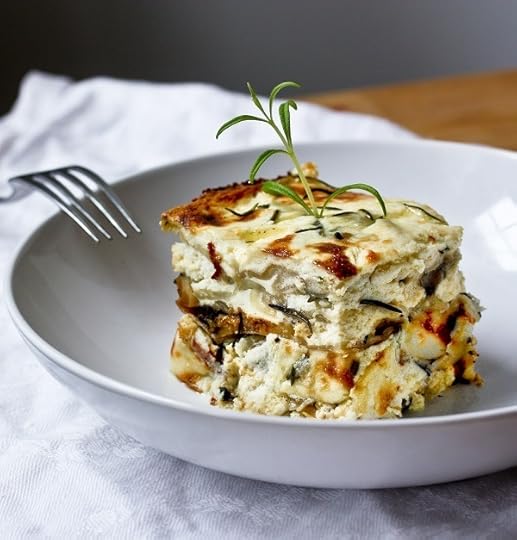
Picture courtesy of FeastingAtHome
Homemade lasagna in a slow cooker is already exciting. But layer all the flavors of Buffalo chicken in there, and you might just have the perfect dinner. It’s also loaded with protein so this pasta meal is a real homerun.
Directions
In a large bowl, make the sauce by combining 1 cup Frank’s Red Hot Buffalo Sauce (or your favorite substitute) and 28 oz. simple pasta sauce. Add 3 pre-cooked boneless skinless chicken breasts, shredded or cut in strips.
Grease a 5-quart slow cooker, and ladle sauce until the bottom is covered. Add a sheet of uncooked lasagna noodles, broken to fit inside. Add a layer of ricotta cheese, followed by diced bell peppers and a handful of shredded mozzarella and cheddar cheeses. Repeat the layering steps until you’ve used 15 oz. ricotta cheese, 1 cup shredded mozzarella, and 1 cup cheddar. Top with the last of the sauce and cheese. Add 1/4 water over the lasagna, and cook on low for 4 to 5 hours.
Nutrition Facts (Per Serving)
Serves 8
Calories: 459
Protein: 34 grams
Carbs: 36 grams
Fat: 19 grams
Pasta with Sausage, Basil & Mustard

Picture courtesy of Emily Bites
Pasta and sausage are a classic pairing like PB&J, and this recipe gives it a twist with mustard instead of tomato sauce. To keep the fat content under control, low-fat cream cheese is used instead of the more traditional heavy whipping cream.
Directions
Bring a large pot of water to boil, and add 1 box (12 oz.) of penne or medium shells. It will take about 7 or 8 minutes to be al dente.
As the pasta cooks, heat 1 Tbsp. extra-virgin olive oil in a high-walled skillet. Remove 8 hot Italian sausages from casings, and add ground meat to the pan. Brown over medium-high heat for 5 minutes.
Add 3/4 cup dry white wine, and scrape the bottom of the pan. Simmer for about 5 minutes.
Stir in 3/4 cup (6 oz.) low-fat cream cheese, 3 Tbsp. grainy mustard, and a pinch of crushed red pepper. Continue to cook for a couple minutes.
Remove skillet from heat, and stir the cooked pasta right into the sausage. Add 1 cup thinly sliced basil. Toss and serve.
Nutrition Facts (Per Serving)
Serves 4
Calories: 558
Protein: 20 grams
Carbs: 65 grams
Fat: 21 grams
Ramen with Pork, Egg & Spinach
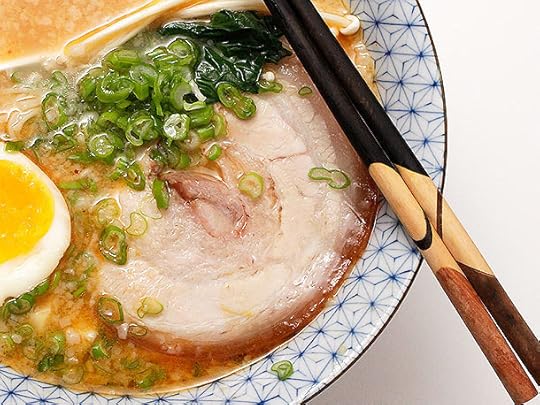
Picture courtesy of Serious Eats
Need a quick dinner for one? Ramen is a standby for a cheap, filling meal, but by adding to it, you can make it a great bowl of pasta.
Directions
Start by bringing 2 cups of water to a boil.
Meanwhile, wash and slice 3 medium button mushrooms and 2 green onions. Add the ramen noodles to the boiling water to cook for about 5 minutes. As the noodles cook, you can also prepare 2 oz. sliced pork tenderloin in the water. One at a time, add each piece into the pot and gently move it across the top. Set pork aside.
Mix in half the seasoning packet. Lower the heat before stirring in the mushrooms, green onions, and 1 cup fresh spinach. The water should be hot, but not boiling. Cook for another one or two minutes.
Push all the ingredients to the sides of the pot, and crack one large egg into the space you’ve made in the middle. The egg is poached once the whites are solid. Transfer to a bowl, and top with 1 tsp. garlic chili paste.
Nutrition Facts (Per Serving)
Serves 1
Calories: 373
Protein: 29 grams
Carbs: 31 grams
Fat: 15 grams
What did you think of these healthy pasta recipes? Have anything else to share? Let me know in the comments below!
Want more delicious, easy-to-make recipes like these?If you like these recipes, then you’ll love my bestselling cookbook The Shredded Chef!
In this book you’ll find 120 healthy, flavorful recipes specifically designed for athletes that want to build muscle or lose fat. Regardless of your fitness goals, this book has got you covered.
Buy this book now to forever escape the dreadful experience of “dieting” and learn how to cook nutritious, delicious meals that make building muscle and burning fat easy and enjoyable!
Buy now
AmazonAmazon UKAmazon AUAmazon CABNiBooksKoboGoogle Play
Vegan and vegetarian dishes are great sources of micronutrients, and even if you’re a meat eater, they’re great for changing things up in your meal plan.
And in my cookbook, Eat Green Get Lean, you’ll find 100 of my favorite vegetarian and vegan dishes, carefully balanced for our high-protein, healthy needs!
Buy this book now to forever escape the dreadful experience of “dieting” and learn how to cook nutritious, delicious vegetarian and vegan meals that make building muscle and burning fat easy and enjoyable!
Buy now
AmazonAmazon UKAmazon AUAmazon CABNiBooksKoboGoogle Play
January 29, 2014
The Ultimate Leg Workout: The Best Leg Exercises for Big Wheels
If you’re hitting the weights regularly but neglecting your leg workouts, I want to warn you of what is to come:
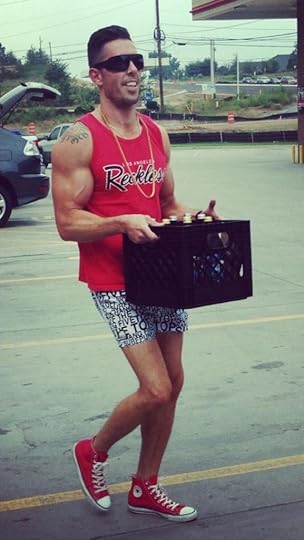
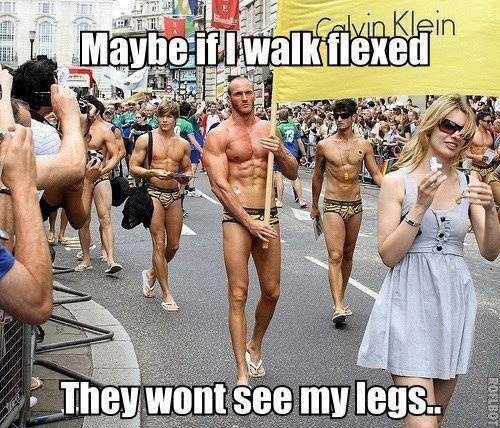
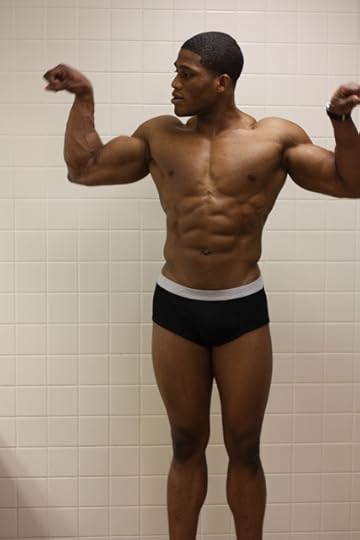
In all seriousness, I understand the temptation to skip legs day. I used to do it all the time and am paying the price now. My legs are still a bit behind my upper body in overall development, and my calves are still too small (working on it!), but my legs are no longer a glaring weakness:

Ironically, now that I have a few years of proper leg training under my belt, I’ve actually come to really enjoy my leg workouts. But it took time to get there. It wasn’t a simple matter of MOAR SQUATS MOAR SQUATS MOAAAAR SQUATSSSS!11!!!!
In this article, I’m going to share with you what I’ve learned about building big, strong legs: the best leg exercises, tips on performing them correctly, and a workout that will deliver immediate results in terms of building leg muscle and strength.
The Major Leg Muscles in Detail
Before we get to the training, I’d like to quickly review the major muscles of the leg so we know what we’re looking to develop.
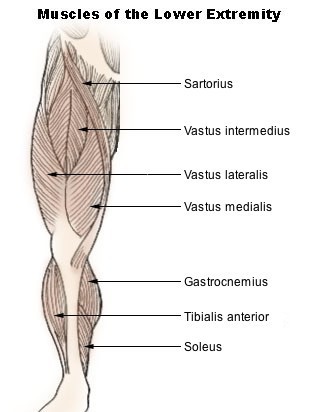
The quadriceps is a group of four muscles that comprise the bulk of the muscle on the front of the thigh. The four “heads” of the quadriceps are:
The rectus femoris
The vastus lateralis
The vastus medialis
The vastus intermedius
Here’s how they look:
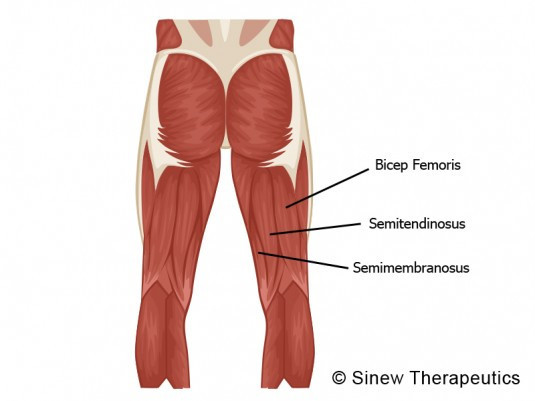
The back of the leg is dominated by three muscles that contract the hamstring tendon:
The semitendinosus
The semimembranosus
The biceps femoris
Here’s how they look:
And last but not least is the calf muscle, which is comprised of two muscles:
The gastrocnemius
The soleus
And here’s how they look:
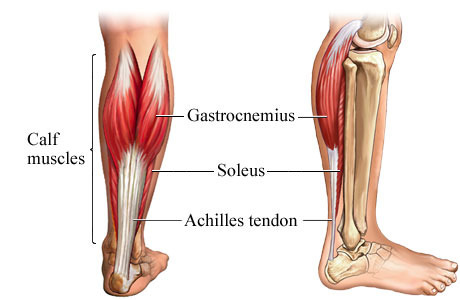
(As you can see, the bulk of the calf is the gastrocnemius muscle, and the soleus lies under it.
So, those are the major muscle groups that we’re concerned with in terms of visual development. There are quite a few smaller muscles that will greatly affect our ability to properly train the larger muscles, but we don’t need to review each of them. By following the advice in this article, they will develop along with the larger groups.
Leg Training 101
The three biggest mistakes most people make in their leg workouts are:
1. Focusing on the wrong leg exercises.
Many people focus too much on machine and isolation exercises, which do not build big, strong legs.
2. Squatting horribly.
Partial-squats are probably the most common mistake, but there are others such as hunching over, bowing the knees in, pushing the knees out beyond the toes, and more.
3. Focusing on high-rep training.
This mistake will stunt the growth of any major muscle group in the body, and is a subject I talk about in more detail in my article on muscle hypertrophy (muscle growth).
“But wait a minute,” you might be thinking. “INSERT SHREDDED FITNESS MODEL HERE does a lot of high-rep leg exercises in his leg workouts, and he has huge, anatomy-chart-like legs… What gives?”
The answer is steroids. I know, that might sound cynical, but it’s true.
When someone is on enough drugs, achieving muscle growth is mind-numbingly simple: he sits in the gym for a few hours every day doing rep after rep after rep, exercise after exercise, and his muscles get bigger and bigger. In this case, focusing on high-rep training is actually a good thing.
Furthermore, there’s a certain level of overall muscle development, especially of the smaller muscles, and muscle separation that you just can’t get without steroids (and certain steroids are particularly effective in this regard).
For example, check out the following bodybuilder that compete in natural bodybuilding shows:
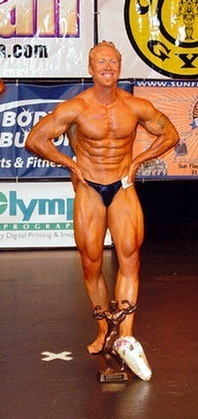
While I can’t say with certainty whether he’s natural or not (the drug testing in many “natural” federations is a complete joke), I think his legs represent a realistic goal for natural leg development. You’re not going to get much better than that naturally.
Compare that now to the following:

And that’s the power of drugs. Sheer size isn’t the only benefit, either. Remember I mentioned the muscle separation and development of the smaller muscles?
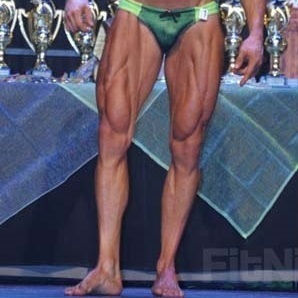
Again, the power of drugs. (And no, I’m not bitter about either of their guys having more impressive physiques than me. They work incredibly hard for their bodies and deserve the recognition they’ve earned.)
Now, don’t despair–you can still build a great set of legs without drugs. It just takes time, and it takes the right approach to your leg training. And the right approach as a natural weightlifter is very simple:
1. Focus on lifting heavy weights in your leg workouts.
If you want your legs to get big and strong, you’ll want to focus on the 4 – 6 or 5 – 7 rep range.
2. Focus on the leg exercises that safely allow for sufficient progressive overload.
We’ll talk more about this in a minute, but these are exercises like the Back Squat, Front Squat, Hack Squat, Barbell Lunge, and more.
Training volume and frequency is also important. Like “ideal” rep ranges, optimal training frequency is a hotly debated subject. The bottom line is it boils down to workout intensity and volume.
The lighter the weights and fewer the sets per workout, the more often you can train the muscle group. And, as a corollary, the heavier the weights and greater the sets per workout, the less often you can train the muscle group.
I’ve tried many different splits and frequency schemes, and what I’ve found works best is in line with an extensive review on the subject conducted by researchers at Goteborg University:
When training with the proper intensity (focusing on lifting heavy weights), optimal frequency seems to be about 60 – 70 reps performed every 5 – 7 days.
This not only applies to the legs but to every other major muscle group as well. If you’re an advanced weightlifter (3+ years of proper training under your belt), you can probably push this up to the 70 – 80 rep range, but any more than that and you will be risking overtraining.
Alright, let’s now look at the best leg exercises for muscle growth.
The Best Leg Exercises
My list of favorite leg exercises is pretty short and simple. They are compound movements, they allow for heavy weights, and they are safe.
These are the exercises I’ve used to dramatically improve my own legs, and that will do the same for yours.
1. Barbell Back Squat
No surprise here, of course.
The Squat is hands down the most effective leg exercise you can do. It blasts every muscle in your legs.
It must be performed correctly, however. Improper squatting is not only ineffective, it can increase the risk of injury, so let’s quickly review the key points:
The first point is if you’re not at least reaching parallel in your squats, The main problem with this is the shallower the squat, the less work your leg muscles have to do, which results in less muscle and strength growth.
Here’s what this parallel position looks like (this image is from my book Bigger Leaner Stronger):
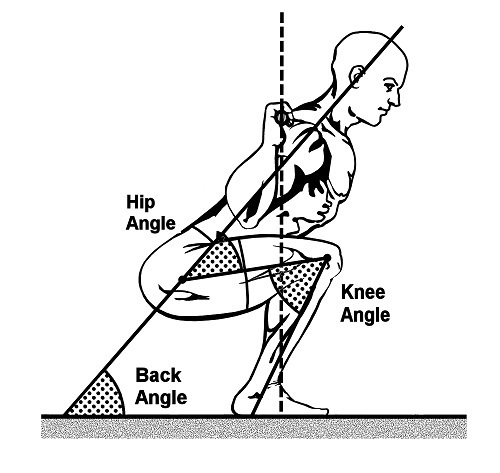
Notice also how the head is neutral, chest is up, shoulders back, and the spine is in a neutral position, and the knees are behind the toes. These are all key points to maintaining proper form on the Squat.
Here’s what a proper parallel squat looks like:
The “Ass to Grass” or Full Squat is also popular and effective, and it looks like this:
While there are benefits to the Full Squat (it makes the legs, and butt in particular, do more work), it requires quite a bit of mobility and flexibility. I recommend you start with the Parallel Squat and build your strength up there before including the Full Squat in your leg workouts.
Before we move on to the next leg exercise, I want to talk about the biggest problem many people run into when they try to squat properly: lack of lower-body mobility and flexibility.
Lack of hip flexibility is probably the most common problem that prevents people from squatting properly, but hamstring tightness and even calf and ankle stiffness can also throw your form off.
Fortunately, fixing these issues is pretty simple. All you have to do is follow this squat mobility routine, and you’ll be squatting properly within no time.
2. Barbell Front Squat
The Barbell Front Squat is a great exercise for emphasizing the quadriceps, and for taking the stress off the lower back.
It feels quite awkward at first, and often uncomfortable, but the more you do it, the better it gets.
3. Barbell Lunge
The Barbell Lunge is another great exercise for targeting the quadriceps, as well as the glutes.
4. Romanian Deadlift
The Romanian Deadlift, or RDL, is my favorite exercise for isolating the muscles of the hamstring.
5. Hack Squat Sled
While I’m generally not a fan of machines, I really like the Hack Squat Sled. It emphasizes the quadriceps and places no strain on the lower back.
6. Leg Press Machine
The Leg Press is another worthwhile machine for leg training. It emphasizes the quadriceps, but also hits the hamstring muscles and glutes.
There are two types of leg press machines found in most gyms, though. One has you seated more or less upright, pressing the weight straight out and back:
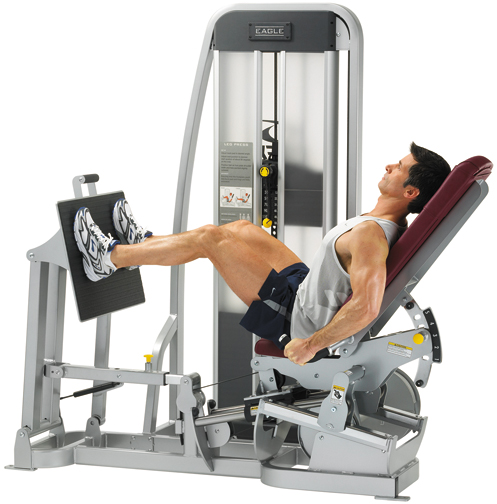
And the other has you seated, pressing the weight up at a 45-degree angle:
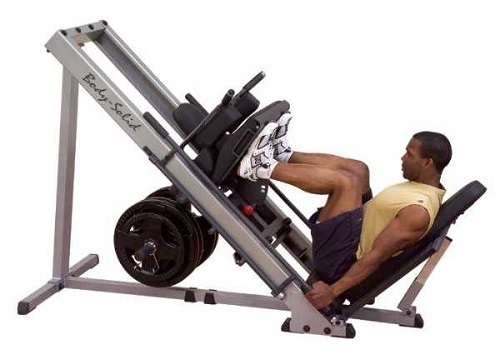
I much prefer the latter as it allows for a fuller range of motion. Here’s how to do it:
7. Hip Thrust
While this exercise looks ridiculous, it’s actually an awesome way to target your glutes. It can be performed without weight:
Or with weight:
Remember–Progression is the Key to Muscle Growth
That’s it on the exercises.
The key, however, isn’t just doing the above exercises. It’s progressing on them. That is, increasing the amount of weight you can push over time.
If you don’t get stronger, you won’t get bigger. But if you do work on building your strength on these exercises, and you eat enough food to grow, your legs will get bigger and stronger.
The Ultimate Leg Workout
A good leg workout trains all three heads of the muscle, and focuses on heavy weights. Just like any other muscle group, legs can benefit from higher rep work, but you have to emphasize the heavy weightlifting if you want them to grow.
While I go over everything you need to program your own leg workouts in Bigger Leaner Stronger (and provide you with an entire year’s worth of workouts that can, when combined with proper nutrition, help you put on 20 – 25 pounds of muscle in your first year of weightlifting), I want to leave you with a leg workout that will prove the effectiveness of what I’ve discussed in this article.
What I want you to do over the next 8 weeks is perform the following leg workout once every 5 – 7 days:
Barbell Back Squat: Warm up and 3 sets of 4 – 6 reps
Hack Squat (or Leg Press if your gym doesn’t have a Hack Squat Sled): 3 sets of 4 – 6 reps
Barbell Lunge: 3 sets of 4 – 6 reps or 6 – 8 reps if you can’t maintain proper form with 4 – 6
Optional (if you feel like you have some juice left): Romanian Deadlift for 3 sets of 4 – 6 reps or Hip Thrust for 3 sets of 6 – 8 reps if you want to target your glutes
That’s it–just 9 – 12 heavy sets for your entire workout. If you’re an advanced lifter, or you feel you have more in you at the end of the workout, you can do the final 3 sets, but don’t do more than that or you will likely wind up overtrained at some point.
Once you hit the top of your rep range for one set, you move up in weight. For instance, if push out 6 reps on your first set of Squats, you add 5 pounds to each side of the bar for your next set and work with that weight until you can squat it for 6 reps, and so forth.
Rest 2 – 3 minutes in between each set. This will give your muscles enough time to fully recoup their strength so you can give maximum effort each set.
I guarantee you that if you combine that leg workout with a proper nutrition plan, you will be very happy with how your legs respond.
This type of training is the core of my Bigger Leaner Stronger and Thinner Leaner Stronger programs, and I’ve received hundreds and hundreds emails from readers ecstatic that they were finally breaking through 1+ year plateaus with ease, gaining strength and size every week.
What do you think of these leg exercises? Have anything else you’d like to share? Let me know in the comments below!
How to get lean and build serious muscle and strength, faster than you ever thought possible…
Depending on how you eat, train, and rest, building muscle and losing fat can be incredibly easy or incredibly hard. Unfortunately, most people make many different mistakes that leave them stuck in a rut.
And that’s why I wrote Bigger Leaner Stronger for men, and Thinner Leaner Stronger for women: they lay out EVERYTHING you need to know about diet and training to build muscle and lose fat effectively…
Buy now
AmazonAmazon UKAmazon AUAmazon CAAudible AudiobookBNiBooksiBooks AudiobookKobo
Buy now
AmazonAmazon UKAmazon AUAmazon CAAudible AudiobookBNiBooksiBooks AudiobookKobo
January 28, 2014
Are You a Fox or a Hedgehog?
Would you consider yourself a fox or a hedgehog?
What’s the difference?
Jim Collins wrote about it in his bestseller Good to Great and it’s based on the famous essay “The Hedgehog and the Fox,” written by Isaiah Berlin. In it, he divided the world into hedgehogs and foxes, based upon an ancient Greek parable: “The fox knows many things, but the hedgehog knows one big thing.”
The fox is crafty and resourceful. When he goes hunting for the hedgehog, he tries to think of many different plans–dig into the burrow, lie in ambush and attack when the hedgehog comes out, etc. But he can’t focus on one strategy…he is scattered and chases many trails at once.
The hedgehog knows one thing and can do it well. When the fox comes to eat him, he rolls up in a tight, spiky ball. All the fox gets is a bloody nose, yet he tries again and again, hatching new unusual methods of attack. He just doesn’t learn.
The fox is the person who starts the trendy diet or exercise program, only to quit after three weeks in favor of some new, better plan or fad. In business, the fox is so busy trying to juggle all his ideas and excitement to start something new and promising that he has no time to really understand what he’s doing. In short, the fox is simply treading water.
The foxes of the world rarely succeed. The lion’s share of success and wealth belongs to the hedgehogs–the people who focused on one thing and became a true specialist. They do one thing and do it very well. It’s their Hedgehog Concept.
For example, for quite some time, my Hedgehog Concept has been writing. Between this website, my fitness books, and my other writing projects, I’ve written well over 2 million words. I’ve read dozens of books on writing, ranging from technical instruction to storytelling to copyrighting. I’ve used these skills to sell a lot of books and build this website and my career. Along the way I’ve always looked for new, creative ways to enhance and expand my Hedgehog Concept, but I never let myself get distracted by other trails.
The Three Circles of the Hedgehog Concept
Hedgehog Concepts are based on three circles…all the same size and all equally important. Think of them as a classic Venn diagram: each intersect and that combined “middle” is where the magic happens.
Circle 1
This circle involves what you can be best at. It’s not a goal, strategy or plan, and it’s not just a “core competency.” It’s the place where you can really shine, and it’s determined by your personality, interests, and purposes.
Circle 2
This is the economic part of the equation. All very successful people I know were very smart with choosing endeavors that can provide a powerful cash flow.
Circle 3
Great success requires passion. This circle contains what ignites your passion. The idea here is not to stimulate passion but to find what really makes you passionate. You have to ask yourself if you’d still come to work if you had all the money you need…if the answer is no, it’s probably not your passion. Like Confucius once said, “Choose a job you love, and you will never have to work a day in your life.” (Click here to tweet this!)
Your Hedgehog Concept lies in the intersection of these three circles. If you can live your life in the middle of them, you’ll have it made. You’ll be doing something that you can truly excel in, you’ll be deeply passionate about your work and you’ll be making great money.
It’s no good having two…you want it all! If you’re passionate about your work but make no money, you’re going to be very frustrated. If you’re good at what you do and make lots of money but hate your job, you’ll wind up miserable. If there’s money to be made and you’re passionate about the field, but you’re no good at it, that’s not good either.
Ultimately you’re going to have to figure out what your Hedgehog Concept is, and you’ll know it once you hit it. Don’t settle for anything less because it’s where real happiness and success lies.
What do you think about the fox and hedgehog parable? Have anything else to add? Let me know in the comments below!


