
Michael Matthews's Blog, page 127
March 24, 2014
Does Carb Backloading Work? A Scientific Review
Like intermittent fasting, carb backloading has exploded in popularity over the last few years.
The pitch is pretty alluring, too: according to carb backloading’s main proponent, John Kiefer, you can use this unorthodox style of eating to lose fat and build muscle while over-indulging in your favorite sugary carbs, 7 days per week.
It sounds pretty awesome but is there any truth to it? Is carb backloading any better than traditional dieting?
Let’s find out.
Carb Backloading 101: The Method Behind the “Madness”
In case you’re not familiar with the carb backloading diet, it’s fairly simple:
You eat light during the morning (which may include skipping breakfast) and early afternoon hours, and feast at night.
You eat little-to-no carbs until after your workout, which should be later in the afternoon (5 PMish).
Your carb intake begins with your post-workout meal and it continues throughout the evening.
According to Kiefer, the most well-known promoter of carb backloading (I wouldn’t say the creator of the method though, as the idea has been around since Arnold’s time), this style of dieting takes advantage of the natural daily fluctuations in insulin sensitivity in muscle and fat cells, as well as the exercise-induced increase in insulin sensitivity in muscle cells.
You see, research shows that insulin sensitivity in both muscle and fat cells is higher in the morning than the evening, which means that both muscle and fat cells will be more receptive to glucose earlier in the day. This is good in the case of muscle (more glucose absorbed into the muscles = better performance in the gym), and bad in the case of fat (more glucose absorbed into the fat cells = more fat storage).
The basic premise of carb backloading is you use these mechanisms to your advantage by not eating carbs when your body is most able to store them as fat (early in the day). Instead, you eat carbs when your body is most likely to store them as glycogen in the muscles (later in the day, after working out).
The post-workout point is important: you use weightlifting later in the day to deplete glycogen stores and increase insulin sensitivity in the muscle cells, but not the fat cells, so when you then start eating carbs, your body preferentially shuttles them into the muscles, not fat cells.
That’s the theory at least. And while it sounds pretty cutting edge and Kiefer lists dozens of studies to back up his ideas, it’s not all it’s cracked up to be. But before I get to that, let’s briefly review a few of the positive aspects of carb backloading.
Carb Backloading Helps Break the Mainstream Dietary Trance
Those stuck in the festering swamp of bullshit fad diets are misled to think that losing fat and building muscle are much trickier than they really are.
Instead of being taught the truth about healthy weight loss, they’re sold on all kinds of scientifically bankrupt (and in many cases, debunked) principles revolving around food restriction, meal frequency, starvation, worthless weight loss pills, and more.
Carb backloading can help you escape the maze of mainstream dietary nonsense and show you that proper dieting, whether your goal is weight loss or muscle growth, is nothing more than hitting daily macronutrient targets. What you eat to get there doesn’t really matter. That is…
When we’re talking body composition, WHAT you eat and WHEN isn’t nearly as important as HOW MUCH. (Click here to tweet this!)
Carb backloading also fits certain people’s lifestyles nicely. If you train at night, you might enjoy eating your entire day’s worth of carbs afterward. I wouldn’t (I also wouldn’t enjoy having no carbs throughout the day), but that’s me.
Carb Backloading’s Shaky Scientific Foundation
Despite the impressive roster of studies cited to back up the theory of carb backloading, it’s just that until proven effective in randomized controlled trials. Sometimes things just don’t pan out in vivo as they appear on paper, and correlations in epidemiological research are not causations.
Well, there are two such studies that are commonly touted as definitive proof that carb backloading is more effective than traditional dieting for building muscle and losing fat.
The first study compared the effects of eating 70% of daily calories in the morning vs. the evening on body composition. 10 subjects were placed on a six-week weight loss (calorie restricted) diet, and the group that ate the majority of their daily calories in the evening lost more fat and less muscle than the morning group.
While the design of this study was strong–food intake was strictly controlled and exercise was a structured routine consisting of cardio and resistance training–the sample size was quite small (10) and, more troubling, the notoriously inaccurate method of total body electrical conductivity was used to assess body composition.
The second study was published in 2011, and consisted of a 6-month program wherein Israeli police officers ate about 1,500 calories per day, with one group eating carbs throughout the day and another eating the majority of carbs at dinner. Researchers found that the evening group lost more body fat than the control group and enjoyed greater levels of satiety.
While this study sounds really promising for carb backloading, it has several major flaws:
Calorie intake was self-reported, which opens the door to major inaccuracies.
Protein intake was very low considering the average weight of participants: 75 – 90 grams per day with an average weight of about 215 pounds. This isn’t enough to maintain muscle mass, and is far less than you or I would eat.
Subjects weren’t exercising, which is a major part of the carb backloading theory. The key isn’t just eating carbs later in the day, but eating carbs later in the day after your workouts.
The evening group only lost about 5 pounds more over the course of 6 months. That’s hardly indicative of a revolutionary dietary method.
Furthermore, there are several RCTs that show that carb backloading is no better than traditional dieting when it comes to losing weight and preserving muscle:
This study found that calorie intake in the morning or evening didn’t affect weight loss or body composition parameters.
This study demonstrated interesting results: subjects that normally ate breakfast lost more weight skipping it and eating the majority of calories at dinner, whereas subjects that normally skipped breakfast lost more weight eating breakfast every day. Researchers chalked this up to greater levels of satiety and thus better dietary compliance.
This study showed that splitting up calories into 5 equal meals per day eaten between 9 AM and 8 PM, eating all calories in the morning, or all in the evening, didn’t affect weight loss parameters or body composition.
While the available research does indicate that eating large amounts of carbohydrates at night can help with overall satiety and thus dietary compliance, there just isn’t any compelling evidence that it does anything special in the way of maximizing fat loss and muscle growth.
Carb Backloading’s Sketchy Sales Pitch
If carb backloading were being sold as nothing more than another way to make meal scheduling fit your lifestyle, should you prefer its prescriptions, it would be fairly representing itself. That’s not how it’s sold, though.
Instead, you’re told that with it you can build muscle and get an awesome six pack without counting calories or doing cardio, and you’ll get to indulge on junk food every day (this isn’t even optional–you’re instructed to!).
Yes, you can lose weight eating foods you like and it is possible to build muscle and lose fat simultaneously, and no, you don’t necessarily have to do cardio, but the only way you can do these things is by maintaining a calorie deficit and training properly–not trying to hack the body by following strange dietary routines.
The idea that you can maximize fat loss by keeping insulin levels low throughout the day, and that you can eat only protein to do this, including whey protein isolate, might sound good, but it just doesn’t pan out.
While it’s true that insulin regulates lipolysis (the process whereby the body releases energy stored in fat cells for use), any additional fat loss caused by lower insulin levels throughout the day can be negated by the fat storage resulting from when you do actually eat.
This is just how the body works–when you eat, it uses the food for immediate energy and it stores a percentage of the excess energy as fat; and once it finishes using and absorbing the energy from the meal, it turns to its fat stores for energy until the next meal.
So sure, by eating fewer calories throughout the day and keeping insulin levels low, you’ll lose more fat during that period than if you had been eating throughout it. But, that evening, if you then eat (in calories) what you would have eaten throughout the day, you’ll end up with the same result in terms of weight loss or gain.
You just can’t “hack” the body’s energy burned vs. energy consumed mechanisms by playing with meal timing or frequency.
Also, it’s worth noting that protein consumption causes insulin levels to rise as well. In fact, whey protein is more insulinogenic than white bread. If you eat protein every few hours, your insulin levels are going to remain quite elevated throughout the entire day.
There are other oddities in the carb backloading theory. For example:
Kiefer states that training at night results in a lower cortisol response, which helps you build more muscle.
Research shows otherwise, though: this study demonstrated that cortisol response to weightlifting is positively correlated with muscle growth. And while this study isn’t the final word on the matter, there is no valid evidence that I know of demonstrating that a lower cortisol response to exercise results in greater muscle gains.
Kiefer states that you need to stick to high-glycemic carbohydrates so insulin levels rapidly spike and return to normal before bed for optimal growth hormone production.
While, the jury is still out as to whether elevated insulin levels interferes with growth hormone production while sleeping, it won’t interfere with muscle growth one way or another–growth hormone isn’t anabolic like testosterone.
Furthermore, if you’re eating hundreds of grams of high-glycemic carbs a few hours before bedtime, you can be damn sure your insulin levels won’t have returned to baseline levels by the time you fall asleep. Just 35 grams of sugar is enough to raise insulin levels above baseline for a few hours, and a mixed meal of 75 grams of carbs, 37 grams of fat, and 17 grams of fat will elevate insulin levels for several hours (5+ in the study cited).
The bottom line with carb backloading is if you like eating on that type of schedule, you can do it without harming your metabolism or health. But it is not the magic pill for muscle growth and fat loss like it’s sold to be.
What did you think of this review of carb backloading? Have anything else to share? Let me know in the comments below!
How to get lean and build serious muscle and strength, faster than you ever thought possible…
Depending on how you eat, train, and rest, building muscle and losing fat can be incredibly easy or incredibly hard. Unfortunately, most people make many different mistakes that leave them stuck in a rut.
And that’s why I wrote Bigger Leaner Stronger for men, and Thinner Leaner Stronger for women: they lay out EVERYTHING you need to know about diet and training to build muscle and lose fat effectively…
Buy now
AmazonAmazon UKAmazon AUAmazon CAAudible AudiobookBNiBooksiBooks AudiobookKoboGoogle Play
Buy now
AmazonAmazon UKAmazon AUAmazon CAAudible AudiobookBNiBooksiBooks AudiobookKoboGoogle Play


March 22, 2014
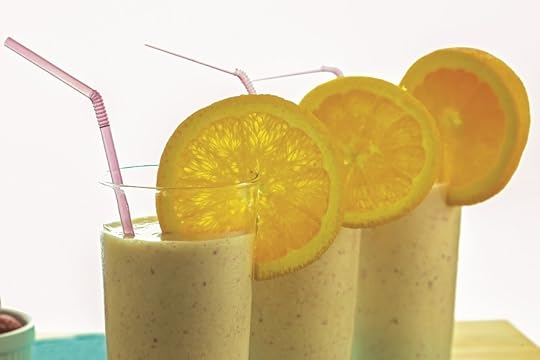
Recipe of the Week: Orange Julius Protein Shake
I used to love Orange Julius shakes as a kid, so I decided to recreate my favorite with healthy whole-food ingredients. This recipe is the result, which is from my cookbook The Shredded Chef, is the result and it’s really good.
It’s perfect as a pre-or post-workout meal, or even as a healthy dessert. Enjoy!
Servings
1
Calories Per Serving
453
Protein Per Serving
51 grams
Carbohydrates Per Serving
50 grams
Fat Per Serving
3 grams
Ingredients
2 scoops vanilla whey protein powder
1 cup orange juice
3/4 cup crushed ice or 4 – 6 ice cubes
1 tablespoon vanilla extract
1/2 medium banana
3 strawberries, frozen
2 packets (2 grams) of stevia or other sugar alternative
Instructions
Place all ingredients in blender and blend on medium speed until desired consistency.
What You Get to Eat
What did you think of this week’s recipe? Let me know in the comments below!
Want more delicious, easy-to-make recipes like this?If you like this recipe, then you’ll love the bestselling cookbook it came from! My own The Shredded Chef!
In this book you’ll find 120 healthy, flavorful recipes specifically designed for athletes that want to build muscle or lose fat. Regardless of your fitness goals, this book has got you covered.
Buy this book now to forever escape the dreadful experience of “dieting” and learn how to cook nutritious, delicious meals that make building muscle and burning fat easy and enjoyable!
Buy now
AmazonAmazon UKAmazon AUAmazon CABNiBooksKoboGoogle Play
Vegan and vegetarian dishes are great sources of micronutrients, and even if you’re a meat eater, they’re great for changing things up in your meal plan.
And in my cookbook, Eat Green Get Lean, you’ll find 100 of my favorite vegetarian and vegan dishes, carefully balanced for our high-protein, healthy needs!
Buy this book now to forever escape the dreadful experience of “dieting” and learn how to cook nutritious, delicious vegetarian and vegan meals that make building muscle and burning fat easy and enjoyable!
Buy now
AmazonAmazon UKAmazon AUAmazon CABNiBooksKoboGoogle Play

March 21, 2014
Cool Stuff of the Week: Sony Project Morpheus, Dropcam, Meditations, and More…
I’m not ashamed to admit that I’m kind of a sucker for cool stuff. I like nifty gadgets, quirky decoration pieces, nice clothes (and shoes!), good books, and fun games.
In this series of weekly posts, I share whatever currently has my fancy. Maybe some of it will catch yours as well!
VIDEO OF THE WEEK:
CLOSE CALLS 2014
“SH&* that was close”…about a hundred times in a row. Don’t fall off your chair!
SONY PROJECT MORPHEUS

Watch out Oculus Rift…Sony Morpheus is coming.
Underneath its futuristic shell is a 1080p display with a 90-degree field of view, an accelerometer and gyroscope that work together with a Playstation camera to track your head orientation and movement and then adjust what you see accordingly, and 3D audio technology that delivers stereoscopic sounds in all directions that change with your head orientation.
DROPCAM
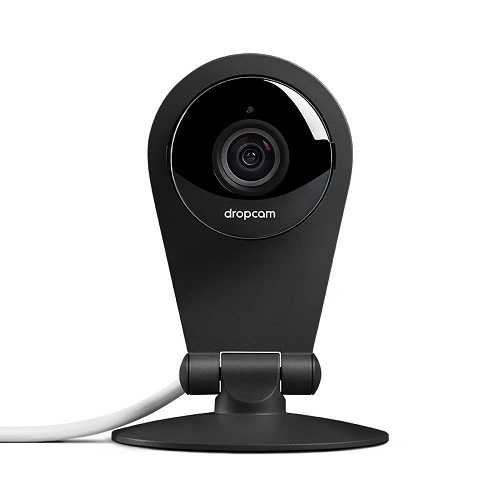
Have you ever wondered what happens at your home or business when you’re not there?
Well, Dropcam makes it easy to find out. It’s a cloud-based WiFi video monitoring device that you can place anywhere–in a living room, nursery, office, etc.–and then receive alerts on your phone or other device when motion or sound is detected.
Once an alert is received, or just whenever you want, you can access the Dropcam’s live feed via an app and see what’s going on. The Dropcam comes with a night vision mode and a built-in speaker and mic to communicate with whomever is at the other end, and the company offers a cloud storage service that allows you to save up to 30 days’ worth of footage for review.
AUDIO TECHNICA M50X HEADPHONES
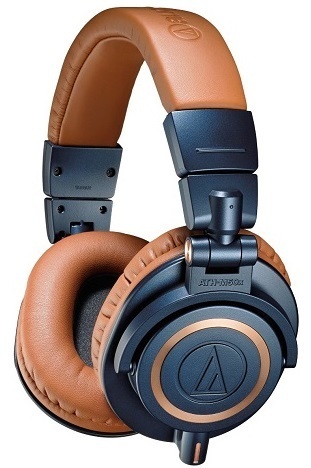
When it comes to higher-end, but affordable (under $200), headphones, you can’t beat Audio Technica’s M50s, and this is the latest and greatest in the line.
These headphones are extremly comfortable (no ear aches after 30 minutes), and the sound is just superb. Its sound performance is very balanced: the lows are deep but not overpowering; the mids are rich but not all it has to offer; and the highs are detailed but not tinny.
The fact that they fold up for easy packing is nice as well, and the removable audio cable was a brilliant touch (no having to buy a new set if the cable somehow gets damaged or ripped out).
OGGI OVAL DUAL-CHAMBER OIL & VINEGAR CRUET
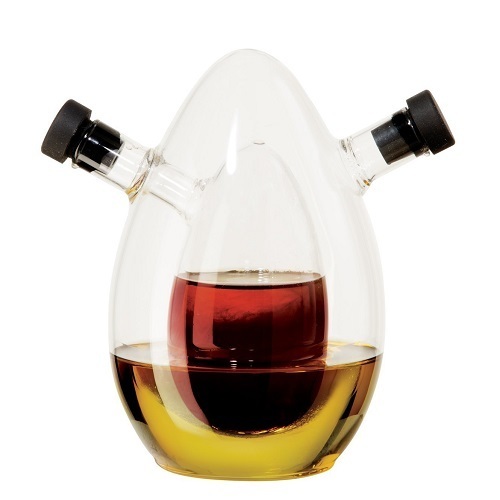
Necessary? Absolutely not. But it’s still cool. 
Makes a good gift or piece for dinner parties.
Buy now
Amazon
BOOK OF THE WEEK:
MEDITATIONS
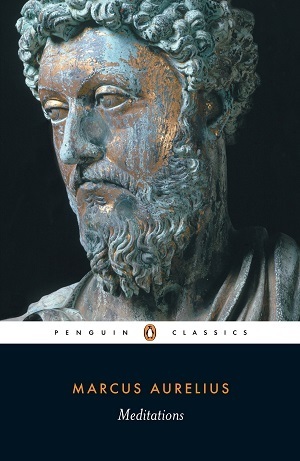
“When you arise in the morning, think of what a precious privilege it is to be alive – to breathe, to think, to enjoy, to love.”
Marcus Aurelius was a Roman emperor that earned the reputation of “philosopher king” during his lifetime and has since earned the reputation as one of history’s greatest rulers, philanthropic in character and temperate in his way of life.
Meditations, originally titled To Myself, contains Aurelius’ reflections on virtue, desire, rationality, emotions, the nature of the gods, and more.
While many of his insights resonated with me, the messages that hit home the most were his views on how to dispassionately and effectively deal with the difficulties of life, the importance of avoiding hate and the intention to harm, and the value of living honestly and with purpose.
A bit of humble self-reflection is good for the soul, and Meditations will take you on a brief, but meaningful (and maybe even cathartic), introspection.
ALBUM OF THE WEEK:
RECESS

Skrillex is back with Recess, and it’s quite different than his previous work, which was more about robot noises and massive drops than the harmonies and song structures most people look for in music.
Recess will make you want to dance more than mosh, and the songs that really stand out for me are All is Fair in Love and Brostep, Recess, Try It Out, Dirty Vibe, and Ragga Bomb. All is Fair in Love and Brostep, Dirty Vibe and Ragga Bomb are great lifting songs as well–loud bass and catchy hooks help me hit PRs.
What do you think of this week’s picks? Have anything you’d like to share? Let me know in the comments below!
March 20, 2014
7 Healthy Juice Recipes That Are Downright Delicious
Juicing is all the rage these days, and for good reason.
For those of us that would rather not eat 3 – 4 servings of fruits and veggies every day, juicing is a great way to provide our bodies with the vitamins and minerals needed to maintain optimal health and performance. You can spend money on a multivitamin or you can spend money juicing, and many people prefer the all-natural choice.
That said, I don’t recommend a 100% juice diet for weight loss or “cleansing” purposes (in my experience, 99% of the time someone says they’re “cleansing,” they’re just trying to lose weight). Severe calorie restriction is not only unsustainable, it’s quite unhealthy.
Instead, you can make juicing as part of a healthy weight loss diet by keeping track of the calories and going easy on the fruit, as it contains quite a bit of carbohydrates (which aren’t a problem in and of themselves, but if you drink too many calories, you’re going to find it very hard to lose weight).
That’s why you’ll find the nutrition facts for the healthy juice recipes in this article, and if you want to try your own concoctions, use this online juice nutrition calculator to determine the calories.
While we’re talking fruit, it’s also worth discussing the fructose issue, as many “experts” claim that it makes fruit consumption unhealthy. The reality is while eating too much fructose is harmful to your health, the small amounts found in fruit as well as the fiber, which changes how your body absorbs the sugars, makes it quite hard to eat enough to be an issue.
If you eat 30 bananas a day, your fructose intake is too high and you should cut back. But if you’re a normal person and you eat a few pieces of fruit every day, you’re totally fine. And that applies to juicing as well: juicing 20 apples per day is a bad idea, but juicing a couple is totally fine. Juicing also removes the fiber from the fruit, so you lose the absorption benefits (and the many other benefits of dietary fiber).
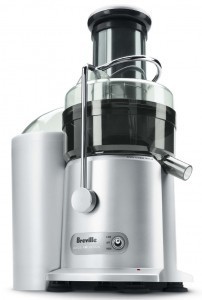
And last but not least, if you’re new to juicing and wondering which juicer to buy, I highly recommend the Breville JE98XL. I’ve tried several other juicers 2 to 3 times as expensive and don’t see any reason to choose them over the Breville JE98XL:
It’s powerful, which means you don’t have to wrestle your material into it and it spits out a lot of juice.
It’s fast, which means no waiting 15 to 20 minutes for your cheaper juicer to chew through everything. This thing rips through anything you throw at it in a minute or two.
It’s easy to set up, operate, and break down and clean.
Buy now
Amazon
So, with all that out of the way, let’s get to the recipes!
Mellow LOVE* Green Juice
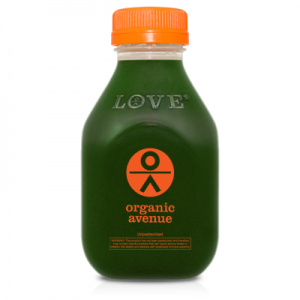
This recipe is from one of New York City’s top juice shops, Organic Avenue. If you like this veggie juice blend, check out the upcoming recipe book, which will be available next month.
Serves 2
Ingredients
1/2 bunch spinach
1/2 lb. celery
1/2 large cucumber
12 oz. (1 bunch) romaine lettuce
1 oz. parsley
Pinch of Organic Avenue’s Himalayan Pocket Salt
Nutrition Facts
Calories: 55
Protein: 6 grams
Carbs: 15 grams
Sugar: 5 grams
Fat: 1 gram
Morning Spinach Blend
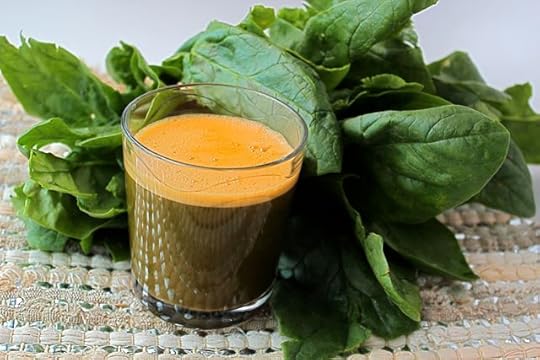
Give your morning OJ a big boost with spinach, carrots and cucumber. Along with all the vitamin C of citrus, you’ll also get a bunch of iron, potassium, zinc, and more than an entire day’s dose of vitamin A.
Serves 1
Ingredients
4 handfuls of spinach
1 orange
2 carrots
1 cucumber
Nutrition Facts
Calories: 100
Protein: 5 grams
Carbs: 29 grams
Sugar: 16 grams
Fat: 1 gram
Blueberry Kiwi Zinger
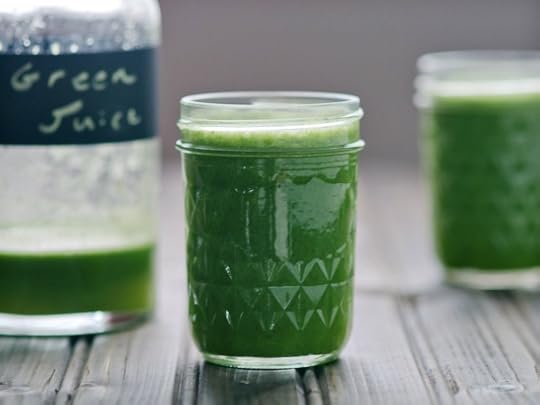
Picture courtesy of Well + Good
When your sweet tooth strikes, this will put it back in its place without a fight.
It has so many different types of fruit it’s bound to kill one of your comfort food cravings, and the dash of cayenne pepper will steer your appetite back toward the savory.
Serves 4
Ingredients
1 orange, peeled
1 banana, peeled
2 cups kale
2 kiwis, peeled
3/4 cup grapes
1/2 cup blueberries
Dash of cayenne (optional)
Nutrition Facts
Calories: 85
Protein: 4 grams
Carbs: 22 grams
Sugar: 9 grams
Fat: 1 gram
Apple Carrot Beet Ginger
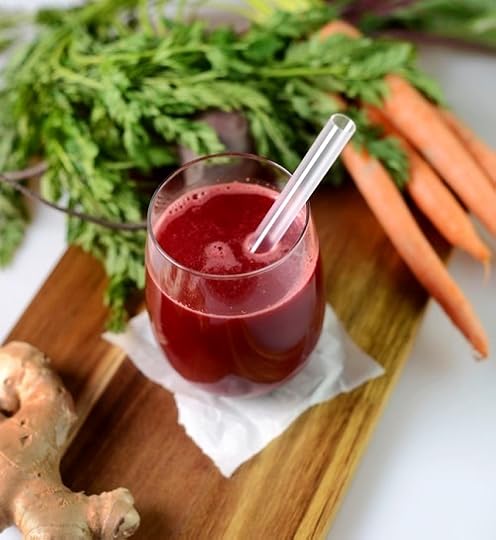
Picture courtesy of Minimalist Baker
Even if you don’t think you like beets, give this recipe a try. The earthy flavor is subdued by the ginger and sweetened by the apple and carrots.
And they’re worth learning to love because beets because they have countless vitamins and minerals, including beta-carotene and folic acid, and act as a natural liver cleanser.
Serves 1
Ingredients
1 small beet, lightly peeled
1 apple, cored
1 one-inch piece of fresh ginger, peeled
3 carrots, peeled
Nutrition Facts
Calories: 126
Protein: 3 grams
Carbs: 38 grams
Sugar: 23 grams
Fat: 1 gram
Hail to Kale
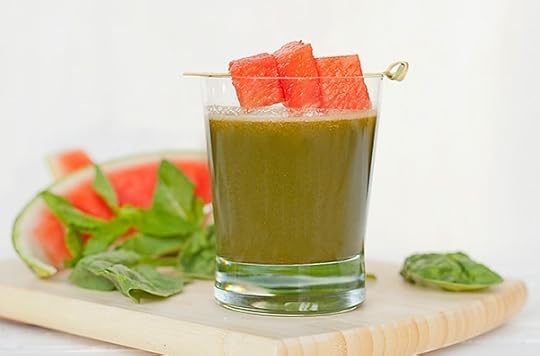
This best-seller at Juice Generation shows that, even with all the superfood hype, there are still original ways to use kale.
The leafy green shows up in salads, smoothies, and even on top of pizza. But have you ever had it sweetened with apples and watermelon?
Serves 2
Ingredients
3 leaves kale
2 small apples, seeded
2 watermelon slices
1/4 lemon, peeled
Nutrition Facts
Calories: 99
Protein: 3 grams
Carbs: 26 grams
Sugar: 18 grams
Fat: 1 grams
Kiwi Sunflower Sprout
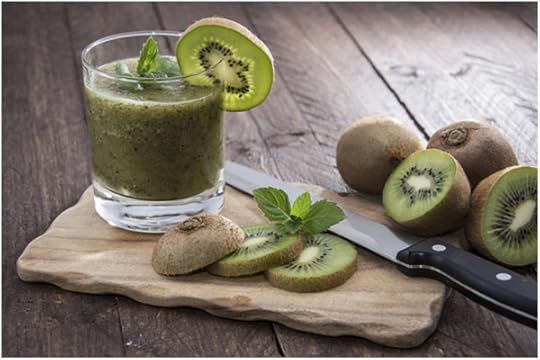
Sprouts can take a simple sandwich to the next level, but did you know you can juice them? They have a naturally sweet flavor that plays well against the tartness of kiwifruit.
Serves 1
Ingredients
2 kiwis
1 handful sunflower sprouts (or baby greens)
1 medium apple, cored
1/2 lime
1 cucumber
1 Tbsp. chia seeds
4–6 ice cubes
Nutrition Facts
Calories: 113
Protein: 4 grams
Carbs: 28 grams
Sugar: 13 grams
Fat: 3 grams
Peppers Galore

Picture courtesy of Lunchbox Bunch
If you love crunchy bell peppers on top of a fresh green salad, this will quickly become your go-to juice. Pick your favorite lettuce or leafy green, and add salad fixings like cucumber to the mix.
Serves 1
Ingredients
1 green bell pepper
1 red bell pepper
3 celery stalks
1/2 cucumber
5 lettuce leaves
Nutrition Facts
Calories: 63
Protein: 4 grams
Carbs: 18 grams
Sugar: 10 grams
Fat: 1 gram
What did you think of these healthy juice recipes? Have anything else to share? Let me know in the comments below!
March 19, 2014
Does Intermittent Fasting Work? 4 Myths Busted by Science
Are you eager to lose fat and gain muscle with less work?
You know that you need to eat fewer calories than you burn to lose fat. You also probably know that intermittent fasting can be an easy way to help you eat less.
However, you might be confused. Some people say intermittent fasting will make fat loss almost effortless. Others claim that intermittent fasting will make you lose muscle, and may even be dangerous.
If you read up on intermittent fasting, you can quickly learn that the major claims both for and against it are dubious at best, but in this article, I’d like to address a few myths that aren’t commonly addressed.
Myth #1:
Intermittent fasting will help you lose fat without a calorie deficit
When you go without food long enough, your body starts burning fat. Fasting also increases your insulin sensitivity, which generally helps you store less fat.
Theoretically, you could lose fat by fasting around 12-24 hours, and then gain muscle when you do eat. Some people have also claimed that intermittent fasting “optimizes” or “balances” your hormones in a way that helps you store less fat and build more muscle.
The problem with this idea is that your total calorie intake evens out over the course of a day. If you burn 50 grams of body fat during a 16 hour fast, you’ll gain it back if you eat enough calories to maintain your body weight during the other 8 hours.
There’s also no evidence that intermittent fasting will change your insulin levels enough to affect your body composition.
In one study, people did lose fat after they switched to one meal per day instead of three meals per day. However, the differences were very small, and they weren’t exercising or closely monitoring their calorie intake. The study also used BIA to measure their body fat levels, which is notoriously inaccurate.
The bottom line is there’s no strong evidence that intermittent fasting will help you lose fat without also eating fewer calories than you burn. (Click here to tweet this!)
Myth #2:
Intermittent fasting will help you lose fat and gain muscle at the same time
This idea is similar to the first, yet takes the concept one step further. Like the first myth, there’s almost no evidence this is true.
A study commonly offered as proof that intermittent fasting does help you lose fat and build muscle simultaneously is a small review in 2011 that found that, on average, people who used alternate day fasting lost less muscle mass than those who cut calories every day.
The problem is the studies reviewed all used slightly different designs, which means the results could (and probably were), due to chance.
If you’re a complete beginner, you can lose fat and gain muscle at the same time. Otherwise, you’re better off focusing on one or the other. (Click here to tweet this!)
Myth #3:
Intermittent fasting is better than snacking throughout the day
For a while, almost everyone recommended that you eat small meals throughout the day. Self-styled gurus everywhere claimed that it helped keep your blood sugar and hunger under control, boosted your metabolic rate, and provided more energy for your workouts.
Well, we now know that these ideas are false and the “guru pendulum” has swung in the other direction: many are now saying that eating many small meals throughout the day is actually bad for you, or at least not as good as eating fewer, larger meals.
There is some evidence that eating more than 3-4 meals per day doesn’t keep you as satisfied as limiting intake to a few meals per day. However, if that applies to you, you don’t need to be intermittent fasting to eat fewer, larger meals.
On the other hand, you can find studies wherein participants were less satiated on 3 meals per day, and found that increasing meal frequency increased feelings of fullness and made it easier to stick to their diets. And again, you can do this with or without following the intermittent fasting protocol.
You may have also heard that eating small meals will make it harder to lose fat because you’re keeping insulin levels higher throughout the day. Well, as you learned a moment ago, however, insulin levels average out over the course of the day, and worrying about small fluctuations is pointless. When you eat a large meal, your insulin levels will stay higher for longer, resulting in almost the same effect as snacking.
When we look at the research, the reasonable conclusion is if “grazing” throughout the day helps you stay lean and satisfied, then do it. (Click here to tweet this!) There’s no evidence you’ll get better results with intermittent fasting.
Myth #4:
Intermittent fasting is bad for women
There is some evidence that women don’t respond as well to fasting as men.
One study found that alternate day fasting actually decreased women’s glucose tolerance, or how well they process sugar. Another study on women found that intermittent calorie restriction, which is similar to intermittent fasting, made them hungrier and less likely to continue dieting.
However, there’s little evidence that it’s dangerous, or worse for women than a normal meal schedule.
Other studies have shown that alternate day fasting or calorie restriction works extremely well for women. Even in the previous study where women felt hungrier and less happy with alternate day calorie restriction, they still lost slightly more weight than those who stuck to a daily calorie deficit.
If you’re a woman, there’s almost no scientific evidence that intermittent fasting is bad for you, or not as good as eating more often. (Click here to tweet this!) That said, like with men, intermittent fasting doesn’t possess any particularly special properties for you, so you aren’t missing much if you don’t like it.
Intermittent Fasting Isn’t Particularly Special or Bad
Most evidence shows that when you eat isn’t that important.
If intermittent fasting helps you eat less or gain more control over your diet, then do it. If you like to eat more frequently, that’s fine, too. (Click here to tweet this!)
Having a plan that you can stick to, that allows you to hit your calorie and macronutrient goals, is what will give you the body you want. Don’t worry as much about when you eat.
What do you think about intermittent fasting? Have anything else to share? Let me know in the comments below!
How to get lean and build serious muscle and strength, faster than you ever thought possible…
Depending on how you eat, train, and rest, building muscle and losing fat can be incredibly easy or incredibly hard. Unfortunately, most people make many different mistakes that leave them stuck in a rut.
And that’s why I wrote Bigger Leaner Stronger for men, and Thinner Leaner Stronger for women: they lay out EVERYTHING you need to know about diet and training to build muscle and lose fat effectively…
Buy now
AmazonAmazon UKAmazon AUAmazon CAAudible AudiobookBNiBooksiBooks AudiobookKoboGoogle Play
Buy now
AmazonAmazon UKAmazon AUAmazon CAAudible AudiobookBNiBooksiBooks AudiobookKoboGoogle Play
March 18, 2014
The Steve Martin Method of Achieving Your Goals
Steve Martin is one of the most famous comedians of the 20th century, and many “modern” devices that young people think are so novel actually have their roots in Martin’s work. Martin is a highly accomplished stand-up comedian, writer, actor, and musician…
…but how did he do it?
In his memoirs, Born Standing Up, Martin wanted to share his insights on how he achieved his success, not just what he achieved. His advices inspiring, spot-on, and can help you achieve your goals in any activity or field. I want to share the essence of what I’m going to call the “Steve Martin Method of Achieving Your Goals” with you here.
When people ask Martin what his secret to success in the entertainment industry, his answer usually disappoints. It’s one, unsexy line and it’s very simple. Here’s what he tells them:
“Be so good they can’t ignore you.”
Before you dismiss this as clichéd, let it sink in because it captures the essence of achieving your goals, big and small, in any area of your life.
While his “secret” might seem daunting, it can actually be invigorating. It simplifies the quest for success, which is often made to look very complex and overwhelming. What Martin is saying is forget the secret backdoors, the gimmicks and tricks, the frustration of feeling like you’re missing some mystical element, and focus on just one thing:
Become really damn good at something. Become extraordinary at it. Better than everyone you know. So good that people couldn’t help but be amazed.
If you do this, you’ve almost guaranteed your success. All you have to do then is get out in the world and show your skills, which is all too easy in this age of instant, worldwide communication channels.
Martin had two other powerful pieces of advice that will help you apply his one-step-to-success.
Tip #1 for Achieving Your Goals:
Innovate, Don’t Just Work
Going through the motions to “put in your time” isn’t enough to become outstanding. You need a restless desire to figure out new, better ways to do things. You can’t be afraid to experiment and learn from the successes and failures.
Don’t be content with just following the crowd. Take the time to understand the principles and laws of the activity and look to others to see what they do well and what they don’t, and then dream up new ways to mix, match, stretch, and augment these things into something new and better.
Tip #2 for Achieving Your Goals:
One Focus, One Goal
Martin said he owes his success to his diligence in one field at a time until he had mastered it. He resisted the urge to branch off into other, new types of work or projects.
In today’s age of never-ending distractions and possibilities, it can feel a bit counter-intuitive to sharpen your ambitions to a razor’s edge, but it’s one of the little-acknowledged common denominators among successful people.
Martin was right when he said that if you don’t align your entire life with one, singular quest for greatness, you’ll dilute your focus and drive to a point where becoming extraordinary is not possible. (Click here to tweet this!)
So, if you want to achieve your goals, whether they be personal endeavors or greater undertakings, forget about comparing yourself to others, groping for shortcuts, wondering about what it really takes, or worrying about if you’ll make it. Instead, ask yourself this question:
“Am I so good that I can’t be ignored yet?”
If your honest answer is “no,” then you’ve taken your first step toward achieving your goals because now you know what needs to happen. Start applying the Steve Martin Method and one day, if you see it through, you’ll not only achieve your goals, you’ll achieve greatness.
What are your thoughts on Martin’s insights on how to achieve your goals? Have anything else to add? Let me know in the comments below!
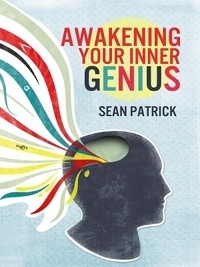
If you liked this article, then you’ll love this book…If you’d like to know what some of history’s greatest thinkers and achievers can teach you about awakening your inner genius, and how to find, follow, and fulfill your journey to greatness, then you want to read this book today.
(I wrote this book under a pen name simply because I want to keep it, and future books of mine that will have nothing to do with health and fitness, completely separate from my main line of work. But I can still promote it! )
Read this book today and discover what it really takes to find and follow your bliss, and how to use the lessons passed down to us by some of history’s greatest geniuses to systematically achieve your goals and rise to top of your fields, activities, and endeavors.
Buy now
AmazonAmazon UKAmazon AUAmazon CAAudible AudiobookBNiBooksiBooks AudiobookKoboGoogle Play
March 17, 2014
How to Build a Kick-Ass (and Affordable!) Home Gym
If the only nearby gym is a Planet Fitness, or if you’re just sick of waiting for bros to finish curling in the squat racks, half-repping in the bench stations, and drop-setting the entire set of dumbbells, then a home gym might be for you.
And even if you’re happy with your current gym, a home gym not only saves money in the long run ($30 – 50 per month adds up over the years), but it saves quite a bit of time as well (no driving to the gym and back, no waiting for equipment, and nobody to waste your time chatting).
Building a home gym can be daunting, though.
There are hundreds of brands and pieces of home gym equipment to choose from, and many are quite expensive. Space is an issue, too. Chances are you’ll be setting up in your garage or guest bedroom (guests can sleep on the couch–priorities!), so even if you’re ready to spend some cash, you don’t have the luxury of being able to get one of everything that looks remotely useful.
Well, in this article I’m going to show you how to build a home gym that gives you everything you need to build the body of your dreams without requiring a ton of money or space.
Make Your Home Gym a Refuge
If at all possible, set up your home gym in a room that allows you to escape the hectic home life, like a basement, garage, or simply any room with a door.
This will allow you to fully concentrate on your workouts and avoid the many distractions and interruptions that are likely to occur if you’re not locked away, grunting and groaning like a cave troll.
Make Your Home Gym Motivating
Another great benefit of a home gym is you can make the space entirely your own. That is, you can make it look, sound, and feel exactly the way you like.
Think staying motivated: loud speakers, at least one full-length mirror and good lighting, and maybe even some posters if that’s your thing.
For affordable speakers, I would probably go with a Sonos setup, and for lighting, full-spectrum fluorescent lighting (BlueMax makes good stuff).
Home Gym Equipment Essentials:
Free Weights, Not Machines
Proper weightlifting programs focus on free weights, not machines, and particularly emphasize compound lifts like the Squat, Deadlift, and Bench Press. This not only helps keep your workouts relatively simple, it also keeps your home gym equipment shopping list short.
Let’s go over the key pieces of equipment that you’ll need.
Power Rack

You won’t be able to lift heavily or safely without a power rack. You’ll use it in just about every workout you do (you’ll bench press, squat, military press, and even deadlift in it if you’re short on space).
Not all power racks are equal, though–some are solid, high-quality pieces of equipment, and others are rickety pieces of crap. Here’s what you want to see in a power rack:
Tall enough for overhead pressing in it.
Although I prefer seated military pressing, it requires the addition of a utility bench. If you don’t want to shell out extra money for one, you will be doing your presses standing, and if your rack isn’t tall enough, you’ll have to clean the weight up into position before you can press it.
Strong enough to hold at least 300 (women) to 500 (men) pounds.
You never know how much you might be squatting one day!
Safety arms that can be raised and lowered.
As you probably won’t have a spotter, safety arms will catch the bar if you miss a lift.
In terms of brands, I like XMark’s power racks. They’re commercial quality with a consumer price tag, and the company offers a lifetime warranty on all products. This model in particular also comes with a dip and pullup setup, which is great for saving space.
Barbell and Plates
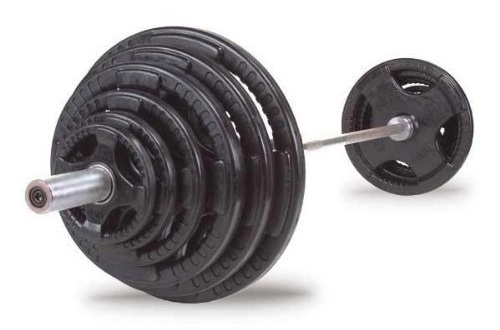
Moving a barbell around is what real weightlifting is all about. You squat it, pick it up and put it down, and push it, and your body gets bigger and stronger.
There are two types of barbells though: standard and Olympic. Standard bars are about 1 inch thick and begin to bend at about 200 pounds. Olympic bars are usually 7 feet long, are thicker, and are made for heavy lifting. You want an Olympic bar.
In terms of plates, there are the standard metal or rubber-coated plates you find in every gym, and thick bumper plates that are becoming more and more popular these days thanks to Crossfit.
Unless you’re going to be performing Olympic lifts or making some noise while deadlifting is an issue, you can stick with regular plates. If, however, you are performing Olympic lifts or would like to cut down on the banging, then two 45-lb bumper plates should be enough (as the rest of the plates you add won’t touch the ground).
While you can buy bars and plates separately, I recommend you look into package deals like this from Body Solid, which gives you a commercial-quality barbell set for about $1.50 per pound.
You can also go the used route here and save money without compromising safety. Search Craigslist, flea markets, and classified ads, and check with friends or family. Post-holiday sales can be a boon as well. After-Christmas sales often feature heavily discounted barbell sets.
An Adjustable Bench
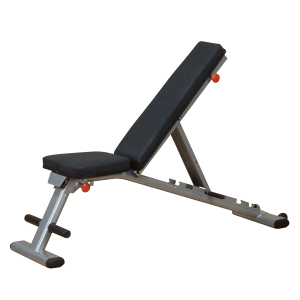
I’m kind of picky with benches–I hate rickety, rock-hard pieces of junk.
In my opinion, a sturdy, comfortable bench is another vital piece of home gym equipment. I also recommend an adjustable bench over a flat bench, so you can use it for incline chest pressing and dumbbell shoulder pressing.
In terms of a specific product, I really like this bench from Body Solid. Like all of their home gym equipment, it’s basically a commercial-quality bench–stable, sturdy, and comfortable.
Dumbbells
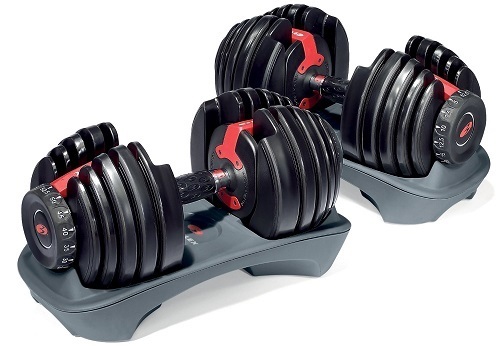
While dumbbells aren’t a vital necessity (a barebones setup of just a power rack and barbell set is enough to get you going), they are worth considering. I find them particularly useful in my chest workouts, shoulders workouts, and arms workouts.
As far as home gym equipment goes, the most economical solution will be plate-loaded dumbbells. If you’re a guy, you’ll probably find them quite unwieldy as you move past 30 pounds, and you’ll also quickly outgrow them as they max out around 50 to 60 pounds.
A traditional set of dumbbells is a workable solution, but they can be problematic as well. If you’re a guy, it’s not only quite expensive to install a rack that goes as heavy as you’ll need, it takes up quite a bit of space.
That’s why I recommend adjustable dumbbells. They’re not cheap, but they’re easy to use and they come heavy.
The two most popular adjustable dumbbells are the Bowflex SelectTech and Powerblocks. I prefer the Bowflex product because its weight selection mechanism is easier to use than the PowerBlock’s pins.
That said, the Bowflex dumbbells do max out at 90 pounds whereas Powerblock offers 125-pound and 175-pound sets.
Home Gym Equipment Extras:
Things You’ll Probably Want at Some Point
A good rack, barbell set, bench, and dumbbell set are the home gym equipment essentials, but there are a few more things worth considering if your budget allows.
Flooring

Proper flooring is cheap and worthwhile. It protects the floor and your equipment from wear and tear.
CAP Barbell makes great products, and their interlocking high-density foam mat squares are no exception. They’re sold in packs of 6, covering 24 square feet.
Recumbent Bike
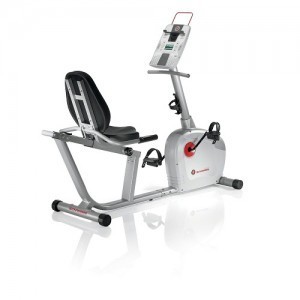
Cycling is my favorite type of cardio because it’s no-impact, it has helped me improve my leg strength, and it’s great for high-intensity interval training (treadmills aren’t so good for this because their speed limits are almost always below full exertion).
In terms of exact bikes, I really like this model from Schwinn. Schwinn knows how to make bicycles, so it’s no surprise that their exercise bikes are top notch.
Shoes
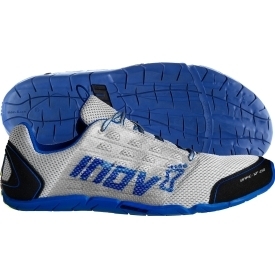
I used to work out in running shoes, and was surprised at how much of a difference a proper lifting shoe makes, particularly with squats and deadlifts.
What is a proper lifting shoe, you ask?
The most important aspect is a flat sole with a little arch and ankle support. The two shoes I’ve liked most are the New Balance MX20 Minimus and Inov-8 BARE XF 210.
CrossRope
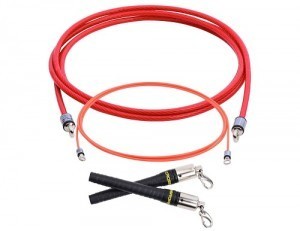
Jump roping is great whole-body cardio, and unlike ropes with weight only in the handles, the weight in the CrossRope’s handles and ropes create a more dynamic workout experience because of how smoothly the rope rotates around your body.
It comes with a lighter rope suitable for beginners and a heavier rope for smoother, faster jump roping (great for high-intensity workouts).
Dip Belt
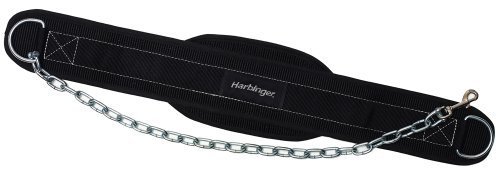
Exercises like weighted dips and pull-ups are great additions to your routine, but they require a dip belt.
The Harbinger Polypro Dip Belt is affordable, durable, and holds up to two 45lb plates comfortably.
Foam Roller
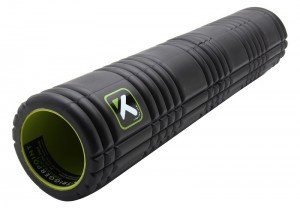
Foam rolling used to be a mysterious, “experimental” technique used solely by professional athletes, coaches, and therapists, its ultimate effectiveness unproven. Well, thanks to years of technique development, and a bit of recent clinical research, foam rolling has become a common practice for people at all levels of fitness, and for good reason.
Foam roller exercises are a fantastic, inexpensive way to increase mobility and performance, prevent injuries, and eliminate nagging muscle pains.
For just $20 – 40 and 5 – 10 minutes of your time, a few days per week, you can use foam rolling to dramatically improve mobility and thus range of motion, to reduce the risk of injury, and to remove pains that you might be experiencing while you put your body through certain motions.
What did you think of this affordable home gym guide? Have anything else to share? Let me know in the comments below!
March 15, 2014
Recipe of the Week: Rum Bananas
I love low-calorie desserts because they can be worked into any type of meal plan, and I love just about anything that involves bananas, so this recipe is a win-win.
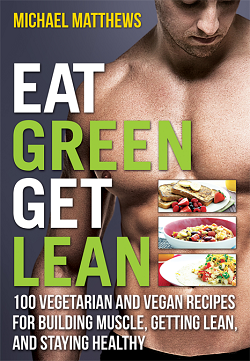
It’s from my cookbook Eat Green Get Lean and it’s downright delicious. The flavor profile is uniquely addicting: the sweet and sour combination of sugar and lime and the piquant combination of rum and cinnamon mix beautifully, and the Greek yogurt is the icing on the dish.
Enjoy!
Servings
2
Calories Per Serving
201
Protein Per Serving
2 grams
Carbohydrates Per Serving
34 grams
Fat Per Serving
5 grams
Ingredients
2 bananas, quartered
2 tablespoons brown sugar
1 teaspoon butter
1/2 teaspoon canola oil
2 tablespoons dark rum
1 teaspoon lime juice
1/8 teaspoon cinnamon
4 tablespoons vanilla Greek yogurt
Instructions
Place a medium-sized nonstick skillet over medium heat. Add the brown sugar, butter, and oil, and sauté until bubbling.
Add the rum, lime juice, and cinnamon and continue to sauté until slightly thickened.
Add the bananas, cook, stirring occasionally, until tender. Divide into 2 equal portions and top with 2 tablespoons vanilla yogurt.
What You Get to Eat

What did you think of this week’s recipe? Let me know in the comments below!
Want more delicious, easy-to-make recipes like this?If you like this recipe, then you’ll love the bestselling cookbook it came from: my own Eat Green Get Lean! It contains 100 vegetarian and vegan recipes specifically designed for high-protein, healthy dieting.
And even if you’re not a vegetarian or vegan eater, you will find plenty of delicious “add-on” dishes, as well as breakfast, lunch, and dinner recipes that you can easily add meat or other forms of protein to.
Buy this book now to forever escape the dreadful experience of “dieting” and learn how to cook nutritious, delicious vegetarian and vegan meals that make building muscle and burning fat easy and enjoyable!
Buy now
AmazonAmazon UKAmazon AUAmazon CABNiBooksKoboGoogle Play
You might also like my other bestselling cookbook, The Shredded Chef.
In this book you’ll find 120 healthy, flavorful recipes specifically designed for athletes that want to build muscle or lose fat. Regardless of your fitness goals, this book has got you covered.
Buy now
AmazonAmazon UKAmazon AUAmazon CABNiBooksKoboGoogle Play
March 14, 2014
Cool Stuff of the Week: Supergeil, Airsoft Minigun, Dominion, and More…
I’m not ashamed to admit that I’m kind of a sucker for cool stuff. I like nifty gadgets, quirky decoration pieces, nice clothes (and shoes!), good books, and fun games.
In this series of weekly posts, I share whatever currently has my fancy. Maybe some of it will catch yours as well!
VIDEO OF THE WEEK:
SUPERGEIL
Lol “geil” means “horny” in German but is also used to mean “cool.” And I’ve shopped at Edeka many times while in Germany! Clever marketing.
ECHO1 M134 AIRSOFT MINIGUN
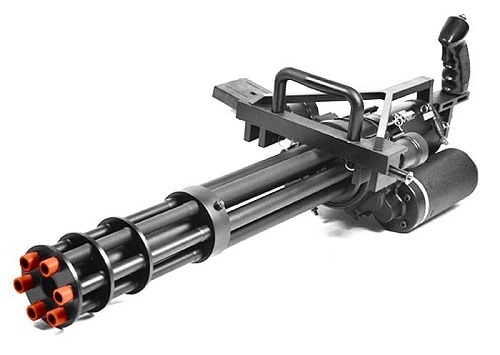
Now this would make for the ultimate Airsoft battle (can anyone say real-life Juggernaut matches?):
The Echo1 M134 Airsoft Minigun is a metal, 35-pound “toy” that shoots 300 rounds per minute out of its 6 barrels at a speed of 390 feet per second. If you’re into Airsoft and have stupid amounts of money to blow, imagine the looks you’ll get bringing this monster to your next Airsoft meetup.
PADERNO VEGETABLE SLICER
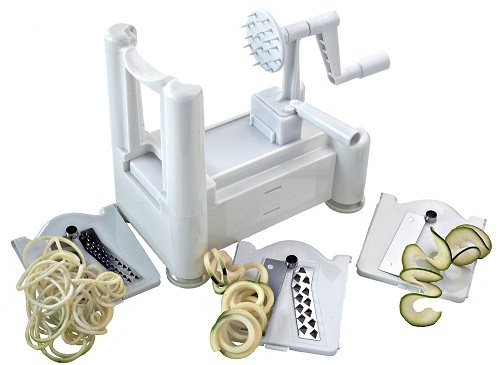
The Paderno World Cuisine vegetable slicer is an easy-to-use, hand-powered tool that makes vegetable and fruit strands, spirals, and slices. Here’s how it works:
Here’s a quick rundown of its key features:
It comes with three blades:
A shredder blade for creating long, spaghetti-like strands
A chipper blade for creating long, thick spiral strands
A straight blade for creating long, ribbon-like strands
The frame and blade plates are constructed of BPA-free plastic.
Can be used with a variety of fruits and vegetables including apples, potatoes, carrots, cucumber, zucchini and more
Hand operated–no batteries or AC outlet necessary
My favorite use is for creating vegetable spaghetti (zucchini works quite well)!
DOMINION

I’m not a big card game player, but I really enjoy Dominion. It’s designed for 2-4 players (but I recommend 3), and games take 30-40 minutes. The object of the game is to gather the most valuable deck of cards, winning you Victory Points. The winner is the person with the most Victory Points by the end of the game.
There are five main classes of cards, which are Victory Cards, Curse Cards, Treasure Cards, Action Cards, and Reaction Cards. Each of these cards play different and vital roles in the game.
To start, each player draws 10 cards. In the center of the table is a selection of other cards the players can “buy” as they can afford them. Through their selection of cards to buy, and how they play their hands as they draw them, the players construct their deck on the fly, striving for the most efficient path to the precious victory points by game end.
Thanks to a wide diversity of cards and effects (there are over 500 cards with 25 different Action Cards), there is plenty of room for strategy and out-thinking your opponent(s). The gameplay styles are very balanced. You can play an aggressive, attacking style wherein you strive to rob other players of Victory Points and resources, or you can play a passive, wealth-building style wherein you focus on building resources.
All in all, this is a fun, stimulating game that I enjoy playing with friends. I also recommend the expansion, Dominion Intrigue, which supports up to 8 players in a two-table game and 6 players in a one-table game, and which adds 25 new Kingdom cards, plus a new set of Treasure and Victory cards.
DOXIE GO MOBILE SCANNER
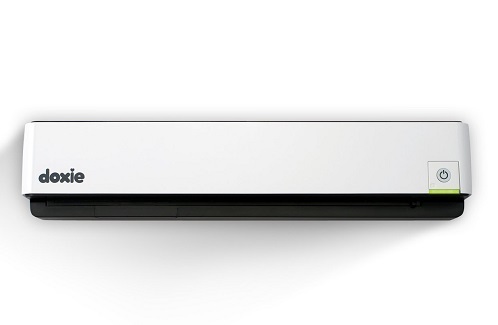
With the Doxie Go Mobile Scanner, you can easily digitize all your favorite stuff: family photos, mementos from vacations, scrapbook remnants, newspaper clippings, sketches, and anything else flat and paper-based.
This portable scanner is made to work anywhere, small enough to fit in a bag or large pocket, it features battery power and flash SD memory, so you can use it without the need for a computer.
Buy now
AmazonAmazon UK
BOOK OF THE WEEK:
WORDS THAT SELL
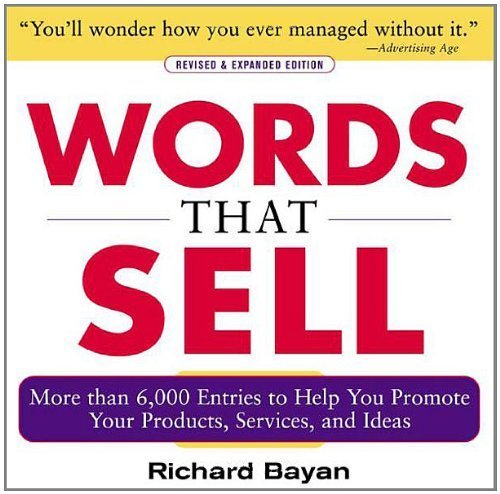
This is one of the best quick-reference books for copywriting that you can have on your (digital) shelf.
Unless you’re an experienced writer, you might be surprised at how big of a difference seemingly small changes in wording can make. One word changed for the better in a headline can take an ad from dud to stud. One phrase, better worded, can mean the difference between little to no response and a healthy, profitable return on investment.
Whenever I’m writing copy, I have this book at my side, and it helps me to some degree EVERY time.
MOVIE OF THE WEEK:
THE ISLAND

Despite the powerful duo of McGregor and Johansson, I started this movie with low–okay, really low–expectations (the key to movie watching?). I mean, it’s a Michael Bay film… But I was pleasantly surprised. In fact, this might just be Bay’s best work yet.
Instead of a mindless repetition of explosions and chase sequences, The Island is a thought-provoking story of the costs of Utopia and conflict of morality vs. self-interest. In it we can see various facets of our own society and ponder serious issues that face us today, like how far we should trust institutions and at which point secrecy becomes harmful to the public good.
Oh and it is a Bay film, so it does have plenty of action as well.
Buy now
AmazonAmazon UK
Watch now
Amazon US Instant VideoAmazon UK Instant Video
What do you think of this week’s picks? Have anything you’d like to share? Let me know in the comments below!
March 13, 2014
5 Healthy Chicken Recipes That You’ll Be Excited to Eat
Despite how versatile chicken is, it’s easy to fall into a recipe rut and plan the same meals over and over again: stir fried with veggies, baked with potatoes, or grilled in strips for fajita filling.
Whether you want a healthy alternative to satisfy comfort food cravings, or a way to prep a lot of meat so you’ll have a quick protein source throughout the week, one of these chicken dinners is sure to satisfy.
Slow Cooker Quinoa Sweet Potato Chicken Soup
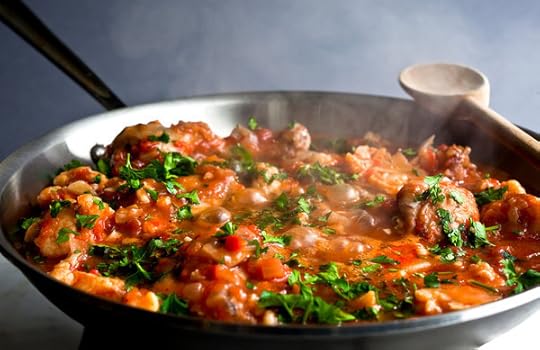
Picture courtesy of The New York Times
This recipe has everything you could want in a lean, hearty dish: lots of protein, minimal prep, and zero added fat.
Sweet potatoes are a great source of carbs, and since all you have to do is toss all the ingredients in the slow cooker and leave it for 6 to 8 hours, you’ll only have to grab a bowl and a spoon to enjoy this perfect post-workout dinner.
Serves 6
Ingredients
2 medium sweet potatoes, peeled and cubed
32 oz. low-sodium chicken broth
1 can (14 oz.) black beans, drained and rinsed
1 can (14 oz.) red kidney beans, drained and rinsed
1 can (14 oz.) diced tomatoes
1/2 cup quinoa
1/2 onion, diced
1 Tbsp. chili powder
1/4 tsp. red pepper flakes
Salt and pepper to taste
1 lb. boneless skinless chicken breast
Instructions
1. Add all ingredients except chicken to the slow cooker, and stir well. Lay chicken breasts on top.
2. Cook on high for 5 or 6 hours, or low for 8 hours. Remove chicken, shred, and return to slow cooker. Stir.
3. To thicken, if desired, continue cooking for an hour with the pot uncovered.
Nutrition Facts (Per Serving)
Calories: 313
Protein: 29 grams
Carbs: 46 grams
Fat: 3 grams
Baked Mozzarella Chicken Rolls
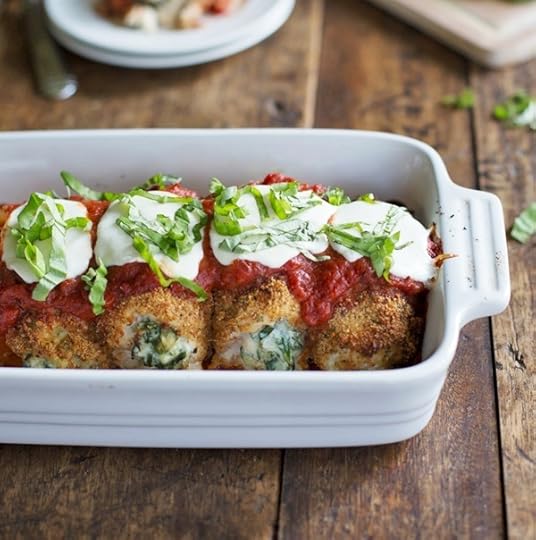
Picture courtesy of Pinch of Yum
Craving pizza or pasta? Satisfy your taste buds with this dinner, which includes marinara sauce and fresh mozzarella cheese. These ricotta and spinach-stuffed chicken breasts are breaded so they’ll get nice and crispy in the oven without all the carbs of your usual Italian fare.
Serves 8
Ingredients
2 lbs. boneless skinless chicken breasts (8 4-ounce pieces)
1 cup whole-wheat Italian breadcrumbs
2 oz. Parmesan cheese, grated
5 oz. baby spinach
1 clove garlic, minced
1 tsp. olive oil
1/2 cup part-skim ricotta cheese
1/3 cup egg whites, beaten
3 oz. fresh mozzarella cheese, thinly sliced
1 cup marinara sauce
Fresh basil for garnish
Instructions
1. Preheat the oven to 450°F, and oil the bottom of a large baking dish.
2. Heat remaining olive oil in a pan. Chop the spinach, and sauté together with the minced garlic over medium heat. In a medium-sized bowl, stir together spinach, ricotta, and 1/4 cup Parmesan. Add about half of the egg whites to the mix, and set the rest aside in a bowl for breading.
3. Pound the 8 equal-sized pieces of chicken breast until spread thin. Combine breadcrumbs and Parmesan in a small bowl.
3. To fill the chicken, lay one piece at a time on a clean, flat surface. Spoon the spinach mix into the middle, and roll the chicken so the edges meet to enclose the filling. Dip the entire roll in egg whites, and roll in breadcrumbs. Place seam down in the prepared baking dish.
4. Bake for 25 minutes. Cover chicken rolls with sauce, and layer the mozzarella slices on top. Bake until the cheese is melted, no more than 5 minutes. Garnish with basil leaves.
Nutrition Facts (Per Serving)
Calories: 393
Protein: 44 grams
Carbs: 16 grams
Fat: 16 grams
Thai Grilled Chicken Thighs
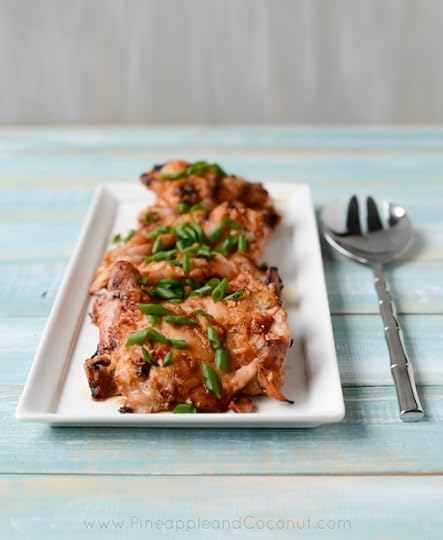
Picture courtesy of The Grom Mom
Most everyone who watches what they eat goes for white meat instead of dark.
Sure, chicken breast is a lot leaner, but the thighs are actually more nutrient-dense. They’re loaded iron, zinc, selenium, and all kinds of vitamins. And because dark meat contains a lot of taurine, it’s recommended eating for anyone with naturally high cholesterol.
Serves 4
Ingredients
12 boneless skinless chicken thighs
1/3 cup fresh basil, chopped
1/3 cup fresh cilantro, chopped
1 Tbsp. minced ginger
1 Tbsp. minced garlic
1 Tbsp. minced chili pepper
1 1/2 Tbsp. soy sauce
1 1/2 Tbsp. fish sauce
1 1/2 Tbsp. olive oil
1 1/2 Tbsp. brown sugar
Instructions
1. Leaving the chicken aside, combine all other ingredients in a bowl.
2. Marinate the chicken in the mixture for an hour or more.
3. On the barbecue, cook chicken thighs for 15 minutes with the lid down, and flip. Continue cooking for 10–15 more minutes, until golden brown.
Nutrition Facts (Per Serving)
Calories: 330
Protein: 42 grams
Carbs: 8 grams
Fat: 13 grams
Classic Roast Chicken
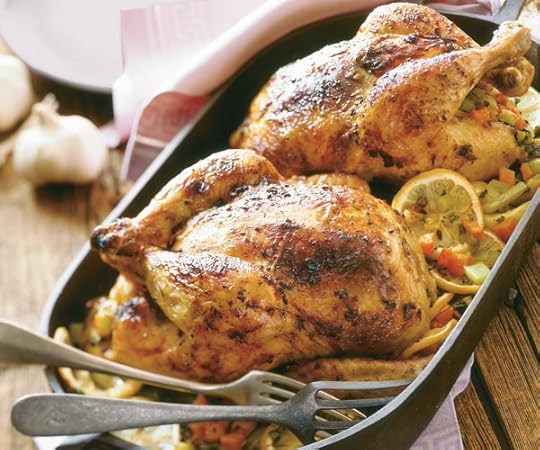
Picture courtesy of Fine Cooking
This one isn’t just good for a simple Sunday dinner, but if you don’t have a full table when it’s first served, you’ll have meat to spare for topping salads and stir-frying with veggies. And it’ll be healthier than the rotisserie chicken at the grocery store.
Serves 10
Ingredients
4-lb. whole chicken
2 tsp. unsalted butter, softened
1 1/2 tsp. fresh thyme, minced
1 tsp. smoked paprika
1 tsp. ground coriander
2 tsp. extra-virgin olive oil
2 garlic cloves, minced
3/4 tsp. salt
1/4 tsp. black pepper
3 shallots, peeled and halved
3 fresh thyme sprigs
1 lemon, quartered
Instructions
1. Preheat the oven to 350°F.
2. Remove the giblets and neck, and loosen skin by gently pushing your fingers underneath.
3. Combine butter, minced thyme, paprika, coriander, olive oil, garlic, salt and pepper in a small bowl. Rub directly on the meat, both over and under the skin.
4. Tie the legs together, and continue to truss the chicken. Lay it on a roasting rack, breast facing up, and place it in the pan. Fill the chicken cavity with shallots, thyme, and lemon.
5. Roast for 45 minutes, and then increase the temperature to 450°F to continue cooking for 15 minutes. The internal temperature must be 165°F when done.
6. Move the chicken to a carving board, and let stand for 10 minutes before digging in. Before you carve, discard the skin.
Nutrition Facts (Per Serving)
Calories: 362
Protein: 53 grams
Carbs: 2 grams
Fat: 15 grams
Apple Cabbage Oven-Baked Chicken
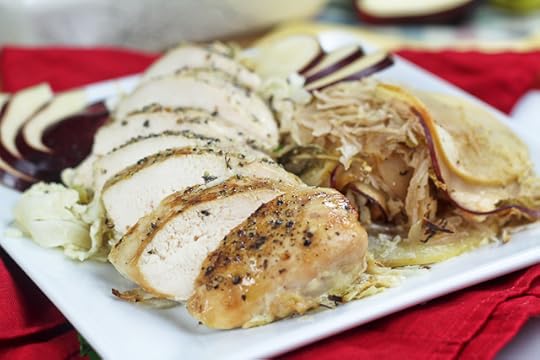
Picture of The Healthy Foodie
This a simple dinner that requires you to do little more than chop the fresh produce.
With sweetness from the apples and a bite from apple cider vinegar, this dish defies all the notions of cabbage being boring. The chicken also soaks up the flavors of Dijon mustard, rosemary, and onion to make the final result homey and comforting.
Serves 2
Ingredients
2 (6 oz.) boneless skinless chicken breasts
1 small onion, thinly sliced
1/2 Savoy cabbage, shredded
1 red delicious apple, thinly sliced
1 golden delicious apple, thinly sliced
1/2 cup unsweetened organic apple juice
2 Tbsp. apple cider vinegar
1 Tbsp. Dijon mustard
Several sprigs rosemary, finely chopped
1/2 tsp. salt
1/2 tsp. black pepper
Instructions
1. Preheat the oven to 375°F.
2. If possible, use a mandolin slicer to prepare the onion, apples, and cabbage. Otherwise, slice very thin.
3. In a medium-sized baking dish, layer 1/3 the cabbage, 1/2 the onion, and finally 1/2 the apples. Continue until you’ve used all of those three ingredients.
4. Lay chicken breasts on top, and add a sprig of rosemary.
5. Mix together apple juice, vinegar, mustard, rosemary, salt, and pepper. Pour over the baking dish.
6. Cover with foil, and bake. The chicken will be cooked through in about an hour.
Nutrition Facts (Per Serving)
Calories: 520
Protein: 67
Carbs: 48
Fat: 13
What did you think of these healthy chicken recipes? Have anything else to add? Let me know in the comments below!
Want more delicious, easy-to-make recipes like these?If you like these recipes, then you’ll love my bestselling cookbook The Shredded Chef!
In this book you’ll find 120 healthy, flavorful recipes specifically designed for athletes that want to build muscle or lose fat. Regardless of your fitness goals, this book has got you covered.
Buy this book now to forever escape the dreadful experience of “dieting” and learn how to cook nutritious, delicious meals that make building muscle and burning fat easy and enjoyable!
Buy now
AmazonAmazon UKAmazon AUAmazon CABNiBooksKoboGoogle Play
Vegan and vegetarian dishes are great sources of micronutrients, and even if you’re a meat eater, they’re great for changing things up in your meal plan.
And in my cookbook, Eat Green Get Lean, you’ll find 100 of my favorite vegetarian and vegan dishes, carefully balanced for our high-protein, healthy needs!
Buy this book now to forever escape the dreadful experience of “dieting” and learn how to cook nutritious, delicious vegetarian and vegan meals that make building muscle and burning fat easy and enjoyable!
Buy now
AmazonAmazon UKAmazon AUAmazon CABNiBooksKoboGoogle Play


