
Michael Matthews's Blog, page 128
March 12, 2014
The Zen of Achieving True Mastery
What would you say is the least common denominator of all successful people?
What have they done that enabled them to rise above the rest of the crowd?
Why do others clamor to give them their money?
Sure, successful people are usually smart, motivated, hard-working, and so on, but these aren’t the fundamental reasons for their success. They can’t charge customers for their intelligence, energy level, or work ethic.
What they can charge outrageous sums for (and do) and what serves as the foundation of every wildly successful business venture is mastery. Extraordinary ability to do something that others find valuable.
That’s what “striking it big” boils down to: You have to master something that others find valuable. That means you have to be so good that people talk about you and your work. You’ll have fans. You’ll get sought out for advice. People will pay you premiums for your work.
Does mastering something mean that you have to be the best in the world? Absolutely not (but feel free to strive for this!). It simply means to become highly skilled in something or acquire a complete understanding of it.
This principle applies to any undertaking in life and business. This applies whether you work for someone or for yourself: If you haven’t mastered something that your customers or employer finds very valuable, don’t expect much success.
Many people settle for mediocrity and are rewarded in kind: mediocre pay, mediocre acknowledgement, mediocre status.
Mastery, however, shines like a lighthouse in our society. Mastery attracts attention and business. Mastery is instinctively respected and admired by others. Everyone in the world who has achieved real, honest success has mastered something.
The professional sports player has mastered his sport to a point where a businessman is willing to pay him millions of dollars per year to play on his team and entertain the fans.
The millionaire writer has mastered the art of storytelling sufficiently to be able to entertain hundreds of thousands or millions of people.
The person that runs the successful company selling widgets has mastered how to market and sell his products to people that need and want them (as a matter of fact, almost ever self-made millionaire I know is a master of sales and/or marketing).
Now, what does it take to achieve mastery? Many books have been written on the subject (this one is particularly good), but I think it boils down to a handful of simple steps:
Make a decision.
“I guess a man’s importance in the world can be measured by the quality and number of his glories.”
-John Steinbeck in East of Eden
When you watch an interview with a brilliant and successful person, something might happen deep down in your gut. From somewhere down there a feeling might arise that leads you to think, “Some are chosen to create brilliant work, and the rest of us are screwed. Lucky him.”
What you usually miss from those interviews, however, are the stories of the hours, days, weeks, months, and years of dedicated, grueling practice and perseverance that it took to get there.
You’ll probably also miss that in the beginning—when that person was just another face in the crowd—a decision was made. On a particular day, at a particular hour, the person had said, “This is the thing I will dedicate my working life to.”
The first step on the road of mastery is to make a conscious decision about what you will decide to master.
Do not wait for it. Decide.
Focus, focus, focus.
” Your time and energy are limited, and you must learn how to preserve them. Exhaustion and frustration can ruin your presence of mind.”
-Robert Greene in The 33 Strategies of War
Our society tells us from a young age that to become a “well-rounded” individual is wise and good. If you want to master your craft, ignore this advice.
The master has focused intensely on a narrow set of skills and ultimately led to incomparable ability. He has studied other various subjects and disciplines only to the point that they served his needs in what he is mastering. He has become competent in other fields to help develop and further his chosen skill.
Think deeply about the core demands of your craft. What is needed to advance in mastery of it? What can be ignored as mere distraction?
Practice brutal focus. Emphasize what’s needed, and shun what can be ignored.
Become an idiot.
“To become strong, a man’s life needs the limitations ordained by duty and voluntarily accepted. The individual attains significance as a free spirit only by surrounding himself with these limitations and by determining for himself what his duty is.”
Idiocy is the other side of the coin of mastery. You can’t have one without the other. I know that sounds odd, but let me explain.
In order to focus your working life on mastering your craft, you’ve got to rule out a lot of the trivia that takes up most people’s time.
Many masters achieved their amazing abilities by …becoming idiots.
You see, their greatness—and ours—is largely defined by what they do not know. To reach the exalted state of mastery, they had one driving professional goal and shut out the rest. All of their mental power and attention was directed at a small set of practices and disciplines that support them.
Distraction pulls us in all directions. The boredom of repetition drives us to other interests. The pressures of culture make us worry we are missing out on something “important” by dedicating ourselves to our pursuit of mastery.
Stop.
If you want to master writing, you are going to have to give up the fantasy of running the 800 meters in the Olympic Games. If you want to master the cello, you are probably going to have to give up following all the best television shows. If you want to master anything, you must become an idiot in nearly everything else.
You must become an idiot to become a genius.
Continue to obsess.
“In this age, which believes that there is a short cut to everything, the greatest lesson to be learned is that the most difficult way is, in the long run, the easiest.”
-Henry Miller
When you’re going for mastery, you’re playing the long game. It takes thousands of hours of focused practice to get there, which is why a decision to achieve mastery in some field or activity shouldn’t be made lightly.
This path of mastery is not for everyone, but I believe it is one of the great callings and joys this life has to offer.
You’ll never get all the way there … nobody does. But do not despair, the meaning comes from the making. And it’s a much more pleasurable way to live than by doing just enough to get by.
There is only so much time in one day, and only so many days in one life. Why not spend them in the pursuit of greatness? Why not strive for the unattainable?
Choose. Focus. Become an idiot. Continue to obsess. And achieve mastery.
What are your thoughts on achieving mastery? Have anything else you’d like to share? Let me know in the comments below!
If you liked this article, then you’ll love this book…If you’d like to know what some of history’s greatest thinkers and achievers can teach you about awakening your inner genius, and how to find, follow, and fulfill your journey to greatness, then you want to read this book today.
(I wrote this book under a pen name simply because I want to keep it, and future books of mine that will have nothing to do with health and fitness, completely separate from my main line of work. But I can still promote it! )
Read this book today and discover what it really takes to find and follow your bliss, and how to use the lessons passed down to us by some of history’s greatest geniuses to systematically rise to top of your fields, activities, and endeavors.
Buy now
AmazonAmazon UKAmazon AUAmazon CAAudible AudiobookBNiBooksiBooks AudiobookKoboGoogle Play


March 11, 2014
MFL Podcast #9: The legendary Ulisses Jr. on his biggest lessons learned
In this podcast, I interview champion bodybuilder Ulisses Jr., and we talk about…
How to use diet to break through plateaus and get bigger and stronger.
The prevalence of steroids in this industry and why you need to be careful who you take advice from.
Ulisses Jr.’s top 3 lifting tips for building an impressive physique.
The importance of being positive and surrounding yourself with positive people.
Ulisses Jr.’s newest all-inclusive workout program GET MASS.
And more…
You can also find this podcast in iTunes and the Windows Phone Podcasts Store:


LEARN MORE ABOUT ULISSES JR.’S GET MASS PROGRAM HERE:
What did you think of the podcast? Have any requests or suggestions? Let me know in the comments below!
March 10, 2014
Get Workout Motivation: 7 Ways to Get Fired Up
There’s a reason why you rarely see fit people walking around the city: Sticking to a workout program and diet can can be damn hard. Most people have many more excuses than
You don’t get to eat all the food your friends eat. You don’t get to drink a bunch of alcohol. You often have to sacrifice free time or sleep to fit workouts in. I’m sure you can think of many more inconveniences and difficulties.
Anyone can drum up enough emotional resolve to get going, but staying the course is another matter. It takes deep, lasting motivation and dedication. How do you develop this?
Yeah, yeah… I know. It’s a healthy lifestyle. By hitting the gym regularly, you’ll live a longer, healthier life; you’ll be more energetic; you’ll ward off disease; you’ll be less likely to get sick; you’ll be less stressed; and all that other good stuff.
But let’s be honest. Those reason aren’t incredibly motivating after a long, stressful day, with your couch beckoning and TV glowing.
Well, in this article I’m going to share some of the things that motivate me whenever I’m on the fence. These emotional triggers will help you remember why you started working out in the first place and will get you fired up to get your butt off the couch, into the car, and onto the bench.
Enjoy a natural, healthy high.
I’m not just talking mental satisfaction–I’m talking the physical high that results from exercise.
In fact, the brain-altering chemicals released by exercise act similarly to opioid drugs, making a workout a healthy, natural way to just feel damn good every day of your life. (Click here to tweet this!)
So, next time you need some motivation to get your workout in, just think of how physically satisfied you feel after!
Silence your critics.
While I’m all for “doing it for you” and not having to “prove yourself” to anyone, we all take satisfaction in doing what other people say we can’t.
And we’ve all known people that were compelled to criticize and doubt us whenever we undertook a positive endeavor. You know the type: you tell them you’re starting a new workout program, and they question why, roll their eyes, snigger, or otherwise tell you they just don’t think you can do it.
Well, you can use them as workout motivation: get in the gym and prove them wrong, and relish the look on their faces as you lose fat, build muscle, and build the body of your dreams. (Click here to tweet this!)
In fact, why don’t you take a minute right now to write down a list of the people that you want to silence. Who cares who they are and why you chose them–just write them down. Then, the next time you’re thinking of skipping a workout, scan back over the list for a nice jolt of motivation.
Get a little sexier.
Let’s face it: the number one reason most people start working out is to look better to girls or guys.
That’s why I started hitting the weights nearly 12 years ago: my original goal wasn’t just to become “cuter,” but sexy. You know, that primal, universal, irresistible kind of attraction that bypasses all critical filters and makes people physically want you. (Hey, I was a teenager–cut me some slack)
Well, I don’t really care about that anymore, but it was a strong motivator in the beginning. Nevertheless, even the humblest of guys can’t help but smile when a beautiful girl wants to feel his arms, and even the classiest of girls can’t help but enjoy it when all eyes are on her at the beach. And there’s nothing wrong with either of these things!
Well, when you’re training correctly and dieting properly, every workout you do results in minor improvements that, over time, transform you into a bolder, sexier version of yourself. (Click here to tweet this!)
And don’t think this only matters if you’re single, either! While emotional connection is vitally important for a good relationship, research shows that ongoing physical attraction plays a major role in relationship stability.
So, if you’re having trouble dragging yourself into the gym, realize that the workout you’re about to do is going to make you a little bit sexier. And enough “little bits” add up to a whole new irresistible you.
Build your self-confidence.
Lifting weights doesn’t just build muscle, it builds self-confidence as well.
Sure, some people turn to the dark side and become egomaniacs, but us mentally balanced humans just become happier, calmer, nicer and nicer-to-be-around people.
The self-confidence boost extends to all areas of our lives as well. Don’t be surprised if working out regularly also makes you want to push the envelope in other areas of your life and strive for more…and believe you can actually do it. (Click here to tweet this!)
So, just as you make yourself sexier one workout out a time, you also make yourself more confident and secure.
Watch this video.
Seriously. Just watch it now.
So…are you ready to lift?
Being strong is awesome.
While we may not be able to fulfill our childhood fantasies and become full-blown superheroes, we can become super-strong. And imagine we’re superheroes. 
Whereas I started working out to look good, I now love getting stronger. I can’t think of a better start to my day than the intense rush that comes with deadlifting, squatting, and benching hundreds of pounds.
So, next time you’re looking for some workout motivation, just think about lifting some heavy ass weights and feeling you’re king (or queen!) of the mountain.
Mental toughness is even awesome..er…
How many workouts have you missed because your mind seduced you into thinking you were too tired? How many reps have you missed because a voice in your head said you had done enough already? These aren’t physical failures–they’re mental ones. And they relate to something much bigger than working out.
If I were to choose one trait that sets extraordinary people from ordinary…in any field or activity…it wouldn’t be intelligence, wisdom, talent, luck, or genetics. It would be mental toughness. The will to finish what has been begun. The discipline to not give in to temptations. The willingness to make sacrifices. And the ability to maintain high levels of performance when things are going well (the avoidance of complacency is an often overlooked, but important part of long-term success).
It’s no surprise that mentally tough people make better athletes, but research shows that people with high levels of perseverance and grit lead the pack in just about any endeavor, from spelling bees to military boot camps.
The bottom line is the more mentally tough we are, the better our lives will be. You can’t develop true commitment to or consistency with anything if you have a weak will. And you can use your workouts to help build up your will and thus become mentally tough.
You see, when you show up to the gym every day and put in the work, no matter the reasons to do otherwise, no matter how much mental resistance you feel, no matter how drained your body is…you’re transforming more than your physique. You’re transforming your very being. (Click here to tweet this!)
So, when you’re starting to convince yourself to miss a workout, stop for a second and recognize the simple fact that you don’t want to go is why you have to. If you don’t, you’re making yourself mentally weaker; if you do, you’re strengthening your will.
Did this help you get some workout motivation? Have anything else to share? Let me know in the comments below!
March 8, 2014
Recipe of the Week: Extra Lean Turkey Meatballs
Like lean hamburger and meatloaf recipes, I love ground turkey recipes like this because you get a lot of taste for a relatively small amount of calories.
This recipe is from my cookbook The Shredded Chef, and it’s low calorie, easy to make, extremely tasty, and quite filling, which is a nice bonus for when you’re restricting calories for weight loss. Enjoy!
Servings
4 (4 meatballs per serving)
Calories Per Serving
266
Protein Per Serving
46 grams
Carbohydrates Per Serving
11 grams
Fat Per Serving
5 grams
Ingredients
1 1/2 pounds extra-lean ground turkey breast
2 egg whites
1/2 cup toasted wheat germ
1/4 cup quick cooking oats
1 tablespoon whole flaxseeds
1 tablespoon Parmesan cheese, grated
1/2 teaspoon all-purpose seasoning
1/4 teaspoon ground black pepper
Instructions
Preheat the oven to 400°F. Coat a large baking dish with cooking spray.
Mix all of the ingredients in a bowl.
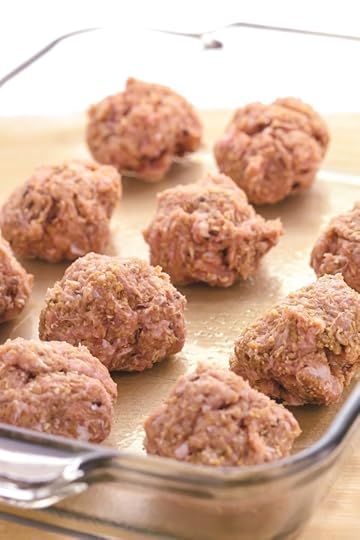
Make 16 meatballs and place them in the baking dish.
Bake for 7 minutes and turn the meatballs. Bake for 8 – 13 minutes longer, or until no longer pink in the center.
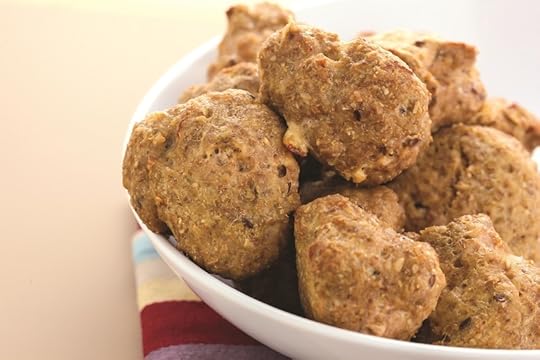
What You Get to Eat
What did you think of this week’s recipe? Let me know in the comments below!
Want more delicious, easy-to-make recipes like this?If you like this recipe, then you’ll love the bestselling cookbook it came from! My own The Shredded Chef!
In this book you’ll find 120 healthy, flavorful recipes specifically designed for athletes that want to build muscle or lose fat. Regardless of your fitness goals, this book has got you covered.
Buy this book now to forever escape the dreadful experience of “dieting” and learn how to cook nutritious, delicious meals that make building muscle and burning fat easy and enjoyable!
Buy now
AmazonAmazon UKAmazon AUAmazon CABNiBooksKoboGoogle Play
Vegan and vegetarian dishes are great sources of micronutrients, and even if you’re a meat eater, they’re great for changing things up in your meal plan.
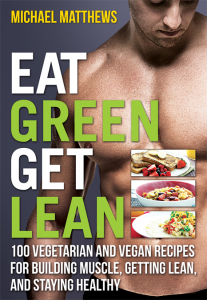
And in my cookbook, Eat Green Get Lean, you’ll find 100 of my favorite vegetarian and vegan dishes, carefully balanced for our high-protein, healthy needs!
Buy this book now to forever escape the dreadful experience of “dieting” and learn how to cook nutritious, delicious vegetarian and vegan meals that make building muscle and burning fat easy and enjoyable!
Buy now
AmazonAmazon UKAmazon AUAmazon CABNiBooksKoboGoogle Play

March 7, 2014
Cool Stuff of the Week: Apple Car Play, Vikings, Nexus 7, and More…
I’m not ashamed to admit that I’m kind of a sucker for cool stuff. I like nifty gadgets, quirky decoration pieces, nice clothes (and shoes!), good books, and fun games.
In this series of weekly posts, I share whatever currently has my fancy. Maybe some of it will catch yours as well!
VIDEO OF THE WEEK:
HUMANS ARE AWESOME
There are a ton of these types of videos on the Internet but this one is particularly good. Great clips and great music. Enjoy.
APPLE CAR PLAY

It was only a matter of time before Apple rolled this out: Apple CarPlay is a fully integrated car audio solution that takes the things you normally do on your iPhone and lets you use the car’s touchscreen and various knobs and controls to do them instead. Things like using Siri, getting directions, making and answering calls, receiving and dictating texts, and playing music.
NORELCO QT4070 BEARD TRIMMER

I’ve gone through several types of trimmers over the years and this is, by far, my favorite.
It’s light, easy to use, and rechargeable, and it has a good battery life. I don’t use the little attachment, but I’ve tried it and it worked well. The main attachment has several settings for closeness, and I like the closest shave (giving that stubble kind of look). The suction of the vacuum is strong and while it doesn’t catch every little hair, it catches the bulk, making for an easy clean up.
NEXUS 7 TABLET

The Nexus 7 is, hands down, the best bang for your buck when it comes to the smaller tablets. For just over $200, you get a light, thin tablet with 16 GB of storage, a gorgeous high-res display and extremely snappy performance (thanks to its quad-core processor and 2 GB of RAM).
SAY ANYTHING

If you’re looking to laugh your butt off with friends and family and have a jolly good time, then buy this game.
The game is simple:
Each player gets a marker, a board to write on, and two chips that are the color of their board. One player is the judge and picks a card, which lists 5 different questions. The judge chooses whichever he or she wants to read. The questions are very diverse.
Once the question is read, the players write their answers on their boards and place them face-up on the table. The judge secretly chooses the winner and locks it in with a little gadget provided, and the players wager their chips on what they think the judge will choose.
The winner is then revealed and the players that wagered chips on the winning answer win points–one for each chip wagered. The judge also wins points for each chip wagered on the right answer, and can win no more than three points.
The next player then becomes the judge and on it goes.
The real fun is in the answers, of course, and this depends on the group you’re playing with. G-rated people can have laughs as can R-rated people (but don’t mix them together!). If you have particularly creative, funny, or twisted friends, you’ll want to invite them to play this game.
This is a good ice breaker game at parties because it gets people to open up and laugh.
BOOK OF THE WEEK:
OGILVY ON ADVERTISING
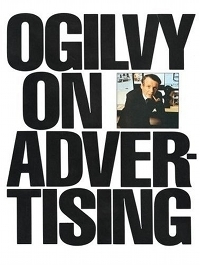
I own a small business and I oversee our marketing and advertising campaigns, and I’ve read this book probably ten times. In fact, my copy got so beat up, highlighted, and written in, that I had to buy a new one.
Ogilvy casually shares many gems of priceless advertising wisdom in this book, and they all are centered around one premise: That advertising is salesmanship in print, and that ads must make money to make sense.
If that sounds like common sense to you, then congratulations–you’re in the minority of people who “get it.” Untold millions of dollars are spent every day on advertising by people that don’t–people that use advertising to fulfill many other desires–to be creative, to be funny, to be liked, to just be out there; all of which suck the coffers dry and leave executives to wonder why so much money is going out and so little is coming in.
Ogilvy not only understood this trap, but he made it his life’s ambition to avoid it and, unsurprisingly, his agency became the leader of the pantheon of advertising gods.
Read this book. The ideas and techniques taught in it worked decades ago when he wrote it. They work now. They will continue to work.
TV SHOW OF THE WEEK:
VIKINGS

I was skeptical of Vikings when I first heard of it, but when I learned that it was a Michael Hirst project (the incredibly talented researcher and writer behind The Tudors and The Borgias), I had to check it out. And I’m glad I did.
The story introduces you to Ragnar Lothbrok, a legendary Norse ruler and hero, who starts as a family man with ambitions to be the first man to successfully sail to the lands in the West (England) to raid and plunder. He does it, of course, and this sets off the dominos of repercussions that begin his historical journey.
The first thing that struck me about Vikings is the production values. It was shot in Ireland, which is downright beautiful, and the wardrobes, sets, locations, and effects are truly top notch. You really feel immersed in the period.
The casting and acting are superb as well. Fimmel (Ragnar), Winnick (Ragnar’s wife), and Blagden (Ragnar’s slave) are the stand-out performances, with Fimmel shining above all. Fimmel’s Ragnar reminds me of Andy Whitfield’s Spartacus–the right blend of gravitas, masculinity, and flippancy that just makes you want to be him.
The narrative choices and dialogue are solid, but do feel a bit trite at times. This is no Game of Thrones, but it’s in the same league. The story starts out slow, but give it a chance–once it kicks into high gear, it’s enthralling.
Buy now
AmazonAmazon UK
Watch now
Amazon US Instant VideoAmazon UK Instant VideoVudu
What do you think of this week’s picks? Have anything you’d like to share? Let me know in the comments below!
March 6, 2014
5 Healthy High-Protein Breakfast Recipes
Sure, you can skip breakfast if you want…but then you’ll miss out on all kinds of delicious foods that you can start your day with! (And no, I’m not talking sugary cereals, pastries, or other crap.)
In this article, I want to share with you 5 healthy breakfast recipes that not only satisfy your sweet tooth, but provide you with plenty of protein and micronutrients as well.
Enjoy!
Chia Seed French Toast

Picture courtesy of Lovely Pantry
This is a delicious, super-filling breakfast to enjoy before a day of heavy training. The worst part about brunch dishes is the generous pour of maple syrup, but there are healthy replacements that are just as satisfying.
Instead, top with all-natural peanut butter and banana slices. Or, mix a teaspoon of maple syrup and a drop of vanilla extract into 1/4 cup plain nonfat Greek yogurt, and serve with fresh berries.
Serves 1
Ingredients
1 large egg
1 egg white
1/2 scoop protein powder
Dash cinnamon
2 slices sprouted whole-wheat bread
2 tsp. chia seeds.
Directions
1. Beat together the whole egg and egg white in a medium-sized bowl. Mix in protein powder and cinnamon.
2. Spray a large frying pan with coconut oil, and wipe excess with a paper towel. Heat over medium-high.
3. Dip a slice of bread in the egg mixture, and flip it over so both sides can soak it up. Lay it in the frying pan. Repeat with the second slice, and pour any remaining mixture over top. Sprinkle with chia seeds. Flip after about 2 minutes, once the egg has cooked enough to set. Continue cooking for one minute, until golden brown.
Nutrition Facts
Calories: 368
Protein: 30 g
Carbs: 38 g
Fat: 11 g
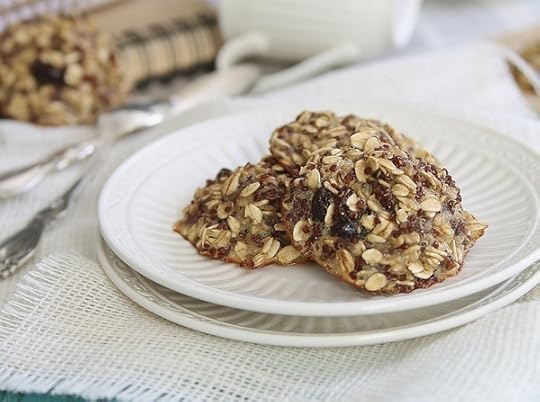
Oatmeal Raisin Quinoa Breakfast Cookie
Picture courtesy of Running to the Kitchen
What better than cookies for breakfast, the diet all little kids dream of? Feel like you’re being bad while being good with these cookies. They have all the makings of a balanced breakfast, and they’re super easy to whip up.
If you have 20 minutes to spare in the morning, you can enjoy these fresh from the oven.
Serves 4
Ingredients
1 ripe banana
1 egg
1/2 tsp. vanilla extract
3/4 cup oats
1/2 cup cooked quinoa
1/4 cup raisins
1/2 tsp. salt
Instructions
1. Preheat the oven to 350°F.
2. In a large bowl, beat the egg with a fork. Add the banana and vanilla extract, and mash all together.
3. Add the oats, quinoa, raisins, and salt, stirring with a hefty spoon until well combined.
4. Drop batter onto a greased cookie sheet, diving it into 8 or 10 cookies.
5. Bake for 12 to 15 minutes, until just browning around the edges.
Nutrition Facts (Per Serving)
Calories: 133
Protein: 8
Carbs: 21
Fat: 2
Sweet Potato Pancake with Smoked Salmon and Tarragon-Yogurt Sauce

Picture courtesy of Bay Area Bites
This breakfast will have you thinking you’re at a gourmet brunch so it’s a recipe to remember for holiday weekends.
Although a spin on latkes and lox, this dish is far from traditional. It incorporates baked sweet potatoes for more nutritional value and fresh tarragon to bring the basic ingredients to a whole new level.
Serves 2
Ingredients
Pancakes:
1 medium-sized sweet potato
1/2 cup oat flour
1 large egg
4 egg whites
1/2 teaspoon vanilla extract
1/4 cup fat-free plain yogurt
Toppings:
1/3 cup plain non-fat Greek yogurt
2 tsp. fresh tarragon, minced
1 tsp. lemon zest
1 tsp. lemon juice
1 tsp. maple syrup
6 oz. smoked salmon (lox)
Instructions
1. To make the tarragon-yogurt sauce, finely chop fresh tarragon. In a small bowl, mix together 1/3 cup yogurt, 2 tsp. tarragon, maple syrup, zest and a splash of fresh lemon juice. Store in the fridge, preferably overnight, to allow the yogurt to soak up the flavors.
2. Bake the sweet potato in the microwave for five minutes, puncturing the skin with a fork several times and wrapping it in a paper towel. Run it under cool water, and remove the skin with a knife.
3. Blend the baked sweet potato until smooth, and transfer to a large bowl. Add oat flour, egg, egg whites, vanilla extract, and remaining yogurt.
4. Spray a pan with olive or coconut oil, and wipe away the excess with a paper towel. Keep that on hand to regrease the pan after cooking the first pancake.
5. Spoon half the batter into the pan, and cook for a couple minutes, until it starts to set. Flip the pancake and cook for another 30 seconds to a minute. These pancakes will be beautifully golden brown because of the sweet potatoes. Repeat to make the second pancake.
6. Top each pancake with half of the lox and a generous dollop of tarragon-yogurt sauce.
Nutrition Facts (Per Serving)
Calories: 371
Protein: 39
Carbs: 38
Fat: 8
Greek Yogurt Goji Cereal Parfait

Picture courtesy of Food, Sweat, & Inspiration
A nutritious breakfast doesn’t need to take a lot of time. Give your favorite breakfast cereal new life by preparing a parfait in minutes.
A Greek yogurt parfait is a highly versatile breakfast since you can swap out whatever fruits and cereals you prefer, and it’ll make a great snack or sweet evening treat too.
Serves 1
Ingredients
6 oz. plain non-fat Greek yogurt
1/2 scoop vanilla whey protein powder
1 tsp. honey
1/3 cup Peace Cereal Goji Berry
1/2 ripe mango, diced
Instructions
1. Mix the protein powder and honey into the Greek yogurt.
2. Starting with the granola, followed by the yogurt and the mango pieces, layer all ingredients together in a tall glass or dish.
Nutrition Facts
Calories: 298
Protein: 28
Carbs: 46
Fat: 2
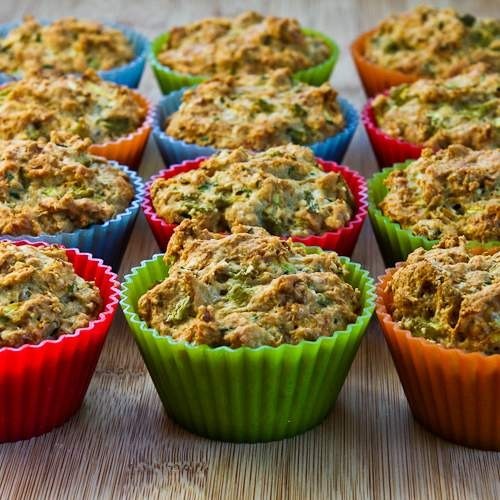
Zucchini Muffins
Picture courtesy of Kalyn’s Kitchen
There’s nothing easier to eat on the go than a portable pastry, and you can make a batch on your day off and freeze them to enjoy later. Pop them in the toaster oven while you wait for your coffee to brew, or pull one out to defrost overnight.
This recipe is well-balanced with zucchini, eggs, coconut, and stevia – but don’t forget to try out these high-protein muffin recipes too for breakfast variety.
Serves 8
Ingredients
2 Tbsp. coconut flour
1/4 cup unflavored whey protein powder
4 eggs
3 Tbsp. coconut oil
1 cup grated zucchini
30 drops stevia
1/2 tsp. cinnamon
1/4 tsp. nutmeg
1 tsp. vanilla extract
1 tsp. apple cider vinegar
1/2 tsp. baking soda
Instructions
1. Preheat the oven to 350°F. Line or grease 8 cups of a standard muffin pan.
2. In a large bowl, mix coconut flour, protein powder, and eggs until smooth.
3. Add all remaining ingredients, and stir until just combined.
4. Divide batter among the prepared muffin cups, and bake for 20 to 25 minutes. The muffins will be raised and slightly browning.
Nutrition Facts (Per Muffin)
Calories: 99
Protein: 5
Carbs: 2
Fat: 8
What did you think of these healthy breakfast recipes? Have anything else to share? Let me know in the comments below!
Want more delicious, easy-to-make recipes like these?If you like these recipes, then you’ll love my bestselling cookbook The Shredded Chef!
In this book you’ll find 120 healthy, flavorful recipes specifically designed for athletes that want to build muscle or lose fat. Regardless of your fitness goals, this book has got you covered.
Buy this book now to forever escape the dreadful experience of “dieting” and learn how to cook nutritious, delicious meals that make building muscle and burning fat easy and enjoyable!
Buy now
AmazonAmazon UKAmazon AUAmazon CABNiBooksKoboGoogle Play
Vegan and vegetarian dishes are great sources of micronutrients, and even if you’re a meat eater, they’re great for changing things up in your meal plan.
And in my cookbook, Eat Green Get Lean, you’ll find 100 of my favorite vegetarian and vegan dishes, carefully balanced for our high-protein, healthy needs!
Buy this book now to forever escape the dreadful experience of “dieting” and learn how to cook nutritious, delicious vegetarian and vegan meals that make building muscle and burning fat easy and enjoyable!
Buy now
AmazonAmazon UKAmazon AUAmazon CABNiBooksKoboGoogle Play
March 5, 2014
7 Powerful Ways to Increase Your Squat
The Squat is one of the toughest and most rewarding exercises you can do. If performed regularly and correctly, it can rapidly transform your legs and butt and build substantial core and lower back strength.
While many (most?) people neglect the Squat, a minority know its importance and hit it hard every week. And, based on the many emails and messages I get, many of those people eventually hit plateaus and aren’t sure how to break through them despite sound training programming and nutrition.
Well, in this article I want to share with you 7 effective ways to increase your squat. By utilizing one or more of these methods, you should be able to consistently add reps every week or two, which can then turn into adding weight.
Tip #1 to Increase Your Squat:
Check Your Form
Like the Deadlift and Bench Press, improper form will not only kill your progress on the Squat, but will open you up to injury. On the other hand, perfecting your form will enable you to make steady progress with minimal setbacks.
Let’s take an in-depth look at proper form, as there’s quite a bit that goes into a proper Squat.
The Setup
There are two ways to set up for the squat:
The high-bar position
The low-bar position
A high-bar position has the bar resting directly on the upper traps, like this:
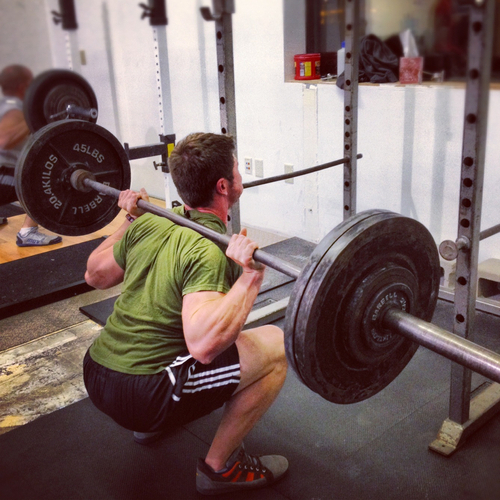
A low-bar position has the bar resting between the upper part of the traps and the rear deltoids, like this:
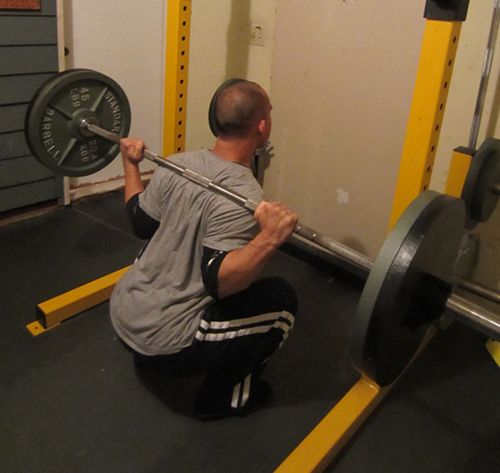
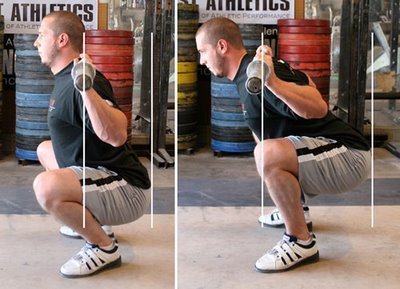
In the high-bar position, your torso will remain more upright during the squat than the low-bar position. Here’s a good illustration of this:

Both forms are correct but many people will find themselves stronger in the low-bar position because it’s more hip dominant (whereas the high-bar position is more knee dominant). That said, some people find the low-bar position very uncomfortable and naturally prefer the high-bar variant. Many people, myself included, find a happy medium.
The takeaway here is you should experiment with bar position to find what works best for you. It’s also smart to alternate between bar positions now and then, as improving your Squat in one will tend to help your performance in the other.
Once you have the bar position worked out, you’re ready to unrack the weight. Make sure your feet are directly under the bar so you can squat it off the pins, and make sure your chest is out and your shoulder blades pinched together.
After you unrack the bar, take a couple steps backward, place your feet between hip- and shoulder-width apart, and turn your feet about 15 to 20 degrees out. Keep your head in a neutral position, your elbows down and chest up, and take a deep breath.
You’re now ready to descend.
The Descent
Begin the descent by simultaneously pushing your hips back and breaking your knees (don’t consciously do one or the other first). You should feel some backward motion in your hips and the sensation that you’re sitting back onto your heels.
Keep your knees in line with and behind your toes (don’t let them collapse in or extend past your toes), and continue to sit down in between your hips. Your torso will naturally lean forward as you descend, but don’t exaggerate this–try not to exceed a 45-degree lean.
Sit down until your thighs are parallel or just below parallel to the ground, which you can see in this image shown earlier:
Once you reach this bottom position, you’re ready to ascend.
The Ascension
The key to starting a good ascent is driving through your heels and the middle of your feet, and ensuring that your shoulders move upward at the same rate as your hips.
As you continue to ascend, drive the hips forward by squeezing the glutes until you’ve at the top of the rep.
Here’s a good video that summarizes all these points:
Tip #2 to Increase Your Squat:
Squat Heavy
The subject of “ideal” rep ranges is complex, so I won’t dive into it in this article. (I do talk a bit about it on my article on hypertrophy, though.)
Instead, I’ll keep this short and sweet:
If you’re new to weightlifting (you’ve been lifting for less than a year), you should be doing all squatting in the 4 to 6 rep range (guys) or 8 to 10 rep range (girls).
That means you use a weight that you can do at least 4 by not more than 6 reps with, and once you hit 6 reps, you add weight for the next set. If you want to see how this fits into an actual workout, check out my article on the ultimate legs workout.
If you’re an experienced weightlifter, you can benefit from working in different rep ranges, or periodizing your training. I will be discussing periodization in more detail in my next book, Beyond Bigger Leaner Stronger (which will be out in a month or two), and will be sharing a full periodized program for advanced lifters, but here’s a simple way to go about it for your squatting:
Week 1′s Squats: 2 sets of 2 to 3 reps (~90% of 1RM) + 1 sets of 4 to 6 reps (~80% of 1 RM) + 1 set of 8 to 10 reps (~70% of 1RM)
Week 2′s Squats: 2 sets of 2 to 3 reps + 2 sets of 4 to 6 reps + 1 set of 8 to 10 reps
Week 3′s Squats: 2 sets of 2 to 3 reps + 3 sets of 4 to 6 reps + 1 set of 8 to 10 reps
Week 4′s Squats: 2 sets of 2 to 3 reps + 3 sets of 4 to 6 reps + 1 set of 8 to 10 reps
Week 5′s Squats: 2 sets of 2 to 3 reps + 2 sets of one-rep max
As you can see, the above program has you squatting once per week (per 5 to 7 days), and involves working in the 2 to 3 range, which provides maximal overload, in the 4 to 6 rep work is the “sweet spot” for myofibrillar muscle growth, and in the 8 to 10 rep range, which is to stimulate growth via metabolic stress and cellular fatigue.
Once you’ve finished the 5-week cycle, you should deload for a week (or take a week off the weights), after which you can start again from week 1.
Tip #3 to Increase Your Squat:
Squat Deep Even If That Means Dropping the Weight
This was touched on in the first tip on form, but it deserves its own section.
The bottom line is if you’re not at least reaching parallel in your squatting, you’re cheating yourself. This has been part of the collective gymlore for years, but it’s backed by quite a bit of research:
The deeper you squat, the more your legs will improve in both size and strength (yeah, it’s really that simple).
The deeper you squat, the more your glutes are activated.
The deeper you squat, the more your hips take the load off your knees.
The deeper you squat, the more your lower back is strengthened.
The deeper you squat, the more force you’ll be able to generate with your legs (which is particularly relevant to athletes).
I could go on, but that gives a pretty comprehensive list of reason why you need to be getting deep in your squats. How deep, though?
While there are benefits to the Full Squat, or “Ass to Grass Squat,” it requires quite a bit of mobility and flexibility, which we’re going to talk about next. I recommend you start with the Parallel Squat and build your strength up there before including the Full Squat in your leg workouts.
Tip #4 to Increase Your Squat:
Improve Your Lower-Body Mobility
While many people don’t realize how important proper form and depth is in the Squat, many of them couldn’t do it properly even if they wanted to. They simply lack the flexibility and mobility.
The most common problems are tight hips and hamstrings, but the ankles and calves often give people trouble as well. Fortunately, you can do a series of simple exercises to limber up and enable yourself to squat correctly with ease.
To learn more about this, check out my articles on how to improve lower body mobility and foam roller exercises that improve performance.
Tip #5 to Increase Your Squat:
Use the Right Shoes
Believe it or not, the wrong shoes can make squatting significantly harder.
Bad shoes are those with a raised heel, as this shifts your body weight forward and thus makes it harder for you to keep your knees behind your toes and your torso at the optimal angle as you descend and ascend.
By using shoes with flat soles instead, you’ll find it much easier to sit back onto your heels and involve your hamstrings and glutes more effectively. Furthermore, these shoes put you an inch or two closer to the floor, which means that’s an inch or two less that your body has to travel.
I’ve tried quite a few shoes and I like these from New Balance and these from Inov-8 best.
Tip #6 to Increase Your Squat:
Do “Hold” Reps
The portion of the Squat that gives people the most trouble is getting out of the bottom. It requires an immense amount of force from and coordination between many muscles in the body.
It doesn’t have to haunt us though–we can actually focus on it in our training and turn it into a strong point. We do this by performing “Hold Reps.”
These are very simple to do: You squat like normal, but once you reach the bottom, you hold the position for 5 to 7 seconds, taking full, deep breaths, and then stand up.
This is not only a great way to train the glutes, hamstrings, and hip muscles that drive you up and out of the bottom of the Squat, it also greatly increases core strength and stability.
To get the most out of Hold Reps, I recommend you start with about 60% of your 1RM (weight that you would normally get 10 to 12 reps with) and work up to performing them with about 75 to 80% of your 1RM (weight that you would normally get 6 to 8 reps with).
In terms of how to work them into a workout, I prefer adding them after my normal heavy sets. I don’t replace my heavy 2 to 3 or 4 to 6 rep sets with Holds–I add a couple sets of Hold Reps after.
Tip #7 to Increase Your Squat:
Get Pumped Up
If you an experienced weightlifter, you know the importance of being mentally prepared for heavy lifts. You can psych yourself out or up and hit or miss a lift accordingly.
You’ve undoubtedly seen powerlifters go through what sometimes looks like a ridiculous, satanic ritual before attempting a lift, but did you know that pumping yourself up like that has been scientifically proven to work?
A study conducted by researchers at AUT University with elite rugby players found that when they pumped themselves up for a Bench Press set, force production increased by 8%. Researchers also found that distraction significantly decreased force production–there was a 12% difference in force production between the pumped-up and distracted lifters.
The takeaway here is pump yourself up your for heavy lifts and concentrate on each rep as your perform it–no talking, being talked to, or mental wandering.
I don’t stomp around the gym like a madman to get pumped up. I find that the right workout songs helps dramatically for getting pumped up, and before I grab the bar, I like to take 10 to 15 seconds to focus on the lift I’m about to perform and visualize myself performing it successfully. Sounds silly? Research has shown that visualizing a successful lift before performing it can increase strength.
What do you think about these tips on how to increase your squat? Have anything else to share? Let me know in the comments below!
How to get lean and build serious muscle and strength, faster than you ever thought possible…
Depending on how you eat, train, and rest, building muscle and losing fat can be incredibly easy or incredibly hard. Unfortunately, most people make many different mistakes that leave them stuck in a rut.
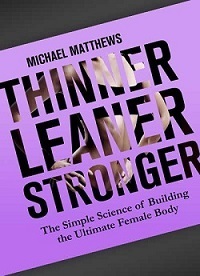
And that’s why I wrote Bigger Leaner Stronger for men, and Thinner Leaner Stronger for women: they lay out EVERYTHING you need to know about diet and training to build muscle and lose fat effectively…
Buy now
AmazonAmazon UKAmazon AUAmazon CAAudible AudiobookBNiBooksiBooks AudiobookKoboGoogle Play
Buy now
AmazonAmazon UKAmazon AUAmazon CAAudible AudiobookBNiBooksiBooks AudiobookKoboGoogle Play
March 4, 2014
The Principles of Persuasion: Authority Knows Best
Great success, whether in your career, relationships, or even some personal goals, requires an extraordinary ability to persuade.
You have to be able to persuade your superiors you’re worthy of a promotion. You have to be able to persuade others to buy your products and services. You have to be able to persuade the guy or girl to go on a date with you. Sometimes you have to be able to persuade people to assist you in your personal efforts
When boiled down to utter simplicity, the intended result of all efforts to persuade is to get someone to say “yes” and take action, and if you can do this skillfully, you can do things others can only dream of.
Imagine if you could apply simple principles to your business’ marketing that trigger near-automatic compliance in your prospects. Imagine if you could engineer circumstances that emotionally compel people to see things your way and say “yes.” Imagine if these devices were so subtle and camouflaged that they were completely imperceptible to the average person. And best of all, imagine if none of it was unethical, underhanded or deceptive—if you could do these things with integrity and always deliver exactly what was promised.
Well, such principles do exist and they do work—so well that it’s sometimes scary.
For over a half a century, many mysteries of what makes people comply have been unraveled by pioneering psychologists. Through much social testing—some brilliant and imaginative, some bizarre—scientists have learned some very profound, sweeping things about how to influence our thoughts, attitudes and actions.
The most powerful tactics seem to have the power to generate near-unthinking, mindless compliance to orders—orders that otherwise presented would rarely be accepted. It’s as if there are certain “short circuits” simply hard-wired into us, whether as human nature or through cultural conditioning, and they can be exploited with push-button ease.
As I have no desire to put you to sleep with mountains of abstract psychological theory, I’ve “pre-digested” much of it for you and sifted out the gems. What’s left is a select handful of simple, incredibly powerful persuasion tools that will guide you in all of your marketing efforts and enable you to lace it with a bit of “irresistible.”
Much of the information in this series of articles was brilliantly presented by Dr. Robert Cialdini in his groundbreaking work, Influence, and some was culled from various other works on the subject. I augmented my selections with various business and marketing examples, and as you’ll see, the tactics you’re about to learn are covertly used all around us every day to push and pull our minds and wallets into waiting hands.
So, let’s get started with the first principle of persuasion: authority.
Principle of Persuasion: Authority Knows Best
One of the most fundamental rules of society that we are trained to follow from birth is that obedience to authority is correct and disobedience is incorrect and punishable. This is the theme of many parental lessons, schoolhouse rhymes, and childhood stories, and it carries into adulthood in the form of educational, legal, military, and political systems that expect unquestioning compliance to orders from those legitimately in power.
Look even in the Bible, where a failure to obey the ultimate Authority lost paradise for not only Adam and Eve, but the rest of the human race. In the story of Abraham, he plunged a dagger into his own son’s heart for no reason other than God’s unexplained command. It was a test of obedience and he had passed.
Following authority does, of course, have societal value. Its polar opposite—anarchy—is marked by social regression and disruption. Obedience to authority as allowed the development of sophisticated structures of production, commerce, politics, lawfulness, and general societal advancement that would be otherwise impossible. Many experts know more than us and their advice proves very beneficial, making our lives easier in many ways.
But like the other principles of persuasion, when such an effective persuader is intimately woven into our culture, its power can be exploited. The scary nature of unwavering deference to authority is well illustrated in the famous experiment run by a psychology professor named Stanley Milgram.
In the experiment, Milgram recruited young college students for what they thought was an experiment of the relationship between punishment and learning. But it had nothing to do with that—it was an experiment of obedience to authority. The setup was simple: a student would enter Milgram’s lab to find a researcher holding a clipboard and a man sitting in an adjacent, glassed-off room. The researcher and subject (student) would strap the man into his chair and attach a pair of electrodes to his arms.
Once the experiment began, the researcher would ask the “Learner” strapped to the chair a series of questions. If the Learner got one wrong, the subject was told by the researcher to activate an electroshock machine and deliver a shock to him. With each error, the shocks would increase by 15 volts. The subject thought the researcher was studying the effect of punishment on the Learner’s ability to focus and answer questions he should know the answer to. But there was a twist. The Learner was an actor, and there were no shocks. The researcher was actually studying the subject’s willingness to inflict serious pain on another human being simply because an authority figure said to do so.
The scenario planned by the actor and researcher was gruesome. The first series of shocks produced nearly inaudible grunts, but as they continued, the actor started putting on a show. Groans turned to yelps, turned to agonized screams, turned to desperate pleading for the experiment to stop. But the subjects kept delivering shocks as instructed. It wasn’t until the 300-volt shock had been sent and the victim desperately shouted that he would no longer try to answer any more questions did anyone stop—and even then, only a minority of subjects did.
A full 62 percent of subjects administered every shock—up to 450 volts—despite the actor’s writhing, begging, and shrieking. More variations of the experiment were done to see if both genders would behave the same way (they did), if the subjects were fully aware of the physical harm (in this variation, the actor announced beforehand that he had a heart condition and during the ordeal, cried out that his heart is starting to bother him—circumstances that made no different in people’s compliance), and to ensure that those participating represented a fair cross-section of society, not a morally degraded, sadistic minority (they did).
What could account for this horrible, unwavering readiness to inflict suffering upon another? Well, in Milgram’s own words, “It is the extreme willingness of adults to go to almost any lengths on the command of an authority that constitutes the chief finding of the study.”
In three simple words: people obey authority.
How Authority is Used to Persuade
Let’s now enter the realm of marketing, where appeals to authority are constantly made. Advertisers hire actors to play lawyers and advise us. They inform us that their product is prescribed the most by doctors. They announce their status as “leading authority” as proclaimed by significant third-party organizations. They tout their many years of expertise, their impressive achievements.
All smart marketers strive toward establishing themselves or their clients as experts—authorities—in their prospects’ eyes. They know full well that many of us will feel the pull of automatic deference and thus will be drawn to that company’s products and services over alternatives that don’t share that status.
Sometimes the connections made are obviously meaningless, but the pull of authority works nonetheless. In the 1970s, Sanka brand coffee ran commercials featuring the then-popular actor Robert Young advising people on staying away from caffeine and drinking de-caffeinated Sanka instead. It was an incredibly successful campaign that ran for many years. But why should people take Robert Young’s word on caffeine? Because in the mind of the American public, he was Marcus Welby, M.D., the role he played on a long-popular TV series. It didn’t make sense to listen to a man who only pretended to be a doctor, but he convinced many that caffeine was bad and Sanka was good.
People are swayed by experts in every area of their lives: the products they buy, the advice they accept, the decisions they make. They know that following authority is not only a matter of avoiding punishment, but in many cases, achieving better survival.
Authority’s power to persuade is highest when the object of authority appears knowledgeable and honest, bestowing great credibility. When these two factors are severely lacking, the object not only loses its influence but its status as an authority—it becomes known as a fraud.
You’ve probably seen advertisers admit a small shortcoming in their position or product before delivering the praise. “We’re no. 2, but we try harder”—Avis. “Oh, the disadvantages of Benson & Hedges.” “L’Oreal, a bit more expensive and worth it” and then later, “Because you’re worth it.” Why do they do this?
Because by arguing a little against their own interests, even though the small disadvantages are inconsequential when compared to the advantages delivered thereafter, they “prove” their honesty. By establishing truthfulness on minor issues, we find them more credible when stressing the more important points of their argument.
I’ve seen this done many times with information products, where the marketer starts his sales pitch by actually telling you who shouldn’t bother with his product or service and why. He “pulls no punches” about the fact that success with his product takes hard work, persistence, and won’t make you rich overnight. He even tells you to not buy it if you’re too hard up on cash and instead, use his free advices to make some money first and then buy it.
So, if you want to improve your ability to persuade, you should always be looking to establish yourself as a knowledgeable, honest authority in your field.
How do you do that?
Well, if you deliver great products and services and make this fact well-known, you will be naturally on your way. But there are ways to shortcut the process, too. You can associate yourself with already-existing authorities in your field; you can associate yourself with the types of people considered authoritative in your industry; you can leverage an impressive track record if you have one (years in business, awards received, etc.); you can write a book for your industry (a great way to take the position of expert); and so on.
If you give it some thought, you can surely think of a few other ways to come across as expert and honest, and thus, authoritative. And in the next article in this series, we’ll look at another principle of persuasion: liking.
What do you think of this principle of persuasion? Have anything else to add? Let me know in the comments below!
March 3, 2014
The Definitive Guide to Pre-Workout Nutrition
Like most things bodybuilding, the subject of preworkout nutrition is riddled with contradictions.
Should you eat protein before you train? Carbohydrates? Fats? If so, what types and amounts of food are best? Or does pre-workout nutrition not matter? Will eating before training have no appreciable effect on your training or gains? Or, last but not least, is fasted training the best, as commonly claimed by many proponents of intermittent fasting?
Well, let’s get to the bottom of these questions and come to some definitive, science-based conclusions as to what is best when it comes to pre-workout nutrition. Let’s start with pre-workout protein.
Pre-Workout Protein: Helps Build Muscle or Is Irrelevant?
As you probably know, how much protein you eat every day dramatically affects your body’s ability to build muscle. Eat too little and you will hinder your gains in the gym.
But what about when you eat protein? Does that matter? Is eating protein before a workout particularly helpful?
Some people say it doesn’t matter, and they’ll cite studies such as this and this to back up their claims. On the other hand, you can find evidence that pre-workout protein does enhance post-workout muscle growth in studies such as this and this.
What gives?
Well, a big “invisible” piece of this puzzle has to do with when study subjects had last eaten protein before eating their pre-workout meals.
You see, when you eat food, it takes your body several hours to fully absorb the nutrients contained in the food. The larger the meal, the longer it takes (research shows that absorption can take anywhere from 2 to 6+ hours).
This means that if you had eaten a sizable amount of protein an hour or two prior to working out, your plasma (blood) amino acid levels would be quite high come workout time. In this state, it’s unlikely that more protein before training would make much of a difference in terms of helping you build more muscle because your body is already in an anabolic state.
On the other hand, if it had been several hours since you last ate protein, and especially if the amount last eaten was small (less than 20 grams), your plasma amino acid levels would likely be low come workout time. In this case, research shows that pre-workout protein likely will help you build more muscle due to it spiking plasma amino acid levels (and thus protein synthesis) before training.
Most people seem to train early in the morning or several hours after lunch (after work, before dinner), and this is why I generally recommend 20 to 40 grams of protein about 30 minutes before training. If, however, you train within 1 to 2 hours of eating at least that much protein, you can probably skip the pre-workout protein and not miss out on any extra potential muscle growth.
So, with that out of the way, let’s talk types of pre-workout protein. Are some better than others?
Well, we know that the faster a protein is digested and the more leucine (an amino acid that stimulates protein synthesis) it has, the more short-term muscle growth it stimulates.
And while any form of pre-workout protein will elevate amino acids to some degree, you’ll get the quickest and greatest elevation from a faster-digesting form like whey protein, which is also very high in leucine.
This is why whey protein is a particularly good form of pre-workout protein, and one I use and recommend. (Research shows it’s also great for post-workout nutrition for the same reasons.)
In terms of which whey protein product I use and recommend, I’m very picky when it comes to artificial sweeteners and food dyes, MSG, and other chemicals commonly found in whey protein powders. I like my workout supplements naturally sweetened and as free of artificial additives as possible, and recommend the same for my readers.
These requirements have really limited me in the past, and the whey protein powders I used were particularly expensive (upwards of $25 – 30 per pound). Fortunately, I’ve been able to leverage my success as an author to launch my own line of naturally sweetened, filler-free workout supplements, and it includes a 100% whey protein isolate product.
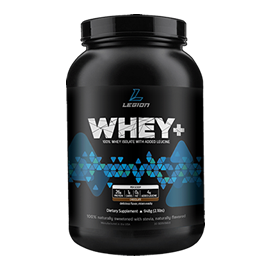
It’s called WHEY+, and it’s essentially the whey protein powder I’ve always wanted.
WHEY+ is 100% whey isolate protein, not a blend of isolate and cheaper forms of protein.
WHEY+ is made from milk that comes from hormone-free cows.
WHEY+ contains wholly intact, undenatured protein made with cold micro- and ultra-filtration technologies.
WHEY+ has 4 additional grams of leucine per serving to further stimulate muscle growth.
WHEY+ is naturally sweetened with stevia, and naturally flavored.
WHEY+ has no artificial junk like maltodextrin, MSG, or artificial food dyes.
Buy now
LEGION (SAVE 10%!)Amazon
Pre-Workout Carbohydrates: Improves Performance or Not?
Fortunately for us, the research on pre-workout carbohydrates is much more straightforward: they improve performance–period.
Specifically, eating carbohydrates 15 to 30 minutes before exercise will provide your muscles with additional fuel for your workouts, but will not directly stimulate additional muscle growth.
I say directly stimulate because while eating pre-workout carbohydrates doesn’t accelerate protein synthesis, it can help you push more weight and reps in your workouts, thus indirectly helping you build more muscle over time (so long as your training and diet are right).
So, if pre-workout carbohydrates are good, what types are best?
Again, the research is pretty straightforward: low-glycemic carbohydrates are best for prolonged (2+ hour) endurance exercise, and high-glycemic carbohydrates are best for shorter, more intense workouts.
In terms of what to eat, I don’t like pre-workout carbohydrate supplements. They’re little more than over-hyped, overpriced tubs of simple sugars like dextrose and maltodextrin. Don’t buy into the marketing BS–there’s nothing inherently special about these types of supplements.
Instead, I much prefer getting my pre-workout carbohydrates from food. My favorite sources are rice milk (tastes great with whey protein!) and bananas, but other popular, healthy choices are instant oat meal, dates and figs, melon, white potato, white rice, raisins, and sweet potato.
And last but not least, how much pre-workout carbohydrate should you eat, and when?
I recommend you eat 25 to 50 grams of carbohydrates 30 minutes before training to feel a noticeable improvement in performance.
Pre-Workout Fats: Are They Ignored For a Good Reason?
Almost all talk of pre-workout nutrition revolves around protein and carbohydrates. What about fats? Do they not matter?
Well, there are theories that by increasing pre-workout fat intake, you can reduce carbohydrate utilization during exercise and thereby improve performance. Research has proven otherwise, however:
One study demonstrated that increased dietary fat intake 24 hours before exercise (cycling, in this case) reduced time-trial performance compared with a high carbohydrate diet.
Another study demonstrated that even when your body becomes “fat adapted,” it uses carbohydrate more sparingly while exercising, but performance isn’t improved.
A review conducted by researchers at Deakin University contains the following conclusion about pre-workout fat intake:
“Thus, it would appear that while such a strategy can have a marked effect on exercise metabolism (i.e. reduced carbohydrate utilization), there is no beneficial effect on exercise performance.”
So, feel free to have dietary fat before you work out, but don’t expect anything special to come out of it.
Fasted Training: The Way of the Future or a Recipe for Disaster?
Most people equate “fasted training” with training on an empty stomach, but that’s not quite it.
Whether or not your body is in a “fasted state” depends on plasma (blood) insulin levels.
You see, when your body digests food, it breaks it down into various types of molecules that your cells can use (amino acids, glucose, vitamins, minerals, and so forth). These molecules are absorbed through the walls of your small intestine into the bloodstream. Insulin is released as well and its job is to shuttle these molecules into cells for use.
Now, depending on how much you eat, your plasma (blood) insulin levels can remain elevated for several hours (anywhere from 3 – 6+), and when your body is in this “fed” state–when its insulin levels are elevated and its absorbing nutrients you’ve eaten–little-to-no fat burning occurs. This is because insulin blocks lipolysis (fat “mobilization’).
When your body finishes absorbing all the nutrients eaten, plasma insulin levels decrease to a low, “baseline” level, and research has shown that in this state, exercise-induced fat loss is accelerated. Weightlifting in a fasted state has proven to be particularly effective in this regard.
There is also evidence that fasted training favorably affects the post-workout anabolic response to food, but more research will need to be done on this mechanism before we really know what’s happening here.
There are downsides to fasted training, however.
Some people’s bodies just don’t do well with fasted training. They feel sluggish and weak and their workouts suffer.
When you exercise in a fasted state, muscle breakdown is dramatically increased. To prevent this, you want to eat 10 grams of BCAAs or 3-5 grams of leucine (this is the cheaper option, but it tastes pretty bad) 10 – 15 minutes before training, This suppresses muscle breakdown during your workout, thus negating the problem caused by training in a fasted state.
All things considered, fasted training is a useful tool for weight loss purposes, but if you’re maintaining or bulking, I recommend you have carbohydrates before training to get the substantial performance boost that they provide (as you’re trying to maximize muscle growth, not fat loss).
Pre-Workout Supplements: Worth It or Not?
Pre-workout supplements are incredibly popular, but are they worth it?
Unfortunately, the majority on the market are more or less junk, and are notorious for several deceitful practices:
Including ineffective ingredients to make long, impressive nutrition labels.
Citing misinterpreted, cherry-picked, flawed, or biased studies to sell you on the effectiveness of certain ingredients.
Under-dosing key ingredients and hiding it behind the “proprietary blend” labeling loophole. This allows companies to not disclose the actual composition of each part of the blend, and thus hide the truth about what you’re actually buying.
Using substantial amounts of caffeine and cheap carbohydrate powders like maltodextrin to give a kick of energy. This is an easy, inexpensive way for supplement companies to make you think their product is good.
Using chemical names of everyday compounds to mislead you into thinking the products have special ingredients. For instance, epigallo-3-catechin-3-O-b-gallate is just green tea extract, and 1,3,7-trimethylxanthine is just caffeine.
Why do these things?
Because it’s extremely profitable.
What most consumers don’t know is supplement companies make very little money on certain products, like protein powder, and need to make up for that by making exorbitant profits on others. The pre-workout supplement is one of them.
The scam is very simple: fill the product with cheap stimulants and skimp on everything else. In many cases, you’d feel just as wired on a few caffeine pills (and save a bunch of money).
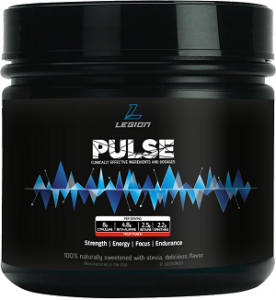
There are, however, several other safe, natural molecules that can improve your performance…if they’re dosed properly. And you’ll find 6 of the most effective performance-enhancing ingredients in my pre-workout supplement PULSE (and at clinically effective dosages):
Caffeine. This increases muscle endurance and strength.
Theanine. This reduces the effects of mental and physical stress, increases the production of nitric oxide, which improves blood flow, and improves alertness, focus, attention, memory, mental task performance, and mood.
Citrulline malate. This improves muscle endurance, relieves muscle soreness, and improves aerobic performance.
Beta-alanine. This reduces exercise-induced fatigue, improves anaerobic exercise capacity, and exhibits mechanisms that can increase lean mass.
Ornithine. This reduces fatigue in prolonged exercise, promotes lipid oxidation (the burning of fat for energy as opposed to carbohydrate or glycogen), and increases human growth hormone and insulin-like growth-factor 1 production when paired with arginine.
Betaine. This improves muscle endurance,increases strength, and increases human growth hormone and insulin-like growth factor 1 production in response to acute exercise.
What you won’t find in PULSE is equally special:
No artificial sweeteners (naturally sweetened with stevia).
No artificial food dyes.
No unnecessary fillers, carbohydrate powders, or junk ingredients.
While everyone claims to have the best pre-workout supplement on the market, I can actually back up such claim with real science, and real numbers.
Buy now
LEGION (SAVE 10%!)Amazon
What did you think of this pre-workout nutrition guide? Have anything else to share? Let me know in the comments below!
How to get lean and build serious muscle and strength, faster than you ever thought possible…
Depending on how you eat, train, and rest, building muscle and losing fat can be incredibly easy or incredibly hard. Unfortunately, most people make many different mistakes that leave them stuck in a rut.
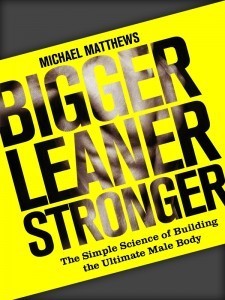
And that’s why I wrote Bigger Leaner Stronger for men, and Thinner Leaner Stronger for women: they lay out EVERYTHING you need to know about diet and training to build muscle and lose fat effectively…
Buy now
AmazonAmazon UKAmazon AUAmazon CAAudible AudiobookBNiBooksiBooks AudiobookKoboGoogle Play
Buy now
AmazonAmazon UKAmazon AUAmazon CAAudible AudiobookBNiBooksiBooks AudiobookKoboGoogle Play
March 2, 2014
MFL Podcast #8: WBFF Pro Bree Lind on staying fit like a pro (even while pregnant!)
In this podcast, I interview WBFF Pro Bree Lind, and we talk about…
The WRONG way to prepare for a competition (the way that leaves you weak, small, and flat).
How to train and eat while pregnant to stay fit and healthy.
Why a good fitness routine helps you find balance in your life.
Bree’s take on proper weightlifting methods for women.
Why overly restrictive diets are counterproductive in the long run.
The science of how calorie restriction relates to muscle growth.
And more…
You can also find this podcast in iTunes and the Windows Phone Podcasts Store:


ARTICLES RELATED TO THIS PODCAST
Carbohydrates and Weight Loss: Should You Go Low-Carb? http://www.muscleforlife.com/carbohydrates-and-weight-loss-should-you-go-low-carb/
How to Speed Up Your Metabolism for Easier Weight Loss: http://www.muscleforlife.com/how-to-speed-up-metabolism/
How to Speed Up Your Metabolism for Easier Weight Loss: http://www.muscleforlife.com/how-to-speed-up-metabolism/
Workout Motivation: The Power of Habit: http://www.muscleforlife.com/workout-motivation-part-1-the-power-of-habit/
3 Powerful Ways Working Out Makes You Better at Life: http://www.muscleforlife.com/3-powerful-ways-working-out-makes-you-better-at-life/
8 Ancient Laws for Creating a Simpler, Happier Life: http://www.muscleforlife.com/8-ancient-laws-for-creating-a-simpler-happier-life/
The Ultimate Leg Workout: The Best Leg Exercises for Big Wheels: http://www.muscleforlife.com/best-legs-exercises/
The Best Way to Gain Muscle Without Getting Fat: http://www.muscleforlife.com/the-best-way-to-gain-muscle-not-fat/
The Definitive Guide to the “If It Fits Your Macros” Diet: http://www.muscleforlife.com/what-is-if-it-fits-your-macros-and-does-it-work/
The Definitive Guide to Effective Meal Planning: http://www.muscleforlife.com/healthy-meal-planning-tips/
The Definitive Guide to Vitamins and Minerals: http://www.muscleforlife.com/guide-to-vitamins-and-minerals/
The Ultimate Fitness Plan for Women: http://www.muscleforlife.com/the-ultimate-fitness-plan-for-women/
The Definitive Guide to Muscle Recovery: http://www.muscleforlife.com/the-definitive-guide-to-muscle-recovery-and-muscle-growth/
What did you think of the podcast? Have any requests or suggestions? Let me know in the comments below!


