
Michael Matthews's Blog, page 135
December 24, 2013
My Merry Christmas and Happy Holidays Message to You
Family, friends, and festiveness…I love how the holidays reminds us of the things that really matter. How they remind us to slow down and enjoy the time and people we have.
From my family to yours, I want to wish you a VERY Merry Christmas and Happy Holidays. I’m very grateful for your support, and I can’t wait to do my best in helping you make 2014 the best year ever.
In closing, I’d like to leave you with my favorite Christmas poem, Ring Out, Wild Bells by Lord Alfred Tennyson:
Ring out, wild bells, to the wild sky,
The flying cloud, the frosty light
The year is dying in the night;
Ring out, wild bells, and let him die.
Ring out the old, ring in the new,
Ring, happy bells, across the snow:
The year is going, let him go;
Ring out the false, ring in the true.
Ring out the grief that saps the mind,
For those that here we see no more,
Ring out the feud of rich and poor,
Ring in redress to all mankind.
Ring out a slowly dying cause,
And ancient forms of party strife;
Ring in the nobler modes of life,
With sweeter manners, purer laws.
Ring out the want, the care, the sin,
The faithless coldness of the times;
Ring out, ring out thy mournful rhymes,
But ring the fuller minstrel in.
Ring out false pride in place and blood,
The civic slander and the spite;
Ring in the love of truth and right,
Ring in the common love of good.
Ring out old shapes of foul disease,
Ring out the narrowing lust of gold;
Ring out the thousand wars of old,
Ring in the thousand years of peace.
Ring in the valiant man and free,
The larger heart the kindlier hand;
Ring out the darkness of the land,
Ring in the Christ that is to be.
Merry Christmas and Happy Holidays!


December 23, 2013
The Ultimate Chest Workout: Chest Exercises for Awesome Pecs
“Help, my chest is too small!”
I receive those words, or something similar, at least 10 times per week. It’s by far the most common complaint among the guys that email and message me asking for help.
And I understand. Building a big, strong chest can be quite tough if you’re focusing on the wrong chest exercises and rep ranges (and if your nutrition is off, of course).
In this article, I’m going to share with you the chest exercises that have not only helped me build a full, strong chest, but have helped many of my readers and followers do the same.
You Don’t Just Want to Build a “Big Chest”–You Want a Full, Proportionate Chest
The first thing I want to address is the goal. Simply having a “big chest” shouldn’t be the goal, because just adding size willy-nilly won’t necessarily give you the look you want.
The most common mistake we want to avoid is building a big lower chest and small upper chest. Here’s an example of this:

Now, he doesn’t have a bad physique, and has clearly been working hard for at least a couple of years. But take a closer look at his chest. All his mass is on the lower, outer portions of he pecs, with little-to-none in the upper, inner portions.
Compare that now to a picture of Greg Plitt’s chest:

While the overall physiques aren’t remotely comparable, again look to the chest It’s actually not THAT much larger than the first, but it’s much better developed. But what’s the major difference here? The upper and inner portions of the chest.
“But wait a minute,” you might be thinking. “Isn’t the whole ‘upper’ and ‘lower’ chest thing a myth?”
Well, let’s take a moment to address that.
The Truth About the “Upper Chest” and “Lower Chest”
The “upper chest” debate has been going on for a long time.
Do you need to do chest exercises specifically for the upper chest? Or do all chest exercises stimulate all available muscle fibers? And even more to the point, is there even such a thing as the “upper chest?”
Well, I’ll keep this short and sweet.
First, yes, there is a muscle that forms what we call the “upper chest.” It’s known as the clavicular pectoralis. Here’s what it looks like:
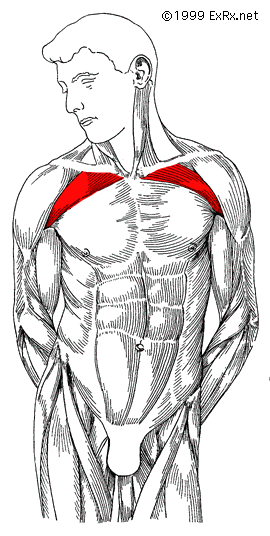
clavicular pectoralis for upper chest
Despite what people might tell you, this muscle is not a part of the big chest muscle, the pectoralis major. While part of the pectoralis major shares nerves with the clavicular pectoralis, the angle of the muscle fibers varies greatly. Thus, certain movements can emphasize the pectoralis major, whereas others can emphasize the clavicular pectoralis.
Notice that I say emphasize, not isolate. That’s because all movements that emphasize one of the two do, to some degree, involve the other. But the bottom line is proper chest development requires a lot of emphasis on the clavicular pectoralis for two simple reasons:
It’s a small, stubborn muscle that takes its sweet time to grow.
The movements that are best for developing it also happen to be great for growing the pectoralis major as well.
Curious how this plays out in the real world? Well, let’s look to my own body as an example. First, check out the following picture of me, taken about 2 years ago:

I looked decent, but look at the upper portion of my left pec (the right looks bigger than it is because of how I’m holding the phone). As you can see, I had a very bottom-heavy chest with not much to show for upstairs.
I started addressing this by following the chest workouts I’m going to share you with later in this article, and this was the result:
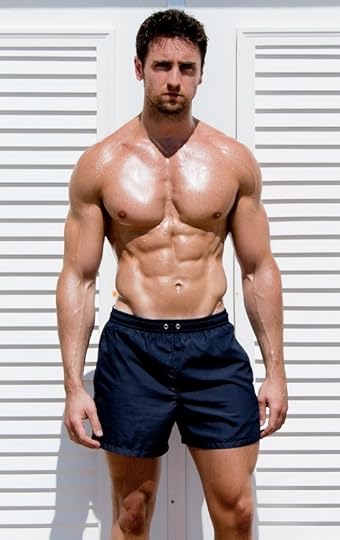
See how much of a difference a full upper chest makes? And yes, that transformation was accomplished by doing exactly what I’m going to share with you here, and nothing else.
So, let’s get right to it then…
The Ultimate Chest Workout:
The Chest Exercises That Build Outstanding Pecs
I go over the science of this full on my article on muscle hypertrophy (muscle growth), but here’s the first thing you need to know:
If you want to build a big, strong chest, the majority of your reps should be performed with 80 – 85% of your one-rep max (1RM). This is the 4 – 6 or 5 – 7 rep range.
Pump away in the 10+ rep range all you want, and you’ll never have a great chest. I guarantee it. That’s why you’re going to see a lot of heavy weightlifting in my routine.
The Best Chest Exercises
The best chest exercises are few, and accomplish a very simple task: they maximally recruit muscle fibers, and allow for heavy, progressive overload without dramatically increasing the risk of injury. These exercises are…
Barbell Bench Press (Incline and Flat, free weight not Smith Machine)
Dumbbell Bench Press (Incline and Flat)
Dips (, weighted if possible)
These are the exercises you must master if you want to build an impressive chest. Period. Forget cable work, dumbbell flys, push-up variations, machines, and every other type of chest exercise out there. They are not nearly as effective as the above three core, foundation-building lifts.
Why no Smith Machine, you ask? Simply because research has proven it inferior to free weight exercises in terms of muscle recruitment.
And why no decline pressing? Because the decline press not only reduces the range of motion of the exercise, thus reducing the amount of work your muscles have to do, it places maximum emphasis on the pectoralis major and minimum emphasis on the clavicular pectoralis, which simply isn’t ideal (if you want to build a really droopy, bottom-heavy chest, do a ton of flat and decline pressing and no incline pressing).
Now, many people are surprised to hear this advice of mine, and are even more surprised when they see my pictures and hear that was accomplished by doing nothing but the exercises listed above. That’s right–not a single fly, cable crossover, or machine rep was done.
Is building an awesome chest really that simple? Yep, it is.
(That said, I do think dumbbell flys and cable work has a place in the routine of an advanced weightlifter that has already built a big, strong chest, but we’ll save that for another article. In order to get to that point, it only requires the above.)
The key isn’t just doing the above exercises, however. It’s progressing on them. That is, increasing the amount of weight you can push over time. If you don’t get stronger, you won’t get bigger.
Now, a few tips in performing these exercises:
Barbell Bench Press
Many people worry that the Barbell Bench Press puts your shoulders at a high risk of injury. This is true only if your form is improper.
Here are the two major points of form that protect your shoulders when you’re performing the Barbell Bench Press:
1. Keep your elbows at a 20 – 30 degree angle relative to your torso. The most common mistake people make is they flare their elbows out, sometimes approaching 90 degrees relative to their torsos. This dramatically increases the stress on your shoulders.
In case you’re not sure what the angles look like, here’s a picture from my book Bigger Leaner Stronger:
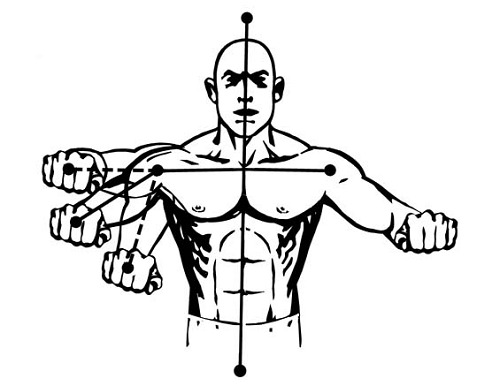
The position where the hands are closest to the torso puts the arms at about 20 degrees relative to the torso. The next position out is about 45 degrees. And the furthermost position is 90 degrees.
2. Keep your shoulder blades pinched and your back slightly arched. You don’t want to flatten your chest out at the bottom of the lift, rolling your shoulders. Instead, your shoulder blades should always remain tightly pinched, which pushes your chest up, and you should always have enough arch in your lower back to fit a fist in the pocket between it and the bench.
The final point of form that you should know is the bar must touch your chest every rep. Stopping short reduces the range of motion, which as you know, means less gains.
Dumbbell Bench Press
One of the big advantages of the Dumbbell Bench Press is that it allows you to increase the range of motion beyond the barbell press. Here’s how I like to perform the Dumbbell Bench Press (this is incline, of course, but you get the idea):
Technically my butt shouldn’t be moving–I was trying to move up in weight here and got a little overzealous–but what I wanted to show you was how I rotate my hands at the bottom of the rep and bring the dumbbells low. This increases the range of motion without increasing the risk of injury, and I’ve found this very helpful in progressing with the weight and developing my chest.
A Simple But Powerful Chest Workout
While I go over everything you need to program your own workouts in Bigger Leaner Stronger (and provide you with an entire year’s worth of workouts that can, when combined with proper nutrition, help you put on 20 – 25 pounds of muscle in your first year of weightlifting), I wanted to leave you with a chest workout that will prove the effectiveness of what I’ve discussed in this article.
What I want you to do over the next 8 weeks is perform the following chest workout once every 5 – 7 days:
Incline Barbell Bench Press: Warm up and 3 sets of 4 – 6 reps
Incline Dumbbell Bench Press: 3 sets of 4 – 6 reps
Flat Barbell Bench Press: 3 sets of 4 – 6 reps
That’s it–just 9 heavy sets for your entire workout. If you’re an advanced lifter, or you feel you have more in you at the end of the workout, you can add 3 more sets (one more exercise, in this case, Dips), but don’t do more than that or you will likely wind up overtrained at some point.
Once you hit the top of your rep range for one set, you move up in weight. For instance, if you get on the incline bench and push out 6 reps on your first set, you add 5 pounds to each side of the bar for your next set and work with that weight until you can press it for 6 reps, and so forth.
I guarantee you that if you combine that chest workout with a proper clean bulk nutrition plan, you will be very happy with how your chest responds. This type of training is the core of my Bigger Leaner Stronger program, and I’ve had hundreds and hundreds of guys email me, ecstatic that they were finally breaking through 1+ year plateaus with ease, gaining strength and size every week.
What do you think of my choices for chest exercises? What are your favorite chest workouts? Let me know in the comments below!
How to get lean and build serious muscle and strength, faster than you ever thought possible…
Depending on how you eat, train, and rest, building muscle and losing fat can be incredibly easy or incredibly hard. Unfortunately, most people make many different mistakes that leave them stuck in a rut. And that’s why I wrote Bigger Leaner Stronger for men, and Thinner Leaner Stronger for women: they lay out EVERYTHING you need to know about diet and training to build muscle and lose fat effectively…
Click to Learn More
Buy now
AmazonAmazon UKAmazon AUAmazon CAAudible AudiobookBNiBooksiBooks AudiobookKobo
Buy now
AmazonAmazon UKAmazon AUAmazon CAAudible AudiobookBNiBooksiBooks AudiobookKobo
December 22, 2013
The Definitive Guide to Endurance Training Part 2
There are a variety of little-known, “underground” tactics you can implement to enhance your training effectiveness and efficiency – endurance training strategies that tend to fly under the radar, but can give you lots of bang for your buck if you implement them into your program. These tactics come in handy especially if:
a) time management is important to you;
b) you want to figure out ways to strengthen your cardiovascular, musculoskeletal and nervous system without significant damage to your joints, health, or metabolism.
In part 1 of this article series, I gave 3 little-known strategies to turn you into an endurance beast. In this part, we’re going to look at 4 more strategies.
Altitude Training, Resisted and Restricted Breathing
Pick up a straw. Breathe in and out through the straw. That’s resisted breathing. Consider it to be weight training for your lungs.
Now go for a swim. Experience what happens when you breathe every 5 or 7 strokes instead of every 1 or 2 strokes. That’s restricted breathing, which sends a clear message to your body that oxygen molecules are few and far between.
Finally, go climb a mountain or crawl into an altitude tent. That’s hypoxic training, in which the air is truly thinner and you’re actually pulling less oxygen into your body.
Resisted breathing enhances your endurance by strengthening your inspiratory and expiratory muscles, which increases your ventilatory capacity (your lung size). Hypoxic training not only strengthens those same respiratory muscles, but also results in:
improvements in oxygen uptake, transport and utilization
production of neuroendocrine hormones that can have an anabolic training effect
improvements in immune system strength
increased activities of antioxidant enzymes in the brain, liver, heart and other organs (assuming you don’t overdo it, in which case you actually get suppression of normal antioxidant processes)
increased production of red blood cells, resulting in an increased oxygen carrying capacity of the blood
Restricted breathing actually gives you a bit of the benefits of both resisted and hypoxic training.
Before I give you some practical recommendations to implement resisted breathing, restricted breathing and hypoxic training, let’s get something straight: many resisted breathing devices are marketed as hypoxic training devices, but are not simulating altitude at all and do not result in any hypoxic adaptations.
Take, for example, altitude training masks, which seem to have become rather popular of late.
Most of these masks, which look like a Swat team gas mask or the Batman villain Bane, cannot (despite some manufacturer claims) actually change the atmospheric pressure that you’re training in. They must be designed as Intermittent Hypoxic Training (IHT) devices to accomplish this, and most are not. Fact is, when you’re charging down the treadmill sporting your scary-looking altitude training mask, you’re still breathing air that is approximately 21% oxygen, with the same partial pressure of oxygen as whatever altitude you happen to be at. Most masks are simply restricting your breathing by covering up your mouth and nose. These masks can certainly be effective for improving ventilatory capacity, but don’t result in the same physiological adaptations as true hypoxic training.
In contrast, true altitude training would require driving your car to the top of a high mountain, getting out, and going for a run; sleeping in an altitude training tent from a company such as Hypoxico; using Intermittent Hypoxic Training (IHT) sessions to expose the body to periods of hypoxia (9-14% oxygen) inhaled through a mask; or moving to live and train in a place like Colorado.
It is in these true altitude situations that your body doesn’t get as much oxygen, makes more hemoglobin to shuttle oxygen to your muscles, and experiences many of the other favorable hormonal and immune system adaptations to hypoxia. Of course, simulating altitude or training at true altitude can be a logistical nightmare that turns into a time-suck if you don’t actually live up in the mountains or have a spouse or significant who finds an altitude tent a romantic bedtime setting. Probably the most practical and implementable method currently on the market is the type of true altitude mask I mentioned earlier, which you can find in a home model through Hypoxico.
So from a practical perspective, most of us are limited to resisted breathing or restricted breathing – both of which can have significant training benefits with relatively less stress than altitude training. Here are some practical ways you can utilize these methods:
Swim Restricted Breathing Sets: Instead of breathing every 1 or 2 strokes, breathe every 3, 5, or 7 strokes. Another favorite method of mine is to finish a swim workout by swimming 10×25 “no breather” sets, from one end of the pool to the other without breathing.
Swim Resisted Breathing Sets: Get a front-mounted Swim Snorkel, and then add a CardioCap to restrict the amount of air you get through the snorkel opening. You can wear this during both long interval sets and short sprints.
Wear an “altitude training mask” (really a “resisted breathing device”) during an interval run or cycling session.
Keep a Powerlung resisted breathing device in your car or at home and use it frequently throughout the week.
When combined with proper breathing patterns throughout your work day and a habitual deep diaphragmatic breathing pattern, these methods can be extremely efficient at improving your ventilatory capacity and efficiency of oxygen utilization.
Cold Thermogenesis
I first discovered cold thermogenesis (CT) through Ray Cronise, a NASA Materials Engineer who appeared on my podcast along with Tim Ferriss in the episode “How To Manipulate Your Body’s Temperature To Burn More Fat.“
Later, after experimenting extensively and successfully myself with CT, I interviewed neurosurgeon Jack Kruse, who specializes in the use of CT for weight loss, hormone stabilization, and performance, in the podcast episode “How You Can Use Cold Thermogenesis To Perform Like Lance Armstrong And Michael Phelps.“
In short, there are a multitude of performance benefits derived from frequent exposure to cold temperature, cold water immersion, cold showers, cold-hot contrast showers, or use of body cooling gear such as the Cool Fat Burner vest or 110% Compression Gear, including:
BAT Activation
Brown adipose tissue, or BAT, is primarily found around your collar bones, sternum, neck, and upper back. It is a unique kind of fat that can generate heat by burning the regular white fat (adipose tissue) found on your stomach, butt, hips, and legs.
In most cases, you’d need to exercise or engage in caloric restriction to first burn glucose (blood sugar) and then move on to glycogen (stored liver and muscle sugar) before finally beginning to utilize fat as fuel source. But BAT can immediately and directly burn white fat to generate heat.
Although BAT is found in all mammals, babies or individuals exposed to frequent bouts of cold temperature tend to have higher levels of brown fat to generate heat and help to keep them warm. While exercise and fasting can also both increase BAT, they don’t hold a candle to CT.
To get your BAT churning away storage fat, you can use something like the Cool Fat Burner vest while you’re at the office or home to keep your primary BAT areas on your collarbones and upper back activated.
Enhanced Immune System
CT has been proven to enhance the immune system, primarily by increase levels of immune system cells that help fight disease and infection.
Specifically, CT – likely due to its ability to stimulate norepinephrine release – can induce leukocytosis and granulocytosis, an increase in natural killer cell count and activity, and a rise in circulating levels of interleukin-6, all of which can significantly improve your immune system integrity.
Increased Cell Longevity
mTOR is a protein found in humans. Perhaps you’ve heard that worms, fruit flies and mice live longer when exposed to caloric restriction, or that regular fasting periods may help to extend lifespan, and it is hypothesized that this is caused by downregulation of this mTOR pathway. Inhibition of the mTOR pathway can also bring about cell autophagy, which is basically how your body cleans out metabolic “junk” within the cells – and this is the method via which cells may live longer and healthier lives.
CT has an effect on cellular longevity by similar mTOR pathways as caloric restriction and intermittent fasting. Basically, you can think of it as a combination of simultaneously increasing your cell’s hardiness and health.
Endothelial Nitric Oxide Upregulation
Endothelial nitric oxide is found in the lining of blood vessels. Nitric oxide aids in tissue recovery and regeneration, enhances blood flow, dissolves plaques, and dilates blood vessels – resulting in enhanced cardiovascular efficiency and blood delivery to tissue, which is very convenient for enhancing endurance performance.
An inadequate endothelial nitric oxide system and subsequent poor blood flow can rob the muscles and the brain of blood, oxygen and nutrients. So both physical and mental function can be enhanced when nitric oxide is upregulated. Poor blood flow to the digestive tract is one cause of leaky gut and poor gut function, and high levels of nitric oxide can also enhance gut function.
Two activities can significantly elevate endothelial nitric oxide: exercise and CT.
Higher Metabolism & Lower Blood Sugar
CT can cause your blood glucose to be burned rapidly as fuel to assist in heating the body or stored in muscles to enhance recovery or performance – before that blood sugar can potentially be converted to fat via the liver. While I’m not trying to give you an excuse to cheat on your diet and then use CT, it can also come in handy should you slip up and eat too much ice cream (or too many sweet potatoes).
When the metabolism of human BAT is studied using a combination of positron emission tomography (PET) combined with computed tomography (CT), glucose uptake has been observed to increase 12-fold in BAT by exposure to cold temperatures, along with a significant increase in metabolism and energy expenditure.
In addition, cold thermogenesis results in adinopectin activation. Adinopectin is a hormone released during cold exposure that breaks down fat and shuttles glucose into muscles (which can lower blood sugar). This not only has an anabolic, muscle repair effect, but can also enhance recovery. Interestingly, low adiponectin levels have been associated with obesity, diabetes, and cardiovascular disease.
This all means that cold thermogenesis can not only help keep you at a lean racing weight, but also improve your cardiovascular efficiency, your immune system strength, your health and longevity, and assist you with metabolic efficiency, thus enhancing your potential for higher amounts of fat utilization during endurance workouts or races.
Read to start shivering? Here are some practical methods you can use to begin implementing cold thermogenesis:
Keep your home relatively cool (60-65 degrees)
While working at your computer or watching television, wear a Cool Fat Burner vest or compression gear that combines pressure and ice
Take a cold shower every morning for 5 minutes, or alternate 20 seconds of cold water with 10 seconds of hot water
Once or twice per week, do 5-20 minutes of full body immersion in an ice bath, lake, or river
When possible, swim in cold water.
When the boiler at my local YMCA broke last year and I was stuck swimming in about 55 degree water for 2 weeks, I could eat nearly anything in sight for those couple weeks and was still losing fat at an unparalleled pace
Heat Acclimation
In the same way that cold thermogenesis can cause positive cardiovascular adaptations, heat exposure can not only result in enhanced blood flow distribution, but also better ability to tolerate extremes of heat during workouts and races.
Gradual exposure to repetitive exercise and non-exercise heat stress produces several beneficial physiological adaptations, including improved heat transfer from core to skin, more efficient cardiovascular function, decreased heart rate during hot exercise, decreased skin and body temperature during hot exercise, increased blood volume and less electrolyte loss via kidney filtration.
There are two methods you can use to implement heat in your training: passive and active heat training.
Because it is relatively less uncomfortable, I am personally a bigger fan of passive heat training. Passive heat training involves sitting or standing in dry heat saunas or steam rooms to simulate heat, and induces the same cardiovascular and sweat changes as active heat training, but without the recovery implications or discomfort that accompanies active exercise in the heat – like setting up your bike trainer or treadmill inside a sauna.
So should you use a dry sauna or a wet steam room for this type of passive heat acclimation? Sweat evaporation and cooling efficiency appears to occur most favorably with hot-wet conditions like a steam room, but either a sauna or a steam room will achieve favorable results, so you can choose.
Positive adaptations can occur with as few as 10 days of passive heat training. If you’re doing passive heat training for race preparation, then for optimum results you should begin 4-8 weeks prior to your event. Begin with 10-15 minutes of passive heat training, and gradually work up to 45-50 minute sessions every 1-3 days.
In contrast to passive heat training, active heat training is crucial for experiencing the physiological and psychological responses to hot weather racing, and although more uncomfortable, results in faster results than passive heat training. Active heat training, as the name implies, involves exercising in hot conditions.
This can be accomplished via treadmill or cycling sessions in a dry heat sauna, or in a small room with a heater or humidifier under the bike or treadmill. You can use a steady-state exercise protocol or interval training. If you begin to get too hot to exercise comfortably, you’ll still get results if you stop exercising (or remove the heat) allow your body to cool, and then progress back into the exercise when you are ready (the fancy name for this start-stop method is “controlled hyperthermia”).
During active heat training, the elevation of both core and skin temperature is necessary for complete heat adaptation, but wearing too many extra layers of clothing during these sessions could actually be detrimental. Clothing is semi-permeable to water, so the climate developed under your clothing can create a water vapor pressure that prevents sweat evaporation and rapidly elevates your discomfort and dehydration. So avoid the temptation to wear a few layers of cotton shirts or jogging pants during your heat acclimation sessions, despite what Rocky Balboa does.
One recent study published in the European Journal of Applied Physics put elite rowers through a protocol of rowing at five days of heat exposure, at 90 minutes per day. The rowers were in a room at 104 degrees and 60% humidity, and their rowing wasn’t too hard – but hard enough to overheat them slightly. The result was a significant 1.5% increase in 2,000m rowing performance. This was attributed to a variety of reasons, including higher blood volume (which is actually hard to do the more “elite” of an athlete you are, so impressive in this study, in which plasma volume increased by 4.5%) and an enhanced ability to mentally handle slight dehydration. Ultimately, it tells us that heat stress, like cold stress, is beneficial.
If you’re using active heat training to prepare for a race, the benefits of active heat training require 45 to 60 minutes of moderate-intensity exercise in the heat for 7-10 consecutive days, or four to five times a week for two to three weeks. So you adapt more quickly compared to passive heat training, but of course, it’s far less comfortable.
Here are some practical ways to implement passive and active heat training:
Combine short workouts with sauna or steam room exposure. For example, every week I do an injury prevention protocol that involves side raises, front raises, leg raises and planks. It’s a 30 minute routine, and I simply do it in the sauna.
Make yourself more productive by bringing a waterproof .mp3 player or some old books or magazines you don’t mind destroying with moisture and heat. This may be passive heat training so you might as well learn something while you’re sweating.
Always get more bang for your buck by keeping the temperature elevated if you’re exercising indoors on a treadmill or bike trainer. You can alsoput a heater or humidifier nearby. But as mentioned earlier, don’t wear too many layers of clothing.
Use a product called “Sweet Sweat“ during these sessions. This is a topical combination of oils, waxes and natural blood flow enhancers that can increase circulation, sweating, and skin temperature and accelerate heat training results.
Finally, you can lose the positive benefits of heat training in as few as 7 days, so if you’re using heat specifically to acclimate for a race, continue to engage in either active or passive heat training until just 4-6 days before the event. Then at that point you should begin staying out of the sun and the heat.
Music, Sound and Frequencies
In 2010, British researchers had 12 men ride a bike while listening to music. During each 25 minute bicycling session, the researchers adjusted the tempo of the music to go 10% faster or 10% slower (26). They found that speeding up the music program increased how far the participants rode and how hard and how fast they pedaled, and slowing down the music had just the opposite effect.
Interestingly, the study participants actually reported liking the music more when it was played at a faster tempo. A 2008 study that was also performed on cyclists found that it was far easier for the cyclists to pedal when they were following the tempo, or beat, of the music.
Furthermore, another 2009 study found that basketball players could shoot better free throws when they listened to catchy, upbeat music. Researchers have suggested that the same positive distraction that helped those basketball players shoot better can also distract us from fatigue or pain experienced during exercise.
Finally, in 2003, researchers observed that people who listened to music during exercise actually improved their mood, the speed of their decision-making processes, and even their verbal fluency. That means you’ll not only be able to exercise harder when you listen to music, but you may actually get smarter too, or perhaps have better focus.
So how does music motivate you to exercise?
The mechanisms of how music motivates you to exercise harder are actually not entirely clear. However, it is known that there are two elements at play:
a) “Psychological effect” – the ability of music to distract your attention on pain and fatigue
b) “Physiological effect” – the ability of music to increase heart rate and breathing
Together, the psychological and physiological effect of music makes you exercise harder and hurt less. So how can you take advantage of the power of music to enhance your endurance training?
Do music intervals
Since I’m a techno-geek, I’ll often load free Tiesto podcast or Planet Perfect podcast onto my .mp3 player. These are hour long tracks with about 4-7 minutes per track. I’ll then perform intervals that simply alternate hard-easy from one song to the next, or even play a song during my hard interval, then switch to a podcast or silence during my recovery.
I’m not a fan of carrying much electromagnetic pollution while I’m exercising, so I simply use the very small iPod shuffle, and occasionally use a Swimp3 player for pool interval sets.
Use music sparingly
The tricky thing about music is that just like caffeine, you can become desensitized to it if you use it too much to get motivated. For this reason, I don’t recommend you train with music all the time. For example, you can grab a podcast and listen to it for most of your workout and then, when the going gets tough or during those last few minutes of the workout, play your music and finish up with a hard effort.
Use music for the warm-up
Imagine you’re driving home from work and you know you’re supposed to hit the gym or hop on the bike. But sitting down on the couch with a glass of wine seems so much more appealing. Try this: turn on your favorite motivational workout music and then pump up the volume. This can cause just enough psychological and physiological effect to make you veer off-course and head for the gym!
In my podcast episode “How You Can Use Sound And Music To Change Your Brain Waves With Laser Accuracy And Achieve Huge Focus And Performance Gains,“ I interviewed Dr. Jeffrey Thompson from Neuroacoustics.com.
During the interview, Dr. Thompson explained how our brain is made up of billions of brain cells called neurons, and how your neurons (just like the rest of your body) use electricity to communicate with each other. As you can probably imagine, these millions of neurons sending signals all at once produces an enormous amount of electrical activity in your brain, and this can actually be detected using medical equipment like an electroencephalography (EEG), which measures electricity levels over areas of your scalp.
When you graph the electrical activity of your brain using EEG, you generate what is called a brainwave pattern, which is called a “wave” pattern because of its cyclic, wave-like nature.
The brainwave patterns are generally categorized like this:
Beta (14-30 Hz) – concentration, arousal, alertness, cognition, higher levels associated with anxiety, disease, feelings of separation, fight or flight
Alpha (8-13.9 Hz) – relaxation, superlearning, relaxed focus, light trance, increased serotonin production, pre-sleep, pre-waking drowsiness, meditation, beginning of access to unconscious mind
Theta (4-7.9 Hz) – dreaming sleep (REM sleep), increased production of catecholamines (vital for learning and memory), increased creativity, integrative emotional experiences, potential change in behavior, increased retention of learned material, hypnagogic imagery, trance, deep meditation, access to unconscious mind
Delta (.1-3.9 Hz) – dreamless sleep, human growth hormone released, deep trance-like non-physical state, loss of body awareness, access to unconscious and “collective unconscious” mind, greatest “push” to brain when induced with Holosync
Most of us live the majority of our lives in a state of primarily beta brain waves – aroused, alert, concentrated, but also somewhat stressed. This is not a brain wave state you want to be exercising or racing in. It is too high a state of stress to allow for optimum focus.
When you lower the brain wave frequency to an alpha state, you can put yourself in an ideal condition to focus better, learn new information, perform more elaborate tasks, learn languages, analyze complex situations and even be in what sports psychologists call “The Zone,” which is a state of improved focus and performance in athletic competitions or exercise. Part of this is because being the slightly decreased electrical activity in the brain can lead to significant increases in feel-good brain chemicals like endorphins, noroepinephrine and dopamine.
So, for example, when you meditate, you are focusing on something, whether it’s a candle flame or your breath going in or out, or a mantra or a prayer. When you focus like that, the electrical patterns in your brain slow down and relax, and the amplitude of your brain-waves generally stabilizes in the alpha wave range.
But it turns out that you don’t need to be a trained monk or meditate for weeks on end to be able to achieve this state of alpha brain wave relaxation.
Instead, you can use a concept called “brainwave entrainment” to get the same effect.
Brainwave entrainment is considered to be any method that causes your brainwave frequencies to fall into step with a specific frequency. It’s based on the concept that the human brain has a tendency to change its dominant EEG frequency towards the frequency of a dominant external stimulus (such as music, or sound, or frequencies).
The type of sound frequencies that are typically used in brainwave entrainment are called “binaural” beats. The way that these work is that two tones close in frequency generate a beat frequency at the difference of the frequencies.
I know this sounds complicated, but it’s pretty simple to understand when you think about it. For example, a 495 Hz audio tone and 505 Hz audio tone (whether overlaid in music or in a sound frequency) will produce a 10 Hz beat, roughly in the middle of the alpha brain wave range, like this:
Finally a 2010 study showed when it comes to enhancing electroencephalographic activity in the brain, 3 Hz is the “money zone”:
“Results of this study give reason to speculate that a strong relationship exists between intrinsic and extrinsic oscillation patterns during exercise. A frequency of approximately 3 Hz seems to be dominant in different physiological systems and seems to be rated as pleasurable when choosing the appropriate music for exercising. This is in line with previous research showing that an adequate choice of music during exercise enhances performance output and mood.”
3 Hz = 3 beats per second, and this translates to 180 beats per minute – so if you really want to choose the right track for something like a run or bike ride, head over to iTunes and find one of those 180 BPM soundtracks. If you’d like to dig into the details of the effect of sound and frequency a bit more, I’d recommend you read the articles “Methods for Stimulation of Brainwave Function Using Sound” and “Binaural Auditory Beats Affect Vigilance Performance and Mood.”
OK, so now we get to the cool, practical applications of using sound and music to enhance your brain and change your brain wave frequencies for enhancing endurance.
a) Name Your Link Check out Dr. Thompson’s CDs, which include tracks that train you for deep sleep, enhanced mental focus, or better athletic performance. You can play these prior to a workout, or to enhance sleep or recovery.
b) Check out the Entrainer Acoustics, which are downloadable .mp3 audio tracks I personally helped design to accompany a wristband that emits specific frequencies that amplify alpha brain wave production.
c) If you’re a true sound and frequency geek, you can consider utilizing audio–visual entrainment, which takes the concept of sound one step further, combines it with visual stimulation, and uses flashes of lights and pulses of tones to guide the brain into various states of brainwave activity. There’s an interesting device called the MindAlive Light Therapy Device that does this.
There are certainly other ways that sound can affect the human body, such as by amplifying the frequency of your heart’s electrical signals.
Author, ex-bodybuilder and Ironman triathlete Ben Greenfield blogs and podcasts about biohacking, muscle gain and fat loss at BenGreenfieldFitness.com. He has just written the book “Beyond Training”, which teaches you how to achieve amazing feats of physical performance without destroying your body or metabolism.
December 21, 2013
Recipe of the Week: Low-Calorie Beef Lasagna
Lasagna’s roots go back to the days of ancient Greece, and thanks to the Romans, it has remained one of the most celebrated Italian dishes for centuries.
This recipe, which is from my cookbook, The Shredded Chef, was pieced together from many others I’ve tried and liked. I think it’s the perfect balance of sauce, beef, and cheesiness, without a obscene amount of calories. Enjoy!
Servings
4
Calories Per Serving
279
Protein Per Serving
24 grams
Carbohydrates Per Serving
34 grams
Fat Per Serving
4 grams
Ingredients
6 no-boil lasagna noodles
1/2 pound extra-lean ground round
1 teaspoon extra-virgin olive oil
1/2 small yellow onion, chopped
1/2 teaspoon dried oregano
pinch of ground black pepper
2 cups low-sodium tomato sauce
1 cup fat-free ricotta cheese
1 tablespoon Parmesan cheese, grated
1 zucchini, thinly sliced
Instructions
Preheat the oven to 350°F.
Heat oil in a large nonstick skillet over medium-high heat. Add the ground beef, onion, oregano, and pepper. Stir while breaking apart the beef, for about 6 – 8 minutes, or until the beef is fully cooked. Stir in the tomato sauce and bring to a boil, then remove from the heat.
In a bowl, mix the ricotta and Parmesan.
Now, to build the lasagna, take a 9 x 5 inch baking dish and begin by layering 1/2 cup of the sauce, 2 of the noodles, 1/2 cup of the cheese mix, another 1/2 cup of the sauce, and 1/2 of the zucchini. Add the next 2 noodles and repeat 1/2 cup of cheese, 1/2 cup of sauce, and 1/2 of the zucchini. Finish by topping the zucchini with the remaining 1/2 cup of sauce and 2 noodles.
Cover the dish with foil and bake in the oven for 30 minutes
What You Get to Eat

What did you think of this week’s recipe? Let me know in the comments below!
Want more delicious, easy-to-make recipes like this?If you like this recipe, then you’ll love the bestselling cookbook it came from! My own The Shredded Chef!
Buy this book now to forever escape the dreadful experience of “dieting” and learn how to cook nutritious, delicious meals that make building muscle and burning fat easy and enjoyable!
Buy now
AmazonAmazon UKAmazon AUAmazon CABNiBooksKoboGoogle Play

December 20, 2013
Cool Stuff of the Week: 105″ Ultra HD TV, Smart Body Analyzer, iPhone Gaming Controller, and More…
I’m not ashamed to admit that I’m kind of a sucker for cool stuff. I like nifty gadgets, quirky decoration pieces, nice clothes (and shoes!), good books, and fun games.
In this series of weekly posts, I share whatever currently has my fancy. Maybe some of it will catch yours as well!
VIDEO OF THE WEEK:
SPECIAL EFFECTS FOR STALINGRAD
It’s pretty amazing what types of computer-generated composition work an be done in movies…
LG 105″ CURVED ULTRA HD TV

If you’re looking for a TV so large and expensive it’s downright intimidating, look no further than this monstrosity.
It boasts a staggering 105-inch screen containing 11 million pixels that’s curved for optimal viewing, as well as a special 21:9 aspect ratio branded as Cinemascope.
The price hasn’t been announced yet, but it’s safe to assume that if we have to even ask, we can’t afford it.
LOGITECH POWERSHELL GAMING CONTROLLER

With our phones as powerful as computers were a few years ago, more and more technologically impressive games are being developed and released. But actually playing them can be pretty frustrating.
That’s where the Logitech Powershell comes in. It gives you a traditional D-pad, 4-button cluster, and shoulder triggers so you can play games the way they were meant to be played–not by trying to wrap your fingers around multi-touch taps and gestures.
As a neat bonus, it comes with a built-in battery that charges your phone while you play, so you won’t burn through your juice while gaming.
Buy now
AmazonAmazon UK
WITHINGS SMART BODY ANAZLYER

The Withings Smart Body Analyzer is much more than just a scale–it also measures your heart rate (which can be useful for measuring general fitness and avoiding overtraining), your body fat percentage (although this method can be quite inaccurate if testing conditions aren’t perfect), and indoor air quality (a strange addition, I must admit).
Additionally. all the data gets synced with iOS devices using Withings’ app so you can easily track your progress over time.
Buy now
AmazonAmazon UK
WARING COMMERCIAL BELGIAN WAFFLE MAKER
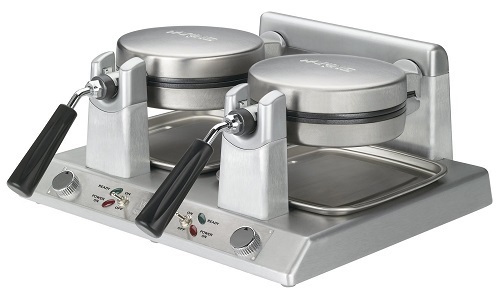
If your love for fresh, sumptuous waffles is deep, then the Waring Commercial Belgian Waffle Maker will make you a very, very happy person.
This side-by-side maker can cook two waffles at a time, and produces thick, perfectly browned waffles that put their freezer-burnt pre-made brethren to shame. Its non-stick coating means easy removal and no mess, and its precision heating elements and rotary feature ensures even baking.
Buy now
AmazonAmazon UK
BOOK OF THE WEEK:
TALENT IS OVERRATED
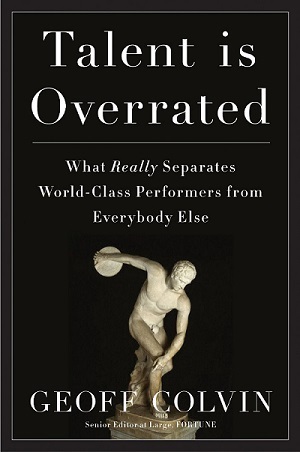
In this book, author Geoff Colvin set out to solve the “mystery” of great performance. To answer the question of what greatness actually requires.
Sure, “hard work,” but what does that really mean? And what about that wondrous X factor of talent? Are some people just born with the wiring to win PGA tours or write beautiful symphonies or build mega-corporations, while most aren’t?
Well, Colvin’s theory is simple, and based on decades of research and the analysis of extraordinary performers across many fields, and is one I wholeheartedly subscribe to:
Talent is an incredibly poor predictor of success.
What is a much more reliable predictor–in fact, the most reliable? It’s very simple: hours spent in what is known as “deliberate practice.”
Time spent trying to find or “unlock” latent talents is a waste. Time spent in deliberate practice is, as Michael Phelps says, like putting credits in the bank. The longer you do it, the more compounding you see, until eventually your account is overflowing.
What I like most about the message in this book is it’s empowering and motivating. It shows us the time-proven, indisputable method of mastery, and lets us decide if we’re willing to walk it.
Buy now
AmazonAmazon UK
What do you think of this week’s picks? Have anything you’d like to share? Let me know in the comments below!
December 19, 2013
5 Alpha Male Traits That Will Bring Back Manliness
Last weekend, as the day was about to begin, I did something uncharacteristic; I flicked on the TV to see what was on. Keep in mind, I had an entire day of work ahead of me. As I surfed through the channels, of which there are far too many, I stumbled upon the John Wayne movie, The Cowboys. I love John Wayne movies, so rather than being a responsible lad, I sat me arse on the couch and started watching.
Without ruining anything, because it is an awesome movie that every guy should watch, there’s a point in the film that stands out as an especially old school and masculine moment. It’s also something that wouldn’t happen in today’s weak, self-entitled and politically correct society.
One of the young teenage boys that Wayne’s character had to hire for his cattle drive had a stutter. As they’re crossing a river near the beginning of their long journey, one of the other boys falls off his horse and into the water, nearly drowning. Wayne’s character lays into the kid with the stutter, saying something like, “if you wanted to stop stuttering you would! That boy could have drowned because of you.”
What you begin to realize is that Wayne’s character isn’t making fun of the boy, nor is he being unjustly hard on him. It only becomes apparent in the boy’s response as he yells, “you mean son of a bitch!” repeatedly at the elder, bigger, stronger man. What you notice is that in this fit of anger, the boy isn’t stuttering.
Wayne yells at him, “What did you say?!” again and again until the boy realizes that he’s broken through his stutter.
That wouldn’t happen today. In today’s society we’d cuddle the kid, treat him different than any of the other boys because he has a special difficulty. In the old days, though, men realized the simple fact that the world is unforgiving. It’s a cold and hard place. And to comfort a boy, no matter his difficulty, is to weaken him, and hinder him even further in the future.
Whether you’d care to admit it or not, there’s a war being waged against the strong, masculine values that have for centuries made great men, great.
As we become more politically correct, as we pander and aim to comfort, rather than helping and aiming to strengthen, we weaken not only our men, but our society on the whole. It needs to stop. If you want to be a strong, successful, good man, this article will lay out the principles you need to be at your best throughout the highs and lows that inevitably make up life.
5 Alpha Male Traits That Will Bring Back Manliness
1. Don’t aim for ease.
Theodore Roosevelt, a classic alpha male archetype, promoted the “strenuous life”. He saw ease, not only as unproductive, but evil. Nothing good comes from ease, yet it’s the ‘be all end all’ in modern society.
We work to vacation. We hustle to buy things. We have it backwards. The freedom is in the work. It’s in the grind, the journey, and the hustle. It’s in living the strenuous life that you grow and better your fellow man.
And so, as your pal’s take selfies of themselves on vacation, work. Put more strain on your life because you understand that it’s in the struggle that you become tougher and stronger and more manly.
2. See the world as it is, and make the best of it.
It’s weakness to treat the world as something that it isn’t. John Wayne’s character in that movie understood that if he treated the boy any differently than he would treat a man, he’d weaken him. He’d give him an excuse to fail in the future.
See the world as it is, and make the absolute best of it you possibly can. Know the hard work that happiness and success require of you. Ground yourself in honorable principles, and keep moving forward even when quitting is all you can think about.
Robert E. Lee is a great man to study who has this quality. No matter how dark the present was, he made the best of it.
3. Never complain or offer an excuse.
A man can’t complain, nor can he shift blame to another. A man stands up and places the blame square on his broad shoulders, never on another’s. He faces the music time and time again, even if it’s not entirely his fault, he finds a way to make it his fault because he’s the only one strong enough to carry the burden.
And again, a man never complains. That’s the definition of weakness. To complain is to give the power over your life to another. It’s to relinquish the control you have over your destiny and over your life.
Pay attention to your thoughts. As soon as you start complaining, stop. Understand that it does no good, only bad, and keep moving forward.
4. Never quit.
Studies continually show that success isn’t a matter of talent, but persistence. It’s the companies that outlast the others, that reach “their place in the sun.” The same is true for men.
If you want to live a great life, you can’t ever quit. You can’t ever admit that you’re done, because you’re not. So long as you’re breathing you’ll take on any battle, any enemy, and any obstacle. Persistence and assertiveness are very masculine qualities, they’re also rarely practiced today.
While your friends quit, keep working. Sure, you can adjust your tactics, you can pull out of a useless battle, but you never relent on the overall war.
5. Never pity someone.
A real man isn’t soft. He cares. He’s kind. But you could never call him weak. Be real with people. Lift them up. Never, ever pity them. Don’t feel bad for them, and if you do, show them how to rise above their situation.
People don’t want pity; they want progress. They don’t truly want a hand out; they want a hand.
Be a leader in your tribe and your community. Lead, of course, by example. Don’t shoot your mouth off at every opportunity. Make your words few, but strong, and your actions abundant, and grand.
This is the way of the man. This, my friend, is the way of the warrior. Keep fighting.
Chad is a former 9-5er turned entrepreneur, a former scrawny amateur boxer turned muscular published fitness author. He’ll give you the kick in the ass needed to help you live the big, ambitious life you should be living, and you can find him on Facebook and Twitter.
As a gift, check out this free report on how to naturally enhance your testosterone levels.Click Here for the Free Report.
December 18, 2013
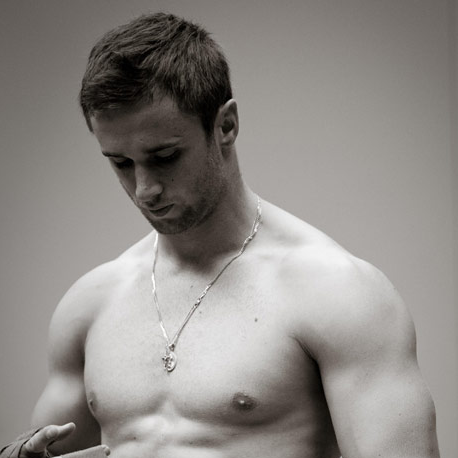
The No-BS (And Only) Way to Get “Six Pack Abs”
Everyone wants it…the elusive “six pack.” The hallmark of the fitness elite, the proof that you know the inside “secrets” of getting ripped.
With the amount of people wanting six pack abs, the amount of bad advice out there on how to actually get them is overwhelming.
Some people say you just have to do special types of ab exercises…and they’re wrong.
Some people say you just have to get lean…and they’re wrong.
Some people say you just have to do a lot of heavy squats and deadlifts…and they’re wrong.
Some people say you have to avoid certain types of foods and take weird supplements…and they’re really wrong.
Like most things related to fitness, the real way to get six pack abs–for both guys and gals–is pretty straightforward.
In this article, I’m going to break it all down for you, and we’re going to start with a little physiology (you’ll see why).
The Anatomy of the Perfect “Six Pack”
When people talk about “abs,” what they’re actually referring to is the pair of muscles that make up the rectus abdominis:
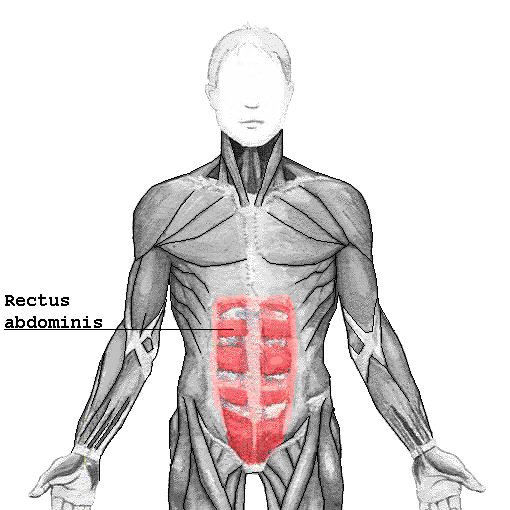
These muscles aren’t the whole story of the full “six pack” look that people want, however. There are other “core” muscles that must be properly developed as well. Namely the obliques (external mainly), the transversus abdominis (or “TVA” as it’s commonly referred to), and the serratus:
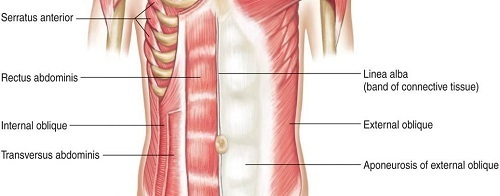
Now, anatomy diagrams are great, but let’s see what this looks like on a real body. First, let’s look at someone whose rectus abdominis is fairly developed, but who lacks the rest of the package:

Yeah, he’s not very lean, but as you can see, he has no v-taper at the waist, no serratus development, and no sight of a TVA line. I think you’d agree that this isn’t a look to aspire to. Here’s another example:

A little better than the last, but with different problems: way over-developed obliques, under-developed rectus abdominis, and no TVA or serratus. The result is that odd look of abs “floating” in a sea of flat, formless flesh.
Now, let’s look at what a properly developed core can do to change the visuals:
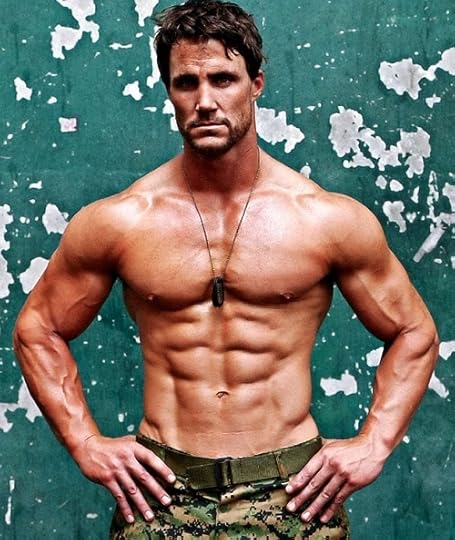
Yes, Plitt has far better genetics than the other two examples, but note that he’s not much leaner than the second. He just has a far better developed core to frame his terrifically developed rectus abdominis and give it that tight, “integrated” look.
My own body is a great example of how core development can change your overall look. Check out the following picture of me, taken about 2 years ago:
Not a bad look. I was lean (around 6-7% body fat), and had decent rectus abdominis development along with some oblique, serratus, and transversus abdominis showing.
(Oh and in case you’re wondering why I don’t have a proper “six pack” but only a “four pack” instead, that’s purely genetic, and can’t be changed. Some people’s rectus abdominis is formed better than others’.)
Here’s another shot from the same period:
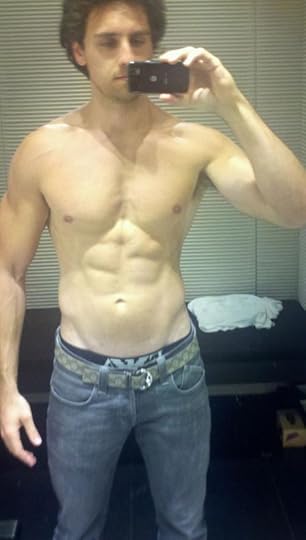
Now, compare those shots to the following pictures taken a few months ago:


Quite a difference, no? This came from not only building my “abs,” but actually more so from building the rest of my core–my obliques, TVA (which is what forms the “frame” around the abs), and serratus anterior (the finger-like muscles that cover the ribs).
So, with the goal now clearly in mind–a fully developed core, not just “abs”–let’s look at what it takes to get there.
How to Get Great Six Pack Abs AND a Great Core
First, I want to address some of the WRONG advice out there…
No amount of ab exercises alone will give you a great six pack.
No matter how simple or fancy the exercises, they are not the “shortcut to six pack abs.”
Yes, ab exercises are necessary for developing a solid core (more on that in a second), but it takes more than ab workouts to get the look you desire.
Just being lean isn’t enough.
It’s true that you need to have low levels of body fat for your abs to fully show. For us guys, they start really showing as you get under 10% body fat, and for gals, under 20% body fat.
But the reality is you can get very lean and still not have the “six pack” look you want. How so? The answer is simple: nobody’s core is naturally developed enough to have the deep cuts and pronounced lines that make for a truly outstanding six pack.
Look again to the second example of poor ab development I showed earlier, and to my 2-year-old pictures. Both he and I were lean when those pictures were taken, but what was wrong with our physiques would have been just as obvious even if we had stripped off another 1-2% body fat.
The full “six pack” look requires low body fat levels and well-developed core muscles.
Just deadlifting and squatting isn’t enough, either.
I don’t know how many times I’ve heard the following: “I don’t train abs–I squat and deadlift.” And these guys and girls usually have unimpressive cores.
The reality is these two exercises, even when performed with heavy weight (80%+ of 1RM), just don’t involve the “show” muscles of the rectus abdominis, the tranversus abdominis, and the external obliques as much as people think.
Now, don’t get me wrong–heavy squatting and deadlifting do help build an all-around great core, but they aren’t enough on their own.
What does it take to get a killer core, then?
Having an outstanding six pack and core actually only requires two things:
1. Reducing your body fat percentage. For us guys, the rectus abdominis doesn’t really start showing until we reach the 10% range, and the rest of the core muscles don’t pop until we reach the 8% range. For girls, 20% is where the fun begins, and 18% is where their cores really start to shine.
Just know that no matter how great your core muscles are developed, you will not achieve the look you want if your body fat percentage is too high. If you’re not sure how to get leaner, check out my article series on how to lose body fat fast.
2. Regularly performing the right ab and core exercises. What are the right exercises? Let’s find out…
The Best Ab and Core Exercises
Building a great six pack requires that you do both ab exercises that train your rectus abdominis, and exercises that train the other core muscles that complete the look we want.
How to Develop Great Abs (Rectus Abdominis)
The biggest mistake most people make with ab training is they don’t perform any weighted ab exercises. The result is the ability to do a bazillion crunches or leg raises, but with abs that look small and underdeveloped.
The abs are like any other muscle: they require progressive overload to grow, and that can only be accomplished by adding resistance to exercises. You don’t have to add weight all of your ab training, but you must add it to some if you want abs that really pop.
My favorite ab exercises are as follows:
Captain’s Chair Leg Raise (you can start with knees bent, but you want to work toward legs straight)
I didn’t just choose these at random–research has actually shown them to be the most effective for training the rectus abdominis and obliques (unfortunately the study disappeared off the Net, but it was led by Peter Francis, Ph.D., at the Biomechanics Lab at San Diego State University).
I’ve found that abs seem to respond best to a combination of weighted and unweighted work. Here’s how I like to do it:
1 set of a weighted exercise like the Cable Crunch, Captain’s Chair Leg Raise, or Hanging Leg Raise for 10-12 reps (you can add weight to the latter two by snatching a dumbbell in between your feet)
Directly into 1 set of an unweighted exercise, to failure
Directly into 1 set of an unweighted exercise, to failure
Rest 2-3 minutes
For example:
1 set of Cable Crunches, 10-12 rep range
Directly into 1 set of Captain’s Chair Leg Raises, to failure
Directly into 1 set of Air Bicycles, to failure
Rest 2-3 minutes
Do 6 – 9 of these circuits 2 – 3 times per week, and your abs and obliques will develop.
Let’s now look at how we can develop the rest of the core muscles.
How to Develop the Other Core Muscles
Heavy compound weightlifting trains your core better than special “core exercises,” and particularly when performed with heavy weight (80%+ your 1RM).
My three favorite core exercises are the Deadlift, Squat, and Military Press or Overhead Press. If you perform each of these lifts every week, and perform them with heavy weight, you won’t need to do any other core exercises.
And last but not least, I’ve mentioned the serratus several times, so let’s talk about that.
How to Develop a Great Serratus
The serratus anterior muscles are the finger-like muscles attached on your rib cage, and they really complete the “shredded” core look. Here’s another recent picture of me that highlights them (and my super-cute son!):

While you can target the serratus anterior with an exercise like the , I never found this necessary. The exercises that really helped my serratus grow are…
Deadlift
Barbell Row
Dumbbell Bench Press
Ab Wheel Rollout
Any good weightlifting routine will include the first three (and heavy weight will train your serratus better than lighter weights), and Ab Wheel Rollouts are one of the great all-around ab and core exercises.
What do you think about my take on how to get six pack abs? Have anything else to share? Let me know in the comments below!
How to get lean and build serious muscle and strength, faster than you ever thought possible…
Depending on how you eat, train, and rest, building muscle and losing fat can be incredibly easy or incredibly hard. Unfortunately, most people make many different mistakes that leave them stuck in a rut.
And that’s why I wrote Bigger Leaner Stronger for men, and Thinner Leaner Stronger for women: they lay out EVERYTHING you need to know about diet and training to build muscle and lose fat effectively…
Buy now
AmazonAmazon UKAmazon AUAmazon CAAudible AudiobookBNiBooksiBooks AudiobookKobo
Buy now
AmazonAmazon UKAmazon AUAmazon CAAudible AudiobookBNiBooksiBooks AudiobookKobo
December 17, 2013
The Little-Known Secret to Doing Great Work
Have you ever woken up, thought about what you wanted to do, sat down to do it, and then talked yourself out of it?
Sure you have. Who hasn’t? Why, though? Was it because you thought it was the wrong thing to do? Probably not.
I’m willing to bet that, in many cases, it was because you thought you weren’t good enough yet.
You know, you can’t write the book until you have more experience. You can’t create the new product until you have more customers to sell it to. You can’t bake the brownies until you watch five more YouTube videos on how to do it. Well, the first video won’t load… I guess you can just eat some ice cream instead.
We’ve all been there before. We’ve all found reasons to not get started on something, little or big. We’ve all felt like it’s never the right time to do anything. Something else always has to happen or exist first.
That, my friends, is a deadly trap, and I want to help ensure that you don’t fall into it.
The Imaginary Transformation of Novice to Expert
We all know the fastest way to go from point A to B: a straight line. And we all know that a line is a continuous, unbroken extension from a point in a certain direction.
Why, then, do many people expect a superhuman leap from novice to expert–from bad work to great work? Why is the prospect of sucking at something so daunting to some?
Why do some people, having never written a page of fiction in their lives, immediately set out to write the best book in the history of literature? Why do some people pick up a brush for the first time and demand the next Mona Lisa from their hands?
Sure, high-flown goals are motivating and necessary, but what happened to the straight line that goes from novice to expert–from point A to B?
You see, if you set out to build the biggest company in the history of your industry, you immediately start comparing your efforts and results to the biggest company in your industry. And you get frustrated that you just aren’t measuring up.
In short, you get frustrated because you haven’t magically teleported from point A to B, which doesn’t really make any sense. After stewing on your shortcomings for a while, you’re likely to get used to life at point A, and figure that when you somehow become an expert some day, you’ll build that company.
Days, months, and years can go by with little accomplished beyond psyching yourself out.
It doesn’t have to be this way.
“If a Thing is Worth Doing, It Is Worth Doing Badly”
Gilbert Chesterton said that. He wrote around eighty books, several hundred poems and short stories, over four thousand essays, and TIME called him “a man of colossal genius.”
And guess what? He sucked at writing at one point in his life. He dropped out of his college literature class. He went through a nasty spell of depression and self-doubt after dabbling in Ouji boards and the occult (hey, I couldn’t make this up if I wanted to).
But he put the Ouji board away and decided to get a job at a newspaper. He kept writing. And he got better. And better.
You see, he knew something. He knew that there are no shortcuts. Sure, some people go from point A to B quicker than others, but everyone has to start at A. (Click to tweet this!) And between it and B, expert, there’s a whole lot of sucking, and you have to walk that road alone.
That doesn’t sound too motivating, but here’s the truth:
With every step that you take from point A to B, you suck a little less. (Click to tweet this!) You become more expert. You’re like a tiger earning its stripes. Earning is the key word there.
So who cares if your first marketing piece isn’t great. So what if your first blog looks like a pile of crap. I don’t care if your first painting is worse than your child’s. At least you can tell garbage from gold. Find just one thing that you did right and acknowledge and learn from what you did wrong, and try again.
Nobody is counting your mistakes. You don’t get a report card in life. All that matters is getting from point A to B, regardless of what it takes to get there.
Want to know the biggest secret of great achievers? They were willing to do crappy work so they could learn to do good work and, eventually, great work. (Click to tweet this!)
In many cases, they did a lot of crappy work, and in all cases, they didn’t care enough to quit. Crappy work was just an item on the checklist for the day. “Did I do some more crappy work today? Good. I’m closer to doing good work.”
Eventually, the road between points A and B was in their rearview mirrors. Work that was merely “good” to them was now considered great by others, and work they thought was “great” was celebrated as masterful. And then point B became their new point A. But that’s another subject.
The Cult of Done Manifesto
I want to leave you with a final piece of practical, staple-this-to-your-forehead advice.
It’s the manifesto of the “Cult of Done.” Okay, it’s not a real cult. It’s just a trendy Internet thing. But its message is relevant, so here we go:
The Cult of Done Manifesto
There are three states of being. Not knowing, action and completion.
Accept that everything is a draft. It helps to get it done.
There is no editing stage.
Pretending you know what you’re doing is almost the same as knowing what you are doing, so just accept that you know what you’re doing even if you don’t and do it.
Banish procrastination. If you wait more than a week to get an idea done, abandon it.
The point of being done is not to finish but to get other things done.
Once you’re done you can throw it away.
Laugh at perfection. It’s boring and keeps you from being done.
People without dirty hands are wrong. Doing something makes you right.
Failure counts as done. So do mistakes.
Destruction is a variant of done.
If you have an idea and publish it on the internet, that counts as a ghost of done.
Done is the engine of more.
Print that out and stick it above your computer. Read it every day. Let it sink in, because there’s a lot of truth in it.
What do you think of my take on how to do great work? Have anything else you’d like to share? Let me know in the comments below!
December 16, 2013
8 Fantastic Gift Ideas for Fitness Folk
With the holidays right around the corner, many people are scrambling to finish up their gift shopping. In this article, I’m going to share 8 of my favorite gift ideas for us fitness folk. Happy Holidays!
Body Back Buddy
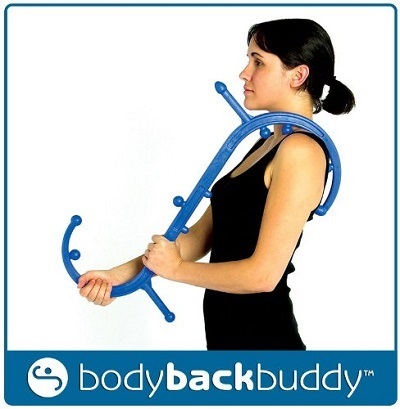
It looks like a cheap torture device, but it’s actually an incredibly useful tool for working out nasty knots and deep muscle tension.
The Body Back Buddy’s design allows a lot of options for positioning and size of the massage surface so you can use this on any part of the body: neck, shoulders, back, legs, feet, side body. It’s also made of a thick, durable plastic so you can give yourself the gift of a truly deep tissue massage.
For even better recovery, use this to massage a therapeutic ointment like Tiger Balm into sore muscles.
Buy now
AmazonAmazon UK
Patagonia Black Hole Duffel

When you hit the gym regularly, a great bag for your workout clothes, favorite fuel, and gear is a must. These bags come in three sizes – 60L, 90L or 120L – so there’s one suitable for every person and lifestyle.
Best of all, the Patagonia Black Hole has padded straps to carry the duffel vertically just like a backpack. And it’s made of waterproof material with sealed seams so it’s great for every day of the year.
Buy now
Zappos
Alternative Earth T-Shirts
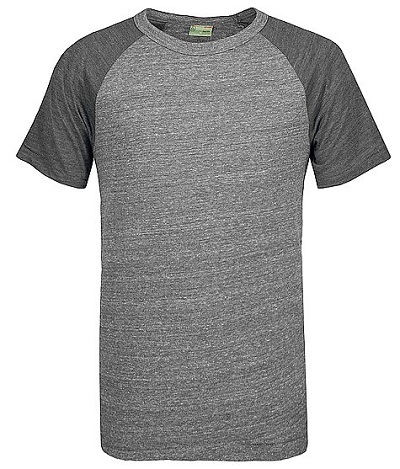
Finding good t-shirts can actually be kind of tough when you lift weights regularly. Some brands seem to be either too lose and large or damn near skin tight, with nothing in workable in between.
One of my favorite brands of t-shirt is Alternative Earth. Their cuts are perfect (form fitting but not too tight, slightly tapered to accentuate your physique) and material soft and comfy. They’re cheap too. It’s all I wear these days.
Buy now
Amazon
Murray’s Meat of the Month Club

We all know the importance of eating enough protein, and while a tub of protein powder makes a great gift, why stop there?
Ensure your training buddy gets a variety of protein sources over the next year with this selection of cooked and cured, whole an encased meats, which will arrive on the 3rd Thursday of the month. Murray’s Meat Club is $225 ($18.75/month).
Buy now
Murray's
BodyMinder Exercise Journal
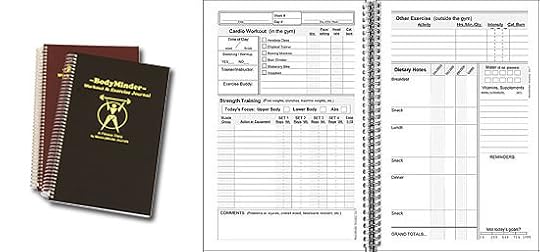
Hitting a plateau is never fun for anyone. With a training journal, you or your loved one will be able to stay motivated by seeing progress as it happens and identifying plateaus as soon as possible so goals are more attainable.
A blank journal works too, of course, but BodyMinder has blank charts for daily strength training and cardio, food habits, and progress.
Buy now
AmazonAmazon UK
MIO Alpha Strapless Continuous Heart Rate Monitor
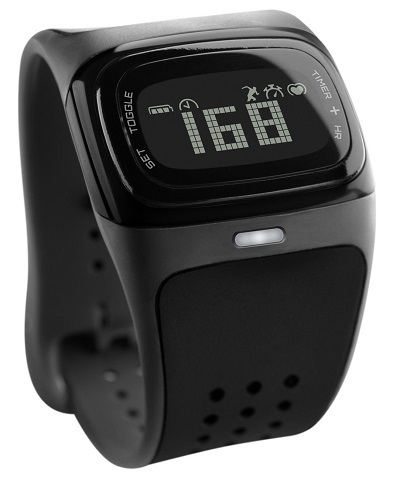
While not entirely necessary, a good heart rate monitor has two uses:
1. Ensuring your rest intervals during your HIIT cardio are long enough. You want your heart rate to return to least 70% of its max before you hit another high interval.
I like to use this formula for calculating max heart rate:
Male athletes: HRmax = 202 – (0.55 x age)
Female athletes: HRmax = 216 – (1.09 x age)
2. Ensuring your rest in between weightlifting sets is long enough. The same rule applies here: you want to see your heart rate return to at least 70% of its max before you go for another set. Personally I like to see a return to the 50% range.
The chest straps most heart rate monitors require you to wear can be annoying, though. That’s why the MMIO Alpha’s watch-only design is the most practical choice. It syncs with smartphones via Bluetooth, and it also has a timer function.
Buy now
AmazonAmazon UK
LifelineUSA XT Jungle Gym Suspension Training System
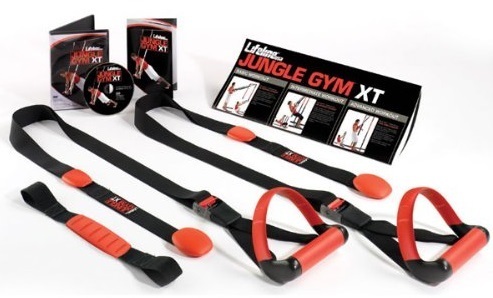
Hitting weights in the gym isn’t the only way to build muscle and strength. A bodyweight workout routine can work wonders as well.
A good suspension training system lets you hit muscles in ways otherwise impossible with bodyweight training, and is also great for staying in shape while traveling.
The TRX is very popular, but I’ve found the LifelineUSA XT Jungle Gym just as good, if not slightly better in certain design aspects, for quite a bit less money. You won’t be disappointed.
Buy now
AmazonAmazon UK
Platypus plusBottle
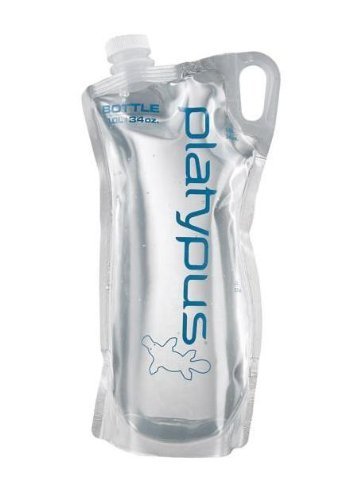
No matter how you’re putting your body to the test, these BPA-free plastic bag-style water carriers are the most practical solution for hydration.
The large size carries a full liter of liquid, but because of the flexible design, the Platypus plusBottle only takes up as much space as water you want to carry with you. If you have to lug around a lot of stuff, bring this to the gym flat and fill it up there. The plus model features an all-natural SlimeGuard antimicrobial treatment.
Buy now
AmazonAmazon UK
What do you think of these gift ideas? Have any you’d like to share? Let me know in the comments below!
December 15, 2013
The Definitive Guide to Endurance Training Part 1
There are a variety of little-known, “underground” tactics you can implement to enhance your training effectiveness and efficiency – endurance training strategies that tend to fly under the radar, but can give you lots of bang for your buck if you implement them into your program. These tactics come in handy especially if:
a) time management is important to you;
b) you want to figure out ways to strengthen your cardiovascular, musculoskeletal and nervous system without significant damage to your joints, health, or metabolism.
So let’s jump right in and discover 3 of these little known ways to turn you into an endurance beast. In the next two parts of this series, we will be looking at 9 other ways.
Overspeed Training
Overspeed training is, exactly as it sounds. It is the practice of training your limbs to turnover at a higher speed – a speed over what feels comfortable or natural. Just imagine The Road Runner from the old Looney Tunes cartoons.
Before jumping into the specific techniques of overspeed training, it’s important to understand that by spinning your legs extremely fast on a bicycle, or running at an insanely high turnover, or swimming windmill-style, you’re not necessarily replicating what you plan on doing in a race.
For example, in the case of cycling, research has shown that lower cycling cadences, such as 60rpm, can actually result in significantly better efficiency and economy compared to cadence of 80rpm or 100rpm. And the folks over at SwimSmooth have a fantastic stroke rate chart which shows that many swimmers will actually do just fine with a relatively low stroke count.
But here’s why overspeed training works: it is an effective method to recruit new muscle tissue; specifically by engaging more muscle motor units than if you’d trained at lower speeds. This is called a “neural adaptation,” and you can consider it a form of training for your nervous system. Through overspeed training, not only does your brain literally learn how to fire faster and control your muscles more efficiently at higher speeds, but you also develop more powerful and quick muscle fiber contractions, which comes in handy for hard surges during a race or tough workout.
Contrary to popular belief, you do not need fancy equipment for overspeed training.
While there are certainly devices on the market such as anti-gravity treadmills, which use differential air pressure to reduce your body weight down to as low as 20%, or extremely fast treadmill belts that are combined with a harness which literally hangs you from the ceiling while you’re running, you don’t need these fancy tools. These devices certainly do allow for “extreme” assisted overspeed training in an underweighted or low gravity environment, but you don’t actually need to go out and spend the price of a small automobile on a new treadmill.
Instead, here are some effective overspeed workouts you can easily do with equipment you probably already have, or at least relatively inexpensive training gear.
Downhill overspeed running
Use a dry, non-bumpy grass area that allows you to sprint about 40-50 feet down a slope and then sprint another 40-50 feet once you reached the flat (to allow for the continuation of the overspeed effect without the assistance of gravity). Research indicates a downhill grade of about 5.0% is ideal, but don’t feel like you need to go to the golf course with surveying equipment to find the best slope. Just run down a relatively steep hill that isn’t so steep you fall over on your face. If you really want to get fancy with overspeed running, you can grab a partner (or a pole) and an overspeed bungee for your repeats.
Overspeed cycling efforts
A downhill slope or an indoor trainer works best for these efforts, although you can get them done on the flats in a low gear, such as using your small chainring. After a good warm-up, simply choose the lowest possible resistance that allows you to spin at an extremely fast rate without bouncing in the saddle. Spin at the fastest possible cadence (preferably higher than 120RPM) for a maximum of 30 seconds, and then give yourself full recovery before beginning the next set.
Assisted swimming
For this workout, you need swim stretch cords. I’ve just used a good set of fins to allow me to swim faster, but you’ll get better results with less muscular and cardiovascular fatigue by using stretch cords. With the stretch cords attached to your waist, you simply swim as far away from the wall as possible, then turn and let the cords pull you back at a much faster pace than you’d be able to swim unassisted. If you do this correctly, you’re going to find your stroke turnover rate is incredibly difficult to maintain. You can insert this kind of overspeed training at the beginning or the end of one of your weekly swim sets.
You should know that overspeed running can create significant eccentric muscular damage, caused by your brain attempting to “slow you down” just slightly with each step. The ensuing soreness caused by this protective deceleration can be pretty uncomfortable a day or two after an overspeed workout. To minimize this soreness, introduce overspeed training into your program only after you’ve gotten a solid 6-8 weeks of weight training and plyometric training under your belt. Although swimming and cycling overspeed training doesn’t cause significant muscle tissue damage, your neuromuscular system does need plenty of time to recover and regenerate, so even for these exercise methods, I don’t recommend overspeed sessions more than once per week.
Underspeed Training
Of course, on the complete opposite spectrum of overspeed training is underspeed training. You have a pretty good idea of what underspeed training involves if you’ve ever engaged in a long grinding bike ride up a hill, trekked up a stair mill at a gym, or done a resisted swim training session dragging a parachute behind you or wearing one of those ultra-sexy drag suits.
Compared to overspeed training, underspeed is better suited for building strength and force production capability. Similar to overspeed training, underspeed can also assist in development of efficient movement patterns and muscle fiber recruitment (but without quite as potent a neuromuscular “brain-training” effect as moving your limbs extremely fast). In a podcast interview I did with Ironman triathlon champion Chris McCormack, I was actually surprised to hear about the amount of underspeed “grinding” sessions he actually performs on the bike – sessions which he recommends specifically due to their ability to stave off fatigue late in a long race.
Underspeed training sessions also come in quite handy early in a race season, when strength building and development of proper movement patterns is more crucial than heavy use of intervals and overspeed efforts.
Sample underspeed workouts include:
Steep 60-70rpm hill climbs for 5-15 minutes on a bike
Running steep hills slowly
Climbing a stairmill (with an optional weight vest or set of dumbbells)
Performing a series of intervals in the pool, dragging a parachute behind or using a drag suit
Weight training could technically also be considered a form of underspeed training.
Isometrics and Superslow Training
I first discovered a guy named Jay Schroeder in the winter of 2013, when I attended a biohacking conference in which he demonstrated the use of isometric exercise and superslow sets. He uses these techniques with many of the professional athletes he trains, often in combination with electrostimulation.
An isometric exercise, which combines the Greek words “isos” (“equal” or “same”) and “metron” (“distance” or “measure”), involves a muscle contraction without any visible movement in the angle of the joint. This is in contrast to traditional moving “isotonic” contractions, in which your muscle length and joint angle change throughout the exercise.
If you’ve ever performed a wall squat, in which you sit in an imaginary chair with your back against the wall for as long as you possibly can, then you’re familiar with the teeth-gritting high levels of lactic acid and muscle burn that isometric training can produce. Alternatively, you could simply try this the next time you’re at the gym: lift your normal weight, but take 10 seconds to lift and 10 seconds to lower.
If you really want to take isometrics to the next level, you can use a technique Jay refers to as extreme isometrics, in which you move, but you move very, very slowly. We’re talking 5-10 minutes per repetition. This takes intense focus. Go ahead and just try and do a 10 minute push-up and see what happens to your entire body.
As I mentioned earlier, Jay’s clients also combine heavy weight training or isometric body weight exercises combined with electrostimulation, and if you happen to own an electrostimulation device, you can recruit even more muscles and enhance the results of your isometric or super slow training.
So how on earth could this type of static or extremely slow movement produce a cardiovascular training response?
The answer is a bit multi-faceted, but comes down to four primary reasons:
Resistance=Endurance Reason #1: Increased Cardiac Output
The cardiovascular response to resistance training is an idea I first encountered when I interviewed the author of the book “Body By Science,” a physician named Doug McGuff, in my podcast episode “Does Weight Training Count As Cardio?”.
As you’ve already learned, your cardiovascular system pumps oxygen and nutrient rich blood to the tissues of your body. The “cardio” part of the word cardiovascular refers to your heart, which is responsible for pumping the blood, and the “vascular” part of the word cardiovascular refers to your blood vessels, which are comprised of an arterial system which transports blood from your heart to your tissues and a venous system which carries blood back from those tissues to your heart. The resistance that your heart has to pump against and the amount of blood your heart can pump out (your cardiac output) is directly influenced by the size of those blood vessels.
To increase your cardiac output, you can
increase your heart rate
increase your stroke volume (by having more blood or by filling the heart with more blood before each beat)
dilate your arteries, which decreases the resistance your heart pumps against (called peripheral vascular resistance)
increase the venous return of blood back to your heart
Venous return of blood back to your heart is partially dependent on muscle contractions. In other words, forceful muscle contractions enhance cardiac return.
In addition, a release of chemicals called “catecholamines” occurs as a result of resistance exercise, and these catecholamines stimulate vasodilation in the vessels, which further decreases peripheral resistance and also increases blood flow back to your heart. This decreased peripheral resistance combined with enhanced venous return fills your heart up with more blood and enhances your cardiac output.
An article in the June 1999 issue of the American Journal of Cardiology actually observed this very phenomenon. In the research, a catheter was used to measure pressure changes during a high weight leg press exercise in patients with stable congestive heart failure. The participants experienced significantly increased heart rate and arterial blood pressure, but significantly decreased peripheral vascular resistance and increased cardiac output (that’s just one of many studies that Doug McGuff references in an excellent article he’s written on cardiovascular adaptations to resistance training).
But an increase in cardiac output is just one way that the intense resistance encountered during isometric or superslow training can assist with endurance, because next you get the benefit of the burn itself.
Resistance=Endurance Reason #3: Lactic Acid Clearance
Lactic acid gets a bad rap, but the acidosis or “burn” associated with muscle fatigue has very little to do with the formation of lactic acid.
The development of acidosis during intense exercise has traditionally been explained by the increased production of lactic acid – which causes the release of a hydrogen ion and the formation of an acidic salt called “sodium lactate.” On the basis of this seemingly logical explanation, if the rate of lactate production is high enough, then your body simply can’t buffer those hydrogen ions fast enough, and this event results in a decrease in cellular pH and that dreaded burn.
Exercise scientists call this effect “lactic acidosis,” and it has been a classic explanation of the biochemistry of muscle burn for more than 80 years.
But in fact, there is zero biochemical evidence that increased lactate production causes acidosis and muscle burn or muscle fatigue. As a matter of fact, lactate production can actually decrease acidosis.
So why do muscles burn when you exercise? A more likely mechanism for the drop in pH or increase in acidity during exercise is the breakdown of ATP energy.
It goes like this: water (H2O) is used to break down or “hydrolyze” ATP to make energy, and this results in one acidic H+ ion (from the water) + ADP + P (phosphate) + energy for whatever you need.
As you can see, every time ATP is broken down to ADP and P, an H+ ion (a proton) is released. When the energy and ATP demand of contracting muscles is met by mitochondrial respiration, there is no proton accumulation in the cell. How can this be? Because those same hydrogen ions are used by your mitochondria to recombine ADP and P to regenerate ATP and to maintain what is called the “proton gradient” in the intermembranous space of your muscle cells.
So as long as your mitochondria are efficient at doing this (and that efficiency increases the fitter you get) the longer it takes for that build-up of hydrogen ions to become a burn issue. As soon as your mitochondria fail to supply ATP at the appropriate rate, due to an outmatched number of the necessary transports and enzymes, you get that muscle burn and eventual muscle fatigue.
It is only when the exercise intensity increases beyond steady state exercise that there is a need for greater reliance on ATP regeneration from rapid breakdown of blood, liver and muscle sugar and the creatine phosphate system, which is why high intensity exercise can result in a better ability to generate ATP compared to easy aerobic exercise.
So why is lactic acid associated with muscle burn? Because as you break down sugars more and more at higher intensities, you need more of a molecule called “NAD,” which can actually be supplied by increased lactate production. Thus increased lactate production coincides with acidosis and is a good marker for cell conditions that induce metabolic acidosis. But if your muscles did use sugars and phosphate to generate extra ATP, and did not produce lactate as a byproduct of this use, then acidosis and muscle fatigue would occur more quickly because your mitochondria would get outmatched more quickly, and exercise performance would be severely impaired in the absence of lactic acid production.
While that may be enough to convince you that lactic acid is not the bad guy, just keep reading.
Ultimately, if you train your body at high intensities, you can become very efficient at shuttling lactic acid back up to the liver and converting it into glucose, after which the lactic acid can be “recycled” and used as a concentrated energy source by your muscle (Nelson). This is called the Cori cycle.
So lactic acid can actually be used as a significant fuel source! As you can probably guess, when you include activities that produce high amounts of lactic acid, such as HIIT or with high amounts of resistance or with isometric holds, you can teach your body how to do that more efficiently.
By the way, if you’re using isometrics and experiencing the massive lactic acid build-up that occurs in the local muscle tissue during a set, then you should know about something called “oxaloacetate.”
Most chemical reactions in your body take place in a series of several steps. In chemistry, the rate (or velocity) of a reaction with several steps is often determined by the slowest step, which is known as the rate-limiting step.
A significant rate limiting step of converting lactic acid into glucose is the conversion of the molecule Nicotinamide Adenine Dinucleotide (NAD) into Nicotinamide Adenine Dinucleotide Hydrogenase (NADH). So what does this have to do with oxaloacetate? In studies, acute oxaloacetate exposure enhances resistance to fatigue by increasing NAD to NADH conversion and allowing lactic acid to get recycled and converted to glucose at a much higher rate.
As a matter of fact, along with calorie restriction, enhancing your Cori cycle efficiency is also one of the ways that you can significantly increase the enzyme AMPK, which can upregulate mitochondrial biogenesis and improve both carbohydrate and fuel utilization.
Basically, this means that you can become a complete lactic acid metabolizing endurance beast if you take about 100-200mg of oxaloacetate in supplement form 15-30 minutes prior to a workout that includes high intensity intervals, super slow training, or isometrics.
Resistance=Endurance Reason #3: Better Muscle Utilization
Whether you’re running a marathon, shoveling snow or lifting a piece of furniture, if the wrong muscles are turning on for any given movement, then you have poor technique, you increase your risk of injury, and you produce less-than-ideal force.
But your body can learn how to utilize the correct muscles, and just like any movement, it’s easier to learn how to use the right muscles when you train slow or you hold a position, with an emphasis on maximally activating specific muscle groups. So when you use something like isometrics or superslow training, you simply have less distraction and more time under tension for any particular position you’re trying to learn or perfect. Thus you’re able to sense the proper muscles that you need to activate and better understand how to get there.
Take the lunge, for example. It roughly simulates the single leg “landing” phase of a run. When you’re able to use a superslow or isometric lunge to mentally focus on recruiting the correct musculature for that landing phase, you develop better body awareness (also known as “kinesthesia”) and learn how to properly activate your hamstring during that specific phase of running. In particular, you are learning how to actively pull yourself down instead of simply giving in to gravity and collapsing when your foot strikes the ground.
An added benefit to this improvement in muscle activation is that in addition to learning how to utilize the proper muscles for any given movement, you are also training your joints to move through the full range of motion for that movement. As you move slowly through or deeper into a joint angle, there is a significant amount of stretch placed on the fascia, which is the layer of fibrous connective tissue that surrounds your muscles. As this occurs, you can gain dynamic range-of-motion and flexibility that far exceeds what you might experience from a static stretching protocol such as yoga. For example, by performing 5 minute long deep isometric doorway pushups, I’ve found that my shoulder range-of-motion while swimming has significantly improved.
So how can you utilize isometric or super slow protocols in your endurance training?
a) Include a weekly resistance training session in which you incorporate at least one move or a series of moves performed very slowly. One short but highly effective strength+cardio session that I give many of my athletes once per week can easily be performed using weight machines, body weight, free weights, or a suspension trainer. Simply perform one set of each of the following.
Upper body pushing exercise, 5-10 repetitions of 10 seconds up, 10 seconds down (i.e. push-up, machine chest press, etc.)
Upper body pulling exercise, 5-10 repetitions of 10 seconds up, 10 seconds down (i.e. pull-up, seated row, etc.)
Lower body pushing exercise, 5-10 repetitions of 10 seconds up, 10 seconds down (i.e. leg press, squat, etc.)
Lower body pulling exercise, 5-10 repetitions of 10 seconds up, 10 seconds down (i.e. deadlift, leg curl, etc.)
The routine above is similar to what you’ll find in Doug McGuff’s book and is adapted from his 12 minute routine in the book “Body By Science.“
b) Include an isometrics routine one to four times a month. Simply hold any or all of the following positions for 2-7 minutes, depending on your level of fitness:
Push-up
Pull-up
Dip
Lunge
Wall Squat
Standing Hamstring
Curl
c) Include isometric holds as part of your daily habits. For example, twice a week after I finish playing tennis, I slip into the sauna and do a 4-minute lunge hold for each leg, followed by a 4-minute wall squat. Twice a week on the doorway in my office, I do a 5-minute doorway push-up. Later in this chapter, you’ll learn how this fits into the concept of “greasing the groove.”
You can do isometrics as part of your current weight training routine. For example, prior to doing a set of barbell squats, you can perform a 2-5 minute isometric wall squat hold. This can actually have what is called a “potentiating effect.” The exercise scientist Dr. Yuri Verkhoshansky has stated that this potentiation effect can cause an isometric exercise such as a squat hold to increase the force of a similar exercise you do after the hold (such as a barbell or dumbbell squat) by up to twenty percent!
Resistance=Endurance Reason #4: More Motor Unit Recruitment
But muscle is bulky, isn’t it?
You need to understand that there’s a big difference between muscle mass and muscle recruitment. Muscle mass is not necessarily synonymous with strength and power. For example, top Tour de France cyclists appear to have toothpicks for legs compared to powerlifters and bodybuilders, yet they are capable of producing nearly superhuman wattage on a bicycle. Champion swimmer Michael Phelps is one of the most powerful athletes in the sport of swimming, but does not appear to have significant amounts of muscle mass compared to other top male athletes in the sport.
So how is it that a muscle can stay at a manageable, carry-able size for endurance sports, and yet still be capable of producing strength and power?
The answer lies in the relationship between the nerves, the muscle and something called the motor unit. A motor unit is defined as a nerve and all the muscle fibers stimulated by that nerve. Muscle fibers are grouped together as motor units. If the signal from a nerve is too weak to stimulate the motor unit, then none of the muscle fibers in that motor unit will contract. But if signal is strong enough, then all of the muscle fibers in the motor unit will contract.
This is called the “all-or-none” principle.
It doesn’t take much of a signal to recruit slow-twitch, or endurance muscle fibers in a motor unit. It takes a stronger signal to recruit fast-twitch, or explosive muscle fibers. However, the goal of weight training is not to increase the signal to the fibers, but rather to train the body to be able to recruit multiple motor units, whether those motor units are comprised of slow-twitch or fast-twitch muscle fibers. Better athletes have the capability to recruit multiple motor units, which means more fibers are firing, which increases force production.
So, you can have a relatively small number of motor units, but with proper training, can gain the ability to recruit a significant number of those motor units simultaneously. If this is the case, you don’t need much muscle, but just the ability to be able to wholly recruit the muscles that you do have – and heavy resistance training or force production using techniques such as isometrics and super slow sets is how this is achieved.
The four reasons I’ve listed above are not the only benefits of weight training for endurance athletes. Over 20 years of research have successfully demonstrated lower injury rates for the shoulders, knees, hamstrings, low back and ankles in athletes including swimmers, cyclists and runners when weight training was used to strength the soft tissue surrounding and supporting the joints. In some cases, injury prevention is due to correction of a muscular imbalance through the use of targeted weight training, and in other cases, injury prevention is due to the increased ability of a joint to absorb impact.
Need even more proof that you can become a better endurance athlete by using resistance training?
Check out this abstract from the paper “Resistance Training to Momentary Muscular Failure Improves Cardiovascular Fitness in Humans: A Review of Acute Physiological Responses and Chronic Physiological Adaptations.”
Research demonstrates resistance training produces significant improvement in cardiovascular fitness (VO2 max, economy of movement). To date no review article has considered the underlying physiological mechanisms that might support such improvements. This article is a comprehensive, systematic narrative review of the literature surrounding the area of resistance training, cardiovascular fitness and the acute responses and chronic adaptations it produces. The primary concern with existing research is the lack of clarity and inappropriate quantification of resistance training intensity. Thus, an important consideration of this review is the effect of intensity. The acute metabolic and molecular responses to resistance training to momentary muscular failure do not differ from that of traditional endurance training. Myocardial function appears to be maintained, perhaps enhanced, in acute response to high intensity resistance training, and contraction intensity appears to mediate the acute vascular response to resistance training. The results of chronic physiological adaptations demonstrate that resistance training to momentary muscular failure produces a number of physiological adaptations, which may facilitate the observed improvements in cardiovascular fitness. The adaptations may include an increase in mitochondrial enzymes, mitochondrial proliferation, phenotypic conversion from type IIx towards type IIa muscle fibers, and vascular remodeling (including capillarization). Resistance training to momentary muscular failure causes sufficient acute stimuli to produce chronic physiological adaptations that enhance cardiovascular fitness. This review appears to be the first to present this conclusion and, therefore, it may help stimulate a changing paradigm addressing the misnomer of ‘cardiovascular’ exercise as being determined by modality.
What did you think of these endurance training tips? Have any that you’d like to share? Let me know in the comments below!


