
Michael Matthews's Blog, page 136
December 14, 2013
Recipe of the Week: Fully Loaded Baked Sweet Potato
While the concept of a “loaded” baked potato should be familiar to anyone that’s eaten at a steakhouse, you don’t often hear about loaded baked sweet potatoes.
It’s a shame, too, because sweet potatoes are a great source of many vitamins and their natural sweetness pairs perfectly with a variety of ingredients. For this recipe in particular, I decided to top my baked sweet potato with eggs and vegetables, creating a decadent, filling breakfast meal.
Serves 1, increase ingredients as needed for more guests
Ingredients
1 large sweet potato
2 tbsp butter, divided
1/2 small onion or 1 shallot, chopped finely
2 oz white mushrooms, sliced
2 stalks of kale, chopped coarsely
2 tbsp chicken stock
1/2 tsp dried red chili pepper flakes
1/2 tsp each salt and black pepper
1/2 tsp fresh dill, chopped finely
2 eggs
Directions
Preheat oven to 400 degrees. Wash sweet potato and poke with holes all over. Add the sweet potato to the oven, place a piece of tin foil underneath to catch drippings. Bake for 50 minutes or until soft when gently squeezed.
After the potato has baked for 25 minutes, add 1 tbsp of the butter to skillet and warm on medium heat. Add the onion/shallot and sauté for 3 minutes, until aromatic. Turn the heat down to med/low, add the mushrooms, salt and pepper, and continue to sauté for another 6-8 minutes, until the mushrooms are softened and most of the liquid has cooked out of them. Add the kale, chicken stock, and chili pepper flakes and cover. Turn the heat down to low and cook for five minutes.
After five minutes, remove the cover and return the heat to med/low and allow the stock to mostly evaporate. Stir with wooden spoon every minute or so. While that’s happening, fry to your liking and top with a little fresh dill.
Remove the sweet potato and cut in half lengthwise. Place the eggs on top of the potato and pour the remaining butter on top. Top with simmered vegetables and serve immediately.
What You Get to Enjoy

What did you think of this recipe? Let me know in the comments below!
Russ Crandall is a critically-acclaimed food blogger that focuses on gourmet, traditional, and international dishes that are inherently healthy. You can find him and his delicious recipes at his website, The Domestic Man. He also has a cookbook coming out titled The Ancestral Table, which you can pre-order on Amazon.com.



December 13, 2013
Cool Stuff of the Week: Homemade Hot Sauces, Nanoleaf, Snowball Blaster, and More…
I’m not ashamed to admit that I’m kind of a sucker for cool stuff. I like nifty gadgets, quirky decoration pieces, nice clothes (and shoes!), good books, and fun games.
In this series of weekly posts, I share whatever currently has my fancy. Maybe some of it will catch yours as well!
VIDEO OF THE WEEK:
GORDON TALKS DIRTY
Gordon Ramsey is not only a world-class chef, he’s a pretty solid sex therapist as well!
WHAM-O-ARCTIC FORCE SNOWBALL BLASTER
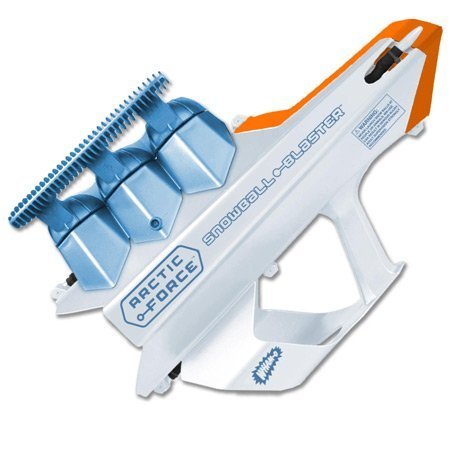
Take your snowball game to the next level with the Wham-O-Arctic Snowball Blaster.
This baby has a removable snowball maker for perfect projectile formation, and it can then launch them up to 80 feet a bit faster than you can throw them.
Buy now
AmazonAmazon UK
ICE ZOMBIE HAND MOLD
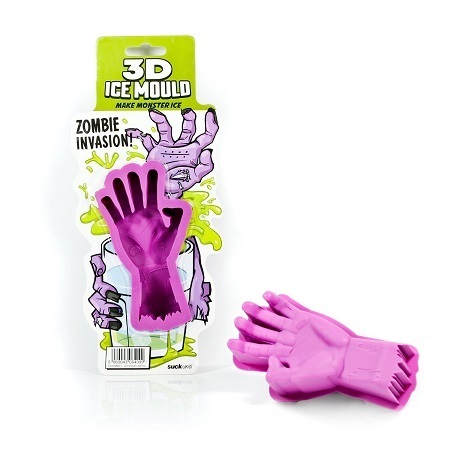
This silicone ice mold makes an oversized ice cube in the shape of a detailed zombie hand. Fun fun. 
Buy now
Amazon
NANOLEAF LIGHT BULB
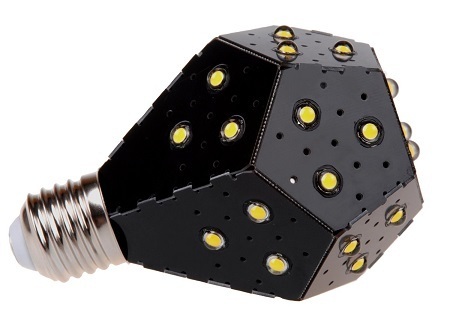
While it looks like something out of a bad science fiction movie, the Nanoleaf actually is quite a leap forward in LED lighting technology. It replaces a normal bulb, but outputs more light, uses far less energy (10 watts), and lasts much longer (30,000 hours).
Thanks to the energy efficient plus long lifespan, it pays for itself in energy savings over its lifetime. It also maintains a relatively low temperature, casts light in all directions, and contains no mercury.
Buy now
Amazon
BOOK OF THE WEEK:
THE HOT SAUCE COOKBOOK
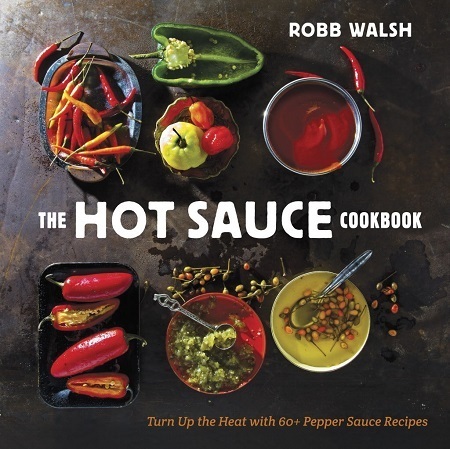
Great hot sauces are one of my favorite low-calorie ways of spicing up otherwise bland meals. If you’re in a hurry and only have time to whip up some protein and veggies, a yummy hot sauce can make it special.
The Hot Sauce Cookbook offers a wide variety of pepper and salsa sauces ranging from Mexican salsas to Ethiopion berbere, and also includes over 50 recipes whose central feature is spiciness such as the Original Buffalo Wing, Mexican Micheladas, and more.
Buy now
AmazonAmazon UK
What do you think of this week’s picks? Have anything you’d like to share? Let me know in the comments below!
December 12, 2013
8 Kettlebell Exercises That Will Kick Your Ass
Think you need a fancy gym setup to develop superhero strength? Think again.
While kettlebells can look deceptively easy to move around, but with the right kettlebell workouts, you can target every muscle in your body and build strength while increasing endurance.
In fact, kettlebell workouts are so effective they’ve been a primary tool in Russian bodybuilding and stronglifting since the 1700s. The term Girevik, traditionally used for only the strongest Russian men, actually translates to “kettlebell man.”
The types of popular kettlebell workouts vary widely. Some people enjoy using kettlebell exercises as their primary form of resistance training, in which case heavier weights are used. Others prefer to use kettlebell workouts as a form of whole-body circuit cardio, which calls for lighter weights and more repetitions.
Either use is fine, and I think kettlebell workouts should be a part of every home exercise routine. They’re just extremely versatile, they require very little equipment (2 – 6 kettlebells is all you’ll need), and they are a very effective way to build muscle and strength outside the weight room.
So, let’s now look at 8 of the toughest kettlebell exercises out there–exercises that will, quite frankly, kick your ass.
1. Double Kettlebell Squat
This one is easy to describe, but not so easy to do.
You’ll be squatting with two kettlebells held up in front of the shoulders. To get them there, clean them into position. Squat as low as you can go, but point the knees out to the side instead of straight ahead. Keep your spine straight and stacked on top of your pelvis. Don’t let your shoulder slump forward. Stand all the way back up and repeat. Shoot for 15–20 squats.
2. Turkish Get-Up
Turkish Get-Ups are challenging, but they’re not just for building strength; they correct muscle imbalances. Make these a regular part of your workout regimen and you’ll see gains in whatever else you’re doing.
Start by laying down and extending your right arm straight to bring it in front of your chest. Keep your shoulders down with your back flat on the ground. Bend your right knee in and slowly raise up your right shoulder to prop yourself up on your left elbow. Sit up carefully, keeping your arm straight to raise the kettlebell above you head. You will end up with your right foot flat on the ground near your seat. Push up from your left elbow to your hand, straightening that arm while lifting your chest. Great, you’re halfway there!
Keep your eyes on the weight as you shift from one position to the next. Now focus on lifting your hips and getting both feet flat on the ground, hip distance apart. Sweet your left leg behind you to a kneeling position. Your right arm is still extended straight up above you. Stand by pushing up with your right leg to pick the left knee up from the ground. Ta da! Now do as many as you can without sacrificing the integrity of each position, and repeat on the other side.
3. Kettlebell Military Press
This one also starts by cleaning the kettlebell, but you’ll do both sides at once. Lean slightly forward to press the kettlebells overhead at the same time. Lower them down to the shoulders slowly, and repeat for 10–20 reps. This is tougher than military press with a bar because it’s more difficult to move both hands at the same pace while keeping steady.
4. Kettlebell Push-Up+
To make everyday push-ups more difficult, you can grasp the handles of two kettlebells. This gives you a slightly less stable base and allows you sink down lower for increased range of motion. But to take it to the next level, flip the kettlebells over and rest your hands on the bottom. By keeping them balanced on the handle, you’re increasing the amount of instability.
If that feels stable, try shoulder taps at the top of your push-up. Keep your core engaged and hips level while lifting one hand up to your opposite shoulder. Make sure you don’t twist your body from side to side. Switch hands before doing another push-up. Do 1–2 sets of 10.
5. Kettlebell Pistol Squat
As if the regular old pistol squat wasn’t already hard enough, we have the kettlebell pistol squat.
To perform this exercise, pick up a kettlebell with two hands and hold it by the sides of the handles (the horns, as they’re called). Raise one leg off of the floor and squat down on the other by flexing at the knee and squatting with the hips. keep the kettlebell up in front of you. Hold the bottom position for a moment, and drive up through the heel, keeping your head and chest up.
6. One-Arm Kettlebell High Lunge
This one will really get your heart pumping. First, clean the kettlebell; that will bring you to the position where the kettlebell is by your shoulder with your palm facing out. Then press the kettleball up, keeping it directly over your shoulder, while bending your knees into a high lunge position. Keep the kettlebell overhead as you stand up straight, and then lower the weight with control. Do 2 sets of 5.
7. Russian Kettlebell Twist
You get to sit down for this one, but that doesn’t mean you get to kick back and relax.
To get into position, start with your feet flat on the floor, and then raise your legs up so your shins are parallel to the ground. With both hands hold the kettlebell close to your chest, either at the handle or base, and lean back to a 45-degree angle. Your core should be engaged the whole time to keep you steady. Twist at the waist left and right – not the hips! – using core control to slowly move the kettlebell side to side.
Obliques not burning yet? Increase difficulty by holding the kettlebell farther away from your chest. The hardest progression is to maintain a v-shape, keeping the legs lifted straight out with toes pointed up.
8. Advanced Kettlebell Windmill
Strong shoulders will help you prevent injury when lifting. Give them some much-needed attention challenging your abs with these windmills.
Lift a kettlebell above your head with a clean and press, and flatten the free arm against the small of your back. Turn your feet away from the kettlebell, and lean your torso away in the same direction. If your butt is sticking out, you’re doing it right! Lower down as far as you can, and then use those glutes and hamstrings to press back up. Do 10–15 reps on each side.
Want Some Kettlebells?
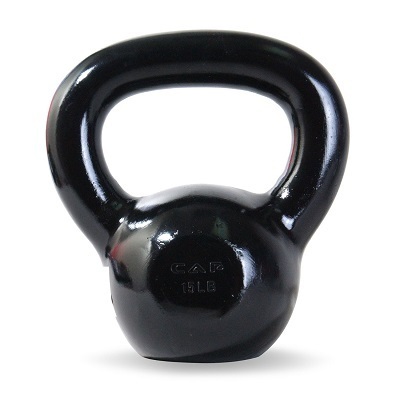
If you’re itching for some kettlebell action, I recommend you go with CAP’s or York’s kettlebells. They’re cheap, solidly constructed, and have comfortable handle sizes and smooth finishes. No need to get fancy here!
Buy now
AmazonAmazon UK
What did you think of these kettlebell exercises? Have any others you’d like to share? Let me know in the comments below!
December 11, 2013
How to Reduce Muscle Soreness
If you exercise regularly, and especially if you lift weights, you’ve probably gotten used to stiff, sore muscles (especially after legs day!).
We all learn to just deal with it, but sometimes it can be quite uncomfortable.
Fortunately, there are some simple, scientifically proven strategies that reduce muscle soreness (and no, reducing muscle soreness won’t reduce your gains!).
But before we go over the strategies, I want to first address a common misconception about muscle soreness: that it means your muscles are growing.
It doesn’t, and it turns out that how sore your muscles get after a workout isn’t necessarily a good way to judge the effectiveness of your training.
Muscle Soreness Doesn’t Necessarily Mean Muscle Growth
Most people think that really sore muscles is a good sign–that it means the muscles are growing.
This seems to make intuitive sense, of course. We’re training to damage our muscles, and muscle damage leads to muscle soreness, so therefore little or no soreness would mean little or no damage and thus little or no gains, right?
It turns out it’s not that simple.
Workouts that create large amounts of muscle soreness won’t necessarily result in muscle growth, and workouts that cause little-to-no soreness can result in significant muscle growth.
For instance, if you do an hour of downhill running, your legs are going to be very sore the next day, but downhill running is definitely not going to build big, strong legs.
To quote researchers from Yokohama City University:
“Because of generally poor correlations between DOMS [delayed onset muscle soreness] and other indicators, we conclude that use of DOMS is a poor reflector of eccentric exercise-induced muscle damage and inflammation, and changes in indirect markers of muscle damage and inflammation are not necessarily accompanied with DOMS.”
In other words, damaged muscles won’t necessarily hurt, and muscles that hurt aren’t necessarily much damaged. (Click to tweet this!)
The exact physiology behind this isn’t fully understood yet (muscle growth is a very complicated process), but one study demonstrated that at least some of the pain we’re feeling in muscle soreness stems from the connective tissue holding muscle fibers together, not from the actual fibers themselves.
We also know that the more often the muscles are exposed to certain types of stimuli, the less sore they become as a result. That doesn’t mean they won’t grow bigger and stronger, though.
Certain exercises also cause more soreness than others, but those aren’t necessarily the most effective exercises for building strength or size. For instance, the stretching involved in dumbbell flys is likely to cause soreness, but they’re a pretty poor movement for adding mass when compared to something like incline bench press, which is likely to cause less soreness.
Personally, I only get really sore from a workout if I missed it the week prior. When I’m in my normal routine, I only get mildly sore, and I work hard in the gym. And I continue to build strength and size.
So, the bottom line with muscle soreness is this: it doesn’t tell us much regarding whether we’re making gains or not. Don’t think that excessive soreness means major muscle growth, and don’t worry if you’re not getting sore. (Click to tweet this!)
How to Reduce Muscle Soreness and Improve Muscle Recovery
Before I get to workable strategies for reducing muscle soreness, I want to go over a few commonly commonly prescribed solutions that I don’t recommend:
Ice bath or other “cold therapy” strategies. Research has shown they don’t reduce muscle soreness, so no need to suffer through them.
Stretching. Studies have proven that stretching, both before and after exercise, doesn’t help reduce muscle soreness.
Anti-inflammatory drugs. While nonsteroidal anti-inflammatory drugs can reduce muscle soreness, they can also inhibit protein synthesis, which means less muscle growth.
Alright, let’s get to the recommended solutions:
Get a massage. Research has shown that massage is an effective way to reduce the muscle soreness that occurs after exercise.
Do some foam rolling. According to this study, foam rolling reduces the severity of DOMS that occurs after training, and increases range of motion.
Active recovery can help. Active recovery is simply a workout that’s easier than the one that caused the soreness, and it’s one you should finish feeling better than when you started. This has been proven to reduce muscle soreness. My favorite forms of active recovery are biking for the legs, and swimming for the upper body.
Enjoy some yoga. Yup, research has shown that yoga can help reduce muscle soreness. I did one yoga class per week for a couple months to try this and definitely noticed a reduction in muscle stiffness and soreness.
Supplement with carnitine. L-carnintine is one of the few supplements proven to help reduce muscle soreness (and that’s why I included it in my muscle recovery supplement, Recharge.)
Improve muscle recovery. By doing everything you can to maximize muscle recovery, you can help reduce muscle soreness. Check out my Definitive Guide to Muscle Recovery to learn more.
Have any other strategies for reducing muscle soreness? Or anything else you’d like to share? Let me know in the comments below!
December 10, 2013
A Simple Lesson on How to Succeed
How many times have you heard or been told that all success takes is getting into action and being persistent?
We’ve all heard stories of successful people who had enough persistence to make their dreams a reality, how they would never give up, how they “burned all the bridges” and left themselves no way out but through, and so on.
That’s good and all and there’s truth in those statements, but let’s be honest…they’re pretty hollow. They’re about as nourishing as a photo of oxygen is to a drowning man.
See, the problem is, they touch on an important aspect of achieving success, but they don’t address the REAL core issue holding people back.
The real issue lies behind the simple fact that the vast majority of people have been told to take more action, be persistent, “get hungry,” etc., but many don’t see their dreams through and make them happen.
Why?
The Mystery Behind Fear of Failure, Uncertainty, and Procrastination
Many people feel kind of stuck in a rut in life and don’t know how to get out. They don’t know where to start. They’re deathly afraid of failure. They don’t know if they can do it. They don’t know what will work and what won’t. They don’t feel sufficiently motivated and they procrastinate.
These are the mental and emotional factors that are preventing them from getting anywhere, and simply chanting “take action and be persistent!” doesn’t help. It’s like when you tell someone how worried you are about something and their reply is, “I see. Don’t worry about that, okay?” Not very persuasive or soothing.
So, what holds these mental blocks in place and what can we do about it?
Well, let’s do an interesting little exercise. I want you to think of an area where you have an ambition but are experiencing any of the above mental barriers (lack of motivation, uncertainty, lack of creativity, procrastination, laziness, etc.).
Now, what if you had a crystal ball and you were able to discover with ABSOLUTE CERTAINTY–and I mean 100% unshakable conviction–that you would achieve your ambitions if you just followed through with specific actions. Looking into the crystal ball, you could SEE yourself basking in the success and reaping the rewards.
Do you think you’d do it? Would you feel enough motivation to push through the “head trash” and make it happen?
I think most everyone would.
See, that’s interesting though. The only difference between that scenario and reality is in the fantasy, you truly believed the actions would give you your dreams. The actions are the actions–they didn’t change. Only your state of mind changed.
A Tale of Two People–Who Will Succeed?
Tell me who will succeed out of the two following people:
Person A has the blueprint of success and knows every action that needs to be taken, but he’s not sure if he has it in him to pull it off and he doesn’t really believe with CONVICTION that it will work. But he knows he has to take action and be persistent, so he goes through the actions without verve or vision.
Person B has the same blueprint and action list, but Person B has somehow completely convinced himself that he has the potential to achieve his dreams and that success is INEVITABLE if he follows the plan. He takes the actions with resolution, certainty, and energy because he KNOWS they’ll work in the end.
Person B, of course, has a much better chance of success. Once again, both people had the same blueprint and action lists; the only difference was their states of mind.
What was the main catalyst that caused the difference?
BELIEF.
One person believed in himself and in the inevitability of success, and the other didn’t.
See, there’s an interesting “mechanism” at work when you’re trying to achieve something. It has four “quadrants” that all feed on and affect each other, and they are:
|Potential| |Action|
|Result| |Belief|
Person A above didn’t believe in his potential and didn’t really think the blueprint and actions would give him success, and therefore took small, robotic actions, got little results, which reinforced his beliefs that it won’t work anyway and he won’t achieve success. This lead to less action, which meant less results, and eventually, the initial impetus ground to a halt and the game is over.
Person B knew he had the potential, truly believed that the blueprint and actions would give him success, took massive, energetic action to get there, got big results, which then reinforced his beliefs. This cycle of course spurred him to take more action, get more results, and the momentum carried him to his dreams.
So let’s get to the point. How can you be Person B in any of your endeavors?
How to Light the Fires and Kick the Tires in Your Life
First, you should have a clearly visualized goal in mind. Really see yourself with the success you want, and make sure you feel it’s possible (don’t paint a picture that you feel isn’t realistically achievable). Write your goals down and be specific.
But that’s not enough to see you through to the end. It can get you started, but you need to see RESULTS to really reinforce your belief in yourself and your actions and feel the drive to go higher.
So your first goal when starting ANYTHING should be IMMEDIATE RESULTS of some kind. (Click here to tweet this!) PROGRESS is what will give you the momentum you need to push it all the way through.
Let’s say you’re starting a business project and your vision is to make a million dollars with it, and you’ve really created the fantasy and know it’s possible.
Your first goal should be very simple: make $100! That’s an immediate result that backs up your beliefs. If you can make $100 with it, then all you have to do is more of that, and you’ll be at $1,000. Do even more, and that’s $10,000. Then $50,000. And eventually a million.
As you do this, you’ll find it easier and easier to make the next jump because you’re figuring the formula out and you’re going to have a fire burning inside that will drive you to take more action and get even more results.
The key is the beginning, though. If you don’t push that pebble over the mountain ledge, it will never get the momentum to become a massive boulder of snow barreling its way through all obstacles.
It takes guts to take a firm stance and say that you believe in yourself and you believe in your plan and actions. It opens the door to possible failure, humiliation, and hardship. But it also opens the door to your dreams of happiness and success.
And what you should really be afraid of is not failure, humiliation, or hardship, but a life of quiet, mediocre desperation where you’re always wishing for more but are unable to reach it.
So have some guts, believe in yourself, take action that will give immediate results, let those results fuel your ambition and ride it all the way to the top.
What did you think of this lesson on how to succeed? Have anything else you’d like to share? Let me know in the comments below!
December 9, 2013
How to Lose Weight Without Counting Calories
If you’re looking to lose weight, chances are you’ve heard a lot about counting calories.
Some people say it’s crucial for weight loss, others say it doesn’t work, and others still say it depends on your body and circumstances.
Well, I want to start this article with the following:
Counting calories in and of itself accomplishes nothing, and is not vital to losing weight. (Click here to tweet this!)
Count all the calories you want, but if you don’t know why you’re counting them, and if you’re not planning your food intake properly, you’ll never lose any weight. And ironically, you also need to fully understand these same things to effectively lose weight without counting calories.
So, then, let’s start with these fundamentals of weight loss, and how they relate to calories, and then we’ll look at 6 strategies for losing weight without counting calories.
Weight Loss 101: The Physiology of Fat Loss
The first step to unshackling yourself from the perceived restraints of calorie counting is to gain a complete understanding of how and why the body burns fat–the physiology of weight loss.
We’re going to start with this:
What is a calorie?
That is, can you properly define the word? If you can’t, don’t sweat it. Most people never thought to look it up in a dictionary. So, here’s what it is:
When we’re talking food, a calorie is the amount of energy required to heat up one kilogram of water one degree Celsius.
It’s nothing more than stored (potential) energy.
Foods that contain more calories than other simply have more potential energy. Certain types of foods have more calories per gram (weight) than others. For instance, a gram of protein and a gram of carbohydrate both contain about 4 calories, whereas a gram a fat contains about 9 calories (over double the potential energy as protein and carbohydrate, per gram).
Now, your body requires a certain amount of energy to stay alive. I’m talking basic organ function here, not including any physical activity. This is known as your “basal metabolic rate,” or “BMR.” When you add the energy you burn from exercise to your BMR, you come to your “total daily energy expenditure,” or “TDEE.”
So how does your body get this energy to stay alive? It has two sources:
The food you eat.
Its energy stores, mainly in the form of fat and muscle.
If your body has energy available from food you just ate, it doesn’t need to tap into its own energy (fat) stores. (Click here to tweet this!)
This “fed” state wherein the body runs fully on energy from food can last anywhere from 3 – 6+ hours after you eat.
Now, when you eat a meal, you’re giving your body far more calories than it needs during that time. You might eat 600 calories in 5 minutes, and in that period, your body burned maybe only 25 calories.
What does it do with the rest of the calories you ate? You got it: it stores a large portion of them as body fat. So, after you eat food, your body runs off the energy from the food and stores a portion of the excess energy as body fat. (Click here to tweet this!)
What happens once that energy source runs out? Once the nutrients from the food have been fully absorbed and burned up?
Well, the body must then turn to its energy stores to continue running. That is, it must start breaking down body fat into molecules the cells can use for energy.
This brings me to an important point most people don’t know: the body is constantly storing and burning fat every day. You eat food, it stores fat. It finishes burning and storing the energy from the food you ate, and it then switches to burning fat. Back and forth the body goes, 24 hours per day.
Even if you grossly overeat for a day, your body still has periods throughout those 24 hours where it runs out of food energy and thus must burn fat. The amount of fat stored that day will be greater than what it burned, though, and voila, weight gain.
This hints at what we have to do to reduce the amount of body fat we carry: we have to get our body to burn more fat than it stores every day. (Click here to tweet this!)
How do we do this?
By regulating the amount of energy we give it.
If the body stores excess energy as body fat, which results in gradual weight gain, how do we get the opposite? How to do we cause gradual weight reduction?
Yup, by regularly feeding the body less energy than it needs. This is known is creating a “calorie deficit.”
No calorie deficit, no losing fat, period.
When you feed your body a little less energy than it needs every day, what happens is the amount of fat it stores from your eating is less than the amount of fat it burns when it doesn’t have food energy to live on. This is all weight loss is: fat stored < fat burned, over time.
When it comes to weight loss, it’s only a numbers game. WHAT you eat doesn’t determine whether you lose weight or not…HOW MUCH does. (Click here to tweet this!)
Weight loss does NOT require you to only eat certain types of food, avoid other types, combine types in various ways, or any other quackery. It only requires that you regularly feed your body less energy than it burns.
Sure, some calories are healthy and some aren’t, but you can even lose weight eating junk food if you maintain a calorie deficit.
No, carbs don’t make you fat. Eating excess calories does.
Yes, some people’s metabolisms are faster than others, and some do better with calorie deficits than others, but all of our bodies come with the same types of machinery.
Calorie Counting and Weight Loss
Let’s now address the primary matter of this article: calorie counting and weight loss.
As you have probably already concluded, calorie counting is nothing more than a simple way of regulating your energy intake. By tracking how much energy you’re giving your body, you can ensure you give it a bit less than it needs, which will result in fat loss.
This of course assumes you know how much energy you should be eating, though, which is where many people fall down with calorie counting. If you give your body all the energy it needs every day, or more, it doesn’t matter if you count those calories–you’re not going to lose any weight.
That’s why the most important part of a proper meal plan is working out the right amount of calories you’re supposed to be eating every day, and then turning that into the right ratio of macronutrients (but that’s another discussion, which you can read about here).
This then brings me to a bottom-line, non-negotiable weight loss rule:
Whether you count calories or not, the only way you will lose weight is by regularly feeding your body less energy (calories) than it burns. (Click here to tweet this!)
If you don’t want to count calories, you can lose weight. If you also don’t want to pay attention to and regulate your food intake, you will never lose weight. It’s that simple.
The “secret” behind many popular weight loss diets that call for eating certain types of foods, cutting out others, eating only at certain times, etc. is nothing more than they bring about a calorie deficit. That’s the whole picture, regardless of whatever marketing bullshit they spout.
For instance, if I told you you’re allowed 3 meals per day, and all you can eat for those meals is meat, veggies, and fruit, I can pretty much guarantee that you’ll lose weight. Why?
Because given those restrictions, it’s almost impossible to eat more calories than you burn. Especially if you’re exercising. Low-fat forms of protein and all veggies, especially fibrous veggies, are low in calories and extremely filling. Fruit is inherently low in calories, and fibrous fruits like apples are also quite filling.
The point is by simply not allowing you to eat calorie-dense foods, I can force you into a calorie deficit.
So, know that there is nothing inherently special about my tips for losing weight without counting calories. They will simply help you maintain a mild daily calorie deficit, which will bring about gradual weight loss.
6 Tips for Losing Weight Without Counting Calories
Alright, we’ve arrived at the actual tips for losing weight without counting calories.
Remember that these strategies do nothing more than help you restrict your calorie intake, thus creating a daily alorie deficit and weight loss.
1. Eat a High-Protein Breakfast
Research has shown that simply eating eggs in the morning, as opposed to a grain-based breakfast like bagels, can help you lose weight. (Click here to tweet this!)
Why?
Very simple: people that eat eggs for breakfast end up eating fewer calories at lunch, for the rest of the day, and according to one study, even for the next 36 hours.
Oh and in case you’re worried that eggs raise your “bad cholesterol” levels or otherwise increase your risk of heart disease, more recent research has completely debunked these long-standing claims.
Eggs are cheap, healthy foods that we should all enjoy.
Skip the grain breakfast and opt for a high-protein breakfast option like eggs.
2. Eat More Protein in General
When it comes to losing weight, protein is your best friend.
Study after study after study has confirmed that a high-protein diet results in more fat loss than low-protein diets, even when eating until fullness, as well as less hunger, and a greater metabolic boost.
There are two primary reasons for these benefits:
1. Protein costs quite a bit of energy to metabolize. About 25-30% of its energy is utilized in the process, as opposed to only ~5 – 15% of carbohydrate’s energy utilized in its processing, and ~5% of fat’s.
What this means is when you eat protein, there just isn’t as much energy left over to use for fat storage than when you eat carbohydrate or fat.
2. Protein is more filling than carbohydrates or fat, which helps reduce total daily calorie intake. In one study, increasing subjects’ daily protein intake to 30% of total calories resulted in an average daily reduction of 441 calories.
A high-protein diet has another major weight loss benefit: it reduces the amount of muscle that you lose while restricting your calories.
Include a serving of protein with every meal, and you will find it much easier to lose weight without counting calories.
3. Eat Plenty of Low-Calorie Fibrous Foods
Fibrous foods with a high water content, like most vegetables and some fruits, are great weight loss foods.
Why? Because they’re filling, but without all the calories. Increasing fiber intake is a simple way to increase fullness, which leads to an overall reduced daily calorie intake. (Click here to tweet this!)
Here are my favorite fibrous fruits and veggies:
Raspberries
Pears
Green peas
Broccoli
Apple s
Bananas
Brussels sprouts
Spinach
Oranges
Eat a few servings of fruits and vegetables every day, and you’ll find it easy to feel full and satisfied without eating a lot of calories.
4. Reduce Your Carbohydrate Intake
No, there’s nothing inherently fattening about carbohydrates, but restricting carbohydrate intake is a very easy way to significantly reduce total daily calorie intake.
The fact is most people just abuse carbohydrates, eating far too many every day. This is partially because carbohydrates aren’t very filling, and of course because a lot of the tasty stuff we like to enjoy is high-carb.
The easiest way to cut back on carbs is to eliminate sugars, sweets, and sodas, and limit your intake to starchy foods and grains (bread, pasta, potato, etc.) to 0 – 1 servings per day (and if you’re going to have 1 serving, make it small–no bigger than your fist).
Instead, rely on the fruits and veggies given above for your carbohydrates. If you do this, your carbohydrate intake will be somewhere between 50 – 100 grams per day, which will not only keep your calories under control, but will also help you drop water weight and reduce bloat.
An easy way of reducing calories is cutting out the cereals, rices, grains, breads, pastas, and other “comfort carbs,” and replacing them with the fibrous fruits and vegetables.
5. Drink More Water
Research has shown that increasing water intake is an effective way of increasing fullness, thus helping you reduce your total calorie intake. (Click here to tweet this!)
Drinking just two glasses before a meal is enough to confer this benefit.
Furthermore, research has also shown that increasing water intake actually speeds up your metabolism. Scientists found that after drinking approximately 2 cups of water, subjects’ metabolic rates were elevated within 10 minutes of water consumption, and reached a maximum elevation after about 30 to 40 minutes.
How does water have this effect in the body? Well, at least 40% of the increase in basal metabolic rate is caused by the body’s need to heat the water to body temperature (no, colder water doesn’t give you a bigger boost–room temperature is fine).
It’s interesting to note that salty fluids negate this metabolic boost because they interfere with cell fluid mechanisms that play a vital role in the metabolic acceleration.
Increase your water intake to about 1 gallon per day, with about two glasses at each meal, to help your weight loss efforts.
6. Get Enough Sleep
Did you know that getting inadequate sleep raises the risk for obesity by 89% in children and 55% in adults? (Click here to tweet this!)
Yup, it’s true. Poor sleep messes with hormones related to hunger, causing an increase in hunger and cravings.
So make sure you’re making time for adequate, good sleep.
Get enough sleep every night and you’ll be naturally less hungry, and have fewer cravings.
What do you think of these stragies for losing weight without counting calories? Have anything else you’d like to share? Let me know in the comments below!
December 7, 2013
Recipe of the Week: The Perfect Guacamole
Avocados are awesome. They’re full of healthy fats including oleic and alpha-linolenic acid, and they have high concentrations of various antioxidants as well as vitamins and minerals like C, Bs, selenium, and zinc.
Guacamole is my absolute favorite way of preparing the avocado. Sure, you can eat it with chips, but there are many other yummy foods that guacamole goes great with:
Scrambled eggs
Baked potato
Salad
Hamburger
Shrimp
Raw veggies (as a dip)
This recipe is from my cookbook, The Shredded Chef, and it’s simple, but delicious. Enjoy!
Servings
2
Calories Per Serving
295
Protein Per Serving
6 grams
Carbohydrates Per Serving
19 grams
Fat Per Serving
26 grams

Ingredients
2 ripe avocados
1/2 red onion, finely chopped
2 serrano chilies, seeded and finely chopped
1/4 cup fresh cilantro, chopped
1 tablespoon fresh lime juice
1/2 teaspoon salt
dash of ground black pepper
Instructions
Cut the avocados in half, pit them and scoop out the peel and place in a mixing bowl. Add in the chopped onion, cilantro, lime, salt, pepper, and half the chili.
Mash together, I personally like mine slightly chunky, so I don’t mash too much. Taste, add additional lime, salt, and chili to reach desired flavor and level of spice. I always end up adding a tiny bit more salt and the rest of the chili, but that’s just how I like it!
What You Get to Eat

What did you think of this week’s recipe? Let me know in the comments below!
Want more delicious, easy-to-make recipes like this?If you like this recipe, then you’ll love the bestselling cookbook it came from! My own The Shredded Chef!
Buy this book now to forever escape the dreadful experience of “dieting” and learn how to cook nutritious, delicious meals that make building muscle and burning fat easy and enjoyable!
Buy now
AmazonAmazon UKAmazon AUAmazon CABNiBooksKoboGoogle Play

December 6, 2013
Cool Stuff of the Week: How to Fight a Baby, Eye of the Needle, Attacknids, and More…
I’m not ashamed to admit that I’m kind of a sucker for cool stuff. I like nifty gadgets, quirky decoration pieces, nice clothes (and shoes!), good books, and fun games.
In this series of weekly posts, I share whatever currently has my fancy. Maybe some of it will catch yours as well!
VIDEO OF THE WEEK:
HOW TO FIGHT A BABY
LOL I’ll never be afraid of my 16-month-old again…
LOGITECH ULTIMATE EARS BOOM WIRELESS SPEAKER
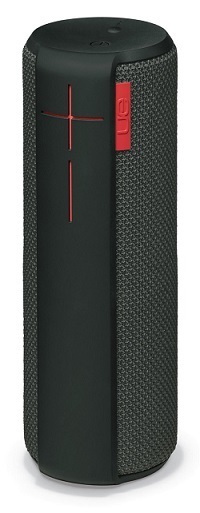
The Logitech Ultimate Ears Boom speaker projects 360 degrees of bold, crisp sound, filling any space with surprisingly good audio. It lacks deep lows, but this is to be expected with a portable speaker.
It’s light–just over one pound in weight–stain resistant, has wireless connectivity via Bluetooth, 15 hours of battery life, and can be linked with other speakers.
Buy now
AmazonAmazon UK
COMBAT CREATURES ATTACKNIDS
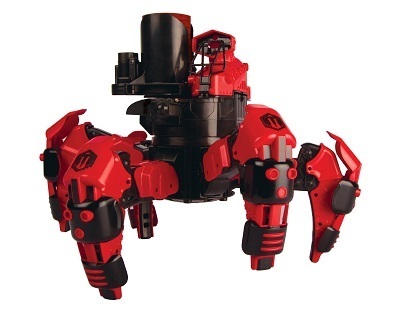
Ever since Robot Wars I’ve wanted my own fighting robot. Well, it has arrived.
Attacknids are about a foot tall, feature six legs, and 360-degree rotating weapons that can fire up to 30 feet. You control them with a wireless remote, and when battling, a direct hit explodes armor off their bodies, and 3 hits shuts them down for the next fight.
Buy now
AmazonAmazon UK
CARSON POCKET MICROSCOPE
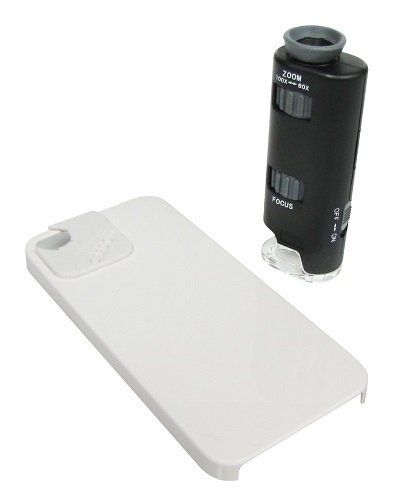
Have an iPhone 4 or 4S and want to see what’s really going on on a small scale? Then you should grab the Carson Pocket Microscope.
It’s small and pocket friendly, and it features 60-100x magnification, and it works great with the iPhone’s camera–simply attach the microscope to your phone, fire up the camera app, and you’re ready to go.
Buy now
AmazonAmazon UK
FASHION ITEM OF THE WEEK:
NIKE PROCOMBAT HYPERWARM DRI-FIT COMPRESSION PANT

The Nike Pro Combat Hyperwarm Dri-Fit Pant helps keep you warm, dry, and comfortable. Its thermal fabric wicks away sweat, and its skin-tight fit protects against wind chill and prevents rubbing.
Buy now
AmazonAmazon UK
BOOK OF THE WEEK:
EYE OF THE NEEDLE
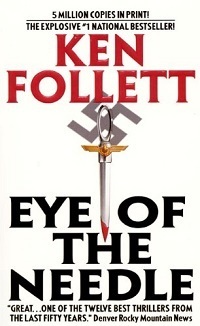
Ken Follett was only twenty-seven when he wrote Eye of the Needle, and it has remained one of his most celebrated books ever since.
It’s tightly plotted, with complications around every corner. The suspense builds with every chapter, never letting up until the terrific climax.
The characterization is superb. This is one of Follett’s specialties–creating true-to-life characters that you really come to know and empathize with.
The historicity makes it fun. Follett did a lot of research to write this book, and effortlessly weaves in all kinds of neat details about the inner workings of the war.
All in all, it delivers a thrilling, entertaining ride.
Buy now
AmazonAmazon UK
What do you think of this week’s picks? Have anything you’d like to share? Let me know in the comments below!
December 5, 2013
5 Healthy Protein Shake Recipes That You Have to Try
If you want to add some delicious variety to your meal plan, then look no further than these protein shake recipes.
They’re easy to make, extremely delicious, and moderate in calories, making them perfect post-workout meals (or just tasty ways to get in more calories every day).
Each of these 5 protein shake recipes has added protein from whole food sources, and if you want to get creative, simply swap out the fruit, nuts, and milk for another variety. To make them, simply throw everything in a blender and enjoy.
So, let’s get to the recipes!
PB&J Protein Shake
Whenever you add yogurt to a smoothie or shake, go for plain Greek yogurt. It has a much higher protein content than traditional yogurt, and by choosing plain yogurt you’re also cutting out a ton of added sugar. Most flavored yogurts contain 20 to 30 grams of sugar per cup.
Nutrition Facts
Calories: 458
Protein: 44 grams
Carbs: 54 grams
Fat: 11 grams
Ingredients
1 scoop vanilla or unflavored whey protein powder
1/2 cup unsweetened almond milk
1/2 cup plain non-fat Greek yogurt
1 cup mixed berries
1/4 cup rolled oats
2 Tbsp. PB2
1 Tbsp. chia seeds
1 tsp. honey
What You Get to Enjoy
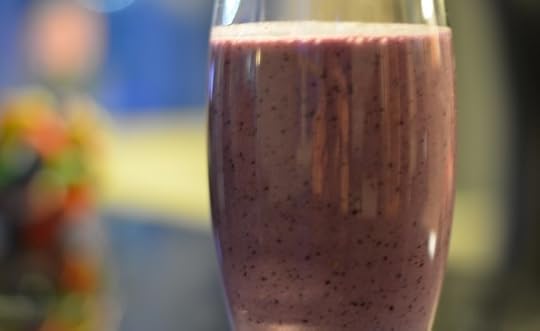
Chocolate Banana Protein Shake
Adapted from Chocolate-Covered Katie
Whenever you add yogurt to a smoothie or shake, go for plain Greek. Greek yogurt has a much higher protein content than traditional yogurt, and by choosing plain, you’re also cutting out a ton of added sugar. Most flavored yogurts contain 20 to 30 grams of sugar per cup!
Nutrition Facts
Calories: 590
Protein: 38 grams
Carbs: 48 grams
Fat: 30 grams with nut butter, 9 grams without
Ingredients
1 scoop chocolate whey protein powder
1/4 cup coconut milk
1/2 cup 1% milk (organic is my preference)
1 banana, frozen
1 tbsp. cocoa powder
1/2 tsp. pure vanilla extract
Dash of salt
1 Tbsp. agave syrup
Optional: 2 tbsp. nut butter
What You Get to Enjoy
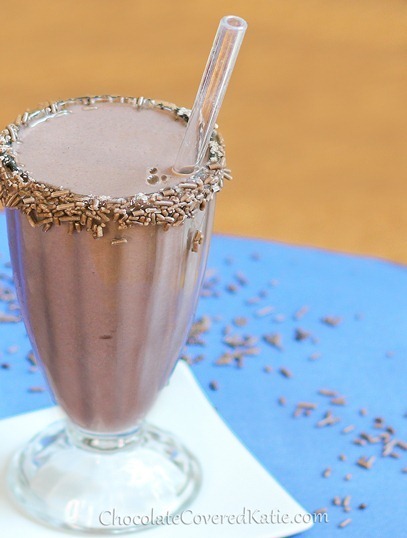
Picture courtesy of Chocolate Covered Katie
Sweet Red Bean Protein Shake
Adapted from HeartMindandSeoul.com
Red beans, a traditional ingredient in many Asian desserts, are a delicious way to add protein and carbs to your post-workout meal.
This recipe takes a little more work than the others, but it packs a lot of carbs and very little fat, and is very tasty.
Nutrition Facts
Calories: 453
Protein: 33 grams
Carbs: 74 grams
Fat: 4 grams with nut butter, 9 grams without
Ingredients
1 scoop vanilla or unflavored whey protein powder
1/2 cup 1% milk (organic is my preference)
1/2 cup sweet red bean paste (approx. 1/4 cup azuki beans and 2 Tbsp. honey)
5 to 6 ice cubes
What You Get to Enjoy

Picture courtesy of Heart, Mind, & Seoul
Choco-Coconut Almond Protein Shake
Adapted from Martha Stewart
For subtle, smooth coconut flavor that ties all the ingredients together, add a teaspoon of coconut oil to any smoothie or shake. Not only is it like nature’s candy, but coconut oil is packed with healthy fats.
You’ll have this recipe memorized in no time because it makes a delicious breakfast, snack, or dessert.
Nutrition Facts
Calories: 564
Protein: 49 grams
Carbs: 50 grams
Fat: 20 grams
Ingredients
1 scoop chocolate whey protein powder
1/2 cup vanilla almond milk
1/2 cup coconut water
1/2 cup non-fat Greek yogurt
24 whole skin-on almonds, sprouted (soaked in water overnight)
1 banana
1 tsp. coconut oil
1 tsp. honey
2 cups ice cubes
What You Get to Enjoy
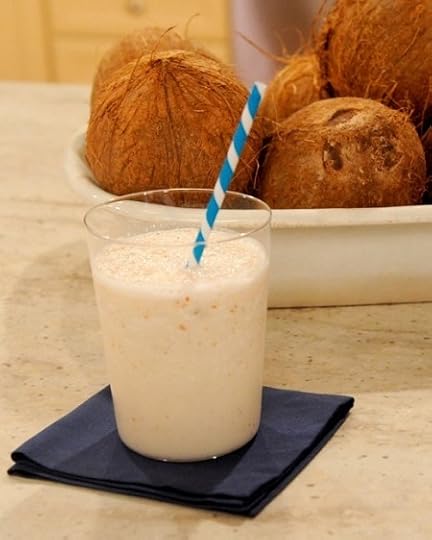
Picture courtesy of Martha Stewart
Mango Cheesecake Protein Shake
Adapted from Real Women of Philadelphia
As a delicious and rich source of protein, why not add cheese to your favorite fruit smoothie?
Cream cheese not only tastes indulgent but creates a luscious texture. Regular Philadelphia works great, but if you want to cut back on the fat, look for Neufchâtel. Both are soft, unripened cheeses, but the French style has 1/3 less fat plus a higher moisture content.
This protein shake tastes like liquid dessert, and you can swap the casein for whey.
Nutrition Facts
Calories: 403
Protein: 34 grams
Carbs: 42 grams
Fat: 12 grams
Ingredients
1 scoop vanilla casein or whey protein powder
3 Tbsp. Neufchâtel cream cheese
1/4 cup plain non-fat Greek yogurt
3/4 cup diced mango
1/2 Tbsp. ground flax seed
1 Tbsp. honey
1/2 cup crushed ice
What You Get to Enjoy
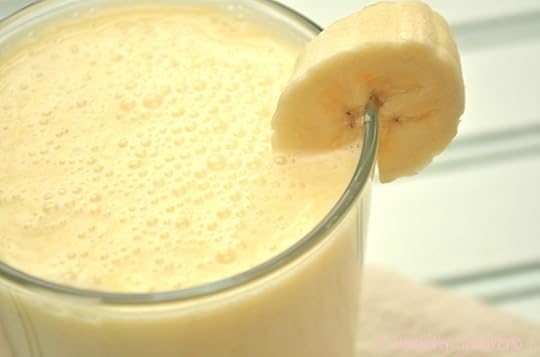
What do you think of these protein shake recipes? Have any favorites of yours that you’d like to share? Let me know in the comments below!
December 4, 2013
Muscle For Life Talks With Gregory O’Gallagher from Kinobody Fitness
I met Greg a few months ago when he reached out to invite me onto his Road to Ripped podcast, and we immediately clicked. He not only really knows his stuff and gets great results with his clients, he’s a very cool, down-to-Earth guy.
I hope you enjoy the interview!
What is your age, height, and weight?
I’m 22 years old, 5’10, and 185 lbs.
What motivated you to get fit?
 There was a moment when I was six years old, when I had one of the most profound realizations of my life. I was playing with my Brick Bazooka action figure and I couldn’t help but think how cool it would be to have a rock hard muscular physique like the toy action figure I was mirin.
I remember asking my father if I could ever look like that. My father’s answer was priceless, “Gregory, if you exercise and eat right, you can improve your physique.” I was blown away! At the time, I had no idea that you had any control over how you looked. And from that moment forward, I committed myself to exercise and healthy eating.
What were the biggest challenges you’ve faced in achieving your fitness goals? What helped you overcome them?
To be honest, I never had any trouble making consistent progress in the gym. I’ve always been extremely consistent, hard working, goal oriented and patient. I’ve been recording all of my workouts since I first stepped foot in the weight room at 15 years old. When I hit plateau’s I adjust my routine, vary the exercises and/or change the set/rep scheme to keep progress coming along.
With that said, the biggest challenge I have faced is probably diet. To me, it’s important that I maintain a reasonably low body fat for that lean and chiseled look. This requires a great emphasis on nutritional intake. Having to restrict calories is something that would have freaked me out in the past. In fact, the moment I decide I’m going to go on a ‘cut’ to drop fat, my appetite instantly goes through the roof. This makes dieting quite futile.
Being miserable to get in great shape is out of the question. I see nutrition and training as a way to enhance your life, not detract from it. Thankfully, I have uncovered a nutritional strategy that allows me to feel fantastic and almost effortlessly eat at a calorie deficit to drop body fat.
What drives you to continue putting in the work week after week?
I love lifting. I absolutely love it! I don’t think I’ve ever gone an entire week without strength training in the last 5 years. I love hitting it hard in the gym, and I love setting goals and knocking them out of the park.
I should also note, I believe in a minimalistic approach to training. I lift two to three days per week while making continual progress on my ‘key lifts’. Because of this, the time investment to realize the incredible benefits of proper training is minimal.
Beyond looking good, what do you feel are the biggest benefits of being fit?
The truth of the matter is that virtually everyone wants to be in great shape, but so few are. The mindset, outlook and skill set it takes to succeed in fitness is readily transferable to everything else in life.
When you set a goal for yourself and decide that you want to build 20 lbs of muscle or drop down to 10% body fat, and you conquer that goal, you learn so much and more importantly, you develop a strong sense of self-belief. All of the sudden, nothing else seems out of reach. Learning a new skill, building a business, meeting a beautiful girl…. All the things that once scared the heck out of you suddenly start to excite you. Why? Because you’ve bought into yourself, you believe that you can succeed.
What is your current exercise routine (both weightlifting and cardio)?
My current goals are to maintain most of my strength and size while adding some more muscle onto my arms, particularly my biceps. So I’m keeping the volume low on most movements by only doing two work sets.
I’ll also mention that a good workout is one that allows for a good rate of progress on your main lifts. The following routine has led to some incredible strength gains in the last few months so don’t overlook it because of its simplistic nature.
If you build up to doing weighted chins with 100+ lbs for 5, incline benching 245 lbs for 5 and performing dips with 150 lbs for 5, you’ll have an insanely developed physique. This is the type of strength achievable with such a routine. My best personal records include incline benching 260 lbs for 6, weighted chins with 115 lbs for 6 and bar dips with 180 lbs for 6.
Monday – Back, Shoulders and Arms
Weighted Chin ups: 2 sets – 6-8, 8-10 (RPT)
Standing Barbell Press: 2 sets – 6-8, 8-10 (RPT)
Incline Dumbbell Curls: 3 sets – 4-6, 6-8, 8-10 (RPT)
Skull Crushers: 3 sets – 6-8, 8-10, 10-12 (RPT)
Lateral Raises: 2 sets – 10-12, 12-15 (RPT)
Wednesday – Legs and Abs
Box Jumps: 3 sets of 3-5 jumps
Pistol Squats: 3 sets of 3 explosive reps
Calf Raises: 2 sets – 10-12, 12-15 (RPT)
Hanging Leg Raises: 2 sets x 10 reps (slow)
Abs Wheel Roll outs: 2 sets x 10 reps (slow)
Friday – Chest and Arms
Incline Barbell Bench Press: 2 sets – 6-8, 8-10 (RPT)
Weighted Bar Dips: 2 sets – 6-8, 8-10 (RPT)
Barbells Curls: 3 sets – 4-6, 6-8, 8-10 (RPT)
Rope Pushdowns: 3 sets – 6-8, 8-10, 10-12 (RPT)
Hammer Curls: 3 sets – 4-6, 6-8, 8-10 (RPT)
Note
I rest 3 minutes between sets and reduce the weight by 10% on each subsequent set for RPT (reverse pyramid training).
Cardio
For cardio I like to do brisk walking for 40-60 minutes on rest days. This is my preferred approach. Walking improves recovery, has a neutral effect on appetite and is quite enjoyable. I’ve done a lot of interval training and strategic cardio in the past, and it works, but it’s definitely not necessary.
How do you handle the nutrition side of the game? Do you follow any particular dietary protocol?
 I believe in intermittent fasting, a practice I have been doing for over three years now. I keep it relatively simple and flexible and don’t adopt any precise fasting/feasting window. My approach is to simply fast for 5-6 hours upon rising and then eat a large lunch and dinner, followed by a smaller meal sometime before bed.
Depending on my goal of fat loss, muscle gain or maintenance, my calorie intake and macros will be adjusted accordingly. During cutting phases, I like to use a reefed week every 4-6 weeks. Similarly, during lean bulking I like to emphasize lower calorie days every now and again. This has been a superbly effective protocol at maintaining muscle and regulating appetite when cutting and staying lean while bulking.
What’s more, underfeeding greatly enhances the effects of subsequent overfeeding by up regulating various anabolic receptors. Similarly, overfeeding boosts leptin, which keeps your appetite under control and metabolism strong. This makes dieting efforts more enjoyable and effective.
What do you feel are the 3 biggest fitness lessons you’ve learned over the years?
1. Stick to your workout routine…. No program hopping
If you’re constantly hopping from one routine to another, you’ll never get any solid results. You must commit to following a program for long enough to experience lasting results. Only when you have reached a plateau, should you even consider changing your routine. And even then, it’s best to make a subtle change.
2. Track your progress
Building a great physique comes down to getting stronger on key movements. If you’re not tracking your workouts, it will be difficult to know how much you have to lift each session to progress. What’s more, when you are tracking your progress you know which routines are effective and which are not.
3. Less is more
I’ve always made my best strength and muscle gains limiting my training frequency to three sessions per week, performing 4-5 exercises per session of 2-3 work sets each. Whenever I try to increase training frequency and/or volume, I inevitably stall on my lifts. With heavy lifting, your central nervous system requires roughly 48 hours for full recovery. If you’re training heavy on consecutive days, your strength potential will be limited.
Who do you look up to most in the fitness industry, and why?
I look up to and have been influenced by quite a few different people in the fitness industry, forming my own unique approach to training and nutrition. If I had to pick one person as being the most influential, it would probably be Rusty Moore. It wasn’t until I started reading his site and his courses that it finally dawned on me why I was training.
I began to identify with Rusty’s message. In training for the sleek, lean and muscular Hollywood look. This inspired me to create my own brand, kinobody, dedicated to my approach for achieving the various kinobody type physiques; warrior, greek god and superhero. Each of these classes has a varying level of muscle development and definition, with plenty of sex appeal.
I’ll also mention Mike Matthews here quickly. It’s rare that I come across a fitness blog that I actually bookmark. MFL is definitely one of those. I’ve had Mike on my road to ripped podcast twice, because, well, he’s in outstanding shape and he has a science based and real world approach to fitness and nutrition. Not to mention, he’s a very cool, down to earth guy.
Where do you plan on going from here? What are your future fitness goals?
I feel as though I have achieved a high level of strength and muscle development. It’s tempting to push it further and see how far I can take it, but I think I’m just going to maintain from here on out.
It really comes down to the law of diminishing returns. I’m close to my maximum muscular potential while bordering on elite level lifts. Increasing it from here is a very, very slow road and injuries and set backs become more common.
Plus, it’s fun to be able to pump the brakes on training and actually enjoy all the hard work you’ve done. Most people can maintain strength and muscle with very little volume. In the last month I’ve maintained everything training one to two times per week while I was living in LA.
What kind of things do you enjoy outside of fitness? Favorite books, movies, hobbies?
I’ll preface by saying that I think it’s important to have a life outside of work and fitness. Funny enough, in the fitness and bodybuilding community, I get the idea that some people think it’s honorable to dedicate themselves completely to their training and nutrition, and to sacrifice their leisure and social life altogether.
To me, this is absolute nuts. Fitness and nutrition should enhance your life, not consume it. Therein lies the beauty, when you can get in great shape while having a life too. Speaking of, with a great physique comes great responsibility. It is your absolute duty to share your hard work with one or more lucky women.
My hobbies and interests outside of work and fitness include, spending time with my friends and family, watching great movies and reveling with beautiful women. I’d also like to share that in the last year, I’ve been immersing myself in the spiritual teachings of Eckhart Tolle.
This has had a profound effect on my overall quality of life. Instead of living for the future, I’m finally able to embrace the present moment, which is all there ever is.
Do you have a favorite motivational quote or story?
“Make No Small Plans.”
It’s a personal favorite quote of my father, who past away when I was 11. Make No Small Plans represents the way, in which my father lived his life. Never once setting and never once letting anyone tell him what he could or couldn’t do. My father’s life will ripple on for many, many more years to come and I am truly blessed to have been his son.
When I was 19 years old I had ‘Make No Small Plans’ inked on my left shoulder as a constant reminder to live my life with my fathers tenacity and unshakable self-belief.
Is there anything else you’d like to share with the Muscle for Life readers?
I am honored to be featured on MuscleforLife, one of the few fitness sites I actually frequent. If you want to find me, I’ll be blogging over at Kinobody.com and you can download my free report the Kinobody Blueprint here.
What did you think of this interview? Let us know in the comments below!
Young, Bold and Innovative… With more success stories in his first year than any rookie fitness author, and an attitude that says, who cares, it’s only fitness. Gregory isn’t like every fitness professional, who lives their life in the gym and subsides on protein shakes and cardboard meals.
Gregory’s always been more interested in how to get in amazing shape while living a life too; eating amazing meals, reveling at night and spending time outside of fitness. Interestingly enough, his training and nutrition approach, works gangbusters as his clients routinely achieve radical transformations in only 12 weeks.
His latest fitness course, the Warrior Shredding Guide is based on his protocols and methods to dropping down to single digit body fat, while gaining strength and revealing rock hard muscle definition.


