Polly Campbell's Blog, page 39
January 23, 2013
Four Mood Changing Moves
 There really is something to this mind-body-spirit connection and when all three are in alignment you’re going to feel better. This is then, where spirituality and personal development become physical.
Our posture and the way we move our bodies are a couple of the ways to connect the three dimensions of self. We forget to do it though. We forget how important it is, or we become just plain lazy and end up hunched over the computer keyboard for hours or lumped like a couch potato in front of the television.
If we change how we stand, sit, move during our days, we can change how we feel.
So, next time you’re feeling blue, stressed, anxious, angry, inadequate, shift your body, change your posture and your mood will follow along.
Here are four ways to do it.
Smile: Plenty of research, including one study from 1989 and another published in the journal Psychological Science last year proves that a smile – even a faky, contrived one – can actually induce happiness and reduce stress. So, even if you have to talk yourself into it, give yourself a grin or simply repeat the long “e” sound as psychologist Robert Zajonc had participants do in that early study to stretch a smile and you’ll feel better.
Self hug. Kristen Neff, renowned for her research into self-compassion suggests a hug as a way of coping with the stress of making a mistake. When we wrap our arms around, well, our arms or shoulders, our bodies release oxytocin which is causes us to feel more nurturing and less reactive. Hugging others can also leave you and the one receiving the embrace feeling uplifted.
Tilt your chin up. Look at the sky. Just look up. Lifting your chin up and letting your shoulders sit back improves mood and confidence in potentially difficult situations, according to Paula Niedenthal, a psychology professor, who has studied the link between posture and emotion. No surprise then, that people who keep their chins down and shoulders slumped generally don’t feel as positive.
Dance. Seriously. Just do it. Rock out by yourself in the living room, before the kids get home, or gently sway with your husband long after they are in bed. Scores of studies show that various dance forms decrease stress, improve focus and concentration, and yep, you guessed it, boost your mood. My own anecdotal evidence supports this research. From the time my daughter was a baby, we’ve used music to help ease her from a tantrum or to diffuse the negative energy once it’s over. After the emotion has eased a bit, we often turn on the tunes or have a family dance party and all of us end up feeling better.
Image by: Stock.xchng




January 21, 2013
Move your body, change your mood
 The other night we spent 20 minutes looking for Racoony, a stuffed raccoon (we’re clever with our names here) that looks more like a rat. It was bedtime, exactly the moment when the light is to be off and we give last-minute kisses and head out of the bedroom. That was exactly the same minute my daughter decided she could not possibly sleep without Racoony. Apparently the 123 other stuffed animals that flanked her bed couldn’t fill in for Racoony.
So, instead of drifting off to a relaxing sleep my daughter started hollering directions at us from the bedroom, telling us where we might find Racoony. My husband was looking in the corners and under the cushions and behind the couch. Doesn’t everyone store their stuffed animals there?
I was getting tense. I felt my shoulders get tight. That strip of muscle that runs from the neck to my back, was pinging. My jaw clenched. By the time Racoony was discovered and peace was restored, I was ready to rip the head right off that animal. I’ve had it with my daughter’s profound talent for extending bedtime, and get heated when we, as the parents, buy into it. Enough.
But what I found most interesting, after my daughter was quiet and I’d complained to my husband a bit, was how strongly my frustration manifested in my body. It hit there first and fast.
Shift your mood in an instant
While traveling to talk about Imperfect Spirituality, readers regularly – like at every appearance – asked for a tip, one thing that they could do right then, to feel better fast. Of course there are many. Gratitude, compassion, mindful breathing. But the one I almost always suggest that seriously can shift your mood in an instant requires you to move your body.
Want to feel better fast? Change your posture.
Sitting with your feet up on the desk, or with a straight spine has been shown in studies to boost your feelings of confidence.
Yoga and yogic breathing helps people sleep better, and boosts positive emotions even in those who are suffering from post-traumatic stress.
And according to one study from Texans A&M University, lying down can reduce feelings of anger and hostility.
Chemical changes occur in our body when we are afraid or stress, or feeling excitement or love. Those chemical reactions change how we feel physically and send cues to our brains that can fuel our emotional response. The key, then, to using our bodies to invoke better-feeling moods starts by paying attention to what we are feeling in the first place. To notice what’s going on inside our bodies and what we responded to externally that might have fired up our response.
So, for the next couple of days, (hopefully even beyond) listen to your body. Notice when the tension emerges, and what might prompt it. Notice when you feel the most secure or calm or grateful. Notice the physical sensations when you are experience mental peace.
Take care of your body too. Most of us get cranky when we are too tired, too hungry, too stressed. So, nourish your physical body with a little exercise, a lot of sleep, some good food and know that you are also helping to boost your mood.
Each day, it’s also worth adding in a couple of things that make both your body and your brain – your emotional state – feel good, too. Rock out to a favorite song. Garden. Go for a walk. Mediate. Journal. Do something you love.
On Wednesday I’ll give you some in-the-moment mood-boosting behaviors, but for now, simply (and yes, this is also the hard part) start by noticing what it is you are feeling. Then make choices to support your physical and emotional well-being and you’re bound to feel better.

January 16, 2013
Building resilience to move through challenges
 Life is going to get hard once-in-awhile, even in the best of times. You’ll face something you haven’t yet faced before: a new baby, job change, financial changes, a diagnosis, marriage woes – whatever, it’s out there. But, these challenges are nothing to be afraid of.
Start with the belief right now, that you are enough to cope with whatever comes your way. You may not like it. May not ask for it, but you can certainly manage it. With this belief, then any experience you have will be an opportunity for growth and expansion.
This approach won’t strip away your pain, but it will help you ease through it. Simply the belief that you are resilient makes you more so.
What is resilience?
Resilience is a cluster of characteristics that includes optimism and acceptance, a flexible mindset, a willingness to take inspired action, a desire to find meaning, and an openness to foster connection with others. Some of these qualities we come loaded with. Others we must nurture and develop. But, good news is you can. Bigwig psychologists now know that resilience can be developed and increased. Work on it now, before the trouble comes, and then when the challenge appears you’ll have the skills to ease through it gracefully.
Three ways to boost your resilience:
Cultivate optimism. What the Bigwigs like Martin Seligman now believe is that optimism can be developed – whether you think yourself to be optimistic or not. The best way to become optimistic is to behave optimistically. Grounded optimism isn’t the belief that everything in peachy even when the walls are falling down around you. It’s recognizing the challenge, but working like a dog to create some positive change or outcome. Optimistic behavior, leads to optimistic feelings. So next time trouble hits, challenge yourself to do something positive to improve the situation and work to create it. That is resilience building.
Practice a flexible mindset. Life is rarely a black and white proposition. It is often messy, convoluted and mixed with a variety of emotions and experiences, so allow yourself to think of the situations you encounter in a variety of ways. At times rigid thinking is required – like when you need to decide whether to have the surgery or not. A decision like that may require analysis, study – a more rigid approach. But, an abstract problem solving attitude can be helpful when considering careers or colleges or even relationships. Life requires us to draw from both of these types of thinking. A flexible mindset then, allows you to do all of this – to bend and move. To think concretely when the situation requires and abstractly when that form would be beneficial.
Tip: Play with this. Next time you have a small decision to make, like what to order off the menu, practice functioning from both these mindset. Rigid, fixed, “I only like beef so I can only eat something with beef in it.” Then, flip to the more abstract approach and ponder all the selections and notice what it feels like to when these strategies are working in your body.
Reframe the situation. When you reframe you change your perspective. And this is a difference maker. Life shows up in different ways and often there are both positive and negative factors in every situation. Reframing calls on you to consider all angles of the circumstance and then work from the one that is most positive or helpful. It’s an active approach and an important aspect of resilience.
Try it today. Pick something that feels bad or negative and reframe it. Instead of focusing on the lack of money while paying the bills, for example, you could be grateful for the money you do have. While you are annoyed that you aren’t losing weight, you can also be happy that you have become aware of your body and health. A job loss can be scary, devastating, unsettling AND it can also be a gateway to greater possibility.
Reframing doesn’t mean that you move into denial or that you ignore the negative feelings or experiences. It simply allows you to look at the situation from a different perspectives and in that way you turn adversity into opportunity.
Optimism, flexible thinking, and reframing are all cornerstones of resilience and they are all linked together. The act of reframing, is often an optimistic behavior, for example. When your commit to one of these practices the others become a by-product and while it won’t eliminate the pain or challenge of life, it will help you get through it by reminding you that you are enough to handle whatever comes.
Photo by stock.xchng
Portions of this post ran previously on this site

January 14, 2013
How to live a skillful life
 Several years ago a wise friend of mine and former Buddhist monk explained that challenges – or things that we have a hard time dealing with – are simply things we are less skilled at.
In other words: certain situations feel hard, not because they are bad or wrong, but simply because we haven’t practiced them enough.
I like that thought. I like this notion that I can grow and get better at even the most difficult things. That feels optimistic. I think too, that this explains why even some of the best moments of our lives are laced with things that feel a bit challenging.
Take for example, my recent book tour. I was on the road in many of my favorite places – bookstores – talking about a topic I love – spirituality – with audiences that were engaged and kind and wise. It was a profound, fun, exciting, and satisfying experience. It was also tough. I missed my family. I became physically worn. I was sometimes nervous. And there was a great deal of uncertainty. When I remembered that those feelings weren’t wrong, when I recognized that there was nothing to be solved, no way I had to feel or “be,” I relaxed into the experience and the challenge that was a part of it. Then, I learned a lot from the experience and found moments filled with great meaning.
The challenge, as I knew it, came up simply because I was unskilled. I’d never lived that particular experience before, so I was learning. The uncomfortable moments were growing pains. Knowing that took the heat out of any of the negative feelings that I encountered and allowed me to get curious.
Growing pains
Life is like this. We know that people who are engaged in their passions are happier and healthier than others, but challenge too is part of this passion. For something to intrigue us, inspire us, drive us – for something to become our passion – it must also challenge us. We are not passionate about things that are easy. We are not engaged wholly by the things we have all the answers to. We are driven by our passions in part because we haven’t quite mastered them.
This is true in the moments of everyday life. We are rarely entranced by the things we know how to do well – like laundry folding, or the weekly work meeting. We complain about the daily routine. Yet, when something sweeps into our lives like an illness, a death, a new job, a new baby, a divorce or other life transition and we long for the moments when we had it all figured out.
But, when we go through these moments we also grow through them. We get better at coping.
Life doesn’t always (read: rarely) serve up the pristine experience you desire, but even when it’s a mess, even when things feel totally screwed, when you don’t know what to do and it seems like nothing is working, you can trust that it all is. That the discomfort is part of it, not because you’ve done something in error, but because it’s the practice you need to get better.
The challenges aren’t bad or wrong. Of course they aren’t easy. You don’t have to like ‘em. But, they’ll be coming your way anyhow, so it helps if you remember that they contain meaning for you. Simply knowing that – just by remembering that what you are going through is meaningful – can make the experience a tad bit easier.
Just like riding a bike
Raising a kid is not easy. Nor is starting a new business, or healing from an illness or dealing with a death. Or staying married. Or, not staying married. Nope. Not Easy. But, not wrong either. Not bad. Not punishment. Not failure. Just a chance to hone your life skills.
Think of riding a bike for the first time. You fall off. Or run into the curb. Or off the curb. You get skinned. You cry. You feel afraid. You may whine. Then, at some point you get up on that bike again. And, you do a little better this time. You know a bit more about how to steer that thing. Because of the fall, that singular challenge, you’ve become a bit more skilled. You stay on the bike longer this time. And when you fall again, you have more information still.
And pretty soon, you own that bike and you can ride it anywhere. And, when you do, you never again forget how to balance. And life is a bit better because you can ride through it now. Yet, because of the falls you endured in the beginning, there is greater meaning, greater satisfaction in your ability to ride at all.
Photo by Stock.xchng

January 9, 2013
Six ways to stay grounded
 I no longer strive to keep it all in balance. What I’m going for is groundedness. A way to stay connected to myself and my inner source even when day around me ebbs and flows with errands and stresses and opportunities and unexpected demands.
Even when things are out of balance, you can find peace while staying connected to your core. Grounded in your higher self. Here’s how to do it.
1. Laugh. Do not take it all so seriously. Life can be joyous, easy. It can also be absurd and complicated. Find humor in it all. Laughter is the song of the soul, look for things to laugh about every day and crack up.
2. Offer self-compassion. Go easy on yourself. No matter how good or bad your day is going you are still marvelous. Seriously. Treat yourself that way. Be accountable for your mistakes, but also be kind. Cut yourself a break. A little self-compassion makes us feel better, sure, but it also keeps us going and helps us remain productive.
3. Get going. Go for a walk around the block, head to the gym, do a log roll down the hall, heck, I don’t care, just get moving. The exercise will strengthen your heart and muscles and lower your stress. It also reminds you how strong, and capable and amazing your body is and that is another way to connect to the mind/body/spirit trifecta that grounds us. Another way to get grounded in your body is to visualize a giant rod or line, running through your body and into the core of the Earth. Imagine that you are rooted to the Earth this way, a part of all that is.
4. Drop the drama. The easiest way to do this is to stop taking things personally. It is not all about you. In fact, most things aren’t about you. Become present to what is. Stop imagining what others are saying about you or thinking about you and mind your own business, right here, right now in this moment.
5. Pay attention. Slow down several times a day and pay attention to the process. Pause in the midst of a chore, or shower. Take a break during a work project, or a commute and just notice. While washing your hands, notice the temperature of the water, the sound as it hits the sink, the smell of the soap. Really tune in to the moments of your life while you’re taking on routine tasks throughout the day and you will reconnect to your core.
6. Move outside. Nothing more grounded than Mother Nature. Seriously, take 30 seconds to get outside and notice the dandelions in the lawn that always seem to persist. The way the trees bend, but rarely break in the wind. The stunning architecture of a spider web. We are made from the same elements that make up the stars and the oceans and the galaxies. We are part of all that. Reconnect with your natural source and you’ll feel more grounded.
It’s easy to get caught up in the external struggles and demands of the daily routine. But, even when you do, you can stay grounded to your higher self, connected to your source, and you’ll feel a whole lot better as you go through your day.
Photo from Stock.xchng

January 7, 2013
Don’t worry about staying balanced, just keep yourself grounded
 Life feels a little out of balance — and that’s fine by me. It’s often like this.
I’m busy. Engaged. Got lots of interesting things going on. Right now, I’m running in different directions, trying to finish last minute deadlines, and pay the bills and get the groceries, and make it to my kid’s school to volunteer. I’m moving in many different directions during the day. Sometimes it’s all about work, sometimes it’s all about parenting my daughter, always it’s a mish-mash of all the things that I love.
Doing all this stuff used to really stress me out. Sometimes it still does, but rarely, because even when life feels a little unbalanced, I am grounded. Rooted in myself and living with passion. This wasn’t always the case.
I spent many years of my life trying to balance it all, family and work, money with material needs and desires, activity with rest. I never did it very well and I felt stressed and bad about myself that I somehow couldn’t find the magic to live a calm and settled life. Now, I know you can have peace even when you are busy.
Life is fluid and flexible and in that way I don’t expect things will ever be in perfect balance. Some days my family needs more nurturing and attention, other days work gets my energy. Some days I exercise, some days I don’t. Same with meditation. But it all gets done eventually and the pendulum of participation swings back and forth.
I no longer have a need for balance, what I’m going for is groundedness. Whatever I’m doing I work to maintain my spiritual connection, a sense of self. So even when life feels hectic or overwhelming, I have some place to go, I turn inside to my source. That reminds me of who I am and what I value. Being grounded means you never get too caught up in Ego or concern about what others are thinking. You don’t become overly attached to outside expectations. You maintain a bit of perspective even when looking at the long to do list.
Sure, you may still experience stress, or overwhelm, sometimes feelings of insecurity. But you can become aware in these moments, take a breath and find your way back to yourself before you get too caught up in the hard stuff. I have been doing this a lot this week – regrounding myself during stressful moments. When you do that, you will find peace.
This time of year, when we are bombarded with boldness and activity and emotion and demands it’s a good time to practice this sense of groundedness. On Wednesday I’ll give you some practical, in-the-moment tips that will help you do it. But, for now, put your feet flat on the floor, cross your arms and reach around until your hands are resting near your shoulders and give a little hug. Sit like this for a moment. Take a deep breath and feel your heart beat.
Sound a little goofy? Yes, but I’ve become a fan of this practice because when we connect to ourselves in a physical way like this, our bodies react by releasing oxytocin, which prompts us to be more nurturing. And when we care for ourselves with a little compassion, we that kindle our inner spark and we become grounded in spirit.
That helps us to stay connected to our essence even when the world seems crazily out of balance. It allows you to find peace amidst the chaos and that makes every moment a little easier to bear.
Image by: Stock.xchng

January 2, 2013
You can make a difference
The biggest changes are often a result of the smallest kindnesses. The world is filled with countless examples of individuals who alone made a profound and grand, contribution. Often you may start alone, with a baby step, but soon others will be swept up in your kindness too. When you lead with compassion, you will always make a difference.
This video by Chelsea Flowers and Chelsea Flowers Productions reminds us of the power we all hold to feel good and do good. Let it inspire you to make a difference in your world – starting now.

December 31, 2012
Ten ways to make a positive difference – starting now
 On the most recent book tour several people asked how I could practice this spirituality stuff and focus on living in the moments of my life, and feeling optimistic and loving and hopeful when there is so much wrong with the world. There is violence and lack and discomfort and despair – for sure. And there is plenty of grief and sadness experienced by people around the globe. None of that is comfortable for me either.
I do want a peaceful planet. One where there is enough for everyone. But, I do believe that I can contribute to positive change on a global scale, by being good at home.
This year, if you want want world peace, create a peaceful and loving environment in your home.
You want an abundant world? start seeing the abundance that there is in your life. When we notice all that we have, we are more likely to give to others and help them create their own abundance.
You want to ease the pain of others, then work on living the moments that you have with love and joy.
These powerful energies and emotions do spread, from person to person, neighborhood to neighborhood, country to country. It isn’t enough to look out at all that is wrong, and blame the leadership or the media or whomever occupies those societal roles and wait for others to change.
It is your responsibility to create the world you want to see. If we desire a world of peace and joy, let us starting living peacefully and joyfully as families and friends. Let’s take care of our own business first, and the good feelings we generate will radiate out and beyond.
You see this happen all the time. Someone touches you with kindness, and your reach out to someone else in a kindly way and it snowballs. Or, you’re in a fantastic mood until your partner comes home grouchy from a day at work – and all of a sudden you feel down too.
But when you live your most loving, most compassionate life, you create momentum for the rest of us. With all of us working from this place of the highest good, things can’t help but get better.
It isn’t complicated. The smallest kindness makes a big difference.
Here are ten ways you can do it.
1. Look people in the eye when you are talking to them. Give them your attention.
2. Send a thank you note to someone who touched you with kindness.
3. Give the benefit of the doubt. People are going to blow it, make mistakes and do wrong. Give’em a break and a do over.
4. Next time you meet someone new at a party ask him to “Tell me about yourself.” And listen well.
5. Mow your neighbor’s lawn.
6. Take dinner to a friend. Surprise them.
7. Clean up after someone else without expecting thanks.
8. Hug someone tightly for no reason.
9. Smile at a stranger.
10. Encourage someone to pursue his dream.

December 26, 2012
Practicing faith
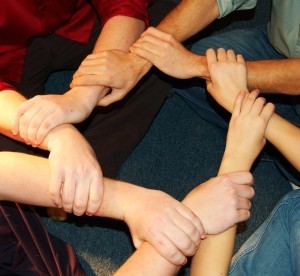 Faith, to me, is trust that the moment is just as it should be – even if it’s painful and difficult. It’s the Knowing, (with a capital K as my friend and teacher Paul Hertel would say) that there is something bigger.
But, this is not a passive Knowing. It must be practiced. Cultivated. And, when we do, it will show up for us in a way that keeps us grounded and going through difficult times that make us feel like we might just fall apart.
Three ways to practice your faith:
1. Try again, even when you’ve fallen before. When the dream comes crashing down, you lose all your money, or the relationship ends, or you are grieving a profound loss try again. Start a new endeavor, set a new goal, open to love again. Keep going despite the uncertainty, the risk of pain or failure. Reach out to others. Help them and allow them to help you. Fully engage in this life. The commitment to trying again will activate your faith.
2. Find the meaning in the moment. There are gifts in every moment – even those that are so difficult. You don’t have to judge whether the gift outweighs the loss or the pain. There will be pain no matter. But, when we remember to find the gift, we also find some sliver of meaning and that is the power of faith. It reminds us to look for the love and the compassion and the goodness, even in the worst moments. Look for the gift, and you’ll see faith at work.
3. Seek evidence. It’s out there. Though the nature of faith is intangible it often leaves concrete results. Find how it works in your life every day. You put the key in the ignition, the car, more often than not, starts. You don’t have to know how the engine works you just have faith that it does. The sun comes up – each day, somewhere – no matter what you do. It is there. The ocean keeps rolling. We can have faith in it.
Nearly 12 years ago, my sister went into labor. The delivery was difficult and scary and risky and went on for hours. And, by the end of it, I held this little, little boy, my nephew, and in that my whole life changed. I felt elated and afraid. And I cried. Because there were so many things that had gone wrong during the labor and others that could have, but still in that moment it all worked and we were given a great gift. I don’t know how everything came together in that one moment to make it work. I only know that it did. That is faith at work.
Look for those things in your life. Even when some things are so distressing and out of whack, other, positive things continue to go on. Notice those things too. Notice how people are stepping up to care for each other. To love deeper despite the loss. Notice, how we keep going.
In Imperfect Spirituality I write it this way: Faith, “works whether you know how it happens or not. It’s your job to notice it.”
This is my practice.

December 24, 2012
Faith inspires us to try again
 When life shifts and changes, when things feel hard or confusing and even when things feel beautiful and awesome – often we question our faith. Questioning, does not imply doubt, though you can be doubtful at times. It’s okay, there are not hard fast rules about this stuff. At least not in this spot.
For me, my questioning is more of contemplation and investigation and study. It’s a chance to learn and grow.
So, what is faith? What is mine, in particular? How does it work? How can I have faith when the world is falling apart? Where is my faith when I have moments of such raw beauty and gratitude that I feel blessed beyond measure – and sometimes unworthy of it.
I explore these questions in my work and my life. I live with them. I’ve thought about this stuff – A LOT.
Even so, the chapter on practicing faith was the hardest chapter to write in my book Imperfect Spirituality, because faith is so intangible, indescribable and yet, so real. Here is what I wrote:
Faith is so personal, yet universal, that it’s hard to find a word that describes it just right. Everyone has their own definition of what faith is, but it’s easiest to understand by watching how faith works.
Faith is falling in love. It’s raising a child. It’s trying again to run the race, get a job, make the marriage work, or learn the language, when you failed the first time and the third time and the sixth time. It’s understanding that all this pain and crap and mess is not without meaning. It’s believing that things will be okay even when nothing feels okay. It’s about being awed by the sunset though you’ve seen it a hundred times before and hope to see it a hundred times more. It’s knowing that there is something bigger than what you can see and feel and touch and it’s behaving better because of all that.
Faith is the belief in something bigger than yourself.
–excerpted from Imperfect Spirituality
And I like what Rev. Susan Sparks had to say on the topic:
“There are times in life,” she says, “where we hit a painful experience or crisis. Faith is what gives us a bit of grounding and balance to get through it. It’s like finding that place in a pool where you can actually touch the ground with your feet.”
Faith, says life coach and author Martha Beck, “Is the trust that this moment will take you to the place you need to go if you allow it to be as it is without any resistance whatsoever.”
Faith is not a passive thing. It is to be explored and practiced time and time again. It is okay to question and wonder and doubt and sometimes even rail against it. And in the end, after the inquiry, you may find yourself starting again on the goal, or the relationship. You may find yourself loving again, despite the risks, and working again to make things better. And when you do, you will be living your faith.
Whether it is of a religious variety (for me it is not) whether it’s faith in yourself, or your neighbor, or faith in the sun coming up tomorrow, or the awareness that there is meaning in the madness, faith can prevail. And, when it does, it animates us. Helps us persist, inspires us to keep going, and to start again.
On Wednesday, I’ll share a couple of the ways that I practice my faith.
Photo by Stock.xchng