Polly Campbell's Blog, page 10
November 18, 2015
Trusting Yourself
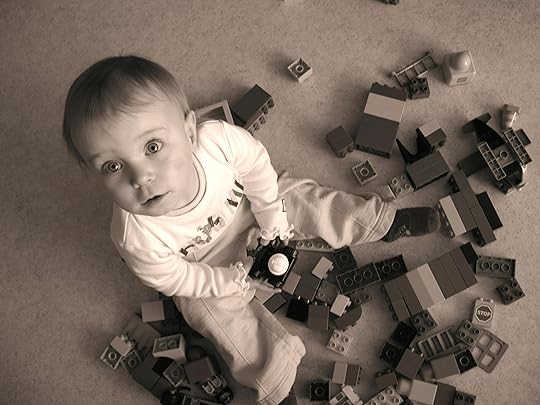 When Sweet P was a toddler and I was feeling a little crazy, we’d head out for a walk around the neighborhood.
It took forever.
She wanted to put her shoes on by herself. Then push the stroller, uphill and around, by herself.
“Me do it.”
“I do it by myself,” she would say whenever I tried to help her.
Drove me crazy. I was RIGHT there. I wanted to help. I had years of experience in putting shoes on and walking and I could do those things for her.
But, it was also the beginning of a series of lessons I needed to learn about growing up. Growing up for me, not for her.
Because the best way to teach a child about her own power and ability is to let her find it on her own.
Of course, I’m there, sometimes nagging, or sighing loudly, but mostly I hope I’m encouraging and loving and accepting and supporting and standing right next to her as she lives her own experience.
I don’t want to step in and take over — well sometimes I do, just like when I wanted to push that stroller, and sometimes I must, she’s 9 — but mostly my lessons have been about allowing her to be who she is. And I’ve discovered that the more I trust myself the better I am at trusting her.
Trusting in Yourself
Trusting in yourself and your ability to handle whatever comes, like it or not, is scary. You will at times be filled with self-doubt and fear. You will also feel liberated because when you trust yourself you know you can overcome those fears, insecurities, and failures, so you are willing to live bigger and love more.
My friend, writer/speaker Mike Robbins writes about this authentically and beautifully in his book Nothing Changes Until You Do.
“Trusting ourselves doesn’t mean that we won’t get scared, have doubts, or make mistakes—all of which are inevitable in life. Trust is a choice we make in the moment. It is choosing to empower our belief in ourselves, over our fears of what might go wrong. It’s not about avoiding or denying our fears it’s about having faith in something that is bigger and more powerful than fear: us.”
When you learn to trust yourself you are more likely to participate and engage, love and laugh and innovate and create and share and connect when you know that despite the risk, despite the potential for rejection or pain, You Will Be O.K. You can trust yourself. So, this trusting opens your life to marry again and to love deeply and to try for the new job and reach out for support and let your kid do the same – even when they are floundering. This trust in your own capability to survive and thrive frees you up to live a bigger life.
Or as Mike writes “…listening to your inner wisdom, trusting your own instincts, and relying on yourself in a healthy way to make decisions in your life is one of the best things you can do to liberate yourself from unnecessary fear and stress and to empower yourself in every aspect of your life.”
I love that.




November 16, 2015
Loving and Letting Go in Big and Little Ways
[image error]One of the fourth graders at my daughter’s school was upset during recess because another had accused her of cheating. That’s when Sweet P, the peacemaker, got involved.
But I didn’t get it.
Were you there when they argued? I asked. No.
Were these close friends? No.
Did they ask for help? No.
So why were your involved again?
There are plenty of times when you should step up and help out, but, as we have told Sweet P on numerous occasions, there are plenty of times when you should let go and mind your own business.
That can be a tough thing to do, especially when letting go means letting the one you love find her own way.
I get a lot of chances to practice this particular thing and I am not all that good at it. I alternatively want to help out, manage, control, fix, but when I do that, when we step in and take over from someone else, we all lose.
Loving and Letting Go
There is a moment when you’ve given the advice and the support and the love, when you’ve done all that you can do, that you must step back and say “Enough.” This is the moment when you step back and gently remind yourself that it is no longer your business.
You can feel good, that you were there to offer support, and equally as good that you let up and let go, that you moved on, because the moving on is super important too.
It’s in that space, the space of loving and letting go, that you both get to learn what you are capable of.
We get opportunities to practice this letting go in little and big ways, just about every day. Think about how we love people struggling with addiction, and partner with friends and lovers who have their own ideas and values sometimes very different from our own. We practice in how we strive toward our goals, and in how we parent our children.
It’s in the little ways we love each other.
Lessons in Letting Go
Sweet P didn’t want to do her homework. She wanted to put it off until morning. Sweet P barely gets her socks on in the morning let alone finishing up three pages of math.
And I felt stress for her and a little disbelief that she would so quietly and peacefully deviate from the Homework Doing Plan. And then I felt a little admiration that she was brave enough to deviate at all.
I offered some gentle encouragement and then something a little more assertive. None of that changed her mind, not at all. So, I did what I could do. I let it go.
Because, FINALLY, I figured out, it wasn’t EVEN MY homework. I don’t have to answer for her homework. Not my DEAL.
Whew. That made life a lot easier. No stress for me. And guess what? When she figured out it wasn’t my deal, she somehow got it done, without even my knowing. And she turned it in on time. She didn’t tell me. But I saw the handout returned in the homework folder with the teacher’s star on top.
And in this little moment, I learned yet again, that we are all capable of doing hard things, things we don’t want to do. We just need someone to let us go so we can do them. The letting go allows us to move forward and through.
It allows us to live fully, to have our own experience. To learn our own strength. To know what we are capable of. And those are good lessons to learn.
Art by Erin Cairney White.

November 11, 2015
5 Ways to Deal with Pain of Rejection
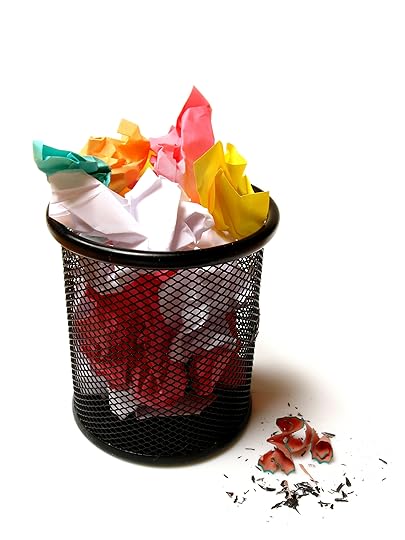 It never feels good to be shut out, shut down, left out. But, like it or not, rejection is part of life. And one that hurts.
As I write in How to Live an Awesome Life, the same parts of our brain that trigger physical pain are activated when we are rejected or experience social exclusion and that makes us ache. To soothe the ache of social rejection then, our brains also release natural painkillers. Helps a little — maybe — but there are a few things that can also help us cope with the pain of rejection.
Five Ways to Deal with the Pain of Rejection
Remember that it’s normal. Rejection doesn’t mean that you are a terrible person or an otherwise-unworthy screw up. It means that you are human. And that is a very good thing.
Notice, failure is a sign of success. Plenty of research shows that failure fosters motivation. We tend to be more successful and appreciate it more when we’ve faced failure and adversity. So, use the failure you are experiencing now, to inspire a bright future.
Get out and move your body. Strike a power pose, go for a run or walk, lift weights at the gym. One of the best things to counteract disappointment is to remind yourself of your own strength and exercise can do that. Plus, exercise lowers our stress and boosts dopamine so we quite literally feel emotionally better.
Write about the disappointment. Expressive writing, detailing your frustration, can be a release and a way of finding perspective. Writing about our rejection for about 20 minutes can help us regain our emotional footing, so we can put the rejection behind us and move toward something better.
Be kind to yourself. Those who treat themselves with compassion, tend to move on in a productive way and achieve their goals. Next time you screw up or feel rejected, Acknowledge your errors or experiences, take responsibility for them, and then acknowledge your humanity to move on from the pain instead of being stuck in it.

November 9, 2015
Losing Can Help Us Win
 Whether you’re playing Uno with a cutthroat 9-year-old or interviewing for the promotion, losing out on what we want never feels good, but it might just be what we need to boost our motivation to achieve even bigger goals.
According to research published in the journal Psychological Science “near misses,” such as losing on the last-second shot, or missing a winning lottery number by one digit actually boost our motivation to win.
“While we often think of motivation as being targeted to a specific reward or goal, these findings support the notion that motivation is like energy and reward is like direction — once this motivational energy is activated, it leads an individual to seek out a broad range of goals and rewards,” says researcher Monica Wadhwa in a press release about the study.
When we lose by a little – an outcome the researchers called the “near win effect” — our motivation intensifies and drives us to succeed at the next task or goal even if it’s unrelated to the first one that we narrowly missed.
Failure as a Power Position
I’ve felt this on the golf course. When I miss the putt by half-an-inch, I can’t wait to get to the next hole and try again. When I’m having an off day and missing fairways and putts all along, I tend to feel more frustrated and weary and less motivated to keep going.
At work, a rejection that comes with an “I’d love to see more ideas” comment is always easier to swallow than a “No” or “This isn’t right for us.”
The close-but-not-yet sense makes me feel hopeful and motivated to try again.
The Experiment
In their experiment Wadhwa and a colleague had students play a mobile phone game.
Participants were to click on tiles in a grid which covered images of diamonds and rocks. The goal was to uncover eight diamonds, without finding the rocks.
Students who played, would receive a chocolate bar at the end of the game.
Yet, as part of the experiment the game was tweaked so that one group of students would come oh, so close to victory, uncovering seven diamonds before hitting a rock. Another group uncovered the rock on the second try.
At the conclusion of the game those students who lost the game on the last tile, were timed walking to their candy bar reward at the end of the hall. As it turns out they moved about 12 seconds faster than those who lost on the second tile.
The researchers said that the findings indicated a near win may provide a stronger motivational boost than an actual win.
But, failure and rejection can leave us feeling physically and emotionally bruised. So, how can we deal with those bad feelings and keep moving forward? There are plenty of ways to do it and I’ll tell you about some of them Wednesday.
A version of this post appeared earlier on PsychCentral.com

November 4, 2015
Do First, What Matters Most
[image error]This last couple of weeks have been screaming with activities, errands, appointments.
Top that off with Halloween and 9-year-old Spider Queen rippling and crackling with energy, as well as, late nights, time changes, and other odds and ends and it’s no wonder I’m feeling frazzled and stressed. Worried about all that wasn’t getting everything done, instead of marveling at all that was.
I started feeling as though something was wrong because I wasn’t super human and willing to work around-the-clock on days without sleep to to accomplish the deadlines and doctors’ appointments and grocery shopping and washing and everything else. I worried, rather than letting go and just showing up to do my best.
But, eventually, I found perspective. I know that I am no longer willing to forgo my peace and health, not willing to give up the goodness in my life just to get the to-do list done. So why stress?
I asked myself this question, of course, even while stressing.
Do What Matters
It was Wednesday, I had an early appointment, and a special lunch planned with my mom, who’d come into town at the last moment. And, a list three pages long of OTHER things I should be doing.
I debated cancelling the lunch and appointment so that I could work, and fold clothes, and do bookkeeping. But, then I didn’t because when it came right down to it, I realized that day was filled with two things: My health. My family. Two of my top values.
I met with the doctor and took care of my health. Had a fabulous, uninterrupted lunch with my mom, just the two of us – that NEVER happens — and took care of my family. In other words, I took care of myself by living close to my values rather than taking on the should-dos.
I’ve written about this before, the doing of the essential things and letting the should-dos go. I believe it. Yet still, under the crush of an engaged, and interesting, and full life, I forget it myself. It’s easy to rattle around doing the most pressing thing first, but that isn’t always the most important. It isn’t always essential. And when you spend most of your time on the unessentials, you wind up feeling stressed and depleted.
So, when you are feeling harried and hurried stick to the three things that matter most. Do those first. Bonus points if they align with your values – and they really should because let’s not give too much time to the things that don’t. When you do this you’ll feel more energized, happier, more able to finish up the rest of the things on the list. If they still matter.

November 2, 2015
When to Make Your Own Rules
 Listen, I am a big rule follower. I think it’s essential that we don’t drink and drive and that we shouldn’t beat on others, or chew with our mouths open, for that matter.
But, if the rules you abide by don’t bring you peace. If they seem arbitrary and hurtful. If they leave you feeling trapped and limited – you know rules like no wearing white after Labor Day and girls can’t play football, drums, or otherwise rule the world. Rules that state crazy, painful absolutes like you can’t make a living from your art or that love hurts, or that you are not worthy because you are bigger than a size six, didn’t have a nice mother, and have a 20-year-old car then, pick new rules.
Seriously, people.
Pick. New. Rules.
Pick New Rules
I’ve been thinking about this all week, you guys, because I hate to be told what to do and yet, in the process of publishing my latest book, I was given a lot of rules to follow. Publishing Rules. Marketing Rules. Social Media Rules.
It was suggested to me that I should be doing certain things and that other people would be doing certain things and please just don’t get in the way of their things. Don’t cross contaminate.
But, when those certain things did not happen, I began to fret. There were things I wanted to try, get done, take charge of, but, silly me, I also didn’t want to be a difficult rule-breaker. For a blink, I believed I had to do what I was told by people who don’t even know me.
That is, until I realized:
1) No one would be hurt, if I broke, say just one of these little rules of publishing.
2) The rules (many of them at least) are baloney.
So, I decided to make my own rules. Do it my way. And let me tell you what, sometimes I was stupid about it, as my failures reminded me. But, within about five minutes of not going along to get along, I also succeeded gloriously.
And in EVERY case, I felt better, truer, more authentic, more engaged in my life. Every Single Time.
Make Your Own Rules
So here are the new rules.
Don’t hurt anyone.
Be kind always, no matter.
Rewrite all other rules, on an as needed basis.
So far, these are working a lot better for me.

October 28, 2015
Living a Rich Life
 This was my fave fortune ever: A feast is as good as enough.
The Chinese food wasn’t bad either, but it’s been years now and I’ve eaten a lot of fried rice, still I remember that one fortune.
At the time, I was always worried about money. I’ve had some stressful times, particularly when I was younger, just starting out as a writer and living day-to-day, month-to-month, unsure how I was going to make my house payment. But I’ve had no big financial trauma.
I’ve worked hard, but in return I’ve always been rewarded with shelter, food, and a little extra to go out to eat or do something fun. I’m not suffering. And still, I have worried.
But the message in the fortune cookie that night triggered something in me. Was I holding out for the feast? Or was enough all I really wanted?
What would it take for me to feel “rich?” What does money represent to me and what does abundance look like?
Living a Rich Life
It’s hard to recognize that we already have what we want if we don’t know what it looks like. When we aren’t clear about how we view abundance or wealth, we can’t notice when we have it.
When I stopped to consider how I define abundance, I realized, I had it all along.
I have a career that inspires me.
I have relationships with people whom I love and whom support me.
I have the physical strength to do what I would like.
I have enough money to pay for a nice home, heat in the winter, food when I’m hungry and other basics that keep me comfortable and safe.
I have freedom to decide what to eat, and where to go.
I pick and choose. Can’t do all that I’d like. But, I can do some of what I want and all that I need.
That’s wealth.
That’s what money really means to me. Freedom. Freedom to choose. And when I got clear about what true abundance looked like to me, I realized I was already living an abundant life.
Ahhh. Exhale. This realization took a bunch of pressure off. Helped me to give more freely of my time and money because I realized I wasn’t going to go without. If I was already creating abundance in my life, I knew that I would continue to do so.
Of course I have to remind myself of this, still. I circle back to these questions again and again because my old beliefs about money and lack and the nature of abundance keep cycling through. Sometimes leaving me worried or tense.
For years I lived with the belief that I had to do more to create an abundant life, when in reality I needed to continue doing my work, creating my life, and noticing all that I already had.
How do you answer these questions?
How do you define abundance?
What does it mean to feel rich?
What does money represent to you?
What do you want?
When you get clear on what abundance is to you, you can then take inspired action to create it, and move toward the work and people, qualities and things that make you feel rich. Or, you might just be like me and discover you’ve had it all along.
Remember, enough will fill you just as full as a feast.

October 26, 2015
Living with Abundance
[image error]I was paying the bills when I felt that little thin strip of muscle along the edge of my neck threading down behind the shoulder start to tighten and twist.
And just like that I was caught up again. Caught up in the stress around money and the house and the stuff and the work. Caught up in the worry and the making do and the planning. Caught up thinking that all of this was the most important stuff. When of course it’s not.
It matters sure. I’m a big fan of a place to live and money to pay the bills and buy the food and books. I love that I can go buy a book once-in-awhile.
But that stuff isn’t the route to happiness, peace, or even a satisfying life. It isn’t. And gawd would life be simpler if it was. Then we could go after that one thing and say order up a box of books and be done and happy and bliss-filled for eternity when we get it.
The Real Currency of Life
Instead of being able to earn and buy our way to abundance, to be truly rich we must connect and love and keep loving even though it can feel so complicated. We must stand up and care even when we are afraid. We are compelled to do what sometimes seems like the hardest freakin’ thing because we know it the right thing, and to give to others when we worry ourselves about having enough. To be compassionate and kind even when the other person is a total jerk. This is all complicated stuff. Serious. These are the big things listed under the Required Skills section of the Human Being Job Description.
Yet in the end, it’s in this so-called little stuff (though it’s never really little) that we find meaning, and peace and joy. It is where we make a difference in the world. It is in this stuff that we find ourselves. It’s the richness in our lives and that is the stuff that matters. This is what living with abundance means.
So, bill paying isn’t about the money, it’s about the freedom and security it offers. It’s about the gratitude that comes when I recognize I get to do a job that I love that just happens to pay the water bill. It’s about the abundance already within.
Living with True Abundance
Sometimes it is so hard to remember all this and I’m not always good at it. But when I do, then there is peace. There is appreciation and gratitude and in the midst of all that there isn’t room for worry or feelings of lack. In the end I can always choose compassion and love and curiosity and peace and joy. In every moment. And when I do I recognize I truly have enough of what matters in life.

October 21, 2015
Finding New Meaning in the Old Routine
 It’s morning here and I just finished pouring another bowl of cinnamon cereal for the 9-year-old who needs to eat, like,everyday. So needy those kids.
And sometimes, I get stuck in that, the daily version of the Same Ol’ Routine which seems to have little to do with Saving the World and other important things I’d also like to put on my to-do list.
But, whenever I catch myself meandering down the path of Stuckness where I feel like I’m in a rut; whenever I’m feeling stressed or afraid or bored, I go looking for the gift. Because the meaning we assign to the moment determines how we experience it. And, I know now, after billions of bowls that there are a lot of different ways to look at cinnamon cereal so why not pick the one that makes me feel better?
Finding New Meaning in the Old Routine
I can go all off on the chores I have to do and all the meals I make and the work I have and the struggle and stress of living with chronic illness and managing household finances and kids and marriage. I can be buried by the routine of it all. And sometimes I do that. Sometimes I DO feel wiped out by it all. And I get a little whiney and complainy and sorry for myself and this is so completely, annoyingly human and not helpful.
Or, on the days when I’m a tad bit enlightened I remember that I am the one that gets to determine the meaning things hold in my life. I get to decide the import. If I’m picking a meaning that keeps me down, knocks me back, makes me feel bad that is just not a good deal. But, I can choose at any point to assign a different, more powerful meaning, one that will pick me up.
Choose a New Meaning
See, that’s the thing, it’s your choice. That isn’t to deny the crap that happens, it’s just to remind ourselves that the love and goodness lingers there too. Every moment holds the possibility of both things — crap and awesome. You can see either one so I choose the one that helps me feel good. More connected. More alive. Safer. Less stressed.
And most days, like this morning, I may see the crap — another morning, another reminder to get-your-shoes-on-the-bus-will-be-here-in-30-seconds, but I also see the bigger stuff. Instead of being overcome by another bowl of cinnamon cereal, I can sit in my beautiful kitchen, watching my amazing daughter eat a bowl of cereal that nourishes her mind and her soul.
When I looked at the routine THAT way this morning, all I could think of was Thank you, thank you, thank you.
Really. Life can feel complicated if we let it. Sometimes the little things DO get us down. But in those moments, in every moment, we can look around and see the goodness there too.
And when we give a powerfully, positive meaning to our moments, we change how we experience the world for the better.

October 19, 2015
Do You Have a Setback Strategy to Overcome Adversity?
Do You Have a Setback Strategy?
So there were a few potholes in my road to success this week. Things didn’t get done on time. People who pledged to help didn’t. I bungled up a couple of the things and I didn’t sleep well. Not one single night. And my coping skills involved some emotional eating and irrational tears.
But even in the midst of these challenges – none of which were huge, scary problems, I’m grateful to say – but all of which challenged my intellect, my time and my creative problem-solving abilities solve various unfamiliar problems – I knew I could manage. I never lost total perspective. So instead of sitting in the ick, I was able to take inspired action every day to move through it.
This is because I have a Setback Strategy in place. I developed a plan during some of the best, easier, glowy happy kinds of days that provide a way out of the less-than-glowy moments. I put some ideas in place so when things felt difficult, I’d have a default pattern to fall back on. This keep rumination and panic at bay and allows for movement to overcome adversity.
And it’s worth thinking about your approach to difficulty before they actual cancel your favorite show, you run out of milk, the kid misses the bus and your boss is calling wondering where your project is about the same time your bank account is hacked.
Creating a Setback Strategy to Overcome Adversity
In my new book How to Live an Awesome Life (Viva Editions, 2015) I lay out the plan I use when I feel like things are too hard to handle.
Here are four of my favorite Setback Strategies:
Adopt a growth mindset. Research by the renowned Stanford psychologist Carol Dweck shows that when we believe, that with effort we can improve, we do.
It doesn’t always feel comfortable in the beginning because while we learn what we need to do to get through the upset our brains actually have to form new neuropathways to make those skills a habit. This feels hard as though we are not making any progress. But, you are. When you believe you can get better at something you will and that alone can help you persist when you feel like hanging it up.
Be accountable. When challenges and adversity hit it can feel hard and scary to own up to our role in the mess. But accountability is key to resilience. When you acknowledge your role in the challenge you are in position to change it. When you don’t see your part in the setback, you are stuck waiting on others to do something. Accountability leads to acceptance which provides the clarity and insight you’ll need to take action to move through the difficulty.
Create a new narrative. When we are buried in the frustration and fear that adversity can provoke it’s hard to remain optimistic, but you can change the story around what is happening and that can help you bounce back.
In research, social psychologist Gregory Walton asked students who were facing adversity to write about the experience as a way of helping future students. When they believed their letters would help others facing adversity they tended to have greater perspective and felt less alone. Write your own narrative. Reflect on what’s happening and describe the challenges and opportunities contained within and you’ll move through challenges with greater ease.
Connect with others. Too often we are so busy dealing with drama and putting out fires that we don’t seek the support we need to reboot and cope. This can leave us feeling sad and alone. When you are feeling challenged, seek out supportive family members and friends or find a support group of others who know what you are going through. Find those people who can buoy you during difficult times.
And, remember, others have bounced back and overcome adversity and challenge and with a setback strategy in place, you can too.