Polly Campbell's Blog, page 6
April 6, 2016
10 Easy Ways to Ease Stress and Get More Done
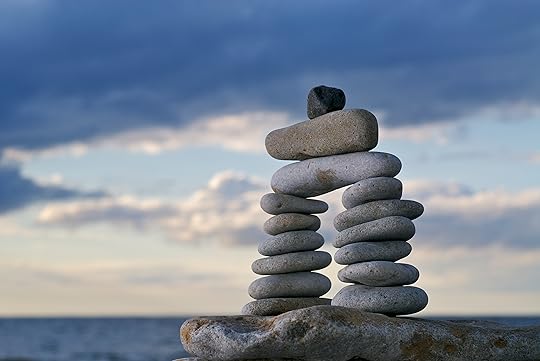 Traffic jams, household chores, bills, bosses, bullies. There is no shortage of stressors in life.
And it’s not getting any easier. I’m married, raising a 9-year-old daughter, working full-time and caring for a geriatric cat during a cray-cray presidential campaign. Don’t think stress is going to disappear for any of us, anytime soon.
But while there are lots of stressful things going on I don’t get all that stressed out anymore. I’m learning to respond to it differently. I use my 10 easy-peasy strategies to manage the moment rather than get stuck in the stress.
Do I still freak out, worry, stress? Of course. But I’ve gotten a whole lot better at NOT doing that and that has made me healthier, more patient, productive, creative, and happier.
10 Easy Ways to Ease Stress
1.Get Gratitude. You knew I was going to say this because it’s one of my faves. Probably because this is the absolute easiest, most powerful way to tweak the moment just enough to feel better and less stressed. It also changes our physiological stress response by dropping our blood pressure and boosting immune function so we really do feel physically better. To practice gratitude notice something you are grateful for and express your thanks for it. It’s hard to get your freak on when you are focused on the goodness that is all around.
2. Optimism. Realistic optimism helps us get stuff done, which means we are not sitting around getting stressed out. Optimism is more of a behavior than an attitude, so when things feel HARD,STRESSFUL, SCARY, UNCERTAIN – choose some behavior that will help you do something to improve that circumstance. Call for help. Go for a workout. Take a break. Create a new solution. Believe you can make a positive difference and then do something to make it happen. When we do this we feel more capable, positive, powerful, and a whole lot less-stressed. Even if you are having negative feelings adopt a “well-I’ll-give-it-a-try” attitude and behave your way to better feelings.
3. Chunk it. So much to do, so little time to do it, right? That feeling alone is a major source of stress for me. So, to counteract that, when I’m feeling overwhelmed by a large project or long to-do list, I break the tasks down into chunks by organizing them into short 20 or 30 minute work intervals.
For example, when writing my books, I break the book into chapters, and chapters into small sections, then I work on one of those small sections for about 20 minutes, before I taking a break or moving on to something else. Just 20 minutes.
This feels manageable to me and not nearly as stressful as contemplating writing a whole book or taking on a whole project.
Chip your big projects off into small chunks and take them on a few minutes at a time. You’ll wind up with a lot of work done, without a lot of stress.
4. Park It. Last week when I was feeling overwhelmed by my To-Do List my Creativity Coach, Andrea Mather told me to Park It. This really worked for me. I always have a pile of notes, books, studies, and other not-ready-to-throw-away stuff on my desk. Stuff piling up all over. I’m not ready to discard this stuff, but they are also not priorities or things I can get to every day. Instead of shuffling them around, which winds up causing me stress because of the clutter, I parked them. I took those notes, ideas, loose papers and Post-its put them in a folder, and filed the folder.
I pull that folder out twice a week to deal with the time-sensitive stuff and I can let the rest of it go. It no longer occupies space on my desk or in my head. I don’t worry about forgetting either, because I know I’ll circle back to that folder when I have time.
5. Seek Awesome. Awe actually goes to the root of several of the things that can cause stress AND it elevates our good feelings. Win/Win.
When we experience awe, we feel more generous and connect with others in a positive way, which helps improve relationships and ease stress there. It also changes our perception of time and makes us feel like we have more of it, which helps diffuse frantic feelings and boosts well-being. AND it alters the physical stress response in our bodies so we feel calmer.
Seek out the awesome. Identify the amazing things already working in your life (your heart beating without conscious thought, the bird on the branch outside the window, the stars) and you’ll be less stressed.
6. Invoke your curious nature. Wonder is an antidote to worry and plays well with awe. Next time you are ruminating, stressing, worrying, ask yourself “I wonder how I can work through this in a positive way” and feel your brain and body respond to the inquiry. We are creative problem solvers by nature, when we pique our curiosity by doing something different or noticing something new we tend to find greater meaning, enjoyment, and purpose — stress-fighters to be sure.
7. Try a ritual. Our brains and bodies feel better when we are doing something familiar. This is why we tend to gravitate toward habits and routines and we feel stressed when that routine is threatened. Uncertainty freaks us. But, a ritual, an established go-to behavior can help us during those times of change and uncertainty by creating some familiar, healthy behaviors that can pull us from the firy feelings of stress before we become trapped in them.
Here’s how you do it: Choose a set ritual to use when stress threatens. This should be a three or five step process, that can easily be replicated. For example, taking a deep breath, naming three things you are grateful for, and then saying “Thank You” aloud before going back to work is a good ritual. Or taking a deep breath, and slowly, mindfully washing your hands for 30 seconds, while saying what you are letting go of. Or lighting a candle and repeating an encouraging quote.
One of my rituals is to stand up, stretch and take 100 deliberate, slow, methodical steps around the house (I work at home but you could do this anywhere) and with each step, I’ll give thanks aloud (or you can do this silently) for a different thing, person, happening. I love this ritual. It is easy to do. Slows down my breathing and other stress reactions and reconnects me with the positive.
8. Reach out. There are plenty of times we need to vent, or share our experience with another. Do it now. Send a text or email or call up a friend and say “Hey, I just need to vent this, to get it out, and be done with it.” Keep it short, no need move into complaint mode, but often just by sharing our stress aloud to someone we trust, and being validated for it, can help us move beyond.
Find that friend who will listen, go to a support group, counselor, or coach. Someone who will allow you to blurt out your concern, then let it go.
9. Look outside, or better yet get up and go outside. Simply looking and nature, or even pictures of green landscapes turns our stress response on its ear and leaves us feeling better and more hopeful. So, when you are feeling upset stare out the window, or go for a stroll outside at lunch, or eat on a nearby picnic table, or pull up a beautiful naturescape for your monitor’s wallpaper and reconnect with the green in your life.
10. Be kind to someone else. Tough to worry about our own troubles when we are helping someone else with theirs. Give yourself over to an act of kindness. When you do something to make another feel better you will feel better too.




April 4, 2016
Relax and Get More Done

Last week was spring break and my fourth grader was couchside. I am THAT mom, the one who no longer cares if she plants herself in front of Austin & Ally repeats if it means I can get 22-minutes of uninterrupted work done.
But it feels a little frantic too. Moving between my roles as mom and writer and cat feeder and housecleaner-upper and all the other things I do each day.
Last week I felt the stress and by the time I ended up at my desk to work, I wasn’t as focused as I needed to be.
I was bitching about this as I have every spring break since the beginning of time – seriously, I’m bored with myself. Juggling different roles is old news to every woman I have ever met so enough already – but, I was complaining just the same when I was reminded of Productive Relaxation.
Never in my life have, NEVER EVER would I have put those two words together. But makes total sense.
What is Productive Relaxation?
Productive Relaxation does not mean you lay back on the couch and maw down on Doritos, although, frankly, I see nothing wrong with that. At all. But it does mean to take more frequent breaks, find ways to get the sleep you need – more than six hours, people – even if that means taking a nap. You stop eating lunch at your desk. You work in 90-minute intervals and then take a short break to do things throughout the day to refresh and restore your energy.
And in the end, according to researcher and author Tony Schwartz and others, you’ll get A LOT more done.
Stress is Costing Us and Killing Us
According to q piece in the New York Times, one-third of us eat lunch at our desks, more than half work over their vacations and we are sleeping six hours or less a night.
That means we aren’t taking the time to restore and rejuvenate the way we need. In other words, we are operating in a sustained stressed state and that is costing us and killing us.
Stress causes the release of cortisol. Sustained, high levels of cortisol contribute to autoimmune disease, cancer, cardiovascular disease and other illnesses like colds and flus. People who are stressed out, get sick more often, have more sleepless nights (not a good thing) and a higher risk of depression and other mood disorders.
The National Institutes of Mental Health report that lost productivity due to employee illness and medical appointments costs corporations more than $260 billion (!!) a year.
How Stress Shows Up at Home
Stress also causes us to snap at our kids, eat more comfort food (high levels of cortisol make it hard to regulate our weight too) and make more mistakes. In short, we (OK, Me) are much less effective and productive when we are freaking out.
So this whole notion of Relaxed Productivity is awesome, right? Relax. Curb the stress. Take more breaks. AND get more done in your day.
One of the studies suggests that we do this by taking 90-minute naps. WHAT?! Ummm, yeah, sleep would definitely help, but I don’t think I’ve slept 90-minutes total since my daughter was born nine years ago. So what can we do?
Harder we Work, Less we Accomplish
How can we manage our stress and capture this kind of relaxed productivity in a lifestyle that doesn’t allow for a trip to the Bahamas every other week or a 90-minute siesta every afternoon?
This is what I’m working on. To ease the everyday stress we’ve got to create practical habits — things we can do right in the middle of the day while commuting to work or grabbing coffee — that remind us to take a break and a breath throughout our days so we can recover emotionally and physically, and get more done.
So often, we toil away, work through lunch, rarely taking breaks thinking that we can get more done this way. Nope. Our productivity drops the longer we sit at our desks. We also tend to make more mistakes. And creativity – the stuff we need for innovation, problem solving, even conflict management evaporates.
We start off alert. We are all about seizing-the-day-and-then-some. But this go get’em mode fades and at the end of 90-minutes we are toast. Mentally wasted and needing a rest.
So take one. Get up at the 90-minute mark. Stare out the window, go for a quick walk around the block. Move. Take deep breaths. Do a gratitude exercise. You’ll feel so much better and you will do better in the next 90-minute interval at work.
Try it. Work for 90-minutes, then do something different for 15 or 20 minutes, then get back to work. Betcha feel better and get more done.
On Wednesday, I’ll share some things you can do during those 15 minute breaks to restore and build this kind of relaxed productivity into your day.

March 30, 2016
Look for the Good
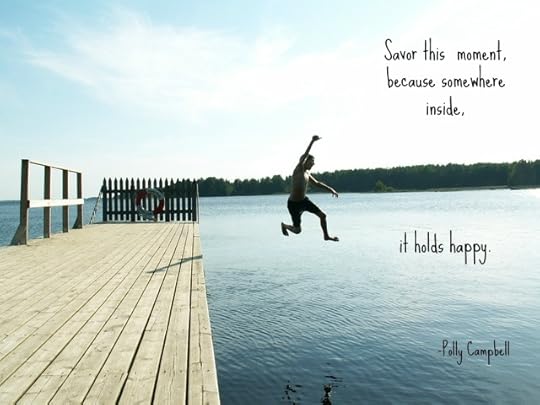
Every day we experience things we love, and things, well, that we don’t love so much. Life serves up plenty of what we don’t like, but you can choose what to focus on. Instead of worrying about the trouble, you can focus on the good that lingers in the very same moment. Give your attention to what you do like, what is working, the people and things you love and you deal better with the challenges that come your way. And, you’ll have a lot more fun.

March 28, 2016

March 21, 2016
Breaking for Spring and Slowing Down

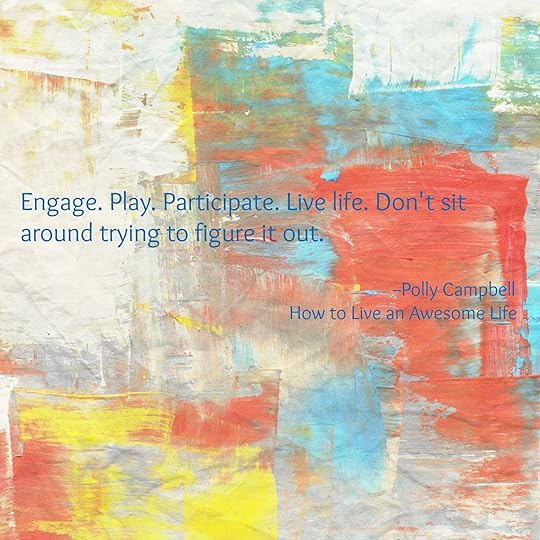
Original art by Erin Brown Cairney White
“Life is so fast, that we have to deliberately slow it down,” said a friend of mine last week. Yes. That statement just landed. I resonated with its truth.
There is so much we can do, so much to access and take in, that sometimes I think I have to do it all. Nope. This trying to do too much in too little time leaves me unhinged. It feels noisy and chaotic.
Lately, in my efforts to stay grounded, I’ve had to say “no” to some things I care about, some things I really want to do. I’ve done the must dos — my obligations for work and family — and let the others go. Soon, I will feel grounded again and there will be activities I pick back up.
But for now, I’m deliberately slowing down. And as part of that, I’m taking the week off to spend time with my daughter over Spring Break. One thing at a time. This is my time with her. But, I’ll be back with new posts on March 28th. In the meantime, scroll through the others on this page for a dose of inspiration and information.
Happy Spring!

March 18, 2016
Get Awesome Now
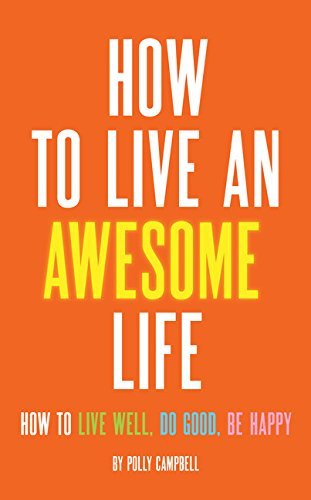
Update: Right now you can jump start your Spring with the bestselling ebook How to Live an Awesome Life on Amazon, Barnes & Noble and Kobos!

Get Awesome for $1.99
Update: Right now you can jump start your Spring with the bestselling ebook How to Live an Awesome Life for just $1.99 on Amazon, Barnes & Noble and Kobos!
March 16, 2016
The Link Between Risk, Learning, Courage
 One of the ways people minimize risk is to prepare. They study, train, practice so that by the time they are ready to jump out of the plane, or take the trip, or start the business they have improved their chances of success, by reducing the odds that something will go wrong, as explained by journalist Kayt Sukel in her book, The Art of Risk.
This is also the way people build courage, according to Clemson University researcher Cynthia Pury.
In fact, the most successful business people and parents and doctors and writers and climbers — the most successful in any profession or task — aren’t simply the most talented, but they also work really hard. They prepare and practice and learn and practice some more.
Practice vs. Talent
Even the great moms I know didn’t graduate with a degree from the Mom Academy, (Lawd knows I could have used a Mom Academy) but they are open to new ideas. They talk to others, read books, look in to programs, listen to their kids, adapt their behaviors, try new things – they do whatever they can to learn how to stay sane and do the job better. This gives them a bit more confidence that they can handle whatever comes. Even the teenage years.
When Pury talks about the most courageous people, it’s the same deal. These are people that feel fear, but they learn, train, and practice like crazy to minimize the risks of failure.
But, and here’s the thing: how you prepare does make a difference.
Learning with Distributed Practice
According to a paper published in Psychological Science in the Public Interest reviewing different learning styles, the best way to learn and retain the info is through distributed practice.
Distributed practice is the fancy phrase for Not Cramming. Instead of filling your head full of material all in one night, you “distribute” (get it?) your study sessions. When we load up on info in a single session, most of that is lost after a few days. When we study the material over time, we tend to retain it. Then we practice it. But simply practicing the same steps over may not be as helpful as letting your imagination go.
In a study led by Tom Stafford, of the University of Sheffield, the people who improved the most while playing an online game were the ones who spaced out their practice sessions (though both groups had practiced the same amount of total time) or explored different aspects of game play early on. By experimenting a bit in the beginning and distributing their practice time, they were able to optimize learning.
And courage comes with that. When we minimize the risk, and our odds of success are greater, this give us the courage to continue, even when we feel afraid.

March 14, 2016
Preparing to Risk
 Twenty years ago, I bought a green Mazda protegé. And, then I made the down payment on a house. After all the paperwork had been signed, I quit my public relations job to chase my dream. I wanted to be a writer.
To many people, including me now, assuming thousands of dollars in debt without any savings or paycheck seemed pretty risky and not at all sensible.
After all, risk, writes Kayt Sukel in her new book, The Art of Risk: The New Science of Courage, Caution & Chance is “a decision or behavior that has a significant probability for a negative outcome.”
And, when I think of it now, declaring myself a writer and taking on thousands of dollars’ worth of debt with no immediate income source had a pretty significant probability for a negative outcome.
But I wasn’t thinking that way then, I was too busy preparing to take the plunge.
Planning and Practice
And that, Sukel says, is what many BASE jumpers and poker players and firefighters and others who take big-time risks, do. They plan. They prepare. And they practice like crazy.
What looks like impulsive action to everybody else, usually isn’t as big of a risk for the person taking it, Sukel explains.
In my case, I spent a year interviewing other writers and professionals in the communications industry. I introduced myself to potential clients. I went to networking meetings. Took classes. Read books. Joined a writer’s group. Researched magazine markets. Introduced myself to editors. Begged for freelance work. Connected with a mentor who helped me improve my query letters. I wrote, all the time. I planned. I practiced. And, by the time I walked off the job, it felt exhilarating. Exciting. And, yes, super scary and stressful.
Stress & Risk
Stress is a major factor in risk, Sukel writes in the book. Research shows that when we are under stress, we tend to make riskier decisions, decisions that could jeopardize the success of our goals. Again, some of that risk can be mitigated a bit by practice and preparation ahead of time so that when the worst happens – like you wake up freaked the next morning with no money and no work, just sayin’ — your training kicks in to help you solve problems, stay the course, survive, and continue on.
Still, no matter what you do, how safe you play it, how much preparation you have, life is always going to include some risk. That’s fine. We can handle it because, to some degree – though I am NEVER, EVER jumping out of a plane or climbing a mountain – we are all risk takers.
How we define, experience, and manage risk is dependent in part on our experiences, environments, preferences, and even our genes, Sukel explains. This is where the definition of risk becomes personal, because just as I won’t be climbing a mountain anytime soon, I knew a mountain climber who would never consider walking away from his day job.
Yet, when we learn to tolerate at least a little risk, we open the door to innovation, creativity, and growth. And the risk of failure sneaks in there too. Fear of failure alone can keep us stuck. 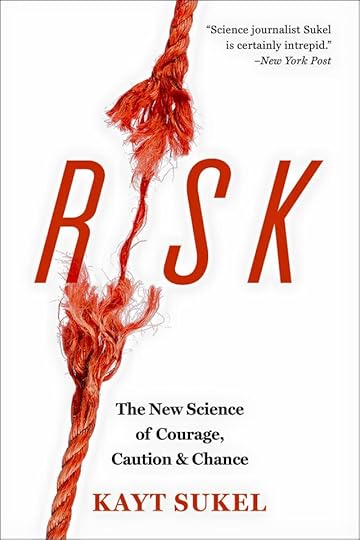
But when we are brave enough to risk failure, then we are free to learn what we need to know to climb the highest mountains and accomplish the biggest goals.
Mistakes are part of my daily landscape. (Um. Yeah. I misspelled landscapes the first time I wrote this sentence). Failure still so uncomfortable.
But the little car I bought 20 years ago with one of my last paychecks is still running. And so is this little writing business, I built. So, with a little planning and prep, risks can pay off.
What are you ready to risk to follow your dream?

March 10, 2016
Protected: Preparing to Risk
This content is password protected. To view it please enter your password below:
Password: