Polly Campbell's Blog, page 5
May 16, 2016
Five Ways to Be Happier
 This post was published a couple of years ago, yet it still speaks to me. Apparently, it spoke to a lot of others too, because it got tons of hits.
These are simple little things that we so often forget to do. Yet, when we build them into our days, we feel better. And when we feel better, we do better.
Feeling low, try a couple of these things to improve your mood.
But it’s not enough to know the stuff, you’ve got to act on it. The science of happiness really comes down to doing the things that make you feel good. It’s not all that complicated, but it does require us to make a bit of an effort. Want to be happy, take action, get involved, open up to what life offers – the good and the bad. It’s there, waiting for you to step into it.
Here are five happy-making behaviors that you can do every day.
Five Things to Get You Out of a Funk
Hug. Touch quickly alters our bio-chemistry filling our bodies with feel-good chemicals that help us calm down, connect to others and feel better.
Laugh. Talk with a hilarious friend. Watch a funny clip on You-Tube, read a comical article. Find the trigger that makes you laugh and let er’ rip.
Give thanks. Simple. Still, you must make a habit of gratitude or it’s one of those little things you’ll forget to do. Start and end the day with thanks and spend the day looking for things to appreciate.
Go outside. Once a day – at least. Then breathe in the air. Notice the sounds or watch the winter chickadees squirt from the bush as you walk by. See the clouds. Be a part of your natural environment in at least one little way. This planet is amazing. You are part of it. That pretty much makes you amazing too. When we see our connection to all, we feel happier.
Eat dinner at the table. Sit down. Look at the people in your life. Listen to them. Chew your food slowly. Use good table manners. Give thanks for the food. Create an experience around your evening meal. A reverence. It’s a pick-me-up.
On Wednesday I’ll give you five more. Then you’ll have 10 — see writers can do math.




May 11, 2016
Getting through the Day with When You are Grieving
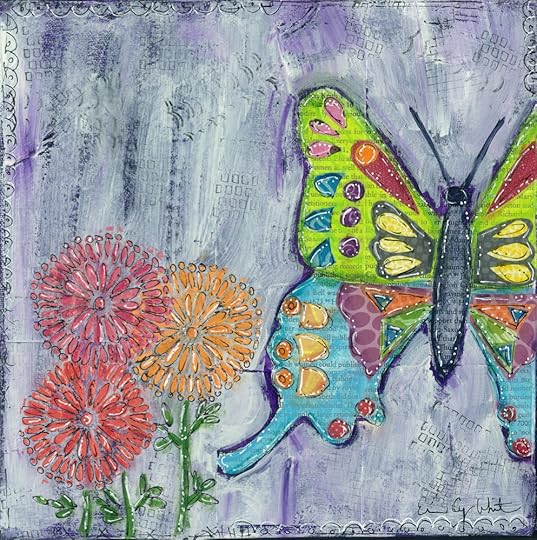
Art by Erin Brown Cairney White
Heartache hits all of us at one time or another. And loss is one heartache that makes it physically hard to breathe. It is hard to get out from under our grief.
The neighbors will mow their lawns. You’ll drop your kid off at school. And pay the bills. You’ll look fine on the outside, but on the inside grief feels like millstone, slowly grinding away at your soul.
It’s heavy. All encompassing. Exhausting.
It is also the one thing we can’t get away from. We are going to lose people we love. Or experience daunting scary challenges – a sick kid, a scary diagnosis, bankruptcy, divorce, death. We are going to get old, if we are lucky.
And we are going to have days that we just know we can’t get through. And then we will get through them.
And through all of this, we will keep going into the next moment, and the next day, and the next month and we will find pockets of hope and better feeling. Times when things feel a little lighter.
Getting Through
But, in the middle ground, when grief is no longer a surprise and yet it is still so overwhelming, we’ve got to find a way to get through.
Here are a few things that may help just a little bit to move through it.
See the nuances. Even in the midst of our greatest loss, somehow, the world keeps working. The sun physically comes up every day for us. The flowers bloom. The Internet works. Water runs out of the tap. When we are hurting, the simplicity of this might make as angry. Everything keeps working even when our world has fallen apart. But, sometimes, there can be peace in noticing just the smallest things. Noticing the little things that are working can root us in the moment just long enough to see a little good right in the middle of the bad. On the terrible, hard, days don’t suppress your bad feelings, but also find one piece of beauty or ease and cling to it. It eases the load a bit.
Know this terrible time will change into something less terrible. On an emotional level, you can’t know this, yet. Grief is so heavy and hard. But intellectually, you need to be open to the idea that while grief never goes away, it will change. It will become a bit more doable. There will be a new normal, one that also offers better feelings. You won’t be stuck in the bad forever. Life will be different for sure, but you won’t always be crushed by a trip to the bank, or a flower by the side of the road that your mom would have loved. Know this intellectually and when you are feeling swallowed up by heartache, let your brain remind you that this will change and you will get through. Even if your heart doesn’t know how, it will happen.
Sleep. Big emotions take a big toll and we need to leave ourselves plenty of space to restore and regroup. Take naps. Go to bed early. Give your body and brain room to rest. Sleep is restorative. It will also help you manage the stress that comes with finding your way into a new normal.

May 9, 2016
Letting Go Over and Over Again

The last two weeks have felt rough and uncomfortable. Plenty of difficulties for people I love. Things that I’d like to fix. But nothing I can. Heavy weight of emotion.
This is how life goes some times. And, I don’t like it. We want to end the pain, and fear. Get it over with, move on. Feel better. But all we really can do, and all we really need to do is be in it, trusting that it won’t overcome us. Trusting that some day we’ll emerge from it in a different place.
It’s hard to sit with it of course. The anxiety of uncertainty. The pain of loss. But when we can accept the new normal, we start seeing little glimpses of better. The nuances of life. The crooks and crannies where there is hope, where we are reminded that life isn’t all bad. It isn’t all pain. It isn’t all unfair or uncertain or wrong.
When we accept what is, our new circumstances, or our aging body, or the fear of the unknown, when we stop railing against what has already happened, we can find a little teeny, eeny bit of peace. Enough to move us just a bit, into the next moment. The one just a second ago we didn’t think we could endure. We can of course. We will, of course, get through it.
We won’t like it. We will cry and complain and worry and fear. And then, we will be with it. We will simply stop doing and start being in this new kind of normal. We will let go. Stop wishing for and start living with.
And when we do this, we are free. Not without pain. Not without hardship. But able to cope.
In Imperfect Spirituality I write:
“Once you are clear about what really is in your life you can decide to hold onto it or let it go. Buddha says, “Attachment is the source of all suffering.” Anytime we hold tight to an idea, or thing, or person, or something we love and covet, we are resisting the reality, because everything is impermanent. The things we love will change or vanish altogether. We suffer, too, when we cling to our challenges rather than accepting and moving through them. Surrender, then, is the way to go. That doesn’t mean it’s always easy, but it is a path that becomes smoother with knowledge.”
“Surrender is a voluntary thing,” says therapist, author, and former Buddhist monk, Donald Altman.
“It is a choice to let go in some way: to give up your worries and your troubles; to realize you don’t have control. It is not submission. It is active—you are making a choice for release.”
Letting Go a Billion Times a Day
And, it is a choice I sometimes need to make a billion times a day. When I’m carrying around grief or worry or fear, it becomes an unconscious source of pain. It’s like a small vibration in my soul that keeps rippling through even when I’m not thinking about it. I’ll wake up feeling fine, and then something will remind me of the loss or trouble and I’ll vibrate with the pain again.
But, when I can catch myself ruminating, clinging, wishing things were different, I can then deliberately bring my attention back to the situation at hand, and let it go again.
I say :“this is what is, I’m releasing my hurt over it now. I will no longer carry around the judgment or the fear. I am accepting things as they are and I’m giving it over to the bigger energy that keeps the sun rising, the Earth rotating, the oceans flowing.”
Then I take a deep breath and exhale the air in a rush, until it becomes part of all that is. And I start again.
Sometimes, if a situation is really stressing me, I have to do this time and time again, until I have the clarity from acceptance. Then I’m better able to deal with whatever is going on.
“Surrender is when we stop trying so hard. It frees us up to make a move without getting clobbered by the same pain over and over again,” I write in Imperfect Spirituality.
When you recognize there is nothing to fix, nothing to do, when you recognize you’ve got to be here now, present in this moment to actually get through the pain of it, then you can let go of everything else trusting that this discomfort now will become something different and easier to bear.
For me this is a difficult thing to do. But, when I consciously accept the circumstances and let go of my need to feel differently than I do now, when I just release that pressure of what might have been or what I wished was, I relax and deal better with the now and life becomes just a bit easier. A bit more hopeful. And that, helps a whole lot.

May 2, 2016

April 27, 2016
Teaching Your Child Self-Efficacy — Or How to Survive the Science Fair
 The Science Fair is Thursday and it about killed me.
Sweet P had to conduct an experiment –hers lasted five days — record her observations, write and revise the data, then put it all on a massive poster board in a way that didn’t look dumb.
This is like a 42-thousand-step project.
Weeks of work. And the whole time I had to fight to stay out of the way.
It was her project. And while I supported, answered questions, and wielded a mean glue stick when ordered, she planned, experimented, photographed, cried, organized, railed, designed, wrote, rewrote, rewrote, cried, glued, cut, printed and last night, she finished. On her own.
Tough not to take over. Help her more. But more than anything on this planet I want Sweet P to know her own power. I want her to learn to trust herself. To know that when things get hard, (and oh sweet girl they will get hard), that she can figure a way through. That she can be challenged and beaten and scared and confused, and still cope, because she is that capable.
I feel like when we step in, or step in too soon we are sending a message to our kids that they can’t cope. That we don’t believe in their ability to handle things. This robs them of the opportunity to learn, to gain those coping skills they’ll need for everything else. But it also steals from them their success, because when they soar, they will believe it’s only because their parents prodded, protected, pushed them along the way.
In Sweet Ps opinion, she’s faced some tremendous challenge already in her nine years (What? I no cellphone, but all my friends have them…. ) But with our love and support and suggestions she’s dealt with them in a way that ultimately left her feeling stronger and more successful.
In my opinion, Sweet P is getting some grand learning opportunities while the stakes are still low. Her life will not be ruined by a messy science project or forgotten lunch. As long as I don’t bail her out, she’ll find a way to eat and it is through these little challenges that she’ll learn to cope with the big stuff.
I don’t always do this well, leave room for her to make mistakes. Sometimes I feel frustrated and panicked and I want her to do it my way. It’s hard to watch her struggle. And for sure there have been times when I’ve stepped in because she is nine and the situation called for a grown-up. But mostly, I love and encourage and suggest and advise and leave it for her to figure out.
It isn’t easy to do, but remembering to do these three things can help.
1. Wait, and see what your kid can do. Our kids need to have their own experiences, even when it is uncomfortable and slow and oh-my-god-just-get-the-shoes-tied. Even when they handle it differently than we would like, they must be responsible for some of the decisions and the outcomes of those decisions.
They must learn to keep going, even when it’s hard. Often, when Sweet P asks for help I’ll wait a moment or two to see what she does next. I’ll offer to help right after I go to the bathroom or take out the garbage and by the time I get back she’s usually worked through her homework challenge or figured out how to reach the bowls from the cupboard. If she is still struggling, I’ll ask her to show me what she’s working on. Or we’ll brainstorm ideas. Usually, I just need to get her thinking and she can find her way through. She’s learning to be a creative problem solver.
2. Offer suggestions, examples, encouragement, but not the answers. Don’t cut his pancake, watch and see how he does first. Shoes keep coming untied? Show her how to do a double knot, and let her figure it out. Problem with a classmate or teacher? Offer a suggestion, or encourage him to set up a meeting with the teacher and let him take it from there. Our kids are much more capable then we give them credit for. Step back, see how they handle their business, before taking it over.
3. Freak out in private. I do not always do this, sometimes I don’t have the discipline. But, I’m working on this wholeheartedly. Instead of micro-managing, offering too many opinions, talking in a “tone,” I take lots of deep breaths and watch how things unfold, quietly offering ideas or “things to think about.” Then, I leave. I actually must walk out of the room so I don’t start rolling my eyes or biting my nails or offering advice.
I take a timeout, go to the bedroom, hit my head against the wall and lament that she will never, ever be able to hold a job because she can’t even get her shoes to stay tied. Then, after a bit, I return, usually to find she’s already taken care of business.
I want Sweet P to explore, engage, create. I want her to have fun, to see adversity as something she can manage and grow from. I want her to have the confidence to pursue her dreams even when the risk of failure is high. I want her to trust herself so that she can also trust others.
I don’t need to take her troubles away – it’s much better for her if I don’t. I don’t need to fix or manage her hardships. But, I will stand alongside her as she deals with them, and in the end, I’ll be there to celebrate her successes.
And people, the science project is now complete.

April 25, 2016
Holding onto Our Personal Power (and teaching our kids to do the same)
 “I just want a little power!”
Yelled my 9-year-old as she stomped to the bedroom in anger.
What she really wanted was to eat candy at 8:32 p.m. and stay up too late and things did not go well when I said “No.”
What she does want is the right to decide how she spends her time, lives her life. The freedom to choose.
I get it. We all want to have a say in the lives we live.
Be Accountable Not Blaming
To feel that freedom though, we also have to be accountable. We have to be capable. We have to get up off the couch and rescue ourselves from the beliefs holding us back.
We must stop blaming and making excuses. We must stop waiting for others to change or fix things for others to take care of us. We’ve got to get up and do it ourselves.
And when we do, when we exercise this kind of accountability, we are showing off our authentic capability.
It doesn’t have to be rough or stomping angry or alienating or abrasive. It is simply a declaration of our own capability and then a commitment to working with that. To solve our problems, get help when we need it, create the life we want, and take responsibility for the life we are creating.
Personal Power, Capability, Self-Efficacy
Albert Bandura and other psychologists calls this belief in our own ability to do what we need to do to solve, succeed, survive — self-efficacy. Self-efficacy is at the root of our persistence, grit, optimism, resilience. It is at the root of our authenticity and autonomy.
This is what I want Sweet P to know — her to know her own capability. I want her to trust in her ability to get out of a jam, solve a problem, handle the upset, and create fantastic, amazing, enlightening experiences in her own life.
I’m not saying she won’t feel upset or afraid or tired along the way. Of course. We all feel that way at times.
Life can be upsetting and frightening. We don’t always know what to do, how to get it right, but if we trust in our ability to handle it, we will figure it out. And there is power in knowing that.
Often this comes from experience. We do the thing we were afraid of, we handle a setback, overcome and adversity and we start to accumulate some evidence that we are capable, that we can influence outcomes, that we are okay.
For our kids to gain this experience then, this evidence of their own power, we have got to get out of the way. This is a toughie. I want to keep her close and safe. But, truly, the only way to really do that is by letting her know in little doses, what it is like to be uncertain, or afraid.
To not swoop in and take care of her, but to leave her room to take care of herself. To not solve her problems, but stand next to her in support as she solves them herself.
This is what I’m working on.
Still, no candy at bedtime.
So how am I working on this? How can we teach self-efficacy to our kids? Tune in Wednesday, and I’ll share some tips.

April 20, 2016
Change How You Look at Adversity
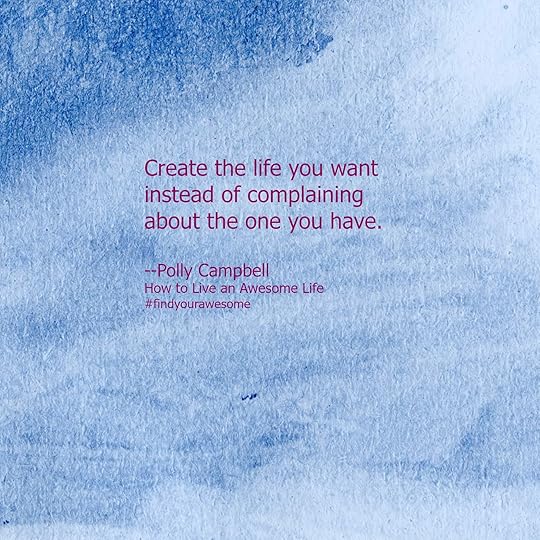
Change how you look at your life and you will change your experience of it.
Are those circumstances you face, or problems? Obstacles or opportunities? Are you upset, angry, fearful, or simply curious about what comes next?
All of these things can be true in the very same moment, but, the words you choose, the labels you assign, will determine whether you see possibilities or problems. I’m going with the possibilities.

April 18, 2016
How to Move Through the Hurt
Things have not gone according to The Plan. You know the one with every minute booked so when something comes up, like say, tooth and jaw pain that makes it feel like someone is chiseling an ice sculpture in your mouth, you feel super frustrated and icky and everything is just hard and slow.
It is just so frustrating and irritating when unexpected events just march in right in the middle of our day, and rattle us around crossing out the plans we had (despite the fantastic penmanship on the To-Do List) and loading the list with other things we never wanted to do in the first place.
But here’s the thing: Life is unexpected. Right? We delude ourselves into thinking we are in charge, that there are things we can control and then someone we love dies. Just like that. Or we get hurt or sick or we lose the client, or divorce the partner. There is never a good time for this crap and then it happens and we have to deal with it anyhow.
Not what we had planned. Not what we wanted. But we can do it.
 This week was a tough one for many people I know and love. So much we can’t control, so many things we didn’t want. But we can always choose our response.
Right between the hurt and sadness and frustration and pain, we can also choose to love and be grateful and get curious. We can choose to learn and explore to connect deeply with others. To be true in our strength and vulnerability. And when we do, we remind ourselves that we can cope with any uncertainty. And there is a measure of comfort and peace in that. A knowing that even in our deepest grief and greatest pain, we’ll get through even if we don’t feel like it just now.
And there is the knowledge too, that the same uncertainty that hands us grief and illness and loss, also hands us love again, and new opportunity, and friends who keep us upright when we can’t do it ourselves. Those things are unexpected too, and they are also here for us.
Hang in there, gang. I know it’s hard going sometimes but that’s okay. We can do it.