Polly Campbell's Blog, page 9
December 23, 2015
Power Up: Take Time Out
But on the days when you are feeling more edgy and irritable rather than fun and festive, try one of these in-the-moment quick tip or reminders that I call Power Ups, before you run screeching from the house.

Power Up: Take Time to Reboot
A sure way to fizzle out during this festive time is to do too much, too often. Stop, settle. Sit still. Sit quiet. Stop doing and start being. Build this quiet, settling time into your day — every day. I know. You’ve got loads to do. But you probably won’t get it all done, or enjoy doing it if you don’t take at least five minutes a day to do nothing. At least take five. More is better. Schedule it into your calendar and stick with it.
Not only will you feel less stressed and more sane, but you’ll be more productive, less likely to forget things, and able to make better decisions — all skills that make holiday planning easier. Plus, you’ll be healthier. Lots of perks to taking time to be quiet each day.
The biggest one though, is you’ll just feel better. Happier. More appreciative and generous, and that’s what we are going for.




December 21, 2015
Power Up: Do What Matters
But on the days when you are feeling more edgy and irritable rather than fun and festive, try one of these in-the-moment quick tip or reminders that I call Power Ups, before you run screeching from the house.

Power Up: Stay Close to What You Care About
When what we are doing does not align with the things we most care about — our core values — we feel icky, upset, stressed out. Of course with more activities, demands, and expectations bombarding us over the holiday season we often feel like we’ve got to do it all. But, no way. Huh, uh. Stop right there.
Take a minute to write down the things you care about most this time of year. The must-dos and the traditions you love. If you want, have your family members do the same and then compare lists.
Let go of the things nobody wants to do. Drop the things that add stress rather than joy. And cut the should-do’s.
With the must-dos left on the list, make sure at least a couple of them align closely with your core values.
For example, if you are feeling pushed and pulled for time, and quality time to celebrate with the kids is important this season, you may choose to forgo adults-only office holiday party in lieu of a family Christmas concert or other festive activity.
Deliberately fill your time with the things that you care about most, and you’ll feel happier and more centered this season.

December 16, 2015
How to Cope with Intense Emotions
 Taking a neutral position is one powerful way to diffuse stress.
I know this. And I was just thinking about this last night, while I was NOT remaining neutral.
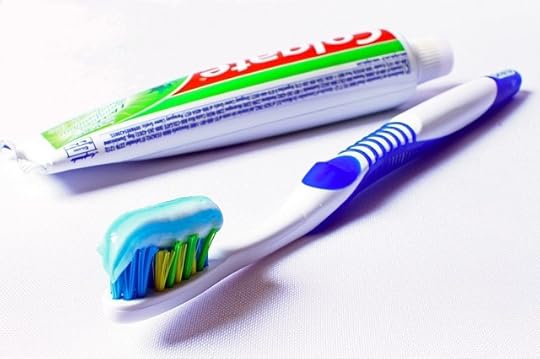
I was thinking of the benefits of detaching from these moments of high emotion as I was overwhelmed by frustration over my daughter’s never-ending bedtime routine. I am so not kidding. It takes the girl 40 minutes to brush her teeth. Forty minutes, people.
And, perhaps me flipping out over the lengthy teeth-brushing time was not the best way to go. I figure, that my rant over her apparent inability to put pajamas, any pajamas on in less than six hours, probably did not speed matters along. Pretty sure my long day was made longer by my heightened emotion and her 30-minute face-washing routine.
Next time, I’ll do what Allen Klein suggests because It Makes Sense.
In his book, You Can’t Ruin My Day: 52 Wake-Up Calls to turn Any Situation Around, the author, speaker, and Jollyologist writes, that “if you put your car in neutral gear, it detaches the transmission from the motor. Putting a difficult situation in neutral is like that; it will detach you from your upset.”
Since, I’ve gotten pretty good at not to detaching from the upset around the bedtime scene, I will now do it differently by learning how to neutralize that intensity by practicing a few of the exercises Allen recommends in his great book.
How to Neutralize High Emotion
Here are two of Klein’s suggestions:
1. Give up being right. Even if you are right, insisting on it makes other people wrong, and nobody wants to be put in that place. Me reminding my daughter that she was slow and late and behind was a negative comment on her behavior and (more than a little snarky) and not a wise motivating strategy.
I could have done this so much better by not making anyone right or wrong; by just reminding her of the passing time and letting her go through her routine. If in the end, she was late, then she can be held accountable for that, but nagging her along put me in the “right” position her in the “wrong” and both of us feeling irritated and upset.
2. Use a green lens. In the book, Klein writes “Clinical psychologist Maria Nemeth suggests that we view other people through a “green lens” rather than a red one, which views people in a negative way. Nemeth’s green lens view of people, on the other hand presents a way of seeing others in a more positive way.”
With a new perspective, such as the green lens, we can see that everyone has their own goals and dreams and desire. Everyone has their own way of doing things, their own talents and skills. Everyone deserves to be treated with dignity and respect.
Using these exercises to diffuse the intense emotion can help us shift to the more neutral middle ground. From there we can operate with the calm and clarity we’ll need to work through anything, including a never-ending bedtime routine.
Allen Klein is the world’s one and only Jollyologist. 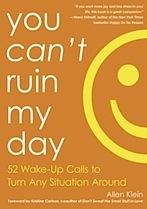 Through his books and presentations, Klein shows people worldwide how to use humor to deal with everything from traffic jams to tragedies.
He is an award-winning professional speaker and a recipient of: a Lifetime Achievement Award from the Association for Applied and Therapeutic Humor, a Certified Speaking Professional designation from the National Speakers Association, and a Toastmaster’s Communication and Leadership Award.
Klein is also a best-selling author of 25 books which have sold over 600,000 copies.
To learn more about Klein’s work go to learn more about Allen Klein, go to www.allenklein.com

December 14, 2015
Stop the Stress, Shift to Neutral
 The weather is bad. The holidays are too commercialized. Families are crazy. I don’t have enough money. The days are too short. I’ve got too much to do.
Recognize this list? These are a few of the things I’ve heard from friends, television hosts, people in line at the grocery store, or through text messages in the last 24-hours. I’ve even said a few of them myself. I’m really good with the ‘I’ve got too much to do’ one.
But inherent to each of these statements and many of the hundreds more we repeat every day, is that something is wrong. Not good. Not right. Lacking, or bad.
If we continue to see and describe the world as a harsh place we are bound to notice more harshness. It’s like buying a new car – after you hop in your chartreuse Volkswagen, you see chartreuse Volkswagens everywhere because your awareness is attuned to just that make and model.
Same with negativity. If you are attuned to find the bad, you will find it.
But, what if you just put the drive for negative in neutral?
I LOVE, LOVE this idea of emotional neutrality. It was like a little thought explosion going off in my head when I read about it in Allen Klein’s book You Can’t Ruin My Day: 52 Wake-Up Calls to turn Any Situation Around.
Klein writes:
“Many people think that the world is out to get them. If you are one of those people, stop that thinking right now! The world is not out to get you. Situations are what they are. You are the one who sees something as suffocating or supporting you. When you feel that you are a target, you will naturally feel victimized. But there is another way to look at what is happening to you, no matter what that is. It is to see everything from a neutral point of view.
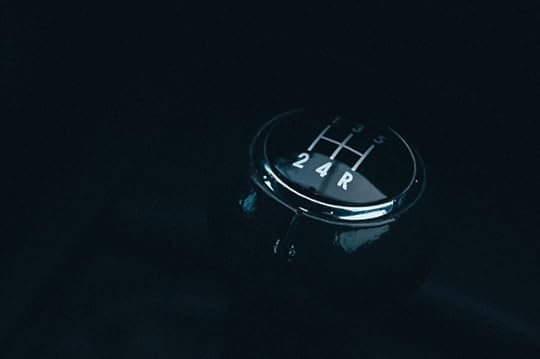
If you put your car in neutral gear, it detaches the transmission from the motor. Putting a difficult situation in neutral is like that; it will detach you from your upset.”
Later he writes: “Taking a neutral approach is a great way to not get caught up in daily upsets, irritations, and aggravations. It can also help us see more clearly.”
Think about it: The situations themselves aren’t stressful, it’s how we label them that determines whether we experience upset or ease. I’m going for the ease.
And, in Wednesday’s post I’ll tell you how to do it by providing a couple of the exercises Klein recommends to shift into neutral.
But, for now, just notice. How are you labeling the situations you encounter today? Can you shift into a more neutral space?
Allen Klein is the world’s one and only Jollyologist. Through his books and presentations, Klein shows people worldwide how to use humor to deal with everything from traffic jams to tragedies.
He is an award-winning professional speaker and a recipient of: a Lifetime Achievement Award from the Association for Applied and Therapeutic Humor, a Certified Speaking Professional designation from the National Speakers Association, and a Toastmaster’s Communication and Leadership Award Klein is also a best-selling author of 25 books which have sold over 600,000 copies.
To learn more about Klein’s work go to www.allenklein.com

December 9, 2015
Writing Your Own Success Story
freeimages.com
One of the fastest ways to make a better day is to change the story we are telling ourselves.
So often, how we talk about our experience is rife with drama and complaint . All that stuff might be true, of course. You may actually be deeply unhappy AND THEN your food is served late and cold AND the server gave you the wrong drink (you asked for cola, not coffee) and nothing ever goes your way. You can hang onto that story, that rotten truth, adding details to the drama in each retelling. Or you can go looking for the other details in the plot line.
Life is never just one thing. If you are looking at your experience through a narrow lens, zoomed in on the challenge, then you are missing the rest of the picture, the part that about the server bringing you a new, hot and delicious meal and then comping the lunch.
When we slow down long enough to stop complaining, we see there is more to the story. Then, we can change the one we tell so that we feel a bit better.
This isn’t hard. Life is mostly open to interpretation
Editing the Story
When we change the way we interpret our life events, our lives change, says researcher Timothy Wilson. He studied the impact of rewriting those life stories on paper. He calls the practice “story editing.”
In one study Wilson asked college students who were having a hard time in school to write about their experiences. Some in the experiment were given the information that many people struggle in college before finding success. The other study participants were told nothing.
Those who kept to the view that they were bad at school, continued to struggle. Yet, those who took in the new information, that many successful people struggle at times, used it to reinterpret their own experience.
Those who edited their story to include the interpretation that “everyone fails at first” were much more likely to improve and persist in school.
In the end, the story we tell about our struggle determines how successful we’ll be in dealing with it.
Ready to rewrite and reframe your own perspectives?
Here’s how to do it:
Pick a challenge or an event that has got you down.
Write about it.
Now, reinterpret those circumstances and rewrite a new ending to this story.
Spend 20 minutes rewriting this story from different angles, wading through the details. Researchers recommend doing this 20-minute writing exercise for three or four days. And in the end, you’ll discover a more positive, and usually more accurate, interpretation of events.
I’ve done this in my own life. When my first book was rejected a dozen times, and I was feeling beaten and frustrated, I began to rewrite the story of rejection.
Instead of seeing it as one of you’ll-never-publish-a-book failure, which at times I did and can surely be one ending, my edited version actually described rejection as a part of the publishing process. After all, many now successful writers, including Anne Lamott and Elizabeth Gilbert had been rejected many times before ultimately hitting the bestseller lists.
Another tale I told during that time was about how my own story of rejection could became material for a new book where I helped others cope with similar setbacks. That research is now included in How to Live an Awesome Life.
I began to see the rejections as part of the writing life instead of my own weakness and failure, and that belief kept me going until I did, finally, sell my book.
No matter what is happening in your life, small shifts in the story you tell will set you up for success rather than struggle.

December 7, 2015
How Our Stories Add to Our Stress
 I was grumbling about the traffic around the mall. Holiday shoppers adding to the congestion. I let it get to me.
Then I heard about the mass shooting and the traffic didn’t matter much at all.
Big, heart-breaking stuff happens in this world. Big heart-opening stuff happens too. But so often we are too caught up in the traffic jams and the dirty house and the parking situation at work that we miss the heart opening stuff altogether. And we need it. We need to take that good stuff in to build resilience for the bad.
Everyday stress is the number one threat to our mortality, according to research. It isn’t gun control, it isn’t the loss of a loved one or divorce or job loss, though those things are certainly stressful.
It’s the daily grind that gets us down.
Stories of Stress
We create stories around our experience that adds to the drama. The guy who cuts us off on the freeway, becomes the jerk out to get us. The joy of the holiday season become lost in all the commercialization. The generosity of a billionaire becomes an example of a self-absorbed narcissist.
Of course you don’t have to do it like this. You are in charge of your thoughts. You can pick which story to tell.
You don’t have to buy into the commercialization of Christmas. Instead focus on family, or the pretty decorations or the short days that prompt you to cuddle up at home, or special traditions that you enjoy. These things can also be true.
You can send compassion to the jerk on the freeway, because obviously he’s having a hard day.
And the billionaire, can just be a guy giving money away.
Stories Change Our Experience
Our experiences change by the story we tell, by the way we look at the world. There is plenty of hard stuff here, for sure. But most of our stress comes from the tale we tell around the everyday happenings.
You can consider all the plot lines, identify the antagonists, even have alternative endings. Take a look at the story from every side, and in the end you’ll feel better and be healthier if you pick the one with the happier ending. Because that can also be true.

December 2, 2015
How to Celebrate the Little Life Moments
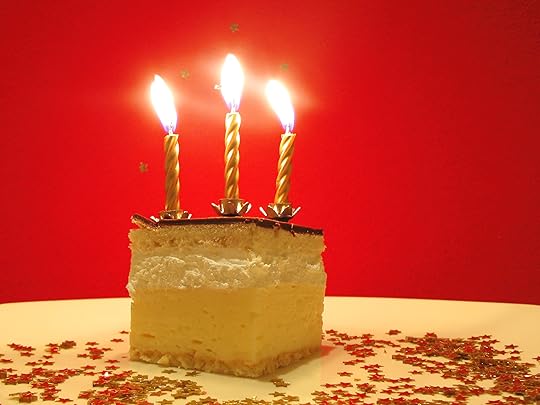 Celebrating life moments big and small can be a powerful pick-me up. Not only does a celebration help us connect to others, but it also helps us to stop and notice the goodness that is woven throughout our lives.
And, a little celebration can help us take in our own talent and abilities and motivate us to keep working toward our goals. I acknowledge plenty of powerful life moments, with mini-celebrations alone in my office, over a cup of coffee.
These moments of celebration cause us to pause, be mindful of the moment, and that’s good for our well-being. When we stop to savor the good stuff, we buffer ourselves against the bad and build resilience, says social psychologist and researcher Fred Bryant and others.
And mini-celebrations can plump up the positive emotion which makes it easier to manage the daily challenges that otherwise cause major stress.
And, when we do allow ourselves to look ahead to a future event or experience worth celebrating – a new job, a retirement, completion of a marathon, or the release of a book – or even the simpler things like a lunch with friends, a snow day, or a visit from the kids, we find ourselves feeling happier and this builds optimism, according to research led by Hadassah Littman-Ovadia
How to Celebrate the Little Moments
You don’t need fancy decorations or expensive gifts to savor a celebratory moment. Just follow these steps to make the moment matter a little more and soak up the good feeling.
Notice the moment. What is it that you are proud of? What have you achieved today? What do you like about your life? Where is the good energy flowing? Begin to notice what is working in your life and you’ll find something to celebrate. Perhaps the check came, or your finished a tough work project, or you handled a difficult moment with your child in a healthy, positive way. Maybe, you helped someone else, got a new job, or found the courage to enroll in the continuing ed program you’ve been thinking about.
Move out of the routine and set the scene. Now, stop. Go to a special place in your home, or outside to a beautiful location and give your attention to the moment of goodness or achievement.
I did that when the box containing the first book I’d written arrived. I took it to my favorite chair in front of the fireplace where I felt safe and cozy, I poured myself a myself a fresh cup of coffee, and I opened it. Then I just looked and reminisced on the work it took to get the book done, and the challenged and I reveled in the accomplishment and became mindful experiencing the moment with all of my senses.
When my husband and I celebrate the end of our work week in another kind of mini-celebration, we do it at the kitchen island, away from the table where we normally sit. It signals to us that we are stepping out of the routine to give this good moment our attention.
Commemorate the moment. Now, take some action. Make a toast, say a prayer, take a bite of a special food, sing a song, high five, light a candle. Animate the moment with a powerful, celebratory action that fires up the good energy and enjoy the goodness that you have in your life.

November 30, 2015
Why We Celebrate Everything
 The day before my family came for Thanksgiving dinner, my husband and I toasted to the carpet. It was still damp from the cleaning hours before, but it looked pristine.
Tonight, we’ll kick off the holiday season, then celebrate a nice family dinner by cuddling on the couch in front of a sappy romantic movie on the holiday channel. And we’ve even been known to high-five the discovery of whole wheat couscous.
In ways both little and big, stupid and endearing, we celebrate just about everything.
After 13 years of marriage, it isn’t all smooth sailing around here. We bicker over parenting differences. I’m constantly annoyed when he comes home from the grocery store with produce, bruised and rotten on one side. He doesn’t like when I interrupt or wander down the hall in mid-sentence. We have real-world challenges and some very loud discussions.
But we give extra attention to the good things in life too. We celebrate the little successes and that helps keep us connected.
Silly Celebrations Keep Connection Strong
And that connection is the thing that keeps you coming back when the last thing you want to do is be together. When the crap comes down, and it does, we also have all these little warm and silly moments of celebration to fall back on. Little bits of fun and closeness that remind me (among other things) why I fell in love with him. Why I truly want to be here.
It’s easy to remember to celebrate the big days with Christmas parties and Valentine’s Day dinners. And we do recognize those moments in small, sincere, inexpensive ways — a special card, a date night, or simple gift. (My favorite, before we were married, was a wrench to fix my garbage disposal — actually very romantic considering what we’d been talking about).
But it’s the little moments I come back to in the corners of my memory. It’s the love note he gave me, now tucked away in my drawer, to celebrate the publication of my first book. The time he picked up those Greek olives I love and he hates, to celebrate a Tuesday. It’s the happy hour Fridays we have while standing around the kitchen to commemorate a week well-done. The times we’ve celebrated the beginning of college football season by singing the fight song and hanging our fave team’s flag out front.
This isn’t about big-money, fancy gifts. It’s about coming together, to notice one another and the good stuff we share. Just taking a beat really, to recognize that this life is big and bold and so worth celebrating.
This Friday at 4:15 he’ll throw open the front door and shout “It’s the WEEKEND!” like he does every Friday when he gets home from work. He’ll be excited, as though we aren’t middle-aged parents who go to bed by 9 p.m. on Friday nights.
We’ll toast to Friday and our week, acting like there is something to celebrate. Because, if you go looking hard enough, there always is.

November 25, 2015
How to Be Grateful When When Gratitude is Hard to Find

Even though the carols tell us that “it’s the most wonderful time of the year” I know it doesn’t feel that way for many. The holidays can be tough. They can prompt us to feel lack and loneliness in a way we usually don’t. Or they draw out our insecurities and stresses in a new way. I get that this time of year isn’t a joyful one for everyone, but, I also know that gratitude is really the antidote to the pain.
I wrote this post a couple of years ago, but I thought it was worth re-publishing because even in the darkness, gratitude is the one thing that can help us see the light again and THAT can change everything. So go easy on yourself and others this Thanksgiving. Be kind and gentle. And even during the troubling times, try these tips to feel better.
One way to cope with the challenge and adversity that we all encounter is to be appreciative – grateful – for the goodness that surrounds us too. It’s always there, but it can be tough to see during the bleak moments and that’s when we need it most.
Used during times of trouble, gratitude becomes a powerful coping strategy that builds the resilience, creativity and optimism and helps even schleps like me move through the darkness.
But how do we remember to practice gratitude on the days when just getting out of bed is a victory? You’ve got to go looking for it, to call it out, to sit with the emotion of appreciation, and then go forward.
Here are five ways to do it:
1. Start with any little thing. When you are knocked back by life, find any little thing that is working and cling to it. The breath in your body. A place to sleep. A bite of food. Eyes to see with. A friend to call. When you think of it, these so-called little things are not really little at all. They are life giving. Yet these are the very things we overlook because they are innate and familiar. Pause and notice these things now. Give thanks for them. Just a minute will be enough to shift you to a place where you can better deal with the challenges before you.
2. Get up and help someone else. You got troubles? Chances are your neighbor or friend or hair stylist does too so instead of focusing solely on your bad news, reach out to help someone cope with their stuff. Take a casserole over to the woman just diagnosed, string the holiday lights for the neighbor recovering from surgery, let someone cut ahead of you in line. We’ve all got stress and troubles. When we reach out to one another not only do you help them survive, but the generous act will give you a boost too. And, you’ll be reminded that there is goodness in the world, even with the pain.
3. Do one thing today that you are good at. Are you good at organizing cupboards? Well then, when everything is falling apart, go organize the cupboards. Or paint, or garden, or make some soup, or bake cookies, or hug your child, or fix the faucet. Often when we are surrounded by doom we feel incapable of coping with anything. Darkness pushes in and soon we figure we can’t do anything right. Baloney. Remind yourself of all that you are capable of by moving toward your talents. And, when you are done, you have another thing to be grateful for.
4. Allow all the emotions. Gratitude isn’t a cure for sadness, or frustration, or grief. And, you don’t need a cure. Emotions remind us that we are engaged and participating in this life. In fact, you can actually be grateful for any emotion you experience, even if it’s a difficult one. Our emotions also offer insight, guidance (often our anger or discomfort prompts us to take positive action) and even help us to see opportunity. Pay attention to whatever emotion comes. Instead of acting badly from it, notice what it is you are actually feeling. Pay attention. Get curious about it. Recognize how it shows up for you and in you. Often just the noticing what it is we are experiencing diffuses our anxiety or sadness and allows us to move forward instead of being trapped by hard feelings. You can be grateful for this process. You can be grateful for having loved enough to feel grief at the loss, or for having pursued your dream with such passion that you feel disappointment when it’s over. To experience deep feelings mean you are here in the world, participating, engaging and that is something to be grateful for.
5. Get started when things are good. Gratitude gets easier with practice and it is easier to come by during the good times. So when you’re in the flow of life, establish a gratitude practice. Each day list five things you are grateful for. Say them aloud, then soak up the emotions they generate. Then, when the challenges do kick up, you will be in the habit of appreciation and it will be a natural way to deal with adversity.
I’m not saying the practice of gratitude will return you instantly to a state of bliss and joy. I’m not even saying there are rainbows in every storm. Some storms are just big and sloppy and whip you around. But, the bottom line is this: when trouble comes and you are looking for help to get through, try gratitude. It is a coping strategy and it helps us survive when we aren’t sure if we can.
Image by Stock.xchng

November 23, 2015
Mindful Mealtimes Lead to Better Health
 This post was originally published earlier this year, but it’s something I’ll be thinking about and practicing yet again, when I serve up a slice of pumpkin pie for breakfast, Friday.
Mindfulness at mealtimes is a no-brainer.
Science shows us that eating mindlessly leads to weight gain, poor health decisions and lack of enjoyment. It also leads to indigestion, a fair amount of bloating and a craving for ice cream after 8:00 p.m. – maybe that’s just me.
But mindful eating — – this practice of paying attention and noticing without judgment – slows us down, helps us to savor (and enjoy) our food, connect to our emotions, (which can curb emotional eating) and make healthier choices. We are less likely to overeat, as well, because we tend to notice when we are full.
And, my own personal research done at the dining room table shows mindfulness can also ward of anger and insanity when the 8-year-old claims to hate the meal you just spent 40 minutes prepping.
Mindful eating is the opposite of eating cold, leftover pizza while standing at the counter. It is not chowing down on a protein bar while in the car, or unconsciously picking the mac & cheese off the kids’ plate. Sure, you can be mindful of those moments too, but to max out the benefits of mindful eating, it’s best to sit down, slow down and give your attention to the meal and the experience of eating it.
When you make dinnertime –or any meal — a practice in mindfulness, a time to slow down, come together, enjoy the food by appreciating its aroma and texture and beauty the time itself becomes more nourishing, satisfying, and yes, even calm. And who doesn’t want peace at the dinner table?
5 Tips for More Mindful Meals
1. Get quiet. Sit down. Even if you are by yourself, turn off technology, close the book, and shift your attention to the meal. Give thanks for the food. This does not have to be a prayer, but a pause in the moment to silently acknowledge the food before you. Allow yourself to be fully present. Notice your environment, how you feel sitting in the chair, the details of the food and decor. Focus on the meal experience, not the chores you have to finish after.
2. Eat with all of your senses. Before you dig in notice the colors and textures, aromas and sizzle. Experience the meal with more than just your taste buds. Savor that first bite. When you do take a taste, allow yourself to fully experience the sensations. Imagine you are a judge on Chopped or another cooking show and really allow the food to dance on your palette. Don’t judge it as good or bad, just experience it in the moment. Then absorb the positive feelings that come with a really good bite for 15 or 30 seconds before doing anything else. Notice them. Take them in. You’ll not only eat slower (and probably less) but you’ll develop greater appreciation for the meal.
3. Put your fork down between bites. Seriously, we are so rushed during the day that we even eat at a rapid fire pace. Mindfulness is about paying attention to the moment. You must slow down to do this and when I put my utensil down between bites, it’s a signal to self to settle down, take in the moment. It physically forces me to slow down.
4. Chew with your mouth closed. This is more than just good manners. Usually, our mouths are open because we are shoveling in food or we are talking, both are distractions to mindfully chewing every bite. Chew with your mouth closed. One bite at a time.
5. Create a ritual. Create a short ritual at meal times, such as offering grace before you eat. Or offer a up gratitude or a goodness, we call them, from the day. Perhaps you have a ritual of deliberately and carefully putting the napkin on your lap or a set way of serving others. Whatever it is, a short ritual repeated deliberately and consciously before you eat every meal will enhance your experience of it. Even the ritual of blowing out birthday candles has been shown to improve the taste of the cake.
**portions of this post have been reprinted from an earlier post in Imperfect Spirituality.