L.E. Henderson's Blog, page 11
June 7, 2016
My Uncomfortable Encounter with Dale Carnegie

Recently someone accused me of being defensive.
My response went something like this: “Me? Defensive? Who’re you callin’ defensive, yer defensive. Yo mama! Hrumph!”
My critic rejoined that I should read the self-help classic How to Win Friends and Influence People by Dale Carnegie. I rolled my eyes. From all I had heard about the book, it seemed to be all about remembering and repeating names so that people who loved hearing their own names would like you more.
However, my persistent critic did something that would have made Dale Carnegie proud: He influenced me. How? He said “Come on. When you get to be a world famous writer, don’t you want to know how to deal with all the interviewers?”
The words swept me into my fantasy world, the place my mind flies to on my bad days. Only this time there was a dragon there: the stress of thinking about being publicly interviewed. I imagined an interviewer standing outside the door with a battering ram, so impatient to interrogate me about my astounding imaginary success that he could not even bother knocking. With a sigh of defeat I searched for the Kindle version of the book on Amazon and when I saw that it was less than three dollars, I downloaded it.
During the first few pages, I began to see why the Dale Carnegie book is a classic. I found it hard to argue with many of his points. According to Carnegie, people love compliments (but only sincere ones); if you want something from someone, you are more likely to get it if you look at the situation from their point of view and make your argument appeal to what they want, not what you want, since – he says – people are only interested in themselves.
Carnegie argues that we are all creatures of emotion, not of reason, which means no amount of logic will convince anyone of anything if their self-esteem is threatened. He views society as a game of inflated egos colliding with each other like billiard balls.
Rather than viewing this as a damning critique of society or human nature, Carnegie sees it as an important insight to use in achieving goals, a law of behavior that a smart person will use to his or her advantage.
Carnegie advocates giving people what they want; that is, making them feel important, talking about their interests, looking at everything from their point of view, letting them feel superior to you. What is the payoff for setting your own ego aside? Power. Carnegie never uses the word power, but that is clearly what he means when he says “influence.”
Carnegie says that, if you let the other person “win” the pointless and futile ego battles, you are more likely to get what you want from them, whether your goal is to sell a product, get a child to clean his room, get your rent reduced, or persuade an irate customer to continue doing business with you.
To underscore his point, Carnegie quotes a Chinese sage, Lao-tse: “The reason why rivers and seas receive the homage of a hundred mountain streams is that they keep below them. Thus, they are able to reign over all the mountain streams.”
Carnegie also sets forth scores of anecdotes about company representatives who were able to convert unreasonable clients to their way of thinking by sincerely complimenting them, talking about their interests, listening intensely, and understanding their points of view – techniques Carnegie compares to magic.
It would be easy to object to the book as being manipulative or even Machiavellian – except that Carnegie repeats again and again that compliments and appreciation of others must be genuine. He advises sincerely understanding others and giving them what they want so that everyone walks away from the exchanges happy.
How can I object to everyone being happy? But there is something about the Carnegie system that still bothers me. Is it my childhood emotional baggage, as my critic has suggested? Or something else?
Baggage-wise, when I was a kid, I wanted more than anything to be liked. I wanted to be popular, particularly in the sixth grade, which was the year I was bullied more than I ever have been. Afterward, I concluded that being popular had been a shallow goal anyway; it had led me away from myself. Doing things just to be liked felt dishonest.
I recovered from the bullying by discovering that I loved doing things that had nothing to do with anyone liking me: reading, writing, learning – and even playing video games. When I focused my attention outside myself, I was far happier than when I based my mood on how others saw me.
Any time I hear anyone say, “Do this and you will be popular,” I cringe, yet Carnegie is all about being popular. According to him, the main way to make people like you is to shower them with genuine praise and make them feel important. Though Carnegie says “genuine,” the phrase “make them feel important” unsettles me because it suggests that you are creating a self-serving illusion rather than honestly believing someone is important. He gives many examples to illustrate why the desire to feel important is one of the most fundamental and powerful human drives rivaled only by sex. (Curiously, he does not include eating).
Carnegie even goes so far to say that the main reason great artists and writers like Charles Dickens produced masterpieces is that they wanted to feel important. This unsettled me. Maybe he is partly right; most authors do love praise.
But feeling important seems like such a shallow reason to write books like Great Expectations and A Tale of Two Cities. What about the need to portray life as it actually is? To make sense of the world? To understand people? What about the love of the writing itself? Do the most moving artistic masterpieces ultimately come from the shallow place of needing to feel important?
The question made me analyze my own motives for creativity. While I do enjoy praise for my writing, during the time I am creating stories, I am not thinking about trying to be the best. If I did, my writing would be thin. My writing goes much better when I ask, “What can l learn from this story?”
The creative process is about experimenting with the craft, seeking to understand life, and exploring the power of words. The art comes from a place of experience, memories, images, emotion, and an attempt to reflect life as it actually is.
Something else about Carnegie troubled me. One of my intellectual heroes, psychoanalyst Erich Fromm, believed love is an end in itself, whereas Carnegie recommends behavior I associate with love – empathy, compassion, listening, appreciation, and kindness – as a means to an end: to control others without them realizing what you are doing.
The idea of trying to control or “influence” people using praise seems dishonest no matter how you spin it. That being said, if I ever went to the ER with a loved one who was having a heart attack and the triage nurse was not taking it seriously, that would be a good time to know how to “handle” people. Maybe it would help, as Carnegie says, to look at the situation from her point of view and persuade her based on her own concerns – rather than expressing rage or accusing.
Regardless of what I think of Carnegie, he is right about one thing: We often act like our self-images are our lives, and we defend them as if we were fighting for physical survival; when our egos are wounded, the pain is real, yet people do not generally die of bruised pride.
However, it can muddy thoughts. It can make people unwilling to listen to reason. It can make them forget about more important things that are at stake. The drive to defend an ego is also emotionally draining — a fact that any self-respecting internet troll knows. People who are able to remove themselves from the “billiard table” and rise above the petty need to defend their fragile self-esteems are potentially some of the most powerful people in the world.
While I still have major reservations about the Carnegie system, maybe I have been too defensive at times, wasting valuable mental energy to insist that I am right or good when no one really cares.
Maybe I could find more productive uses for my emotional energy. What could I accomplish if I lost the “need” to defend my ego against critics? Maybe I could become an enlightened uber-rationalist who could go directly toward her goals without being led astray by emotional minutia. Maybe I could even turn my attention to helping others achieve their goals. Maybe I could help others see the best in themselves, inspire them, diminish the sum total of human suffering, and make the world a better place.
Or I could make scads of money and wield power over my enemies. Um, no, sorry. That came out wrong. I meant influence them. Yeah, influence.
That is exactly what I meant.
If you enjoyed this post you might like my other writing. Take a moment and sign up for my free starter library. Click here. Also my new novel “Remembering the Future” is available for purchase on Amazon.
The post My Uncomfortable Encounter with Dale Carnegie appeared first on PASSIONATE REASON.


May 31, 2016
The Inherent Mastery of Being a Beginner

For me, even the most well-intended criticism of my writing stings initially. An electric shock goes off in my brain. I can practically hear a buzzer going off, the kind used in game shows. It says, You are incorrect! Wrong. You have failed, failed, failed.
After the initial shock, an unexpected transition sometimes happens. I see things I was unable to see before.
Good writing criticism is chocolate wrapped in a thin, sour shell. At first it tastes awful. It zings the tongue. It triggers resistance. But once the shell melts away, the taste of chocolate delights as you imagine exciting new possibilities. You watch with fascination as metaphors enliven flat prose. You see how strong action verbs energize writing. You see vague phrases resolve into clarity.
Good criticism is not discouraging. Its goal is to make the writer more powerful in accomplishing her artistic objective, whether it is to create an illusion of real life, share a personal experience, or create a world.
Unfortunately, criticism rarely works to increase the power of writers. Many people see criticism as tearing down, not building up. They focus on the negatives and ignore the good. Maybe this is because all the average person knows about criticism is the book and movie reviews they have read. But book critics are not there to support writers or further their artistic growth.
They are there to write reviews that will interest readers; unfortunately, scathing, intellectual-sounding reviews titillate. They satisfy the craving for conflict. They make the reader feel superior to the writer without even having read the book.
Some critique group members rely on the model they know best. Their criticism discourages; it does not further growth or mastery. In fact, very little in our society works to promote mastery in writers. It does the opposite.
Young children know mastery. They may be helpless in most areas of their lives, but they are gods of the page when they draw or write. The blank page is not intimidating but exciting. They see endless possibilities to explore. They draw or write what they like. They experiment. They enjoy every moment.
As they grow, education – or sometimes ridicule – makes them aware of their skill limitations, and the feeling of power goes away. They are taught that there is a right way and a wrong way to write. They are taught that what they like is unimportant and that only what “the reader” wants matters.
They are taught that in order to write properly, they must show maturity by learning to take criticism. But few ever mention which criticism is worth listening to and which is not.
Rather than owning their work, many children lose their early confidence and become dependent on authorities to tell them what to do. As they progress, they internalize criticism. As a result, they dread writing and beat themselves up for procrastinating.
As adults some of them go to critique groups to be told what they are doing right or wrong. Unfortunately, there are critics in critique groups who know just enough to be dangerous. They are the inveterate rule quoters. Often their rules are not rules at all but only preferences. They police “violations” all the same.
Rather than looking at individual cases, they apply their “rules” across the board without considering specific circumstances: “Show, don’t tell;” “Never say very;” “Only use the word that if the sentence makes no sense without it;” Keep yourself out of your work, take out the word I.”
Others are dogmatic about genre conventions. I once heard an editor say, “In the fantasy genre, novels always begin with action scenes. The only exception I can think of is Brandon Sanderson, and, well, he is Brandon Sanderson. Do you look like Brandon Sanderson?”
Sadly, this seems to be what many people expect from editors and critique groups: rule drilling. Under-confident, many writers reach for absolutes. They want to be right. They are terrified of being wrong. They have forgotten what every child artist knows, that what they like matters.
You can follow rules all day, you can perform them perfectly, but without the artist, without individual artistic taste, experiences, and judgment, you will not have art.
Writing is subjective. Rules are only rules of thumb. They are only instruments meant to serve, not whip the writer into quivering submission. However, most people are used to having a teacher or boss telling them what to do. Obeying rules feels natural. Flouting them feels stubborn, egotistical, and immature.
However, a slavish adherence to rules works against artistic growth. Writers need to break the rules sometimes. An example is “Show, don’t tell.” If you apply the rule in every case, you lose a powerful writing tool: exposition. Exposition is the glue that holds pivotal scenes together. For example, if you want to get a character home from a party, you do not want to include the car scene if it is unimportant to the story action.
“She drove home” is enough of a transition. Showing the character driving home, describing the smell of vinyl car seats or the window view of cows grazing or the specific turns the character makes does nothing for the story except slow it down
Exposition also gives the writer a way to zoom in and out based on what is important to the writer and what is less important. Showing brings emphasis to a scene, spotlights it. Telling lets less important but necessary details recede into the background where they belong.
Beginning writers are particularly vulnerable to being brow-beaten by rule Nazis when the ultimate goal is for writers to develop the ability to judge for themselves what a specific problem calls for.
Beginning writers are already masters of their own work in that the ultimate decisions rest with them. Like a kindergartner with a crayon, they are free to create what they like and leave out what they dislike – but too often they are led to believe otherwise.
Not even a beginner should make changes to her work based on criticism if she does not know why she is making them or feels like the changes will hurt her story. Art is one of the few areas in life where most anyone can experience freedom, but many critics, editors, and advice givers work against it.
Any skill, any knowledge, any rule of thumb, any criticism should augment the power of the artist, not turn them into self-conscious rule slaves.
Though I have benefited from criticism in every book I have written, it has played a small role in my growth as a writer. Writing is the best teacher, and there are many awesome books that teach the basics of the craft.
But the most important asset any writer can have is a love of writing. A writer who loves writing will write a lot. She will not procrastinate. She will not struggle against herself as she sits down to write. She will enjoy writing and because she does, others are likely to enjoy it too.
Anything that interferes with the love for writing is dangerous to creativity and needs to be jettisoned at once, because love – as kindergarteners know – is the most essential ingredient for mastery.
If you enjoyed this post you might like my other writing. Take a moment and sign up for my free starter library. Click here. Also my new novel “Remembering the Future” is available for purchase on Amazon.
The post The Inherent Mastery of Being a Beginner appeared first on PASSIONATE REASON.
May 19, 2016
Can Video Game Technology Help Writers Build Worlds?

As a writer, I sometimes have trouble vividly imagining my fictional settings. It is not as big a problem as it sounds. Characters come first and, unlike film makers, novelists can get away with a less-than-thorough imagining of physical surroundings. A few concrete and enticing details are sometimes enough to anchor readers while engaging their imaginations so that they can essentially complete the scenery themselves.
However, this feels like cheating to me. I want to make my worlds as real to myself as they are to the reader, and with the fantasy genre in particular, world-building needs to be more than an after-thought.
This is why I became so excited when I heard about a software program in the early stages of development that seeks to guide the world- building process: StoryTechnologies, conceived by Brett Alistair Kromkamp, a software developer living in Norway. According to his website, StoryTechnologies is “about telling compelling stories using whatever techniques and media are appropriate.”
While in the past I have resisted computer programs used for writing, I could actually see myself using this software.
Brett is presenting 3-D video-game-type graphics – or 3-D modeling and animation – as a way to help writers build their fictional worlds. His 3-D sample renderings of buildings and exotic settings appeal to both the gamer and writer in me.
As a gamer I have often sought ways to use virtual worlds as inspiration for stories. With The Sims I used to build “sets” for my stories by customizing the houses to fit the personalities of my characters. I would use the camera feature to set up panels, taking photographs of my Sims in action and putting the frames together to make the panels look like comic strips. It was a lot of fun.
However, other aspects of game play got in the way of my story writing. The game required me to get jobs for my Sims to make money, which limited the kinds of furniture and other items I could buy to reflect their personal preferences. Plus, my hungry Sims were always yelling at me – understandably – when I spent money on furniture and other “stage props” instead of food. (“No sir, you may not have a cracker. Take this lava lamp, you hippy!”)
I have tried using other video games in a similar way. While playing the RPG Skyrim I was dazzled by the realistic-looking exotic settings, dreamy snow-capped mountains, fields bursting with wildflowers, and roaring waterfalls. I loved wandering around magnificent palaces, the kinds of places I would never be likely to visit in real life.
I was so inspired by Skyrim, I decided to consciously engage my imagination so that instead of just seeing and hearing my surroundings, I would imagine really being there; I would imagine the sweet scents of the flowers or how cold the snow felt, or how tired I would feel after walking long distances, how achy my legs would be, or how frost-bitten my fingers.
I kept a notepad beside me and took notes on the visual surroundings, kind of a virtual travel diary, just as if I were visiting real places. Soon my notepad was filled with detailed descriptions from the point of view of my avatar, a khajiit (or cat creature).
My descriptions sounded like excerpts from a novel. I would “hear” my cat character describing her surroundings and how she felt about them; I soon learned that she was a tortured creature and that her emotions ran deep. Her descriptions became the beginning of my latest novel, Paw, and my cat creature became my protagonist
However, the game Skyrim was not designed for me to use in the way I was using it. If I wanted to get to exotic new areas for story inspiration, I had to fight snow giants and wild beasts; I had to crawl through dungeons and figure out where to go; I had to honor the game mechanics and rules. Using Skyrim for story inspiration was inefficient.
Maybe that explains why I was so excited about the idea of software that would use 3-D modeling technology for the sole purpose of creating stories. The idea that I could give my stories a reality beyond the page, using 3-D graphics as reference points, was enticing.
I am now working on Part 2 of my Paw trilogy; in it world building is going to be more important than in any novel I have created thus far. To help writers organize their world-building thought process, StoryTechnologies involves other aspects of world-building such as politics, geography, religion, and culture – all of which writers of fantasy and science fiction typically consider.
Beyond organizing thoughts, 3-D modeling and animation technology could potentially create new ways for readers to experience the stories they love. Brett raised the exciting possibility that someday readers might be able to go online and interact with the fictional characters you have created. That would be way more awesome than The Sims.
I am looking forward to seeing how Brett resolves some of the complex issues writers face as he creates his software. Beyond world building, he is seeking elements common to effective story-telling in order to guide writers through that process as well, which – as any writer knows – is no small undertaking.
Brett has started blogging about the experience of creating his software and sharing his insights about writing, world-building, and 3-D modeling. His blog is StoryTechnologies.com. Follow it to keep up with his progress.
Until StoryTechnologies is released for consumer use, I might go play some Skyrim. The game may not be designed for writers, but it is strikingly pretty and realistic-looking nonetheless. For now, that will have to do.
The post Can Video Game Technology Help Writers Build Worlds? appeared first on PASSIONATE REASON.
May 12, 2016
Just Released My New Short Story Collection “Remembering the Future”
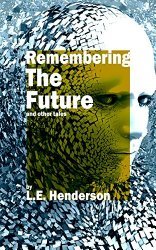

I am happy to announce that my second short story collection, Remembering the Future and Other Tales, is here and is available for electronic purchase on Amazon.
Those of you who have followed my blog will find familiar stories, but my new book also contains new content, including “Kindness,” a 20 page digital apocalypse story, and a thought experiment on what it would be like to become “omniscient” through cybernetic technology, “The Library Behind Your Eyes.”
As I did with Becoming the Story, I let themes drive many of my stories. I never really choose my themes; growing out of my personal obsessions, they “choose” me. How do you get past fear when real pain underlies it? What is the best way to live when you know life is temporary? What does freedom really mean? However, themes are always secondary to the stories themselves and the enjoyment of reading them. Many of the fun science fiction and fantasy tropes I love run through my collection: robots, a mad scientist, a dragon, telepathy, and magic.
Thanks to all of you who have been following my blog and who have read my books! I would give you all cookies if I could, but cookies are hard to transmit digitally. However, if I ever figure it out, I will let you know.
Click to buy “Remembering The Future: And Other Tales”
The post Just Released My New Short Story Collection “Remembering the Future” appeared first on PASSIONATE REASON.
May 3, 2016
Why Imaginary Criticism is the Worst
The criticisms my imagination conjures are the worst kind there is. What I mean is the kind of criticism that I invent when there is no response from, say, an editor or Beta tester.
It goes something like this: Why would they not respond? Maybe they hated that I included an emu on page 2, which was sort of silly, I guess, since you would not really expect an emu at a funeral. And the worst thing is I know next to nothing about emus. Damn! Why did I not Google emus??? It would have been so simple! No wonder there is no response! They must have found an emu inaccuracy! They hate my emu! They hate my writing! They hate me!
Such imaginary criticisms strike without warning. They are not the kinds of thoughts you actively think, but the kind that come torpedoing toward you when you would rather them not.
No good can come from imaginary criticism. It is a black hole of pointlessness. There is nothing I can learn from it. But people are hard to read. Any social interaction requires piecing together details of behavior to form an overall impression. The less information is available; the more room the imagination has to write its brutal text into the empty spaces of silence. My mood crashes – even though the trigger is not real.
From my psychology reading, I know that when I react emotionally to a negative event, I am not reacting to the event itself – not directly. I am reacting to what I tell myself about it, if someone fails to return a greeting and I tell myself that it is because they are mad at me, I may end up in distress based on my false interpretation, ignoring all other possibilities such as: the person may have been preoccupied or simply did not hear me.
If I could consciously control what I tell myself about a “negative” event, I could control my moods more effectively, even though my bipolar disorder adds a whole new dimension to the problem of seeing events clearly.
But deliberately having thoughts conducive to a good mood is so much harder than it sounds. For me it is extra hard because I experienced a lot of rejection in my childhood. It culminated in a nightmarish and relentless sixth grade bullying experience that only lasted a year, yet still managed to brand itself into my psyche for life.
One terrible year during my childhood, a tiny fraction of my life, warped my emotional “lens” in a way that distorted my reality for many years to come, leading me to see rejection everywhere, lurking the empty spaces of silence, in shrugs, and even – sometimes – smiles. (Oh no! Was that an ironic smile?) How could one nine-month period of abuse follow me for a lifetime?
I believe it was because my experience was so intense and the ridicule happened when I was at such a vulnerable age, a child on the cusp of adolescence, groping for identity, understanding, and approval.
For whatever reason, bad memories from the distant past can sometimes hi-jack my imagination without warning or permission – and my imagination is dangerously powerful.
An imagination is an awesome thing to have when I write or draw, but there are bad times to have an imagination, like when it goes to work furiously trying to fill in gaps of silence with stories about what others must be thinking.
It is during those times that my imagination becomes an inescapable hell, and it is nearly impossible to correct an afflicted mind with a mind in the grip of a distortion. It is times like those that I think, this is what mental illness is. This is why it is called an illness. This is why bipolar disorder is called a disorder.
In the world of my “mind-reading” imagination, interpretations of behavior always drift toward the extreme. No one is ever indifferent or lukewarm about anything; they love or they hate; they are friendly or enraged; everyone is a hothouse of drama and conflict, fiery and opinionated – all great qualities for writing fictional characters but not so much for determining why someone did not return a greeting.
It seems like imaginary criticism would be easy to deal with, not being real or based on any tangible evidence. The opposite is true. A spoken criticism can be answered, misunderstandings explained; with imaginary criticism there is no one to respond to; it stays inside my mind where it implodes.
How do I escape my own mind when it becomes essentially weaponized? How do I get rid of a depression triggered not by what others are thinking but by what I think they are thinking?
I have done it before. I used to be painfully self-critical while writing, so I made a new habit of always writing down something I loved about my writing even if it was only a graceful sentence or interesting metaphor. The praise was unconditional and effusive. I learned to congratulate myself, always, for even making the effort. It helped immensely. I stopped getting depressed when I was writing.
I have decided to try it with my real life – outside my writing. I wondered: What if, throughout the day, I wrote down praise for the things I did right? I was having a self-critical week, so in desperation, I sent myself an email full of gushing accolades. it did wondrous things for my mood. I liked the experiment so much, I did it again the next day, and the next. Rereading them was so addictive, I was worried it would interfere with my writing.
Ultimately it is my own approval I crave anyway. I wonder, though, why I crave approval at all, from anyone, ever? Sometimes I wish I could have my ego surgically removed so that instead of trying to pad, protect, or defend it, I could get on with the business of living my life.
Never again would I be tempted to argue with a troll. Never again would I have to get defensive or enumerate reasons why I am right and someone else is wrong. Never again would I feel compelled to defend a mistake to someone. I would like to use that energy reading or writing new books. Or drawing. Or taking a walk. Or playing a video game. Or reading a dictionary from start to finish. Almost anything is better.
Besides, the only person who really cares about my “image” is me and I am ready to let it go because I am beginning to see it for what it really is: baggage that slows my progress toward the worthier pursuits of learning, experiencing, loving, and creating.
If you enjoyed this post you might like my other writing. Take a moment and sign up for my free starter library. Click here. Also my new novel “The Ghosts of Chimera” will soon be published by the folks over at Rooster and Pig Publishing.
The post Why Imaginary Criticism is the Worst appeared first on PASSIONATE REASON.
April 26, 2016
Death to Deadlines?

Despite all the writing I have done, I am a kind of slacker – at least according to the conventional wisdom. Writing is supposed to require discipline, “will-power,” and punctuality with deadlines.
Though I adhered strictly to deadlines in school, imposing them on myself for writing rarely led to my finishing stories. Deadlines, and the accompanying threat of punishment, induced terrible dread. Rebellious feelings followed. I procrastinated. I always felt like I was fighting myself.
But not all writing goals are deadlines. I have written a blog post every week – on purpose – for the last two years with only a couple of skips, but the due date is subject to change if I discover an individual project needs more time. My consistency has nothing to do with “discipline.” It has everything to do with loving to write.
With my blogs, I have never bribed myself with rewards or threatened myself with punishment. The reward for writing a blog is writing a blog. The reward for publishing a blog is publishing a blog. The only punishment is not getting to publish it. Otherwise, I know that not publishing a blog is not a disaster, which means I am writing freely.
Unlike ordinary writing goals, deadlines suggest inflexibility; even the name deadline suggests that morbid disaster will follow if I fail to make my sacrifice to the punctuality gods. In the past, I would inflict self-punishment for failing to meet my deadlines: I would beat myself up, cudgeling myself with guilt and shame the way I imagined a boss might do. It never worked. Oddly enough, what did finally work was giving up.
Not completely. I do have one rule, which is to write at least one sentence a day. If I do that much, I am off the hook guilt-wise, yet I hardly ever stop after a sentence; stopping takes too much discipline.
That is because, when I am writing freely, I usually enter a tranquil, and sometimes euphoric, state in which time passes without my being aware of it. I feel like a SCUBA diver admiring coral and interesting fish, until at last I come up, surprised to find the sun occupying a different position in the sky than when I began. Writing because I want to write and love to write is a different experience than writing under threats and self-coercion.
Even though I consider punitive deadlines – for myself – a discredited experiment, a friend recently argued that since I am trying to juggle so many writing projects – including the final edits of my novel The Ghosts of Chimera – I should reconsider my anti-deadline stance. Embracing deadliness, my friend suggested, would turn me into a bona-fide business person, rather than an accidentally prolific slacker.
Why did my friend encourage deadlines if I was doing fine without them? Well one down side to deadline-free writing is that with my fiction stories – and even my blog posts sometimes – I rarely have any idea how long they are going to take. I have spent as much as twenty hours on a four page blog post in order to make it exactly as I had envisioned it, even though I could have produced a passable product in much less time. To most people this is lunacy.
Granted, I would love to get the same results more quickly. A recent story I had hoped to finish in a weekend turned into an eighteen page mini-novel that took three weeks to perfect. I finished it and was happy with it – but if I had been working for an impatient client or employer, I would likely have received a spirited knuckle-rapping. There are disadvantages to working the way I work, but one major benefit outweighs them: When I write, I am fully absorbed in what I am doing.
Every story is different, so I let the story “tell” me how much time it requires. This attitude goes against the common sense “disciplined” approach many professional writers espouse.
However, my friend was persistent, suggesting I should try deadlines again, using a light reward-and-punishment system along the lines of giving myself cookies if I met my goal and depriving myself of cookies if I failed.
Although I have blogged against such practices, I accepted the challenge because I was curious to see if anything had changed. I wondered if deadlines would work for me now, after all I have written; it had been a long time since I had even attempted them.
I decided to try it on a short story I was already working on. I set the deadline for a week later. On the final day, I realized that there would be no cookies for me. To fully realize my story concept, I needed more time.
Considering that only a cookie was at stake, I was surprised at how many of the old anxieties surfaced, including feelings of guilt for not meeting my goal. It was not really about the cookies. I could still eat cake and ice-cream. What stung was the old sense of failure.
Even the desire to flee my writing for a less stressful activity re-emerged. I became more aware of clock hands creeping as I wrote. I felt impatient with myself. I was not enjoying my writing and wanted to quit – something that has not happened to me in many years. My mood nose-dived, and I had a sickening flashback of the nightmarish case of block that stymied my creative efforts right after my bipolar disorder diagnosis.
I asked myself. What am I doing? Why would I ever want to return to a system of self-motivation that has never worked for me? I wrote down a list of problems I had with deadlines. The obsession with punctuality removes me from the tranquil state where my ideas flow freely. It engenders impatience with myself; instead of giving myself credit for what I have done, I focus on areas where I have lapsed. Instead of feeling rich with creative ideas, I feel like I am suffering from a time famine.
Besides, sometimes I lose perspective on a story and need to put it away for a day or two so I can return to it with fresh eyes. In the world of deadlines, putting a project away for days is considered “procrastination” when in reality it is sometimes a necessary part of the creative process. Moreover, making a deadline supreme means I may never draw out the full potential of my story idea, since the compulsion to rush can drive writers to skip important steps.
However, it would be nice to know, ahead of time, how long my stories would take to write. It would be nice to say, “I am going to write a totally awesome story in two hours,” and then do it. Maybe I could cut out certain time-draining practices that do nothing to enhance my story. When working on an unfinished piece, I have a habit of rereading, multiple times, the passages I love. I only do it to make myself feel good. There is no other benefit. I am willing to be more cognizant of such unnecessary steps if it means I can write more stories without sacrificing quality.
However, rushing would mean sacrificing my creative freedom; my ability to focus on the writing itself rather than the clock; my sense of owning my writing rather than subordinating myself to an imaginary authority who is empowered to punish me by instilling guilt for disobedience – or by withholding cookies.
My experiment has confirmed my need to shun deadlines. There shall be no more cookie deprivation for not punching out X amount of words by a certain date or time. Writing – and cookies – are far too important to me for me to ruin them with discipline. Too many writers view writing as an unpleasant chore that triggers misery and drives them to procrastination. Other writers, obviously not related to me, claim to be inspired by deadline stress.
I will never be one of them, but that is okay. Even though I write slowly, I am about to publish two novels and two short story collections. Publishing books is more rewarding than cookies could ever be.
And that is saying a lot.
If you enjoyed this post you might like my other writing. Take a moment and sign up for my free starter library. Click here. Also my new novel “The Ghosts of Chimera” will soon be published by the folks over at Rooster and Pig Publishing.
The post Death to Deadlines? appeared first on PASSIONATE REASON.
April 12, 2016
Why I Dislike Political Correctness in My Fictional Dreams
Note to Readers: This will be my last blog post for the next few weeks. I am taking a break for an exciting reason: I am making final preparations to publish my novel The Ghosts of Chimera scheduled for release in the summer. I am also creating new content for my new short story collection, Remembering the Future and Other Stories. Thanks so much to all of you who read my blog regularly. You rock! I promise to resume my regular blogging schedule as soon as possible. Here is my latest post. Enjoy.

Last week I wrote an article about the types of writing criticisms I have found to be unhelpful and even destructive; I wrote a list of seven criticisms I ignore, so that I can focus on the criticisms that really do help and write honestly without a paralyzing fear of offending.
One item on my list was “Attacks from the Political Correctness Brigade” and I deliberately used an example I knew might be controversial: critics who want all women in fiction to be represented as “strong.”
It might seem strange that I used that example. I am a woman, and the first article I ever published was in a feminist magazine called Herizons about under-representation of women in video games.
However, the inherent “goodness” of a political cause does not mean writers should allow its proponents to dictate what can or cannot go into their writing. Readers have every right to go to the Amazon website and express their disgust at fiction that counters their world view, but the writer also has every right to ignore them.
As a writer, I am like a kindergartener who throws a tantrum if an adult tries to “correct” her drawings; “See? This is the right way to draw a tree. Green. Not purple. See?”
However, after I had published my blog, an outspoken feminist told me she was uncomfortable with my list. She was afraid that it would shield socially irresponsible writers from listening to reason or cause them to “stick their heads in the sand.” She hated the idea that my list could make writers tune out her complaints.
She gave a couple of examples in fiction that she found particularly offensive. One was a scene in Twilight where Edward restrains Bella against her will to “protect” her. Another was the fictional trope of a male being “mean” to a girl because he likes her.
I understand – but for what it is worth, both scenarios are plausible. In a dangerous situation, a male character in real life might actually restrain a girl with the intention of protecting her. For that matter, a woman might restrain a man to protect him, although, granted, I have never seen it happen in fiction, especially the kind where the male has a blood-based diet, skin that “sparkles like diamonds,” and superhuman strength.
There is no denying that gender discrimination exists, but having a character do something in fiction is not the same as saying he or she should have done it. Fiction is driven by flawed characters who, like real people, make flawed decisions. Characters do good things and they do bad things, and sometimes they do things that are kind of both. A novel is a reflection of how a writer sees the world, not an instruction manual for how to live.
The idea of a boy picking on a girl because he likes her is plausible. The idea of a girl picking on a boy because she likes him: also plausible. I did it once. I was eight. Humans are weird.
However, the feminist who complained about my post called these examples “no-no’s.” The idea of writing having “no-no’s” did not sit well with me, partly because in general, published fiction writers are not five-year-olds, and any reader who thinks he or she is entitled to verbally spank me for committing a “no-no” is going to meet spirited resistance.
The complaint from my feminist critic is only one example of political correctness applied to writing. Once, I wrote a blog post telling about the first manifestation of my bipolar disorder. At one point I used the non-clinical term “nervous breakdown” and a lady told me that I should not have used that term because it was vague and “unhelpful.” The criticism chafed. My experience had felt like a nervous breakdown. Besides, it was my article. It was my trauma; I would call it whatever I pleased.
To write at all, I must own my writing. Those of you who have read my book A Trail of Crumbs to Creative Freedom know why: I once fell prey to a severe case of block in which I thought my writing days were over forever. My block lasted for over three years. I tried writing through agonizing fears of criticism. Then, on one of the most painful writing days I have ever had, on the verge of giving up for good, I realized that I had lost something priceless.
I remembered that the time I had loved writing most had been my childhood; during that time no one, including myself, had ever forced me to write. I had not been terrified of offending anyone. Creating had been fun. I had felt free to make mistakes. No one had told me what I should say or not say, when I should begin, or how long I should write. My revelation was a turning point for me. It led to the resolution: I am going to write whatever and however I want the way I did when I was ten; no one has to read my writing, but I am going to write stories that make me happy.
My simple resolution changed everything. I got over my block. I finished my second novel, The Ghosts of Chimera. I wrote and self-published A Trail of Crumbs to Creative Freedom, chronicling how I had recovered my creativity. I published a book of short stories, over 150 blog posts, and many more short stories. I also finished a third novel, Paw.
Finally, I got a book deal for The Ghosts of Chimera. Everything I have done creatively during the last ten years went back to one simple idea: I own my writing. I will share it with the reader, but it is mine first. I decide what does and does not go into it. I decide how and when I will write it. I choose my characters. I choose my plots. I choose my themes. Anyone who disapproves of my work may stop reading it or go write their own books, but they are not allowed to write mine for me.
I stand by my rule that criticisms from the “political correctness brigade” are best ignored. Amazon reviews that bully writers for telling stories that tug against a particular political agenda are unlikely to change real bigots, but they are quite effective in reducing well-meaning writers to stuttering as they struggle not to offend imaginary guardians of the politically sacred. Right or wrong, writers must be willing to offend, because offending is an inevitable consequence of being honest.
This is true in both nonfiction and fiction. While incendiary nonfiction attracts plenty of critics, made-up stories take some of the hardest hits. Many people seem to view popular fiction as the subconscious of a culture. Since stories can reflect and influence how individuals think, individual fiction writers sometimes become lightning rods for popular grievances.
This is unlikely to ever change. Art is meant to elicit strong reactions. However, individual writers must find ways to cope with the pressure, and my way of coping is to stubbornly write what I like – although afterward I do allow myself to hope that someone else in the world will like it too. To reinforce my artistic sanity, I made my “criticisms to ignore” list, which is already proving to be useful to me. It is also an excellent reminder of why I do, and do not, write fiction – or anything else.
Fiction is a waking dream. No one will get very far with me by telling me what I can and cannot dream. I will not allow anyone to insert things into my writing for the purpose of supporting any agenda other than my own, no matter how “high-minded” that agenda might be.
If my writing ever becomes about avoiding, “no-no’s,” it will mean artistic death. It will be the same as saying good-bye to creative freedom and returning to a state of fearful paralysis, which will put an end to doing what I love and live to do. In my worst nightmares, I will never take that soul-crushing, devastating path.
If you enjoyed this post you might like my other writing. Take a moment and sign up for my free starter library. Click here. Also my new novel “The Ghosts of Chimera” will soon be published by the folks over at Rooster and Pig Publishing.
The post Why I Dislike Political Correctness in My Fictional Dreams appeared first on PASSIONATE REASON.
April 5, 2016
Seven Types of Writing Criticism to Ignore
“Grow thick skin” is the advice often given to aspiring writers struggling to cope with the pain of rejection and criticism. Whenever I hear it, I cringe. The analogy is unhelpful and kind of grotesque. No one can grow new layers of real skin at will, any more than they can turn off hurt feelings at will. Besides, even the thickest skin feels pain sometimes.
I came up with a metaphor I like better than thick skin: a lens. Actually, I might as well go even further: What about super-specs that allow writers to instantly spot and disregard empty or destructive criticism, so we do not waste priceless energy worrying about what others think when we could be happily writing?
For a criticism to be worth considering, it must illuminate the way forward. There should be an “aha” moment. For example, if my writing has a plot hole, grammatical error, contradiction, or implausible character, I need to know about them. These are issues that hamper my goal of creating believable fiction. Since the problems are specific, I can imagine specific ways to solve them. But to spot the valuable criticism, I need to filter out emotional splatter that only distracts, upsets, and confuses me.
Below I have listed types of criticisms that are just useless, soul-draining noise. When I identify and label them as such I can discard them, saving myself a lot of pointless worry, and instead write something that makes me happy.
Sweeping Generalizations
On Facebook, a reader of one of my free books compared my book unfavorably to a famous writer he loved, saying that the quality of my story was not anywhere near as good. Seeing the comment was an emotional gut punch.
As a result, I fell into an insidious emotional trap, mentally reviewing my story to “check” for anything that might not have been “good quality.” The game was a torturous waste of energy. My critic had given no specifics, and there was no way to guess what he had meant.
Besides, I hadn’t written my story for him, but for myself. In the end I had to take comfort in the fact that I had written the story I wanted to write – besides, some other readers had raved over it.
In Amazon reviews I often see the statement “the writing was terrible,” but most people never say why. I am always surprised when I hear people say The Hunger Games was badly written; they never explain. I thought the writing in The Hunger Games was good because it transported me to another place, enticed me with vivid imagery, and made me feel for the characters. In other words, it accomplished its goal. If someone says your writing is bad, but gives no specifics, ignore, ignore, ignore.
Attacks from The Political Correctness Brigade
The political correctness brigade has made it their job to “clean up” anything in writing that offends them. They must work hard because they are chronically and zealously offended about everything.
In fiction they want all minorities painted as a saint or hero. They want all women characters to be portrayed as “strong.” They want to see rape, violence and animal abuse expunged from all fiction because if they are bad in real life, they should be gotten rid of everywhere, including the printed page.
Stephen King said that in one of his novels, a villain kicks a dog. For this, Stephen King received an irate letter accusing him of being cruel, as if writing about the abuse of an imaginary dog was the same as hurting a real one. Stephen King asked, did his reader not know the dog was not real? Besides, Stephen King was not exalting people who abuse animals; in fact, if he had a villain doing it, that suggests he thinks animal abuse is bad.
People who seek to further their agendas by controlling what writers put into their fiction vary in their “ideals.” Some see it as their mission to clean up profanity or heresy or anything they personally dislike. But writing is not about being nice and pleasing anyone. It is about being honest. If readers object to that, they are not my audience anyway.
Heated Attacks Against Nonexistent Content
Recently a reader of one of my stories objected strongly to something I never wrote. In my story, a selfish mother moves a baby into the same room as her toddler son in order to get more sleep. On one night, the baby becomes violently ill and the toddler son, afraid of his irascible mother, fails to alert her that the baby is sick. The next morning the mother discovers that the baby is dangerously ill. Beside herself with fear and worry, she scolds her other son for not alerting her.
My reader wrote a passionate rebuttal arguing that it was not physically possible for a toddler to lift a baby. I had never said anywhere that the toddler son had lifted the baby or even tried, but for a few moments I felt just as chastised as if I had actually written what the reader found offensively implausible. The reader also argued that there was no way any sober parent would ever put a toddler son “in charge” of taking over the care of a baby; I had never written anywhere that my fictional mother had.
It seems obvious that this kind of criticism should be ignored, yet it can be incredibly unsettling. Writers want to be understood, and it is hard not to argue back, even when you know that defending yourself against a nonexistent literary crime drains away time and energy you could be using to write a new story.
Arbitrary Censorship of the Color Red
A website designer once told me about some of the horrors of his profession involving hard-to-please clients. On one occasion, he presented to a client a web design he had labored over and that others had praised highly. His female client took one look at his design, frowned, and said, “I hate the color red. Take all the red out and start over.”
Like web design, writing is notoriously subjective. Readers may react against your work simply because they hate a word you used, or because a scene reminds them of an unpleasant experience, or because they hate the first person perspective, or because a character wears red and the reader thinks red is an evil color that should be banished from the color spectrum. Readers don’t need good reasons for hating a work of art. That’s important to realize when deciding whether to take criticism seriously.
I’m not responsible for purely subjective responses to my stories that come from personal biases, personalities, unpleasant childhood experiences, or strange color preferences. Even if I could change what the critic hates, I wouldn’t want to. I wrote what I wrote for a reason. It’s impossible to please everyone; the most reliable touchstone I’ve found for determining whether I’ve achieved my artistic goals is myself.
Narcissists Accusing Others of Narcissism
I recently went to Amazon to check the reviews of a book whose author gave writing advice I strongly disagreed with and that I thought was harmful. I wanted to see if any other readers shared my complaints. Few did, but what I did see was “She talks too much about herself.”
I thought, “No, no, no, talking about herself is fine, first person perspective is fine. it was her advice that was horrible.” I had actually found her personal anecdotes somewhat amusing.
Everywhere I see critics who seem to find narcissism or self-indulgence in every written piece. Go to Amazon and you will see the complaint over and over, “The author talked about herself the whole time. So self-indulgent!”
There are extreme cases where the self-indulgent charge may be worth considering. Someone told me about a male writer who penned a book just to brag about his numerous sexual exploits in order to make himself look like a super-stud; perhaps the word “self-indulgent” has some meaning in this case.
But online all it takes to be accused of narcissism or self-indulgence is to use the word “I” more than once or twice. I love the first person point of view. It means the writer is brave enough to stand behind her words. I like hearing others talk about themselves as long as what they have to say is interesting and has a point.
I actually wonder about people for whom writers “talking about themselves” is their biggest complaint. I wonder, why would the reader not be interested in another person? In situations like these, I wonder who the real “narcissist” is.
However, I am using the word “narcissist” very loosely. Clinical narcissism is a personality disorder that leads people to selfishly exploit others. The label does not belong on a writer who merely uses the word “I” to describe her experiences. Except in extreme cases, the charges of “self-indulgence” and “narcissism” can be dismissed as invalid. Good thing I have super-specs that free me to ignore them and go write a poem about my cat.
Mood Shaming
Some critics accuse novels of being “bad” just because they evoke unpleasant emotions. Critics, agents, editors or readers may accuse a novel of being too bleak, too disgusting, too scary, or too sad. Here, the word “too” is an indication that some heavy subjectivity is at work.
In fiction, unless your goal is to write humor, any emotion goes. In fact, making readers feel is the job of fiction, and art thrives on contrasts between light and shadow; suffering and joy; despair and hope.
If the writer is trying to communicate the horror of war, the trauma of adolescence, or the death of a loved one, the injunction to avoid any unpleasant emotion undermines the art by draining it of all purpose, power, and substance. Intensity of emotion, whether positive or negative, is far more desirable than blandness.
Particularly in those cases, if someone accuses your work of being “too bleak” or “too sad,” you can go celebrate by eating something chocolate; you have accomplished your goal. Congratulations!
Valid Criticisms Dispensed in a Derisive Way
It has happened before, and it will happen again. Someday I will make a writing mistake. It might be a big typo that will send my lofty edifice of words sprawling into an undignified heap. Or there will be a glaring plot hole or inconsistency I somehow missed, despite my best efforts. Someone, an editor, reader, or a troll may bring it to my attention in a way that is not kind. For example, a trollish proofreader once attacked my awkward phrasing by writing “What?!?!”
Knowing that I made a mistake is bad enough, especially if I did my best. Having someone alert me to it in a derisive way makes me feel far worse. It can be hard to separate the acknowledgment “I made a mistake” from the feeling that “I am a terrible writer who deserves to be whipped, pilloried, and evicted from the human race.”
All I can do is learn from my mistake and strive not to repeat it, but I will have to forgive myself quickly so I can move on to exploring exciting new story ideas. Every writer makes mistakes. They are usually forgiven by the passage of time; a year later, the error will be forgotten because other projects, concerns, and victories will have formed a mountain of moments that will bury the error.
Beating myself up is destructive to the practice of writing. Self-forgiveness is essential because if I predicate my worth as a writer on my ability to be perfect, I will not be writing for long. I might even be tempted to escape into serial television watching or some other passive activity in which it is impossible to fail.
Success is built on a mountain of tiny failures called “experience.” These failures, whether big, small, or imaginary, will never be fun, and I cannot protect myself from all pain.
But that’s okay. I don’t want to become a human callous. What I do want is to survive creatively, which means continuing, despite any obstacles, to do what I love most: writing stories.
If you enjoyed this post you might like my other writing. Take a moment and sign up for my free starter library. Click here. Also my new novel “The Ghosts of Chimera” will soon be published by the folks over at Rooster and Pig Publishing.
The post Seven Types of Writing Criticism to Ignore appeared first on PASSIONATE REASON.
March 29, 2016
Staring Into the Eyes of the Kraken: Can Writing Be Too Dark?
Recently I had an unsettling experience: A reader of one of my novel manuscripts told me that at one point, she found my story so depressing, she had to put it down for three days before continuing.
I was stunned. Although I try not to sugarcoat the difficulties of life, driving readers to psychiatrists is not my goal. Ideally I would like to make them feel better. That is why I never write stories in which everyone dies at the end, although that worked well for Shakespeare.
In fact, no matter how rough my stories get, I try to identify threads of genuine hope. By hope I not mean fake happy endings where villains turn good and heroes get everything they want. Fake happy endings are like scary clowns; they give me nightmares.
By hope I mean a place where something promising glimmers in the darkness of struggle or hardship. It might be big or small. But hope assumes the possibility of despair. It means acknowledging the unpleasant emotions.
In the offending passages of my novel I wanted to depict life as I saw it; in doing so, I had apparently called forth the terrifying visage of the kraken. I confided to someone my concerns about what my reader had said about having to escape my novel for three days.
My confidante responded, “Wow, what an awesome compliment.”
I blinked, wondering if I had understood correctly. “A compliment?”
“Of course. How is it not a compliment?”
“Not a…?”
“Look. If someone had to put your book down, it meant that you had the ability to move them. They felt so much for your character that they had to stop reading. That is power.”
I was silent a moment, absorbing the shift in perspective, and I had to agree. The criticism from my reader had created a knee-jerk feeling of shame, but how often have I blogged that creating fiction is not about pleasing anyone, that it is about writing what I like and being honest?
Besides, “dark” writing is among the most powerful. Two of my favorite books, A Separate Peace and Flowers for Algernon, are sad. I have read each of them over five times, not because I love sadness per se but because the books are so powerful and beautifully written; they made me feel. However, some people I know hate the books for the very same reasons I love them.
Fiction is all about making readers feel, yet emotional stop signs seem to be everywhere. They come from editors, agents, critics, readers, and writing “authorities.” They are confusing, and if you succumb to them, writing ceases to be a vehicle of expression and becomes a matter of not being rude, which taps into my good girl southern upbringing: “Be a lady. You may evoke this emotion, but not that. You may evoke anxiety but not fear. You may evoke joy but not grief; you may discuss life, but not death.”
I admire writers who ignore the stop signs from readers, critics, and editors, writers who are willing to explore the dark underbelly of life, who illuminate the sensitive places that others would rather not see. Someone once summed up this idea by telling me that the best art “comforts the disturbed and disturbs the comfortable.”
I like that. Often, what comforts the disturbed is honesty. Disturbed people know that there are times when life holds no punches, when it reveals its starkest face. They are likely to become more depressed by forced cheer than negative imaginary events. They do not flinch when they see the face of the kraken because they have seen, and dealt with, worse. Fiction should not shy away from the fact that sometimes it is unbelievably hard to be human.
On the purely technical end, writers like Stephen King have advised: Be “mean” to your fictional characters. A character who suffers is usually a sympathetic character; besides, conflict is the engine of drama.
But is it possible to go too far? Is there an emotional intensity limit? I confess, I have read some great books that horrified me so much, I had trouble turning pages. An example is the novel All Quiet On the Western Front, a fictional account of German soldiers on the battlefront during World War I. The novel plunged me into a world far more grisly than any zombie movie, partly because the story was so believable. The book conjured images of belching corpses and gory, dehumanizing violence. The hopeless atmosphere formed a death-scented cloud that followed me around for days even after I had set the book aside.
When I complained to my brother about how the book was affecting me, he said, “Maybe that’s why it’s such a big classic. Think about it. All you see is tiny printed marks on a page, but the author used them to make you experience the horror of war. He made you feel something of what the soldiers in the trenches of World War I really felt. Pretty amazing.”
My brother was right. Although I have no urge to reread All Quiet On the Western Front, I have great respect for the author, Erich Maria Remarque, a World War I veteran. I admire the courage it must have taken to so intimately confront his personal nightmares in order to communicate them to others.
Like All Is Quiet On the Western Front, much “literary” fiction delves into depressing aspects of life. Another novel that was hard for me to read was The Idiot by the Russian author Dostoyevsky. In general I love Dostoevsky, but the book was just too much for me; it ends with the girlfriend of the main character being killed in a grisly way and the main character going insane. I hated the experience of reading the book, but it had every right to be written.
However, I prefer that my own stories not end in utter morbid despair, with everyone dying or going insane, but there are writers who have made it work. No emotion is wrong. Writing deals with life in every aspect, though not all readers will approve.
My reader was certainly not happy to see “the face of kraken” appear in my fiction, but some readers have told me that what they enjoy most about my writing is my willingness to delve into areas that other writers go out of their way to avoid.
That being said, I am not all about conjuring fictional misery. Hope is a reality and deserves as much acknowledgement as suffering. I write not just to evoke painful emotions, but to celebrate the promise for finding some good in the rare experience of existing, even if it is only an insight, a resolution, a kind gesture, or a transcendent taste of Rocky Road ice cream.
That being said, it makes no sense to celebrate hope without acknowledging despair, suffering, and fear. I once read that some parents had complained to J.K. Rowling that her Harry Potter stories were too scary, and that she should “tone them down” to prevent their children from having nightmares. Rowling responded by saying that she did not write fiction so that children could sleep more soundly at night. I heartily agree with Rowling.
Now I have a decision to make. Should I tone down the more disturbing aspects of my novel for increased palatability? There appears to be an attitude typified in Hollywood movies that commercial fiction, particularly in genres like fantasy, should never get too “deep;” to sell, they should be happy, escapist adventures, universally enjoyed and ultimately forgettable.
This attitude ignores the abundance of wildly successful books and movies that evoke painful emotions, yet made a lot of money, such as the bestselling novel Bridge to Terabithia. In 1928 All Quiet on the Western Front, the book I could hardly stand to read, made 2.5 million dollars during the first 18 months and was translated into 22 languages.
Although my genres, fantasy and science fiction, are generally considered escapist, I want my writing to offer more than amusing diversions. I have to decide: Is it worth comforting the disturbed to disturb the comfortable?
I believe it is. Besides, fiction thrives on contrast. Hope burns effulgent against a backdrop of shadow. Death reveals life to be the rare gift that it is. Pleasure is more potent after suffering.
In writing no emotion is off-limits; to forbid any one of them shackles the writer and drains power from story telling. Writing addresses every aspect of life, the good and the bad. Sometimes it is necessary to risk depressing a reader. “Summoning the kraken” may cause some readers to flee, but showing its face, in all its uncompromising starkness, is the most potent way to reveal, demystify, and tame it.
If you enjoyed this post you might like my other writing. Take a moment and sign up for my free starter library. Click here. Also my new novel “The Ghosts of Chimera” will soon be published by the folks over at Rooster and Pig Publishing.
The post Staring Into the Eyes of the Kraken: Can Writing Be Too Dark? appeared first on PASSIONATE REASON.
March 22, 2016
To Be Creative, Let the Absurdity In
When I was eight, I got into my first heated creative dispute. My opponent was a neighborhood friend named Darla.
When Darla came over, she only wanted to play house. She would bring a pouty-looking baby doll and, at her prompting, we would pretend that it needed a bottle-feeding or a diaper change.
Darla never tired of the game, but I found the “plot line” boring. After a few times of changing imaginary diapers and dispensing nonexistent milk, my tolerance reached its limit. I was not a fan of excrement in my real life; I did not want it in my pretend world. Besides, why should I offer a bottle to an inanimate object who could not appreciate my efforts? It was a waste of time and imagination.
One day, I made a bold, alternative suggestion. I said, “What if, instead of pretending that this is a real baby with a soiled diaper, we pretended that this was just a babydoll, but that it was a magic babydoll?”
Just saying the words sent a thrill through me as I considered all the new possibilities my proposal permitted. I waited for my friend to congratulate me for the exciting new direction I had suggested.
Instead, she frowned. “Magic?”
“Yes,” I said, “magic. Maybe we could somehow use the doll to go back in time to when there were dinosaurs. Or we could use the doll to open up a portal to another world. You can do anything with a magic babydoll.”
Darla was silent for a very long time. Finally, she said, “But I don’t want to pretend the babydoll is magic. That’s silly!”
Her prompt dismissal deflated me. I had been proud of my idea. Why did people get so offended whenever you suggested anything interesting? Clearly, my friend had no imagination whatsoever, and I gave up trying to reason with her.
Looking back, I wonder if I might have been too hard on my friend Darla, who was only doing what many “normal” eight year old girls do. But I still think my magic baby doll idea was far superior to changing imaginary soiled undergarments. Maybe my idea was silly, but at least it was interesting. Why would anyone not want to be lifted from the mundane world of babydoll waste to visit dinosaurs, even if it did mean being a little silly?
At age 8 it was easy to think that way. Unfortunately, the older I got, the more uncomfortable I became with seeming “silly.” Being bullied in elementary school taught me that saying original things was risky; originality invited mockery.
By adolescence, inhibition had strangled almost every creative impulse I had, and driven the rest underground. At school I sat primly at my desk with crossed legs, stiff as a mannequin, and tried to say only the tedious, safe things most people considered normal. In public my vocabulary shrank to the words, “Thank you,” “Your Welcome,” and “Hi.” When a situation called for more, I would smile politely and hope my friendly demeanor would be enough to render my behavior passably sane.
I lived in constant fear of saying anything stupid or even anything that could possibly be interpreted by anyone anywhere in the world as being stupid. I lived in constant fear of saying anything stupid or anything that could possibly even be construed as stupid. Silly and stupid seemed closely related, and I did my best to steer clear of both.
It was decades later that I realized the ability to be “silly” (i.e. original) was a lost treasure; that is, the ability to forget how everyone knows things ought to be in favor of something new, untested, and thus susceptible to derision.
What good can come from being silly? Well, without the willingness to be silly, the world would have never experienced the oddball physics of a Bugs Bunny cartoon. In the Looney Tunes Universe, If a character, say Elmer Fudd, walks off a precipice, he remains elevated as long as he does not realize there is nothing underneath him. But as soon as he looks down, he panics, flails his arms, and falls. He drops straight through the earth like a meteorite, and leaves a perfect silhouette of his body in the earth, free of rough edges or impact lines, neat as a cardboard cutout. Moreover, the fall never really kills him. In the next scene, Elmer Fudd is walking around calmly as if nothing bad had ever happened.
Someone could have said to the cartoonist, “No, no, no, that would never happen in real life. Gravity doesn’t care if you notice it or not, and people who fall from a long distance get injured or die. Come up with something that people will understand and start over.” I’m glad that never happened. The silly Looney Tunes animator sculpted a cartoon universe that was awesomely different from anything anyone had ever seen before; an arguable “stupid” idea gave rise to a world with an alternative physics.
Writing three novels and many short stories has confirmed my belief that absurdity is a doorway into creativity. Embracing the whimsical and bizarre as possible solutions to creative problems, even though everyone else knows “better,” is a path to originality. Maybe not every silly idea will work, but with skillful execution, many will.
What does it mean to say an idea is silly? When I hear the word, I imagine a clown taking a pratfall, a thin attempt at humor, something crass and shallow and never thoughtful. Or I think of the kind of serious, self-important endeavor that fails epically like the movie “Plan 9 from Outer Space.” Since the word “silly” suggests indignity and failure, few people want anything to do with it.
That is why techniques like mind-mapping and brainstorming are often necessary to bypass the inhibitions that attempt to protect our egos by ensuring that our all our thoughts appear sane and “normal” to others, an attitude that leads to art that is boring, safe, and predictable.
One of my favorite writers John Knowles said that all great writing, including the most “serious” works like the plays of Shakespeare, contains “an element of play.” I like what he said about Shakespeare. I read Hamlet for the first time, on my own, when I was 14. In the midst of my frustration to penetrate the lofty dialogue, I hit upon the famous line said by Hamlet after glimpsing the skull of a beloved, former court jester, “Alas, poor Yorick, I knew him…” The whimsical line took me completely off guard, and it was hard not to imagine that Shakespeare, somewhere in his mind, was laughing.
My theory is this: If you choose to go the silly route in creating art, you may fail gloriously and end up mortified, BUT if you execute the idea in such a way that your preposterous idea works as well as Bugs Bunny physics, your art has the potential to transcend itself and become a celebrated work of genius.
There are many examples in popular culture where ridiculous ideas have been so beautifully executed, no one cares how silly they are. An excellent example is the superhero genre. What could be sillier than men putting on tights, capes, and loud uniforms, using superpowers derived from “radiation”? And how absurd is it that Clark Kent’s eyeglasses so effectively disguise his true identity as Superman?
Such conventions make no “sense,” but somehow the superhero genre thrives. Diehard comic book fans are able to suspend what they know about the real world in order to enter a fantasy realm where humans can fly without wings and where all it takes is a pair of eyeglasses to conceal who you really are.
Besides, the superhero genre is “deeper” than it appears. It does offer a form of escapism, but it also delves into the nature of good and evil, along with the uses and pitfalls of power. Some of the comics contain witty dialogue and intricate story lines.
The same is true of the ridiculously titled Joss Whedon show “Buffy the Vampire Slayer.” For a show that sounds like a cheaply made, campy horror comedy, the show reveals surprising dimensions of emotional depth. Monsters and supernatural events become metaphors for the growing pains of adolescence, as in one episode where a quiet girl who is ignored by classmates literally becomes invisible. Many episodes achieve high drama while addressing the serious themes of death, courage, cruelty, and love. That a show with a title like “Buffy the Vampire Slayer” can achieve any artistic depth at all makes me wonder if any absurd idea can work if properly executed.
In art, writing, and movies, there seems to be a very fine line between silly and awesome.
That is not a bad thing for writers to remember when trying to explain their concept for a novel to someone else. I always hate explaining my story concepts to people because they always sound ridiculous when reduced to plot points. I feel like a breathless little kid trying to explain my immature story concept to a impatient adult: “And then the vampires came out! But that was right before they all went back in time and got on the spaceship bound for a planet called, um, Bazooka, that was full of twerking gorilla people.” (Pant, pant).
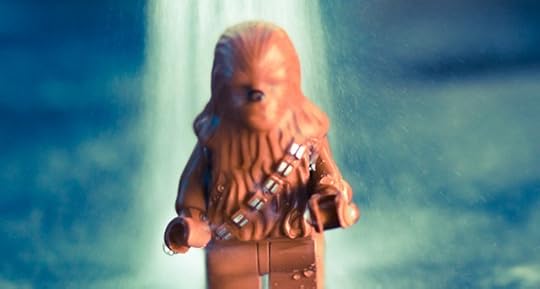
But reduce almost any respectable work of fiction it to its plot summary, and it will be hard not to roll your eyes. “Farm boy gets caught up in an interstellar war against an evil empire and gads about in a clunky space ship with his robot buddies, a snarky scoundrel, and a tall shaggy creature that has a cooing growl and saves the Galaxy and a princess that turns out to be his sister – and get this! Their father is the eviler-than-evil head of the evil empire!” There are very few things in this world – no matter how awesome – that no one can make fun of.
Embracing absurdity toward the end of originality requires a kind of courage that others may never honor you for having. It means caring more about the art itself than my need to be respectable at all times. For my latest fantasy novel Paw I chose as my main character an intelligent bipedal cat, a protagonist inspired by the video game Skyrim. When I asked my proofreader if he had started reading it, he said, “Oh. Yeah. It’s about cat people.”
I cringed. When he put it like that, it sounded so…silly. But damn it, I had an idea for bipedal cat creatures in my head; they wanted to be written about, and who was I to say no to them? At least no one could accuse me of being trite.
I wanted to write a book I had never read, even if I did have to struggle with how to make it sound sensible on a cover blurb. Originality may not be the same as absurdity, but I do think absurdity is a sign post that points you in the direction of the unknown – the rich, unexplored, exciting, dangerous, and fertile areas of the imagination.
If you enjoyed this post you might like my other writing. Take a moment and sign up for my free starter library. Click here. Also my new novel “The Ghosts of Chimera” will soon be published by the folks over at Rooster and Pig Publishing.
The post To Be Creative, Let the Absurdity In appeared first on PASSIONATE REASON.