L.E. Henderson's Blog, page 25
September 10, 2013
Dreaming of Self-Driving Cars
Cars that drive themselves: traffic jams gone forever; no more speeding tickets; drunk driving a thing of the past; no need for red lights; cars that calculate the speediest, safest routes based on cameras and GPS data.
This is not science fiction. The technology for this is here. Tested by Google, computer guided cars have already driven themselves through long road trips, and their safety record is practically flawless. However, due to certain technical and legal kinks, they are not yet available for ordinary buyers.
But the idea has captured my imagination; I want to fast-forward myself into a future where self-driving cars are the norm; for me, their promise is personal.
Most kids dream of the magical day when they will get their license. They see it as the ultimate freedom and an important rite of passage into the magnificent world of adulthood.
As a teenager I wanted freedom, too, but I viewed driving a car in a different way than my classmates did; whereas they saw freedom, I saw rules, a ponderous array of them; driving felt uncomfortable, something forced on me.
I hated the clunky, awkward feeling of maneuvering a car, as if I had suddenly gained five hundred pounds and was in danger of ramming into someone with my excess girth.
I imagined -- even worried -- that a sudden freak impulse might seize control of my hand and cause me to veer into oncoming traffic. It would take so little, just a flick of the wrist to go sailing head-on into another car.
Whenever my dad said, “Are you ready for your driving lesson?” I thought I should say yes; instead, I would make excuses not to go. Either I could lug around a lurching behemoth made of heavy metal, steering it this way or that, or I could finish reading The Chronicles of Narnia.
I preferred snow-swept Narnia. In Narnia, people walked. I liked that.
I did ultimately get my license; I had to. Aside from being permission to drive, a license is the standard proof of identification everywhere, and proof of adulthood.
But also, in my small SC town, public transportation was, and still is, scant. If you wanted to get anywhere beyond walking distance, you had to have a license and a car; you had to drive.
But I never liked it. And later something happened to make me like it even less.
One day driving home from college registration and fretting about a scheduling problem, I had one of my mind blinks; that is, I had a sudden, quick attention lapse as I was making a left turn.
It was easy to zone out; my path to home was well-worn and automatic; habit took over, and I began sliding into the right lane.
I caught myself. Regret flashed. What was I doing? I had not turned around to look behind my shoulder first, before I started shifting lanes. Everything happened in a single breath, and it is hard to remember what happened first: the car moving or my moment of wishful thinking that I would get lucky, that there was no one there, that I was fine; I would be more careful from now on.
Then I felt a bump, a light crunch of metal. A sickening feeling nailed me to my seat. Horrified, I veered away. The car I had hit moved ahead, pulled to the side of the road, and stopped. I pulled up behind it, braked, and switched off the ignition.
The driver, a girl my age, was unhurt, but she was understandably not happy with me; I would not have been happy with me either, but I was as much in shock as she was. I went into a nearby nursing home and I called 911. There was a feeling of unreality as a highway patrolmen arrived and jotted down my insurance information.
Despite everything, I was glad it was only a fender bender and no one was physically injured; it could have been much worse. However, my insurance premiums rose, and the memory etched itself inside me. I hated driving more than ever.
I have always lived inside my head a lot. “Mind blinks” have plagued me since early childhood. The transition always happens easily, without warning, without awareness, like falling asleep.
In math classes they caused me to add numbers I should have been subtracting. Sometimes they caused me to accidentally wear my shirt inside out. Or to shake my carton of orange juice – after I had opened it.
But in all of those situations, the consequences were embarrassing at worst. The potential for them to physically harm someone was nil.
Behind the wheel of a car, everything changed. The same momentary lapse of attention that could cause me to accidentally throw a sock away could do major physical damage to another person. A simple harmless gesture at home could mean liability or fatality in a car.
When I drove after that, I was always scrupulously careful, but I was so self-conscious, so aware of the potential for an accident, I avoided driving whenever I could.
Family members tried to encourage me. “You can be a better driver than most people from now on; you know what can happen.”
This may have been true. I would never talk on a cell phone while driving and I would never try to pass a driver over a solid yellow line; I would never ride the bumper of another car in the hope of making them go faster.
And it was true that I saw bad drivers every day, many of whom seemed unaware of the risks, drivers who thoughtlessly drifted into oncoming traffic, who swerved drunkenly, who zoomed around other cars in a reckless display of machismo.
Compared to them, I was a good driver because I cared, because my sense of danger never left. But I hated driving; I hated being in control of a metallic juggernaut, and I hated that I seemed to have no choice.
In my reading, I was delighted to discover that renowned science fiction writer Ray Bradbury had a dim view of driving, too. He had never gotten his license, nor wanted one; not needing to rationalize away the risks, he saw the dangers better than most.
However, most drivers drive well enough, and for individuals the risk of having an accident on any single trip seems low.
But there have to be people who are congenitally bad drivers, who simply have no aptitude for it, the way some people have no aptitude for surgery. But if someone confesses to a lack of scientific aptitude or fine motor skills, no one says, “You’re just under-confident, you would make a fine surgeon; you just need more practice.”
With driving, if someone has the insight into themselves and the courage to admit, “I hate driving and have no talent for it,” family members are likely to scold the deviant for under-confidence and encourage him back onto the road. Driving is considered such a basic life skill that is it better to do it ineptly than not at all.
I wonder, how many of the bad drivers on the roads are people who once admitted not liking to drive, or being bad at it, but were derided for cowardice and then encouraged onto crowded roads by well-meaning family members?
Is one of them the guy who insists on driving 20 miles an hour, swerving, on the interstate highway?
Traffic jams, wrecks, driver fatigue, road rage; most everyone accepts the risks as being outweighed by the benefits.
Which is why I love the idea of self-driving cars, machines that never get tired, angry, or impatient; that are optimized for the single, concentrated task of driving.
But like all technology that has the potential to radically alter society, it has led to a firestorm of resistance; the idea of cars driving themselves horrifies many people. They see it as giving up their freedom and individuality.
It is hard for me to imagine what they consider freedom. It is waiting in a traffic jam for two hours when you need to go to the bathroom? Or driving 10 miles an hour on a 50 mile per hour road because the truck in front of you is crawling?
With self-driving cars, these frustrations could disappear; attention would be freed for other activities: passengers could read or watch movies. Designated drivers would become unnecessary.
There would potentially be no more drunk drivers at all, ever – a whole social problem wiped out in one technological stroke, a major source of danger gone.
Though everyone is aware of the dangers of driving, few bother complaining; people have to get to work and buy groceries. People want to go places. What good is complaining?
But the new technology opens the door to more ambitious safety expectations.
Unfortunately I am told that this technology will not reach its full potential in my lifetime, in part because of the massive resistance against it. But I am ready.
A mind blink should be just that; not a cause for danger, not a crime, but as harmless as throwing a sock away. Human error will always be with us, no matter how much we strive for perfection.
But the situation of controlling a powerful machine can turn momentary, and normally innocuous, human lapses into fatal tragedies.
Computers, however, excel in mechanical tasks. They will never get angry, fall asleep behind the wheel, get emotionally distracted, or succumb to road rage. Trips would be faster and probably more relaxing. Passengers could focus on doing things they enjoy, not with the fake freedom of a car commercial, with cars that seem to soar through space; rather, passengers would have more time to do the things that matter to them.
Until then, driving will remain the prevailing form of locomotion, although my new town in Florida has more transportation options: bus stops are everywhere and many people ride bicycles.
But I still hope the predictions are wrong; I like to imagine that self-driving cars will become ubiquitous in my lifetime; in my imaginary autonomous car, I will get in, set the destination, and relax. I will eat chocolate pretzels, drink Ginger ale, and play a video game.
Or maybe I will read The Chronicles of Narnia again, the car humming below, navigating smoothly, while I wonder if magic might be real, after all.
This is not science fiction. The technology for this is here. Tested by Google, computer guided cars have already driven themselves through long road trips, and their safety record is practically flawless. However, due to certain technical and legal kinks, they are not yet available for ordinary buyers.
But the idea has captured my imagination; I want to fast-forward myself into a future where self-driving cars are the norm; for me, their promise is personal.
Most kids dream of the magical day when they will get their license. They see it as the ultimate freedom and an important rite of passage into the magnificent world of adulthood.
As a teenager I wanted freedom, too, but I viewed driving a car in a different way than my classmates did; whereas they saw freedom, I saw rules, a ponderous array of them; driving felt uncomfortable, something forced on me.
I hated the clunky, awkward feeling of maneuvering a car, as if I had suddenly gained five hundred pounds and was in danger of ramming into someone with my excess girth.
I imagined -- even worried -- that a sudden freak impulse might seize control of my hand and cause me to veer into oncoming traffic. It would take so little, just a flick of the wrist to go sailing head-on into another car.
Whenever my dad said, “Are you ready for your driving lesson?” I thought I should say yes; instead, I would make excuses not to go. Either I could lug around a lurching behemoth made of heavy metal, steering it this way or that, or I could finish reading The Chronicles of Narnia.
I preferred snow-swept Narnia. In Narnia, people walked. I liked that.
I did ultimately get my license; I had to. Aside from being permission to drive, a license is the standard proof of identification everywhere, and proof of adulthood.
But also, in my small SC town, public transportation was, and still is, scant. If you wanted to get anywhere beyond walking distance, you had to have a license and a car; you had to drive.
But I never liked it. And later something happened to make me like it even less.
One day driving home from college registration and fretting about a scheduling problem, I had one of my mind blinks; that is, I had a sudden, quick attention lapse as I was making a left turn.
It was easy to zone out; my path to home was well-worn and automatic; habit took over, and I began sliding into the right lane.
I caught myself. Regret flashed. What was I doing? I had not turned around to look behind my shoulder first, before I started shifting lanes. Everything happened in a single breath, and it is hard to remember what happened first: the car moving or my moment of wishful thinking that I would get lucky, that there was no one there, that I was fine; I would be more careful from now on.
Then I felt a bump, a light crunch of metal. A sickening feeling nailed me to my seat. Horrified, I veered away. The car I had hit moved ahead, pulled to the side of the road, and stopped. I pulled up behind it, braked, and switched off the ignition.
The driver, a girl my age, was unhurt, but she was understandably not happy with me; I would not have been happy with me either, but I was as much in shock as she was. I went into a nearby nursing home and I called 911. There was a feeling of unreality as a highway patrolmen arrived and jotted down my insurance information.
Despite everything, I was glad it was only a fender bender and no one was physically injured; it could have been much worse. However, my insurance premiums rose, and the memory etched itself inside me. I hated driving more than ever.
I have always lived inside my head a lot. “Mind blinks” have plagued me since early childhood. The transition always happens easily, without warning, without awareness, like falling asleep.
In math classes they caused me to add numbers I should have been subtracting. Sometimes they caused me to accidentally wear my shirt inside out. Or to shake my carton of orange juice – after I had opened it.
But in all of those situations, the consequences were embarrassing at worst. The potential for them to physically harm someone was nil.
Behind the wheel of a car, everything changed. The same momentary lapse of attention that could cause me to accidentally throw a sock away could do major physical damage to another person. A simple harmless gesture at home could mean liability or fatality in a car.
When I drove after that, I was always scrupulously careful, but I was so self-conscious, so aware of the potential for an accident, I avoided driving whenever I could.
Family members tried to encourage me. “You can be a better driver than most people from now on; you know what can happen.”
This may have been true. I would never talk on a cell phone while driving and I would never try to pass a driver over a solid yellow line; I would never ride the bumper of another car in the hope of making them go faster.
And it was true that I saw bad drivers every day, many of whom seemed unaware of the risks, drivers who thoughtlessly drifted into oncoming traffic, who swerved drunkenly, who zoomed around other cars in a reckless display of machismo.
Compared to them, I was a good driver because I cared, because my sense of danger never left. But I hated driving; I hated being in control of a metallic juggernaut, and I hated that I seemed to have no choice.
In my reading, I was delighted to discover that renowned science fiction writer Ray Bradbury had a dim view of driving, too. He had never gotten his license, nor wanted one; not needing to rationalize away the risks, he saw the dangers better than most.
However, most drivers drive well enough, and for individuals the risk of having an accident on any single trip seems low.
But there have to be people who are congenitally bad drivers, who simply have no aptitude for it, the way some people have no aptitude for surgery. But if someone confesses to a lack of scientific aptitude or fine motor skills, no one says, “You’re just under-confident, you would make a fine surgeon; you just need more practice.”
With driving, if someone has the insight into themselves and the courage to admit, “I hate driving and have no talent for it,” family members are likely to scold the deviant for under-confidence and encourage him back onto the road. Driving is considered such a basic life skill that is it better to do it ineptly than not at all.
I wonder, how many of the bad drivers on the roads are people who once admitted not liking to drive, or being bad at it, but were derided for cowardice and then encouraged onto crowded roads by well-meaning family members?
Is one of them the guy who insists on driving 20 miles an hour, swerving, on the interstate highway?
Traffic jams, wrecks, driver fatigue, road rage; most everyone accepts the risks as being outweighed by the benefits.
Which is why I love the idea of self-driving cars, machines that never get tired, angry, or impatient; that are optimized for the single, concentrated task of driving.
But like all technology that has the potential to radically alter society, it has led to a firestorm of resistance; the idea of cars driving themselves horrifies many people. They see it as giving up their freedom and individuality.
It is hard for me to imagine what they consider freedom. It is waiting in a traffic jam for two hours when you need to go to the bathroom? Or driving 10 miles an hour on a 50 mile per hour road because the truck in front of you is crawling?
With self-driving cars, these frustrations could disappear; attention would be freed for other activities: passengers could read or watch movies. Designated drivers would become unnecessary.
There would potentially be no more drunk drivers at all, ever – a whole social problem wiped out in one technological stroke, a major source of danger gone.
Though everyone is aware of the dangers of driving, few bother complaining; people have to get to work and buy groceries. People want to go places. What good is complaining?
But the new technology opens the door to more ambitious safety expectations.
Unfortunately I am told that this technology will not reach its full potential in my lifetime, in part because of the massive resistance against it. But I am ready.
A mind blink should be just that; not a cause for danger, not a crime, but as harmless as throwing a sock away. Human error will always be with us, no matter how much we strive for perfection.
But the situation of controlling a powerful machine can turn momentary, and normally innocuous, human lapses into fatal tragedies.
Computers, however, excel in mechanical tasks. They will never get angry, fall asleep behind the wheel, get emotionally distracted, or succumb to road rage. Trips would be faster and probably more relaxing. Passengers could focus on doing things they enjoy, not with the fake freedom of a car commercial, with cars that seem to soar through space; rather, passengers would have more time to do the things that matter to them.
Until then, driving will remain the prevailing form of locomotion, although my new town in Florida has more transportation options: bus stops are everywhere and many people ride bicycles.
But I still hope the predictions are wrong; I like to imagine that self-driving cars will become ubiquitous in my lifetime; in my imaginary autonomous car, I will get in, set the destination, and relax. I will eat chocolate pretzels, drink Ginger ale, and play a video game.
Or maybe I will read The Chronicles of Narnia again, the car humming below, navigating smoothly, while I wonder if magic might be real, after all.


August 13, 2013
Girl Versus Society: My Kafkaesque Moment at the DMV
For most people this is easy. So why do I dread this so much?
No matter. It is time to prove to the State of Florida that I exist.
I have gathered the pile of documentation required: a birth certificate, a marriage certificate, a passport, and my SC license.
In the parking lot the day is clear, and palm trees dream lazily in the summer heat.
But as soon as I enter the door everything changes. The curving lines of foliage disappear in a building that might easily have existed in SC, all lines and piercing angles, the ceiling pressing low and heavy.
A heavy rope shunts people to one side of the building, and the line is long. I take a deep breath and call on my reserves of patience; I am going to be here a while.
Ahead, a bored female employee is interrogating an elderly woman; I catch one of the questions: Are you a convicted felon? In SC questions like this are generally in writing, but here they are all oral and create a sense of guilt, a feeling of inflexible, half-accusing legal authority.
As a teenager I was treated for social anxiety, but what I had more than anything was protocol anxiety, a term I invented for lack of a better one. My discomfort spikes in situations where there are either strict codes of behavior or, worse, a feeling of some hidden unknowable code.
What this means for me is that in these situations I bumble; the odds of my doing something embarrassing skyrockets to the point of inevitability; despite a stellar college academic record, I have for tense, cheek-burning seconds forgotten my phone number. What will it be this time? Only protocol knows.
In this building protocol is everywhere. The signs that appear around the central room reinforce the impression of rules arbitrarily made and mechanically enforced.
A sign taped to one of the desks reads: “Returned checks will be sent to the county attorney for prosecution.” Prosecution? I envision a grandstanding check-waving shyster pacing in front of a witness stand, all pointing fingers and damning rhetorical questions.
I know this image is ludicrous, but still. Prosecution for a bounced check? The word is so heavy. It seems extreme.
To escape my mind, I return to my physical surroundings for refuge. My husband Donnie is moving ahead in the line. He has already been through this once. He had to select a political party in order to get his new state license, even though political apathy claimed him years ago after George W. Bush got elected for a second term.
He came home and waved his license around. “Guess what? You are looking at a proud member of the PirateParty.”
“Pirate Party?” I asked. “Please tell me. What is the PirateParty?”
“There were a bunch of local parties to choose from, and one was the Pirate Party.”
“So what is its platform? What does it stand for?”
“Who knows?” He grinned rakishly. “Arggh.”
Chairs for waiting are arranged in even, sedate rows and calls of “Next” peal in the heavy silence rippled by the mumbling undercurrent. A sign on a nearby door says, “Authorized personnel only.” What, I wonder, would happen to me if I went inside?
So many ways to break protocoland call unwanted attention to yourself.
I estimate is that by merely walking through the door of the D.M.V. my chances of going to prison have risen about 50 per cent. Crimes seem so easy to commit here, you could almost do it be accident.
Finally the line moves forward and I am relieved when an employee behind the desk asks, “What can I help you with?” Unlike the other workers, she offers a warm friendly smile. I am relieved and want her to like me.
I tell her I want to renew my license and Donnie, beside me, says he needs to get a Florida license tag.
The pile of documentation he hands her is not enough; he leaves the building to see if he can find a second proof of address, a bill or a medical receipt, as the worker turns her attention to me.
At her request I turn over the pile of documentation that shows I was born in the U.S, that I am a real person, and not an illegal immigrant, a foreign spy, or a drug lord. There is a tense moment, a problem with my middle name on my social security card not matching my license, a problem easily resolved.
The eye exam is next. Why is it that I can never remember to center my nose before hitting the upper bar with my forehead that makes the letters behind the lens appear? I read the bottom line in the only column I can see.
“No, no,” the worker says. “Read the whole line.”
After a minute of bumbling confusion, I finally get centered and the second column of letters appears. Relieved, I read them aloud.
“Good,” she says.
As usual, I overthink the yes or no questions that follow.
“Are you a retired military veteran?”
I wonder if there is anything about me that looks like a retired military veteran.
“A convicted felon?”
For a Kafkaesque moment, the image I have of myself as a convicted felon is so vivid and compelling, I almost say yes.
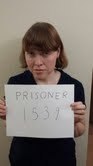
“Are you Asian?”
Um.
“Are you black?”
With pink contact lenses, I bet I could pass for albino, but part of me wants to say yes just to see what she will say. But I restrain myself. Protocol.
Near the end of the questioning the girl passes me a form to verify that all the information is correct. I do and hand it back.
“Do you swear,” she stares at me gravely, “under threat of perjury that all of the information is correct?”
I feel suddenly cold. Again I have edged close to criminality without even being aware of it, and I wonder if I should make the point that I did round up my height an extra half inch. I imagine burly federal agents bashing down my door with a battering ram, brandishing guns the size of small horses and a measuring tape.
The time has finally come for me to pick a political party. The girl slides a sheet of paper toward me with a menu of options on it. Looking at it, all of the local parties on it sound alien save one, a beacon of familiarity in my anxious haze: the Pirate Party.
The girl is staring at me with eager expectation, and I feel pressured to choose quickly.
It bothers me that none of the other parties look familiar. I am new to the state, and how can I choose, not knowing what any of them represent? Is it a weird Florida law or protocolthat you are expected to choose a local subsidiary party? Well, when in Rome…
I am thinking too much. The girl is still staring. I just want to get through this.
The Pirate Party lures me. It sounds so brave and romantic, sailing away from land, away from the ropes that guide, the signs that warn, control, and confine, away from the threats and the stares and the questions, away from protocol, away from everything, away from here.
Do I get my eye patch here and how much do you charge? I announce my choice.
Beside me, Donnie is laughing at me. “You know, you could have chosen democrat if you wanted to.”
Oh. I look at the list again. Sure enough, “democrat” appears at the top of the page, obvious, there all along. There is it, the expected flush, I can check it off my list. I had almost abandoned my liberal party loyalties in favor of an image of nautical escape. The girl is staring at me again.
“Sorry,” I say. I want to disappear. “Can you change it?”
Amused, she nods. “Now just move over there and we’ll take your picture.” I comply. “Smile if you want.” The light flashes.
As always, I blink and the picture has to be taken again.
Afterward I look at my new license, tangerine colored with a rippling ocean shoreline in the background. My skin looks darker than I think it should. Maybe the race and ethnicity questions were not so ludicrous after all. Together my license and the car tag, which says “The Sunshine State,” costs over 500.00.
It is official. I am a true Floridian now. My license will be valid until the year 2021, almost a decade from now. Until then, I have proof that I exist in case anyone ever confronts me about it.
All in all, it is not as bad as it could have been. I only embarrassed myself once and I go back and forth over whether to include it in my blog.
Best of all, I have survived Protocol and despite many apparent close calls, I have managed to avoid false confessions, prosecution, and prison time.
As I exit the glass doors, the low flat ceiling gives way to a lofty vault of blue sky. The stiff geometric lines and sharp angles have dissolved; I am basking in sunlight and feeling human.
My protocol anxiety gives way to the kind of the mild buzz I sometimes get when pain suddenly stops.
I look around at the palm trees and the billowing white bright clouds. I allow myself to breathe the fresh air. I am in Florida. The day has promise.
If only I liked to drive.
No matter. It is time to prove to the State of Florida that I exist.
I have gathered the pile of documentation required: a birth certificate, a marriage certificate, a passport, and my SC license.
In the parking lot the day is clear, and palm trees dream lazily in the summer heat.
But as soon as I enter the door everything changes. The curving lines of foliage disappear in a building that might easily have existed in SC, all lines and piercing angles, the ceiling pressing low and heavy.
A heavy rope shunts people to one side of the building, and the line is long. I take a deep breath and call on my reserves of patience; I am going to be here a while.
Ahead, a bored female employee is interrogating an elderly woman; I catch one of the questions: Are you a convicted felon? In SC questions like this are generally in writing, but here they are all oral and create a sense of guilt, a feeling of inflexible, half-accusing legal authority.
As a teenager I was treated for social anxiety, but what I had more than anything was protocol anxiety, a term I invented for lack of a better one. My discomfort spikes in situations where there are either strict codes of behavior or, worse, a feeling of some hidden unknowable code.
What this means for me is that in these situations I bumble; the odds of my doing something embarrassing skyrockets to the point of inevitability; despite a stellar college academic record, I have for tense, cheek-burning seconds forgotten my phone number. What will it be this time? Only protocol knows.
In this building protocol is everywhere. The signs that appear around the central room reinforce the impression of rules arbitrarily made and mechanically enforced.
A sign taped to one of the desks reads: “Returned checks will be sent to the county attorney for prosecution.” Prosecution? I envision a grandstanding check-waving shyster pacing in front of a witness stand, all pointing fingers and damning rhetorical questions.
I know this image is ludicrous, but still. Prosecution for a bounced check? The word is so heavy. It seems extreme.
To escape my mind, I return to my physical surroundings for refuge. My husband Donnie is moving ahead in the line. He has already been through this once. He had to select a political party in order to get his new state license, even though political apathy claimed him years ago after George W. Bush got elected for a second term.
He came home and waved his license around. “Guess what? You are looking at a proud member of the PirateParty.”
“Pirate Party?” I asked. “Please tell me. What is the PirateParty?”
“There were a bunch of local parties to choose from, and one was the Pirate Party.”
“So what is its platform? What does it stand for?”
“Who knows?” He grinned rakishly. “Arggh.”
Chairs for waiting are arranged in even, sedate rows and calls of “Next” peal in the heavy silence rippled by the mumbling undercurrent. A sign on a nearby door says, “Authorized personnel only.” What, I wonder, would happen to me if I went inside?
So many ways to break protocoland call unwanted attention to yourself.
I estimate is that by merely walking through the door of the D.M.V. my chances of going to prison have risen about 50 per cent. Crimes seem so easy to commit here, you could almost do it be accident.
Finally the line moves forward and I am relieved when an employee behind the desk asks, “What can I help you with?” Unlike the other workers, she offers a warm friendly smile. I am relieved and want her to like me.
I tell her I want to renew my license and Donnie, beside me, says he needs to get a Florida license tag.
The pile of documentation he hands her is not enough; he leaves the building to see if he can find a second proof of address, a bill or a medical receipt, as the worker turns her attention to me.
At her request I turn over the pile of documentation that shows I was born in the U.S, that I am a real person, and not an illegal immigrant, a foreign spy, or a drug lord. There is a tense moment, a problem with my middle name on my social security card not matching my license, a problem easily resolved.
The eye exam is next. Why is it that I can never remember to center my nose before hitting the upper bar with my forehead that makes the letters behind the lens appear? I read the bottom line in the only column I can see.
“No, no,” the worker says. “Read the whole line.”
After a minute of bumbling confusion, I finally get centered and the second column of letters appears. Relieved, I read them aloud.
“Good,” she says.
As usual, I overthink the yes or no questions that follow.
“Are you a retired military veteran?”
I wonder if there is anything about me that looks like a retired military veteran.
“A convicted felon?”
For a Kafkaesque moment, the image I have of myself as a convicted felon is so vivid and compelling, I almost say yes.

“Are you Asian?”
Um.
“Are you black?”
With pink contact lenses, I bet I could pass for albino, but part of me wants to say yes just to see what she will say. But I restrain myself. Protocol.
Near the end of the questioning the girl passes me a form to verify that all the information is correct. I do and hand it back.
“Do you swear,” she stares at me gravely, “under threat of perjury that all of the information is correct?”
I feel suddenly cold. Again I have edged close to criminality without even being aware of it, and I wonder if I should make the point that I did round up my height an extra half inch. I imagine burly federal agents bashing down my door with a battering ram, brandishing guns the size of small horses and a measuring tape.
The time has finally come for me to pick a political party. The girl slides a sheet of paper toward me with a menu of options on it. Looking at it, all of the local parties on it sound alien save one, a beacon of familiarity in my anxious haze: the Pirate Party.
The girl is staring at me with eager expectation, and I feel pressured to choose quickly.
It bothers me that none of the other parties look familiar. I am new to the state, and how can I choose, not knowing what any of them represent? Is it a weird Florida law or protocolthat you are expected to choose a local subsidiary party? Well, when in Rome…
I am thinking too much. The girl is still staring. I just want to get through this.
The Pirate Party lures me. It sounds so brave and romantic, sailing away from land, away from the ropes that guide, the signs that warn, control, and confine, away from the threats and the stares and the questions, away from protocol, away from everything, away from here.
Do I get my eye patch here and how much do you charge? I announce my choice.
Beside me, Donnie is laughing at me. “You know, you could have chosen democrat if you wanted to.”
Oh. I look at the list again. Sure enough, “democrat” appears at the top of the page, obvious, there all along. There is it, the expected flush, I can check it off my list. I had almost abandoned my liberal party loyalties in favor of an image of nautical escape. The girl is staring at me again.
“Sorry,” I say. I want to disappear. “Can you change it?”
Amused, she nods. “Now just move over there and we’ll take your picture.” I comply. “Smile if you want.” The light flashes.
As always, I blink and the picture has to be taken again.
Afterward I look at my new license, tangerine colored with a rippling ocean shoreline in the background. My skin looks darker than I think it should. Maybe the race and ethnicity questions were not so ludicrous after all. Together my license and the car tag, which says “The Sunshine State,” costs over 500.00.
It is official. I am a true Floridian now. My license will be valid until the year 2021, almost a decade from now. Until then, I have proof that I exist in case anyone ever confronts me about it.
All in all, it is not as bad as it could have been. I only embarrassed myself once and I go back and forth over whether to include it in my blog.
Best of all, I have survived Protocol and despite many apparent close calls, I have managed to avoid false confessions, prosecution, and prison time.
As I exit the glass doors, the low flat ceiling gives way to a lofty vault of blue sky. The stiff geometric lines and sharp angles have dissolved; I am basking in sunlight and feeling human.
My protocol anxiety gives way to the kind of the mild buzz I sometimes get when pain suddenly stops.
I look around at the palm trees and the billowing white bright clouds. I allow myself to breathe the fresh air. I am in Florida. The day has promise.
If only I liked to drive.
July 24, 2013
From SC to Florida: Then and Now
Although I like where I am, I still think about my old house in SC sometimes, forlorn and waiting, the one I left to come to Florida.
After living there for over a decade, I can mentally retrace every part of the house. I remember its airy open spaces and the many windows that spilled sunlight onto the furniture and sea-green carpet, touching everything with gold. The house features in hundreds of my memories, but due to a sudden December layoff, its role in my life is over.
Despite my attachment to the house, my final memories of being in it were not the best: a leaky faucet, invading ants, and breaking appliances. The job offer that led to the Florida move was a welcome relief.
Luckily I like Florida. At my old home in SC I was more attached to my house than the area surrounding it. Here, the reverse is true. I like my new apartment, but the natural beauty outdoors is the true draw.
When I walk from the pool to my apartment with water droplets sliding down my bare legs, the scenery enchants me: the curtains of Spanish moss, the small scurrying lizards, the aquatic wildlife, a lake that greens toward dusk.
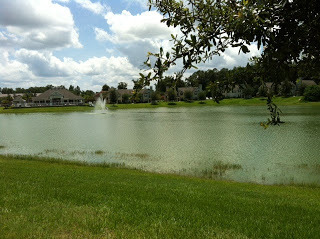
And there is something else about Florida: the sky.
I stare at it a lot. The sky is blue pretty much everywhere but there does seem to be a difference in the blue of a clear Florida sky, a rich bluer-than-blue Crayola radiance, but I often wonder if I am only imagining it.
Of course, not every day is sunny and clear. It rains a lot in Florida, torrential thunderstorms that crack the sky with lightening as wind whips palm trees and pummels buildings, and the lights indoors flicker. Sometimes even when it is sunny, the sky spits water just to show that it can, and steam rises ghost-like from the hot pavement.
For the first few weeks of the rainy season, I stayed wet a lot. I had forgotten to pack an umbrella when we moved and we could never remember to pick one up at a store. Weeks into summer, running to the car in the rain with a jacket over my head I would say, “Why do we keep forgetting to buy an umbrella?”
I have gotten used to the almost daily rain showers. Except for my swimming pool jaunts, on most days I stay in and write anyway. I would probably never go anywhere if my husband Donnie were not always pulling me out of the apartment with, “Come on. We’re in Florida. Let’s go out and do stuff!”
“I am doing stuff,” I tell him. “Writing is stuff.Going out and doing stuff is overrated.”
Despite my protests, weekends allow many options for having fun, such as Ormond Beach on the Atlantic coast and Clearwater Beach on the Gulf.
The fun of swimming in the Gulf took me by surprise. I had heard that the waves were gentler, but I loved the drama of hard-crashing waves so I thought I would miss them.
I was grumpy at first and wanted to go back home and write; crowds thronged the shore, broken seashells on the sand stabbed my feet, and the heat blazed down with relentless force. Unlike the windy beaches I was used to, here the air was still and offered no relief from the sweltering July heat.
Desperate for any shade, I pulled my floppy blue anti-freckle hat around my ears.
But once I entered the cool water my opinion of the Gulf changed. It was like a day in the Atlantic Ocean when the waves are especially calm.
The gentle waves and the cool undercurrents seduced me into taking off my hat while I tried to calculate how many nose freckles a hat-free swim in the gulf was worth.
I left the beach euphoric, the Gulf of Mexico no longer a shape on a map, but instead the cool place with waves that could gently lift you up and leave you with a soggy hat.
In Florida, if you have fair skin, a hat is not just a quaint fashion accessory, but a practical necessity.I rarely go outside, but even a short time in the sun has been enough to make significant changes to my skin, despite slathering on gobs of sunscreen.
“Are you staring at your arm freckles again?” Donnie asks.
“This is not my arm,” I say. “Someone stole my realarm when I was sleeping and replaced it with this one.”
“In Florida, you’re goingto be a ginger. Accept it.”
Other differences between my hometown and Florida are cultural. With a large Hispanic population, Florida has Spanish signs everywhere, especially in restaurants and grocery stores. The inability to speak Spanish can cause real problems.
I was eating at a Mexican restaurant, and an elderly lady sitting near us leaned toward me with a kind smile, said something in Spanish, and then looked at me expectantly.
Having only taken French, I could only give her a blank stare. Donnie who has studied Spanish rescued me by explaining to her that he only knew a little Spanish. She smiled and nodded but it all left me feeling unsatisfied.
As a result, I have been teaching myself Spanish, using an interactive course on my Android.
Though I like having a practical incentive to learn new things, there is a drawback to living here that has nothing to do with Florida itself: I miss my family, who are ten hours away by car. The last time I saw them was four months ago when I moved here.
But overall, my experience here has been good. Like every place, Florida has disadvantages but it is a hard place not to love.
In addition, I now have health insurance for the first time since I was in college.
I still miss my house in SC sometimes and I regret that the place where I lived for so long and have had so many memories is no longer part of my life.
But a house is ultimately just a thing and the experience of living in a new place inspires my writing.
Sometimes, though, I feel as though I left a part of myself back in SC, and it wants to pull the rest of me back, as if my Florida experience were only a long vacation, or a dream, that will end at any minute.
Slowly, though, Florida is starting to seem like more than a vacation. I went out of town last weekend and came back to Ocala exhausted. I set my luggage down with a sigh, sank into the recliner, looked around, and saw the Crayola-blue Ocala sky coming through the cathedral window.
Far away, beneath a different part of the same sky, my old house was still there, a relic from my former life, but I was here now, and here was not a bad place to be.
My cat leaped into my lap and I reclined, suddenly glad to be home.
After living there for over a decade, I can mentally retrace every part of the house. I remember its airy open spaces and the many windows that spilled sunlight onto the furniture and sea-green carpet, touching everything with gold. The house features in hundreds of my memories, but due to a sudden December layoff, its role in my life is over.
Despite my attachment to the house, my final memories of being in it were not the best: a leaky faucet, invading ants, and breaking appliances. The job offer that led to the Florida move was a welcome relief.
Luckily I like Florida. At my old home in SC I was more attached to my house than the area surrounding it. Here, the reverse is true. I like my new apartment, but the natural beauty outdoors is the true draw.
When I walk from the pool to my apartment with water droplets sliding down my bare legs, the scenery enchants me: the curtains of Spanish moss, the small scurrying lizards, the aquatic wildlife, a lake that greens toward dusk.
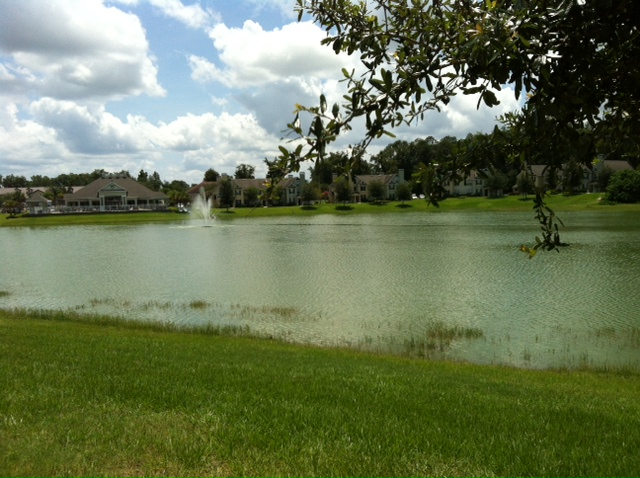
And there is something else about Florida: the sky.
I stare at it a lot. The sky is blue pretty much everywhere but there does seem to be a difference in the blue of a clear Florida sky, a rich bluer-than-blue Crayola radiance, but I often wonder if I am only imagining it.
Of course, not every day is sunny and clear. It rains a lot in Florida, torrential thunderstorms that crack the sky with lightening as wind whips palm trees and pummels buildings, and the lights indoors flicker. Sometimes even when it is sunny, the sky spits water just to show that it can, and steam rises ghost-like from the hot pavement.
For the first few weeks of the rainy season, I stayed wet a lot. I had forgotten to pack an umbrella when we moved and we could never remember to pick one up at a store. Weeks into summer, running to the car in the rain with a jacket over my head I would say, “Why do we keep forgetting to buy an umbrella?”
I have gotten used to the almost daily rain showers. Except for my swimming pool jaunts, on most days I stay in and write anyway. I would probably never go anywhere if my husband Donnie were not always pulling me out of the apartment with, “Come on. We’re in Florida. Let’s go out and do stuff!”
“I am doing stuff,” I tell him. “Writing is stuff.Going out and doing stuff is overrated.”
Despite my protests, weekends allow many options for having fun, such as Ormond Beach on the Atlantic coast and Clearwater Beach on the Gulf.
The fun of swimming in the Gulf took me by surprise. I had heard that the waves were gentler, but I loved the drama of hard-crashing waves so I thought I would miss them.
I was grumpy at first and wanted to go back home and write; crowds thronged the shore, broken seashells on the sand stabbed my feet, and the heat blazed down with relentless force. Unlike the windy beaches I was used to, here the air was still and offered no relief from the sweltering July heat.
Desperate for any shade, I pulled my floppy blue anti-freckle hat around my ears.
But once I entered the cool water my opinion of the Gulf changed. It was like a day in the Atlantic Ocean when the waves are especially calm.
The gentle waves and the cool undercurrents seduced me into taking off my hat while I tried to calculate how many nose freckles a hat-free swim in the gulf was worth.
I left the beach euphoric, the Gulf of Mexico no longer a shape on a map, but instead the cool place with waves that could gently lift you up and leave you with a soggy hat.
In Florida, if you have fair skin, a hat is not just a quaint fashion accessory, but a practical necessity.I rarely go outside, but even a short time in the sun has been enough to make significant changes to my skin, despite slathering on gobs of sunscreen.
“Are you staring at your arm freckles again?” Donnie asks.
“This is not my arm,” I say. “Someone stole my realarm when I was sleeping and replaced it with this one.”
“In Florida, you’re goingto be a ginger. Accept it.”
Other differences between my hometown and Florida are cultural. With a large Hispanic population, Florida has Spanish signs everywhere, especially in restaurants and grocery stores. The inability to speak Spanish can cause real problems.
I was eating at a Mexican restaurant, and an elderly lady sitting near us leaned toward me with a kind smile, said something in Spanish, and then looked at me expectantly.
Having only taken French, I could only give her a blank stare. Donnie who has studied Spanish rescued me by explaining to her that he only knew a little Spanish. She smiled and nodded but it all left me feeling unsatisfied.
As a result, I have been teaching myself Spanish, using an interactive course on my Android.
Though I like having a practical incentive to learn new things, there is a drawback to living here that has nothing to do with Florida itself: I miss my family, who are ten hours away by car. The last time I saw them was four months ago when I moved here.
But overall, my experience here has been good. Like every place, Florida has disadvantages but it is a hard place not to love.
In addition, I now have health insurance for the first time since I was in college.
I still miss my house in SC sometimes and I regret that the place where I lived for so long and have had so many memories is no longer part of my life.
But a house is ultimately just a thing and the experience of living in a new place inspires my writing.
Sometimes, though, I feel as though I left a part of myself back in SC, and it wants to pull the rest of me back, as if my Florida experience were only a long vacation, or a dream, that will end at any minute.
Slowly, though, Florida is starting to seem like more than a vacation. I went out of town last weekend and came back to Ocala exhausted. I set my luggage down with a sigh, sank into the recliner, looked around, and saw the Crayola-blue Ocala sky coming through the cathedral window.
Far away, beneath a different part of the same sky, my old house was still there, a relic from my former life, but I was here now, and here was not a bad place to be.
My cat leaped into my lap and I reclined, suddenly glad to be home.
June 28, 2013
Me Versus Florida
At age 14, I had a wonderful epiphany that changed my life: I decided that trying to get a tan was dumb.
Before then, I had always passively accepted the idea that I needed a summer tan. I envied my friends whose legs glowed with golden-brown summer health.
But unlike my friends, I hated sunbathing. Like a bellowing sun-scorched vampire, I felt ready to burst into flames after minutes of exposure.
I thought tanning was a test of character, a way to see how much pain you could endure before you crumpled into shameful surrender. Getting a tan was like losing weight by fasting, a hard won prize won only by self-punishment and toil.
I tried to be stoic and brave as the sun threw epic trials at me. Buzzing happily, hornets tried to burrow inside my ear canal. Sweat tiptoed down my back and legs. I itched. Through all of this, my skin remained paper-white, and my friends shoved their darker arms against mine to show off their dermatological edge.
The tan I did get was rusty and uneven, always teetering toward an irritable red color. My skin was simply all wrong for tanning, and I finally thought, “Who needs a sun-kissed glow? Pale tragic skin has its own charms;” it was as if a great weight have been lifted.
I celebrated my freedom and Nordic heritage by planting myself indoors, blasting the air-conditioner to sub-arctic temperatures, and playing Nintendo. Meanwhile, studies rolled out that linked tanning to skin cancer and premature aging.
“See?” I said. “Tanning is stupid.” I loved to be right.
Perhaps as a result of my adolescent resolution, many have told me that I look freakishly young for my age, validating my natural inclination to spend most of my time indoors.
But recently, since moving to Florida, something has changed: I now have day-long access to a swimming pool.
Although I hate doing most things outdoors, I love swimming pools. I can see mine across the pond from my apartment. It tempts me away from my writing with its promise of enveloping coolness amid the June heat. I imagine the sun spilling its warmth on my face as I float weightless on my back and watch the clouds skid by.
 My Siren
The pool is surrounded by a spacious brick deck. Beyond its fence are wind-tossed palm trees and beyond that, a pond. An enticing stairway leads beneath the crystalline surface of the pool and into its sun-dappled depths.
Only the kids ever seem to swim there. Their parents only lie around on lounge chairs, sluggish as sea turtles, trying to bake themselves as I once did. But I am baffled.
The idea that anyone would go to a beautiful, deliciously cold swimming pool for the sole purpose of lying in the sweltering heat while accruing sun damage seems beyond ludicrous and possibly insane. Having the opposite goal, I slather myself with a heaping coat of SPF 30 sunscreen before even poking my head outside the apartment.
Feeing smug inside my sunscreen shell, I mentally tell the roasting moms “Look! See? Pool. There is a pool right here. Why on earth would you not want to be in a pool when it is right in front of you? And do you know what excess equatorial UV rays can do to your skin? This is madness. Madness, I tell you!”
However, Florida is sneaky. As I mentally chastised the sunbathers, feeling protected by my UV block, something was changing beneath my awareness.
Without my permission, a tan line, subtle and insidious, was forming between the boundaries of my bathing suit and bare skin. New freckles, too, were quietly dribbling onto my shoulders. When I later discovered these permanent new skin features, my shoulders looked as if the sun had sneezed all over them.
Somehow the treacherous Florida sun rays had done the unforeseeable; they had burrowed beneath my shield of SPF 30 sunscreen and altered my appearance.
I pointed a blaming finger at my hard-walled sunscreen bottle, which coyly refused to part with more than one gloopy drop of lotion at a time, even when squeezed with herculean force.
Determined to protect my identity as a pale, bookish anti-tan rebel, I resolved to be more patient with my lotion bottle and only visit the pool if I had coated myself with enough sunscreen to resemble a dollop of vanilla ice cream.
I also considered getting a more powerful sunscreen, something with a reassuring name like “Liquid Cave” or, better yet, “Post-apocalyptic Subterranean Bomb Shelter.”
I have thought about avoiding the pool altogether, but all it takes one look across the pond at the pool deck, and suddenly I am springing out the door in a bathing suit with a towel. The pool is always there and always tempting, like a siren song luring me to first freckles, and then sultry death.
Despite my anxieties, I am beginning to see the swimming pool as part of a pattern: Despite all my efforts to stay the same as before I moved, Florida is claiming me, not only with geography and new memories, but with solar tattoos.
Aside from the pool, Florida bursts with natural beauty, lush forests, and exotic wildlife. With its beaches, swimming pools, and parks, Florida seems eager to give me an easy tan at a time when I no longer want one. As I pull myself inward, Florida pulls me outdoors, into a forsaken sun-lit place long abandoned to my childhood past.
The pool is so irresistible, and Florida so enchanting, I have finally resigned myself to raising my makeup shade a degree or two.
But most of my favorite things to do are still indoors. After 30 minutes of swimming I am ready to read, write, or play Skyrim, until the next day when Florida pulls me out again, my heels skidding, to etch new graffiti on my skin.
Before then, I had always passively accepted the idea that I needed a summer tan. I envied my friends whose legs glowed with golden-brown summer health.
But unlike my friends, I hated sunbathing. Like a bellowing sun-scorched vampire, I felt ready to burst into flames after minutes of exposure.
I thought tanning was a test of character, a way to see how much pain you could endure before you crumpled into shameful surrender. Getting a tan was like losing weight by fasting, a hard won prize won only by self-punishment and toil.
I tried to be stoic and brave as the sun threw epic trials at me. Buzzing happily, hornets tried to burrow inside my ear canal. Sweat tiptoed down my back and legs. I itched. Through all of this, my skin remained paper-white, and my friends shoved their darker arms against mine to show off their dermatological edge.
The tan I did get was rusty and uneven, always teetering toward an irritable red color. My skin was simply all wrong for tanning, and I finally thought, “Who needs a sun-kissed glow? Pale tragic skin has its own charms;” it was as if a great weight have been lifted.
I celebrated my freedom and Nordic heritage by planting myself indoors, blasting the air-conditioner to sub-arctic temperatures, and playing Nintendo. Meanwhile, studies rolled out that linked tanning to skin cancer and premature aging.
“See?” I said. “Tanning is stupid.” I loved to be right.
Perhaps as a result of my adolescent resolution, many have told me that I look freakishly young for my age, validating my natural inclination to spend most of my time indoors.
But recently, since moving to Florida, something has changed: I now have day-long access to a swimming pool.
Although I hate doing most things outdoors, I love swimming pools. I can see mine across the pond from my apartment. It tempts me away from my writing with its promise of enveloping coolness amid the June heat. I imagine the sun spilling its warmth on my face as I float weightless on my back and watch the clouds skid by.
 My Siren
The pool is surrounded by a spacious brick deck. Beyond its fence are wind-tossed palm trees and beyond that, a pond. An enticing stairway leads beneath the crystalline surface of the pool and into its sun-dappled depths.
Only the kids ever seem to swim there. Their parents only lie around on lounge chairs, sluggish as sea turtles, trying to bake themselves as I once did. But I am baffled.
The idea that anyone would go to a beautiful, deliciously cold swimming pool for the sole purpose of lying in the sweltering heat while accruing sun damage seems beyond ludicrous and possibly insane. Having the opposite goal, I slather myself with a heaping coat of SPF 30 sunscreen before even poking my head outside the apartment.
Feeing smug inside my sunscreen shell, I mentally tell the roasting moms “Look! See? Pool. There is a pool right here. Why on earth would you not want to be in a pool when it is right in front of you? And do you know what excess equatorial UV rays can do to your skin? This is madness. Madness, I tell you!”
However, Florida is sneaky. As I mentally chastised the sunbathers, feeling protected by my UV block, something was changing beneath my awareness.
Without my permission, a tan line, subtle and insidious, was forming between the boundaries of my bathing suit and bare skin. New freckles, too, were quietly dribbling onto my shoulders. When I later discovered these permanent new skin features, my shoulders looked as if the sun had sneezed all over them.
Somehow the treacherous Florida sun rays had done the unforeseeable; they had burrowed beneath my shield of SPF 30 sunscreen and altered my appearance.
I pointed a blaming finger at my hard-walled sunscreen bottle, which coyly refused to part with more than one gloopy drop of lotion at a time, even when squeezed with herculean force.
Determined to protect my identity as a pale, bookish anti-tan rebel, I resolved to be more patient with my lotion bottle and only visit the pool if I had coated myself with enough sunscreen to resemble a dollop of vanilla ice cream.
I also considered getting a more powerful sunscreen, something with a reassuring name like “Liquid Cave” or, better yet, “Post-apocalyptic Subterranean Bomb Shelter.”
I have thought about avoiding the pool altogether, but all it takes one look across the pond at the pool deck, and suddenly I am springing out the door in a bathing suit with a towel. The pool is always there and always tempting, like a siren song luring me to first freckles, and then sultry death.
Despite my anxieties, I am beginning to see the swimming pool as part of a pattern: Despite all my efforts to stay the same as before I moved, Florida is claiming me, not only with geography and new memories, but with solar tattoos.
Aside from the pool, Florida bursts with natural beauty, lush forests, and exotic wildlife. With its beaches, swimming pools, and parks, Florida seems eager to give me an easy tan at a time when I no longer want one. As I pull myself inward, Florida pulls me outdoors, into a forsaken sun-lit place long abandoned to my childhood past.
The pool is so irresistible, and Florida so enchanting, I have finally resigned myself to raising my makeup shade a degree or two.
But most of my favorite things to do are still indoors. After 30 minutes of swimming I am ready to read, write, or play Skyrim, until the next day when Florida pulls me out again, my heels skidding, to etch new graffiti on my skin.
June 12, 2013
"The Internship" Has Cured Me of Seeing Movies For A While
Every now and then someone will convince me to go to a movie. I almost always regret it.
Instead of staying home and watching bold, clever shows like Game of Thrones that are written by actual writers, I spend two hours of my life viewing the unoriginal concoction of a marketing specialist who thinks he has discovered the magic formula for a crowd pleasing box office hit.
I was therefore not expecting great things from The Internship, but I hoped it would be a light, entertaining way to spend two hours, especially since Wedding Crashers, also featuring Owen Wilson and Vince Vaughn, had pleasantly surprised me.
The premise of The Internship sounded funny enough: Two unemployed guys in their forties decide to compete for a job at Google, even though they are vying against young candidates who are exceptionally bright and qualified. They are put on a team with smart kids to compete against other teams for the job.
However, a funny premise does not a funny movie make. The amusing situation was not enough to prop up the limping dialogue, unreal characters, and stale theme.
But my main problem with the movie was not that it was not funny. As a light drama, the premise had potential. My main problem was that the movie felt disingenuous.
The characters are dropped onto the stage still-born and are danced around like puppets to the tune of a formulaic plot. The protagonists are droll stock characters, buffoons who act silly and make a lot of noise. Although they are all id, they are not nearly as funny, lovable, or radical as the movie wants them to be.
I tried to identify instead with the kids who worked at Google. However, as nerds, they are not only stereotypes; they are all the same person. They are, every one of them, humorless, emotionally flat, and incapable of clever dialogue.
Some weak efforts were made to distinguish them: the Asian kid is dominated by an overbearing mom; the team leader tries too hard to act cool; one employee, a sexy and driven bombshell with glasses, is privately tortured that she has spent too much time on her work, and yearns for the Owen Wilson character to rescue her with his animal charms.
Like her, none of the “nerds” seem to have experienced a moment of joy in their entire lives, until the wacky duo shows up, takes them out and shows them how to really live. Naturally, this involves getting drunk at a strip bar because the more people enjoy Harry Potter, the less likely they are to have heard of alcohol or naked people.
In one scene that follows, the Vince Vaughn character prompts a young and serious intern to admit that he has just had the best night of his entire life. The movie reason for his reluctance is that he is too uptight for honesty, but I imagined that it was the script writers, not Vince Vaughn, extorting this confession.
Time and again, I had the feeling that the characters would have had something different to say if only given the chance; instead, every character is pushed inexorably and unconvincingly toward personal growth.
“I never expected to like you,” the glasses-wearing girl employee says to Owen Wilson with moist eyes as she leads him toward her bedroom. I expected it from the beginning but again, the change of heart felt forced.
In another part of the movie, the team is challenged to sell Google services to a skeptical businessman. Without the bumbling main characters, the nerds are lost. They can only speak numbers and computer jargon, but when Owen Wilson and his buddy enter, everything changes. They “have heart” and manage to persuade the business owner that Google can transform his business. I wondered: Does high intelligence exclude the ability to sell?
Which brings us to the theme, which is that a lovable, bumbling duo with mediocre talents can succeed wildly in a skill driven business, even though they have no skills, and bring life, inspiration, and mental health to joyless nerds who secretly long to be like everyone else.
The crowd-pandering conclusion seems to be that intelligent people are severely unhappy, have no clue about how to have fun, and need to be rescued from themselves.
To fuel their character growth, a bully is thrown in almost as an afterthought, and I did not even realize his role until halfway through the movie when he began to fire unconvincing taunts at the main characters.
Naturally the starring team wins and leaves the bully seething, and the main characters are exalted for embodying the true “Google spirit.” Every conflict, no matter how trifling, is neatly wrapped up at the end.
The movie might be interesting to someone curious about the inner workings of Google, and I admit that at the beginning the movie drew a few laughs from me.
But overall the movie was embarrassing to watch. It demonstrates what can happen when script writers drape their story around a crude “winning” formula and a crowd pleasing theme, and expect the audience members to fall into line and respond just as their programming instructs them.
However, I was unable and unwilling to become another movie pawn that, like the characters, would feel a certain way because the movie told me to.
I am a real nerd, and I don’t work that way.
Instead of staying home and watching bold, clever shows like Game of Thrones that are written by actual writers, I spend two hours of my life viewing the unoriginal concoction of a marketing specialist who thinks he has discovered the magic formula for a crowd pleasing box office hit.
I was therefore not expecting great things from The Internship, but I hoped it would be a light, entertaining way to spend two hours, especially since Wedding Crashers, also featuring Owen Wilson and Vince Vaughn, had pleasantly surprised me.
The premise of The Internship sounded funny enough: Two unemployed guys in their forties decide to compete for a job at Google, even though they are vying against young candidates who are exceptionally bright and qualified. They are put on a team with smart kids to compete against other teams for the job.
However, a funny premise does not a funny movie make. The amusing situation was not enough to prop up the limping dialogue, unreal characters, and stale theme.
But my main problem with the movie was not that it was not funny. As a light drama, the premise had potential. My main problem was that the movie felt disingenuous.
The characters are dropped onto the stage still-born and are danced around like puppets to the tune of a formulaic plot. The protagonists are droll stock characters, buffoons who act silly and make a lot of noise. Although they are all id, they are not nearly as funny, lovable, or radical as the movie wants them to be.
I tried to identify instead with the kids who worked at Google. However, as nerds, they are not only stereotypes; they are all the same person. They are, every one of them, humorless, emotionally flat, and incapable of clever dialogue.
Some weak efforts were made to distinguish them: the Asian kid is dominated by an overbearing mom; the team leader tries too hard to act cool; one employee, a sexy and driven bombshell with glasses, is privately tortured that she has spent too much time on her work, and yearns for the Owen Wilson character to rescue her with his animal charms.
Like her, none of the “nerds” seem to have experienced a moment of joy in their entire lives, until the wacky duo shows up, takes them out and shows them how to really live. Naturally, this involves getting drunk at a strip bar because the more people enjoy Harry Potter, the less likely they are to have heard of alcohol or naked people.
In one scene that follows, the Vince Vaughn character prompts a young and serious intern to admit that he has just had the best night of his entire life. The movie reason for his reluctance is that he is too uptight for honesty, but I imagined that it was the script writers, not Vince Vaughn, extorting this confession.
Time and again, I had the feeling that the characters would have had something different to say if only given the chance; instead, every character is pushed inexorably and unconvincingly toward personal growth.
“I never expected to like you,” the glasses-wearing girl employee says to Owen Wilson with moist eyes as she leads him toward her bedroom. I expected it from the beginning but again, the change of heart felt forced.
In another part of the movie, the team is challenged to sell Google services to a skeptical businessman. Without the bumbling main characters, the nerds are lost. They can only speak numbers and computer jargon, but when Owen Wilson and his buddy enter, everything changes. They “have heart” and manage to persuade the business owner that Google can transform his business. I wondered: Does high intelligence exclude the ability to sell?
Which brings us to the theme, which is that a lovable, bumbling duo with mediocre talents can succeed wildly in a skill driven business, even though they have no skills, and bring life, inspiration, and mental health to joyless nerds who secretly long to be like everyone else.
The crowd-pandering conclusion seems to be that intelligent people are severely unhappy, have no clue about how to have fun, and need to be rescued from themselves.
To fuel their character growth, a bully is thrown in almost as an afterthought, and I did not even realize his role until halfway through the movie when he began to fire unconvincing taunts at the main characters.
Naturally the starring team wins and leaves the bully seething, and the main characters are exalted for embodying the true “Google spirit.” Every conflict, no matter how trifling, is neatly wrapped up at the end.
The movie might be interesting to someone curious about the inner workings of Google, and I admit that at the beginning the movie drew a few laughs from me.
But overall the movie was embarrassing to watch. It demonstrates what can happen when script writers drape their story around a crude “winning” formula and a crowd pleasing theme, and expect the audience members to fall into line and respond just as their programming instructs them.
However, I was unable and unwilling to become another movie pawn that, like the characters, would feel a certain way because the movie told me to.
I am a real nerd, and I don’t work that way.
June 6, 2013
Getting Past the "Scary Eyes" Deterrent in Writing
As a kid I longed to draw things the way they really looked.
I was especially fascinated with eyes. But whenever I tried to draw them, penciling in realistic highlights, they never had the natural warmth I wanted to capture. They always had a malicious glare that made them look evil.
I could have continued to study eyes and draw them until I got them right. Instead, the eyes scared me and I stopped trying.
Even then, I understood that the problem was my lack of skill, not my inner scariness bleeding onto the page. However, in writing it was different, especially when I tried to capture something I felt deeply.
Writing was a mirror of me, I thought, and not always a flattering one. I connected myself so strongly to the words I wrote that flaws with them seemed like flaws with me.
In a previous post I summed up this feeling, which culminated during a severe depression: “I could hardly write a sentence without thinking it was bad, and not only bad, but a grotesque and repellent reflection of my innermost self.” (From “How I Lost My Guilt and Became Addicted to Writing.")
Some readers said that they identified with this feeling, which goes far beyond remorse over incorrect grammar. For that reason, I want to explore why this problem exists and how I learned to deal with it.
In my own case, whenever I tried to capture a painful or meaningful experience on paper, a couple of things could happen. One of them is that the words on the page captured nothing of what I felt or wanted to say. The aching gulf between my feelings and my attempt to express them was unbearable.
The other thing that could happen, often at the same time, is that unwanted emotional qualities would appear in my writing. Writing about an injustice became a bitter diatribe or rant. When I wrote about someone I loved, an appearance of gushing sentimentality arose. Grief or sadness that felt justified morphed into self-pity on the page.
It was awful.
Not only did I have to deal with the failure of my words to convey my feelings. Moral labels attacked me as well: whiny, gushy, self-indulgent, arrogant, or grandiose.
Since writing is an expression of human traits, it is common for critics, teachers, or writing authorities to apply these kinds of moral labels to it. It is true that writing, coming from within, can say a lot about who we are.
However, it is not as simple as saying, “My writing is me,” which pretends that there is a seamless connection between the symbolic scratches on a page and what we mean to say, or who we are.
Often, what appears on the page is like a scary human eye, drawn by a shaky unskilled hand. Real love can appear sentimental on the page, but not because the writer is feeling a fake or silly emotion, any more than scary, badly-drawn eyes mean that their artist failed to see the warmth or humor in real ones.
We use language so much that it is easy to forget how incredible it is to transfer an experience to another person by the use of vocalized syllables or scratches on paper. Some ideas are easy to get across, but in the world of feelings, communication becomes far more complex and challenging.
When I finally recognized that writing inadequacies do not automatically equal character flaws, I gained some much-needed detachment, which allowed me to write without being turned away by emotional turmoil and self-abuse.
I still have to remind myself, especially when writing a rough draft, that my writing is not me, and that qualities which seem like moral failings are often due to solvable technical problems.
Not that I have no flaws which might become evident in my writing. However, language is tricky just like drawing realistic eyes. In writing, there are a multitude of elements that can skew the intended meaning. Sentence rhythm, voice, connotation, and imagery can do things the writer never intended for them to do.
A personal story about the pitfalls of connotation, which is the implied meaning of a word, will illustrate. In an art history class I was asked to describe a painting, using written words as a medium rather than paint. To describe a triangle with the point cut off, I used the phrase, proudly chosen for succinctness, “topless triangles.”
The teacher wrote a comment on my paper suggesting that next time I should use an expression that did not slander my triangles by making them sound like pole strippers.
It happens all the time, and it can happen easily: language balks like a stubborn cowlick and “tries” to do its own wayward thing. Mastery means pushing words toward their intended meaning even when they push back; it means finding the right word instead of the almost right word, modulating sentence rhythm to match the content, or changing word choices to create a more natural voice.
When deeply felt love descends into doggerel, when imagined moral courage becomes a self-righteous rant, when a legitimately sad story whines instead of grieves, the aborted attempt at sincere expression can be terribly painful for a writer to reread.
In the past, whenever this happened to me, I would stop writing the way I stopped trying to draw eyes when I was a kid. Memories pressed in. Shame swallowed me. The emotional confusion was too much to bear.
I started with great hopes and then I turned away. The eyes were too scary.
As a result, for many years I was unable to reach a point where I could write freely and where the writing itself could teach me how to write.
The moral labels such as “preachy” or “self-indulgent” that prevented me from doing this appeared a lot in critical reviews, which is why I make a point to never read reviews of anything before I write.
Instead, I have gotten into the habit of analyzing my writing in the detached way that I would solve a fun puzzle. I want to stress that I never do this during the rough draft stage where anything goes and where any analysis can inhibit honest flow and spontaneity.
But afterward, if something seems wrong, I type out my problem and turn writing into a puzzle solving exercise: What makes my writing appear sentimental? Is it the overuse of abstract terms such as “love?” Is it a falsely dramatic sentence rhythm? Is it the use of trite expressions?
What makes justified anger seem bitter or whiny? Is it sophomoric name-calling? Unsubstantiated accusations?
If I can break the language down and discover that there is nothing technically wrong with my writing, and something still feels off, then I have to admit that something may be wrong with my ideas; I have to ask whether I have hidden prejudices or self-deceptions that I need to re-evaluate.
As a result, my writing sometimes surprises and changes me.
It may seem that I have come full circle since the writing problem can still reflect a flaw in my thinking. But by the time I become aware of that, I am in a puzzle solving mode. Instead of beating myself up, I focus on solving the problem.
When dealing with emotions that are raw, it is particular important to be gentle with yourself. It is hard enough to confront emotions like grief, jealousy, or unrequited love even without shooting yourself down.
This is why at the end of each writing session, I find something to praise about the work I did, even if I am largely dissatisfied with it. I write the praise down on a separate page and it keeps me from losing perspective.
Once I finally ended the cycle of self-blame and gave myself the permission to be human and credit for what had done right, I was free to learn from the best writing teacher: writing.
I was able to discover through writing practice where the “highlights” really go, so that over time the scary eyes became less scary and the icy stare fell away to reveal, beneath it, something warm, inviting, and alive.
I was especially fascinated with eyes. But whenever I tried to draw them, penciling in realistic highlights, they never had the natural warmth I wanted to capture. They always had a malicious glare that made them look evil.
I could have continued to study eyes and draw them until I got them right. Instead, the eyes scared me and I stopped trying.
Even then, I understood that the problem was my lack of skill, not my inner scariness bleeding onto the page. However, in writing it was different, especially when I tried to capture something I felt deeply.
Writing was a mirror of me, I thought, and not always a flattering one. I connected myself so strongly to the words I wrote that flaws with them seemed like flaws with me.
In a previous post I summed up this feeling, which culminated during a severe depression: “I could hardly write a sentence without thinking it was bad, and not only bad, but a grotesque and repellent reflection of my innermost self.” (From “How I Lost My Guilt and Became Addicted to Writing.")
Some readers said that they identified with this feeling, which goes far beyond remorse over incorrect grammar. For that reason, I want to explore why this problem exists and how I learned to deal with it.
In my own case, whenever I tried to capture a painful or meaningful experience on paper, a couple of things could happen. One of them is that the words on the page captured nothing of what I felt or wanted to say. The aching gulf between my feelings and my attempt to express them was unbearable.
The other thing that could happen, often at the same time, is that unwanted emotional qualities would appear in my writing. Writing about an injustice became a bitter diatribe or rant. When I wrote about someone I loved, an appearance of gushing sentimentality arose. Grief or sadness that felt justified morphed into self-pity on the page.
It was awful.
Not only did I have to deal with the failure of my words to convey my feelings. Moral labels attacked me as well: whiny, gushy, self-indulgent, arrogant, or grandiose.
Since writing is an expression of human traits, it is common for critics, teachers, or writing authorities to apply these kinds of moral labels to it. It is true that writing, coming from within, can say a lot about who we are.
However, it is not as simple as saying, “My writing is me,” which pretends that there is a seamless connection between the symbolic scratches on a page and what we mean to say, or who we are.
Often, what appears on the page is like a scary human eye, drawn by a shaky unskilled hand. Real love can appear sentimental on the page, but not because the writer is feeling a fake or silly emotion, any more than scary, badly-drawn eyes mean that their artist failed to see the warmth or humor in real ones.
We use language so much that it is easy to forget how incredible it is to transfer an experience to another person by the use of vocalized syllables or scratches on paper. Some ideas are easy to get across, but in the world of feelings, communication becomes far more complex and challenging.
When I finally recognized that writing inadequacies do not automatically equal character flaws, I gained some much-needed detachment, which allowed me to write without being turned away by emotional turmoil and self-abuse.
I still have to remind myself, especially when writing a rough draft, that my writing is not me, and that qualities which seem like moral failings are often due to solvable technical problems.
Not that I have no flaws which might become evident in my writing. However, language is tricky just like drawing realistic eyes. In writing, there are a multitude of elements that can skew the intended meaning. Sentence rhythm, voice, connotation, and imagery can do things the writer never intended for them to do.
A personal story about the pitfalls of connotation, which is the implied meaning of a word, will illustrate. In an art history class I was asked to describe a painting, using written words as a medium rather than paint. To describe a triangle with the point cut off, I used the phrase, proudly chosen for succinctness, “topless triangles.”
The teacher wrote a comment on my paper suggesting that next time I should use an expression that did not slander my triangles by making them sound like pole strippers.
It happens all the time, and it can happen easily: language balks like a stubborn cowlick and “tries” to do its own wayward thing. Mastery means pushing words toward their intended meaning even when they push back; it means finding the right word instead of the almost right word, modulating sentence rhythm to match the content, or changing word choices to create a more natural voice.
When deeply felt love descends into doggerel, when imagined moral courage becomes a self-righteous rant, when a legitimately sad story whines instead of grieves, the aborted attempt at sincere expression can be terribly painful for a writer to reread.
In the past, whenever this happened to me, I would stop writing the way I stopped trying to draw eyes when I was a kid. Memories pressed in. Shame swallowed me. The emotional confusion was too much to bear.
I started with great hopes and then I turned away. The eyes were too scary.
As a result, for many years I was unable to reach a point where I could write freely and where the writing itself could teach me how to write.
The moral labels such as “preachy” or “self-indulgent” that prevented me from doing this appeared a lot in critical reviews, which is why I make a point to never read reviews of anything before I write.
Instead, I have gotten into the habit of analyzing my writing in the detached way that I would solve a fun puzzle. I want to stress that I never do this during the rough draft stage where anything goes and where any analysis can inhibit honest flow and spontaneity.
But afterward, if something seems wrong, I type out my problem and turn writing into a puzzle solving exercise: What makes my writing appear sentimental? Is it the overuse of abstract terms such as “love?” Is it a falsely dramatic sentence rhythm? Is it the use of trite expressions?
What makes justified anger seem bitter or whiny? Is it sophomoric name-calling? Unsubstantiated accusations?
If I can break the language down and discover that there is nothing technically wrong with my writing, and something still feels off, then I have to admit that something may be wrong with my ideas; I have to ask whether I have hidden prejudices or self-deceptions that I need to re-evaluate.
As a result, my writing sometimes surprises and changes me.
It may seem that I have come full circle since the writing problem can still reflect a flaw in my thinking. But by the time I become aware of that, I am in a puzzle solving mode. Instead of beating myself up, I focus on solving the problem.
When dealing with emotions that are raw, it is particular important to be gentle with yourself. It is hard enough to confront emotions like grief, jealousy, or unrequited love even without shooting yourself down.
This is why at the end of each writing session, I find something to praise about the work I did, even if I am largely dissatisfied with it. I write the praise down on a separate page and it keeps me from losing perspective.
Once I finally ended the cycle of self-blame and gave myself the permission to be human and credit for what had done right, I was free to learn from the best writing teacher: writing.
I was able to discover through writing practice where the “highlights” really go, so that over time the scary eyes became less scary and the icy stare fell away to reveal, beneath it, something warm, inviting, and alive.
May 24, 2013
Cuddly, Deadly or Just Sort of Mean: Can a Real Monster Be Purple?
Monsters stagger early onto the theatrical stage of every childhood. They are universal, timeless, and haunting.
They also crop up in my fiction a lot. In my new novel, still being edited, a monster appears to Caleb, an eleven year old boy who remembers it from nightmares he had when he was four.
When creating this monster I tried to think of something exotic and wildly imaginative. I drew pictures. I tried one eye and three eyes. I tried peeling flesh and a spiked tail. But in the end, the monster in my mind remained a big furry mass, with fangs and long claws, and even though I risked triteness, I could not accept him as being any other way.
Why?
The simple shaggy bear-like form fit my childhood vision of a monster more than any other.
The monsters of my toddler-hood nightmares were never so sophisticated as zombies or vampires. They never had tentacles or multiple eyes. Without fail, my dream monsters were the animals most familiar to me: giant cats, spiders, or rats. They all wanted to eat me and very often did, bringing my dream to an abrupt close.
True to my childhood view of a monster, my fictional beast was more bear than zombie, with a color that to me signified his origins in childhood: purple.
However, because he is bear-like and purple, I have been accused by Beta testers of my novel of having borrowed from Monsters Inc. (The monster in that movie was blue, by the way, not purple.)
I could argue that Monsters Inc. borrowed its monster from Sesame Street.
With Cookie Monster, Grover, and Elmo, Jim Henson began an entirely new tradition of monster: the friendly, shaggy kind with fur the color of flower petals or blueberries. These monsters transformed a common childhood fear into something google-eyed and adorable.
The expression of delight, “Om nom nom nom nom,” invites not screams, but hugs. Classical monsters are not so adorable, nor so blue. They tend to prefer brains to cookies. They kill and embody death. They feast on blood and entrails.
Not that I am pinning blame on Pixar for “borrowing from” Jim Henson. I suspect that even Sesame Street drew from an existing beast prototype, evident in stories such as Where the Wild Things Are.
But the question is worth asking: Where did Sesame Street get its idea for a monster? It added the blue and the red, but where did it get the shaggy bearish form? My guess is that in human pre-history, it must have been common for children to be eaten by animals, which would explain my instinctive childhood fear of them. And bears, although deadly, can be cute and huggy, too, so for Sesame Street, it was perfect.
For whatever reason, the big shaggy monster is a classic, and however hackneyed it may seem, it existed way before Monsters Inc. ever did.
However, there is more to a monster than its form. I mainly focused on the personality of my monster. I tried to merge the two monster traditions: the friendly monster and the hostile, destructive kind, even though they are obviously at odds.
My solution was to make my monster a redeemed villain.
In my novel, the monster plays a double role: he is a former villain who once tortured a four year old with nightmares; however, when he returns to the grown eleven year old, the monster has changed.
When my monster lumbers onto the stage, he is more concerned about the fate of his world than scaring and needs my disturbed main character Caleb to help him prevent disaster. Caleb has to decide whether to trust him. As the story progresses, the monster adopts an advisor role.
Because of the helper status of my monster, I have had to ask: Is he a monster at all? What makes a monster a monster? Is it appearance? Is it overwhelming physical strength combined with the intent to do harm?
Can a real monster be nice? Can a real monster be purple?
What, after all, does a color say about a monster? What if Cookie Monster or Grover had been brown or black instead of blue?
Purple or blue, for whatever reason, seems to inspire trust. A pastel is a tag that turns a monster into a toy and removes the fear. It takes the monster out of nature and puts it into a costume. It becomes charmingly absurd.
But scary and absurd, like evil and nice, are a hard combination to achieve.
Monsters are not ordinarily nice. Usually, the eviler the better. Was my monster evil enough, even in his reckless days, to inhabit a story with silly elements but serious themes? Scaring a four year old is naughty but hardly approaches infanticide.
Of course, no monster has to bepurely evil. My favorite monsters are the ones with a human side. The monster of Frankenstein longed to enjoy human pleasures, and literature abounds with lonely, tormented vampires who struggle against their murderous natures. The best monsters have a few sympathetic traits. However, a monster usually proves to be a monster, and its cruel nature triumphs in the end.
However, dousing my monster with extra cruelty to fit this mold contradicted his role in my story. My goal was to write good fiction, not conform to a rigid definition, and the story role trumped the need for monster cred.
Besides, did Jim Henson ever write pensive articles questioning whether Grover or Cookie Monster made the Hall of Infamy? If he can redefine monsters to fit his vision, so can I.
That is why the purple stays for now, and so does the shaggy bear form, but I added details to my monster which were previously lacking. I gave him a snout and small shrewd eyes, and I have moved his purple toward a darker eggplant shade.
The darker coat seems more fitting for a monster. However, within the confines of my fictional world, a monster is a monster if I define it as one, whether he is golden, sable, or turquoise, and whether he is shaggy, bald, or has a five o’clock shadow. Instead than modeling my monster from Monsters Inc., I drew from the same cultural well that it did. Pixar has no monopoly on big shaggy monsters that trend toward the ultraviolet.
My dreaming toddler self knows this and will tell you with perfect candor that it was her idea first.
May 13, 2013
Expelled from Reddit Despite an Enthusiastic Reader Response
Part I
In SC where I grew up, even a few, barely there snowflakes inspired rapturous joy. They rarely stuck, but sometimes those tiny flakes surprised me, and I would wake to find the ground miraculously coated in white.
That, I thought, is the way I feel now.
The previous day I had submitted a blog post to Reddit and that night as I slept, it had snowed page views. Mixed with them was a blizzard of “up votes” and liberal raves.
They had floated down only softly during the afternoon. Early the next morning, when I was still in bed, my husband said. “Do you want to hear the drum roll?”
I did. The blog views from the writing sub-reddit were close to 1000, with 22 comments and almost 100 up votes. The most views I had ever had for a post until then was around 100. Reddit liked me.
And I loved Reddit.
Encouraged, I continued to post my work on Reddit with similar results. Knowing my posts would get many views, I would spend 8 to 15 hours each on the three or four page articles.
In some of them I tried to address what I thought were important gaps in advice given by many writing professionals, things that had confused me for a long time and kept me from writing.
Some authorities, for example, said to figure out what publishers or readers were “looking for” and how to please them. Others said, “Write what you love, and your passion will come across to the reader.”
For a long time, I believed both points of view. But no matter how I tried to reconcile these two approaches, they did not harmonize.
I wrote about my resolution, which ended my creative block which followed a manic episode, and that was, write what makes you happy; write for yourself. I wrote about my experience in "Writing Fiction: the Problem of Trying to Please.”
Over 100 up votes and torrents of praise and encouragement rolled in.
The feeling that I got from this was one I had almost forgotten. In college I had tutored students in writing and I had always loved hearing that my advice had raised a grade.
Not that I would have minded if someone had liked my writing enough to buy my e-book, but only two visitors out of thousands actually did. Still, the encouraging and thoughtful comments were more than enough reason to continue.
In Reddit, the pattern continued. I would submit something, the views would accumulate, and the next morning my husband would announce the amazing new total.
Responses to my work were overwhelmingly positive, despite at least one “troll” for every post.
Posting was not always easy. Reddit has moderators who will “kick you off” if they deem that your post is “spam.” At first I thought spam only meant direct advertising or junk mail.
But Reddit has rewritten the definition to mean any original material submitted by its creator. However, not everyone on Reddit accepts this viewpoint, and moderators have flexibility in enforcing the only-post-others “rule.”
Sometimes my individual posts would be jettisoned for this reason, but usually not.
I continued to write about writing, following advice given to me when I first started my blog: Write what you are passionate about. I submitted to other sub-reddits, too, with equally enthusiastic responses, before something happened that changed everything.
It began my controversial defense of Mathew Inman, a comic who had been bullied into pulling an offensive joke from his website. As an admirer of his work, I thought his intentions had been innocent and that the joke should have stayed.
I posted it on the humor subreddit, and there was an explosion of responses, mostly positive, although I received my first angry mail on my blog, too.
My husband, who had been monitoring the traffic, came to me and said, “Some good news and some bad news. You got kicked off. But the good news is that in one hour you got 500 views, over 50 comments, and over 100 up votes.”
If left up, it would have been, by far, my most popular post. “Why did they kick me off it the post was doing so well?”
“The moderator said you were spamming your blog, only posting yourself and no one else.”
Reddit had a learning curve. I had no problem with posting other people, but the listed “rules” mentioned this nowhere.
I decided I needed a break from Reddit anyway, so during the Christmas holidays, I searched for other aspiring bloggers to promote.
During that time, I also wrote a new post called, “How I Lost My Guilt and Became Addicted to Writing.”
Reddit readers had told me that my post, “Writing Fiction: the Problem of Trying to Please,” had inspired them. In response, I wrote about my experience of overcoming block in greater detail and focused on a different aspect: how the idea that I “should” write drained away the fun of writing and caused block.
However, I decided to hold off on posting it to Reddit until I had posted some other writers first. I wrote another post later, about rough drafts, but did not post that to yet Reddit either.
But when I tried to post another blogger to Reddit, I made an alarming discovery. The link disappeared from view as soon as I posted it. I was not allowed to post others, let alone my own work.
In fact, no one else could post me either. My account was dead, and when I created a new account, nothing changed; my entire blog had been permanently banned.
I was back to my core readership of about 35 people.
It did not matter that Reddit readers had overwhelmingly liked my writing and that many said my posts inspired them or helped them get “unstuck.” I had posted own writing; therefore, I was “spam.”
Losing access to the Reddit audience was painful. I had written my newest post especially for the writing sub-reddit audience as a direct response to the comments I had gotten from “Writing Fiction: The Problem of Trying to Please.”
Discouraged, I managed to wean myself from the Reddit audience. Due to a December layoff, a lot was happening at the time that demanded my full attention
I decided to write more traditional journal posts for a while.
With so much going on around me, the general depression over my ousting thinned, dispersed, and finally settled into a bland acceptance.
I could still write, with or without Reddit, and I forgot about it as much as I could.
Part 3
One day as I was exercising, Donnie came into the room. “I just posted you on Reddit,” he said.
“Huh? You what? How?”
“I changed your domain name to match the name of your blog. You have four up votes.”
“Which one was it?”
“How I Lost My Guilt and Became Addicted to Writing.”
The computer became my hearth that day. The flakes drifted down during the afternoon, gathered strength, and continued overnight. By the next afternoon, the post had received the strongest response yet, with over 300 up votes. These were some of the comments:
I read the comments more than once and answered the ones posted to my blog. I always felt grateful when people made the effort to respond to what I wrote. I was thrilled to be back on Reddit, even if it was as an outlaw.
Not long afterward, my life took a dramatic turn and I moved to another state, so I delayed trying to post anything else.
But after I moved to Florida I wrote a post about drawing from stress for inspiration.
When I tried to post it on Reddit, under a new account, I was instantly kicked off with two damning words from a moderator:
Blog spam.
All of my frustrations of the previous two months came to a head. I was tired of the assumption that junk mail and self-posted material meant the same thing.
Although the words were “blog spam,” I translated them to mean a classic barnyard term, so I had to respond.
I wrote back and asked what the moderator, called DisconinjaJesus, considered “spam.” I made the point that there were no calls to action in my post, no sales pitch of any kind.
It bothered me that Disconinjajesus had labeled my heartfelt effort as junk advertising when I saw it as part of a dialogue about something I loved. Pointlessly, I added that my post was the product of multiple drafts.
Ninjadiscojesus responded: Directing people to your blog – increasing traffic etc Multiple drafts – jesus wept
The sardonic remark begged for a snarky reply. I knew better but could not resist. I wrote:
Well, Jesus (the non-disco one) did say it was a cardinal sin to post links to your blog in the hope of “traffic.” I stand corrected.
I have since asked myself if I would have been permanently banned again if I had played it cool.
But the implication of calling my work “spam” was that I was ruining the user experience with my posts. The readers did not seem to think so.
The problem with calling self-submitted work “spam” is that it slaps a judgment on its worth without even considering its content. It does not follow that original material submitted by its creator is necessarily exploitative.
Real spam wheedles, demands, and gives nothing to readers in return. It is not the same as giving away a labored-over product in the unexpressed hope that its quality alone will speak for itself.
Calling it all “spam” is fuzzy semantics.
Despite my personal issues, I still go to Reddit sometimes. I like to read what people have posted, but now I wonder about all of the other posts, the ones no one ever sees. Are they all “spam?”
It would be nice to see a writing sub-reddit where writers could post their work and have it only judged by the up-voting and down-voting system without any single person deciding what is “best” for the rest of the community.
In that case, no single person would take down posts that most readers clearly want to read and discuss.
Although my days of posting to Reddit are over, I am grateful for all of the encouragement its readers have given me.
As for my blog, even having 30 regular readers is awesome, and I will continue to write it, whether I have 20 readers or 20,000, no matter where I live.
I live in Florida now, and this is my third post since I have gotten here. It is sun-swept and scenic, and a great place to write.
But sometimes I think about other places and the winter days of my childhood. I think about home and those small flakes that I could barely see, and how quickly they could change.
I think about writing. I think about Reddit.
I think about the snow.
In SC where I grew up, even a few, barely there snowflakes inspired rapturous joy. They rarely stuck, but sometimes those tiny flakes surprised me, and I would wake to find the ground miraculously coated in white.
That, I thought, is the way I feel now.
The previous day I had submitted a blog post to Reddit and that night as I slept, it had snowed page views. Mixed with them was a blizzard of “up votes” and liberal raves.
They had floated down only softly during the afternoon. Early the next morning, when I was still in bed, my husband said. “Do you want to hear the drum roll?”
I did. The blog views from the writing sub-reddit were close to 1000, with 22 comments and almost 100 up votes. The most views I had ever had for a post until then was around 100. Reddit liked me.
And I loved Reddit.
Encouraged, I continued to post my work on Reddit with similar results. Knowing my posts would get many views, I would spend 8 to 15 hours each on the three or four page articles.
In some of them I tried to address what I thought were important gaps in advice given by many writing professionals, things that had confused me for a long time and kept me from writing.
Some authorities, for example, said to figure out what publishers or readers were “looking for” and how to please them. Others said, “Write what you love, and your passion will come across to the reader.”
For a long time, I believed both points of view. But no matter how I tried to reconcile these two approaches, they did not harmonize.
I wrote about my resolution, which ended my creative block which followed a manic episode, and that was, write what makes you happy; write for yourself. I wrote about my experience in "Writing Fiction: the Problem of Trying to Please.”
Over 100 up votes and torrents of praise and encouragement rolled in.
Came over from Reddit. Dug this. Keep on keeping on.
Fantastic read. I'm bipolar too and it's good to know that there's a way to break out of the funk and get back to writing. Thanks for writing this :)
The feeling that I got from this was one I had almost forgotten. In college I had tutored students in writing and I had always loved hearing that my advice had raised a grade.
Not that I would have minded if someone had liked my writing enough to buy my e-book, but only two visitors out of thousands actually did. Still, the encouraging and thoughtful comments were more than enough reason to continue.
In Reddit, the pattern continued. I would submit something, the views would accumulate, and the next morning my husband would announce the amazing new total.
Responses to my work were overwhelmingly positive, despite at least one “troll” for every post.
Posting was not always easy. Reddit has moderators who will “kick you off” if they deem that your post is “spam.” At first I thought spam only meant direct advertising or junk mail.
But Reddit has rewritten the definition to mean any original material submitted by its creator. However, not everyone on Reddit accepts this viewpoint, and moderators have flexibility in enforcing the only-post-others “rule.”
Sometimes my individual posts would be jettisoned for this reason, but usually not.
I continued to write about writing, following advice given to me when I first started my blog: Write what you are passionate about. I submitted to other sub-reddits, too, with equally enthusiastic responses, before something happened that changed everything.
It began my controversial defense of Mathew Inman, a comic who had been bullied into pulling an offensive joke from his website. As an admirer of his work, I thought his intentions had been innocent and that the joke should have stayed.
I posted it on the humor subreddit, and there was an explosion of responses, mostly positive, although I received my first angry mail on my blog, too.
My husband, who had been monitoring the traffic, came to me and said, “Some good news and some bad news. You got kicked off. But the good news is that in one hour you got 500 views, over 50 comments, and over 100 up votes.”
If left up, it would have been, by far, my most popular post. “Why did they kick me off it the post was doing so well?”
“The moderator said you were spamming your blog, only posting yourself and no one else.”
Reddit had a learning curve. I had no problem with posting other people, but the listed “rules” mentioned this nowhere.
I decided I needed a break from Reddit anyway, so during the Christmas holidays, I searched for other aspiring bloggers to promote.
During that time, I also wrote a new post called, “How I Lost My Guilt and Became Addicted to Writing.”
Reddit readers had told me that my post, “Writing Fiction: the Problem of Trying to Please,” had inspired them. In response, I wrote about my experience of overcoming block in greater detail and focused on a different aspect: how the idea that I “should” write drained away the fun of writing and caused block.
However, I decided to hold off on posting it to Reddit until I had posted some other writers first. I wrote another post later, about rough drafts, but did not post that to yet Reddit either.
But when I tried to post another blogger to Reddit, I made an alarming discovery. The link disappeared from view as soon as I posted it. I was not allowed to post others, let alone my own work.
In fact, no one else could post me either. My account was dead, and when I created a new account, nothing changed; my entire blog had been permanently banned.
I was back to my core readership of about 35 people.
It did not matter that Reddit readers had overwhelmingly liked my writing and that many said my posts inspired them or helped them get “unstuck.” I had posted own writing; therefore, I was “spam.”
Losing access to the Reddit audience was painful. I had written my newest post especially for the writing sub-reddit audience as a direct response to the comments I had gotten from “Writing Fiction: The Problem of Trying to Please.”
Discouraged, I managed to wean myself from the Reddit audience. Due to a December layoff, a lot was happening at the time that demanded my full attention
I decided to write more traditional journal posts for a while.
With so much going on around me, the general depression over my ousting thinned, dispersed, and finally settled into a bland acceptance.
I could still write, with or without Reddit, and I forgot about it as much as I could.
Part 3
One day as I was exercising, Donnie came into the room. “I just posted you on Reddit,” he said.
“Huh? You what? How?”
“I changed your domain name to match the name of your blog. You have four up votes.”
“Which one was it?”
“How I Lost My Guilt and Became Addicted to Writing.”
The computer became my hearth that day. The flakes drifted down during the afternoon, gathered strength, and continued overnight. By the next afternoon, the post had received the strongest response yet, with over 300 up votes. These were some of the comments:
Wow. On a subreddit full of lists and "rules" and sincere-but-lackluster attempts at inspiration, I finally found what I needed...I'm legitimately excited right now. Thanks, OP. I... love you.
Damn, I didn't even know how much I needed to read this until I was halfway through and I realized how much I identified with the author. I feel more like myself than I have in a while!
I was this close || to dumping all of my writing reddits and declaring that maybe I would return when I retire... I loved this once. Maybe I shouldn't give up just yet.
Thanks for posting this, it gave me much needed hope!
Holy fuck thanks for this.
I read the comments more than once and answered the ones posted to my blog. I always felt grateful when people made the effort to respond to what I wrote. I was thrilled to be back on Reddit, even if it was as an outlaw.
Not long afterward, my life took a dramatic turn and I moved to another state, so I delayed trying to post anything else.
But after I moved to Florida I wrote a post about drawing from stress for inspiration.
When I tried to post it on Reddit, under a new account, I was instantly kicked off with two damning words from a moderator:
Blog spam.
All of my frustrations of the previous two months came to a head. I was tired of the assumption that junk mail and self-posted material meant the same thing.
Although the words were “blog spam,” I translated them to mean a classic barnyard term, so I had to respond.
I wrote back and asked what the moderator, called DisconinjaJesus, considered “spam.” I made the point that there were no calls to action in my post, no sales pitch of any kind.
It bothered me that Disconinjajesus had labeled my heartfelt effort as junk advertising when I saw it as part of a dialogue about something I loved. Pointlessly, I added that my post was the product of multiple drafts.
Ninjadiscojesus responded: Directing people to your blog – increasing traffic etc Multiple drafts – jesus wept
The sardonic remark begged for a snarky reply. I knew better but could not resist. I wrote:
Well, Jesus (the non-disco one) did say it was a cardinal sin to post links to your blog in the hope of “traffic.” I stand corrected.
I have since asked myself if I would have been permanently banned again if I had played it cool.
But the implication of calling my work “spam” was that I was ruining the user experience with my posts. The readers did not seem to think so.
The problem with calling self-submitted work “spam” is that it slaps a judgment on its worth without even considering its content. It does not follow that original material submitted by its creator is necessarily exploitative.
Real spam wheedles, demands, and gives nothing to readers in return. It is not the same as giving away a labored-over product in the unexpressed hope that its quality alone will speak for itself.
Calling it all “spam” is fuzzy semantics.
Despite my personal issues, I still go to Reddit sometimes. I like to read what people have posted, but now I wonder about all of the other posts, the ones no one ever sees. Are they all “spam?”
It would be nice to see a writing sub-reddit where writers could post their work and have it only judged by the up-voting and down-voting system without any single person deciding what is “best” for the rest of the community.
In that case, no single person would take down posts that most readers clearly want to read and discuss.
Although my days of posting to Reddit are over, I am grateful for all of the encouragement its readers have given me.
As for my blog, even having 30 regular readers is awesome, and I will continue to write it, whether I have 20 readers or 20,000, no matter where I live.
I live in Florida now, and this is my third post since I have gotten here. It is sun-swept and scenic, and a great place to write.
But sometimes I think about other places and the winter days of my childhood. I think about home and those small flakes that I could barely see, and how quickly they could change.
I think about writing. I think about Reddit.
I think about the snow.
April 19, 2013
Walls Evaporate Sometimes (Short Story)
Note:
This story began with the experience of moving to Ocala, Florida. I had been meaning to do a journal post, which I thought of as the “Here I am, in Ocala” post. However, I couldn’t get excited about it, so I wrote this story instead.
I drew details from my move into it, but I stretched them and invented new ones. For example, I really did sleep on the floor of my new apartment the first night, but not for weeks. The story is fiction but reflects real feelings about leaving an old place and seeking refuge in a new place.
The Story: Walls evaporate sometimes, the note said. Soon yours will be gone for good. Leave.
She held the note against her chest. The problem was that she had no other place to go. But she knew the warning -- whoever had sent it -- was true.
It was happening all around her, to people everywhere. It started slowly, with walls that cracked from pressure or buckled from rain. The floors thinned, too, and sagged. In the final stages, the walls became papery and useless.
Then, incredibly, magically, it all went away; the house, what was left of it, just blinked out of sight – vanished.
It was happening to her, too. All the signs were there: the cracks, the easily bruised walls, the straining moan of buckling floors afflicted by heavy furniture, keeping her awake at night. She knew if she stayed, the floor would collapse with her on it, or the ceiling would crash on her head.
There was no place in her area where the House Blight was not happening. Even many of the shelters had succumbed. Some flocked to unsanitary tent encampments. To get away from it, she was told, she would have to move far away.
There were rumors of a distant place where the House Blight could not live. The climate, they said, was too hot for it. They said it was a place of lush beauty near the sea with dense forests and oak trees that drooped with strange playful tufts.
Because the House Blight hated the sun and its heat, she did as she had been advised; she packed up her things, everything she could take, and prepared to move.
It was not easy. She felttoo much while she packed. She had grown attached to the house over the decade she had lived there, and now it was going away.
She also fretted over what to take or leave. She thought maybe she should box up her mind with everything else, and take it out again only after she had moved.
She packed everything she could not live without. And her cat. She had to take her cat. A cat was what made a place a home.
She left everything else in her house to her neighbor, whom the House Blight had not touched. “Take it all. Just pay whatever you can.” she said. Seeing her desperation, he wrinkled his forehead and shook his head, as if making a huge sacrifice, and gave her three dollars for most of her belongings, while secretly rejoicing about the profit he would make at his upcoming garage sale.
She spent all the savings she had to buy a used car in good enough condition to make the trip and still had to borrow for other expenses. By moving day her walls were so thin, she could almost see through them.
Unable to afford a moving truck, she spent the morning packing all she could into her new car until at last she got inside and drove away. It was night when she and her cat arrived at her new town.
She found an affordable place to stay in the upper floor of an old inn. The first thing she noticed was how solid everything was. Even before the Blight, her walls had been thin. When the wind blew, the floor rattled and the house shook.
Here, it was different. Only the strongest materials had been used. The floor was solid granite. The walls and doors were heavy and massive. A wind would be no threat to them. Even the Blight would take awhile to burrow through the solid material.
She also noticed how quiet it was: no more crumbling, groaning, creaking things in the night. In the backyard was a pretty lake, with an inviting bench in front.
A neighbor, an elderly woman, was sitting there the first day, and asked her why she had come from so far away. The girl said, “Walls evaporate sometimes. You know how it is.” This was such a common saying in her home town that she was surprised when the neighbor looked at her strangely. “Come again?”
“They evaporate. The walls. They go away. At least where I come from, they do.” The lady shook her head, pursed her lips, pulled her purse into her lap and rose. As the lady shambled away, the girl tried again: “Not all at once.” But the lady did not turn, only hurried her steps. “The Blight eats them slowly,” she whispered, the words trailing away.
Unheard, she went to her new home.
Her new home had a fireplace and big closets and a high window so that she could sit in her living room and watch the clouds, just as if she were outside.
Despite these luxuries, she had no bed at first, so she slept on the hard floor for the first few weeks until she could afford one.
Money was tight. To make matters worse, a nasty note appeared in her mailbox from the person who had sold her old house to her, demanding that she continue the high monthly payment. She called and told him she could not afford to pay for an evaporating house plus rent. He said, “Well you should have bought the House Evaporation Insurance.”
He had a point; she had to grant him that.
She unpacked her things. The cat began to sniff everything and decreed the new place worthy by rubbing against the door posts and scraping its claws against the carpet.
After finding a new job, a temporary one, she bought some bargain furniture and had it all moved inside.
She felt a click of satisfaction as they days went by. There was nothing she could have done at her old place she could not do here. Caught up in her routine, she barely saw her surroundings anymore, the lake or the fireplace or the clouds.
She wondered if anything had really changed, except the walls.
One day while reading, she shut her book, put it down, and left the inn. She wanted to see more of her new town. She had heard there was a beach nearby. She bought a map and set off in search of the ocean, which would show her once and for all that she really was in a new place.
As she neared the beach, she began to see more palm trees. The wind rushed against them, and they leaned away from it. The buildings were scattered far apart, allowing her the first glimpse of the sea.
Far away, it was quiet, but on the beach, she neared the ocean and its sounds opened up. The waves roared and splashed and pulled away. The wind grabbed her long hair and pulled and whipped it against her face.
She thought about the home she had left, but could only summon vague images.
The House Blight was a thing of the past, a distant memory, and all that mattered now was this, the cresting, splashing, and pulling back, the wind in her face, the sand on her feet.
The place she had called home was far away, and she wondered if she would ever feel home here. But maybe all she needed was a place to sleep, and walls.
Which walls surrounded her was unimportant, as long as they stood. Outside, inside; what did the words really mean?
At night she took comfort in the thickness of the walls, the heaviness of the bricks. Until she began to hear the rumors.
Sometimes, in this town, people said, the ground collapses without warning. It is the heavy solid things that are most in danger, the things that press and weigh that most easily fall.
Giant signs, plastered everywhere, proclaimed the new horror, a word she dared not speak. Sinkhole? See the Sinkhole Guy!
She could not believe her bad fortune. A new House Blight was upon her! Even when neighbors told her that sinkholes only affected a few, she would not calm down.
She considered moving again. She even packed a few boxes. She remembered her fear of the ceiling collapsing, knew too well the treachery of shelters meant to protect.
Where could she go where she could rely on surfaces to bear her weight or walls to hold the ceiling?
She thought about her sturdy new walls that blocked the rain and wind, appearing so stable.
And she remembered the ocean, too, so near, with all of its wild beauty, unpredictable, unsafe, but still comforting in the rhythms it did have.
She sighed in resignation. Walls evaporate sometimes, she thought, and the ground -- it turns out -- sometimes disappears.
But for the time they were there you had to trust them, the ground that might give way or a ceiling that might fall. The timeless strength of walls and surfaces was an illusion. But it was one you had to have.
She began to unpack the boxes she had filled in her haste to escape the Sinkhole Blight. As she did, she thought of the ocean, alive and constantly moving.
Meanwhile, her walls and floors stood still, and she congratulated them for that.
This story began with the experience of moving to Ocala, Florida. I had been meaning to do a journal post, which I thought of as the “Here I am, in Ocala” post. However, I couldn’t get excited about it, so I wrote this story instead.
I drew details from my move into it, but I stretched them and invented new ones. For example, I really did sleep on the floor of my new apartment the first night, but not for weeks. The story is fiction but reflects real feelings about leaving an old place and seeking refuge in a new place.
The Story: Walls evaporate sometimes, the note said. Soon yours will be gone for good. Leave.
She held the note against her chest. The problem was that she had no other place to go. But she knew the warning -- whoever had sent it -- was true.
It was happening all around her, to people everywhere. It started slowly, with walls that cracked from pressure or buckled from rain. The floors thinned, too, and sagged. In the final stages, the walls became papery and useless.
Then, incredibly, magically, it all went away; the house, what was left of it, just blinked out of sight – vanished.
It was happening to her, too. All the signs were there: the cracks, the easily bruised walls, the straining moan of buckling floors afflicted by heavy furniture, keeping her awake at night. She knew if she stayed, the floor would collapse with her on it, or the ceiling would crash on her head.
There was no place in her area where the House Blight was not happening. Even many of the shelters had succumbed. Some flocked to unsanitary tent encampments. To get away from it, she was told, she would have to move far away.
There were rumors of a distant place where the House Blight could not live. The climate, they said, was too hot for it. They said it was a place of lush beauty near the sea with dense forests and oak trees that drooped with strange playful tufts.
Because the House Blight hated the sun and its heat, she did as she had been advised; she packed up her things, everything she could take, and prepared to move.
It was not easy. She felttoo much while she packed. She had grown attached to the house over the decade she had lived there, and now it was going away.
She also fretted over what to take or leave. She thought maybe she should box up her mind with everything else, and take it out again only after she had moved.
She packed everything she could not live without. And her cat. She had to take her cat. A cat was what made a place a home.
She left everything else in her house to her neighbor, whom the House Blight had not touched. “Take it all. Just pay whatever you can.” she said. Seeing her desperation, he wrinkled his forehead and shook his head, as if making a huge sacrifice, and gave her three dollars for most of her belongings, while secretly rejoicing about the profit he would make at his upcoming garage sale.
She spent all the savings she had to buy a used car in good enough condition to make the trip and still had to borrow for other expenses. By moving day her walls were so thin, she could almost see through them.
Unable to afford a moving truck, she spent the morning packing all she could into her new car until at last she got inside and drove away. It was night when she and her cat arrived at her new town.
She found an affordable place to stay in the upper floor of an old inn. The first thing she noticed was how solid everything was. Even before the Blight, her walls had been thin. When the wind blew, the floor rattled and the house shook.
Here, it was different. Only the strongest materials had been used. The floor was solid granite. The walls and doors were heavy and massive. A wind would be no threat to them. Even the Blight would take awhile to burrow through the solid material.
She also noticed how quiet it was: no more crumbling, groaning, creaking things in the night. In the backyard was a pretty lake, with an inviting bench in front.
A neighbor, an elderly woman, was sitting there the first day, and asked her why she had come from so far away. The girl said, “Walls evaporate sometimes. You know how it is.” This was such a common saying in her home town that she was surprised when the neighbor looked at her strangely. “Come again?”
“They evaporate. The walls. They go away. At least where I come from, they do.” The lady shook her head, pursed her lips, pulled her purse into her lap and rose. As the lady shambled away, the girl tried again: “Not all at once.” But the lady did not turn, only hurried her steps. “The Blight eats them slowly,” she whispered, the words trailing away.
Unheard, she went to her new home.
Her new home had a fireplace and big closets and a high window so that she could sit in her living room and watch the clouds, just as if she were outside.
Despite these luxuries, she had no bed at first, so she slept on the hard floor for the first few weeks until she could afford one.
Money was tight. To make matters worse, a nasty note appeared in her mailbox from the person who had sold her old house to her, demanding that she continue the high monthly payment. She called and told him she could not afford to pay for an evaporating house plus rent. He said, “Well you should have bought the House Evaporation Insurance.”
He had a point; she had to grant him that.
She unpacked her things. The cat began to sniff everything and decreed the new place worthy by rubbing against the door posts and scraping its claws against the carpet.
After finding a new job, a temporary one, she bought some bargain furniture and had it all moved inside.
She felt a click of satisfaction as they days went by. There was nothing she could have done at her old place she could not do here. Caught up in her routine, she barely saw her surroundings anymore, the lake or the fireplace or the clouds.
She wondered if anything had really changed, except the walls.
One day while reading, she shut her book, put it down, and left the inn. She wanted to see more of her new town. She had heard there was a beach nearby. She bought a map and set off in search of the ocean, which would show her once and for all that she really was in a new place.
As she neared the beach, she began to see more palm trees. The wind rushed against them, and they leaned away from it. The buildings were scattered far apart, allowing her the first glimpse of the sea.
Far away, it was quiet, but on the beach, she neared the ocean and its sounds opened up. The waves roared and splashed and pulled away. The wind grabbed her long hair and pulled and whipped it against her face.
She thought about the home she had left, but could only summon vague images.
The House Blight was a thing of the past, a distant memory, and all that mattered now was this, the cresting, splashing, and pulling back, the wind in her face, the sand on her feet.
The place she had called home was far away, and she wondered if she would ever feel home here. But maybe all she needed was a place to sleep, and walls.
Which walls surrounded her was unimportant, as long as they stood. Outside, inside; what did the words really mean?
At night she took comfort in the thickness of the walls, the heaviness of the bricks. Until she began to hear the rumors.
Sometimes, in this town, people said, the ground collapses without warning. It is the heavy solid things that are most in danger, the things that press and weigh that most easily fall.
Giant signs, plastered everywhere, proclaimed the new horror, a word she dared not speak. Sinkhole? See the Sinkhole Guy!
She could not believe her bad fortune. A new House Blight was upon her! Even when neighbors told her that sinkholes only affected a few, she would not calm down.
She considered moving again. She even packed a few boxes. She remembered her fear of the ceiling collapsing, knew too well the treachery of shelters meant to protect.
Where could she go where she could rely on surfaces to bear her weight or walls to hold the ceiling?
She thought about her sturdy new walls that blocked the rain and wind, appearing so stable.
And she remembered the ocean, too, so near, with all of its wild beauty, unpredictable, unsafe, but still comforting in the rhythms it did have.
She sighed in resignation. Walls evaporate sometimes, she thought, and the ground -- it turns out -- sometimes disappears.
But for the time they were there you had to trust them, the ground that might give way or a ceiling that might fall. The timeless strength of walls and surfaces was an illusion. But it was one you had to have.
She began to unpack the boxes she had filled in her haste to escape the Sinkhole Blight. As she did, she thought of the ocean, alive and constantly moving.
Meanwhile, her walls and floors stood still, and she congratulated them for that.
April 5, 2013
Writing Through Stress and Upheaval
During my recent move to Florida, certain people have done something unthinkable; they have ordered me to take a break from writing. “At least for a few weeks,” they said. “Until everything settles down.”
No one has ever ordered me to take a break from eating or breathing but writing is dispensable, they say, not something I need to survive.
It is true that packing up the entire contents of a house in a week does not allow for many other activities.
But I decided to keep writing anyway, even if I only had time for a sentence. Why? Because once I let writing go, even for a little while, the idea of starting back becomes a daunting Momentous Event. Expectations soar for my brilliant moment of return. Anxiety gathers.
Besides, even writing one sentence means thinking about my story or article. It is more likely, then, that I will think more about it as my day goes on, and when I finally do return, I can easily pick up where I left off.
But there is another reason for writing during upheaval. Often, it is during times of stress and change that my writing goes best.
Many things happen which are beyond my control, but writing takes me to a place where problems, no matter how difficult, have concrete solutions, and I am likely to channel the my thwarted energy into writing.
My best writing year was the sixth grade. It was probably no accident that this was also the year I was bullied by a gang of girls, and going to school had become a frightening everyday hell.
I was forced, by law, to go there. Writing became a refuge that year, a protected playground. It gave me a place where I could move around and breathe freely.
The teacher encouraged me by giving the class weekly creative writing assignments, all dealing with point of view: Pretend you are a flea. Pretend you are a car. Pretend you are a slave during the Civil War.
The message was clear. I could be anyone, anything, if only for a time. A wizard, a dog, a thief.
I always received praise for my stories, but what I remember most was how my writing changed. Gone were the fairy tales, the ghost stories, the talking animals inspired by cartoons.
In the new books I was then reading writers could do something amazing: they could recreate thought flow, spin words into minds. Reading was ESP. It was mind reading.
Excited, I struggled to create that same effect in my writing and began to play with interior monologues.
My style changed. My new characters, whether animal or human, felt and thought, eased pain with humor. They hoped and guessed. They could be happy about sad things or sad about happy things.
This change may have happened without the daily stress of being bullied, but the need to write was more urgent because of it. Writing was not just about being “good.” Beneath was a quest for something else.
Many years later, as a hopelessly blocked adult, I remembered the writing I did in the sixth grade, and that became a guide for what I wanted to get back to.
Back then, writing was not about “being a writer.” It was about experimenting and discovering a place of freedom in a classroom where I had none.
As a child I only wrote made up stories. I wish I had kept a journal back then; it would be interesting to read it now. Written observations of true events take on new meaning over time.
I have kept journals since college. When I packed to come here, I found a small mountain of them in my closet and had to decide whether to take them.
They are hard to throw away because reading them is like going back in time. I can see exactly what I was thinking about, hoping for, or worrying about in 1996 or 2001. As I read, I wonder, did I really think that, say that, want that?
Writing in a journal as events unfold means facing insecurity head-on. It means writing blind, with limited knowledge, stumbling into an uncertain future. As a reader, I have knowledge that Old Me would have desperately liked to know. In this superior position, I know exactly where the events described will lead.
At the time of writing, my record of experiences often seem boring, but many years after writing them, I have gone back to find them transformed. Time, it turns out, adds layers of context to even trivial details.
For example, I kept a journal during a severe depression, and I could not foresee a time when I would ever not be depressed. Back then, I seemed capable of only making the most trivial mundane entries. Ate lunch. Read a book on astronomy. Played a video game.
I was writing mechanically. However, I went back many years after I had recovered and reread what I had written.
The astronomy book I had read, one of my boring journal details, was significant. Readingabout space, dark matter, and other planets had focused my attention away from myself.
It reminded me that I was living on a rock that orbited a star, in a universe whose origins were mysterious. Afterward, I checked out more books on astronomy, including Cosmos by Carl Sagan. The book was riveting, a lyrical homage to the universe.
I woke up one day, many books later, and thought, “I get to read Carl Sagan today.” The sun, which I now knew was 93 million miles away and whose light took eight minutes to reach earth, had risen. I was eager to get out of bed. My depression was over.
My “boring” journal had a plot – a conflict, a struggle, and even a resolution, but at the time of writing, my recovery was too slow and I was unable to see it.
Rereading old journals allows me to recapture detailed memories long forgotten. It reveals recurring themes and patterns. It shows me that I have solved seemingly unsolvable problems before and that I can do it again. It motivates me to write every day.
Writing every day, through any circumstance, makes writing not just an activity but a way of life. Stability is unnecessary.
Life is inherently unstable, and writing is not something I want to take a break from, whether I move to a different state, country, or planet.
Upheavals, whether large or small, are just waves among thousands. Writing is a way to capture or transform them before they roll onto the shore and disappear.
No one has ever ordered me to take a break from eating or breathing but writing is dispensable, they say, not something I need to survive.
It is true that packing up the entire contents of a house in a week does not allow for many other activities.
But I decided to keep writing anyway, even if I only had time for a sentence. Why? Because once I let writing go, even for a little while, the idea of starting back becomes a daunting Momentous Event. Expectations soar for my brilliant moment of return. Anxiety gathers.
Besides, even writing one sentence means thinking about my story or article. It is more likely, then, that I will think more about it as my day goes on, and when I finally do return, I can easily pick up where I left off.
But there is another reason for writing during upheaval. Often, it is during times of stress and change that my writing goes best.
Many things happen which are beyond my control, but writing takes me to a place where problems, no matter how difficult, have concrete solutions, and I am likely to channel the my thwarted energy into writing.
My best writing year was the sixth grade. It was probably no accident that this was also the year I was bullied by a gang of girls, and going to school had become a frightening everyday hell.
I was forced, by law, to go there. Writing became a refuge that year, a protected playground. It gave me a place where I could move around and breathe freely.
The teacher encouraged me by giving the class weekly creative writing assignments, all dealing with point of view: Pretend you are a flea. Pretend you are a car. Pretend you are a slave during the Civil War.
The message was clear. I could be anyone, anything, if only for a time. A wizard, a dog, a thief.
I always received praise for my stories, but what I remember most was how my writing changed. Gone were the fairy tales, the ghost stories, the talking animals inspired by cartoons.
In the new books I was then reading writers could do something amazing: they could recreate thought flow, spin words into minds. Reading was ESP. It was mind reading.
Excited, I struggled to create that same effect in my writing and began to play with interior monologues.
My style changed. My new characters, whether animal or human, felt and thought, eased pain with humor. They hoped and guessed. They could be happy about sad things or sad about happy things.
This change may have happened without the daily stress of being bullied, but the need to write was more urgent because of it. Writing was not just about being “good.” Beneath was a quest for something else.
Many years later, as a hopelessly blocked adult, I remembered the writing I did in the sixth grade, and that became a guide for what I wanted to get back to.
Back then, writing was not about “being a writer.” It was about experimenting and discovering a place of freedom in a classroom where I had none.
As a child I only wrote made up stories. I wish I had kept a journal back then; it would be interesting to read it now. Written observations of true events take on new meaning over time.
I have kept journals since college. When I packed to come here, I found a small mountain of them in my closet and had to decide whether to take them.
They are hard to throw away because reading them is like going back in time. I can see exactly what I was thinking about, hoping for, or worrying about in 1996 or 2001. As I read, I wonder, did I really think that, say that, want that?
Writing in a journal as events unfold means facing insecurity head-on. It means writing blind, with limited knowledge, stumbling into an uncertain future. As a reader, I have knowledge that Old Me would have desperately liked to know. In this superior position, I know exactly where the events described will lead.
At the time of writing, my record of experiences often seem boring, but many years after writing them, I have gone back to find them transformed. Time, it turns out, adds layers of context to even trivial details.
For example, I kept a journal during a severe depression, and I could not foresee a time when I would ever not be depressed. Back then, I seemed capable of only making the most trivial mundane entries. Ate lunch. Read a book on astronomy. Played a video game.
I was writing mechanically. However, I went back many years after I had recovered and reread what I had written.
The astronomy book I had read, one of my boring journal details, was significant. Readingabout space, dark matter, and other planets had focused my attention away from myself.
It reminded me that I was living on a rock that orbited a star, in a universe whose origins were mysterious. Afterward, I checked out more books on astronomy, including Cosmos by Carl Sagan. The book was riveting, a lyrical homage to the universe.
I woke up one day, many books later, and thought, “I get to read Carl Sagan today.” The sun, which I now knew was 93 million miles away and whose light took eight minutes to reach earth, had risen. I was eager to get out of bed. My depression was over.
My “boring” journal had a plot – a conflict, a struggle, and even a resolution, but at the time of writing, my recovery was too slow and I was unable to see it.
Rereading old journals allows me to recapture detailed memories long forgotten. It reveals recurring themes and patterns. It shows me that I have solved seemingly unsolvable problems before and that I can do it again. It motivates me to write every day.
Writing every day, through any circumstance, makes writing not just an activity but a way of life. Stability is unnecessary.
Life is inherently unstable, and writing is not something I want to take a break from, whether I move to a different state, country, or planet.
Upheavals, whether large or small, are just waves among thousands. Writing is a way to capture or transform them before they roll onto the shore and disappear.