L.E. Henderson's Blog, page 18
February 24, 2015
Flash fiction story: “Planet Gratitude”
“Hello, sir. Welcome to The Gratitude Administration Center. How may I help you? Oh dear, you look like a train just ran over you. Are you okay?”
“Do I look okay? I am new to this planet and they told me to come here for something called thanking credits. Said I have to. To live. Miss, I am desperate. Been here a week and the aliens here are driving me crazy.”
“Aliens? Ha ha! On this planet, you, sir, are the alien. As am I. We are guests.”
“Never mind what to call them. I need food. A job. A place to stay. But everything I do offends them. Every time I open my mouth. It is getting scary. The Human Naturalization House will only let me stay a couple of more days. After that, I am on my own.
“I am still trying to understand what happened this afternoon. All I did was say thank you. I really meant it. I was so hungry, and one of them had brought me this big basket full of colorful fruit, exotic, beautiful, and glistening.
“I was so happy to have real food for a change, I thought they were my new friends, but when I thanked them, all hell broke loose. They chattered and jabbered, they snatched the basket from me and started throwing the fruit into the fire; then they stomped on the basket and stormed out. Never gave me a hint of what I did wrong.
“An elderly man was watching it all from the street and tried to explain. He said I needed to come here and get something called gratitude credits. I am wishing I had never volunteered to leave earth, no matter how overpopulated it is. So tell me: what do I do to get gratitude credits?”
“Sorry, sir, for the misfortune. Yes, the rules for thanking on this planet are certainly complex. And one of the rules is that any thanking must be backed by a thanking credit, or your thanking is considered insincere. There is even a word for it which literally means blank thank. You were probably being shunned for blank thanking.
“You need thanking credits, bunches of them, to back your gratitude. but there is a limit to how many you can get in a day. This prevents gushing, which is a vile offense here as well that can land you in Appeasement Jail. Each gratitude credit costs 50 human dollars.
“Recipients usually use credits to buy gift baskets. You probably saw all the gift basket shops, a human idea that caught on like crazy here. You should buy as many gratitude credits you can get. Because of the rampant hospitality you are going to need every one of them. You need credits to prove you are grateful, because only the grateful are likely to be hired.
“You must remember: their civilization was built on the bedrock of gratitude. It is what encouraged them to cooperate. No wonder, since gratitude is their only real emotion, supported by two attitudes: being pleased and being miffed. The problem is that they are pretty easy to miff. Whatever you do, you must not miff them. They go crazy.
“To avoid miffing, always match the gratitude to the gift. Never too much, never too little. And remember: whenever you give a thanking credit, you must fill out a tax form afterward explaining why and how you thanked them.
“It is all very complicated, so I recommend reading their classics: The Art of Thanking Moderately and The Scourge of the Ungrateful. Oh. They also offer a course designed especially for colonists called, “The Science of Gratitude.” It teaches you to draw gratitude graphs to make sure your response exactly matches the gift or good deed.”
“Miss, please, all I wanted to do was thank someone for a fruit basket. Now you are saying that I have to read books? Draw graphs? Take a course? Buy expensive credits when I have no money at all?”
“No money? I must say, sir, you are at a terrible disadvantage. The poor, because of their inability to afford thanking credits, are considered the most ungrateful of all, which is why everyone hates them so much. Hmm, oh dear, you look terribly upset. Maybe I can do you a favor, give you one of my thanking credits. You could take it to the ones who gave you the fruit basket. When you thank the natives properly, they are the kindest and most hospitable people you will ever meet.”
“What if they do me more favors and I am unable thank them?”
“Cross that bridge when you come to it. Here. I am feeling generous today. Take the credit.”
“Why, that is so kind. Thank you.”
“Oh my dear, you should not have said that. Now you have to give it back. Here. Take the long form.”
“What? I am not filling out any form. Besides, you are human like me.”
“It is their planet. I have to play by their rules if I want to keep my job.”
“I hate this planet.”
“So do I. Now fill out the long form. And good luck with the natives.”


February 18, 2015
My Search For a Writing Touchstone
[image error]
When I first began blogging, friends and family were amazed. Who knew that I, who rarely spoke at family get-togethers, had thoughts?
All the Facebook “likes” swung me into the stratosphere. But some readers said: “I like some of your posts better than others.” I understood; to compare is human. Even with my favorite authors, I like some of their works more than others. But hearing that was hard. Getting praised for one post made me want to write an even better one the next time. I wanted to wow each time; outperform myself. But as soon as I started to think that way, I would freeze.
I knew better. Dealing with severe blocks has taught me to shun perfectionism. But I sometimes relapse. I always have to remind myself that the point of writing is the writing: the way I feel when caught up in an idea, the surprise of stumbling onto a new technique, or the pleasure of creating a graceful sentence.
I want to end forever the desire to impress. I want to forget about seeming and focus on being. I long for something solid to grab onto so that I will not be swept away by the shifting winds of opinion, lifted high during times of praise, slammed down during times of criticism, or suspended in mid-air by no response at all.
I want to find a solid core of self by which to measure my work without referring to opinions at all, ever again. When the Facebook “likes” fade, when my blog views dip and no one responds, I want to return to that solid core, the touchstone where truth resides.
I am still looking for it. But I have found an analogy that is almost as good. And it came about by my asking the question, What does any single post, good or bad, say about me? In other words, am I a mediocre writer on days I write a mediocre post? A brilliant writer on the days I excel? And do opinions, which I cannot control, describe or affect anything at all?
My ocean-loving imagination answered with the image of waves. I envisioned them rising and tipping over, frozen in mid-roll by the flash of a photographer. Like the snapshot of a wave, writing is an expression of the tumbling and rolling activity called creativity, something never still but always in transition. As for me, I am always the same “sea” no matter what the waves happen to be doing. In other words, no individual story, good or bad, defines me, any more than a single wave defines the sea.
Though my sea analogy comforts me some, I still long for a touchstone. Like opinions, the sea is fluid. I want a branch, an anchor, or at least a raft made of logs, a dependable image that brings peace to my mind. I want to cling, to grasp, to be safe; I want a stone-heavy standard by which to measure the worth of my creative efforts, so that I can stop depending on opinions, unreliable, fickle, and beyond my control.
But I have not found anything inside me that even vaguely resembles a stone. I am alive, and life does not petrify. I write, in part, because life moves too fast for me. Art is a way to create the stability life denies me; to capture moments in mid-flight the way I used to catch lightening bugs in summer, to make them be still so that they can mean something.
Sitting at my computer, writing, I am not entirely at the mercy of change. There I can freeze time on the page, while beneath me memories churn and feelings swirl, changing as some elusive core of me stays the same.
But that leads me back to the question: What about me stays the same from post to post, from story to story? Can opinions say anything about who I really am? What do they change? I have settled on another analogy. I think opinions are like wind; the most they can do to the sea is ruffle its surface while, beneath, the sea depths churn, giving rise to its true nature.
Meanwhile, I am constantly making new waves, the motion that leads to stories, poems, and essays. Some waves may be higher than others, some dull and slow, but whatever kind they turn out to be, I am determined to make them for as long as I can.
The art that emerges is their expression, a snapshot of movement, and for as long as I live I will be the wave-maker and snapshot taker called a writer, as above me the winds of opinion change and stir.


February 12, 2015
Why My First Time Ghost Writing Was My Last

I was never excited about taking the job; in fact, the first time it was offered I refused it.
But this was Elance. The on-line freelancing website was not known for good jobs. Arguably it is the trash heap of the writing industry, a place where clients with insanely low budgets prowl the internet for cheap and eager labor. But I desperately needed extra money, and writing is what I do best.
In the email the client said he was impressed by one of my sample articles, a magazine article I had published just after college. He wanted me to write a blog post for him, just a couple of pages, but his budget was only 18 dollars. I turned the job down. 18 dollars was not going to do much to pay bills; I thought my time – and the renting of my brain – was worth more than that.
But the next day he wrote to me again. Would I please reconsider? I was one of the best writers he had seen on Elance, he said, and although budgetary constraints made it impractical for him to raise the pay, if I did well on the first job, he would offer future jobs in which he would consider paying more.
It was ultimately not the promise of new jobs that swayed me but my treacherous ego. I am swayed by flattery even when I know better. I am particularly vulnerable when it comes to praise of my writing. For me to work for praise and cookies may not pad my wallet, but it is just fine with my ego, who does not seem to know any better.
With a sigh I took the job, telling myself that I would only spend a couple of hours on it, and that would be that. But after I had signed on, I learned something about the job I had not known. It was essentially a fiction project.
In addition, the fiction was to be passed off as reality. The narrator of the blog was a “persona” modeled after my client, which meant I would have to adopt his point of view, narrating an incident that reinforced the theme of his blog. My challenge was to write a story, drawing from my own experience as inspiration, pretending to be him. The “him” was a retired grandfatherly gentleman.
The revelation was unsettling. I was fine with writing impersonal ad text for clients, but I had originally decided not to write fiction for other people. My fiction belonged to me. Second, I was uncomfortable with passing off fiction as reality; I had a moment of childish shock embodied in the absurd question: “You mean not everything you see on the internet is real?”
I considered writing the client and telling him I had changed my mind. I should have. But I did not, and for a strange reason; I became inspired. Dizzily, euphorically inspired, swept up into a nether-realm of possibility. The theme had ignited me. Characters sprang to life in my head; I could “hear” them speaking, could “see” what was in front of them.
Now that an idea had been born, not to express it would hurt; it wanted to exist. How could I not let it?
I hurried to my spiral notebook and sketched out my ideas. Text unfurled from my pen. I was caught up in a swirl of imagery and sound. I remembered. Transformed. Reflected. Time stood still.
By the time I had finished, I realized I had spent six hours writing the story: six happy hours but six, not the two that I had planned. But I reread my work and felt pleased. I had written two novels, but it had been years since I had written a short fiction story, which was an entirely different challenge.
I did a final polish and dashed it off to the client. I expected another upsurge of euphoria at a job completed and sent out for review. But it did not come. In fact the buoyant feeling dropped like a pebble from a high balcony. I felt sick. Queasy. What had I done?
The experience of writing the story had seemed magical. I had put all of myself into it. I had drawn from my memories, dipped into my well of personal insights, woven in my interests, and watched it all come together into something I loved.
And I had just given it away for less than my parents had once paid me to clean the bathroom. I had given part of my self away; I was letting someone take credit for being me.
I began to earnestly hope that the client would hate what I had done and reject it. I could close the job. The sacrifice of 18.00 would be a small price for the relief I would feel. I could publish the story on my blog and feel far wealthier sharing it for free than I would at getting paid a pittance for someone else to claim it.
No such luck. The response the client sent to me was a rave. “Incredible,” he wrote. “You have far exceeded my expectations! It was almost perfect! I love how smoothly you closed in on the theme at the end! Excellent job!”
My treacherous ego was not displeased with the compliments, but the queasy feeling remained. The word “prostitute” came to mind. Miserably, I marked the project as “complete.”
More praise followed, with promises of more jobs if I wanted them, and my client said he would even consider raising payment. As he promised, he came to me with job offers during the months that followed. I turned them down.
I knew I had been right the first time. I could “ghost write” technical information or ad copy, but any personal project that required creativity such as my fiction belonged to me. Was me. And no one should be able to take credit for being me: my memories; my interests; my personality; my feelings; my mind.
But I had to admit: Without the job, without the theme, I would not have written that particular story. It was hard to regret that the story existed; I was proud of it and it had proven to me that I could write a short story in six hours. Considering all the unfinished stories I had written in high school and college, that was a triumph.
Telling myself that consoled me. I had an entire future of creative writing ahead of me and new confidence to fuel my efforts. But in the future I would write the new stories in my own way. For myself. As myself.
With my soul intact.


February 10, 2015
Flash Fiction Story: “To Learn the Future, Click Here”
You look worried. Yet you seemed so sure of this on the phone. I could hear the desperation in your voice, so I came as soon as I could.
Please try to relax. Is it my cape? I thought it added a nice touch of drama. But I can take it off if it makes you nervous. I am here to help after all. I love to help people. That is why I became a Social Media Mancer.
What is a Social Media Mancer? I told you on the phone but you were so upset at the time, I will tell you again: Think “necromancer.” Not that I speak to the dead, but you get the idea. I am a diviner. Divining has been around for ages, trying to predict the future from the flight patterns of birds or the arrangements of the stars. The practitioners had the right goal but lacked the means to achieve it.
The big difference is that social-media-mancing is strictly scientific. Now we have computers. Computers use math and math is never wrong. Using formulas along with my interpreting expertise, I can give you a big advantage – tell you things that others do not know.
My role is to gather all of your social media data and create a picture from it. All of your Facebook likes, Google plus ones, Twitter Favorites and retweets, all of the upvotes and downvotes, all of the comments you have ever made and received – they all create a portrait of you and what others think of you.
Does a girl on Facebook like you or not? Will a potential employer offer you a job? Is your best friend shunning you? I can tell you that, using algorithms, and save you from all the painful guesswork. But I can do more. Give me your data and I can tell you your future. I can map your current life trajectory and find ways to change it if you want. Let me be your mirror.
What do I cost? Oh, heh heh, there it is, that slippery question. But before I answer your question, you answer mine: What is it worth to you to know what others cannot? Knowledge that will empower you to act when everyone else is paralyzed by uncertainty? Why, you will be a superhuman among mortals.
I am sorry. I see the worry in your eyes. I will be frank: One two-hour session with me will cost you 500 dollars. I will send you home with a full profile of your on-line presence, including the facts of who your are, how your are reflected in the eyes of others, and your future as you are tracing it now. For an extra fee, your package will include a life wellness plan, with suggestions on how to improve your future.
What? You only have 499 dollars? A terrible shame. But hey, I will tell you what I will do. Because you seem like such a nice fellow, I will mark it down a dollar. No; even better. Two dollars so you will not be completely broke. I could not take the last dollar from anyone. There. Problem solved. Good thing I am not in this for the money, eh?
What? The price is still too high? Wait a minute. Before you direct me toward the door, let me say one more thing. What I do – social media mancing – is bigger than you alone. Bigger than me. Bigger than anyone. All of the divining and auguring and prophesying throughout the ages — they have all been rising toward this point. Give me enough data and I can tell you the future of the human race.
Many have claimed to see the future, but now, thanks to technology, it is truly possible. I can give you predictions that will put Nostradamus to shame; send the National Weather Bureau running for the hills. There. Have I convinced you? Did I just see a sign of life in those eyes?
Ha ha, thank you, thank you, you are my new best friend! I see that all of it is here, all 498 dollars. You are making a wise decision, pal. I will naturally need to get all of your passwords. Do you have a pen? Just a moment. Here. Your appointment card. The address is on the back. I will see you at 2:00 on Wednesday.
I must warn you, however, my services are much sought-after. Our parking lot is always crowded. There will be a parking fee. How much? Nothing really.
A dollar. A dollar is all.


February 6, 2015
Beyond Tolerance — A Few More Paces

Note: Though written to stand alone, this is related to an earlier post called Beyond Tolerance.
For a long time I was confused. As a closet agnostic growing up in a fundamentalist Christian family, I thought no one could understand me; at least, no one I knew. Telling anyone “I do not believe in God” seemed like saying “I want to boil kittens alive for fun” or “I am a hateful angry person who wants to see all Christians hanged.”
At 15 I knew that I was not that person, so to get perspective, I turned to those who shared my point of view: religious skeptics. Some said reason and the evidence of the senses created the surest path to knowledge; I agreed. And when they said that the Bible contained contradictions, I could point to specific ones and say, “Yes. Here they are.”
But many went further to say that Christians were “dumb.” I had been a Christian as a child. I did not think I had been dumb back then, nor did I think my IQ had changed after I had become agnostic. I did not think my college professor dad was dumb either.
Other labels followed: “boring, stodgy, mindless.” I thought about my creative brother who had helped me put together a haunted house for my eleventh birthday. The words may have applied to sappy televangelist types but they did not resonate with my personal experience. I felt torn — caught between knowing my family for who they really were and the need to be understood as the person I was.
I felt the pressure to pick a team: to either be loyal to my family or to “go over” to those who could understand my point of view. But belief-wise, there was no going back. Defending my family from “dumbness” charges was one thing; defending the belief system of my childhood was another, because that would mean voting against myself. The dogma of fundamentalism did not say, “You are either with us or against us.” It said, “You either are us, or you are against us. Think like us, believe like us, or else.”
I could no longer believe. But I knew that in the eyes of many, my non-belief meant I was foolish and vile and deserved to be tortured eternally. My family, who knew me, were forced to accept, as part of the dogma, that this was true.
I had believed it at one time. Now I was the enemy I had been taught to fear. The mainstream media preached religious “tolerance,” but that seemed intended only for those who had religious faith; any kind would do. But being tolerant of those who had no faith was never mentioned.
It was not clear what the word “tolerance” even meant. A few people used the word to mean love and compassion for strangers who were different from the majority. But in general it seemed to be a kind of social etiquette for preventing conflict.
What it meant to me was a need to keep my true thoughts to myself. If I thought a belief was self-contradictory, I could not say it; to do so would be intolerant, even when the “sacred” belief affected how I was perceived, such as the one about me being evil.
The inevitable alternative to this kind of fearful tolerance, many assumed, was violence. Not wanting to be on the side of violence, I felt the pressure to be tolerant of the belief system I had abandoned, even though the system wrongly cast me as someone who was either lost and miserable or angry and hateful.
Tolerance was a chore with no clear end. In practice it seemed to mean hearing Christians talk freely about what they believed while remaining silent and never saying anything to contradict them. Contradicting them would have made me “militant,” even though I had no violent impulses nor a wish to hurt anyone.
My family has become even more fundamentalist than they were when I was a teenager. They watch Fox News, decry the “liberal media,” and object to saying “Happy Holidays” rather than “Merry Christmas.” They think prayer should be “put back in schools.” And they believe, as I was once taught, that Christians are a minority persecuted by “liberal” nonbelievers. Being tolerant of a religious dogma that is intolerant of me has been exhausting, so I have been seeking alternatives.
One alternative, which many nonbelievers practice, is anger. Name-calling such as “dumb” is an expression of it. So is flinging charges of immorality back at Christians. Whatever its drawbacks, anger is an understandable response to baseless charges of cruelty. An intellectual position that asks for beliefs to be backed by evidence has been heaped with so many false side attributes that the energy of anger is sometimes needed to cast them off.
There is a stereotype that atheists are “arrogant.” It is a sweeping generalization no less offensive than saying Jews are greedy. But most find the “arrogance” assumption acceptable.
However, angry behavior has drawbacks. Expressing anger reinforces the view many fundamentalist Christians have of nonbelievers as being chronically angry and unhappy. “Look! See how militant they are? We are right to despise them!”
Negative impressions aside, I wonder if raging is the ideal response; that is, I wonder if fundamentalists are responsible for their biases. I was them once. I remember how the world looked through the lens of faith. I had not created the idea of hell for nonbelievers. I had just accepted what I had been told by those I most trusted.
That nonbelievers were immoral was as “obvious” to me as water being wet. The idea that they deserved hell seemed bigger than me; I assumed the “rules” had been in place for thousands of years before I was born. Had a nonbeliever been mad at me for believing as I did, I would not have understood. I now know that I was mistaken, but most everyone I knew as a child still believe as I once did.
That being said, for me to be “tolerant” of a dogma that is intolerant of me makes no sense; I cannot do it. And I cannot go back; I cannot return to the dogma of my family; I would not want to if I could.
But I love them. I have given a lot of thought to that word lately, and what it means. I think love is the opposite of tolerance. As commonly practiced, tolerance is fear-driven. Love banishes fear.
Tolerance forces uncritical approval of any belief, no matter how outrageous or self-contradictory. It assumes that uncontrollable rage teeters on the precipice of every disagreement, and that the best that can be hoped for is avoiding violence.
Unlike tolerance, love is not repressive, but expressive. It seeks to see people as they really are. It allows them their complexity. It grasps that kindness and cruelty can exist in the same person, and it does not generalize that Christians are dumb any more than it assumes that religious skeptics are immoral.
Rather than forcing conformity, love honors uniqueness. By comparison, tolerance is cold. It is a boring, passive duty, a tired act of obedience to a cultural directive. It silences skeptics and has no regard for the truth. Its only goal is to avoid something unpleasant: conflict.
But love that is concerned enough to seek the whole truth about someone is the emotional equivalent of objectivity. Until recently I have felt torn between emotional bonds with my family and the critics of religion who shared my views. On both sides I saw reality distortions. I have had to duck to avoid being hit by the crossfire of name-calling. Now, finally, I have found my place with those who strive hard to be objective.
But what does being objective have to do with love, which is supposedly blind? Infatuation may be the love of an illusion, but love of a person sees clearly. Otherwise, what good is it to be loved at all?
To say “love is the answer” sounds trite, but the alternatives all seem weak. Indifference is passive. Conformity feels dishonest. Being angry at the believers from my hometown seems as pointless as being angry at my believing childhood self. Rage reverberates down the corridors of history, perpetuating cycles of violence and misunderstanding. But I cannot refrain from being critical. The only solution that feels honest is to love those who disagree with me while unapologetically, relentlessly remaining myself.
For that reason, I have wondered lately if love may actually be the powerful answer to human conflict that many have claimed it is. But the idea has been around for thousands of years. If love was going to create universal social harmony, it should have by now. But I think love – or at least empathy – is an emotional expression of reason.
However, I am a realist. I am not wired to love just anyone. Maybe no one is. But I am tired of being tolerant, so I am going to try.


February 4, 2015
The Dogma of Diet

According to common wisdom, I have such a terrible diet, I should be dead. It is not that I hate broccoli; for ten years I was a vegetarian. And I crave vegetables now the way I used to crave chocolate cake.
In restaurants I envy dishes piled high with bright green jungle-like leaves, the crisp cucumber coins, with bright cherry tomato accents, all drizzled with an enticing oily vinaigrette sheen. My burger is…okay. Bland. Boring. I try not to think about how it used to be a live animal.
“It is called gastroparesis,” my GI doctor told me. “I like to call it a lazy belly. The abdominal wall muscles that normally contract to push food down do their job poorly. As a result, the stomach is slow to empty food into the intestines. Paresis literally means paralysis. As a result, you experience terrible pain and sometimes nausea after meals.
“There is no cure, and the medications used to treat it have dangerous side effects, so we rarely use them. In milder cases we treat the condition with diet. You must avoid high fiber foods, especially fruits and vegetables. Your stomach will have trouble digesting them. Meat, bread, rice – those are fine. But you must limit your portions. Eat many small meals if you must.”
I have followed this advice, and the results, in terms of abdominal pain I have suffered the last few years, have been almost miraculous. I can now go out and eat with relative assurance that my restaurant experience will not become a nightmare.
I have achieved this advance in the quality of my life by eating mainly foods that I been taught to avoid. Meat. Carbs. Belly hates cucumbers and zucchini but loves cake, white rice, and animal flesh. My husband has joked that the cuter the animal has been in real life, the more my belly seems to approve of it.
To prevent nutritional deficiencies, I take vitamin supplements. I take my fiber in pill or powder form; for some reason my stomach handles fiber artificially packaged to natural fiber that comes from, say, broccoli stalks.
But I am continually amazed at my diet reversal and how, not only am I still alive; my blood tests indicate that I am healthy. My blood sugar, blood pressure, and cholesterol levels are all perfectly normal. Because of the need to limit my portions, my weight remains normal as well.
I would be tempted to think that my new diet has not been in effect for long enough to wreck my health, except that I have been mostly avoiding vegetable fiber for years now, simply because I noticed how it affected me.
A few times a week I would make myself eat salads because I did not want to wither away from depriving myself of “real food.” The difference now is that I have been granted official medical permission to avoid the foods that most people consider necessary.
But the whole experience has got me thinking about the ever-changing myths and fads that pervade the nutritional world. I feel like most of what I have been taught about what the body “needs” is a lie.
It seems that, for humans, many diets can work, but a dogmatic tone pervades discussions about how to eat, both in the media and in conversation, yet even the most authoritative nutritional ideal seems to reverse itself every few years or so.
“Stop the insanity” was the dietary catchphrase of the nineties, based on the belief that fat is the most unhealthy thing you can ingest. Was it not obvious that fat, above all else, would make you fat? Was it not insane to think otherwise? Saturated fat became the arch-villain of the dietary world, something that must be avoided at all costs. Artificial alternatives sprung up over night.
Recently, anti-fat thinking has been reversed, and the artificial alternatives are now deemed far worse for the human body than saturated fat, which mostly “passes through you” without being absorbed.
Who are the authorities making these pronouncements only to reverse them a few years later? In college I never thought to question the food “authorities.” I remember looking at the food pyramid released by the FDA, which said fats should be shunned and that grains and vegetables should be consumed above all else.
Even back then, adhering to the diet seemed burdensome; I liked vegetables but the idea of stuffing myself with them in obedience to a chart did not appeal to me. Now, adhering to that diet would not only be unpleasant for me, but nearly impossible and certainly painful.
But if any source of dietary truth could be trusted, The FDA seemed like a good bet. Were the findings not supported by “studies” conducted by reliable scientists who knew what they were doing?
The regularly occurring 180 degree reversals do not inspire trust. Eggs used to be considered “cholesterol bombs” and now they are considered safe. What was poison yesterday is wholesome today, while the former villains of the food world are lifted from infamy and set on pedestals.
Meanwhile, I am consuming a diet reviled by many health experts. I am flouting the common wisdom, and not by choice. Potato chips and burgers make for a happy belly. Beans, bananas, salads, and broccoli seem to turn into shattered glass on their digestive journey.
I would have expected my awful diet to result in a rapid health decline, but my blood tests tell a different story. However, the conditioning of many years has made its mark and I have trouble believing the salubrious results. Surely I will run into trouble at some point; get cancer; become a living wraith; die early.
Health is not a chicken wing, but a picturesque bowl of blue-berries or a head of romaine lettuce. Longevity, the magazines say, arises from antioxidants that come from grapes, strawberries, and leafy green vegetables. And what about Popeye and his spinach?
Dreaming of a spinach salad, I look down at my corn dog and a bed of whisper-thin potato chips. I take a bite of my corn dog and wonder, How am I still alive?


January 29, 2015
Writing is Bridge-Building

When I write, I begin with the assumption that everything is connected to everything else. After all, everything that we are and all that we know began with the Big Bang which happened around 13.8 billion years ago.
Not only did it occur. We were part of it. We were all there. At least all the matter – hydrogen –
that eventually became us was there. With such dramatic beginnings, it is sometimes hard to see how we can ever feel bored.
Boredom happens when you cannot see any personal relevance in what is being said. But if everything is related to everything else, then nothing is truly, intrinsically boring. Part of the job of a writer is to find links between seemingly unrelated information; to make the impersonal personal; to find the universal in the specific.
However, when information is complex or requires prior knowledge to be understood, establishing common frames of reference becomes exceedingly difficult and makes the charge of “boring” more likely.
Complexity aside, it is necessary for writers to build good “bridges.” If I have bipolar disorder, how do I make that matter to those whose moods are normal? The phrase “bipolar disorder” does not trigger strong feelings of recognition in most people.
For that reason my work is cut out for me. My success or failure will depend on my ability to establish a common frame of reference with those who do not have a mood disorder, the first orienting plank of my bridge.
With bipolar disorder, it is not that hard. Although not everyone has a mood disorder, everyone has moods, both good and bad. And while not everyone has hallucinated, everyone has experienced dreams, which are hallucinations people have when sleeping. Already I have two planks for my bridge to Bipolar Island.
I am an island that has strange features, but building word bridges lets others cross to it. To go further and create reader interest, I have to do more than lay down common frames of reference. The purpose of a bridge is to introduce the familiar while promising a path to something new.
The familiar orients; the new intrigues. But writing can do more than intrigue. If I write a piece about how I got past a depression, someone who is depressed can read it and, if all goes well, envision themselves crossing to the other side. Maybe there will be steps along the way that they can follow to reach their own exit.
What kind of bridge should writers create? There really are no “shoulds” in writing. The type of bridge depends on the goal of the writer. Some bridges are easier to cross than others, and the easiest tend to use easy, direct, and accessible language. If a writer is seeking a wide readership, an easy-to-cross bridge is not a bad idea.
However, some writers are interested in inviting a more select group, such as those who already possess knowledge in a subject, such as genetics. Terminology unfamiliar to most may be required. Most people will not be able to cross, but a few appreciative readers will. The article was still worth writing, if only for those few.
Those who do not understand it may look at it and call it “boring” but genetics is far from boring. It is relevant to everything and everyone alive. The bridges leading to understanding of it may be slippery and maze-like, but the relevance is there for those who have the patience to grasp it.
The type of bridge a writer builds is a creative decision, but a bridge is almost always necessary. Whether intricate or simple, it establishes common ties while enticing the reader to wonder what lies beyond. No matter how fascinating my island is, without a bridge, I remain isolated on its shores, muttering to myself and making lonely marks in the sand.


January 26, 2015
Why I changed my major to art my junior year of college
Some of my friends have suggested that I should sometimes do videos in addition to my regular blog posts. At first I was reluctant to peek behind my wall of text (I am a writer, I say. A wri-ter.) However, I decided to give it a try. This is not a substitute for my written posts, the next of which will be coming within the next few days.
Since my blog last week was art-related, I decided to make this one the story about how I (and my pushy sidekick Bipolar Disorder) decided to change my major to art my junior year of college — right after the first semester.
Here is it.


January 22, 2015
Beyond Realism: How My Art Major Taught Me the Power of Purpose in Writing
In college, I used to envy students who could draw realistically, who could render apples to look like photographs.
After all, when I was a child, art was all about making things look real. Even in my college art classes, my inability to create the illusion of reality hurt me. I put in extra studio time in pursuit of artistic realism. I even sat in on drawing classes that were held in different periods in order to practice.
But no matter how much time and practice I put in, I could never seem to make higher than a B +. I went to my professor and expressed my frustration. He told me that, though my craftsmanship left much to be desired, my concepts were excellent. “The craft of art is very important,” he said, “but concepts are arguably more important. Thousands of art students can draw a realistic tree. But art is more than realism. Any camera can achieve that. Art is about purpose.”
At the time I was not consoled. I thought he was just trying to make me feel better. If he valued concepts so much, why was he not giving me an ‘A’? But many years later, I better understand what he meant. Last week I was digging through my closet and found an abstract self-portrait I did decades ago.

There is nothing realistic about it, and at the time I drew it, I did not think much of it. But it has meaning to me. It expressed an emotional state. Although it had no title, it could easily have been called, “I am an introvert.” Though not technically perfect, I like the drawing.
Although I have not drawn anything else in a long time, I continue to use my favorite medium: words. As with art, for many years my main objective in writing was to create the illusion of reality; that is, to “sound professional.” Writing was about creating authentic dialogue and making characters move and interact in ways that conformed to reality. All of that was, and still is, useful.
But writing can do more than that, and it is only recently that I have discovered how to apply those technical skills to purposes beyond realism, commonly referred to as “themes.” While not all “good” writing has or needs strong themes, in my recent weekend project to write a story a week, my themes became my artistic purpose.
I used to think themes were mysterious, when in fact they come about naturally when you write about things you care deeply about. Obsessions, fears, dreams, problems I have or have not resolved, and memories that haunt me all found their way into my stories. That is because writing is how I deal with life; it is a way to organize the echoes of my past and my anticipation of the future into narrative “songs.”
Since I am human, many of my personal concerns are universal. What happens after you die? How do you find meaning in a life that is so fleeting? How do you emerge from accepting who the world says you are to discovering who you really are? How do you rise above the mundane and awaken to what life really is? Those questions are not mine alone. They are shared by others.
When I realized that my stories could do more than entertain, I became excited and I remembered what my art teacher had said. Art is about purpose. Concepts matter.
How I wish I could accomplish the same in visual art. I have ideas for comics all the time, but I lack the skill to execute them. But I believe my self-portrait was successful because, when I look at it, I still see myself in it. If I were to do a self-portrait now, it would not be exactly the same; I have changed since I drew it. But that is okay. I captured the mental and emotional state of the moment. It was art that achieved a purpose beyond imitating the physical world.
And writing, at its best, does the same.


January 16, 2015
The Invasion of Nerd Island
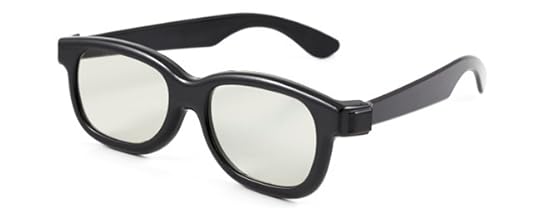
Argh: the pitting of the word “nerd.” The word used to be a haven for bookish outsiders, many of whom had been shunned for being different, an identity I latched onto it at an early age.
A shy kid who had been bullied, I did not feel like I could be the things society preferred: popular, outgoing, and “normal.” But by claiming the identity of nerd, at least I could be something. I latched onto the related attribute of being studious. That was easy for me; I loved to read; I loved to learn.
Although “nerd” was a paper-thin stereotype, as an adolescent it was hard to be myself because I did not know exactly who that was. Nerd-hood gave me a place to go until I could figure it all out.
Like the Island of Misfit Toys, it was not the most desirable island, but it was a place to go where weirdness was allowed. And contrary to the perception of nerds that existed during my high school years, I did not have a low self-esteem, and I was not unhappy. I loved words, biology, and writing. I felt sorry for the popular kids.
Years passed and, while I was not looking, nerdy had somehow become super-cool, at least in certain circles. Quirkiness was celebrated; “smart” was something people wanted to be. A stampede ensued; everyone crowded in under the label, elbowing each other to claim it for themselves.
It was nice that traits I cared about were suddenly being recognized as having value, but they mattered less and less as more people came aboard.
Claimers of the nerd title multiplied as the umbrella expanded to include more and more types of people. New nerds sprung up for every possible topic of interest. Music nerds. Car nerds, wine nerds, even sports nerds; my high school had a different name for sports nerds: jocks.
Poseurs, I say. I was nerdy before nerdy was cool, before self-professed nerds began to look like Angelina Jolie with glasses. I earned my nerd title, which was forged in the fires of grammar school social rejection, which forced me to develop something called “inner qualities.”
What were they? Well, you had to develop your mind and a sense of identity apart from who the world said you were. Being a nerd meant re-inventing yourself. It required creativity and introspection and the courage to love what others shunned.
But the barrier to entry keeps falling. And falling. Rather than more people actually becoming nerds, the definition has been stretched to include, well, anyone. There are beer nerds now.
What next? Heroin nerds? Prom Queen nerds? Ex-con prison nerds? It seems like anyone who is interested in anything at all has crowded under the nerd umbrella. At what point do we just start calling ourselves people?
Which brings me to another point: Why do I care? During my adolescence, I needed to belong. To be alone meant stumbling through the wilderness of my own complexity, and I was not ready for that yet. Much easier to have an image I could present to people like a business card: My name is Lisa. I am a nerd. I like Wookies.
I understand myself now much better than I used to. The need for the “card” has gone away. But I still feel a nostalgic fondness for the nerd tag. It allowed me to be a type the world recognized while giving me space to move around inside. It gave me the freedom to be different without having to be utterly alone.
I still use the word, often facetiously, to describe myself, but it is good that I no longer need the label. Its meaning is disappearing. The walls of my adolescent haven have been breached by the very people who created a need for it.
The nerd ideal is now someone who is beautiful, sexy and popular but smart enough to be interested in something. It does not even have to be a niche something; it can be anything from beer to basketball. The Island of Misfit Toys has been invaded by non-misfits, so that there is no place left for the natives. I feel crowded out, jostled and pushed aside by the upstart nouveau contenders. There is no space to stand and no place left to go.
Well, that is not exactly true. I have my own island. To be unique and even alone is not so bad. I can handle it now far better than I could as an adolescent. But I still mourn that a word I once loved has been stripped of all meaning. It is like discovering that a house you grew up in has been torn down.
Rootless, I will continue the never-ending quest to understand the complexities that the nerd label once allowed me to ignore. To accomplish this I will need to draw on all my resources. Good thing I have “inner qualities.”
They are useful for that sort of thing.