L.E. Henderson's Blog, page 15
September 1, 2015
Why I Love Writing About Writing
Last winter I was feeling discouraged and I announced that I would be changing my blog into an all-fiction blog and that I would no longer be writing about writing.
There were several reasons for this. One was that I thought I had run out of things to say about writing and was afraid of repeating myself. Another was that my viewer stats had fallen dramatically since I had changed from Blogger to WordPress.
The readership decline was alarming. On Blogger I had been getting at least 150 views per post and the numbers had seemed to be steadily rising. According to WordPress I was only getting about 30 views per post, which was about the same as when I first started blogging several years ago. I later learned that blog stats are not to be trusted. Blogger, I am told, wildly inflates stats and WordPress is not known for its accuracy either.
But the apparent nosedive created a sense that everything was unraveling and it seemed silly to keep writing about writing if practically no one was reading my blog. I should have known better than to let the stats upset me. I do not write for stats. I never have. From the beginning I have written about what I love, and for me writing tops the list.
Writing about writing because I love it is reason enough, whether anyone is reading my blog or not. In college I went to a guidance counselor who was the husband of the not-yet-famous author Sue Monk Kidd. I was trying to decide if I should continue to major in art or enter a writing-related field like journalism. After talking to me for a while about my interests and goals he told me, “Maybe you enjoy art, but writing is your soul.”
As an agnostic I am dubious about the existence of souls, yet I found it hard to argue with him. When I do not write, I feel deflated, scattered, fidgety, and useless. When I write, I feel impassioned, purposeful, and hopeful, and I like encouraging others.
So after I made my blog restructuring announcement, I immediately sank further into depression, and the next day, my mind went into overdrive generating ideas for writing posts, which contradicted my earlier belief that I had nothing more to say.
There is always something more to say, especially since there is so much harmful writing advice that comes dressed as conventional wisdom. My confusion due to bad advice was one of the things that, for too long, kept me from writing. And sometimes the advice comes from authors I mostly respect.
For example, Hugh Howie recently gave a lecture on-line in which he encouraged anyone serious about writing to go out and get a bunch of different jobs for the “experiences.”
I have heard this advice before and read it in writing magazines. Whenever I saw or heard it, I despaired that I had far too little life experience to be a writer, yet I did not want to be a circus clown, a medical doctor, or a ditch digger just to get the experiences that would inspire and enrich my writing.
Fortunately, I finally saw the advice for the absurdity it was: “So you want to be a writer? Then go join a circus and spend most of your time training elephants so you will have something to write about.”
Yes, joining a circus will indeed give you ideas for stories. Anything you experience can enrich writing, but if you want to be a writer, write and do it now. Life is short and joining circuses is time consuming.
I sometimes wonder if writers who give the “get a bunch of jobs” advice are not only trying to eliminate potential competition. “Heh heh, I will encourage aspiring writers to spend all their time building houses or going to med school or training to be an acrobat. That way they will never have any time to write. More readers for ME, ME, ME! Bwah-ha-ha!”
While the advice-givers more likely mean well, I find it baffling that they always focus on jobs as if jobs are the only kinds of experiences worthy of being written about. What about falling in love or losing someone or eating ice cream or feeling jealous? What about shedding a bias? Or learning to ride a bicycle or building a snowman?
The “go join a circus” attitude has a common origin with the self-consciousness writers feel about writing about writing. “Can you not think of something more original? Why not write about real life?”
At one point my brother told me, “You write so much about writing. You act like you are Stephen King. If you are going to claim expertise, maybe you should write an actual story now and then.”
I am all for writing stories. In my blog I have shared a fiction story every other week for the last few months. In addition, I had already written about bullying, bipolar disorder, censorship, agnosticism, and ants.
I like writing about writing not because I am unable to think of other topics. I do it because writing is worth writing about. Writing is an all-encompassing lens. Nothing is too grand for it, and no detail is too small. Writing encourages empathy, careful observation, learning, listening, and organizing the flotsam of experience in ways that lead to insights about real life.
I will continue to share my fiction stories but I am tossing out arbitrary limitation I imposed on myself. I had it right the first time when I took the advice, “Write what you are passionate about.” Anything I am passionate about.
And that includes writing. Especially writing.
If you enjoyed this post you might like my other writing. Take a moment and sign up for my free starter library. Click here.
The post Why I Love Writing About Writing appeared first on PASSIONATE REASON.


August 25, 2015
A Man Without Meaning (Short Story)

If you see them coming, leave. That is what I did. I am an exile by choice. More than that: I am a man without meaning.
I long ago learned to mistrust those with meaning; that is to say, most everyone I know. They come in armies. They come bearing metaphysical torches. Mostly, they smile.
On my old planet meanings were so important, every citizen was required to have one. They were printed on our ID cards, and when we went to the doctor, one of the first questions was, “What Is the meaning of your life?” If you were unable to think of a meaning, there were throngs of people who were more than happy to provide you with one.
Some government-financed study had suggested that people who reported a sense of meaning in their lives were healthier and less likely to commit crime than those without one. Laws were made. Before long no one trusted anyone, unless they had a meaning they could sum up in a phrase at parties.
The alternatives to having a meaning were unpleasant. Not that you were jailed or executed. But you were not allowed to draw money from the bank or drive or buy groceries because an ID card without a meaning on it was considered invalid.
Despite all the pressure, I would have loved more than anything to have a meaning, a real one that brought hope to my life, one that I could keep to myself, not something thrust on me by some zealot or bureaucrat.
My card said “architect,” but it was such a lie, I could hardly look at it. The label was given to me at age three when my parents observed I enjoyed playing with toy blocks. Not to have a meaning, even as a toddler, is frowned upon, but as you grow, your meaning is expected to become more “mature:” feeding the hungry, spearheading an art movement, or discovering a cure for some disease.
A meaning does not have to be big though. Others include: caring for an elderly parent; healing sick animals; or knitting clothes for babies of impoverished parents.
After you reach age 17, hardly anyone believes you anymore if you say your meaning is “architect.” About 70 per cent of babies get tagged with “architect” or some kind of artistic label.
“Spelunker” is not trusted either, after one impatient mother made the news after labeling her newborn son that. When asked why, she replied, “Well, clearly he likes to tunnel.” In general, though, job meanings are considered shallow, and by 18 most people are able to come up with something more original.
But me, I never found a meaning, and I thought meaning was too important for me to lie about it. I longed for something real, something to give me real hope, not just a tagline or a system of dogma.
Besides, I was different. After a pumpkin killed my adoptive mother when I was eight, a feeling that there was meaning to anything was hard to come by. I had loved her. And I had watched her fall from a rusty old ladder to her death one October day while trying to tape the cardboard pumpkin to my lofty bedroom window.
A vampire or a zombie I might have understood, but who gets killed by a pumpkin? It had looked so harmless, with dangling hinged legs, green striped socks, and a welcoming smile. The tragedy made no sense. It had no meaning.
I think I cried once, but what I mainly remember was how the colors changed. They all seemed covered with a thin grey film, and it was hard for me to get excited about anything, except I always hated Halloween. And anything cardboard.
Though I craved meaning, I never understood why you had to tell a meaning to every person you met. I was born. No one had asked my permission. It just happened, yet, every day of my life I have felt obligated to justify my existence, to explain to every grocery store clerk, neighbor, and medical professional why I am here.
All the pressure was driving me into a hole. I continued to buy groceries with my architect card, but the clerks always eyed me with mistrust. They were right to do so. I had a meaningless job at a seed packaging company and I was unable to tell a Doric column from a fence post.
My meaningless existence led me to loner-dom. That was partly because there were those who took their meanings way too seriously. They were the people with fire in their eyes who were so confident about their meanings they felt compelled to thrust them onto everyone else.
They targeted people with art labels like mine, the kind children were always getting, musician, painter, or sculptor. As an “architect,” I was a magnet for the meaning zealots, and every time they approached me they reminded me of the meaning I lacked. My stubbornness prevented me from changing my card to something more acceptable like “helping the lame,” and it was ultimately because of all the pressure that I went to Mars at age 26.
A great number of astronomers had made getting to Mars the meaning of their lives, and the faraway planet was just beginning to be colonized. I enrolled in a program for transferring to Mars, which included an extensive orientation and training course. There were too many people on Earth so changing planets was encouraged.
Since the terraforming had begun many generations ago, the temperature had warmed and the air was approaching breathability, but for the most part people inhabited their air conditioned “greenhouse” homes and wore their life maintenance suits whenever they wanted to go outside.
Humanity had gotten a foothold in the red planet, but just barely. Problems abounded. Anyone who went to Mars had to commit to do their part in solving them, which required ongoing training. There was risk. The low gravity could lead to bone deterioration and other health problems. Despite the risks, the idea of going to Mars was the first thing I had felt hopeful about since I was a kid. I went so far as to have my ID card changed from “architect” to “interplanetary explorer.”
Even that meaning sounded unconvincing to my own ears, too narrow. But I must have impressed the man at the space dock when I showed him my new ID card. He smiled, nodded, and waved me through.
The flight to Mars was long, and I could tell stories about it. However, now is not the time to tell them. But even during the flight, the great thing about going to Mars was that nobody talked any more about what their meanings were.
First the space flight, and then the arrival on Mars, undid everyone. Mars was cold and red and its sky was not blue but an odd yellow color during the day. There were often two moons in the night sky, not one, although Deimos looked more like a bright star than a moon, so I liked Phobos best with its irregular asteroid shape.
Although no one was required to have a meaning anymore, everyone had a job. We had to continue the work of those who had come before us. I was responsible for helping to seed Mars with plants that could tolerate Martian soil. Others were tasked with doing research or providing medical care to those whose health was compromised by the low gravity. There were doctors there, farmers, engineers, and, yes, even architects.
I was not one of them. I had been trained as a seed farmer with rudimentary botanical knowledge. Training had also included what equipment was best to use, and how to take safety precautions. Seeding felt like menial labor but I liked planting things and watching them grow. I did my job just like everyone else, but not a soul on Mars had any meaning as far as I could tell. We were all too disoriented, too obsessed with just surviving in an alien land.
I was disappointed, because it seemed like if you were willing to travel all the way to another planet, you ought to be able to find a meaning there, and not just another job.
But for the most part I liked being on Mars. To find myself on an alien planet was surreal. That I had come to a place that had previously been just a dot in the sky had showed me I was capable of surprising myself. Mars was so beautifully desolate, and I wondered why its wide open spaces were so captivating to me.
The years tiptoed by. As the terraforming went on and Mars became a more hospitable place, more colonists arrived. They came flashing their cards with their meanings on them. And the more of them that came, the more Mars became like Earth. Grocery and supply stores began requiring meanings to be shown on ID cards again. I was even asked to show my meaning to my employers each day when I arrived to work.
The new regulation sickened me. I had been on Mars first. What right had these newcomers to make me self-conscious about my meaningless existence once again? Even worse, one day I showed up to work and I was told my ID card was invalid because “interplanetary explorer” was too vague. Anyone on Mars could make a case for being an interplanetary explorer. I would have to think of something more specific if I wanted to continue to work. I wanted to tell my employers to go to hell, but I needed an income.
On that night I could not sleep. I thought about dangerous pumpkins and zealots and why I had come to Mars. I thought about seeds and the flowers that were able to grow in an icy desert with hardly any air. I got out of bed.
My home like most of the others were designed to insulate colonists from the inhospitable Martian atmosphere. Part of the structure was made of a transparent glasslike material in an area everyone called a sun porch. Most Martian homes had one. There you could gaze at the sky and landscape without having to go outside, even though you felt like you were outside. Special fans even simulated wind to add to the illusion, and real Martian soil was brought in.
I did not usually go onto the sunporch at night. Being a planter was exhausting work and I usually fell right into bed afterward. But at that moment I wanted to see the night sky. For the first time in years, I wanted to see the earth, a distant dot, if I could find it, the planet of my birth.
I sat down on the rust-red floor and gazed upward into the night sky, but I did not see the earth that night. Instead I saw Phobos and Deimos, the two moons of Mars, Phobos in its waxing gibbous stage and Deimos receding, as tiny-looking as a distant star. They seemed so lonely to me.
For billions of years those moons had glowed for no one. No human or animal had observed them. They had been content to revolve, spin, and shine without an audience, without a goal, without a reason for billions of years.
For eons those moons had just been there, and that had been enough. I thought about what a wonder that was, to just exist, unseen, without justification or apology, without even a basic use. Theirs had been the purest kind of existence; unlike me and all I had known, they had never faced the burdens of seeming or serving.
I could not think of a new purpose for my card that night. I could only think about Phobos and Deimos. As I looked at Phobos, the closer one, a tightening pressure rose to my throat and I felt a chill at the base of my neck, and I swallowed hard as tears filmed my eyes. At that moment I loved those moons more than I had ever loved anything, for being so remote, so meaningless, and so beautiful.
If you enjoyed this post you might like my other writing. Take a moment and sign up for my free starter library. Click here.
The post A Man Without Meaning (Short Story) appeared first on PASSIONATE REASON.
August 18, 2015
Learning to See

When I was an art major trying to master drawing, my professors would sometimes say that drawing well required “learning to see.”
The phrase always sounded too mystical to me. But now, after having done a lot of writing or “drawing in words,” I understand. Writing can only be as powerful as the perceptions of the writer. As with a drawing, a finished piece of writing is only a record of a mental process, and the keener the observations are, the more satisfying the art is likely to be to the viewer.
I recently wondered: How much do I really notice in my surroundings, and how much of them do I filter out? When I go to a restaurant, do I notice specific details? The lurid atmosphere? The waitress with a heavy application of fuchsia eye shadow? If someone were to test me on my surroundings, how well would I do? I live in my head a lot, so my score would certainly be less than perfect
Last week I did an experiment. I began recording anything I saw in my notebook, no matter how apparently insignificant. I described the way my cat moved, the way an elbow looked when bent, the hovering appearance of dragon flies, or how it feels to walk in wet flip-flops.
They are the kind of close-focus details that in fiction can strip away the boundaries between the writer and reader and simulate the appearance of real life. My “observation” day was a fun day. As in visual art, a verbal sketchbook is not about the quality of the product. All that matters is the act of observing. Observing is a skill that requires practice, and practice yields more significant and interesting observations over time.
Why is observation essential to writing well? Because, regardless of syntax, word choice, and grammar, writing will be thin if the observations of the writer are thin. If a writer thinks in stereotypes, or writes what he thinks he is supposed to think and feel, the writing will feel “off.” In the same way, a story full of greedy Jewish characters and harlots with a heart of gold, unless it is satire, will not ring true and will appeal only to the shallowest thinkers.
Mature writing requires “throwing off” the observational filters that come from growing up in a particular culture with its particular biases. An example is its ideals of what is beautiful. Can a crack on a window pane be just as beautiful as a sunset on a beach? Absolutely. I had an art professor who saw the lined hands of her elderly relative as being so beautiful she felt compelled to draw them; she saw in them graceful patterns that lent themselves to the sensitive line work of a pencil.
Although not everything an artist does is meant to be beautiful, good artists train themselves to notice what others fail to appreciate, and their gift is in letting the viewer see how they see.
I first began thinking about the importance of observation when reading one of my favorite books A Separate Peace by John Knowles. I have always admired his style for his vivid imagery and sharp sensitivity to character details. I have many times studied the crisp quality of his sentences and his powerful active verbs, but there was something else about his writing I could not seem to pin down until I realized the magic element was the rich depth of his observations, whether he was writing about a person or a tree. They said something about who he was and how he thought even when he was not sitting down to write. This description of trees captivated me:
Between the buildings, elms curved so high that you ceased to remember their height until you looked above the familiar trunk and the lowest umbrellas of leaves and took in the lofty complex they held high above, branches and branches of branches, a world of branches with an infinity of leaves. They all seemed permanent and never-changing, an untouched unreachable world high in space, like the ornamental towers and spires of a great church, too high to be enjoyed, too high for anything, great and remote and never useful.
I love this passage for his word choices and the beautiful rhythms of his sentences, but those would be nothing if not for his observations of trees and his own subjective feelings about them. The passage worked because at some point John Knowles had looked at actual trees and given serious thought to them.
To be a writer only when writing is not enough to achieve full potential. Writing requires a constant and even obsessive sensitivity to detail that is not afraid to deviate from general opinion. Writing well means finding beauty and patterns in the seemingly insignificant, a process called learning to see.
If you enjoyed this post you might like my other writing. Take a moment and sign up for my free starter library. Click here.
The post Learning to See appeared first on PASSIONATE REASON.
August 11, 2015
Writing as “Meaning”
I recently read an interesting blog post about the need to find meaning in life.
My visceral response was: “I have meaning.” But what did I mean exactly? After all, it seems a little arrogant, like I am claiming access to some cosmic secret denied to others. Of course, that was not what I meant at all. I have no idea “why” I am here or what my place is in the grand scheme of the universe.
The universe does not grant meanings, but that is okay. I would rather create my own than robotically carry out some plan devised by another. “Meaning” does not have to be cosmic anyway. What I am describing is a sense of focus and direction that brings satisfaction, a sense of rightness about my life course.
I feel like I know what it is to have meaning, because I have experienced how it feels to be without it. The most meaningless my existence has ever felt was when I became creatively blocked right after I went on bipolar disorder medication, and my mood flat-lined. My efforts to write led to terrible mood crashes, and I hated everything I wrote.
I had seen myself as a writer but now I experienced the world as a scattered mess, a chain of random events, without context and no sense that they were related to each other in any significant way. I got up. I ate. I showered. I went to bed.
I found some solace in the regularity of my routine. I looked forward to the changing of the seasons because they let me know my life was moving whether I felt it or not. I found pleasure in video games and although I enjoyed them, they were not enough to satisfy my need for context.
Was my life really meaningless then? I think not. Those writing-deprived years became the basis for a more lasting recovery from block than I had ever had before. My unproductive period led to insights I use every day as a writer. But my life certainly felt meaningless to me at the time.
Even before my depression, I had always been blocked as a writer on and off. Writing scared me even though – and maybe because – people had always told me I was good at it. I was harshly self-critical and writing often sent my mood into a death spiral, which meant writing was risky.
I have written about my creative recovery many times in my blog and in my book A Trail of Crumbs to Creative Freedom, so I will not go into it much here, except to say that I stopped listening to advice from other writers and began thinking for myself. I relearned how to own my writing the way I had as a kid and I rediscovered the fun, which had gotten lost somewhere along my educational path.
I am a skeptic. I do not believe in magic. But my transition from block to creativity felt magical. Hope surged, and the future began to look interesting. I had previously believed I would never enjoy writing again, but the daily activity of writing gave me focus, direction, and satisfaction. It felt meaningful.
It may sound silly for me to say writing is the meaning of my life, and I doubt all writers feel that way. To some it is just a job and not even an especially rewarding one. Those who see writing as just a job sometimes talk about quitting writing after they have reached a certain number of books.
I am always baffled to hear writers say that they are planning to quit. As long as I have the ability to write, I will never quit because writing is the way I make sense of my life. I am not just a writer when I write. I am constantly observing people, describing objects and settings in my head, noticing the tiniest details as potential material for stories.
On a therapeutic level, writing frames my emotions. If I cry, the writer in me is there taking notes. What does crying feel like? What muscles are involved? Is crying something I only do with my eyes, or is my whole body affected? How can I use my emotional experience in a story? The simple act of describing an experience is to command; to transform; to own; and to create.
Most people can be perfectly happy without writing. Writing is not the only meaning there is, and I am afraid to be too dogmatic about my meaning, as some are. People who try to impose their own “meaning” onto others are people I like to avoid.
But, as meanings go, I could do worse.
If you enjoyed this post you might like my other writing. Take a moment and sign up for my free starter library. Click here.
The post Writing as “Meaning” appeared first on PASSIONATE REASON.
August 4, 2015
The Dragon That Was Not There
Maggie was 14 when she decided to defeat the dragon. No one else had even come close. All the men had failed.
And it was ridiculous because everybody knew the dragon was just an illusion. Even his name, Prism, was a hint. The dragon had been conjured by a curse designed to trap the villagers in their dreary little ash colored town, aptly called “Dim Wood Village.”
The illusory dragon blocked passage to the greater world. Maggie knew a little about the greater world through oil paintings that decorated the castle walls, rendered by artists who had been there, before the curse had gone into effect over two decades ago.
Maggie sometimes imagined herself walking into the paintings. They were worlds of color: the dusky greenery of windswept fields, the cool blues of lonely oceans, the reds and yellows of wildflowers, and mountains whose snowy tops swept toward cloudy skies. Maggie wanted to dip her toes into the receding shallows of ocean, reach out and hold the flowers, pick berries from the vines.
Yet every man who had tried to get past Prism had not only failed, but died. Some had had heart attacks, and others had died by their own hand.
Maggie thought the men must have been awfully dumb. No matter how scary the dragon looked, could the men not have simply closed their eyes and continued walking, until they reached the other side unfurling with beauty, sunlight, oceans, and snow-topped mountains?
It was the Other Side that Maggie cared about, even more than the bragging rights of having defeated a dragon. Maggie was already a princess, which meant she had it better than most. She ate well and had jewelry and servants. But the castle was dreary. Sure the architecture was grand, but despite the tireless work of servants with feather dusters, a layer of ash always seemed to cover everything.
Plus she had noticed that no matter how rich people were, they all had the silly habit of dying.
They were all the time catching one plague or another, or doing something stupid like sword-fighting drunk. But no matter how prudent they were, or foolish, every life ended the same way, and ended quickly. And the kinder people were, the quicker their deaths seemed to come.
Her mother had died before Maggie ever got to know her well, and it had taken so little, just a simple wooden wedge-shaped block that Maggie had left near the top of a stairway. She had only been seven, and had forgotten to return her blocks to her toy box. Her brother had been there with Maggie; they had both watched her mom slip and heard her scream as she fell, which was abruptly silenced.
Maggie had expected that her mother would only skin her knee like Maggie did when she fell, but Maggie had been wrong. Two days later her mother had died.
Her brother who had watched it all happen would not speak to Maggie for days, which hurt because Maggie felt enough shame and grief already. She would have liked the support of her brother, a shoulder to cry on, someone who shared her memories.
Her father, the king, was always distant, always busy. At the funeral, his greatest comfort to Maggie had been a cold kiss on her forehead and a light pat on the head.
He had not blamed Maggie, but his comforting gestures had not comforted. So Maggie had used her caged pet parakeet as a therapist. Maggie loved to take him out and hold the tiny bundle in her cupped hand, and stroke his soft feathers, and speak softy to him. Blue Boy had been a patient listener, a little pulsing ball of plush blue feathers with a fast heartbeat.
But one day when she went to seek his counsel, she saw him at the bottom of the cage. Looking closer, Maggie saw that his head was contorted at an unnatural angle. His eyes were open, but Maggie knew he what his stiffness meant. Despite her grief, Maggie had not cried when her mother died. But now a sob broke free.
She sank to the floor, and another sob came. Before long, her tears were unstoppable, every muscle in her throat constricted. She wept not just with her eyes but with her whole body, each cry rising to a final mewling pitch where it tapered to a fine point, before a new one began from down deep.
As her tears flowed, a familiar voice returned her to the world. “Now maybe you know how it feels,” Eric said, “to lose someone you love.”
The words had sent an electric jolt through Maggie. What did he mean? She had loved her mom and missed her desperately.
The shock had stopped her crying, and a cold shell descended over Maggie. She had shut down and would not speak to anyone for almost three months.
Maggie supposed her trauma was one reason she thought about death so much, far more than other people. And why she longed to experience life outside her ash-colored town, and why she could not let an illusion stop her.
Though a girl, Maggie was no stranger to fighting real things. With her sword, she had killed a rabid wolf once in order to save a toddler. If she could do that, surely she could deal with an unreal dragon.
Which was more than she could say for the adults around her. The idiots had actually written books with theories on how to defeat Prism. One was titled The Problem of Prism: How to Vanquish an Illusion. But the book had not told how. It was just a transcript of arguments that had taken place in court.
She had read other books. In one of them she learned that whenever anyone had tried to strike Prism, the sword had passed right through him. And when they shot arrows at him, the missiles had failed to make contact. But Prism could not touch anyone physically, and his fiery breath could not burn his victims.
So what was the big deal? Her plan was terribly simple. She would leave her sword behind, just in case Prism did somehow make her want to die, which she doubted would happen. And if Prism somehow managed to scare her, she would simply close her eyes and keep walking. And if his roars made her want to run, she would cover her ears and walk through him. Why did the adults never think of the obvious?
On the morning Maggie had decided to liberate herself, she rose and packed a few items in a cloth sack: some iced cakes and bottles of water. She did not know if the land beyond would yield food and water right away, and she had to survive long enough to find them.
To get to Prism she had to climb a wood-slat fence, adjusting her long yellow skirt as she went over. No one tried to stop her. The fence was there because most towns people did not want to be reminded of the dragon. They craved separation. They did not want to glimpse his fiery breath on their way to the market.
After Maggie had landed on the other side of the fence, she followed a long dirt trail and heard snuffling. From where she was she could see a flash of bright sea-green scales, and she headed toward them. As she moved closer a heart-jolting roar split the air.
She hesitated, but only a moment. The faster her heart beat, the braver she was determined to be. Her original plan had been to close her eyes and cover her ears, but now she wanted to look into the demon eyes of the dragon that for twenty years had kept everyone locked in a sooty village, and walk right through him. Her adrenaline swept her into ecstasy. She felt invulnerable.
As she moved forward, Prism loomed larger and larger. He was indeed formidable-looking. His giant head swiveled as he scanned the field for any newcomers. He towered over every house in the village, and he spread his wings with violent beats that went beyond mere flapping. His eyes did not look demonic, just wild and relentless.
When Maggie got within a few yards of him, she released a long satisfied breath. She had gotten far. Now it was a matter of mind over sight. She lifted her chin and began walking toward Prism as the dragon looked at her with apparent interest.
As she got closer, the dragon roared, reared his neck back, and blasted a jet of flame from his mouth. She jumped at the surprise but did not feel a physical burn.
But behind the flames, the dragon blurred. The green of him shifted to blue and she saw that she was walking into a soft wall. When she looked up Prism had transformed.
It was not the wild eyes of a dragon she saw. She was looking at Blue Boy, magnified, the way he had looked the day she found him at the bottom of his cage, his feathers in disarray. The head she saw now lolled unnaturally to one side.
Maggie drew in a sharp breath, staggered back, and nearly tripped on the hem of her skirt. She groped at the air for support as tears blurred her vision.
“Not real,” she whispered. But she did not believe it. What she saw was real. Prism had cut his visage from the fabric of her memories, which she accepted as true. She vaguely remembered what she had originally planned, and closed her eyes and pressed her palms flat against her ears, but she could still see Blue Boy behind her eyelids.
She had expected fear, but not this, not sadness, not remorse, not self-blame. She thought if she did not get away from him immediately, she would die, would have to die, yet something inside her pushed her legs forward.
She tried her best to remember why she had come: her dream of rolling sunlit oceans and magnificent wildflowers, and boundless blue skies. But even if she made it to the other side of Prism, she knew he would follow her. He was inside her now. Maybe he had been inside her all along, and how could she escape herself?
“I am tough,” she told herself, but her voice broke when the giant Blue Boy opened his beak wide. What came out was neither a chirp or a roar. It was not the scream of a dragon or a bird. In it was the plea in the voice of her mother, the way she had sounded the day she had fallen down the stairs.
Maggie went forward, but a swooning dizziness came over her. “Blue Boy,” she said before the world went black.
She woke in her own bed, and heard a shuffling sound. Looking around, Maggie saw a woman servant sweeping the floor. “Ah Miss, you are awake,” the servant smiled. “Excellent, your father will be so pleased.” The woman studied Maggie more closely. “You were terribly lucky.” The servant shook her head. “And also very foolish. Did you think you could succeed where the strongest have failed?” The servant sighed.
Failed. Maggie groaned at the word, but it was true; Maggie had thought it would be so easy. It should have been easy to defeat a dragon that was not there. But now she knew that an illusion could hurt you.
Where had she gone wrong? She had thought the problem was fear of Prism, but fear was the easy part. Fear could be dealt with, pushed down, ignored. But not so with pain, raw, mind- crushing pain.
If she faced him again, she would have to prepare for the hurt that had made the world spin too fast and made her fall. She had one consolation, that unlike the others, she had lived. A 14 year old girl had lived.
A tear rolled down her cheek. She would not go back to Prism today or tomorrow or even next week. Her memories had overwhelmed her. She would have to recover. But she looked with longing at the oil painting on the wall across her room.
It showed the shore of a billowing ocean, a cresting wave tipping its foaming fingers toward land. For a moment, Maggie could almost see the wave rolling forward and hear the crashing sound it made. She loved that sound because she had never heard it, though her elders had told it happened at every moment of every day. Some day she would feel the cool water on her toes and savor the drama of sea water crashing and receding. Some day she really would.
Just not today.
If you enjoyed this post you might like my other writing. Take a moment and sign up for my free starter library. Click here.
The post The Dragon That Was Not There appeared first on PASSIONATE REASON.
July 28, 2015
Other Writers Are Not My Competition
They came to the wrong person, but I could hardly blame them. How could they have possibly known?
Recently “they,” a company, emailed me about a contest they were holding. They wanted me to help them promote their science fiction writing contest on Twitter. Although I love writing and science fiction, something stubborn inside me balked.
It is not that I think writing contests are “wrong,” but they do not excite me. I dislike them the way I disliked canned rutabagas when I was a kid. The rutabagas were not abominable but not appetizing either, but in some mysterious way they were supposed to be “good for you.”
Not that I am a stranger to competition; I was super competitive in college, but my writing goes best when all thoughts of being an achiever have fallen away.
Contests assume I write to win. There was a time, long ago, when I did try writing to prove how “good” I was, but that approach always caused paralysis. Inspiration fled the second I thought, “I need to prove I can write better than others.”
If not to win, why, then, do I write? I write for a number of reasons. I write to feel the endorphin surge of creativity; to climb out of emotional sinkholes; to find humor in the humorless; to find a home for observations I have never seen mentioned. Sometimes I write because what I need to read does not exist.
When I was writing to win, I had a big problem with jealousy. Not that jealousy is “wrong,” any more than any emotion is wrong; however, it is unpleasant and I like to avoid it when I can. But I rarely get jealous the way I used to, because I adopted a new way of thinking about writing.
Struggling through a hellish case of depression-induced block brought about seismic changes in my approach to writing, including a determination to write what I loved, regardless of what anyone else said about it.
Instead of trying to please others, I focused on saying “I like this better than that.” For example: I like clear sentences better than muddy ones. I like imagery that the reader can almost take off the page and hold. I like sentences that create a musical rhythm and sets a mood. I like cats, Pad Thai, and lizards.
While discovering what I liked, I found my voice. I became too immersed in my own work to worry about what others were doing. Besides, no other writer in the world can write what I write the way I would write it, any more than I can write for any other writer.
Personal qualities cut a unique lens through which a writer views the world: knowledge, experiences, cultural backgrounds, emotional baggage, interests, and personality, to name only a few. The lens is one of a kind and in-duplicable.
If only I can write what I write, then other writers are not my competition, and I am not theirs, yet there is a prevalent myth that the point of any serious activity is to win against another, and that the will to defeat someone is as good for art just as it is for making a quality car.
But writing is not a car. Sometimes we write about losing people we love; personal tragedies of abuse; regrets; innermost longings; people we have known. The need to put a “good” or “bad” tag on personal expressions turns something poignantly organic and human into a mere product for categorization and consumption.
This might make sense from a commercial point of view, but it makes no sense from an artistic point of view. Even if money or prestigious titles are the motivation for writing initially, it is the intrinsic rewards that breathe life into art.
It is creating a world, exploring a theme, and building interesting characters that inspire and excite me. Writing just to write does not make me lazy; on the contrary, I will go to almost any length to make my writing work because I am writing for myself.
However, my stories, whatever their merits, represent barely a sliver of what the human experience can be. A point of view is just a point. Other voices are needed to shed light on life.
Therefore, I would rather encourage other writers to share their experiences than to view them as obstacles. The world needs more understanding, not less. Besides, what would my life have been like without other writers to share the stories that sparked my love for writing?
Despite my distaste for competition as the guiding thrust for art, I did feel a little guilty for shunning the contest. It is all well and good to talk abstractly about the disharmony of art to competition, but do contests not have practical value to a talented writer who is struggling?
Maybe so, and I have no doubt those sponsoring the contest meant well. I feel for them. Maybe they will find someone else to support their competition: ideally someone who has never compared contests to rutabagas; someone whose writing has never been hurt by the urge to win.
Someone who has not thought about the matter quite so much.
If you enjoyed this post you might like my other writing. Take a moment and sign up for my free starter library. Click here.
The post Other Writers Are Not My Competition appeared first on PASSIONATE REASON.
July 21, 2015
The Other Side of Fear (Short Story)

To me the solution was simple. I could sleep with my friend Lamby The Lamp turned on. But my dad would have none of it.
My sneaky attempts to switch the light on after he had left my bedside fell to ruin as soon as he saw the bar of light beneath my door.
To calm me my father tried reading me a book full of Grimm fairy tales, but the stories were too filled with grotesque creatures to ease my fears. One night he heard my theatric sigh and glanced at me. I said, “I want to sleep with Lamby on. Please. Lamby makes me less scared.” I looked at the lamp, which had a lamp shade in the shape of a soft fleecy lamb with a pink nose.
My dad removed his bifocals and closed the glossy covers of the book together. “I think I have told you enough stories tonight, Lizzy,” he said. “Maybe it is time for you to tell me a story. Or better yet, I want you to imagine a place.”
I squirmed beneath his intense gaze. “What kind of place?”
“You are eight now, you have a lot of life ahead of you. You are going to see a lot of darkness in the years ahead. You will see it every night. Sometimes you will see it in people, and sometimes in yourself. In fact most of the universe is darkness. Stars are the rare exception. You will never escape the dark so you must learn to move through it, but it helps to imagine where you want to go. So tell me: What would it be like not to be afraid of the dark? What does it look like on the other side of fear?”
His question captivated me. “I know,” I said. “The other side of fear is a place full of sleepy cats. It has a pond with turtles, and a pretty garden that smells like peppermint, and it is always sunny and never night. Oh, and it has a fence that keeps big dogs out.”
My vision might sound silly, but my grandmother had an herb garden and a tiny pond with a fountain where turtles congregated. And cats were always bathing themselves or sleeping nearby. I liked it there.
My father smiled. “Do you really believe that?”
Did I? Did I really think getting over my fear of the dark would look like turtles and cats? “No,” I said.
“Think it over,” he said, “and I will ask you again tomorrow night, and the next if I have to, I will keep asking you until you find an answer you can believe. And when you know, perhaps you will see something beautiful in the darkness, and your Lamby the Lamp can go graze.”
My father pulled the quilted covers to my chin, planted a warm kiss on my forehead, and turned out Lamby. I grasped the top of my cover tightly as the darkness fell over the room, but it was not the dark I feared so much as myself. It was what my imagination could do with darkness.
I could populate the void with incomprehensible horrors, but not monsters like most kids have in their nightmares. All of my haunts were people. In the twilight realm between waking and sleeping, they looked as real to me as my own hand. They spoke to each other, and snacked on crackers and munched raw broccoli and cheese.
I thought I could touch the ghouls if I dared. Sometimes they looked at me with eyes like ping pong balls.
But they were not quite zombies. They milled around in my room and gossiped once the lights went out. Some were well dressed, but their faces were expressionless, yet their hollow laughter rang through the night. They were also judgmental for zombies, and I heard them say my name often with frowns of disapproval as I tried to hide myself beneath the covers.
I had seen people like them at church socials and parties, people who smiled when it was time to smile and said the right words not because they meant them, but because they knew they had to say them. After my cousin died, many people at her funeral were like that, before my fear of the dark began.
Did I think they would hurt me? Absolutely. I was terrified they would offer me spinach dip and crackers and try to make me one of them. The life would drain from my eyes and I would have an irresistible urge to talk about weight loss plans and gossip and laugh raucously. My ghouls gave me many sleepless nights.
But the day after my father asked me the question, What does it look like on the other side of fear? I did as he asked and considered it. Sometimes the other side of fear was pain, as I learned once when I had “fearlessly” caught a wasp in my hands the way I did with lightening bugs.
But what about fear of darkness and the mannequin-like people that inhabited the dark? I drew pictures with my crayon, mostly pretty places with ponds, waterfalls, and animals.
After drawing many of those, I looked at them and something appeared wrong. I realized that the other side of fear might not be a tranquil painless place with turtles, but a turbulent prickly place you had to endure with gritted teeth.
I found illustrations of tough bosomy heroines in some of my comic books. They always looked angry. I wondered if rage played a role in courage. If I could get mad at the mannequin people for invading my room and disrupting my sleep, maybe they would go away. I drew myself looking determined and angry.
But anger was hard to summon on demand. Despite my efforts, at night after the light went off, nothing had changed. I saw them still, I even smelled them. They smelled like finger-paints and new vinyl, chemical, not life-like smells.
I was driven to the obvious and forbidden solution. What did it look like on the other side of fear?
Why, a brightly lit lamp covered in fleece, of course. Lamby. What else? I had been right, my father wrong. And I wondered about the cause of his stubbornness. I had often heard him complaining about the outrageously high power bill.
I went to the stack of bills on the dining table and rummaged through them. I saw the bill from the power company among them. I did not know how much electricity a single lamp consumed during an eight hour period but I thought it could not be more than 2 per cent. I calculated 2 per cent of $153.00 and broke into my porcelain piggy bank.
In it I kept coins and bundled dollar bills, accumulated from birthdays and chores. Most any amount of money would be worth avoiding the darkness filled with humanoid ghouls coughed up from the maw of hell. Anything would be worth sleeping peacefully and waking refreshed to the sunlight shining through my window.
When that night my father came and sat on the bedside chair, I pushed a bundle of cash at him. He looked down at my coins and dollar bills, perplexed. “My share of the electric bill,” I said, “if the lights can stay on.” I pleaded with him with my eyes.
“You are bribing me?” He looked at me with baffled tenderness and handed the money back. “This is yours.” He sighed. “I only wanted you to answer my question.”
“I don’t know what the other side of fear looks like,” moisture coated my eyes. “The question, it makes no sense.”
His blue eyes were liquid pools of concern. “Look, the electricity your lamp uses is barely a dime. You have missed my point. Perhaps I should have been more clear. I know I asked you a strange question. Maybe there is no single answer. So I will try to clarify to you what I mean.”
He leaned toward me, anchored his elbow to the bed, and propped his chin in his palm. “Sometimes fear is good. Being afraid of jumping from a mountain top is a good fear. If you set that fear aside, the other side of fear could be death. But sometimes fear is an illusion. When you see dangers where none exist, fear can make you unhappy and limit your freedom.
“Remember the first time I put you in a swimming pool? You were three and when I carried you in, you clung to me, your arms wrapped around my neck, even though I had put safety floats on your arms. When I tried pulling you away from me, you screamed with a red face and began to cry.
“What did you think would happen? That you would go down and never come up again? I finally was able to pry your hands away and set you free and floating on the water. At first you just cried more, but after a minute, your face changed. You looked curious and flapped your hands on the water. Finally you broke into a laugh.” He smiled at the memory.
I remembered it too. I remembered the relief, the cool buoyancy of the water, and how the light reflected on the surface. I had felt like I was floating on a cold bath of sunbeams.
“Sometimes,” my father went on, “the other side of fear is relief. It is freedom and discovery. Can you picture that? That you could ever enjoy the dark the way you enjoyed the pool? The dark has nice things in it: the moon, stars, crickets, owls. Maybe you could go to sleep at night listening to the music of owls rather than lying awake worrying about unreal monsters. That, I believe, is the other side of fear; what it would look like; what it would sound like; what it would feel like.”
The image of relief my father presented was compelling. Enjoy the dark? Listen to the owls? Look at the stars? I wanted it badly, but then I remembered the mannequin monsters with their spinach dip. How could I know they were an illusion? If I walked among them freely would I feel relief? What my father had described did not seem to apply to the haunts that ruled my nights.
“You seem skeptical,” my father sighed. “I thought you might be, so I brought you something.” He reached into a paper bag and pulled out a blanket. I recognized it, a soft quilted rectangle that I had loved when I was three, but which had been taken from me.
“You used to think this blanket protected you,” my father said. “Maybe you over-depended on it a little, but maybe it will help you feel safe while you are getting over this hump.”
I stared at the blanket, wondering if I should be insulted. I was not three anymore, far from it. But seeing old childhood relics creates a sense of history, of time having miraculously passed. I gathered the blanket in my arms.
My father took my hand. Tonight you are going to sleep the best you have in weeks,” he said, “because you know what the other side of fear looks like, and because you have your Blanket of Fortitude to protect you.” He smiled.
“Okay,” I shrugged. As always he leaned over, kissed me on the forehead and turned out the light. Then he walked away, and shut the door behind him.
Protect you. What my father said had given me an idea. By the light of the moon, I rose with my blanket and tiptoed to the door. I dropped my blanket on the floor and knelt, and began stuffing the crack beneath with the soft fluid folds of fabric. Then I stood, crept across the wood floor to my bed, crawled under the sheets, and switched Lamby on, which poured forth a pool of warmth on the bed stand. The question my father had asked was a good one, but I had found the other side of fear long ago, and it was light.
“Good night Lamby.” I thought I heard an owl cry as I drifted off to sleep.
If you enjoyed this post you might like my other writing. Take a moment and sign up for my free starter library. Click here.
The post The Other Side of Fear (Short Story) appeared first on PASSIONATE REASON.
July 14, 2015
Starving a Troll
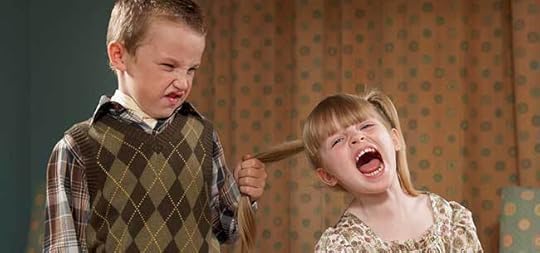
How often have I heard the sage advice, never feed an internet troll? Yet I did it anyway.
But sometimes the on-line aggressors are terribly hard to ignore. Trolls get personal. They go after your ego; seek to identify and target insecurities, thrive on your fears of seeming silly or being judged. They know that you will want to prove them wrong; rectify injustices; see obnoxious behavior castigated. They know that you will want to win.
What is an internet troll exactly? Wikipedia defines a troll as a person who posts “inflammatory, extraneous, or off-topic messages in an online community with the deliberate intent of provoking readers into an emotional response.”
Some victims have reported experiences with trolls that are extreme, with trolls launching attacks on personal appearance, defaming the victim, or impersonating their dead parents. My recent experience was far less extreme but still unsettling.
What happened was this: I had posted a tweet, a picture of my cat with the description: “My inspiration for my most recent novel entitled Paw.” Afterward I went to my notifications screen and saw this message:
“The word ENTITLED is not used to name BOOKS. The CORRECT word to use for BOOKS is TITLED.”
I take pride in writing well, and for a split second I felt like I was being dropped from a precipice. A burning flush rose to my cheeks with the question, Could he be right?
I did not think so. I had heard “entitled” used for books for as long as I could remember. I have always liked the word, and I like the prefix “en.” “Entitle” belongs to the same opulent family as “enrich,” “endow,” and “enable.” Using “title” as a verb is to me as aesthetically thin and watery as skim milk, whereas “entitle” sounds like a deliberate act.
But I did have a grain of doubt. Hearing others use a word used in a certain way did not make my usage correct, and I had never read a rule about how to use “entitle.”
My tweet had been shared over twenty times, and if my critic was right, then many people had seen my error. I Googled the word “entitle” and consulted several different online dictionaries, including Merriam-Webster. To my relief, they all confirmed that using the word “entitled” for a book was fine, a perfectly respectable synonym for “titled.”
But I did discover that a vocal minority of other writers disapprove of using “entitle” to name to books, art, stories, or games. They argue that “entitle” should be exclusively used for giving a right to someone, as in, “She felt entitled to drive the car she had bought.”
However the “entitle” curmudgeons are not supported by grammar authorities. According to the dictionaries I was right, and I wanted my all-caps-loving critic to know it. I wrote him a message telling him he was mistaken and I included a link to Merriam-Webster in case he doubted my word.
I thought the matter was settled, until I got another message from him. It said, “Look it up un the dictionary.” Yes, he said “un.” Had he not even glanced at the dictionary link I had taken the trouble to send him?
I was tempted to write him and tell him that if he was going to anoint himself grammar rule Nazi, perhaps he should first learn what the rules are and practice spelling his prepositions correctly.
But I decided not to waste any more of my time arguing with him. Unfollowing and blocking him brought me some satisfaction, but the fact remained: for a time, I had been taken in.
Granted, not everyone who criticizes my writing is a troll. I have made plenty of writing errors in my lifetime and will certainly make more, but if I am doing something egregiously wrong grammar-wise, I want to know about it so that I can start doing it correctly.
Right after I saw the first message I could not be sure my critic was not only trying to help. But his second response, “Look it up un the dictionary” revealed that he had either not bothered to look at my link, or he was only trying to provoke me.
Either way, he had tried to pull me into his game and I had let him. How could I? Every time I have ever responded to a troll, the experience has been unrewarding. On Reddit, I encountered a few trolls. One of them, after reading my most popular post on getting past block, accused me of being a know-nothing writer who had devised a dubious writing “system” for the purpose of amassing wealth.
What I have learned from the trolls I have encountered is that, whether they are right or wrong, they will always have the last word because they enjoy strife. If they made you mad once, why, they can do it again. A troll does not appear to care about being right.
A troll wants to put people on the defensive. For someone to “defend” herself against a troll puts the troll in a position of power. The game is as un-winnable as a Vegas slot machine because the troll has created it for his own purposes.
So why did I respond? For one thing, I like to be right and if I can prove it, so much the better. And when my ego is under attack, I feel driven to defend it.
My experience made me realize that my fear of being wrong is an exploitable weakness. What if I had used “entitled” incorrectly? Would my mistake have been scandalous? Marked me as a bad writer? Besides, what kind of person patrols Twitter in order to police grammar rule violations?
That I make mistakes; that I am not as polished, complete, or knowledgeable as I would like to appear are traits I might like to hide but they are not scandalous, yet a troll can make them seem that way. But do I need to argue in order to defend my honor to a stranger?
What has always made the “never feed a troll” advice confusing for me is there are similar situations where retaliating is sometimes the most effective response. Fighting a schoolyard bully may stop the abuse, since bullies tend to go after those who are reluctant to defend themselves. However, there are big differences between schoolyard bullies and trolls.
A bullied student is forced by law to be around the aggressors for a number of hours each day. Ignoring them is not an option. On-line trolls are far easier to ignore. On Twitter you can even block them.
Another difference is that trolls can hide behind anonymity, whereas bullies have to perform their actions as themselves and are thus vulnerable to personal consequences.
Other than bullying, trolling reminds me of heckling. Comedians are judged by their ability to adroitly counter-attack a heckler while preserving the comedic atmosphere, and if they become flustered, their performance fizzles.
But an internet troll lacks the power to humiliate someone in front of a live crowd. A troll is not a playground bully, nor a heckler. A troll oozes faceless from the void of cyberspace, drops an un-winnable game in front of the potential victim, and makes the first upsetting move in the hope that his chosen “opponent” will want to prevail.
A troll can be and should be ignored. Once you respond, the troll has scored a major point and the angrier your response, the more the troll is rewarded.
A troll manipulates emotions and drains energy. Instead of arguing with a troll I could be creating characters for my next novel, playing “The Legend of Zelda,” or immersing myself in a Ray Bradbury novel. Trolling is only beneficial to the troll, and I have concluded that the conventional wisdom is correct: Do not feed trolls.
Better to watch them with detached amusement as they flail their arms and flash their teeth until they drop back into the cyber-muck from which they sprang.
The post Starving a Troll appeared first on PASSIONATE REASON.
July 7, 2015
Interplanetary Small Talk (Short Story)
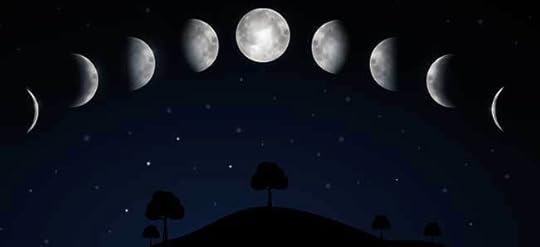
They dreamed they were people.
In their dreams they had arms and feet. They had ears and noses. They walked and jogged and dieted and paid taxes. But if you could have seen them as they really were in the black void of space, you would have made out the broad curves of planets draped in dense clouds, and you would have called them what they were: planets.
When worlds dreamed about being people they forgot all about who they were when awake and orbiting a star in space. They talked about sports, hairspray, and weather.
Similarly, when in space they drifted by each other, they rarely touched as they had in the distant past. They had learned not to. Touching other planets could be explosive and make a big mess.
The worlds that dreamed rarely looked at each other as they wound around their central star, traveling in an almost circular path as they always had. If they ever spoke to each other, they focused on areas where they agreed.
What did the worlds talk about? They agreed the sun was bright and asteroids could be annoying. They agreed that moons were pretty, and that the more moons, the better. They agreed that it was not fun to be too hot or too cold. As long as they talked about those subjects, they got along.
They dared not peek at what went on beneath the rolling cloud covers of other worlds. If they had, they would have seen raging storms and deep below, the uneven crusts of land that went deep into the magma and beyond into the seething molten cores of the planets.
Such knowledge was too intimate. If the observers could have looked more closely,they would have seen great monoliths containing sacred star charts, which showed only one perspective of the skies, and with the inhabitants always drawn at the center. Some star charts showed a haloed deity hovering above everything, but others did not.
Anyway it was best not to know. It was better to agree that moons were nice and that asteroids were pesky, and to go on and on in an almost timeless path around a star until, one day, the star would burn out and the planets would turn to lifeless cinders.
Eons of interplanetary small talk passed, and the small talk was reflected in their dreams of gossiping around water coolers at their dream jobs or in grocery stores.
One time, a planet had a particularly bad dream. It dreamed that outside the corporate offices where its dream self worked, the world was falling apart and no one knew. Trees withered, animals suffocated, and darkness fell. Ashes clouded the sky and the sun never rose, but all the time his coworkers stayed inside and gossiped and agreed about sports teams and what brand of deodorant was best.
The planet awoke and looked around with the urgent feeling that the universe was a dramatic place, a magical playground that was being wasted by fools who only wanted to talk about what a nuisance asteroids were.
To every other planet it crossed paths with, the planet who had seen the nightmare said, “Someday our journey will end. Maybe if we embraced the drama of being alive and were honest about things that mattered instead of hiding who we are behind clouds, our path around our star would be an adventure rather than a tedious cycle.”
The suggestion drew howls of rage from some worlds. They said such a foolish approach would be to invite “impurities” into their lands. But some of the younger worlds agreed that they were tired of talking about just asteroids and moons and liked the idea.
The “radicals” began looking more deeply at other worlds while shifting aside their own veil of clouds to reveal canyons or volcanos if they had them, and sights never seen. As they passed other worlds they began to look – really look – at them. The observers gazed, saw far and deep, and were startled.
The most sedate-looking planets had hidden violent dramas beneath, and poignant depths of knowledge, wisdom, beauty, and hurt. Resplendent colors unfurled from them, with mountains made of ice and marble. By squinting hard the observing planets could see flowers with wings flying from tree to tree; small furry flailing animals rooted to the land crust by stems; and icy volcanoes.
Not everything the worlds saw on other planets was beautiful. When a few adventurers saw anything disturbing they said, “There is nothing of this darkness in me,” and they felt moral for saying so.
They did what cautious planets had always done. They draped themselves in clouds and refused to look out anymore. They wanted to go back to the way things were. They had a contemptuous name for the radical planets: fire gazers.
The planets that stayed apart especially disapproved of the star charts of other planets. They looked at their own constellations and said, “You see? Our star charts are correct, but the other worlds, those liars, are telling us we are wrong.”
Some planets did more than criticize. They punished the worlds that had made them unhappy by veering from their orbits and ramming their moons. Then, exhausted, when the attacking worlds slept, they dreamed of guns, war, and death.
But the planets who had recognized beauty in other worlds had different dreams. They did not like the stark choice between boredom and violence. They longed for adventure and sights that dazzled.
There was magic in looking at all the violent drama of another world, the upheavals of ground and oceans, and the lightening striking the surfaces of glacial lakes, and the plumes of smoke rising from seething depths.
The “fire gazing” worlds drew in memories of events they had never known, and became more than what they were, added histories to their histories, and in knowing others, they knew themselves as they never had before.
But the worlds who withdrew sought to remain safe and content as they continued their seemingly endless cycle around their star. They dealt with any boredom by making up scandals about the other worlds and congratulated themselves for remaining “pure.”
They hated anything new, even their crazy dreams, but the dreams did sometimes make them wonder if there was something more, something beyond their lone solar system. After the dreams had ended, a lonely ache would sometimes follow, and they would venture to speak to other lonely planets as they drifted by.
“How about those asteroids?” they would say.
“Damn nuisance,” the neighboring planet would say, “almost as bad as those idiot fire gazers. But moons. Moons are nice. Sure wish we had more of ‘em.”
If you enjoyed this post you might like my other writing. Take a moment and sign up for my free starter library. Click here.
The post Interplanetary Small Talk (Short Story) appeared first on PASSIONATE REASON.
July 1, 2015
Are they kind?
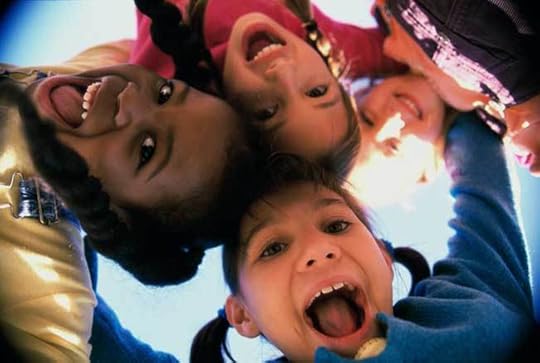
In the early seventies as I was about to enter kindergarten, the adults around me spoke in fretful tones. They would say, “You are going to be in a classroom with black kids. How do you feel about that?”
I felt nothing at all about that. At age four I had far graver concerns. I was expected to leave home and go to an alien place called kindergarten. I had never been to kindergarten before. What trials were going to be expected from me? Could I hack it?
On my first day, sitting at my assigned place at a table, I met a brown skinned boy named Jamal who sat across from me. He introduced himself and seemed friendly. Meanwhile the teacher was handing out drawing paper, but somehow she had skipped me when handing out crayons. She began naming shapes for us to draw.
My stomach dropped, and I felt cold. Disaster had struck. Even at age five, I had an instinct that I had better fit in, or else. Was I allowed to interrupt the teacher while she was talking? Should I pretend to draw shapes with my finger? I was dealing with a problem I had never encountered.
Seconds later Jamal leaned forward and lent me one of his crayons. With infinite gratitude, I accepted the crayon. The verdict was in: Jamal was nice. The adults were silly.
As I moved on to other grades, I forgot about Jamal. I entered an environment full of cues and signs from teachers and other authorities. What I saw was this: the black students were yelled at more often. They were far more likely to be sent to the principal. They tended to be placed in the bottom-rung reading groups. And most of them in my South Carolina town were poor. And they spoke differently, a language style that my grammar books deemed improper.
As a kid, I never thought to ask: “Are the black students yelled at more because they are meaner than white students or because the teacher does not like the black students as much? Are they put into the lower reading groups because they are not as smart as whites or because the teacher has low expectations of them? Are they poor because they have lazy parents or because society does not provide the same opportunities for them that it does for white citizens?”
The questions might have been good ones to ask but as a seven year old I did not ask them. A seven year old accepts a “might is right” principle of morality. What the teacher says and decides must be right. The way things are the way they are supposed to be.
As I grew I absorbed more messages, many of them wordless, without even being aware of what was happening. When a black student was sent to the principal, I had the impression: black people sure do get into trouble a lot; not, maybe white students get away with more. When I heard black students speaking vernacularly, I wondered, “Why do they not talk right?” Not “Who defines which language style is correct and which is not?
As an adult, I question surface impressions because I know how often they have misled me, but as a child, I rarely if ever did. I never thought I was biased. In my mind, I was absorbing the evidence around me and drawing obvious conclusions. But mostly my impressions were unconscious.
Though affected by my social environment, I did not hate anyone who had not been unkind to me. I was far too self absorbed to hate. I was mainly concerned with being liked. Race was an almost invisible backdrop in the drama of my life, until the sixth grade made me more aware of it.
In the sixth grade, I was bullied, mostly by a troop of pretty white girls for being shy, they said. The girl who led the bullying was extraordinarily popular and had friends all over the school. When she ridiculed me in front of them, they followed her lead, which created the powerfully convincing illusion that everyone hated me.
But there was a chink in the illusion where a hint of light shone through. When winter came I made a friend. Her name was Jessica. She had transferred from another school mid-year. She had a thoughtful doe-eyed beauty. She was black but had trouble fitting in with other black students because, like me, she was shy.
Jessica and I compared notes. Being shy was apparently not tolerated by either race. She asked me if I was shy at home around people I knew, and I said no.
“Me either,” she said. “At home people tell me not to talk so much.” She complained about the teacher holding her up as a role model for the class by saying, “Shh. Be quiet. Look at Jessica. Everybody be quiet like Jessica.” I shook my head and agreed that no one understood us.
I loved talking with Jessica at recess. We would walk the dirt track and discuss the perils of being shy and how wonderful it would be to finally escape the school when May came.
One freezing winter day during recess, she saw me shivering and took off her long trench coat and handed it to me. Her gesture was simple, and done almost without thought. But that year, such acts of kindness toward me were exceedingly rare.
Her action showed that she had no fears at all about being associated with me even if it meant being ridiculed herself. My status in the classroom was not something she ever even stopped to consider. At the time I was too devastated by the rejection from others to fully appreciate her gesture of friendship.
She and I made it through the rest of the year. She went to the public middle school, and I enrolled in a private school to get a fresh start with a new group of students.
By the time I had entered my new school I had changed. I had once sought friendships with kids who were popular. I no longer cared how popular a student was, or how pretty, or whether they wore brand name clothing. Now I had a pressing new question I asked myself when I met new kids: Are they kind?
I no longer trusted politeness alone. Many of the kids who had joined in the bullying had been ordinarily polite kids who had been swept up in herd conformity by a charismatic 12 year old girl.
At age 13 I would wonder, if this student had been in my sixth grade class, would she have joined in the bullying?
I stayed away from those who gossiped or back stabbed others. I recognized the expressions that students made when scapegoating someone: the gleeful triumph that ridiculing another person brought to the face or scowling indignation. I recognized how a scorned person could become, with a little gossip, the incarnation of purest evil, and how other students would often rally to the side of the person doing the ridiculing.
My religious private school was strict, so I finally returned to the public school system and created an identity for myself as a straight A student. The old bullies did not seem to recognize me. But one day I saw someone who did. She was taller but her features remained the same. It was Jessica. We started talking and exchanged phone numbers. I found out that she lived only blocks from me, and she invited me to visit her.
But at home, when I asked permission to visit, I met a flat refusal. The reason given was that she was black and that it was not appropriate in South Carolina for a white person to associate with a black person.
I was flabbergasted. It was 1987, and the civil rights movement was not exactly new. Many old boundaries had broken down, and in general the media was working to shatter offensive stereotypes. Besides, I had attended school with black students and knew they were like me.
The adults around me could not say the same. They had grown up in all white schools in a society which forced black citizens to sit at the back of the bus. As a result the white adults had never had a “Jamal moment,” in which a student of a different race had lent them a crayon.
Most adults I knew yearned for the world of their childhoods, which they described as all-white crime-free utopias where they could sleep with their doors unlocked and walk anywhere without fear. Society, they said, had gone downhill.
But I could not grasp their intolerance. Jessica had been far kinder than any of the white students who had bullied me. Were they more deserving of my friendship than she was?
I had a problem. The idea of lying to Jessica upset me, but I was too embarrassed to admit the truth. Other problems loomed; only weeks later, my bipolar disorder manifested in a big way for the first time. I was hospitalized and I spent the rest of my senior year on a home-bound program.
Many years have passed since high school and I live in Florida now, but when I visit South Carolina, I see relatives whose attitude toward other races have not changed since the nineteen-fifties.
I know people from my past who love their house pets and worry about their children. They love chocolate desserts and try to watch their weight. When someone they love dies, they suffer. Some of them are charming and witty and tell wonderful stories.
That is why I feel so surprised when I hear them make remarks that make me painfully aware of how little time has actually passed since the Emancipation Proclamation.
When those from my past make racial remarks, I see the look I remember from so long ago as a bullied kid: the gleeful satisfaction of ridicule; the irrational scowls of hostility; the magma of cruelty bubbling beneath the surface of their polite facades.
I find myself terribly out of sympathy with them, and I think of that freezing teeth-chattering day, long ago, on the school playground, when my friend Jessica let me borrow her coat. The memory reminds me to ask myself the same questions about those I grew up with that I asked while recovering from bullying: Who are they?
Are they kind?
If you enjoyed this post you might like my other writing. Take a moment and sign up for my free starter library. Click here.
The post Are they kind? appeared first on PASSIONATE REASON.