L.E. Henderson's Blog, page 17
April 16, 2015
A Short Story: “Castles in the Water”
No one believes me when I tell them about the castles in the water. But it was long ago, and who can blame them? Not me. Not ever.
But I am still going to tell the story. I have to. Pretend it is fiction if you want, but the story burns inside me with a reality I can almost touch.
I was 10. My name is Jason, and the apartments were called The Ivy Mansions, even though they were nothing like mansions, and I never saw any ivy. For reasons unknown the complex had been shut down and neglected for several years. The paint of the apartments, which resembled townhouses, was peeling, leaving grey bald streaks where the pink or green paint used to be.
But the Mansions were a perfect place to ride our scooters or skateboards, me and my friends, and it had a large pond which was big enough for everyone to call it a lake, and flat broad sidewalks that swept all around it. There were No Trespassing signs scattered around, but no one was ever there to enforce them.
It became our habit to meet there after school and ride on our scooters around the big pond, and talk. We felt like a band of criminals on that forbidden lot, me and my friends Jamie, “Pat the Rat,” and Joey. I loved how when we first got there, the air was always filled with a haunting silence.
The place had a weird, cemetery-like feel to it, and our voices echoed like voices from the past in the big empty spaces. But it was Joey who noticed the quality that makes the place famous in the world of my memory. Joey was small for his age, quiet, and he struggled to be accepted, but he noticed things. One day I noticed him sitting on one of the wooden benches and gazing at the water.
Who did that, stared at water? I thought he was crazy. What was he, sixty?
But on that autumn day, almost at sundown, the apartment buildings, which looked like townhouses, had cast long reflections across the green water. I sat down beside Joey and followed his line of sight. “What do you see?” I asked.
He turned and looked at me. “I see castles,” he said.
I let out a half laugh. “Bullshit,” I said.
But he did not smile. “What do you see?” he asked. I looked at the water more carefully and was startled. How had I missed it? I saw on the water reflections that did not match at all the buildings around us. My eyes opened wide as I beheld majestic turrets, stately gates, balconies, multiple domed roofs, and magnificent gardens.
But the apartments casting the reflections remained boring, flat topped functional buildings, green, pink, and blue, with peeling paint and broken windows.
”Holy crap,” I said, and stood. “We have to get a closer look, Joey. Come on.” Joey rose with astonishing calm and followed me. At that moment I felt like Joey was my best friend in the world, even though he was younger and we almost never spoke. Now I was witnessing a miracle with him. And there was no better feeling in the world.
Together we knelt on the slope of sandy shore and gazed into the water at a place that might have been another world, a golden, sparkling place that at the moment seemed even clearer than the world I knew. I was too dumbfounded to even think of calling my other friends, but it was not long before Jamie and Pat the Rat began to wonder what we were looking at and joined us.
“Wow,” Jamie said, and Pat the Rat only stared. “This is like, a miracle.” Jamie looked even more fascinated than Joey or I had been as he knelt and swirled the water with his fingers, and watched the castles shimmy on the surface.
We all spent the next hour imagining why the castles were there until the sky darkened and the only reflection was of a wavering crescent moon. Pat said, “Someone is playing a trick on us,” he said. “An optical illusion. Or a projector operating from one of the rooms.” We all glared at him like he had just killed Bambi, until he shrank inside himself and hushed.
Adding to that buzz kill, I was disappointed to have the exciting vision go away as darkness fell. For an hour after sunset we stayed and studied the moon wavering on the water, thinking that the castles might come back somehow.
We knew we had to see them again, so we returned to the apartments the next day, and the next, to see if they would appear. They always did. Looking back, the reflections themselves were not nearly as interesting as the things we made up about them. The castles themselves did not move except when the water did. They would not reveal their secrets, yet for the next three weeks they set fire to our imaginations.
I remember those weeks as the autumn of “maybe.” Maybe the “reflections” were a hint that somewhere inside the apartments was a magical porthole to another world. Or maybe if you dived down deeply enough, you would emerge in another place and time.
There was a beauty in the mystery that was perhaps even more beautiful than the castles themselves. As long as there were unknowns, the magic of infinity held us spell-bound. There was nothing more exciting than wondering about the infinite. But the one person not enjoying the mystery was Jamie.
What you have to know about Jamie was that he had to be right about everything. He was always blurting out answers in class. Even though he was only right about half the time, he came across as equally confident every time he spoke. He was known as being smart, but I saw him as a puffed-up bragger. If you were ever uncertain about anything, he was quick to step in and clear things up in that assertive, reassuring tone of his that left no room for argument or doubt.
It was the same with the castles. We would go to Ivy Mansions every day after school to study and talk about them, and, more and more, I noticed him fidgeting and frowning. After several weeks of this, Jamie sighed, shook his head, then slid into a calm and reassuring posture that said he knew exactly what was going on, to the point it was hard not to look to him for guidance. He shrugged, “The castles are real, I know they are. If you dive in and go down deep enough, you will come out in the other world, where the castles are.”
Pat the Rat stared critically at him. “How can you know that?”
Jamie squared his shoulders. “I just know. The day we found the castles was right after I made a wish on a star. I wished my dad would get rich again so we could move back into the house where we used to live. Next day, here it was.” He knelt at the shoreline and swept his hand over the water. “A real miracle. This is my answer. What are castles known for? Wealth. They are full of gold and precious stones. There are riches down there for the taking. This castle is here for me.”
“Are you nuts?” The words shot from my mouth. Jamie looked sharply at me, but I knew a stupid comment when I heard one. “Wishes on stars, only kindergarteners believe that kind of crap. Even really superstitious people never make wishes on stars, at least they never expect it to work.”
“How do you know, dummy?” He glared at me. “You ever made one?”
“Well no, but…”
“Then shut the hell up.” He clamped his lips together, which had turned pale, but his eyes still challenged me.
I had an idea where all of the insanity was coming from. Jamie had been ridiculously wealthy at one time, and popular, but his father had lost his job due to a series of bad decisions. The clothes Jamie wore had gone downhill quickly as he grew out of his old ones.
He now wore ill-fitting trousers that had probably been purchased in a thrift shop. His formerly peachy complexion had darkened, become sallow and bitter, and he started to cuss more and even bully some of the smaller kids, probably in some desperate attempt to regain a feeling of status.
He went on dreamily, “If I could go down far enough, I would get there. Could grab the gold and jewelry an get out before anyone knew. Maybe, if you all helped me, we could split it, divide it among ourselves.” I knew why he was trying to include us. Jamie could not swim.
“I wish I could do it,” Jamie said, “see another world, but my swimming is, well, I’m all out of practice.” He looked at Joey. “But you, my friend, swim like… like an octopus.”
“An octopus?”
“Well, fish if you’d rather be boring. My point is, you can do it.”
Joey had seemed to shrink inside himself, the more Jamie talked. “Me?” he asked in a small voice.
Jamie laughed. “Yeah, you.” He clapped Joey on the back. “Stop being modest. You are a swimming ninja.” It was true. In swimming pools most of us only pretended to swim. Mostly we just jumped into the pool, only to get out of it and jump again. Joey was different. He could really swim, and he was fast, arm-stroking his way from one end of the pool to the other like an Olympic athlete.
“Look Joey,” Jamie went on, “you gotta do it. This could change our lives, change everything. If you do it, you can have most of whatever you find. And you get to see another world. You will be the only one of us who can say that.”
“Yeah, I can swim, but how far does the water go down? 50 feet? A hundred? I have to breathe. I would need expensive SCUBA gear.”
Jamie huffed like he had just heard the stupidest thing ever uttered. “SCUBA gear? This is not the Coral Reef. This is magic. After you go down a little bit, the water will clear, and you can breathe.”
Joey looked at him with a cautious glimmer of hope. “How do you know?” I was startled to see that there was no mockery in the question. It was like Joey was asking, “What answer did you put for question 9?” For the moment, at least, Joey had been taken in. He was really interested in the source of the divination powers Jamie claimed to have.
Jamie smiled confidently. “I just know things,” he shrugged. “Always have. Things like this,” he gestured to the stretch of palatial beauty on the watery surface, “they happen for a reason. But to get anything out of it, you gotta believe. Can you do that?”
For a long moment everyone looked at Joey, who still appeared uncertain, his eyes darting back and forth. Even though I mistrusted Jamie, my own imagination had started to go wild with fantasies of wealth, fame, and power. There was something hypnotic about the way Jamie spoke and held himself that could spin you into his dream, a place where anything seemed possible.
I imagined living in a mansion with a pool and an arcade and a private movie theater. I could buy an amusement park, or even have one in my backyard if I wanted. I could speed down the highway in a La Ferrari, and not even have to graduate high school. The freedom. The power. The euphoria.
Besides, Jamie did have a point. What we were witnessing did appear to be a miracle. There had to be a reason for it. What if it really was here for us? And what if all that stood between us and magnificent wealth was a little water?
Joey stared into the water with an almost mystical expression. Maybe he was having some of the same thoughts I was. If so, he snapped out of it and looked at Jamie. “What if I go down too far? What if I die? What if the water pressure…”
Jamie huffed. “Try going down a little ways at first. You can always swim back up if it seems unsafe. Just try.”
By this time we were all hoping Joey would dive and take a look. Even though I had big doubts, what harm was there in trying? I actually felt a little irritated with Joey for hesitating. How dare he deprive us of a thrill? How could he choose the boring status quo over a magnificent adventure? How could he refuse to turn down a chance at wealth? Or at least the dream of it?
Joey was looking around like a trapped animal searching for rescue. But no one, including me, came to his aid.
“Do it,” Jamie said. “You can trust me.”
Night was falling. There was not much time left. The castles would soon be gone. Joey shrugged. “Okay,” he said. “But if it starts to seem unsafe, I’m coming right back up.”
“Sure, okay, fine,” Jamie grinned broadly. “But dive as deep as you can, okay? Or you might not reach the castle.”
With a sigh Joey stripped down to his underpants, revealing pale, thin legs. The water at the shoreline was too deep to wade into it, breaking off abruptly at land, so Joey splashed into the water, warping the image of majestic buildings on the surface, the high walls, the towers, and the shining domes.
“Okay, good,” Jamie said, “now dive, swim like the octopus you are, swim like the Joey I know you can be. Stay down for at least two minutes, or I’ll know you didn’t try.”
I remember how Joey looked at us, a look that said he was afraid to disappoint, and the pallor of his face in the waning light, before he took a deep breath and went down, leaving an impression of concentric waves to show he had been there.
I could see his pale body wavering beneath the rippling water, and I remember how the castles shimmied on the surface.
The water stilled for a few minute or two. I was starting to worry when Joey came up, gasping for breath. “I went down as far as I could, but my ears started to pop and my chest hurt.” He was shaking his head, his wet bangs plastered to it. “I tried, I went as far as I could. Anyway, all I saw down there was sand and a whole bunch of fish, no castles.”
Jamie was looking at him in contemptuous disbelief. “People went to the moon, you coward. You didn’t go down far enough. For magic to work, you gotta believe, you gotta take a leap.” Jamie stood over Joey and folded his arms across his chest like an army commander. “Try again.”
“I’ll drown,” Joey shook his head. “I’m not taking the risk for you, I’m not stupid. You don’t know there are castles down there, and I sure didn’t see any.” Jame began stroking his way toward the shore.
But just as he reached the edge, Jamie blocked his path and stepped on his hand. “Ow, stop,” Joey said, “what your you doing, you freak?”
“Building your character, you lazy bastard. My basket ball coach says never be a quitter.” Jamie bent over and shoved Joey’s head – hard – under the water. I could not believe what I was seeing. Joey was thrashing hard, and all I could see of him at first was his flailing arms. Bubbles gurgled up amid all the splashing. Jamie was going too far. I knew I should do something, intervene, but I was too stunned.
To my relief, Jamie finally removed his hand and let Joey come up for air. Joey was panting and gasping and coughing. “You have a choice,” Jamie said. “I can let you take a good deep breath, which means you might live until you reach the castles. Or I can keep pushing your head under the water like I just did. Either way you are going down. Make your choice.”
Joey looked at Jamie in disbelief. “You said I could come up if I needed to.” Jamie turned to me, his eyes pleading with me to take his side, shifting his gaze between me and Pat the Rat, but neither of us moved or spoke. Jamie was in charge. Even the air, sky, and trees all seemed to know it.
“You can’t do that,” Joey said.
“Can’t I?” Jamie looked imposing next to Joey even when they were standing side by side. But here, on the shore, Jamie towered over Joey and had a clear advantage.
Joey shot a pleading look at me, but I only shrugged. To be honest, I was afraid of Jamie at that moment, I am ashamed to say.
“Okay,” Joey said.
“Think of me as your coach,” Jamie grinned. “You’re gonna thank me so much when you see all the treasure, you’re gonna be so rich, we all are.” Joey looked at me in one last desperate plea for rescue, and when I said nothing, I could see a look of something like hurt betrayal in his eyes. Joey shook his head a little, took a deep, tremulous breath, and took a decisive dive beneath the surface.
About two minutes later I looked at my watch. No Joey. It suddenly hit me what a bad plan this was. Even if there were castles in the water, it would take hours to infiltrate a castle, steal carefully guarded treasures, and return them to whatever portal opened into our world. Even if he could do all that, how would he get the heavy gold to the surface?
I had the thought, which I had had many times, that Jamie was an idiot. Which meant I must have been too, for letting him rule over us that day.
I never saw Joey bob to the surface. The feeling his absence created was sickening. The stillness of the water seemed like the stillness of death. Jamie only shrugged. “Good sign. He must have made it. We have to give this time. I bet this time tomorrow he will be here, easy street from here on, for all of us.”
Pat the Rat was glaring at Jamie in a way that expressed my sentiments perfectly. Whatever hypnosis Jamie had pulled off earlier had been broken. “We should probably call an ambulance,” Pat the Rat said in a nervous tone. “What if he drowns?”
“And ruin everything?” Jamie said. “Look, this is going just the way I planned. Did you really think he would be back in a few seconds? Stealing treasure from a heavily guarded palace takes time, you dummy, trust me.” How he won that argument is still a mystery to me, but I do know that we were both terrified. We wanted to believe him. And knew we could be in serious trouble if Joey had died.
“My only worry,” Jamie said, “is that the bastard will betray us. What if he likes there better than here and wants to stay and roll around in all the gold?”
We all went home, although I did not sleep that night. I was anxiously hoping to wake up and discover that the night before had been a bad dream. Maybe, I thought, I would see Joey at school. But he was absent, as I had known he would be.
The school day dragged on with excruciating slowness. That night we all returned to the lake and waited for the castles to reappear. Just as the shadows of twilight claimed the sky, the castles came, stretching out long and clear along the surface. But Joey did not emerge.
I was beside myself. I knew with sickening clarity that Joey was dead. I hated myself for being taken in by a stupid bastard like Jamie. I had known all along he was more air than substance. Why had I gone along? I knew I had to tell someone. What would his parents think if he never came home? But I knew it could mean big trouble for me. For all of us.
Back at home, I felt so queasy, I walked around for half an hour with a lined plastic mop bucket. I felt the dread of someone being lowered into hell by a slow elevator.
With a dry mouth and a trembling hand, I sat down with a pen and a sheet of notebook paper. I wrote a garbled letter of confession apologizing, which I considered delivering to his parents after school. What would happen? Would I go to jail? I felt like I was writing a suicide note.
I went to school in body only, prepared to be miserable the whole day because of memories from the night before. I had never come closer to wanting to die, and have not since that day. I literally felt sick, and I was on the way to the office to call my mom to pick me up when I saw him, a vision as bright and as startling as a unicorn, Joey standing next to his locker. He was either alive or he was a very convincing ghost.
For someone recently resurrected, he was dressed casually in his old, faded denim jacket. The relief I felt was more like a tidal wave than a spring shower on a hot day. “Joey!” I called his name. And again, “Joey!”
He barely turned. As soon as he saw me, he looked away. I rushed toward him. I wanted him to tell me everything was okay, that there was no harm done, and that he forgave me for going along with stupid Jamie. But he never looked at me, never spoke.
I am not sure why I returned to the Ivy Mansions that night. Maybe it was because of a small – and ridiculous – hope that everything could seem normal again. Or because I needed to be with people who knew what had happened, or I would be alone. But I regretted my visit the minute I got there.
Jamie kicked a rock into the lake. “Bastard,” he said. “I bet he kept all the loot to himself. Betrayed us. But there has to be more down there. Maybe one of us can go see.” He looked at Pat with a hopeful glimmer. When Pat shrugged, Jamie looked at me with raised eyebrows.
At that moment I saw a white-hot flash, and something inside me came undone. I swung a fist at Jamie, felt the solid impact of his jawbone against my knuckles. I cannot remember what all happened next, but I know he struck back. My memory after that is just a chaos of hitting and kicking. I think even Pat the Rat entered the fray, on my side, at one point.
That was the last day I ever saw the castles. It was tragic because they were so beautiful and rare, and it was not their fault that Jamie was a bastard. But I was not a fan of them anymore. Still, they never went away in my memory, even after a couple of years later when the lake was drained and the empty space was filled for more apartments, a low income government housing project.
I never learned exactly how Joey escaped, but he was a skilled swimmer. He must have swam to another part of the lake without any of us seeing him and crawled out. But it is hard to imagine because he would have had to walk home in his underwear.
Even though Joey lived, the betrayed look on his face has always haunted me, and worse, the fact that I had only watched. He could have died, and his drowning would have been partly my fault. Sometimes I like to imagine that he really did find a castle entrance; that he strolled triumphantly through its gardens and corridors, infiltrated the treasury, and came away with magnificent wealth.
I still wish I knew why the castles were there. Like so many things, they are still a mystery. And because the lake is gone, I have no evidence that they ever existed.
Instead of cracking the mystery, I learned about the kinds of things people do when they discover one. There were people like Jamie who could not stand a mystery even for a moment and needed an answer right away, even if he had to make one up. And there were people like me who knew better but stepped aside and said nothing.
Provable or unprovable, the castles made a lasting impression on me. All my life, since seeing them, I have viewed the universe as a place of infinite castles. Uncertainty is a tender state, and there is infinite beauty inside that tenderness.
But like all tender things, it is fragile. A question mark can be steamrolled into something flat, unless someone is willing to say that sometimes the mystery is enough, and that, until we can do better, we should let it be what it is.


April 9, 2015
Why is Being Big and in the Center Considered Important?
During my early adolescence, I attended a strict Christian school where the science textbooks said on the first page that the Bible was the infallible word of God. No alternative theories to creationism were allowed to even be considered.
When I became agnostic, the universe unfolded into something bigger and more uncertain than I had ever imagined, and, when I read historical accounts of the Renaissance or Enlightenment, I could personally relate to the rocky transition from a medieval model of an earth-centered universe to a sun-centered solar system. My personal perspective had been similarly flipped on its head.
In my imagination the principal of my Christian school was the face of a medieval pope, and Galileo was the heroic maverick who – if he had gone to my school – could have seen through its religious propaganda.
When I read about how Galileo was accused of heresy by the Catholic Church for his observations, the injustice felt personal. I imagined my principal, My Bagwell, pointing a sharp finger at Galileo and ordering him to “get right with God and believe and make sure to always wear socks and a belt” as he did with boy the students in chapel.
I could see how most of the Christians I grew up with me clung to the world view I had abandoned, and I saw that mirrored in the historical resistance to the idea that the earth was not the center of all things.
Even after the sun-centered model of the solar system was widely accepted, many people took the findings as a strike against their sense of worth, calling for either cynical resignation or abject humility. I had to find my own way to deal with the discovery that – even next to the sun and Jupiter — I was a speck of dust inhabiting a slightly larger speck of dust called earth.
The more I thought about it, the more I noticed that there was a tacit value connected to the earth-centered cosmology: the arbitrary, childish and absurd assumption that bigness and centrality confer importance.
Even after the earth-centered model of the universe went away, many still assumed that being big and in the center were what made things and people matter. Scientific documentaries commented about how terribly humbling it was to discover that we were not central, and that the universe is incomprehensibly vast compared to us.
But favoring big over small is subjective. Value does not exist in nature. It is imposed by people. It says little about the universe. It says a lot about us. I wonder where the idea of “big and central” as the yardstick of importance came from.
Whatever the case, it depends on a limited perspective. Maybe I would seem unimportant from the perspective of a non-terrestrial being existing thousands of light years from earth.
But again, the evaluation depends on a point of view. From my own limited perspective, my dad matters more to me than a lifeless star light years away from me, no matter how big the star is. I wonder: Why are bigness and centrality things that historically humankind has valued so highly?
The “bigness” value can be seen in everyday human behavior. If someone gets rich, the first thing they usually do is move into a giant house with more space than any one person can possibly ever use. Why?
Apparently they have never played the game “Treasure Hunt,” a game show that came on T.V. when I was little. For fun, my eleven year old brother would set up treasure hunt conditions in his bedroom. He would array a scattered collection of cardboard boxes, all different sizes, on his bed.
As his contestant I had only one chance to select a box out of many boxes in the hope of walking away with a prize. Each box either contained a treasure or something not especially valuable. As a toddler, I would always go straight for the biggest and most colorful box.
But my brother was sneaky. He would sometimes put the most worthless objects in the biggest boxes – a sheet of wadded paper or a single stick of gum. Often he would put the most enticing treasures in the smallest boxes: a 10 dollar bill, for example, or a bag of my favorite candy.
I quickly learned to go for the smallest boxes until my brother realized I had caught on. Then he made it so that the size of the boxes provided no hint at all. Still, the lesson stayed with me. Size could be deceptive. Sometimes all a big box contained was a lot of empty space.
Even in purely economic terms, most people would agree that a diamond is worth more than an empty refrigerator box, maybe more valuable than the refrigerator itself. Yet, for some reason, when it comes to cosmic things, the idea persists that space-hogging objects are automatically superior. Is a star more important than a single atom? Who says? Apparently, we do.
But a good case could be made for an atom being more important than a star. Atoms were here first. A star could not exist without the innumerable individual atoms that compose it. Even if that were not the case, atoms and stars just exist. They are really not in competition with each other, until someone capable of making comparisons says so.
But making comparisons is a natural human tendency. Thus, the expected response when we look at a night sky full of stars is for us to feel puny and reflect on our insignificance.
But why? While legions of stars inspire wonder, they do nothing to diminish how I see myself and those I love, because the belief that centrality and bigness determine worth is childish and silly. It is like saying that that the loudest music is the best music. Not to mention that the universe – as far as we can tell — has no center at all. The universe has apparently not conferred honor on anything by making it the center of everything.
Knowing that there is a vast and mysterious universe beyond ourselves cannot help but dramatically change our perspective. But how we view ourselves as a result is a choice. It is okay for us to like ourselves and each other, even if we are, relatively speaking, specks of dust on a spinning rock called earth.
After all, the universe has never said, “Hor hor hor, puny humans, you are worthless, I will crush you.” It was people who decided that the very large was superior to the very small; that a galaxy mattered more than a single atom; that a mountain was more important than a cat.
While the belief in the earth being center has – mostly – gone away, the idea that being big and central is what determines worth has not, an idea invented by the same people who assumed everything in the cosmos revolved around them, and who turned the night sky into a kind of cosmic Rorschach test which revealed human fears, concerns, and ambitions. But the stars remain a kind of values clarification test. As objective entities, stars are silent about what is good or bad.
But inside their silence is a choice: to look at them and feel small or to learn about and wonder about them and feel a part of the grandeur of the cosmos they represent. However many there are, stars do not think, talk, plan, compare, or care about anything.
They do not determine our response to them. We do.


April 1, 2015
How Social Media Notifications Affect My Concentration

In a book on writing, Stephen King says the only “office” feature a writer needs to begin writing is a door to close – or at least some way to wall out interruptions and noise.
Physical doors are easy enough to close, but technology has created different kinds of doors, and they are getting harder and harder for me to keep shut.
When I settle down to write, my Android phone will chirp, chime or buzz me out of my creative zone every time I get a new new email, Twitter follow, or a Facebook message informing me that someone on has “tagged” me. If I want to focus, I have to shut a “door.” That is, I have to mute my phone.
For a while, muting my phone worked well, creating a temporary paradise of solitude for writing. Normally, when I write, I am extremely focused. I can write for many hours without ever being tempted to browse online or do other things.
But a curse on my new phone called “lock screen notifications” began to change all that. On my old phone I had been able, if I wanted to know what was going on in the social media world, to just scroll down. That meant I could choose to see information when I was mentally prepared to see and respond to it.
But lock screen notifications meant that if I turned on my phone to play music while writing, I was instantly bombarded with social media information in the form of boxes I could either “click” on or swipe away.
While looking at them, I would forget that I had only turned on my phone so that I could play relaxing music while writing. They were like unopened boxes with mysterious objects inside. They said, “Hey, lookie, you have a new email. What could it be? A book contract? A genie granting you three wishes? A press of your finger, and you can know.”
Before long I would find myself stumbling around on my Twitter or Facebook page in a daze, wondering what I was doing there. A half hour later I would remember that my original purpose had been to write.
Having a social media summary of tweets, “likes,” or direct messages appear as soon as I turn on an electronic device sounds harmless enough. But the visual splatter was devastating to my concentration. A couple of days ago I did research to find out how to switch off lock screen notifications, and my mind has been clearer ever since.
I want to know what is going on in the social media world, but in my own time. In snail mail terms, it is the difference between taking a morning stroll to the mailbox to check the mail and having letters hurled at my face before I even step outside the door.
Despite my complaints, I have never been much of a Luddite. It is only recently that I have found myself sometimes wanting to escape technology. Despite the many benefits of the devices I use, they have gained more control over my life than I think they should have.
Take Facebook. Because of an update I desperately wished I had never consented to, Facebook seized control of my message system so that if I was tagged or a random person made a comment, I would get a visually urgent red alert on my message app, forcing me to click on a link that routed me to Facebook. If I failed to comply, the nagging red alert icon would remained leeched to my message app. I would sometimes get so many junk notifications that the clean-up was time-consuming drudgery.
So last weekend I deleted my Facebook app from my phone. I wish I had done it long ago. The visual “silence” has been wonderful. The internet used to grant me the exciting ability to access information immediately while asking for little in return. But the information is no longer content to let me find it; it is now coming to me whether I ask for it or not. It never knocks or asks for permission to enter, which makes me think I need more than a door to close. I need deadbolt locks and a pit bull.
The more my mental space is invaded, the more I yearn for simplicity. I long to read awkwardly heavy hardback books; take long thoughtful lakeside walks; read poetry that defies immediate comprehension, and follow the advice of Ray Bradbury, “Stuff your eyes with wonder…See the world.”
By the way, Ray Bradbury wrote an almost prophetic short story called “The Murderer,” where, instead of smart phones, everyone wears radio wrist watches that blare constant music and serve as telephones so that interruptions are constant and no one ever has a moment alone with their thoughts. It would be missing the point to assume that the problem with this dystopia is too much literal noise. Noise can be visual if it interrupts thoughts and shatters concentration.
Lock screen notifications seem to be a symptom of a bigger problem: a culture that seeks to divert and amuse at every moment, drawing concentration away from more focused activities.
From restaurants to medical offices, televisions appear everywhere. When, on the phone, a company puts me on hold, tinny-sounding music blares into my ears in order to spare me from a terrible moment of hearing silence, even though the music is not the kind I like and makes my experience more annoying.
The ability of technology to annoy me seems to be growing. When I first got my iPhone, years ago, I saw it as a magical and powerful device that allowed me to access information with a touch of my finger; play video games while waiting at the DMV; go online anywhere. I loved it so much I started carrying it around with me everywhere I went. I am now trying to put some distance between myself and my “smart phone.”
What used to only grant power now seems bent on opening doors at times I would rather close them, and I foresee further fights ahead. As someone who treasures activities that require privacy and concentration, I will sacrifice my phone if it is the only way to preserve my ability to close the door.


Why I Got into a Fight With My Phone
In a book on writing, Stephen King says the only “office” feature a writer needs to begin writing is a door to close – or at least some way to wall out interruptions and noise.
Physical doors are easy enough to close, but technology has created different kinds of doors, and they are getting harder and harder for me to keep shut.
When I settle down to write, my Android phone will chirp, chime or buzz me out of my creative zone every time I get a new new email, Twitter follow, or a Facebook message informing me that someone on has “tagged” me. If I want to focus, I have to shut a “door.” That is, I have to mute my phone.
For a while, muting my phone worked well, creating a temporary paradise of solitude for writing. Normally, when I write, I am extremely focused. I can write for many hours without ever being tempted to browse online or do other things.
But a curse on my new phone called “lock screen notifications” began to change all that. On my old phone I had been able, if I wanted to know what was going on in the social media world, to just scroll down. That meant I could choose to see information when I was mentally prepared to see and respond to it.
But lock screen notifications meant that if I turned on my phone to play music while writing, I was instantly bombarded with social media information in the form of boxes I could either “click” on or swipe away.
While looking at them, I would forget that I had only turned on my phone so that I could play relaxing music while writing. They were like unopened boxes with mysterious objects inside. They said, “Hey, lookie, you have a new email. What could it be? A book contract? A genie granting you three wishes? A press of your finger, and you can know.”
Before long I would find myself stumbling around on my Twitter or Facebook page in a daze, wondering what I was doing there. A half hour later I would remember that my original purpose had been to write.
Having a social media summary of tweets, “likes,” or direct messages appear as soon as I turn on an electronic device sounds harmless enough. But the visual splatter was devastating to my concentration. A couple of days ago I did research to find out how to switch off lock screen notifications, and my mind has been clearer ever since.
I want to know what is going on in the social media world, but in my own time. In snail mail terms, it is the difference between taking a morning stroll to the mailbox to check the mail and having letters hurled at my face before I even step outside the door.
Despite my complaints, I have never been much of a Luddite. It is only recently that I have found myself sometimes wanting to escape technology. Despite the many benefits of the devices I use, they have gained more control over my life than I think they should have.
Take Facebook. Because of an update I desperately wished I had never consented to, Facebook seized control of my message system so that if I was tagged or a random person made a comment, I would get a visually urgent red alert on my message app, forcing me to click on a link that routed me to Facebook. If I failed to comply, the nagging red alert icon would remained leeched to my message app. I would sometimes get so many junk notifications that the clean-up was time-consuming drudgery.
So last weekend I deleted my Facebook app from my phone. I wish I had done it long ago. The visual “silence” has been wonderful. The internet used to grant me the exciting ability to access information immediately while asking for little in return. But the information is no longer content to let me find it; it is now coming to me whether I ask for it or not. It never knocks or asks for permission to enter, which makes me think I need more than a door to close. I need deadbolt locks and a pit bull.
The more my mental space is invaded, the more I yearn for simplicity. I long to read awkwardly heavy hardback books; take long thoughtful lakeside walks; read poetry that defies immediate comprehension, and follow the advice of Ray Bradbury, “Stuff your eyes with wonder…See the world.”
By the way, Ray Bradbury wrote an almost prophetic short story called “The Murderer,” where, instead of smart phones, everyone wears radio wrist watches that blare constant music and serve as telephones so that interruptions are constant and no one ever has a moment alone with their thoughts. It would be missing the point to assume that the problem with this dystopia is too much literal noise. Noise can be visual if it interrupts thoughts and shatters concentration.
Lock screen notifications seem to be a symptom of a bigger problem: a culture that seeks to divert and amuse at every moment, drawing concentration away from more focused activities.
From restaurants to medical offices, televisions appear everywhere. When, on the phone, a company puts me on hold, tinny-sounding music blares into my ears in order to spare me from a terrible moment of hearing silence, even though the music is not the kind I like and makes my experience more annoying.
The ability of technology to annoy me seems to be growing. When I first got my iPhone, years ago, I saw it as a magical and powerful device that allowed me to access information with a touch of my finger; play video games while waiting at the DMV; go online anywhere. I loved it so much I started carrying it around with me everywhere I went. I am now trying to put some distance between myself and my “smart phone.”
What used to only grant power now seems bent on opening doors at times I would rather close them, and I foresee further fights ahead. As someone who treasures activities that require privacy and concentration, I will sacrifice my phone if it is the only way to preserve my ability to close the door.
March 25, 2015
My Life-long Obsession with the Ideas of Erich Fromm
One boiling summer day I went into a grocery store on a desperate quest for ice cream. The ravaged freezer shelves were almost empty, except for a few unappetizing rejects. Then I saw, partly hidden, on a lower shelf, an enticing carton of peach ice cream. “Look! I see peach,” I said to the person who was with me, and pointed.
At that moment, a middle-aged woman swooped in front of me, swung open the glass freezer door, made a swift grab, and dashed off with the last carton of peach ice cream. I was later told that her face had “lit up” as soon as I said “peach.” I was not in love with humanity on that day. “Who does that?” was my response.
But maybe I over-reacted. The woman had been annoying, true, but it was not like she had invaded Czechoslovakia or dropped a bomb on anyone. I disliked her because she had taken something I wanted. Erich Fromm, a Neo-Freudian psychoanalyst, might have said my dislike for her was not objective.
I discovered Erich Fromm in college. I read a thin book by him, a best-selling classic called The Art of Loving. It was not a book about how to be more romantic; in fact, Fromm questioned whether romantic love was love at all, since the thrill of infatuation is fleeting and depends on uncontrollable factors like beauty, which fades.
According to Fromm, love was not something that you “fell into,” but a decision you made, and it was primarily giving. It also required objectivity; that is, the ability to see another person in their own context, apart from how the person might benefit or harm you.
Fromm also thought that “mature love,” unlike romantic love, was not exclusive. Love was a “faculty” like the ability to see or hear. It was a response to a pattern of qualities that were “essentially human.” Fromm insisted that if you were able to love at all, you should be able to love anyone, no matter how annoying or even cruel the person is.
The last part felt uncomfortable, but having grown up in a Christian household, I could see in his philosophy an echo of the words, “Love your enemies.” His definition of love could easily have been called “brotherly love” and Fromm did call it that at times.
But he was far from being religious. He was an atheistic secular humanist, a Jewish intellectual whose writings largely grew out of the Western society of the forties through the sixties, a society reeling from the after-shocks of World War II.
But there it was, in print, a bold espousal from a religious skeptic of the idea of loving everyone. Though I had broken away from the religious doctrines of my childhood, I was fascinated.
To Fromm, brotherly love was a human idea, not a religious one. Fromm saw love as the most rational – and sane – solution to the central problem of being human, a kind way to know someone while relieving the anxiety of separateness.
Fromm contrasted what he considered “love” with other methods of “overcoming the anxiety of separateness” that go under the same name, such as conformity, infatuation, domination, or the “narcissistic” dependent love of an infant for the mother.
At times, Fromm described the ability to love as almost an enlightened state, requiring remarkable patience, dedication, and concentration. He believed it was an art that was difficult to master, to the extent that those hoping to achieve it would have to dedicate their whole lives to it.
He insisted that the effort was worthwhile, since he considered the need to “overcome separateness” to be the most powerful force driving human behavior.
I read all his books like they were fast-paced criminal suspense novels, sometimes staying up all night. I was swept up by his beautiful clarity of expression and I was in awe of his probing insights, many of which came from his clinical experiences as a psychoanalyst. At the time, I believed everything he said. I could not imagine why his books had not changed the world.
But, despite being a world-wide bestseller, The Art of Loving did not change the way people interacted with each other. It did not produce a more loving society; did not make world hunger go away; did not make people less racist or more accepting of immigrants. Maybe it was because it is hard to sell an idea by telling people how extraordinarily difficult it is to carry out. But maybe there was another reason. Maybe he was wrong.
Recently I glimpsed The Art of Loving on my book shelf and decided to reread it. I wanted to see how time might have changed how I viewed his ideas. In college I had read his book uncritically, but now I wondered: Was he right? I no longer believed he had been right about everything. In fact, I saw many sweeping assumptions where before I had seen insights.
For one thing, his belief that “overcoming separateness” was the primary force driving human behavior was debatable. What about physical survival? Plus, he seemed to attribute all human behavior, including mental illness, to early childhood experiences – a stern and disapproving father or a life-hating, domineering mother.
Modern research has shown that mental illnesses such as bipolar disorder – which I have – are heavily influenced by genes, hormones, and even the physical anatomy of the brain.
Mental disorders can be treated successfully with drugs. While environmental factors are not ruled out as triggering mental illness, they are certainly not the sole, or even primary, cause. While the philosophical system of Erich Fromm was persuasive, I thought my hero had become unmoored from some of the realities he was trying to describe.
There was also some discord between his ideas and my own experiences and observations. I had discovered in the intervening years that I was bad at loving everyone. In fact there were times I was ready to head to a remote cabin in the mountains hundreds of miles from any human.
It was not just learning about the depths of cruelty humans could reach in my history classes; I was annoyed with people who did annoying things, like spitting out gum in the parking lot. But, aside from annoying people, there were also people who were truly cruel and dangerous, who tortured, maimed, raped, and dismembered. Was it wise to even try to love those types of people?
Maybe if I knew about their childhoods or environmental influences, I could achieve a certain amount of empathy and understanding for them. But love? It was asking too much.
Despite my criticisms, the idea of love as a conclusion of reason was one I was reluctant to let go. And it must have been compelling to a lot of other people, like early Christians or the many thousands of people who bought his book.
On the other hand, what good is it to strive for the ideal of loving everyone if it is outside the bounds of what human nature will permit? And if it is, why does the ideal remain so compelling?
So many reasons people give for loving other people are shallow, such as because they are family; or because they are on your religious or political team; or because they are physically attractive; or because they are rich and powerful. In all of these cases, love seems to have little to do with who a person really is.
It is a “love” without objectivity.
That is why I keep returning to The Art of Loving, why I still want to believe Fromm. He made an argument in favor of rational love, whereas love is usually seen as the opposite of reason. To Fromm, love was not something you “should” do because a deity commanded it.
It was a decision you made because it led to understanding; because people were worth knowing for who they really were; because the alternatives made no sense; and because, beside the alternatives, loving felt better.


March 18, 2015
How My Bipolar Disorder Has Made Me Appreciate Reason
I was not a science major but I have read a lot on my own, and one of my heroes of rationalism is Carl Sagan. He wrote a book called Demon-haunted World: Science as a Candle in the Dark.
I love the book but I wonder why Sagan did not use a more powerful metaphor. A candle is so small. Why not a sun? Or at least a flashlight? Or a lantern? I suppose neither of the last two sound as poetic as a candle.
Nor as humble. A candle flame seems like a metaphorical nod to vast areas of dark uncertainty that the light of reason and observation may never be able to reach. Still a candle is powerful. If you touch it, it will burn you. With enough fuel, it can become a conflagration.
The humble candle metaphor seems fitting for the kind of thinking Sagan promotes: allowing the universe to tell you what it is like rather than forcing wishful thinking or irrational preconceptions onto it. Science is gentler than a blowtorch; more questing, like a candle, yet still powerfully illuminating.
Having bipolar disorder, I am always looking for ways to apply that kind of thinking to my personal life. My moods affect how I see the world. Medication makes mood swings more manageable and less intense, but at times they still occur and affect my perspective.
When I am in a bad mood, I filter out all the good and have trouble seeing beyond the moment to a time when I will feel better. When my mood is soaring, I filter out the bad. I feel enlightened, confident, and creative; it seems that nothing can go wrong. When my mood soars I tend to assume that people like me. When it falls, I more easily imagine criticism.
Having a mood disorder is like viewing the world through a window of distorting glass, and one that is always changing. Even when you know that the glass may be distorting things, the illusion remains powerfully intact.
Reality seems slippery, partly because I am unable to experience the world directly. Everything I know is filtered through mental processes that include preconceptions, memories of past events, wishful thinking, and emotion.
Because I know these distortions exist, I am constantly trying to correct them when they occur. Maybe if I use enough logic, enough objectivity, I can straighten out the uneven glass of my emotional windows. Of course, it is not that simple. Bipolar disorder has a large biochemical component, which is why medication helps.
But it is not just those with mental disorders whose perceptions are distorted through filters. To varying degrees, everyone lives behind a distorting glass.
I recently watched a show about optical illusions. Our brains are constantly tricking us into seeing things not really there, making us think one color is another, for example. Color itself is an illusion. It has no existence outside of human perception. Color is something the brain creates to enable people to get around in the physical world.
There are many other things that keep perfectly sane people from seeing reality as it is: uncritically accepting false information; unreliable memories; monstrous egos; wishful thinking; or blind faith.
When I had my severe manic episodes, I had no choice but to believe things that were untrue. I was essentially dreaming while awake. When I got over my episodes I was horrified by some of the outrageous things I had believed when I was at my worst.
But many mentally healthy people I see are willing to surrender their critical power to cross reference their illusions with their observations. Bigots are too often reluctant to let go of their prejudices, even when their observations contradict them. Others embrace pseudosciences such as astrology, the magical power of crystals, faith healing, or channeling the dead, even though there is inadequate empirical data to support them and they do a bad job of predicting outcomes.
Although the scientific method has an excellent track record for making predictions about the natural world that are made practical in the form of technology, many people are wary of it.
But how much does it matter? What difference does it make what people believe is true, as long as they can go about their lives and work and raise kids and buy groceries and eat? What practical difference does it make if people believe the world is 6000 years old instead of 4.5 billion? Or even if they believe the earth is the center of the universe? Does seeing reality as it truly is matter?
It matters to me. It matters to me in part because I have experienced the extremes of being out of touch with reality, and not by choice. To me, being irrational means a willing move toward mental illness, while reason anchors me to reality. But reason means accepting some uncertainty. Sometimes uncertainty is uncomfortable, so I try to guess what people are thinking. It never works and only causes stress.
Controlled studies are not practical in the realm of reading minds, but there is an aspect of science I can apply to my personal life: objectivity. Objectivity means acknowledging uncertainty where it exists and resisting the temptation to project fantasies onto it.
In both science and my life, I want to know the world for what it is. Reason may not be enough to lift the veil from every mystery or turn every unknown into a known. But it is something. It is a gateway into reality. It is a humble, questing flicker in the void. It is a real but subtle power.
It is a candle in the dark.


March 11, 2015
Apostrophes: Scourge of the Punctuation World
I am not bothered by crooked pictures hanging on a wall. Happy slanting, I say. I can land on a sidewalk crack with careless abandon. Nor am I a germ phobic compulsive hand washer. I am made up of thousands of germs. Germs are everywhere. I accept it.
What I have a problem with is: apostrophes. Tiny little curves floating blithely above the march of letters, apostrophes look like something flung them onto the page like a dirty sock. Or a smudge. Or a slip of a pen. They look accidental.
When I write, nothing I do is accidental. I am careful about the words I use. I vary sentence length to create the rhythms I want. I care about the way punctuation affects sentence flow, so I choose my commas carefully. But when my writing calls for a contraction, I balk. Not an apostrophe. For the love of God, anything but an apostrophe.
Apostrophes are like minuscule winged insects unable to make up their minds where they want to settle so they just slouch there, in the air. I do not want to combine words with them; I want to squish or spray them. But, unless I want all my writing to sound like it was authored by Data on Star Trek I am forced to sprinkle them into my prose like parsley.
Having been an art major, I respond powerfully to the visual appearance of words on the page. When I read, I notice how the right margins are evenly aligned. I admire the bold contrast of the dark letters against the white page. I enjoy the consistent visual flow of words. An apostrophe is a visual hiccup that interrupts the flow. I admit to being OCD when it comes to writing. But recently I learned that I am, at least, not alone in hating apostrophes.
There is an impassioned movement to obliterate the apostrophe from the English language. There are websites devoted to it like http://www.killtheapostrophe.com. Apostrophe opponents argue that apostrophes are unnecessary; in speech we get by without them just fine. Even for drawing distinctions between words like “hell” or “he’ll”, readers can usually tell which word is meant by the context. And, despite their feeble usefulness, apostrophes create a painstaking proofreading burden.
Some iconoclastic writers have already let apostrophes go, willing to risk the wrath of the literate community in order to send apostrophes the way of the wooly mammoth. They urge others to dispense with them too, hoping that if enough people go along, eventually everyone will stop using them.
I am not that brave, but I hate apostrophes so much that I go out of my way to avoid them when I can. But avoiding contractions while maintaining a voice that is relaxed and informal is hard work at times. My apostropha-phobia is time-consuming. I try not to think about how much my time spent creating apostrophe-free prose could be limiting my prolificacy. Would that time not be better spent writing new stories?
I dream of going back in time so that I can confront the person who invented the apostrophe. “Sir, I beg of you, stop and think about what you are doing. You are condemning me and countless other writers to flinging punctuation socks against bedposts in the name of grammatical propriety.”
Alas, I have no time machine and no control over the conventions of written language, which were laid down by some highly irresponsible people before I was born. I have to make peace with apostrophes if I want to liberate myself to concentrate on other things like content. Maybe immersion therapy is the answer, showering my prose in apostrophes until, somehow, I learn to love them.
Until then, I will continue to say “cannot” instead of “can’t” and “he will” instead of “he’ll” and wage a violent inner war over every apostrophe I decide to keep, reluctant to conform yet afraid to rebel in an ongoing struggle to write what I love, despite a grammatical tradition I hate.


March 6, 2015
Why Consider the Impossible?
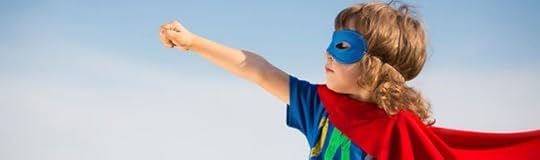
It had been a while since I had considered the impossible.
My bipolar medication had made sure of that. It tugged down my mood and put a ceiling on my imagination. It chained me to the earth. It drained me of my innermost self. But one winter day, I managed to ask myself an absurd question. And for a glorious moment, the impossible seemed real.
I had been Christmas shopping that day. The act had not seemed festive; quite the opposite, in fact. I felt tired in a way that went soul-deep. It was not the trite sentiment that Christmas was too commercial; I liked exchanging gifts. It was that the kinds of gifts you could buy for people and wrap were boring: gadgets, electric razors, or novelties that would amuse but soon be forgotten. They created an upsurge of hope that fizzled after the New Year.
I wondered, what if you could give people gifts that mattered? Wizard of Oz type gifts like courage or a brain? Or, in real life, freedom from poorly paying dead-end jobs, more time to develop talents, or permanent relief from chronic pain? The kinds of gifts that would strike at the central problems of life?
I had a central problem of my own, but I did not think of that. Not at the time.
Any of you who have read A Trail of Crumbs to Creative Freedom know what that problem was but I will recap it briefly here. Shortly after I published my first novel Thief of Hades I had a severe manic episode. I was diagnosed with bipolar disorder and given medication to bring down my spiraling mood.
My medication bought me a hellish sanity. It cured my mania but made my thoughts sluggish. I was severely depressed and blocked. I tried to quit my medication but without it I was unable to sleep. When I tried to write, everything came out dull.
I could not reconnect with the novel I had begun. I thought writing was over for me. My efforts to write were so tortured, I avoided them for a long time and played video games instead. They were one thing I could still enjoy.
Maybe, I thought, it was enough just to be alive. As long as I could enjoy chocolate, cats, and video games, why did I need writing? Most of the world got along fine without it. But any peace I gained from this thought shattered whenever someone reminded me of my writing. My dad would sometimes hand me old essays I had been proud of. “Look at this,” he said. “Look at what you used to write. Read this” He shook his head. “You are being wasted.”
His remarks echoed my own fears. My life was passing quickly. What was I doing with it? Writing might have been painful, but not writing was painful too. At least writing was a choice about what kind of pain I would feel. I decided to write no matter what, whether it was good or bad. I would write if it plunged my mood into an abyss. I would write if it felt like putting my hand on a hot stove for an hour a day.
It did.
My creativity remained perched on a branch too high to reach, taunting me. No matter how often, or for how long, I sat down to write, I could not enjoy what I was doing. I hated everything I wrote, and each day I hated it more than the last. Text limped out, pages increased, but for all my efforts, there was no reward. Writing caused my already faltering moods to tip over, setting a gloomy tone for the rest of my day.
In fact, as I wrote I imagined a circle of critics standing behind me and looking over my shoulder. “Trite,” one said. “Sentimental,” said another. Other adjectives came out: “Boring,” “self-indulgent.” In desperation, I went to my doctor and asked him if I could double my antidepressant dosage. He agreed.
My mood improved a little, but writing still hurt. One day it was all too much. It was all pain and no reward. Should I continue to torture myself every day for nothing, or just accept, forever, my loss of a big part of who I was? I closed my computer and tried to remember what I had ever enjoyed about writing. I had loved it once, especially during my childhood. What had been different then?
A lot. As a child I had written for fun. I had written what I liked. There had been no idea too absurd to consider. That is, I wrote about my dog and his adventures, vampires, buried treasure, and what it felt like to be a flea.
Most kids are creative when they first begin school, and for some, silliness is drilled out of them as soon as they learn to write. For me, it took longer. I had spent my childhood roaming the wilderness of my imagination, resisting all attempts to strait-jacket my thinking. Back then, I would not have given a damn what an imaginary critic said. I had not been concerned about following rules. I had owned my writing and, because I loved it, it would never have occurred to me to force myself to do it.
Sometimes I wish I had studied harder during those years, but I think my stubbornness gave my creativity a longer life span than if I had. The tragedy had been that, as soon as I hit adolescence, I became “sensible.”
Self-consciousness had subdued me. At my strict Christian school, I would sit at my desk with my legs primly crossed, keeping most of my thoughts to myself. I learned how to memorize rote facts so that I would not embarrass myself with bad grades. I learned that honest self-expression was risky. I learned to smile shyly and to be polite, so few people would mind having me around.
Meanwhile, I had stopped drawing and singing, which I had once loved. I would probably have stopped writing if school had not required it. I learned that the way “serious” writers wrote was to “discipline” themselves, which I associated with whips, chains, and religious piety. Only “amateurs” wrote for fun.
As a child I had known better, and ideas had flowed. I had been creative. I had written freely. I had had fun. But somehow the fun of writing had been stolen from me. Or had I lost it? Either way, how could I get it back?
An idea stirred inside me, and I remembered the question I had asked myself around the holidays. What if you could give people things that would help them solve the central problems of their lives? Mine was that I was blocked from doing something I had once loved. Could someone give that to me?
Could I give it to myself?
I had to see. I found a sheet of paper and wrote: The freedom to write without fear of criticism; the freedom to make mistakes; the freedom to explore. I put it in a box, wrapped it in bright red Christmas paper, and stared at it.
It looked as enticing as fine chocolate wrapped in gold foil; or the Howdy Doody ventriloquist doll I had desperately wanted and gotten for Christmas one year. I was 6 years old again, staring at something I had desperately longed for that had appeared suddenly and magically within my reach. The box was not really magic of course, but it represented a shift in how I viewed my problem.
I had built an icon of creative freedom I could touch and hold. But was it not selfish of me to go around giving myself gifts? Who cared, I decided. I had never turned down a gift, no matter who it was from, and I was not about to start.
It was permission write for myself the way I did as a kid. I would ignore the rules. I would be trite and self-indulgent if I pleased, blatantly sentimental, unapologetically and recklessly silly if I wanted to be.
For weeks I kept my “gift” beside me as I wrote. I kept my goals modest. There were days in which I limited myself to a few sentences, and when they ended, I was left wonderfully unfulfilled. I could not wait until the next day so I could write more.
The state of flow I remembered reappeared. I became immersed in imagery, entranced with the textures and rhythms of words, and swept up in story possibilities. Sometimes I would write longer than a few sentences but, as long as I wrote at least a sentence a day, I refused to feel guilty. For the first time in many years, I was enjoying writing.
I finished my second novel, The Ghosts of Chimera, and I wrote A Trail of Crumbs to Creative Freedom about my experience of recovering from block, partly because I wanted to remember every detail of how I had done it, in case I ever lost my way again.
Sometimes I find myself veering. I become obsessed with page views and “likes” of my blog, for example. I worry about offending or what people will think of my writing. But I know better, so I am always pulling myself back to what really matters: the fun of the writing itself.
Sometimes I re-wrap the gift to make it seem new. The version I have now features a teddy bear book mark. It is a silly yet powerful reminder to write for myself.
It also reminds me of how, in my depression, I had considered something I thought was impossible.” I had asked, what if you could wrap abstract but life-changing things like time, freedom from dead-end jobs, or courage? It had turned out that sometimes you could.
Considering “the impossible” had dislodged my old way of solving my problem, to make way for the new, yielding the even more rewarding discovery that sometimes what appears impossible is possible after all.


March 3, 2015
The Day All the Writers Went Away (Short Story)
One Saturday morning, a little before noon, all the writers went away. Where they went, no one knew.
But everybody was always talking about it. “Know what I wish? Wish I knew of a writer who would write things. Really write them, not just spell. Where did they all go off to, I wonder?”
“Beats me. I guess I would sell my kidneys to hear a real story. After all the writers ran off, there was nobody left to write about how or why they had gone and done it. Makes me feel right holler inside.” A writer could have said something more like what they really felt. Too bad no writers were around to say it.
No one had seen them go, but all over the world, sentences had broken off, desk chairs went empty next to half filled coffee cups, and nervous cats shredded and ate the notebook paper rough drafts they had left behind. Families, friends, and cats were left to grieve.
But mostly, everybody was confused. Before, writers had been everywhere. There was a saying that they were as common as cockroaches and almost as respected. Hairdressers. Politicians. Coaches. So many had been writers, or said they were. Few were paid much and most, not at all. Some writers were more skilled than others, but even the best struggled to get noticed.
Some fought each other to work at slave-wage writing jobs so they could claim the title of “professional writer.” Others begged people to take their books for free so they could make a name for themselves, but even many of the most talented failed to get readers and died unknown. Thousands of hopeful manuscripts died in Publishing Houses, buried in paper mountains which publishers called the “slush piles.”
For all the writers to go away was too strange for words. It was like the moon had vanished forever from the night sky.
Ad agency employers flooded job websites with writing positions. As they always had, they warned about their high expectations and scrawny budgets. But this time there were no takers. In fact, no matter how much money they offered, no one answered. No one queried. Book publishers waded through the slush piles like starving dogs in a junkyard, desperate to find a hidden gem in the paper stacks to sell.
Some publishers only shrugged at first. They assumed new writers would swarm in to replace the old. But it turned out that anyone of any age with any story-telling talent or a want to write had gone away.
A strange phenomenon occurred: writer sightings. Blurry video footage emerged, and it became common for a kid to say something like, “Ma, I saw one, I saw a real writer who looked interested in what he wrote,” to which she would reply, “Yes dear, sure you did, now eat your rutabagas.”
For a while chaos gripped the world. In the end it was the talent-less “grammarians” that kept it going. Frowning as they worked, the grammarians hated writing but they knew spelling and grammar rules. They punched out dry text for cash, but there was no spirit in any of it.
The gift of story-telling had become a thing of the past. The grammarians were strangers to creativity who slapped down barely functional sentences that were never any fun to read. They were like singers with screechy voices who could not carry a tune. Reading anything by them meant wincing.
But somebody had to plop down text, or the world would shut down. Despite their big salaries, they were the unhappiest people on the planet, ditch-digging word sloggers who cursed and gnawed their knuckles red as they worked.
Because of them the world went on. But it was not the same. The new songs had no words. Movies were all special effects with no story. Politicians had to say what they were really thinking because there was nobody to write what they were supposed to think before they said it.
But more than anything, the world missed stories. Nobody had thought much of them when they were everywhere. But it turned out that stories had woven together the messy details of daily life. Given them meaning.
One spring day the promise of meaning turned up in an unlikely place: a hospital. There, a boy was born who at first glance did not look like much. When he turned five, he was small for his age because he had been sick a lot when he was a baby, but he did a shocking thing. Almost as amazing, his parents had photographed him during the act and captured the look of joy in his eyes. He had written a story. It was three sentences long: “I sed I wonted a puppy butt Ma sed no. I made a sad face and koffed hard till she sed ok. Now I hav a puppy i love him.”
The story-teller became an overnight celebrity. His image was blasted over the airwaves. His three sentence story was read and reread. He was dubbed “The Boy Who Loves to Write.” With all the encouragement, he practiced and got better at writing.
But the world was still missing something, a context, an identity, a sense of where it was in place and time. So when the boy was 11, a teacher came to him. She knelt beside his desk and asked him if he could write a story that would “reflect back” the world as he saw it. It could be made-up as long as it seemed true to him.
He almost said no. How could a kid “reflect” the whole world? But at last he decided to try. He sat down with a sheet of paper and a number 2 pencil. He drummed his fingers against his neck. He nibbled on his eraser. He tapped his feet. He thought and thought until inside him something flickered, and a thrill shot through him. He leaned over and wrote:
One Saturday morning, a little before noon, all the writers went away. Where they went, no one knew...


February 27, 2015
Experiencing the World One Duck at a Time
For some people Disney World is paradise. But recently when I went there, it was all too much for me.
The crowds. The flash. The movement. Attractions and distractions that are the whole point of being there. I cannot focus. I cannot think. There is a parade blaring nearby and lines to stand in and the need to go to the next event to have fun and more fun, and there is a garden of vibrant flowers, ooh pretty, but there is Goofy waving, will Goofy be offended if I fail to wave back?
But my problem goes beyond Disney World. The whole world seems like a park full of flashy distractions competing for my attention. There is so much of everything: so many television channels, so many websites, so many video games, and so many books I have not read and want to read. I go to CNN on my computer and each headline is like a flashing billboard designed to alarm, titillate, baffle, or charm.
The world seems like a fragmented, clamoring, and chaotic place, which is part of why I love writing so much. More than anything else, writing narrows the world into something I can manage. Writing is a place where I can sit still and be silent and fill myself with existence, and breathe.
Writing induces a trance-like state. Despite my trouble focusing on things in the outer world, I have been told that I am “one in a million” because of my ability to focus on writing for many hours without being tempted to surf the web, watch television, or stare at the clock in the hope that it will soon be over. When I write, I write. But as soon as I leave my writing, the world flies apart. There are too many options.
To make matters worse, at home I have a compulsion to carry all my technological gadgets around with me: my Android phone, my Kindle, and my iPad so that I will have my bases covered, depending on what my whim suggests I do. Should I read, play a game, surf the web? Download a free game that I will later regret getting because of all the annoying ads? Tweet about my cat?
The buffet of options fills me with a false sense of freedom, when the truth is, having too many options induces paralysis. I end up doing nothing or when I do decide, I am aware of all the other things I could be doing, so that it is hard to focus fully on what I have chosen.
I am tempted to write and only write. It focuses me. It makes me sane. The problem is, I need the outside world. I am not a closed system. Anything I experience or read has the potential to trigger an insight or inspiration for a story idea.
I want to go out and forage for new experiences to enrich my writing, then pull back into myself and create. Besides, while I am a writer, I am also someone who likes to learn. I crave new knowledge and unfamiliar perspectives.
I am curious. I want to know the specific names of the aquatic birds that roam the lake outside my apartment. I like going to art museums. And even when I am dragged off to places like Disney World, I am hoping to learn, to absorb new experiences for creative purposes.
The question is how to do that without becoming overwhelmed. The world is big. There is so much I do not know. There are thousands of books that, if I read them, would give me a new perspective or illuminate a part of existence that I will never experience first-hand. But there are too many. I cannot read them all. I must choose.
Complicating the choosing is that there is an arbitrariness to what triggers creativity. The things I expect to inspire me – like Disney World – rarely do. I am inspired, sometimes, by reading books I hate or doing things that most regard as a waste of time. There are novels I would never have written if I had not played certain video games. Or made certain mistakes.
Disney World, with its explosion of attractions, should have inspired me. But after I came back from Disney World, I felt like I had missed it. I reacted to the glut of stimuli by withdrawing into my thoughts.
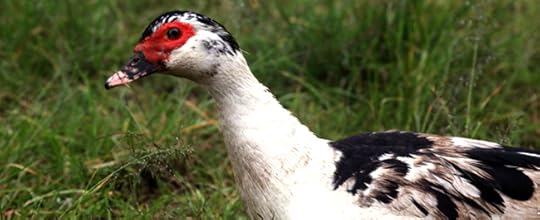
When I came back home, I took a walk around my apartment lake and sat on my favorite bench and watched a duck crawl out of the water. It waddled up the hill toward me. I admired how its head bobbed as it moved. It stopped, lowered its head and inspected the grass, dipped its beak in quick succession, then lifted its head as if searching for something, its eyes wild, alert, and waiting.
I got caught up in its movements, sometimes graceful, at other times jerky. I had an overall impression of beauty and wondered why we are taught to admire form but rarely the movements of animals. And I thought, this is what it I was missing at Disney World. This is what it feels like to focus.
If I am going to spend time in the real world, I want to focus on it the way I focus on my writing, taking in one experience at a time and one book at a time without worries about all I might be missing. Letting the world in all in at once is too overwhelming. I need to open windows between me and it rather than shattering whole walls. To be inspired, I need to let the world in one duck at a time.
While I might like to read thousands of books at once, I would rather focus fully on one book at a time, which promotes depth of experience rather than a desperate grasping for numbers. To know one thing deeply is more fulfilling than knowing a lot about a little. That means drawing frames around parts of the world the way a painter does with a canvas. The universe is too big to wrap my head around. But zooming in one one part of it is at least a step toward understanding the whole.
And maybe that is the highest purpose of art: to capture the universal in the specific; to create meaning from my small corner of existence; to extract the music of the cosmos from the movements of a duck.