L.E. Henderson's Blog, page 20
November 5, 2014
The Final Word

For most of my life, especially since college, I have kept journals. Most of my major life events since then have found their way into notebooks.
But I will have to omit the most major life event of all: death. This is unfair. I think I should be able to write a journal entry afterward saying what it is like and what I think about it, and if I learned anything. For obvious reasons, that is impossible. But there is nothing to stop me from writing it early. I have made some creative “predictions” in this piece, some of which I hope do not occur. But it is all in fun.
Let me be absolutely clear: I love life. I have every intention of living until I am 120, and even longer if I can. But whether my death happens tomorrow or 1000 years from now, I want to make sure than I have the final word. So here it is: my final journal entry.
From the Journal of L.E. Henderson; final page:
Damn. I knew this was going to happen. But not today. Not now. I had plans.
I have half a box of chocolates left over from Christmas, and I still want that other half. Two of them are maple creams. They are my favorites so I was saving them for last. Bad idea.
Besides I was working on a story that was sure to be my magnum opus, an opus to end all opuses, a scintillating story about a sentient banana who goes to the zoo and gets chased by escaped monkeys.
But this gets in the way of everything. Okay, I get it, everyone dies. Someone first told me that when I was around four or five. I did not believe them, not at first. How could there be no me?
But I should have had more warning. I like to sip coffee in the mornings with my cat in my lap and read before I write. I want my coffee and I want my cat. Everything I had planned, my entire routine is capsized by my inability to, well, move.
I still cannot get over it. This really happened. I had kind of thought the singularity might happen and would save me. Ray Kurzweil said as much. The singularity was going to be a point where humans united with computers and achieved immortality. Some even suggested that humans could download their minds into computers and live out beautiful cybernetic lives forever after, in a digital fairy tale happy ending.
Okay, maybe it was a long shot, but it gave me hope. And it was inspiring. Throughout history, there was a lot of talk about immortality. Religions promised it. Horror writers created fantasies of immortality experiments gone awry, featuring Frankenstein monstrosities and demonic pets.
In literature it seemed like immortality always came with a terrible price. It offended the gods or set off disorder in the spiritual world. It required unthinkable acts of evil or the sacrifice of souls.
How many millennia did it take for someone to have the guts to say, “Who cares what the gods think? Dying is a bad idea. Maybe we should stop doing it. Maybe we should figure out how to live forever.”
I admire Ray Kurzweil for saying that and trying so hard to figure it out, even though he died before the singularity ever happened, despite taking 150 vitamins a day in order to stay alive for long enough to experience it. Ray Kurzweil, sorry it did not work out. Maybe the singularity was just around the bend. Could you not have taken one more pill?
A lot of people think God grants immortality to those who believe in him, and maybe that is why none of the greatest thinkers such as Nicolai Tesla or Sir Isaac Newton ever turned their attention to living forever.
By the way I am currently searching for the bright lights I have been told to expect and, so far, nothing. God, if you exist, now would be the time to appear, you coy bastard. Where are you?
I cannot even see my grandmother. She was supposed to be waiting for me under a rainbow or something, with a beatific smile on her face and a retinue of winged seraphim. And unicorns. Okay, I never heard there would be unicorns, but if I am going to go to the trouble of dying, there should be unicorns.
Hell. This is boring. I want to finish my story about the banana, not not be.
Oh no! That did not just happen. I am going to try to pretend that someone did not just put me in a box. I am a person, not a pair of shoes. And why are they nailing it? Do I look like I am about to escape?
Granted, I would if I could. It might even be kind of fun to go lumbering around, arms outstretched, saying “Rroww” or “Arggh.” I have the best Halloween costume ever now, because it is authentic. Unfortunately, I do not feel scary, just kind of helpless. The living scare me to be honest.
Who puts someone into a box?
Well, I do have one consolation: all the writing I did. Maybe a part of me lives on inside the printed ramblings I produced over the course of my lifetime. Maybe some vestige of me remains inside them where they can still affect people.
Okay, so I never got rich for my writing, but I am confident that one day someone, maybe hundreds of years from now, is going to wonder: “Who was this fascinating person who wrote these awesome stories? How unfortunate that she never finished the one about the banana! Perhaps our renowned literary experts should try to piece together what she was trying to say by extrapolating her point of view from her copious journal entries.”
About the journal entries: I produced a ton of them during my lifetime. And I was conscientious. To make it easier for my biographers, I have labeled my journals by the year on the bindings. That way they will be easier to reference in academic literary journals. It was a trial to be so far ahead of my time, of course, but posthumous glory is nothing to sneeze at. A girl takes what she can get.
If I had known what was gong to happen today, I would have typed them up for clarity and legibility. Otherwise, I might end up being egregiously misquoted.
I guess it is pointless to regret things. I made plenty of mistakes but, for the most part, I did the best I could.
There are some people who say you should live every day as if it were your last. Bullshit! Okay, I am discovering that Dead Me likes to cuss. But this has been a rough day. Humor me.
Now. Back on point: If I had lived every day like it was my last, I never would have finished college. Why study? I would never have finished writing a single novel. I probably would have annoyed the hell out of everyone saying things like, “Please, do not mourn for me when I am gone. I want my funeral to be a happy funeral, with clowns and mariachi bands and puppies with little party hats. And of course, it would all be lies. If I am going to go to the trouble of dying, somebody had better cry about it. In fact, wailing and the rending of sack-cloth clothing would not be excessive. And yes, you heard me right. Sack cloth.
I hate good-byes anyway. I even hated it when my college classes would end, because I would get attached to my professors and their weird sense of humor or their bad comb-overs or how they would start talking about their vacations to Europe instead of the DNA double helix or the Emancipation Proclamation.
All endings suck, except the ones that end pain, and even those are not ideal. Like with me now. No more toothaches. No more worrying about what anyone thinks. No more gum on the bottom of my shoes, no more waiting in longs lines or cleaning up hairballs left by my cat.
But here I am. And I still want to finish my banana story.
This may sound weird, but I used to mourn my own death sometimes, at night. I would think about how sad it would be for people to lose me or for me to lose myself, and tears would spring to my eyes.
So for to any of you who are mourning me, I am kind of mourning with you now. Like I said, I hate endings. But I am still glad I got to be alive, even for a little while. I am glad I got to eat ice cream and pet my cat and fall insanely in love and watch bad movies and swim in the Gulf of Mexico.
But to do all that, I had to be bound up with this rattly caged wagon called “time.” I spent too much of my life grappling with the uncomfortable knowledge that life was always in motion and looking for something that does not really exist called “stability.”
Finally, I am free of time. At least, my psyche is. And I think that was true before I was born, for the billions of years following the Big Bang when there was no me. In fact, the universe did not seem to be in any big hurry for me to be born; I am a little insulted, to tell the truth.
So maybe I am not so much leaving as going back, reuniting with the cosmos. Fortunately, I am a fan of the cosmos. I think the cosmos is kind of like this toy I had when I was a little kid called a “Lite Brite.”
It was a light box that had a flat black surface with holes in it and it came with these little colorful beads. Actually they were called pegs but I always thought of them as beads, and since I am the dead one here, I get to choose what to call them.
Anyway when you put the beads on the surface and plugged in the screen, the beads would light up. You could make patterns or images with the beads, and there was no limit to the designs you could make.
I was never any good at making the impressive images on the box like bunnies and castles. But I think that maybe the cosmos is like that: kind of like a Lite Brite trying to discover itself.
The patterns it makes might be pretty, but if it wants to make new ones, it has to break the old ones down and start again. But the beads are the same beads; in that sense, nothing ever really goes away.
I admit, it is not much consolation. I would be so upset when in kindergarten another kid would knock down my “palace” of wooden blocks. If someone had told me “Stop crying! The blocks are still there,” I would still have cried.
But back to the Lite Brite: I like to imagine that one day, after an infinity of infinities have passed, maybe the universe or multi-verse will want to try my pattern again. It will say, “That was a weird experiment but kind of interesting. Maybe I should give it one more try.” And I will find myself alive again and eating chocolate and reading Ray Bradbury.
But maybe just having been here, this one time, was enough. Some people think you get a kind of immortality by having kids. Bullshit!
Okay, this is one of my pet peeves, so bear with me here. I decided in college not to have kids. Babies are super cute, but the world has enough people. I wanted to devote my life to creative pursuits like writing.
But every time I would read a book on biology, I would see the same irritating word repeated over and over: “successful;” The successful organisms were the ones that reproduced.
I am all for Charles Darwin, but that word “successful” slaps a value judgment on a blind natural process. According to this definition of success, Sir Isaac Newton, Emily Dickinson, and Nikolai Tesla were unsuccessful.
After reading The Selfish Gene by Richard Dawkins, I think this definition of success is all wrong. According to him, the real winners in reproduction are the genes. Genes only want one thing: to make copies of themselves. They do not even care how they do it. In fact, the whole point of making people is that the genes will have hosts who will go lustfully insane, reproduce, and send the genes marching out into healthy new hosts.
If the first host dies a horrible, agonizing death afterward, that is all perfectly fine with the genes, as long as they get to escape into a new person first. Wake up, people. Our genes are farming us.
Richard Dawkins compares genes to viruses. When you have a bad cold, the virus hijacks cells for the purpose of copying itself and makes you sneeze. When you do that, you spread the virus into the air where other people breathe it in. The whole self-copying cycle begins again. Same with genes, except that the genes create their own hosts.
Genes are sketchy. Never trust them. If you ever see a gene coming at you, at night, in an empty parking lot, run like hell!
In fact, I am pretty sure I know who made the writers of the biology textbooks use the word “successful” when it comes to reproducing: A gene made them write that. In fact, I would not be surprised if a gene seized the pen from the writer and wrote the whole thing itself.
If I could be really be immortal by reproducing, I should be able to see the world through the eyes of my far-future grandchildren. Through them, I should be able to eat moon-rock ice cream and feel the coldness on my tongue. Through them I should be able to skim the surface of Mars in a jetpack instead of being a dusty and earth-bound remnant of the distant past.
But it seems silly to vent about that now. Here I am. This really happened. The big “D.” I think I expected more of it, but now that I am here and can see it for what it is, it all seems very… disappointing. But not in the way that you think. If I have any major complaint it is that it is not scary enough. No pain. No irrational obsessions. No worries about what I need to do next. Just a kind of sigh.
Still, it is hard to look back over my life and wonder what it was all for. All of my petty jealousies, silly compulsions, my fretting over bad hair days, and anxiety over slights from other people, real or imagined.
I think about all the journals I kept throughout my life, all part of my effort to make sense of the relentless march of days. And I think about all of my stories, conceived in great ambition or in a frenzied bid for fame or wealth or admiration.
Would I have done anything differently if I had truly believed this day would come? Really believed it down to the core of me? I really cannot say. For the most part, I think I did the best I could.
The actions that stand out gold-rimmed in my memory are the ones where I was able to step outside my routine and say, “What a strange and beautiful and horrible and fascinating thing it is to be alive. Maybe I should look around. Maybe I should enjoy this while it lasts” – not when I was rushing from one frantic activity to the next.
Those were the times when I made the best and most conscious decisions; the times I was most alive and most acutely aware. Maybe that is also why I wrote in journals, to recreate that state as often as I could, although I did not get to write in my journal every day.
I never got to write a journal entry about how it felt to be born because when it happened I barely knew. I did not even know it was going to happen. It just did, and I was stuck with the way things were.
Then, as soon as I got used to the idea of being alive, someone told me I was going to die. But in the time between those two points, I had room to play. I had no say over my destination, but I could create my own path. And my path has brought me to this point where I have decided to take what I have sought, and fought for, and longed for: the final word.
Maybe that is the real meaning of everything: that in all the confusion, in all of my comings and goings, in all of my stumbling progress, I was able to have some say in how it all happened.
Enough ruminating. This Lite Brite pattern is dimming fast. I feel like I should say goodbye. Adios. Au revoir.
But those words are too boring, too expected, too dull. I would rather select my own. So, what do I want to be my final word? I have always loved the onomatopoeia words like “moo” or “crash,” but those will not do.
If I am going to get a one-up on death, I need to be more thoughtful. Maybe a longer word would be better, like “sussuration,” meaning a soft murmur or a whisper. But no, it is not quite right. An idea is whispering to me, like a breeze, a murmur, a sussuration that is getting louder.
Hey, I think I have it, the perfect final word, eloquently succinct, unforgettable, and deeply felt. Hey death: Thpppffffff!
Yeah, that one. I really like that one.


October 30, 2014
Why Halloween is Not About Death
I love Halloween, and not just because it is the day right after my birthday, although I am sure that is part of it. Having been born in late October, I do see Halloween as a wonderful swirling blend of colorfully wrapped boxes, cake and candy.
But I also associate Halloween with early creativity. During the Octobers of my childhood, I only wanted to draw Halloween-themed pictures: bluish nightscapes, golden-mooned, that oversaw foggy cemeteries full of witches, ghosts, and vampires.
But drawing Halloween scenery was not enough for me. When I was in the fifth grade my brother and I set up a haunted house where I lived because I was unhappy with the one at my school Halloween carnival. Full of creepy noises and home-made props, it is one of the fondest childhood memories I have.
Beyond amateur theatrics, some of the first stories I wrote were horror stories, inspired by Stephen King movies. Even now I enjoy watching horrors movie around Halloween, although not everyone understands why I would.
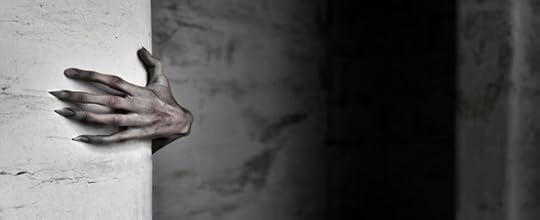
Maybe they wonder what kind of person wants to watch characters succumb to grisly mock deaths from the clawed appendages of hideous monsters. What kind of warped survival-averse person enjoys fear? Likes death?
It is a fair question, but it makes the wrong assumption. I am no fan of torture and death. On the contrary, I love horror movies because I hate death. As a child I had frequent nightmares, especially after my step-grandfather died.
I had been close to him, but the thought of him coming back as a soulless monster like I had seen in horror movies fueled my imagination and induced nail-biting insomnia. I would imagine his ghost hovering dead-eyed outside my window, enveloped in fog, like the vampires in a Stephen King movie.
Stephen King was not entirely to blame. My own nightmares were as scary, if not scarier, than his. But his vision gave voice to primal emotions that made my nights restless.
Although I no longer worry about the undead, in many ways my adult life has been driven by fear: fear of losing the people I love, fear of rejections, fear of seeming to reject those I adore; fear of failure; fear of the sharp pangs of regret that are ever-present despite my best efforts to avoid them. But all of these fears are intangible, so it is hard to do anything with them.
Horror movies condense these fears into a terrible kind of poetry that, while intangible, is easier to grasp than the vague, free-floating anxieties that color my days and inhabit my dreams.
Not only do horror movies condense anxieties into a more manageable package; they also offer a consequence-free way to experience fear.
I love that while watching horror after horror unfold on the screen, I am perfectly safe on my sofa; if it gets to be too much, I can always close my eyes.
I like survival horror video games for the same reason. Games like “Silent Hill 2” offer a close-up and interactive way to approach fear safely. The monsters are hideous, with their bloated and deformed-looking bodies, belching, hissing, and lumbering. But if the monsters get too close to me or my avatar, I have the controls.
I have the power to pause them in mid-growl or mid-drool; freeze them where they stand; turn the game off if I like. A nice fantasy.
I wish I could do that with my real life fears.
That being said, I do have limits when it comes to viewing horrific spectacles on screen. Some horror movies seem to relish sadistic torture, such as one movie where a character was forced to cut off her own leg to save her life. Those kinds of movies are too disturbing for me to watch. When it comes to horror, I prefer the fantastic to reminders of the kinds of cruelty inflicted by real people.
I do not enjoy horror movies now as much as I did as a child, and usually I only watch them in October to celebrate the nostalgia for the days that I did.
All fear aside, I enjoy the campy side of Halloween: the bowls full of jello eyeballs, the Styrofoam headstones, mangled rubber rats, and the dangling plastic skeletons used as door decorations.
From early childhood I have viewed Halloween as a toy store full of stage props, or a theater where anyone can become an actor in the strangest traditional holiday we have.
Halloween is fear made festive. Bring our the costumes and caramel apples; take an amusing walk on a darkened foggy trail full of growling actors, revel in chocolate; turn pumpkins into grimacing heads with carved faces.
Those kinds of festive touches make it clear that Halloween is not really an exaltation of fear, but a moral triumph over it.
For me, fear comes from my ultimate helplessness over so many things, death being only one of them. My ever-present anxieties form a tapestry against the daily drama of my life. But Halloween has stretched taut the tapestry of fear and cut from it something fun.
Halloween says look, this is what fear looks like, this is what death looks like in your worst nightmare, but instead of worrying about it, we are going to dress up as other people or creatures and eat a lot of candy. To harness the power of fear for the purpose of fun is a testament to the genius of human imagination.
Despite its origins in the primal emotion of terror, Halloween transforms the fear of death into a celebration of life; gives children the power to haunt rather than be haunted; and turns fear on its head to reveal a kind of playful humor.
That is why the beauty of the holiday is unrivaled by any other.


October 23, 2014
The Extraordinary Painting

When I was a student in my college painting class, my professor gave the class an unusual assignment: it was called “the extraordinary painting.”
The professor did not go into detail about what was expected. Each student was free to decide what the word “extraordinary” meant.
My mind churned with possibilities. Some slumbering part of me was suddenly fully alert and interested. But meanwhile I wondered: Why was the extraordinary painting not every assignment? When people began painting, did they usually think “I am going to do this painting, but I am only going to make it okay”?
Maybe. In college, painting is done to earn a grade. There is almost always an external reward, which sometimes erodes the ambition to do a great painting for the sake of it being great. “I have to pass,” students think, “so that I hurry and graduate and get a job.”
But I wondered if there are other reasons why someone might not attempt doing something extraordinary. I had this thought because of how the assignment shifted my thinking. It was not that I was not trying to do my best in art. I always tried to make an “A” if I could.
But from the moment I heard the words “extraordinary painting,” my mind latched onto them. Who cared about an “A”? I had a more exciting challenge.
Permission had been given. No one was going to accuse me of thinking too much of myself for trying to do something awesome. From then on, I felt like some unknown inhibiting factor had been dislodged. The words swept me from the mundane and into the stratosphere. My imagination flickered. I was inspired.
Despite that, I was certainly not the best art student in the department. I had far more aptitude in writing and my teachers were always telling me so.
In studio classes professors raved over my concepts but lamented my technical execution. Considering how much they chastised me, it is remarkable that I never made less than a “B” in my art classes.
But the assignment had not been given only to the “A” art students. My professor did not say, “Okay, for my best students, your final exam will be the extraordinary painting. The rest of you can paint a still life of cabbage. And never mind about trying to make it great. Or even good. I just want you to satisfy the bottom rung conditions of the assignment.”
Rather, the assumption was that any art student could aim high and produce something awesome if they really tried. Some students interpreted the assignment to mean something physically imposing, so they went big with a nearly wall-sized canvas.
I took a different approach. For me “extraordinary” meant thinking beyond my limited time-bound existence.
Also, at that time I was going through a sort of “hippy” phase. In the early nineties the environmental movement was in full swing. I went to the grocery store and bought three packs of styrofoam cups, small, medium, and large. Then I scanned books for images of Martian landscapes, angry rust-red and rock-strewn deserts that somehow managed to look as airless as they actually were.
I bought a giant tube of red acrylic paint and transformed the rectangular canvas into a forbidding and brooding Martian landscape. Then I cut the styrofoam cups in half vertically and glued the haves into the painting, three at the bottom, two above those, and one at the top, so that together they resembled a pyramid structure; finally, I added a finishing touch: the words, rendered in titanium white, The Last Artifact.
Despite my best efforts, my painting craftsmanship was not stellar; I was more proficient with oils than the acrylics the assignment required. Still, my rendering was good enough to get my point across; the lurid atmosphere looked beautifully nightmarish, and the styrofoam cups looked like an alien structure, mysterious, lonely, and eternal.
The critique went well for me, although more was made over my title than the painting itself, seeming to confirm to everyone that I was more of a writer than a visual artist. Incidentally, everyone was in agreement that even in visual art, words were powerful. Whether my painting succeeded in being extraordinary is debatable, but there was something liberating about thinking “big” and doing my best.
In any case, I got an “A” for the painting.
I wish I could remember more about what the other students created. On critique days I hardly noticed anything around me until the hour of judgement was all over.
But the assignment continued to make me wonder: Why would anyone not try to do something extraordinary if they were capable of it? Why does excellence seem to have a lid that had to be removed by a teacher saying, it is okay to do your best?
It there a drive toward mediocrity? I remember a time in junior high school where that was the case with me. Having been bullied the year before, I was self-conscious and afraid to call attention to myself. Creative efforts seemed dangerous because they felt personal. I tried to do everything the way everyone else did, even when it came to my writing, which I loved. Fortunately, I exited that phase a couple of years later.
But how many people entered that phase and never left it? After all, attempting excellence is risky because failure is possible, and ridicule sometimes follows.
The higher the aspirations, the more likely failure is, so attempting anything extraordinary has to mean allowing – and even embracing – mistakes in order to learn from them.
But my art assignment was called an “extraordinary painting,” not a “perfect painting”; the second condition would have more likely produced paralysis than extraordinariness.
I wonder what would happen if the fear of being ridiculed for creative aspirations disappeared altogether. What could be accomplished if failure was not considered a disaster? What if creative efforts were not mocked any more than watching television or surfing the internet?
Maybe everyone would start doing extraordinary things and the new bar to aspire to would be extra-extraordinary. I am fairly certain my painting was not that, but I cannot go back to look at it.
I no longer have my “extraordinary” painting. When I moved from South Carolina to Florida, the styrofoam cups were torn and broken. Only a slide of it remains. Ironically, I ended up throwing the painting away. But I did feel guilty afterward. Who knows how many hundreds of years those styrofoam cups will last?
In any case, the assignment contained an important lesson, the permission to escape what was practical and expected in order to produce something truly original.
Whether it is a story or a painting, the best art begins with thinking, “That would be awesome.” For me there is a quickening of the pulse, a stirring of imagination, and an upsurge of adrenalin.
Each new concept seems like the most important idea I have ever had and when I am done, I feel changed.
That reward is the best feeling there is.


October 15, 2014
The Perils of Apology

I have been wondering: What is the true meaning of an apology?
In my experience, there is more than one type of apology. There is the kind where I accidentally bump into someone in, say, a grocery store. In that case, I am quick to apologize. What I mean is, “Hey, this was an accident. I meant you no harm.”
I imagine this kind of apology originating in the Stone Age as a way to avoid fights. “I friend, not enemy, even though I do bad thing.”
This is a different kind of apology than the kind that says “I am sorry for not talking much, for being so shy.” Or mentally ill. Or an agnostic. The second kind of apology and the guilt that comes with it is associated with an condition that is not a fault, just a way of being that makes certain people uncomfortable.
An apology in those cases, whether it is expressed or not, is an internalization of blame for a state of being, and the apology reinforces stigma.
What is blame? Usually, blame is a response to a mistake. What is a mistake? A mistake is an error.
In general, people frown on them. Some employers make it clear that they expect to see zero mistakes from any of their employees.
In school or the workplace, an error like a misspelling is not generally considered just an accident or act of nature; it is almost always considered a product of “carelessness.”
Is that true? Not always. I have made plenty of careful mistakes in my life. Sometimes I care so much about not making mistakes that my anxiety clouds my thinking. In that state I am more prone to making the kinds of errors I am trying my best to avoid.
An example: A few days ago I discovered a typo in a tweet. The horror was unbearable. Plenty of tweets have typos, and many tweets are nonsensical. But I am a writer and the tweet was about writing. I had edited the tweet but changing some words means I have to change others for consistency.
Sometimes I miss changing some words that need to be changed, and that is what happened in this case. The old preposition did not work with the new sentence. As soon as I saw it, I became unraveled. I immediately deleted it even though it had already been “favorited” several times.
I frantically typed out my corrected version, but it turned out that being frantic and eager worked against me. 15 minutes later I discovered that I had made a bigger and even more glaring mistake. It was the kind of misspelling that from the outside would appear that a considerable effort was needed to misspell anything so badly.
Worse, someone had tweeted to me a snarky remark about it. When you have bipolar disorder, sometimes all it takes is a tiny event to thump a mood off a precipice and into sharp descent, and that is what happened at that moment. How could I make the same kind of mistake twice in a row?
A feeling of shame attached itself to the anxiety I already had. I actually had an impulse to grab a megaphone and apologize to the snarky commenter and the entire Twitter-verse for my transgression.
Once more I rewrote my tweet, this time looking over it several times to make sure I had it right. But even after changing it, I felt terribly embarrassed.
It was not a good morning for me. But it would not have been a bad morning if I had not cared.
When I fall into a grim mood over something ultimately trifling, my mind sometimes goes into overdrive as I try to reason myself into feeling better. I wondered if my impulse to apologize to my snarky critic had been rational.
My error had been a careful error, not a careless one. But careless errors and careful errors look exactly the same. In situations where a lot is at stake, any error can have damaging consequences, so both kinds of errors are equally castigated.
From a purely objective standpoint, both kinds are “wrong.” Complicating everything, the word “wrong” has two meanings that are often conflated.
The word “wrong” means “in error” like adding two plus two and getting three. But “wrong” is also used to mean “immoral” in the sense that murder and stealing are wrong.
The two types of “wrong” are completely different, yet they are confusingly linked under a common term. If you accidentally add when you are supposed to subtract, that it called a “careless error,” a phrase that ascribes a moral cause to the accident, meaning that character is a factor and blame is called for.
The phrase assumes that the answer is wrong because the error-maker has misbehaved.
But no one ever talks about careful errors, which is why I feel obliged to mention them. Many of my teachers operated on the assumption that all mistakes could be avoided if students adequately applied themselves.
On a purely practical level, this pretense is understandable. Should teachers send their charges the message that some mistakes are acceptable and inevitable? That “mediocrity” or sloppiness is allowed?
But a belief adopted for practical reasons is not necessarily true. Some mistakes really are inevitable.
I do not mean to suggest that errors never occur because of apathy. I have certainly made plenty of errors due to carelessness.
At the same time, some errors cannot be avoided. While I have made plenty of careless errors, I believe I have made far more careful ones.
I can learn from careful errors in the same way I learn from careless ones. Sometimes I think, “I will try to be less careful next time. Or at least not so careful that anxiety takes over.” But when I look back at the original error, I cannot think of a way, knowing what I knew at the time, that I could have avoided it.
But would avoiding all errors be ideal? Suppose you could eradicate errors forever. Are mistakes always bad? I wonder how many mistakes had to be made, moral, accidental, or careless, for me to be born, assuming that all my ancestors were not unimpeachable models of perfection.
I also wonder: How many mistakes did nature have to make for me to get here? The answer: there had to be hundreds of thousands.
A mistake that nature makes is called a “mutation.” For sexual reproduction to occur at a cellular level, the “letters” of the genetic codes contributed by the parents have to be copied correctly in order to be transmitted to their offspring. But sometimes those letters are copied incorrectly and the information is changed.
Although mutations can be viewed as mistakes made by nature, humans are a product of many thousands of mutations that have occurred over billions of years, a phenomenon that slowly turns single-celled organisms into creatures with complex nervous systems who are able to fret over their Twitter mistakes.
Many mutations are harmful and disfiguring. Most mutations are not advantageous but a few are. Those few are essential to natural selection and contribute to species diversity.
Would it be a better world if nature had never made those mistakes? It might be an interesting world, but there would be no humans in it; in fact, there would be no one to be interested in that world, no matter how interesting it was.
I also wonder: How many important scientific discoveries arose from mistakes? And how much of what is learned in art, writing, or most any skill comes about through making mistakes and learning from them? Is trial and error dispensable? Can you have the trials without the errors?
Regardless, in the world we live in, mistakes are generally considered bad, and they usually call for an apology. But while I am on the topic of apologies, I want to return to my point that not all apologies are responses to mistakes.
Granted, apologies are not all bad. Especially in cases of cruelty or abuse, apologies are definitely warranted.
But I believe that apologies, or at least apologetic attitudes, are too often demanded for the wrong things, such as triggering social tension simply by being different.
These apologies are not fairly demanded and granting them is sometimes harmful on both social and personal levels.
For example, an apologetic attitude in cases such as being gay or being part of an unpopular ethnic minority, whether the “apology” is expressed or not, is to accept blame just for existing.
In grammar school, I felt apologetic for being shy. I had absorbed the belief that simply by being the way I was, I had done something wrong. Not just other kids but also teachers had made that message clear. As a result, I was constantly trying to change and constantly failing.
The feeling of guilt for not “overcoming my shyness” made me far more vulnerable to bullies than I would have been otherwise. It is harder defend yourself against enemies when you think they might be even partly in the right.
When you apologize for things that are not faults, the apology goes beyond personal shame. In my case, acceptance of blame reinforced the absurd idea that shyness is wrong, which is destructive to many kids who are only trying to live their lives. My guilt served to validate an irrational social standard that said “Stop being different. Be like us.”
Now I know that the fault belonged to the bullies and teachers, and not me. Had I known that in grammar school, it might have changed everything. Instead of being sorry, I would have been angry – not an ideal response but a far healthier one than internalizing blame.
So when is blame appropriate? Only in cases where a choice has been made to do something harmful. It makes no sense to blame a six year old – or anyone – for being shy.
I realize I have gone off on a bit of a tangent. So where am I going with all this?
In a nutshell: Some of what society views as being mistakes are not mistakes at all because they do not harm anyone or because they are not a choice.
Many mistakes are inevitable and they are not always bad, at least not all bad. In fact, they are sometimes indispensable to learning an art and transforming single-celled organisms into people over billions of years.
Moreover, it is ludicrous to assume that mistakes can always be avoided. Humans emerged from a nature that routinely makes mistakes. In fact, humans emerged because of the mistakes.
Is it any wonder, then, that as a product of nature, I make mistakes all the time?
After thinking all of this through, right after my devastating Twitter double- typo fiasco, I felt better and was pleased to realize that I had practically written my next blog post in my head.
Though I promised myself I would try to be a less careful tweeter in the future, some embarrassment still lingered. But after thorough consideration, I decided not to apologize to the snarky commenter about my spelling faux pas. I had an even better idea.
I un-followed him. And fixed some lunch.


October 9, 2014
How Meeting My Other Self on Video Confused Me
I could not get over feeling stunned.
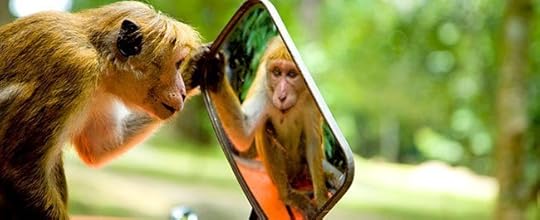
All this time I had thought I knew myself. My inability to stop staring went beyond vanity. I played the video several times, feeling like a monkey.
I read that some monkeys, when you hand them a mirror, get that they are looking at their reflection. Fascinated, they explore the contours of their faces; pull down their lips to get a better look at their teeth; turn their heads to see their profiles.
Looking at myself on my iPad screen, I knew just how they felt — although I think the monkeys had more fun.
Maybe I would have had more fun, too, if I were a kid. I used to love my tape recorder “shows,” rambling on about whatever was on my mind with an imagined air of authority. “Now I present to you the Lisa show. My show is all about me, whose name is Lisa, and this show is all about Lisa and her extraordinary life which has so far lasted eight years.”
I am sure the child star of “The Lisa Show” would have loved a video camera, too. But even though video technology has been around for a long time, I have rarely made the effort to see myself on camera. I am a writer who sees herself more as her thoughts than her appearance.
So why now? I recently read that to be successful writers must not insist on “hiding behind words.” At first I bridled at this. Hiding behind words is the definition of a writer. A communicator who does not hide behind words is called a speaker. That is a different occupation entirely.
But I decided to try recording myself on camera anyway, just for fun.
The first time I barely recognized myself. The voice, the gestures, the expressions: they could not be me. I did not use hand gestures the way the girl on the video was doing, not me; nor did I bite my lip or toss my head. Who was this dark, lip-biting head-tossing twin who was pretending to be me?
The sight was not only strange; it was ironic. As a writer I have tried to develop the habit of observing people to see how they are defined by their quirks, gestures, subtle facial expressions, glances, and habitual posture. I have kept notebooks recording these kinds of details about others.
But during all of that time I did not know my own. Who was that girl who was waving her hands to emphasize a point? I would never do that, not that way. Meanwhile she made facial expressions too quick to capture in words and that I did not know I made.
I was used to mirrors. But my video was not a mirror. In mirrors I always see myself facing forward and rarely from above or below. When I blink I never see my closed eyelids.
And it was not a photograph. With photographs you pose, smile, and make yourself pleasant. Sometimes a photograph captures a facial expression during an awkward transition such as a mid-blink. Photographs like that are usually tossed out. Although they still represent me, they do not match the image I like to have of myself, so out they go.
But video honors all of the subtle transitions, every one of them, and creates from them an overall impression.
What was this impression, which so many others have seen? And how could it be influencing how others treat me?
I thought about how my new doctor sometimes talks to me like I am 15 years old. Looking at myself on camera I thought that this, while not justified, was not surprising.
The girl on the screen came across as a polite adolescent. I could see how, when anxious, I tend to pronounce my words very distinctly, sometimes too distinctly, clipping off words by making hard consonants harder than they need to be.
In my head I have changed considerably since my teenage years. Inside the walled sanctuary of my skull, I am not under-confident, and the accumulation of life experiences has brought insights that adolescent me could not have fathomed.
Since adolescence, I have graduated college, endured loss, pulled myself out of bottomless depressions, married, been hospitalized for a manic episode, and written three books. I have a vocabulary full of sesquipedalian words.
But the face of the girl on the screen revealed none of that, maybe because there has always been a mind-body disconnection with me. To illustrate: In math classes I would sometimes write down numbers wrong. In my head, I would think “3” but my hand would write down “2.”
If I caught my hand in an act of treachery, I would think, “What are you doing, hand? I distinctly told you to write three.” After every math test, I would have to go over my work, looking for signs of manual treachery so I could correct them.
Was that why the person on screen did not reflect who I am in my thoughts? Maybe, as I changed over time, somehow Outer Me never caught up. But as a writer of fiction, I operate on the assumption that gestures, glances, and other forms of body language do communicate something of who a person is.
If I were observing myself like I was a stranger, what kind of character would I be? The question was unsettling.
It was unsettling because the person on screen, this stranger, is me to everyone who has known me all my life. And I never knew her. All this time I had been tossing my head and biting my lips and making expressions, and I had never seen any of it.
I had thought I knew myself. But there were things others knew about me that I did not.
I was a shameless monkey for a few days, staring at the screen as Other Me performed. Writing took a backseat to my vain attempt to define myself as I considered new information, the flash of my eyes, the sound of my voice, all leading to that eternal question: Who am I?
I still believe that I am more my mind than how I look. But since there seems to be a disconnect between how I perceive myself and how I seem from the outside, I wonder: Is there is a way I can bring them together, somehow make Outer Me more accurately express who I am in my thoughts?
Perhaps I will. Maybe I can even use the videos as a writing tool. I wonder if I can use the camera as a way to refine my understanding of how certain character gestures convey emotion.
I know what I am feeling when I scrunch my forehead or toss my head, so maybe when I draw my characters I will be able to use those expressions to more plausibly convey how they are feeling.
Beyond that, the camera, though enticing, will remain a toy for now.
But my denial is gone. I have an outside and an inside, and they both say something about me. The camera still calls to me, an enticing riddle that must be solved, repeating an eternal chorus that says, “Who am I really?”
But maybe I am not one thing or another. Like the self captured on video and everyone else I know, maybe I am in constant transition, more often in mid-blink than posed and smiling.
And maybe, for as long as I continue to wonder, write, and learn, every moment will yield a new answer to that never ending riddle: Who am I?


October 2, 2014
Why There Has Got to be a Shy Pride Parade
Maybe I went a little crazy. But last weekend I had an idea that took hold of my imagination and would not let go.
I thought that if I could pull it off it would validate my entire existence and vindicate me after years of past wrongs. The more I thought about it, the more appealing it was, and the more anxious I was to think that it would never happen. It was just too awesome not to.
Are you ready? (Drumroll) Here it is: A shy pride parade.
Before you laugh at me, hear me out. When I was growing up I was constantly being told that I should talk more and in the same breath that I should like myself more. This was insane. I had liked myself before people started essentially saying, “You are shy. Shy is bad, so you are bad. Why do you not like yourself?”
Before this, it had never occurred to me to not to like myself. I was congenitally shy, meaning that at four years old, I was hiding behind doors and in closets from other kids so I could have my alone time.
It was also true that I was not a big talker and I was told by teachers and other kids that this was unacceptable. Some of the adults, in the guise of helping, would say things like, “Speak up, missy. Your thoughts are worth hearing.” A patronizing pat on the head would sometimes follow. The idea that I did not talk because I thought my ideas were not worth hearing was inaccurate, at least at the beginning. I simply did not enjoy talking unless I had something I really wanted to say.
But many years of hearing people say “Be more confident” eventually made the under-confidence charge true. In grammar school and as an adolescent, I was terribly ashamed of being shy, especially since it seemed to mean to others that I did not like myself. There seemed nothing more shameful in the world than having a “low self-esteem.”
But when at four years old I was hiding from kids to get peace from all the gabbling chaos, I had no concept of a self-esteem, good or bad. At four I barely saw myself as being apart from my environment. I was obsessed with Cookie Monster, puppies, and becoming a cow girl.
What I finally realized many years later is that one reason introverts are so often accused of being under-confident is that so many have been so badgered, chastised, and bullied all of their lives for being different that over time, the accusation becomes true.
That may be why the words “shy” and “introverted” are sometimes conflated. They are not the same thing. Shyness implies anxiety around people, whereas un-shy introverts may simply prefer their own company to that of others.
But I have been both, and I am using the word “shy pride parade” here because I find the sound of it catchier than “introvert pride parade,” and there is nothing wrong with being shy anyway. However, if anyone has a more apt name for my parade that also satisfies the ear, let me know.
Like many minorities, shy people and introverts have been scolded for being different and ordered by society to become more like others, or else. Many minorities that have been subjected to unfair treatment have found a wonderful tool of correcting the ignorant: the pride parade.
Fellow introverts, I ask you, where is our parade? Well, there is not one yet, but there could be.
I have a dream of a silent procession of bookmobile floats with every introvert proudly gazing at his Android phone and ignoring the crowd as the float goes by. I have a dream of marching bands full of shushing librarians.
I envision magnificent banners that enumerate all the wonderful virtues of introverts: We think before we speak; say things worth saying; are not terrified to face ourselves alone. We know ourselves. And do not cause restaurants to quake with bellowing raucous laughter.
A thought came to me, a float that says, “We militantly refuse to demand our rights. For now.”
The words “for now” matter. Of course we will demand our rights. In writing, alone, when we get the time and a quiet moment to ourselves.
In our parade, we would not look at the crowd or wave, not because we are afraid of them, but because they are discussing trivial topics that bore us terribly. And we would certainly not throw them any candy. They are probably extroverts. They can buy their own candy.
Okay, I admit: there are some logistical problems here. How am I going to round up enough introverts willing to endure a parade full of noisy gawking spectators? By nature, introverts avoid that kind of thing. But I believe it can be done. I believe this dream will happen. Why? Because you cannot say no to awesome.
A shy pride parade would be about self-validation and vindication. It is about lifting our heads and saying, “Hell no. I do not want to go to a party or an interminable group dinner. I do not want to go be with a bunch of smelly people at a hot music festival. I am going to read a book. A real one. With pages. And words in it.
This parade can happen. Has to happen. In the entire history of the world, as far as I know, there has never been a shy pride parade. We cannot let another eon pass without one occurring. We cannot let the sun exhaust its hydrogen, and expand, and scorch the earth into a useless cinder billions of years from now without the exquisite moment of glory that a shy pride parade would bring to all introverts everywhere.
Besides, we have every right to demand our rights. And I myself am going to demand every last one of them. As soon as I get away to a people-free room in order to write them all down, quietly, in a thoughtful note.
And as soon as I figure out what they are.


September 28, 2014
Creativity and the Culture of Shame
The contestants who failed to impress had to defend their decisions before a panel of renowned fashion experts, including the stunningly beautiful and doe-eyed supermodel Heidi Klum.
I am talking, of course, about the reality show Project Runway. I am not interested in fashion at all, but I am interested in creativity. The show was a lab experiment in which a group of creative people were put into high pressure situations and asked to perform.
The judges, among them the snarky fashion-designing icon Michael Kors, were likable and intelligent, which made it all the more humiliating when they flagellated a hopeful contestant for his appalling creative offense. Sometimes contestants were reduced to tears as they were shamed before Heidi Klum and millions of television viewers.
As for the contestants who had impressed them, the judges hailed them as geniuses and did all but throw flowers at their feet.
The show disturbed me. Not just a little, but down to the marrow of my bones where a cold ache settled.
This is because, in many cases, the derided designers had been genuinely excited about their imperfect creative efforts. The process had felt good to them. They had poured all of themselves into it, watched it grow from a seed of an idea into something finished that resembled the idea that had prompted the product. They had loved what they were doing, and they had done their best.
But the worst thing you could do was tell the judges this, who were always appalled at the effrontery of anyone who would suggest that the process of creating a “sub par” product had any value in itself.
Curiously, while it was taboo for designers to defend themselves, so was admitting to any flaws unless the judges had pointed them out. Either way, the offending contestant was deemed to have “personality issues,” whether of arrogance or a lack of confidence. The consensus among the judges: good riddance.
I got to the point that whenever the show came on I felt my stomach sink. Every time Michael Kors curled his lips in contempt and made a snarky comment, I cringed. It somehow felt personal.
Let me say that I expect no one to heap praise on inferior products. Excellence should be exalted above mediocrity or a poor performance. But ineptitude that comes from not caring is different from producing a flawed product despite having done your best.
It is one thing to give constructive criticism, quite another to deride creative people on a stage in front of millions of viewers for the purpose of schadenfreude.
Something else bothered me. Beyond the humiliation was always a feeling that the judges were morally offended at the product the designer had presented, saying things like “how could they?”
There were easy answers to that question, such as absurdly stringent time limitations and the habit of forcing incompatible contestants together for group projects. But those factors were never mentioned in the critiques. And it did not stop the judges from asking, “How could they?”
I had seen this indignation a lot in the writing world, too. On Amazon there is always a reader who accuses a book as being an affront to all human decency and a blight on the human race, and suggests that the book should be shredded, burned, and consigned to a sewer. Even if the book is on how to knit a sweater.
I saw in Project Runway the risk every artist takes when he creates something original, untested, new. I saw myself in it. I saw my fears of ridicule that for many years kept me blocked as a writer.
I have to wonder about the impulse that makes the final part of the show so appealing. Is it a kind of psychological bloodsport? A substitute for the fight-to-the-death mentality that characterized ancient gladiatorial fight-to-the-death competitions?
But the spectacle of creative people being humiliated is not just about a culture that loves to see others suffer for entertainment.
For any artist, whether a writer, designer, or painter, fear of ridicule makes creative efforts seem risky. Might as well watch television than even attempt them; few people will ridicule you for that.
Block is common because ridicule is a reality, and while it may not happen everyday, it becomes internalized over time. For me, block came not just from having my own writing criticized but from reading numerous sneering book reviews that diminished the writers with educated contempt.
Those kinds of reviews became part of me and when I would sit down to write, certain phrases would come back to me: “Shamelessly self-indulgent,” “shoddily constructed,” or “cloyingly sentimental.”
There is no way to make the trolls slink back under their bridges, no way to stop critics from demolishing artists, no way to prevent readers from reacting strongly to a book they hate. And even if that were possible, it would be wrong. A big part of why readers read is to form an opinion, favorable or unfavorable. Censoring critics or anyone else is certainly not the answer.
But the ever-looming threat of contempt explains why, at least for me, getting over my creative block required a violent act of detachment from the opinions of critics and experts on writing. My block ended with my resolution to write for myself, however I wanted to write. I even stopped reading articles about writing, deciding instead to learn from my own experience. My philosophy has worked remarkably well for me.
It also explains why I will not be watching Project Runway this October when the new season begins. Though the reality show is not about writers, it embodies a cultural spirit of shaming that puts unnecessary emotional barriers in front of artists who must experiment and take risks for their work to remain vital.
Mark Twain could have been talking about most any creative pursuit when he said that if people learned to walk and talk the way they learned to write, “everybody would limp and stutter.”
Granted, Project Runway is a competition and contestants know what they are getting into when they sign on.
But the show exposes something I dislike about the way society treats artists, one minute hailing them as geniuses, and the next belittling them. If I want to see something disturbing, there will be plenty of horror shows during the month of October which will be more fun to watch.
To creative pursuits, I say in the immortal words of Spock,“Let them live long and prosper.” To Project Runway I say in the famous parting words of Heidi Klum: “Auf Wiedersehen.”


September 25, 2014
Creativity and the Culture of Shame
The contestants who failed to impress had to defend their decisions before a panel of renowned fashion experts, including the stunningly beautiful and doe-eyed supermodel Heidi Klum.
I am talking, of course, about the reality show Project Runway. I am not interested in fashion at all, but I am interested in creativity. The show was a lab experiment in which a group of creative people were put into high pressure situations and asked to perform.
The judges, among them the snarky fashion-designing icon Michael Kors, were likable and intelligent, which made it all the more humiliating when they flagellated a hopeful contestant for his appalling creative offense. Sometimes contestants were reduced to tears as they were shamed before Heidi Klum and millions of television viewers.
As for the contestants who had impressed them, the judges hailed them as geniuses and did all but throw flowers at their feet.
The show disturbed me. Not just a little, but down to the marrow of my bones where a cold ache settled.
This is because, in many cases, the derided designers had been genuinely excited about their imperfect creative efforts. The process had felt good to them. They had poured all of themselves into it, watched it grow from a seed of an idea into something finished that resembled the idea that had prompted the product. They had loved what they were doing, and they had done their best.
But the worst thing you could do was tell the judges this, who were always appalled at the effrontery of anyone who would suggest that the process of creating a “sub par” product had any value in itself.
Curiously, while it was taboo for designers to defend themselves, so was admitting to any flaws unless the judges had pointed them out. Either way, the offending contestant was deemed to have “personality issues,” whether of arrogance or a lack of confidence. The consensus among the judges: good riddance.
I got to the point that whenever the show came on I felt my stomach sink. Every time Michael Kors curled his lips in contempt and made a snarky comment, I cringed. It somehow felt personal.
Let me say that I expect no one to heap praise on inferior products. Excellence should be exalted above mediocrity or a poor performance. But ineptitude that comes from not caring is different from producing a flawed product despite having done your best.
It is one thing to give constructive criticism, quite another to deride creative people on a stage in front of millions of viewers for the purpose of schadenfreude.
Something else bothered me. Beyond the humiliation was always a feeling that the judges were morally offended at the product the designer had presented, saying things like “how could they?”
There were easy answers to that question, such as absurdly stringent time limitations and the habit of forcing incompatible contestants together for group projects. But those factors were never mentioned in the critiques. And it did not stop the judges from asking, “How could they?”
I had seen this indignation a lot in the writing world, too. On Amazon there is always a reader who accuses a book as being an affront to all human decency and a blight on the human race, and suggests that the book should be shredded, burned, and consigned to a sewer. Even if the book is on how to knit a sweater.
I saw in Project Runway the risk every artist takes when he creates something original, untested, new. I saw myself in it. I saw my fears of ridicule that for many years kept me blocked as a writer.
I have to wonder about the impulse that makes the final part of the show so appealing. Is it a kind of psychological bloodsport? A substitute for the fight-to-the-death mentality that characterized ancient gladiatorial fight-to-the-death competitions?
But the spectacle of creative people being humiliated is not just about a culture that loves to see others suffer for entertainment.
For any artist, whether a writer, designer, or painter, fear of ridicule makes creative efforts seem risky. Might as well watch television than even attempt them; few people will ridicule you for that.
Block is common because ridicule is a reality, and while it may not happen everyday, it becomes internalized over time. For me, block came not just from having my own writing criticized but from reading numerous sneering book reviews that diminished the writers with educated contempt.
Those kinds of reviews became part of me and when I would sit down to write, certain phrases would come back to me: “Shamelessly self-indulgent,” “shoddily constructed,” or “cloyingly sentimental.”
There is no way to make the trolls slink back under their bridges, no way to stop critics from demolishing artists, no way to prevent readers from reacting strongly to a book they hate. And even if that were possible, it would be wrong. A big part of why readers read is to form an opinion, favorable or unfavorable. Censoring critics or anyone else is certainly not the answer.
But the ever-looming threat of contempt explains why, at least for me, getting over my creative block required a violent act of detachment from the opinions of critics and experts on writing. My block ended with my resolution to write for myself, however I wanted to write. I even stopped reading articles about writing, deciding instead to learn from my own experience. My philosophy has worked remarkably well for me.
It also explains why I will not be watching Project Runway this October when the new season begins. Though the reality show is not about writers, it embodies a cultural spirit of shaming that puts unnecessary emotional barriers in front of artists who must experiment and take risks for their work to remain vital.
Mark Twain could have been talking about most any creative pursuit when he said that if people learned to walk and talk the way they learned to write, “everybody would limp and stutter.”
Granted, Project Runway is a competition and contestants know what they are getting into when they sign on.
But the show exposes something I dislike about the way society treats artists, one minute hailing them as geniuses, and the next belittling them. If I want to see something disturbing, there will be plenty of horror shows during the month of October which will be more fun to watch.
To creative pursuits, I say in the immortal words of Spock,“Let them live long and prosper.” To Project Runway I say in the famous parting words of Heidi Klum: “Auf Wiedersehen."
September 19, 2014
The Aliens Do Laundry (A parable about first contact with a coy alien species)
There were orations and celebrations and irate pulpit sermons, and military mobilization, and fear. The news had lifted everyone from personal concerns, dull jobs, and tepid sit-coms as they contemplated all the beauty and terror of the discovery: We are not alone.
What did it mean for the earth? What was to be done?
The U.S. Defense Department knew, or thought it did. When it came to aliens, one could not be too careful. It manufactured new weapons and recruited new soldiers. To assume that an unfamiliar race of intelligent beings was friendly would be folly. Most likely the aliens would want to colonize earth in order to exploit its valuable resources.
Though cautious, the White House chose to publicly view the event in a positive light. In a speech the president reached unprecedented levels of grandiloquence in which he took all the credit for the discovery. “I am deeply humbled to report that this momentous event has occurred under my watch. You see? I promised change and here it is.”
The speeches were overflowing with wonderful sound bytes that people would repeat for many days to come. “A new chapter of our history is being written,” he said, “and every day is going to be a new page.”
During these speeches protesters gathered on the White House Lawn holding illegible signs. What they were protesting and chanting unclear. Each person seemed to have their own idea of what needed protesting.
A few were conspiracy theorists who doubted the aliens existed and thought the government had invented the story to protect itself, as a diversion from sex scandals that had swept the White House in recent months.
On the opposite end, cults sprung up that worshiped the aliens as gods. Naturally, a few of the cults drank poison and died. One cult believed that Planet Zod was their ancestral home, which they equated with Eden in the book of Genesis. They believed that their spirits would be received by the Zodonians.
Despite those tragedies, the discovery of extraterrestrial life was the most magnificent and beautiful and horrible thing to ever happen to humankind. In every culture, new art flourished. New literary forms were created. And there was a pervasive feeling that all humanity was witnessing a spectacular revolution.
Everyone seemed to exist in a constant state of amazement. Everyone was desperate to see what the aliens would say next. What did they look like? What were their bodies made of? What were their customs?
But gradually humankind began to notice something unsettling. Despite copious radio messages being fired through space, the aliens were not “answering the phone” anymore. Where were they? Why were they so silent? Weeks passed, then months. Finally, a year passed.
In response to hundreds of desperate inquiries about themselves, the Zodonions at last replied. Decoded, the message said: “You wanted to know if you were alone in the universe. We have generously answered your question. But frankly we have no interest in your planet. If you continue to clutter our air space with unwelcome inquiries, we will be forced to issue an Arg Arg. Please do not contact us again.” No one knew exactly what an Arg Arg was, but many suspected it was a kind of cosmic restraining order.
If the aliens had announced that they were going to invade and colonize earth, humanity could not have been more devastated. Humans had always assumed that if they did make contact with intelligent extra-terrestrial life, the aliens – bad or good – would be just as thrilled to discover humans as the humans were to discover them.
Despite the discouragement, astronomers continued to blast off more inquiring messages, to which they received no response. It was unbearable: the expectation, the curiosity, all the preparation; and then, silence.
The collective sanity of earth-beings buckled. New scandals erupted. An official at the U.S. Defense Department colluded with an astronomer in sending a message of his own: “Our planet is full of delightful resources such as water, air, salt, and precious minerals ripe for exploitation. Surely there must be something here that you would like to mine or harvest. I am sending you some helpful coordinates. Please invade our world at once an promise to take me to your planet with you. Other than our highly colonizable resources, my planet sucks.”
The world held its collective breath in preparation for the coming cataclysm. The Defense Department pointed nuclear weapons toward the skies. Doomsday enthusiasts prowled the streets with signs and looked creepy on purpose. Americans set flags in their windows and candle flames flickered in every church.
After many weeks of praying and preparation, the worst thing of all happened and also the least expected: nothing. The streets remained silent. No doomsday interstellar messages interrupted regularly scheduled television programming. No high tech bombs rained in the streets.
The newscasters feigned enthusiasm, but anyone could see the dullness in their eyes. Viewers recognized the look because it was what they felt. The lack of an invasion was not just anticlimactic, it was insulting. The aliens did not want our natural resources, even after they had been explicitly offered. What was wrong with our resources, and why were they not good enough for the snobby Zodonians? A saying cropped up, which reflected the collective despair and confusion.
It was a quote from a six year old girl named Tina who, in an interview, was asked why she thought the aliens did not respond.
She scrunched her forehead and appeared to think deeply. “The aliens,” she said, “must be doing their laundry.” No one knew why she said it. No one asked. But her answer embedded itself deeply into the human psyche. It perfectly encapsulated the absurdity of discovering intelligent extraterrestrials that were too busy, too coy, or too uppity to communicate
The saying went viral. A line of commercial products including coffee mugs and lunch boxes appeared on shelves, portraying grey aliens with big glassy eyes and antennae who were hanging shirts, towels, and underwear on clothes lines.
The White House, having been overjoyed to claim credit for contact, appointed a committee to discuss possible reasons that the aliens refused to pursue a relationship. The committee did not have to convene for long before concluding the obvious: Earth had a brutal history; humans were a wicked species; the aliens were afraid of us.
The White House publicly congratulated the committee on their savvy conclusion in a speech in which the president resolved, on the behalf of all humans to be a better planet, less violent, more compassionate, and wiser. “We now have the ultimate incentive to do what our greatest thinkers have wanted us to do all along: end war and irrational violence and replace them with love, pity, and overall niceness.”
The “evil earth” explanation was wildly popular, because it made everyone feel dangerous and important. A line of best-selling t-shirts featured sayings such as, “The aliens just can’t handle us. We’re too damn scary.”
Meanwhile, the committee, deciding to “come clean” made a list of the cruelest people who ever lived, trotting out Hitler as the crowning achievement. In addition were a list of historically evil deeds: slaughters and repressions and imperial invasions. The committee sent videos to the extraterrestrials with a repentant statement which included a sorrowful resolution to be a nicer species.
The earth basked in self-importance, prepared, in case the aliens did not reply, to bear the cross of its tragic and intimidating moral turpitude.
The strategy seemed to work, because this time the aliens did reply. “Our apologies. You certainly are an evil species. We will do further research. Perhaps your history will add valuable insights to the cosmic annals of violence.” The world was ecstatic to bear the tragic distinction of unfathomable depravity.
The world held its breath in happy anticipation. This was really happening. Earth was going to impress the aliens after all. It did not have to wait long. Weeks later the verdict returned.
“Though your bloody history indicates that you are capable of carrying out mass destruction on a cosmic scale, you lack the technology to demonstrate it. It is therefore impossible for your villains to compete with iniquitous luminaries such as Zarg 5 of the planet Apop, who decimated a densely populated galaxy by inducing a double supernova. On an evil scale of 1 to 10, according to our computer estimations, you have scored about a 3.”
The earth released a collective groan. It had endured many strikes against its self-esteem in the last few hundred years, such as the knowledge that the earth was not the center of the universe, as it had once thought; and that the sun itself was only a medium size star, one of countless billions.
But if there was anything the earth had been sure of, it was its incontestable superiority in the realm of evil. To be outdone in moral turpitude, not by one planet, but by many, was unbearable. The meager score of 3 was the coup de gras against terrestrial self-importance.
Psychiatric visits quadrupled in the months that followed, but the psychiatrists were not there because they, too, were depressed.
Meanwhile, the conspiracy theorists theorized. Protesters protested. Ministers shook their fists from the pulpit saying that Satan had been the source of all the madness, because he wanted to make it seem like God was “seeing another planetary species on the side.”
Despite the widespread rebellion and insanity, life on earth somehow went on. The sun continued to blithely trace its daily arc across the sky, which was as annoyingly blue as it had ever been.
But beneath the appearance of sameness raged all the chaos of a child throwing a temper tantrum because a sibling had been born.
However a small and pensive part of the world looked inward. Writers wrote about what the discovery of extra-terrestrial life had really meant for Earth. They argued that the discovery was a challenge for earth-people to become more rational and compassionate toward fellow earthlings.
One writer speculated that the world had been lonely because it saw itself as alone and apart from the rest of the universe, dwarfed by its unfathomable size. But perhaps the universe was all one thing, and separateness an illusion. Instead of being alone and apart, humans were part of all the vastness. Therefore, getting a low score on evil was not nearly as shameful as it had appeared.
Meanwhile, creativity flourished. Songs were written. Art was made. They were like cave paintings rendered on a cosmic wall that would serve as messages to those who would not remember the momentous day of first contact and the return to loneliness after being snubbed.
Years passed. And with each new day, the memory of the aliens was a little less intense than the day before.
Recovery was painfully slow the way it sometimes is for someone getting over a crush, and the loved object gets a little less lovable over time, and the memory, almost imperceptibly, fades, until one day the world settles, food becomes enjoyable again, and life does not seem so bad.
There was certainly no going back. The short-lived encounter with alien life had forever altered how the earth saw itself in relationship to the universe.
But for a while, those who had lifted their eyes to the skies lowered them to look, really look, at their surroundings. They were more likely to notice the way the sunlight struck a pond, or the way the silken fur of a cat felt beneath their palms. They noticed each other, and they observed themselves.
They even began to wonder again, the way humans have done from the beginning. Why were they here? What all was out there in the unexplored reaches of space? Only one question had been answered: Is there intelligent life on other planets?
But there were many other mysteries worth pondering. The riddle of life had not been solved. And if one intelligent species existed, maybe there were others out there, nicer ones who did not have so much laundry to do.
Babies were born, and they grew up without any memories of the excitement and disappointment the aliens had caused. But earth was never quite the same again.
The universe seemed like a great and unexplored ocean with countless islands of which the earth was only one.
And inside the vast reaches of the unknown were questions without end. Amid all its uncertainty and confusion, humanity lifted its head and poised itself on the brink of the future, waiting, wondering, and exploring, as it always has.
Earth, it turned out, had its own laundry to do, problems and interests that had nothing to do with making extraterrestrials like them. And Earth decided that, after it had folded most of its towels and hung up its shirts, it could once again cast its gaze upon the stars and find itself, a small but beautiful expression of the cosmic mystery, a single note in the music of existence that, though tiny, deserved to be heard and, perhaps, even loved.


The Aliens Do Laundry (A parable about first contact with a coy alien
species)
There were orations and celebrations and irate pulpit sermons, and military mobilization, and fear. The news had lifted everyone from personal concerns, dull jobs, and tepid sit-coms as they contemplated all the beauty and terror of the discovery: We are not alone.
What did it mean for the earth? What was to be done?
The U.S. Defense Department knew, or thought it did. When it came to aliens, one could not be too careful. It manufactured new weapons and recruited new soldiers. To assume that an unfamiliar race of intelligent beings was friendly would be folly. Most likely the aliens would want to colonize earth in order to exploit its valuable resources.
Though cautious, the White House chose to publicly view the event in a positive light. In a speech the president reached unprecedented levels of grandiloquence in which he took all the credit for the discovery. “I am deeply humbled to report that this momentous event has occurred under my watch. You see? I promised change and here it is.”
The speeches were overflowing with wonderful sound bytes that people would repeat for many days to come. “A new chapter of our history is being written,” he said, “and every day is going to be a new page.”
During these speeches protesters gathered on the White House Lawn holding illegible signs. What they were protesting and chanting unclear. Each person seemed to have their own idea of what needed protesting.
A few were conspiracy theorists who doubted the aliens existed and thought the government had invented the story to protect itself, as a diversion from sex scandals that had swept the White House in recent months.
On the opposite end, cults sprung up that worshiped the aliens as gods. Naturally, a few of the cults drank poison and died. One cult believed that Planet Zod was their ancestral home, which they equated with Eden in the book of Genesis. They believed that their spirits would be received by the Zodonians.
Despite those tragedies, the discovery of extraterrestrial life was the most magnificent and beautiful and horrible thing to ever happen to humankind. In every culture, new art flourished. New literary forms were created. And there was a pervasive feeling that all humanity was witnessing a spectacular revolution.
Everyone seemed to exist in a constant state of amazement. Everyone was desperate to see what the aliens would say next. What did they look like? What were their bodies made of? What were their customs?
But gradually humankind began to notice something unsettling. Despite copious radio messages being fired through space, the aliens were not “answering the phone” anymore. Where were they? Why were they so silent? Weeks passed, then months. Finally, a year passed.
In response to hundreds of desperate inquiries about themselves, the Zodonions at last replied. Decoded, the message said: “You wanted to know if you were alone in the universe. We have generously answered your question. But frankly we have no interest in your planet. If you continue to clutter our air space with unwelcome inquiries, we will be forced to issue an Arg Arg. Please do not contact us again.” No one knew exactly what an Arg Arg was, but many suspected it was a kind of cosmic restraining order.
If the aliens had announced that they were going to invade and colonize earth, humanity could not have been more devastated. Humans had always assumed that if they did make contact with intelligent extra-terrestrial life, the aliens – bad or good – would be just as thrilled to discover humans as the humans were to discover them.
Despite the discouragement, astronomers continued to blast off more inquiring messages, to which they received no response. It was unbearable: the expectation, the curiosity, all the preparation; and then, silence.
The collective sanity of earth-beings buckled. New scandals erupted. An official at the U.S. Defense Department colluded with an astronomer in sending a message of his own: “Our planet is full of delightful resources such as water, air, salt, and precious minerals ripe for exploitation. Surely there must be something here that you would like to mine or harvest. I am sending you some helpful coordinates. Please invade our world at once an promise to take me to your planet with you. Other than our highly colonizable resources, my planet sucks.”
The world held its collective breath in preparation for the coming cataclysm. The Defense Department pointed nuclear weapons toward the skies. Doomsday enthusiasts prowled the streets with signs and looked creepy on purpose. Americans set flags in their windows and candle flames flickered in every church.
After many weeks of praying and preparation, the worst thing of all happened and also the least expected: nothing. The streets remained silent. No doomsday interstellar messages interrupted regularly scheduled television programming. No high tech bombs rained in the streets.
The newscasters feigned enthusiasm, but anyone could see the dullness in their eyes. Viewers recognized the look because it was what they felt. The lack of an invasion was not just anticlimactic, it was insulting. The aliens did not want our natural resources, even after they had been explicitly offered. What was wrong with our resources, and why were they not good enough for the snobby Zodonians? A saying cropped up, which reflected the collective despair and confusion.
It was a quote from a six year old girl named Tina who, in an interview, was asked why she thought the aliens did not respond.
She scrunched her forehead and appeared to think deeply. “The aliens,” she said, “must be doing their laundry.” No one knew why she said it. No one asked. But her answer embedded itself deeply into the human psyche. It perfectly encapsulated the absurdity of discovering intelligent extraterrestrials that were too busy, too coy, or too uppity to communicate
The saying went viral. A line of commercial products including coffee mugs and lunch boxes appeared on shelves, portraying grey aliens with big glassy eyes and antennae who were hanging shirts, towels, and underwear on clothes lines.
The White House, having been overjoyed to claim credit for contact, appointed a committee to discuss possible reasons that the aliens refused to pursue a relationship. The committee did not have to convene for long before concluding the obvious: Earth had a brutal history; humans were a wicked species; the aliens were afraid of us.
The White House publicly congratulated the committee on their savvy conclusion in a speech in which the president resolved, on the behalf of all humans to be a better planet, less violent, more compassionate, and wiser. “We now have the ultimate incentive to do what our greatest thinkers have wanted us to do all along: end war and irrational violence and replace them with love, pity, and overall niceness.”
The “evil earth” explanation was wildly popular, because it made everyone feel dangerous and important. A line of best-selling t-shirts featured sayings such as, “The aliens just can’t handle us. We’re too damn scary.”
Meanwhile, the committee, deciding to “come clean” made a list of the cruelest people who ever lived, trotting out Hitler as the crowning achievement. In addition were a list of historically evil deeds: slaughters and repressions and imperial invasions. The committee sent videos to the extraterrestrials with a repentant statement which included a sorrowful resolution to be a nicer species.
The earth basked in self-importance, prepared, in case the aliens did not reply, to bear the cross of its tragic and intimidating moral turpitude.
The strategy seemed to work, because this time the aliens did reply. “Our apologies. You certainly are an evil species. We will do further research. Perhaps your history will add valuable insights to the cosmic annals of violence.” The world was ecstatic to bear the tragic distinction of unfathomable depravity.
The world held its breath in happy anticipation. This was really happening. Earth was going to impress the aliens after all. It did not have to wait long. Weeks later the verdict returned.
“Though your bloody history indicates that you are capable of carrying out mass destruction on a cosmic scale, you lack the technology to demonstrate it. It is therefore impossible for your villains to compete with iniquitous luminaries such as Zarg 5 of the planet Apop, who decimated a densely populated galaxy by inducing a double supernova. On an evil scale of 1 to 10, according to our computer estimations, you have scored about a 3.”
The earth released a collective groan. It had endured many strikes against its self-esteem in the last few hundred years, such as the knowledge that the earth was not the center of the universe, as it had once thought; and that the sun itself was only a medium size star, one of countless billions.
But if there was anything the earth had been sure of, it was its incontestable superiority in the realm of evil. To be outdone in moral turpitude, not by one planet, but by many, was unbearable. The meager score of 3 was the coup de gras against terrestrial self-importance.
Psychiatric visits quadrupled in the months that followed, but the psychiatrists were not there because they, too, were depressed.
Meanwhile, the conspiracy theorists theorized. Protesters protested. Ministers shook their fists from the pulpit saying that Satan had been the source of all the madness, because he wanted to make it seem like God was “seeing another planetary species on the side.”
Despite the widespread rebellion and insanity, life on earth somehow went on. The sun continued to blithely trace its daily arc across the sky, which was as annoyingly blue as it had ever been.
But beneath the appearance of sameness raged all the chaos of a child throwing a temper tantrum because a sibling had been born.
However a small and pensive part of the world looked inward. Writers wrote about what the discovery of extra-terrestrial life had really meant for Earth. They argued that the discovery was a challenge for earth-people to become more rational and compassionate toward fellow earthlings.
One writer speculated that the world had been lonely because it saw itself as alone and apart from the rest of the universe, dwarfed by its unfathomable size. But perhaps the universe was all one thing, and separateness an illusion. Instead of being alone and apart, humans were part of all the vastness. Therefore, getting a low score on evil was not nearly as shameful as it had appeared.
Meanwhile, creativity flourished. Songs were written. Art was made. They were like cave paintings rendered on a cosmic wall that would serve as messages to those who would not remember the momentous day of first contact and the return to loneliness after being snubbed.
Years passed. And with each new day, the memory of the aliens was a little less intense than the day before.
Recovery was painfully slow the way it sometimes is for someone getting over a crush, and the loved object gets a little less lovable over time, and the memory, almost imperceptibly, fades, until one day the world settles, food becomes enjoyable again, and life does not seem so bad.
There was certainly no going back. The short-lived encounter with alien life had forever altered how the earth saw itself in relationship to the universe.
But for a while, those who had lifted their eyes to the skies lowered them to look, really look, at their surroundings. They were more likely to notice the way the sunlight struck a pond, or the way the silken fur of a cat felt beneath their palms. They noticed each other, and they observed themselves.
They even began to wonder again, the way humans have done from the beginning. Why were they here? What all was out there in the unexplored reaches of space? Only one question had been answered: Is there intelligent life on other planets?
But there were many other mysteries worth pondering. The riddle of life had not been solved. And if one intelligent species existed, maybe there were others out there, nicer ones who did not have so much laundry to do.
Babies were born, and they grew up without any memories of the excitement and disappointment the aliens had caused. But earth was never quite the same again.
The universe seemed like a great and unexplored ocean with countless islands of which the earth was only one.
And inside the vast reaches of the unknown were questions without end. Amid all its uncertainty and confusion, humanity lifted its head and poised itself on the brink of the future, waiting, wondering, and exploring, as it always has.
Earth, it turned out, had its own laundry to do, problems and interests that had nothing to do with making extraterrestrials like them. And Earth decided that, after it had folded most of its towels and hung up its shirts, it could once again cast its gaze upon the stars and find itself, a small but beautiful expression of the cosmic mystery, a single note in the music of existence that, though tiny, deserved to be heard and, perhaps, even loved.