L.E. Henderson's Blog, page 13
January 12, 2016
Remembering the Future (Short Story)
Some people say they remember past lives. Not me. I remember my future.
I am ten, but I know what it is like to be 80. I also know that if I had not come back when I did I would be dead.
I remember the future like glimpses of a dream. I even remember the first time I was ten and how I hurt people. I hurt people a lot back then because I thought of people like I thought of my toys, which I was never very good to either. Just ask my mangled Aqua-man action figure, although if you ask me, he had it coming. What kind of lame superhero talks to fish? Anyway, I caused a lot of suffering. And maybe I would be the same way now, if not for the music.
The music follows me. And sometimes when I look at people hurting I can hear strains like music coming from a distant world telling me how other people feel.
On those days I wish I had never changed.
Before then, I liked my life well enough. Until my twenties life had been like an amusement park ride. Like I was looking at everything from one of those carts at Disneyland and everything was just an animatronic there just for me. None of it ever seemed real, which I guess is why I hurt people sometimes: to see if it really was.
I stole stuffed animals from toddlers, fried bugs with my magnifying glass, and I even killed a stray cat. There was also the time I stole a cane from an elderly man to see if he would fall, but I almost got caught that day by an Asian guy who was nearby. I was cornered into using my “talent” on him.
We were in a park blocks from my house when the elderly man, who had been feeding birds before he noticed his cane was missing, stood, fell and broke his eye glasses on the pavement, but the Asian man who had noticed what I had done rushed toward me and grabbed my arm. Crying out, I fought to get away, but he was bigger and stronger, and his grip was hurting me, so I stared into his eyes, and made myself feel as calm as I could. I thought of beaches and mountains and leaves drifting softly to the ground. After a moment, his eyes clouded. His grip relaxed. A dreamy expression crossed his face. He even smiled a little, and he let me go.
It was strange how, even though I was unable to feel for others, I could make other people feel for me. I had noticed since early childhood that people were like mirrors that reflected back how I was feeling. Some people seemed to be immune to the trick, but when I found someone susceptible to it, I used it.
I escaped, and that night as I was going to sleep I thought about how the elderly man had fallen and how I made it happen. Action and reaction. Stimulus and response. Cause and effect. A harmony of contrasts. Orchestrated by me.
I liked the idea of “orchestrating” anything and took pride in staying calm in situations where others freaked, but there was one area of my life where I lost control: my encounter with my piano teacher. As a teenager I liked playing piano. I studied all the great pianists from Beethoven to Liberace. I learned all the notes and practiced for many hours each day. Playing was my favorite thing in the whole world. But every time I played the teacher frowned. “Where are YOU in this song?” she said one day. “You are doing everything right, the notes, the timing, everything, you do it better than any of my other students. Yet,” she threw up her hands and dropped them, “it sounds empty.” I told her I was in it, I was doing my best, what did she expect? “It sounds cold, and mechanical,” she said, and pursed her lips. I could feel a pressure building in my chest, gathering into a spring-loaded impulse to hit her. Instead I swept the music sheet off the piano and stalked off and never went back. I did not play the piano again for many years.
Other than my frustration over music I was “happy” – happy in the way people are happy in soda pop commercials, happy without meaning or real feeling, happy like when you are hot and take a sip of something cold, temporary and boring, meaningless and frustrating. I had plenty of money and a lot of girlfriends, but nothing I bought gave me satisfaction and none of my girlfriends ever won my heart.
Maybe that is why I thought of the piano so much. Maybe I was no good at it, but it was all I had ever loved. I longed for it to love me back. I went into music stores a lot, imagining that just being near instruments might magically transform me into a real musician and not just a hack.
But my gift for manipulating people emotionally was some consolation, not to mention a way to pay the bills. By night, I went downtown and pick pocketed, numbing my victims the way a mosquito numbs its prey before taking what it needs.
I was amazed at how easily I got away with it, until one day I got caught, not by a policeman or my victim, but by a girl.
I had just slid a wallet out of a back pocket with a hand fell on my arm. “Nice trick,” a female voice said. “Especially impressed with how even people ten feet away from you seem not to see you. Congrats. But now you should give it back.”
I turned all the way around and faced her, and saw her pale skin and straight blond hair. Sixteen years old at most, she looked like a vagabond with a denim jumper covered with brightly colored patches, and her long hippy skirt. I tried my emotional trick on her but she only tilted her head at me with humor in her eyes. Before I could do anything else, she grabbed the money I had taken and said to my still-stunned victim, “Here, I think you might have lost this.”
I imagined myself throttling her as the victim, a plump thirty something lady wearing pastel stretch pants, absentmindedly took her money back.
“Who are you?” I said, supremely annoyed that she had interrupted my predations.
“My name is Chloe. I work in the music store, Instruments N Things. You go in there a lot. You always look so…wistful…but I think I know what you need.”
“What I need?” I stepped back. Mystery solved; she was a religious nut. My suspicions seemed to be confirmed when she pressed a pamphlet into my hand, but when I looked at the cover, I was surprised. It said “Hill-Bright Music Academy.”
She said, “Look through the pamphlet. The place where I teach music is different than most schools. Learning notes is not really our thing. We teach artistic sensitivity. Among other things. Our address and phone number are on the back. Look over it. If you are interested, the first visit will be free.” She gave me a final smile. “Toodles.” She swept a lock of hair behind her ears and vanished into the crowd, leaving me alone beneath a circle of lamplight, staring at the pamphlet. I was skeptical, but I had lost the heart for doing anymore pick pocketing that night. Getting caught had dulled the mood.
I took the pamphlet home and looked through it. The description of the school was vague, except it claimed to teach talent, not just skill. There were pages of testimonials of people who had always enjoyed music, yet lacked the “soul” for it. Each claimed that Hill-Bright Academy had “warmed up” their mechanical playing and turned them into brilliantly successful and spirited musicians.
I thought I sniffed a con. I was a con artist myself after all. The problem with cons is that, even when you know that what con artists offer is too good to be true, they tap into your deepest desires. Besides, how did the weird girl know my problem? It was like she had read my mind.
Against my better judgment, I decided to go. The first visit was free, so what did I have to lose? The next day, I called for an afternoon “work-in” appointment, got into my car, and rode into the country where the academy was supposed to be. After navigating a maze of dirt roads, I found it, not a stately building but a white clapboard two-story house with a long gravel driveway cutting across a big grassy yard. I got out of my car, made my way to the front porch, and knocked.
An elderly lady opened the door, but unlike my old piano teacher, she had a kind face, with laugh lines fanning from the outer corners of her eyes. She smiled. “Welcome. You must be Kevin. Chloe told me about you. I am Miss Martha. Do come in. Would you like some tea?”
Miss Martha? It sounded like something you would call a kindergarten teacher. I was having misgivings. “Um, no.”
“Oh, but I insist. Meanwhile, you can tell me about yourself and your musical aspirations.” She let me into the spacious living room with a hardwood floor, a glass coffee table, and a giant framed painting of a moon-bright piano glowing beneath a starry night sky. The piano tilted so steeply on a grassy hill, it looked like it would slide down.
Sprays of confetti-like flowers drooped from porcelain vases on the coffee table, along with a wooden bowl overflowing with ruby-colored apples. Bookshelves lined one of the walls. I scanned a few of the titles, which included everything from The Communist Manifest to Red Fish, Blue Fish by Dr. Seuss.
I sat in a padded chair and laid my arms on the curving wooden armrests. I scanned a few more of the titles, expecting to see at least one book about music. Instead I saw The Prince by Machiavelli, a book of quotes by Ben Franklin, and Falling Up by Shel Silverstein. What kind of musical academy was this? Before long, Miss Martha came back with tea. She smoothed her skirt and sat across from me on a love seat and asked me questions the way my grandmother sometimes used to when I was five.
I never give personal information to strangers, but after a few sips of herbal tea, I found myself confiding my adolescent trauma inflicted on me by my old piano teacher.
Miss Martha nodded. “I can imagine how terribly painful that must have been. Thank you for confiding. I know it is sometimes difficult for people like you to share your stories.” She put her hands on her knees. “Well, today was just a warm-up, an introduction to what will follow. However, much has been accomplished already.”
“What?” I said. “This is all? And what do you mean, people like me? I thought you would want to hear me play. Or give me a lesson. Or something.”
“Believe me,” Miss Martha said. “Your lesson is not going to end once you leave this house. Your real trial is ahead of you. You are going to have some very bad days before you see me again.”
I tensed, although I was starting to feel woozy. The tea. What had been in it? “What did you do to me?”
“No worries, there was no cyanide or anthrax, although you are going to feel rather strange for a while,” she said. “Go home and take careful notes about what you observe. If the pain becomes too great, give me a call. A small percentage of our patients do not survive, but we are ethical here, at Hill bright Musical Academy. If symptoms become too severe, give us a call, and we will consider taking you back in time.”
I stared at her in stunned disbelief. “Back in-“
“Sorry, dear, I would explain everything now, but you are probably in no frame of mind to listen at the moment. “Oh.” She gathered a bowl of apples from the coffee table. “And take this bowl of apples, too, if you please, dear. They are at the pinnacle of ripeness; I am afraid they will go bad unless someone takes them off my hands.” I made no move to take the apples and only looked at her incredulously. With a frown, she sighed. “Oh, very well. I suppose I can make a pie with them. Come back later and I will cut you a slice.”
I stood, stumbling a little from the dizziness. I could not get as mad as I needed to be because I was too busy trying to remain upright as I cut a faltering path toward the door, fumbled for the knob, and made my way out into the sunlight. I was afraid to drive, yet I had to get away from the insane people who had drugged me and thought they could travel through time. The “academy” must have been a cult after all. What had I done?
I managed to keep the car in the correct lane as I drove, but the strange feelings increased as I went. I felt weak and my thigh muscles ached, like I was coming down with the flu. I parked in the lot in front of my apartment, flung open the door, and hurried to my door. I had just made it inside when the headache began.
It was the worst I had ever had. It came with a storm of memories of things I had done and been proud of, but now they came with agony as I became my victims. I was a cat and I was drowning. I was gasping for air, panic filling my being. I was a stooped old man pitching forward onto the hard pavement, my eye-glasses shattering as my chin scraped concrete. I was a minimum wage employee who looked into his back pocket and found his wallet missing.
Each memory seemed to stab me that night as my head throbbed. I felt like I was losing myself, carried away by a tide of painful confusion.
The headache continued all night and into the next morning. By the afternoon, the pounding had not subsided and I lay too exhausted to move, still swamped by the memories that crashed over me like relentless waves.
I felt like if I stayed in the bedroom, the walls would close in on me and the ceiling would collapse on my head. I got out of bed, threw on my beige trench coat, and left, bowing my head against the onslaught of winter wind, not knowing where I was going, only that I needed to escape. But the outdoors were no better, because of all the noise.
What did I hear? I heard music. A song seemed to be coming from each person I encountered, forming an emotional bridge between them and me. Not all of the songs were beautiful. Some were sad, some hopeful, others dark and terrifying.
The more music I heard, the more the gap between me and others closed. I did not know if I was hearing the thoughts of others, feeling what they felt, or just going mad. I was afraid for the woman who was worried her abusive husband would kill her toddler son; I was hopeful for the man who was about to propose to his girlfriend. I felt the smug avarice of a corporate executive who was embezzling money. The ecstasy, fear, sadness, and cruelty were all too much and I went back to the apartment and stayed there for days.
After the third day, my headache eased up, leaving behind a surreal and sunny euphoria. I left the apartment but this time, everything had changed once more. Colors were brighter, and shadows deeper. I went into a grocery store to buy some bread, and I could still “hear” the songs coming from each person I passed, although this time I had to try to listen.
I still had to keep my head down to keep from becoming lost in the clamor, and when I looked at an old person hunched over I could feel his ache the same spot on my body, the ceaseless rhythms of his song marching through my head. Everyone, I learned, had secrets, some dark and terrible, others just shameful.
Feeling the music of others was a terrible burden. I wanted to make the sad music of the homeless stop. I even bought one of them a roast beef sandwich and a bottled tea. Afterward, I wondered if I was really reading minds, or if Miss Martha had given me a hallucinogen like LSD. Maybe I was neither telepathic, nor insane.
One way or another, I retraced the chain of cause and effect that had gotten me into this situation. How stupid I had been. I had wanted to feel. I had wanted to play the piano with “soul,” not like a computer tapping keys. Now all the music I had taken in gathered in my head was building an uncomfortable pressure. The songs I had been hearing and the suffering that came with them was gathering into a unique song of my own, and it desperately needed an outlet.
Although I had given up playing piano, I had taken the one my parents had and put it in my apartment. I went to the instrument, dusted off its curved cover, and sat on the rectangular bench, a cloud of electricity gathering around me.
With trembling fingers, I tried to reproduce on the keyboard what was in my head. I tapped one key, and then another. Minutes later, I was playing as if I had never stopped, only it was better than before, the music and the experience of playing. I felt like I was channeling some hidden source of energy, playing the music of the universe itself. I remembered the painting at the academy, the one of the moon-bright piano glowing beneath an expanse of night sky, and I thought now I could grasp its surreal, transcendent mood.
I soared on waves of ecstasy and fell into currents of pain, only to be swept up once more into the raw energy of life, until someone broke my concentration by knocking on the door.
The magic suddenly fell flat, and I crash landed onto the cold hard floor of reality. I sighed, got up, and opened the door to find a middle aged lady staring starry-eyed at me. “Just wanted to say how much I enjoyed your music. You play with so much feeling. I never heard anything like it. Do you play for a living? If not, you should.”
The compliment sent my mood soaring. I had to grant that the academy had done me a favor after all, even though I remained furious at the underhanded way Miss Martha had deceived me. I was still getting frequent, intolerable headaches, in which I suffered emotionally in the way my victims must have. No amount of Advil or alcohol would ease my suffering during those terrible moments.
I hated Chloe and her stupid denim jumper and her girlish smile, and the off-hand way she had said “Toodles.” I hated Miss Martha. But I needed answers. I had to go back to the academy.
The following afternoon, I stood on the front porch and knocked. I wondered if I had grounds for suing the “institution” for turning me from a dignified and independent predator into a wretch with a conscience.
This time it was Chloe who answered the door. She looked at me in surprise. “Oh, um, hi,” she said. You…returned.”
“Cut the crap. I came here for answers. What did you and your Miss Martha do to me?”
Chloe gave me a nervous smile. “Hey, Miss Martha?” she said. “Guess what? We have a visitor.”
The pale face of Miss Martha bobbed into view; she was wiping her hands on a dish towel. Her gaze landed on me but, unlike Chloe, she appeared unruffled. “Great to see you, dear. Welcome back.”
I said to Miss Martha. “I am pretty sure there are grounds for a lawsuit here. You poisoned me. I only wanted to play the piano.”
She looked at me from the corners of her eyes. “Have you tried playing the piano lately?”
“Well, yes, but…”
“How did it go?”
I was at a loss for words.
Chloe broke in. “You were always in the music store where I worked. I read your mind.”
“Read my mind? You are telepathic?”
“We all are, here at the academy, which is why I chose you. You had the gift, but it only went one way. Before, you could only send your feelings. Now you can receive them. Despite, and even because of, your suffering, you are far more powerful than before. You should be thanking us.”
I huffed. “Do you even teach music here?”
“Here, we teach lots of things, history, philosophy, literature. But we do more than teach or learn the subjects. We feel them, and music helps us do that. Music is a language but few understand or speak it well. In normal schools, students learn all about war, the dates and the battles, but without ever feeling the real horror of it. A bloody and painful battle is only a dead fact to be filed away in a dusty compartment of the brain. If we could feel what our ancestors felt, maybe we would stop making the same mistakes they did. Our species would grow wiser. We would become more than ourselves.
“What if, instead of just reading about slavery, we could feel its lash on our skin? Know the pangs of starvation? We would stop making the same stupid mistakes over and over. Music is the language of emotion, but most musicians can barely stutter their truth. A telepath plays not just with notes or the strikes of a keyboard, but with all that he is, his life, his feelings, and his memory. And if he can play the songs he hears in others and share them, his audience will know worlds beyond themselves. Sad or hopeful, evil or good, your music is the language of empathy.”
Of all the excuses I had imagined hearing, I had never imagined this. They had poisoned me against my knowledge, and now they were being sanctimonious about it. I decided to play along. “So, were you like me? Before you changed?”
“I could imagine how others felt, but like you I had unrealized telepathic potential until Miss Martha found me. I had run away from home. I was sleeping in a shed near her barn. She caught me but when she sensed my ability, she took me in.”
I looked for Miss Martha to see her response, but she must have vanished into the kitchen.
Chloe went on. “She taught me that the reason there was evil in the world had less to do with cruelty than innocence. If people knew the whole truth of what they were destroying or the suffering they were causing, if they could really feel what others felt, many people would refrain from violence or inflicting suffering. Not everyone, maybe, but many would.”
I shook my head. “You have music all wrong,” I said finally. “You talk like music is propaganda meant to convert listeners to some pious system of morality, but music is about expressing, not proselytizing. Music can be dark and violent. It can be selfish and rude. Music has no purpose beyond itself.”
“You are right,” Chloe said. “Music is not morality and it never should be, but it tells a truth, an emotional truth, if done well. The truth music tells may be dark and it may be brutal, but even then, it communicates, and that is what we care about here: communicating and understanding, not converting. You can still do evil if you want to. You can use your enhanced telepathic abilities to destroy others. That is a risk we had to take when we brought you on.”
For a moment my deviant mind considered how well I could do in a game of poker now that I could read minds, though I would have to deal with the accursed pain of empathy, which would ruin my triumph. I huffed. “I was better off before. Alone. Apart. Above.”
Chloe laughed. “Might I suggest that you were never as above as you thought you were?’
I sighed. “Even if all you say is true, what do I do about the headaches?”
She frowned. “Oh, yeah. The headaches. Going back in time is the only thing that cures them, except for death of course. Problem is, when you go back in time, you forget who you are. You might even become the person you were before and lose all your new abilities. Never can tell. Depends on the person.”
“Hold on,” I said, “telepathy is one thing, but you talk so casually about time travel. Are you fucking crazy?”
Chloe shrugged. “People think time travel is something to be invented in the distant future when, in reality, it has happened quite a bit. Telepaths in particular seem to have a talent for it. Aside from the mechanics, the ability to bridge gaps between people goes a long way toward tapping into the power to travel into the past.
“When a telepath goes back in time, the music sometimes follows. When you awaken to the past, you have no memory of your future, not at first, but if you are lucky, the music will gradually come back to you. At first it is just a strain or two, and a feeling that you have seen a place before, lasting only seconds. But if you listen to the music long enough, you will start to remember everything else.”
I shook my head. “Telepathy. Time travel. Remembering the future. How am I supposed to buy all this?”
“That is your problem. I am telling you how to get rid of the headaches. But going back in time does more than just cure your suffering. Think reincarnation. If you go back enough times and your music follows, your essence becomes wiser, you become an irresistible musician, and you are better qualified to spread the truths, gathered from your multiple lives, through the language of music.” The gaze of her blue eyes settled on me.” I want to show you something. Stay here. I will be right back.”
My head was spinning as Chloe stepped away and I could see the back of her denim jumper and blond hair vanishing into a narrow hallway. Moments later she came back with a round object, and when I saw numbers on it, I realized I was looking at a clock. “Simple to use,” she said. “All you have to do is set the time you want and hit the lever on the back. But after you use it once, it loses its power. Whatever date you set, you had better be sure you want to go there because you are not coming back, except the hard way.”
“An alarm clock? You are more insane than I thought. And that is saying a lot.”
She shrugged and handed me the clock. “Whatever. They are your headaches. Oh, and even if you decide not to go back in time, the alarm feature works great. Has a handy-dandy snooze feature.” She held the clock out to me. “All yours now. Enjoy.”
With a long sigh, I took it, wryly thinking that at least I had gotten a free clock out of the deal. I told Chloe good-bye and left. I went home thinking. an alarm clock for time travel? It was too much of a stretch, even considering all that had happened. But even if it was for real, would I want to go back to the way I used to be? A mechanical piano player who had never known a moment of true joy?
I thought about the euphoria that had followed my last headache. Once the pain had vanished, every pain-free breath gave me the feeling I had won a lottery. I had experienced deep happiness only because I had known true pain, and I was willing to endure the headaches to know, even one more time, how that felt.
I gave up pickpocketing and conning people. I got a job playing piano in a local bar called “The Laugh Lounge.” Audience members were constantly telling me they thought they knew me because of the music. I wished my old piano teacher could have heard them.
Though I enjoyed the applause, I was happiest while I was playing alone in my apartment. As soon as I left my piano seat, my orientation shattered. I was annoyed that I could not pass a homeless person without hearing their song of woe and having the compulsion to buy them a sandwich. I did something even crazier: I adopted a starving stray cat. This one, I let live.
The headaches did sometimes tempt me to try time traveling. Instead, I began playing piano even during my headaches, to steal back some of the joy that pain had taken from me. I lived my life one day at a time, and somehow those days turned into weeks, months, and years.
I played until one day, very suddenly, at age 83, I began to sweat profusely. Warm salty rivulets went streaming down my face, back, and forehead. I felt a heavy pain in my chest. I felt like my rib cage was constricting my lungs and I fought for every breath. Moments later I vomited, again and again, which made it even harder to take in air. I did not think I would be alive by the time an ambulance came, so Instead of calling for one, I dug the clock out of my desk drawer and set it for my destination. What did I have to lose? I decided I wanted to be ten again. Being any younger seemed too vulnerable. As I moved the metal lever, I silently commanded my music to follow me.
That is how I ended up here, 73 years in the past. At first I did not know that I had lived in the future, but bit by bit, the music revealed it to me. Music, it turns out. is a language, and if you have the ability and will, you can decipher it.
Do you believe me? Whether you do or not, everything I have told you is true. But what matters is what the music says, and the music does not lie. I now teach a little at the Hill-Bright Music Academy, after school. I teach piano, but I also study history and read literature, which I seek to feel and not just learn.
I can feel history because, through those around me, I have felt the pain of the world, its hope, and its courage in the face of suffering and death. I cannot heal the world or erase its darkness, but maybe I can make it see, to feel the realities it only thinks it understands. Knowing is not enough. Facts alone will never change us. The music of reality is where our salvation lies.
If you enjoyed this post you might like my other writing. Take a moment and sign up for my free starter library. Click here. Also my new novel “The Ghosts of Chimera” will soon be published by the folks over at Rooster and Pig Publishing.
The post Remembering the Future (Short Story) appeared first on PASSIONATE REASON.


Remembering the Future
Some people say they remember past lives. Not me. I remember my future.
I am ten, but I know what it is like to be 80. I also know that if I had not come back when I did I would be dead.
I remember the future like glimpses of a dream. I even remember the first time I was ten and how I hurt people. I hurt people a lot back then because I thought of people like I thought of my toys, which I was never very good to either. Just ask my mangled Aqua-man action figure, although if you ask me, he had it coming. What kind of lame superhero talks to fish? Anyway, I caused a lot of suffering. And maybe I would be the same way now, if not for the music.
The music follows me. And sometimes when I look at people hurting I can hear strains like music coming from a distant world telling me how other people feel.
On those days I wish I had never changed.
Before then, I liked my life well enough. Until my twenties life had been like an amusement park ride. Like I was looking at everything from one of those carts at Disneyland and everything was just an animatronic there just for me. None of it ever seemed real, which I guess is why I hurt people sometimes: to see if it really was.
I stole stuffed animals from toddlers, fried bugs with my magnifying glass, and I even killed a stray cat. There was also the time I stole a cane from an elderly man to see if he would fall, but I almost got caught that day by an Asian guy who was nearby. I was cornered into using my “talent” on him.
We were in a park blocks from my house when the elderly man, who had been feeding birds before he noticed his cane was missing, stood, fell and broke his eye glasses on the pavement, but the Asian man who had noticed what I had done rushed toward me and grabbed my arm. Crying out, I fought to get away, but he was bigger and stronger, and his grip was hurting me, so I stared into his eyes, and made myself feel as calm as I could. I thought of beaches and mountains and leaves drifting softly to the ground. After a moment, his eyes clouded. His grip relaxed. A dreamy expression crossed his face. He even smiled a little, and he let me go.
It was strange how, even though I was unable to feel for others, I could make other people feel for me. I had noticed since early childhood that people were like mirrors that reflected back how I was feeling. Some people seemed to be immune to the trick, but when I found someone susceptible to it, I used it.
I escaped, and that night as I was going to sleep I thought about how the elderly man had fallen and how I made it happen. Action and reaction. Stimulus and response. Cause and effect. A harmony of contrasts. Orchestrated by me.
I liked the idea of “orchestrating” anything and took pride in staying calm in situations where others freaked, but there was one area of my life where I lost control: my encounter with my piano teacher. As a teenager I liked playing piano. I studied all the great pianists from Beethoven to Liberace. I learned all the notes and practiced for many hours each day. Playing was my favorite thing in the whole world. But every time I played the teacher frowned. “Where are YOU in this song?” she said one day. “You are doing everything right, the notes, the timing, everything, you do it better than any of my other students. Yet,” she threw up her hands and dropped them, “it sounds empty.” I told her I was in it, I was doing my best, what did she expect? “It sounds cold, and mechanical,” she said, and pursed her lips. I could feel a pressure building in my chest, gathering into a spring-loaded impulse to hit her. Instead I swept the music sheet off the piano and stalked off and never went back. I did not play the piano again for many years.
Other than my frustration over music I was “happy” – happy in the way people are happy in soda pop commercials, happy without meaning or real feeling, happy like when you are hot and take a sip of something cold, temporary and boring, meaningless and frustrating. I had plenty of money and a lot of girlfriends, but nothing I bought gave me satisfaction and none of my girlfriends ever won my heart.
Maybe that is why I thought of the piano so much. Maybe I was no good at it, but it was all I had ever loved. I longed for it to love me back. I went into music stores a lot, imagining that just being near instruments might magically transform me into a real musician and not just a hack.
But my gift for manipulating people emotionally was some consolation, not to mention a way to pay the bills. By night, I went downtown and pick pocketed, numbing my victims the way a mosquito numbs its prey before taking what it needs.
I was amazed at how easily I got away with it, until one day I got caught, not by a policeman or my victim, but by a girl.
I had just slid a wallet out of a back pocket with a hand fell on my arm. “Nice trick,” a female voice said. “Especially impressed with how even people ten feet away from you seem not to see you. Congrats. But now you should give it back.”
I turned all the way around and faced her, and saw her pale skin and straight blond hair. Sixteen years old at most, she looked like a vagabond with a denim jumper covered with brightly colored patches, and her long hippy skirt. I tried my emotional trick on her but she only tilted her head at me with humor in her eyes. Before I could do anything else, she grabbed the money I had taken and said to my still-stunned victim, “Here, I think you might have lost this.”
I imagined myself throttling her as the victim, a plump thirty something lady wearing pastel stretch pants, absentmindedly took her money back.
“Who are you?” I said, supremely annoyed that she had interrupted my predations.
“My name is Chloe. I work in the music store, Instruments N Things. You go in there a lot. You always look so…wistful…but I think I know what you need.”
“What I need?” I stepped back. Mystery solved; she was a religious nut. My suspicions seemed to be confirmed when she pressed a pamphlet into my hand, but when I looked at the cover, I was surprised. It said “Hill-Bright Music Academy.”
She said, “Look through the pamphlet. The place where I teach music is different than most schools. Learning notes is not really our thing. We teach artistic sensitivity. Among other things. Our address and phone number are on the back. Look over it. If you are interested, the first visit will be free.” She gave me a final smile. “Toodles.” She swept a lock of hair behind her ears and vanished into the crowd, leaving me alone beneath a circle of lamplight, staring at the pamphlet. I was skeptical, but I had lost the heart for doing anymore pick pocketing that night. Getting caught had dulled the mood.
I took the pamphlet home and looked through it. The description of the school was vague, except it claimed to teach talent, not just skill. There were pages of testimonials of people who had always enjoyed music, yet lacked the “soul” for it. Each claimed that Hill-Bright Academy had “warmed up” their mechanical playing and turned them into brilliantly successful and spirited musicians.
I thought I sniffed a con. I was a con artist myself after all. The problem with cons is that, even when you know that what con artists offer is too good to be true, they tap into your deepest desires. Besides, how did the weird girl know my problem? It was like she had read my mind.
Against my better judgment, I decided to go. The first visit was free, so what did I have to lose? The next day, I called for an afternoon “work-in” appointment, got into my car, and rode into the country where the academy was supposed to be. After navigating a maze of dirt roads, I found it, not a stately building but a white clapboard two-story house with a long gravel driveway cutting across a big grassy yard. I got out of my car, made my way to the front porch, and knocked.
An elderly lady opened the door, but unlike my old piano teacher, she had a kind face, with laugh lines fanning from the outer corners of her eyes. She smiled. “Welcome. You must be Kevin. Chloe told me about you. I am Miss Martha. Do come in. Would you like some tea?”
Miss Martha? It sounded like something you would call a kindergarten teacher. I was having misgivings. “Um, no.”
“Oh, but I insist. Meanwhile, you can tell me about yourself and your musical aspirations.” She let me into the spacious living room with a hardwood floor, a glass coffee table, and a giant framed painting of a moon-bright piano glowing beneath a starry night sky. The piano tilted so steeply on a grassy hill, it looked like it would slide down.
Sprays of confetti-like flowers drooped from porcelain vases on the coffee table, along with a wooden bowl overflowing with ruby-colored apples. Bookshelves lined one of the walls. I scanned a few of the titles, which included everything from The Communist Manifest to Red Fish, Blue Fish by Dr. Seuss.
I sat in a padded chair and laid my arms on the curving wooden armrests. I scanned a few more of the titles, expecting to see at least one book about music. Instead I saw The Prince by Machiavelli, a book of quotes by Ben Franklin, and Falling Up by Shel Silverstein. What kind of musical academy was this? Before long, Miss Martha came back with tea. She smoothed her skirt and sat across from me on a love seat and asked me questions the way my grandmother sometimes used to when I was five.
I never give personal information to strangers, but after a few sips of herbal tea, I found myself confiding my adolescent trauma inflicted on me by my old piano teacher.
Miss Martha nodded. “I can imagine how terribly painful that must have been. Thank you for confiding. I know it is sometimes difficult for people like you to share your stories.” She put her hands on her knees. “Well, today was just a warm-up, an introduction to what will follow. However, much has been accomplished already.”
“What?” I said. “This is all? And what do you mean, people like me? I thought you would want to hear me play. Or give me a lesson. Or something.”
“Believe me,” Miss Martha said. “Your lesson is not going to end once you leave this house. Your real trial is ahead of you. You are going to have some very bad days before you see me again.”
I tensed, although I was starting to feel woozy. The tea. What had been in it? “What did you do to me?”
“No worries, there was no cyanide or anthrax, although you are going to feel rather strange for a while,” she said. “Go home and take careful notes about what you observe. If the pain becomes too great, give me a call. A small percentage of our patients do not survive, but we are ethical here, at Hill bright Musical Academy. If symptoms become too severe, give us a call, and we will consider taking you back in time.”
I stared at her in stunned disbelief. “Back in-“
“Sorry, dear, I would explain everything now, but you are probably in no frame of mind to listen at the moment. “Oh.” She gathered a bowl of apples from the coffee table. “And take this bowl of apples, too, if you please, dear. They are at the pinnacle of ripeness, I am afraid they will go bad unless someone takes them off my hands.” I made no move to take the apples and only looked at her incredulously. With a frown, she sighed. “Oh, very well. I suppose I can make a pie with them. Come back later and I will cut you a slice.”
I stood, stumbling a little from the dizziness. I could not get as mad as I needed to be because I was too busy trying to remain upright as I cut a faltering path toward the door, fumbled for the knob, and made my way out into the sunlight. I was afraid to drive, yet I had to get away from the insane people who had drugged me and thought they could travel through time. The “academy” must have been a cult after all. What had I done?
I managed to keep the car in the correct lane as I drove, but the strange feelings increased as I went. I felt weak and my thigh muscles ached, like I was coming down with the flu. I parked in the lot in front of my apartment, flung open the door, and hurried to my door. I had just made it inside when the headache began.
It was the worst I had ever had. It came with a storm of memories of things I had done and been proud of, but now they came with agony as I became my victims. I was a cat and I was drowning. I was gasping for air, panic filling my being. I was a stooped old man pitching forward onto the hard pavement, my eye-glasses shattering as my chin scraped concrete. I was a minimum wage employee who looked into his back pocket and found his wallet missing.
Each memory seemed to stab me that night as my head throbbed. I felt like I was losing myself, carried away by a tide of painful confusion.
The headache continued all night and into the next morning. By the afternoon, the pounding had not subsided and I lay too exhausted to move, still swamped by the memories that crashed over me like relentless waves.
I felt like if I stayed in the bedroom, the walls would close in on me and the ceiling would collapse on my head. I got out of bed, threw on my beige trench coat, and left, bowing my head against the onslaught of winter wind, not knowing where I was going, only that I needed to escape. But the outdoors were no better, because of all the noise.
What did I hear? I heard music. A song seemed to be coming from each person I encountered, forming an emotional bridge between them and me. Not all of the songs were beautiful. Some were sad, some hopeful, others dark and terrifying.
The more music I heard, the more the gap between me and others closed. I did not know if I was hearing the thoughts of others, feeling what they felt, or just going mad. I was afraid for the woman who was worried her abusive husband would kill her toddler son; I was hopeful for the man who was about to propose to his girlfriend. I felt the smug avarice of a corporate executive who was embezzling money. The ecstasy, fear, sadness, and cruelty were all too much and I went back to the apartment and stayed there for days.
After the third day, my headache eased up, leaving behind a surreal and sunny euphoria. I left the apartment but this time, everything had changed once more. Colors were brighter, and shadows deeper. I went into a grocery store to buy some bread, and I could still “hear” the songs coming from each person I passed, although this time I had to try to listen.
I still had to keep my head down to keep from becoming lost in the clamor, and when I looked at an old person hunched over I could feel his ache the same spot on my body, the ceaseless rhythms of his song marching through my head. Everyone, I learned, had secrets, some dark and terrible, others just shameful.
Feeling the music of others was a terrible burden. I wanted to make the sad music of the homeless stop. I even bought one of them a roast beef sandwich and a bottled tea. Afterward, I wondered if I was really reading minds, or if Miss Martha had given me a hallucinogen like LSD. Maybe I was neither telepathic, nor insane.
One way or another, I retraced the chain of cause and effect that had gotten me into this situation. How stupid I had been. I had wanted to feel. I had wanted to play the piano with “soul,” not like a computer tapping keys. Now all the music I had taken in gathered in my head was building an uncomfortable pressure. The songs I had been hearing and the suffering that came with them was gathering into a unique song of my own, and it desperately needed an outlet.
Although I had given up playing piano, I had taken the one my parents had and put it in my apartment. I went to the instrument, dusted off its curved cover, and sat on the rectangular bench, a cloud of electricity gathering around me.
With trembling fingers, I tried to reproduce on the keyboard what was in my head. I tapped one key, and then another. Minutes later, I was playing as if I had never stopped, only it was better than before, the music and the experience of playing. I felt like I was channeling some hidden source of energy, playing the music of the universe itself. I remembered the painting at the academy, the one of the moon-bright piano glowing beneath an expanse of night sky, and I thought now I could grasp its surreal, transcendent mood.
I soared on waves of ecstasy and fell into currents of pain, only to be swept up once more into the raw energy of life, until someone broke my concentration by knocking on the door.
The magic suddenly fell flat, and I crash landed onto the cold hard floor of reality. I sighed, got up, and opened the door to find a middle aged lady staring starry-eyed at me. “Just wanted to say how much I enjoyed your music. You play with so much feeling. I never heard anything like it. Do you play for a living? If not, you should.”
The compliment sent my mood soaring. I had to grant that the academy had done me a favor after all, even though I remained furious at the underhanded way Miss Martha had deceived me. I was still getting frequent, intolerable headaches, in which I suffered emotionally in the way my victims must have. No amount of Advil or alcohol would ease my suffering during those terrible moments.
I hated Chloe and her stupid denim jumper and her girlish smile, and the off-hand way she had said “Toodles.” I hated Miss Martha. But I needed answers. I had to go back to the academy.
The following afternoon, I stood on the front porch and knocked. I wondered if I had grounds for suing the “institution” for turning me from a dignified and independent predator into a wretch with a conscience.
This time it was Chloe who answered the door. She looked at me in surprise. “Oh, um, hi,” she said. You…returned.”
“Cut the crap. I came here for answers. What did you and your Miss Martha do to me?”
Chloe gave me a nervous smile. “Hey, Miss Martha?” she said. “Guess what? We have a visitor.”
The pale face of Miss Martha bobbed into view; she was wiping her hands on a dish towel. Her gaze landed on me but, unlike Chloe, she appeared unruffled. “Great to see you, dear. Welcome back.”
I said to Miss Martha. “I am pretty sure there are grounds for a lawsuit here. You poisoned me. I only wanted to play the piano.”
She looked at me from the corners of her eyes. “Have you tried playing the piano lately?”
“Well, yes, but..”
“How did it go?”
I was at a loss for words.
Chloe broke in. “You were always in the music store where I worked. I read your mind.”
“Read my mind? You are telepathic?”
“We all are, here at the academy, which is why I chose you. You had the gift, but it only went one way. Before, you could only send your feelings. Now you can receive them. Despite, and even because of, your suffering, you are far more powerful than before. You should be thanking us.”
I huffed. “Do you even teach music here?”
“Here, we teach lots of things, history, philosophy, literature. But we do more than teach or learn the subjects. We feel them, and music helps us do that. Music is a language but few understand or speak it well. In normal schools, students learn all about war, the dates and the battles, but without ever feeling the real horror of it. A bloody and painful battle is only a dead fact to be filed away in a dusty compartment of the brain. If we could feel what our ancestors felt, maybe we would stop making the same mistakes they did. Our species would grow wiser. We would become more than ourselves.
“What if, instead of just reading about slavery, we could feel its lash on our skin? Know the pangs of starvation? We would stop making the same stupid mistakes over and over. Music is the language of emotion, but most musicians can barely stutter their truth. A telepath plays not just with notes or the strikes of a keyboard, but with all that he is, his life, his feelings, and his memory. And if he can play the songs he hears in others and share them, his audience will know worlds beyond themselves. Sad or hopeful, evil or good, your music is the language of empathy.”
Of all the excuses I had imagined hearing, I had never imagined this. They had poisoned me against my knowledge, and now they were being sanctimonious about it. I decided to play along. “So, were you like me? Before you changed?”
“I could imagine how others felt, but like you I had unrealized telepathic potential until Miss Martha found me. I had run away from home. I was sleeping in a shed near her barn. She caught me but when she sensed my ability, she took me in.”
I looked for Miss Martha to see her response, but she must have vanished into the kitchen.
Chloe went on. “She taught me that the reason there was evil in the world had less to do with cruelty than innocence. If people knew the whole truth of what they were destroying or the suffering they were causing, if they could really feel what others felt, many people would refrain from violence or inflicting suffering. Not everyone, maybe, but many would.”
I shook my head. “You have music all wrong,” I said finally. “You talk like music is propaganda meant to convert listeners to some pious system of morality, but music is about expressing, not proselytizing. Music can be dark and violent. It can be selfish and rude. Music has no purpose beyond itself.”
“You are right,” Chloe said. “Music is not morality and it never should be, but it tells a truth, an emotional truth, if done well. The truth music tells may be dark and it may be brutal, but even then, it communicates, and that is what we care about here: communicating and understanding, not converting. You can still do evil if you want to. You can use your enhanced telepathic abilities to destroy others. That is a risk we had to take when we brought you on.”
For a moment my deviant mind considered how well I could do in a game of poker now that I could read minds, though I would have to deal with the accursed pain of empathy, which would ruin my triumph. I huffed. “I was better off before. Alone. Apart. Above.”
Chloe laughed. “Might I suggest that you were never as above as you thought you were?’
I sighed. “Even if all you say is true, what do I do about the headaches?”
She frowned. “Oh, yeah. The headaches. Going back in time is the only thing that cures them, except for death of course. Problem is, when you go back in time, you forget who you are. You might even become the person you were before and lose all your new abilities. Never can tell. Depends on the person.”
“Hold on,” I said, “telepathy is one thing, but you talk so casually about time travel. Are you fucking crazy?”
Chloe shrugged. “People think time travel is something to be invented in the distant future when, in reality, it has happened quite a bit. Telepaths in particular seem to have a talent for it. Aside from the mechanics, the ability to bridge gaps between people goes a long way toward tapping into the power to travel into the past.
“When a telepath goes back in time, the music sometimes follows. When you awaken to the past, you have no memory of your future, not at first, but if you are lucky, the music will gradually come back to you. At first it is just a strain or two, and a feeling that you have seen a place before, lasting only seconds. But if you listen to the music long enough, you will start to remember everything else.”
I shook my head. “Telepathy. Time travel. Remembering the future. How am I supposed to buy all this?”
“That is your problem. I am telling you how to get rid of the headaches. But going back in time does more than just cure your suffering. Think reincarnation. If you go back enough times and your music follows, your essence becomes wiser, you become an irresistible musician, and you are better qualified to spread the truths, gathered from your multiple lives, through the language of music.” The gaze of her blue eyes settled on me.” I want to show you something. Stay here. I will be right back.”
My head was spinning as Chloe stepped away and I could see the back of her denim jumper and blond hair vanishing into a narrow hallway. Moments later she came back with a round object, and when I saw numbers on it, I realized I was looking at a clock. “Simple to use,” she said. “All you have to do is set the time you want and hit the lever on the back. But after you use it once, it loses its power. Whatever date you set, you had better be sure you want to go there because you are not coming back, except the hard way.”
“An alarm clock? You are more insane than I thought. And that is saying a lot.”
She shrugged and handed me the clock. “Whatever. They are your headaches. Oh, and even if you decide not to go back in time, the alarm feature works great. Has a handy-dandy snooze feature.” She held the clock out to me. “All yours now. Enjoy.”
With a long sigh, I took it, wryly thinking that at least I had gotten a free clock out of the deal. I told Chloe good-bye and left. I went home thinking. an alarm clock for time travel? It was too much of a stretch, even considering all that had happened. But even if it was for real, would I want to go back to the way I used to be? A mechanical piano player who had never known a moment of true joy?
I thought about the euphoria that had followed my last headache. Once the pain had vanished, every pain-free breath gave me the feeling I had won a lottery. I had experienced deep happiness only because I had known true pain, and I was willing to endure the headaches to know, even one more time, how that felt.
I gave up pickpocketing and conning people. I got a job playing piano in a local bar called “The Laugh Lounge.” Audience members were constantly telling me they thought they knew me because of the music. I wished my old piano teacher could have heard them.
Though I enjoyed the applause, I was happiest while I was playing alone in my apartment. As soon as I left my piano seat, my orientation shattered. I was annoyed that I could not pass a homeless person without hearing their song of woe and having the compulsion to buy them a sandwich. I did something even crazier: I adopted a starving stray cat. This one, I let live.
The headaches did sometimes tempt me to try time traveling. Instead, I began playing piano even during my headaches, to steal back some of the joy that pain had taken from me. I lived my life one day at a time, and somehow those days turned into weeks, months, and years.
I played until one day, very suddenly, at age 83, I began to sweat profusely. Warm salty rivulets went streaming down my face, back, and forehead. I felt a heavy pain in my chest. I felt like my rib cage was constricting my lungs and I fought for every breath. Moments later I vomited, again and again, which made it even harder to take in air. I did not think I would be alive by the time an ambulance came, so Instead of calling for one, I dug the clock out of my desk drawer and set it for my destination. What did I have to lose? I decided I wanted to be ten again. Being any younger seemed too vulnerable. As I moved the metal lever, I silently commanded my music to follow me.
That is how I ended up here, 73 years in the past. At first I did not know that I had lived in the future, but bit by bit, the music revealed it to me. Music, it turns out. is a language, and if you have the ability and will, you can decipher it.
Do you believe me? Whether you do or not, everything I have told you is true. But what matters is what the music says, and the music does not lie. I now teach a little at the Hill-Bright Music Academy, after school. I teach piano, but I also study history and read literature, which I seek to feel and not just learn.
I can feel history because, through those around me, I have felt the pain of the world, its hope, and its courage in the face of suffering and death. I cannot heal the world or erase its darkness, but maybe I can make it see, to feel the realities it only thinks it understands. Knowing is not enough. Facts alone will never change us. The music of reality is where our salvation lies.
The post Remembering the Future appeared first on PASSIONATE REASON.
January 5, 2016
Can a Fast Writer Be a Great Writer?
I have always longed to be a prolific writer, to write fast, to soar on waves of creative energy.
But I also want to write well, which usually means taking my time. I am always seeking a balance: to avoid taking more time than I really need, while maintaining high quality. I have no interest in churning out sub-par writing in order to meet an arbitrary time limit.
The problem is a “quantity versus quality issue,” a phrase suggesting that anything you rush is likely to turn out mediocre at best. However, I have a lot of ideas for stories and novels, and I would like to execute as many of them as possible. Is it too much to hope that I can be both a fast writer and a great writer?
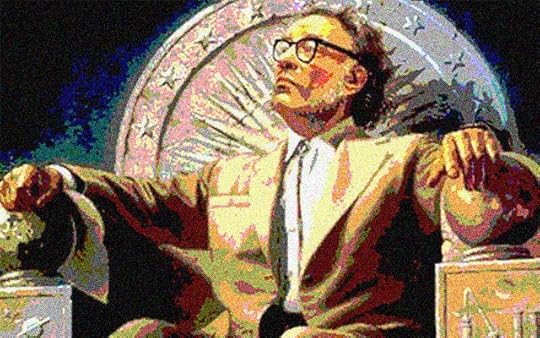
The science fiction author Isaac Asimov gives me hope. Isaac Asimov wrote over a hundred books without sacrificing quality on the altar of speed. In order to avoid fussing over language, he developed a clear and simple style that permitted him to write prodigious quantities of text quickly.
But Isaac Asimov was Isaac Asimov. is it possible for writers like me to be both fast and brilliant? In the world of writing advice, I have found two conflicting points of view. One says that fast writing is the most honest writing, and that when you overthink, spontaneity breaks down. The way to write well, these writers claim, is to write reams of text quickly, because the more you write, the better you will get. In other words, if you focus on quantity rather than quality, the quality will eventually take care of itself due to skills gained by practice. This attitude is the spirit of NanoWriMo: Churn out a first draft as quickly as possible to liberate yourself from the paralysis of perfectionism.
The other viewpoint is expressed in the adage “Good writing is rewriting.” As much as the first perspective appeals to me, the “good writing is rewriting” strategy works best for me. The “write quickly” injunction is good for rough drafts, but rarely does anything I write come out perfectly the first time.
My first drafts are just fragmented sketches of my content, penned in a spiral notebook, but the real magic happens when I type it into my computer, making changes as I go.
However, I have recently been accused of fussing too much over my work. I have heard, “Stop pushing words around. You should be able to finish a short story in an hour,” “If you give yourself two days to write a story, it will take two days,” and “There is no relationship between the quality of writing and the time you spend on it. You need to let go.”
Although I disagree with the argument that time has nothing to do with quality, it is true that in the final polish stage of my writing, I tend to agonize over my word choices. While I am writing, I am totally relaxed and focused. I am unaware of time passing. However, at the very end, when it is time to share my work, I will sometimes have a crisis of confidence. Writing that I loved a day ago suddenly seems unworthy. I have actually rewritten big passages only to realize, days later, that my first version was the best.
While obsessive-compulsive writing habits work against me, writing a great story in a hour is unlikely, and even if I accomplish it, I will end up with only the simplest stories. An hour is not enough time to create nuances of character, build suspense, or explore serious themes. Each writing project has its own time requirements, depending on the scope of my ambitions.
This is what I have concluded: If I do set time limits, they should always be liberating, and never constricting. It should free me from the need to “fuss” over my work so I can move forward, but if I fail to finish in a certain time, I refuse to beat myself up over it.
Despite my obsessive revision habits, I have not been “stuck” by any means. I have three books that will be published this year: two novels, Paw and The Ghosts of Chimera, plus a new short story collection. I may not be as prolific as Isaac Asimov, but I am far from being blocked.
I still dream of being super prolific, but only if I can continue to enjoy my writing. It is hard for me to enjoy it if I feel rushed. If I am fully concentrated on what I am doing and making steady progress, I believe I am on the right path, regardless of how long it takes.
If I find a way to write faster and still write well, I will do it, but if I have to choose between quantity and quality, I will go for quality every time, not because of any work ethic, but because writing that allows me to do my best is the only kind I can enjoy.
If you enjoyed this post you might like my other writing. Take a moment and sign up for my free starter library. Click here. Also my new novel “The Ghosts of Chimera” will soon be published by the folks over at Rooster and Pig Publishing.
The post Can a Fast Writer Be a Great Writer? appeared first on PASSIONATE REASON.
December 29, 2015
What I Would Tell Past Me about Finishing Stories
There was always something a little depressing in high school and college about telling anyone I was a writer, because they would always want to know, what have you written?
The question should not have been a stumper, not tough, but it was, even though I had written lots of things, many beautiful beginnings: two paragraphs of a novelistic masterpiece, a brilliant snippet of dialogue, or a lyrical description of a plant. There was only one problem: hardly any of my projects were finished.
There were glimpses, I thought, of real talent, unplanned bursts of inspiration. I treasured those unfinished pieces because they seemed to offer hope. Rather than write something new, I clung to my old frozen efforts full of pretty passages and nice imagery, sparse trophies in the glass case of my ego. Look? See? I can be a writer someday, I can.
I believed I needed my portfolio of promising beginnings to prove to myself that I was “good,” but from experience I knew that if I continued my stories, I would lose the magical ease with which I had begun. With my inspiration gone, everything would break down and the problems would begin. My trophies were at least evidence that if I only made the effort, I could turn my unfinished story into a masterpiece.
But the discrepancy between what I planned to do and what I did pushed me into a hell of cognitive dissonance. It is hard to call yourself a writer when all you have is a series of stalled yet beautiful beginnings, hard to brag that you wrote two paragraphs of sheer genius, hard to deny there is something wrong when you call yourself a writer, yet have almost no writing to show.
I often wish I could go back in time and give my younger self a “talking to” about the psychology of finishing stories. I don’t have a time machine, but I can at least tell others what I know. The first thing I would tell my younger self is that completing stories is a giant step toward artistic growth.
Go ahead and write “bad” but finished stories
A “bad” finished story is worth far more than one paragraph of polished Dickensian prose. Why? Because once you finish a “bad” story, you have something to work with; you have partially formed “clay” to mold. Or, to use a different analogy, an imperfect draft becomes a puzzle with many parts. It gives you specific problems to solve and learn from, but you cannot solve problems that do not exist.
I would tell my former self to let go; let go of the frozen ego-gratifying paragraphs, partial “ice sculptures” glimmering with pretty imagery and impressive rhythms. I would say, if you wrote one good thing, you can write more good things, many more; no matter how “good” or “bad” a single piece is, just keep writing. Write when you are in distress, write when you have a sick cat, write when you are happy, write when you are going insane, write, just write, keep writing, and never stop.
Depending on old writing efforts for self-confidence is like hanging onto the side ledge of a swimming pool, afraid to let go and actually swim. It is paralysis, a state of being creatively frozen.
Creativity is not about celebrating pretty frozen things, though it may seem that way because we live in a society that elevates product far above process, failing to recognize that product is a record of the process, and that the two are inextricable.
To outsiders, art looks different than it does to the artist. When readers open a book all they see is neat characters of text marching along like obedient soldiers. But the act of writing is messy, dynamic, and uncertain, more about discovery than proving how good you are. You may end up writing something completely different than you originally intended because as you write, you change. Sometimes new life experiences will begin to influence a story. Each moment of writing has the potential to surprise. That possibility for surprise, more than any praise, is what makes writing addictive for me.
Science fiction humorist Douglas Adams said that he did not like to write, that he only liked having written. At one time I would have agreed with him, but I no longer feel that way. I am far more excited about the incomplete pieces of writing I am working on than my past, frozen efforts, no matter how “good” they are.
But the willingness to finish a story is not the same as the ability to finish. What if you have no idea what you are doing? It helps to learn the “rules” of writing, but it is also essential to let them go when necessary.
Learn the “rules,” then bend or discard them
For a long time I did not know how to make my stories feel complete. I studied plot structure and character and assumed that if my story did not meet certain criteria, such as an identifiable climax and resolution, I was doing it wrong. I finally realized that the rules for writing can be bent. If you try too carefully to follow the standard formulas, writing can start to feel like painting by numbers. “Drop in a lovable character, give him hell, insert X amount of trial-fail cycles here, pick a heart-melting theme, and stir.” Most Hollywood movies follow the standard formula without deviation and as a result most of its films are tediously predictable.
Rather than fill in variables of a standard formula, I seek to create in my stories a feeling of wholeness and closure. The baseline objective is not for my writing to conform to a certain set of rules, but for it to be interesting. Since my discovery, I have been able to finish a lot more stories than I used to, and I like them more.
I view the standard model taught in creative writing classes as useful for getting a derailed story back on track, but I have zero interest in writing stories that have already been written, with just a few details changed.
However, I am not a “pantser,” someone who makes up their stories as they go along without any planning. I am more likely to finish a story if I have a clear direction, even if my initial direction changes mid-way. Fortunately, anything in writing can be changed, which is a great thing to remember when you are writing a rough draft.
Embrace the rough draft in all its glorious roughness
Becoming friends with the messy, uncertain rough draft stage is the best thing I ever did for my writing, but it was hard. Even if you tell yourself “anything goes,” looking into a verbal mirror that highlights imperfections as well as good qualities can be emotionally difficult.
I was stymied for years because I wanted to avoid looking into that mirror. I only wanted to write if I could be sure everything would come out right the first time. I had an image of myself I wanted to preserve: controlled, logical, easily categorizable and easily understood. I wanted perfectly organized paragraphs to unfurl from my fingers.
In order to complete stories, I had to become comfortable with myself, with my thought patterns, my inner chaos, and even my “dark side.” I began granting myself unconditional praise for any writing effort, even if I saw in it places where I was irrational, biased, indulging in self-pity, or in denial. I had to constantly remind myself that in a rough draft, anything goes.
What is allowed in a rough draft? A rough draft allows you to be boring, trite, self-indulgent, silly, crazy, rude, prurient, sentimental, or profane. My problem with rough drafts was my inability to accept them as reflections of my own inner “roughness.”
It took me a long time to get to a point where I could look into my “word mirrors” without flinching, but once I learned how, the rewards were well worth the effort. Unconditional praise mitigated the self-critical inner voice that had blocked me for many years. With the critical voice silenced, I could take pleasure in the act of writing, and loving the way writing feels is the best way to finish stories consistently.
I no longer cling to past successes, whether they are finished or unfinished. Process trumps product. I write, I finish, I move on, and then I write some more. Sometimes writing feels as confusing and exciting as moving through a house of mirrors. The challenge is to look into the mirrors with self-tolerance and objectivity, no matter how good or bad you appear, to see yourself in all your baffling complexity, and continue to move through it all, undaunted, until you are done.
If you enjoyed this post you might like my other writing. Take a moment and sign up for my free starter library. Click here. Also my new novel “The Ghosts of Chimera” will soon be published by the folks over at Rooster and Pig Publishing.
The post What I Would Tell Past Me about Finishing Stories appeared first on PASSIONATE REASON.
December 22, 2015
Absurd Writing “Rules”
I often encounter on-line writing advice that urges writers to bid good-bye forever to seemingly innocuous words. The advice-givers promote getting rid of a word like “very, “then,” or “that” as a magical way to transform prose into leaner, more interesting, and clearer copy. “Look! Just stop using this one word, and you will be amazed at how professional your writing will sound!!”
The blogger presents a sample “before” passage glutted with the offending word and an “after” passage with the word wiped away. “There. See how much better the second version is?” The advice is confusing because in rare cases, it might actually help.
But unless a writer pours words like “very” onto the page like tomato sauce, the “trick” will do little to strengthen writing. In fact, it does harm by strapping writers with arbitrary limitations. Meanwhile, the “rules” shift attention away from what really matters in writing, such as content, voice and even clarity of expression.
I went to a writing workshop once in which the speaker spent almost an hour talking about why a writer should never, ever use the word “very.” Her reasoning was not all bad. She argued that the word slows down sentences and that using a strong adjective to begin with eliminates the need for “very.”
I agree that the word “very” is best used sparingly like salt. But never use it? Not ever? Not in a million years? I disagree. Like all words and parts of speech, the word is in our language for a reason. “Very” is an intensifier. If you have carefully chosen the adjective you want to use and want to make it more of what it already is, “very” is not a very bad choice. Also, because the word is so common in everyday speech, “very,” along with other common words, can help to establish an informal tone when one is called for.
Granted, a passage of text in which every other word is “very” will be far from Pulitzer quality, but any word that is splattered all over the page will create an aesthetic mess. Why pick on “very”?
Other common expressions that have come under fire are “then,” “that,” and “began to.” The advice givers always give valid-sounding reasons for pulling the words from the linguistic grab-bag and casting them into the fire.
In the case of the word “that,” some writers argue that if the sentence makes sense without it, the word should always be thrown out. The proofreader of my novel Paw struck the word “that” almost everywhere he saw it, leaving a trail of confusing and clunky sentences. The reasoning is that removing the word makes sentences leaner and easier to read.
Let us test the “rule” using the last sentence I wrote. What happens if I remove the word “that”? You have: “The reasoning is removing the word makes sentences leaner and easier to read.” The sentence still makes sense, although you might have to read it more than once to decipher it. The pacing feels off, and the first thing the reader sees is “The reasoning is removing,” which is confusing. A comma helps. “The reasoning is, removing the word makes sentences leaner and easier to read.” The new sentence works fine, but is the comma such a big improvement over the original? Replacing the relative pronoun with a comma to get rid of three letters is fussy and silly. Of all the things I have ever disliked about the writing of others, seeing too much of the word “that” is the least of them.
Another “rule” I came across just yesterday was to never have a character “begin to” do anything. Just have them go ahead and do it. Change “She began to sing” to “She sang.” Change “He began to dance” to “he danced.”
In cases like action scenes, the change may be helpful since action scenes generally benefit from fast pacing and strong verbs. But is it the hallmark of a bad writer to ever say a character began an activity? Why would any good writer do that?
For one thing, saying something “began” can add a wistful and lyrical quality to prose, perhaps because beginnings imply the existence of endings: “It began to rain and continued late into the night.” The alternative, while correct, has a different mood: “It rained and continued late into the night.” Both versions work, but they feel different. The choice between them needs to be guided by intuitive artistic preference, not a hard and fast “rule.” I personally prefer the more lyrical first version.
Another candidate for editorial extinction is the word “then.” Some bloggers say you should never use it because it is nothing but a filler word which slows down the action, and that it is “stronger” to go ahead and say what happens next. However, “then” serves an important purpose: It links separate actions and clarifies their sequence. Like any transition, using “then” makes writing more cohesive.
Example:
Version 1: She went to the park. She went to the grocery store.
Version 2: She went to the park. Then she went to the grocery store.
In this case, the word “then” is doing a job. Without it, going to the park and going to the grocery store seem cut off from each other, and which activity came first is unclear. Both versions are grammatically correct, but they are not the same, even in content. Which one is used should be determined by the specific writing context and purpose of the writer.
As rules of thumb, such “tips” may offer general guidance, but they start to go off the rails when people began to quote them as dogma and apply them blindly to every situation, so that the “tips” become substitutes for thinking. What writers need is not formulas and inflexible rules, but the ability to analyze and decide what is best case by case.
Many proponents of jettisoning certain words give only one reason for throwing the words out. “It ruins the flow” or “it slows down the action.” But writing is complex. There are usually many dynamics going on in writing such as voice, rhythm, pacing, and mood. Ignoring those factors in favor of a rule that addresses only one problem such as “making sentences lean” is likely to lead to bad writing.
Decreasing the options writers have for expressing themselves is not a form of magic. It will not transform sloppy text into clear and beautiful prose.
I found a passage in one of my favorite books A Separate Peace in which the author John Knowles beautifully violates three of the “rules” I have mentioned. I have put the no-no words in bold lettering.
“…he kept quiet for approximately three minutes. Then he began to talk. He never went to sleep without talking first and he seemed to feel that prayers lasting more than three minutes were showing off.”
Every word of the above paragraph is indispensable. For example, what happens if you take away the word “then”? For one thing, the new sentence runs too choppily into the next; the cohesion breaks down.
What if the author had followed the rule against using “began” and written “he talked” rather than “he began to talk”? Saying “he talked” destroys the fluid rhythm of the passage, and even the content changes. To say “he talked” ties the action to one moment, suggesting he spoke only once and stopped. Here the phrase“he began” – paradoxically – moves the action into a more progressive tense, suggesting that the speaker not only began to speak but continued to speak, leaving the reader to wait for an endpoint.
Finally, what if you removed the word “that”? The missing word subjects the passage to initial misreading since it at first suggests that the character was feeling the prayers themselves, interrupting the verbal flow by forcing the reader to recover from a moment of confusion.
The changes choke the narrative voice, change the mood, stagger the pacing, and work against readability. Every word in the paragraph is doing an essential job. Striking any of them would make the passage feel incomplete.
Writing is a skill acquired through practice, and any “rule” is a rule of thumb at best. General guidelines are helpful as long as they remain guidelines and not inflexible mandates that become a substitute for thought.
Word elimination as a way to produce more “professional” writing is the snake oil of the writing world, a click-bait trap, a “quick fix” that appeals to wishful thinking, constrains artistic growth, and strangles creative freedom.
If you enjoyed this post you might like my other writing. Take a moment and sign up for my free starter library. Click here. Also my new novel “The Ghosts of Chimera” will soon be published by the folks over at Rooster and Pig Publishing.
The post Absurd Writing “Rules” appeared first on PASSIONATE REASON.
December 15, 2015
Hemingway Pushed Me Down the Subjectivity Rabbit Hole
When I was in tenth grade English, Hemingway deceived me.
The novel The Old Man and the Sea was super thin and, glancing at the first page, I found language so simple it was almost child-like. From that information, I drew two wrong conclusions about my required reading: First, that I was bound to enjoy it and second, that I could easily read the entire novel in an hour or two.
Having overwhelming pressure from other classes, I made a desperate decision. I would read The Old Man and the Sea the night before the test. But when that night came, I could barely keep my eyes open.
I found the simple sentences boring. I could not relate to the main character or see significance in any of his actions. My eyelids kept falling. I was not a coffee drinker, so I turned to my best friend for restoring alertness in a crisis: chocolate.
In the kitchen an unopened package of chocolate bars awaited. One chocolate bar jolted me back to alertness and I was able to read a few pages easily, but the boost wore of quickly and my energy nosedived.
Not good. Not good at all. I was trying to maintain a straight A average, but the more I read The Old Man and the Sea, the more I cursed Hemingway and his deceptively simple writing style.
The less I approved of Hemingway, the more enamored of chocolate I became until finally, I had polished off all six chocolate bars. My 105-pound body protested the massive sugar blast. My forehead throbbed. My fingers trembled. My facial muscles twitched. And despite all I had eaten, a strange, queasy, hollow feeling settled into my stomach. I blamed it all on Hemingway and his minimalism.
I turned every page without fully absorbing the content. By the time I went to bed in the early morning hours of the next day, I reviewed in my mind what I knew about the book from all my reading: “There was a man, a boy, and a fish. Chaos ensues.”
Needless to say, I did not do well on the test. For many years I thought of Hemingway as the vile miscreant who had turned my most loyal ally chocolate against me. Minimalism indeed.
But there was no escaping Hemingway. Years later, in college, I had to read his short story “Hills like White Elephants.” Though initially I groaned, this time, after turning a couple of pages, I was not bored. I read the story again, fascinated. Not a word could have been taken from the story without rupturing it. It was like Hemingway had sliced off a section of reality, trimmed off the excess, and shaped it to perfection, but in order to do that, he had to make the situation speak for itself. Though he used words to present the drama, the words were not the “important” part. The human drama was, and the words were there only to serve it. The story was a masterpiece of minimalism.
But I hated minimalism. Didn’t I? I had to concede that maybe I hadn’t been fair to Hemingway in high school. Maybe my headache, sleep deprivation, deadline pressure, and chocolate overdose had biased me – a little.
Later on I changed my mind about other authors, too. In another class, when I force-fed myself The Awakening by Kate Chopin the night before a test, I seriously considered bequeathing it to my cat to shred, but years later I read the book when I had adequate time and loved it. In fact, it was one of the best books I had ever read. Had I been a reviewer I might have written “Insightful! Illuminating! Lyrical!”
The book had not changed. I had. I am making this point because writers put a lot of stock into the words of critics, including readers, in evaluating whether fiction is good or bad. We know writing is subjective, yet usually we think of subjectivity as being only about tastes that vary from individual to individual – as if those tastes were immutable.
That is not to say that books are never negatively reviewed for good reasons, but the subjectivity rabbit hole goes deep, more than most people imagine. Personal tastes are a big part of what drives emotional responses to a story, but I wonder how many critics have given good books bad reviews because they were under stringent deadline pressure or had heartburn.
All the more reason not to over-depend on the opinions of critics or any reader. I stand by what I have said many times: Write what you want to read, not what you think others will want to read.
But there is still no escaping subjectivity. Sometimes I dislike my writing for the same reasons I hated Hemingway, such as having a headache or feeling pressured. The same is true if I am in a noisy environment, tired, or depressed, factors which have nothing at all to do with the writing itself but which can cause me to abhor my writing after loving it the day before.
Criticism is subjective not just from person to person, but from moment to moment.
I intend to remember that if I ever need to rationalize a scathing book review. I can tell myself: Well, obviously the reviewer was not having a good day; he probably got a traffic ticket hours before reading my book or ate too much chocolate, or not nearly enough.
In fairness to Hemingway, maybe someday I will give The Old Man and the Sea another chance, during a time when I am well-rested and calm, and have non-stratospheric blood sugar levels.
Meanwhile, I will continue to write for myself, especially since people are fickle and opinions, unreliable. But as I suggested, I am fickle too. My impression of my own writing is subject to change from day to day, and from moment to moment.
Which leads to the question: If I can love my writing one day and hate it the next, which Me is right: past Me or present Me? To determine “who” is right, I have to first eliminate biasing variables like headaches, blaring televisions, and pre-existing bad moods. I could also eliminate positive biasing factors, such as “just ate a freshly baked cookie,” though dismissing happy variables is not nearly as appealing. And if I am still fickle?
I recently had an idea: turn it into a numbers game. After eliminating the known “biasing variables,” if I read what I have written and love it three out of five separate times, then I can say, “It is official. I like this enough to share it.”
Subjectivity is so messy. I like the idea of turning my feelings about a written piece into a neat formula. At least, Present Me approves. Future Me…not so sure. When I make it to the Future, I will make a point to ask her.
If you enjoyed this post you might like my other writing. Take a moment and sign up for my free starter library. Click here. Also my new novel “The Ghosts of Chimera” will soon be published by the folks over at Rooster and Pig Publishing.
The post Hemingway Pushed Me Down the Subjectivity Rabbit Hole appeared first on PASSIONATE REASON.
December 8, 2015
The Emotional Wildcards of Social Media
Most of the time I forget I’m bipolar. Or at least, I don’t give it much thought. I don’t get up and think, “Huh. I am feeling extra bipolar today. All these moods.” I’m a writer first; bipolar is a far second. Mostly I think about writing. How can I do it better? How can I earn enough money for writing so that I can do it forever?
But like a rogue asteroid, a “trigger” is always lying in wait, threatening to hurtle toward me on days I least expect it. Normally it blindsides me and I find myself going from a soaring mood to lying in a shivering heap, wishing that I knew of a safe way to become comatose for a month.
After my bipolar diagnosis over a decade ago, which led to medication, triggers have – for the most part – not been a big deal – except for the triggers that have, for the last couple of years, come from the world of social media. “Crashes” is what I call them in my head, with all the brutal violence that the word implies.
It may seem odd that something as seemingly harmless-sounding as social media, which does not even exist in space, could have such dark and destabilizing power over me.
After all, websites like Twitter, Facebook, and Google Plus are designed to make you feel good. The main option for interaction is to “like.” There is no “dislike” option, and who can resist going to a place where they stand a very good chance of being liked?
The showers of validation are addictive. They offer warm feelings of connection; they can make almost any user feel popular. But, especially when you have a mood disorder, the praise can sometimes make you feel too high, to the point that when validation fails to come, a steep fall lies ahead.
A recent example: I went to Facebook and saw that someone had made a comment on one of my e-books, stories I am giving away so that readers can sample my writing. Amid a number of friendly comments was one that jumped off the page, a simple line attacking the “quality” of my science fiction story “The Atavist” and comparing my writing unfavorably to that of another writer he admired.
The vague criticism caught me totally off-guard. I had just taken a casual and almost unconscious glance at the comment thread. My critic had given no specifics; his comment was nothing more than a swinging fist coming at me through my smart phone and striking me in the jaw.
I know all writers get criticism. It is an unavoidable, even essential part of any artistic profession. I have been lucky in that, in over three years of blogging regularly, this was the first time anyone had attacked the quality of my writing. I was not devastated, but seeing the comment did unsettle me, and over the next few days it replayed itself more than once in my head, always bringing with it a jolt of discomfort. Although learning to shrug off criticism is a must for a writer, seeing the niggling comment in this case was avoidable and did me no good. The “hit” came to me through my Facebook page and, of all things, my phone.
Luckily, such incidents have been rare, and criticism coming from judgmental, opinionated people is only part of my problem with social media. Even getting no response can be a downer.
In real life, if you were dining at a restaurant with friends and said something that was important to you, it is unlikely they would ignore you. Online, sharing a status that no one responds to happens frequently. in the silence, the illusion of connection disintegrates. Cyberspace turns out to be a cold place after all; the sunlight was a mirage.
Moreover, a system built around “liking” encourages seeking approval, which is what I try not to do. The want to please has been instilled into me since early childhood. It hurts me, and for a long time it hurt my writing until I realized what was happening.
I am a writer and, in order to write anything that matters, I have to be honest whether anyone approves or not. But while I am trying hard to move away from seeking validation, the design of social media pulls me back toward it.
On social media websites, having what you say “liked” is a key reward like gold coins in “Mario.” Social media turns my unwanted craving for validation into an actual game in which approval becomes the way to “win.”
I am reminded of the line in the poem “The Love Song of Alfred J. Prufrock,” “I have measured out my life in coffee spoons.” What might he have written in the year 2015? “I have measured out my life in Twitter likes.”
Aside from being ignored, what destabilizes my moods most of all is “notifications.” I am not sure how it is for people without bipolar disorder, but turning on my smart phone to see my notifications in the mornings is always a terrible emotional risk. I am giving unpredictable messages from the outside world power over my mood.
Mornings have been ruined due to feeling rejected by a “friend” on social media. Most of the time I find out nothing was really wrong. Often, an illusion of rejection is due to limited communication options, particularly on Twitter, which restricts writing space to a nub, leading to frequent communication misfires. Trying to read minds by “reading between the lines” or mentally adding angry inflections to messages can drive you truly insane if you let it.
Moreover, I have lost valuable writing time due to drawing negative “emotional wildcards” from my smart phone. More than anything else in my life, social media triggers the kind of emotional whiplash I need to avoid. Would my life not be healthier and more productive if I quit altogether an activity that gives others power over my moods?
The even bigger question is, should I be on websites designed to preoccupy me with others “liking” me? Honesty is the goal of writing, and I rejected popularity as an unworthy goal at age 12. The people I most admire are people who don’t care about praise, but who are so passionate about something real they are willing to risk rejection for it. Writing is about being, not seeming. So much of social media is about seeming.
Being drawn into the social media game predisposes me to obsessing over trifles. It is like an air castle for my ego, bouncing it up and flinging it down – not the best situation for someone with bipolar disorder.
Why have I not quit? Because social media does offer some substantial rewards. After much resistance, I went on Twitter in order to promote my writing and perhaps capture the attention of an agent.
As a result, I have over 36 thousand followers on Twitter, and tweeting my blogs has been my best way of sharing them. Plus, I have many thoughtful, talented friends on Twitter who have supported me, and I want to continue supporting them back. I also got the prize of a book deal through Twitter for my novel. (Originally the release was scheduled for fall 2015, but due to unexpected editorial issues, the release has been delayed.)
But despite its benefits, social media is destabilizing for me.
I have tried many ways to adapt. I have tried only checking social media notifications at certain times, preferably not first thing in the morning when I am sleepy and confused. That way I can psychologically prepare myself for the possibility of drawing an accursed emotional wildcard, like the one called “The Troll.”
I also wrote a list of “big picture” questions to refer to in case I start to obsess too much over trifles: What will the world look like 100 years from now? How much life is there in the universe? What does it mean to exist if atoms are mostly empty space? Will humans evolve into a more advanced species? What ideas or values do we now accept that will one day be seen as unjust or cruel?
The universe is a fascinating place teeming with things to learn and wonder about. There are so many books I would love to read. To spend even a half second asking myself why no one retweeted my cat pic is a tragic waste of mental energy and life.
To reap the “substantial” rewards of social media activities, I need to find a way to do them without them bringing out the worst in me, without them turning me into a petty, ego-bloated approval seeker. With or without social media, I need to seem less, and be more – my ideal both in my writing and my life.
If you enjoyed this post you might like my other writing. Take a moment and sign up for my free starter library. Click here. Also my new novel “The Ghosts of Chimera” will soon be published by the folks over at Rooster and Pig Publishing.
The post The Emotional Wildcards of Social Media appeared first on PASSIONATE REASON.
December 1, 2015
The Story of One
I have come a long way. Though the date of my birth is uncertain, I began around 13 billion years ago; or so I am told. My birth was violent, they say, but there was no sound, and if there had been I would not have heard it, because I had no ears.
At first I was not much, not even an atom, just a tiny part of a mix of subatomic particles. Then I moved up on the complexity ladder and became the humblest, simplest element of all, hydrogen, though inside it was the power to fuel stars and to one day give rise to worlds, people, ice cream, and cats.
Somewhere, in all the countless atoms, all alike, a ghost of me was stirring. Not a real ghost, not a soul, not a mind, but a shadow of what I someday could be. I am here now, so my potential to be here must have existed from the beginning, my shadow, my ghost. No one who saw the newly formed universe would have seen my shadow; no camera or telescope could have captured it. I was not conscious. I was not big, but I was there, buried under a vast incomprehensible web of cause and effect that would someday fling me into the far distant future.
Was I destined to be born by the swirling mind-boggling interplay of accident and cause and effect spanning billions of years?
Maybe. But it was not just about me. I was not the only “ghost.” Had I been all-knowing I might have seen other shadows, billions of my siblings, animals, people, and plants stirring in a place where no life was, and who would one day become living creatures as the universe unfolded into whatever it would become.
It took a while for me to have an actual birthday that would call for cake and presents, but I was patient, which is the great thing about being unconscious; even billions of years move quickly when you are not aware of them passing.
If I had been aware, maybe I would have marveled at all the stars being born from whorls of gas, burning bright, and extinguishing themselves all around me, the great colorful parade of clouds incandescing, the swirling, glowing, explosive drama of Titans.
One day after my human birth, I would later think of stars as forbidding, alien, lifeless objects hovering beautifully yet pointlessly in the night sky, too far, too remote to have anything to do with me. I would forget they were born in the same cosmic explosion that gave rise to my shadow. The stars and the vast fabric of space they inhabited would someday terrify me. I would forget that my story and the story of the stars, traced back to the beginning, was the story of One.
Maybe the stars did not think or speak as I one day would, but deep inside them the heart of the future was beating. Their intense heat fused hydrogen atoms into new, more complex elements that would one day go into making planets, people, turtles, donuts, comic books, and maybe even what humans would call “alien” life.
But alien-ness is an alien concept. Everything we know, living and inanimate, is cut from the same cloth. When the universe was born, I was there. Everything was. But as is usually the case with being born, no one remembers the day it happened or what it felt like.
Billions of years after the singular moment of sudden cosmic expansion, the atoms that would all become me for a short time settled on a little blue-green planet called Earth.
To an observer standing on any other planet, Earth would not have looked like much; it was not the center of anything, except for a pale, battered moon that orbited Earth like a faithful puppy that never left its side.
Beneath that gamboling moon, the planet was an unpleasant place for millions of years. It was not yet safe for me to be born. At first the surface was way too hot. Even after it cooled, there was no oxygen to breathe, as the sky rained oceans from clouds of condensed steam. All the while. I waited, because it is easy to be patient when you are nothing more than a blind unconscious shadow of what could be.
What could I be? A collection of atoms, but a specific arrangement of them, a pattern unique in all the world. How did my pattern begin? A tiny part of it was born in the ocean, humbly, like the simple hydrogen atoms that followed the violent birth of the cosmos. How it happened, no one knows, but the microscopic creature that began the drama of life on Earth was bursting with “shadows” of what could be, billions of ghosts of animals, plants, and people.
I was there, too, the ghost of me, when the first cell divided, but the universe was in no hurry to see me live. For eons it watched as simple creatures became more complex. Much later it saw great lizards called dinosaurs roam Earth for millions of years. As far as I know, the dinosaurs never spent a moment wondering where they had come from, but the universe was apparently fine with creatures who asked no questions.
All the while, I was there, a blind, unconscious shadow, unable to act, nothing more than an invisible ghost of what could be. Maybe my shadow lived inside the small scurrying rodents that emerged from hiding under the cover of night. My ghost did not know what was coming. Neither did they.
A great lumbering beast made of rock and ice called a comet was headed toward Earth, and after its violent collision, the days became cold beneath a sky darkened by clouds of ash and dust. My shadow must have resided in a creature that, despite the cataclysm, managed to survive.
Millions of years gave rise to a new pattern called a primate. It swung through trees, hid from predators, suffered, ate, and somehow survived.
Primates gave rise to smarter primates until one day I was born. I was a ghost no more, just a fragile evanescent creature soon to be aware of the vast sweeps of time that came before her and the unfathomable space all around her. She saw herself as separate from the universe and everyone else. She could move. She could walk. She could run. She could sing. And she had trouble imagining those powers would ever end.
She would look at the stars but could not remember that all the material inside them was born at the same time and place as hers was; that their relative smallness or greatness did not sever her kinship with them.
She viewed the universe as too alien and too vast to comprehend. Those around her would say, “We are small. We are insignificant. We are nothing,” and she believed them. The stars were outside her. She was not in them, nor they in her. In fact, they were moving away from her and the earth and even other stars as fast as they could.
People were different. Sometimes, instead of moving away from each other like the stars, they moved toward each other. Many people sought closeness to others, as if something inside them sensed that they had once been part of a whole that had shattered. Humans had the power to love, but they mainly loved those around them, the ones they could see and touch. People were just as good at separation as they were at loving and often, the more separate they felt from those they viewed as “alien,” the more they loved their own.
Many saw how short their time on Earth was and some denied death was the end; they thought they had found a way out, and when people disagreed with them, some yelled and screamed and converted and snubbed or slaughtered those who refused to play.
People were ingenious at dividing, separating, alienating, and destroying, but they could also be kind, compassionate, and loving. So could I.
Sometimes I wanted to be with others, and sometimes I wanted to be alone. And when I gazed at the stars, I saw them as remote, fleeing, and too big to comprehend. I forgot that they were part of me. I forgot they are my kin.
I now have a rare and fleeting ability denied to me for billions of years: the power to act.
I have come a long way from the cosmic cataclysm that gave birth to worlds. When I think of the many billions of years that have passed before me, I wonder what exactly I should weave with the short thread of existence called my life. I ask myself what it means, after billions of years of paralysis, to move and think and wonder. In the end, there is so much I will never know.
I only know that I have traveled far from my hydrogen infancy in the days before the stars had formed, before there was anything to see or any vision to see it with.
Perhaps in the end I will become a shadow again, not of the future but of the past. Until that day I want to live, move, and create. I want to never forget what a rare circumstance it is to be alive.
One day my pattern will fall apart. The atoms inside me will disperse. As in the beginning, I will be a few atoms drifting among many, but I like to imagine some part of me will greet the others as friends. I know them well. They were with me from the beginning. They are not just my kin. I am part of them, and they are part of me. The story of me and the story of them is also the story of One.
If you enjoyed this post you might like my other writing. Take a moment and sign up for my free starter library. Click here. Also my new novel “The Ghosts of Chimera” will soon be published by the folks over at Rooster and Pig Publishing.
The post The Story of One appeared first on PASSIONATE REASON.
November 24, 2015
The Unanswerable Question: What Gives Writing “Value”?
I should have known better. After all, I majored in art, but somehow I fell into the trap anyway, by asking myself a question more treacherous than the Bermuda triangle during a category 5 hurricane: What gives writing value?
At the time, I had just read a particularly thin blog post sweepingly denouncing the fantasy and science fiction genres as being total crap. Since I write in both genres, when I saw his title, I was looking forward to hearing what he had to say, but his points essentially were: “I hate fantasy with all its dumb dragons and stupid elves and science fiction is okay sometimes, except when it deals the human situation; I hate the human situation in my fiction.” I was baffled. Whose situation was he interested in reading about? Even when writers take the points of view of animals or aliens, how can a writer avoid using being human as a reference point since writers and readers tend to be, um, well, human?
I could see no value in his post. It did nothing more than tear down, and the arguments were flimsy. That is why I stumbled into the trap of wondering what gives writing “value,” but it was a bad question to ask because there is really no answer that works for everyone. A story one person scorns is loved by another, and the “I hate science fiction” post might have been embraced by someone who shared the opinions of the author.
The uncomfortable truth is that, like all art, writing is uncompromisingly subjective. People try to reign in subjectivity with rules and generalizations about what constitutes “quality.” You will often hear blanket statements in interviews with agents about what makes writing worthy, but the definition of art is not “that which satisfies a checklist of guidelines composed by a respected authority.” “Rules,” if taken too seriously, strangle creativity.
Although I was unable to come up with any universal guidelines for what gives writing “value,” one good thing came from my musings: I asked myself, “What is it that makes me treasure writing? Not just enjoy or value, but treasure?”
“Treasure” may seem to be an odd word to use for a story these days. There are so many, and the existence of “slush piles” creates the impression that most writing is worthless junk, yet some books really are treasured. Avid fans of a series will look forward to a book release date for months or even years; if you give certain books to people for birthdays or Christmas, they are thrilled to see the anticipated title when the wrapping paper is peeled away.
I am not able to say what makes others treasure books, but I can speak for myself. Though I may “value” a clever plot, addictive suspense, or a well-crafted story, what ultimately makes me treasure a book is the distinctive voice, insights, and personality of the author.
Not everyone loves Mark Twain, but it is his authentic voice, his courageous ability to deviate from the herd, his personality, his wit, and his irony, that set him apart from hundreds of entertaining yet forgettable novels I have read.
When I look at his books on my shelf, I “remember” hanging out with him on the Mississippi River as he made perceptive wisecracks.
However, some scholars have argued that Huckleberry Finn would have been a far better book without the humor. Take Mark Twain out of the story, remove his wit, his irony, and his personality so that what is left is a dry, straightforward and respectably serious commentary on the horrors of American slavery.
Anyone who thinks that art is better without the artist has no grasp of what art is. The books I remember best are the ones where the writers were fearless about being themselves. Honesty alone is enough to confer some “value,” even if the writer is unskilled.
The anti-science-fiction blogger did seem to be giving his honest opinion, which is why I had to let go of the idea that the blogger had not written anything of value. I could not possibly know that. All I could say with certainty is that it had little, if any, value to me.
I have said over and over that there are few “wrong” reasons to write, and expressing why you hate something is valid, even if I disagree. However, some people view writing a story as building a bookshelf from pre-assembled parts. “Just do your job. Your writing is for the reader, not for you. Take yourself out of your work.”
A writer cannot take herself out of her writing even if she tries. A story has an un-severable connection to its creator and, as an extension of the artist, it is bound to be liked by some and disliked by others. Trying to objectively define what gives writing value was a waste of my mental energy, since nothing I said could ever be more than my personal opinion.
However, as a reader, I can say what makes me treasure writing enough to give it a reverential place on my bookshelf. In the works of writers like Mark Twain, J.K. Rowling, Ray Bradbury, and Isaac Asimov, I have a feeling that I know the writers. They have transmitted enough of themselves through their work that they seem like friends.
I once heard books described as “minds on shelves.” I love that definition. It explains why certain novels on my shelf have more than just “value” to me; it explains why I treasure them.
For me to treasure a book, it is not enough for a writer to be lovable. The talent, skill, and effort to tell a story well are essential. However, many thousands of books are entertaining and competently written. It is the courageously authentic voice, personality, and viewpoint of an author that ignites a story and propels it from good to great.
If you enjoyed this post you might like my other writing. Take a moment and sign up for my free starter library. Click here. Also my new novel “The Ghosts of Chimera” will soon be published by the folks over at Rooster and Pig Publishing.
The post The Unanswerable Question: What Gives Writing “Value”? appeared first on PASSIONATE REASON.
November 17, 2015
Self-Indulgence Is Not a Crime
At one time the criticism I most feared as a writer was “self-indulgent.” I had read so many articles that essentially said, “Take yourself out of the story. You are writing for your reader, not yourself. Putting yourself in it is rude.” Some writers even advised, “You can tell when writing is self-indulgent by how many times the writer uses the word ‘I.’ Wherever you see that word in your writing, take it out.”
I became confused. Was writing about myself in first person offensive? Was writing a story because I wanted to read it selfish? Were memoirs inherently self-indulgent?
I resolved my confusion many years later when I realized that trying to write for others at the expense of my own vision was the source of all my block. I began writing what I would want to read, not what I thought others wanted to read, and I stopped feeling apologetic about saying “I.”
Writing for myself has worked well for me. Usually, when I write honestly about something I care deeply about, others are more likely to become engaged than if I try to write what I think others want.
Though I long ago abandoned the “never say ‘I’” nonsense, I see it on blogs about writing all the time. Granted, they produce examples of “self-indulgence” that do make you stop and think. What about writers who bore readers by whining about petty problems to get sympathy? Example: “I tried to dry my clothes but, stupid dryer, they were still wet after the first cycle. I had to run the dryer again. Plus, I have a headache and I found another grey hair, and my cat got sick on the new rug. My life sucks!”
Or what about writers who use their writing to brag? A friend told me about an American writer she knew who self-published a book for the purpose of describing, in tedious detail, his sexual conquests of women on his visit to an Asian country, labeling them as “easy.” If that is not proof of “self-indulgence” at its ugliest, what is?
I have given these examples a lot of thought and, setting aside the issue of moral weakness, I have concluded that in all of them, “self-indulgence” is not the core problem.
In all the examples the writing suffers from having a weak purpose. A purpose is like the wind in the sail of a boat. Without it, the writing lacks energy so it does not go far. If I write only in order to draw pity through “venting,” I may get some cathartic release, but the readers, if they are affected at all, are annoyed, and my “sailboat” stays stuck in the water. (Not that there is anything whatsoever wrong with annoying readers. Even the best writers do that, if only by telling the truth.)
There are big problems with a taboo against venting. What if I want to vent about something that upsets me, such as getting put on hold for hours by a customer service department while having to listen to a scratchy recording of Boot Scoot Boogie over and over again? There is fertile ground for humor here if I am skilled enough to farm it. Plus, since seeking pity, bragging, and venting arise from human nature, they can all be interesting depending on how they are presented.
If I vent in a way that speaks for others, I strengthen my purpose or add “wind” to my sails. If my venting also informs, intrigues, or makes an interesting cultural commentary, I am not sacrificing my self; I still get to vent, but in a way that lets others vent along with me. The same is true of bragging.
An example of bragging done brilliantly is the poem “Phenomenal Woman” by Maya Angelou. The whole poem is Maya Angelou bragging about how awesome she is, but she attributes her awesomeness and mystique to being a woman. She is not only bragging for herself but for every woman alive. She brags but also embraces; she lets others in on her confidence. Add to the artistic purpose the fact that Maya Angelou is an extraordinarily talented writer, and you have not just a wind but a gale.
But does a strong artistic purpose assume you must write for others? Not exactly. I am a reader of my own work, so I write what I want to read. If I look down and see “The air conditioner broke and my stomach hurts and no one shared my tweet. Life sucks,” I feel bored. I am aesthetically compelled to make changes, even if no one ever reads my work. Thus, there is no conflict between my need to make myself happy and the purpose of entertaining a reader.
Writing for yourself is sometimes powerful. Many journals and diaries, which are not even meant to be read, can be fascinating to read because they are honest. Consider the diary of Anne Frank, an adolescent girl who wrote about hiding from Nazis as a Jew during the Holocaust.
What is her purpose? It is a strong one. She is an adolescent trying to understand a life thwarted by a demented Nazi occupation. She is coming of age while trying to make sense of being forced into captivity due to her ethnicity, which makes her diary compelling even though she is only writing for herself.
Moreover, her journal is beautifully written and bristles with her insights on every page. Her luminous personality comes through. Does she eliminate the word “I” or set her “selfish” concerns aside for a reader who might not want to hear her “whining?” Of course not. And even though she does complain, as anyone would in her situation, her uncompromising honesty ignites her prose.
Without knowing it, Anne Frank was speaking for others. Her journal became the voice of many thousands of Jews who suffered during the Nazi regime. Her writing is vibrantly personal yet universal. She gets a crush, she becomes frustrated with mother and the cramped living space, but outside her personal world, violent political forces are raging. Was Anne Frank self-indulgent? If so, she was beautifully and brilliantly self-indulgent.
Unfortunately, some editors see writing that fails due to too little “wind” in its sails and conclude that writers should never talk about themselves at all. They adopt a Miss Manners view of what good writing is. They urge writers to be inoffensive and self-effacing. They are the people who in critique groups urge other writers to “tone down” their writing, by which they mean stripping it of originality, wit, and personality. Stop showing off! Your story belongs to the reader, not you! The advice, if taken, leads to sterile, forgettable, predictable, bloodless writing, not writing with wind in its sails.
I wonder if a similar mindset explains something one of my college professors said, that there are some scholars believe Huckleberry Finn would have been a far better book if Mark Twain had taken out all the humor.
But what about the writer who wrote a book for the sole purpose of bragging about his sexual conquests? Is he not a sleaze?
Well, yes, probably, but that is more of a human nature problem than a writing problem per se. There are sleazy people in the world. Some are dishonest, immature, shallow, or lacking in insight. Often, those people become writers. Telling writers not to use the word “I” is not going to give a shallow person depth, an unwise person insight, or a sleazy person virtue.
However, the fear of being self-indulgent hampers some writers who do have moral compasses by making them feel apologetic for being themselves. For them, fear of self-indulgence can lead to creative paralysis. After recovering from a crippling case of block, I now write for myself because that is the only way I can write. Besides, trying to write what others will like assumes I can read minds, which – as far as I know – is impossible.
Writing, whether it complains, brags, or seeks sympathy, has to begin with me, but to communicate, my writing needs a strong purpose. It needs wind in its sails. That way, if I share it, it does not just stay with me. It moves toward others. And the more wind my writing has in its sails, the farther it is likely to move.
That being said, the word “I” is powerful. It means I am willing to stand behind my words and take responsibility for them. It gives writing authority and authenticity. My self is the wind in the sail that gives my writing boat its first push.
If you enjoyed this post you might like my other writing. Take a moment and sign up for my free starter library. Click here. Also my new novel “The Ghost of Chimera” will soon be published by the folks over at Rooster and Pig Publishing.
The post Self-Indulgence Is Not a Crime appeared first on PASSIONATE REASON.