L.E. Henderson's Blog, page 10
September 1, 2016
Can Stories Have Too Many Descriptions?

A common complaint about novels is “too many descriptions.” As a reader I have made the same complaint in cases where I was eager to see what happened next in a story, only to end up entangled in a painfully detailed description of some bucolic farm setting.
Question: Please, tell me, does the baby whose stroller is teetering on the edge of a three mile high precipice live?
Answer: Shh, not now. Here. Look at this grassy field. It has a cow. And grass. Did I mention the grass was green? Emerald green!
Of course, writing has no rules about how many descriptions to include or not include; besides, some writers are so gifted at descriptions, it is hard to complain about them. Describing is also a major way to communicate the setting to readers and give them the feeling that they are actually there.
However, copious descriptions – especially static ones – can present an enormous challenge to readability. As a writer, I have to ask myself if including long passages of static descriptions is worth the burden it puts on the pacing.
By static, I mean descriptions that my character is not actively engaged with, except maybe as an observer. For example, “The mountain was covered in red and white wildflowers.” If the character is running through the wildflowers or picking them, the description becomes part of the story action so I would not consider it static.
There is nothing wrong with simply saying that the mountain was covered in wildflowers, but when you have a lot of that type of description, the story can slow to a crawl.
Sometimes I find myself wanting to write “pretty pictures” without regard to whether they do anything for the story as a whole. “See? Look at my pretty sunset. I made it out of words!” There is nothing wrong with describing a sunset per se, but when I do, the story essentially stops (unless the sun is a major character). Even if my sunset description is beautifully written, it will burden my story if it lacks a dramatic purpose or goes on for a long time.
While descriptions are an important story-telling device, I want to be thoughtful about them. To do that I have to be aware of my story on two different levels. I need to know what is going on structurally with my novel as a whole, as well as paying attention to the finer sentence-level details.
Due to structural considerations, I often end up jettisoning many of my favorite scenic “word paintings” if they hog the spotlight and inhibit the story action.
Fortunately there are ways to evoke vivid sensory details without stalling the story. One way is to make the descriptions active or interactive. John Knowles, author of the classic novel A Separate Peace, does this well. The following is a sentence from the novel:
We had dinner at a hotdog stand, with our backs to the ocean and its now cooler wind, our faces toward the heat of the cooking range.
John Knowles could have written a static description, something like, “There was a hotdog stand nearby. The cool wind from the ocean was blowing as heat flowed from the cooking range.”
Instead, he turns the description into an interactive experience; here, you are barely aware he is describing anything. The descriptive details are so seamlessly woven into the story action that the narrative never seems to stop.
Here is the rest of the paragraph:
Then we walked toward the center of the beach, where there was a subdued New England strip of honky-tonks. The Boardwalk lights against a deepening blue sky gained an ideal starry beauty and the lights from the belt of honky-tonks and shooting galleries and beer gardens gleamed with a quiet purity in the clear twilight.
Even in the last sentence where the description does become static, there is a sense of unfolding awareness as the character strolls along the boardwalk; thus, his observations are part of the narrative, a fleeting impression, something being experienced in real time. The story never really stops.
When John Knowles describes an object, he also often uses strong action verbs to emphasize its motion (if it has motion).
The wave hesitated, balanced there, and then hissed back toward the deep water, its tentacles not quite interested enough in me to drag me with it.
This passage is a great example of how a writer can use strong action verbs, “hesitated, balanced, hissed,” rather than adjectives, to describe inanimate objects in the natural world. In doing so, John Knowles creates further interest by portraying the ocean as a living, tentacled creature.
Another way to make descriptions of settings “earn their keep” is by contrasting them to a major character. If a character is out of his element say, a college biology professor working at a fast food restaurant, or a wealthy heiress struggling to survive in a third world country, you automatically have an excellent setup for conflict and drama.
Try describing a place from the point of view of a character who is at odds with his environment. Have the college biology professor imagine all the toxic microorganisms as he regards a nasty sink full of cookware or dishes.
What about my heiress? Does she scoff the tattered homes of her impoverished “inferiors”? Or does she view the homes with pity or compassion? How does she handle the discomfort? Does she complain much? Or does she keep her discomforts to herself out of consideration for those around her? How she reacts to her unsuitable environment will define her.
In the same way, you can describe a setting that is in harmony with a character – so much so that it actually seems like an extension of who she is.
An excellent example is Anne of Green Gables, which is teeming with natural descriptions – the trees, the rivers, the flowers. I never minded them because the author paints so beautifully with words, but also because the descriptions have an important purpose: they illuminate who Anne is.
Anne is in love with where she lives, and the intoxicating scenery is filtered through her point of view. Looking through her eyes, I fall in love with the scenery along with her. Thus, the natural descriptions of the setting become a powerful extension of Anne and her personality; hence her title “Anne of Green Gables.”
You can also use scenic details to evoke emotion. Playing with point of view is one way to do that.
I like to filter scenic details through the emotional state of a character. A sad character is likely to notice different aspects of a scene than a happy character. For instance, an unhappy character observing a tree may notice dead bugs on its branches, the dull grey color of the bark, or the offensive graffiti someone etched into the wood.
The character who is in a good mood may see the same bark as having an opulent, silvery color. Instead of observing the dead bugs belly-up on a limb, he may notice the brightly colored birds or the vibrant autumn leaves. Viewing the same vibrant leaves, my depressed character may reflect on how the vibrant leaves are dead, just dead, dead the way everything is dead in the end.
Describing a scene through the emotional lens of a character piques interest and drives drama while anchoring the readers to the setting.
Description can also be useful for symbolism. Many people consider symbolism to be pretentious, the sacred property of the super-serious literary world which is policed by judgey university professors.
In reality, any child who has ever had a nightmare has a basis for understanding literary symbolism. A monster represents fear. I used to dream about becoming immobilized during dangerous situations. My paralysis symbolized the horror of being helpless. In fiction stories symbolism is no different. They are metaphors – concrete ways of representing emotion that go beyond the abstract naming of emotions such as love, rage, or fear. And like a bad dream, an entire setting can symbolize an emotional state.
In the new short story collection I am about to release, I included a story called “The Age of Erring” about a colony of super-evolved humans on another planet who value perfection above all else. This is a problem for my main character, a sixteen year old who cannot seem to stop making mistakes, while everyone around her seems to be free of them.
The setting encapsulates her discomfort. The planet is covered with trees made of glass beneath a crumbling moon that is “falling” toward the planet piece by piece. The symbol of glass trees beneath a falling moon represents the tension of erring in a society that fears mistakes more than anything.
Symbolism aside, there is nothing wrong with using descriptions just to anchor readers to the story setting and create an immersive experience.
However, I would prefer that my descriptions do more than that, so that the drama never stalls – at least not for very long. My favorite stories are a seamless blending of setting, character, situation, symbol, and theme, each part maintaining interest by itself, while at the same time serving the whole.
If you enjoyed this post you might like my other writing. Take a moment and sign up for my free starter library. Click here. Also my new novel “Remembering the Future” is available for purchase on Amazon.
The post Can Stories Have Too Many Descriptions? appeared first on PASSIONATE REASON.


August 23, 2016
Natural Selection Did Not Prepare Me for Social Media

Before social media, whenever I would get home from school, I would be all done with socializing for the day. The world was outside my door and all I had to do was lock it for my privacy to be secured – not just physically but mentally. Indoors there was a feeling of safety and comfort. The world was out. I was in. I could relax completely.
In contrast, social media makes me feel that outsiders are with me at all times, even after I lock my door. I essentially am carrying legions of pixelated people around with me on my smart phone – which stays with me all day. When the people who “live inside” my phone talk to me, my phone chirps an audible alert. Someone is talking to you. This is a very big deal. Respond, respond and do it now or…or…
Or what? Or I will be thought rude? Or a mega-ton asteroid will shatter the moon into billions of fragments which will pound, pummel, and obliterate the Earth into space confetti?
It is not just that I sometimes feel like invisible digitized people are milling around in my apartment. I often feel like they are in my head. My mind replays online messages. Often, while reading or writing, I will think of a response to something someone has messaged to me – and feel compelled to message them at once lest I forget what I am going to say.
I am always painfully scrupulous about what I say online because I sometimes have the impression that my online friends are shunning me. In most cases, probably no one is actually mad at me, but for some reason, whenever there is any discrepancy in a pattern of social behavior, my mind zeroes in on one, and only one, conclusion: They are mad at you! What did you do???
As a result I strenuously try to avoid saying anything that could possibly, on any level, be misconstrued as insulting or disagreeable, in order to avoid the maddening questions of “What did I do? Was there a misunderstanding? Did I hurt them in some way? How do I ask them about it without sounding crazy?”
Instead of attempting to mind-read, which is impossible, I should be asking important questions like, “How can I make my stories more interesting?” Or “What do I want my next novel to be about?” Or “What preceded the Big Bang? “Or Why does my cat tear around the house every morning caterwauling like her tail is on fire?”
It is as if social media has staked a claim on my mind. That is a very big deal. My mind is me. It is the most valuable thing I “have.” I depend on it for everything I do, including writing, reading, learning, and trying to understand my cat.
My mind is not meant to be an open house. It is a private island. No one gets to cross to it and enter its hallowed gates without my permission. However, bit by bit I have granted permission while hardly being aware that I was doing it.
It goes beyond the erosion of privacy decried by many magazine articles that denounce social media. It is more than Facebook soliciting personal information about interests and product preferences. It goes deeper. Social media has changed how I think and what I think about. It is maddening how I sometimes catch myself evaluating my every thought for its “tweet-worthiness.”
Social media has also changed how I spend my time. It has created an incessant, neurotic compulsion to check notifications again and again and again.
Last week I found myself scrolling down on my Android phone every few minutes to check them, hoping I would see something, anything to boost my sinking mood. There was nothing interesting, and I had the thought, Every time I scroll down, I die a little more.
What was I hoping for when I scrolled down anyway? A lottery win? First contact with an alien species? A wise message from Obi Wan Kenobi? A Nobel Prize?
I tried to remember how I had dealt with my downward-spiraling moods before social media had become a mood-altering drug, healthier solutions like taking a walk, reading a good book, or even playing a good video game – and of course writing. While those activities still do help, especially writing, too often they are interrupted by the thoughts what if, what if, whatifItweetedthewrongthing, what if I gushed too much when I was thanking someone, what if civilization banishes me to the wilderness to live off berries and grubs, what if, what if, what if…
I hate my brain.
I turned off my notifications and resolved not to check them anymore until later that night. But why did I feel the need to even check them that night? Why not the next day?
I have always felt a responsibility toward social media. in over three years there has rarely been a day that I have not checked Twitter, because I hated to think that someone might be trying to communicate with me and that I would leave them hanging for even a day in a cold vacuum of silence.
But the everyday need to react and respond to the online world has taken a toll. Sometimes I do not want to see what is online. Sometimes I need to shield myself from the pressure to react. It only takes a second for a trollish message to damage my day. A hair-breadth trigger can knock me off an emotional precipice. The compulsion to check, react, and respond gives power over my mood to pixels – blips on a screen.
I believe part of my problem is this: Natural selection did not prepare me for Twitter. My mind has never known exactly what to do with it. The logical part of my brain said, “No. I am not dealing with this. I am meant for higher things.” My artistic side said “Yuck. Hashtags are ugly. I am out of here.” My spiritual side said, “Nope. There is nothing at all for me here.” So at last my exhausted brain said, “Bipolar disorder and OCD, it looks like you are all that is left. You need to get on this pronto.”
Last week I was feeling particularly out of sorts, to the point that for the first time in over three years, I decided not to check my social media notifications for two days. I was amazed at the clarity of my thoughts. During that time I slept better and later. I spent my time doing the things I used to do before social media built a nest in my mind.
I read a novel, played the Legend of Zelda Skyward Sword, becoming immersed in the colorful virtual world with its treasure chests and elaborate dungeons. It was not that I could not do those things before, but while doing them I felt more relaxed, clear-headed, and focused than I had in many months.
Outdoors I noticed things – like how the clouds gathered at the horizon like a chain of billowy, bright white mountains, like if I kept walking I would eventually run into a big plushy wall of them.
I tried to remember exactly what my life had been like before Facebook and Twitter, before I had ceded part of my mind to the online world. My freedom not to react or respond to anything online was a long lost treasure.
I decided to do that more often – seal off the gates to my mind, roll up the drawbridge, and, in true introvert fashion, celebrate the peace and silence of being alone. Aloneness means freedom from the chatter of the crowd – both real and virtual. Mental clarity is essential for writing well and the more of it I have, the better.
As a writer who wants to sell her work, I have resisted the solution of going offline completely
but at the very least, I need to take breaks sometimes. And when I am active on social media, I need to limit the times during the day that I go online, so that I am not constantly scrolling down in a futile and passive search for a mood boost.
There are other, less costly and more active ways to be happy. Freeing myself from the obligation to respond to anything or anyone felt like kittens, chocolate, and rainbows. Mental clarity is sublime; I want to experience it more often. Besides my bipolar disorder and OCD have been working overtime.
They need a break. And so do I.
If you enjoyed this post you might like my other writing. Take a moment and sign up for my free starter library. Click here. Also my new novel “Remembering the Future” is available for purchase on Amazon.
The post Natural Selection Did Not Prepare Me for Social Media appeared first on PASSIONATE REASON.
August 10, 2016
Wisp (Short Story)

The problem was, I could never say no, not to anyone. I even struggled with saying no to my cat.
My life reflected my assertiveness deficiency. At age 26 I was deep in debt from lending money to desperate friends. My schedule was cluttered with activities I dreaded. As a result, I was having trouble sleeping at night and seeing a therapist I could not afford. My life was going to hell.
However, one night something changed me. Tired of tossing in a pool of sweaty tangled sheets, I extricated myself, got up, gathered my plush pink bathrobe from my closet, and crept into the living room where the fireplace was crackling. I had found that watching a fire could make me sleepy.
I sat on the carpet and watched the flames dancing and listened to the crackling of the logs and the embers popping, and enjoyed the warm smoky fragrance that was the essence of autumn to me. I had half closed my eyes like a drowsy cat when a sudden noise jarred into alertness: the fire spoke to me. “Please,” the voice came from the grate, a strained and husky male voice.
I opened my eyes wide and stared at the flames, thinking I must have misheard, but the voice came again. “Please, I say.” This time the voice sounded like it was coming from above the fire. I blinked. Was it the smoke speaking to me? I must have fallen asleep after all; clearly I was dreaming.
As I willed myself to wake, the smoke, with its ghostly tendrils, appeared to resolve into a pair of wispy legs and feet, and when I angled my head to see part way up the chimney, I could actually see a smoky torso with sinewy curves and a head with lips, nose, and eyes looking down at me, a grey apparition whose face was filled with anguish.
With a sharp inhalation, I pushed myself away from the fireplace and tried to stand, but the smoke from the chimney spoke to me again. “Do not fear me.” The voice sounded strained. “I have been waiting so many years for someone, anyone to listen. To hear my voice. To see my form. How delightful it is that already you hear and see me. Only those who are desperately in need of sleep can know me.”
Palms pushing against the carpet, I was still backing away. In my flustered clumsiness, I had not yet succeeded in standing, but suddenly curious, I relaxed my effort. “Who are you? What do you want?”
The man made of smoke smiled sadly. “You have already given me something I want. Just by listening and responding to me. In doing so, you have made me real. But I do have an urgent request: I need you to help me become more real.”
I looked at him from the corners of my eyes. “More real? What does that mean?”
The entity sighed wearily. “I was a prince once. I was transformed into smoke by a jealous enchantress. She cursed me, made me voiceless and invisible, turned me into a wisp destined to be born and reborn in fires scattered all over the world at different times in history. To undo her curse, I must be seen and heard. But even that is not enough to make me whole again.
“Anything – or anyone – real must produce consequences. You must take action as a result of speaking to me. That way I can exist inside your actions. If others act as a consequence of your actions, I will become even more real. When anyone so much as speaks of me, my bones will become more solid. If enough people react to me through you, I will finally become so real, I can walk out of this fireplace, no longer dependent upon its fickle flames for my life, and I will emerge not as a figure made of smoke but as flesh and blood – a free man.”
I stared at him with the tense uncertainty so characteristic of me in situations like these. Usually people only made requests involving money or my presence at a particular unpleasant event like a fund-raising rally. Or they would ask me to volunteer at a square dancing gala. Being asked to help someone become real was a first. With a sigh I remembered what my therapist had said. “You know Christy, you do not have to commit right away. You can give yourself time before making a decision. You know, think about it first.”
She was right. I needed to get more information before plunging a darkly mysterious smoky entity into the solid world of reality. “So, um, specifically, what would you want me to do?”
“It is quite simple,” he said. “I want you to tell others you saw me and that I spoke to you. Oh yes — and that I am a god. And that I have told you inscrutable truths about the meaning of life, and that they should obey my rules or be punished. Please.” He gave me another look of anguish that reminded me of the painting The Scream. “You must help me.”
Score 1 for my therapist; I was glad I had not committed to help him yet. This was definitely a request worth considering before entering into a what my therapist called a “verbal contract.” However, the look of anguish was getting to me. “Um, so what kinds of rules?” I asked.
“Well, every day at 5:00 P.M. your friends must stop everything they are doing and light five candles and chant my name five times, one for each candle. Preferably they should kneel on a prayer mat made of goat hair while saying my name. But I do not have a name just yet, so you will have to name me. If you name me, I will exist even more than I do now. Please. Give me a name. What will you name me?”
After a moment of hesitation I decided that giving him a name could not do much harm. “Smoky?” I ventured.
“No, no, no,” he shook his wispy head vigorously. “Much too obvious. Something bigger and more important sounding. Something like – if I may make a suggestion – Omar the Supreme? Of course, I cannot name myself. Any name I give myself will be invalid – unless you authorize it of course. My suggestion was just a nudge, you see.”
“Okay,” I shrugged. “Omar the Supreme it is. But why should I do this for you, Omar the Supreme? It sounds like you want me to start a cult, and well, I would really…prefer not to.” There! I was making brilliant progress. I had done it. I had not said no exactly, but at least I had stated a preference. That was a start. Definitely promising.
“Oh, must you even ask? Fire is no place for a man. Fire – as you can imagine – is so very…hot. Worse, I barely exist. Do you know what it feels like to only kind of exist? To have barely a toehold in reality – if that? To depend on consequences carried about by others? I have not had a happy life. My very being depends on fire – something so ephemeral in itself. But – if you tell stories about my visiting you and get people to do things because I said to do them – why then I shall matter. I shall have consequence. I shall exist in the world of reality. I shall inhabit the ever-flowing stream of cause and effect, weaving myself into the very fate of your world until the end of time. I shall be more than smoke, more than a wisp.”
“Okay,” I said. The word was out of my mouth before I could bite it back. I had a crestfallen feeling; I was disappointed in myself. I did not want to do what Omar the Supreme was asking; every cell in my body was resisting it. Yet – as always – I had done the predictable; I had committed.
“Splendid,” Omar clapped his smokey hands, but being made of gas, they made no sound. “Now. You might want to get some paper and a pen so that you can take notes on my credo.”
“Your credo?”
“Oh yes. Credo. A credo is a statement of belief. Credos are good because they get wars started – and if you could start a war for me, that would be great. If armies fight wars over me, I shall become more powerful than ever. What greater consequence is there than bloodshed? For someone to think so much of you, they are willing to die on your behalf? My vibrant existence will echo down the long corridors of history. Hundreds of years from now people will still be speaking of me.”
“But um…” My heart was beating rapidly.
“Okay, get your pen ready. The first item in my credo is that no one with blue eyes should be trusted as they are demon spawn created by the dark god Beezak to usher the world into the third dimension of hell.”
“Huh? But my eyes are blue.”
He gave me a look of patient understanding. “Actually yours are more of a green with a blue tinge. But no worries. You can add that the untrustworthy eyes have to be a pure blue like the sky on a sunny day. The goal here is to stir up contention. Get people squabbling and afraid of each other. Divide them into warring factions.”
“But Sir…,” I said, “If I may say so, I dislike wars.”
“Please,” he grunted. In a hoarse, tortured voice he said, “The heat. The loneliness. And no one to acknowledge me. It is all too much to bear. You must help me, dearest.” His smokey cheeks were pulled down by his anguished frown. “I am sure that if you could start a war for me, the smokey puffs and tendrils of my legs and feet would ossify, and around them the skin of human flesh would grow. I would have mass and a definite form. Please, do not confine me to this hell of partial-existence. Let…me…walk. Let…me…breathe. Free me from the heat of the flames.” He was gasping asthmatically. “Share my credo.”
How I wished I had stayed in bed. For a moment I watched him as he writhed in apparent agony, bending over and clutching his sides as if suffering from an acute attack of appendicitis.
“Okay, okay,” I said. “I will help you. Just…just…wait here. Just wait here a second. Okay?”
Gratitude beamed on his face, and he smiled at me. I went into the kitchen and found a plastic bucket in the wooden cabinet beneath my kitchen sink, which I filled to brimming beneath the running faucet. When I returned, his gaze landed on the bucket. His eyes widened with fear and his smile vanished instantly. “Please, no,” he said.
“I cannot bear to watch you burn,” I said. “I hereby release you.” I pulled my hands back and with an abrupt forward motion I tossed the water into the fire. His smoky form fell apart as the water hit the logs with a steaming splash, leaving nothing but a pool of wet ashes that appeared darker than before.
I stared at the fireplace for a moment longer. Oddly I missed him a little. However I did not leave until I was absolutely sure he was gone. When I was satisfied, I went back to bed, and this time I slept as if on a bed of clouds. When I woke I wondered if I had dreamed the man of smoke. But whether I had or had not, he had been real. Kind of. Just like he said.
I knew he was kind of real because he had consequences. For the first time in many years I had denied a request. My immense satisfaction in doing so was likely to make non-compliance easier forever after. And I had learned something: A dream, a breath, a wisp was sometimes all it took to make you feel more assertive – or start a war.
However, I later realized that I had failed in an important respect. I had never exactly told the smoke man “no.” But thanks to him, one day, when I am feeling extra brave, I will. I am sure of it.
Progress takes time.
If you enjoyed this post you might like my other writing. Take a moment and sign up for my free starter library. Click here. Also my new novel “Remembering the Future” is available for purchase on Amazon.
The post Wisp (Short Story) appeared first on PASSIONATE REASON.
August 3, 2016
A Transcendent Game of Tug of War
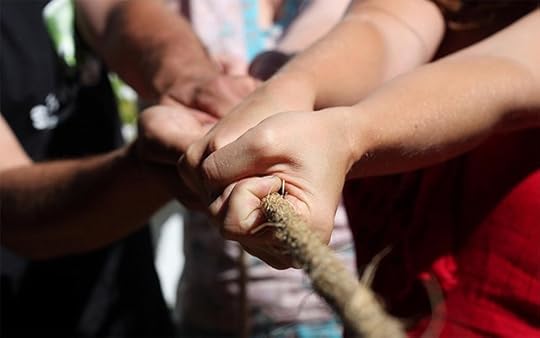
Sometimes when I do something embarrassing I have a powerful impulse to withdraw into the shadows and disappear. Sometimes I withdraw to a place of imagined safety until I remember that safety can be a death trap far more dangerous than exposure, criticism or ridicule.
Specifically I remember “Field Day” in the sixth grade. Some context: The sixth grade was the year I was bullied. The girl who led to bullying was wildly popular and conscripted her friends in her school-wide campaign of abuse.
During that year it seemed I could do nothing right. Everything I did was ridiculed; the way I talked and walked, the clothes I wore, and my shyness; when I did speak anything I said became fodder for group mockery. My bully and her cohorts would ask me questions just so that they could make fun of my answers, even if my only answer was only “hi.” I literally became afraid to exist.
Outwardly I shut down. I stopped talking even when spoken to, yet inwardly my thoughts remained vibrant. I wrote stories, and in the act of writing I found a way to exist beyond the reach of the bullies. My humor, my true thoughts, and my personality lived unselfconsciously in the words I wrote.
However, an incident occurred that sprung me from my sanctuary. In the spring of every school year, my elementary school held an event called Field Day, a series of relays and sports competitions like the 50-yard-dash and the three-legged race.
I had always hated Field Day. Particularly in the sixth grade, Field Day was daunting because it meant being on display. It meant having to physically act in front of others at a time that I could barely walk without unfavorable commentary.
However, there was one event, and only one, that I enjoyed: Tug of War. I was a kid. In general I liked games – as long as they did not carry the threat of humiliation. And I could see the fun in a competitive struggle in which the strength and will of one team was pitted against that of another.
A month before the event, my teacher Ms. Holland sat at her desk and called on each student to tell which two events we wanted to participate in. When she finally asked me I said without hesitating, “Tug of War.” The classroom roared with laughter. I am still not exactly sure why. Did they think I was incapable of fighting or doing anything remotely related to the word “war”?
Whatever the reason, the uproar was so disruptive that the teacher did not even ask me which other event I wanted to participate in but went on to the next student. At the time I was okay with not being forced to be in a second event.
When Field Day finally came, I mentally prepared myself for Tug of War which, being a group activity, provoked some anxiety. When at last the game was announced as the next event, I waited for my name to be called. But to my surprise, it never was.
I felt a sharp stab of disappointment that stunned me. I had thought I wanted to get past the unpleasant experience of Field Day with as little effort as possible – endure it at most, and then go home. But being omitted struck a nerve; with a flash of horror I realized I was finally getting what I had thought I wanted: I was disappearing.
For some mysterious reason I had been stricken from the Tug of War roster. And there was also something disturbing about the fact that my teacher had never asked me about my choice for the second event. I was about to disappear from the one event that I had thought would be enjoyable.
I was not relieved. I was caught in a limbo between panic and anger as I realized something powerful: I did not want to disappear. Not really. Not from the Tug of War roster, not from the classroom, and not from the world.
I went to the teacher and said, “Why did you not call my name? I was supposed to be on the list.”
With a look of mild surprise, she agreed to let me participate. I was not prepared for the firestorm of controversy I had ignited. Minutes later there was an uproar as, one by one, other students came up to me and angrily demanded that I withdraw lest the chances of winning at tug-of-war become nil.
Lucretia, my main bully, came up to me and screamed with her mouth close to my ear. “I am telling you, you had better withdraw right now. Because of you, the teacher struck Cindy from Tug of War! Because of you! There is no way we can win now, no way, not unless you go to the teacher right now and drop out!”
What Lucretia was saying was absurd. Cindy, the girl I had “replaced,” looked like she weighed half as much as the next skinniest girl in the class. Even if she pulled the rope with superhuman will, her contribution would have been inconsequential.
I walked away from Lucretia and headed for the rope where other participants had lined up, marveling at how little I cared what the others thought at that moment. Maybe there were things more important than being liked, or even more important than not being hated.
After the starting whistle blew, the tussle began. I pulled extra hard because I did not want our team to lose. I did not want to prove my critics right. I remember how the rough rope fibers burned the skin of my palms. I could feel the spirited, opposing force from the other team, and the backward-leaning slant of my body, and the dirt sliding beneath my feet, until at last cheers erupted all around me as the rope gave way and the other team crossed the critical line, leading my team to victory. There was wild applause and self-congratulation. We had won. My classmates had been wrong. They had been wrong about a lot of things – especially about me. For me Tug of War had felt like a literal war in which my very existence was at stake.
I do not mean to say that not asserting my right to participate in Tug-of-War would have meant I did not exist. In my mind I existed vibrantly. But being driven into a corner by my fears constrained my existence. It limited my fun and my freedom.
Despite the lessons of that day, there have been many times during my life that I have found myself being driven by fear into a sliding path toward oblivion – moments of teetering under-confidence when I wanted to disappear. But I now recognize that impulse as being toxic.
My life has had an oscillating pattern. Too often I have responded to a perceived threat by backing away toward safety until I realize with sudden horror that safety is a kind of hell, a prison far more dangerous to my existence than the danger I had originally feared.
One reason I love writing is that when I write, I feel most like myself – that is, I feel like I fully exist. When I write, I write with my whole self – even the parts of me that are not flattering. I can be needy, scared, and absurdly sentimental as well as independent, courageous, and sincerely passionate.
It is better to be any of those things than to be nothing at all, better to be a mess, better to be annoying, better to be confused, better to be irrationally angry than to fade away. When, while writing, I find myself beginning to become too self-critical, when I make embarrassing mistakes, when a troll ridicules my typos, I remember that day long ago in the sixth grade, and how the sliding rope fibers burned my skin, and its powerful tug against my wrists, and the stretch of tendons – that moment of struggle somehow more important than winning, more important than anything, that moment of raw, unbridled resistance a victory in itself.
If you enjoyed this post you might like my other writing. Take a moment and sign up for my free starter library. Click here. Also my new novel “Remembering the Future” is available for purchase on Amazon.
The post A Transcendent Game of Tug of War appeared first on PASSIONATE REASON.
July 26, 2016
Updates: Where Do I Go From Here?
Nothing ever goes exactly as I plan.
For example, I had planned to release my novel The Ghosts of Chimera this summer. However, when I looked over the content edits from my editor, I saw that they diverged sharply from my vision of the story.
Consequently, I am no longer working with my original publisher, but I will still be publishing The Ghosts of Chimera soon – only in the fall of 2016 instead of this summer.
Meanwhile I will be releasing my final anthology of fantasy and science fiction short stories, the third collection in a series. I am currently at work creating new content for it – that is, content I have not published on my blog.
By the way, my first short story collection Becoming the Story, formerly priced 3.99, is now free, so if you have not downloaded it yet, you should. It has a five-star rating on Amazon and it features a cat who gets proselytized to by a fundamentalist Christian. There has been an encouraging spate of downloads since I made the book free.
After I publish my third short story collection, I will finally – at long last – publish my novel The Ghosts of Chimera in the autumn. However, since it is 600 pages I have been advised to break it up into a three-part series, a suggestion I am seriously considering. One way or another, I will follow The Ghosts of Chimera with my novel Paw which was inspired by the video game Skyrim.
I will be releasing a new book at least every few months. About two months ago I began this process by releasing my second story anthology Remembering the Future, featuring a mad scientist who collects minds, benevolent robot overlords, and an illusory dragon.
While I am against churning out sub-par stories just to meet a marketing timetable, luckily I will not have to; everything I will be publishing during the coming months is already written. Meanwhile, I will have plenty of time to generate new content for the following year.
I have always dreamed of being prolific, and I am happy to have found a marketing plan that aligns with my desire to write constantly.
Thanks to all of you who have downloaded my books and follow my blog. You rock!
If you enjoyed this post you might like my other writing. Take a moment and sign up for my free starter library. Click here. Also my new novel “Remembering the Future” is available for purchase on Amazon.
The post Updates: Where Do I Go From Here? appeared first on PASSIONATE REASON.
July 19, 2016
4 Ways to Enjoy Writing

There is no right or wrong way to feel when writing.
I sometimes have to remind myself to remove the pressure to feel happy while writing. Writing is hard enough without the pressure to feel euphoric. Writing is something I do because I choose to do it, regardless of my mood, over which I have limited control – particularly since I have bipolar disorder.
However, I do prefer enjoying writing to not enjoying it, and there are ways of thinking that, for me, make enjoying writing more likely.
Write What You Want to Write
Write what you love. Most people will smile and nod when they hear this, failing to realize what a radical approach to writing it really is. Writing what you love is not how mainstream society teaches aspiring writers to approach the craft. Most writing magazines are not even about writing well; they are all about how to impress agents, editors, and publishers.
Some magazines and blogs will urge you to do research to see what the agents are “looking for”; study the marketing trends to see what is “hot” with readers; observe the style the publishers use and imitate it; read interviews with agents to discover their personal peeves and preferences; figure out what they consider to be taboo so as not to offend them.
Many writers who follow this advice do get published. However, it is not – in my experience – a way to enjoy writing. Working to fit yourself into a narrow mold of editorial expectation is a quick route to tedium. Instead of harnessing the awesome power of language for yourself and your own creative vision, you end up spending your energy on conforming.
What makes writing intrinsically enjoyable is freedom: freedom to be yourself; to be honest; to speak with your own voice; to create what you want to see exist; to write what you would love to read.
Be patient with yourself
Another quality for enjoying writing is having patience with yourself. Allowing yourself to make mistakes is essential to writing – so much so that they probably should not even be called mistakes.
Rough drafts are called “rough” for a reason, yet they are not wrong. The rough draft is a necessary step that allows you to discover what you want to say. It is not meant to be judged. It has a job to do, which is to help you figure out what you want to say before you determine how best to say it.
Time is another aspect of writing that requires patience. I always work hard to finish my stories, but I can never say for sure when I will be done. Depending on how ambitious my project is, it may take a long time, even years to complete. However, we live in a society where speed is highly prized. Sometimes it cares more about quick delivery than it does about quality. You cannot always have both.
I try to always have a direction or plan for getting to the end, but I am happier when I primarily focus on the experience of writing. To enjoy writing I play with sentences, experiment, and try to be open to learning every time I write anything. A deadline sets me up for feelings of failure; creates a frantic compulsion to rush; and takes away the fun.
Flip the Internal Censor On Its Head
One of the biggest obstacles to enjoying writing is what many writers refer to as “the internal censor.” It is the voice of self-doubt, the mental incarnation of insecurities accumulated from years of discouraging remarks and fears of failure. It offers running commentary as you try to write: “This is terrible. You will never finish this. This is boring and stupid.”
My internal censor used to speak in the intellectually condescending voice often used in book or movie reviews: “shamelessly self-indulgent,” “mawkish,” “cloyingly sentimental,” “shoddily constructed,” “a study in platitudes.” For many years I could have been using my vocabulary and creative energy to write stories; instead I was using them against myself.
It took me many years to tame my inner critic so that it would get out of my way and just let me write. I mourn the years I could have been writing instead of succumbing to self-doubts, which led to despair so painful, picking up a pen seemed as terrifying as diving off a cliff.
To simply stop listening to your internal censor is more easily said than done. You can try, but undoing years of conditioning in a day is difficult; discouraging thoughts are going to come. However, recognizing them for what they can help relieve anxiety and keep you from taking them too seriously.
Fortunately, there are also specific, practical actions you can take to flip the inner critic on its head.
I stumbled onto a technique that can turn a hair-pulling, tedious, and frustrating exercise in self-abuse into something that more closely resembles a pleasant lakeside picnic. I used it only a few days ago when I found myself disapproving of most everything I had written. Then I remembered what to do in that situation.
First I made a copy of my story. Then I put my entire original story in bold lettering. Afterward I identified everything in my story I liked: vivid metaphors, interesting content, or the parts that most supported my theme and the emotion I wanted to create. Every time I identified something I liked, I changed it from bold lettering to ordinary lettering. Before I knew it, I was having fun and I was fully focused.
After reaching the end of my manuscript, I deleted everything that was in bold, so that all I was left with was the parts I loved. The product was fragmented but that was okay; all I had to do was create new transitions or content to support the text I liked and “glue” the parts back together.
We tend to think that revising is about looking for everything bad about our writing but psychologically, focusing on the negative is painful. You are constantly thinking “I hate this, I hate this, I hate this.” Before long, it is easy to convince yourself that nothing you have done is any good.
But when you change your focus to what you do like, the mindset changes to “I like this, I like this, I like this.” Can you guess which mindset is more enjoyable? Not only does liking your writing feel better than not liking it: you are still revising, still accomplishing the task of improving the writing – but without descending into a psychological hell of self-abuse.
Mind-mapping
Another way to evade the internal censor is mind-mapping or “clustering” before beginning to write. Clustering is a free-association exercise. It is liberating because your mind does not recognize it as writing, so the judgey part of the brain stays asleep.
For those of you unfamiliar with clustering, you begin with an idea like a color, say “red.” You circle the word “red” as your nucleus and free-associate. Then you draw lines radiating from the word “red” and write the free-associated words at the end. In this case, you might come up with “lips,” Apple,” “strawberry,” or “blood.” However, the associations do not have to be logical to others; they can be personal like the red shirt you were wearing when you first saw a circus. In fact, the associations do not have to have a connection to the color red at all.
You take your new ideas such as “blood” and, treating the word as a new nucleus, draw lines radiating from it, then write new associative words or phrases just as before – and so on. You will end up with a radial web of ideas. It may look like chaos but the mind, which hates chaos, will begin furiously looking for a way to make sense of it all. As it discovers order, a sense of focus and direction will emerge.
The technique is fun. Anything goes. There is no wrong way to do it. And it gives you a way to anchor your thoughts when you begin writing a rough draft – removing the anxiety that comes from the daunting task of creating something from nothing.
Those are techniques that have worked well for me. Most of the time I enjoy writing. But some days are better than others. Sometimes, no matter what I do, the joy of writing eludes me. That is okay. Emotional distractions, headaches, being sleepy, or feeling anxious sometimes make it impossible to achieve a euphoric, immersive state. Writing is a choice; how I feel is not – at least not always.
However, enjoying writing is far more valuable, if you can achieve it, than taking advice from writing magazines. When an activity is rewarding, you tend to do it more often, and when you write a lot, you learn a lot. A cycle of reinforcement emerges because the more you practice and improve your writing, the more enjoyable writing is likely to become.
If you enjoyed this post you might like my other writing. Take a moment and sign up for my free starter library. Click here. Also my new novel “Remembering the Future” is available for purchase on Amazon.
The post 4 Ways to Enjoy Writing appeared first on PASSIONATE REASON.
July 5, 2016
A Certain Cure for Block: Write Deviantly
There is a Miss Manners school of thought when it comes to writing instruction that appears in many books, articles, and advice interviews from editors or agents
The attitude leaks out from the language they use. They will advise you to always show and not tell, then follow their injunction with the words, “Telling instead of showing is the hallmark of a lazy writer.” As if there were no other reason, besides poor character and bad manners, that a writer might tell rather than show, such as “exposition was needed to convey background information quickly” or “the humor depends on the ironic undertones of the narrative voice.”
Other advice-givers on writing believe it is self-indulgent to ever use the word “I.” They claim it is rude to the reader. (Sorry memoirists! Maybe you could write biographies instead? Or books about cats. Everyone loves books about cats! Ahem. Just do not mention your cat.)
I used to fret about being called a lazy or self-indulgent writer to the point that on many days my worries kept me from writing at all. However, the name-calling was part of a bigger picture. It grew out of a larger system of thinking about writing that kept me from writing for years.
There was a story about writing – partly unconscious –that I used to believe. In high school I saw writing as an already-in-progress game that others allowed me to play, but only as long as I did as I was told. The rules had been already fixed long ago; they were bigger than me, and all I could really do was go along with them and hope to fit in.
The rules had existed before I was born, kind of like The Ten Commandments, and who was I to challenge them? In fact, the venerable game of writing had been going on since the invention of cuneiform by the ancient Egyptians or their geographic neighbors, the starting gun of the super-serious game that Others controlled and always would.
I had imagined that each generation had its own authorities to define and enforce the rules of writing – in Rome, in ancient Greece, in every place where writing came to be practiced. Generation after generation, the torch of policing writing had been passed to an elite segment of the population until the Modern Age in which at last, the torch of writing fell into the hands of prim elderly ladies with pursed lips and English degrees called “editors” or bespectacled men in tweed suits called “professors” or “book critics.”
According to my fabricated story, the consensus among the torch-bearers was that would-be writers had better mind their manners if they wanted to join the conversation. They should never say anything politically incorrect or be rude or talk about themselves or offend or say anything that might cause “the reader” a moment of discomfort.
The Writing Guardians – which sometimes made generous appearances in writing magazines – also gave advice about how writers should structure their work habits. “Discipline,” they said, “cold hard discipline. That means deadlines, Missy.” A strong sense of duty was required because writing is not, and should not be, fun; fun is for amateurs. The way you could tell of you were writing correctly was if it felt like grueling labor; if writing did not feel a little like coal mining, you were probably doing it wrong. The modern torch bearers, editors, agents, and seasoned professionals advised that “serious” writers should sit down at their desks at the same time every day and write for eight hours nonstop, or meet an arbitrary and ambitious word count, even if they had an excruciating backache or their cat knocked over a bookshelf.
In my mind brutal self-coercion was what I had to do if I wanted to get anywhere as a writer. As a result I felt chronically guilty, chronically blocked, and chronically miserable.
And no wonder. I saw writing as being all about Herculean feats that I should do. The authorities, the gate-keepers, the torch-bearers of language had a ton of “shoulds,” which were really just rules in the ongoing game that Others allowed me to play.
The story I believed about writing made writing feel like drudgery. The story did not work for me, and when I realized that it was a bad and untrue story, I tossed it.
The problem with a story about “shoulds” was that as soon as I thought I “should” do anything, a childish resistance would crop up. The creative ten year old in me who used to write vampire tales without anyone telling her would refuse to play a game that reeked of guilt and duty.
As I tried to write, I would end up distracted by my intransigent inner child as I tried to calm her and explain to her that now was not a good time for her to go outside and play with her puppy or eat a pudding pop. Meanwhile I would stare at the clock, peck at the keyboard, and wonder when the whole terrible, tooth-gritting, mind-shattering ordeal would all be over.
Everything changed for me when I realized there were no authorities and there were no rules. There are many self-appointed pseudo-authorities who quote rules like “Never say the words then and very, but they are just people and they have nothing to do with me and what I write.
When I am writing, there is just me and my pen or my computer. Anything goes. No one is looking over my shoulder. In fact, no one really cares what a single writer is doing. The problem is not about obeying anyone, and it is not about having discipline. So what was my problem?
It was figuring out a way to get my kicking inner ten-year-old, with all of her rebellious energy, on my side so that I would not have to constantly fight myself to get words on the page. To do that I needed to entice her, and I found a wonderfully effective way: write deviantly.
A lot has been written about how to get over block, but for me it is really simple: All I have to do is to do everything wrong. When I write in order to behave, my writing limps. (Sorry, Miss Manners of the Literary World).
My writing belongs to me, not a bunch of prim, fussy, easily shocked elderly ladies or thin-lipped, sneering critics.
The lure and power of writing lies in the forbidden – and this is true not just with content but with work habits. See how long your “block” lasts when you forbid yourself to write more than a single sentence and really enforce it for, say, three hours. When I say enforce it, I mean really enforce it, surrounding the computer with starving pit bulls if necessary.
How does it feel to force yourself to stop writing? How does it feel to have the weight of guilt and obligation on the opposite side of the scales? Did you want to write more than a sentence? Or were you relieved that you could stop?
Maybe you were relieved you could stop. But if you really want to be a writer, I bet not.
Work habits are only one way to be deviant. What about the content? Try this: When you do permit yourself to write again, write something you are not supposed to write. Start by writing a list of ways you are supposed to feel in certain situations.
For example, at funerals you “should” be sad. At birthday parties you “should” be happy. There are emotions prescribed for almost every formal occasion. Now, think back. When you were in those situations what did you really feel? Maybe you did feel happy at a birthday party, but there is probably some situation where the feeling and situation did not match — a vacation gone awry, a funeral in which you did not feel anything. Find the discrepancies between how you were supposed to feel and how you felt; the raw honesty of those insights can keep you writing for hours.
But if that is too tame, go farther. Go after religion, say. Any religion will do. Scrape the whitewash off the politically sacred. Question tradition. Challenge the status quo. Cuss like a maniac if it facilitates flow. Take the advice Sue Monk Kidd gave to writers: Go for the jugular. Write about things that engender discomfort.
As for work habits, write at odd times. Write at night when you are supposed to be sleeping, Write at the dinner table when you are supposed to be attending to conversations. Instead of writing for an even hour, write for 33 minutes and 6 seconds. Writing does not care if you do it in even numbered hours. It is perfectly possible to write an awesome story in two hours, 42 minutes, and 7 seconds.
Natalie Goldberg, author of Writing Down the Bones, introduced a term for work habits that are compulsive yet passionless: “goody-two-shoes” writing. The phrase refers to habits of writers who write every day but never progress because they are only being dutiful — that is, they are only going through the motions. Despite their impressive “discipline,” they take no risks and fail to connect emotionally with their writing.
They are only doing what they have been told they are supposed to do: Write every day. She writes that being dutiful is “a waste of energy because it takes tremendous energy to just follow the rules if your heart isn’t in it.” She recommends taking time off writing to “recharge.” She goes further, saying: “Be willing to put your whole life on the line when you sit down for writing practice.”
I agree. Toss away duty. Kick deadlines out the door. Do away with anything arbitrary and let the Miss Manners of Literature go gnaw on a doily.
Whatever you believe you should be doing in writing, try turning it on its head. Limit writing to a few sentences rather than forcing yourself to meet a time goal. Write unapologetic passages of pure exposition (telling rather than showing). Try using trite expressions in a way that somehow works, maybe by establishing an ironic or tongue-in-cheek tone.
In doing so, you will turn writing from a stagnant activity to a dynamic one. Writing “wrongly” on purpose is like trading unseasoned steamed broccoli for peanut butter fudge or a muddy rain puddle for a swimming pool.
Even if you do all these things and they work, at some point you will encounter the old advice. It will be hard not to take it seriously because the advice-givers will have the seal of tradition on their side or “common sense.”
But sometimes common sense is not sense at all, just bad ideas propped up by familiarity and repetition.
The world is full of writers who play strictly by the rules and quote them at every opportunity. Let them. Let other writers be disciplined and self-critical. Let them procrastinate and say wry cynical things about writing and compare it to coal mining or digging ditches. But there are enough miserable writers already. The world does not need more of them.
I would rather follow the advice of Ray Bradbury: “Write what you love and love what you write.” Write what you want to write. Write it how you want to write it. Write hedonistically and unapologetically and relentlessly and say things, deviant and audacious things, that others are afraid to say.
If you succeed, you are likely to be criticized. But I am willing to bet that you will not be blocked.
If you enjoyed this post you might like my other writing. Take a moment and sign up for my free starter library. Click here. Also my new novel “Remembering the Future” is available for purchase on Amazon.
The post A Certain Cure for Block: Write Deviantly appeared first on PASSIONATE REASON.
June 29, 2016
Nothing You Write is a Waste of Time

In the writing process, experimenting and failing does not mean anything is wrong. In fact, failing means I am doing something right. I am learning what does not work. Nothing I write, no matter how “awful” it appears,is a waste of time.
How I wish I had always known this.
I used to always get stuck in the rough draft stage. My scatter-brained, and sometimes sterile, rough drafts would discourage me into quitting. I could not see my scrawling for what it really was: a necessary step of the process that would move me forward if I only gave it a chance.
However, I sometimes forget that, even now. It is only because I have been through the process so many times that I know the flotsam of half-completed thoughts will metamorphose into art if I keep going. I remind myself that anything in writing can be changed; I can think of the rough draft as raw material like clay to be shaped later.
Writing is a process of moving from incompleteness to completeness – any way you can. Though not everything you try will work, is not exactly true to say that writing is about trial and error. The word “error” suggests I should regret it. But since in writing I do not regret my “errors,” which are often informative and useful, maybe there should be another name for them. They are not so much errors as attempts to learn.
Attempting to learn is the main characteristic of my writing process. I try one thing, then another. I write a vague metaphor, then replace it with a more vivid one. I write robotic dialogue, then replace it with more natural speech. I use weak verbs, then change them to active ones. But I am not just learning from my “mistakes.” I also have a goal: the finished product.
The need for a finished product can create a lot of anxiety if I let it. In writing fiction, I often find myself pushing forward to the next scene without giving adequate thought to the scene I am writing. When I make a mad dash toward the finish line, I forget about the meandering, scenic journey – or process.
Eager to fill out the plot pattern that is in my head, I sometimes give inadequate attention to transitions – or so a Beta reader has told me. I focus on what the end result will be at the expense of giving myself over to the moment because I am so afraid of not finishing.
I have a reason for being afraid of not finishing. In high school and college, I had a drawer full of promising story beginnings, but no finished stories. I later had the epiphany that bad finished stories were more useful to me than good unfinished ones. I began finishing my stories consistently, and my writing improved.
However, there is a problem with fretting about finishing stories which can affect my ability to concentrate. Worrying makes me want to rush my story to its ultimate incarnation. However, gliding directly from point A to point B generally produces writing that feels incomplete. As in geometry, going directly from one point to another produces a straight line. Creative writing is about celebrating curves and intricate, swirling patterns.
Stories that rush toward the finish line can feel rushed and bloodless when you read them. Sally was sad. She ate a slice of cake. She was happy. The end! They fail to mimic the messy, organic nature of real life. For order and completion, writing needs a general direction, but the art of writing lies in the irregular cork-screwing detours, the off-beat surprises, and the thrill of uncertainty.
However, meandering can be uncomfortable in a society that prizes speed and efficiency, which is why sometimes when I wander off-path in my writing, impatience creeps in and I think, Why are you taking so long? This should have been done yesterday. Stop staring at word flowers and go make a character logically progress the story action!
But writing is not paint-by numbers. It is about discovery. When I begin a story, I never know exactly what I will end up with. The story I intend to write may be entirely different from my initial concept. My writing changes as it goes along and in the process, it sometimes changes me. Sometimes it lifts a bias or changes my perspective or suggests a solution to a personal issue. In general, the stories that change me are my best.
For a story to change me, I have to be fully engaged in what I am doing. I have to be curious and willing to learn, which is hard if I am thinking, “Oh no! This is getting off track! I will never finish! My story is doomed!”
If I disengage from my writing exploration in my haste to reach the finish line, readers are likely to remain unengaged as well – not because I am not “good,” but because I am not there.
One way to look at the problem is that sometimes there appears to be a conflict between product and process. The finished product seems more important because that is what readers see, but it is actually the pointiest tip of an iceberg that runs into glacial depths.
The depths are where the process lies. The process is the way a writer has learned over and over, through experimentation, what does not work. It is also the way a writer learns what does. The process may contain reams of jettisoned text, research, mind maps, and nonsensical passages that have given rise to sensible ones.
The product, such as a finished novel, is only a highly polished and simplified record of the process – a reflection of the intricate and fascinating reality that gave rise to it.
My ego prefers finished products to unfinished ones. Look at me! I wrote a novel! With pages and stuff! However, the real fun happens when I become relaxed enough to get immersively lost, when I meander and let myself become surprised by what my characters are doing or the world I am creating. If I wander too far from my main path, I can either pull myself back or change the story.
Writing grows in a space of tension between focusing on the immediate story action – the present moment of writing – and pushing toward the overall vision: the finished product. Both process and product matter. But if I had to choose, I would choose process. Praise for a finished work is nice but fleeting. The process is the drug I cannot live without.
Process is an easy choice for another reason: By focusing on the dynamic act of creating, I am not really sacrificing anything; no matter how many detours or wrong turns I take, I am actively engaging with my story. Wrong turns are just a part of the process, and when I take good care the process, the product will take care of itself.
If you enjoyed this post you might like my other writing. Take a moment and sign up for my free starter library. Click here. Also my new novel “Remembering the Future” is available for purchase on Amazon.
The post Nothing You Write is a Waste of Time appeared first on PASSIONATE REASON.
June 22, 2016
The Myth of What “The Reader” Wants
I once read advice from a novel editor who said, “There has to be a likeable character other than the protagonist within the first couple of chapters or the reader will put the book down. The reader just won’t bother.”
This assertion awakened my B.S. sensors… What about books about characters stranded on deserted islands like Robinson Crusoe? What about anti-hero stories where even the main character is unlikable? What about man-versus-nature survival stories with only one character pitting his wits and physical endurance against snow, hunger, sleet, or frostbite? Are those kinds of books always failures?
I also wonder: Who is this “The Reader” that the editor seemed to know so well? It was my understanding that there is no “the reader” unless you are writing for only one person, say, as in a letter or email. Otherwise there are many readers – at least potentially. I am a reader myself, and I have trouble seeing any connection between myself and the skittish and impatient creature called “The Reader” that the editor describes.
In fact, from everything I have observed, readers have different passions, cultural upbringings, educational backgrounds, personalities, preferences, and levels of patience. Like all humans, some readers are judgmental, while others are forgiving. Some dash off at the first slump in story action, whereas others will slog through pages of description to get to the “good” parts.
Since readers are not a homogeneous mass, no one can be sure of what readers in general want. Even if the mythical beast called “the reader” did exist, knowing what it wants would be impossible for writers unless they could read minds.
Besides, if the checklists made by publishers actually worked, you would expect more books to be mega-best-selling hits. Instead, only a meager number of traditionally published books ever sell more than a few thousand copies – if that. There may be other reasons for the dismal sales that have nothing to do with writing quality, but still, would it not be better for writers to write the book they want to write, using themselves as a frame of reference for what is interesting? A story fully authored by the author is more likely to ring with authority than one burdened by imaginary rules that exist only to enforce conformity to precedent.
The attempt to find a formula that will please a phantom called “the reader” assumes that readers all like the same things and that they have certain expectations based on what they have seen before and that, if those expectations are not met, “the reader” will walk away shaking his head and cursing under his breath.
To what extent is this actually the case? Being a reader myself, I do have some expectations when I go into reading a novel. Mainly I hope that it will be interesting. And I hope it will enrich me in some way, challenge my perspective, teach me something, or deepen my understanding of the world.
However, some editors have rules for satisfying “the reader” that are arbitrary and trivial, the editorial equivalent of a lucky rabbit’s foot.
According to one publisher, a fantasy book should always begin with an action scene – unless you are a big name author like Brandon Sanderson who already has a sizable following. The argument for this was simply that “the reader” expects it; that is, it is a convention or rule of the genre. In other words, “All the other fantasy writers are doing it. What makes you think you get to be an exception?”
Suppose the publisher has a point; why would a fantasy writer not want to draw their readers in with a snappy action scene? Why not begin with a sword fight, a chase scene with dragons, or a rolling wrestling match on the rooftop of a collapsing castle?
Those kinds of beginnings are not wrong, but scenes should be chosen based on the unique needs of a particular novel. It is possible, while setting the stage, to bring in characters compelling enough to arrest interest without fisticuffs and exploding buildings on page one. Dialogue can be more violent than gunfire if skillfully handled, plus it can develop character, foreshadow major events, and create subtle tension.
Plus, there are excellent reasons not to begin a novel with an action scene. I hate most Hollywood superhero movies partly because they begin with explosive action involving characters that are not yet developed. It is hard for me to identify with – or care about – characters when the movie has given me no clue as to who they are or what they want; the actors are just bodies clashing on a screen. I would prefer that explosive action arise naturally from character-driven choices so that when violent physical events do appear, they will have a story context to give them meaning and awaken real emotion.
Action that does not serve a dramatic purpose is boring, no matter how many explosive moments it has. Even if a starting gun action scene is expected, is that enough of a reason for writers to shoehorn one into a story that does not call for it?
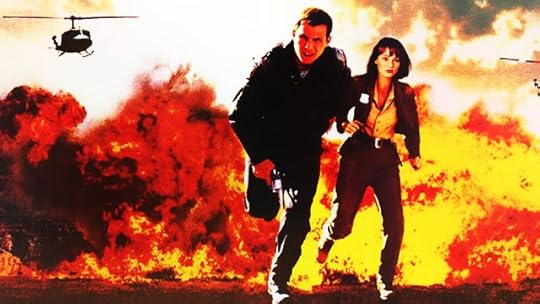
According to Hollywood, the answer appears to be yes. In my experience Hollywood adventure movies never deviate from “the rules.” For example, if sympathetic characters are escaping a building that has a bomb in it, the building will always explode a split second after they escape to a safe distance.
Maybe at some point in cinematic history, some clever director thought he could add intensity to the drama by creating a split second bomb escape. Maybe he succeeded in surprising his audience while magnifying their relief about characters escaping in way that rocketed them into high, euphoric alertness. Whatever the origins of the “narrow bomb escape” tradition, it has been done too often to be surprising anymore; it is a glaring and implausible contrivance that takes me out of the story, yet it still happens. Every time.
I wonder: What if the building did not explode as soon as the characters escaped to safety? Would movie-goers leave disappointed? Would they grumble that they had wasted their money? Is the split-second escape “convention” the best and most exciting scenario that any writer or movie-maker could dare hope to achieve?
There is another exhausted Hollywood tradition I have to mention: In horror movies when the main character finally knocks the monster villain onto his back and the monster appears dead, the main character wipes the sweat off her forehead and sighs with relief that the trauma is all over. Minutes later the monster always reanimates and makes a final, roaring, flailing stand. It happens so often that it is hard to imagine it could still shock anyone except the youngest kids – but it happens every time.
Again, I wonder if movie audiences would jeer a horror movie that failed to resurrect the monster. Would they leave the theater feeling that the experience was incomplete? And is the resurrection the best option dramatically, the pinnacle of horror, so great and ineffable and perfect that it dare not be questioned? Is there nothing in the cosmos of human imagination that could be more surprising or dramatic?
I am not saying that it is always necessary to “reinvent the wheel.” Some writing techniques generally do work better than others. Some cliché’s are cliché’s for a reason. But they should never become automatic. Writers need to ask whether “the rules” are really serving their specific story. Whether in movies or in books, rules based on nothing but tradition stifles creativity.
I love self-publishing because it allows writers to experiment with alternatives. With self-publishing you can take or leave the genre “conventions,” which too often are just copycat strategies for pushing the emotional buttons of an audience. Rather than writers being forced to deliver what “the reader” expects, they can concentrate on fulfilling readers in a way that is interesting, surprising, and new.
As a self-published writer I do not have to be Brandon Sanderson to begin a fantasy or science fiction novel with a non-action scene. I do not need to drop X number of likeable characters into the first few scenes and stir. I can decide what is best for my particular story rather than relying on compulsive imitation and absurd generalizations about what an imaginary creature called “the reader” likes to eat.
Self-publishing allows me to be “the reader” whose preferences matter, and if I write what is exciting to me, there is probably going to be someone else in the world who is excited about it too.
Even if I become part of a statistic proving how few writers sell their books, I will not have wasted my time. I will at least have the satisfaction of knowing that I have written the story I wanted to write, which guarantees that at least one reader will come away from the experience happy – and without the need for telepathy, magical thinking, or a rule book.
If you enjoyed this post you might like my other writing. Take a moment and sign up for my free starter library. Click here. Also my new novel “Remembering the Future” is available for purchase on Amazon.
The post The Myth of What “The Reader” Wants appeared first on PASSIONATE REASON.
June 15, 2016
The Therapist in My Pocket
Guilt permeates my existence. It creeps into my dreams. Sometimes I feel guilty without knowing why and have to look for something to feel guilty about, invent something if necessary, to reassure myself that the intensity of my remorse has meaning.
Naturally my cat uses my guilt against me. By accident I stepped on her paw once. An ear-splitting yowl followed. To say I was sorry, I pampered her with tuna treats. Now she routinely feigns being stepped on in order to procure apologies in snack form. If my foot barely grazes her toe, she will unleash an agonized wail that would make the Marquis de Sade weep with pity.
However, as bad as guilt is, embarrassment runs a close second.
Maybe that is because I am incapable of feeling mildly embarrassed. When I get embarrassed, all the humiliations of my entire life gather into a single point of gravity, and I want to crawl under the bed covers, face and all, with a teddy bear tucked under my chin, and stay there until the sun fizzles to a cinder.
A few weeks ago the horror unraveled: I made a mistake. It was a small mistake on the level of a typo. But I have bipolar disorder and, as mistakes often do, this one thumped my mood off a precipice and into freefall. I was falling for days. After too many mornings of waking up in misery and dreading the day, I decided that enough was enough.
I decided to try an experiment. I began a kind of self-therapy, invented by me, in which I tried to change the way I think by writing down praise and encouragement in the second person, as in “You did a smashing job with your story yesterday, simply smashing.” (Apparently my Therapist Self is British.)
I am no stranger to being my own psychiatrist. I used a similar form of therapy to get past being blocked as a writer. I keep a “therapy file” on my computer. I created it to tame the critical voices that chorused at me as I wrote. If I identified a mood-shattering thought such as “You are being self-indulgent” or “You will never finish this,” I would dash off to my therapy file and write out the offending thought; then I would unleash devastating rebuttals.
This therapy was cathartic. Our culture teaches its writers largely through shaming, and I had absorbed its messages well. As a result, I had to learn to lock my critical side in a cage for a while and be kind to myself in my thoughts as I wrote. I needed a buffer. Otherwise, I could not write at all.
I still have my “therapy file” but I no longer use it to argue with internal critics. They rarely plague me anymore, at least not when I am writing, Still, I always try to think of something to praise about my writing and write it in my therapy file at the end of each session. Sometimes I gush shamelessly – whatever is necessary to maintain my morale against any discouraging messages that intrude on my writing from trolls, say, or editors.
My experiment of replacing shaming with encouragement worked beautifully with my writing. Now writing almost always feels good and never bad. However, once I step away from my keyboard, many of the old self-doubts can surface, and I find myself confronting similar feelings in my life that I once struggled with in my writing.
When I made my recent embarrassing mistake, I realized I needed a “therapy File” or something similar, not just for my writing, but for my life. Stuffing a journal full of discouraging thoughts to argue with seemed impractical, so I began writing emails to myself instead. On the notepad of my phone I would point out and praise anything I did right, from cleaning out my closet to writing a good story, always addressing myself as “you.”
Why would I call myself “you”? While I am fond of the first person perspective, sometimes when I am struggling emotionally, writing about my problems in the first person intensifies my anxiety; I feel helpless – “I” alone against the world.
Addressing myself as “you” invites rational detachment. It switches me into the role of a counselor; I begin working on solving my problems rather than merely describing them. Best of all, calling myself “you” reminds me to be as nice to myself as I would be to a friend.
For almost two months, morning after morning, I have written my emails or “affirmations” without fail. During the day, I reread them, and they comfort me. Whenever my mood dips beneath the water line, I can grab onto an email from myself and feel better.
As my own therapist, I do more than dispense praise. The emails address any concerns I have. They help me see my problems from the outside. In them I talk to myself the way I would a friend, being as honest as possible while always remaining encouraging.
There is a bonus: I am less dependent on social media for good feelings. For many months I have been driven to check social media sites like Twitter and Facebook with a compulsion that borders on pathological. Now, Instead of scrolling down on my phone for social media notifications in search of a mood boost, I go to my self-sent emails and reread them. I have over 50 now, and even the earliest ones lift my mood.
The problem with looking to social media for happy feelings is that I never know what I will find – praise for a blog post, a greeting from a friend, a sour comment from a troll, an “unfollow,” or nothing at all. When I go to my emails to make myself feel better, I can be sure that I will be reading only things that are likely to make me feel better – not worse. When Twitter disappoints, my emails are there for me.
My “therapy” is not a cure for depression or bipolar disorder by any means, but my messages to myself on my notepad have given me some desperately needed power over my moods. They are changing habits of thinking that did not come from me but were imposed from without – habits that hurt and deplete me without giving anything in return.
When my mood is teetering at the precipice of a bottomless void, I can reach for my emails, read them, and feel better. The true test, of course, will be to see if they will work against my cat guilt. “Despite her theatrics, you did not actually step on her paw; therefore you do not owe her an apology or tuna treats. You are not an inveterate stomper of kitten toes. That is not who you are. You are a writer. You love kitties. Take a deep breath and go read a book.”
If you enjoyed this post you might like my other writing. Take a moment and sign up for my free starter library. Click here. Also my new novel “Remembering the Future” is available for purchase on Amazon.
The post The Therapist in My Pocket appeared first on PASSIONATE REASON.