L.E. Henderson's Blog, page 8
April 17, 2017
Unheroic Heroes
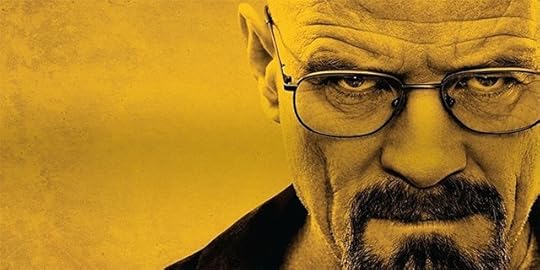
Some action movie heroes bore me to tears. They are too righteous to seem real, too shallow to command my interest. They dash into danger with no fear for their safety. They will give up their life for another without a second thought. They are not characters, but brawny action figures.
Since, as a writer, I am not interested in reading about purely heroic characters, I tend to give my fictional characters flaws. For me, moral complexity creates interest and allows my characters to surprise me in a way that is in sync with their overall personality pattern.
Flaws also create sympathy with my characters and allow me to identify with them. It rounds them out. It makes them believable. But is it possible to go too far? To make them so flawed that readers lose interest? When your fictional hero behaves un-heroically, perhaps even cowardly or cruelly, will readers jump off the ride?
This is a question I have often asked myself, and I have been obsessed with it since my mom read my recently published fantasy novel Paw. My main character is a member of an intelligent cat species, a slave who is attempting to survive and escape the unbearable living conditions of a desert mining camp. At one point in the story, she becomes completely unhinged by a devastating personal tragedy. During her meltdown, she does something horrible that she regrets terribly.
As my mom was reading the first half of my novel, she tossed heaps of praise my way. She raved over how much she was enjoying, and even loving, the book. She even said that she had not been feeling well and that my book was cheering her up.
But after she had finished it, she was strangely silent, so I asked what she thought. I soon discovered that my one sad scene had ruined the whole novel for her. She had complained that what my character did was unjust and that the scene had made her too sad.
I had known the scene was intense, but I had not expected such a sharp descent of her opinion. I reminded myself that the criticism “too sad” is one I have added to my list of criticisms to ignore. Fiction covers the entire gamut of human emotions, and the contrast of despair is what gives hope meaning.
For that reason among others, my mom is not exactly my target audience. She likes books with all-happy endings and “cute” characters. To my mom, the best books are heart-warming, funny, and adorable.
She finds most classic literature to be too depressing. Her favorite movies are by Disney. She is also a serial reader of romance mysteries whereas I have been known to enjoy Kafka-esque dystopias and the brooding Russian anti-heroes of Dostoyevsky.
I had actually been surprised that she had liked the first part of my book as much as she had, much of which was violent. However, it was impossible not to get excited about her initial enthusiasm since I have had very few reactions to my novel so far.
As a result, I was crestfallen that she had been so thrilled about my novel until my pivotal dark scene had apparently blackened out everything she had previously loved about it.
I wondered: Will all my readers react the same way? I knew of at least one exception. The scene my mom had hated was one that another reader had praised highly for is raw, uncompromising honesty. As a writer, I have to constantly remind myself that art is inherently polarizing, and that universal acclaim is impossible.
However, there had been many sad scenes preceding the one in question. I wondered if the main problem had been that my hero had behaved un-heroically
The question is worth asking: Is there a limit to how morally flawed a character can be and still maintain reader sympathy? I have read conflicting advice about this subject. One writer who wrote books for children said that characters must be flawed in order to be interesting and believable; they can in fact be horribly flawed, but they should never be evil.
This has been my guiding principle so far. However, it has problems. How do you define evil? There is an entire spectrum of misdeeds going from parking in a handicapped space to Holocaust level cruelty.
Is one misguided act enough to ruin an entire character or book for a reader? Apparently, yes. There are societal taboos and personal taboos that contribute to this phenomenon. Even I have my limits.
However, because I have been interested in this question for a while, I have consciously noticed when other writers of fiction test common assumptions about what it takes to maintain audience sympathy for a main character.
I was in awe of the writing in the television show Breaking Bad, a show about a terminally ill high school chemistry teacher named Walter who begins to manufacture and sell crystal meth in order to provide for his family after he is gone. As the story unfolds, Walter increasingly expresses his dark side. Intellectually brilliant and emboldened by his illness, he becomes a force to be reckoned with as he adapts to the violent world of drug lords and thugs.
He begins to enjoy raking in cash, and his illegal methods give him a powerful adrenaline rush. Enthralled by his thrilling new lifestyle, he ends up endangering the family he originally meant to protect.
One shocking misdeed follows another; his character drifts toward the dark side as he struggles to control his wildly unstable world. At one point he watches the girlfriend of his partner suffer from a grisly death during a heroin overdose, even though Walter has the power to save her. In one of the final episodes, we learn that he has poisoned a child. What fascinated me most about the show was the question, how far are the writers going to let him go? How far can the writers push the boundaries of morality without viewers losing all sympathy for Walter?
Incredibly, I never completely lost sympathy for the high school chemistry teacher turned drug lord. I constantly disapproved of what he did. I certainly did not always admire him, yet he remained a complex, realistic, and dynamic character that always compelled my interest. He never stopped seeming human or vulnerable. Perhaps this was a testament to the skill of the writers or maybe the boundaries between what makes a person good or evil is less clear than we like to think. I actually remember a quote by a writer I read long ago that even the most evil characters can draw sympathy if they only love someone.
Walter White did love his family above all else, however much he sometimes endangered them; maybe that is why the show worked. My character in Paw also loved someone. If my mom cannot forgive her, can I?
I can and I do. While cruelty should never be celebrated, to ignore the shadows that lurk to some extent within all of us is to write shallow fiction. I have no interest in writing a book in which everyone is happy and perfectly good. If I had could only write about saints enjoying themselves, I would not write at all.
Nor am I interested in chaperoning my characters like a stern parent, pulling them back from reckless and unwise behavior to shackle them with my own moral code. What a character does is not necessarily what I think they should do. Plausibility demands the illusion of autonomy. In my mind, my character did what she did because it was what she did, not because I told her to, or because I approved.
But here is the scary question: To what extent does the darkness of my character reflect my own darkness? Maybe more than I would like to think. Fiction wells up from the roiling, murky depths of my subconscious. My character is part of me.
Maybe that was my mom disapproved of most. Like a cruel god, I had allowed a sad injustice to take place in this fictional world where I could have made a different choice.
Nevertheless, I am not sorry for what I wrote. A book featuring slavery should be disturbing, even if the main character happens to be feline.
Slavery is not cute or heart-warming, which is why I have no intentions of pitching my story to Disney. While I hope that not everyone reacts to my character the way my mom did, my story was the story I had to write and the story that wanted to be written. I am standing by it.
If you enjoyed this post you might like my other writing. Take a moment and sign up for my free starter library. Click here. Also my story collection “Remembering the Future” is available for purchase on Amazon.
The post Unheroic Heroes appeared first on PASSIONATE REASON.


April 5, 2017
How I Vanquish My Writing Monsters
Writing a novel is not just a test of skill; it is psychologically taxing, which means how I talk to myself about it matters. If I tell myself that my writing is awful, I will discourage myself into quitting. If I tell myself that my writing is not awful, just incomplete, I will feel hopeful as I imagine a way forward.
Encouraging myself constantly is essential to finishing a novel. Creating worlds and people no one else can see is a sanity challenge to the most mentally healthy among us. I have bipolar disorder, so I had better be sure that my mind is a hospitable place, that I have cleared it of mental monsters before I settle in; otherwise I can expect the kind if mood crashes that used to make writing too scary to begin and too punishing to continue.
Who are these monsters? They are the internalized critics that shame me for my efforts as I write, the morality police of my childhood who chastise me for not having more discipline, and the dark shadow looking over my shoulder that I call the pseudo-reader, the imaginary incarnation of every troll who ever lived.
I have become adept at getting rid of monsters through years of practice, but sometimes I still forget valuable lessons and find myself slipping back into unhelpful habits of thought. I have to remind myself of what liberated me to write during times of block. Here are five things I tell myself to exorcise my monsters so I can write freely.
Torch guilt and dread with the one-sentence rule
Whether it is for not writing enough or writing badly, scolding myself never pays. Impugning myself as I write only slows me down, makes writing miserable, triggers my creative inner child to throw tantrums, induces despair, and makes me want to quit.
When I scold myself for not writing enough, writing becomes a should, an act of piety, a righteous attempt to appease the writing gods, the sacrifice of a martyr, or – worse – a tedious household chore. If I write because I think I should, or of I am trying so hard to be disciplined that I trigger a procrastination response, I am only working against myself.
Writing is so much more enjoyable when I work with myself. To do this I apply the one-sentence rule. That is, I tell myself I only have to write a sentence a day. The deal I have with my conscience is that as long as I write at least a sentence, my punitive superego will refrain from harassing me. Though I do “discipline” myself to write at least one sentence, it is such a minimal requirement, no resistance ever forms.
This technique is not a way of tricking myself into writing more. Sometimes I really do stop after a sentence. However, when I take myself up on this offer, I usually discover that it is painful to stop; I almost always want to write more and I look forward to my next writing session instead of dreading it.
A great experiment that takes the rule even further is to forbid myself to write more than a sentence. This makes writing seem naughty and alluring. My rebellious inner child, outraged about my arbitrary self-imposed injustice, rushes to the defense of writing. That is what I want.
The one-sentence rule torches two monsters at once: dread and guilt. Writing a sentence induces no dread, and as long as I write at least a sentence, my conscience leaves me alone. The result: freedom!
But does writing just a sentence lead to any real progress? In my experience, it does. There is a world of difference between writing one sentence and writing nothing at all. Writing a sentence engages my imagination while liberating it from pressure.
I cannot help but come up with a second sentence, and forbidding myself to write it is frustrating. If I force myself to stop, my writing-deprived mind will often begin to write anyway; in other words, I write in my head.
If I have only written a sentence during my afternoon, scenes are more likely to appear to me when I am in bed, listening to music, or taking a shower so that when I sit down at my computer the next day, I already have an idea of what I want to write.
Setting easy goals unburdens my mind from guilt, tempts my mind to explore, and eliminates the need to use force. Making myself write is like force-feeding myself ice cream; I enjoy both ice cream and writing; why ruin them with pointless coercion? My creativity can be enticed, invited, nudged, intrigued, and seduced but force, threats, and shaming send it scrambling into a cave.
Banish fear of what others think by writing what you love.
Write what you would want to read, not what you think others want to read. There are many reasons for this. One of my biggest fears has always been having my writing unfavorably judged by others. This fear is perhaps the biggest writing monster of all. But if you write what you love, even if no one else loves it, it is certain that at least one person will be happy. That means it was not a waste of time.
Besides, writing is not lucrative even for most traditionally published writers, but if you write what you love and no one pays you for it, at least you had fun.
Not that there is necessarily a conflict between what you want to write and what readers want to read. If you enjoy writing a story, that vastly improves the chances readers will enjoy reading it. Great writing is not accomplished by writers who are bored with what they are doing.
Another reason to write what you love is that even if you try to write what others will like, you are likely to fail. No one can read minds, and no one really knows what readers like. if there is not enough you in your project, your perspective, your passions, your interests, your writing is likely to limp.
Not everyone agrees. Some editors, agents, professional writers, and publishers advise doing research on what is “trending” before you write, to see what is selling nowadays so you will know who and what to imitate. Hence, the multitude of Twilight and Fifty Shades of Grey clones.
This strategy might lead to sales, but it will not lead to art, originality, or creative fulfillment. However, if I am passionate about my content, it is far more likely that my readers will be passionate about it too.
Regardless, as long as I enjoy what I am writing, I can be sure of having at least one fan: myself.
Writing is made of printed marks, not TNT
Sometimes as writers we take ourselves too seriously, as if the fate of the universe depended upon the turn of a phrase.
We are quick to apologize for offending “the reader”, for inducing negative emotions, for breaking the rules, for being politically incorrect, for violating some hidden standard of literary etiquette. The monster is fear that terrible consequences are likely to occur as a result of writing.
It is easy to forget that writing is ultimately just a collection of marks: lines, squiggles, and curves. More specifically, writing – at least in English –is made of many thousands of variations of the same 26 marks called “letters.”
However, depending on how these marks are arranged, they can arouse intense passions. If you doubt this, read some of the book reviews on Amazon. Some readers hate certain books so much, they call for them to be removed from store shelves. Other crusaders push for books to be banned or removed from libraries.
All of the explosive controversy over printed symbols can be intimidating to a writer who just wants to tell a story. Sometimes as writers, we recriminate ourselves before others have a chance to do it. This book is too depressing, stupid, amateurish, offensive. Why bother? The thoughts are enough to drive us into a deep depression before we reach the second paragraph.
However, good writing is not a manners game. It is about honestly reflecting back life as you see it. Not everyone will appreciate that, especially if it illuminates some corner of life a reader is afraid to explore. Writing is powerful, and oftentimes it requires courage.
But writing is ultimately still just marks, and unless you are defaming someone or calling for an assassination, self-recrimination for writing is usually uncalled for.
Even if you do write a “bad,” book, the world is likely to go on. Few fiascos would prevent you from moving onto new projects. Forget about your writing being good or bad and just write. Make mistakes. Be silly. Be honest. Experiment. Write what you want to see written that you have never seen written before.
Of course I want my work to be meaningful to others, and I hope readers will enjoy what I write. However, I am ultimately the one who decides what does and does not go into it, whether it offends anyone or not. The alternative is fear and paralysis.
Treat a rough draft as a discovery tool, not as a test of talent
For me, first drafts always used to induce performance anxiety and fear of failure. My awkward rough drafts seemed to scream, “Worst writing ever! You are unworthy! Why even bother to continue?”
Writing rough drafts became far less intimidating when I stopped thinking of them as writing. A rough draft is about content, not “pretty language” – although sometimes pretty language happens spontaneously. While that is fine, that is not the goal of a rough draft.
The goal is creating raw material I can mold and shape. I took a sculpture class in college. Whenever I began a project, I would “see” a loose structure in the clay, the curves I wanted to deepen, the forms I wanted to enhance. I would become fascinated with the indentations that suggested the side of a nose or the cleft of a chin.
I react the same way to my rough drafts. A rough draft is material only partially molded to suggest the forms it has the potential to become. This is why I sometimes become truly inspired only after the rough draft is written.
Once I have my partially formed hunk of “clay” in front of me, my imagination flickers. I identify subtle conflicts that have the potential to become major, interesting minor characters who could play a major role if I let them, and barely suggested themes that beg to be strengthened. Messy though it is, a rough draft is evocative.
A rough draft does not even have to be complete to be useful. It is actually helpful to write scenes out of order, the ones I have vividly imagined, the emotion-driven scenes, while I temporarily skip the transitional scenes leading up to them. “Jumping around” leads to a manuscript that would be nonsensical to a reader, but it serves a valuable purpose for me.
If I write down enough of these scenes, a pattern begins to form; a structure starts to emerge organically from them, which become anchor points in the novel. When later I write my intermediate scenes, I will know exactly where they are leading so I am less likely to ramble.
Combat irrational self-criticism with unconditional praise
At the end of each writing session, I shamelessly heap praise on myself for everything I did right, for showing up if nothing else, and I write my accolades down in a file I have named “Therapy.” I want every session to end on a good note so I will not dread going back.
I constantly reassure myself that I am on my own side, that my mistakes do not define me as a writer, and that there is hope for solving the inevitable, and sometimes monumental, problems that are likely to arise in writing a novel. I encourage myself as if I am my own mentor and best friend. I demolish any unfair self-criticisms that may have arisen as I was writing. Keeping a consistent praise file prevents my mood from nose-diving after I leave my computer; that is, I take all necessary measures to keep the monsters away.
But where will my monsters go after I have banished them? As a fantasy writer I am perfectly willing to let my ousted monsters crawl into my fiction and scare the bejesus out of my main characters – as long as the monsters remain on the page and stay out of my head.
If you enjoyed this post you might like my other writing. Take a moment and sign up for my free starter library. Click here. Also my story collection “Remembering the Future” is available for purchase on Amazon.
The post How I Vanquish My Writing Monsters appeared first on PASSIONATE REASON.
March 17, 2017
I Am About to Publish a New Novel: Paw
 I
I
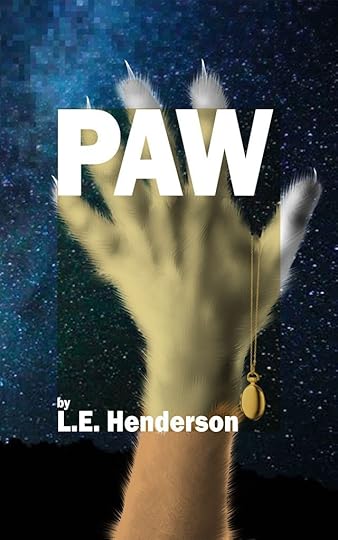
have an exciting announcement: I am about to release my fantasy novel Paw within the next couple of weeks, a book that combines my love of the fantasy genre with my well known fondness for cats. The edits are done. My Amazon file exists. It is around 200 pages and it is ready to go.
Publishing Paw is a big change of my original plan to release my other novel The Ghosts of Chimera first, a 600 page manuscript that was accepted by a small publisher over a year ago. I had major creative differences with my editor and I backed out of the deal so I could self-publish it as I saw fit, but I am not totally satisfied with it yet; getting all the kinks out of a 600 page book is going to take more time than I thought, so I am releasing Paw first.
Paw is about a slave who struggles to survive and protect her family as she works to escape a desert mining camp. The slave also happens to be a cat – a highly intelligent one with speech and bipedal locomotion. Actually, she prefers not to describe herself as a cat at all. This is what she has to say.
I am not a cat. I am a kat. Cats lack the ability to speak and they can only walk on four legs, while an adult kat stands proudly on two. The worst insult you can give a kat is to call her a quad, which is the generic term for beasts that walk on two legs only. Though we kats hate admitting our kinship to quads, if you look at our faces, our whiskers, and our fluffy tails, you will see a striking resemblance to our feral cousins.
Despite being about feline creatures, the story is fairly dark – much darker than I had originally intended it to be when the inspiration for the novel struck.
As is the case with my other novels, my inspiration for Paw was a video game. This story began with the role playing game Skyrim. For fun, I used visual details from the game to do a writing exercise in observation; that is, I would pay close attention to the setting and describe what I saw: soaring castles, ruined temples with stone arches, snow-covered mountains, villages full of waterfalls, bridges, and rivers. I wrote it all down.
Since my avatar was a cat creature, I wrote all my descriptions in first person from her point of view. As I wrote I discovered that she had strong opinions and feelings about what she was seeing. She experienced remorse for those she killed in battle. She saw metaphors in nature. She was curious, sensitive, and sometimes snarky. She was constantly, even obsessively, trying to understand her world.
It was during those exercises that my character came to life. I thought she had a story to tell, and I wanted to let her tell it. I am thrilled to finally release her tale in novel form; it will be my second published novel following Thief of Hades, which was published in 2001. Paw will be the first in a three-part series called the Bastis Archives trilogy.
I have already begun working on the sequel while my real cat competes with my computer for lap space. I will let you know when Book I comes out officially, which will be soon – that is, if my cat allows it. Maybe if I tell her she helped inspire it, she will tuck her paws under her belly and let me write.
If you enjoyed this post you might like my other writing. Take a moment and sign up for my free starter library. Click here. Also my story collection “Remembering the Future” is available for purchase on Amazon.
The post I Am About to Publish a New Novel: Paw appeared first on PASSIONATE REASON.
March 8, 2017
Seeking the Strange in the Familiar
There is no good reason for me to ever be bored. I live on a rock that is hurtling through space at 30 kilometers per second; I am technically on a thrill ride every day of my life, soaring through space and time, a ride that like any roller coaster will someday end.
So why is it so hard to know it at every moment? Why does life ever seem dull? Why do I obsess over trivialities? Why do I grumble when I lose a sock in the dryer? Why do feel angry at life when I am unable to find the lead on a roll of paper towels?
I lose perspective. However, when I write, I try my best to regain it. As a writer I am constantly trying to wake myself up from the illusion that the world is a tedious, permanent, and predictable place; this is partly because I hate being bored, and partly because stories that assume life is inherently dull are unlikely to move anyone, including me. When I write, I want to go where the passion and the awe is.
One way to make life – and writing – more interesting is to change perspectives often. Because I want my writing to stay fresh, I am always searching new angles from which to see the world.
My writing benefits from anything new I learn, especially if it challenges what I think I know. Science in particular is good for that; it reveals a world that defies common sense expectations.
Quantum mechanics describes a world more bizarre than Alice in Wonderland where electrons can be in two places at once. Science offers a treasure trove of endless fascination for writers willing to delve into it; it paints a veneer of strangeness over the most ordinary objects and experiences.
Studying science moves me beyond stereotypical reactions to nature. My ordinary, knee-jerk response to a maple leaf is “ooh, pretty.” And it may be. However, if I stop to think about what leaves actually do and why they exist, they take on intriguing new dimensions .
Unlike animals, plants are able to make food from sunlight, and usually it is their leaves that do the work. Plants were here long before we were. Without them, humans and most animals would die. In my story “The Age of Erring” my child protagonist gets ridiculed for asking the question: Are plants smarter than people since they, and not people, are able to turn sunlight into food? Food is becoming scarce on her world, so the question – while it sounds silly – is important.
As a teenager my character undertakes an experiment in which she discovers that plants can do a lot more than she ever realized, and that they contain hidden knowledge that has the potential to save her imperiled world.
Other writers have been inspired by scientific findings that defy expectations. Madeline L’Engle, author of A Wrinkle in Time, said that she was struggling with her novel until a friend sent her some scientific findings about mitochondria, which power human cells but have their own DNA. The findings fascinated her, and afterward, she claims, her classic Newberry-Award-winning book practically wrote itself. (See her essay, “Do I Dare Disturb the Universe?)
Other subjects besides science can bring about the perspective shifts I love. In philosophy, no assumption is too sacred to be challenged, including the assumption that anything actually exists. History makes me aware of the passage of time going back way before I was born; it illuminates why the world is the way it is. It reminds me that everything that exists from napkins to cats has a past. Remembering that adds dimension – and strangeness – to everything I see.
Actively looking for the strange in the familiar triggers creativity. It flings aside the curtain of mundane unreality to reveal deeper truths. Our boring sun that we have seen every day for our entire lives is actually a star; from light years away, it would look like just another blinking dot. The body I take for granted is made of atoms, which are mostly empty space, so what am I? When curtains of old assumptions fall away, the sudden shift of perspective wakes me up, engenders awe. And sometimes it makes me want to write.
Some writers are inspired by Big Foot, ESP, and conspiracy theories, but real life is weird enough for me, and I have creative ways of making it even weirder. Viewing the ocean from the top of a Ferris Wheel or listening to music from underwater inspires me. Visiting new places gives me a fresh perspective on familiar ones.
But changing perspectives does more. It lifts me out of the mundane.; it keeps me from losing sight of the big picture so that I am less inclined to grumble about over-priced cat litter, creeping scale readings, and all the inconveniences which create the myth that life is stable and tedious.
In terms of writing technique, changing point of view can put a fresh emotional spin on any story event.
When I was in the sixth grade my teacher would once a week give the class a creative writing assignment to write from the points of view of different animals like a flea, or sometimes even objects like a chair.
I loved trying to imagine what the world would look like from the point of view of a flea; I imagined how long dog fur would look tree-like to such a tiny creature. I even imagined what it would be like to be a chair and my outrage at the indignity of people burdening me with their weight
Although I could never know exactly what it feels like to be a flea (or a chair), the exercise drove home the lesson that there is not just one world, but many, depending on who is doing the observing.
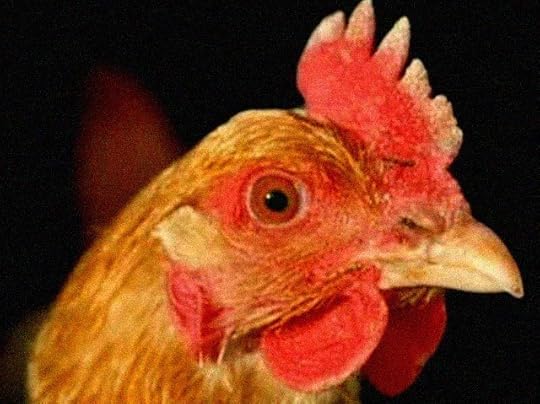
If I ever feel blocked while writing a story, switching points of view breathes new life into it. Suppose, for example, that my story is about a farmer who is murdered. What would the event look like from the point of view of his toddler son who is unfamiliar with the concept of death? What about his mother who is only visiting to bring her son a casserole? What about the chickens? Would a chicken deplore the act after witnessing the grisly fate of its siblings? Each point of view essentially creates a different story, even though the objective event is the same.
To write fiction is to inhabit a world of shifting reality, of paradoxes, of ironies and oxymorons. It means seeking the mystery beneath the obvious, the strange in the familiar, and beauty in places no one expects to see it. In my experience the ordinary always contains the extraordinary. The mission of a writer is to find it.
If you enjoyed this post you might like my other writing. Take a moment and sign up for my free starter library. Click here. Also my story collection “Remembering the Future” is available for purchase on Amazon.
The post Seeking the Strange in the Familiar appeared first on PASSIONATE REASON.
February 23, 2017
The Elusive Treasure of Honest Observation
Both my mind and my eyes routinely deceive me.
Though this sounds like the definition of insanity, it is also an explanation for phenomena like optical illusions, or why we perceive that the sun is sinking below the horizon when actually the Earth is moving. Sometimes my mind is right. Other times my eyes do a better job at getting at the truth.
When I draw, I depend exclusively on my eyes, even when I know they are lying. I recently considered the many ways my eyes deceive me when I am trying to render objects from life. Giant faraway objects like trees appear smaller than tiny objects like an apple that is right in front of me. Distant objects appear bluer than close ones. If I want to create a convincing illusion, I have to go with what my eyes tell me, even if my mind correctly argues.
When I write, as when I draw, I come face-to-face with assumptions about how things ought to be, and I have to make a conscious effort to see things as they really are.
A few of the assumptions I have held since childhood are: Unhappy people frown and happy people smile; the ocean is blue; grass is green. People are sad when misfortune falls and happy when things are going well.
However, these “obvious” assumptions are not always true. People do smile when happy, but sometimes they smile when they are wistful or even grieving. The seemingly self-contradictory expression, “she smiled sadly” creates a vivid image that resonates as honest because I have seen sad smiles before.
As colors go, grass is not always green, and the ocean is not always blue. Depending on the quality of the light, grass is sometimes bluish, and the ocean green. Dried grass appears brown and sometimes, during a storm, the ocean looks purple-grey.
Other limiting “common sense” notions that my experiences have destroyed since childhood are: vacations are fun; evil people never do anything good; and smart people never do anything stupid.
None of these assumptions have fully survived the test of my experience or even the court of my personal feelings.
I learned early that vacations are not always fun. I had many miserable ones as a kid. When I was twelve, my brother and I got food poisoning at a steakhouse; we spent our week-long beach vacation subsisting on crackers and reading Mad Magazine while lying on the camper bed as sunlight streamed through the window, taunting us. Look at me! I’m the sun and I’m extra bright today. Ever notice that sun rhymes with fun? Heh heh, fun is what you could be having if you could get out of bed without feeling queasy. You could be strolling along the beach eating ice cream. Remember when ice cream used to taste good?
As for “mean” people never doing anything nice, my worst bully in the sixth grade sometimes took a break from ridiculing me to compliment me on my hair. Although her deviation mainly confused me and failed to make my life any better, her compliment makes it hard to say that she was 100 per cent evil.
Some of my other pet notions have shattered only recently. One of them is about birds; I have always thought of birds as delicate, gentle creatures – and many are, especially in the South Carolina town where I grew up. However, I had to adapt to a new kind of bird when I moved to Florida and encountered pig-sized water fowl with muscular wings that generated torrents of wind as they flew, their beating wings like thunderclaps.
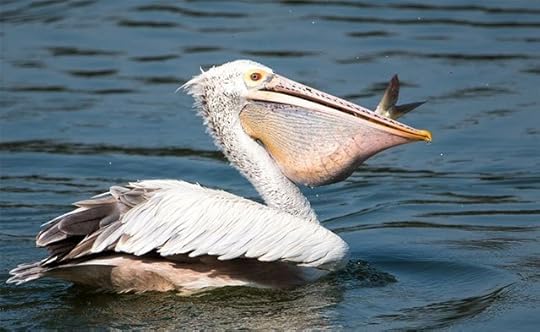
Recently I was standing on a Pompano Beach pier and looked up to see a cannonball hurtling toward me, which appeared to be on a collision course with my face. Before I could decide if I should duck or run, the cannonball, which turned out to be a pelican, struck the rail of the pier right in front of me, landing with surprising grace, and gazed wild-eyed at the ocean without offering a word of apology. The lingering fear of being impaled by its long beak left me breathless. This is not a bird, I thought, this is a dog with wings.
If I am ever unsure what to write about, I can always find inspiration by writing down all the things my mind thinks it knows, and comparing them to my actual experiences.
Honest observation is a hallmark of good writing, which – beyond external, objective truth – includes saying how you really feel rather than how you are supposed to feel.
The novels I loved most as an adolescent were the ones that admitted to thoughts and feelings I was afraid to admit myself. They made me want to write about my own experiences in the same fearlessly honest way.
However, when observing places or people for later writing projects I sometimes catch myself self-censoring details I have never seen described in books; at the beach I find myself focusing on the “azure” water, the sparkling wave tips, descriptions I have probably seen many times in novels, while ignoring the slimy seaweed and mud, or the bizarre-looking sea creature flailing on the sand that I have no name for. I have to make a conscious effort to see and appreciate details I have never seen described.
Author John Gardner touches on this filtering tendency in his book On Becoming a Novelist. He said that a teacher in a creative writing class asked students to watch a short skit involving a meeting between a mother, her son, and a psychiatrist. Students were asked to describe what they observed the actors doing. Gardner writes:
One of the most interesting things that happened in this psychodrama was that the woman playing psychologist, in trying to get him to explain himself, repeatedly held out her hands to him, then looped them back like a seaman drawing in rope, saying in gesture, “Come on, come on! What do you have to say?” – to which the son responded with sullen silence. When the drama was over and the descriptions by the class were read, not one student writer had caught the odd rope-pulling gesture. They caught the son’s hostile feet on the desk, the mother’s fumbling with her cigarettes, the son’s repeated swipes of one hand through his already tousled hair – they caught everything they had seen many times on T.V., but not the rope-pulling gesture.
To “write from life,” to write honestly, means honoring what you see even if it makes no sense or seems too weird or complex to fully grasp. An example of a weird human response to bad news happened in my tenth grade typing class.
When in the eighties my high school principal announced the Challenger explosion over the intercom, most students responded with expressions of disbelief; afterward, a somber silence settled over the classroom. One girl came to class late and, sensing something was wrong, asked what was the matter. Another girl told her the news. The tardy girl did not frown, cry, or express alarm; instead, she laughed, a single clipped chuckle.
Her friend asked, “Why did you laugh?” Blushing, the girl newcomer said, “All that build-up on the news, all the trouble they went to, all those documentaries, and this is how it ends?” She shrugged. “It just struck me as funny for some reason.”
A beginning fiction writer versed in the notion that the only “logical” response to tragedy is to frown or cry would be unlikely to include such an exchange in their stories. Through conscious observation writers build ever-increasingly complex models of human behavior, leading to writing that resonates with authenticity.
That is why studying the world when I am not writing is as important as when I am typing at my computer. I keep a file on my phone where I sketch my observations of people and places. At first, I try to observe without immediately attaching words to what I see. That ensures that my content is likely to be original. Otherwise I am likely to think thoughts like, “The water sparkled like diamonds,” a description I have seen in books too many times.
When I do record my impressions in my notepad, I try not to worry about the writing quality; instead I write what I see in language that is almost always awkward. I can always go back and revise my descriptions later if I want, but writing polished prose is not the point of this exercise.
Drawing from life creates a habit of looking for fresh details so that when I do write fiction, my memory has a ready store of original content from which to create. However, observing the world as it is and not as I expect it to be changes more than my writing; it changes me.
To write is to constantly question myself and my long-held assumptions about the world, to open myself to the possibility of surprise. To write is to enter a conflict between appearance and truth as I dive headlong into the eternal question: What is real?
If you enjoyed this post you might like my other writing. Take a moment and sign up for my free starter library. Click here. Also my story collection “Remembering the Future” is available for purchase on Amazon.
The post The Elusive Treasure of Honest Observation appeared first on PASSIONATE REASON.
February 12, 2017
Writing Means Believing in the “Real yet Unborn”
Every time I begin a new novel, I feel like a beginner again. In a panic I worry I have forgotten everything I have ever learned about the craft. I search my mind for the encyclopedia of writing techniques that are supposed to be stored in my library of knowledge, but the screen of my immediate consciousness has limited space. Instead of finding knowledge, I find thoughts like this:
You don’t know enough about warfare to write traditional fantasy!
Your last book was pretty good but this one won’t be!
You’ll never finish!
This isn’t going to be worth the energy. Go play Mario Kart!
You used to be smart, but you’re not anymore!
Self-doubts over writing have been with me since high school, but, unlike now, I used to give in to them. Part of the reason I no longer do is that I have finished three novels and three story anthologies. From experience, I am confident that I can and will finish what I begin.
However, the self-doubt committee too often congregates whenever I start to write something new. Their voices are far weaker now than they once were, but their tactics are the same: to attack the worth of my project and my ability to carry it to the end.
To write anything, I need to believe that I can finish my story and that it is worth writing, but at the beginning, my novel is only a tender idea, a seed; it is barely even real.
So the question becomes, how do I believe in something, my book, that does not actually exist? And how do I know my book will be worthy of my Herculean efforts?
The question of worthiness has to do with whether my book will be “good.” No one wants to sink a ton of time and energy into a bad book, yet I can never be certain that my finished product will be the masterpiece I envision. That means I begin every new project on shaky ground. My ideas are born in the unreal space of Imagination Land.
Believing that I will write a good book is different from believing in unicorns though. A book is dependent on what I do, but an idea is only an idea until I convert it into a story or novel.
Is it a stretch to say that writing a book requires a kind of faith? I am a skeptic, so normally I shy away from that word, but psychoanalyst Erich Fromm offered a definition different from the one generally used in a religious context.
In his book The Revolution of Hope, he writes:
Faith is not a weak form of belief or knowledge…faith is the conviction about the not yet proven, the knowledge of real possibility, the awareness of pregnancy. Faith is rational when it refers to the real yet unborn…Faith, like hope, is not a prediction of the future; it is the vision of the present in a state of pregnancy.
While Fromm was probably not thinking of the writing process when he wrote that passage, it comes back to me often as I write. My story concept represents a “real possibility” that is far from certain to be born.
To write a novel, I have to trust that I will be able to solve the many thousands of problems, great and small, that I have no way of foreseeing; that I will someday realize a future product I can only partially envision; that I have the consistency of will to spend however long it takes, many months, perhaps even years, to bring my idea to fruition; and that what I am doing is worthwhile, given the energy and time commitment a novel requires.
Unless I am writing a novel just to learn, I also need – or at least want – to believe my novel will be “good.” But I am a skeptic. I want evidence. I want to do everything possible to make my artistic vision real to me at the beginning. Otherwise, I will give up before my idea ever gets off the ground.
How do I convince myself I am truly capable of making what I envision real?
As for the under-confidence problem, it is sometimes helpful to write down my self-doubts and, in writing, argue back with them.
Accusation: You don’t know enough about warfare to write traditional fantasy!
Response: Fantasy doesn’t require warfare, and even if it did, there is a thing called research.
While arguing with irrational self-doubts is time-consuming, it works. I did it during a period in which I could barely write anything without getting depressed. It created a habit of doubting my self-doubts. I even created a compliment file on my cell phone – a list of compliments on my writing I had garnered over the years. My compliment file gave me devastating evidence to present in the court of internal criticism.
As for believing in a specific artistic vision, the more I know about my story, the more real it becomes. I plan. I brainstorm. I draw mind maps. I ask myself questions about my story and write down possible answers. I write a tentative ending to give me a point to strive toward. I draw maps. I write down any scenes I have vividly imagined. I create character sketches.
I divide my story into three acts, a beginning, middle, and end, then write a four page general summary. It is encouraging to see my story in microcosm, even if I depart from it. Four pages is a manageable length that lets me see structural problems before I ever encounter them.
Anything I do to illuminate my story increases my “faith” that I will finish, my belief in the “real yet unborn.”
However, the most potent way to keep my belief in my story alive is to write on it consistently. I write every day, not because I am disciplined, but because it is easier for me to do that than to write inconsistently. Force of habit is real; it propels me farther and faster than the most moving pep talk.
A writing habit relieves the pressure to believe. It persists even on days I am not sure where I am headed. It does not require me to decide each day whether my chances of success are realistic.
It leads me to ask questions about the present, not the future. Instead of asking, “Am I ultimately going to succeed?“ I ask, “Did I write today? Was it interesting? Did I write what I love? Did my efforts reveal anything new about my novel?”
Such questions allow me to set aside my uncertainty to deal with at a later time. However, eliminating all uncertainty is not just unnecessary, but undesirable. Uncertainty energizes my writing. Creative tension sparks interest. If I knew exactly what my novel was going to look like, a big incentive to write would be gone. Part of the fun of writing lies in being surprised.
While belief in my ultimate success does matter, my love of the process matters more. Love for act of writing, more than anything else, will drive me to the end. On days when self-doubts arise, I spare myself the burden of giving myself pep talks. Instead I ask myself, what can I learn from this? When I do that, it is okay for me to feel like a beginner. There is always more about writing to learn, which means that whether I succeed or fail, writing is never a waste of time.
In writing I need my uncertainty as much as I need my belief. It is in the space between those opposite poles that creativity ignites.
If you enjoyed this post you might like my other writing. Take a moment and sign up for my free starter library. Click here. Also my story collection “Remembering the Future” is available for purchase on Amazon.
The post Writing Means Believing in the “Real yet Unborn” appeared first on PASSIONATE REASON.
January 30, 2017
How I Know I Have Been Dreaming Since 2016 Ended
Since I have realized I am only dreaming, my relief has been immeasurable.
Not that my dream is all bad. I am dreaming that I recently moved to a place called Pompano Beach. I am living in an apartment with a balcony overlooking a lake, a place where I like to write.
I must have been having this dream since the last day of December. It cannot be real because this place I love is overshadowed by a dystopia, an alternate America presided over by a xenophobic demagogue whose rallying cry is Bring Back Torture.
With confidence and shrugs, he turns crimes into peccadillos. He can brag about sexual assault, then dismiss it as not important and get elected all the same. Real life Americans would never have elected him. My brain hurts. I wonder how long this dream is going to last.
When I do wake, I will cash in on my dream. I will write a novel set in a seedy, Gotham-City-like alternate universe in which such a candidate does somehow get elected president. Maybe I will even include the part about how he locks up America like an airtight mayonnaise jar so no one who looks or thinks differently from him can come in.
Thank you, dream, for giving me such an intriguing, yet implausible, premise.
I am afraid parts of my dream are too implausible for fiction though. In it Russia helped elect the alternative universe president; the CIA said so. Of course, Twitter also helped. Yes, Twitter still exists, even in my dreams.
In fact, I know my current life is unreal partly because I am not on Twitter anymore. Twitter has been an intrinsic part of my life for over three years. Twitter is amazing. It is like another planet, only dimensionless. In Twitter-verse people from all over the world can meet without actually having to go anywhere, which may sound dream-like but it is actually real.
In my waking life, I am totally and hopelessly addicted to Twitter. It is hard to imagine that Waking Me would ever go off Twitter. I try to remember why Dream Me did it, but dreams tend to be hazy even when you are having them. I believe it had something to do with my sanity and my need to save it.
However, I am looking forward to getting back to my Real Life; I intend to fully tweet all about my dream and my unlikely president. For now, instead of tweeting, I obsessively read dream news. It is impossible to turn away. Even though the president is just a nightmare, there is something fascinating about facing your worst fears while enjoying the relief that they are not real.
But sometimes when I do that, I get confused. It is funny how hard it is, even when awake, to know what is real and what is not.
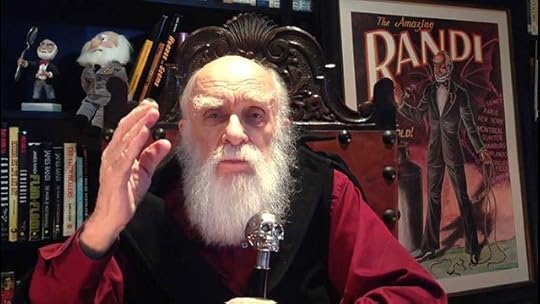
Which brings me to the most exciting part of my dream, a light of rationality amid all the darkness: I have met and spoken to the famous stage magician and skeptic James Randi. 88-year-old James Randi is my hero, along with other like Carl Sagan and Isaac Asimov who were friends with James Randi. They were rational humanists, which means they would not have liked my alternative universe president if they were still alive.
James Randi is renowned, not only for being a magician, but for exposing frauds, charlatans, and faith healers who pretend to have supernatural powers when they are actually only doing parlor tricks. As a stage magician, he was incensed to see liars using tricks to exploit sick, grieving, or disabled people for fame and financial gain.
James Randi lives in Fort Lauderdale, which is close to Pompano Beach, both in my dream and in real life. James Randi has meet-ups every month at a coffee shop which anyone can attend. I dreamed I went to a meet-up and he passed out Skeptic Magazines from his personal collection for my dream self to read – which I have been doing.
Reading them makes me wonder if I should be more skeptical about my conviction that I am dreaming. Nah, just kidding, I am absolutely certain about that.
I admire James Randi because he is dedicated to seeing reality as it is, and not as he wishes it to be. That is a quality too few people possess. In my dream, alterna-verse president lies so much he cannot even stick to his own stories during the course of a single day. Not to mention that he shuns daily intelligence briefings, preferring to govern by fantasy.
In a week, his administration has produced the term “alternative facts,” which could have only come from the Mad Hatter in Through the Looking Glass, which is another reason I know I am dreaming. I wonder: When is this dream going to end?
I want it to end because I have real-life plans. I am going to be a prolific novelist, writing one novel after another, good ones and bad ones, until I fully master the process. I have already written a few, including two I am about to publish. I also have to write my dream-inspired alterna-verse president story, which is my mission now. I just hope I can make it believable.
Therefore, I am trying to figure out how to get back to December 2016 so that I can finally enter the real 2017.
Not that the dream version is all bad. My dark world has a certain beauty. On the personal end, I inhabit a place with a thriving culture, a place where ocean waves are a common sight and where all the restaurants are off-the-charts good. It is in another dream-place called the White House where the dark clouds are gathering; I hope I wake before the storm begins.
Of course, I have little control over that. Until I do wake, I might as well settle in for a while and write on my dream balcony overseeing my dream lake. I will remind myself that the bleak alternative universe president is only a figment of my warped imagination.
I wonder what real-life critics are going to say about my disturbing novel when the real 2017 comes. My guess is that they will find it unbelievable.
If you enjoyed this post you might like my other writing. Take a moment and sign up for my free starter library. Click here. Also my story collection “Remembering the Future” is available for purchase on Amazon.
The post How I Know I Have Been Dreaming Since 2016 Ended appeared first on PASSIONATE REASON.
January 29, 2017
The Silence Feeders (Short Story)
I.
I have made friends with darkness. There is a warmth in it, the dusky comfort of a plush teddy bear or the soothing delight of just-baked brownies.
I discovered the warmth of darkness two years ago when, at age 25, I lost my vision to a degenerative disease.
At first the darkness scared me. I opened my eyes wide as the color drained slowly from my life. It was like death was coming early, encasing my brain in a deeply buried coffin, isolating my mind as the world around it faded away.
I mourned my ability to see beauty until one day I discovered a different layer of experience – an unexpected world of aesthetic wonder that had been hidden from me. a world of sound and touch richer and deeper than anything I could ever have imagined.
I learned that the most grating sounds, the rattle of a shopping cart, the squeals of children, the shrill cry of the wind during a storm, could become beautiful when you stopped fighting them and just listened.
While I still mourned my sight, I embraced this new dimension of experience, another version of what life could be. All this time it had been there, this other world, sounds bursting constantly like spring blooms underground.
I fell in love with them – the music of the wind, the subtle creaks the house made, the hum of a refrigerator; my new relationship with sound was a gift, and I was grateful to darkness for granting it to me.
On the other hand, silence became my greatest fear; without sound, there was no world, and no me. But most of the time, some sound was there to anchor me to my life
However, it took me many months to fall in love with sound, and to celebrate the darkness that had fully illuminated its beauty.
II.
Beauty. That was something I knew about. I was supposed to have been beautiful – or so I had been told.
But those days were over. Though others could see me, never again would I see my own reflection. I would never see how I aged. I would never know if I was having a “good-hair day.” I was divorced not just from the world but from myself.
Who was my self? All my life I had been my reflection. My mother had taught me where my value lay with an endless sequence of tawdry childhood beauty pageants. She plastered glitzy makeup and bright lipstick to my face, encased my locks in hair spray. I was taught to preen before an admiring audience, to wear frilly sequined dresses, to smile charmingly; I was a toy.
I loved praise, yet I sensed something was wrong. The horror invaded the nightmares of my childhood in the form of rat ghosts.
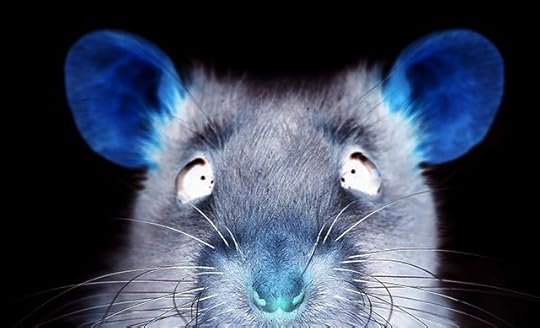
The dreams began in silence. Then they came, in chirping, skittering packs, claws scraping the floor. I could feel the warmth of their bodies around my ankles. They made a collective chant which sounded like, “You are nothing, nothing, nothing” repeated again and again. They spoke the words with a strange, choppy accent. The word nothing was crisply divided into two emphatic syllables: no-thing.
I would argue back with them. “I am too something. I have won ten beauty pageants. I have the crowns in my closet if you want proof.”
You are nothing, nothing, nothing they chanted. But, even in the supposed safety of my dreams, the rat ghosts hurt more than they scared me.
I could see through them, but they had teeth I could feel. Their incisors sank into my flesh. In my dreams I felt the agony of being consumed alive.
Whenever I dreamed of being alone in a silent room, I would cringe and wait for the horror to begin. I knew somehow that it was the silence that lured the rats, maybe because even in my waking state, I dreaded the prolonged pause, the awkward gaps between words. It was in those empty spaces that critics judged me.
My childhood had been a parade of judges, evaluating the warmth of my smile and the effortless grace of my stride. My mother stressed that I must always look natural, but also happy.
I felt that my mission in living was to be judged perfect by others, to not only look perfect but to wear the perfect emotions. When I succeeded in being the ideal, my mom would love me and bestow a proud smile upon me. The irony was that trying to seem a certain way led to artifice, But, according to my mom, perfection that appeared fake was not really perfection.
The contradiction baffled me. Even as a six year old, I knew a convincing lie was no less a lie than one that appeared plastic. Part of me wanted to reveal my scar to the world, but I knew my mother would never let the world see my major flaw. Every day she painted over it with a heavy cream concealer and finished with a decisive sweep of her powder brush.
The scar had come from a sneaky rat. Not a ghostly dream rat, but a real one. It had climbed into my bassinet when I was a baby. My mother had caught it biting my cheek and scared it away, but she was too late. The rat “kiss” had left an oblong scar, my secret shame. The “beauty” I paraded before the judges was a lie. I lived in fear that the hidden taint would someday expose me as the nothing that the rat ghosts had said I was.
III.
Outwardly I complied. Inwardly I rebelled.
I was eight when I thought to defy my mom, but the fact was, she was bigger than me, so I took refuge in the secret, imaginary life of my future. As an adult, I would rebel against my mom, who wanted me to be a high-paid fashion model. I was dead set on being the opposite, whatever that was. Finally I seized on a vision that enticed me and made my pulse race.
I would become a great mathematician.
I had always made mediocre grades in math, but I rarely did my homework. What if I actually started trying? I always felt sorry for my teacher, Miss Mullins, who could never get the class to be quiet during math lessons.
I became the most attentive student in class. I began asking my teacher questions after the final bell rang. Miss Mullins was so pleased by my avid interest that she could barely contain herself. She would actually sit down with me to explain, her fingers fluttering over the pages of my math book, flashing anxious, questioning smiles. I quickly became her favorite student.
With my determination and her patience, I became adept at solving problems, which filled me with immense pride. My dream was becoming clearer. As a mathematician I would never wear sequins or frills. I would be stately, bespectacled, and powerful.
I would judge others, admiring students perhaps, instead of being judged myself. I would go to symposiums (although I was not exactly sure what a symposium was) and bask in wild applause as others gawked at my genius.
Miss Mullens was beside herself with joy when I attempted some of the “challenge” questions that were at the end of each chapter, the word problems where you had to actually think instead of just following directions.
There were no answers to those questions in the book, so I did the best I could and showed her my answers. Her face broke into a smile of pure delight. I had gotten over half of them right. I was disappointed to have missed any, but Miss Mullins was impressed. She gave me some more of those types of problems to solve. “You know, you really have a knack for this,” she said one day. “What are you trying to do? Be the next Benoit Mandelbrot?”
“Who is Benoit Mandelbrot?”
Her face brightened. “He was a genius mathematician who worked with something called fractals and the mathematics of chaos. If you go far enough in math you will be able to understand it someday.” She smiled.
“I will,” I said. And I meant it.
Miss Mullins shook her head in dismay. “I would never have guessed you were a math person at first. Why the sudden interest?”
“Because I am tired of wearing makeup.” She gave a nervous, baffled chuckle, but I could see the question in her eyes. I wanted to explain more, but held my tongue.
At home my mom taunted me for my new studiousness. One day she saw me at my desk, my head looming over my math book as I scrunched my forehead in contemplation of a baffling word problem.
She marched over to me and leaned down so that the tip of her nose was almost touching the fine hairs on my cheek. “Every time I look at you, you are staring at numbers. You are only eight, Jacquie. Is that what you want to be? A math nerd? You want to be a boring old computer person? An accountant?”
I gave her a direct, brazen stare. “I am just doing my homework, like all kids do.”
She anchored her hands against her hips. “But you spend so much time on it. You never go out and play anymore. A child should be a child.”
I could have told her the same when she was trotting me in front of judges like a show poodle, but I restrained myself. I said with all the dignity I could muster, “I want to be a great mathematician, like Benoit Mandelbrot.”
“Benny…Man…who?” She slammed my book closed. “For the love of God, Jacquie, that is enough. You are smart, you should be able to learn in class the way you used to. Your grades were just fine before, you were passing just fine. A new rule: When you are here, at home, you can spend a half hour on math homework. No more. Do most of your learning in class, like kids are supposed to. Now. I bought you some beautiful new dresses I want you to try on, real silk, too, Easter colors with fine lace trim. We are going to win the spring pageant, Jacquie.” She smiled proudly. “No one will be able to resist you.”
“I hate dresses,” I screamed. “I hate pageants And I hate you. Leave me alone. I am graphing!”
My mom paled. I must have too; my outburst had surprised even me.
Mom jerked my straight-backed chair from under my desk, the wooden chair legs screeching protest against the tile. “I bought you those dresses Jacquie, they cost me a lot of money and you are going to wear them.”
She grabbed my upper arm and pulled. I planted my feet hard on the floor, leaned forward, and clamped my fingers around the front edge of the desk, causing it to tilt. A loose sheet of graphing paper went sailing to the floor. As I reached for it with my free hand, my mom released my arm and yanked my hair to pull me out of my seat. The pain was a thousand needles pricking my scalp. I began to cry.
Minutes later, I was squeezing into a frilly Easter-egg-green sequined dress and sparkling shoes.
“Oh, oh, wonderful. It contrasts so beautifully with your red hair.” Mom stood back and clapped her bony hands. “This is what you were meant for, Jacquie. You need to work on your walking though. You seemed a little klutzy last time, which was why you lost the snow pageant. I am going to sign you up for charm school. Maybe it will fix your attitude problem along with your walk.”
“No, “ I glared at her. “I am plenty charming already.”
“Oh?” My mom chuckled, then looked at me with wistful adoration. “You are so lucky, Jacquie. When I was a kid, I would have given anything to look like you. You take me back to my own childhood. You look like the girls I always envied, the popular ones. I only want the best for you. You can have the life I never had.”
I fought her the best I could, but she enforced the thirty minute math rule. She kept a close eye on me.
I tried spending extra time on math homework, sitting on the edge of the tub in the bathroom with my number 2 pencil, but when my mom noticed how much time I was taking, and how I was dragging my textbook into the bathroom, she made a rule that I could no longer lock the bathroom door. She began bursting in on me. It was so traumatic and embarrassing, I began associating fractions with ignominy.
IV.
At school I listened in class the best I could, but without adequate time to do my homework, my grades reverted to mediocrity. I did not even know what questions to ask after class anymore. I could not look Miss Mullins in the eyes anymore. I knew I had disappointed her. She had been bragging on me whenever she passed out the graded math test. Now she was silent as she returned my tests. Now and then, sitting in her desk, she would look at me with perplexed concern. Abruptly I would turn my head away. It was unbearable to think I had disappointed her.
After the school year ended, I left my dreams of being a female Mandelbrot behind me. They seemed as silly as being a cowgirl. In adolescence others told me with admiring glances that my looks were the closest I would ever get to genius. I wanted to be some kind of genius, or at least special in some way, so every morning, I continued the tradition of sweeping a concealer brush over my scar.
During my teenage years there was a portrait I internalized as being the essential me. At age 15, I had a boyfriend who was a poet. According to his poems, there was something “eternally child-like” in the “rosy glow” of my skin and the “subtle pout” of my lips, and the “innocent curiosity” of my green eyes. He wrote that the sheen of my straight auburn hair was the kind that attracted people to ripe strawberries in summer.
The message from everyone I knew supported his message, “You are here to reward the world when it looks at you. You do it well, so for the love of God, never age.”
To compliments, I responded with a sort of queasy pride and a despairing dread of someday losing the only quality that had ever secured love from the world.
In high school, I felt the pull of interest from certain subjects from Latin to biology, but I painfully remembered my stillborn Mandelbrot fantasy. I was afraid to get attached to academic subjects, only to disappoint more teachers.
My mom got me modeling jobs with local department stores to fill my afternoons so, again, my studying time was limited.
Now at age 27 I was blind. I could no longer confirm for myself, through my mirrored reflection, who I was, I had never developed a rich inner garden, a poetic soul, an erudite mind, a personality with depth, or a self with multiple dimensions. I was completely dependent on others to define me.
V.
I soon learned that blind models were not much in demand. The curious flash of my green eyes had been my most alluring charm, photographers had told me, and now the life in them was gone.
I wanted to console myself by looking at the world outside myself. If I could not be beautiful, I wanted to admire beauty. I wanted to look at the shimmering surface of a lake or the way a falling leaf rocked slowly to the ground. To see outside myself could have soothed me, freed me from my self-conscious prison.
It was on a cool spring day that I discovered the new dimension, a porthole of escape. I was shopping in a crowded grocery store with my brother, when the clamor of screaming babies and rattling grocery carts assaulted me with such force, I thought it would knock me down.
Being blind was too noisy, I thought. There were no images to compete with the daily clamor, so I received the full brunt of it all the time.
That day I was especially tired, so instead of resisting the noise, as I usually did, I surrendered to it. I let the noises fill me. I tuned in to the grating sounds with full interest, and something incredible happened; they stopped being grating.
The shopping cart had a rhythmic, almost musical rattle. The squeals of children had fun in them; peace settled over me as I remembered my own childhood, the good parts like unwrapping Christmas presents or eating ice cream on a sweltering August day. I even found an enticing rhythm to the beeps of the scanners. Like Mandelbrot, I found patterns in chaos, and the result was music rich with wordless meaning.
I still missed my sight terribly, but far less than I once had. Although I had always been able to hear, I had never truly listened before now. What I found was an intricate fabric of nuance and natural rhythms that made the darkness more than bearable.
Sounds eased my sorrow to the point that I stopped pitying myself; my new relationship with sound was a gift.
Rattling, ticking, pealing, chiming, humming, sound became my drug, my addiction. I could not sleep without some kind of noise — relaxing music, a fan blowing, a recording of ocean waves.
I analyzed sounds, how they had form and texture, how they were round, hard, soft, and rough. Sounds moved. Like ocean waves, they rolled in and they rolled out. I mapped in my head the way certain parts of the house sounded and, with my cane and the help of my brother Zack, learned to avoid bumping into things.
However, my pleasure had a flip side: a fear of silence. I dreaded pure silence like I dreaded my own death. Even the pauses between words made me cringe because it was then that the silence feeders came.
In listening carefully to sound, I believed I had unlocked a door of my imagination where the haunts of my childhood dwelled, entered a zone between reality and illusion; maybe blindness was driving me insane, but whenever the external sounds stopped, the internal noise began.
Do the blind hallucinate? I must have. Or perhaps I really did enter a new dimension when I lost my sight.
Whenever silence fell for long, a soft, chittering chorus took its place, the same sound the rats had made in my childhood nightmares. Though I could not see them, again and again, they said the word I remembered so well: You are nothing.
It was not just the words that disturbed me, but the way they made me feel. When the words were spoken, I could feel a visceral hole opening up inside me, a chasm of loneliness; I could feel the nothingness trying to consume me, and I fought the feeling with all I had.
It was harder than it sounds. The feeling that I was nothing was not vague, but powerfully convincing. That is why, months after the silence feeders had re-entered my life, a simple power outage became a disaster that threatened my belief in my own existence.
VI.
The torture began on a mid-January day of cold rain and sleet, which had abated for a time.
I did not see the lights go out, but when the electricity died, I knew. The sounds I depended on for a sense of security all stopped at once, the stereo, the lively lilt of television voices, the watery, thumping gurgle of the dishwasher.
Gone too were the faintest sounds I had always taken for granted: the calming hum of the refrigerator, the whoosh of the heater through the floor vents, the rhythmic ticking of my wall clock.
Without a working heater, the house iced over quickly. I went to where I remembered the floor-to ceiling living room windows being to make sure they were tightly shut. They were, but I could feel the hard chill of one of the window panes when my fingers grazed the glass surface.
I could feel the silence, not just around and inside me, but in the weighted chill of the air. I grabbed an Afghan from the sofa as, by memory, I made my way toward the fuse box next to my bedroom door.
Even the Afghan felt clammy around my shoulders, as the cold wet tickle of the air invaded my lungs. My heart percussed against the walls of my chest cavity as I struggled to breathe the icy air.
The worst part was not the cold, though, but the dread. In my mind I was a child again, a six-year-old dreaming of an ominous empty room and waiting for the horror to begin. I told myself my worries were silly. I was an adult now, and if I was dreaming, I would be able to see; despite my blindness, all my dreams were visual.
Trapped in darkness, my imagination must have gone wild; an odd synaptic tumble drew me into the looking glass. It began with a whisper. At first I mistook it for wind, but it grew louder into what sounded like the collective murmur of human voices.
I hugged myself as tightly as I could to quell the trembling. I am dreaming, I told myself, maybe I am having a non-visual dream after all.
But the immediacy forced me to recognize the sound as reality. As in my childhood nightmares, skittering sounds and squeaks and panting filled the room along with the unified, genderless voice of a crowd.
The voices and, I assumed, their owners, surrounded me. You are nothing, you are nothing, you are nothing, the crowd-voice said. The words echoed darkly in the chambers of my mind as I felt something inside me give way, some desperate speck of imagined existence that I called my self. I planted my palms over my ears and screamed, “I am not nothing.”
Doubts made me falter. I was older now. I could not see or drive. My job options were limited. I was sure whatever beauty I possessed must be fading, or would fade soon, the walls of my being disintegrating, revealing me to be the empty shell, the useless object, that I was.
You are not an empty shell, I told myself. This is just a dream.
At that thought, I felt something bite my ankle, then my foot. With a sharp gasp, I swatted at the invisible culprit with flailing hands, teetering on the edge of absolute panic. I felt the resistance of furry bodies seething around me, clambering over the arch of my foot, as I made my way, panting, to the fuse box.
With a cry of hope, I found the small metal door embedded in the wall beside my bedroom. I pulled switches with the frantic desperation of someone trying to defuse a bomb.
Then I felt them swarming, felt their solid weight on the top of my sock feet, the warmth of their coarse fur, and their hard bites. When I flipped the last switch, I lost my balance. I slammed on my side and hit the floor shoulder first.
My bones vibrated with pain. As I struggled to recover control, to rise, the furry creatures surged over my prone body, scrambled over my legs, arms, and face, clawing and biting me. Screaming. I slapped them away. The true torture was not the bites themselves, but the feeling that they were stripping away my outer shell to reveal the true horror: that they would find nothing inside.
With that thought, I lost consciousness.
I woke. With relief I realized The power had returned.
I inhaled the warm whoosh of a heater, took in the humming lullaby of the refrigerator. “I am here,” I told myself, “I am not nothing.” I felt myself, my arms, my face, my hair, to reassure myself that I was real and solid and alive. I ran my hands over my arms, ankles, and face. I expected rough sores where the rats had bitten me, but there was nothing, no blood, not a sign of damage
Yet the suffering had been unbearably real. Had I gone insane? The question mattered less and less as sounds lit the shadowy recesses of my mind with life.
VII.
Though often derided, fear is more than the irrational emotion of children and cowards. It is not just dread of imaginary future suffering, but the memory of past suffering transformed into anxiety.
Over the next couple of days, I knew fear. Most people think of monsters as inhabiting the dark, but I now knew that darkness was harmless. It was the monsters that haunted silence I most feared.
I became a sound glutton. I added more and more sounds to the house, mostly electrical – synthesized bird song, music, nature sounds, multiple loud fans until the cacophony made thinking impossible.
When my brother protested, I encouraged him to wear earplugs, but he refused to do that for long. When he was home, I had to turn most everything off. I would slide padded headphones over my ears, shut the door of my room, and numb myself with loud music, good music or bad; it did not matter.
I caulked the cracks between moments, plugged any hidden holes through which chanting ghost rats could sneak, so there was no way for thoughts about being nothing to take over. I created a life of clamor, a never-ending circus, a clanging, chirping, screeching mayhem.
One day it became all too much. I had a severe headache that day, and the clamor made it worse. The drumbeat of the stereo was pulsing in time with the angry throb in my temple. Exhausted, I realized how much my clumsy auditory armor was weighing me down. I knew that what I had created was not beautiful anymore – far from it. All around me was the strident music of compulsion. It was ugly.
I decided right then that I was done with running from silence, or from the beasts – real or imagined – that I called the silence feeders. It was too much work. I had to face them, or live a life of strident clamor and fearful turmoil.
Maybe by confronting the silence feeders repeatedly, I would discover that they were not real and could not truly injure me, no matter how much their ghost bites hurt. Then, maybe I would heal; if not, at least the torturous struggle to save my self would be over.
If I truly was nothing, I wanted to know
VIII.
On the next night when I was all alone, a Tuesday, I went into my living room, feeling my way with my lightweight cane, hearing its gentle, reassuring click, click, click against the bare hardwood floor.
I had memorized well the locations of all the power switches. I clung to the walls as I circuited the house. I killed the stereo and silenced the television. I turned off the fans. I even unplugged the refrigerator. Fumbling, I removed the batteries from the wall clock. I softened my breathing.
Each time a sound went away, I felt more naked. The hole of my loneliness engulfed me. My hands trembled. My teeth chattered.
Every new step toward silence took me further down into the dark basement of my psyche. At last, all the sounds were gone except for rain dripping from the roof, so I did one last thing; I went into the room where my brother slept and inserted a pair of his ear plugs. That did it. The silence was that of deep space, the pure emptiness of a void.
In the silence, my tremulous legs wanted to flee, but I ordered them to stay. I waited for the silence feeders to come, but my survival instinct raised a howl of protest. What are you doing? It said. They tortured you last time, they almost devoured you. But I did not budge.
A minute later, they came. They moved in slowly, and I could feel their warmth as they gathered around my body. A few crawled over my feet. I shut my eyes against the pain I knew would follow. Moments later, when no bites came, I relaxed and just listened.
Their voices started as a gentle whisper and rose to a choppy chorus. You are nothing. You are nothing. You are nothing. The ear plugs did nothing to mute the chanting
Each time they chirped the strangely pronounced word “no-thing,” a corresponding void, deep inside me, answered, a chasm, an expanding hole.
The bites began, teeth sinking into my flesh and claws scratching my ankles beneath the hem of my jeans. Involuntarily I cried out. Slapping at my ankles, I backed away from them, kicking the straggling bodies with all my might. What was I doing? I had been stupid. Facing fears was not heroic; it was insanity. I wanted to run, but my legs were trembling so much I could barely stand.
The voices filled my skull until I thought it would burst; I was cold, yet sweating. I wanted to talk or hum to reassure myself that the life blood of sound had not left my life forever, and that I was still alive. Instead I stood motionless and listened, tried to feel what was happening to me because a life of clamor and compulsion was no life at all, and I had come here to face the void I feared.
The back of my neck tingled and my cheeks flushed hot. Slapping the beasts away, I prayed I would faint and wake up in bed safe from this nightmare.
My desperation felt familiar. I felt as I had months ago in the grocery store when a volley of strident sounds had rammed into me; I felt the same helplessness. What had I done then? I had given up.
I did so now. I bowed my head. I let my arms go limp.
I let the words, you are nothing, pass through me like a ghostly wind. Shivering, I let their chill possess me until at last I really did feel empty. Instead of resisting I paid close attention to the words being chanted, the way I once had done with sound. It was then that I realized something odd.
Like the rattle of a grocery cart, like the squealing of children, there was beauty in what the rat ghosts were saying, and in how they said it. Their choppy accent was no accent at all.
Again and again, they were saying a variation of what I had heard before, words with dimension, nuance, and depth.
I took the new words in, whispered them to myself, wrapped them around me like a warm blanket. I breathed them in, becoming the words as they filled me. The words were not “you are nothing.” They were, “you are not a thing.”
Again and again, the collective voice was chanting, You are not a thing, you are not a thing, you are not a thing, until at last the group chanting gave way to a lone speaker, and it was my own voice I heard, one long forgotten but now vibrantly familiar, the soft protest of a young girl who was being stuffed in frilly dresses and ordered to look happy for the world, her individuality crushed as she was stripped of her Mandelbrot dreams, a girl who had been robbed of a self and converted into a reflection. Her faint assertion had crept into the world of dreams: I am not a thing.
The words made my heart soar. All my life I had been a something. That is, some thing. A doll. Even if I truly was nothing, then I was not a thing, and to be not-a-thing was to be free.
I knew then that the rat of my baby-hood that had bitten me had not been all bad; with its scarring kiss, it had spared me from being a doll, a toy, making me something more, or something less, than useful.
Now. I embraced the void, experienced a beauty beyond sight and sound, the sublime, transcendent beauty of perfect silence. Freed from the burden of identity, I knew the hopeful ground zero of limitless possibility: nothing.
“I am nothing,” I said aloud, “Not a thing. No-thing.” I could feel the living truth of the words in the air I breathed as the narrow boundaries of what I called my self dissolved.
Never again would I use the concealer on my scar. Never again would I try to sum myself up in a sentence or a phrase. Never again would I return to the narrow prison of being a something.
I turned the appliances back on, plugged the refrigerator back into its socket and listened to its hum, appreciating its steady music, secure in knowing that I did not need it anymore, that I could now enjoy a world beyond sight and sound.
I still missed my vision terribly but I was grateful to my blindness for what it had taught me: There is warmth in darkness, and beauty in silence. Together, they comfort, create, and complete me, illuminating my reality as light and sound never could.
It was only when my senses faded that my hidden self became visible and vibrant. It was through darkness that I came to love the world; it was in silence that I found myself.
If you enjoyed this post you might like my other writing. Take a moment and sign up for my free starter library. Click here. Also my story collection “Remembering the Future” is available for purchase on Amazon.
The post The Silence Feeders (Short Story) appeared first on PASSIONATE REASON.
January 20, 2017
The Dramatic Power of Imperfect Decisions

As a fiction writer, I often wonder what kind of character I am. Am I a sympathetic character, or are there scenarios in which I could be a villain? Most people, I suspect, could be either in extreme situations. But my introspection regarding stories goes beyond good and evil. I wonder if I am a passive character or an active character.
I know which I would rather be. It seems like a choice between being interesting and being boring. Of course, the reality is that in some situations I am passive, and in others active. No real person is entirely one or the other, just as no one is totally a villain or a hero.
However, for stories I always prefer active main characters. But what exactly does being active mean? Does it mean characters should charge at each other across fields brandishing swords? Dash into burning houses to save children?
Not necessarily. In fiction, action can be as simple as a meaningful gesture or a line of dialogue. Good writers know that dialogue is not just what characters say to each other, but what they do to each other.
But what about big, game-changing moves, sweeping actions that inspire awe? What makes them compelling? Is it enough for the action itself to be big, like the slaying of a dragon or an epic battle to save the world from evil?
To move readers, more is required. To a large extent, what inspires emotion is the decision that underlies what a character does. The harder the decision is, the more sacrifice it requires, and the more morally ambiguous it is, the more engaging the story tends to be.
I wish I had known that in high school. When I was a beginner, I tended to create passive characters, characters who took little initiative, made no sacrifices, and went along with what others wanted. For some reason, I equated passivity with being “nice” or sympathetic, when in reality it is the characters who take bold action who tend to be more sympathetic, even when they make huge and devastating mistakes.
I gave my characters easy, no-brainer decisions, the kind most anyone would make. If my character was hungry, she would eat, of course. If she was told what to do by people who seemed reasonable and “nice,”, why not do it? Given a choice between jail and freedom, she would choose freedom – naturally.
But real-life decisions are not always so simple, and readers know it. What if you take the same decisions and create a negative consequence to doing the obvious? What if a character has a reason for preferring jail to freedom, such as keeping a loved one, the real culprit, out of jail?
Or if the character is a villain, what if she chooses imprisonment to humiliate her family while avoiding the uncertainties that freedom entails? What if a character chooses to go hungry because, like Gandhi, he has a cause so compelling, he considers it worth sacrificing basic physical needs to the point of starvation? What if a character says no to the “reasonable” people who are trying to control her because she wants to create her own path?
That is the stuff of drama. When a character knowingly makes decisions to achieve a dramatic goal in such a way that brings about her own suffering or engenders conflict, that character has earned the title of active.
But what if you describe big actions – like the slaying of a dragon – without the character having to struggle with the decision? You risk ending up with shallow Hollywood action characters, boring, swashbuckling heroes who dash into danger with no thought to their own safety, not real people at all, but faceless cardboard cutouts brandishing swords or guns.
If the physical well-being of my characters means nothing to them, if they do not struggle – at least a little – with the momentous decision to risk their life, the characters are hard to identify with and do not seem quite real.
Giving characters difficult decisions adds plausibility. I am fond of ideal solutions, and I am constantly searching for them, but they rarely exist. As a result, I sometimes fail to take any action, which is a decision in itself and rarely the best one. With big decisions, the ones that really matter, some sacrifice is usually required.
A character who knowingly makes a big move knowing that negative consequences are certain is often more than an active character, but also a dynamic one who changes as a result of her actions.
In contrast, passive characters are static. They do not change their environments. They do not oppose those around them. They do not create the conflicts that are essential for drama. They let the situation carry them along. Unmoving, they fail to move readers. Without active characters, there is no story because stories are not primarily about what happens to characters, but what they do.
Active characters make “imperfect” decisions not just in the climax, but again and again in a way that illuminates who they are and renders them three-dimensional. In the novel Emily of New Moon, Emily – who is a child – defies an imposing aunt who is demanding to read her private journal. Rather than let her aunt extort her innermost secrets, Emily throws her journal into the fire. It is torture for her to let it go because she wants to be a writer and her journal is sacred to her, but her sacrifice reveals character: she values her privacy and detests being bullied more than she wants to keep her journal. Emily is not docile; she has her own moral compass and she is not afraid to use it even when opposed by an adult.
Morally ambiguous choices also generate reader engagement. There is no better example than the novel Sophie’s Choice. Sophie is a mother and a concentration camp prisoner during World War II. On the night after she enters a concentration camp, a cruel camp doctor gives her a terrible choice: He asks her to decide which of her two children should live; the other, he tells her, will die that night in a gas chamber. If Sophie fails to make a decision, both of her children will die.
Rather than lose both of her children, she chooses which child will live, knowing she will have to live with the consequences of consigning her other child to death. It is a decision so fraught with guilt it ultimately destroys her.
She could have been passive in that situation. She could have refused to make such a horrifying choice. But the higher aim of keeping at least one child alive outweighed her fear of remorse.
Beyond sympathy, imperfect decisions are the basis of plot, as in the popular T.V. show Breaking Bad. Walter White: An underachieving high school chemistry teacher, recently diagnosed with terminal cancer, begins making and selling meth to ensure that his family will be provided for after he dies.
Needless to say, his decision comes with problems, such as how to deal with the ruthless meth-making crime lords who resent his competition and threaten the lives of Walter and his family. Or how to launder the vast influx of income without raising the suspicions of the IRS. Or how to keep his cop brother-in-law from discovering his terrible secret.
Walter lies to his brother-in-law, manipulates the crime lords, and hires a bumbling shyster lawyer to assist with money laundering – all of which naturally lead to further complications, problems that lead to new difficult decisions.
Plots are character-driven concatenations, branching chains of imperfect decisions that lead to other imperfect decisions. The plot of Breaking Bad is more than a sterile high school outline. It is organic, all made possible by Walter White continually deciding that the risks and drawbacks of his actions are worth the rewards.
Whether good or evil or something in-between, an active character is one who is willing to endure loss, risk death, provoke opposition, or march through the fires of hell in order to secure a goal or realize an ideal. A character who decides even when there is no clear right answer stands to be more than an active character, but also a dynamic one.
Such characters do not drift through their stories; they push their way through them. They seize the pen from the author, commandeer the desk chair, and write the stories themselves. They create their own conflicts. Some oppose the powerful, knowing full-well that the powerful will oppose them back.
Dynamic characters do not just react; they act. They fight. They persist. They suffer. They strive. Sometimes they succeed, and sometimes they fail. Through their decisions, they move the world and in doing so, they move readers as, beaten or triumphant, they discover to their amazement that they have changed more than the world; they have changed themselves.
If you enjoyed this post you might like my other writing. Take a moment and sign up for my free starter library. Click here. Also my story collection “Remembering the Future” is available for purchase on Amazon.
The post The Dramatic Power of Imperfect Decisions appeared first on PASSIONATE REASON.
January 10, 2017
My Farewell to Twitter
Months ago I received a letter from my sanity imploring me to go off Twitter. It was delivered first class, so it must have been an emergency.
However, I wanted to stay on Twitter, so I just filed the letter away. In recent days, however, my sanity began blasting me with emails ordering me to go off Twitter, or else it would pack its suitcase and move to Australia. I have bipolar disorder. When my sanity delivers ultimatums, I listen.
I complied by vacating my Twitter account, walking away from over 50,000 followers. i have not checked my notifications since December 16. I emailed my sanity to ask if Google Plus and Facebook were okay. My sanity wrote back and told me to go stare at a lake or a tree.
I have to give my sanity credit; since immersing myself in the world of social media, my formerly laser-like writing concentration had shattered. My schedule kept veering off-course due to mood-crushing notifications. Emotional instability was making it hard to form a coherent thought, much less write a novel. I was disoriented. And I had become entirely too emotionally invested in trying to decipher configurations of pixels which had no bearing on my actual life.
Thus, I have been mostly offline since mid-December. Since then I have been thinking a lot about why I went on Twitter in the first place.
I went on Twitter mainly to find an agent for my novel, but to my surprise, it had another benefit: it filled a lonely void I had not known was there. I had never had writer friends before. Now there was an entire community of writers online. I did not even have to talk to them; I could just write at them.
Before I knew it, Twitter had pervaded the atmosphere of my mental world. I felt like I was plugged in to a massive, collective mental construct, otherwise referred to as being connected. Whenever I tried going offline for more than a day, loneliness set in.
As an introvert I am actually very good at being alone. But to my dismay, it turned out that I must have had some deeply repressed and unacknowledged social tendencies. Feeling like I had friends online, a community, made Twitter powerfully addictive. What had originally been promotional had become emotional.
Before long, I was constantly tweeting in my head, whether it was a humorous observation or a reply to a message from a friend. For the reward of having friends all over the world, I paid the requisite tax: giving Twitter limited access to my mind.
I even began to feel like Twitter was my job, a kind of virtual office I had to show up at every day as an essential part of being a writer.
Over a period of months, the boundaries between my writing and Twitter blurred. Twitter became so enmeshed with my life, I had trouble imagining how I had ever gotten by without it.. Plus, it was a place where I could share my blog posts with new readers and get immediate feedback, which was usually praise, which quickly became addictive
The problem with praise is that, like all addictions, the drug becomes an end in itself. Bathing in the warm glow of approbation, I forgot to ask whether praise was doing anything to help me establish a career or make me a better writer. I forgot to ask whether high numbers of retweets for book links were doing anything to help me sell books.
A couple of months ago, I got a hint when I tweeted a link for my free story anthology Becoming the Story. The number of shares was a swooning new record: 105. I was anxious to see how many books had been downloaded, but my stats page starkly revealed how many people had actually clicked on the link: zero.
In fact, I had two less book downloads than the day before. I wondered, if I am unable to give a book away on Twitter having over 50,000 followers, how can I hope to sell? And is being on Twitter worth the emotional toll?
By far, the worst part of being on Twitter has been the unpredictable ways it has affected my emotional stability. Since I have bipolar disorder, that is a big issue.
Every time I checked my notifications, I was giving Twitter power to affect my mood. Sometimes I won the emotional jackpot with a kind note from a friend, a mention, or praise for a blog post. It was those kinds of rewards that kept me going back.
But Twitter could also swing my mood into sharp descent. Sometimes someone would get offended because they took one of my jokes seriously. Or a troll would critique my tweets. Or a tweet I had spent thirty minutes trying to perfect would sit stillborn on my profile page.
I dreaded the daily spin of the emotional roulette wheel. The looming obligation to check notifications tinged each day with anxiety. The website became such a potent mood trigger that for a while I limited checking it tonight time. If I checked Twitter in the mornings, it could plunge my mood and throw my writing schedule off-course. Even if I checked it at night, a disturbing notification could leak into the next day. During the holidays my mood settled into a full-fledged depression as grim as any I have ever had.
I had gone on Twitter for practical reasons, to promote myself as a writer, to find an agent, to get new readers for my blog. But too often Twitter has proved to be far more emotional than promotional in ways that derail my writing progress.
When I was feeling depressed, I could remember better days, a time in which my main source of good feelings was writing, just writing. I remembered feeling joy, and I wanted to return to what I had been doing before to make me feel that way. I wanted to obsess over writing, not how to get more happy-hits from cyber-compliments and link shares. I wanted to solve the right problems instead of playing the wrong game.
Playing the wrong game was turning me into someone I did not want to be: a petty, dependent validation hog. An embarrassing example: If someone did not like or retweet one of my tweets within three minutes after posting, my anxiety would skyrocket to the point that I would delete it and post something else instead. Or I would post at a different time. Trying to “please” Twitter followers became a compulsive, life-draining pursuit which violated my core philosophy of “Write what you love, not what you think others will like.”
I was sinking mental energy into solving the wrong problems. I could have been using that energy to write an awesome story about sentient robot bunnies, but instead I was focusing on matters that had no consequence, and the more I tried to control what happened on Twitter, the more Twitter controlled me.
Detaching from Twitter did not deliver immediate bliss. I underwent a painful period of withdrawal. At first I felt an ache of loneliness. However, after about three weeks, my mind became clearer. My writing concentration has returned. I am more prolific. I am sleeping better. My depression has evaporated. I am enjoying peace.
I am especially enjoying the silence. Silence is more than the absence of sound. Finally I am free of excessive mental noise, which leaves me free to concentrate fully on my writing projects.
That is not to say that I am always bursting with happiness. In fact, sometimes I feel sad about giving up something that for three years has been an integral part of my life. But at the same time, I feel hopeful.
My new home reinforces the feeling. About two weeks ago I moved from Ocala, Florida to Pompano Beach in South Florida. Living in a new place near the ocean has helped distract me from the occasional urge to go back to Twitter. Since the move, I have done what my sanity asked me to do in its aggressive email campaign. It so happens that my new apartment balcony looks over a lake, and next to my balcony is a giant palm tree.
While lakes and trees are not circuses, they are far more pleasant to look at than ads for breast augmentation supplements, diet pills, and life coaching services.
I have been seeking alternative activities like drawing, reading, or writing, and if I ever want to escape into an unreal digital world, I have video games. While video games do not give me a place to share my blog, I am willing to sacrifice exposure for the prize of not subjecting myself to arbitrary emotional determinant every day. My freedom from emotional wildcards is a great relief.
To its credit, Twitter has exposed my blog to many readers who never would have seen it otherwise, which is one reason I could not bring myself to suspend my account. A friend lost all her followers when she suspended hers, and deleting 50,000 followers is like deleting a high score from an arcade video game. The vainglorious nerd in me demurs.
However, I did worry that someone on Twitter might post a link of mine or send me a message that I would never get to respond to, and I would be unable to thank them. But there had to be a cut-off point. As soon as I responded to anything online, I would be back in the game.
That being said, I will miss certain aspects of Twitter, like the ubiquitous cat pics and the awesome science quotes from Neil deGrasse Tyson. Most of all, I will miss my Twitter friends. To my online friends who have helped promote my books and blog, I greatly appreciate all that you have done. I will never forget it, and I wish you all the best.
If you enjoyed this post you might like my other writing. Take a moment and sign up for my free starter library. Click here. Also my story collection “Remembering the Future” is available for purchase on Amazon.
The post My Farewell to Twitter appeared first on PASSIONATE REASON.